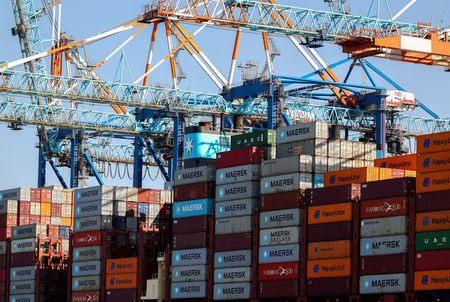

European companies are scrambling to recover potentially billions in tariff payments following a Supreme Court decision that invalidated several of President Trump’s major trade levies, according to interviews with business executives across the continent.
Discussions with twelve European companies spanning electronics manufacturing to consumer goods reveal how businesses are working to adjust to rapidly shifting U.S. trade policies during the ongoing commercial dispute under the Trump administration.
Following the nation’s highest court’s February decision to overturn Trump’s “liberation day” tariffs, the president implemented a fresh 10% across-the-board duty that may increase to 15%, creating fresh global confusion about trade agreements negotiated last year and the actual rates facing importers.
“The Supreme Court ruling has said one thing… The White House is saying something else,” said Simon Hunt, CEO of Italian beverage company Campari, in an interview with Reuters. He noted conflicting messages from customs agencies and trade tribunals as well.
“If there’s an opportunity to recover (tariff payments), then clearly, like every other company, we’ll look at it. But at this stage, we’re just going to wait and see,” Hunt added.
The federal government had gathered over $130 billion through tariff collections that courts have now declared unlawful, representing a cornerstone of Trump’s trade strategy. The Supreme Court’s decision offered no direction regarding refund procedures, creating uncertainty about how importers might reclaim their payments.
This Friday, the U.S. Court of International Trade plans to convene with federal attorneys to develop a compensation framework. Government legal representatives indicated the process would necessitate individual examination of tens of millions of transactions.
German electric motor manufacturer ebm-papst’s American division is exploring legal remedies for reimbursement, including modifying import documentation through post-summary correction (PSC), which permits changes up to 300 days after merchandise enters the United States.
This approach could theoretically reduce the relevant tariff percentage and trigger an automatic refund, according to trade consultants. However, some industry experts expressed skepticism about receiving payments and worried U.S. officials might obstruct the procedure.
“This option is being used. Where legally permissible and appropriate,” an ebm-papst representative confirmed to Reuters.
The German manufacturer, reporting annual revenue exceeding 2 billion euros ($2.36 billion) and employing approximately 13,500 workers, has received inquiries from American customers regarding potential refunds and described its tariff losses as reaching “double-digit” millions of euros.
The company’s conversations with U.S. customers highlight another complication in the refund process: only the official importer of record can file for reimbursement.
Businesses that aren’t the importer of record but may have covered duties through contractual arrangements must pursue compensation through their suppliers or distributors, a complication that could spark legal battles between trading partners.
“There are still no binding guidelines from U.S. authorities and many details remain unclear. This includes, for example, whether the mutually agreed EU-U.S. agreement is still valid,” the ebm-papst representative stated.
“The tariff damage is considerable,” they added.
Nicolas Urien, director of global trade advisory at Customs Support Group consulting firm, explained that companies are “changing paperwork” through procedures allowing importers to modify entries before U.S. customs finalizes duty assessments.
This approach only applies to “unliquidated” imports but could provide companies a more straightforward path to seek refunds than pursuing court action, where expenses are discouraging many smaller businesses.
“A PSC may be used for unliquidated entries – where duties have been paid but not yet finalised – to remove tariffs that are no longer legally valid,” Urien explained. “Some companies have already initiated this process.”
The Financial Times reported Friday that some American companies were having refund applications rejected, citing unnamed sources. A federal trade court judge ordered the government Wednesday to begin processing refunds.
An American executive at a small European alcohol company said the firm was investigating refund claims and seeking guidance from industry associations and logistics partners. The company had also examined the post-summary correction option.
While the business could file a lawsuit, it currently plans to wait for clearer federal guidance on the refund process, viewing any potential payout as an unexpected windfall.
The recovery would be like “finding loose change down the back of the sofa,” the executive commented.