
BEIJING, March 6 – Leaders and business executives from Guangdong Province, China’s southern technology and manufacturing center, announced Friday their commitment to integrate artificial intelligence throughout the region’s massive $2 trillion economy. The announcement came just one day after Beijing unveiled its comprehensive “AI plus” initiative designed to weave the technology into every sector of the nation’s economy.
The declarations were made during a gathering focused on discussing new government policy documents and a five-year development plan that, for the first time, places AI-powered industrial transformation at the heart of economic expansion.
Given Guangdong’s crucial role in worldwide supply networks, manufacturing everything from mobile phones to home appliances and electric cars, the province’s success in implementing AI technology will significantly influence how much the European Union and United States can reduce their supply chain dependence on China during this period of increasing geopolitical tensions.
Guangdong holds the distinction of being China’s most economically productive province, maintaining the top position nationally for over thirty years. The region generated approximately 14.6 trillion yuan ($2.1 trillion) in gross domestic product for 2025, creating an economy larger than entire nations such as Australia.
Governor Meng Fanli stated that Guangdong would expand “AI plus” implementations throughout various industries while promoting widespread commercial adoption of artificial intelligence technology.
The province’s Communist Party leader Huang Kunming announced plans to accelerate the development of new infrastructure projects, particularly massive computing facilities.
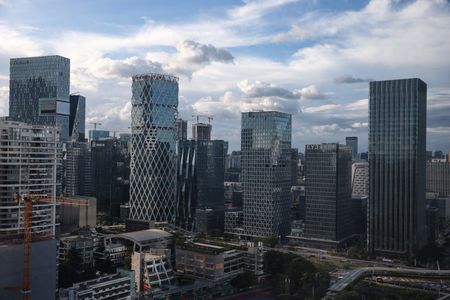
Shenzhen Mayor Qin Weizhong, representing China’s leading technology center, reported that industries including artificial intelligence, robotics, and semiconductor manufacturing experienced growth rates exceeding ten percent during the previous year. Strategic emerging sectors represented 43% of Shenzhen’s total economic output, according to Qin. The city serves as headquarters for major technology corporations including Huawei, Tencent, and DJI.
The mayor explained that Shenzhen was fast-tracking domestic alternatives for chip manufacturing equipment, computing infrastructure, and electronic design automation software – technological areas where China trails the United States and faces restrictive American trade controls.
Qin also called for increased federal assistance to establish an independent AI hardware and software ecosystem while expanding Chinese-developed standards in fields such as artificial intelligence and intelligent vehicles.
A provincial government asset official indicated that Guangdong would direct state investment toward advanced manufacturing sectors, including artificial intelligence and drone technologies.
GAC Group Chairman Feng Xingya announced his automotive company would intensify implementation of AI systems within self-driving vehicle technology.