Good morning, Delmarva! We’re starting this Thursday with a soggy and foggy situation across the peninsula. Light rain is likely through the early morning hours before tapering off around 7am, but don’t put that umbrella away just yet – we’ll still have a chance of scattered showers throughout the day.
The big story today will be widespread fog developing as temperatures climb to a mild 57 degrees. Visibility could be significantly reduced during your morning and afternoon commutes, so please drive with extra caution and use those headlights. With cloudy skies and an east wind of 5 to 10 mph, it’s going to feel quite damp out there.
Tonight, that fog will stick around before more light rain moves in, with temperatures dropping to a chilly 42 degrees. Looking ahead to Friday, we’ll see some lingering fog to start, but conditions improve to mostly cloudy skies with highs around 50. However, another chance of rain showers returns Friday night.
Stay safe on those foggy roads today, Delmarva, and have a wonderful Thursday!
Good news for morning commuters across the Delmarva Peninsula – the National Weather Service has cancelled the Dense Fog Advisory that was affecting much of our region.
The advisory, which impacted Delaware beaches, inland Sussex County, and southern New Jersey counties including Ocean, Atlantic, and Cape May, was lifted at 5:15 AM this morning. Visibility conditions have improved significantly across these areas, making travel safer for residents heading to work and school.
The fog advisory had been in effect for coastal areas from the Delaware beaches down through Cape May, as well as inland regions of Sussex County and multiple New Jersey counties including Western and Eastern Monmouth, Ocean, Atlantic, Cape May, and Southeastern Burlington.
While the official advisory has been cancelled, drivers should still exercise caution during early morning hours when patchy fog can still develop, especially near waterways and low-lying areas. Remember to use low-beam headlights, reduce speed, and increase following distance if you encounter any remaining foggy conditions.
The cancellation became effective at 5:15 AM and marks the end of reduced visibility concerns for the immediate future. Stay with TV Delmarva for continued weather updates throughout your morning.
Dense fog conditions have developed across Delaware, creating hazardous driving conditions with reduced visibility throughout the First State.
The Delaware Department of Transportation reports that fog of different intensities has been spotted in communities statewide, prompting officials to issue a safety advisory for drivers.
Transportation authorities are encouraging all motorists to exercise extreme caution when behind the wheel during these weather conditions. Reduced visibility from fog can significantly impact a driver’s ability to see other vehicles, road signs, and potential hazards.
Drivers should reduce their speed, increase following distance, and use low-beam headlights when navigating through foggy conditions. High-beam headlights can actually make visibility worse by reflecting off the fog.
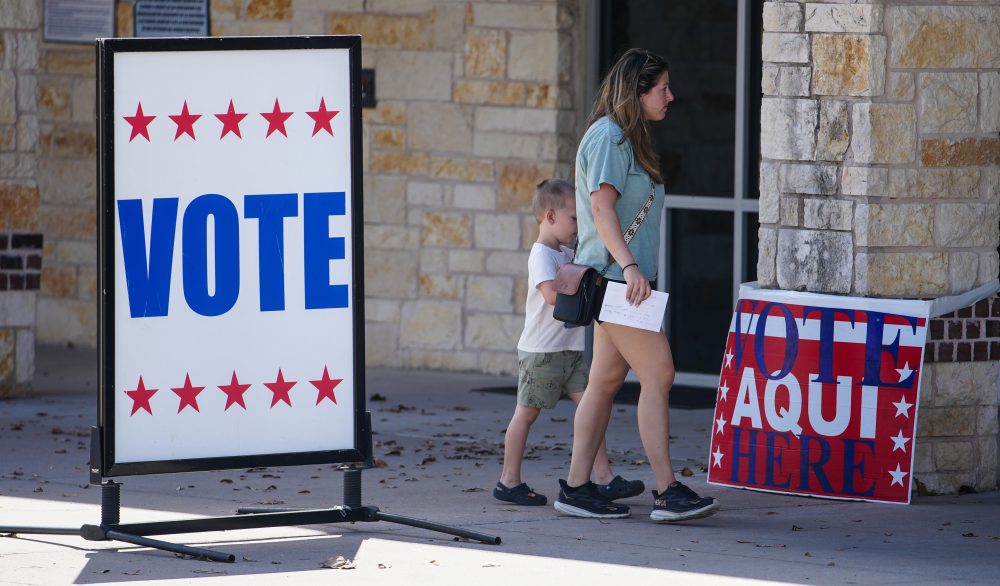
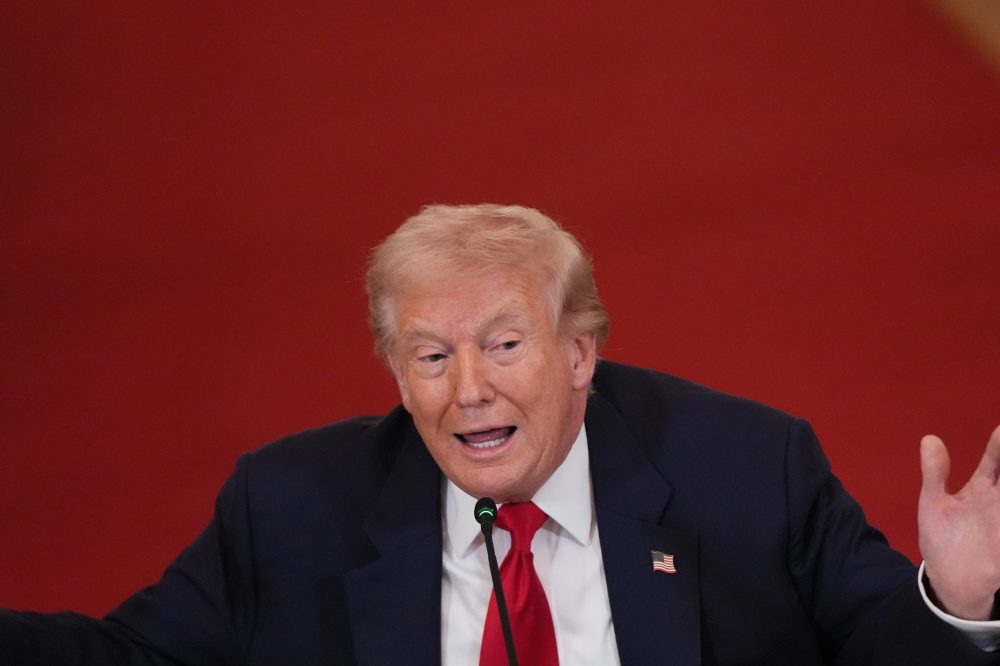
JEFFERSON CITY, Mo. (AP) — Despite congressional gridlock over President Donald Trump’s push for stringent citizenship verification in voting, Republican-controlled states are advancing their own legislation demanding documentary evidence of citizenship for voter registration and maintenance on electoral rolls.
This week saw final passage of citizenship documentation laws in South Dakota and Utah, while Florida’s House has approved similar measures and Missouri held committee discussions. Meanwhile, Michigan advocates for voter citizenship verification delivered 750,000 petition signatures this week, seeking to place a constitutional amendment before voters in November.
Current federal statutes already ban non-citizens from participating in U.S. elections, with violations carrying penalties including fines, jail time, and deportation.
Voter registration currently requires individuals to swear under oath, with perjury penalties, that they hold U.S. citizenship. However, Trump argues this system falls short and wants voters to present citizenship documentation.
The proposed federal Safeguard American Voter Eligibility Act, known as the SAVE America Act, would mandate documentary citizenship proof for voter registration. Acceptable documents would include U.S. passports, naturalization certificates, or birth certificates paired with government-issued photo identification.
The federal proposal also includes photo ID requirements for ballot casting, which numerous states already enforce. While the Republican-controlled House passed the measure last month along largely partisan lines, Senate Democrats have threatened a filibuster, creating an impasse.
The new South Dakota and Utah laws establish dual-track voting systems. Citizens providing documentation can participate in all elections, while those without such proof may only vote in federal contests for president, Senate, and House seats.
This split system mirrors Arizona’s approach, where tens of thousands of undocumented voters can only participate in federal elections. Arizona adopted this framework following a 2013 Supreme Court decision preventing states from mandating citizenship documentation for federal voting.
Both South Dakota and Utah’s measures become effective upon gubernatorial approval, potentially affecting newly registered voters before November’s elections.
Utah’s legislation additionally directs election administrators to utilize U.S. Immigration and Customs Enforcement’s online verification system for checking existing voters’ citizenship status. Flagged individuals would receive notices requesting citizenship proof to maintain full voting eligibility.
The Michigan initiative and Florida House legislation take different approaches, avoiding upfront citizenship documentation requirements during registration. Instead, these measures establish background verification processes that could trigger citizenship documentation requests.
Michigan’s proposal would have the secretary of state examine driver’s license records, jury duty files, and federal Homeland Security and Social Security databases to verify registered voters’ citizenship. Flagged individuals unable to provide citizenship proof would face removal from voter rolls.
Florida’s bill would mandate election officials verify all registered voters’ citizenship through the state’s driver’s license database. Anyone whose citizenship remains unverified would need to submit documentary evidence.
Trump and Republican allies have spent years highlighting concerns about non-citizen voting in American elections. While documented instances remain uncommon, some cases have emerged.
In 2024, a Chinese student faced perjury and attempted illegal voting charges after registering with a University of Michigan student ID and falsely claiming U.S. citizenship. He subsequently contacted local clerks requesting ballot retrieval before leaving the country.
This incident partially motivated the Michigan ballot initiative, according to Paul Jacob, chairman of Americans for Citizen Voting, the supporting organization.
“We want a system we can have confidence in,” Jacob said. “The way you avoid big problems in elections is to fix the small problems when they rise up and present themselves.”
Constitutional amendments restricting voting to “only citizens” have garnered strong support in state ballot measures. However, voting rights advocates warn that documentary proof requirements create complications.
During recent Florida House discussions, Democratic state Rep. Ashley Gantt shared her aunt’s story of being born at home in South Carolina when some hospitals excluded Black patients. Without a birth certificate, demonstrating citizenship has proven challenging, Gantt explained.
Citizenship proof laws “would stop many thousands — if not more — U.S. citizens from voting in Florida,” said Michelle Kanter Cohen, policy director and senior counsel at the nonprofit Fair Elections Center. “It requires documentation that a lot of eligible citizens don’t have, or don’t have access to.”
A 2024 University of Maryland Center for Democracy and Civic Engagement study found approximately 21 million people — representing 9% of voting-age citizens — lack citizenship documentation or cannot readily obtain it.
States implementing citizenship proof requirements frequently face legal challenges.
Kansas adopted such requirements 15 years ago, ultimately blocking over 31,000 U.S. citizens from voter registration. Federal courts ruled the Kansas law unconstitutionally burdened voting rights, and enforcement ceased in 2018.
New Hampshire and Louisiana both enacted citizenship proof laws two years ago, sparking lawsuits. New Hampshire’s law underwent trial last month and awaits judicial decision. Louisiana’s election commissioner admitted in December court documents that the requirement hasn’t been enforced.
A nonprofit organization also challenged Wyoming’s citizenship proof law from last year. However, a federal court dismissed the case, ruling the group lacked legal standing to sue.
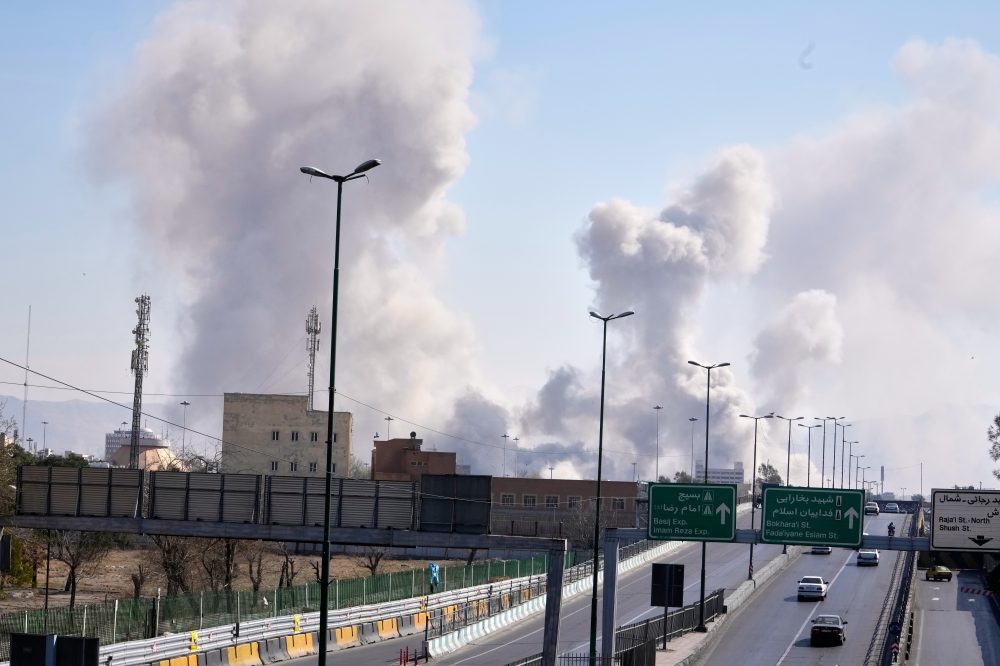
NEW YORK — Relatives and advocates for Americans imprisoned in Iran express growing concern that their loved ones could become casualties of the escalating Middle East conflict, either through accidental targeting during military strikes or through retaliation by Iranian authorities.
“For Americans imprisoned in Iran, this is about as terrifying a moment as it gets,” said Siamak Namazi, an Iranian American who was detained for nearly eight years before being released as part of a deal with the U.S. in 2023. “What these families are facing now is days of war with no clear end in sight.”
While U.S. officials decline to specify the number of Americans held in Iran, the James W. Foley Legacy Foundation, which advocates for hostages, reports six Americans are currently detained and face “unprecedented danger” due to the ongoing military conflict.
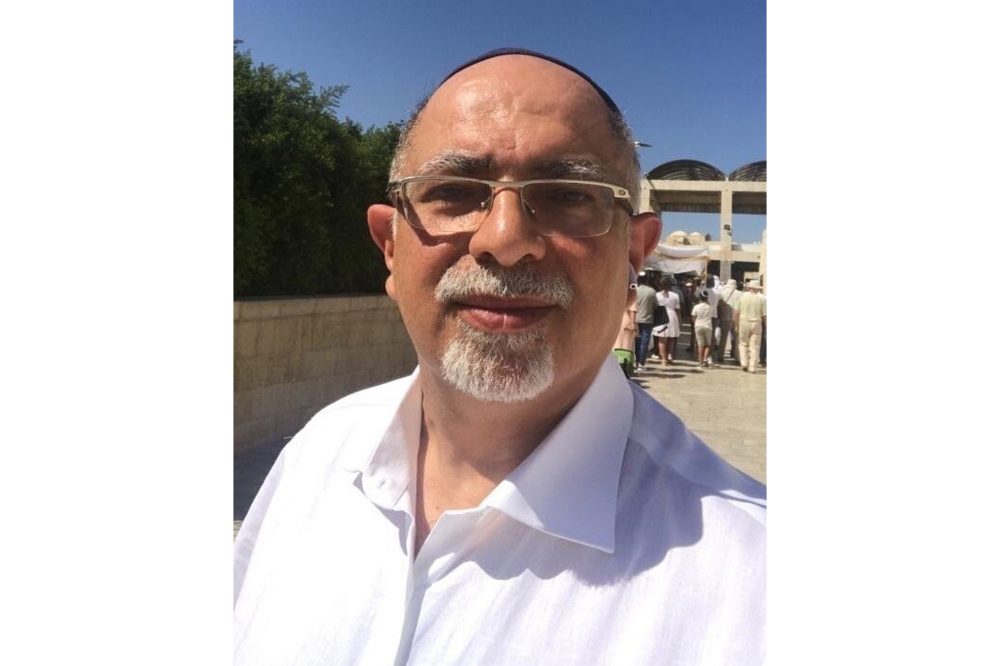
The documented cases include a former Washington-based journalist and a Jewish Iranian American from New York who went to Iran for family matters last year and has been prevented from returning home.
Two of the confirmed detainees are imprisoned at Evin Prison, Tehran’s infamous facility where Namazi was previously held, according to their representatives. The maximum-security complex houses many of Iran’s political prisoners and has previously been targeted in Israeli bombing campaigns.
Kamran Hekmati, a 61-year-old Long Island resident held at Evin, contacted his wife Monday during the early days of the conflict to confirm his immediate safety, according to his cousin Shohreh Nowfar.
However, his family remains concerned about his deteriorating health, as he has not received consistent treatment for bladder cancer since his detention began months ago, she explained.
“It’s an uncertain time in an uncertain country,” said Nowfar, who lives in Los Angeles.
Ryan Fayhee, who represents detained Iranian American journalist Reza Valizadeh at Evin, said he has emphasized the critical nature of the situation during ongoing discussions with White House and State Department officials.
Israeli military forces have recently used social media platforms to urge residents near the prison facility to evacuate as airstrikes continue. Relatives of other foreign prisoners at Evin have reported to European media that explosions have occurred close enough to shatter prison windows.
“It’s my job to let the administration and the Israeli government know that there are innocent American citizens within that prison,” Fayhee said. “They should take great care with this military action to avoid any unfortunate collateral damage.”
White House and State Department representatives declined to address specific questions regarding the detainees’ status, citing safety and security concerns, but demanded Iran release them immediately.
“President Trump has been clear that he wants every American wrongfully detained to be returned home safe and sound, and that there will be dire consequences for regimes who treat Americans as political pawns,” said Anna Kelly, a White House spokesperson.
Valizadeh is one of at least 15 journalists currently imprisoned in Iran, according to the Committee to Protect Journalists.
The 50-year-old left Iran in 2009 following his coverage of the country’s pro-democracy demonstrations, according to a petition his attorneys filed with the United Nations in January.
Valizadeh became a U.S. citizen in 2022 while employed in Washington by Radio Farda, the Persian-language division of Radio Free Europe, which receives U.S. government support.
He was arrested in 2024 after traveling to Iran to see his aging parents and received a 10-year prison sentence on accusations of working with the U.S. government.
The U.S. has formally classified Valizadeh as wrongfully detained, indicating officials believe in his innocence and have transferred his case to the State Department’s special presidential envoy for hostage affairs, the government’s top hostage negotiator.
Another American whose situation has become known publicly is Afarin Mohajer, a California resident who was born in Iran.
She was arrested in September and faces charges of sharing anti-government propaganda on social media and insulting Iran’s Supreme Leader and Islam, according to her son Reza Zarrabi, a political activist living in Germany.
Zarrabi did not respond to recent interview requests, but has previously told European journalists that his mother avoids political activities and believes she was detained to suppress his vocal criticism of the Iranian government.
Hekmati’s relatives are certain the New York City jewelry store owner represents another case of Iran’s “hostage diplomacy.”
For decades, Iran has imprisoned Americans hoping to secure the freedom of Iranians detained in the U.S. or to extract political concessions from Washington. Just last week, the U.S. moved to penalize Iran for hostage-taking, with the State Department designating the country as a state sponsor of wrongful detention one day before the current conflict erupted.
Nowfar explained that her cousin Hekmati departed Iran following the 1979 revolution but had made multiple trouble-free return visits.
In May, Iranian officials detained him at the airport, confiscated his passport and prohibited his departure. He was subsequently charged under Iranian legislation that criminalizes visits to Israel within the previous decade.
Hekmati’s family insists his most recent Israel trip occurred approximately 13 years ago for his son’s Bar Mitzvah ceremony. They also reject espionage allegations claiming he met with Mossad operatives.
“They just wanted to have a hostage. An American hostage,” Nowfar said.
Additional worries exist that Hekmati’s religious background could lead to further mistreatment, according to Kieran Ramsey, chief investigative officer at Global Reach, a nonprofit organization working on Hekmati’s case.
“He’s not only American, he’s also Jewish — and we had had some concerns early on in this case of him” getting bullied, said Ramsey, who previously directed the U.S. government’s Hostage Recovery Fusion Cell.
Namazi understands the anguish families experience while seeking reassurance, remembering a devastating 2022 fire that claimed at least eight prisoners’ lives during his imprisonment at Evin.
“I remember the smoke, the confusion, and the total absence of reliable information,” the 54-year-old Washington resident said. “For us prisoners it was terrifying. My mother says that night was one of the hardest she endured.”
DORAL, Fla. — President Donald Trump plans to meet with leaders from across Latin America on Saturday at his golf resort near Miami, as his administration attempts to show continued dedication to strengthening America’s foreign policy focus on regional neighbors while managing multiple international crises.
The meeting, called the “Shield of the Americas” summit, takes place just two months following Trump’s bold military operation targeting Venezuelan President Nicolás Maduro, bringing him and his spouse to the United States to face charges related to drug conspiracy.
Even more significant is Trump’s recent decision to partner with Israel in launching military action against Iran a week ago, a conflict that has already resulted in hundreds of casualties, disrupted worldwide financial markets, and destabilized the broader Middle East region.
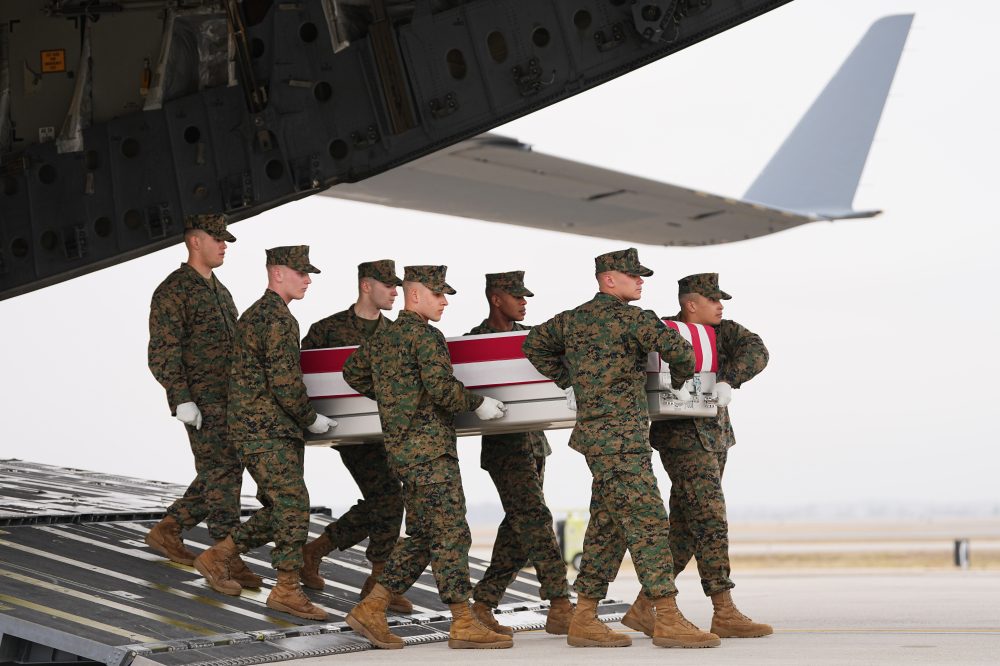
Trump’s availability for the Latin American gathering will be constrained, as he must also travel to Dover Air Force Base in Delaware to attend the dignified transfer ceremony for six American service members who died in a drone attack on a Kuwait command facility, occurring one day after the U.S.-Israel military campaign against Iran began.
However, through this summit, Trump aims to redirect focus toward the Western Hemisphere, even if temporarily. He has promised to reestablish American leadership in the area and counter what he views as decades of Chinese economic expansion in America’s traditional sphere of influence.
“Under previous leaders, we grew obsessed with every other theater and every other border in the world except our own,” Defense Secretary Pete Hegseth told regional leaders and defense ministers who gathered in Florida this week for talks on countering drug cartels. “These elites reduced our power and presence in this hemisphere, opting for a benign neglect that was anything but benign.”
Confirmed participants from Argentina, Bolivia, Chile, Costa Rica, the Dominican Republic, Ecuador, El Salvador, Guyana, Honduras, Panama, Paraguay, and Trinidad and Tobago will attend the event at Trump National Doral Miami, the same golf facility scheduled to host the Group of 20 summit later this year.
This summit concept for conservative-minded leaders throughout the hemisphere developed after the cancellation of what would have been the 10th Summit of the Americas, which was abandoned during last year’s U.S. military buildup near Venezuela’s coast.
The Dominican Republic, serving as host and under White House pressure, had excluded Cuba, Nicaragua and Venezuela from the regional meeting. However, when leftist leaders from Colombia and Mexico threatened to boycott in protest — and without Trump’s confirmed attendance — Dominican President Luis Abinader made a last-minute decision to delay the event, referencing “deep differences” across the region.
The Shield of the Americas title reflects Trump’s vision for an “America First” regional foreign policy approach that utilizes U.S. military and intelligence resources not seen in the area since the Cold War concluded.
Significantly absent will be the region’s two major powers — Brazil and Mexico — along with Colombia, historically central to U.S. anti-drug efforts in the region.
Richard Feinberg, who assisted in planning the original 1994 Summit of Americas while serving on the Clinton administration’s National Security Council, noted the sharp differences between then and now.
“The first Summit of the Americas, with 34 nations and a carefully negotiated comprehensive agenda for regional competitiveness, projected inclusion, consensus and optimism,” said Feinberg, now professor emeritus at the University of California-San Diego. “The hastily convened Shield of the Americas mini-summit conjures a crouched defensiveness, with only a dozen or so attendees huddled around a single dominant figure.”
Following his return to office, Trump has prioritized combating Chinese influence throughout the hemisphere. His national security approach features what he calls the “Trump Corollary” to the 19th century Monroe Doctrine — which originally sought to prevent European interference in the Americas — by focusing on Chinese infrastructure projects, military partnerships and investments in regional resource sectors.
The initial example of this more assertive strategy was Trump’s pressure on Panama to exit China’s Belt and Road Initiative and examine long-term port agreements with a Hong Kong-based company, following U.S. threats to reclaim the Panama Canal.
Most recently, the American capture of Maduro and Trump’s commitment to “run” Venezuela could disrupt oil exports to China — previously Venezuela’s largest crude oil customer before the operation — and bring one of Beijing’s strongest regional partners under Washington’s influence. Trump is set to visit Beijing later this month for discussions with Chinese President Xi Jinping.
Yet even leaders closely supportive of Trump have shown hesitation to cut Chinese connections, according to Evan Ellis, a specialist on Chinese regional involvement at the Center for Strategic and International Studies.
For numerous nations, China’s trade-centered diplomacy addresses crucial financial needs in an area facing substantial development obstacles from poverty alleviation to infrastructure limitations. Meanwhile, Trump has reduced foreign aid to the region while rewarding countries supporting his immigration enforcement policies — an approach that remains unpopular across the hemisphere.
“The U.S. is offering the region tariffs, deportations and militarization whereas China is offering trade and investment,” said Kevin Gallagher, director of Boston University’s Global Development Policy Center, who has written extensively about China’s economic diplomacy in the Americas. “Leaders in the region would do well to remain neutral and hedge, such that they can leverage increased U.S.-China rivalry to their own benefit.”
Before the summit, Trump revealed his appointment of Kristi Noem, recently removed from her role as Department of Homeland Security secretary, as his special envoy for the Shield of the Americas.
Noem indicated Trump will reveal “a big agreement” during the summit focusing on “how we’re going to go after cartels and drug trafficking in the entire Western Hemisphere.”
ANCHORAGE, Alaska — Alaska’s capital city prepares for an invasion of barking sled dogs this Saturday as the legendary Iditarod Trail Sled Dog Race launches its 54th edition with a festive ceremonial kickoff.
The fan-friendly event allows spectators to see their beloved mushers up close before Sunday’s official competitive launch of the grueling 1,000-mile journey across Alaska’s wilderness to Nome.
This year’s race brings notable changes, including an innovative amateur division and substantial financial backing from Norwegian billionaire Kjell Rokke, who now calls Switzerland home.
The Iditarod originated from the vision of co-creators Dorothy Page and Joe Redington Sr., who designed the long-distance competition to celebrate Alaska’s rich mushing heritage and commemorate the historic Iditarod Trail. This legendary 938-mile route once served as a crucial freight and mail pathway connecting Seward on Alaska’s southern shoreline to Nome on the western Bering Sea coast.
Race organizers strategically positioned the starting point near Anchorage to engage Alaska’s most populous city, while the late Howard Farley played a key role in establishing Nome as the destination finish line, roughly 1,000 miles away.
The inaugural 1973 race attracted 34 participants, though only 22 successfully completed the challenging course.
Dick Wilmarth claimed victory in 20 days and never competed again. When questioned about his retirement, he simply stated, “Cause I won.”
Modern mushers have dramatically improved their speed, with recent champions crossing the finish line near the Bering Sea in approximately 10 days.
Participation numbers have fluctuated throughout the decades, but recent years have seen smaller fields due to veteran mushers retiring and rising expenses for essentials like dog food.
The peak participation occurred in 2008 with 96 mushers starting the race. Historically, about 60 competitors participated annually over five decades. However, 2023 and 2025 each saw only 33 starters — the lowest numbers ever recorded.
This year matches the original 1973 field with 34 competitive mushers. Saturday’s ceremonial route covers 11 miles through Anchorage streets lined with enthusiastic fans. The actual competitive race begins Sunday on a frozen lake approximately 75 miles north of Anchorage.
The total field includes 37 mushers, with three participating in the newly created Iditarod Expedition Musher Program, an honorary category that excludes them from championship eligibility and prize money.
Notable expedition participants include Norwegian billionaire Kjell Rokke and Canadian businessman Steve Curtis. Unlike traditional competitors, expedition mushers may receive outside assistance during the race.
Thomas Waerner, the Norwegian musher who captured the 2020 Iditarod title and famously remained stranded in Alaska for three months due to COVID-19 restrictions, will support Rokke’s dog team effort. Four-time champion Jeff King will assist Curtis using a snowmachine.
Rokke’s financial contribution significantly impacts the race, adding $100,000 to increase the total purse to $650,000 and providing $170,000 in support for the 17 Alaska Native villages serving as checkpoints along the route.
According to Iditarod CEO Rob Urbach, Rokke’s purse enhancement should increase competitor payouts, with the winner receiving approximately $80,000 — substantially higher than last year’s champion prize of nearly $57,000.
“I believe it is healthy for the sport to evolve and look at new opportunities,” Waerner explained in a private message interview with The Associated Press. “The cost of running a competitive kennel has increased significantly over the years, and this initiative is an attempt to explore more sustainable ways to finance both a racing kennel and the race itself — while maintaining high standards for dog care, training, competition, and overall quality.”
Curtis, whose participation was announced just three days before the ceremonial start, is also expected to provide financial support to the Iditarod, though specific details remain unavailable.
The competitive field features four international mushers: two from Canada, plus one each from Norway and Denmark.
Despite Waerner’s ineligible status, three former champions seek their second victories: current defending champion Jessie Holmes, 2023 winner Ryan Redington, and 2019 champion Pete Kaiser.
Holmes, known from National Geographic’s reality series “Life Below Zero,” aims to join legendary mushers Susan Butcher and Lance Mackey as the only competitors to win consecutive championships.
Both Butcher and Mackey achieved four championships each before succumbing to cancer — Butcher in 2006 and Mackey in 2022.
Redington carries the legacy as grandson of race co-founder Joe Redington Sr., while Kaiser made history as the first Yup’ik musher to claim victory.
Abundant snowfall should greet mushers throughout most of their 1,000-mile journey to Alaska’s western coastline.
The challenging route crosses two mountain ranges, spans the frozen Yukon River, and navigates dangerous Bering Sea ice before concluding on Front Street in Nome.
The finish line sits near City Hall, constructed on the former location of The Dexter, a saloon once operated by Wyatt Earp — famous for the Gunfight at the O.K. Corral — during Nome’s prosperous gold rush era.
Race officials anticipate the winner will arrive in Nome during the early part of the week beginning March 16.
Welcoming home fallen service members in flag-draped caskets represents one of the most somber duties any commander-in-chief must face, highlighting the ultimate price paid in military conflicts.
President Donald Trump’s scheduled Saturday appearance at Dover Air Force Base to pay respects to six American troops killed in Middle East operations may prove particularly challenging given his administration’s limited efforts to rally public backing for the military engagement. His past remarks regarding military service have also generated significant controversy.
The president has demonstrated reverence on certain occasions, including recent Medal of Honor presentations recognizing battlefield courage from earlier wars.
However, his approach can also turn blunt or dismissive. Following coordinated strikes against Iran with Israeli forces last week, Trump cautioned about potential American losses. Regarding warfare, he stated in a recorded message, “that’s the way it is.”
Trump regularly highlights American military prowess and individual acts of heroism.
“Today you entered the ranks of the bravest warriors ever to stride the face of the earth,” Trump addressed retired Command Sgt. Maj. Terry P. Richardson during last week’s Medal of Honor presentation for Vietnam War actions that saved 85 fellow service members.
At last month’s State of the Union, Trump honored Army Chief Warrant Officer 5 Eric Slover with the same decoration. The helicopter pilot sustained four gunshot wounds in Venezuela while maintaining aircraft control and protecting his crew.
“The success of the entire mission and the lives of his fellow warriors hinged on Eric’s ability to take searing pain,” Trump remarked.
Yet during ceremonies honoring wounded veterans, he occasionally introduces political commentary or tangential remarks.
“Their valor gave us the freest, greatest and most noble republic ever to exist on the face of the earth,” Trump declared at last year’s Arlington National Cemetery Memorial Day service.
He then criticized his Democratic predecessor Joe Biden, calling America “a republic that I am fixing after a long and hard four years.”
Trump’s initial political controversy centered on attacking Sen. John McCain’s military record.
“He is a war hero because he was captured. I like people who weren’t captured,” he remarked in 2015.
McCain endured torture during over five years of Vietnamese captivity, declining early release offers ahead of fellow Americans due to his Navy admiral father’s high rank.
Several former first-term officials alleged Trump called deceased service members “suckers” and “losers” when reportedly avoiding a 2018 visit to an American military cemetery in France. Trump rejected these claims, asking, “What animal would say such a thing?”
Previous Trump staff members also claimed he avoided appearing with military amputees, allegedly saying “it doesn’t look good for me.”
In 2017, he reportedly told a fallen soldier’s widow that her husband “knew what he signed up for,” according to a Florida congresswoman who overheard the conversation. Another deceased soldier’s father accused Trump of breaking a $25,000 donation promise. The White House claimed the payment was made following public outcry.
In 2020, Trump minimized traumatic brain injuries sustained by service members during Iranian missile attacks on an Iraqi base, retaliation for the U.S. killing of Iranian general Qassem Soleimani.
“I heard that they had headaches and a couple of other things, but I would say and I can report it is not very serious,” Trump commented.
Trump, who obtained Vietnam War draft deferments, has repeatedly expressed interest in receiving military decorations.
“I always wanted to get the Purple Heart. This was much easier,” Trump told a veteran who gifted his medal during the 2016 campaign. The Purple Heart honors service members wounded or killed by enemy action.
During Monday’s Medal of Honor ceremony, Trump again joked about earning a medal personally, calling it “a great honor.”
“I’ve tried numerous times to get one by myself,” Trump said. “I keep getting shut down. They say: ‘You can’t do it, sir. Bad protocol.’”
“Very bad, I would say the worst,” he continued. “But I’m only kidding.”
Following recent U.S. and Israeli military strikes against Iran, a fabricated video showing crowds watching flames and debris fall from a burning skyscraper allegedly in Bahrain gained widespread circulation online.
Users on social platforms claimed the footage showed damage from an Iranian missile attack on the building. However, experts determined the video was artificially created using AI technology and distributed by Iranian government-linked accounts to exaggerate the nation’s military achievements.
Several telltale signs revealed the video’s artificial nature, including two vehicles that appeared fused together on the left side of the frame and a person whose arm passed through a backpack unnaturally.
Since the Iran conflict erupted last weekend, numerous fake and misleading videos have flooded online platforms, driven largely by government-sponsored propaganda campaigns focused on portraying battlefield victories and inflating casualty numbers.
“The content that’s coming from state actors tends to be a little better targeted,” explained Melanie Smith, senior director of policy and research on information operations at the Institute for Strategic Dialogue. “They have a very clear kind of narrative structure and the videos are just used to support some kind of statement they want to make about the conflict and about the kind of geopolitical situation writ large.”
Iranian-aligned social media profiles have promoted stories that overstate the damage and death counts from their nation’s military operations, echoing themes found in Iran’s official state broadcasting. This messaging strategy has resulted in numerous computer-generated videos depicting fictional airstrikes, similar to the bogus Bahrain tower footage.
A continuing Russian-connected disinformation campaign known as Operation Overload, sometimes called Matryoshka or Storm-1679, has been distributing videos that falsely represent intelligence services and media organizations. The operation aims to create fear and uncertainty to influence public behavior, using methods previously employed during electoral periods. One example included a fabricated warning supposedly from Israeli intelligence advising Israeli citizens in Germany and America to avoid public spaces or remain indoors entirely.
While false and manipulated videos have appeared during other recent military conflicts like the Russia-Ukraine and Israel-Hamas wars, researchers note a significant difference in the current situation: limited information flowing from Iranian citizens due to internet blackouts and widespread censorship, eliminating perspectives that might have supported or contradicted the Iranian government’s narrative.
“In Ukraine, that message was so full-throated it really changed the entire dynamic of the conflict because the world really aligned with the perspective of Ukrainians facing the attacks and showing resilience in light of the attacks, but we’re sort of missing that story from Iran,” said Todd Helmus, a senior behavioral scientist at RAND who studies irregular warfare, terrorism and information operations.
Beyond state-sponsored efforts, opportunistic social media users seeking viral content have significantly contributed to the misinformation surrounding the Iran war’s initial days, sharing outdated footage from previous conflicts as current events, posting video game sequences as authentic combat footage, and creating their own AI-generated material.
Artificial intelligence technology has enabled misinformation campaigns impossible during earlier conflicts, even those occurring just years ago. Combined with government-sponsored false information and media restrictions, this creates an even larger void where accurate information becomes difficult to identify.
“The volume of AI content is starting to just pollute the information environment in these kinds of crisis settings to a really terrifying degree,” Smith noted. “The inability to get access to verified and credible information in times like this — it’s getting harder and harder to do that.”
Nikita Bier, X’s head of product, announced Tuesday that the platform would remove users from its revenue-sharing program for posting AI-generated conflict content without proper labeling. Initial violations result in 90-day suspensions, with permanent bans for repeat offenses. Emerson Brooking, director of strategy and resident senior fellow at the Atlantic Council’s Digital Forensic Research Lab, cautioned that social media platforms now serve as battlegrounds in modern warfare, and users should recognize their potential exploitation by government actors, regardless of their physical distance from actual combat zones.
“If you’re in these spaces, just understand that this is an extension of the physical battle space,” he warned. “That there are actors on all sides of the conflict that are actively trying to spread propaganda and disinformation to convince you that certain things are true that aren’t. That your eyeballs and your attention are an asset.”
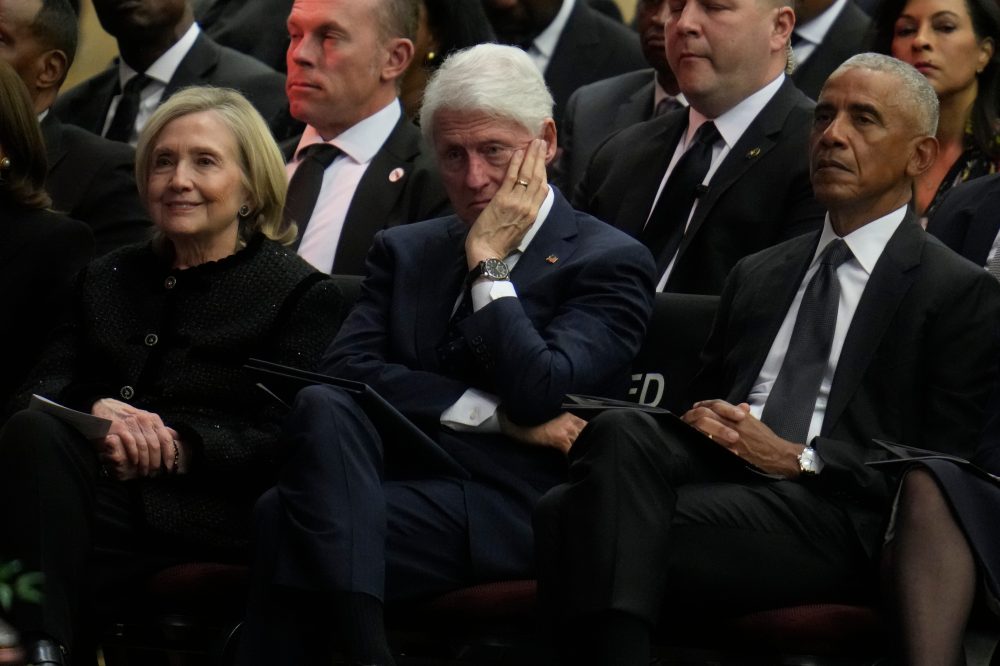
CHICAGO (AP) — Following a public celebration that drew former presidents, governors, and Chicago community members to honor the late Rev. Jesse Jackson Sr., his closest family members and friends will gather for an intimate memorial at his organization’s Chicago headquarters.
The private ceremony at the Rainbow PUSH Coalition building on Chicago’s South Side will welcome only several hundred guests, primarily consisting of family, close allies, and trusted associates. This intimate gathering will conclude a series of memorial events held nationwide throughout the week.
“I foresee tomorrow will represent everything that Rev. Jackson stood for,” said the Rev. Chauncey D. Brown, a Chicago-area pastor and mentee of Jackson’s. “It will include dignitaries and icons, as well as many from where the true power lies, with the people in the streets.”
According to staff members, seating for the morning ceremony will be available on a first-come, first-served basis.
Following Jackson’s passing last month, his family and supporters have paid tribute to the reverend through memorial services, community outreach, and demonstrations they believe carry forward his mission.
Community members were initially welcomed for public viewings at the Rainbow PUSH headquarters in February, providing Jackson’s long-time neighbors an opportunity to pay their final respects to the civil rights icon.
The reverend’s body was later displayed at the South Carolina Capitol building. Jackson was raised in segregated Greenville, South Carolina, where as a teenager, he organized fellow students in a demonstration that integrated the local library, launching his lifelong commitment to civil rights advocacy.
Memorial events planned for Washington, D.C., were delayed when a request for Jackson to lie in honor at the U.S. Capitol was rejected. Republican House leadership referenced established protocol that typically reserves this honor for former presidents and high-ranking military officials.
Jackson’s proteges have continued honoring his work by advocating for causes including voting rights, economic justice, and political mobilization in the weeks following his death. Rainbow PUSH organized a discussion forum where community organizers and clergy mentored by Jackson shared how he influenced their professional paths.
Thursday’s events at the headquarters included various celebrations of Jackson’s life preceding the public ceremony. Hundreds of Omega Psi Phi Fraternity members assembled at the facility to pay tribute to Jackson.
Jackson’s life “is a dream fulfilled,” said Michael Barksdale Jr., one of the fraternity members honoring Jackson. A Chicago public school counselor who first encountered Jackson as a high school freshman, Barksdale explained that the PUSH Coalition provided him with a college scholarship after he served as one of the organization’s youth organizers.
“It is up to my generation now to continue that legacy of Jackson and all the civil rights dignitaries who came before,” said Barksdale, 37. “They did all of the heavy lifting, and we are going to continue to build.”
That evening, the facility welcomed Rainbow PUSH alumni for a reunion celebrating the late reverend and his decades of activism. Attendees included state and local officials, scholars, veteran organizers, and former diplomatic personnel.
Carol Moseley Braun, the first Black woman elected to the U.S. Senate, attended alongside long-serving organization members who stood by Jackson throughout his career. Braun, who volunteered for Jackson’s 1988 presidential campaign, received Jackson’s backing during her victorious 1992 election.
Attendees honored Jackson’s legacy and shared memories of his two presidential campaigns; his international activism fighting apartheid and negotiating hostage releases; and his ministry promoting a Christianity focused on justice and support for the marginalized.
The headquarters also welcomed nearly 100 progressive activists from Minnesota. These groups represented civil rights, labor, and immigration advocacy organizations recently gaining national attention after President Donald Trump’s administration intensified immigration enforcement operations in their state, triggering widespread demonstrations.
“It’s really empowering, at least for me, to see the coalition coming together and to understand the history of civil rights and human rights and immigrants’ rights,” said Yeng Her, the organizing director at the Immigrant Defense Network, one of the organizations protesting the Trump administration’s actions in Minnesota.
The Jackson family brought these activists to Chicago to study Jackson’s approaches and discover resources for their own organizations. Participants met with Rainbow PUSH alumni and several of Jackson’s children.
This gathering served as preparation for both the private family service and an additional commemoration.
This Sunday, Jackson family members and many of his mentees will journey to Selma, Alabama, to observe the “Bloody Sunday” protest anniversary, marking when civil rights demonstrators were attacked by police on the Edmund Pettus Bridge in 1965.
Jackson regularly participated in this annual commemorative march.
Energy costs are climbing sharply across Delaware and the nation as military conflict in the Middle East enters its second week, with no clear resolution in sight.
The escalating situation began when U.S. and Israeli forces conducted major strikes against Iran, sparking a broader regional conflict that has now affected nearly every Middle Eastern nation through missile and drone attacks.
Maritime traffic carrying approximately 20 million barrels of daily oil production remains stuck in the Persian Gulf, unable to navigate safely through the Strait of Hormuz – the critical shipping channel that borders Iran’s northern coast.
Damage to essential oil and natural gas infrastructure throughout the region has created significant supply disruptions.
By Friday’s close, crude oil costs had skyrocketed past $90 per barrel, with U.S. crude finishing at $90.90 – representing a 36% weekly increase. International Brent crude jumped 27% during the same period, reaching $92.69.
These dramatic price increases are directly impacting what Delaware residents and businesses pay for gasoline, diesel fuel, and aviation fuel, with many motorists already noticing higher costs when they fill up.
“It’s crazy. It’s not needed, especially at a time when people are already struggling, but not unexpected from all this turmoil that’s going on,” commented Mark Doran while refueling in Middlebury, Vermont on Friday. “I don’t think there’s been an end in sight to any Middle East conflict that’s been started by us, so the fact that they say that there’s going to be an end that quickly is not believable, and the Middle East is, you know, a place that the U.S. is not going to solve.”
Earlier this week, President Donald Trump indicated that American military actions against Iran were expected to continue for four to five weeks, though he noted the country has “the capability to go far longer.” By Friday, Trump seemed to dismiss potential negotiations with Iran unless they agreed to “unconditional surrender.”
“The more news we get, the more it seems like this is going to last a really long time,” explained Al Salazar, who leads macro oil and gas research at Enverus.
According to AAA motor club data, regular gasoline nationwide reached $3.32 per gallon Friday, marking an 11% jump from the previous week. Diesel fuel climbed to $4.33 per gallon, up 15% over the same timeframe.
International markets dependent on Middle Eastern energy supplies are experiencing even more severe price increases. European diesel costs have doubled, while Asian jet fuel prices have surged nearly 200%, according to Claudio Galimberti, chief economist at Rystad Energy.
Energy costs continued rising throughout the week as Iran launched multiple retaliatory strikes, including a drone attack on the American Embassy in Saudi Arabia, expanding the conflict’s scope. Iranian forces also targeted a major Saudi Arabian refinery and a liquefied natural gas facility in Qatar, stopping refined product flows and removing approximately 20% of global LNG supply from the market.
“We keep seeing news of vessels being hit or refineries or pipelines, so the list is very long,” Galimberti noted. He estimates that roughly 9 million barrels of daily oil production are currently unavailable due to facility damage or precautionary shutdowns by producers. “Right now, with all of this shut in, we are in a situation of extreme deficit.”
While the United States exports more oil than it imports, this doesn’t shield American consumers from global price increases or guarantee that domestic producers can quickly compensate for lost supply.
Oil trades on international markets, meaning even American-produced crude has increased in value based on Middle Eastern developments. Additionally, for many U.S. oil companies, “if you put more wells in the ground, there’s about a six-month lag before you get that production uplift,” Salazar explained.
The U.S. also cannot simply convert all its crude oil into gasoline. Most American oil production consists of light, sweet crude, while East and West Coast refineries are primarily configured to process heavier, sour crude. Consequently, the U.S. exports some crude oil while importing certain refined products like gasoline.
Jerry Dalpiaz from Covington, Louisiana, said he began filling his vehicles and gas containers “the day that they announced that the United States has started military operations against Iran” because he anticipated rising fuel costs.
“I can weather the storm because I’m in good financial position, but I feel sorry for my fellow citizens who are living paycheck to paycheck because they have to drive to get to work and they have to change their oil and all those things,” Dalpiaz said. “And they need some relief and it doesn’t seem to be coming anytime soon.”
On Friday, Trump announced a plan to provide insurance coverage for losses up to approximately $20 billion in the Gulf region, designed to restore maritime trade confidence, help stabilize international commerce, and support American and allied Middle Eastern business operations.
However, some energy analysts believe additional insurance won’t address the underlying security concerns.
“The problem is that in the oil trading, oil shipping world, people are worried about counterterrorism,” said Amy Jaffe, director of the Energy, Climate Justice and Sustainability Lab at New York University, noting concerns about automated drone speedboats, weapon-carrying flying drones, and mines or other explosive devices. “In order for the United States to create the atmosphere that undoes the current bottleneck at the Strait of Hormuz, there has to be some credible demonstration of solutions to the counter-terrorism problem.”
Salazar questioned what the “new normal” might look like if the Strait of Hormuz could be effectively reopened, and what adequate security measures would entail.
“All it takes is one individual with a RPG (rocket-propelled grenade) to stand on the shore and take out a tanker, right?” Salazar said. “And this is forever, do you know what I mean?”
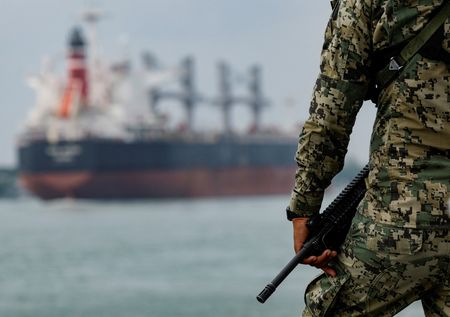
Mexican officials have broadened their investigation into drug cartel fuel smuggling schemes at major seaports following revelations from a recent Reuters report that exposed the criminal operations.
According to a February government document obtained by Reuters, Mexico’s anti-corruption ministry is now conducting internal investigations at the ports of Guaymas, Tampico and Ensenada, along with probes within the Navy and customs departments.
Authorities had previously acknowledged investigating suspected fuel smuggling activities at the Port of Tampico, leading to the arrest of 14 individuals last year, including customs officials and Navy personnel.
The government disclosed details about these fuel smuggling investigations while responding to inquiries from the opposition National Action Party (PAN) regarding alleged corruption within government agencies that reportedly enabled fuel smuggling operations to thrive across Mexico. These details were included in a comprehensive 217-page response addressing senators’ questions about the administration’s policy achievements.
Port officials at Guaymas, Tampico and Ensenada did not respond to comment requests, nor did representatives from Mexico’s Attorney General’s office, Navy or customs agency.
The fuel smuggling operation involves creating fraudulent shipping and customs documents for fuel imports, primarily from the United States. Criminal organizations avoid Mexico’s substantial tax on imported diesel and gasoline by falsely declaring these products as other petroleum-based materials that are exempt from duties. These fraudulent schemes can save smugglers more than half of a cargo shipment’s total value.
According to the U.S. Treasury Department, illegal fuel operations and stolen crude oil now represent the second-largest revenue stream for Mexican cartels, trailing only behind narcotics trafficking.
Criminal smugglers have escalated their operations from truck and rail transportation to utilizing petroleum tankers, a shift that U.S. and Mexican security authorities say demonstrates coordination between cartels and corrupt port employees.
Reuters’ 2025 investigation traced a vessel that unloaded imported diesel at the Ensenada and Guaymas ports, with the cargo falsely declared in Mexico as tax-exempt lubricants, resulting in $7 million in lost government revenue.
Three Mexican security officials and an undated government security document reviewed by Reuters indicated the importing company was believed to be a shell operation for the Jalisco New Generation Cartel.
In their inquiries, PAN officials pressed the federal government to detail how it would investigate, dismantle and prosecute all participants in the fuel smuggling network, including any high-ranking government officials who may be involved.
Mexican President Claudia Sheinbaum faces mounting pressure from U.S. President Donald Trump to intensify efforts against drug cartels.
Neither PAN officials nor the president’s office provided responses to comment requests.
President Donald Trump is launching an extensive transformation of the nation’s capital, featuring plans for a massive $400 million White House ballroom, a towering 250-foot arch, and major Kennedy Center renovations.
These wide-ranging redesign initiatives would represent the most significant changes by any U.S. president since Theodore Roosevelt spearheaded major National Mall modifications in the early 1900s. During the 1950s, Harry Truman completely renovated the White House interior.
The following outlines Trump’s major renovation projects, which have sparked intense criticism from citizens focused on economic concerns and the protection of historical sites.
WHITE HOUSE BALLROOM
Trump has described his proposed 90,000-square-foot ballroom as “the Greatest of its kind ever built,” designed to match the current White House in both height and proportions. With a projected cost of $400 million, he plans to secure funding through private donors and corporate sponsors.
However, the president’s excitement for this project, designed to accommodate 1,000 guests, has not gained widespread public support. He has encountered significant opposition after tearing down the East Wing to create space for the new structure, breaking previous promises to preserve it.
An October Washington Post-ABC News-Ipsos survey revealed that 56% of Americans oppose the ballroom project, while only 28% express support.
Historic preservation advocates and project critics have condemned the East Wing’s destruction — which previously contained the first lady’s offices and the White House movie theater — and expressed worry that the new structure could dwarf the main residence.
Construction activities generate constant noise between the White House and Treasury Department, creating disruptions expected to persist throughout Trump’s remaining three years in office.
The National Capital Planning Commission, led by a senior White House official, is set to receive public input on the project and may vote on its approval Thursday.
KENNEDY CENTER
Congress originally established the John F. Kennedy Center for the Performing Arts to commemorate the Democratic president killed in 1963. The name remained unchanged for decades until a Trump-selected board voted to rebrand it as the Trump-Kennedy Center last year.
The renowned cultural venue experienced numerous show cancellations and declining ticket sales following Trump’s takeover.
Trump announced February 1 that the facility will shut down for two years starting July 4 for extensive renovations. Trump maintains the building requires major updates, pointing to plumbing issues and deteriorating stonework.
He has stated he won’t demolish the Kennedy Center but will renovate it instead, though critics remember similar assurances about the East Wing before its demolition. He projects renovation costs at $200 million.
INDEPENDENCE ARCH
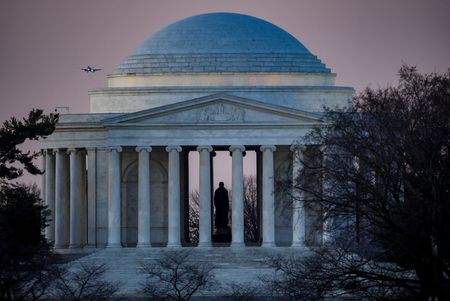
On the opposite side of the Potomac River from the Lincoln Memorial sits an ordinary highway traffic circle where Trump envisions constructing the Independence Arch — a monument similar to Paris’s Arc de Triomphe but significantly larger.
The proposed arch, topped with eagle sculptures and a Statue of Liberty-style figure, would reach approximately 250 feet in height. This exceeds the Lincoln Memorial’s height and approaches the 288-foot U.S. Capitol, visible throughout much of Washington.
For comparison, Paris’s Arc de Triomphe stands 164 feet tall.
Trump explained to reporters January 31 that he wanted a large arch because “we’re the biggest, most powerful nation.”
The arch’s actual 250-foot height remains uncertain, as aviation officials worry it might disrupt flight patterns for aircraft approaching Ronald Reagan Washington National Airport several miles away.
THE OVAL OFFICE
Trump began his primary White House redecoration effort when he returned to the Oval Office in January 2025.
He redesigned the historic room with golden accents and figurines, portraits of notable Americans retrieved from storage — including some difficult to identify — and a Declaration of Independence copy displayed behind black fabric on the wall.
Sculptures of Abraham Lincoln and Benjamin Franklin now sit on tables beside his desk. The abundance of decorative items creates a crowded, library-like atmosphere compared to previous presidential styles, though Trump enjoys the design and frequently conducts visitor tours.
THE ROSE GARDEN AND WHITE HOUSE GROUNDS
Beyond the Oval Office, Trump removed the Rose Garden’s famous grass lawn and installed a white stone patio with umbrella-shaded tables, creating a design similar to his Mar-a-Lago Club pool area in Palm Beach, Florida. He justified the stone installation by explaining that women in high heels would sink into the grass.
Along the adjacent colonnade pathway, Trump hung portraits of all 47 American presidents, each accompanied by a plaque featuring Trump’s personal assessment of that individual.
Still resentful over his 2020 election defeat to Democrat Joe Biden, Trump substituted Biden’s portrait with a picture of an autopen, a signing device he and fellow Republicans have criticized Biden for using, despite its common use among recent presidents.
Throughout other White House grounds, Trump has installed large flagpoles on the North and South Lawns.
LINCOLN BATHROOM
Within the White House, Trump demolished the green-tiled, vintage-style bathroom in the Lincoln Bedroom and installed a contemporary replacement featuring white and black marble.
The original green-tiled Lincoln bathroom originated during Truman’s White House renovation in the 1950s, according to a 2007 Washington Post report.
During that period, President George W. Bush and first lady Laura Bush renovated the Lincoln Bedroom, which Lincoln had used as his office. The Post article covering the Bush renovation noted they had preserved the “well-maintained” bathroom.
MEXICO CITY – The man who orchestrated the takedown of notorious drug kingpin “El Mencho” has spent the last four years living like a prisoner in his own country, confined to armored government facilities after barely surviving a cartel assassination attempt.
Omar Garcia Harfuch, Mexico’s 44-year-old security minister, operates from a specially-constructed apartment within the security ministry that features a bedroom, fitness center, kitchen and conference space for 25 people. Visitors to his quarters can hear gunshots from a shooting range elsewhere in the building, while a red phone on his desk connects him directly to Mexico’s president, according to a senior government official familiar with the setup.
This fortress-like existence began in 2020 when cartel gunmen ambushed Harfuch’s armored vehicle during his morning commute, firing over 400 rounds at his SUV. The security chief fought back and survived with three bullet wounds, but two of his protective detail and an innocent bystander lost their lives.
Harfuch attributed the attack to Nemesio Oseguera, the 59-year-old leader of the violent Jalisco New Generation Cartel who went by “El Mencho.” For those close to the security minister, the recent elimination of the cartel boss represented a deeply personal victory for a man still haunted by his guards’ deaths.
The security chief chose not to provide comment for this report, which draws from conversations with twelve associates, colleagues and security experts.
Associates believe Harfuch will maintain his cautious security posture despite El Mencho’s death. However, the successful operation has significantly raised the profile of President Claudia Sheinbaum’s security minister, who many credit with leading her administration’s more aggressive cartel strategy. Political observers now view him as a leading contender for the presidency when Sheinbaum’s term concludes in 2030.
“Omar Garcia Harfuch stands as today’s top presidential prospect,” stated Armando Vargas, a security specialist with the México Evalua research institute. “He represents the most prominent figure behind this new approach.”
This strategy carries significant dangers: El Mencho’s elimination sparked nationwide violence that claimed 25 National Guard lives and may intensify deadly conflicts as competing cartel factions battle for territory.
The approach also marks a dramatic shift from previous President Andres Manuel Lopez Obrador’s “hugs not bullets” policy, during which cartels expanded their influence across large territorial areas and branched out from narcotics into extortion, human smuggling, and stolen fuel operations.
Harfuch gained recognition within Mexico City’s administration while current President Sheinbaum served as the capital’s mayor.
Rodrigo Canales, who provided security counsel to Sheinbaum, explained that Harfuch assisted her through challenging early mayoral years when senior police officials faced corruption allegations.
“He possesses Claudia’s complete confidence, which he earned through exceptional loyalty and effectiveness during critical early moments of her mayorship,” Canales explained.
Sheinbaum elevated Harfuch to lead the city’s police force in 2019 after removing his predecessor due to a money laundering controversy.
The assassination attempt occurred less than a year into his new position. Following the initial firefight, he took cover in his armored vehicle’s rear seats until backup forces arrived, as he described in subsequent interviews. Authorities arrested twelve alleged Jalisco cartel members who received life sentences.
After the ambush, he relocated from his residence to Mexico City police headquarters. His already limited social circle became even more restricted, with only brief opportunities to see his children.
“He transformed from someone who could dine out, socialize with friends, and attend colleagues’ celebrations, to being confined in an office, spending nearly 90 percent of his time within police facilities,” described a longtime friend who has known Harfuch for two decades.
Similar to the cartel leaders he pursues, one mistake could prove fatal.
Harfuch descends from a distinguished Mexican military and political lineage.
His grandfather, Marcelino Garcia Barragan, served as defense minister during the 1960s, while his father, Javier Garcia Paniagua, was both a senator and presidential candidate who directed a federal security organization in the 1970s.
This combination of police and military background is uncommon in Mexico and positions Harfuch uniquely to oversee the nation’s militarized public security framework, according to two sources who have collaborated with him.
“Garcia Harfuch seemed destined to continue his father and grandfather’s legacy,” observed Gladys McCormick, a Syracuse University professor specializing in U.S.-Mexican relations.
However, this same heritage generates skepticism within segments of the governing leftist Morena party. Both his grandfather and father presided over periods of military misconduct and suppression of social movements by security personnel.
Critics also point to Harfuch’s connection to the notorious 2014 disappearance of 43 students from Ayotzinapa teachers’ college. A 2022 truth commission report identified him—then a mid-ranking federal police officer—as participating in meetings where officials developed a narrative that concealed security forces’ involvement in the disappearances.
Harfuch, who faced no wrongdoing accusations, previously stated he only participated in meetings to assist in coordinating the search for the missing students. No local or federal officials have received sentences in this case.
For the United States, Harfuch has become central to security cooperation with Mexico as President Donald Trump pressures America’s southern neighbor to combat cartels aggressively, threatening U.S. military intervention if Mexico fails to demonstrate progress.
Derek Maltz, former acting head of the U.S. Drug Enforcement Administration, recalled meeting Harfuch last year following Mexico’s transfer of 29 suspected high-ranking cartel members to the U.S. in what represented the largest such handover at that time.
“He made direct eye contact and told me, ‘This is only the beginning,’” Maltz remembered.
Though initially skeptical, Maltz witnessed Mexico subsequently transfer another 63 suspected cartel leaders and eliminate the country’s most sought-after drug lord. “I’m extremely impressed with current developments,” he stated.
These prisoner transfers highlight what officials from both nations describe as unprecedented cooperation and intelligence sharing as they work to dismantle cartels through military operations, money laundering investigations, and drug and weapon seizures.
The pursuit of El Mencho intensified in November when the Jalisco cartel abducted two of Harfuch’s investigators in Zapopan, a cartel stronghold, according to the senior Mexican official.
Military forces raided suspected cartel members’ residences, and interrogations yielded intelligence that helped narrow the search for El Mencho. Reuters first reported the kidnappings’ role in the hunt for El Mencho. The agents were freed after one week.
The decisive breakthrough occurred when authorities traced one of El Mencho’s several girlfriends to his residence, Defense Minister Ricardo Trevilla has revealed. A new U.S.-military-led task force pinpointed the house’s exact location, Reuters previously reported.
However, the government official indicated the real mistake wasn’t the romantic relationship; it was the 59-year-old cartel leader’s desire to visit his two children with the woman. Mexican forces struck after the girlfriend and El Mencho’s children departed.
Following a gun battle, El Mencho died aboard a military helicopter while being transported to a hospital. Eight of his bodyguards also perished. Two soldiers died during the operation; two others later succumbed to injuries.
Harfuch received a confirmation message containing an image of El Mencho’s body, still wearing body armor, the Mexican official revealed.
“I conversed with him Sunday morning after El Mencho was eliminated,” said Eduardo Clark, a senior health official in Mexico who maintains a close relationship with Harfuch. “He expressed to me, ‘this brings enormous relief.’”
Deadly tornadoes swept across southern Michigan on Friday, claiming four lives and leaving more than a dozen people injured as the violent storms demolished homes and knocked out electricity for hundreds of residents, according to local officials.
Social media videos appearing to show the aftermath in Three Rivers and Union City captured massive funnel clouds ripping rooftops from structures and hurling debris skyward, shortly after the National Weather Service had issued tornado warnings for the region.
News footage revealed the destruction left behind: demolished buildings and vehicles, along with downed utility poles, fallen trees, and toppled road signs scattered across the landscape.
Branch County, home to Union City, reported three deaths and a dozen people wounded, the sheriff’s department confirmed.
Cass County authorities reported one additional fatality and several more injuries in their jurisdiction.
According to an official Cass County statement, “Multiple large structures – including homes and pole barns – sustained damage ranging from major structural impacts to complete destruction.”
Hundreds of residents remained without electricity following the storms, local officials reported.
An official Facebook post from Union City detailed the extensive damage: “We have multiple utility poles down, transformers damaged, and long stretches of power lines on the ground. The north side of Union Lake sustained some of the most severe damage, with roughly two miles of line brought down in that area alone.” The post warned that power restoration could take several days.
Michigan Governor Gretchen Whitmer responded by activating the State Emergency Operations Center to monitor the developing situation.
Clayton Cummins, a spokesperson for Michigan emergency services and police, told reporters: “The state is ready to fulfill any resource requests that may arise. We’ve yet to receive any just yet. It’s sounding like the local response is and has been able to address what’s been a very devastating afternoon and evening in southwest Michigan.”
Federal immigration authorities have detained a Colombian journalist working for a Spanish-language news organization in Nashville, with the Trump administration stating she will receive proper legal proceedings.
Estefany Maria Rodriguez Florez, who works as a reporter for Nashville Noticias, was apprehended by U.S. Immigration and Customs Enforcement officers in Tennessee’s capital city on Thursday. She is currently being held at an ICE detention facility.
Federal agents claim Rodriguez Florez breached the terms of her visa. However, her legal representation told local news outlets that “up until now, she hasn’t had a case with ICE charging her with anything.”
According to her attorneys, Rodriguez Florez has been residing in the United States for five years and “frequently reports on stories critical of ICE.” Her legal team filed an urgent petition in federal court, claiming she was apprehended without a proper warrant.
Both ICE officials and Department of Homeland Security representatives clarified on Friday that officers possessed an “administrative warrant” during Wednesday’s arrest.
“She will receive full due process and remains in ICE custody pending the outcome of her immigration proceedings,” a DHS spokesperson stated.
ICE has become central to Trump’s immigration enforcement efforts, which civil rights groups argue undermines free speech protections and due process rights while fostering a dangerous climate. Trump maintains his policies are designed to reduce unauthorized immigration and strengthen national security.
Her legal team revealed that Rodriguez Florez had a scheduled appointment with ICE’s Enforcement and Removal Operations for March 17. The agency had previously postponed meetings with her twice – first because of severe winter weather, then when an officer couldn’t locate her appointment in their system.
Nashville Noticias reported that their journalist was with her spouse outside a fitness center on Wednesday when officers surrounded their vehicle, which displayed the news organization’s branding, and took her into custody.
Her attorneys explain that Rodriguez Florez initially entered the country on a tourist visa, subsequently applied for political asylum, later wed an American citizen, and currently holds a valid employment authorization. They note that she and her husband have submitted paperwork to change her immigration status to permanent resident.
The Trump administration contends that her tourist visa did not permit her to remain in the United States past 2021.
NATO Secretary General Mark Rutte announced Thursday that the military alliance has no plans to activate its collective defense provision following Wednesday’s interception of an Iranian missile near Turkey’s border.
Speaking with Reuters from Brussels on March 5th, Rutte stated definitively that “Nobody’s talking about Article Five” when asked about the alliance’s response to the incident.
The confrontation occurred when NATO defense systems successfully intercepted an Iranian ballistic missile that was traveling toward Turkish territory. This represents the first direct involvement of a NATO member nation in the ongoing Middle East crisis, creating concerns about potential escalation that could draw in the entire 32-member alliance.
Article Five represents NATO’s cornerstone mutual defense commitment, establishing that any attack against one member nation constitutes an attack against all alliance partners.
Despite ruling out the collective defense response, Rutte expressed NATO’s backing for American military actions targeting Iran, explaining that the country was approaching the point of “becoming a threat to Europe as well.”
Affluent Gulf nations are confronting their most severe food security crisis since the worldwide food emergency of 2008, as ongoing conflict with Iran jeopardizes ports and interrupts maritime traffic through the Strait of Hormuz.
The current situation is putting to the test approaches implemented following 2008, when skyrocketing food costs led Gulf countries to transition toward import-reliant policies that involved investing heavily in overseas agricultural ventures.
This approach replaced previous costly programs that attempted to boost local production of essential grains but faced obstacles from the area’s harsh climate and water scarcity. Saudi Arabia, for instance, started reducing a domestic wheat cultivation program in 2008 to become nearly entirely dependent on imports.
Currently, with international shipping disrupted and airspace restrictions in place across many nations in a region that depends on food imports for 80%-90% of its supply, experts anticipate price increases and shortages of certain products.
“With over 70% of GCC foodstuffs being imported through the Strait of Hormuz, Gulf states face shortages if the war persists,” said Neil Quilliam, associate fellow at think tank Chatham House.
“While GCC countries have taken steps to diversify suppliers and ensure sufficient stores to withstand disruption, this can only last several months. At this point, price increases and longer lead times will start to hit the markets,” Quilliam added.
Experts caution that even brief blockages in Hormuz requiring ships to reroute from major ports to smaller facilities will generate pressure.
The majority of significant Gulf ports, including Dubai’s Jebel Ali and key ports in Kuwait, Bahrain, Qatar and the Saudi Gulf coastline, are positioned where most arriving traffic must navigate through the Hormuz passage.
Iranian attacks targeted many of these crucial supply lines including Jebel Ali, the region’s biggest container port, this week, halting operations for several hours.
“The biggest immediate effect will be due to the blockade of Jebel Ali, serving about 50 million people,” Ishan Bhanu, lead agricultural commodities analyst at Kpler, said about the Dubai port that also serves as a re-export hub to the region and beyond.
UAE ports located outside the strait possess limited capacity. Khorfakkan can accommodate 5 million twenty-foot equivalent units (TEUs) and Fujairah handles less than 1 million and would struggle to compensate for capacity lost at Jebel Ali or Abu Dhabi’s Khalifa Port.
“Qatar, Kuwait, Bahrain and Iraq effectively become landlocked and will depend on overland routes through Saudi Arabia,” Bhanu added, warning of costly congestion.
These bottlenecks have yet to materialize and the UAE has stated its strategic reserves of essential goods provide coverage for four to six months of requirements. Officials urged residents to report unjustified price increases through a dedicated hotline.
Grocery store employees informed Reuters that shelves remain mostly stocked, although suppliers are requiring more time to restock certain items. Dubai this week temporarily eased truck-movement restrictions to sustain the flow of merchandise.
Iran’s strikes on the Gulf beginning Saturday prompted many to stockpile goods and caused a temporary decline that intensified panic, serving as a preview of potential future scenarios.
“It is worth noting that perception risk matters and even if stocks are sufficient now, public runs on supermarkets can spook the public,” Quilliam said.
Several residents have already observed some price increases.
“Is it just me whose groceries cost three times as of yesterday?” one shopper wrote in a local Facebook group on Tuesday. “Even the bananas cost have gone crazy.”
Items like bananas that deteriorate rapidly are especially susceptible to any shipping rerouting that extends travel times. Airlifting perishable food when airspace reopens to reduce journey time will increase costs.
“If food is flown in or brought in overland, that is going to be more expensive than shipping,” said Justin Alexander, Gulf analyst at GlobalSource Partners and director at Khalij Economics.
“It may be that governments choose to absorb some of that cost through subsidizing the food. And they’ve certainly done that in previous crises,” Alexander noted.
Beyond investing internationally to secure access to major food production centers, Gulf nations have also been building modern silos capable of storing hundreds of thousands of tons of strategic grains over the past two decades. These facilities provide a cushion for staples that can be preserved for months like wheat, rice and cooking oils.
The UAE launched its Fujairah grain silos in 2016 on the Indian Ocean coastline outside the Strait of Hormuz, with approximately 300,000 metric ton capacity. Officials selected this location strategically to circumvent Hormuz since Iran had previously threatened to block the strait during periods of increased tensions with the West.
“Fujairah’s grain silos act as a strategically important pressure valve providing routing flexibility and risk diversification when the Gulf’s maritime environment tightens,” said Sudhakar Tomar, president of India Middle East Agri Alliance Ecosystem.
The project initially envisioned emergency supplies to be distributed throughout the entire Gulf region. However, practical challenges, including vast distances and insufficient road or rail connections between nations, meant it remained domestic. Other Gulf states have subsequently constructed their own storage facilities, including Qatar’s Food Security Terminal at Hamad Port with 51 climate-controlled silos.
Regional collaboration among Gulf Cooperation Council members will be essential to preventing food shortages, but the six-nation alliance has historically faced coordination difficulties.
“It will require close cooperation amongst GCC states to manage complex logistics and ensure that all six states and Iraq are sated,” Quilliam said.
BERLIN – A Berlin court has sentenced a Syrian refugee to 13 years behind bars for a knife attack at the city’s Holocaust memorial that left a tourist fighting for his life, court officials announced Thursday.
The 20-year-old defendant, who authorities say supported the Islamic State, attacked a 30-year-old visitor from Spain with a knife, slashing his neck at the memorial site located in central Berlin.
The victim suffered severe, life-threatening wounds that required immediate emergency medical intervention and placement in a medically-induced coma to save his life.
According to prosecutors, the Syrian national had spent weeks preparing to target and kill Jewish individuals, driven by his views on the ongoing Middle East conflict, which led him to select the memorial as his attack location.
The memorial site serves as a tribute to the 6 million Jewish victims murdered during Adolf Hitler’s Nazi regime throughout World War Two.
Chinese e-commerce powerhouse JD.com delivered disappointing financial results Thursday, falling below analyst expectations for quarterly revenue as the company grapples with fierce market competition and diminishing benefits from government support programs.
The challenging business environment reflects broader economic struggles across China, where consumer spending has weakened due to an ongoing real estate crisis, job market uncertainties, and international trade tensions that have slowed growth in the world’s second-biggest economy.
These economic headwinds have particularly impacted retailers like JD.com, which dominates China’s home appliance market, as consumers reduce spending on non-essential items. Although the company previously benefited from government subsidy programs over recent quarters, those advantages are now diminishing as year-over-year performance comparisons become more challenging.
To counter these pressures, JD.com has expanded into different product lines and developed new income sources, including its instant retail operations and advertising services.
“Our revenue mix has become increasingly diversified, and as profitability strengthens … and higher-margin businesses such as advertising contribute a larger share, we are confident that our profit streams will become more diversified as well,” stated JD.com Chief Financial Officer Ian Su Shan.
“Despite some short-term fluctuations in the fourth quarter, our financial position remains solid,” Su Shan added.
The company’s stock price showed modest gains during pre-market trading in the United States.
JD.com continues to battle intensifying competition from e-commerce competitors including Alibaba and PDD Holdings, which have increased promotional offers on their Chinese market platforms. These companies have all committed significant resources to sales promotions and price reductions, leading to reduced profit margins across the sector.
For the quarter ending in December, JD.com reported revenue growth of 1.5% reaching 352.3 billion yuan (equivalent to $51.12 billion), which fell short of the analyst consensus estimate of 353.86 billion yuan compiled by LSEG.
The company recorded a net loss of 2.7 billion yuan for ordinary shareholders during the quarter, contrasting sharply with the 9.9 billion yuan profit achieved in the same period last year.
SRN News has launched a new daily audio program designed to keep audiences updated on religious developments worldwide. The two-minute segment, called “Global Landscape,” focuses on delivering current information about faith-related stories from across the globe.
The brief audio feature aims to inform listeners about important religious developments, changes in cultural practices, and major events where faith intersects with international news. The program offers audiences a quick way to stay current on how religious matters are influencing world events.
SRN News presents this daily segment as part of their commitment to covering the role of faith in contemporary global affairs.
Gunfire struck a Toronto synagogue this week, with approximately 20 bullets hitting Temple Emanuel’s building. The shooting occurred after evening worship services had concluded, and fortunately no one was hurt in the attack.
Temple Emanuel’s leadership issued a public statement following the incident: “We are working closely with law enforcement and security partners. We remain united and resilient. Our building is damaged; our congregation is not.” Toronto law enforcement officials have stepped up surveillance around Jewish houses of worship and community centers, particularly following escalating tensions involving the United States, Israel, and Iran. These religious institutions have also enhanced their own protective measures.
In New York, Attorney General Letitia James has directed NYU Langone, one of Manhattan’s major medical centers, to restart gender transition surgeries for minors. The hospital had suspended these operations due to potential funding restrictions from the Trump administration. James wrote to hospital officials, stating their decision breaks state anti-discrimination regulations by “jeopardizing access to medically necessary healthcare for some of the most vulnerable New Yorkers.” The Trump administration has committed to preventing federal funding for medical treatments that help children transition to live as a different gender.
Despite ongoing conflict with Iran, Israeli communities are maintaining their observance of Jewish religious holidays. This week’s Purim festivities, typically celebrated with lively public processions and costume celebrations, were relocated to underground shelters for safety. In Tel Aviv, residents dressed in traditional Purim attire gathered in a shopping center’s basement parking area, which doubles as a protective shelter, for the ceremonial reading of the Purim narrative. This holiday commemorates how Jewish people in the Persian Empire were saved from destruction following the fall of the First Temple, as told in the biblical book of Esther. These events occurred in 356 BC.
A man who repeatedly crashed his vehicle into the Chabad Lubavitch global headquarters in New York City has entered a not guilty plea to federal accusations of deliberately vandalizing religious property. Law enforcement arrested him on bias crime charges after the January 28th incident, which caused structural damage to an entryway of the important Jewish site but resulted in no physical injuries. These new federal accusations are in addition to several state-level bias crime charges, including attempted assault. The attack disturbed New York’s substantial Jewish population, which has experienced rising antisemitic incidents in recent years.
A recent Gallup survey reveals that spiritual beliefs play a diminished role in the daily lives of Americans compared to previous generations. The polling data shows that just 47% of adults consider faith to be very significant in their everyday experiences.
This marks a substantial decrease from decades past, when three-quarters of Americans said religion was very important to them in 1952. Even as recently as 2003, 61% of respondents indicated faith held major significance in their lives.
The survey findings indicate that religious devotion remains strongest among specific demographic groups. Women, senior citizens, Republican voters, individuals without college education, Protestant believers, and people living in Southern states are most likely to view faith as central to their daily existence.
Meanwhile, Americans who identify as non-religious now represent nearly a quarter of the nation’s population at 24%, according to the Gallup data.
A fire department chaplain in Austin, Texas has reached a $78,000 settlement with city officials after being terminated for his comments regarding transgender participation in women’s athletics. Andrew Fox lost his position following his public statement that biological males should not compete against female athletes in sporting events.
Fox pursued legal action against the City of Austin following his dismissal. The substantial financial settlement resolves the lawsuit without admitting wrongdoing by either party.
The legal advocacy group Alliance Defending Freedom provided representation for Fox throughout the case. The organization issued a public statement emphasizing the importance of free speech protections. “Everyone should be able to speak freely without fear of punishment just for expressing a view with which the government disagrees,” the group declared.
The Brownsburg Community Schools Corporation in Indiana has reached a $650,000 settlement with former teacher John Kluge, who departed from his position following his refusal to use preferred pronouns for transgender students. Kluge’s legal representation came from Alliance Defending Freedom, which argued the case centered on religious liberty protections for educators. According to the organization, “This settlement confirms what the law has always said: Public schools cannot force teachers to violate their religious beliefs. Schools should learn that refusing to accommodate religious employees can be expensive.” The substantial financial agreement highlights ongoing tensions between school policies regarding transgender students and some educators’ religious convictions.
Luxembourg has become just the second nation worldwide to constitutionally guarantee abortion access, following in France’s footsteps with this landmark decision.
The tiny European country operates under a constitutional monarchy system, though the royal family wields minimal actual authority in governance. This limited royal influence stems from a 2008 confrontation when Grand Duke Henry publicly opposed legislation permitting doctor-assisted suicide. In response, Luxembourg’s parliament enacted measures that stripped away much of the monarch’s decision-making authority, essentially reducing the royal role to ceremonial functions.
Minnesota Wild management made two significant roster moves Friday, bringing in veteran forward Nick Foligno from Chicago in exchange for future considerations.
The 38-year-old Foligno will now play alongside his younger brother Marcus, who is 34, creating a family reunion in Minnesota.
In a separate deal Friday, the Wild obtained forward Bobby Brink from Philadelphia, trading away defenseman David Jiricek to complete the transaction.
Currently serving as Chicago’s team captain, Nick Foligno has recorded 11 points this season through 37 games, including three goals and eight assists. He’s completing the final year of a two-year deal worth $9 million and will become an unrestricted free agent when the season ends.
Throughout his NHL career, Nick Foligno has accumulated 608 points across 1,270 games, scoring 250 goals and adding 358 assists while playing for Ottawa, Columbus, Toronto, Boston, and Chicago.
The 24-year-old Brink, who hails from Minnetonka, Minnesota, has contributed 26 points in 55 games this season for Philadelphia, tallying 13 goals and 13 assists. He’s set to become a restricted free agent this summer.
Philadelphia selected Brink during the second round of the 2019 NHL Draft, and he has produced 94 points in 201 career games, including 36 goals and 58 assists.
Meanwhile, the 22-year-old Jiricek has not registered a point through 25 games this season with Minnesota.
Over his career spanning 84 games with Columbus and Minnesota, he has collected 13 points with two goals and 11 assists. Columbus originally drafted him sixth overall in 2022 before trading him to Minnesota on November 30, 2024.
Dallas Stars forward Roope Hintz’s comeback was cut short Friday night when he sustained a lower-body injury during the second period of the team’s matchup with the Colorado Avalanche.
The organization confirmed that Hintz would be sidelined for the rest of the contest following the injury.
The incident occurred when Hintz delivered a check on Colorado’s Nathan MacKinnon, driving him into the boards near the corner of the Avalanche’s attacking zone. During MacKinnon’s attempt to escape the check, Hintz lost his footing and immediately clutched his upper left leg area with 4:22 remaining in the period.
Team medical staff and teammate Jason Robertson assisted the Finnish Olympian as he made his way off the ice.
The injury comes as Hintz was making his return after being sidelined for the team’s last four contests due to sickness. Going into Friday’s game, he ranked fifth among Stars players with 44 points, recording 15 goals and 29 assists this season.
HOUSTON — During his legendary 19-season MLB career, Manny Ramirez launched 555 home runs into the stands across ballparks nationwide.
Friday evening at Daikin Park, the former All-Star experienced the thrill from a different perspective as he watched his son Lucas deliver a two-homer performance for Brazil’s national team in their World Baseball Classic matchup against Team USA.
The younger Ramirez opened the game with a leadoff blast, then delivered another solo shot during the eighth inning in an impressive display of power hitting.
The baseball apple didn’t fall far from the tree.
Lucas, age 20, connected on Logan Webb’s second offering, sending it over the right field wall to narrow the American advantage to 2-1 following Aaron Judge’s two-run blast in the previous half-inning. His eighth-inning drive off Gabe Speier brought Brazil closer at 8-5.
“I was looking forward for him to do something special,” Manny Ramirez shared with The Associated Press following his son’s opening homer. “So, he’s been working so hard all year round and I’m proud of him.”
Lucas qualifies to represent Brazil through his mother Juliana Ramirez, a São Paulo native who was present at the stadium Friday evening, radiating joy after witnessing the leadoff home run.
The Angels selected the younger Ramirez in the 17th round of the 2024 amateur draft, and he completed his first professional season in Single-A ball with a .266 batting average, three long balls, 30 runs batted in, and six stolen bases.
His international experience includes participating in the 2026 WBC qualifying tournament, where he collected five hits in 13 at-bats for Brazil.
While Manny Ramirez, the two-time World Series champion and 2004 Fall Classic MVP, would have celebrated his son’s success against any opponent, facing one of the tournament’s elite squads made the moment even more meaningful.
“Oh yeah, they’re No. 1,” he acknowledged.
The proud father believes this breakthrough performance will provide momentum heading into the upcoming minor league season.
“It’s going to be more special for him because that’s going to give him — he’s going to be ready for the season,” Ramirez explained. “I hope he’s going to do good.”
Lucas sports the same number 24 uniform that his father wore throughout most of his distinguished career, and Manny couldn’t be happier witnessing his son’s achievements on baseball’s international stage.
“I’m proud of him,” he stated. “Thank God for this opportunity that he has.”
BRONKHORSTSPRUIT, South Africa (AP) — Under the guidance of their female instructor, a group of women and girls fire their 9mm handguns at targets during weapons training at a shooting facility in the farming community of Bronkhorstspruit, located near South Africa’s capital city of Pretoria.
These participants, ranging in age from 13 to 65 years old, are seeking methods to defend themselves in a nation where violence against women has become such a severe issue that officials declared it a national emergency this past November.
“Check your grip, check your line of sight,” calls out Claire van der Westhuizen, the primary female trainer at Lone Operator shooting facility, as the women with polished fingernails prepare for another shooting round.
This specialized training program caters exclusively to women and includes practice sessions that simulate real-life defensive situations, including firing techniques while positioned on the ground.
According to U.N. Women, the United Nations organization focused on gender equality, South Africa records some of the world’s most alarming femicide statistics. Research conducted in South Africa during 2022 revealed that more than 35% of women over 18 had encountered physical or sexual assault during their lifetime, with intimate partners being the most common perpetrators.
Sunette du Toit, a 51-year-old working grandmother, decided to pursue weapons training following a terrifying home break-in where five intruders restrained her and burglarized her residence, she explained to The Associated Press.
“I was not in a position to defend myself at that point,” du Toit said. “I had to do this (firearm training) for myself to gain my confidence back to be able to move in public, and even in my own house, without feeling vulnerable.”
She described the women’s weapons training community as “a family of support.”
Gun ownership in South Africa faces strict government oversight. Individuals seeking firearms for personal protection must be at least 21 years old and successfully complete competency examinations and criminal history screenings.
Self-protection training programs for women are emerging across the nation.
In Johannesburg, South Africa’s most populous city, 33-year-old Tatiana Leyka began studying jiujitsu martial arts for personal defense, fully understanding her country’s dangerous reputation.
“I think it’s a No. 1 priority,” she said at the end of a Saturday morning class that included escaping chokeholds, avoiding being trapped against walls and other moves to help women flee attacks by men. “With the rise in numbers of gender-based violence, it’s good for you to be able to defend yourself, even if it’s just to be able to get away.”
U.N. Women reports that South Africa’s female murder rates exceed global averages by five to six times.
Mpiwa Mangwiro-Tsanga, who handles policy creation and advocacy at Sonke Gender Justice, a women’s rights organization, stated that data indicates roughly 15 women lose their lives daily in South Africa because of gender-related violence. One out of every three women has experienced sexual assault or harassment.
“That is how bad it is,” she said. “We are competing with conflict countries.”
South African President Cyril Ramaphosa’s decision to classify violence against women and girls as a national emergency followed years of demands from women’s advocacy organizations. These groups point to economic disparity, deeply rooted male-dominated social structures, and inadequately funded law enforcement as contributing elements.
“It is a shame that our country has the dubious distinction of having one of the world’s highest levels of violence against women and girls,” Ramaphosa said in a statement announcing “national action.”
While this declaration allows officials to allocate resources toward addressing the problem, activists highlight decades of elevated gender violence statistics and a national strategic framework introduced six years ago that has failed to resolve issues as proof of a gap between policy creation and actual execution.
The shortage of women’s shelters and other safe havens demonstrates that South Africa’s policies have appeared forward-thinking in documentation but have been inadequately executed, Mangwiro-Tsanga explained.
“The reality here in South Africa is that a man who raped a woman will be arrested, go to prison. The state will spend more on that rapist than it will spend on the survivor of that rape,” she said.
South Africa maintains extremely low conviction rates for sexual assault cases, with approximately 8% of those reported in 2021 leading to convictions. Many cases were dismissed from the legal system, while the majority were never brought to trial, according to Amnesty International.
Even with promises from government officials of renewed efforts, South African women are pursuing their own protective measures, sometimes keeping their training hidden from spouses and boyfriends.
Michael Palin, who manages a jiujitsu training facility, noted that not all participants’ partners are aware they attend classes. Some women claim they are visiting the shopping mall located in front of the gym.
Marguerite Hershensohn, a 49-year-old beauty therapist, participates in firearms classes alongside her 21-year-old daughter, Nika. Hershensohn expressed gratitude that her daughter is acquiring gun defense skills rather than depending solely on police protection.
“Yes, we have to respect those authorities,” she said. “But they’re not always around.”
The women participating in the training “don’t look like G.I. Jane,” Hershensohn said. “We just look like normal women.”
However, Mangwiro-Tsanga cautioned that the trend of women turning to firearms or martial arts when society fails to safeguard them can also create problems. Rather than addressing the perpetrators, “it burdens women and girls who are already burdened,” she said.
Stephanie Graham, who teaches the jiujitsu classes, acknowledged that while many women in her program develop greater confidence, there is no assurance they will consistently be able to protect themselves.
“We can only hope that it’ll give us more confidence and heightened awareness so that we can perceive a threat a little bit earlier than the average person would,” Graham said.
JAKARTA, Indonesia — Ongoing conflict in the Middle East has created massive transportation disruptions for thousands of Muslim pilgrims who traveled to Saudi Arabia for Umrah religious observances, with many now stuck without clear paths home while others have abandoned their spiritual journeys entirely.
The regional warfare has overshadowed what should have been a sacred experience for those who completed the religious ceremonies at Islam’s holiest locations.
Indonesian Vice Minister of Hajj and Umrah Dahnil Anzar Simanjuntak reported Thursday that over 58,860 Indonesian citizens remain trapped in Saudi Arabia due to flight cancellations and airspace restrictions.
Officials are working with Saudi leadership and commercial carriers to reduce accommodation and transportation expenses for displaced pilgrims, Simanjuntak explained. The administration is also recommending that approximately 60,000 additional travelers delay their Umrah plans until April due to security concerns.
Ministry spokesman Ichsan Marsha described the situation as an “urgent humanitarian and logistical issue.”
Stranded pilgrim Zanirah Faris told Indonesia’s iNews television that her original departure was scrapped, with airline officials rebooking her on a March 12 flight instead.
Faris appealed to Indonesian leadership for assistance, particularly for travelers unable to cover unexpected accommodation expenses.
“Not everyone can book additional stays at a hotel,” she explained, noting the psychological impact as well. “I’m disappointed because my children have been waiting for me.”
Indonesia, which has the globe’s largest Muslim community, sends hundreds of thousands of citizens to Saudi Arabia each year for Umrah observances, particularly during Ramadan’s holy period. Unlike Hajj pilgrimage requirements, Umrah can be completed throughout the year.
Malaysian Consul General in Jeddah Mohamad Dzaraif Raja Abdul Kadir confirmed Tuesday that approximately 1,600 Malaysian Umrah participants were also stranded in Saudi Arabia, though he noted via Bernama news service that the pilgrims remained in good health.
His diplomatic office established round-the-clock coordination centers to track developments and provide support to affected nationals.
Malaysia Airlines announced temporary restoration of return flights from Jeddah and Medina through Sunday.
Additionally, Malaysia’s foreign affairs department confirmed coordination with diplomatic posts, regional authorities and aviation companies to retrieve stranded citizens, including the religious travelers.
Gulf region airports function as vital connection points for passengers traveling between Europe, Africa and Asia.
Egyptian resident Maged Kholaif, 44, had planned to return to Kuwait from Saudi Arabia on February 28 — the day hostilities began — when his departure was canceled and postponed several days.
The disruption sharply contrasted with the peaceful spirituality he had experienced during Umrah, creating “a very difficult feeling.”
Stranded alongside his wife and mother-in-law, Kholaif searched desperately for alternative routes to Kuwait, where his children waited. He grew increasingly anxious hearing reports from Kuwait about air raid sirens and explosions.
“Everyone got scared,” Kholaif recalled.
He ultimately chose overland travel and reached Kuwait Tuesday for an emotional family reunion.
Once “you have your children in front of your eyes and in your embrace, whatever happens next doesn’t matter as long as you’re together,” he reflected.
In Michigan, 47-year-old Javed Khizer decided to cancel Umrah travel plans for his family to Saudi Arabia through Turkey and Qatar connections.
“We were looking at the news and everything. We could only understand that the situation is getting worse,” he said. “It was a difficult decision. … Who knows whether I will be there for next Ramadan or not? It’s not guaranteed.”
For devout Muslims, Ramadan represents a period of heightened spiritual focus and daily fasting between sunrise and sunset.
Umrah is commonly called the minor pilgrimage and allows year-round participation, contrasting with the annual Hajj requirement. Hajj, representing one of Islam’s fundamental pillars, must be completed once during a Muslim’s lifetime if financially and physically possible.
American pilgrim Majid Mughal, 52, who is visiting Saudi Arabia with his family, said “we consider coming to the sacred land as a calling from Allah, and during this sacred month of Ramadan, I think, it is highly recommended to come and visit if you can.”
However, he acknowledged he would have postponed the trip had he anticipated the outbreak of warfare. Mughal’s family learned about the military strikes while traveling to Saudi Arabia, and while some passengers on different routes became stuck at airports, their flight continued normally.
“So far, everything is OK, thank God. There (are) no problems here,” he reported during his visit. “There are lots of people during the Ramadan time. I see security as usual,” adding: “We do feel safe.”
The family attempts to concentrate on religious observances, fasting, prayer and family connection, but staying disconnected from news coverage proves challenging while they must constantly reassure relatives at home about their safety, Mughal explained.
Return travel concerns also weigh heavily on their minds.
“We are checking the flight details, the departure details almost daily just to make sure the flights are still operating,” he said, noting his children must return to classes and he needs to resume work responsibilities.
Multiple media outlets reported Friday that the Baltimore Ravens have struck a major trade deal with Las Vegas, obtaining star pass rusher Maxx Crosby in exchange for two first-round draft selections.
Baltimore is surrendering the 14th overall pick in this April’s draft along with their 2027 first-round selection. This trade gives Las Vegas a pair of top-14 picks in the upcoming draft, as they already hold the number one overall choice.
The transaction cannot become official until March 11, when the 2026 NFL league year officially opens. The trade comes exactly one year and one day after Crosby inked a three-year contract extension worth $106.5 million with the Raiders.
The 28-year-old defensive end has earned Pro Bowl recognition for five consecutive seasons and twice received second-team All-Pro selections. Throughout his career, he has accumulated 69.5 quarterback sacks and recorded at least seven sacks in each of his seven campaigns with Las Vegas, while also tallying 133 tackles behind the line of scrimmage.
The elite pass rusher showed his displeasure when the team placed him on injured reserve during the final two games of the 2025 season due to a knee problem. Reports indicated he departed the team facility that week before returning seven days later.
During his time in Las Vegas, Crosby reached the postseason just once, suffering a wild-card playoff defeat in 2021, while playing under five different head coaches.
The acquisition represents a significant addition for Baltimore’s new head coach Jesse Minter, who previously served as defensive coordinator with the Los Angeles Chargers. Last season, the Ravens’ defense ranked 24th league-wide in total yards allowed at 354.5 per game and tied for 30th in quarterback sacks with only 30, as no individual player managed more than five sacks.
Chicago Bears management wasted no time addressing their center position vacancy, securing Garrett Bradbury from the New England Patriots through a trade deal completed Friday, according to multiple league sources. The Bears will send a 2027 fifth-round draft selection to New England in return.
The deal will be finalized Wednesday when the NFL’s new league year officially begins.
Chicago made this move just three days following Drew Dalman’s retirement announcement. The Bears officially moved Dalman to their reserve/retired list on Friday.
Last season, Bradbury was a consistent starter for New England, taking the field for all 17 regular season contests plus their complete playoff run of four games, which concluded with their Super Bowl defeat to Seattle.
Under his current contract’s final year in 2026, Bradbury is set to earn $3.7 million in base salary with a total salary cap impact of $5.7 million.
The 30-year-old center began his professional career with Minnesota, where he played six seasons after the Vikings drafted him 18th overall in the first round of the 2019 NFL Draft from North Carolina State. Last March, he joined New England through free agency on a two-year contract worth $9.5 million.
Throughout his NFL career, Bradbury has maintained remarkable durability, starting all 105 games he’s played and participating in no fewer than 12 games each season.
New England plans to shift left guard Jared Wilson into the center role following Bradbury’s exit. Wilson, selected in the third round of the 2025 draft from Georgia, made 13 regular season starts and appeared in all four playoff games during his first professional season.
The retired Dalman, age 27, concluded his career on a high note after earning Pro Bowl recognition in his fifth NFL campaign. Before joining Chicago, he spent four years with Atlanta, playing 57 games with 40 starts for the Falcons, then started every game for the Bears last season.
French tennis veteran Gael Monfils experienced a touching send-off at the Indian Wells tournament in California on Friday, as spectators rose to their feet following his 6-7(5) 6-3 6-4 defeat to Felix Auger-Aliassime.
The 39-year-old athlete, widely recognized as one of tennis’s most captivating performers, has announced his intention to retire after this season. Following his second-round elimination, the packed stadium honored him with an extended standing ovation as he walked off the court.
“It’s unbelievable tournament for me. I’m a little bit sad. You know, I’m normally not down, but a little bit sad,” he told reporters.
“As a kid, I always wanted to play in big tournaments in front of big crowds, in big venues, and this one was matching all my expectations from day one until now.”
Throughout his career, Monfils became celebrated for his remarkable athletic ability and spectacular playing style. He captured 13 ATP Tour championships during his professional journey, with his most recent victory coming in Auckland last year – nearly two decades after claiming his inaugural title in Poland back in 2005.
The veteran player expressed appreciation for receiving a wildcard entry to compete in this year’s Indian Wells event and reflected positively on his experiences at the venue.
“For me it was always a happy place, a place where I could grow myself. I always sit here in peace,” he said.
Monfils’ professional journey coincided with what many consider tennis’s most dominant era, as Roger Federer, Rafael Nadal, and Novak Djokovic maintained their grip on the sport for nearly twenty years. Despite this challenging competitive landscape, he managed to reach the semifinals at two major championships – the French Open in 2008 and the U.S. Open in 2016 – though he fell short in both instances.
As he prepares to conclude his tennis career, Monfils indicated he harbors no disappointment about his accomplishments in the sport.
A professional tennis player from Hungary has come forward about receiving death threats against her family members unless she agreed to deliberately lose matches during a recent tournament.
Panna Udvardy, currently ranked 95th in the world, disclosed on social media Friday that she was targeted with these intimidating messages while competing in the Antalya Challenger tournament in Turkey. She immediately notified the Women’s Tennis Association about the threats.
The situation became serious enough that her family reached out to Turkish diplomatic officials, and three law enforcement officers provided security by escorting her to her tournament match in Antalya, according to Udvardy’s account.
The 27-year-old athlete revealed disturbing details about the scope of the problem in her social media statement: “I was told that similar threats have recently happened to other players and that they believe personal information may have leaked from the WTA database, which is currently being investigated.”
Security measures extended beyond the tournament venue, as Udvardy explained: “Police also went to my parents and grandmother’s homes, and after the match I filed an official police report here in Turkey.”
The Women’s Tennis Association has not yet provided a response to requests for comment regarding the incident or the alleged database security breach.
World number one tennis player Aryna Sabalenka caught attention for more than just her athletic skills during Friday’s competition at Indian Wells, California, as she made her debut wearing a sparkling new engagement ring while defeating Japan’s Himeno Sakatsume 6-4, 6-2 in the second round.
The 27-year-old tennis champion wore the eye-catching oval-cut diamond ring for the first time during a match after becoming engaged to Georgios Frangulis on Tuesday evening.
“It feels super comfortable and shiny,” she told reporters.
“We double-checked if there was a possibility to lose the diamond, and there was none. I was pretty confident wearing it, hoping it might even distract my opponent.”
The tennis star, who has reached the championship match at this WTA 1000 tournament twice over the past three years, revealed that the proposal caught her completely off guard, though her entire support team knew about the planned engagement beforehand.
“I saw Georgios and I was crying half of the time, because I thought that I looked ugly, not prepared, and this is such a beautiful moment,” she said.
“I stopped everything, and I asked the videographer and the photographer to make sure that my face was not (in the pictures), just the ring, and side views and from the back, just so you guys wouldn’t be shocked by the way I looked.
“But it was a beautiful moment.”
When reporters inquired about what she and Frangulis, who serves as CEO of international health-food company OakBerry, have discovered about each other since beginning their relationship in 2024, Sabalenka responded with humor.
“What I have learned about him? He likes Oakberry a lot,” the four-time Grand Slam winner said. “What he has learned about me? That I’m crazy,” she added with a laugh.
Investment management giant BlackRock announced Friday it has imposed restrictions on withdrawals from one of its major debt funds following an unprecedented surge in investor requests to pull their money out, signaling growing unease in the massive $2 trillion private credit market.
The company’s stock price dropped 5.7% on the New York Stock Exchange following the announcement.
Investor confidence in private credit has deteriorated over recent months, with retail investors increasingly seeking to exit funds such as BlackRock’s $26 billion HPS Corporate Lending Fund (HLEND), which was originally structured to serve affluent individual investors.
Recent corporate failures have heightened concerns about lending practices, including bankruptcies of a U.S. automotive parts company and a subprime vehicle lender last year, plus the recent failure of a British mortgage lending firm.
The trend has affected other major players as well. Earlier this week, competitor Blackstone raised its typical 5% redemption cap to 7% on an $82 billion fund, while the firm and its staff injected $400 million to satisfy all withdrawal requests. Blue Owl repurchased 15.4% of one of its funds during January.
HLEND faced withdrawal demands totaling $1.2 billion during the first quarter, representing approximately 9.3% of the fund’s total net asset value.
The fund informed investors it would distribute $620 million through its quarterly redemption process, reaching the 5% threshold that typically allows fund managers to impose withdrawal restrictions.
The fundamental challenge stems from a structural disconnect in how these funds operate.
HLEND operates as a business development company (BDC), which BlackRock obtained through its acquisition of HPS Investment Partners in a $12 billion expansion into private credit during 2024. The fund reported that withdrawal requests exceeded the 5% threshold for the first time in its history.
BDCs collect capital primarily from individual investors and deploy it in loans to medium-sized businesses that typically cannot be liquidated quickly, creating problems when large numbers of investors simultaneously seek to exit.
Blackstone President Jon Gray noted last week that institutional investors continue putting money into private credit investments.
HLEND explained that the 5% restriction helps avoid “a structural mismatch between investor capital and the expected duration of the private credit loans in which HLEND invests.”
New investments in the fund totaled $840 million during the first quarter, falling short of the $1.2 billion in withdrawal requests from existing investors.
According to HLEND’s description, its loan portfolio focuses on established private companies with consistent cash generation, structured to receive priority repayment in bankruptcy situations. The fund distributes dividends on a monthly basis.
Company filings show that 19% of HLEND’s investments are concentrated in software companies, a sector experiencing significant selling pressure as investors worry about disruption from artificial intelligence-focused startups.
Market participants are also moving toward safer investments as financial markets experience increased volatility this year, driven by concerns about potential economic slowdown from extended Middle East conflicts, AI-related business disruptions, and loan payment failures.
HPS stated that the current market volatility presents investment opportunities for the firm.
The New York Stock Exchange has reached a $9 million settlement with federal regulators following a major computer malfunction that caused chaos during market opening in early 2023.
The Securities and Exchange Commission announced Friday that the fine resolves charges related to a technical failure on January 24, 2023, when NYSE accidentally operated both its main trading platform and backup system at the same time.
The computer error fooled the primary system into believing that opening auctions had already taken place for 2,824 of the exchange’s 3,421 listed companies at that time, according to regulators.
The malfunction triggered trading suspensions for 84 stocks, with 81 of those securities experiencing unexplained price drops exceeding 10%. More than 4,000 trades had to be canceled as a result.
Major corporations caught up in the technical snafu included ExxonMobil, McDonald’s, 3M, Verizon, Walmart and Wells Fargo.
Federal regulators said it took NYSE officials 39 minutes to discover the problem with opening auctions and an additional 44 minutes to fully understand the extent of the disruption.
The SEC determined that the exchange lacked proper written protocols and procedures to handle the auction process. NYSE compensated member firms more than $5.77 million for losses from the incident.
Intercontinental Exchange, the Atlanta-based parent company of NYSE, issued a statement saying it has improved its systems and procedures since the incident. The company maintained that “NYSE opening and closing auctions continue to be the most reliable liquidity event for NYSE-listed symbols.”
Phoenix Suns forward Dillon Brooks found himself in legal trouble early Friday morning when Scottsdale police detained him on suspected drunk driving charges.
According to law enforcement records, officers pulled over Brooks around 1 a.m. Friday in Scottsdale. Following the traffic stop, he was taken into custody and transported to jail before being released hours later.
The Phoenix Suns organization acknowledged the incident in an official statement: “We are aware of the situation involving Dillon Brooks and are gathering more information. We have no further comment at this time.”
The 30-year-old player has been absent from the team’s lineup for the last five contests due to a fractured left hand sustained during Phoenix’s February 21 victory against Orlando. Medical projections indicated he would miss four to six weeks of action.
Should Brooks remain out for the full six-week recovery period, he would potentially return to action in early April, just before the regular season concludes on April 12.
In his debut season with Phoenix, Brooks has posted career-high numbers, contributing 21.2 points and 3.7 rebounds per game across 50 appearances, all as a starter.
Throughout his NBA career spanning time with Memphis (2017-23), Houston (2023-25), and now Phoenix, Brooks has compiled averages of 14.8 points, 3.3 rebounds, and 2.0 assists over 542 games, starting 515 of them.
International investment funds targeting developing nations have experienced significant losses throughout March as rising tensions involving Iran prompted investors to abandon riskier investments, positioning these funds among the poorest performing investment options available.
According to data from LSEG Lipper, investment funds concentrating on Pakistan, Chile, Greece, Colombia, Argentina, the United Arab Emirates and Saudi Arabia experienced the most substantial losses during the past month among 518 investment categories that Lipper monitors.
This downturn comes after developing market investments showed impressive performance at the beginning of the year, fueled by lower prices, promising growth potential and a declining U.S. dollar.
The MSCI emerging markets stock index dropped over 6% during this week, while the MSCI World Index fell 2.2% and the MSCI United States declined just 0.7%.
Data tracking approximately 13,000 developing market equity funds revealed that weekly investment inflows decreased to $5.8 billion this week, marking the smallest amount in seven weeks.
Goldman Sachs indicated that should the current disruption remain brief, the overall impact on company earnings might stay contained due to the relatively stable sector composition, and the firm continues to project 25% growth in MSCI EM earnings per share by 2026.
“However, higher starting valuations following strong gains last year leave EM equity markets vulnerable to near-term correction risks,” the brokerage said.
A major coalition of conservative Anglican churches issued a strong call Friday for members to withdraw from leadership meetings and stop providing financial support to current church authorities, intensifying ongoing tensions within the global Anglican community.
The Global Anglican Future Conference (GAFCON) — representing conservative congregations predominantly across Africa and Asia that claim to speak for most of the world’s Anglicans — made the declaration following their decision to form a competing council that challenges existing leadership structures.
The announcement came during a three-day gathering of GAFCON representatives in Nigeria, highlighting significant divisions within the Anglican Communion regarding theological positions and social matters, particularly concerning female ordination and LGBTQ+ inclusion.
This development occurs shortly before the Communion prepares to install Sarah Mullally as the first woman to serve as Archbishop of Canterbury, the spiritual head of approximately 85 million Anglicans across 165 nations worldwide.
Laurent Mbanda, who assumed leadership of the newly formed rival council Thursday, delivered a statement declaring that the Global Anglican Communion needed “a principled disengagement” from organizations connected to the Church of England.
“Leaders who hold office in the Global Anglican Communion must not attend future Primates’ meetings called by the Archbishop of Canterbury, nor attend the Lambeth Conference, nor attend ACC meetings or participate in Commissions of the ACC,” the statement said.
The declaration further specified that leaders “should not personally approve financial contributions to the ACC. It is also expected that they will not receive financial assistance from compromised sources.”
The exact financial implications of this boycott remain unclear at this time.
Church of England officials have not yet responded to requests for comment.
HISTORIC DIVISION
The Anglican Communion traces its origins back approximately 500 years to when the Church of England separated from papal authority in Rome, eventually expanding throughout much of the world, especially in former British territories.
Recent decades have witnessed progressive changes within portions of the Church. GAFCON emerged in 2008 as a response to these developments, drawing support from regions opposing such reforms, particularly in Africa and Asia where Anglican membership continues growing rapidly.
Thursday brought a statement from an Anglican Communion Office spokesperson in London, who said GAFCON was dismissing years of constructive dialogue focused on church reform efforts.
When asked whether this represented a formal church split, Diarmaid MacCulloch, emeritus professor of church history at the University of Oxford, told Reuters: “Of course it’s a schism.”
However, MacCulloch suggested the division might not be irreversible.
“Schisms do eventually get healed, when both sides see that the issues that caused the schism don’t seem that important any longer,” he said.
Clothing shipments destined for major retailers including Zara’s parent company Inditex are sitting idle at airports across Bangladesh and India as ongoing Middle East conflicts force major airlines like Emirates and Qatar Airways to suspend operations, according to manufacturing industry sources.
The region serves as a global hub for clothing production, with fast fashion companies depending heavily on factories throughout Bangladesh, India and Pakistan to supply their constant demand for new apparel items.
Shovon Islam, who leads the Sparrow Group manufacturing company and works with European brands including Inditex, M&S, Next, and Primark, described the challenging situation his company faces.
“Some of my apparel consignments are currently stuck at Dhaka airport,” Islam explained. “They were supposed to be flown to the UK via Dubai, but with operations at Dubai airport suspended, we are now in a very difficult position. We’re trying to figure out alternative routes, but none of them are simple or cost-effective.”
The closure of Middle Eastern airspace began last Saturday when the conflict started, resulting in the shutdown of Dubai’s airport – the world’s busiest international hub – for multiple days. This has led to widespread flight cancellations across Emirates, Qatar Airways, and Etihad.
According to Frederic Horst, who manages operations at Sydney’s Trade and Transport Group, South Asian exporters depend extensively on Gulf-based carriers for their cargo needs, typically using space on passenger flights along with dedicated freight aircraft.
The impact is substantial, with over half of Bangladesh’s air cargo and 41% of India’s shipments traveling through Gulf routes, making Emirates and Qatar Airways essential carriers for the region.
Inditex maintains extensive supplier networks in the affected region, working with 150 facilities in Bangladesh, 122 in India, and 69 in Pakistan based on company data from 2023. The company has not responded to inquiries about how the transportation disruptions are affecting their operations.
The reduced flight availability has created a sharp spike in shipping costs across the industry.
Alexander Nathani, who partners with Mumbai-based Kira Leder to produce leather jackets for Inditex and Austrian retailers including Cigno Nero, Fussl and Wiedner, reports that transportation expenses from Mumbai to Austria have doubled due to the cancellations.
“The whole freight capacity is being blocked now on the airlines that are flying, so prices are increasing,” Nathani noted. “One consignment in Pakistan is stuck in the factory, and the other consignment from Mumbai is being accepted for Swiss Air on Monday – let’s hope they’re also flying and that it all goes.”
When contacted about the shipping disruptions from South Asia, retailers Primark, H&M and M&S indicated that most of their merchandise travels by ocean freight rather than air transport. Next has not yet provided a response to questions about the situation.
Mohammad Hatem, who heads the Bangladesh Knitwear Manufacturers and Exporters Association, warned that the problems could expand beyond air transport.
“The suspension of cargo flights due to airspace closures in the Middle East is already disrupting air shipments,” Hatem stated, adding concerns about potential closure of the Strait of Hormuz shipping channel between Iran, Oman and the UAE, which could drive up ocean transport costs as well.
“All in all, we are worried – we can see another major crisis ahead.”
Multiple sources confirmed Friday that the Cleveland Browns have modified quarterback Deshaun Watson’s contract arrangement to create additional salary cap flexibility.
This represents the fourth consecutive year Cleveland has adjusted Watson’s deal, reducing his 2026 salary cap impact from $80.7 million down to approximately $45 million while creating nearly $36 million in additional cap room.
When Watson joined Cleveland following his trade from Houston before the 2022 campaign, he signed a five-year agreement worth $230 million in guaranteed money. Following this season, he will enter unrestricted free agency.
Since arriving in Cleveland, Watson has appeared in only 19 contests and recorded 19 touchdown passes, compiling a 9-10 record while dealing with both disciplinary actions and physical setbacks.
The NFL suspended Watson for 11 games during his first season with Cleveland in 2022 due to off-field behavior related to sexual misconduct accusations involving more than 20 massage therapists. Surgery on his left shoulder ended his 2023 campaign early, while a torn Achilles tendon in Week 7 of 2024 sidelined him for the season’s final 10 games.
The 30-year-old quarterback spent the entire previous season rehabilitating from two Achilles procedures but is anticipated to battle with Shedeur Sanders for the starting role. Cleveland also has Dillon Gabriel as a quarterback option on their roster.
Expectant mothers significantly reduced their use of Tylenol following President Donald Trump’s public warning connecting the pain medication to autism, according to new research published in the medical journal Lancet.
The study examined emergency room prescription data from September when Trump advised pregnant women to stay away from Tylenol, which contains acetaminophen and is manufactured by Kenvue. Administration health officials supported Trump’s statement by referencing studies suggesting prenatal acetaminophen exposure may contribute to neurodevelopmental conditions.
Research led by Harvard professor Dr. Jeremy Faust showed the decline in Tylenol prescribing gradually returned to normal levels after several weeks, likely due to counterarguments from medical organizations challenging the President’s position.
The same investigation revealed a significant surge in leucovorin prescriptions, a folinic acid compound that Trump promoted as an autism treatment for children during his September 22 press conference.
Federal drug authorities indicated they would authorize the medication following an FDA evaluation of patient information.
The research team analyzed Tylenol prescription rates for pregnant patients visiting emergency departments during the three months preceding and following Trump’s September announcement.
Prescription rates declined by 10% overall, while orders specifically for pregnant women between ages 15-44 decreased by 16% during the initial phase of the three-month observation period. The most dramatic weekly reduction of 20% occurred in the study’s third week.
“This means that thousands of women did not have their pain or fever treated in ERs, likely because they were needlessly afraid,” said study author Jeremy Faust, an emergency physician at Brigham and Women’s Hospital in Boston.
“We think that’s unfortunate because, among the options for pain control and fever reduction, Tylenol is the safest option,” said Faust.
The analysis found no meaningful statistical changes in prescription patterns among non-pregnant women.
During the three-month period following the Presidential advisory, researchers examined electronic medical records covering approximately 90,000 emergency department visits by pregnant women, roughly 853,000 emergency visits by non-pregnant women, and 8.6 million outpatient appointments involving children.
The investigation discovered that outpatient leucovorin prescriptions for children ages 5-17 increased by 71% during the same timeframe. Initial prescriptions jumped 93% at the study’s beginning, with the largest spike occurring in week two when prescription rates more than doubled.
Although prescriptions decreased from their highest point, they remained significantly elevated by the study’s conclusion.
“In a time in which public trust in health, medicine, and science is under attack, it’s regrettable that so many families will have been misled into thinking that this medication could somehow miraculously change the lives of children with autism,” Faust added.
When contacted about the research findings on Friday, Andrew Nixon, a spokesperson for the U.S. Department of Health and Human Services, responded by referencing his social media post defending the administration’s Tylenol messaging as part of their “commitment to telling the truth about public health.”
The Los Angeles Chargers have landed former Washington Commanders center Tyler Biadasz on a lucrative three-year contract worth $30 million, according to multiple media reports released Friday.
The 28-year-old veteran became available after Washington cut him loose last month, enabling him to ink a new contract ahead of Wednesday’s opening of the new league year.
Biadasz will step into the role vacated by Bradley Bozeman, who announced his retirement from professional football last month.
During his tenure with Washington from 2024-25, Biadasz appeared in 31 games as a starter but concluded the 2025 campaign on the injured reserve list following ankle and knee injuries sustained during a Christmas Day defeat against the Dallas Cowboys.
The Wisconsin product earned Pro Bowl honors in 2022 while playing for Dallas. Throughout his NFL career spanning the Cowboys (2020-23) and Commanders, Biadasz has started 84 contests out of 92 total games played. Dallas selected him in the fourth round of the 2020 NFL Draft.
Two Delaware State University athletes competed on the opening day of what officials are calling a groundbreaking moment for collegiate athletics.
Icart Galumette and Louise Juitt represented the Hornets as women’s wrestling held its inaugural NCAA National Championship tournament in Carolville, Iowa on Thursday.
The competition represents a significant milestone for female wrestlers across the country, as it marks the first time the NCAA has officially sanctioned a national championship event for women’s wrestling at the collegiate level.
Both Galumette and Juitt took to the mats as part of the historic field of competitors vying for national titles in their respective weight classes.
The championship tournament continues as Delaware State’s wrestling program looks to make its mark on this landmark event in women’s collegiate athletics.
NFL franchises will have the opportunity to dramatically reshape their rosters starting next week as the free agency period begins, with several marquee players potentially changing teams.
Last season demonstrated how strategic free agency moves can transform organizations. The champion Seattle Seahawks discovered their franchise quarterback by acquiring Sam Darnold through free agency, while the New England Patriots climbed from last place to first in the AFC East by adding veteran talent that propelled them to the Super Bowl.
However, free agency success isn’t guaranteed. Several expensive signings have failed to deliver, including Kirk Cousins’ $100 million guaranteed contract and Christian Wilkins’ $82.75 million guaranteed deal. Despite these cautionary tales, Seattle and New England showed that intelligent investments can yield championship results.
The legal tampering window opens Monday at 12 p.m. EDT, allowing agents to negotiate with team executives. Official signings cannot occur until Wednesday at 4 p.m. EDT when the league’s new year begins.
Several key storylines will shape this year’s free agency period:
The quarterback market features experienced signal-callers awaiting their release. Cousins and Kyler Murray will likely become available once their current teams cut them. Four-time MVP Aaron Rodgers remains undecided about continuing his career, though he would attract significant interest after leading Pittsburgh to an AFC North title if he chooses to play.
Should Miami release Tua Tagovailoa, he could become an attractive option at the veteran minimum salary. Malik Willis might command substantial money from teams viewing him as a long-term solution, while Russell Wilson seeks his fourth franchise in four seasons. Indianapolis used their transition tag on Daniel Jones, limiting his movement since the Colts can match competing offers.
Defensive coordinators prioritize quarterback pressure, making pass rushers highly coveted. Trey Hendrickson, named 2024 All-Pro, recorded 17 1/2 sacks in consecutive seasons before injuries shortened his most recent campaign to seven games. His availability will create intense competition among suitors.
Additional premier rushers include Jaelan Phillips, Odafe Oweh, and K’Lavon Chaisson. Three-time All-Pro Khalil Mack recently turned 35 but remains effective at pressuring quarterbacks.
Mike Evans, a six-time Pro Bowl selection, enters free agency for the first time in his career and may leave Tampa Bay after 12 seasons. He’s seeking a championship-caliber team with established quarterback play, making franchises like San Francisco, New England, and Los Angeles attractive destinations.
D.J. Moore is joining Buffalo via trade, while acquiring A.J. Brown from Philadelphia would require significant compensation. Alec Pierce, who led the NFL in yards per reception over the past two seasons with Indianapolis, will be heavily pursued as he approaches his 26th birthday in May.
Five-time All-Pro Tyreek Hill is recovering from a serious knee injury. Other notable available receivers include Deebo Samuel, Jauan Jennings, Christian Kirk, and Wan’dale Robinson.
Kenneth Walker III rushed for 135 yards in Seattle’s 29-13 Super Bowl triumph over New England last month, establishing himself as the top running back available. He’s projected to receive the largest contract among backs, with Travis Etienne, Rico Dowdle, and Tyler Allgeier also hitting the market.
The running back group includes Rachaad White, Kenneth Gainwell, Brian Robinson, and Najee Harris. Walker could fit well with Carolina, Arizona, Denver, Washington, or Minnesota.
The NFL raised the salary cap to $301.2 million, a $22 million increase from 2025. Los Angeles Chargers lead all teams with $99.5 million in available space, according to Spotrac.com. Tennessee follows with $89.3 million, then Las Vegas ($84.7 million), Washington ($83.3 million), and the New York Jets ($73.8 million). Seattle has $60.7 million to spend.
Para athletes from across the globe are currently showcasing their skills at winter sports competitions taking place in Italy, with events scheduled to continue until March 15.
The Paralympic symbol, known as the Agitos, has been prominently displayed in Cortina d’Ampezzo, Italy, as the games officially began with opening ceremonies on March 6.
Several American competitors are working to maintain their championship status from previous competitions. Notably, the United States sled hockey squad faces the challenge of securing their fifth consecutive gold medal while competing against their primary competitor, Team Canada.
The international winter sports competition features hundreds of para athletes representing various nations in multiple winter sporting events throughout the nine-day competition period.
Lebanese militant organization Hezbollah dedicated months to rebuilding its weapons stockpile through Iranian assistance and domestic production facilities, anticipating inevitable renewed conflict with Israel, according to six intelligence sources with knowledge of the group’s activities.
Following significant losses during the devastating 2024 confrontation with Israel, Hezbollah leadership determined that future combat was unavoidable and could potentially threaten the organization’s survival, sources indicated.
Reuters obtained information from three Lebanese contacts briefed on Hezbollah operations, two international officials stationed in Lebanon, and one Israeli military representative, all requesting anonymity due to lack of authorization for media statements.
These previously unreported details about Hezbollah’s rearmament campaign have not been disclosed before.
Youssef al-Zein, who leads Hezbollah’s media operations, declined to discuss military activities with Reuters, though he confirmed the organization’s commitment to “fight to the last breath.”
FINANCIAL RESOURCES AND WEAPONS RESTOCKING
Established by Iran’s Revolutionary Guards in 1982, Hezbollah initiated rocket and drone strikes against Israel on Monday following the death of Iranian Supreme Leader Ali Khamenei, drawing Lebanon into the expanding Middle Eastern conflict.
While this decision surprised some internal officials, Hezbollah had been systematically preparing military supplies and command infrastructure for eventual confrontation with Israel, the six sources confirmed.
The organization operated with a $50 million monthly allocation, primarily funded by Iran for fighter compensation, according to a Lebanese source familiar with the group’s financial and military operations. An international official verified this monthly budget figure.
The duration of this funding arrangement and its comparison to previous financial support remained unclear.
Hezbollah stated that Iranian funding supported housing costs for individuals displaced during the 2024 conflict. Approximately 60,000 Lebanese citizens, predominantly from the Shi’ite Muslim population that forms Hezbollah’s support base, remained homeless throughout the past year due to destroyed residences.
The organization also focused on restoring drone and rocket inventories through domestic production, confirmed by the first Lebanese source, international officials, and the Israeli military representative. The Israeli official noted Hezbollah utilized Iranian financing for both weapons smuggling and local manufacturing, though production capacity had decreased.
The second international official reported that the group had positioned additional rockets and Iranian-supplied logistical equipment in southern Lebanon prior to current hostilities.
Hezbollah’s media representatives did not respond immediately to inquiries about rearmament activities and Iranian support.
Israeli military spokesperson Lieutenant Colonel Nadav Shoshani confirmed to Reuters that Hezbollah “had a lot of arms left” while actively seeking additional weapons. “They were trying to smuggle and we were preventing that,” Shoshani stated.
ESCALATING ATTACK FREQUENCY
The 2024 conflict concluded with a U.S.-mediated ceasefire after two months of intensive fighting. Hezbollah ceased attacks on Israel, which continued targeting what it described as Hezbollah’s military reconstruction efforts.
Israeli forces maintained positions at five strategic hilltop locations in southern Lebanon.
Lebanese authorities began seizing Hezbollah weapons in the southern region last year, though Israel claimed the group’s rearmament pace exceeded disarmament efforts.
Speaking with Reuters prior to Hezbollah’s entry into regional warfare, the first Lebanese source confirmed the organization had been reconstructing military capabilities “in parallel” with Israeli efforts to eliminate them.
Current attack patterns indicate Hezbollah’s weapons inventory levels.
The organization launched 60 drones and rockets on March 2, its initial attack day, with similar numbers the following day, according to the second international official monitoring Hezbollah activities.
However, March 4 saw Hezbollah deploy more than double that quantity of projectiles, suggesting access to larger weapons caches, the official explained.
ALMA, an Israeli research organization monitoring northern border security, estimated Hezbollah’s pre-attack arsenal at approximately 25,000 rockets and missiles, primarily short and medium-range varieties.
A March 4 Hezbollah video displayed a fighter preparing a drone in forested terrain. Defense analyst Riad Kahwaji from Dubai’s Institute for Near East and Gulf Military Analysis identified the device as a Shahed-101, which he confirmed could be manufactured locally.
ANTICIPATING EXISTENTIAL CONFLICT
Hezbollah has redeployed elite Radwan force members to southern Lebanon, Reuters reported this week. These fighters had been relocated from the area following the 2024 conflict.
Post-ceasefire Israeli strikes targeted what Israel identified as Hezbollah training facilities. In late February, Israeli military forces attacked eight military installations used by the Radwan force for weapons storage and confrontation preparation.
The Israeli official and first international representative reported Hezbollah’s recruitment difficulties as a result.
The organization lost 5,000 fighters during the 2024 war, representing unprecedented damage to its military force, though the second Lebanese source indicated approximately 95,000 fighters remained.
Before entering current regional conflict, Hezbollah became convinced Israel would execute a major operation designed to “disable its ability to retaliate,” the first Lebanese source revealed.
A third international official familiar with Hezbollah’s strategic thinking explained this assessment motivated the group’s initial strike decision, anticipating Israel would eventually shift focus from Iran to Hezbollah.
“They knew they were next on the list,” the official stated.
The National Hockey League issued a five-game suspension to Pittsburgh Penguins forward Evgeni Malkin on Friday evening after he struck Buffalo Sabres defenseman Rasmus Dahlin in the head with his stick during Thursday night’s game.
The disciplinary action will result in Malkin forfeiting $158,854.15 in salary, which will be donated to the Players’ Emergency Assistance Fund according to the league’s collective bargaining agreement terms.
The incident occurred just 35 seconds into the second period of Pittsburgh’s 4-1 defeat to Buffalo on Thursday. Officials penalized Malkin with a minor penalty for cross-checking, a major penalty for slashing, and ejected him from the game with a misconduct penalty.
Game footage revealed the altercation began when both players collided near Buffalo’s goal. After Dahlin delivered a cross-check that earned him a penalty, Malkin retaliated by lifting his stick and hitting Dahlin’s helmet and shoulder area.
The NHL’s Department of Player Safety determined that Malkin’s actions were deliberate, stating he maintained his balance throughout the incident and the contact was intentional.
This marks the third suspension in Malkin’s lengthy career. The 39-year-old veteran previously sat out one game in February 2019 for high-sticking Philadelphia’s Michael Raffl and missed four games in April 2022 for cross-checking Nashville’s Mark Borowiecki. He has also received five fines during his time in the league.
Malkin has recorded 13 goals and 47 total points through 46 games this season. Over his two-decade NHL career spent entirely with Pittsburgh, he has accumulated 527 goals and 1,393 points.
The suspension creates additional challenges for Pittsburgh, who currently hold second place in the Metropolitan Division while competing for playoff positioning. The team is already managing without captain Sidney Crosby, who will miss at least four weeks due to a lower-body injury.
The Baltimore Ravens have acquired star defensive end Maxx Crosby in a blockbuster trade with the Las Vegas Raiders, according to two sources familiar with the deal who spoke to The Associated Press on Friday evening.
The sources requested anonymity since the transaction cannot be officially announced until the NFL’s new league year begins next week.
In exchange for the five-time Pro Bowl pass rusher, Baltimore will send two first-round draft selections to Las Vegas, including the 14th overall choice in the upcoming NFL draft, according to one source.
Crosby, who is 28 years old, recorded 10 quarterback sacks during the previous season and has achieved double-digit sack totals in four of his seven NFL campaigns.
WASHINGTON – Federal officials announced Friday that the United States will back maritime insurance claims totaling as much as $20 billion for Gulf region shipping operations, seeking to restore confidence among oil and gas transport companies during wartime operations against Iran.
The U.S. International Development Finance Corporation revealed the insurance program following President Donald Trump’s Tuesday directive for the agency to establish political risk coverage and financial backing for Gulf maritime commerce. Shipping traffic for oil and liquefied natural gas tankers had come to a complete standstill in the Strait of Hormuz, the critical waterway separating Iran and Oman where approximately one-fifth of the world’s daily oil supply typically passes through.
According to the DFC, the insurance coverage will be implemented on an ongoing, rotating schedule and will concentrate initially on protecting ship hulls, machinery, and cargo from potential losses.
Two soldiers from Ghana are fighting for their lives after missiles struck their United Nations peacekeeping base in Lebanon on Friday, according to Ghana’s military officials.
The attack targeted the command center of Ghana’s UN peacekeeping forces stationed in Lebanon, Ghana’s armed forces confirmed in an official statement released from Accra on March 6th.
Military officials described the injuries sustained by the two Ghanaian peacekeepers as critical following the missile bombardment of their headquarters facility.
A senior Australian banking official indicated on Friday that America’s financial dominance on the world stage might eventually diminish, though recent investor behavior during Middle East tensions demonstrates the dollar continues to serve as a refuge during uncertain times.
During remarks at a New York policy discussion, Reserve Bank of Australia Deputy Governor Andrew Hauser observed that there’s minimal evidence yet of any lasting erosion in confidence regarding United States financial stability, despite the greenback experiencing weakness amid trade policy uncertainties in the previous year.
“While the events of 2025 could be a sign that things have changed, what we saw was far from unique. It is surely noteworthy that the dollar did appreciate following the recent attacks on Iran,” said Hauser.
“In truth, the dollar has never been a perfect hedge for all risk-off events, appreciating most persistently during periods of funding stress associated with strong demand for the currency.”
Hauser emphasized that international investors continue purchasing substantial amounts of American assets, contradicting widespread reports suggesting money is flowing away from the US toward alternative investments in countries like Australia. He noted that investment flows into Australia have stayed consistent with historical patterns.
Nevertheless, Hauser identified one significant shift: increased capital moving into America over recent months has primarily targeted stocks rather than bonds.
This pattern indicates a potential transition away from what economists call “exorbitant privilege” – the unique advantage allowing America to borrow extensively because the dollar serves as the world’s primary reserve currency, according to Hauser.
Military hostilities with Iran have now stretched into their second week, with President Donald Trump shutting down potential peace talks by demanding Tehran’s complete capitulation while fighting spreads across the Middle East.
The conflict’s scope has broadened significantly since U.S. and Israeli forces initiated strikes against Iran on February 28, with combat now extending into Lebanon and affecting several Gulf nations that house American military bases.
Trump took to social media Friday to reject any negotiated settlement, posting: “There will be no deal with Iran except UNCONDITIONAL SURRENDER! After that, and the selection of a GREAT & ACCEPTABLE Leader(s), we, and many of our wonderful and very brave allies and partners, will work tirelessly to bring Iran back from the brink of destruction, making it economically bigger, better, and stronger than ever before.”
His ultimatum came just hours after Iran’s president had indicated that several nations were attempting to broker a cease-fire, briefly suggesting diplomatic channels might remain open.
The President’s hardline stance has created uncertainty about when or how the fighting might conclude, particularly as he has provided varying explanations for American objectives in the region.
Iranian forces have retaliated by launching attacks against Israel and multiple Gulf countries hosting U.S. military facilities. On Friday, explosions echoed across Israel as defense systems intercepted incoming Iranian projectiles, while the UAE, Kuwait, Qatar, Bahrain and Saudi Arabia all faced fresh drone and missile strikes.
Israeli operations have significantly escalated in Lebanon, with forces conducting intensive bombing campaigns against Beirut after ordering the complete evacuation of the city’s southern districts – an unprecedented directive affecting hundreds of thousands of residents.
“We’re sleeping here in the streets – some in cars, some on the street, some on the beach,” described Jamal Seifeddin, a 43-year-old who fled Beirut’s southern neighborhoods and spent Friday night outdoors in the downtown area.
The Norwegian Refugee Council estimates approximately 300,000 Lebanese have been forced from their homes over the past four days as Israel targets Hezbollah, the Iranian-backed militia that has wielded significant political influence in Lebanon since the 1980s.
Israeli military officials report destroying 80% of Iran’s air defense capabilities during the campaign’s first week while eliminating more than 60% of the country’s missile launching systems. On Friday, 50 Israeli aircraft struck an underground bunker reportedly still being used by Iranian leadership beneath the ruins of slain Supreme Leader Ayatollah Ali Khamenei’s Tehran compound.
Early Saturday morning, Iran’s Tasnim news agency reported strikes against Tehran’s Mehrabad Airport, though neither Iran’s Revolutionary Guard nor Hezbollah immediately responded to the developments.
Trump’s surrender demands have rattled global financial markets, with European and American stock indices declining Friday as oil prices reached multi-year highs. The critical Strait of Hormuz shipping corridor has been effectively shut down, further disrupting energy markets.
In a Thursday Reuters interview, Trump stated he must have input in selecting Iran’s next supreme leader following Khamenei’s death on the conflict’s opening day – an extraordinary assertion of influence over a nation of more than 90 million people.
Iran’s U.N. Ambassador Amir Saeid Iravani rejected such interference, telling reporters that new leadership would be chosen “in accordance with our constitutional procedures and solely by the will of the Iranian people – without any foreign interference.”
Israeli officials have openly declared their intention to overthrow Iran’s current government system, reportedly coordinating with Iranian Kurdish militias near the border to exploit the conflict for territorial gains.
Iran characterizes the hostilities as an unprovoked assault and describes Khamenei’s killing as an assassination.
The Washington Post reported Friday that Russia has begun providing Iran with intelligence about U.S. naval and air force positions throughout the Middle East, helping compensate for Iran’s degraded surveillance capabilities.
Trump met with defense contractor executives Friday, later announcing they had committed to accelerating weapons production as recent operations have depleted military supplies. White House spokesperson Karoline Leavitt said current stockpiles remain sufficient for Iran operations, which she estimated would require four to six weeks to complete.
Casualty figures continue mounting across the region. Iran’s U.N. ambassador cited Red Crescent data showing at least 1,332 Iranian deaths since fighting began February 28. Lebanon’s health ministry has documented 123 fatalities and 683 injuries from Israeli attacks, while Iranian strikes have killed 11 Israelis and at least six American service members.
Two U.S. officials told Reuters that military investigators believe American forces were likely responsible for an apparent strike on an Iranian girls’ school that killed numerous children during the war’s first day, though final conclusions have not been reached.
A federal jury has found a Pakistani man guilty of participating in an Iranian-orchestrated assassination conspiracy aimed at former President Donald Trump and other high-ranking American officials, according to the U.S. Department of Justice.
Asif Merchant was found guilty Friday of attempting to orchestrate killings on American soil as payback for the U.S. drone strike that eliminated Iranian General Qassem Soleimani during Trump’s presidency in 2020.
The assassination scheme, which unfolded in 2024, also set its sights on then-President Joe Biden and Republican presidential candidate Nikki Haley, federal prosecutors revealed.
Justice Department officials stated that Merchant was found guilty of “murder for hire and attempting to commit an act of terrorism transcending national boundaries,” all under direction from Iranian government operatives.
The Brooklyn federal court proceedings began just last week, coinciding with Trump’s recent military operations against Iran conducted alongside Israeli forces, which have escalated into one of the region’s most significant conflicts in recent years.
During testimony, Merchant acknowledged his involvement with Iran’s powerful Islamic Revolutionary Guards Corps, though he claimed his participation was coerced to safeguard his family members living in Tehran.
Merchant testified that while he was never given explicit orders to eliminate any particular individual, his Iranian contact mentioned three specific targets during meetings held in Iran’s capital city.
Federal authorities successfully disrupted the assassination plot before any violence could occur. The scheme unraveled when someone Merchant approached for assistance in April 2024 contacted law enforcement and agreed to work as an undercover informant, the Justice Department reported. Merchant was subsequently taken into custody and entered a not guilty plea.
Iran’s Islamic Revolutionary Guards Corps wields significant influence throughout the country, combining military capabilities with economic control and extensive intelligence operations. Iranian officials have consistently rejected allegations of targeting Trump or other American leaders.
Recent military strikes by U.S. and Israeli forces have resulted in at least 1,332 Iranian civilian casualties with thousands more injured, according to Iran’s United Nations representative. The attacks have claimed the lives of several top Iranian officials, including Supreme Leader Ayatollah Ali Khamenei.
American military officials report that six U.S. service members died in an attack on a Kuwaiti facility, while Israeli authorities count at least 10 civilian deaths within Israel’s borders.
Aircraft manufacturer Boeing is on the verge of securing what could rank among its most significant sales agreements ever, according to a Bloomberg News report released Friday. Sources with knowledge of the negotiations indicate the deal involves approximately 500 Boeing 737 Max aircraft.
The massive purchase agreement is expected to be revealed during President Donald Trump’s upcoming state visit to Beijing, marking his first official trip to China since 2017. The timing of the announcement appears coordinated with the high-profile diplomatic meeting between the two world leaders.
Industry insiders familiar with the negotiations provided details to Bloomberg News about the potential agreement, though specific financial terms were not disclosed in the March 6 report.
Scientists have confirmed that NASA successfully altered an asteroid’s path around the sun during a groundbreaking planetary defense experiment, marking the first time humans have deliberately modified a celestial object’s solar orbit.
Researchers announced Friday that the DART spacecraft’s intentional collision with asteroid Dimorphos in 2022 successfully shifted the space rock’s trajectory, demonstrating a potential method for protecting Earth from future asteroid threats.
“This study marks a notable step forward in our ability to prevent future asteroid impacts on Earth,” the international research team wrote in Science Advances.
The modifications were minimal but significant – cutting the asteroid system’s two-year journey around the sun by just one-tenth of a second and reducing their 300-million-mile orbit by approximately 2,360 feet. Despite appearing insignificant, these small changes could prove crucial over time.
“Even though this seems small, a tiny deflection … can add up over decades and make the difference between a potentially hazardous asteroid hitting or missing the Earth in the future,” explained lead researcher Rahil Makadia from the University of Illinois Urbana-Champaign.
Makadia emphasized that successful planetary defense doesn’t require dramatic last-minute interventions. “The key isn’t delivering a huge shove at the last minute. The key is delivering a tiny shove many years in advance,” he noted.
The DART mission, launched in 2021 as humanity’s first planetary defense trial, intentionally crashed into Dimorphos, which circles a larger asteroid called Didymos. NASA quickly confirmed the 2022 impact shortened Dimorphos’s orbit around its companion, but worldwide observations were needed to verify the effect on their solar path.
The collision’s debris played an unexpected role in the mission’s success. Scientists discovered that rocks and dust ejected from Dimorphos during impact provided equal momentum to the spacecraft itself, effectively doubling the deflection force. Previous estimates suggested 35 million pounds of material were launched into space.
Despite the orbital change, Earth remains completely safe from these asteroids for the foreseeable future – precisely why this debris-filled system was selected for testing, according to NASA’s Jet Propulsion Laboratory scientist Steven Chesley.
“While it is just a single experiment, it is nonetheless an important data point that will be relevant to any future asteroid deflection missions,” Chesley stated.
Additional insights await when the European Space Agency’s Hera spacecraft reaches the asteroid pair in November. Unlike DART’s collision course, Hera will conduct months of detailed surveys while deploying small probes to attempt surface landings.
Dimorphos measures 525 feet across, while its rapidly rotating partner Didymos spans 2,560 feet in diameter and contains 200 times more mass than the smaller asteroid.
WASHINGTON — A troubling pattern of extreme weather events is accelerating worldwide, according to new research that shows how intense heat waves followed by sudden droughts are becoming increasingly common as global temperatures rise.
Scientists from South Korea and Australia examined these dangerous weather combinations and discovered a dramatic surge in events where scorching temperatures strike first, then trigger rapid-onset droughts. Their findings reveal that in the 1980s, these severe weather patterns affected roughly 2.5% of the planet’s land surface annually. By 2023, that figure had jumped to 16.7%, with a decade-long average reaching 7.9%.
The researchers suggest these percentages have likely climbed even higher following 2024’s record-breaking global temperatures and the near-record warmth experienced in 2025.
Publishing their work in Friday’s Science Advances journal, the scientists emphasized that the accelerating pace of change presents an even greater concern than the raw statistics themselves. While heat-first extreme events gradually increased during the initial two decades after 1980, the rate of expansion over the past 22 years has surged eight times faster than the earlier period.
Although drought-first scenarios followed by extreme heat remain more frequent overall and continue rising, researchers concentrated on the growing instances where heat strikes initially. Co-author Sang-Wook Yeh, who studies climate science at Hanyang University in South Korea, explained that when high temperatures arrive before drought conditions, the resulting dry periods prove more severe than when droughts precede heat waves or occur without extreme temperatures.
These patterns also create what scientists call “flash droughts,” which cause more destruction than typical drought conditions because they develop rapidly, preventing communities and agricultural producers from making adequate preparations, according to lead researcher Yong-Jun Kim, also a climate scientist at Hanyang.
Flash droughts develop when warmer atmospheric conditions increase moisture demand, drawing more water from soil surfaces — a phenomenon that previous research has shown is intensifying in our warming climate.
“The study illustrates a key point about climate change: the most damaging impacts often come from compound extremes. When heat waves, drought, and wildfire risk occur together — as we saw in events like the Russian heat wave of 2010 or the Australian bushfires in 2019-20 — the impacts can escalate quickly,” explained Andrew Weaver, a climate researcher at the University of Victoria in British Columbia, Canada. “What this study shows is that warming doesn’t just make heat waves more likely — it changes how heat and drought interact, amplifying the risks we face.”
Weaver, who didn’t participate in the study but resides in the Pacific Northwest, noted that his region’s 2021 heat dome and drought exemplified what Kim described as a prime example of these rapidly increasing events. Additional cases include the 2022 heat and drought affecting China’s Yangtze River region and the 2023-24 record temperatures and drought conditions in the Amazon, Kim noted.
“The 2021 Pacific Northwest heat dome illustrates how quickly these compound extremes can escalate — temperatures near 50°C (122 degrees Fahrenheit) in Lytton (British Columbia) were followed by rapid drying and extreme wildfire conditions that destroyed the community,” Weaver, a former Canadian legislator, wrote in an email.
The research identified the most significant increases in heat-triggered droughts across South America, western Canada, Alaska, the western United States, and portions of central and eastern Africa.
Kim and Yeh observed what they termed a “change point” occurring around 2000, when heat-followed-by-drought situations began accelerating dramatically.
Jennifer Francis, a climate researcher at the Woodwell Climate Research Center who wasn’t involved in the study, noted that this turning point was “eerily coincident with the onset of rapid Arctic warming, sea-ice loss, and decline in spring snow cover on Northern Hemisphere continents.”
Beyond long-term warming driving more compound extreme events, Kim reported observing an acceleration in heat exchange patterns between land and atmosphere just before that 2000 turning point. He and Yeh theorized that Earth may have crossed a “tipping point” where these changes become irreversible.
Multiple aspects of Earth’s climate and ecological systems shifted during the late 1990s, possibly triggered by a significant El Niño event in 1997-98, noted Gerald Meehl, a climate scientist at the National Center for Atmospheric Research who wasn’t involved in the research. However, he cautioned that determining whether these represent permanent changes remains difficult.
Computer modeling suggests another major El Niño — a natural Pacific Ocean warming pattern that disrupts global weather systems — may develop later this year.
Motorists traveling through Pike Creek should prepare for traffic delays as the Delaware Department of Transportation begins construction work on multiple roadways in the area.
DelDOT officials have announced that drivers will encounter lane restrictions and shoulder closures affecting four major roads: Polly Drummond Hill Road, Upper Pike Creek Road, Pike Creek Road, and Northstar Road.
The construction project focuses on enhancing guardrail systems and upgrading ADA accessibility features throughout the affected areas. Work crews will be active on these routes during the project period.
Drivers are advised to allow extra travel time and exercise caution when navigating through the construction zones.
Drivers will need to find alternate routes as a portion of Airport Road remains completely impassable due to ongoing construction activities.
According to DelDOT traffic reports, the roadway is entirely blocked between Bowman Road and Canterbury Road. The closure is expected to remain in effect until Monday, April 6th, 2026.
Motorists should plan for significant delays and seek alternative routes when traveling in the area. The extended timeline suggests major infrastructure improvements are underway on this section of roadway.
Delaware farmers attended a comprehensive risk management workshop in Harrington on February 25, 2026, organized by the University of Delaware Cooperative Extension and Delaware Farm Bureau. The educational event focused on helping agricultural producers minimize operational risks while improving their financial stability.
Delaware Agriculture Secretary Don Clifton kicked off the morning session by urging farmers to examine their crop insurance coverage, particularly given recent updates to Crop Insurance Assistance programs. Kent County Farm Bureau President Jim Minner welcomed participants and stressed the value of ongoing agricultural education and forward-thinking planning strategies.
UD Cooperative Extension’s Nate Bruce shared the latest 2026 Commodity Crop Budgets and discussed precision conservation economics. Bruce demonstrated how enterprise budgeting helps farmers assess profitability and calculate breakeven points. He recommended utilizing Excel spreadsheets or specialized farm management platforms like FAST Tools or Ag Decision Maker for improved financial planning.
Fellow UD Cooperative Extension specialists James Adkins and Jarrod Miller explored agricultural technology economics, comparing automated versus data-driven systems and traditional farming methods against precision agriculture approaches. The duo emphasized evaluating capital requirements, labor needs, and time commitments while considering both technology adoption costs and projected return timelines.
USDA Risk Management Agency representative Kevin Wooten delivered a comprehensive crop insurance briefing, featuring recent policy changes for peppers and triticale crops, plus updated premium subsidies for new farmers. Wooten also announced enhanced premium assistance programs and expanded coverage options for producers. Additional details are available at www.rma.usda.gov.
University of Maryland’s Dale Maurice Johnson presented grain market forecasts and analyzed commodity balance sheets. Johnson emphasized the difficulty of market predictions given volatile local supply and demand conditions.
American Farm Bureau Federation Economist Faith Parum addressed agricultural chemical economics, revealing that America consumed 10% of worldwide fertilizer in 2021 while shipping disruptions continue affecting prices. She directed attendees to AFBF’s Market Intel resources at www.fb.org/market-intel for ongoing updates.
Farm Service Agency’s Maryann Reed outlined available agency programs, including the two-phase Supplemental Disaster Relief Program with applications open until April 30. She also promoted the Conservation Reserve Enhancement Program, which incentivizes long-term conservation contracts by removing environmentally sensitive farmland from production. Reed encouraged farmers to contact county offices about Conservation Reserve Program opportunities. More FSA program information is at www.fsa.usda.gov.
The conference wrapped up with UD’s Kelly Sipple discussing retirement planning strategies, followed by UD’s Laurie Wolinski and Jennifer Ford from the Mental Health Association of Delaware addressing agricultural stress and ambiguous loss. They explained how farming stress accumulates gradually from unclear or multiple sources, with producers facing constant uncertainty and high-pressure decisions. The speakers noted agriculture’s cultural barriers, including strong independence values and few safe environments for discussing personal challenges.
Civil rights leader Reverend Jesse Jackson was remembered and celebrated during his funeral service held Friday at the House of Hope in Chicago, drawing tributes from an array of distinguished guests including family members, former U.S. presidents, and a Hall of Fame athlete.
Throughout the memorial service, multiple speakers honored Jackson’s enduring legacy by referencing the inspirational phrases he made famous during his decades of activism. Those in attendance repeatedly invoked his well-known rallying cries “Keep hope alive” and “I am somebody,” messages that became synonymous with Jackson’s work in the civil rights movement.
The ceremony served as a final tribute to Jackson’s lifelong dedication to social justice and equality, bringing together prominent figures from across the political and social spectrum to pay their respects to the influential religious and civil rights leader.
The Delaware State University Hornets softball squad faced a tough opening day at the Eastern Kentucky University Tournament, suffering an 8-0 shutout loss to Northern Kentucky.
The Dover-based team was unable to generate offense against Northern Kentucky’s pitching staff, failing to score throughout the contest. The defeat represents a setback for the Hornets as they continue their season schedule.
Delaware State will look to regroup and bounce back in their remaining tournament games as they work to build momentum for the rest of their campaign.
The University of Delaware men’s lacrosse team experienced both triumph and disappointment during their recent matchup, drawing the eighth-largest attendance in their stadium’s history while falling to the 12th-ranked University of Maryland Terrapins.
The Blue Hens faced a formidable opponent in the nationally-ranked Terrapins, ultimately coming up short in the contest. However, the significant crowd turnout demonstrated the growing enthusiasm and support for Delaware’s lacrosse program among local fans.
This historic attendance figure represents a bright spot for the Blue Hens athletics department, showcasing the community’s investment in the team despite the challenging outcome on the field. The large gathering of supporters created an electric atmosphere that underscored the program’s rising profile in collegiate lacrosse.
The matchup against Maryland provided valuable experience for the Blue Hens squad as they continue their season, facing top-tier competition that will help prepare them for future contests.
LYNCHBURG, Va. – University of Delaware women’s basketball player Safi Kolliegbo reached a significant career milestone Friday night, recording her 1,000th career point during the Blue Hens’ season finale against Liberty University.
Despite Kolliegbo’s historic achievement, Delaware couldn’t secure a victory in their final regular season matchup, falling to the Lady Flames 71-64 at Liberty Arena in Lynchburg, Virginia.
The loss concludes Delaware’s regular season with a record of 12-18 overall and 6-12 in Conference USA play. Liberty improved their standing to 17-12 overall and 11-7 in conference competition with the victory.
The Fightin’ Blue Hens wrapped up what proved to be a challenging season, though Kolliegbo’s milestone provided a bright spot for the program as they look ahead to the future.
Delaware Department of Transportation officials have implemented a lane closure on a busy stretch of Route 13 due to construction activities in the area.
The southbound left lane of Route 13 is currently blocked to traffic between 2nd Avenue and Llangollen Boulevard. DelDOT indicates the lane restriction will continue until 5 a.m.
Motorists traveling through this section of Route 13 should expect delays and plan for extra travel time. Drivers are advised to merge safely into the right lane when approaching the construction zone.
Drivers traveling on northbound Route 13 in New Castle will encounter lane restrictions overnight as the Delaware Department of Transportation conducts construction activities.
DelDOT has temporarily closed the left lane of Route 13 northbound in the stretch between Llangollen Boulevard and 2nd Avenue. The lane restriction is scheduled to remain in place until 6 a.m.
Motorists are advised to use caution when traveling through the construction zone and to expect potential delays during the overnight hours.
LOS ANGELES (AP) — California Republican Congressman Darrell Issa made a surprising announcement Friday that he will not seek reelection, abandoning his earlier pledge to fight for his seat in a newly redrawn district.
“It’s the right time for a new chapter and new challenges,” Issa stated. “Serving in Congress has been the honor of my life.”
The wealthy former car alarm executive, ranked among Congress’s richest members, gained prominence as a fierce critic of President Barack Obama and Secretary of State Hillary Clinton during his tenure leading the House Oversight and Government Reform Committee.
Issa’s unexpected decision adds complications to the battle for Southern California’s 48th District, which underwent significant boundary changes last November when California voters approved new congressional maps designed to benefit Democrats.
Without an incumbent candidate, Republicans face greater challenges in defending the seat, potentially threatening the party’s narrow House majority.
Following the redistricting process, Issa had contemplated relocating to Texas to pursue a congressional seat there but ultimately chose to remain in California.
“I can hold this seat. I’m not quitting on California and neither should anyone else,” the San Diego County-based representative had declared in an earlier statement.
The revised congressional boundaries, championed by Democratic Governor Gavin Newsom, aim to flip up to five GOP-controlled seats to Democratic hands this election cycle, countering President Donald Trump’s efforts to secure five additional Republican seats in Texas.
A lawsuit filed in Los Angeles Superior Court accuses bestselling author and venture capitalist Amy Griffin of appropriating another woman’s personal accounts of childhood sexual assault for her acclaimed memoir “The Tell.”
The accuser, identified in court documents as Jane Doe, claims Griffin incorporated intimate details of her own traumatic experiences into the book without authorization. Griffin’s legal representative dismissed the allegations as “absurd” and without merit.
Griffin’s memoir, released in 2025, details how MDMA-assisted therapy helped her recover suppressed memories of being sexually abused by an educator at her Amarillo, Texas middle school during the 1980s.
“I knew that these memories were real,” Griffin states in her book. “My body knew what had happened to me.”
The memoir gained significant recognition, earning selection for Oprah’s Book Club and endorsements from celebrities including Reese Witherspoon and Gwyneth Paltrow.
According to the legal filing, the plaintiff contends that Griffin’s accounts mirror her own experiences of sexual assault by a different educator, occurring both at a school dance and within school restroom facilities. The lawsuit maintains Griffin had access to information about these incidents.
“‘The Tell’ constitutes neither a genuine nor harmless memoir,” the court documents state, with charges including privacy invasion, unauthorized disclosure of personal information, negligence, and causing emotional harm. The plaintiff seeks monetary compensation to be established during proceedings.
The legal action also targets Griffin’s publishing companies and a ghostwriter involved in the project.
Questions about the book’s authenticity surfaced in September when The New York Times published an investigative piece highlighting skepticism about the recovered memories’ validity. The report also revealed financial connections between Griffin and prominent figures who endorsed her work.
The plaintiff discovered the memoir’s existence only after Times journalists contacted her during their investigation.
“She immediately recognized that the character of Claudia appeared to be based on herself,” the lawsuit states. “She further recognized that a number of stories attributed to the memories of Defendant GRIFFIN that supposedly resurfaced during MDMA therapy were actually her own real life past experiences.”
Griffin’s attorney Thomas A. Clare responded via email, stating: “We look forward to exposing these meritless claims in court, as well as the deeply flawed New York Times reporting that is at the center of it.”
Clare further alleged: “Just like the New York Times manufactured a false narrative about Amy Griffin and ‘The Tell,’ it also engineered the premise for this absurd lawsuit. After two New York Times reporters instigated this whole situation by bringing the book to her attention, the Plaintiff made her own choice to publicize her narrative to a global audience.” He continued, “For its part, the Times took full advantage, publicizing this inaccurate narrative despite receiving many red-flag warnings.”
Times representative Danielle Rhoades Ha responded: “We’re confident in the accuracy of our reporting.”
The lawsuit provides specific details about the alleged connection between the two women. During the school dance assault, the plaintiff was wearing clothing borrowed from Griffin. The legal documents claim the attack would have been noticeable to attendees based on how she departed and returned. Additionally, the borrowed dress was allegedly returned to Griffin containing biological evidence from the assault. The plaintiff also states she sought religious forgiveness for the incident during a church youth gathering Griffin attended.
Court papers describe a 2019 meeting between the two women at a California coffee establishment after decades apart, an encounter referenced in Griffin’s memoir. However, the plaintiff maintains she did not discuss her assault experiences during this reunion.
The accuser later detailed her abuse to a talent representative who contacted her about her life experiences. The lawsuit indicates this agent claimed to have learned about her through an unnamed source. When she began questioning the agent extensively, he ceased communication, and the plaintiff alleges information from their discussions subsequently appeared in “The Tell.”
WASHINGTON — During a White House roundtable Friday, President Donald Trump made a startling comparison, telling reporters that handling the Iran conflict was simpler than tackling college sports reform and controlling athlete salaries — a remark he later seemed to reconsider.
The president gathered sports industry leaders including former Alabama head coach Nick Saban, SEC Commissioner Greg Sankey, and Notre Dame Athletic Director Pete Bevacqua for more than an hour of discussion about how lucrative athlete deals and recent NCAA changes like the transfer portal have damaged college athletics.
While presidents typically juggle numerous complex issues simultaneously, the timing of this extended sports discussion was particularly notable, occurring just one week after U.S. and Israeli military operations against Iran. When a journalist began questioning him about Iran, Trump cut them off, stating: “That’s an easy problem compared to what we’re doing here.”
After a follow-up question regarding his Thursday dismissal of Homeland Security Secretary Kristi Noem, the president expressed frustration, saying “Ugh” before asking, “Is it possible to stay on this subject, just for once?”
Trump later showed more contemplation when questioned about his focus on college sports amid global crises.
“I saw what was happening with college sports. And it doesn’t sound very important compared to what’s happening in Iran and other places,” he acknowledged. “But it is very important to me. And if I can get it done, I’ll get it done.”
The president did briefly address Iran, rating U.S. military operations “a 12 to 15” on a scale of one to ten.
College athletics, especially football, enjoys massive popularity and presents ongoing governance challenges. Trump has repeatedly criticized the NCAA’s name, image and likeness policies that allow athletes to earn increasingly substantial payments.
He argues that high-revenue sports like football are undermining smaller programs and women’s athletics, claiming some universities are spending so heavily on athlete compensation that they face financial ruin.
The roundtable followed Trump’s private meetings with senior officials, presumably addressing Iran and other pressing matters. He announced that defense contractors had committed to boosting weapons manufacturing during those discussions.
Nevertheless, it was unexpected that Trump — accompanied by Secretary of State Marco Rubio and Chief of Staff Susie Wiles — dedicated such extensive time to collegiate sports issues.
The president heard Saban quip, “I’m just a football coach.”
House Speaker Mike Johnson, Florida Governor Ron DeSantis, and others shared their passion for college football and concerns about its direction. Former Ohio State coach Urban Meyer contributed his perspective, along with New York Yankees President Randy Levine. No active college athletes joined the discussion.
“I’m here as long as you need me,” Trump promised the group, which included former Secretary of State Condoleezza Rice, a previous College Football Playoff Selection Committee member.
The gathering centered on Trump urging Congress to approve the SCORE Act or similar legislation. This proposed law would establish new college sports regulations, though critics denounce it as favoring the NCAA and major athletic programs.
When informed the legislation likely wouldn’t gain congressional approval, Trump pledged to create his own executive order addressing college sports.
“If this doesn’t work, colleges are going to be destroyed,” he warned.
It remained unclear how this would differ from his July executive order requiring federal agencies to determine whether college athletes qualify as school employees. Trump instead expressed nostalgia for pre-name, image and likeness era policies.
“Is there any way we could go back to the old system, which I thought was fantastic?” Trump wondered aloud, supporting a return to scholarship-based compensation while suggesting athletes could receive “some compensation, more minimal, but a lot.”
British tennis star Emma Raducanu has found a clever way to escape the spotlight that followed her stunning 2021 U.S. Open victory – she creates an alternate identity named ‘Ella.’
The young athlete’s life transformed dramatically after her breakthrough championship win in New York as a teenager, leading to lucrative sponsorship contracts, tennis sessions with Kate Middleton, and correspondence from the Queen.
However, during a recent visit to a coffee shop in Southern California, when a barista inquired about her name, accent, and tournament plans, Raducanu seized the opportunity for some normalcy.
‘Sometimes I love getting to know people and pretending I’m someone completely different and making up a story. It’s quite fun and refreshing,’ she told reporters at Indian Wells after defeating Anastasia Zakharova 6-1, 6-3 in the second round.
‘I’m Ella quite a lot, which is quite similar (to Emma). I traveled to America to visit my friend on a gap year and I’m working at a summer camp,’ she shared with amusement.
The 25th-seeded player displayed impressive form on Friday, overwhelming the Russian qualifier in under 90 minutes of play.
‘My game plan was to take control of the points, and I think I did that pretty well,’ she explained.
Raducanu arrived in the California desert seeking to overcome a challenging season start, particularly consecutive opening-round defeats in Qatar and Dubai the previous month.
‘In hindsight, I think the Middle East was too much of a push. I wasn’t feeling good health-wise and kind of made myself stay out there, but I probably wouldn’t do the same again,’ she reflected.
‘Preparing for Indian Wells, I’ve been practicing in a way that I enjoyed. I’m seeing progress, moving in a good way, feeling better, and trying to unlock the game style that I enjoy playing.’
Following her early exit at January’s Australian Open, Raducanu parted ways with coach Francisco Roig and has since reconnected with Mark Petchey in an unofficial coaching capacity.
Roig marked the eighth coach in Raducanu’s professional career, and she acknowledged difficulties finding someone who allows her natural playing style to flourish.
‘Of course you need to have discipline and do the fundamentals well, but I have an element of instinctiveness that I feel like some coaches try and coach out of me,’ she said.
‘They want me to play high percentage all the time, and then I feel stuck in something that I’m not necessarily enjoying, and I haven’t practiced doing something else.’
‘I like having the freedom to express myself… that’s a big thing and over the last week, I’m starting to get that.’
WASHINGTON – Federal officials announced Friday they have greenlit a major weapons transaction with Israel valued at $151.8 million, bypassing the typical congressional oversight process.
The approved sale includes 12,000 BLU-110A/B general purpose bomb bodies weighing 1,000 pounds each, according to State Department officials.
Secretary of State Marco Rubio invoked emergency authority to fast-track the weapons transfer, citing urgent circumstances that necessitated immediate delivery to Israel. This decision comes as both the United States and Israel remain engaged in military operations against Iran.
The Trump administration filed an appeal Friday with a federal court, seeking to restore executive orders that targeted four prominent law firms after lower courts blocked the controversial directives.
In documents submitted to the U.S. Court of Appeals for the District of Columbia Circuit, the Justice Department argued that four federal judges exceeded their judicial authority when they struck down the orders. The department claimed the judges “bent over backwards” to invalidate Trump’s directives against Perkins Coie, WilmerHale, Jenner & Block and Susman Godfrey “without considering their plainly constitutional aspects and applications.”
The targeted law firms had filed legal challenges, claiming the Republican president was illegally retaliating against them. They argued the punishment came because they represented Trump’s political opponents, clients who sued over his policies, or employed attorneys who participated in previous government investigations involving the president.
The executive orders Trump issued would have prevented lawyers from these firms from entering federal buildings and terminated government contracts with the firms’ clients.
Federal judges determined Trump’s actions breached First Amendment free speech protections and Fifth Amendment due process guarantees, leading them to issue permanent injunctions against the directives.
The Justice Department’s appeal came after an unusual sequence of events earlier this week. On Monday, the department moved to drop its appeals of the court decisions, only to reverse course the next day. Friday’s filing represents the first time the administration has detailed its legal reasoning for wanting to reinstate the orders.
WilmerHale responded Friday with a statement saying “we disagree with the government’s decision to appeal this judicial consensus, and we will proudly continue to defend our clients and our firm.”
Trump had criticized the four law firms for what he called “weaponizing” the court system against him and his supporters, while also condemning their workplace diversity initiatives as discriminatory.
In the appeal filing, the Justice Department framed the dispute as being “not about the sanctity of the American law firm” but rather “about lower courts encroaching on the constitutional power of the president” regarding national security and related issues.
Nine additional major law firms, including Paul Weiss, Skadden Arps, Latham & Watkins and Kirkland & Ellis, avoided similar targeting by reaching agreements with Trump last year. These settlements required the firms to commit nearly $1 billion in pro bono legal services supporting causes Trump endorses.
Friday marked the deadline for the administration to submit its initial appeal documents. The D.C. Circuit has not announced when it will schedule oral arguments on the matter.
The Trump administration is directing federal agencies to develop additional strategies for tackling rising energy costs as the conflict with Iran continues to drive up fuel prices, sources familiar with the discussions revealed.
According to one source, high-ranking officials have instructed the Energy, Transportation, and Treasury departments, along with the Environmental Protection Agency, to present additional policy alternatives. The focus remains on actions President Trump can take independently, without requiring Congressional approval.
These directives suggest the administration is preparing for potentially more aggressive intervention should oil and gasoline costs continue their upward trajectory. Political experts warn that elevated fuel prices could damage Trump and Republican candidates in the upcoming November midterm elections, where Congressional control hangs in the balance.
White House spokeswoman Taylor Rogers addressed the coordination efforts, stating: “Obviously the White House is coordinating with the interagency on this important issue, if we were not, it would be a problem. President Trump and his entire energy team have had a strong game plan to keep oil prices stable well before Operation Epic Fury began, and they will continue to review all credible options and execute on them when appropriate.”
On Friday, both domestic and international crude oil futures surpassed $90 per barrel, with U.S. prices jumping more than 12 percent. The increase stems from Middle Eastern supply disruptions caused by the Strait of Hormuz’s effective shutdown during the escalating U.S.-Israeli military campaign against Iran.
American gasoline costs have spiked in recent weeks to heights not witnessed since late 2024. Regular unleaded now averages more than $3.30 nationally, while diesel has reached $4.26 per gallon.
The administration has maintained a measured approach to energy market intervention, concerned that overly aggressive tactics might produce negative consequences. Officials emphasize that comprehensive measures require careful planning, warning that poorly executed initiatives could destabilize markets, undermine public confidence, and create political problems. Industry experts remain doubtful about the administration’s ability to significantly impact pricing.
Among the strategies under consideration are suspending federal gasoline taxes and relaxing environmental standards for summer fuel blends to permit higher ethanol content, as Reuters previously documented.
The Treasury Department is examining a proposal involving oil futures markets, though no immediate announcement is planned.
Trump issued an order Tuesday directing the U.S. International Development Finance Corporation to offer insurance protection against losses from political instability or conflict affecting Gulf maritime commerce. This action followed the complete halt of oil and liquefied natural gas tanker traffic through the Strait of Hormuz, which handles approximately 20 percent of global daily oil shipments.
Market reaction to the insurance initiative has been mixed. Analysts question whether financial guarantees alone can address the operational and security challenges created by escalating regional tensions.
The administration announced Friday it would provide reinsurance coverage for up to $20 billion in Gulf region losses to encourage confidence among oil and gas shipping companies during the Iranian conflict.
Los Angeles Lakers superstar LeBron James has been ruled out for Friday night’s home matchup against the Indiana Pacers after sustaining a left elbow contusion.
The injury occurred during Thursday evening’s 120-113 defeat on the road against the Denver Nuggets, when James took a hard fall to the floor while attacking the rim in the fourth quarter.
The veteran forward managed to check back into the game momentarily before exiting once more in the closing moments.
Following Thursday’s defeat, James told reporters, “Pretty sore right now … day-to-day, we’ll see what happens.”
The injury adds to James’ ongoing management of arthritis in his left foot.
The 41-year-old contributed 16 points on 7-of-11 field goal attempts in the loss to Denver. During that contest, James made NBA history by recording his 15,842nd career field goal, surpassing basketball legend Kareem Abdul-Jabbar’s previous record by five makes.
The Lakers will also be without center Deandre Ayton, who suffered a left knee injury during the opening quarter of Thursday’s game and has been ruled out as well.
Recent NHL trade deadline activity has intensified the battle to claim the Stanley Cup championship, following the Florida Panthers’ unsuccessful bid to repeat as champions this season.
The Colorado Avalanche have emerged as the top betting choice at 5-2 odds on BetMGM Sportsbook, maintaining their league-leading position since October. Their acquisition of center Nazem Kadri, who contributed to their 2022 championship victory, along with additional forward and defensive reinforcements, has strengthened their playoff prospects.
However, numerous other championship contenders executed strategic trades in pursuit of hockey’s most coveted prize, including Central Division competitors Dallas Stars and Minnesota Wild. The Tampa Bay Lightning, considered Eastern Conference frontrunners, made a smaller but potentially significant addition that could propel them back to the championship game.
“There’s a lot of good hockey teams in the National Hockey League, and only one team is going to be happy at the end of it,” Avalanche general manager Chris MacFarland said. “We understand that has to happen on the ice. You can talk about it — the deadline, who wins this? Who wins that? None of it matters. It’s what happens on the ice.”
Colorado secured Kadri from Calgary at a discounted rate, with the Flames covering 20% of his $7 million contract. In exchange, the Avalanche traded forward Victor Olofsson, rights to unsigned prospect Max Curran, a conditional 2028 first-round selection, and a conditional 2027 second-round pick. Colorado also received a fourth-round pick alongside Kadri.
Dallas strengthened its defensive corps earlier this week by obtaining 6-foot-8 Tyler Myers from Vancouver, while addressing offensive needs through the acquisition of Michael Bunting from Nashville.
Minnesota’s major acquisition occurred in December when they successfully pursued Quinn Hughes. This week, the Wild concentrated on adding roster depth with center Michael McCarron, forward Bobby Brink, and defenseman Jeff Petry.
Tampa Bay acquired Corey Perry from Los Angeles, bringing an aggressive winger to complement their talented roster. Carolina addressed their need for physical presence by sending a conditional late draft pick to Philadelphia for enforcer Nicolas Deslauriers.
Vegas completed their major shopping in January by securing defenseman Rasmus Andersson from Calgary. The Golden Knights continued their deadline activity when GM Kelly McCrimmon acquired defensive specialist Nic Dowd from Washington.
Edmonton, having reached the championship game twice only to lose to Florida both times, focused on defensive improvements. The Oilers paid substantially for forwards Jason Dickinson and Colton Dach, while separately acquiring defenseman Connor Murphy from Chicago.
The Buffalo Sabres nearly completed a deal for St. Louis forward Robert Thomas, who at 26 remains in his prime with a contract extending through 2031. They came even closer to securing imposing defenseman Colton Parayko through a negotiated agreement with the Blues.
Both transactions ultimately failed to materialize.
“I don’t comment on unfinished business,” GM Jarmo Kekalainen said.
Parayko utilized his no-trade clause to block the transaction. Kekalainen expressed disappointment that the failed deal might reflect poorly on Buffalo or the organization, which is positioned to end an NHL-record 14-season playoff absence.
“Buffalo is a great city,” said Kekalainen, who joined Buffalo as a senior adviser in June before being promoted to GM following Kevyn Adams’ mid-December dismissal. “I’ve loved every second of it. We have a great hockey team that’s winning games and the fun atmosphere, electric building and I would think that our players are loving it here.”
The New York Rangers retained U.S. Olympic gold medalist Vincent Trocheck, while Philadelphia kept defenseman Rasmus Ristolainen, who represented Finland in Olympic competition. These organizations established high asking prices in what became a favorable market for sellers.
“Sometimes, the ask for some of the elite players that were available, it wasn’t even a question that we’d do that as an organization because a year from now, it just wouldn’t make the organization any better,” Utah GM Bill Armstrong said.
Nick Foligno reflected on his late mother, Janis, after being traded to Minnesota on Friday to join his brother Marcus, describing the move as deeply meaningful.
“Honestly, it feels like our mom’s got a little something to do with that, smiling down on us today,” Foligno said, referencing their mother who passed away from breast cancer in 2009. “It’s something I don’t take for granted.”
While the Foligno brothers reunited, another NHL sibling pair was involved in separate transactions.
Luke Schenn was traded first, moving from Winnipeg to Buffalo early Friday morning. His younger brother Brayden followed, going from St. Louis to the New York Islanders. The Schenn brothers previously experienced what the Folignos are now enjoying, having played together with Philadelphia for 3½ seasons from 2012-16.
During a press conference in Tokyo, Canadian Prime Minister Mark Carney declared that Andrew Mountbatten-Windsor should be completely eliminated from the royal succession line due to what he described as “deplorable” conduct.
The Canadian leader told journalists that the same behavior which led to Andrew losing his prince title should “necessitate” his complete removal from succession eligibility.
Although Andrew lost his royal prince status this past October following controversy over his association with deceased sex offender Jeffrey Epstein, King Charles III’s younger sibling still holds the eighth position in the monarchy’s succession order.
As a Commonwealth nation with historical colonial ties, Canada recognizes King Charles III as its official head of state.
Carney, who previously served as Bank of England governor, acknowledged that while Mountbatten-Windsor sits “well down” in the succession hierarchy, he emphasized that the “point of principle stands.”
The prime minister noted that established procedures exist for removing individuals from succession eligibility and believes those protocols should be implemented in this case.
Currently, the royal succession order places Charles’ eldest son Prince William as the direct heir, followed by his three children: Prince George, Princess Charlotte, and Prince Louis.
ANCHORAGE, Alaska — Federal authorities have brought a 28-year-old Bangladeshi man to the United States to face charges related to the online sexual exploitation of hundreds of teenage girls across the country.
Zobaidul Amin entered a not guilty plea during his first court appearance in Anchorage on Thursday, following his transfer from Malaysia where the FBI had taken him into custody. Amin had been attending medical school in Kuala Lumpur while facing similar charges there, according to federal prosecutors.
Court documents reveal disturbing details about Amin’s alleged crimes. “Amin delighted in sexually abusing hundreds of minor victims over social media,” prosecutors stated in their detention filing. “He bragged about causing victims to become suicidal and engage in self-harm. He shared hundreds of nude images and videos of minor victims all over the internet and encouraged other perpetrators to do the same.”
Federal prosecutors secured an indictment against Amin in 2022 on multiple charges including child pornography, cyberstalking and wire fraud. Authorities say he created fake online personas, frequently pretending to be a teenager himself, to manipulate his young victims into sharing explicit photographs.
The case originated when a 14-year-old girl from Alaska contacted law enforcement about her abuse. She told investigators that when she stopped responding to Amin’s messages, he carried out his threats by distributing her explicit images to people in her social circle.
Through extensive investigation involving numerous search warrants and subpoenas, federal agents identified Amin and discovered he had targeted hundreds of minors in similar schemes. According to prosecutors, Amin told victims the only way to stop his demands for additional images was to help him find new victims.
Prosecutors say Amin believed his location in Malaysia made him immune from American law enforcement. “Because he was in Malaysia and his victims were primarily in the U.S., Amin viewed himself as untouchable by law enforcement,” court documents state. “In one conversation, he told a minor victim that the ‘cops won’t do anything,’ and the ‘cops won’t track me down because I live no where near u.’”
Initial attempts to extradite Amin were unsuccessful, but Malaysian authorities filed their own charges with FBI assistance, the Justice Department reported. After his release on bail during those proceedings, the United States ultimately secured his expulsion from Malaysia, allowing FBI agents to take custody and transport him to Alaska.
FBI Director Kash Patel emphasized the agency’s global commitment to protecting children. “The FBI’s commitment to protecting our children from exploitation doesn’t change whether an offender is here in the United States or overseas,” Patel said in an official statement.
U.S. Magistrate Judge Kyle Reardon ruled Thursday that Amin must remain jailed as his case moves forward through the court system.
A Coast Guard rescue swimmer has passed away following injuries sustained during a life-saving mission off Washington state’s coastline.
Tyler Jaggers died Thursday night, but not before experiencing two deeply moving moments: his family orchestrated a bedside engagement proposal to his partner, and military officials presented him with the Distinguished Flying Cross – among the military’s most prestigious honors for aerial heroism – while loved ones and fellow service members looked on.
Military leadership also elevated Jaggers to petty officer 2nd class during the ceremony.
“He demonstrated extraordinary heroism in the face of danger, upholding the highest standards of courage and excellence for Coast Guard operations,” Admiral Kevin Lunday, Commandant of the Coast Guard, said in a statement Friday. “We honor his selfless actions and unwavering devotion to our highest calling: to save others.”
The tragic incident occurred February 27th when Jaggers’ Astoria, Oregon-based team was dispatched to airlift a stroke patient from a commercial ship positioned 120 nautical miles off Washington’s shoreline.
While Coast Guard officials haven’t released specific details pending their ongoing investigation, Rick McElrath from the Coast Guard Helicopter Rescue Swimmer Association explained that Jaggers suffered his injuries after falling while being lowered from the aircraft to the vessel’s deck. McElrath leads the nonprofit organization supporting Coast Guard aviation veterans.
Medical teams kept Jaggers on life support while treating him at facilities in Victoria, British Columbia, and Joint Base Lewis-McChord near Seattle before his death Thursday evening.
Jaggers enlisted in January 2022 and had been stationed in Astoria since 2024. The Department of Homeland Security had previously commended his outstanding service aboard the Coast Guard cutter Legare during Caribbean operations.
Officials continue investigating the circumstances surrounding his injuries.
The Canadian Coast Guard ultimately completed the stroke victim’s evacuation, McElrath noted.
In Thursday’s social media post, Jaggers’ partner Cassandra Weaver shared the touching story of their engagement: his father placed the ring on her finger while she sat beside his hospital bed.
“What I didn’t realize was that he had recently told some of his closest buddies that he was getting ready to propose,” Cassandra Weaver wrote. “So yesterday, surrounded by the people who love him most, his family carried out the proposal on Tyler’s behalf.”
Her post featured images of her engagement ring while holding his hand and touching his Coast Guard uniform.
“I always told him I didn’t care if he proposed with a Ring Pop,” she wrote. “I said yes.”
NEWARK, Del. – Delaware’s softball squad captured their maiden Conference USA triumph Friday night, overcoming Florida International 7-2 at the Delaware Softball Diamond behind a decisive sixth-inning rally featuring two home runs.
The victory marks a milestone for the Fightin’ Blue Hens, who now stand at 10-11 for the season and 1-0 in conference competition. Meanwhile, the Panthers saw their strong start to the season take a hit, dropping to 18-4 overall and 0-1 in league play.
Delaware’s offense came alive in the bottom of the sixth frame, when back-to-back long balls provided the separation needed to secure the program’s first win in their new conference. The two-homer barrage allowed the Blue Hens to break away from what had been a closer contest and establish control of the game.
The triumph represents an important step for Delaware’s softball program as they continue their transition into Conference USA competition. After struggling to find their rhythm early in the season, the Blue Hens showed they can compete at the conference level with their dominant performance against a Panthers team that entered the game with an impressive record.
Pharmaceutical company Novo Nordisk and telehealth platform Hims & Hers Health have reached an agreement to collaborate following a legal confrontation that emerged last month, according to Bloomberg News reporting on Friday.
The Danish drugmaker, which produces the popular weight-loss medication Wegovy, will now make its obesity treatments available through the Hims & Hers online health platform under the new partnership arrangement.
According to Bloomberg’s report, which cited an unnamed source with knowledge of the situation, both companies are preparing to publicly reveal their collaboration agreement as early as Monday.
The partnership marks a significant shift from the adversarial relationship that had developed between the two healthcare companies, transforming their recent legal conflict into a business alliance focused on expanding access to weight-loss treatments.
American drivers are feeling the squeeze at gas stations nationwide as fuel costs climb dramatically amid escalating military conflict with Iran that’s disrupting international oil markets. The rising prices could present political challenges for President Trump’s administration heading into November’s midterm elections.
This week alone, fuel costs have increased by more than 10 percent while crude oil climbed past $90 per barrel – reaching multi-year highs that are adding financial pressure on families already dealing with broader inflation concerns. When asked about the climbing gas prices during a Thursday Reuters interview, Trump responded dismissively, stating “if they rise, they rise.”
The current administration had promised to reduce energy costs and expand domestic oil and gas production during Trump’s second term, though his presidency has been characterized by market instability and unpredictability due to policy changes including tariffs and international tensions. While America leads the world in oil production and exports significant quantities, it also imports millions of barrels daily as the globe’s top oil consumer.
According to AAA data released Friday, regular gasoline nationwide averaged $3.32 per gallon – an 11 percent jump from the previous week and the highest level recorded since September 2024. Diesel prices reached $4.33 per gallon, climbing 15 percent week-over-week to hit the highest point since November 2023.
REGIONAL IMPACT HITS TRUMP SUPPORTERS
Drivers across the Midwest and Southern regions, including areas that backed Trump in recent elections, are experiencing some of the most severe price increases since the Iranian conflict began.
Georgia, considered a key swing state, saw retail gasoline prices climb by 40.1 cents per gallon during the past week, according to GasBuddy’s tracking data.
South Fulton healthcare insurance employee Andrenna McDaniel expressed shock at the rapid price escalation she witnessed.
“They jumped up so quickly,” McDaniel commented Friday, also stating her complete disagreement with the ongoing war.
The Democratic voter explained she’s now limiting her driving to essential trips only and feels fortunate to work remotely, reducing her need to travel compared to other commuters.
Georgia supported Donald Trump in the 2024 presidential race.
Trump supporter Richard Soule, a 69-year-old Air Force veteran and retired firefighter, believes temporary financial hardship justifies the president’s actions to safeguard America.
“When President Trump went in there and bombed out their nuclear, and they just thumbed their nose at it, I believe he did the right thing at the right time,” Soule stated Friday while refueling his Ford F-150 pickup in Marietta, Georgia.
Additional states including Indiana and West Virginia have experienced price increases of 44.3 cents and 43.9 cents per gallon, respectively.
ANALYSTS PREDICT CONTINUED INCREASES
Industry experts warn that additional price hikes may be imminent as crude oil costs continue their upward trajectory. Friday’s trading saw U.S. oil futures close at $90.90 per barrel, gaining nearly $10 in the largest single-day increase since April 2020.
“Given current market conditions, the national average price of gasoline could climb toward $3.50 to $3.70 per gallon in the coming days if oil continues rising and supply disruptions persist,” warned GasBuddy analyst Patrick De Haan.
Supply interruptions affecting the Middle East and the Strait of Hormuz, a critical shipping route, have increased international demand for American oil, consequently raising costs for domestic refineries as well.
“The U.S. has weaned itself off of its dependence on Middle Eastern crude, but obviously Asian refineries, and to a lesser extent, European refineries have not,” explained Denton Cinquegrana, chief oil analyst with OPIS. “That’s what you’re seeing happen in the spot market, because the demand for U.S. exports rise, and so the price rise.”
Seasonal trends may compound the problem further. Spring typically brings higher gasoline prices that peak during summer months due to increased driving demand and the production of summer-grade gasoline, which costs more to manufacture.
Diesel fuel has experienced even steeper price jumps since Iran began responding to American and Israeli military actions, severely impacting shipping through the Strait of Hormuz.
Worldwide diesel supplies remain constrained due to high demand for heating and electricity generation during an extended winter season across the United States and other regions, combined with limited refining capacity.
When diesel costs increase, consumer prices for everything from groceries to household goods follow suit, since the fuel powers freight transportation, manufacturing, farming operations, and international shipping, analysts noted.
“In a world where buzzword seems to be ‘affordability’, that is certainly not going to help,” Cinquegrana observed.
The Trump administration has developed new regulations governing artificial intelligence contracts with civilian agencies, mandating that AI firms must permit unlimited lawful applications of their technology systems, according to a Financial Times report published Friday.
The proposed regulations, which the Financial Times reviewed in draft form, would compel artificial intelligence companies wanting government contracts to provide the United States with permanent, irrevocable licensing rights for any legal application of their AI systems.
These new requirements come as tensions escalate between military officials and Anthropic, an artificial intelligence company, over restrictions on government use of AI technology.
Reuters has not been able to independently confirm the Financial Times reporting on these proposed guidelines.
Television journalist Don Lemon spoke out against growing authoritarianism and expressed concerns about media industry consolidation during Thursday’s GLAAD awards ceremony in Beverly Hills.
Speaking to reporters on the red carpet, Lemon highlighted how corporate mergers in the media landscape could pose risks to newsroom diversity and freedom of expression.
“It’s going to be really important for independent journalists and independent media to stand up for representation,” he told Reuters.
His comments come as Paramount Global moves forward with a planned $110 billion purchase of Warner Bros Discovery, which owns CNN – the network that terminated Lemon’s anchor position in 2023. Paramount executives have stated they will preserve editorial independence at the network following completion of the deal.
Thursday’s Beverly Hills event marked Lemon’s most prominent public appearance since his January arrest during coverage of ICE demonstrations in Minneapolis. At the ceremony, he expressed gratitude to GLAAD CEO Sarah Kate Ellis and the National Association of Black Journalists for their support following his arrest.
“Journalism is about the truth, and the truth has no right or no left,” he said.
The evening celebration, hosted by “Mean Girls” star Jonathan Bennett and featuring a special appearance by Liza Minnelli, highlighted LGBTQ representation across various media platforms. HBO Max and Crave’s “Heated Rivalry” took home the award for outstanding new TV series, with creator Jacob Tierney acknowledging groundbreaking programs like “Queer as Folk” and “The L Word” for opening doors.
The award-winning drama follows an intense hockey competition and hidden romantic relationship between two athletes, played by Hudson Williams and Connor Storrie.
Comedy duo Bowen Yang and Matt Rogers were honored with the Stephen F. Kolzak Award for their work promoting LGBTQ visibility through their popular culture podcast “Las Culturistas,” which explores major cultural events alongside celebrity guests including Lady Gaga and Laura Dern.
The Gay & Lesbian Alliance Against Defamation will make the awards ceremony available for streaming on Hulu starting March 21.
Japanese officials traveled to Washington this week seeking guarantees that their nation won’t face unfair treatment under America’s newest tariff policies, according to statements made Friday by Japan’s trade minister.
Economy, Trade and Industry Minister Ryosei Akazawa revealed he spent two hours meeting with US Commerce Secretary Howard Lutnick, requesting protection from a possible 15% tariff on Japanese products. Akazawa spoke to media following their discussion.
The diplomatic outreach follows recent changes to US trade policy after the Supreme Court struck down several of President Donald Trump’s major tariffs in February. Washington responded by implementing a new 10% across-the-board tariff that has the potential to increase to 15%, creating fresh concerns worldwide about existing trade agreements and import costs.
According to Akazawa, both nations confirmed their dedication to the trade agreement reached last year, which established a standard 15% tariff on almost all Japanese imports. This represented a significant reduction from the previous 27.5% rate on automobiles and the initially proposed 25% on most other products.
“We requested that Japan’s treatment under the new tariff rules would not become less favorable than what was agreed last year,” Akazawa stated, explaining that Trump’s new universal tariff could potentially increase expenses for specific Japanese export products.
The minister chose not to reveal how American officials responded to Japan’s request.
Akazawa further disclosed that he and Lutnick explored various initiatives connected to Japan’s $550-billion investment commitment to the United States, along with collaboration on energy and essential minerals. These discussions occur before Prime Minister Sanae Takaichi’s scheduled Washington visit on March 19.
Previous Reuters reporting indicated that both countries are working to incorporate a nuclear energy project featuring Westinghouse into the second phase of agreements under Tokyo’s investment promises made as part of the US tariff deal.
In February, officials announced the initial phase consisting of three projects valued at $36 billion total, encompassing offshore drilling operations, natural gas development, and synthetic diamond production.
The US Commerce Department posted on social media platform X that Lutnick and Akazawa conducted discussions about enhancing economic relationships following February’s investment agreement, without referencing tariff matters.
I apologize, but the original article content appears to be incomplete or corrupted in the source material provided. The article contains only basic metadata, tags, and an image caption, but lacks the actual news content describing the whale rescue operations.
Based on the available information, NOAA teams conducted disentanglement operations for humpback whales in Hawaiian waters, with the incident documented on March 6, 2026. The accompanying image shows a whale’s tail emerging from the ocean with a rescue team member in safety gear observing nearby.
Without the full article text, including details about the rescue operation, quotes from officials, and specific information about the whales’ condition, I cannot provide a complete rewrite of this story while maintaining journalistic accuracy and integrity.
University of North Carolina first-year player Caleb Wilson’s basketball season has come to an end after suffering a fractured right thumb injury.
The Tar Heels announced Friday that Wilson’s season is over following the non-contact injury that happened during Thursday’s practice session. The freshman was close to making his comeback after missing six games and was working toward getting medical clearance to play in Saturday’s highly anticipated rematch against top-ranked Duke when the new injury struck.
Wilson has been UNC’s top performer this year, averaging 19.8 points and 9.4 rebounds per contest. The standout player recorded 20 or more points in 17 games throughout the season and is expected to be selected in the lottery portion of the 2026 NBA Draft.
His previous injury was a fracture to his non-shooting hand that occurred on February 10 during the game against Miami.
Head coach Hubert Davis indicated that while Wilson had not yet received approval for full-contact practice sessions, the player was expected to return no later than next week’s ACC tournament.
The Carolina Hurricanes bolstered their roster Friday by obtaining veteran forward Nicolas Deslauriers from Philadelphia, sending the Flyers a conditional seventh-round selection in the 2027 draft.
The 35-year-old forward has tallied one assist while accumulating 33 penalty minutes across 24 appearances this season for Philadelphia.
“This adds depth and experience to our forward group,” Hurricanes general manager Eric Tulsky said. “Nicolas is a strong, physical player who plays with an edge, factors that become even more important as we get to the postseason.”
Throughout his NHL career spanning 701 regular season contests, Deslauriers has contributed 105 points consisting of 53 goals and 52 assists, while racking up 794 penalty minutes. His journey has taken him through Buffalo (2013-17), Montreal (2017-19), Anaheim (2019-22), Minnesota (2022), and Philadelphia (2022-26). Los Angeles originally selected him in the third round of the 2009 NHL Draft.
Forward Jean-Gabriel Pageau has secured his future with the New York Islanders after the team revealed Friday that he has agreed to a three-year contract extension.
While the organization did not reveal financial details, several sources indicate the agreement is valued at $14.55 million, averaging $4.85 million annually.
The contract will take effect beginning with the 2026-27 campaign and will keep the 33-year-old with the franchise until the conclusion of the 2028-29 season.
This season, Pageau has contributed 29 points through 55 contests, recording 14 goals and adding 15 assists.
Throughout his NHL career spanning 852 games, he has accumulated 395 points with 173 goals and 222 assists. His professional journey began with his hometown Ottawa Senators from 2012 through 2020, after the team selected him in the fourth round of the 2011 draft. The Senators dealt him to the Islanders in February 2020.
The Goldey-Beacom Lightning softball squad wrapped up the first portion of their Florida road trip with one win and one loss in Melbourne, FL.
The Lightning opened their southern swing on a positive note, edging out Concordia-Saint Paul in a close 4-3 contest. However, their momentum was halted in the second game as Florida Tech handed them an 8-6 defeat.
The split results mark the beginning of what appears to be an extended trip to the Sunshine State for the Lightning as they continue their season away from home.
The stage is set for an exciting SEC women’s basketball tournament semifinal as third-ranked South Carolina demolished 17th-ranked Kentucky 87-64 in Friday’s opening quarterfinal matchup in Greenville, South Carolina.
Leading the charge for the Gamecocks was Joyce Edwards with 21 points, while Madina Okot continued her impressive streak by recording her eighth consecutive double-double with 12 points and 13 rebounds. Tessa Johnson contributed 15 points and Ta’Niya Latson chipped in 11 points along with six assists for the tournament’s top seed South Carolina (30-2), extending their winning streak to 11 games. This victory came after the Gamecocks previously defeated Kentucky 60-56 in their regular season closer last Sunday.
The Gamecocks seized command of the contest during the second quarter, outpacing the ninth-seeded Wildcats 22-11 to establish a commanding 44-27 advantage at the break. South Carolina’s defensive pressure proved decisive, as they converted turnovers into a substantial 25-8 scoring edge. Kentucky (23-10) received solid performances from Amelia Hassett with 15 points, Teonni Key contributing 13 points and eight rebounds, Clara Strack adding 11 points, and Asia Boone scoring 10.
In the tournament’s second quarterfinal, sixth-ranked LSU delivered a dominant 112-78 victory over seventh-ranked Oklahoma, posting their season-high point total against SEC competition. MiLaysia Fulwiley led the Tigers’ offensive explosion with 22 points and eight assists, supported by Flau’jae Johnson’s 21 points, Mikaylah Williams’ 14 points, Jada Richard’s 13 points, and Bella Hines’ 10 points.
The fourth-seeded Tigers (27-4) controlled the game from early on, building a 45-33 halftime cushion before extending their dominance to 72-49 entering the final period. Oklahoma (24-7) entered the contest riding a seven-game winning streak but couldn’t match LSU’s firepower despite strong efforts from Aaliyah Chavez (20 points) and Sahara Williams (19 points, nine rebounds). The Sooners’ leading scorer Raegan Beers, who averages 16.0 points and 10.4 rebounds per game, was limited to just six points and eight rebounds in 23 minutes before fouling out.
The semifinal clash between South Carolina and LSU is scheduled for Saturday, promising to be one of the tournament’s most compelling matchups.
Treasury Secretary Scott Bessent indicated Friday that the United States may eliminate sanctions on additional Russian oil supplies, following Washington’s decision to grant a 30-day exemption permitting Russian crude oil stuck at sea to be sold to India.
Speaking on Fox Business’ “Kudlow” show, Bessent stated, “We may unsanction other Russian oil.”
The Treasury Secretary explained that vast quantities of restricted oil remain in limbo on vessels worldwide. “There are hundreds of millions of sanctioned barrels of sanctioned crude on the water and in essence, by unsanctioning them, Treasury can create supply, and we are looking at that,” Bessent said.
The comments come as the administration weighs options for addressing global oil markets and supply concerns.
WASHINGTON – President Donald Trump addressed sports industry leaders on Friday, declaring that escalating expenses related to college football player compensation are damaging university athletic programs across the nation and require congressional intervention. The president also indicated he may issue an executive order addressing the situation.
During the White House East Room event, Trump explained that name, image and likeness compensation agreements for football players have created financial strain for universities, with some institutions being forced to eliminate other athletic programs like fencing.
“We have to save college sports,” Trump stated to the assembled sports leaders.
The landscape changed dramatically following a 2021 Supreme Court decision that permitted college athletes to receive compensation for their name, image and likeness rights, overturning a previous NCAA prohibition that had been in place until five years prior.
Trump emphasized that congressional legislation is necessary to reform how NIL agreements are utilized.
“The amount of money being spent and lost by otherwise very successful schools is astounding,” he remarked.
House Speaker Mike Johnson, speaking at the same gathering, confirmed that lawmakers are developing legislation to tackle the issue and expressed confidence in bipartisan backing.
“We want to accomplish the necessary ends, and we think we’re very close,” Johnson stated.
Former Alabama football coach Nick Saban advocated for implementing an effective revenue-sharing framework and finding solutions for football players who remain eligible to compete for six or seven years, reaching their mid-twenties while still in college athletics.
A pivotal figure in America’s civil rights movement has passed away. Bernard LaFayette, who played a crucial role in organizing the historic Selma voting rights campaign that led to landmark federal legislation, died Thursday. He was 85 years old.
LaFayette’s work in Alabama during the 1960s helped establish the groundwork for what would become one of the most significant civil rights campaigns in American history. His efforts in Selma ultimately contributed to Congress passing the Voting Rights Act, a transformative piece of legislation that protected voting access for African Americans.
Beyond his work in Selma, LaFayette made his mark as one of the original Freedom Riders, the brave activists who challenged segregation in interstate bus travel throughout the South. He also served as a founding member of the Student Nonviolent Coordinating Committee, an organization that became central to the civil rights movement’s strategy and success.
LaFayette’s dedication to nonviolent resistance and voter registration efforts left an indelible impact on American democracy and civil rights progress.
HONOLULU — Colleen Hanabusa, a groundbreaking politician who became Hawaii’s first female state Senate president before serving multiple terms in the U.S. House of Representatives, passed away Friday morning at age 74.
Mike Formby, her longtime friend and former House chief of staff, confirmed that Hanabusa died following a five-month fight against cancer.
Hawaii Governor Josh Green announced her death Friday and directed both U.S. and state flags to fly at half-staff through Monday morning as a mark of respect.
Green praised Hanabusa for breaking down barriers as the state Senate’s first female leader and noted that she “spent decades advocating for her community with strength, determination and heart.” He added, “Her legacy of leadership and public service will continue to inspire generations to come.”
The attorney grew up in Waianae on Oahu’s west side, where her family operated an automotive service business.
From 1999 through 2010, she served constituents from the Waianae Coast and Leeward Oahu regions in the state legislature.
A pivotal moment in her career came in 2012 when U.S. Senator Daniel Inouye passed away while Hanabusa was serving in Congress. Inouye had written a hand-signed note on his final day, expressing his desire for Hanabusa to take his place, describing it as his “last wish.”
However, then-Governor Neil Abercrombie selected Lieutenant Governor Brian Schatz for the Senate position instead.
Determined to honor Inouye’s request, Hanabusa later abandoned her House seat to pursue the Senate role.
“Brian was not elected. He was appointed,” she stated during that campaign. “And I don’t think the people have really had an opportunity to weigh in on who they want to represent them in the United States Senate.”
The 2014 Senate race ended in heartbreak for Hanabusa, who fell short by less than one percent against Schatz.
She successfully regained her former House position in 2016, returning to Washington for another term.
Following that victory, she shared her concerns about Donald Trump’s presidential election win.
“I just didn’t expect the rest of the nation to vote as resoundingly as they did,” Hanabusa commented after her own election results came in. “It’s just a statement about how they feel. And when you think about the things that he said and he stood for, it’s got to give everyone cause to just pause and think about, ‘What are we saying to the world, what are we saying to each other?’”
In 2018, she once again left her congressional role to seek the governor’s mansion but was defeated by former Governor David Ige in the Democratic primary contest.
Most recently, Honolulu’s mayor named Hanabusa to oversee the city’s troubled rail project, which has faced significant delays and cost overruns, in 2021.
Her husband John Souza survives her, along with two cherished dogs, Frannie and Pupper, according to Formby, who currently works as managing director in the Honolulu mayor’s office.
The Pentagon’s top technology official has revealed new details about a contentious dispute with artificial intelligence company Anthropic regarding the military use of autonomous weapons systems, including discussions about President Trump’s planned Golden Dome missile defense initiative that would deploy American weapons in space.
Defense Undersecretary Emil Michael, who serves as the Pentagon’s chief technology officer, described Anthropic’s ethical limitations on its Claude chatbot as unreasonable barriers as the military works to increase automation in drone swarms, underwater vessels, and other combat systems to match capabilities being developed by competitors like China.
“I need a reliable, steady partner that gives me something, that’ll work with me on autonomous, because someday it’ll be real and we’re starting to see earlier versions of that,” Michael stated during a podcast that aired Friday. “I need someone who’s not going to wig out in the middle.”
These revelations follow the Pentagon’s official classification of the San Francisco-based Anthropic as a supply chain security threat, effectively terminating its defense contracts through regulations meant to protect national security infrastructure from foreign interference.
The AI company has announced plans to challenge the classification in court, as the designation impacts its partnerships with other defense contractors.
President Trump has also directed federal agencies to cease using Claude immediately, though he granted the Pentagon a six-month transition period to remove the technology from classified military networks, including systems currently deployed in the Iran conflict.
According to Anthropic, the company only sought to limit two specific applications of its technology: widespread surveillance of American citizens and completely autonomous weapon systems.
Michael, who previously worked as an Uber executive, shared his perspective on months of discussions with Anthropic CEO Dario Amodei during an appearance on the “All-In” podcast, hosted by Silicon Valley investors Jason Calacanis, David Friedberg, and Chamath Palihapitiya.
Notably absent from the episode was co-host David Sacks, a former PayPal executive who now serves as Trump’s AI advisor and has publicly criticized Anthropic, particularly for recruiting former Biden administration personnel after Trump’s return to office.
When negotiations stalled last week, Michael publicly attacked Amodei on social media, claiming he “has a God-complex” and “wants nothing more than to try to personally control” military operations. However, during the podcast, he framed the disagreement as part of the military’s broader integration of artificial intelligence.
Michael explained that the military is creating protocols for various levels of automated warfare based on threat assessment.
“This is part of the debate I had with Anthropic, which is we need AI for things like Golden Dome,” Michael explained, describing a hypothetical situation where the United States would have just 90 seconds to counter a Chinese hypersonic missile attack.
He argued that a human missile defense operator “may not be able to discriminate with their own eyes what they’re going after,” while an automated response would pose minimal risk “because it’s in space and you’re just trying to hit something that’s trying to get you.”
In another example, he asked, “who could oppose if you have a military base, you have a bunch of soldiers sleeping, that you have a laser that can take down drones autonomously?”
Responding to Michael’s podcast statements, Anthropic referenced an earlier comment from Amodei stating “Anthropic understands that the Department of War, not private companies, makes military decisions. We have never raised objections to particular military operations nor attempted to limit use of our technology in an ad hoc manner.”
Michael, who assumed his role as defense undersecretary for research and engineering last May, said he took control of the military’s “AI portfolio” in August. At that time, he began reviewing Anthropic’s existing contracts, some established during the Biden administration, questioning usage terms he considered overly restrictive.
“I need to have the terms of service be rational relative to our mission set,” he explained. “So we started these negotiations. It took three months and I had to sort of give them scenarios, like this Chinese hypersonic missile example. They’re like, ‘OK, we’ll give you an exception for that.’ Well, how about this drone swarm? ‘We’ll give an exception for that.’ And I was like, exceptions doesn’t work. I can’t predict for the next 20 years what (are) all the things we might use AI for.”
This led the Pentagon to demand that Anthropic and other AI companies permit “all lawful use” of their technology, according to Michael.
While Anthropic refused this broader authorization, its competitors including Google, OpenAI, and Elon Musk’s xAI accepted the terms, though some are still preparing their systems for classified military applications, Michael noted. Anthropic’s other major concern involved preventing bulk surveillance of American citizens.
“They didn’t want us to bulk-collect public information on people using their AI system,” Michael said, characterizing the negotiations as “interminable.”
Anthropic has challenged aspects of Michael’s account of the discussions and stressed that its proposed safeguards were limited in scope and not related to any current Claude applications. The dispute’s next phase will likely unfold in federal court.
President Donald Trump issued a stark warning about American higher education during a White House meeting Friday, claiming the nation’s entire university system faces collapse unless urgent action addresses the financial chaos in college athletics.
Speaking to sports officials, lawmakers, and education leaders gathered in the East Room, Trump announced plans to issue a comprehensive executive order within seven days aimed at forcing Congressional action on the mounting crisis. The president acknowledged his order would likely face legal challenges that could return the matter to federal courts.
“The whole educational system is going to go out of business because of this,” Trump stated when questioned about prioritizing sports issues amid other pressing national concerns.
The crisis stems from recent changes allowing college athletes to receive compensation for their name, image, and likeness, which has created severe budget strains for many universities while regulatory frameworks remain incomplete.
Trump expressed nostalgia for the previous system, saying “I thought the system of scholarships was great,” referring to the former era when student-athletes received only educational financial aid. He criticized the court settlement that enabled current payment structures as “horrible,” calling it something that “threw the sports world and college the college athletic world into ‘tithers.’”
Meeting attendees – including conference commissioners, NCAA leadership, and Olympic officials but notably excluding any of the NCAA’s 550,000 student-athletes – largely agreed on the need for immediate intervention. The gathering focused on the SCORE Act, a stalled House bill that could serve as the foundation for reform efforts.
House Speaker Mike Johnson indicated sufficient votes now exist to advance the legislation, though significant disagreements remain about funding solutions.
Texas Tech regent Cody Campbell, present at the summit, requested inclusion in a smaller working group to help craft Trump’s executive order. Campbell has advocated for revising the Sports Broadcasting Act to permit college conferences to combine their television rights, potentially generating an additional $6 billion to sustain athletic programs for decades.
However, major conferences including the Southeastern Conference and Big Ten dispute these projections.
SEC Commissioner Greg Sankey emphasized the urgency of Senate action, telling lawmakers: “This is not about revenue, this is about structures and national standards.” He outlined how the SCORE Act would address multiple issues, including a controversial limited antitrust exemption for the NCAA that faces Democratic opposition.
Senator Ted Cruz of Texas, whose committee plays a crucial role in advancing legislation, stressed the need to examine both expenses and revenue streams in developing solutions.
“If we wait another year, wait another two years, the programs in your state are going away and the students in your state are losing their scholarships,” Cruz warned. “It would be an absolute travesty if we let that happen.”
MINNEAPOLIS (AP) — A south Minneapolis grocery store owner who has been serving Latino families for more than five years says his business is now facing closure because of lasting financial harm from the country’s most extensive immigration enforcement operation.
Daniel Hernandez reports that his customers continue avoiding public spaces or have dramatically cut back their purchases, while 10 out of 12 Latino small businesses leasing space in his building have remained closed since the operation began. Despite the Trump administration reducing the scope of the crackdown and dismissing Homeland Security Secretary Kristi Noem on Thursday, the economic consequences continue to affect the community.
The Mexican immigrant explained that since the enforcement action started in December, just one tenant — an ice cream shop owned by Ecuadorians — has managed to reopen.
“I don’t know if my business will survive, being honest,” Hernandez said. “The amount of damage is so big that I am afraid.”
Noem’s removal came following growing criticism of her leadership, particularly regarding her management of the enforcement operation and the response to fatal shootings of two Minneapolis residents, Renee Good and Alex Pretti, by federal agents.
The exact number of Immigration and Customs Enforcement and other federal personnel remaining in Minnesota remains unclear after reaching approximately 3,000 during the operation’s peak. Noem testified to Congress this week that 650 officers were still deployed.
However, Minnesota Senator Amy Klobuchar reported to Minnesota Public Radio that White House border coordinator Tom Homan contacted her to dispute that figure, stating they had reduced staffing to the original level of slightly more than 100 ICE agents, plus additional investigators handling fraud cases.
Federal immigration and homeland security agencies did not respond to Friday requests for clarification.
Similar to Hernandez’s Colonial Market, numerous immigrant-owned businesses and those serving immigrant populations are experiencing continued financial difficulties from dramatic sales declines.
“Instead of spending $150, now they spend $30, $40,” Hernandez said.
Some customers have stopped visiting entirely — either from fear of detention regardless of immigration status, or because financial constraints prevent them from working.
Minneapolis Mayor Jacob Frey reported last month that small businesses have suffered collective revenue losses in the tens of millions. He calculated the federal immigration operation cost the city’s economy $203 million during January alone and resulted in 76,000 residents experiencing food insecurity.
“We warn our community that the fight is not over,” stated Jaylani Hussein, executive director of the Minnesota chapter of the Council on American-Islamic Relations and a Somali American, during Friday’s press conference. “It is a good day to say good riddance to Kristi Noem. But it’s not a good day to walk away from the fight.”
Many activists believe their intensive community mobilization against the operation was instrumental in forcing the administration to retreat. They credit the experience with creating robust neighborhood support systems that will endure and continue advocating for social justice.
Minneapolis resident Patty O’Keefe, who was arrested in January for following a federal agent’s vehicle, expressed satisfaction about Noem’s departure but emphasized more changes are needed.
“It’s a sign that we’re winning, that the Trump administration feels like they have to make a change to save face because they’re losing public support and losing the narrative,” she said. “And I think it’s a testament to the hard work of Minnesotans who fought back against this war of political retribution and xenophobia that has been and continues to be waged against us.”
Brandon Sigüenza, who was arrested alongside O’Keefe, said the community isn’t celebrating because the enforcement continues.
“I don’t think Minneapolitans are necessarily dancing in the streets. Because there’s still no justice for Renee Good, there’s still no justice for Alex Pretti,” Sigüenza said.
Psychologist Lucy Olson helped establish a covert grassroots network that expanded to include 2,000 volunteers supporting approximately 500 immigrant families with legal aid, housing, food, and rental assistance. She believes the mutual support systems created during the crackdown will persist to address ongoing community needs.
“For those of us who had the honor of participating as volunteers, I think we will never be the same,” Olson said. “I think there’s been cross-cultural friendships, the opportunity to build out neighborhood networks that have changed the face of our city.”
Civil rights attorney and activist Nekima Levy Armstrong told the press conference with Hussein that Noem should have been dismissed following Good and Pretti’s deaths.
Levy Armstrong, an ordained nondenominational Christian minister, is among 39 individuals facing indictments for their alleged participation in a January protest at a St. Paul church where pastor David Easterwood serves as a senior local ICE official. She said she had been praying for Thursday’s news of Noem’s dismissal.
“So while we celebrate the fact that this woman has been removed from her high perch — where she thought she was untouchable, she thought she could literally allow these agents to get away with murder — we recognize that this system is very broken,” Levy Armstrong said.
Brenda Lewis, who leads Fridley Public Schools in suburban Minneapolis, said Noem’s dismissal “doesn’t really matter” because student safety in her district remains compromised.
Fridley, serving many Somali and Ecuadorian families, has experienced increased ICE presence over two months. Federal vehicles appeared in neighborhoods near schools and at school board members’ residences.
Among the district’s approximately 2,700 students, more than 112 have withdrawn enrollment, Lewis reported. An additional 400 students are attending virtually. The district has also lost $130,000 in funding due to decreased meal program participation.
“It’s not a Democrat or a Republican issue,” Lewis said. “It’s about children’s safety, and we need to really come together and ensure that this absolute removal of safety for school children by a federal agency can never ever happen again in the state or the country.”
While Minnesota’s leading Republican officials generally backed Noem’s management of the operation, they have remained largely quiet about her removal. House Majority Whip Tom Emmer — the state’s highest-ranking Republican — did not respond to Friday requests for comment.
However, moderate GOP state Senator Jim Abeler from suburban Anoka noted he contacted Noem in January expressing “grave concerns” about some of her officers’ conduct in Minnesota.
“With her departure, I hope that what happened in Minnesota won’t happen anywhere else,” Abeler said in a statement.
A Brooklyn federal jury delivered a guilty verdict Friday against a Pakistani businessman who orchestrated a failed assassination scheme targeting American political leaders, with prosecutors linking the plot to Iran’s military forces.
Asif Merchant, 47, was found guilty on terrorism and murder-for-hire charges after a week-long trial where he admitted to attempting to arrange killings during the height of the 2024 presidential election season. The jury reached their decision in just a few hours of deliberation.
During his testimony, Merchant revealed he was following orders from an operative within Iran’s Revolutionary Guard, the country’s elite paramilitary force. He stated that while his handler never identified specific targets, discussions included then-presidential candidate Donald Trump, sitting President Joe Biden, and former UN Ambassador Nikki Haley, who was also seeking the Republican nomination at the time.
Iran’s government has rejected accusations of plotting to eliminate American officials.
The conspiracy unraveled when Merchant demonstrated his intentions to an associate by arranging items on a napkin to simulate a shooting at a political rally. When he requested help finding professional killers, the associate instead connected him with undercover FBI operatives who documented their interactions.
During a meeting in a parked Manhattan vehicle, Merchant told the supposed assassins he required services that might involve eliminating “some political person” and provided them with $5,000 in cash.
“This man landed on American soil hoping to kill President Trump — instead, he was met with the might of American law enforcement,” Attorney General Pam Bondi declared following the conviction.
Defense attorney Avraham Moskowitz has not responded to requests for comment.
Merchant spent decades working in Pakistan’s banking sector before transitioning to clothing and other commercial ventures. He maintains families in both Pakistan and Iran and previously traveled to America for his textile business operations.
According to his court testimony, Merchant encountered a Revolutionary Guard intelligence officer approximately three years ago. This contact provided him with surveillance evasion techniques and various assignments, including the assassination plan.
Merchant insisted he felt compelled to follow his handler’s directions to safeguard family members living in Iran. He claimed he reluctantly participated while expecting to be apprehended and able to clarify his circumstances to law enforcement before any violence occurred.
“I was going along with it,” he testified in Urdu through a court translator.
Federal prosecutors highlighted that Merchant confessed to actively pursuing the scheme on behalf of the Revolutionary Guard, which the United States designates as a terrorist organization, and failed to voluntarily contact authorities.
Law enforcement arrested him on July 12, 2024, as he prepared to depart for Pakistan. This occurred one day before a separate, unrelated assassination attempt against Trump in Butler, Pennsylvania. Officials indicated the Pennsylvania shooter appeared to operate independently, though they had been monitoring Iranian threats against Trump, which Iran dismissed as “unsubstantiated and malicious.”
When Merchant later spoke with FBI agents about potential cooperation, he did not mention acting under duress to protect his family.
Prosecutors contended he failed to substantiate his defense of operating under coercion. Merchant attempted to convince jurors he simply believed the agents wouldn’t accept his explanation because they appeared to “think that I am some type of super-spy,” which he insisted he was “absolutely not.”
Merchant now faces a potential life sentence in federal prison.