
Violent thunderstorms swept across Oklahoma Thursday evening as meteorologists warned that Friday could bring even more dangerous weather, including the possibility of destructive tornadoes across America’s central regions.
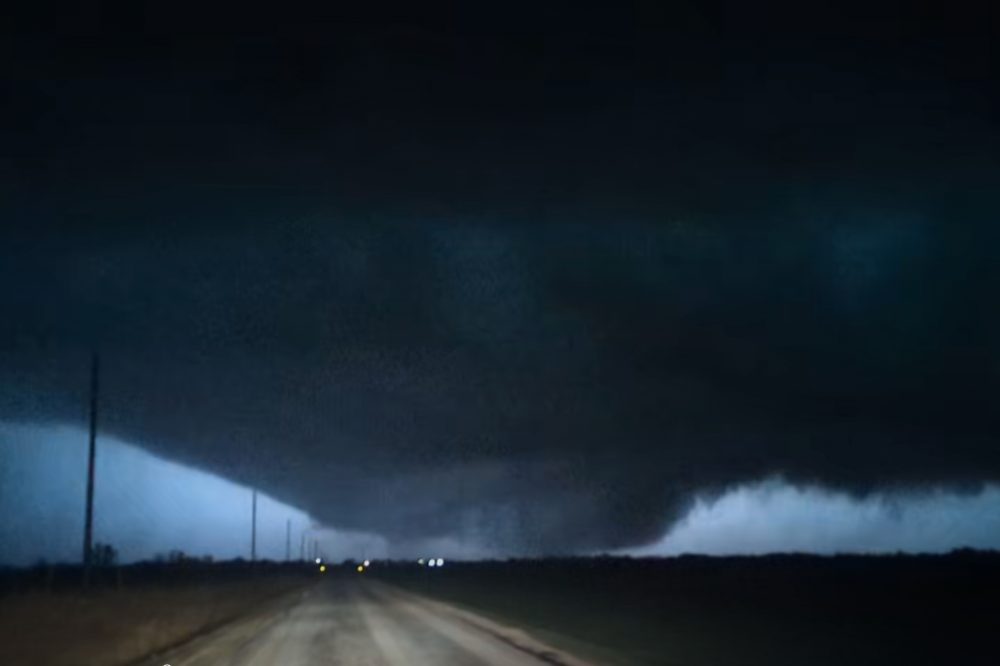
Dramatic video footage showed a law enforcement officer driving directly toward a massive storm system near Fairview in western Oklahoma, where lightning strikes revealed a large funnel cloud extending toward the earth. The Thursday night tempest, marking one of the season’s initial severe weather events as spring approaches, was recorded by equipment installed in the deputy’s patrol vehicle.
Tragically, a 47-year-old mother and her 13-year-old daughter from Fairview lost their lives when their car was involved in a collision at a highway and county road intersection around 10 p.m. Thursday, officials reported. According to Oklahoma Highway Patrol representative Sarah Stewart, the fatal accident “appears to be tornado related.”
Oklahoma Governor Kevin Stitt issued a statement Friday expressing his condolences: “Severe weather struck Major County last night and tragically claimed the lives of a mother and daughter. I am praying for the family as they grieve this tragic loss, as well as all those impacted by the storms.”
Weather service officials from Norman, Oklahoma, announced plans to dispatch assessment teams Friday to determine whether Thursday’s storms produced confirmed tornadoes. “As of right now, we’re still investigating that,” explained meteorologist Ryan Bunker.
Friday’s weather conditions could prove even more dangerous, with over 7 million Americans facing the most severe weather threat in regions encompassing Kansas City, Missouri; Tulsa, Oklahoma; and Omaha, Nebraska, based on Storm Prediction Center forecasts. An additional 25 million residents face moderate risk levels across areas including Dallas, Oklahoma City, and Milwaukee, Wisconsin.
The National Weather Service predicted scattered severe thunderstorms would develop Friday afternoon and evening, stretching from Plains states through the Ozarks and into Midwest regions.
“The greatest potential for a few strong tornadoes and very large hail should exist across eastern portions of Oklahoma/Kansas/Nebraska into western Arkansas/Missouri and southern Iowa,” forecasters stated.
AccuWeather meteorologists explained that the dangerous weather pattern results from warm Gulf Coast air masses colliding with cold Canadian air systems moving behind frontal boundaries.
“This is probably our first real event this season where people are really starting to pay attention getting into the spring storm season,” noted Melissa Mayes, who serves as deputy director for Washington County Emergency Management Agency in Bartlesville, Oklahoma, located north of Tulsa.
These spring weather systems arrive as tornado season typically begins across various regions of the United States at different times. Safety experts advise residents to prepare by obtaining weather radios and establishing shelter plans before severe weather strikes.
Separately, northeastern states faced winter weather advisories as a mixture of rain, snow, and slush created hazardous morning travel conditions from Pennsylvania through Maine on Friday. Multiple vehicle accidents occurred on the Maine Turnpike as drivers navigated sleet and snow conditions.
Educational institutions in New Hampshire and Maine either cancelled classes or implemented delayed start times.
Weather conditions began improving by mid-morning in some locations, though Maine, Massachusetts, Rhode Island, and Connecticut maintained active weather advisories. Southern Ohio received flood warnings.
Across southern United States regions, the same weather system is expected to generate unusually high temperatures for this time of year by weekend.
“Temperatures will be 20-30 degrees above average, with 80s reaching as far north as parts of the Ohio Valley and Mid-Atlantic,” federal meteorologists wrote in extended forecast discussions. “Daily records could become widespread.”