
DANBURY, Conn. (AP) — Emergency calls at the Danbury Fire Department used to trigger immediate, high-volume alarms and tones that would startle firefighters before they rushed out to potentially high-stress situations.
Captain Kevin Lunnie described the previous system as “overwhelming.” He observed significant spikes in his heart rate when those alerts sounded, which poses serious concerns in a field where cardiac issues represent the primary cause of line-of-duty fatalities.
However, the city has adopted a more gentle method. Their new system, which became operational in September, features alarms that begin quietly and slowly build in volume, accompanied by a computerized voice that calmly delivers essential information about the emergency response needed.
“It’s much easier on your nervous system,” Lunnie stated.
This southwestern Connecticut city of approximately 87,000 residents has implemented the updated alert technology across its five fire stations, becoming part of thousands of departments globally working to decrease stress levels and enhance response efficiency.
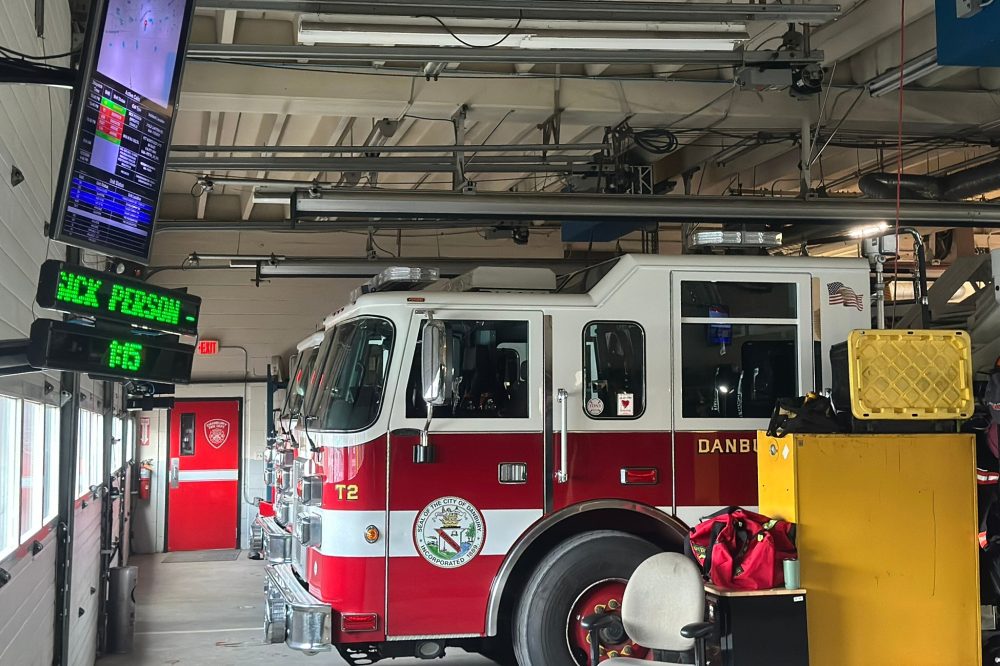
During a recent weekday demonstration at Danbury’s primary fire station, an incoming call triggered the alert with one gentle tone. “Truck 1,” announced the automated female voice. “Respond to sick person,” it continued, providing the patient’s location.
Throughout the station, soft red lighting pulsed while screens showed the emergency type and address. A countdown timer started at two minutes, with crews aiming to depart before reaching zero.
The approach proves both more peaceful and clearer compared to the previous method, which started with maximum-volume single tones followed by chaotic longer ones that shifted between high and low frequencies. Emergency dispatchers would announce calls through station speakers, which firefighters described as filled with static and difficult to comprehend.
“Most people found it very jarring,” Lunnie commented about the old system, which would shock firefighters awake at any hour.
The updated equipment connects directly to the computer-aided dispatch system. When dispatchers receive emergency calls and enter initial details, it can notify stations and units more rapidly than department personnel, while simultaneously transmitting call information to firefighters’ mobile devices and smartwatches.
According to Danbury Assistant Fire Chief William Lounsbury, this results in faster response times.
Danbury utilized approximately $500,000 from 2021 American Rescue Plan Act funds to purchase the new Phoenix G2 system, manufactured by US Digital Designs, a Honeywell subsidiary. Honeywell reports that nearly 6,000 firehouses across the United States use this same system.
Various other companies produce comparable alerting technologies installed in numerous stations throughout the country.
Supporters of the gentler method reference a decade-old research study showing that alert systems using immediately loud sounds raised firefighter heart rates by a median of seven beats per minute, versus five beats per minute with systems that gradually increased volume.
While the difference appeared relatively minor, researchers determined it was statistically meaningful.
“When the alarm was used in a ramp-up fashion — so a gradual buildup on the alarm — the heart rate was lower to the alarm, so it put less stress on their body,” explained Dr. Jay MacNeal, associate emergency medical services director for Wisconsin’s Beloit Fire Department and one of the study’s co-authors.
More than 40 Beloit firefighters participated in the research, which appeared in the Journal of Occupational and Environmental Hygiene in 2016 by investigators from Mercyhealth’s Emergency Medicine Department in Janesville, Wisconsin, and Yale University in Connecticut.
The National Fire Protection Association reports that among 51 on-duty firefighter deaths in the United States during 2024, 20 resulted from sudden cardiac death, making it the top cause of these fatalities.
In the previous year, the NFPA established new standards for fire station alerts requiring alarms and tones that begin at lower volumes, plus calm, computerized voices, recognizing the importance of stress reduction.
The International Association of Fire Fighters, representing more than 360,000 firefighters and paramedics across the United States and Canada, endorses progressive-volume alert systems. However, the organization seeks specific standards governing their design.
Sean DeCrane, the IAFF’s assistant to the general president for health and safety, noted that research on optimal methods for alerting firefighters to emergency calls remains insufficient, and each currently available system differs.
“We would like to see an industry standard that really starts to define the decibel levels, the intervals, the integration of turning on the lights, what that progression should be, and we believe the standard should be based on research,” DeCrane stated.