
As Ramadan reaches its midpoint, Muslim communities throughout the United States are struggling to preserve the sacred month’s balance of spiritual devotion and celebration while facing mounting challenges.
Federal immigration enforcement actions have impacted numerous Muslim neighborhoods, while hostile anti-Muslim language grows more prevalent. Adding to these concerns, ongoing warfare in the Middle East has left many families worried about relatives in affected regions.
In Paterson, New Jersey, which boasts one of America’s highest concentrations of Muslim residents per capita, 18-year-old Haneen Alatiyat observes how fear and worry are preventing community members from participating in Ramadan’s traditional group activities.
“The meaning of the holiday is to be together with the people you love,” said Alatiyat, whose heritage is half Palestinian and half Jordanian.
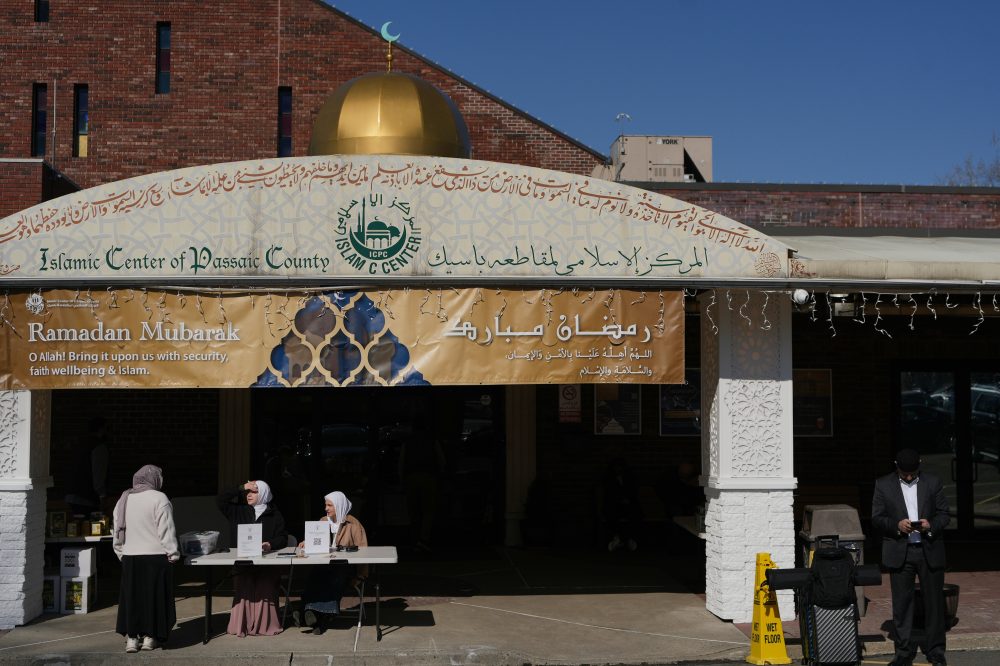
“Unfortunately, because of the ICE raids that are happening, people don’t want to do that,” she explained while standing outside the Islamic Center of Passaic County in Paterson, referencing Immigration and Customs Enforcement operations under President Donald Trump’s administration. She attends this mosque annually with her family during Ramadan.
Paterson houses one of the world’s largest Palestinian communities outside the Middle East, and residents had already been mourning losses and supporting survivors from the Israel-Hamas conflict in Gaza before these recent developments added new stress.
“This Ramadan has already been heavy for many families in our community with the immigration crackdowns,” explained Rania Mustafa, who serves as executive director of the Palestinian American Community Center in Clifton, New Jersey.
“Now, as the war on Iran started, many people here are experiencing another layer of fear and grief,” she continued.
In Minnesota, where residents are still recovering from recent extensive immigration enforcement operations, Ramadan arrived accompanied by complex emotions, according to Imam Yusuf Abdulle, executive director of the Islamic Association of North America.
Community members feel “blessed that we are alive and well,” Abdulle noted. “Also, we feel like we’re … bruised, affected, devastated economically, psychologically.”
Abdulle leads an umbrella organization that oversees multiple Islamic centers, including several in Minnesota.
He reported that the Abubakar As-Saddique Islamic Center in Minneapolis, where he serves on the board, has discontinued hosting group iftar meals that traditionally break the daily fast at sunset, now offering only dates and water instead. He blamed this change on the financial impact to local businesses that normally sponsor these gatherings, as customers avoided the area during enforcement operations.
“Eating together and sharing stories while eating, it was beautiful,” he reflected. “I hope that comes back.”
Despite the departure of most of the approximately 3,000 immigration officers, some community members continue to exercise caution about leaving home, including mosque attendance, particularly asylum-seekers and refugees, Abdulle reported.
“The fear … is very much there and it will be there for a while.”
However, family nurse practitioner Munira Maalimisaq finds reasons for gratitude despite the difficulties. She leads Inspire Change Clinic as CEO, serving marginalized populations in Minnesota.
“Even with the challenges, there’s a strengthened sense of community, resilience, and hope alongside the usual spiritual reflection, prayer, and charity that Ramadan brings,” she observed.
During this Ramadan period, several Muslim organizations have distributed guidance on handling interactions with immigration enforcement, including advice for mosques. The Muslim Public Affairs Council created a comprehensive safety resource.
MPAC representative Dahlia M. Taha explained that their guidance helps religious leaders address congregation concerns without creating panic or spreading false information.
Common questions from imams include: Are religious buildings vulnerable to enforcement actions? How can leaders provide comfort without offering legal counsel? How can immigration anxiety be addressed while maintaining Ramadan’s spiritual focus?
“There is a deep sense of community and peace that always comes with Ramadan,” Taha stated, noting that many mosques maintain strong attendance and families continue gathering.
Still, “people are carrying fear, anxiety, and uncertainty alongside our faith,” she acknowledged. “Devotion and concern are existing side by side. I think everyone is just exhausted.”
Ibrahim Dyfan, who directs Masjid Al Shareef, a 2,000-member mosque in Long Beach, California, said his congregation faces stress from increasing Islamophobia, immigration enforcement, and Middle Eastern conflicts, similar to other Muslim communities.
His mosque has enhanced security measures for Ramadan prayer services, he reported.
“All we can do is continue praying and fasting,” he stated. “This, like everything else, will pass. At the same time, we also need to pay attention to what is happening around us, and take the necessary precautions.”
Anti-Muslim rhetoric has escalated in Republican campaigns during this election cycle, particularly visible in Texas, which conducted primaries Tuesday. Governor Greg Abbott, who secured the GOP nomination for a fourth term, spearheaded efforts to block a Muslim-focused planned community near Dallas.
Congressional representatives have recently proposed multiple bills targeting Shariah, the religious framework guiding Muslim prayer and ethical behavior. Representative Randy Fine, R-Florida, posted social media content comparing Muslims unfavorably to dogs, prompting the Council on American-Islamic Relations and Democratic lawmakers to demand his resignation.
Muslim American leaders interpret this hostility as election-year fear tactics, more severe than previous campaign periods. Recent electoral wins for Muslim candidates, including Zohran Mamdani’s mayoral victory in New York, have only partially reduced their concerns.
“Every election year, you see an increase in anti-Muslim bigotry in certain parts of the country, where politicians see Muslims Americans a useful political football,” stated Edward Ahmed Mitchell, CAIR’s national deputy director. “We expect that — but it’s so much worse than usual this time.”
In Paterson, Rania Mustafa reports that numerous families maintain concern for relatives in conflict-affected areas of North Africa and the Middle East, including Gaza residents struggling with food shortages.
Nevertheless, she takes pride in her community’s determination.
“Despite what’s going on in the world, Ramadan reminds us of the strength and resilience of our community,” she declared. “People are still gathering for prayer, sharing meals, checking on one another, and supporting families who are struggling.”
As evening approached on a portion of Paterson’s Main Street renamed “Palestine Way” and decorated with Palestinian and American flags, residents arrived at homes and restaurants to end their daily fast recently. Some hurried to bakeries while others visited the Palestine Hair Salon.
Raed Odeh, the salon’s owner and lead barber, expressed disappointment that Middle Eastern conflicts and domestic immigration enforcement were diminishing what should be a celebratory month.
“This is not only affecting those who don’t have documents, this is also affecting everyone else around,” explained Odeh, who serves as Paterson’s deputy mayor, while trimming a customer’s beard.
Along with other municipal leaders, he advocates for the release of Leqaa Kordia, a Palestinian woman and Paterson resident detained in immigration custody for one year following her participation in a New York protest. Kordia recently reported suffering a seizure, which she attributed to “inhumane” detention conditions.
During these turbulent times, Odeh expressed a hope shared by many people of all backgrounds during Ramadan: “Of course, everybody is hoping for peace.”