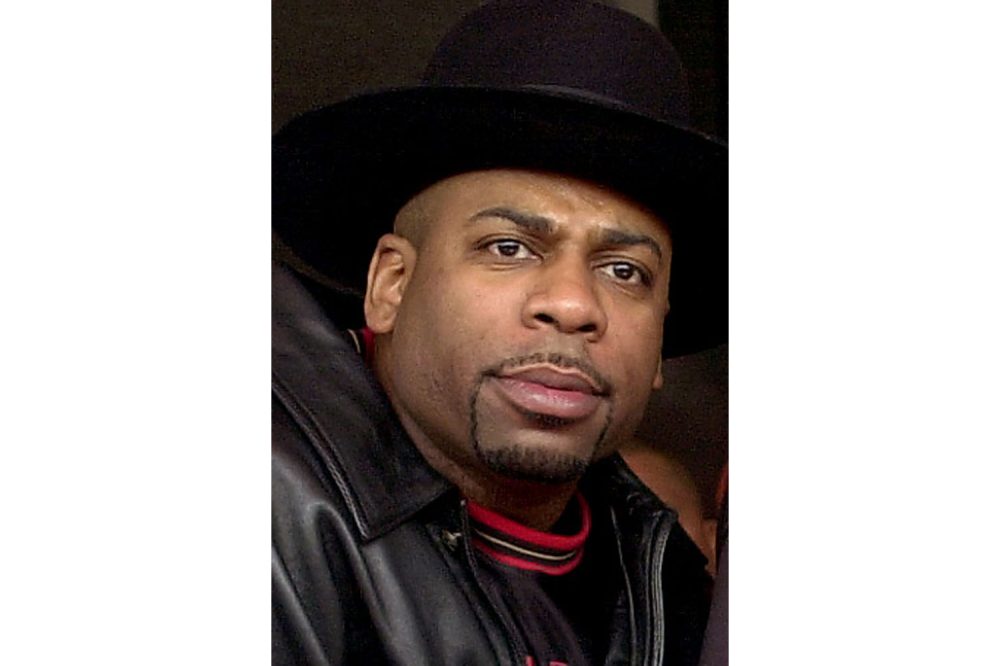

Court documents reveal that Jay Bryant, one of three defendants accused in the 2002 murder of Run-DMC’s Jam Master Jay, is preparing to enter a guilty plea, marking what would be the first courtroom confession of involvement in the hip-hop legend’s death.
Following his 2023 indictment, Bryant initially entered a not guilty plea to murder charges. However, recent correspondence between his defense attorney and federal prosecutors indicates ongoing negotiations for a plea deal.
Thursday’s court filing showed Bryant’s intention to modify his plea, though details about specific charges he may admit to or potential sentencing remain undisclosed. No scheduling has been announced for the plea change, and prosecutors have not provided comment. Bryant’s legal representative has not yet responded to inquiries.
Legal experts note that such notices don’t guarantee finality, as defendants retain the right to withdraw from plea agreements even during court proceedings.
Should Bryant proceed with the guilty plea, it would add both resolution and additional complexity to an already intricate case. His co-defendants Karl Jordan Jr. and Ronald Washington faced jury trial, resulting in convictions that were later overturned for Jordan by a judge. Bryant’s case has remained distinct from the others.
Authorities indicted Bryant nearly three years after his co-defendants when investigators allegedly discovered his DNA on headwear found at the recording studio where the shooting occurred. The victim, born Jason Mizell, served as the DJ for Run-DMC and helped create the distinctive beats and scratches that brought rap music into mainstream popularity during the 1980s. The group’s notable tracks included “It’s Tricky” and their collaboration with Aerosmith on “Walk This Way.”
When investigators allegedly connected Bryant’s DNA to evidence, prosecutors had already established their theory that Jordan and Washington targeted Mizell due to disputes over a botched narcotics transaction. Trial testimony and prosecutor statements indicated that Jordan fired the fatal shots while Washington prevented escape by blocking the entrance and commanding one of Mizell’s associates to lie down. Both defendants maintained their innocence throughout proceedings.
The relationships between the parties varied significantly. Jordan was Mizell’s grandson, while Washington had maintained a friendship with the DJ since childhood. Bryant, however, appeared to have minimal or no direct relationship with the rap icon. Trial testimony suggested Bryant shared mutual acquaintances with Jordan and Washington, but evidence of any personal interaction with Mizell remained unclear.
Following the alleged DNA discovery, prosecutors theorized that Bryant entered the studio facility and unlocked a rear emergency exit, allowing Washington and Jordan to bypass the building’s security system and launch their surprise attack on the DJ.
Conflicting accounts emerged when Bryant’s uncle testified that his nephew confessed to shooting Mizell in self-defense when the musician allegedly reached for a weapon. However, no additional witnesses confirmed Bryant’s presence in the studio during the incident, and prosecutors disputed the uncle’s version of events despite calling him as their own witness. Instead, they proposed that Bryant had contact with the hat before Jordan or Washington transported it into the studio and left it behind.
Court documents indicate that neither Washington’s nor Jordan’s DNA appeared on the recovered headwear.
Michael Hueston, representing Jordan, contended that the charges against Bryant created reasonable doubt regarding his client’s guilt. Jordan’s conviction was subsequently reversed due to separate legal issues.
Bryant, currently 52 years old, was already in federal custody on narcotics and weapons violations when charged in Mizell’s death. He has since entered guilty pleas in the drug and firearm matter and awaits sentencing in that case.