
Republican lawmakers in Congress have successfully passed a measure aimed at eliminating federal restrictions on mining operations near Minnesota’s protected Boundary Waters Canoe Area Wilderness, potentially opening the door for a Chilean-owned company to extract valuable metals from the environmentally sensitive region.
Following House approval last month, Senate Republicans secured a narrow 50-49 victory Thursday to advance the resolution to President Trump’s desk, despite strong opposition from environmental advocates who fear irreversible damage to one of America’s most pristine wilderness areas.
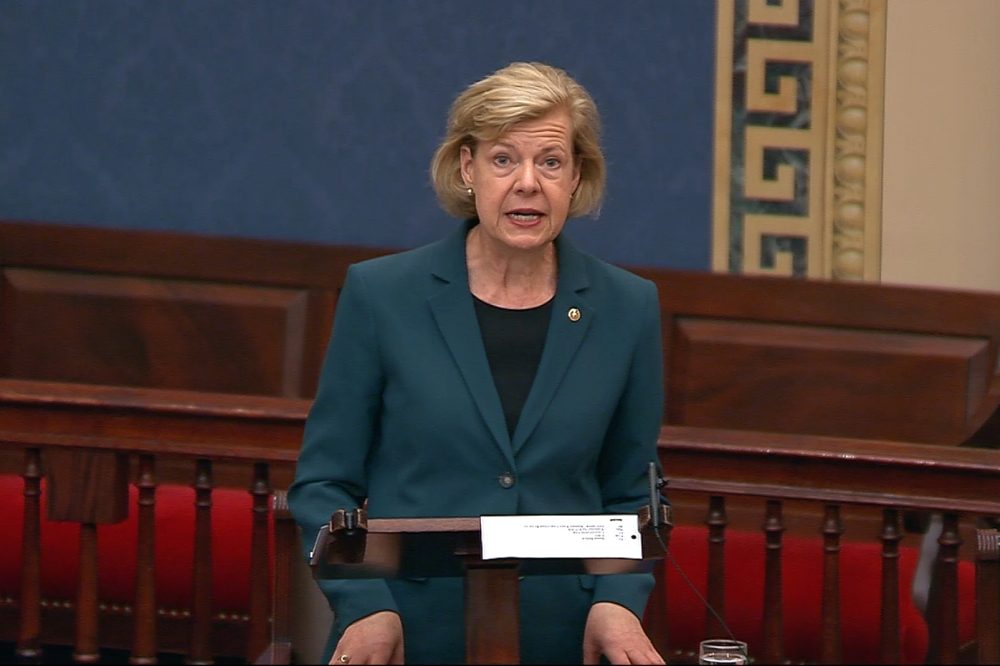
Democratic senators argued during floor debate that removing these protections would establish a troubling precedent that could threaten conservation efforts on federal lands nationwide. Minnesota’s Democratic Senators Amy Klobuchar and Tina Smith particularly criticized their Republican colleagues for undermining their state’s natural heritage.
Klobuchar, who previously backed iron mining but is currently seeking the Minnesota governor’s office, described the Boundary Waters as a place where visitors experience “mist over meadows” and “sunlight on leaves.” Smith accused the GOP of disregarding Minnesotans who oppose destroying the wilderness.
“You can support mining, but that does not mean you support every mine in every place,” Smith stated during the debate.
Notably, no Republican senators offered remarks defending the ban’s removal.
The protected wilderness spans approximately 150 miles through the Superior National Forest along the Minnesota-Canada border, featuring crystal-clear lakes, expansive forests of pine, spruce and birch trees, spectacular sunsets and starlit skies. Visitors who venture beyond popular routes can experience profound solitude interrupted only by loon calls and occasional wolf howls.
Current regulations prohibit logging activities, restrict aircraft to altitudes above 4,000 feet except during emergencies, and limit motorized boats to designated areas. Forest Service records show tens of thousands of paddlers and campers visit annually.
The surrounding national forest sits atop the Duluth Complex, a geological formation rich in copper, nickel, lead, zinc, iron, silver and gold deposits, according to Forest Service documentation.
Twin Metals Minnesota LLC, owned by Chilean mining giant Antofagasta Minerals, presented a proposal to the Interior Department in 2019 seeking permission to extract copper, nickel and other valuable metals from the national forest. Company representatives claimed their operation would generate hundreds of union positions, over a thousand additional jobs, and significant tax revenue for economically challenged northeastern Minnesota communities.
“With this Project, Minnesota can be a model for modern, sustainable and environmentally and socially responsible mining,” their operational proposal stated.
While the initial Trump administration renewed the company’s mineral rights in 2019, Biden administration officials canceled those agreements in early 2022. The following year, a 20-year prohibition was established covering 400 square miles of forest land, with officials citing watershed and wilderness protection as justification.
Twin Metals responded with federal litigation claiming their leases remained legally binding, but a judge dismissed their case in 2023. The company’s appeal remains under review.
President Trump has emphasized increasing domestic energy and mineral production, declaring an energy emergency shortly after returning to office in January 2025. His administration restored a 2017 legal interpretation last fall that permitted Twin Metals to renew Superior National Forest leases, and Minnesota regulators approved the company’s exploratory activities in December.
Duluth Republican Representative Pete Stauber introduced the moratorium-lifting resolution in January, arguing the prohibition has eliminated Minnesota jobs and compromised national mineral security. During House floor remarks, he emphasized the benefits of domestic mining over dependence on China or Russia for essential minerals.
While the moratorium’s removal would permit mining in national forest areas bordering the Boundary Waters rather than within the wilderness itself, the proposal has generated significant opposition from environmental groups and outdoor recreation enthusiasts. Critics warn that mining-related contamination could spread through the wilderness watershed, introducing mercury and sulfide compounds that would harm fish, wildlife and vegetation, including wild rice crucial to Minnesota’s Chippewa tribal traditions.
Descendants of President Theodore Roosevelt, including his great-grandson, sent correspondence to Republican senators requesting they maintain the current moratorium. The Friends of the Boundary Waters organization has coordinated protests outside Stauber’s Hermantown office and organized a demonstration at Minnesota’s state capitol in St. Paul. This controversy adds to existing tensions between Minnesota and the Trump administration following fatal shootings of two Minneapolis residents by federal immigration agents in January.
Twin Metals defended their 2019 proposal by highlighting northeastern Minnesota’s mining heritage, noting eleven previous mining operations in the area. Company officials also emphasized that emerging low-carbon technologies require precious metals – copper for wind turbines, cobalt for electric vehicle batteries, and nickel for corrosion-resistant materials in desalination facilities.
The proposed $1.7 billion operation would function continuously year-round, according to company documents. Their plan included environmental safeguards such as underground extraction, above-ground waste elimination to prevent acid drainage, and post-closure site restoration.
Trump is anticipated to approve the resolution, though mine development could still require years even without the moratorium. Twin Metals estimated two to three years for construction in their 2019 filing, though this timeline may prove optimistic.
While Trump could expedite federal lease renewal and pressure agencies like the Forest Service and Army Corps of Engineers for rapid permitting, Twin Metals must still obtain up to 18 state permits according to their proposal. The company would face additional obstacles if voters elect Klobuchar as governor this November.
Environmental organizations retain the option to challenge permits through litigation, potentially delaying construction for years during court proceedings.