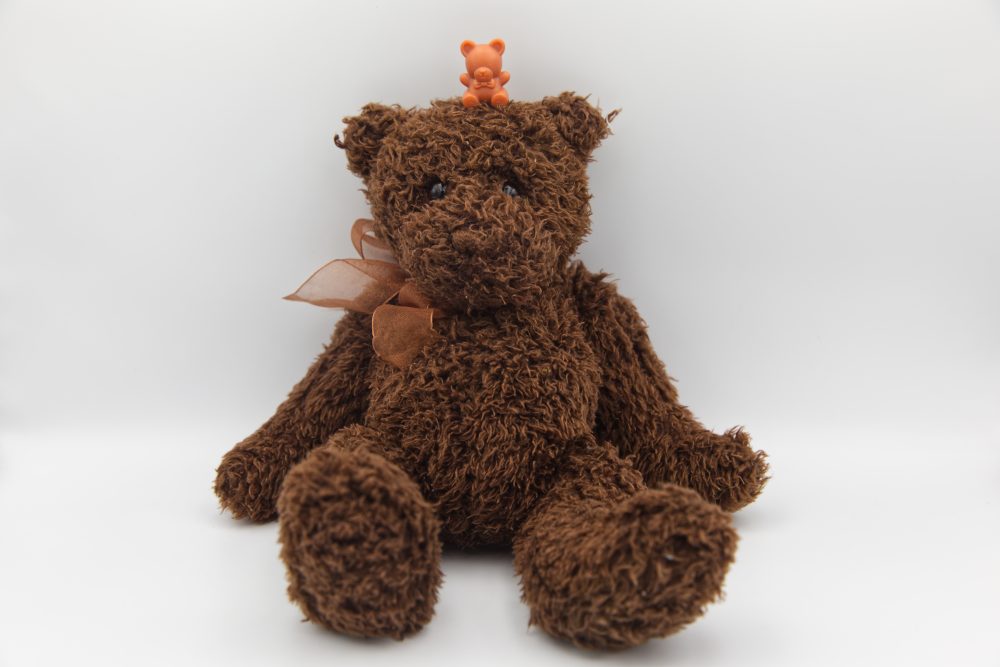

The round snout. The tiny black nose. Those button eyes and pair of soft, circular ears. What makes the teddy bear so irresistible to children that it has remained their faithful companion for more than 100 years?
This iconic American plaything began in 1902 when Morris and Rose Michtom, who owned a candy shop in Brooklyn and were Jewish immigrants, crafted the first version using fabric remnants and sawdust filling.
“Nothing says childhood better than a teddy bear,” explains Michael Kimmel, who wrote “Playmakers: The Jewish Entrepreneurs Who Created the Toy Industry in America” and happens to be Morris Michtom’s great-great-nephew. “It’s an utterly genderless toy. It is embraced by both boys and girls.”
The beloved bear’s creation story traces back to earlier that same year when President Theodore Roosevelt declined to kill a restrained black bear while on a hunting expedition. Political cartoonist Clifford Berryman illustrated Roosevelt’s compassionate choice, and this drawing sparked the Michtoms’ creativity. They designed a cuddly toy they named “Teddy’s Bear” in honor of the president’s popular nickname.
This marked the beginning of a cultural phenomenon.
Following initial sales success, the Michtoms found themselves flooded with additional requests. Imitators quickly appeared in the marketplace. According to Kimmel, the teddy bear represented the first stuffed plaything that wasn’t either a cloth or ceramic doll. It offered affordability, comfort, and child-appropriate sizing. Interestingly, some religious leaders expressed concern that these playful plush toys might somehow harm young girls and diminish their maternal instincts.
Through the years, the teddy bear achieved legendary status. Elvis Presley sang about wanting to be someone’s “lovin’ teddy bear.” One of the original Michtom-made bears holds a prestigious spot in the Smithsonian National Museum of American History. Additionally, calling someone a “teddy bear” has evolved into describing a person as gentle and affectionate.
Kimmel observes: “There are people who, when they finally move out of the house and go to college or get married, that’s the one thing that they just can’t part with because it connects them to that innocent childhood.”