German shoppers are turning their attention to Chinese electric vehicle manufacturer BYD as fuel costs continue climbing, new marketplace data reveals.
Online car platform Carwow reports that BYD emerged as one of Germany’s fastest-expanding automotive brands during the first three months of the year, with consumer inquiries about the Chinese electric vehicle company jumping 135% during that timeframe.
German buyers showed particular enthusiasm for BYD’s electric sport utility vehicles and the budget-friendly Dolphin compact car, creating competitive pressure on European automakers to develop more cost-effective options.
According to Carwow’s analysis, Chinese automotive brands are positioned to benefit from elevated gasoline prices linked to Middle Eastern tensions and increasing costs for new vehicles. The Chinese-owned manufacturer MG also experienced growth on the platform.
“Affordable electric cars with short delivery times are thus becoming significantly more attractive — an environment in which Chinese manufacturers, in particular, are capitalising on their strengths and noticeably gaining market share,” the company said.
The marketplace data indicates that overall interest in battery-powered vehicles climbed approximately 184% during the opening quarter compared to the preceding three-month period.
This growing consumer interest is translating into actual sales figures in Germany’s market, where domestic European brands maintain dominance.
Official registration data from Germany’s KBA automotive authority shows BYD’s March registrations skyrocketed 327%, resulting in a 1.2% market share for that month. However, this remains significantly below Volkswagen’s 17.9% share and other established German manufacturers.
After minimal adoption of Chinese vehicle models in recent quarters, independent automotive analyst Matthias Schmidt noted that the first quarter “provided the first genuine signs that private uptake is starting to bite.”
Schmidt emphasized that German automakers are responding aggressively “with an accelerating product cadence, particularly in the second half of the year.”
JOHANNESBURG (AP) — Julius Malema, who heads South Africa’s opposition Economic Freedom Fighters party, received a five-year prison term Thursday following his conviction for violating gun laws when he discharged a rifle during a 2018 political gathering.
In October, Malema was found guilty on multiple charges including illegal firearm and ammunition possession, discharging a weapon in an urban area, and putting others at risk through reckless behavior.
The controversial political leader, who heads the leftist Economic Freedom Fighters organization, faced charges along with bodyguard Anton Snyman after footage of the shooting incident spread widely online. Snyman was acquitted of all charges.
When announcing the punishment, Magistrate Twanet Olivier explained she weighed the seriousness of his actions in deciding the sentence. “We hear daily, or weekly, of children playing in the front yards, in the street, who are caught in crossfire, random shots fired, killing people. It’s just the first time that we hear, it’s being called celebratory shots,” Olivier said.
Throughout the legal proceedings, Malema maintained that the accusations were driven by political motivations, noting they originated from Afriforum, an advocacy organization representing white Afrikaner interests that has clashed with Malema repeatedly over the years.
Olivier stated that both the conviction and punishment were determined exclusively by his conduct during the incident in question.
Malema leads the nation’s fourth-largest political party and remains a polarizing personality, largely due to his organization’s platform calling for seizing white-owned property without payment and government takeover of mining operations and financial institutions.
His profile gained international attention when former U.S. President Donald Trump displayed footage of him during a strained discussion with South African President Cyril Ramaphosa, showing Malema performing a contentious anti-apartheid anthem that some view as promoting violence against Afrikaners.
BERLIN — Wildlife rescue teams in Germany launched an intricate mission Thursday to save an ailing humpback whale that has been beached along the Baltic Sea shoreline, capturing nationwide attention for several weeks.
The massive marine mammal, dubbed Timmy by German news outlets, remains motionless in shallow coastal waters near Wismar in eastern Germany, showing little movement for multiple days. Wildlife experts worry the creature may not survive much longer.
Timmy first appeared in the area on March 3rd. Scientists remain puzzled about why the whale ventured into the Baltic Sea, which lies far outside its typical environment. Some researchers believe the animal may have become disoriented while pursuing herring schools or during seasonal migration.
The creature faces enormous challenges in navigating back to the North Sea, requiring a journey spanning hundreds of kilometers before reaching the Atlantic Ocean.
Previous rescue efforts involving police vessels, construction equipment and inflatable craft succeeded in temporarily freeing the mammal. However, the whale, measuring between 39 and 49 feet in length, never managed to locate its route back to the North Sea and became stranded once more while its condition deteriorated.
German news organizations have launched continuous live coverage to satisfy intense public fascination with the whale’s situation, as it rests in shallow water with labored, slow breathing patterns. Digital news platforms have sent breaking news alerts for even minor updates about Timmy’s health, including reports on deteriorating skin conditions caused by the Baltic Sea’s reduced salinity levels.
Environmental advocates have organized demonstrations along Wismar’s shoreline demanding the animal’s rescue, while social media personalities have debated whether the most humane approach involves allowing peaceful death or continuing rescue attempts to return it to the Atlantic.
Public interest has grown so intense that law enforcement established a 1,640-foot safety perimeter to prevent curious onlookers from approaching and further stressing the beached whale.
Even with these precautions, a 67-year-old woman leaped from a boat over the weekend attempting to reach the whale before authorities intervened.
Marine specialists have developed an advanced strategy involving air cushions to lift the creature onto a tarp, which will be fastened to dual pontoons and connected to a tugboat.
Regional authorities have given approval for a privately-funded effort to transport the whale back to the North Sea and potentially continue to the Atlantic. According to current plans, the tugboat carrying Timmy should depart the Baltic Sea by Friday.
“He’s not active, and he’s certainly not agile, but he shows that there’s still life in him,” said Till Backhaus, environment minister for Mecklenburg-Pomerania state where Wismar is situated, during Wednesday’s announcement of the rescue strategy. “He’s definitely suffered serious damage, that’s for sure.”
Delaware motorists traveling on Route 1 near Rehoboth Beach should prepare for potential delays tonight as state transportation crews perform road maintenance work.
The Delaware Department of Transportation announced that mobile stripping operations will take place along Route 1 between Bay Vista Road and Turn Point Road. The work will result in intermittent lane closures that are scheduled to continue until 5 a.m.
Drivers using this stretch of coastal highway should allow extra travel time and exercise caution when approaching the work zone. The maintenance operation may cause temporary traffic delays as crews move equipment along the roadway.
DelDOT advises motorists to reduce speed and remain alert while passing through areas where road work is taking place.
MIDDELBURG, Netherlands — Ukraine’s President Volodymyr Zelenskyy accepted a distinguished international honor Thursday, recognizing both his leadership and his country’s bravery in defending against Russia’s full-scale military assault that began over four years ago.
The International Four Freedoms Award was presented by the Roosevelt Foundation, established in 1982 to recognize individuals who exemplify the four fundamental freedoms President Franklin D. Roosevelt described in his 1941 State of the Union speech: freedom of speech and expression, freedom of worship, freedom from want, and freedom from fear.
“We pay the highest tribute to the unwavering courage and enduring perseverance of the Ukrainian people and to the steadfast and resolute leadership of their president, Volodymyr Zelenskyy,” foundation chair Hugo de Jonge stated during Thursday’s ceremony.
Netherlands Prime Minister Rob Jetten praised Zelenskyy at the event, noting, “It speaks volumes that you only agreed to accept this award if you could do so on behalf of all the people of Ukraine.”
Following a standing ovation from attendees, Zelenskyy requested a moment of silence to honor victims of a recent Russian overnight attack that claimed at least 16 lives and injured numerous others.
“Dozens of people have been injured and, sadly, so sadly, there are also lives lost in Odesa, Kyiv, Dnipro. Just ordinary people, children, civilians, killed by Russian madness,” he stated, while demanding international accountability for war crimes committed in Ukraine.
“Do not let Russia go unpunished,” he urged.
The prestigious award has previously been given to notable figures including Nelson Mandela, the Dalai Lama, former German Chancellor Angela Merkel, and organizations such as the United Nations and the International Committee of the Red Cross.
Other recipients this year included French rape survivor Gisèle Pelicot, who received the Freedom from Fear Award, the Committee to Protect Journalists for the Freedom of Speech Award, and Chilean activist Isidora Uribe Silva, who has cerebral palsy and earned the Freedom from Want Award for her advocacy work on inclusion, equal human rights, and gender equality.
The foundation did not publicly identify the Freedom of Worship Award recipient due to security considerations.
Following the ceremony, Zelenskyy scheduled a meeting with Prime Minister Jetten. The Netherlands has provided substantial support to Ukraine throughout the conflict, including Patriot missile systems and fighter aircraft. On Wednesday, Defense Minister Dilan Yeşilgöz-Zegerius announced a 248 million euro ($292 million) investment in drone technology for Ukrainian forces.
With no additional U.S.-facilitated negotiations with Russia currently scheduled, Zelenskyy has spent the week visiting three European capitals within 48 hours, seeking commitments for continued military and financial assistance from Germany, Norway, and Italy. Ukrainian officials report that Germany and Ukraine have agreed to a defense package worth 4 billion euros ($4.7 billion), while Norway has committed 9 billion euros in aid.
The Four Freedoms ceremony takes place annually at the New Church in Middelburg, located in Zeeland province, the ancestral homeland of President Roosevelt’s family.
The world’s leading contract semiconductor manufacturer delivered exceptional financial results Thursday, with Taiwan Semiconductor Manufacturing Corp. announcing first-quarter earnings that soared 58% above last year’s figures, powered by unprecedented artificial intelligence market growth.
The Taiwanese technology giant, which serves as a critical supplier to tech heavyweights Apple and Nvidia, posted record quarterly earnings of 572.5 billion new Taiwan dollars ($18.1 billion) during the January through March period, surpassing Wall Street projections.
The company’s earnings climbed 58.3% compared to the 361.6 billion new Taiwan dollars ($11.5 billion) recorded in the same quarter last year, while also showing a 13.2% increase from the final quarter of 2023.
Quarterly sales rose 8.4% from the preceding three-month period to reach $35.9 billion, according to company statements. Looking ahead, TSMC projects revenue will climb further to between $39 billion and $40.2 billion during the current April-June timeframe.
The semiconductor manufacturer continues expanding production facilities across the United States, Japan and Taiwan to meet soaring AI chip demand, with particular emphasis on advanced 3-nanometer processors essential for smartphones and artificial intelligence applications.
“AI-related demand continues to be extremely robust,” stated C.C. Wei, TSMC’s CEO and chairman, during Thursday’s earnings presentation. “Our conviction in the multi-year AI megatrend remains high, and we believe the demand for semiconductors will continue to be very fundamental.”
However, the company expressed concerns about potential disruptions from the ongoing Iranian conflict, which has elevated global supply chain expenses and threatened access to critical manufacturing materials including helium gas needed for chip production.
Chief Financial Officer Wendell Huang acknowledged that escalating costs related to the Iranian situation could impact profit margins, though he noted the company has “prepared safety stock inventory on hand” for helium and other materials, expecting “any near-term impact” on manufacturing operations to be minimal.
TSMC has committed substantial resources toward expanding production capabilities both domestically and internationally, including $165 billion allocated for new Arizona manufacturing facilities. Company officials indicated Thursday that capital investments over the next three years will be “significantly higher” than recent spending levels to accommodate growing customer requirements.
The chipmaker previously announced plans to increase its capital expenditure from approximately $40 billion in 2025 to between $52 billion and $56 billion this year, with Thursday’s update suggesting 2026 spending will trend toward the upper range of those projections.
A Kazakhstan court has handed down sentences to 19 activists who demonstrated against China’s harsh treatment of Muslims in the Xinjiang region, marking what human rights experts describe as an extraordinary effort by Kazakhstan to suppress dissent on behalf of Beijing.
The 19 Kazakh citizens staged their demonstration near the Chinese border in November, where they destroyed Chinese flags and images of President Xi Jinping while demanding freedom for a Kazakh citizen being held in Xinjiang.
Eleven demonstrators received five-year prison terms on charges of “inciting discord,” while eight others face travel and movement limitations. Attorney Shinquat Baizhan, who represents the group, verified the punishments that local news outlets also covered.
While Kazakhs who criticize China’s Xinjiang policies have historically encountered government pressure, advocacy organizations note this marks the first instance of such a substantial number of Xinjiang protesters being incarcerated in Kazakhstan.
“This is unprecedented,” stated Yalkun Uluyol, who researches China for Human Rights Watch. “It signals that Kazakhstan is willing to sacrifice freedom of its people to maintain good relations with Beijing.”
Beginning in 2017, Chinese authorities implemented a severe suppression campaign in Xinjiang, forcing over one million Uyghurs, Kazakhs, and other primarily Muslim groups into detention facilities and re-education centers. While many detainees have been freed, the area continues under heavy surveillance with significant restrictions on religious and cultural expression.
The Xinjiang situation has consistently created tension in Kazakhstan, a Central Asian nation of 20 million that depends heavily on Chinese trade. Kazakhstan’s government initiated criminal proceedings against the protesters following a formal complaint from China’s consulate in Almaty, the country’s largest city, according to Uluyol.
The diplomatic communication, which The Associated Press reviewed, described the demonstration as “an open provocation against the national dignity of the People’s Republic of China and an insult to the Chinese Communist Party and the Chinese people.”
China’s Foreign Ministry characterized the sentencing as an “internal affair” and commended Kazakhstan as a “friendly neighbor” that understands “China’s policies on governing Xinjiang.”
Kazakhstan’s Foreign Ministry did not provide a response when contacted for comment.
The convicted activists belonged to Atajurt, a group that champions the rights of Chinese-born Kazakhs experiencing persecution in China. More than one million ethnic Kazakhs live in Xinjiang, with thousands having been detained and many others still facing travel restrictions.
Atajurt has endured ongoing pressure from Kazakhstan’s authoritarian government, which shows little patience for opposition voices. Officials detained the organization’s founder, Serikzhan Bilash, in 2019, freeing him into exile only after he agreed to cease political involvement.
However, the Kazakh government had previously shown some tolerance for the group’s work, recognizing widespread public support in Kazakhstan for Chinese-born Kazakhs.
This tolerance appears to be ending, Uluyol observed, as Kazakhstan strengthens ties with China and shows decreasing acceptance of groups challenging Beijing’s policies.
Bilash warned that the arrests will have far-reaching consequences. His organization provided financial assistance to families of Xinjiang detainees, wrote advocacy letters to embassies and the United Nations, and recorded hundreds of testimonies from people searching for missing relatives.
“The world will lose more than just a human rights organization; it will lose the biggest window into the humanitarian disaster in neighboring Xinjiang,” said Bilash, who now lives in exile in the United States.
NEW YORK (AP) — Mathematician Masood Masjoody was known for publicly accusing those he viewed as enemies. When he posted on social media last autumn that two Iranian-born activists were planning his murder, few people paid attention.
The academic vanished in early February. Police in British Columbia discovered his remains by mid-March and filed first-degree murder charges against the same two individuals Masjoody had identified as threats.
The news shocked Iranians living abroad, especially those who oppose both the current Iranian government and efforts to install the former monarchy’s heir as the country’s future ruler. Shortly after Masjoody’s disappearance, 10 prominent diaspora voices—mostly critics of the monarchist cause or the ongoing conflict with Iran—received a threatening message on X.
“Soon you’ll have to find the corpses of many,” the message warned.
The Farsi-language post, accompanied by a knife emoji, originated from a now-deleted account bearing the name SAVAK, referencing the monarchy’s notorious secret police that once suppressed opposition.
This incident has intensified existing fractures within a diaspora split over the current war and potential future leadership should Iran’s government collapse. Those who received threats point fingers at the influential movement supporting the exiled crown prince who endorses the U.S. and Israeli-led military campaign. The two murder suspects had expressed opposition to Iran’s current regime while supporting monarchist causes in their online activity.
Followers of Reza Pahlavi, whose father was overthrown in the 1979 Islamic Revolution, reject responsibility for such intimidation and claim Iranian government operatives are impersonating activists online. Tehran has an established record of pursuing dissidents internationally.
Peace advocates and Pahlavi opponents describe an atmosphere of intimidation that has prompted some to contact law enforcement and modify their daily habits.
Nik Kowsar, among those targeted in the threatening post, explained he regularly receives hostile social media messages and blocks accounts to avoid harassment.
“But this one gave me chills,” said Kowsar, who faced imprisonment in Iran in 2000 for creating a cartoon mocking a senior cleric and currently resides in Washington, D.C. Previously serving as an unpaid advisor to Pahlavi, he has transformed into a sharp critic, alleging monarchists aim to substitute one authoritarian system for another.
Additional Iranian activists have received comparable threats since then.
Measuring Pahlavi’s actual support within Iran or among expatriates remains challenging.
His January call for demonstrations drew hundreds of thousands to the streets in the most significant protests in years. Authorities responded with brutal suppression, resulting in thousands of deaths and tens of thousands of arrests.
Pahlavi, a Maryland resident, claims readiness to take control and guide a democratic transformation following the theocracy’s fall. However, this possibility seems increasingly remote as Iran has survived weeks of military strikes and a naval embargo without signs of popular revolt since hostilities began.
The exile community has become more divided as the monarchist movement grows “radicalized, more entrenched and more coordinated,” according to Sahar Razavi, who directs the Iranian and Middle East Studies Center at California State University, Sacramento.
“They demand unity of voice and purity of politics and anyone who falls short of that is not just their rival but their enemy that has to be vanquished,” Razavi explained. Her center implemented additional security measures after she faced harassment for hosting a journalist some accused of supporting Iran’s government.
A representative for the National Union for Democracy in Iran, which maintains close ties to Pahlavi, stated the exiled prince has “consistently called for civility in public discourse” and the movement bears no responsibility for antagonism toward critics.
“The prince has, by any estimate, millions of followers. He cannot be reasonably held responsible for the comments of all of them,” policy director Andrew Ghalili wrote in an email. “Second, the Islamic Republic has a history of posing as opposition supporters online to discredit them.”
Two additional activists mentioned in the X message reported the threat to authorities and changed their routines for protection.
“With the latest threat after that Canadian Iranian activist disappeared, I’ll be honest with you, I freaked out,” said Alireza Nader, a Washington, D.C.-based security analyst. Nader, who previously supported Pahlavi but now openly criticizes him, said he currently avoids demonstrations and public gatherings.
Other diaspora activists report receiving concerning threats as well.
Chicago-based activist Ali Tarokh received a March phone call from a number belonging to a fellow Iranian immigrant. Tarokh said the caller labeled him an Iranian government agent and threatened to “go after” him. He contacted police and requested a judge issue a restraining order against the caller.
Tarokh has criticized war supporters, highlighting the conflict’s impact on ordinary Iranians, and continues participating in peace demonstrations despite the intimidation.
“It doesn’t matter if you tell them, ‘I agree with you, the regime has to go, but I disagree with your approach.’ There is zero tolerance,” said Tarokh, who was imprisoned for student activism in Iran and received U.S. political asylum 12 years ago.
The National Iranian American Council, which promotes U.S. diplomatic engagement with Iran, has also experienced increased threats.
Staff members received a January email warning they would be “responsible for all loss of lives” if they continued with an anti-war forum in Cambridge, Massachusetts. Organizers alerted law enforcement before transitioning the event online, said Etan Mabourakh, NIAC’s organizing manager.
A subsequent message targeting the organization’s president threatened to “leave your body in the water” unless panel speakers condemned Iranian leadership.
Some threat recipients attribute hostile online rhetoric to Pahlavi supporters. However, with Iran, Israel, the U.S., and various opposition factions seeking to promote specific narratives about the war and diaspora politics, determining the authenticity of online accounts proves difficult.
“I have to believe that a lot of the things that we see online are not created by authentic users. But that’s not very comforting when we see people we know in real life sharing or repeating them,” said Amy Malek, a William & Mary professor researching the Iranian diaspora.
Kowsar revealed that days before Masjoody’s disappearance, they discussed a harassment lawsuit the mathematician was pursuing against Pahlavi supporters.
Masjoody had filed over six lawsuits since 2014, with a Canadian judge labeling him a “vexatious litigant” last year. Defendants in his final case included one person later charged with his murder, plus Pahlavi himself. In court documents filed last fall, Pahlavi stated he was unfamiliar with Masjoody and disputed the accusations.
Kambiz Ghafouri, another recipient of the X message, said he had long worried about retaliation from Iran’s government despite living in Finland for two decades. Threats seemingly originating from within the diaspora have intensified those concerns.
“Our lives were like hell every day in Iran,” he said.
“But recently, especially after the death of Masood, who was my friend, we feel unsafe here.”
Six decades after creating the sports drink category, Gatorade is making a strategic shift away from its traditional athlete-focused marketing approach.
Parent company PepsiCo announced Thursday that the iconic brand plans to expand its appeal to everyday consumers seeking hydration solutions for activities like air travel, casual walks, or even hangover recovery. The company will introduce updated packaging that emphasizes the scientific research and specific benefits behind Gatorade’s drink and powder formulations.
This strategic move comes as American consumers increasingly gravitate toward beverages marketed for health benefits. Food and beverage analyst Jack Doggett from consulting firm Mintel found that 60% of sports drink purchasers aren’t competitive athletes but seek functional ingredients such as electrolytes for hydration and carbohydrates for energy.
“People are using these drinks more for wellness and daily maintenance,” Doggett said. “It’s easy to say that the wellness consumer is the young consumer, but older generations are also drinking these drinks for hydration.”
Market data from research firm Circana shows sports drink mix sales, including products from Liquid I.V., Skratch Labs and Gatorade, jumped nearly 20% in the year ending March 22. Meanwhile, bottled water sales remained stagnant during the same timeframe.
The expanding market has attracted numerous competitors, with PepsiCo’s U.S. beverages president Mike Del Pozzo noting that 150 new brands have entered the hydration space recently.
“That puts a lot of risk on the category and pressure from a credibility perspective,” Del Pozzo said. “Some that are coming in are building on the science that we created. And we’re like, ‘Well, geez, we should be doing that. We should be talking more overtly about the science and the business and why we believe we’re future-forward.’”
Moving forward, Gatorade will prominently label products claiming superior or faster hydration compared to water. The company plans to launch Gatorade Longer Lasting next year, combining glycerin and electrolytes to extend hydration beyond what water alone provides.
PepsiCo’s strategy mirrors competitor moves in the beverage industry. Coca-Cola’s Powerade updated its packaging in 2023 with brighter designs highlighting increased electrolyte content. Last fall, Powerade launched Power Water, a sugar-free, electrolyte-enhanced beverage targeting non-athletes.
Liquid I.V., originally launched as a sports drink mix in 2012, transformed into a wellness and hydration brand after Unilever’s 2020 acquisition. LMNT also targeted casual consumers last fall with a smaller 12-ounce version of its sparkling electrolyte beverage.
Ernst & Young Americas beverage sector leader Sean Harapko explained that today’s crowded marketplace requires companies to clearly articulate their product benefits. Americans pursuing healthier lifestyles gather information from multiple sources and create personalized definitions of wellness, he noted.
Gatorade’s origin story dates to 1965, when University of Florida football coach approached Dr. Robert Cade, a physician and professor, about players losing significant weight during games without urinating. Cade discovered the athletes were sweating out electrolytes—minerals including sodium, potassium and magnesium—disrupting their body’s chemical balance.
Cade developed Gatorade using salt for electrolyte replacement, sugar for energy enhancement, and lemon juice for taste. Quaker Oats purchased Gatorade’s parent company in 1983 and established the Gatorade Sports Science Institute two years later. PepsiCo acquired ownership when it bought Quaker Oats in 2000.
Del Pozzo emphasized that Gatorade will maintain its commitment to athletic performance. Gatorade Thirst Quencher contains 48 grams of sugar and 18% of daily recommended carbohydrates that athletes require for sustained energy. However, he highlighted that Gatorade Lower Sugar, launched last month with 75% reduced sugar content, ranks among the company’s most successful recent releases.
Del Pozzo said lower-sugar formulations for non-athletes and the elimination of artificial colors are attracting new customers to the brand.
“I think there were people that said, ‘I didn’t exercise or I’m not out in the heat or I am not sweating.’ The reality is, everybody is sweating and dehydrated from the moment they wake up and many just don’t know it,” he said.
However, Travis Masterson, an assistant professor at Pennsylvania State University’s College of Health and Human Development, argues that typical non-athletes obtain adequate sodium through regular diet. While athletes under physical stress sometimes need hydration reminders, average individuals can rely on natural thirst signals, he explained.
“Gatorade 100% has a place, but is it going to be necessary for everybody? Do you need to hydrate faster or longer?” he said. “The average person doesn’t need all the extra stuff.”
Scientists have achieved a groundbreaking milestone by successfully measuring the extraordinary power and velocity of jets erupting from a black hole in real time.
An international team of researchers discovered that jets from the Cygnus X-1 black hole system generate energy equal to 10,000 suns, according to findings published Thursday. The team also clocked the jets traveling at approximately 355 million mph (540 million kph) — roughly half the velocity of light.
The Cygnus X-1 system sits 7,200 light-years from Earth and contains both a black hole — the first ever discovered more than 50 years ago — and a massive blue supergiant star that orbits alongside it. One light-year spans nearly 6 trillion miles (9.7 trillion kilometers).
University of Oxford researcher Steve Prabu led the team that analyzed 18 years of detailed radio telescope images captured by a worldwide network of observatories. Prabu completed this work while at Australia’s Curtin University, which spearheaded the study appearing in Nature Astronomy.
The research team successfully measured the rapid energy output of what Prabu describes as “dancing jets” that get deflected in opposing directions by stellar winds. Their calculations relied on observing how much the stellar wind bent these jets, combined with sophisticated computer simulations.
Previous attempts to measure black hole jet power required averaging data across tens of thousands of years, according to the research team.
A significant discovery showed that jets carry away 10% of all energy released when matter spirals toward the black hole, Prabu noted.
The Cygnus X-1 black hole, considered modest in size compared to others, continuously draws gas from its stellar partner as they circle each other. Scientists identified this binary system in the 1960s within our galaxy’s Cygnus constellation, also known as the swan.
The massive companion star provides material to the black hole, giving it “something to ‘eat’ and launch as jets,” Prabu explained in an email.
These powerful jets help researchers understand how black holes influence galaxy formation and other cosmic structures through massive shockwaves and turbulence.
Prabu intends to use comparable methods on other black holes. “It would be exciting to measure jet power in many more systems,” he stated.
A widespread failure of SpaceX’s Starlink satellite system last August left U.S. Navy personnel conducting unmanned vessel trials with two dozen autonomous boats stranded off California’s coastline, according to internal military documents obtained by Reuters.
The global disruption of Elon Musk’s satellite constellation affected millions of users worldwide and forced Navy operators to suspend their drone testing for nearly an hour when communications were severed. The trials involved autonomous vessels designed to strengthen American military capabilities in potential conflicts with China.
Internal Navy records reveal this was among multiple testing interruptions caused by Starlink connectivity problems, preventing military personnel from maintaining contact with their unmanned maritime platforms.
SpaceX is preparing for what could become the largest initial public offering in history this summer, with the company valued at approximately $2 trillion. The aerospace firm has established itself as the world’s premier space enterprise by becoming essential to U.S. government operations through satellite communications, rocket launches, and military artificial intelligence systems.
The company’s Starlink service has become integral to vital defense programs ranging from autonomous vehicles to missile detection systems, operating nearly 10,000 satellites in low-Earth orbit. This massive network provides the military with communications infrastructure designed to withstand attacks from hostile nations.
However, the Navy’s technical difficulties with Starlink during drone operations, previously unreported, underscore the potential dangers of the Pentagon’s increasing dependence on SpaceX technologies.
“If there was no Starlink, the U.S. government wouldn’t have access to a global constellation of low earth orbit communications,” said Clayton Swope, a deputy director of the Aerospace Security Project at the Center for Strategic and International Studies.
Pentagon officials declined to address questions regarding the drone testing or SpaceX’s naval partnerships. Kirsten Davies, the Pentagon’s chief information officer, stated the “Department leverages multiple, robust, resilient systems for its broad network.”
Neither the Navy nor SpaceX provided responses to inquiries about these incidents.
While Amazon.com announced an $11.6 billion deal this week to purchase satellite manufacturer Globalstar, SpaceX maintains its dominant position in low-Earth orbit communications technology.
SpaceX has established virtual dominance in space launches while providing satellite connectivity through Starlink and its defense-oriented Starshield network, generating billions in revenue. The U.S. Space Force announced last month it had transferred its upcoming GPS satellite launch to a SpaceX rocket for the fourth consecutive time, citing technical problems with the Vulcan rocket developed by United Launch Alliance, a partnership between Boeing and Lockheed Martin.
Democratic members of Congress have cautioned the Pentagon about the dangers of depending heavily on a single corporation controlled by the world’s wealthiest individual for essential national security functions. The Defense Department’s recent conflicts with AI company Anthropic demonstrated how over-reliance on one technology provider can create operational vulnerabilities.
Reuters previously reported that Musk abruptly disabled Starlink access for Ukrainian forces attempting to reclaim territory from Russian troops, damaging international confidence in the tech billionaire.
In Taiwan, SpaceX received criticism for allegedly denying satellite communications to American military personnel stationed there, “possibly in breach of SpaceX’s contractual obligations with the U.S. government,” according to a 2024 correspondence from former Representative Mike Gallagher to Musk, as reported by Forbes. SpaceX rejected these allegations in a social media post.
Reuters was unable to verify whether SpaceX has subsequently restored Starlink services for U.S. military personnel in Taiwan. Both the Pentagon and SpaceX remained silent on Taiwan-related questions.
“As a matter of operational security, we do not comment on or discuss plans, operations capabilities or effects,” a Pentagon spokesperson stated.
SpaceX’s Starlink broadband service has become fundamental to Pentagon drone operations, enabling connectivity for small unmanned maritime vessels resembling high-speed boats without passenger seating. These include models manufactured by Maryland-based BlackSea and Austin, Texas-based Saronic.
During Navy testing in California in April 2025 involving unmanned boats and aerial drones, military personnel documented Starlink’s inability to maintain stable network connectivity due to excessive data demands from operating multiple systems simultaneously, according to a Navy safety assessment reviewed by Reuters.
“Starlink reliance exposed limitations under multiple-vehicle load,” the assessment noted. The document also identified problems with radio equipment from Silvus and networking systems from Viasat.
In the weeks before August’s global Starlink failure, another round of Navy trials experienced disruptions from sporadic connectivity problems with the Starlink network, according to Navy documentation reviewed by Reuters. The specific reasons for these network failures remained unclear.
Despite these technical challenges, the advantages of Starlink’s affordable and readily available commercial service outweigh the risks of potential outages affecting future military missions, according to Bryan Clark, an autonomous warfare specialist at the Hudson Institute. “You accept those vulnerabilities because of the benefits you get from the ubiquity it provides,” he explained.
WASHINGTON – Health Secretary Robert F. Kennedy Jr. plans to concentrate on nutrition and food safety initiatives when he testifies before Congress Thursday, while avoiding discussion of his controversial vaccine positions and autism research plans, according to his prepared remarks.
Kennedy’s 12-page written testimony, filed before two Thursday hearings, represents another indication that the health chief is distancing himself from his most divisive stances as November’s midterm elections approach.
Two individuals with knowledge of the situation told Reuters that the White House has recently encouraged health department leaders to steer policy conversations toward more widely accepted subjects, as President Donald Trump and Republicans work to maintain their narrow congressional control.
The former anti-vaccine advocate suffered a significant blow last month when a court decision blocked major portions of his vaccine policy reform efforts.
Kennedy is set to testify Thursday before two House committees regarding health aspects of the Trump administration’s 2027 budget plan, with four additional hearings scheduled for next week before both House and Senate panels.
The proposed budget seeks $111 billion for the Department of Health and Human Services, representing a 12.5% reduction from existing funding levels. This includes cutting $5 billion from the National Institutes of Health and completely eliminating a program that helps low-income families with energy costs. Multiple prominent Republicans, including Senate Appropriations Committee Chair Susan Collins, have already denounced these reductions as unwarranted.
Democratic lawmakers are anticipated to challenge Kennedy on increasing healthcare expenses, his actions that have weakened public trust in vaccines, canceled NIH research grants that have postponed medical studies, and his management during the country’s most severe measles outbreak in recent years.
Kennedy’s prepared remarks highlight accomplishments from his “Make America Healthy Again” program and other administration goals, focusing on nutrition improvements, food safety measures, prescription drug pricing, fraud prevention efforts, and restrictions on children’s access to gender-affirming medical treatments.
“We cannot hope to make America great again without first making Americans healthy again,” Kennedy intends to state. “The bedrock of health — the key to reversing the chronic disease epidemic — is nutrition.”
Department of Health and Human Services spokesman Andrew Nixon addressed the vaccine omission, saying “Secretary Kennedy speaks about a broad range of issues that affect the health and well-being of American families, and his statement reflects the priorities Americans consistently say matter most to them, from chronic disease prevention, childhood nutrition, food quality, and affordable health care.”
Nixon declined to comment on whether Kennedy might discuss vaccines or autism during the hearing, or confirm if the White House directed him to emphasize more popular policies before the election.
The Trump administration must carefully balance support from millions of MAHA movement followers who supported the president’s 2024 reelection but now oppose Trump’s directive to increase pesticide production, while managing widespread public skepticism toward Kennedy’s anti-vaccine agenda.
Kennedy, who helped establish the anti-vaccine organization Children’s Health Defense, has worked during his time in office to decrease recommended childhood vaccinations, restructured a CDC advisory committee of independent vaccine specialists, and committed to determining autism’s underlying causes.
Both Kennedy and his followers have consistently connected autism to vaccines, a claim repeatedly disproven by scientific research, sometimes with Trump’s direct endorsement.
Political analysts and campaign experts predict healthcare expenses will be a top concern for voters this November.
PepsiCo exceeded Wall Street expectations for quarterly earnings on Thursday, maintaining its yearly projections after implementing strategic price reductions on major snack products that successfully boosted consumer demand across the United States, while also benefiting from robust sales in energy beverages and prebiotic soft drinks.
The food and beverage corporation reported that first-quarter earnings climbed 8.5% to reach $19.44 billion, surpassing analyst forecasts of $18.94 billion based on LSEG data compilation.
Sales volume increased within the North American food division, fueled by the strategic price reductions and the company’s emphasis on promoting artificial flavor-free and color-free formulations in popular brands including Lay’s, Doritos and Cheetos.
On Thursday, the corporation also revealed plans to relaunch its Gatorade energy drink lineup with updated formulations featuring reduced sugar content, plus a new product containing a specialized electrolyte mixture designed to extend hydration benefits, which will launch nationwide later this year.
In February, PepsiCo reduced retail prices on products like Lay’s and Doritos by as much as 15% in an effort to regain retail shelf space after facing consumer resistance following multiple quarters of price increases.
The corporation’s crucial North American food segment has faced challenges in recent years as financially pressured shoppers have gravitated toward lower-priced alternatives or opted for healthier food choices.
PepsiCo is also reducing its product portfolio and closing certain manufacturing facilities to streamline its North American distribution network and control expenses.
The North American food division experienced 2% volume growth during the three-month reporting period, an improvement from the 1% decline recorded in the previous quarter.
Financial markets in Peru experienced significant volatility this week as leftist congressional representative Roberto Sanchez advanced toward a potential runoff position in the country’s presidential election, sparking investor anxiety reminiscent of Peru’s previous experience with anti-establishment leadership.
Sanchez, who previously served as a cabinet minister during the administration of removed leftist former President Pedro Castillo, may find himself competing against conservative leader Keiko Fujimori in a runoff election set for June 7, pending completion of official ballot tallying.
During a Reuters interview conducted before Sunday’s election, Sanchez expressed his belief that Peru requires a “new beginning” following what he characterized as decades of marginalization of Peru’s underrepresented communities within the existing economic framework.
“We want a new social contract, a plurinational state that recognizes the true face of Peru,” Sanchez stated during the interview at the Together for Peru party headquarters in Lima, where he displayed a wide-brimmed straw hat that he claimed had belonged to Castillo — an emblem strongly connected to the former president’s support among rural voters.
With approximately 92% of votes tallied by Wednesday evening, Sanchez has captured roughly 12% of ballots cast, placing him in second position behind Fujimori’s 17% in an election characterized by processing delays and disputed claims of voting irregularities. The top two vote-getters will proceed to the runoff election.
International election monitors have recognized issues with the voting process but have found no evidence supporting allegations of fraud.
The tight competition for the second runoff position has captured investor attention. Sanchez’s late momentum in vote tallies, combined with his policy agenda including constitutional reform and mining contract renegotiation, could strengthen further as ballots from rural areas, which typically favor leftist candidates, are completely processed.
Sanchez contends that Peru’s economic system has marginalized significant portions of the population, particularly remote and Indigenous communities.
“The rural vote, the Andean vote, the Quechua, Aymara and Amazonian vote was never respected,” he stated.
“We sell stones. Thirty years of mining and the mining towns are still the poorest in our country.”
A cornerstone of his political agenda involves establishing a constituent assembly to create a new constitution, replacing the existing document established during the 1990s under Alberto Fujimori, who is the father of the current frontrunner.
Regarding economic matters, he supports increased government oversight of natural resources and has suggested reviewing mining and gas agreements, implementing windfall profit taxes, and establishing a wealth tax.
“We are not talking about expropriating anyone’s property,” he explained. “We are demanding justice for a people that remain poor despite living atop enormous wealth.”
Coming from an Indigenous background with family ties to Peru’s Andean south, Sanchez has also indicated opposition to the current central bank leadership, creating unease among investors who consider the institution crucial for maintaining economic stability.
Financial markets responded quickly to Sanchez’s electoral progress. Wednesday saw the sol currency decline 1.46% against the dollar to reach its lowest point since late September, while Lima’s primary stock index dropped nearly 5%.
Sanchez’s electoral gains led investors to “recalibrate their positions,” according to Cesar Huiman, an analyst with Renta4 SAB, who described the candidate as “less business-friendly.”
These market concerns are intensified by Sanchez’s strong ties to Castillo, who has provided his endorsement from behind bars.
Castillo currently faces imprisonment on rebellion and conspiracy charges following a brief presidency that concluded with an unsuccessful attempt to dissolve Congress in 2022.
Throughout the interview, Sanchez consistently referenced Castillo as “president,” strengthening beliefs that his campaign represents a continuation of the former leader’s agenda.
While Sanchez stated he would not transfer power back to the former leader if victorious, he acknowledged their close alignment and regular communication. He indicated he would work toward Castillo’s release and pursue accountability for those killed during demonstrations that followed Castillo’s removal from office.
Some political observers suggest Peru’s fractured political environment may constrain the scope of change regardless of electoral results.
Based on preliminary results and pre-election polling projections, Peru’s legislative chambers for the 2026 to 2031 period would likely see increased representation from right-wing parties, although they would remain divided.
“The only certainty in Peru’s chaotic 2026 election is that Keiko Fujimori has a place in the June runoff, and that Congress and the new Senate will lean strongly conservative,” stated Eileen Gavin, principal Americas analyst at Verisk Maplecroft.
This conservative control of the legislature, she noted, indicates that economic policy will likely remain stable, helping markets move beyond immediate political uncertainty.
South Korean President Lee Jae Myung is preparing for a significant diplomatic journey that will take him to India and Vietnam later this month, marking a historic moment in international relations.
The presidential trip, scheduled from April 19 through April 24, begins in New Delhi following an invitation from Indian Prime Minister Narendra Modi, according to presidential adviser Wi Sung-lac during a Thursday briefing reported on the Blue House website.
This marks the first time a South Korean head of state has visited India in eight years, with a formal summit planned for April 20. Discussions between the two leaders are anticipated to focus on collaborative efforts in shipbuilding, artificial intelligence, and defense sectors.
A major business component will accompany the diplomatic mission, with Lee participating in a roundtable discussion featuring corporate leaders from both nations. Industry sources tell Yonhap that approximately 200 executives will form an economic delegation for the journey.
The Federation of Korean Industries will manage the India portion of the trip, organizing business forums, leadership meetings, and the execution of memoranda of understanding. Meanwhile, the Korea Chamber of Commerce and Industry will handle the Vietnam segment.
High-profile corporate executives are expected to join the Vietnam delegation, including Samsung Electronics Chairman Jay Y. Lee, SK Group Chairman Chey Tae-won, Hyundai Motor Group Executive Chair Euisun Chung, and LG Group Chairman Koo Kwang-mo, according to Yonhap reporting.
Samsung Electronics, Hyundai Motor Group, and LG Group leaders are also anticipated to participate in the India delegation.
Both the Korea Chamber of Commerce and Industry and the Federation of Korean Industries chose not to provide comments regarding the arrangements.
Wi explained that South Korea aims to strengthen cooperation with India on energy supply chain matters during these uncertain global times, though he did not provide specific details. The president also hopes to address challenges South Koreans face with immigration and residency processes in India.
India represents a crucial market for South Korea’s largest corporations. Hyundai Motor is working toward an annual production goal of 1.5 million vehicles there and successfully listed an Indian subsidiary on the local stock exchange in 2024.
Both Samsung Electronics and LG Electronics maintain manufacturing operations in India, with LG having listed its Indian division on the domestic stock market last year.
Following the India visit, Lee will continue to Hanoi on April 21, where he will meet with Vietnam’s top leader To Lam on April 22.
The Vietnam discussions will address advancing relationships in energy, global supply chains, and critical minerals, while Lee will also work to strengthen cultural connections between the nations, Wi noted.
During Lam’s Seoul visit in August 2025, the leaders reached an agreement to grow bilateral trade to $150 billion by 2030, with Hanoi expressing support for increased South Korean business investment.
The Biden administration is initiating naval patrol operations in the strategically important Strait of Hormuz, with the stated goal of cutting off Iran’s petroleum export earnings.
According to White House officials, the mission aims to disrupt Tehran’s ability to generate revenue from oil sales. However, defense analysts caution that maritime enforcement operations frequently prove difficult to maintain and can lead to unforeseeable outcomes.
The Strait of Hormuz serves as a crucial waterway for global energy shipments, with approximately one-fifth of the world’s petroleum passing through this narrow passage between Iran and the Arabian Peninsula.
Military vessels including the USS Abraham Lincoln aircraft carrier, the guided-missile destroyer USS Frank E. Petersen Jr., and the supply ship USNS Carl Brashear have been photographed operating in the Arabian Sea as part of the expanded naval presence in the region.
The deployment represents a significant escalation in U.S. efforts to apply economic pressure on Iran through maritime operations, though experts emphasize the complex challenges involved in effectively monitoring and controlling shipping traffic in such busy international waters.
KUGOMPO CITY, South Africa – A magistrate’s court handed down a prison sentence Thursday to Julius Malema, a leading South African opposition figure, for discharging a rifle into the air during a political gathering.
The prominent politician faced conviction last year on multiple weapons-related charges, including illegal firearm possession and firing a weapon in a public area, stemming from an incident that occurred in 2018.
Malema ranks among South Africa’s most well-known political figures in the opposition movement.
MIDDELBURG, Netherlands – Ukrainian President Volodymyr Zelenskyy visited the Netherlands Thursday to receive a prestigious international honor recognizing his nation’s resistance against Russian aggression.
The Roosevelt Foundation presented Zelenskyy and the Ukrainian people with the International Four Freedoms Award during a ceremony in the historic Dutch town of Middelburg. The award takes its name from a famous 1941 address by President Franklin D. Roosevelt that identified four essential human liberties: freedom of expression and speech, freedom of religion, freedom from poverty, and freedom from fear.
When announcing the award selection in January, foundation officials stated they chose Zelenskyy and Ukraine’s citizens in “recognition for their courageous struggle for our freedom and democracy under exceptionally difficult circumstances.”
“They are battling for the security of all Europe and defending, with their lives,” the foundation declared.
Russia’s military assault on Ukraine, which began in February 2022, has resulted in hundreds of thousands of deaths, forced millions from their homes, and left Ukrainian cities in ruins.
Dutch King Willem-Alexander and Prime Minister Rob Jetten attended Thursday’s award ceremony.
The 2026 awards also recognized other champions of freedom, including the Committee to Protect Journalists for their work defending free speech, and French activist Gisele Pelicot, whose husband was found guilty of orchestrating her repeated sexual assault by strangers, receiving the Freedom from Fear honor.
Security considerations prevented organizers from publicly identifying the Freedom of Worship award recipient, while Chilean advocate Isidora Uribe Silva earned recognition in the Freedom from Want category.
The Four Freedoms Awards have previously honored notable figures including former United Nations Secretary-General Kofi Annan, former German leader Angela Merkel, the Dalai Lama, and the late South African President Nelson Mandela.
Pope Leo made a significant visit Thursday to Bamenda, the largest city in Cameroon’s violence-plagued English-speaking territory, continuing his extensive four-nation African journey while weathering continued criticism from former U.S. President Donald Trump.
The papal visit comes as Trump has repeatedly attacked Leo for his outspoken opposition to the Iran war, creating concern across Africa where over 20 percent of the world’s Catholic population resides.
Speaking to Reuters earlier this week, Leo declared he would continue voicing his concerns about the conflict and has chosen not to directly address Trump’s criticisms since making that statement.
Upon his Wednesday arrival in Cameroon’s capital city Yaounde, the pontiff challenged the Central African country’s leadership to eliminate corruption and stand against “the whims of the rich and powerful.” The nation is currently governed by 93-year-old President Paul Biya, making him the globe’s eldest head of state.
Leo’s Thursday journey to the English-speaking city of Bamenda has sparked cautious optimism that progress might be made toward resolving the regional violence, which stems from the nation’s complicated colonial past and its aftermath.
The territory that is now Cameroon was originally under German control before being divided between British and French administration following the First World War. The French-controlled section gained independence in 1960, with the smaller English-speaking western region joining the following year.
Fighting between government troops and English-speaking separatist organizations has resulted in more than 6,500 deaths and forced over half a million people from their homes, data from the International Crisis Group shows.
Religious leaders have become frequent targets, with priests regularly taken hostage for money and some murdered. A separatist coalition announced it would implement a three-day halt to hostilities, allowing civilians and visitors safe passage during the papal visit.
President Biya has not made any trips to the English-speaking regions since the violence started.
Previous attempts at negotiating peace have yielded minimal results, though Leo expressed encouragement Thursday that the crisis “has not degenerated into a religious war” and voiced optimism that Christian and Muslim leaders might help broker an end to the bloodshed.
A high-ranking Iranian official announced Thursday that diplomatic discussions between Iran and the United States have achieved modest advancement through Pakistani intervention, though significant obstacles persist more than a week into a temporary ceasefire agreement.
The Iranian official stated that the visit by Pakistan’s military leader to Tehran helped bridge some gaps between the two nations, while major disagreements continue regarding nuclear issues. “The trip of the Pakistani army chief to Tehran was effective in reducing differences in some areas, but fundamental disagreements still remain in the nuclear field,” the official explained. “More hopes have been created for extending the ceasefire and holding a second round of talks.”
Key sticking points include Iran’s stockpile of highly enriched uranium and the timeframe for nuclear limitations. “The fate of Iran’s highly enriched uranium and the duration of Iran’s nuclear restrictions are among the highly disputed issues for which no solution has yet been found,” the official noted.
Field Marshal Asim Munir, Pakistan’s army chief, traveled to Tehran Wednesday in an effort to prevent renewed hostilities. Pakistan previously facilitated initial peace discussions between the two countries over the past weekend.
Pakistan’s Foreign Ministry confirmed Thursday that no schedule has been established for additional negotiations between Washington and Tehran.
The diplomatic efforts follow failed weekend discussions aimed at resolving the conflict that began when President Donald Trump and Israel launched a coordinated strike on February 28. That action prompted Iranian retaliation against Gulf nations and sparked additional fighting in Lebanon.
A dramatic ninth-inning comeback highlighted Wednesday night’s Major League Baseball action as the San Diego Padres rallied for five runs in their final at-bat to defeat the Seattle Mariners 7-6, pushing their winning streak to seven games.
The heroics came courtesy of Jackson Merrill, who delivered a crucial two-run double by connecting on a 2-2 fastball from Seattle reliever Jose A. Ferrer. The ball found its way down the left field line, allowing Luis Campusano to cross home with the tying run while Ramon Laureano scored what proved to be the game-winner when Randy Arozarena couldn’t complete a throw to the plate after the ball slipped from his grasp.
Alek Jacob (1-0) earned his first victory of the season after throwing two scoreless frames in his 2024 major league debut. The pitcher had been promoted from Triple-A El Paso just one day earlier. Seattle closer Andres Munoz (2-2) shouldered the blame for all five ninth-inning runs, while Luke Raley provided offensive fireworks with four hits including a two-run home run.
In Los Angeles, Shohei Ohtani dominated on the mound with 10 strikeouts across six innings while Dalton Rushing connected for a grand slam as the Dodgers completed a series sweep of the New York Mets with an 8-2 victory. The loss extended New York’s skid to eight consecutive defeats.
Additional home runs came from Hyeseong Kim, Teoscar Hernandez and Kyle Tucker for Los Angeles, which improved to 10-2 since April 3. Ohtani (2-0) surrendered just one run on two hits and two walks in a rare pitching appearance where he didn’t also serve as a designated hitter – his first such outing since May 2021 with the Angels.
The Yankees edged the Angels 4-5 thanks to Jose Caballero’s walk-off two-run double in the ninth inning, snapping New York out of a rough stretch where they’d won just once in their previous seven contests. Mike Trout continued his hot streak at Yankee Stadium with a two-run homer, becoming the first visiting player to go deep in three consecutive days at the venue since Miguel Cabrera accomplished the feat nearly 13 years ago.
Arizona outlasted Baltimore 8-5 in 10 innings behind Adrian Del Castillo’s explosive five-RBI performance, which included a decisive two-run homer in the extra frame and a two-run triple earlier in the game. Every player in the Diamondbacks’ lineup managed at least one hit through nine innings.
Pittsburgh blanked Washington 2-0 as Carmen Mlodzinski tossed six shutout innings in the Pirates’ three-hit victory. The Cardinals took down Cleveland 5-3 with Dustin May delivering six strong innings, while Boston avoided a sweep by defeating Minnesota 9-5 behind Trevor Story’s three-run homer and five-RBI night.
Cincinnati’s Sal Stewart powered the Reds past San Francisco 8-3 with a pair of three-run homers, giving him seven home runs to lead all rookies this season. Chicago dominated Philadelphia 11-2 as Nico Hoerner drove in a career-high five runs while Shota Imanaga struck out 11 batters.
Milwaukee snapped a six-game losing streak by rallying past Toronto 2-1 with two eighth-inning runs, and Detroit extended its winning streak to five games by edging Kansas City 2-1 on Wenceel Perez’s go-ahead eighth-inning homer.
Atlanta defeated Miami 6-3 behind Bryce Elder’s 5⅔ scoreless innings and three home runs from the Braves’ offense. Tampa Bay stretched their winning streak to five games with an 8-3 victory over Chicago, while Oakland beat Texas 6-5 and Houston claimed a 3-1 win over Colorado.
A major Indian pharmaceutical company has set an ambitious goal to distribute 1.5 million units of generic weight-loss and diabetes medications across more than 75 nations during its initial year of global expansion, according to a company executive.
Hetero Labs, based in Hyderabad and among India’s largest privately-owned drug manufacturers, introduced its injectable semaglutide products last month using the brand names Truglyx, Rolmodl and Moto G. The company’s export strategy focuses on markets throughout Africa, Asia and the Middle East.
The active compound semaglutide, which is found in Novo Nordisk’s popular Wegovy and Ozempic medications, lost patent protection in India this past March. This development has allowed at least twelve domestic pharmaceutical companies to enter the market, with some offering price reductions as steep as 70 percent.
Managing Director Vamsi Krishna Bandi explained the company’s approach during a March interview, stating that while Hetero typically doesn’t enter markets first, they focus on international market development before launching domestically in India this April.
Industry experts project the worldwide obesity medication market could grow to approximately $100 billion by 2030.
“We are generally not first in the market. But when we come in, we come in with an extreme supply efficiency,” Bandi explained. He noted that monthly pricing between $40 and $60 represents a “sweet spot” particularly for developing nations.
The company, which has built its reputation on affordable HIV medications, will initially focus on smaller markets including Kenya, Uganda, Cambodia and Vietnam. Later expansion plans include larger markets such as Indonesia, Saudi Arabia and North African countries.
Hetero is also pursuing entry into the Canadian market for generic weight-loss medications, pending regulatory clearance.
“Canada is the biggest market, but that is having its own regulatory challenges, so hopefully in the next 12 to 18 months those will open,” Bandi said.
In comparison, larger competitor Dr Reddy’s has announced plans to sell 12 million pen units during its first year, while smaller company MSN Laboratories expects to sell 100,000 units in its inaugural year within India.
Middle East tensions continue to create ripple effects for American agriculture, with shipping disruptions in critical waterways extending fertilizer supply shortages that farmers are already facing.
Agricultural producer John Halcomb recently spoke with NPR’s A Martinez about how these international developments are creating challenges for his farming operation and shaping his business perspective.
The ongoing conflict has resulted in blocked shipping routes through the Strait of Hormuz, a vital corridor for global commerce. This disruption has made existing fertilizer shortages even more severe, creating uncertainty for farmers who depend on these materials for their crops.
Halcomb’s comments highlight the interconnected nature of global supply chains and how international conflicts can directly impact local agricultural businesses across the United States.
During a recent Senate committee hearing focused on the forthcoming World Cup tournament, elected officials voiced significant worries about the nation’s readiness for the major sporting event.
The senators’ concerns centered on three key areas: travel logistics, tourism infrastructure, and security measures as the country prepares to host the international soccer championship.
The timing of these concerns comes as the Department of Homeland Security continues to operate under a government shutdown, potentially affecting coordination efforts for the massive event expected to draw millions of visitors from around the globe.
In Bulgaria’s rural Haskovo province, cattle farmer Nikolay Vasiliev displays an election poster outside his property featuring Rumen Radev, the nation’s former president who resigned in January to pursue a parliamentary seat. Vasiliev represents many Bulgarian voters frustrated with years of government corruption that has stifled economic growth and blocked business expansion.
“I see a leader who can make this drastic change and provide security for people,” Vasiliev explained during a farm interview. “The time has come for us to fundamentally solve the problems in the country.”
Radev, a former military pilot with pro-Moscow sympathies, currently tops polling data as Bulgaria prepares for its eighth election in five years. The Black Sea nation of 6.5 million citizens will vote Sunday amid ongoing political turmoil that has prevented stable coalition governments from taking root.
The candidate has gained traction among older rural populations who view him as capable of dismantling what he describes as an “oligarchy” of entrenched corrupt officials. During a recent campaign event, Radev vowed to eliminate “the local feudal lords and strongmen who are suffocating entire regions of Bulgaria.”
Bulgaria ranks 84th globally on Transparency International’s 2025 Corruption Perceptions Index, matching Hungary as the European Union’s lowest-scoring member nation. Corruption experts note that graft permeates everything from government contracting to municipal elections throughout the country.
A Radev administration could dramatically alter Bulgaria’s international relationships, which have traditionally aligned with Brussels. The country recently adopted the euro currency and signed a security pact with Ukraine – decisions Radev publicly opposes.
“The coalition-makers introduced the euro in Bulgaria without asking you. And now, when you pay your bills, always remember which politicians promised you that you would be in the ‘club of the rich’,” Radev stated Wednesday, capitalizing on public anger over increased living costs.
Following Hungarian Prime Minister Viktor Orban’s electoral defeat, Radev positions himself as potentially the EU’s sole remaining leader advocating for improved Russian relations despite the ongoing Ukraine conflict.
“We are the only member state of the European Union that is both Slavic and Eastern Orthodox,” Radev told journalist Martin Karbovski. “We can be a very important link in this whole mechanism…to restore relations with Russia.”
Current polling shows Radev’s Progressive Bulgaria party capturing approximately 30% support, maintaining a 10-point advantage over the largest opposition party, GERB, though falling short of an outright majority. Campaign finance records indicate Progressive Bulgaria has collected over 650,000 euros in private donations, representing 67% of all contributions reported.
Coalition building appears inevitable, which could moderate Radev’s pro-Russian positions. The pro-European We Continue the Change – Democratic Bulgaria alliance, polling around 12%, shares Radev’s reform agenda and represents a potential partnership.
Radev has rejected any alliance with GERB, led by former Prime Minister Boyko Borissov, or the Movement for Rights and Freedoms party, whose leader Delyan Peevski faces U.S. and British sanctions for corruption.
“All indications point towards…coalition-building,” observed Tihomir Bezlov, senior fellow at Sofia’s Centre for the Study of Democracy, though he questioned any coalition’s longevity.
Electoral officials expect voter participation to exceed 50% as the interim government implements anti-corruption measures including vote-buying enforcement and EU assistance combating online disinformation from suspected Russian sources. Radev dismisses these efforts as vote manipulation tactics.
“No one from outside can come and tell us who and what to vote for. That is decided here, by us Bulgarians,” he declared. Russian officials have denied election interference allegations.
Since communism ended in 1989 and EU membership began in 2007, Bulgaria has experienced significant development. The nation now boasts the EU’s lowest unemployment rate, improved life expectancy, and enhanced economic stability through eurozone membership.
Sofia’s renovated downtown features thriving restaurants and well-maintained parks where residents gather during spring evenings, while mountain ski resorts draw European tourists each winter.
However, rural areas like Haskovo suffer from chronic underinvestment and youth migration, leaving deteriorating infrastructure and struggling agricultural communities.
Farmer Vasiliev rejects characterizations of Radev as pro-Russian, focusing instead on leadership character.
“The first word that comes to mind when I think of a leader is ‘dignified’,” he explained. “To be a dignified leader, you must be a dignified person.”
YAOUNDE, Cameroon — Pope Leo XIV has arrived in Bamenda, a western Cameroon city at the heart of a devastating separatist war that aid organizations describe as among the globe’s most overlooked humanitarian disasters.
The pontiff will lead a Thursday peace gathering featuring religious leaders from multiple faiths, including a traditional Mankon chief, a Presbyterian moderator, an Islamic imam, and a Catholic nun. This interfaith summit aims to showcase ongoing efforts by religious communities to resolve the deadly conflict and provide support for countless trauma survivors.
Leo XIV will also conduct a special Mass for Bamenda residents, whose city sits close to Cameroon’s western boundary with Nigeria.
The pope touched down in Cameroon Wednesday as part of his four-country African tour, marking the inaugural continental visit by America’s first pope. During his welcome address, he called for dismantling the “chains of corruption” plaguing this resource-rich nation and challenged President Paul Biya about the proper use of governmental power.
Biya, age 93 and currently the world’s eldest head of state, has governed since 1982 and maintains he secured victory in a controversial election last year, granting him an eighth presidential term.
The turmoil in Cameroon’s two English-speaking provinces stems from the nation’s colonial past, when French and British authorities split control following World War I. These English-speaking territories eventually united with French Cameroon through a 1961 United Nations-supported referendum, though separatist groups claim they’ve faced systematic political and economic discrimination ever since.
English-speaking rebels initiated an armed uprising in 2017, declaring their intention to separate from the French-speaking majority and form their own nation. According to International Crisis Group data, this violence has resulted in more than 6,000 deaths and forced over 600,000 people from their homes.
Before Leo XIV’s arrival, separatist forces declared a three-day combat suspension. Unity Alliance spokesman Lucas Asu explained the temporary halt “reflects a deliberate commitment to responsibility, restraint and respect for human dignity, even in the context of ongoing conflict.”
Asu emphasized that the papal visit should maintain its “spiritual” focus without appearing to support any particular political faction.
While fatal separatist attacks have diminished in recent years, no resolution appears imminent. International mediation efforts have stalled, with opposing sides blaming each other for negotiating dishonestly.
KYIV, Ukraine — Ukrainian forces faced a devastating aerial assault Thursday as Russian military forces unleashed nearly 700 drones and dozens of missiles in a prolonged bombardment that lasted from daylight hours well into the evening, claiming the lives of at least 16 people and wounding over 80 others, according to Ukrainian officials.
The extensive attack represents Moscow’s most significant aerial offensive in nearly two weeks, with authorities reporting that Russian forces deployed close to 700 unmanned aircraft along with numerous ballistic and cruise missiles, focusing their strikes on civilian targets. Since launching its full-scale invasion more than four years ago, Russian forces have consistently targeted civilian areas in daily attacks, occasionally escalating to large-scale bombardments. United Nations data indicates that these ongoing strikes have resulted in over 15,000 civilian deaths in Ukraine.
This latest wave of attacks occurred following Ukrainian President Volodymyr Zelenskyy’s recent two-day diplomatic mission to Germany, Norway, and Italy, where he sought additional air defense capabilities to counter Russian missile threats. Ukraine has expressed concerns that conflicts in Iran are depleting stockpiles of sophisticated American-manufactured defense systems, while also opposing a temporary U.S. exemption on Russian oil sanctions that Kyiv believes helps fund Moscow’s military operations.
“Another night has proven that Russia does not deserve any easing of global policy or lifting of sanctions,” Zelenskyy said on X.
The Ukrainian leader expressed gratitude to Germany, Norway, and Italy for new defense cooperation agreements reached during his recent visit. He also mentioned ongoing discussions with the Netherlands regarding additional military supplies.
However, Zelenskyy noted that certain allied nations have failed to fulfill their military assistance commitments.
“I have instructed the Commander of the Air Force to contact those partners who earlier committed to providing missiles for Patriot and other systems,” Zelenskyy said.
The capital city of Kyiv suffered significant casualties, with at least four deaths including a 12-year-old child, while more than 50 residents sustained injuries, local authorities confirmed.
Tetiana Sokol, a 54-year-old Kyiv resident, described the terrifying experience when two missiles struck near her residence, forcing her to seek shelter in her hallway with her dog as explosions illuminated the darkness and shockwaves shattered windows.
“On the third attack everything broke, everything flew, we were shocked, we didn’t know where to run. I grabbed whatever came to hand and ran away with the dog,” she told The Associated Press. “I still can’t find the cats in the house, they climbed out somewhere, I don’t even know. No windows, nothing, the dog is still walking around in stress.”
Additional casualties were reported across multiple regions: nine fatalities and 23 injuries in the southern coastal city of Odesa, three deaths and approximately three dozen wounded in the central Dnipro area, and one death in southern Zaporizhzhia.
“Such attacks cannot be normalized. These are war crimes that must be stopped and their perpetrators held to account,” Ukraine’s Foreign Minister Andrii Sybiha said on X.
Ukrainian air defense forces successfully intercepted or neutralized 667 of 703 incoming threats, including 636 Shahed-type drones and other unmanned aircraft, according to the country’s air force.
Military officials reported that 20 attack drones and 12 missiles successfully struck 26 different locations throughout the country.
NEW DELHI (AP) — Indian lawmakers began deliberations Thursday on historic legislation that would guarantee women one-third of all seats in the nation’s Parliament, a move that could trigger extensive redistricting and heighten political conflicts across the country.
The proposed legislation would accelerate implementation of a 2023 law requiring 33% of parliamentary and state legislative positions be designated for women. This would represent one of the most significant changes to political representation since India gained independence and could dramatically expand female involvement in a government where women currently have limited presence.
However, the women’s quota proposal is connected to a contentious companion measure that would restructure voting districts, potentially expanding the lower house from its current 543 members to approximately 850.
Although broad cross-party support exists for increasing women’s parliamentary participation, opposition groups have expressed alarm about the redistricting component, cautioning it might shift the political landscape to benefit Prime Minister Narendra Modi’s Bharatiya Janata Party.
Both measures are under consideration during Parliament’s three-day special session and need approval from two-thirds of both legislative chambers. Modi’s governing National Democratic Alliance currently controls 293 parliamentary seats, falling short of the 360 needed for the required supermajority.
Multiple Asian nations, including India’s regional neighbors Nepal and Bangladesh, have established comparable quotas for women in their national legislatures. India already requires one-third of local government positions be reserved for women, yet women currently occupy just 14% of lower house parliamentary seats.
The quota system could bring hundreds of additional women into legislative roles, which advocates believe might shift policy focus toward women’s healthcare, education and combating gender-based violence. The method for distributing seats to women in an enlarged Parliament remains undetermined.
Women’s rights activist Ranjana Kumari described the initiative as making India’s “democracy truly representative” while compelling political parties to nominate more female candidates.
“(The) door is little open. Women will enter and fill the room slowly,” Kumari stated.
Many young Indian women view this development as symbolically important.
Pranita Gupta, a 23-year-old law graduate, explained it will create “a sense of confidence that we can participate in politics and we can be part of Parliament not only as an exception but as well as a norm.”
Implementation of the quota depends on population-based redistricting using information from the most recent completed census in 2011. While the schedule for this redistricting process remains uncertain, the proposal has already sparked political controversy.
Opposition parties caution that population-based constituency creation could transfer political influence toward rapidly growing northern states while reducing parliamentary representation and overall power of southern regions. They contend this could advantage Modi’s party, which enjoys strong northern state support.
India’s Constitution requires parliamentary seat distribution based on population and revision following each census. Nevertheless, boundaries haven’t been redrawn since the 1971 census, as consecutive governments postponed the process due to concerns about unequal population growth patterns.
Southern state leaders, where birth rates have dropped more dramatically, argue population-based redistricting could increase northern representation while disadvantaging southern areas that have controlled population growth and developed stronger economies.
Modi’s party has rejected criticism of the legislation, with Parliamentary Affairs Minister Kiren Rijiju describing the concerns as misleading on Wednesday.
However, opposition emerged Thursday when Tamil Nadu chief minister M.K. Stalin burned a copy of the bill and displayed a black flag in protest. He encouraged residents statewide to take similar action.
Several southern state leaders also appeared in Parliament wearing black clothing as a protest gesture.
Opposition leader Rahul Gandhi accused the redistricting effort of potentially being used to “gerrymander” parliamentary constituencies to favor Modi’s party before the 2029 national elections.
“Delimitation should be based on a transparent policy framework, developed after wide consultations with a consensus,” he posted Wednesday on X.
A Brazilian financial technology company that handles payments for major global brands is making a significant push into Southeast Asian markets as part of its worldwide expansion strategy.
Ebanx, which processes cross-border transactions for companies including Uber and Shein in developing markets, announced immediate operations launching in Thailand, Indonesia and Turkey. The firm also revealed intentions to begin services in Malaysia and Vietnam during the upcoming quarter.
The payments company has been steadily growing its presence beyond Brazil with backing from private equity investors Advent International and FTV Capital. International operations now generate 65% of the company’s gross profits in 2025, a dramatic increase from just 32% in 2021. Non-Latin American markets account for 20% of total profits.
“When a global merchant taps its global payment partner, coverage is a crucial factor,” said Joao Del Valle, Ebanx’s chief executive and co-founder, during a recent interview.
The targeted regions represent a combined population exceeding half a billion people who have demonstrated growing adoption of digital commerce platforms, according to company analysis.
“In most of these countries, credit card penetration is very low,” Del Valle explained. “So the client, our global merchant, needs help.”
Established in Curitiba during the early 2010s, Ebanx achieved ‘unicorn’ designation in 2019 when its valuation surpassed $1 billion. The company currently serves markets throughout Latin America and has been expanding into Asia and Africa since 2022, including operations in India, the Philippines and South Africa.
Del Valle indicated the firm aims to launch in additional territories by early 2027, particularly targeting Middle Eastern and Asian markets. The company does not publicly release figures for its total payment processing volume.
Eduardo de Abreu, serving as Chief Product Officer, will oversee Asian operations from a newly established Singapore headquarters that opened last month. This facility will function as a regional hub for client relationships, though Ebanx does not provide payment services within Singapore itself.
The current expansion will be funded through existing company reserves, the CEO confirmed.
Ebanx’s most recent funding round in 2021 brought in $430 million from Advent, though the company did not reveal its valuation at that time.
A potential initial public offering on the New York Stock Exchange remains under consideration within a two-year timeframe, contingent on favorable market conditions, Del Valle noted.
Fourteen-year-old Fadel al-Naji once loved playing soccer, but now he spends most of his time at home in Gaza City after losing both legs in an Israeli drone strike last September.
The teenager sits quietly on a sofa, one empty pant leg hanging down while the other is folded at his waist, next to his 11-year-old brother who lost an eye in the same attack.
“He has become withdrawn and isolated,” his mother Najwa al-Naji explained while showing old videos of her son juggling a soccer ball on her phone. “It is as if he is dying slowly, and I wish that they would fit him with prosthetic limbs.”
However, artificial limbs remain extremely difficult to obtain for Gaza’s approximately 5,000 war amputees — one-fourth of whom are children like al-Naji — due to Israeli limitations on importing materials such as plaster of Paris, according to seven aid and medical sources who spoke with Reuters.
Israel, which engaged in a two-year conflict with Hamas militants in the Palestinian territory, justifies the restrictions by pointing to security concerns.
When combined with Gaza’s existing amputee population before the war, Palestinian health officials report that the territory’s per capita amputation rate now surpasses even Cambodia, which previously held that distinction due to landmine injuries, according to aid organization Humanity & Inclusion.
The shortage has become so severe that two medical facilities report attempting to salvage old prosthetic devices from war casualties. Other medical professionals are constructing improvised artificial limbs using plastic tubing or wooden boards, though doctors warn this approach could damage residual limbs or lead to infections.
Gaza’s amputee crisis represents the gap between promises made during October’s ceasefire and President Donald Trump’s 20-point plan that envisioned complete aid delivery “without interference.”
The plan also called for reopening the Rafah border crossing — Gaza’s only exit to Egypt — but medical evacuations for amputees and others have remained sporadic.
Israel maintains restrictions on imports of items it considers to have both military and civilian applications, a policy that existed before the two-year conflict. Although plaster of Paris and other plastic components for prosthetics aren’t specifically listed on Israeli dual-use item catalogs, “construction products” do appear there, according to an Israeli export control document.
COGAT, Israel’s military agency overseeing Gaza access, states it allows regular entry of medical equipment but prohibits materials that Hamas could use for “terrorist build-up.”
When asked about prosthetic supplies, COGAT indicated it maintains discussions with the United Nations and other aid organizations to find ways to enable proper medical responses.
The International Committee of the Red Cross, which assists Gaza’s Artificial Limbs and Polio Centre — the territory’s primary prosthetic facility — reports that plaster of Paris imports have been almost entirely blocked for more than four months, with remaining supplies lasting only until June or July.
“What we are producing now are very small quantities compared to the actual need,” explained Hosni Mhana, the center’s spokesperson, though he declined to provide specific numbers.
The Qatari-funded Sheikh Hamad Hospital reports receiving no supplies throughout the war and has completely run out. The facility can now only perform maintenance on existing prosthetics. “There are no local alternatives for prosthetic manufacturing materials,” stated the hospital’s General Director Ahmed Naim.
Humanity & Inclusion, which has fitted 118 temporary prosthetics in Gaza since early 2025, says supplies from its final December 2024 shipment are nearly exhausted.
The Trump-led Board of Peace, which has worked to increase Gaza aid, stated it takes the struggles of amputees and other patients very seriously.
“These are urgent civilian needs,” the board told Reuters, emphasizing that ceasefire obligations included sustained delivery of humanitarian, commercial and medical supplies.
The board noted that restrictions and delays are discussed with appropriate authorities. “We have significant guarantees and commitments that these restrictions will be eased and eliminated as armed parties agree to decommission their weapons and hand over authority to a Palestinian technocratic government in Gaza.”
Prosthetic limbs cannot be shipped complete to Gaza since each device must be custom-built for individual patients, with plaster used to create precise casts of remaining limbs to form fitted sockets.
Reuters spoke with three additional Gaza amputees, all facing difficulties returning to their pre-war routines without prosthetics.
Many amputees remain on waiting lists and may have completed preliminary procedures, including stump revision surgeries to improve the limb’s shape.
Among those waiting is Hazem Foura, a 40-year-old former office employee who hasn’t worked since losing his left leg above the knee in December 2024 when he says Israeli forces bombed his residence.
“I am not asking for the luxuries of life, I am asking for a limb so I can regain my humanity,” he stated.
The absence of prosthetics significantly hampers recovery and extends psychological trauma for amputees, many of whom could have avoided limb loss with more specialized surgeons available.
This situation also increases their vulnerability to continuing Israeli attacks, which have claimed 750 Palestinian lives since the ceasefire, according to Palestinian health officials.
Israeli limitations on items like wheelchairs have relaxed since the ceasefire, the ICRC and UNICEF reported, but medical staff say navigating Gaza’s debris-filled streets remains challenging.
Beyond materials, expertise is also scarce, with only eight prosthetists remaining in Gaza according to the World Health Organization. Follow-up treatment for children presents particular difficulties, medical professionals noted, since they require regular adjustments as they develop.
“The amputation itself is not just a lost limb, it’s lost hope, it’s lost independence,” said Heba Bashir, prosthetic and orthotic technical officer for Humanity & Inclusion. “For the kids, it means losing their future.”
BEIJING – Chinese officials have issued a travel warning for their citizens planning trips to the United States, specifically advising them to avoid Seattle-Tacoma International Airport due to what they describe as harassment by American border agents.
The advisory, released Thursday by China’s foreign ministry, stems from a recent incident involving approximately 20 Chinese academics who were traveling to attend a scholarly conference in the United States. Despite possessing valid American visas, these researchers were turned away at the Seattle airport after being subjected to what Beijing characterized as “unreasonable questioning” by U.S. Customs and Border Protection personnel.
Chinese authorities are urging their nationals to “strengthen safety awareness, avoid entering through this airport” and “make all necessary preparations” when traveling to America. The ministry cited “repeated incidents of malicious questioning and harassment targeting Chinese scholars” specifically at the Seattle-Tacoma facility as the reason for the warning.
The travel advisory also provides guidance for Chinese citizens who may encounter questioning by American law enforcement, recommending they “respond calmly and rationally” during such interactions.
This diplomatic advisory highlights growing tensions between the two nations and raises concerns about the treatment of international visitors at U.S. border crossings.
French beverage giant Pernod Ricard confirmed Thursday that merger negotiations with American whiskey producer Brown-Forman remain active, according to statements made during a financial conference call.
Chief Financial Officer Helene de Tissot confirmed to industry analysts that discussions are “ongoing” but indicated the company would not provide additional updates on the potential deal.
The merger effort faces new challenges after American spirits company Sazerac submitted a competing $15 billion acquisition offer for Brown-Forman, according to sources familiar with the negotiations who spoke Wednesday. This development adds complexity to Pernod Ricard’s pursuit of the company that produces Jack Daniel’s whiskey.
The Vegas Golden Knights captured the Pacific Division championship Wednesday night following a dramatic comeback victory against the Seattle Kraken, winning 4-1 at home in Las Vegas.
Reilly Smith powered the Golden Knights’ surge with a pair of third-period goals while also contributing an assist during Vegas’ explosive final frame that featured three unanswered scores. This marked Smith’s 31st career multi-goal performance and his second this season.
Jack Eichel contributed two assists while Shea Theodore and Mitch Marner each found the back of the net for Vegas (39-26-17, 95 points). The Golden Knights will now face the Utah Mammoth when the Stanley Cup playoffs begin.
Goaltender Carter Hart turned away 22 shots for Vegas, helping the team stretch their point streak to a season-best 10 games (7-0-3). This division title represents the third for the franchise in four years and their sixth in nine seasons. The Golden Knights have posted an impressive 7-0-1 record since John Tortorella took over behind the bench, replacing Bruce Cassidy.
Shane Wright provided Seattle’s lone scoring for the Kraken (34-36-11, 79 points), who have struggled recently with a 2-7-1 mark over their last 10 contests. Nikke Kokko registered 22 saves for Seattle, which will wrap up their season Thursday night in Colorado.
Stars 4, Sabres 3 (SO)
Wyatt Johnston netted the decisive shootout goal as Dallas claimed victory in Buffalo.
Esa Lindell and Justin Hryckowian each recorded one goal and one assist for the Stars, who closed the regular season with five consecutive victories. Mavrik Bourque reached the 20-goal milestone while Jake Oettinger turned aside 21 shots.
Zach Benson tallied a goal and assist for Buffalo, whose four-game win streak came to an end. Josh Norris and Alex Tuch also scored in regulation for the Sabres. Owen Power registered two assists and Colten Ellis made 25 saves.
Senators 3, Maple Leafs 1
Drake Batherson and Warren Foegele both converted power-play opportunities as Ottawa defeated Toronto at home in the regular-season finale for both clubs.
Dylan Cozens sealed the victory with an empty-net goal for the Senators, while Claude Giroux added two assists. Former Toronto netminder James Reimer made 19 saves for Ottawa, which took the season series against the Maple Leafs 3-1-0.
William Nylander scored Toronto’s only goal in a contest that lacked the typical intensity of a Battle of Ontario matchup. Dennis Hildeby stopped 35 shots for the Maple Leafs.
Panthers 8, Red Wings 1
Mike Benning celebrated his first two NHL goals while Wilmer Skoog recorded his first two assists in just his third game as Florida demolished Detroit 8-1 in Sunrise, Florida. Mikulas Hovorka also earned his first NHL point in his fourth appearance.
Luke Kunin contributed two goals and an assist, Cole Reinhardt added a goal and assist, Matthew Tkachuk and Marek Alscher each provided two assists, and Daniil Tarasov made 24 saves for the Panthers.
Justin Faulk scored Detroit’s only goal as the Red Wings finished their final 10 games with a disappointing 2-6-2 record. Cam Talbot relieved John Gibson, who allowed four goals on 11 shots before leaving in the second period after taking a puck to the face.
Rangers 4, Lightning 2
Tye Kartye scored twice in a three-point performance as visiting New York concluded their season with a victory over playoff-bound Tampa Bay.
Mika Zibanejad scored on the power play and added an assist, Gabe Perreault found the net, and J.T. Miller distributed two assists. Goaltender Dylan Garand stopped 29 shots to improve his record to 2-0-1.
Oliver Bjorkstrand and Corey Perry scored for Tampa Bay. Brandon Halverson made 17 saves in his second appearance this season.
Blackhawks 5, Sharks 2
Louis Crevier scored twice in the third period as Chicago rallied from a deficit with five straight goals to defeat visiting San Jose in their season finale.
Sam Rinzel, Ryan Greene and Nick Lardis also scored for the Blackhawks, Connor Bedard contributed two assists, and Spencer Knight made 15 saves. Chicago had previously lost four straight and nine of their last 10 games (1-8-1).
Mario Ferraro and Michael Misa scored for San Jose, Kiefer Sherwood had two assists, and Yaroslav Askarov made 19 saves while also stopping a penalty shot. The Sharks have lost four of their last five games (1-3-1) heading into Thursday’s finale at Winnipeg.
Swedish private equity company EQT has launched a new effort to sell the Chinese operations of contact lens manufacturer Ginko International, seeking a purchase price of no less than $1 billion, according to three individuals familiar with the transaction.
The Stockholm-based investment firm had previously arranged to divest the business to American buyout company Advent International in 2023, but that buyer ultimately chose to abandon the transaction and pay termination fees for reasons that were not disclosed, according to multiple sources briefed on the situation.
Bloomberg had previously reported that the failed Advent deal would have valued Ginko at more than $1.1 billion.
Investment banks Goldman Sachs and JPMorgan, serving as EQT’s financial advisors, are now reaching out to prospective purchasers including industry competitors and other investment firms, one source revealed. All individuals providing information requested anonymity due to the sensitive nature of the discussions.
The timeline for initial bid submissions has not been established, according to two people involved in the process.
Representatives from EQT and both investment banks refused to provide comment. Advent International and Ginko did not respond to requests for statements.
Ginko, which was established in Taiwan, manufactures traditional contact lenses, daily disposable lenses, and cleaning solutions, with mainland China serving as its primary sales territory based on company information.
The business operates its main facilities from Danyang in southeastern China while maintaining its sales operations center in Shanghai.
Manufacturing takes place at locations in both Danyang and Taiwan, according to the company’s online presence.
EQT acquired its stake in Ginko during 2022 through Baring Private Equity Asia, which became part of EQT following a merger completed later that same year.
Former world number three Stefanos Tsitsipas experienced another disappointing early tournament exit Wednesday in Munich, extending a concerning decline that has seen the Greek tennis star fall far from elite status due to injury setbacks and erratic performance.
After rain delayed their match Tuesday evening with the score tied 2-2 in the final set, the 27-year-old completed his loss to Fabian Marozsan by scores of 3-6, 7-6(5), 6-4. This first-round elimination will push Tsitsipas’ world ranking down into the 70s, marking his lowest position in eight years.
The decision to compete in Munich rather than his typical Barcelona tournament stop has proven unsuccessful for Tsitsipas, who recognizes that his declining ranking means facing stronger opposition in tournament opening rounds.
“I’m aware that I might need to play good players in earlier rounds at different tournaments this year,” Tsitsipas explained to Tennis TV before the ATP 500 event began.
“It’s not an easy thing to get to play them early, but I also accept the challenge and I accept my current position and state, that these things need to happen in order for me to get back to where I belong.”
Despite demonstrating significant promise during his breakthrough eight years ago, Tsitsipas has failed to maintain consistent excellence since appearing in Grand Slam finals at the French Open in 2021 and Australian Open in 2023.
A persistent back problem disrupted the latter portion of his 2025 season, and although he entered this year focused simply on feeling competitive once more, his sole notable performance came in Doha with a quarterfinal appearance.
His dedication has faced scrutiny, particularly from former coach Goran Ivanisevic, who worked with him in 2025. Following Tsitsipas’ opening-round Wimbledon loss last year, Ivanisevic stated he had never encountered a more “unprepared player” throughout his career.
Prior to the Munich tournament, Tsitsipas indicated he might participate in additional ATP 250 events to rebuild his competitive rhythm. The Geneva Open represents the only remaining tournament at that level before the French Open begins May 24.
“I’m a player that needs matches, I’m a player that needs to play a lot of sets to feel my game better, and this is something I might need to do in the next couple of weeks,” he stated.
“I’m expecting to play a lot of tournaments, I want to get a lot of tournaments under my belt, but of course be careful where I choose my tournaments and when I get to play.”
INGLEWOOD, Calif. — Stephen Curry mesmerized every spectator at Intuit Dome Wednesday night, draining seven three-pointers on his way to 35 points in a performance that showcased his legendary shooting prowess.
When the fourth quarter arrived in this must-win contest, Draymond Green stepped up defensively, completely neutralizing Kawhi Leonard and limiting one of basketball’s premier scorers.
Though Curry and Green have achieved everything possible during their 14-season partnership that includes four NBA titles, Wednesday’s matchup against the Los Angeles Clippers was simply a play-in contest — the prize being a trip to Phoenix following a difficult regular season that saw Golden State finish 10th in the Western Conference, eight games under .500.
Yet both the manner and quality of this 126-121 rally victory brought back memories of the Warriors’ championship dynasty.
The remaining core players who experienced the entire championship run were excited to recapture that magic.
“For one night, we’re us. We’re champions again,” coach Steve Kerr said. “And I know that may sound crazy to everybody out there. It’s a play-in game. I don’t care. Just absolutely beautiful to watch.”
Curry expressed it more directly: “That’s what you live for right there.”
Golden State erased a 13-point fourth-quarter disadvantage thanks to Curry’s brilliance, as he tallied 27 points after halftime. While Curry handled the offensive load, Green dominated defensively by completely containing Leonard, who remained scoreless in the final period until the game was essentially decided.
The Warriors received excellent production from two recent additions. Kristaps Porzingis contributed 20 points, five rebounds and five assists while making several crucial plays — and 39-year-old Al Horford stunned the crowd by connecting on four three-pointers in the fourth quarter, playing just his third game after missing a month due to a strained right calf.
Curry’s decisive three-pointer broke the deadlock, sending him tumbling into the front row of Clippers supporters as the shot found its mark with 50 seconds remaining. The superstar was appearing in only his fifth game since returning from a 27-game absence due to a knee injury, proving why he dismissed suggestions to end his season early.
“This is what you work all year for, all summer, offseason,” Curry said. “We’re not guaranteed a (playoff) series yet, but these nights make everything worth it, because you feel the anxiety of having to perform when the lights are bright, do-or-die game. … Considering how our season has gone, all the injuries and all that, for us to play the way we did tonight was special.”
Green failed to score in the final quarter, but the Warriors praised their defensive anchor for neutralizing Leonard, whose performance against Toronto in the 2019 NBA Finals remains a sore subject for Golden State supporters.
With Green shadowing his every movement, Leonard managed just two fourth-quarter shot attempts. Leonard ended with 21 points while having minimal influence on the outcome compared to his typical impact.
Leonard acknowledged Green as a “Hall of Fame defender. It was hard to even get shots up.”
Green believed the Warriors could compete for a championship entering this season, but circumstances prevented that outcome. Jimmy Butler suffered a season-ending injury in January, Moses Moody was hurt in March, and Golden State concluded the regular season with a 5-15 collapse that produced their worst full-season record since 2012.
However, after defeating Los Angeles, Golden State sits one victory away from reaching the playoffs regardless. Even for Warriors who have captured every possible prize, the opportunity to accomplish something unexpected remains appealing.
“I know we’re not satisfied,” Curry said. “We want to go to Phoenix and guarantee a playoff series against OKC. That’s the next goal, but for us to lock in on just 48 minutes, figure out how to get a win, knowing that the game was not going to be perfect, we were all pretty committed to that. The eight guys that got on the floor all had a part in making it happen.”
BANGKOK (AP) — A former U.S. diplomat who launched his refugee advocacy career with a daring unauthorized rescue mission in Vietnam has passed away at 82.
Lionel Rosenblatt died Saturday in the Washington area following a cancer diagnosis. His death marks the end of a remarkable career that began with a bold defiance of government orders during the final days of the Vietnam War.
In 1975, as communist forces closed in on Saigon, Rosenblatt and fellow State Department official Craig Johnstone grew frustrated with U.S. Ambassador Graham Martin’s hesitation to evacuate Vietnamese allies. The two men took personal leave and traveled privately to South Vietnam, where they organized flights that saved between 200 and 400 at-risk Vietnamese citizens.
When they returned to Washington, Secretary of State Henry Kissinger delivered what Rosenblatt described as a formal reprimand mixed with personal praise, but no official punishment followed.
That daring mission launched Rosenblatt into a distinguished career as a refugee advocate. He led the Washington-based Refugees International from 1990 to 2001, pushing for stronger humanitarian responses in conflict zones including Bosnia and Rwanda.
Jeremy Konyndyk, current president of Refugees International, remembered Rosenblatt as a “fierce, creative, passionate champion for refugees” who “helped to shape a generation of humanitarian leaders.”
Born in New York in 1943, Rosenblatt entered the State Department in 1966 with early assignments in Sri Lanka, Vietnam, Thailand and Washington. Southeast Asian refugees became his particular focus.
From 1976 to 1981, he worked at the U.S. Embassy in Bangkok as refugee coordinator, assisting Vietnamese “boat people” and Cambodians fleeing hunger after Vietnam removed the brutal Khmer Rouge from power in 1979.
Rosenblatt showed particular compassion for ethnic minorities often overlooked in major conflicts. He worked extensively with the Hmong people of Laos, who had fought alongside American forces in the “Secret War” against communist Pathet Lao forces.
When the Pathet Lao won control in 1975, tens of thousands of Hmong fled to Thailand, fearing revenge. Recognizing the discrimination these tribal people would face in American resettlement, Rosenblatt and his team deliberately obscured their ethnic identity on official documents to improve their chances of acceptance.
“It was always a mystery to me why they were good enough to fight for us but not good enough to consider for resettlement,” Rosenblatt said in a 2022 television interview.
MELBOURNE, Australia (AP) — Australian Defense Minister Richard Marles announced Thursday that his country will dramatically increase military expenditures by 53 billion Australian dollars ($38 billion) over the coming decade, pointing to the ongoing Iran conflict as a key factor destabilizing worldwide security.
During the release of Australia’s updated two-year defense strategy, Marles outlined plans to expand the nation’s defense budget from its current 2.8% of gross domestic product to 3% by 2033, stating that “Australia faces its most complex and threatening strategic circumstances since the end of World War II.”
When questioned about how significantly Australia’s security environment has deteriorated since the February attacks on Iran by the United States and Israel, Marles responded to journalists: “I don’t think anyone could honestly answer that question.”
“It greatly complicates the global strategic landscape,” Marles explained. “The world feels less safe.”
“Having said that, we do very much support the strategic objective of denying Iran a deployable nuclear weapon,” Marles continued.
The Defense Minister emphasized that the decision to raise military spending to 3% of GDP was not made in response to demands from U.S. President Donald Trump’s administration.
In January, the Pentagon issued its National Defense Strategy, which criticized U.S. allies for not taking greater responsibility for their own security needs.
Marles stressed that Australia was making independent decisions about resource allocation.
“What that has yielded to date is, under our government, the biggest peacetime increase in defense spending that our nation has seen,” Marles stated.
The new spending framework will emphasize Australian self-reliance, though Marles clarified this should not be interpreted as complete military independence.
“This is not about jettisoning alliance relationships. To the contrary, alliances, especially with the United States, will always be fundamental to Australia’s defense,” Marles explained.
The most significant component of Australia’s defense expansion will be acquiring a minimum of eight submarines equipped with U.S. nuclear technology through the AUKUS alliance with the United States and Britain.
Officials estimate the submarine program will cost between AU$268 billion ($193 billion) and AU$368 billion ($264 billion) across three decades.
Spanish fashion retailer Inditex, the parent company of popular clothing brand Zara, announced Wednesday evening that cybercriminals had breached customer transaction databases maintained by an outside technology vendor.
Company officials emphasized that the compromised databases did not store sensitive personal information such as customer addresses, login passwords, or banking card numbers. Following discovery of the breach, Inditex immediately implemented emergency security measures and began alerting appropriate regulatory agencies.
According to the retailer’s statement, the cyber attack “stems from a security incident that affected a former technology provider and has impacted several companies operating internationally.” When asked for additional details about the breach, a company representative refused to provide further comment.
The incident highlights ongoing cybersecurity challenges facing major international retailers as they rely increasingly on third-party service providers to manage customer data and business operations.
During their current four-day Australian tour, Prince Harry applauded the nation’s groundbreaking approach to protecting teenagers from harmful online content, while Meghan Markle opened up about years of cyberbullying she has endured.
Speaking at a mental health discussion organized by Batyr in Melbourne on Thursday, the Duke of Sussex described Australia’s regulatory stance as exemplary. “Now we can sit here and debate the pros and cons of a ban – I’m not here to judge that. All I will say is from a responsibility and leadership standpoint – epic,” Harry stated during the youth-focused event.
Australia made history in December by implementing the world’s first nationwide prohibition on social media access for anyone under 16 years old. The groundbreaking legislation restricts minors from accessing platforms such as TikTok, YouTube, Instagram, and Facebook, with other nations now considering similar measures.
During the same Melbourne discussion, the Duchess of Sussex shared her personal struggles with online harassment. “For now, 10 years, every day for 10 years, I have been bullied and attacked. And I was the most trolled person in the entire world,” she revealed.
The royal couple’s current visit marks their return to Australia since 2018, when they were still active members of the British royal family and announced Meghan’s first pregnancy shortly after landing in Sydney. They departed from royal duties in 2020, relocating to the United States while citing desires for financial independence and privacy from media scrutiny.
Their reception in Australia has been varied, particularly in a country where King Charles serves as head of state despite growing republican sentiment among some citizens. The couple is funding their own travel expenses, though Australian taxpayers are covering some security costs, which has generated controversy and prompted a petition with over 45,000 signatures.
Unlike their previous official royal visit, Harry and Meghan are combining public appearances with what their representatives describe as “private meetings and special projects.” Harry has met with military veterans, while Meghan participated as a guest judge on MasterChef Australia.
The Duchess is also scheduled to co-host an upscale wellness retreat in Sydney this weekend, featuring activities like yoga, manifestation sessions, and sound healing. Attendance fees for the luxury event begin at approximately $1,912 per participant.
The Los Angeles Dodgers completed a dominant three-game sweep of the New York Mets with an 8-2 victory on Wednesday, powered by Shohei Ohtani’s exceptional pitching performance that included 10 strikeouts across six innings. The loss marked the eighth straight defeat for the struggling Mets.
Dalton Rushing delivered the game’s biggest blow with a grand slam, while Hyeseong Kim, Teoscar Hernandez, and Kyle Tucker also connected for home runs. The offensive explosion helped the Dodgers improve their record to 14-4 overall and an impressive 10-2 since April 3.
Ohtani earned his second win of the season (2-0) by allowing just one run on two hits and two walks. In an unusual move, the two-way star focused solely on pitching after taking a hit to his right shoulder during Monday’s game, marking the first time since May 2021 with the Angels that he pitched without also serving as a hitter.
The Mets managed only limited offensive production against Ohtani and the Dodgers’ pitching staff. Clay Holmes absorbed the loss (2-2) despite working five innings and surrendering two runs. MJ Melendez provided the brightest spot for New York with two doubles and an RBI, while top-of-the-order hitters Francisco Lindor, Luis Robert Jr., and Brett Baty each struggled, going hitless with multiple strikeouts.
Los Angeles opened the scoring in the second inning when Rushing doubled before Kim launched his first home run of the season, a shot that barely cleared the right field wall. Kim has seen increased playing time while Mookie Betts remains on the injured list.
New York finally broke through against Ohtani in the fifth inning after Francisco Alvarez and Marcus Semien drew walks. Melendez followed with an RBI ground-rule double that cut the lead to 2-1, ending Ohtani’s remarkable 16-inning streak without allowing an earned run to begin the season.
The Japanese star finished his outing in style, recording three consecutive strikeouts in the sixth inning.
Hernandez extended the Dodgers’ advantage with a leadoff home run in the bottom of the sixth against Tobias Myers, his fourth of the season. Relievers Blake Treinen and Tanner Scott maintained the lead with scoreless innings before Los Angeles erupted for five runs in the eighth inning, highlighted by Rushing’s grand slam and Tucker’s solo shot.
The Mets added a consolation run in the ninth when Semien delivered an RBI single, but the damage was already done as they managed just three total runs across the entire three-game series.
Veteran forward Al Horford delivered when it mattered most, draining four three-pointers during the final 5:37 to propel the Golden State Warriors past the Los Angeles Clippers 126-121 in Wednesday night’s Western Conference play-in tournament game in Inglewood, California.
The victory sends the Warriors into a winner-take-all showdown against Phoenix on Friday, with the eighth playoff seed and a first-round matchup against Oklahoma City on the line. For the Clippers, the defeat marks the end of their season.
Warriors coach Steve Kerr reflected on the significance of the win. “With all the wins we’ve ever had here,” Kerr explained, “a lot of them with a lot more at stake – this one is right up there because of where we are, and our age and the decline of our performance this year with the injuries. It was just a beautiful display of competitive will.”
Horford’s dramatic shooting surge fueled a decisive 27-13 Warriors rally to close the game. Stephen Curry, who scored 35 points on the night, sealed the victory with a long-range three-pointer with 50.4 seconds left on the clock, giving Golden State a 120-117 advantage they wouldn’t surrender. Curry made seven of 12 attempts from beyond the arc as the Warriors connected on 19 of 41 three-point shots for 46.3 percent.
After missing time with a knee injury, Curry had been playing limited minutes during the regular season’s final games. He logged nearly 36 minutes in Wednesday’s crucial contest.
“This is why Steph came back,” Kerr noted. “Everybody out there who thought Steph should have taken the rest of the year off, this is what he does. This is who he is. If he can compete, he’s going to compete.”
While Curry provided stellar production, it was the 39-year-old Horford who emerged as the unlikely hero. The veteran reserve had managed only two points before his game-changing barrage, finishing with 14 points total. His crucial baskets came courtesy of assists from Gui Santos and Curry.
Santos delivered an outstanding all-around performance with 20 points, six rebounds and five assists. Kristaps Porzingis also contributed 20 points for Golden State, including six consecutive points during a key fourth-quarter stretch.
Porzingis sparked the Warriors’ comeback by converting an and-one play, then immediately following with a three-pointer that cut a nine-point Clippers advantage to three with 8:17 remaining.
Los Angeles responded through Darius Garland, who made his own and-one before setting up Brook Lopez for an inside score. Garland capped his strong sequence with a three-pointer that restored the Clippers’ nine-point cushion with 6:37 left.
That basket proved to be Los Angeles’ final moment of control in a game they had dominated for most of the evening.
Garland and Kawhi Leonard each tallied 21 points as the Clippers built leads as large as 13 points. However, Los Angeles couldn’t maintain their advantage in the second half, especially as Leonard struggled offensively against intense defensive pressure from Draymond Green.
“We had the game in our hands,” said Clippers coach Tyronn Lue. “Some silly plays, not doing the right thing execution-wise. To be up 13 [points] with 10 minutes to go in the game, we’ve got to finish. So I’m disappointed.”
Leonard committed two fourth-quarter turnovers and managed his only points of the final period on a dunk in the closing seconds after Golden State had secured the victory. The star forward had scored 14 of his points in the first half, highlighted by a coast-to-coast slam just before halftime.
Bennedict Mathurin paced Los Angeles with 23 points coming off the bench.
The tech giant Samsung Electronics has filed a legal petition with a South Korean court seeking to prevent its workers’ unions from moving forward with planned strike action, according to a Thursday report from MoneyToday.
Last month, union members at the company cast ballots approving potential strike action and issued warnings of an 18-day work stoppage beginning May 21 if management and union representatives cannot reach an agreement on wage increases.
The labor organizations are also preparing for a large-scale demonstration scheduled for April 23.
Company representatives from Samsung were not available to provide statements when contacted for comment.
KYIV, Ukraine — Ukrainian civilians in the nation’s capital examined destruction and sought safety Thursday after Russian forces launched an attack on a civilian neighborhood in Kyiv.
The strike represents the latest in ongoing military actions targeting residential areas throughout the conflict zone.
Images captured by Associated Press photographers document the aftermath and impact on local residents in the Ukrainian capital.
According to Automotive News, Michael Orange, the executive who managed Hyundai Motor’s sales operations throughout the company’s seven U.S. regional markets, departed his position on Tuesday.
When contacted for comment regarding Orange’s departure from the South Korean automaker, company representatives were not immediately available to provide a statement.
French beverage giant Pernod Ricard delivered quarterly sales results that exceeded analyst predictions on Tuesday, but the company cautioned that ongoing conflict in Iran is creating headwinds for its annual performance through reduced tourism and weakened travel retail operations.
The spirits manufacturer, currently engaged in merger discussions with American competitor Brown-Forman, announced quarterly revenue of 1.95 billion euros ($2.30 billion) for the period ending March 31, representing a modest 0.1% increase on a like-for-like basis.
Industry analysts had anticipated a 0.7% drop in sales, making the actual results a positive surprise for the company behind popular brands including Absolut vodka and Martell cognac.
The quarterly performance marked a significant turnaround from the previous quarter’s 5% decline, driven by recovering markets in India and improved global travel retail sales. However, these gains were partially offset by continued sluggish consumer spending in key markets including the United States and China.
Looking ahead, Pernod Ricard, which ranks as the world’s second-largest Western spirits company after Diageo, projected that organic net sales would fall between 3% and 4% for fiscal year 2026.
Despite near-term challenges and an industry-wide downturn in alcohol consumption, the company maintained its longer-term growth projections, reaffirming expectations for sales increases of 3% to 6% annually from 2027 through 2029.
Taiwan Semiconductor Manufacturing Company delivered exceptional financial results Thursday, announcing that first-quarter earnings climbed 58% to reach an all-time high, surpassing Wall Street predictions.
The Taiwanese company, which serves as the primary contract manufacturer for computer chips worldwide and counts tech giants Nvidia and Apple among its major clients, reported net earnings of T$572.5 billion (equivalent to $18.2 billion) for the January through March period.
These impressive results significantly exceeded the T$543.3 billion projection from LSEG SmartEstimate, a forecasting system that gives greater weight to predictions from historically accurate financial analysts.
The semiconductor giant’s outstanding performance reflects the massive global demand for advanced processors used in artificial intelligence applications, positioning the company to capitalize on the ongoing AI technology boom.
The Netherlands-based digital mapping company TomTom announced Thursday that its first quarter profits significantly exceeded expectations, even as the company experienced declining revenue following a major internal restructuring.
The company’s earnings before interest and taxes reached 13.8 million euros (approximately $16.3 million), surpassing analyst predictions of 7 million euros and nearly tripling last year’s first quarter figure of 5.7 million euros.
According to TomTom, the improved profitability resulted from enhanced profit margins and reduced operational costs following the completion of a company-wide reorganization in the previous year.
The digital mapping firm, which provides services to major clients including Microsoft, Uber, and Volkswagen, saw its revenue decline as anticipated due to transitions between existing and new customer contracts, which the company expects will continue to impact earnings throughout the year.
First quarter revenue fell to 129.2 million euros, down from 140.4 million euros in the same period last year, though the figure aligned closely with analyst forecasts of 130 million euros.
The company maintained its revenue projections for 2026, indicating confidence in its long-term business strategy despite the current transitional challenges.
Ukrainian air defense forces successfully intercepted 31 missiles and 636 drones during Russian strikes across the nation in a 24-hour span, military officials announced Thursday.
The Ukrainian air force reported through a Telegram statement that Moscow launched two separate waves of coordinated strikes against Ukrainian targets, deploying both ground-launched and air-launched missiles alongside attack drones.
“During this period, the enemy launched two waves of combined attacks on Ukrainian territory, using ground-based and air-launched missiles, as well as attack drones,” the air force said in a statement on Telegram.
Military officials said they identified a total of 703 Russian aerial threats during the assault period.
France is demanding that the U.S. Department of Homeland Security free an elderly French woman who remains in immigration detention in Louisiana following her arrest earlier this month.
The 86-year-old widow, whose deceased husband served in the military, has become the subject of diplomatic pressure as French officials work to secure her release from ICE custody.
The case highlights ongoing tensions surrounding immigration enforcement policies and their impact on elderly individuals with family ties to U.S. veterans.
KHARKIV, Ukraine (AP) — An agricultural business owner in Ukraine who established a volunteer military unit with just 30 members during the early stages of Russia’s invasion wasn’t sure he’d survive to witness its growth — but both he and his force endured.
That small group has since expanded into a 40,000-member corps recognized as among Ukraine’s most capable fighting units within the official defense structure.
“Ukraine needs to have an effective modern army. And this is our number one guarantee of the country’s security,” said Vsevolod Kozhemyako, who owns a major agricultural business and now serves as an adviser to the Khartiia Corps Commander.
This dramatic growth illustrates a wider change happening throughout Ukraine’s armed forces, as new formations like the Third Army and Azov Corps emerge, moving away from Soviet-era methods that soldiers have long criticized.
While discussions about potential peace agreements remain stalled and international focus turns toward Middle Eastern conflicts, Ukraine continues pursuing solid security assurances from allies, especially the United States.
However, many Ukrainians have reached a different understanding through this war: their nation’s best protection may come from their own military forces.
“We have kids, we have grandkids, and we will stay on this territory,” Kozhemyako said. “The future of this country depends on us.”
Following the Soviet Union’s collapse, Ukraine received a substantial military and weapons stockpile. However, by 2014, Russia’s seizure of Crimea and armed conflicts in eastern regions revealed serious weaknesses from insufficient funding, corruption and strategic confusion, leading to volunteer recruitment and overdue military changes.
These reforms helped Ukraine resist the 2022 invasion, but as fighting continued, some fundamental issues — inflexible top-down command, overwhelming bureaucracy and a culture of concealing problems due to fear of retaliation — started returning, affecting battlefield performance.
Kozhemyako explained that his unit needed to follow a different approach from the beginning. As an active military member since 2014 surrounded by veterans, he recognized the regular army’s limitations.
“They didn’t want to join the post-Soviet army, but they wanted to fight,” Kozhemyako recalled.
Most were civilians with business backgrounds, he explained. They contributed their leadership experience and aimed to create an organization that encouraged initiative.
The process started with learning and implementing U.S. Army planning techniques, merging them with combat experience and adjusting as warfare developed. The unit adopted Western procedures including Troop Leading Procedures (TLP) and After Action Reviews (AAR), using internal specialists to improve these methods.
TLP enable smaller units to organize operations more quickly, which proves essential for taking advantage of brief battlefield opportunities. AAR encourage soldiers to analyze events, causes and improvements, a system the corps has applied especially thoroughly to its rapidly advancing technology use.
Khartiia’s emphasis on quickly advancing technologies has attracted international notice. In a Military Review article, the U.S. Army’s professional publication, Maj. Gen. Curtis Taylor highlighted Khartiia’s December 2024 drone operation near Kharkiv as a significant milestone — the first completely robotic attack against Russian positions. For the U.S. Army, he suggested, this represented a signal to reconsider how its armored units must change to survive modern warfare.
This technology now forms part of routine operations. A 23-year-old platoon leader transferred to Khartiia from a standard unit received responsibility for ground robotic systems regularly used for supply transport and evacuation.
He and other soldiers interviewed for this report requested anonymity following Ukrainian military guidelines, though higher-ranking officials may speak publicly.
The soldier noted how little attention was given to strict formalities that characterized his previous unit — from rigid uniform requirements to repetitive procedures unconnected to combat.
“People understand why we are here, and they don’t overload us with unnecessary tasks,” he said, having just walked through the military position wearing blue plush house slippers.
He also described a different command relationship, contrasting it with the rigid structure he previously experienced, where punishment fears often discouraged honest communication.
“When officers look at you from above, like in rear units, they become almost like enemies to you,” he said. “In Khartiia, relationships are different. When you go on a mission, you trust the people giving you orders.”
These changes have produced concrete battlefield results. In December 2025, the Khartiia Corps spearheaded a counteroffensive in the Kupiansk area, freeing several villages north of the city and advancing to the Oskil River. The Institute for the Study of War reported that capturing Kupiansk had been a Russian objective since mid-2025, but despite extended efforts, Russian forces couldn’t achieve major progress there.
The Khartiia Corps has experienced no significant defeats and hasn’t disclosed casualty numbers, following standard practice for both warring sides.
The Washington-based research organization concluded in December that the operation showed Ukrainian forces can still “conduct successful counterattacks and make tactically significant gains, particularly when Russian forces are overstretched.”
Operating mainly through independent recruitment and fundraising, the corps has developed a professional human resources system and strong reputation, actively utilizing YouTube and social media, collaborating with public personalities and simplifying online donations.
A Ukrainian military officer handling public outreach for a Ground Forces unit explained that the Third Army Corps, followed by Khartiia, became pioneers in this area whose strategies others carefully examine when developing their own. These two corps were among the first to establish their own identities, something now crucial for the army facing constant recruitment needs.
“The approaches that work in the commercial sphere translate perfectly here — only you are competing not for profit, but for people, equipment and attention of the volunteers,” he said.
Entering one of Khartiia’s underground command centers feels more like visiting a gaming facility than a military headquarters. However, instead of video games, numerous large screens mounted across walls display live reconnaissance video from Ukraine’s Kharkiv region front lines. Supervising everything is a former bodybuilding instructor who advanced from soldier to senior officer, wearing a Khartiia sweatshirt with an energy drink beside his keyboard.
“One of our secrets is that we don’t spare people during training — we train them constantly,” he said. “But during combat, it’s the opposite. People come first. We don’t save drones or equipment at the expense of our people.”
This philosophy is something Khartiia now attempts to spread by creating direct partnerships with units sharing similar approaches.
The Khartiia and 3rd Army Corps recently established a joint training program, sharing resources and knowledge to develop unified fighting methods.
For the commanders, who are also front-line neighbors, the reasoning is practical: after months of exchanging strategies, both units identified the same critical weakness in the broader army — an urgent need to reform basic combat training for soldiers, sergeants and junior officers.
Ihor Obolienskyi, commander of the Khartiia Corps, calculated that approximately 300,000 troops currently serve along the front line, with the two corps representing roughly 80,000 — sufficient, he said, to create significant military change, even though reform remains challenging in what he called an inherently resistant system.
Leaders from other units have already contacted the corps to study their model, indicating growing military demand for change.
Still, whether senior command will abandon its Soviet heritage remains uncertain.
“We want to give a tool to the General Staff,” said Andrii Biletskyi, the commander of 3rd Army Corps, during a joint briefing. “Whether they accept it or not — that is their decision.”
TRAVELING WITH THE POPE (AP) — Covering Pope Leo XIV from within the Vatican’s official press corps creates a strange feeling of detachment from reality. Moving between locations with police escorts that cut through even the worst traffic, journalists enjoy exclusive access and numerous perks.
However, during Leo’s historic journey across four African nations, traveling within the Vatican’s protective “bubble” has felt almost dreamlike, as an extraordinary public confrontation unfolds between President Donald Trump and the first American pontiff in history.
Each day this week, reporters have awakened to fresh developments from Washington the night before, wondering: Would Leo respond? How might he address the latest attacks while staying focused on his planned African agenda?
These questions were particularly relevant Wednesday when Leo, Vatican officials and approximately 70 credentialed journalists climbed aboard their ITA Airways charter for the trip’s second segment — traveling from Algiers, Algeria to Yaounde, Cameroon during his 11-day journey.
Reporters were thrilled when Leo directly confronted Trump’s criticisms at the trip’s beginning, speaking candidly with traveling journalists on April 13 during their departure from Rome to Algiers. He addressed questions about Trump’s Truth Social message from the previous day, where the president called him weak on crime, too close to liberals and claimed credit for Leo’s papal election.
Trump’s comments came after Leo urged peace regarding the Iran conflict and called Trump’s threats to destroy Iranian civilization “truly unacceptable.”
Leo told journalists on the papal aircraft that he was simply sharing Gospel teachings when advocating for peace and condemning warfare, adding that he felt no fear of the Trump administration.
Wednesday brought a different approach from Leo, who avoided reporter questions and concentrated his comments on his recently completed Algeria visit, where he celebrated the legacy of St. Augustine of Hippo, his spiritual mentor.
Speaking briefly to reporters gathered at the front of the economy section, Leo avoided mentioning warfare or Trump directly. However, his words seemed to acknowledge that the latest overnight attacks from Washington had certainly registered. Notably, he delivered his entire statement in English.
Trump had continued his social media criticism, while Catholic convert Vice President JD Vance warned that Leo should “be careful” when discussing theological matters.
Leo highlighted the “goodness,” “generosity,” and “respect” demonstrated by Algeria’s government in welcoming him for the nation’s first papal visit. He mentioned that Algerian officials provided a complete military air escort for the papal plane while crossing their airspace.
He also reflected on his Great Mosque visit in Algiers, calling it an important demonstration that “although we have different beliefs, we have different ways of worshipping, we have different ways of living, we can live together in peace.”
He emphasized that St. Augustine’s teachings about seeking God, pursuing truth, constructing bridges and promoting unity and fellowship “is something which the world needs to hear today and that together we can continue to offer in our witness as we continue on this apostolic voyage.”
Similar to other world leaders, the pope travels internationally accompanied by Vatican media staff and external news organizations that pay substantial fees to place their reporters on the papal aircraft and secure special coverage access.
Working within the Vatican bubble offers both journalistic benefits and drawbacks. Reporters receive optimal access while traveling under Vatican security protection, eliminating complications with local security arrangements. The Vatican handles visa processing and local phone service in advance, plus organizes accommodations and transportation, letting journalists concentrate on news gathering rather than logistics.
Bubble journalists receive papal speeches beforehand and sometimes access delegation members, along with real-time updates from Vatican spokespersons.
However, news organizations invest thousands of dollars per journalist per trip for papal plane access primarily for the pope’s press conferences. Popes only conduct such journalist briefings while flying at 35,000 feet altitude.
Many remember Pope Francis’ memorable comment during his first papal trip in 2013 to Rio de Janeiro, when he said “Who am I to judge” regarding questions about an allegedly gay priest.
The Vatican bubble’s disadvantages mirror its benefits: Journalists become disconnected from local conditions, whether in Algeria or elsewhere, and rarely have opportunities for ground-level reporting that creates balanced news coverage.
Well-resourced news organizations deploy ground teams for such content, or bubble journalists venture out independently, creating a beneficial mix of official Vatican information and local perspectives.
Yet when the major papal news develops thousands of miles and multiple time zones away, the Vatican bubble experience becomes somewhat disorienting. The stories everyone wants aren’t necessarily what appears on the pope’s schedule.
Still, for this journey — the first African visit by an American pope — being inside the Vatican bubble definitely offered unique advantages.
HONG KONG — Markets throughout Asia experienced widespread gains Thursday as investors responded positively to Wall Street’s record performance and anticipation that a ceasefire in the Iran conflict could be extended.
Japan’s Nikkei 225 surged 2.4% to reach 59,549.59, while South Korea’s Kospi advanced 2% to 6,215.38.
The Hang Seng in Hong Kong increased 1.2% to 26,269.99, and China’s Shanghai Composite climbed 0.6% to 4,050.42. Chinese officials announced Thursday that the nation’s economy expanded 5% during the first quarter, showing improvement from the prior three-month period. Although analysts believe China has weathered early effects from the Iran conflict, some caution that the country’s enormous export sector may face greater challenges in upcoming months due to slowing worldwide economic activity.
Taiwan’s Taiex advanced 0.9%, though Australia’s S&P/ASX 200 dipped slightly by 0.1%.
Regional officials informed The Associated Press Wednesday that the United States and Iran had reached an “in principle agreement” to prolong a two-week ceasefire arrangement set to expire next week, with both sides advancing toward additional negotiations.
However, U.S. Treasury Secretary Scott Bessent cautioned that Washington was preparing secondary sanctions against entities conducting business with Iran — potentially including Chinese companies purchasing Iranian oil — to increase economic pressure on Tehran.
Crude oil markets showed stability early Thursday. Brent crude, used as the global benchmark, rose marginally by less than 0.1% to $94.94 per barrel. U.S. benchmark crude increased 0.4% to $91.66 per barrel.
Energy prices have skyrocketed since the Iran conflict erupted in late February. The Strait of Hormuz, a vital shipping channel through which approximately one-fifth of global oil normally flows, has remained mostly shut. The United States implemented a naval blockade at Iranian ports this week to pressure Tehran into reopening the waterway and accepting negotiations.
“The key upside risk for the market is that peace talks between the US and Iran break down,” ING Bank strategists Warren Patterson and Ewa Manthey wrote in a note Thursday. “This isn’t an unrealistic scenario, given that US and Iranian demands remain fairly wide apart.”
Wednesday saw Wall Street achieve record levels amid growing confidence about progress toward a longer-term ceasefire in the Iran war. The S&P 500 benchmark climbed 0.8% to 7,022.95, surpassing its previous record established in January.
The Nasdaq composite jumped 1.6% to 24,016.02, while the Dow Jones Industrial Average slipped 0.2% to 48,463.72.
Bank of America shares increased 1.8% after reporting quarterly earnings that exceeded expectations, with CEO Brian Moynihan noting indicators of a “resilient American economy” including strong consumer spending patterns. Morgan Stanley shares gained 4.5% following similarly strong quarterly performance.
Allbirds, the San Francisco-based footwear company, saw its stock price explode 582% to nearly $17 after announcing a pivot to artificial intelligence and plans to rebrand as NewBird AI.
In commodity trading, precious metals posted gains. Gold prices advanced 0.5% Thursday to $4,846.40 per ounce, while silver climbed 1.3% to $80.62 per ounce.
Currency markets showed the U.S. dollar declining to 158.58 Japanese yen from 159 yen. The euro strengthened to $1.1814, up from $1.1799.
Iran is working to strengthen its control over the strategically vital Strait of Hormuz by implementing toll charges for ships seeking safe transit, working alongside the country’s Islamic Revolutionary Guard Corps.
The waterway serves as a crucial link between the Gulf and the Gulf of Oman, running through territorial waters controlled by both Iran and Oman. This shipping corridor ranks among the planet’s most critical energy transport routes, with roughly one-fifth of global oil shipments passing through its waters.
Stretching approximately 104 miles in length, the strait’s width changes throughout its course. At the most constricted section, vessels navigate through 2-mile-wide channels for incoming and outgoing traffic, with a 2-mile separation zone between them.
Following military strikes by U.S. and Israeli forces against Iran, the nation has essentially blocked the strait and insisted on toll collection rights as a condition for ceasing hostilities. Current details about any actual toll payments remain unclear.
International maritime passage through the strait falls under the United Nations Convention on the Law of the Sea, commonly called UNCLOS, which was established in 1982 and became effective in 1994.
Under Article 38 of this treaty, ships maintain rights to unrestricted “transit passage” through more than 100 global straits, including Hormuz.
The agreement permits nations adjacent to straits to control passage within their “territorial sea” extending 12 nautical miles from their coastline, while still allowing “innocent passage.”
Passage qualifies as innocent when it doesn’t threaten a nation’s peace, stability, or security. Activities like military operations, significant pollution, espionage, and fishing are prohibited. This innocent passage principle played a central role in a 1949 International Court of Justice ruling regarding the Corfu Channel between Albanian and Greek waters.
Around 170 nations plus the European Union have approved UNCLOS. However, both Iran and the United States remain non-signatories. This creates uncertainty about whether the treaty’s maritime navigation freedoms have evolved into standard international law or only apply to countries that have ratified it.
Legal scholars generally consider UNCLOS to have achieved or be widely recognized as customary international law. Some countries that haven’t ratified may claim exemption by maintaining persistent and consistent opposition. Iran contends it has voiced such objections, while the United States challenges Iran’s authority to impose tolls.
No official enforcement mechanism exists for UNCLOS. Both the International Tribunal for the Law of the Sea in Hamburg, Germany, created by the treaty, and the International Court of Justice in The Hague, Netherlands, can issue decisions but lack enforcement power.
Nations and businesses possess alternative methods to counter toll implementation.
A cooperative state or group of states might attempt treaty enforcement. The UN Security Council could adopt a resolution condemning the tolls.
Shipping companies have the option to reroute cargo away from the Strait of Hormuz and have already begun this practice. Countries might expand sanctions targeting financial dealings that potentially benefit Iran’s government by penalizing companies that agree to pay the tolls.
Nepal’s recently elected administration has formed an investigative committee to examine the wealth and property holdings of government officials and politicians, marking a significant step in the country’s fight against corruption.
The initiative comes from Prime Minister Balendra Shah, a 35-year-old former rapper whose Rastriya Swatantra Party (RSP) achieved a decisive win in parliamentary elections held on March 5. These elections marked the first time voters went to the polls following major anti-corruption demonstrations led by young protesters in September.
Shah built his political reputation during his tenure as Kathmandu’s mayor, where he became known for his reform-minded approach and aggressive stance against corrupt practices in Nepal’s capital.
Cabinet spokesperson Sasmit Pokhrel announced that retired Supreme Court Justice Rajendra Kumar Bhandari will lead the five-person investigative committee.
“An impartial investigation will be carried out on the basis of evidence based on legal standards … Its report and recommendations will be implemented by concerned agencies of the government,” Pokhrel stated during a press briefing following Wednesday evening’s cabinet session. He did not specify a deadline for the panel’s work.
Political observers anticipate the investigation will examine hundreds of current and former officials who have served in government positions since the popular uprising that ended Nepal’s 239-year monarchy in 2008.
The three-year-old RSP campaigned heavily on anti-corruption promises and successfully defeated established political parties that had controlled the country’s government for many years.
A major blaze at Australia’s biggest oil refinery has disrupted gasoline production Thursday, compounding fuel supply challenges as the nation grapples with shortages stemming from Middle East warfare that has destabilized global energy markets.
Fire officials reported the flames that erupted Wednesday evening at Viva Energy’s facility, which processes 120,000 barrels daily, were contained by midday Thursday at 12:00 p.m. local time.
The timing couldn’t be worse for Australia, which relies on foreign sources for four-fifths of its fuel requirements and has been scrambling to secure alternative supplies after Middle Eastern conflicts disrupted traditional sources and pushed energy costs higher globally.
“This is not a positive development, but obviously there’s a long way to go in terms of working out just what the impact is,” Energy Minister Chris Bowen stated during an interview with Channel Nine.
The Viva Energy facility provides more than half the fuel consumed in Victoria, Australia’s second-largest state by population, and handles one-tenth of the nation’s overall fuel demand.
Company officials indicated that gasoline and aviation fuel production would face disruptions, though they plan to satisfy demand through imported supplies.
While the facility continues producing jet fuel and diesel, output has been reduced as a safety precaution, Bowen explained.
“I would expect we’d see a price hike depending on the scale of the damage, and secondly, it reinforces the challenges we have in terms of sovereign and resilient capabilities here,” stated John Coyne, an analyst with the Australian Strategic Policy Institute.
The refinery emergency coincides with Prime Minister Anthony Albanese’s visit to Kuala Lumpur Thursday, where he’s meeting with Malaysian leader Anwar Ibrahim to negotiate fuel supply agreements, following similar diplomatic missions to Singapore and Brunei.
While Malaysia and Brunei possess crude oil and refined product capabilities, their ability to boost output remains limited, Coyne noted.
The refinery, situated roughly one hour from Melbourne, reported no injuries from the incident. Officials have not yet determined what sparked the fire or assessed the full extent of damage.
Since the Middle Eastern conflict began nearly seven weeks ago, supply concerns have triggered panic purchasing that doubled fuel demand in certain regions, despite government assurances that adequate supplies remain available.
Last month, Albanese implemented emergency relief measures, cutting fuel taxes in half and suspending heavy vehicle road charges for three months to help families manage rising costs driven by the overseas conflict.
“It’s going to be a very bumpy and expensive few months,” warned Tennant Reed, who oversees climate and energy issues for the Australian Industry Group.
In March, government officials committed to backing a portion of fuel purchases made by refiners and suppliers.
“We’ll continue to work with the company to do what we can to make sure that anything that is offline is brought online as soon as possible,” Albanese told reporters during a press conference in Putrajaya, Malaysia’s administrative center.
Reed explained the government could seek additional market supplies to offset production losses at Viva’s plant, though cargo deliveries would require several weeks.
Viva Energy CEO Scott Wyatt informed reporters that the company’s immediate priority involves fully extinguishing the blaze that damaged two facility units before evaluating damage and safely resuming normal operations.
“All the other units are still operating and still in production but they are at minimum rates to maintain safety across the site,” he explained.
“We’ll only start increasing production again once we’re confident that we can do that safely.”
Trading of Viva’s stock has been suspended pending an official assessment of the fire’s impact.
A rural Colorado medical facility has found an innovative solution to help patients who don’t speak English by developing an in-house interpreter program using bilingual employees already on staff.
Grand River Health in Rifle, Colorado, has transformed how it serves non-English speaking patients by training existing bilingual workers to become certified medical interpreters. Jen Quevedo, who now holds the position of language access coordinator at the hospital, exemplifies this approach as she provides interpretation services for patients.
The lack of qualified medical interpreters in healthcare settings poses serious risks for patients who don’t speak English fluently, potentially leading to dangerous or even deadly medical outcomes. This communication gap is particularly challenging in rural areas where specialized language services are often unavailable.
By utilizing staff members who already possess bilingual skills, the Colorado hospital has created a sustainable model that addresses the critical need for language accessibility in healthcare while working within the constraints of a rural medical facility.
The artificial intelligence company that created ChatGPT is making a strategic pivot toward corporate clients as it battles competitor Anthropic for dominance in the workplace AI market.
OpenAI Chief Financial Officer Sarah Friar, who uses the same ChatGPT technology that helps her cook tilapia at home to summarize work emails and Slack messages, says the company is betting its future on professional applications rather than consumer products.
The San Francisco-based firm plans to unveil a new AI system designed specifically for “high-value professional work” as competition intensifies with Anthropic for business customers seeking AI workplace assistants.
“You’ll see a new model coming from us in short order. We feel very excited about it,” Friar told The Associated Press in an interview.
Despite having more than 900 million weekly ChatGPT users, approximately 95% “don’t pay anything” for the service, according to Friar. While these free interactions build user dependency, they also drain expensive computing resources, making corporate customers essential for covering operational costs.
Both OpenAI, worth $852 billion, and Anthropic, valued at $380 billion, currently spend more than they earn. This financial reality has sparked intense rivalry between the private AI research companies as they prepare for potential public stock offerings.
The emphasis on business products has led OpenAI to discontinue some consumer projects, including the Sora AI video creation app.
“I think it was a little heartbreaking, but we’re like, OK, it’s not the main event right now,” Friar explained. “We need to make sure that our new model that’s coming has enough compute.”
OpenAI’s upcoming system, internally called “Spud,” promises to be the company’s “smartest model yet” with “stronger reasoning, better understanding of intent and dependencies, better follow-through and more reliable output in production.” This represents OpenAI’s response to Anthropic’s new Claude Mythos, which Anthropic describes as so advanced that it’s restricting access to select customers due to its ability to exceed human cybersecurity professionals in identifying computer vulnerabilities.
Friar, previously CEO of neighborhood platform Nextdoor and hired as CFO in 2024, reports that business clients represented about 20% of OpenAI’s income when she joined. That figure has now reached 40% and is projected to hit 50% by year-end.
This represents a dramatic change from late last year when co-founder and CEO Sam Altman was promoting a now-canceled Sora collaboration with Disney, developing advertising plans for ChatGPT, and considering adult content features for paying subscribers.
Altman recently acknowledged on the “Mostly Human” podcast that better focus was necessary, a view Friar supports.
“Tech companies, when they’re growing, it’s just this natural thing that happens. There’s so many cool things you could do,” she said, noting that companies can perform “really badly” when spread too thin, while “great companies are very good at, in a reasonable period of time, kind of doing that winnowing down and refocusing and it’s super painful.”
The strategic shift was highlighted by hiring former Slack CEO Denise Dresser as OpenAI’s first chief revenue officer three months ago.
In a recent AP interview, Dresser said she’s concentrated on meeting corporate executives and establishing OpenAI as the preferred platform for businesses implementing AI agents to automate computer-based tasks.
“It’s really clear to me that companies are past the experimentation phase and they’re into using AI to do real work,” Dresser stated. “Leaders at companies are recognizing that AI is probably the most consequential shift of their lifetime.”
However, business leaders also have alternatives, particularly Anthropic’s Claude system, which has gained popularity among software developers. Established in 2021 by former OpenAI executives who emphasized AI safety, Anthropic has marketed itself as the more responsible AI provider. This positioning gained attention when the Trump administration penalized the startup following a military contract dispute, allowing Altman to secure OpenAI’s own Pentagon agreement.
Public interest in Anthropic has grown, with the company reporting $30 billion in annualized revenue, exceeding OpenAI’s disclosed figures, though the companies use different measurement methods. Friar and Dresser declined to share OpenAI’s current sales numbers but suggested Anthropic’s figure is misleading because it doesn’t account for revenue shared with cloud providers Amazon and Google.
The competition remains close and tied to stock market performance and economic conditions.
“They’re likely quite close,” said Luke Emberson, a researcher at nonprofit Epoch AI. “Certainly the trends show Anthropic is growing much faster than OpenAI. If that continues, they’re likely to cross soon.”
This urgency prompted Dresser to send employees a Sunday memo, first reported by The Verge, acknowledging that Anthropic’s programming focus “gave them an early wedge” while expressing confidence in OpenAI’s “real structural advantage” as AI adoption spreads beyond software developers and OpenAI expands computing capacity.
“Their story is built on fear, restriction, and the idea that a small group of elites should control AI,” Dresser’s memo said about Anthropic. “Our positive message will win over time: build powerful systems, put in the right safeguards, expand access, and help people do more.”
Critics of AI financial sustainability find both companies’ trajectories concerning as smaller startups increasingly rely on their tools. Anthropic has already implemented usage limits on heavy users, creating hour-long waits for Claude access, while both companies offer premium tiers favoring paying customers, according to author and AI critic Ed Zitron.
“It’s what I call the subprime AI crisis,” Zitron said. “People built their lives and they built their businesses on top of these companies that, as they try and save money, will start turning the screws.”
AI supporters and critics agree the technology is expensive, though whether the cost of power-hungry AI computers is justified remains uncertain.
“People will say, well, ‘Once they go public, they’re safe.’ That’s not true,” Zitron said. “Public companies can and will die, especially ones that are dependent on $100 billion to $200 billion every year or so, just to keep breathing.”
Pakistan’s military commander is scheduled to hold discussions with Iranian leadership Thursday in Tehran as part of an effort to reduce Middle Eastern tensions and facilitate a second round of diplomatic talks between Washington and Tehran following nearly seven weeks of conflict.
According to the White House, any upcoming negotiations would probably occur in Pakistan’s capital city of Islamabad, although officials have not yet decided whether to restart the diplomatic process.
The United States continues its naval blockade of Iranian shipping lanes while Treasury Secretary Scott Bessent announced the Trump administration plans to intensify economic pressure on Iran through additional sanctions targeting nations conducting business with Tehran, describing the strategy as the “financial equivalent” of military bombardment.
Pakistan has become a crucial intermediary after hosting direct diplomatic discussions between Washington and Tehran in Islamabad, which officials say helped reduce disagreements between both nations. Negotiators are working to establish another round of talks before the current ceasefire ends next week.
On Wednesday evening, Trump posted on Truth Social that Israeli and Lebanese leaders would hold discussions Thursday in a fresh attempt to establish a ceasefire following the nations’ first direct negotiations in decades, which concluded Wednesday in Washington without reaching an agreement. The specific leaders Trump referenced remained unclear, and the Israeli prime minister’s office had not responded to requests for comment on the post, which appeared before dawn in both Israel and Lebanon.
The conflict has disrupted global markets and shaken the worldwide economy as shipping routes have been blocked and air attacks have devastated military and civilian infrastructure throughout the region. Oil costs have dropped amid hopes for an end to hostilities, while U.S. stock markets Wednesday exceeded records established in January.
Despite strain on the ceasefire agreement from the American blockade of Iranian ports and renewed Iranian warnings, regional officials reported advancement, telling The Associated Press that the United States and Iran had reached an “in principle agreement” to extend the truce to permit additional diplomacy. These sources requested anonymity to discuss sensitive negotiations.
According to Iranian state media, Iran’s foreign minister Abbas Araghchi participated in preliminary discussions Wednesday with Pakistan’s army chief of staff Asim Munir.
However, while mediators pursued peace efforts, tensions continued to escalate.
Ali Abdollahi, commander of Iran’s joint military command, warned of halting regional trade if the United States refuses to end its naval blockade, while a recently appointed military adviser to Iranian Supreme Leader Mojtaba Khamenei stated his opposition to extending the ceasefire.
Negotiators are working toward compromise on three primary obstacles that disrupted direct talks last weekend — Iran’s nuclear activities, the Strait of Hormuz, and compensation for wartime damages, according to a regional official participating in mediation efforts.
Iranian Foreign Ministry spokesman Esmail Baghaei stated Iran remains willing to discuss the nature and extent of its uranium enrichment, but emphasized his country “based on its needs, must be able to continue enrichment,” as reported by Iranian state media.
The violence has resulted in at least 3,000 deaths in Iran, over 2,100 in Lebanon, 23 in Israel, and more than a dozen in Gulf Arab nations. Thirteen American service members have also lost their lives.
Chinese Foreign Minister Wang Yi described the opening window of peace during a telephone conversation with his Iranian counterpart, who updated him on recent developments in Iran-U.S. negotiations and Tehran’s considerations regarding next steps, according to a statement from China’s foreign ministry late Wednesday.
Wang informed Araghchi that the situation has reached a crucial moment between war and peace, stating that Iran’s sovereignty, security, and legitimate rights should be respected as a coastal nation of the Strait of Hormuz, while ensuring freedom of navigation and safety through the waterway.
Since hostilities began, Iran has restricted maritime traffic through the Strait of Hormuz, a waterway that carried one-fifth of global oil during peacetime. Tehran’s effective closure of the strait caused oil prices to surge dramatically, increasing costs for fuel, food, and other essential goods well beyond the Middle East, prompting the United States to implement a blockade on Iranian shipping.
U.S. Central Command reported Wednesday that no vessels had successfully passed the blockade since its implementation two days earlier, while 10 commercial ships followed directions from American forces to reverse course and return to Iranian waters.
The blockade aims to pressure Iran, which has exported millions of barrels of oil, primarily to Asia, since the war started February 28. Much of this oil has likely traveled through so-called dark transits that avoid sanctions and oversight, providing crucial funding that has been essential to Iran’s operations.
Meanwhile, Israel continued its aerial and ground campaign in Lebanon. The country’s National News Agency documented airstrikes and artillery bombardment across southern Lebanon Wednesday, including areas near Bint Jbeil, where Israeli forces have surrounded Hezbollah fighters.
Israeli Prime Minister Benjamin Netanyahu announced that Israeli troops were preparing to “eliminate this great stronghold of Hezbollah” and would continue expanding control over areas in southern Lebanon.
Netanyahu indicated that negotiations are ongoing, with disarming Hezbollah as a primary objective.
The Lebanese Health Ministry reported that Israel targeted three paramedic teams Wednesday in southern Lebanon, first attacking one team and then two additional teams that responded to assist. The attacks resulted in three paramedic deaths and six wounded, according to the ministry.
The Israeli military had not immediately responded to requests for comment.
Israel and Lebanon have remained technically at war since Israel’s establishment in 1948, and Lebanon continues to be deeply divided regarding diplomatic engagement with Israel.
Democratic Senate candidates are celebrating remarkable fundraising achievements in key battleground states during the first quarter, signaling strong voter engagement despite facing challenging odds in their pursuit of Senate control.
During the initial three months of 2025, several Democratic candidates reported substantial financial gains. Texas Democratic hopeful James Talarico announced his campaign secured $27 million, while Georgia’s at-risk incumbent Senator Jon Ossoff collected $14 million. Former North Carolina Governor Roy Cooper plans to file reports showing $13.8 million raised, and ex-Senator Sherrod Brown will document $12.5 million for his Ohio comeback attempt.
These financial resources will enable Democrats to communicate their platforms and respond to opposition messaging, though they don’t alter the basic reality that Senate control hinges on Republican-friendly terrain. Apart from Maine, where Democrats Graham Platner and Janet Mills continue competing for their party’s nomination against Republican Senator Susan Collins, every major competitive race occurs in states President Trump captured in 2024.
Although Democrats highlighted their impressive numbers, these figures represent only partial fundraising pictures, since campaigns had until Wednesday’s conclusion to submit Federal Election Commission reports.
Where Republican fundraising data was available by Tuesday night, Democratic candidates significantly exceeded their opponents’ totals.
In Texas, current Senator Jon Cornyn and state Attorney General Ken Paxton—engaged in an intense GOP nomination runoff—collected a combined $2.5 million, representing less than one-tenth of Talarico’s quarterly earnings. Georgia’s two primary Republican contenders, Derek Dooley and Buddy Carter, gathered approximately $1.1 million together. The third candidate, Mike Collins, hadn’t submitted his fundraising information by Wednesday night.
Ex-Republican National Committee Chairman Michael Whatley accumulated $2.1 million in North Carolina, while Senator Jon Husted gathered $2.9 million in Ohio.
Collins, whom Democrats particularly hope to unseat, collected $3.1 million in Maine. Governor Mills, favored by much of the Democratic leadership, plans to report $2.6 million raised, whereas Platner, an oyster farmer endorsed by progressive figures like Senator Bernie Sanders, announced $4 million in contributions.
In Alaska, former Democratic Representative Mary Peltola will report $8.9 million raised, contrasting with Republican Senator Dan Sullivan’s $1.7 million.
Republicans maintained that substantial war chests don’t ensure electoral success.
Outgoing Republican Senator Thom Tillis from North Carolina noted his 2020 challenger also celebrated strong fundraising periods yet ultimately lost.
Previous Democratic candidates like Beto O’Rourke in Texas during 2018 and Jaime Harrison in South Carolina during 2020 broke fundraising milestones but still fell to Republican incumbents.
“We don’t have to outraise them,” Tillis stated. “We just got to out run them.”
Republicans maintain advantages at the national organization level. The Republican National Committee holds approximately $109 million in available funds according to recent FEC documentation, while their Democratic equivalent has roughly $16 million plus approximately $17 million in outstanding obligations.
Republicans also benefit from MAGA Inc., a Trump-affiliated super PAC maintaining over $300 million in cash reserves per FEC records.
The strong first-quarter donations provide Democrats with certain benefits, particularly securing limited advertising time slots before elections to establish early voter contact. Candidate campaigns receive preferred television advertising rates, making their spending more efficient than independent group expenditures, though this benefit diminishes as advertising increasingly moves toward digital platforms.
“Winning in Texas will require unprecedented resources,” stated Seth Krasne, Talarico’s campaign manager. “This grassroots fundraising haul puts our movement in a strong position to spread our message in some of the most expensive media markets in the country.”
Talarico will compete against whichever candidate emerges victorious from the May 26 GOP runoff between Cornyn and Paxton.
President Trump traveled to Las Vegas Thursday to showcase the benefits of his tax legislation, hoping to emphasize what Republicans view as a key economic accomplishment before the upcoming midterm elections.
While tipped employees and overtime workers are receiving larger tax refunds this season, these financial gains from Trump’s tax overhaul have been diminished by rising fuel costs linked to the ongoing Iran conflict.
This western trip occurs as Trump encounters mounting political pressure to conclude the war and concentrate on messaging that could assist his party in maintaining their congressional control during November’s midterm races.
Trump’s schedule includes a Friday event in Phoenix with conservative organization Turning Point USA. His Las Vegas stop featured a discussion with police officers benefiting from new overtime tax exemptions, alongside a barber and casino pit supervisor who utilized the new tip tax breaks.
According to Treasury Department data released Wednesday, this year’s average tax refund exceeded $3,400, representing an increase of approximately $340 compared to last year.
Trump has stated that his “no tax on tips” concept originated during a Las Vegas visit, recognizing the city’s entertainment-driven economy where many employees rely on visitor gratuities.
However, Las Vegas also serves many commuting workers, including those tipped employees who drive to their casino jobs. Local gasoline prices average $5 per gallon, marking a 28% increase from the previous year, based on AAA data.
Nicholas Delaney, an airline attendant residing in Henderson who didn’t support the president in 2024, described Trump’s handling of living costs as “terrible.” While appreciating the tip tax policy, Delaney expressed concern about grocery and fuel expenses.
“I gotta spend over $100 for a full tank of gas, 13 gallons? Crazy,” Delaney said.
Paula Goodman, a Henderson casino bartender, identified cost of living as her primary worry, noting she spends over $400 weekly on family groceries.
Despite these concerns, Goodman, who supported the president, believes he’s “doing a pretty good damn job” and doesn’t hold him responsible for elevated gas prices, viewing them as normal market fluctuations. As a bartender, she values the tax relief on her tip income.
“Every little penny nowadays is, like, huge,” she said. “You’ve seen diesel, right? $6.11.”
White House officials stated Trump remains committed to tax reductions, deregulation, and expanding domestic energy production to lower costs, characterizing high fuel prices as temporary disruption from the Iran war.
“Tens of millions of Americans are benefiting this tax season from the president’s signature provisions” in the tax law, said White House spokesman Kush Desai, demonstrating “how the administration hasn’t lost focus on delivering on our affordability agenda at home.”
Nevertheless, the conflict has increased living expenses. Bank of America Institute’s Tuesday analysis of deposit and spending patterns determined that “the average increase in tax refunds could cover the average increase in gasoline spending for at least five months.”
Nationwide’s chief economist Kathy Bostjancic noted in recent analysis that “the steep rise in gasoline prices looks likely to completely offset the increased tax funds windfall with households,” suggesting the refunds would likely prevent sharper consumer spending declines.
Trump’s economic messaging emphasizing tax benefits has been overshadowed this week by personal controversies, including public disputes with the pope and posting a since-deleted social media image depicting himself as Jesus, angering some supporters.
GOP strategist Ron Bonjean observed that among Republicans, “the frustration and concern is growing every week about whether or not we will be able to hold onto the House this November.”
Effective messaging about tax legislation requires consistent repetition to reach voters, but Trump’s tendency toward other topics can weaken that focus, Bonjean explained. Trump must acknowledge current economic realities facing Americans to help his party in November, rather than dismissing affordability concerns as “a hoax” and “con job” from Democrats.
“He absolutely has to talk about his plan to bring down high gasoline costs, or else he’s lost his own message. It won’t be credible just to talk about no taxes on tips,” Bonjean said.
While Trump expects the Iran war to conclude soon, no resolution agreement has materialized, with the U.S. and Iran maintaining distant negotiating positions.
During a Sunday Fox News Channel appearance, Trump suggested gas prices “could be the same or maybe a little bit higher” by November’s midterms.
By Wednesday, in another Fox News interview, Trump revised that prediction. “I think they’ll be much lower” before the election, assuming the war concludes.
“When that’s settled, gas prices are going to go down tremendously,” Trump said.
Later at the White House, Treasury Secretary Scott Bessent offered more cautious predictions, forecasting summer price decreases depending on Iran negotiations progress.
“I’m optimistic that sometime between June 20th and September 20th, that we can have $3 gas again,” Bessent told reporters.
DENVILLE, N.J. — A special congressional election taking place Thursday in northern New Jersey could impact the balance of power in the U.S. House, as Democrat Analilia Mejia faces off against Republican Joe Hathaway for the seat previously held by Mikie Sherrill, who won the governor’s race last year.
Mejia, who previously led the Working Families Alliance and has earned backing from Vermont Senator Bernie Sanders, won a competitive Democratic primary in February. Meanwhile, Hathaway, who serves on the Randolph town council, ran unopposed for the Republican nomination.
This race will determine party control of the seat as the nation looks ahead to the midterm elections during President Donald Trump’s second administration. The victor will complete Sherrill’s remaining term, and both candidates are positioned for a potential rematch in November.
Mejia has framed the election as a battle for democratic principles, condemning the president for pardoning those involved in the January 6 Capitol riots and halting congressionally approved funding.
“The people here are ready to do something about it,” she said recently. “We’re not here to write strongly worded letters. Congress has real power.”
Hathaway has targeted Mejia’s progressive background, with national GOP leaders labeling her a socialist.
“I’m running to bring common-sense leadership to D.C & deliver results for our families, not push a far-left agenda,” Hathaway said in a recent social media post.
The 11th Congressional District encompasses portions of Essex, Morris and Passaic counties in northern New Jersey’s affluent suburban areas. Once considered a reliable Republican territory, the district has shifted toward Democratic candidates since Trump’s initial presidency.
Sherrill captured the seat during the 2018 midterm wave, when Democrats gained dozens of House seats to regain congressional control. In 2024, Vice President Kamala Harris won the district by almost 9 percentage points.
Saran Cunningham, an 86-year-old former special education teacher, expressed initial hesitation about supporting Mejia due to concerns about her liberal positions. She supported a different candidate during the primary. However, speaking outside the Morristown early voting site, she indicated her intention to vote for Mejia.
“I think we’ve been tilting a little bit more to the right lately, which worries me,” Cunningham said. “I think that we need people in Congress who will fight for things that will help people as opposed to hurting them.”
Rob Berkowitz, 62, voted early for Hathaway at the Denville voting location. The self-described conservative praised Trump’s performance on immigration, economic issues and the conflict in Iran, drawing comparisons to Winston Churchill. He expressed disappointment with the Democratic Party’s departure from leaders like Harry Truman, whom he admired.
“They want borders wide open. They don’t want to enforce existing immigration laws,” Berkowitz said. “It’s an extraordinary thing to watch.”
The February Democratic primary featured Mejia competing against former Representative Tom Malinowski and other candidates in a contest where the American Israel Public Affairs Committee played a significant role. The organization’s connected super PAC attempted to undermine Malinowski after he questioned unconditional support for the Israeli government. This strategy seemed to backfire as Mejia, who stated her belief that Israel has committed genocide in Gaza, secured victory.
Mejia ran on populist economic proposals and advocated for dismantling U.S. Immigration and Customs Enforcement. She has maintained a consistent presence at the state Capitol, championing progressive initiatives, and served as Sanders’ political director during his 2020 presidential campaign. Under the Biden administration, she held the position of deputy director at the Labor Department’s Women’s Bureau.
Beyond Sanders’ support, she received endorsements from U.S. Representative Alexandria Ocasio-Cortez of New York and Senator Elizabeth Warren of Massachusetts.
Hathaway, a former Yale University football player, has experience in healthcare and finance sectors, as well as political work as an assistant to former Republican Governor Chris Christie.
The election winner will serve through the term’s conclusion in January. Both Mejia and Hathaway are simultaneously campaigning for the subsequent two-year term beginning that same month.
Americans have never paid more for steaks and hamburgers, but bringing down those costs would require cattle producers like Stephanie Hatzenbuhler to expand their operations — a challenge that’s far from simple.
Multiple factors are making Hatzenbuhler and ranchers nationwide hesitant to expand the country’s cattle population, which has shrunk to its smallest size in over seven decades. Until herd numbers increase, consumer demand will continue exceeding available supply, keeping beef costs elevated.
While expanding operations makes financial sense for some producers, others are barely managing with their current livestock numbers, according to Hatzenbuhler.
“They’re good times, and they’re bad times,” she said. “It’s a combination of both.”
This spring, Hatzenbuhler faces critical decisions as approximately 700 calves are born on her family’s Diamond J Angus operation, spanning over 2,000 wind-swept acres near Mandan, North Dakota. She must choose between expanding her herd or maintaining current numbers by selling an equivalent amount of cattle for processing.
While herd size isn’t the sole determinant of grocery store beef costs, the declining cattle population significantly contributes to current pricing. Federal data shows uncooked ground beef averaged $6.86 per pound nationally in March, just 3 cents below February’s record peak. This represents a nearly 48% increase from March 2021 levels.
According to the U.S. Department of Agriculture, America’s cattle population peaked at 132 million head in 1975, then gradually declined to 86 million this year.
Despite the dramatically smaller herd, improved genetics and feeding methods have enabled ranchers to produce significantly more meat per animal. This efficiency helped the nation achieve record beef production of 28.4 billion pounds in 2022, explained Tim Petry, a livestock marketing specialist at North Dakota State University. Production is projected to reach about 26 billion pounds by 2026.
Approximately 2.5 billion pounds of beef were shipped overseas in 2025, creating tight domestic supply that, combined with strong consumer demand, has driven prices to record levels.
While ranchers recognize the elevated prices, they confront numerous obstacles to herd expansion, particularly drought conditions.
Dry weather has affected much of cattle-producing regions, with roughly 63% of the U.S. cattle herd located in drought-stricken areas, USDA data shows. Some regions have also experienced massive wildfires that destroyed grazing grass.
“You’ve got to have rain. You’ve got to have grass to keep cows on because they’re out on pastures for over half the year, and so that’s been the dilemma, is we had forced liquidation of cows,” Petry said.
During calving season, producers must decide whether to keep young female cattle called heifers and calves for breeding purposes, with pasture conditions serving as a major consideration, said Bernt Nelson, an American Farm Bureau Federation economist.
Feed represents ranchers’ largest expense, and drought in states like Texas and Oklahoma has forced them to transport supplies from distant locations. These additional expenses make herd expansion financially challenging.
“When these pasture conditions deteriorate, and water becomes an issue, some of these states have to go as far as to haul hay, haul water from other regions of the country that have grass and easy access to water, and that adds a significant cost to operations,” Nelson said.
Even if ranchers decided to increase cattle numbers, calves require 15 to 24 months to mature before processing.
Producers frequently point to concentrated meat processing — dominated by four major companies — as responsible for high beef prices, though the situation involves multiple factors.
The Meat Institute, representing processing companies, stated that retailers and food service businesses, not processors, determine consumer prices. The organization noted that livestock producers were “earning record profits” while processors faced losses.
The trade group also contended that industry concentration levels haven’t “changed appreciably” over three decades.
“Rhetoric about beef industry concentration implies that consolidation in the beef packing sector is ongoing and that market power is becoming increasingly concentrated. That is not the case,” the organization stated.
John Robinson, representing the National Cattlemen’s Beef Association, acknowledged multiple price factors, sometimes including processor responsibility, but emphasized that “it’s far more complicated than most people will give it credit for.”
Price increases also stem from U.S.-Mexico border restrictions on livestock imports, implemented to prevent spread of the New World screwworm, a flesh-eating parasite. These restrictions, beginning in late 2024, have blocked approximately 1 million cattle from entering the U.S. from Mexico, according to Warren Rusche, an extension feedlot specialist at South Dakota State University.
The border restrictions particularly impact feedlot operations and ranchers who graze cattle in southern plains states.
While President Donald Trump has proposed increasing beef imports from Argentina, the expanded quota would represent only a minimal fraction of U.S. beef production, Rusche noted.
Hatzenbuhler, the North Dakota producer, isn’t becoming wealthy, but for ranchers who own their land and equipment, current conditions favor cattle operations. The situation is less favorable for newcomers, given high costs for everything from machinery to fertilizer and worker shortage challenges.
“If you’re a young guy and want to get in, it’s probably not the time to do it, but if you’re kind of established and been doing this for a while, you’re doing good,” she said.
California rancher Mike Williams said he wouldn’t discourage newcomers from entering the business but would advise caution about overextending financially.
“I would say that we’re finally maybe getting a fair price,” Williams said. “I think people are starting to realize the value of beef, and they’re finding that they’re willing to pay maybe a little more than they have in the past for the quality of the product that they’re getting.”
The vision of American unity has woven through the nation’s story since its founding – appearing in the Declaration’s promise that “All men are created equal,” the Constitution’s opening “We the people,” and the Pledge’s commitment to remain “indivisible, with liberty and justice for all.”
This aspiration lives in the country’s very name – the UNITED States – and appears on currency through the Latin phrase E Pluribus Unum, meaning “out of many, one.”
Yet this pursuit has proven both inspiring and elusive, achieving remarkable progress while falling short of its promises, remaining a cherished American principle even as citizens past and present have found it difficult to live up to.
What has happened to the concept of American unity across more than two centuries? What significance does it hold today, especially during divisive times? As one expert puts it, “It’s a question that every society has to answer.”
From the nation’s birth, the founders recognized that unity would be essential for their new experiment, where authority would flow not from kings and monarchs as in Europe but rather, as the Declaration states, from “the consent of the governed.”
“It is of infinite moment that you should properly estimate the immense value of your national union to your collective and individual happiness; that you should cherish a cordial, habitual, and immovable attachment to it … indignantly frowning upon the first dawning of every attempt to alienate any portion of our country from the rest,” George Washington declared while leaving the presidency after two terms.
During those early years, as the nation formed from 13 separate colonies, the meaning of unity remained far from clear.
While the founders proclaimed lofty principles, they simultaneously restricted participation, determining who possessed rights and freedom and who did not. Centuries later, understanding unity’s true meaning continues to challenge Americans. Should that Latin motto represent a fusion of diverse viewpoints creating something greater than individual parts, or does it demand conformity – that unity requires sameness?
Regardless of interpretation, aspirations require more than good intentions to become reality – much like New Year’s resolutions that fade without dedication and sustained effort.
Just as personal lives consist of daily moments between major milestones, a nation’s character develops through everyday experiences, not singular events alone.
While unity has remained among America’s core ideals, the lived experience across 2½ centuries has revealed that this constructed nation never contained just ONE America where everyone enjoyed identical circumstances or equal access to power and wealth.
Such equality did not exist at the country’s founding, and it certainly does not exist today.
“I think the United State has had a more volatile history in terms of how it deals with questions of inclusion and exclusion, how it draws the line and polices the line of who’s in and who’s out,” says Daniel Immerwahr, a professor of history at Northwestern University.
“It’s a question that every society has to answer … who’s on the inside, who’s on the outside,” he explains. “I would say that what’s interesting about the United States in this regard is how changeable and nonobvious some of the answers to those questions are.”
Sometimes these divisions have been straightforward – geographic differences between rural and urban areas, plains versus mountains, or climate variations from heat to snow, wildfires to flooding. Other divisions have been cultural – people from different ancestral countries, newcomers versus multi-generational families, various languages, different Christian denominations or entirely different faiths. Economic disparities have always created different living experiences for rich and poor.
However, some differences have constituted genuine tragedies – enslaved Africans and their American-born children, forced to labor under brutal conditions for white owners’ benefit. Even after slavery ended, they faced discrimination and violence under legally sanctioned racism that persisted into the 20th century and continues to resonate today.
Indigenous tribes saw their populations devastated by death and disease as American expansion moved westward and settlers coveted tribal lands. Their cultures were systematically destroyed across generations as the government attempted to force “unity” through harsh assimilation policies.
Various communities have been excluded from opportunities based on gender, sexual orientation, or other characteristics.
Yet persistent movements across different eras have worked to extend opportunities – voting rights, economic advancement, educational access – from some Americans to all. This progress came gradually through protest movements, legal challenges, and appeals to those same founding ideals of unity and equality.
“It provided a language for the groups that were challenging these exclusions to draw on … invoking the ideals of the Revolution and the Declaration and saying, ‘Look, this is what the nation is supposed to be about,’” says Eileen Cheng, a professor of history at Sarah Lawrence College. “They could challenge the system and yet claim that they were being the true Americans.”
However, ideals can remain somewhat abstract concepts.
What does national unity actually mean? Must unity equal uniformity? Using satirist Terry Pratchett’s reference, should people be on the same side, or can they be on “different sides that happen to be side by side”? Is unity even beneficial within a vibrant democracy?
Looking globally and historically reveals no single answer. Some countries have designated official languages while others recognize multiple languages, and some, like the United States, have never officially chosen any. Nations have sometimes established official religions. Different countries maintain varying standards and procedures for granting citizenship to newcomers.
“There are always tensions between the unity and the separateness,” said Paul Wachtel, a psychology professor at the City College of New York. “There’s no society that is just one or just the other … what’s really most essential is that we learn how to negotiate those tensions.”
America confronted this challenge early on. Today’s Constitution represents the second attempt at governmental structure. The first framework, the Articles of Confederation, maintained weaker federal authority while strengthening individual states. This arrangement quickly proved inadequate for the new nation – demonstrating that insufficient unity was ineffective – leading to the Constitution’s creation.
Many European nations have navigated these negotiations within the context of centuries-old histories, established geographic boundaries, and existing governmental systems that influenced their chosen directions. From the founders’ viewpoint, the United States represented something entirely new.
“What it is to be of the United States is to adhere to a set of principles rather than to have a certain kind of lineage,” Immerwahr explains. “Sometimes that makes the United States remarkably open, and then sometimes that gets the leaders of the United States in all kinds of weird contradictions as they try to explain why they’re doing some forms of inclusion and not others.”
America’s track record in managing these tensions shows decidedly mixed results, with conditions shifting over time.
Consider immigration patterns. Some periods have witnessed seemingly endless streams of newcomers arriving on American shores, while other eras have seen much of the world excluded. In politics, the idea of different factions represented by competing parties was initially despised by some, even as it became fundamental to political culture. Groups once marginalized have later gained acceptance, and sometimes the reverse has occurred.
“What have we learned over the last 250 years is that things change,” says Cindy Kam, professor of political science at Vanderbilt University. “We are inclined to be social animals, but what those groups are is culturally constructed. So political elites, social elites, cultural elites, they do that work in identifying what the groups are, who is part of ‘us’ and who is a part of the ‘other.’”
These questions remain far from resolved. Recent decades’ demographic, technological, and economic transformations have made unity discussions more pressing than ever. Americans currently live amid widespread polarization, facing serious – sometimes alarming – questions about the nation’s future. This situation may actually resemble the country’s early years more than people recognize.
“This polarization, people talk about it like it’s a new thing. But I think it’s really a return back to the way that we were at the beginning of the country,” Cheng observes. “It’s not like this kind of linear development where we’re growing more and more accepting of difference. I think it’s up and down.”
SYDNEY – Two Pacific nations announced Thursday their intention to collaborate on securing energy supplies as ongoing Middle Eastern conflicts raise concerns about regional stability and fuel costs.
In a joint declaration released Thursday, Australia and Malaysia outlined their commitment to enhancing energy supply chain security while ensuring consistent trade operations between their countries.
Both nations expressed what they termed “deep concern” regarding the ongoing Middle Eastern conflict, particularly its expansion and the resulting effects on their region, specifically noting potential disruptions to energy availability and pricing.
The partnership comes as global energy markets face uncertainty due to geopolitical tensions affecting major oil-producing regions.
The newly appointed leader of the European Banking Authority announced that financial institutions across Europe possess adequate strength to manage ongoing geopolitical tensions and economic pressures, though he cautioned they must ready themselves for emerging challenges including cybersecurity threats from artificial intelligence.
François-Louis Michaud, who officially began his role as head of the European banking oversight agency on Thursday, addressed concerns about the banking sector’s stability during a press briefing. His remarks came as financial markets face pressure from conflicts involving the United States and Israel’s military actions against Iran.
The banking sector’s capacity to handle major disruptions has become a focal point as global tensions mount. Last month, the European Central Bank issued warnings that financial markets were not adequately accounting for the strain that geopolitical uncertainties place on the banking system, noting these risks have become the primary worry for central banking officials.
European Central Bank officials have designated improving banks’ ability to handle geopolitical pressures as a top objective for this year, with plans to conduct comprehensive stress evaluations of the continent’s largest financial institutions.
During his briefing, Michaud expressed confidence in the sector’s current position, stating banks were “resilient enough” to manage geopolitical dangers. He noted that financial institutions maintain substantial capital reserves and cash flow protections.
“We also know that what’s coming next will not be very much like what we’ve been seeing in the past, and we need to be prepared for that,” he added.
Banking supervisors are increasingly focused on cybersecurity concerns as regulatory officials wrestle with challenges posed by new artificial intelligence technology. Specifically, cybersecurity specialists have raised alarms about Anthropic’s Mythos AI model, warning it could enable sophisticated cyber attacks against banking operations. American officials held emergency discussions with bank executives last week regarding this threat, while the European Central Bank plans to assess how prepared banks are for such risks.
When questioned about Anthropic’s latest technology, Michaud emphasized that evaluating both dangers and benefits from new technological developments ranks among his agency’s top concerns.
“At every board meeting that we have, we have a very thorough discussion about risks, and we discuss precisely that type of thing: cyber threats, what we see from the different parts of the sector, et cetera. So it’s front and centre. We’re constantly discussing it,” he said.
European Union officials are working to shield the region’s financial sector from vulnerabilities related to dependence on outside technology companies.
Michaud also addressed concerns about private lending markets, stating that this sector does not pose widespread risks to European banking institutions. Worries about inadequate lending practices in the less transparent private credit industry have created market volatility over the past six months, with regulators concerned about connections between these markets and traditional, more heavily regulated financial services.
MOSCOW, April 16 – Ukrainian drone strikes targeting Russia’s Tuapse Black Sea port region have claimed the lives of two young victims, according to local officials who reported the incident Thursday.
Regional Governor Veniamin Kondratiev announced via Telegram that the casualties included children ages 5 and 14, while multiple business facilities in the port vicinity sustained damage from the aerial assault. Kondratiev added that the extensive drone operation also caused harm to several homes in residential neighborhoods throughout the area.
CBS scored its biggest television audience in more than a decade Sunday as golf fans tuned in to watch Rory McIlroy defend his Masters title at Augusta National Golf Club.
The final round drew an average of 13,995,000 viewers, representing the largest CBS audience for Masters Sunday coverage since 2015 when Jordan Spieth claimed his first major championship, according to Front Office Sports.
Sunday’s viewership marked an 8% jump compared to last April’s final round, which attracted 12.71 million viewers when McIlroy achieved golf’s career grand slam in a dramatic playoff victory over England’s Justin Rose.
This year’s tournament delivered plenty of drama as well. McIlroy started strong, sharing the first-round lead before building a commanding six-stroke advantage at the halfway point. However, that margin disappeared by Saturday, leaving McIlroy tied with Cameron Young heading into the final round.
Saturday’s third round also benefited from the excitement, drawing 8.1 million CBS viewers – a 14% boost from the previous year’s 7.6 million and the highest third-round audience since Tiger Woods’ 2019 Masters triumph.
The final day’s tension peaked as Scottie Scheffler, currently ranked number one in the world, mounted a charge from four shots behind. Despite Scheffler’s pressure, McIlroy managed to secure the victory by a single stroke, joining an elite group that includes Jack Nicklaus, Nick Faldo and Tiger Woods as the only golfers to win consecutive Masters tournaments.
Viewership reached its highest point at just over 20 million viewers during Sunday’s broadcast – the tournament’s largest peak audience since Adam Scott’s 2013 victory when Woods finished tied for fourth. Last year’s peak reached 19.54 million viewers.
The 2026 Masters marked the first tournament measured using Nielsen’s new Big Data+ Panel system. This updated methodology aims to provide more comprehensive and precise audience measurement, typically resulting in higher ratings for live sporting events compared to previous tracking methods, Front Office Sports noted.
An Australian federal court has rejected an appeal from a former U.S. Marine pilot fighting extradition to America, where he faces serious weapons charges related to training Chinese military pilots.
Daniel Duggan, who became an Australian citizen, was taken into custody in New South Wales during October 2022 at the request of U.S. authorities. His arrest came shortly after he returned from China, where he had been residing since 2014.
Australia’s former attorney-general Mark Dreyfus gave the green light for Duggan’s extradition to the United States in December 2024.
Duggan’s legal team contested the extradition ruling, claiming the attorney-general committed procedural mistakes and failed to correctly interpret Australia’s Extradition Act alongside the bilateral extradition agreement with America.
However, Federal Court Judge James Stellios rejected the challenge on Thursday, determining that no legal mistakes had occurred in the original decision.
“I am not persuaded that the impugned decisions were infected by jurisdictional error. Therefore, the application must be dismissed,” the judge stated.
Current Attorney-General Michelle Rowland’s office acknowledged the court’s decision through a spokesperson.
“Mr Duggan will remain in extradition custody in Australia until his surrender to the United States of America,” the statement read.
Duggan, a father of six children living in Australia, has remained behind bars since his initial arrest.
His spouse, Saffrine, expressed the family’s disappointment with the outcome to Australia’s public broadcaster ABC, while indicating they would explore their remaining legal options. “Make no mistake: we will not give up,” she declared. The family has 28 days to file an appeal.
American authorities want Duggan extradited to face four criminal charges stemming from his alleged involvement in training Chinese pilots in South Africa from 2009 through 2012.
The charges include conspiracy to break U.S. arms export regulations and defraud the government, which could result in five years imprisonment. He also faces two separate arms export control violations, each carrying potential 20-year sentences, plus one money laundering conspiracy charge that could add another 20 years behind bars.
Duggan’s defense attorneys contended that his alleged actions weren’t considered crimes in Australia when they occurred or when America requested his extradition, failing to meet the “dual criminality” standard required under the Australia-U.S. extradition treaty.
The court ruled that the treaty doesn’t modify Australia’s Extradition Act to mandate “dual criminality,” meaning Australia wasn’t required to deny the American extradition request on those grounds.
Inter Miami co-owner David Beckham says the soccer club will take its time finding a new head coach following the unexpected resignation of Javier Mascherano on Tuesday.
Speaking to CBS Sports, Beckham explained the team needs to “let things settle down” after Mascherano’s abrupt departure for what the former coach described as personal reasons. According to ESPN, Mascherano made his decision over the weekend following a 2-2 tie with the New York Red Bulls.
The timing of the departure caught the organization off guard, with Beckham calling it “a difficult one.” Mascherano, age 41, had only been with the club since November 26, 2024, when he was brought in to lead the team.
“He came off the back of last season by winning our first championship,” Beckham said. “He’s an amazing person, a great coach, the players loved him, but obviously, these things happen in football clubs and we have to move on. We have to find a new coach at some point. But at the moment, we have to let things settle down. But, like I said, with owning a team, there are always challenges.”

Under Mascherano’s leadership, the Lionel Messi-led squad captured the 2025 MLS Cup title. The team also made impressive runs to the Leagues Cup final and CONCACAF Champions Cup semifinal during the previous season.
Sporting director Guillermo Hoyos has stepped in as temporary manager for the Herons, who currently sit at 3-1-3 with 12 points. The team’s next match is scheduled for Saturday against the Colorado Rapids in Commerce City, Colorado.
Mascherano had taken over the position from Gerardo “Tata” Martino. This marked his first experience coaching a professional club, though he had been working with Argentina’s youth national teams since 2021. His previous coaching achievements included guiding squads to the Round of 16 at the 2023 FIFA U-20 World Cup in Argentina and the quarterfinals of the 2024 Summer Olympics in Paris.
While Hoyos manages the team temporarily, chief soccer officer Alberto Marrero will handle sporting director responsibilities.
Chilean President Jose Antonio Kast announced a comprehensive economic reform initiative on Wednesday, revealing details of an anticipated package containing 40 measures designed to stimulate economic growth and strengthen employment opportunities.
During his first national address since assuming office last month, Kast outlined five primary objectives for the legislation: enhancing Chile’s tax competitiveness, bolstering legitimate employment practices, reducing regulatory complexity, increasing legal and regulatory predictability, and maintaining fiscal discipline in government expenditures.
“This bill is not an ideological agenda. It is a concrete response to … real emergencies,” Kast stated, calling on lawmakers to expedite passage of the proposed measures.
The conservative president has characterized Chile, known globally as the leading copper-producing nation, as facing significant challenges from organized criminal activity and financial instability.
Kast’s administration aims to accelerate Chile’s annual economic expansion to approximately 4% from the previous year’s 2.5% rate, though economic experts question whether this target can be realistically achieved.
The president faces potential obstacles in implementing his agenda due to lacking a congressional majority. Conservative coalition partners control only 76 seats in the 155-member lower chamber and 25 positions in the 50-seat Senate.
The reform package’s primary feature involves a phased reduction of corporate taxation from the current 27% rate to 23%, which officials have indicated would occur over a four-year period. However, opposition legislators have questioned the clarity of actual benefits from such corporate tax reductions.
Additional tax provisions encompass establishing a wage payment tax credit system intended to motivate smaller businesses to maintain official payroll records rather than conducting off-the-books transactions.
“This injects $1.4 billion annually into the productive sector, benefits 235,000 SMEs (representing 86% of the credit’s recipients), and protects more than 4 million workers. Formal employment will no longer be a penalty but an advantage,” he said.
Further reform elements include procedures to accelerate environmental permit processing for development projects like mining operations, a temporary sales tax waiver on new residential purchases, 400 billion pesos ($450 million) in assistance for fire-damaged areas, and property tax elimination for homeowners aged 65 and older on their principal residences.
Delaware State University’s softball squad kept their hot streak alive by claiming both games of a midweek doubleheader against Lincoln University.
The Hornets demonstrated strong performance across both contests, successfully completing the sweep to extend their current winning run. The team’s consistent play has marked this stretch as one of their most successful periods of the season.
Delaware State’s ability to win consecutive games in a doubleheader format showcases the depth and stamina of their roster, as players maintained their competitive edge throughout both matchups against Lincoln.
The victories add to what has become an impressive winning streak for the Hornets, positioning them well as they continue their season schedule.
SAN SALVADOR (AP) — President Nayib Bukele of El Salvador enacted controversial constitutional changes on Wednesday that authorize lifetime imprisonment for individuals beginning at age 12, marking another aggressive step in the populist leader’s hardline approach to crime.
Bukele’s political party, which holds control of the Legislative Assembly, approved the legislation last month. The new law targets those found guilty of murder, femicide, sexual assault, and gang involvement, either as primary offenders or accomplices. Bukele’s administration championed the measure.
El Salvador previously capped prison terms at 60 years for adults, with shorter maximums for juvenile offenders. The new regulations, set to begin April 26, will establish specialized criminal courts for these cases. The law includes provisions for mandatory sentence reviews after several decades, with timing based on the defendant’s age and crime severity.
Opponents view these changes as another extreme action in Bukele’s anti-gang campaign, which has lasted more than four years.
After a spike in gang-related violence during 2022, Bukele declared what was initially described as a temporary emergency state. This emergency status has become permanent in the Central American country through repeated extensions. Constitutional protections were suspended, leading to the incarceration of over 1% of El Salvador’s citizens, frequently based on unclear accusations with minimal proof. Mass court proceedings have become common, and defense attorneys often cannot locate their clients within the prison system.
During one mass proceeding last year, suspected gang affiliates received sentences spanning hundreds of years.
Bukele administration officials have previously declared that detained gang members “will never return” to the streets.
The government’s crackdown has resulted in approximately 91,650 arrests throughout El Salvador. Bukele has stated that fewer than 10% of these individuals have been freed.
While these actions have drawn criticism for human rights violations and wrongful imprisonment, they have also dramatically reduced murder rates in a nation previously plagued by gang terror, boosting Bukele’s public approval ratings.
The right-wing leader, who maintains ties with U.S. President Donald Trump, faces harsh criticism for eroding governmental oversight and damaging El Salvador’s vulnerable democratic institutions.
These sentencing modifications represent the newest addition to numerous constitutional changes forced through by Bukele and his supporters. The administration previously enacted one of its most controversial reforms last year, removing presidential term restrictions and creating a pathway for Bukele to maintain power without limitation.
Strengthened by his relationship with U.S. President Donald Trump, the government has also targeted opponents, arresting critics and activists while increasingly forcing media professionals and opposition figures to choose between leaving the country or facing imprisonment.
Human rights organizations have recorded instances of wrongful detention spanning multiple years, with one group filing a formal complaint with the Inter-American Commission on Human Rights. The complaint alleges that most individuals imprisoned during the emergency state were detained without proper justification, claims that Bukele disputes.
The NBA has determined that Charlotte Hornets guard LaMelo Ball deserved an ejection during Tuesday night’s playoff elimination game after he grabbed the ankle of Miami Heat center Bam Adebayo, leading to a back injury that sidelined the All-Star player for the remainder of the contest.
League officials announced Wednesday that Ball engaged in “unnecessary and reckless contact” during the play-in tournament matchup. The guard received a $60,000 penalty – $35,000 for the incident with Adebayo and an additional $25,000 for using inappropriate language during a televised postgame interview. Despite the fine, Ball will be available for Charlotte’s Friday elimination matchup against Orlando.
According to the NBA’s assessment, the incident warranted a flagrant foul penalty two classification, which would have automatically resulted in Ball’s removal from the game. Had referees caught the violation during live play, Miami would have been granted two free throw attempts plus ball possession. Instead, the Heat fell 127-126 in overtime, bringing their season to a close.
The injury occurred during the early minutes of the second quarter, forcing Miami to play without their top performer for the majority of the game. Ironically, Ball scored the game-winning basket for Charlotte in the extra period.
Heat head coach Erik Spoelstra expressed frustration with the officiating crew’s failure to detect the incident, while acknowledging Charlotte’s strong performance. The three-man referee team included Zach Zarba, Curtis Blair, and Gediminas Petraitis.
“I don’t think that belongs in the game, tripping guys, shenanigans,” Spoelstra said. “Curtis was there. It’s his responsibility to see that. And if it’s not his responsibility, then Zach’s got to see it. Somebody’s got to see that. He should have been thrown out of the game for that. I don’t know him from anyone. There’s no place in the game for that.”

NBA regulations prevented Miami from requesting a coach’s challenge since no initial foul was whistled on the play. The action continued with a fast break, eliminating any chance for video review.
“The play wasn’t whistled in real time,” Zarba told a pool reporter. “Play continued with a fast break. And because play wasn’t stopped immediately, and there was no whistle on the play, the window to review the play was closed.”
The league chose not to address a separate postgame incident involving Ball striking Charlotte’s team mascot during victory celebrations.
This marks the second time Ball has targeted Adebayo’s legs during gameplay. A similar incident occurred in January 2024 when Ball grabbed at the Heat center’s leg while he was running downcourt, causing Adebayo to stumble without falling.
Chinese economic data released Thursday showed the nation’s economy expanded at a 5% annual rate during the first three months of 2024, demonstrating resilience against early effects from the ongoing Iran conflict.
The quarterly figures, which cover the period when the Iran war commenced, exceeded analyst predictions and marked an improvement over the 4.5% expansion recorded in the final quarter of last year.
Financial experts believe China can withstand immediate economic disruptions from the seven-week-old conflict, though rising energy costs and global inflation concerns pose challenges. Extended warfare could eventually harm international demand for Chinese manufactured goods.
This week, the International Monetary Fund revised China’s economic outlook downward, projecting 4.4% growth for 2026. Chinese officials established a growth target between 4.5% and 5% for this year, representing the nation’s most modest goal since 1991.
“China can likely weather short term disruptions, but a protracted war and higher for longer energy prices would likely start to bite into growth by the second half of the year,” said Lynn Song, chief economist for Greater China at Dutch bank ING.
China’s struggling property market has dampened business and consumer confidence over recent years, yet the country met its approximate 5% growth objective in 2023. Strong export performance drove the trade surplus to nearly $1.2 trillion despite increased tariffs imposed by President Donald Trump.
“The lack of a speedy resolution to the Iran war is likely to dent global growth, which will negatively impact other economies’ ability to absorb Chinese exports,” said Eswar Prasad, a professor of economics and trade policy at Cornell University.
Export data released Tuesday revealed a 2.5% year-over-year increase in March shipments, representing a notable deceleration from the prior two months’ performance.
“At a time when all countries are trying to protect their firms, households and economies from the fallout of the Iran war, the appetite for Chinese imports is clearly shrinking,” he said.
Economic analysts suggest China could still reach its annual growth objectives through government stimulus measures, though additional challenges remain. Increased public investment might maintain overall growth figures, but without stronger consumer spending, such policies could worsen deflationary trends and increase export dependency, according to Prasad.
A British immigrant with a history of criminal charges faces murder accusations following a violent rampage that claimed two lives across multiple Atlanta-area communities early Monday morning.
Olaolukitan Adon Abel, 26, who obtained American citizenship in 2022, stands accused of fatally shooting two women and leaving a homeless man fighting for his life in what authorities describe as connected attacks spanning three suburban locations.
The violence unfolded over several hours beginning around 1 a.m. in Decatur, where an unidentified woman was discovered with gunshot injuries near a local restaurant. Despite being rushed to medical care, she succumbed to her wounds, according to DeKalb County Police Chief Gregory Padrick.
Approximately 12 miles away in Brookhaven, a 49-year-old homeless individual sleeping outside a grocery store became the second target, suffering multiple gunshot wounds. Brookhaven Police Chief Brandon Gurley confirmed the man remains hospitalized in critical condition, with his identity withheld pending family notification.
The final and most distant attack occurred in Panthersville, more than 10 miles from the initial incident. Lauren Bullis, a 49-year-old Department of Homeland Security employee, was discovered around 7 a.m. with both gunshot and stab wounds while walking her dog. She was pronounced dead at the scene.
Homeland Security Secretary Markwayne Mullin condemned the violence as “acts of pure evil” while questioning how Abel received citizenship during the Biden administration despite his criminal background.
Bullis dedicated her career to the DHS Office of Inspector General, working as both an auditor and innovation team leader. The department honored her memory on social media, noting she “brought a genuine sense of care to her colleagues each day.”
“Her warmth and generosity touched everyone surrounding her,” Bullis’s family shared in a statement, describing her passion for running, reading and travel.
Denver-based DHS auditor Ashley Toillion remembered her colleague as “the nicest, sweetest, most encouraging person I’ve ever met.”
Military documentation reveals Abel joined the Navy in 2020, completing service with the Helicopter Maritime Strike Squadron in Coronado, California. As a petty officer, he earned a Navy “E” Ribbon recognizing exceptional battle readiness performance.
However, Abel’s service record includes troubling incidents. California court documents show he admitted guilt in October 2024 to attacking two police officers with a deadly weapon and assaulting another individual while stationed in Coronado.
Current charges against Abel include malice murder, aggravated assault and firearms violations. He declined to appear at Tuesday’s initial court hearing, with his assigned public defender not responding to requests for comment.
Secretary Mullin revealed Abel’s criminal history extends beyond the military incidents, including a sexual battery conviction. Georgia court records indicate someone matching Abel’s name and birth date pleaded guilty to four misdemeanor sexual battery counts in Chatham County last June.
Questions remain about whether Abel’s criminal record predated his 2022 citizenship approval, as federal law typically prohibits individuals with violent crime convictions from obtaining naturalization.
Investigators believe at least one victim was selected randomly, though they continue examining potential motives behind the coordinated attacks across the three communities.
MELBOURNE, Australia — A former Marine Corps aviator has lost his legal battle to prevent being sent back to the United States to face charges related to allegedly providing unauthorized flight training to Chinese military personnel more than ten years ago.
Daniel Duggan stands accused of instructing Chinese air force pilots during his employment with South Africa’s Test Flying Academy. The 57-year-old Boston native has consistently denied these accusations, claiming they represent political maneuvering and that American authorities are targeting him unjustly.
On Thursday, Federal Court Justice James Stellios dismissed Duggan’s challenge, determining that former Attorney-General Mark Dreyfus committed no legal errors when he approved the extradition request in 2024.
Speaking to media outside the Canberra courthouse, Duggan’s spouse Saffrine — who is raising their six children — indicated that his legal team plans to explore additional appeals. They are also petitioning current Attorney-General Michelle Rowland to overturn the extradition decision.
“We are very disappointed by this ruling and we will consider our options carefully. But make no mistake, we will not give up,” Saffrine Duggan said. “Today does not end our search for justice.”

Rowland’s office has not yet provided a response to requests for comment.
Court documents from Washington D.C., made public in late 2022, contain a 2016 criminal indictment claiming Duggan worked with co-conspirators to train Chinese military aviators during 2010 and 2012, and potentially at other times, without obtaining proper authorization.
Federal prosecutors claim Duggan collected approximately nine payments worth roughly 88,000 Australian dollars (equivalent to $61,000 USD) from a fellow conspirator, plus funded trips to America, South Africa and China for activities sometimes labeled as “personal development training.”
Since his 2022 arrest outside a grocery store near his New South Wales residence, Duggan has remained incarcerated in maximum-security facilities.
WASHINGTON – American military forces carried out an attack against a boat in the Eastern Pacific Ocean on Wednesday that resulted in three deaths, according to military officials.
The U.S. Southern Command claimed the targeted vessel was being used by what they called “Designated Terrorist Organizations,” though they did not specify which groups were involved.
Military officials reported that no American service members were injured during the operation and characterized the three people who died as “male narco-terrorists,” but provided no additional information about the incident.

San Diego Padres backstop Freddy Fermin was forced to exit Wednesday evening’s matchup against the Seattle Mariners during the third frame after being struck by his second foul ball of the contest.
The catcher had already taken one foul ball off his protective mask in the second frame before Brendan Donovan’s swing on a 1-1 offering from Randy Vasquez sent another ball directly into Fermin’s face, striking him between the eyes.
The impact dropped Fermin to his knees on the field. Following consultation with the medical staff and manager Craig Stammen, who came out to check on the injured player, Fermin walked off under his own power.
Luis Campusano stepped in to take over catching duties, replacing Fermin who had not yet come to the plate through the first two frames. This season, Fermin has struggled at the dish, posting a .161 batting average with zero home runs and just two runs batted in across 14 appearances.
When Fermin departed the contest, the Mariners held a 2-0 advantage over San Diego.
Representatives working for Elon Musk have contacted major semiconductor equipment companies regarding his planned Terafab artificial intelligence chip manufacturing complex, according to a Wednesday report from Bloomberg News.
The outreach included contact with several prominent industry suppliers such as Applied Materials, Tokyo Electron, and Lam Research for the ambitious project that involves both SpaceX and Tesla.
Reuters was unable to independently confirm the Bloomberg report at the time of publication.
The United States reached a historic milestone last week, coming closer than ever to becoming a net oil exporter since the World War Two era, as international demand for American crude oil reached extraordinary levels.
The surge comes as the ongoing conflict involving Iran and Israel has created massive disruptions in global energy markets. Iranian threats to maritime traffic have effectively blocked approximately 20% of the world’s oil and gas shipments from moving through the crucial Strait of Hormuz passage.
This disruption has forced refineries across Asia and Europe to seek alternative oil sources wherever available, dramatically increasing demand for American crude from the world’s top oil-producing nation.
According to federal data released Wednesday, the gap between oil imports and exports shrank to just 66,000 barrels daily last week – the smallest margin recorded since tracking began in 2001. Meanwhile, American oil exports jumped to 5.2 million barrels per day, marking the highest level in seven months.
Historical records show the last time America was a net oil exporter on an annual basis was 1943.
Janiv Shah, vice president of oil markets at Rystad, explained that the surge in American crude exports demonstrates how buyers from the Atlantic Basin and Asia are casting wider nets for available supplies, with regional price differences justifying transportation costs.
Some countries, including Greece, have purchased American crude for the first time ever in recent months.
Shipping data from Kpler reveals that roughly 2.4 million barrels daily, representing 47% of American exports last week, were destined for Europe. About 1.49 million barrels per day, or 37%, headed toward Asia – an increase from 30% the previous year.
Major purchasing countries included the Netherlands, Japan, France, Germany, and South Korea. Additionally, a tanker carrying 500,000 barrels signaled its destination as Turkey, which would represent the first American oil shipment to that country in at least twelve months.
While exports soared, American oil imports fell by more than 1 million barrels daily to 5.3 million barrels per day last week. The country continues importing substantial amounts of crude because domestic refineries are configured to process heavier, more sulfur-rich grades rather than the lighter, sweeter crude America produces.
The Middle Eastern supply crisis drove the price difference between Brent crude futures and West Texas Intermediate crude futures to as high as $20.69 per barrel last month. This gap reduced American buyers’ interest in imports while making domestic crude more appealing to European and Asian refineries.
Physical crude oil prices for immediate European delivery reached record highs near $150 per barrel Monday, with African crude also hitting new peaks.
Industry experts warn that American exports are approaching maximum capacity limits. Kpler analyst Matt Smith projects exports will reach approximately 5.2 million barrels daily for April, noting that monthly export levels are testing capacity constraints.
Traders and analysts estimate America can export up to 6 million barrels daily, though limitations include pipeline capacity and vessel availability. The country’s export record stands at 5.6 million barrels per day, achieved in 2023.
“The market is already testing the export ceiling with 5.2 million bpd exported last week. Every incremental barrel from here costs more in freight and logistics than the last one,” said Bekzod Zukhritdinov, a Dubai-based oil trader.
Shah noted that releasing medium sour crude from the Strategic Petroleum Reserve could push more light, low-sulfur American crude grades toward export markets. However, he cautioned that tanker shortages and elevated freight costs could limit export demand.
Rohit Rathod, a senior analyst at Vortexa, reported that approximately 80 empty supertankers were traveling toward the Gulf of Mexico as of Wednesday, likely planning to collect crude shipments during April and May.
Monday night’s WNBA draft captured the attention of 1.5 million viewers nationwide, making it the second-most watched draft in league history, according to ESPN data.
The broadcast saw a 20% jump in viewership compared to the previous year’s draft, with audience numbers peaking at 1.79 million just before 8 p.m. Eastern Time. The increased interest stemmed from questions surrounding who would be selected first overall and UCLA’s remarkable showing following their recent NCAA championship.
The all-time viewership record remains at 2.45 million from 2024, when college basketball stars Caitlin Clark and Angel Reese were drafted first and seventh respectively.
The Dallas Wings made UConn’s Azzi Fudd their number one selection this year. Dallas also held the top pick in the previous draft, using it to choose Fudd’s former UConn teammate Paige Bueckers, who earned WNBA Rookie of the Year honors.
UCLA’s Bruins made draft history after capturing their first NCAA championship this month, setting new records with five first-round selections and six total players drafted. The first-round picks included Lauren Betts going fourth to Washington Mystics, Gabriela Jaquez fifth to Chicago Sky, Kiki Rice sixth to expansion team Toronto Tempo, Angela Dugalic ninth to Washington Mystics, and Gianna Kneepkens 15th to Connecticut Sun. Charlisse Leger-Walker was selected 18th overall by Connecticut in the second round’s third pick.
Chinese officials are ramping up efforts to force underground Catholic communities into the government-controlled church while expanding surveillance and imposing travel restrictions on the nation’s approximately 12 million Catholics, according to a Human Rights Watch report released Wednesday.
The comprehensive report indicates this intensified campaign is part of a broader decade-long initiative to ensure religious groups and independent churches demonstrate allegiance to the officially atheist Communist Party.
China’s Catholic population has historically been split between a government-sanctioned church that rejected Vatican authority and a clandestine church that maintained loyalty to Rome despite facing years of persecution.
In 2018, Pope Francis attempted to reduce tensions between the Vatican and China through an agreement that granted the state-controlled church input in selecting bishops — a responsibility traditionally held exclusively by the pope.
However, despite this arrangement, “Catholics in China face escalating repression that violates their religious freedoms,” stated Yalkun Uluyol, a China researcher at Human Rights Watch. “Pope Leo XIV should urgently review the agreement and press Beijing to end the persecution and intimidation of underground churches, clergy, and worshippers.”
Vatican spokesman Matteo Bruni did not provide an immediate response Wednesday when asked about the report. China’s Foreign Ministry also did not respond to Associated Press inquiries.
Human Rights Watch noted that its researchers cannot enter China, explaining that the report draws from individuals outside China “who had firsthand knowledge of Catholic life in China,” along with religious freedom experts and Catholic scholars.
The 2018 agreement allows Beijing to suggest bishop candidates that the pope may reject, though the complete text remains confidential.
Last June, one month after assuming the papacy, Leo made his initial Chinese bishop appointment under this agreement. In a later interview, Leo indicated he would maintain the agreement “in the short term.”
“I’m also in ongoing dialogue with a number of people, Chinese, on both sides of some of the issues that are there,” Leo explained. “It’s a very difficult situation. In the long term, I don’t pretend to say this is what I will and will not do, but after two months, I’ve already begun having discussions at several levels on that topic.”
Since 2018, Human Rights Watch reports that Chinese authorities have coerced underground Catholic communities to join the state-controlled Chinese Catholic Patriotic Association “by arbitrarily detaining, forcibly disappearing … and subjecting underground Catholic bishops and priests to house arrest.”
The report detailed several of these incidents, citing accounts from unnamed individuals who had departed China.
According to Human Rights Watch, the government has also strengthened ideological oversight, monitoring, limitations on religious practices, and foreign connections within official churches. Recent regulations implemented in December require state approval for international travel by Catholic clergy.
The Chinese government formally acknowledges five religions — Buddhism, Taoism, Catholicism, Protestantism and Islam — while maintaining strict supervision over them.
In 2016, President Xi Jinping announced plans to “Sinicize” the nation’s religions — expanding oversight and ideological control to align religious practices with Communist Party ideology and authority.
Following this announcement, Human Rights Watch claims authorities have destroyed hundreds of church structures or their crosses, blocked believers from meeting in unofficial churches, limited Bible access, and seized unauthorized religious materials.
The Sinicization initiative has also resulted in harsh suppression of Tibetan Buddhism and Islam, Human Rights Watch reported.
In October, authorities detained a pastor from a prominent underground Christian church, according to his daughter, a church pastor, and a religious monitoring organization.
They reported that Pastor Ezra Jin Mingri of Zion Church was arrested at his residence in Guangxi province, alongside dozens of other church leaders throughout China.
Zion Church ranks among the largest unregistered “underground” or house churches. These congregations violate government requirements mandating worship only in registered facilities.
Last month, ChinaAid — a U.S.-based organization promoting religious freedom in China — called on President Donald Trump to demand Mingri’s release before his scheduled May meeting with Xi.
“The Chinese Communist Party has escalated its systematic campaign to eradicate independent religious life,” said Bob Fu, ChinaAid’s president. “The United States must respond with consequences — not just concern.”
A viral social media phenomenon has young adults worldwide showcasing their adoption of Chinese lifestyle practices, signaling a notable shift in global cultural influence.
The trend, known as “Chinamaxxing” or being in a “very Chinese time,” features millions of TikTok videos where users celebrate activities like consuming hot water with goji berries, enjoying dumplings, wearing indoor slippers, and praising China’s modern infrastructure after visiting the country.
This grassroots cultural movement has achieved what years of official Chinese government efforts to expand soft power could not accomplish through traditional diplomatic channels.
Chinese Ambassador to the United States Xie Feng has acknowledged the phenomenon, using it to promote new visa policies while encouraging Americans to “experience for yourselves a real, dynamic and panoramic China.”
The viral content represents part of a broader surge in global appreciation for Chinese entertainment, products, and everyday customs that were previously unknown or overlooked internationally.
“China is gaining real soft power, and you can see it most clearly in how Chinese culture and ‘Chineseness’ are becoming familiar, repeatable, and globally consumable in everyday life,” explained Shaoyu Yuan, a professor at New York University’s Center for Global Affairs.
Yuan added that “That legitimacy is earned through taste, utility, and entertainment.”
This cultural momentum stems from China’s advancement across multiple sectors, including manufacturing where it maintains a record $1.2 trillion trade surplus, technology development behind platforms like TikTok, and domestic brands that now rival international competitors.
New Jersey resident Sherry Zhu, 23, sparked the movement with videos joking that enjoying noodles, hotpot, and house slippers made someone Chinese. Her December post received nearly one million shares, inspiring countless similar videos.
However, the trend has generated controversy among some Chinese Americans who view it as cultural appropriation rather than genuine appreciation.
“Appreciation does not erase the racism that many Chinese people grew up with,” stated Elise Zeng, 28, from Brooklyn, whose critical response video received over 36,000 likes.
Zeng described her family’s fear during the COVID-19 pandemic when anti-Asian attacks increased, saying “Those experiences don’t just disappear because Chinese culture is suddenly cool and trendy.”
Despite acknowledging similar experiences with discrimination, Zhu maintains pride in her heritage, believing “that visibility and cultural sharing can reduce misunderstanding over time.”
The social media craze coincides with broader international success for Chinese cultural products.
Labubu dolls, carried by celebrities including Rihanna, created such demand that parent company PopMart saw 300% annual profit growth during peak popularity last spring and summer.
Chinese rapper Skaii isyourgod gained worldwide followers despite performing in Cantonese with a regional accent that many mainland Chinese cannot understand. His track “Blueprint Supreme” accumulated billions of TikTok views globally last summer.
The animated film “Ne Zha 2,” based on traditional Chinese mythology, became the highest-grossing animated movie ever before its North American release, while video game “Black Myth: Wukong” set Steam records with 2.4 million simultaneous players.
Even Chinese mapping applications like Amap have gained social media attention for superior features compared to Apple or Google Maps, including shade versus sun positioning details.
Chinese President Xi Jinping has promoted cultural outreach since 2013, urging officials to “tell China’s story well” through initiatives like the Belt and Road infrastructure program and Confucius Institutes.
Many Confucius Institutes have closed in Western countries amid espionage and propaganda concerns, while the Belt and Road Initiative faces criticism as potential debt entrapment.
While China’s economic and military strength is well-established as the world’s second-largest military power and dominant green energy manufacturer, soft power influence proves more difficult to measure or artificially create.
State media outlet Global Times has attempted to link the “becoming Chinese” trend to successful “social development,” but Professor Yuan warns that government claims may backfire.
“Cultural influence travels farther when it is chosen rather than announced,” Yuan observed.
Five sources with knowledge of the plans confirm that Vietnamese President To Lam will welcome South Korean President Lee Jae Myung to Hanoi next week for diplomatic discussions.
This diplomatic visit marks the first time a foreign head of state will meet with Lam since his presidential election last week, which allows him to hold both the presidency and Communist Party leadership simultaneously – the most influential position in Vietnam’s single-party system.
While this represents Lam’s inaugural meeting with a foreign leader on Vietnamese soil in his new role, he previously conducted high-level diplomacy by meeting Chinese President Xi Jinping in Beijing this Wednesday.
According to the informed sources, the diplomatic encounter is planned for April 23.
Officials anticipate the signing of various governmental cooperation pacts during the visit. Although Seoul has expressed interest in Vietnam’s major infrastructure initiatives, including railway development and nuclear energy facilities, sources indicate no significant decisions regarding these projects are anticipated.
Neither South Korea’s foreign ministry nor Vietnam’s foreign ministry provided responses when contacted for official statements.
In terms of economic partnerships, South Korea holds the position as Vietnam’s top foreign investor based on total accumulated investment. Samsung’s manufacturing operations alone contribute over ten percent of Vietnam’s total export revenue. However, Vietnamese government statistics show Korean investment commitments declined approximately 25% in the previous year compared to 2024, attributed to trade uncertainties and concerns regarding Vietnamese regulatory policies.
This upcoming diplomatic meeting represents the second encounter between these leaders within roughly eight months. Lam previously traveled to Seoul in August, becoming the first foreign leader received by Lee following his presidential election.
Lee’s delegation will include a substantial business contingent featuring Samsung representatives, with multiple corporate agreements anticipated for signing, potentially on April 23, though officials have not disclosed specific deal details.
Regarding Samsung’s discussions with Vietnamese officials about constructing a semiconductor backend facility, three informed sources report progress after years of negotiations, though the timing of any official announcement remains uncertain.
Vietnamese media recently removed reports about a proposed $4 billion investment in semiconductor testing and potentially packaging facilities.
The three sources indicated Samsung’s potential financial commitment has not reached finalization. They noted the initial investment would be smaller than previously reported and could grow over time, possibly encompassing a network of supplier companies.
Samsung has declined to provide official comments on these developments.
Former UFC champion Ronda Rousey boldly declared that her upcoming May showdown with Gina Carano represents the most significant mixed martial arts contest in history during a Wednesday press conference.
The 39-year-old fighter, who made history as the first female inductee into the UFC Hall of Fame and earned Olympic bronze in judo at the 2008 Beijing Games, successfully defended her bantamweight championship six times before suffering a shocking defeat to Holly Holm in 2015.
“This is not just the biggest women’s fight of all time … This is something that’s going to happen once in a lifetime in MMA, is the beginning of something huge,” Rousey declared during the media event.
Rousey dismissed suggestions that the matchup represents merely “nostalgia bait or a cash grab,” referencing the massive viewership numbers from Mike Tyson’s November 2024 encounter with Jake Paul as proof that audiences remain eager to watch legendary fighters return to competition.
That Tyson-Paul matchup attracted 108 million global viewers, setting records as the most-watched sporting event in streaming platform history.
The Rousey-Carano contest will mark promotion company MVP’s first venture into mixed martial arts and will be available for streaming on Netflix beginning May 16.
The former champion also responded sharply to current UFC women’s bantamweight titleholder Kayla Harrison, who recently dismissed Rousey as irrelevant during a podcast appearance.
“Gina is so relevant that she’s the whole reason the 145lb division even exists. I am so relevant that the only reason Kayla has a job at the UFC is because of me,” Rousey fired back.
“She has the charisma of a wet towel and will always be in someone else’s shadow. The next time she wants to talk, she should look down at her feet and consider who paved the road she’s walking on.”
Regarding fighter compensation, Rousey revealed that every competitor on the MVP card will receive a minimum $40,000 purse, emphasizing this was “something the UFC cannot say.”
For 43-year-old Carano, who hasn’t competed since losing to Cris Cyborg in 2009, this return feels markedly different from her previous fighting experiences.
“I feel real peace and excitement about it. It’s not anxiety, it’s excitement — and that’s new for me,” Carano shared.
The event’s co-main attraction will feature former UFC heavyweight champion Francis Ngannou taking on Philipe Lins, while Nate Diaz squares off against BKFC’s Mike Perry in the welterweight division.
SYDNEY – Australia’s job market demonstrated consistent growth last month as employers added nearly 18,000 new positions, according to employment data released Thursday by the Australian Bureau of Statistics.
The March employment figures showed a net gain of 17,900 jobs compared to February’s revised increase of 49,600 positions. This growth aligned closely with economic forecasts that predicted approximately 20,000 new jobs for the month.
The most significant development was a substantial surge in full-time employment, which expanded by 52,500 positions after experiencing a notable decline the previous month.
Australia’s unemployment rate remained unchanged at 4.3% in March, matching analyst expectations. Meanwhile, workforce participation decreased slightly from 66.9% to 66.8%. Total hours worked across the economy increased by 0.5% during the reporting period.
Connecticut-based aerospace components manufacturer Arxis announced Wednesday it successfully completed its initial public stock offering, generating $1.13 billion by setting share prices at $28 each.
The Bloomfield company offered 40.5 million shares in an expanded public sale, pricing them at the highest end of their projected range between $25 and $28 per share.
This public debut reflects a broader trend of aerospace industry suppliers turning to stock markets for capital to finance growth and satisfy increasing orders from both commercial airline and military defense clients, as investor interest in industrial sector listings continues to remain robust.
Additionally, escalating global conflicts, particularly in Ukraine and the Middle East, have transformed the landscape for aerospace and defense equipment demand, as nations increase military expenditures and investors gravitate toward resilient industrial companies better positioned to weather international instability.
The company specializes in manufacturing electronic and mechanical parts including seals, gaskets, and metallized fabrics for aerospace and defense sectors, along with medical technology and specialized industrial applications.
Operating under private equity firm Arcline’s control, Arxis has grown significantly through more than 30 corporate acquisitions beginning in 2019, notably including its $1.8 billion acquisition of competitor Kaman during 2024.
Trading will commence Thursday on the Nasdaq exchange using the ticker symbol “ARXS.”
Goldman Sachs, Morgan Stanley, and Jefferies served as primary underwriters for the stock offering.
Global crude markets experienced a downturn during Thursday’s early trading session as diplomatic optimism regarding potential US-Iran negotiations took precedence over ongoing supply chain worries.
Brent crude futures decreased by 44 cents, representing a 0.5% decline to $94.49 per barrel at 0021 GMT. Meanwhile, US West Texas Intermediate crude futures fell 70 cents, or 0.8%, reaching $90.59 per barrel.
Wednesday’s trading session saw both benchmark prices close with minimal changes.
On Wednesday, White House officials voiced positive expectations regarding potential diplomatic resolution to end the Iranian conflict, while simultaneously cautioning about escalating economic sanctions against Tehran should it continue its current stance.
A Tehran-informed source revealed to Reuters that Iranian leadership might permit unrestricted vessel passage through the Omani portion of the Strait of Hormuz should successful negotiations prevent further military escalation.
Toshitaka Tazawa, a Fujitomi Securities analyst, noted: “While there are hopes for de-escalation, many investors remain sceptical, given that U.S.-Iran talks have repeatedly broken down even after appearing to make progress.”
Tazawa further stated: “Until a peace deal is reached and free navigation through the strait is restored, WTI prices are expected to continue fluctuating between $80 and $100.”
The ongoing US-Israeli military engagement with Iran has created unprecedented disruptions to international oil and natural gas distribution networks, primarily due to Iranian interference with maritime traffic through the strategic waterway, which facilitates approximately 20% of global oil and liquefied natural gas transportation.
American and Iranian representatives are considering returning to Pakistan for additional diplomatic discussions potentially this weekend, following Sunday’s inconclusive negotiation session. Pakistan’s military leadership arrived in Tehran Wednesday in an effort to mediate and prevent conflict renewal.
American forces have implemented a naval blockade targeting Iranian port departures, which military officials report has completely suspended the country’s maritime commercial activities.
Treasury Secretary Scott Bessent announced Wednesday that Washington would discontinue exemptions previously permitting Iranian and Russian oil purchases without triggering US sanctions.
Additionally, the US Energy Information Administration reported Wednesday that domestic crude reserves decreased by 913,000 barrels to 463.8 million barrels during the week ending April 10, contrasting with Reuters poll analyst predictions of a 154,000-barrel increase.
NEW YORK — The National Football League is moving forward with contingency plans for substitute officials as contract talks with current referees remain stalled, according to communications sent to team organizations.
Multiple media outlets reported Wednesday that potential replacement officials have finished initial vetting processes, including background screenings, and are preparing to undergo medical evaluations. If these steps are completed, training with league officiating supervisors could commence as soon as next month.
The league is pursuing these backup measures due to unsuccessful contract discussions with the officials’ union, according to two individuals familiar with the negotiations who spoke to The Associated Press last month under condition of anonymity given the confidential nature of the talks.
The current labor contract between the NFL and the NFL Referees Association expires on May 31.
ESPN reported that Perry Fewell, the league’s senior vice president of officiating, notified teams Wednesday that additional details will be provided in coming weeks regarding when substitute officials might be available for offseason training programs and minicamps scheduled to start in June, should no agreement be reached with the union.
Contract discussions between the two sides have been ongoing since summer 2024.
The NFL has raised its proposal to a 6.45% yearly increase in pay over a six-year contract, while the NFLRA is seeking 10% plus $2.5 million in marketing fees, according to the two AP sources from last month.
NFLRA executive director Scott Green disputed these figures to the AP, stating “those numbers are not accurate.” He compared the current negotiations to the 2012 situation when an impasse led to a 110-day lockout and the use of replacement officials.
CHICAGO — A medical emergency during pre-game ceremonies at Wednesday night’s Chicago White Sox versus Tampa Bay Rays matchup sent a performer to the hospital and delayed the start of play.
Gerald Chaney, a Chicago resident, experienced a collapse while performing during Jackie Robinson Day commemorations at the ballpark. The White Sox organization reported that Chaney remained conscious following the incident that occurred as he sang “Lift Every Voice and Sing,” widely recognized as the Black national anthem.
The performer had begun singing just a few words of the hymn when he paused, attempted to continue, then fell to the ground. Medical personnel responded immediately, providing treatment on the field for several minutes while both teams observed from their respective dugouts.
Paramedics eventually transported Chaney from the playing field on a stretcher to receive further medical care. The baseball game’s first pitch was pushed back by 12 minutes due to the medical situation.
LOS ANGELES — For the first time in nearly three years, Shohei Ohtani stepped onto the pitcher’s mound for the Los Angeles Dodgers Wednesday evening without also taking his place in the batting order as designated hitter.
The Japanese superstar was sidelined from hitting duties due to lingering discomfort from being struck by a pitch during Monday’s game against the New York Mets. Pitcher David Peterson’s throw hit Ohtani on the back of his right shoulder, causing him to cry out in pain, though he remained in the contest.
This marked the first occasion since May 28, 2021, while playing for the Los Angeles Angels, that Ohtani has been absent from the batting lineup during one of his pitching appearances.
“If it weren’t for the hit by pitch, he would’ve been DHing and pitching tonight,” manager Dave Roberts explained prior to the game. “But I do think that just to be able to pitch and focus on that will be a benefit for the mind and the body, and hopefully, we’re just in a little moment of fatigue and we can get past it.”
According to Roberts, Ohtani’s condition has shown steady improvement since Monday’s incident. However, the medical staff, coaching team, and Roberts agreed it would be wise to rest him from batting in the series conclusion, even though Ohtani was caught off guard by the choice.
“Because I’ve never asked him to pitch and not hit,” Roberts explained. “I think that he understands that I’m making a decision that’s best for the player, for him, and for the team.”
The star player has struggled offensively since the injury, going hitless in seven at-bats following the incident.
Despite his recent batting woes, Ohtani extended his remarkable on-base streak to 48 games after receiving an intentional walk during Tuesday’s eighth inning. This achievement ranks as the fourth-longest such streak in the franchise’s history.
Roberts anticipates Ohtani will resume both pitching and hitting responsibilities for his upcoming start, though he mentioned potentially considering similar rest periods for hitting on future pitching days.
“It’s got to make sense to not have your best hitter not in the lineup,” Roberts noted. “Then the question is when he does hit, on days that he pitches, where’s the best for him to hit in the order? I think there’s fair arguments to both, to moving him down a little bit, give him a breather, let him get into the game. But I’m not prepared to make that decision quite yet. But it is something that I’m mindful of it.”
Regarding his pitching performance, Ohtani saw his impressive 22⅔-inning scoreless streak end during last week’s game in Toronto. However, the right-handed pitcher has maintained an extraordinary run without allowing an earned run since August 27, 2025, against Cincinnati — spanning 28⅔ innings.
Last season marked Ohtani’s inaugural pitching campaign with the Dodgers, where he compiled a 1-1 record with a 2.87 ERA and recorded 62 strikeouts across 47 innings in 14 starts. His four-seam fastball reached a career-high average velocity of 98.4 mph during the season.
Ohtani’s current 48-game on-base streak represents a record for Japanese-born players, surpassing Hall of Famer Ichiro Suzuki’s previous mark of 43 consecutive games set in 2009.
Roberts confirmed that Ohtani would not be available for pinch-hitting duties against the Mets.
“You can tell Carlos Mendoza he’s an option, though,” he joked, referring to New York’s manager.
Concert fans who have long griped about excessive Ticketmaster charges may finally have reason to celebrate after a federal jury determined Wednesday that parent company Live Nation has been operating an illegal monopoly across major entertainment venues nationwide.
However, music lovers shouldn’t expect cheaper ticket prices anytime soon.
The federal jury in New York concluded that Ticketmaster had illegally overcharged patrons $1.72 per ticket across 22 states, potentially forcing Live Nation to reimburse hundreds of millions of dollars to customers.
The legal battle began under former President Joe Biden’s administration, with federal prosecutors claiming Live Nation stifled competition and prevented venues from working with multiple ticketing companies. When President Donald Trump took office, his administration chose to settle the federal claims for $280 million, though the agreement still requires judicial approval. While some states joined the federal settlement, over 30 states continued pursuing the case in court.
“The jury’s verdict is not the last word on this matter,” Live Nation stated Wednesday following the decision.
While the ruling won’t immediately benefit concertgoers, state officials see it as progress toward creating genuine market competition that could eventually reduce ticket costs.
Syracuse University law professor Shubha Ghosh, who specializes in technology and antitrust matters, explained the potential impact: “There might be a few extra dollars that will come trickle down at consumers who bought tickets through Live Nation. Whether ticket prices will go down in the long run, I think it largely depends.”
The case now moves to the penalty phase, where Live Nation could face sanctions beyond monetary damages. Potential consequences might include forcing the company to divest some of its venue holdings. The entertainment conglomerate owns or controls booking for hundreds of venues nationwide, while its Ticketmaster division dominates global ticket sales for live entertainment.
Live Nation continues to deny monopolistic practices and expects the final outcome to mirror its federal settlement once appeals conclude and remedies are determined.
U.S. District Judge Arun Subramanian has instructed legal teams to submit a proposed timeline for proceedings by next week.
Following Wednesday’s verdict, six Democratic senators sent a letter to Judge Subramanian requesting thorough examination of the Trump administration’s settlement proposal before approval.
The federal agreement includes service fee limits at certain amphitheaters and provisions allowing promoters and venues to utilize Ticketmaster rivals like SeatGeek, Eventbrite, and AXS. However, it stops short of separating Ticketmaster from Live Nation, which was originally sought in the Justice Department’s 2024 lawsuit.
Senators Amy Klobuchar, Elizabeth Warren, Cory Booker, Richard Blumenthal, Mazie Hirono, and Peter Welch contend the agreement was “negotiated under suspicious circumstances” and fails to adequately restore competition or protect consumers, artists, and independent venues.
The Justice Department has characterized the settlement as a “win-win for everybody,” while Live Nation expressed satisfaction with terms that expand access for competing promoters.
SAN FRANCISCO (AP) — An attorney from California who assisted former President Donald Trump in attempting to reverse the 2020 presidential election outcome has been permanently stripped of his legal credentials in the state.
On Wednesday, the California Supreme Court issued an order permanently disbarring John Eastman and removing his name from the official registry of licensed attorneys. This action concludes a multi-year campaign by the state bar association to revoke Eastman’s legal credentials following his creation of a legal framework designed to have then-Vice President Mike Pence block the confirmation of Joe Biden’s electoral win.
In 2024, a State Bar Court of California judge had recommended removing his California legal credentials. Eastman maintained that he was facing penalties merely for providing legal counsel.
George Cardona, who serves as chief trial counsel for the State Bar of California, stated that the ruling stems from compelling evidence showing Eastman “advanced false claims about the 2020 presidential election to mislead courts, public officials, and the American public.”
“The Court’s order underscores that Mr. Eastman’s misconduct was incompatible with the standards of integrity required of every California attorney,” he said.
Randall Miller, representing Eastman, described the ruling as one that “raises pivotal constitutional concerns” and announced plans to petition the Supreme Court for review.
In his statement, he argued the decision “departs from long-standing United States Supreme Court precedent protecting First Amendment rights, especially in the attorney discipline context.”
WASHINGTON — A Wednesday Senate vote revealed deepening divisions within the Democratic Party over military support for Israel, as more than three dozen Democrats backed Vermont Senator Bernie Sanders’ push to stop weapons sales to the nation.
Sanders introduced two measures aimed at blocking American sales of bulldozers and bombs to Israel. While both failed — losing by votes of 40-59 and 36-63 — the Vermont Independent has consistently brought these issues to the floor to pressure colleagues from both parties to oppose Netanyahu’s government.
The number of Democrats supporting Sanders’ position has more than doubled in under two years, reflecting growing party tensions over Israeli military operations in Gaza, Lebanon, and Iran, along with increased pressure from progressive activists who view Israel support as a key political test.
“It’s clear that Democrats are beginning to listen to the average American who is sick and tired of spending billions of dollars to support Netanyahu’s horrific wars when people in this country can’t afford housing or health care,” Sanders stated following the vote.
Arizona Democrat Mark Kelly switched his position to support both measures after previously opposing similar Sanders initiatives. Kelly explained his reasoning during floor remarks, citing concerns about current leadership decisions.
“Under Prime Minister Netanyahu’s government, we’ve seen an expanded war in Lebanon that is putting innocent Lebanese civilians at risk, and ongoing violence against Palestinians and their homes being demolished in the West Bank,” Kelly said. “All of this has undermined the path forward for peace.”

Senate Minority Leader Chuck Schumer and Senator Kirsten Gillibrand, both New York Democrats, voted against the proposals. Their positions prompted protests Monday when nearly 100 demonstrators were arrested outside their offices, demanding support for Sanders’ measures.
Jewish Voice for Peace organized the demonstration, with hundreds initially attempting to occupy the senators’ offices before being blocked by authorities. Communications director Sonya Meyerson-Knox said “The majority of Americans and New Yorkers want a resolution to what the Israeli government is doing.”
Earlier Wednesday, Democrats also supported a separate resolution to end Trump’s military action in Iran, though it too failed 47-52. Delaware’s Chris Coons, who opposed Sanders’ Israel measures but supported ending the Iran conflict, clarified his position afterward.
“My votes should be taken neither as an endorsement of the actions of the Netanyahu government nor as an abandonment of the state of Israel, the Jewish people, or the US-Israel relationship,” Coons explained in a statement.
Republican senators argued the votes could damage American interests in the Iran conflict. Foreign Relations Committee Chairman Jim Risch of Idaho warned the measures might encourage Iran and “send the message that the U.S. is prepared to leave our ally Israel vulnerable.”
“They will not help the United States of America,” Risch said before the voting began.
Ukrainian officials report that Russian forces launched a missile assault on the nation’s capital early Thursday morning, leaving multiple people wounded and igniting fires throughout various neighborhoods in Kyiv.
According to Mayor Vitali Klitschko, one missile struck the sixth floor of a 16-story residential building located in the central Podil neighborhood, though the impact did not spark a blaze at that location.
Klitschko reported that a significant fire erupted at a structure in the northern Obolon district, where four emergency medical personnel sustained injuries. The mayor also noted that missile fragments scattered across multiple areas of the city.
City military administration chief Tymur Tkachenko confirmed that no fewer than four individuals were wounded in the Thursday morning assault.
The attacks extended beyond the capital, with regional governor Oleksandr Ganzha reporting via Telegram that Russian strikes also ignited substantial fires in the southeastern city of Dnipro, where five people were injured. Social media images revealed buildings engulfed in flames throughout the area.
The U.S. Olympic and Paralympic Committee announced Wednesday it is keeping a watchful eye on the growing controversy surrounding Casey Wasserman, who leads the Los Angeles 2028 Olympics organizing committee, signaling a shift from earlier support for the embattled chairman.
The heightened attention comes after Justice Department documents released in January connected Wasserman to Jeffrey Epstein.
“We’ve actively engaged and listened to our stakeholders, including athletes, and we’re closely monitoring the impact on our community,” USOPC chair Gene Sykes told reporters during a conference call. “We’ve also shared our concerns directly with the LA28 board, which is responsible for determining who serves as its chair.”
Back in February, LA28 CEO Reynold Hoover had expressed confidence in Wasserman, stating that sponsors weren’t voicing worries and that daily operations remained unaffected.
Despite the ongoing scrutiny, Sykes noted that LA28’s leadership team continues making “very solid” headway in organizing efforts and building partnerships, maintaining robust backing from both commercial partners and government entities.
Olympic officials highlighted overwhelming interest in the 2028 Games after worldwide ticket sales launched last week.
The global sales phase began following a record-breaking local pre-sale period, though many prospective attendees have criticized steep prices, additional charges, and limited ticket availability.
Sykes explained that organizers have worked to provide various pricing options, including over one million affordable tickets.
“There was a registration process over a month. They had a tremendous number of registrations… and they’ve been selling tickets at a remarkable rate,” he said.
“There are clearly some tickets which are high-priced, but they’ve made a great effort to have low-price tickets. They’ll have a million tickets priced at $28… so I know they’re thinking very seriously about how to manage the ticket activity so that it satisfies everybody.”
Sykes also responded to widespread criticism about a 24% service charge added to ticket purchases, calling it industry standard practice, while acknowledging that organizers are aware of the negative reaction and have thoroughly discussed the matter.
“They are not only aware of the issue, but they had given us a lot to think about,” he said.
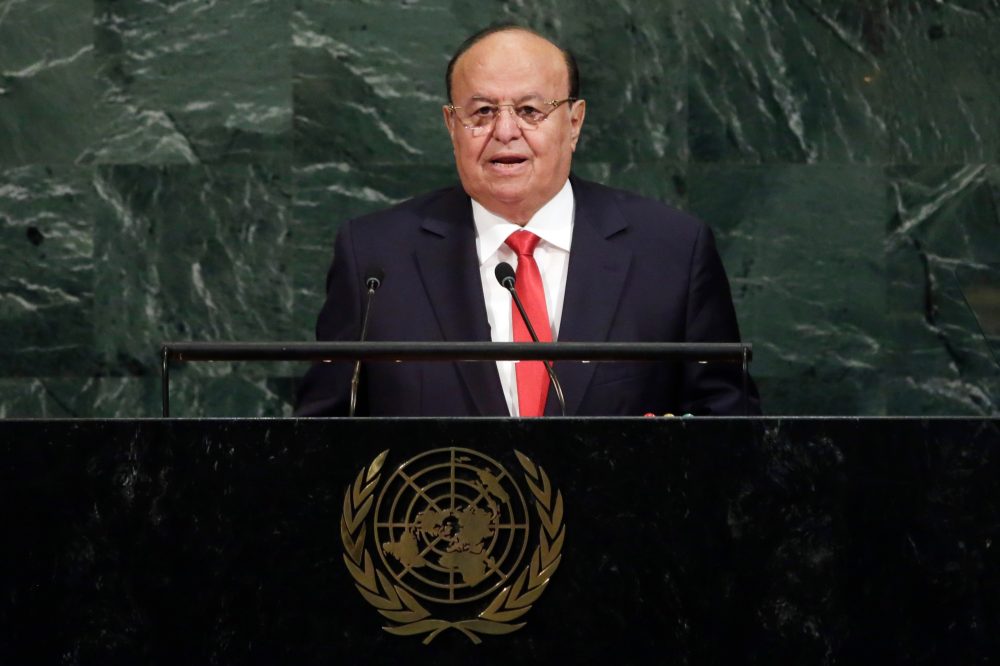
SINGAPORE, April 16 – Financial markets across Asia showed strong performance during Thursday’s early trading session as investors became increasingly optimistic about potential diplomatic breakthroughs between Iran and the United States, while also anticipating key economic reports and crucial corporate earnings announcements.
The MSCI Asia-Pacific index excluding Japan climbed 0.3%, positioning the indicator for its third straight day of positive movement. Japan’s Nikkei index jumped 1.5%, and S&P 500 e-mini futures edged up 0.1%.
During Wednesday’s trading in the United States, the S&P 500 increased 0.8% while the Nasdaq Composite surged 1.6%, driven by impressive quarterly results from Bank of America and Morgan Stanley that propelled both indices to new record levels. Among the roughly 6% of companies that have released quarterly results so far, 84% have surpassed analyst forecasts.
Goldman Sachs analysts expressed confidence in their research notes, stating “We remain constructive overall” regarding emerging market equities because “underlying profit growth is likely to be strong.”
The analysts noted that regional earnings would be “driven by AI-related demand, which should be relatively insulated from the direct impacts of the oil shock.”
Upcoming economic releases include employment figures from Australia and gross domestic product data from China. Taiwan Semiconductor Manufacturing Co (TSMC), a crucial player in the artificial intelligence industry, is scheduled to announce quarterly results, with analysts projecting a 50% jump in net earnings as demand for sophisticated semiconductors continues to accelerate.
Crude oil markets saw Brent prices open 0.4% lower at $94.55 per barrel following reports from a Tehran-briefed source who indicated Iran might consider permitting vessels to navigate safely through the Omani portion of the Strait of Hormuz without threat of attack, as part of negotiation proposals presented to the United States.
Gold recovered 0.8% to reach $4,829.24, while cryptocurrency markets showed mixed results with bitcoin remaining unchanged at $74,832.83 and ether declining 0.1% to $2,360.71.
WASHINGTON – Senate Republicans joined forces Wednesday to defeat two measures that would have halted approximately $450 million in military equipment sales to Israel, demonstrating continued GOP support for President Trump’s Middle East policies.
The failed resolutions highlighted a growing divide within the Democratic Party, as most of the 47-member Democratic caucus supported blocking the sales due to concerns about civilian casualties from Israeli military operations in Gaza, Lebanon and Iran.
Despite decades of bipartisan congressional support for Israel making such blocking measures unlikely to succeed, advocates believe bringing these issues to a vote pressures both Israeli leadership and U.S. officials to better protect non-combatants.
Those favoring the arms sales argue Israel remains a crucial ally deserving continued American military support.
Vermont Senator Bernie Sanders, an independent who works with Democrats, pushed for the votes on both measures, arguing the sales violated foreign aid requirements under the Foreign Assistance Act and Arms Export Control Act.
The first measure targeting a $295 million deal for D9R and D9T Caterpillar bulldozers and related equipment failed 59-40. Seven Democrats joined all Republicans in opposing the resolution, while Wyoming Republican Senator Cynthia Lummis was absent.
The second resolution aimed at blocking $151.8 million worth of 12,000 BLU-110A/B general purpose 1,000-pound bombs and associated support services was defeated 63-36. Eleven Democrats crossed party lines to vote with Republicans, and North Carolina Republican Senator Thom Tillis did not participate.
Sanders explained that Israel deploys these bombs in strikes against Gaza and Lebanon while using the bulldozers to destroy residential structures in Gaza, Lebanon and the West Bank.
“The United States must use the leverage we have — tens of billions in arms and military aid — to demand that Israel ends these atrocities,” Sanders stated while advocating for the blocking measures.
Israeli officials maintain they do not deliberately target civilians, stating their military actions aim to eliminate militants and destroy military infrastructure.
Wednesday’s voting results showed increased support for limiting Israeli arms sales compared to previous attempts. Two similar Sanders-sponsored resolutions failed in July with larger margins of defeat — 73-24 and 70-27 in the 100-member Senate.
The Trump administration circumvented standard congressional oversight procedures for these military sales early in the U.S.-Israeli conflict with Iran, claiming emergency circumstances required immediate weapons transfers.
Credit rating firm S&P Global has cut the Australian Securities Exchange’s issuer rating from “AA-/A-1+” to “A+/A-1” on Thursday, following a regulatory probe that uncovered serious governance and risk oversight deficiencies at the country’s primary stock market operator.
The rating reduction highlights ASX’s recent pattern of operational failures, including repeated system outages, a failed technology modernization project called CHESS, and settlement system breakdowns in 2024.
These operational problems have drawn sharp criticism from regulators who cite poor governance practices, insufficient risk oversight, and an organizational culture that appears to favor immediate profits over maintaining essential market infrastructure.
The Australian Securities and Investments Commission (ASIC) had earlier criticized ASX for focusing too heavily on delivering returns to shareholders while neglecting the maintenance and improvement of vital market systems.
S&P cautioned that ASX could face another rating cut if the agency determines that risk management practices, particularly regarding clearinghouse operations and related financial protections, worsen over the coming two years.
The rating firm indicated that an upgrade would most likely require ASX to successfully complete its governance and risk management improvement initiatives, though S&P considers this unlikely within the next 24 months.
Responding to the downgrade, ASX stated it was “committed to addressing the ASIC Inquiry’s interim and final reports by implementing our Commitments Plan.”
Following a 10-month investigation, ASIC concluded in its recently published final report that ASX had relied on short-term “tactical solutions” to address problems instead of tackling the underlying causes, which were primarily technology-related.
Despite the downgrade, S&P changed its outlook for ASX from “negative” to “stable,” noting that the company will maintain its market-leading position over the next two years and continue serving as a crucial part of Australia’s financial infrastructure.

The rating agency also lowered the long-term issue rating on ASX’s debt instruments from “AA-” to “A+.”
ASX shares gained up to 1.3% during early trading sessions, performing better than Australia’s broader S&P/ASX 200 index, which rose 0.2%.