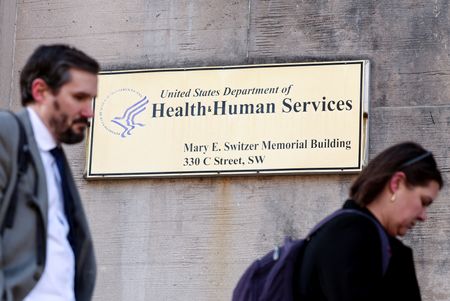

The U.S. Department of Health and Human Services announced Thursday it has approved new regulations designed to make the process of resolving payment disagreements between healthcare providers and insurance companies more efficient and affordable.
The updated regulations are connected to federal legislation that prohibits unexpected medical charges from healthcare providers who are not covered by a patient’s insurance plan. The goal is to eliminate inappropriate disputes while reducing expenses for both medical providers and insurance companies.
“The No Surprises Act protects patients from unexpected medical bills while creating an arbitration process to resolve certain types of payment disputes between payers and providers, and this rule makes significant improvements to the arbitration,” said Centers for Medicare & Medicaid Services Administrator Mehmet Oz.
When healthcare providers and insurance companies cannot reach agreement on payment amounts for services provided outside a patient’s insurance network, they can use the Federal Independent Dispute Resolution process for arbitration.
According to the agency, the new regulations will dramatically reduce administrative costs from $115 down to $15 per party for each dispute, which could encourage more participation in the process.
The updated rules also allow for greater flexibility in handling multiple related claims together as a group, which the department says will lower costs and accelerate decision-making.
Insurance companies will now be required to use uniform claim codes when discussing services provided outside their networks, which will help healthcare providers quickly identify whether a claim is eligible for the dispute resolution process and reduce inappropriate filings, according to the department.
The regulations establish a new unified system for managing disputes that will be implemented gradually starting this year.
The federal legislation was enacted in 2020 to shield patients from unexpected billing situations, which typically occurred when patients received care at hospitals covered by their insurance but were later charged by physicians who were not included in the same insurance network as the hospital.