
BUNAI, Congo (AP) — Emergency medical equipment was delivered to the epicenter of Congo’s deadly Ebola crisis on Thursday, as healthcare teams continue battling severe shortages, community resistance, and violent threats in an unstable area.
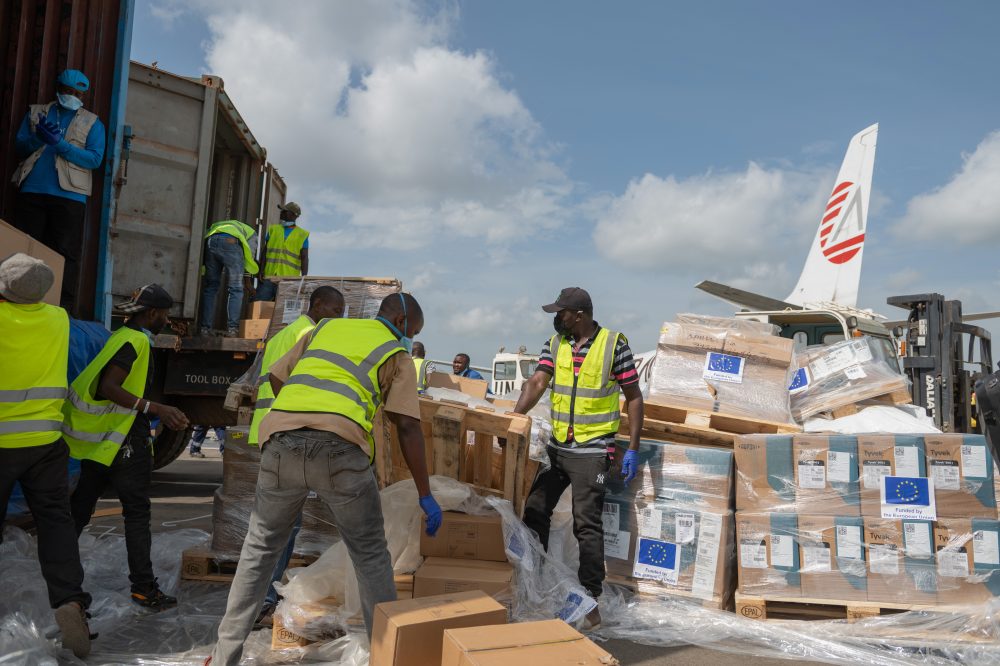
A white cargo aircraft touched down Thursday morning in Bunia, a northeastern community at the outbreak’s center, carrying protective masks, gloves, boots, and medicines provided by the European Union. U.N. forklifts loaded multiple crates onto waiting transport vehicles.
Associated Press journalists witnessed vacant emergency treatment facilities in Bunia, while medical staff in the neighboring community of Bambu were observed using outdated protective masks when caring for individuals suspected of having Ebola.
Health facilities in Ituri province have faced at least three documented attacks as community members objected to strict health measures that conflicted with traditional burial customs, increasing risks for medical personnel.
Additional EU shipments are scheduled to arrive in waves over the coming eight days, according to Jérôme Kouachi, who oversees emergency operations for UNICEF in Congo.
World Health Organization director-general Tedros Adhanom Ghebreyesus announced Thursday his departure for Congo to personally observe efforts to control the Bundibugyo virus, which currently has no authorized treatment or prevention vaccine. WHO has classified this outbreak as a public health emergency of international concern to accelerate assistance.
Congo’s government has verified over 1,000 suspected infections, including a minimum of 220 fatalities, since officially announcing the outbreak on May 15. However, the virus had been circulating undetected for weeks, and WHO believes the actual scope far exceeds reported numbers.
The infection has crossed into Uganda, which has documented seven cases and one death. Wednesday brought news from the Congolese government that the first patient to overcome the virus had been discharged from a medical facility.
“We are trying to catch up,” Congo Foreign Minister Thérèse Kayikwamba Wagner stated earlier this week. “It is a race against the clock.”
Ground-level response efforts have encountered numerous obstacles, including bureaucratic delays at customs, inadequate storage space, deteriorated transportation routes, and poor communication networks, humanitarian organizations reported Thursday.
Tedros issued a ceasefire appeal Wednesday for an area where armed factions have conducted brutal attacks for decades. “We cannot build community trust or isolate the sick while bombs are falling,” he stated.
Located in Congo’s northeastern region near Uganda’s border, Ituri province has endured assaults by the Allied Democratic Force, a rebel organization linked to the Islamic State group, along with a coalition of ethnic militias. In early May, the ADF murdered at least 40 civilians and destroyed multiple homes in Ituri.
The disease has spread to two Congolese provinces south of Ituri — North Kivu and South Kivu, where the Rwanda-supported M23 rebel group controls numerous strategic cities, including Goma and Bukavu. The rebels have documented two cases. The area’s primary airport in Goma, which serves as a humanitarian operations hub, has remained shuttered since January 2025, when M23 captured the city.
The ongoing conflict has created one of the globe’s most severe humanitarian disasters, displacing at least 7 million people throughout eastern Congo.