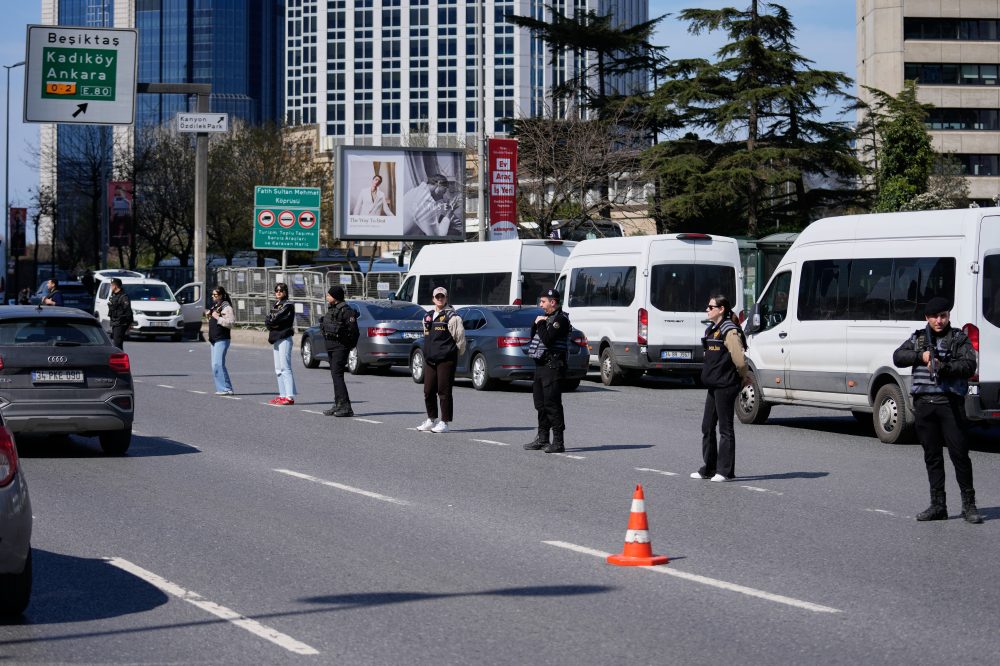
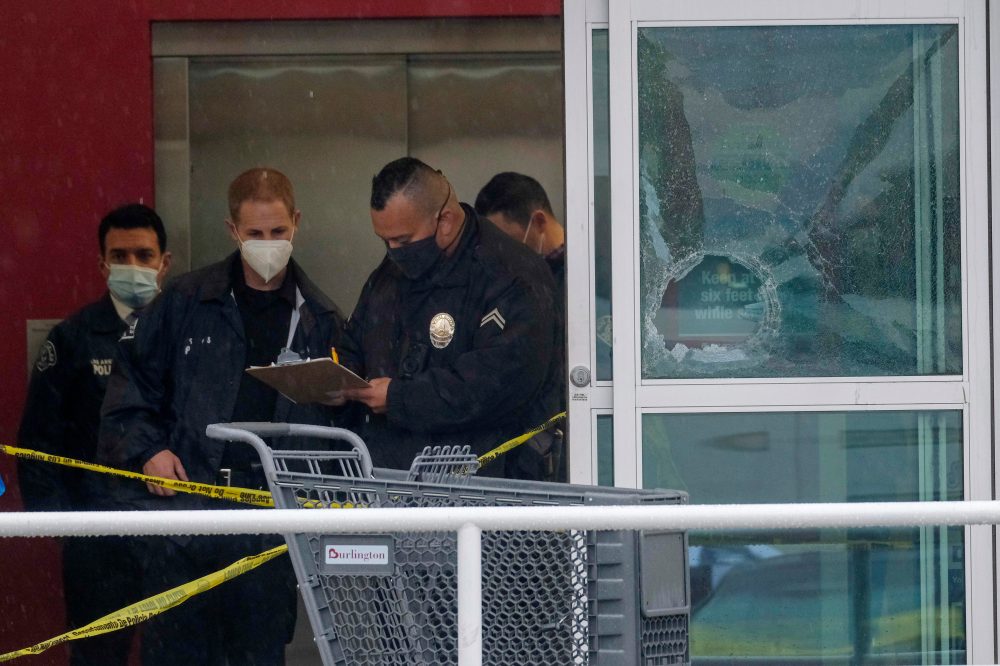
ISTANBUL — Nine individuals are now in custody following a deadly assault on law enforcement officers stationed outside the Israeli Consulate building in Istanbul, according to Turkey’s official news service reporting Wednesday.
The violent incident unfolded Tuesday in Istanbul’s commercial center, resulting in one attacker’s death while two accomplices suffered injuries during the exchange of gunfire with police. Two law enforcement officers received minor wounds in the confrontation, authorities confirmed.
The diplomatic facility was unoccupied during the assault, as Israel had previously evacuated its diplomatic personnel from Turkey due to security threats and worsening diplomatic ties following the outbreak of conflict in Gaza.
Interior Minister Mustafa Ciftci revealed that one attacker was connected to an organization that he described as one that “exploits religion,” though he declined to identify the specific group. Turkey has previously experienced fatal attacks orchestrated by the Islamic State organization.
The Anadolu Agency stated that law enforcement conducted raids across Istanbul and the provinces of Konya and Kocaeli, apprehending nine suspects. These individuals are undergoing interrogation alongside the two injured attackers, though additional information was not disclosed.
According to Cifti, the perpetrators had journeyed from Izmit in Kocaeli province using a rental vehicle. The two wounded suspects are siblings, named as Onur C. and Enes C., with the former having previous drug-related convictions.
On Tuesday, Israel’s Foreign Ministry issued a statement denouncing the assault while commending Turkish officials for stopping additional bloodshed.
OIAPOQUE, Brazil — Reginaldo Nunes Fonseca sheltered from heavy rainfall on his friend’s wooden porch, cigarette in hand, gazing across what locals call Nova Conquista — New Conquest — where untouched Amazon rainforest existed just twelve months earlier.
The downpour prevented Fonseca from constructing his home or finding day labor in the settlement, but weather wasn’t his biggest obstacle. Along with thousands of newcomers flooding into Oiapoque, a remote city in Brazil’s northern Amapa state, Fonseca waits for an economic transformation that remains uncertain.
This migration wave began after Petrobras, Brazil’s government-owned petroleum company, obtained environmental approval in 2023 for ocean drilling along the Equatorial Margin near the Amazon River’s mouth, approximately 180 kilometers offshore from Amapa.
“I figured this was positive news — the community would expand and create numerous employment possibilities,” Fonseca explained, recalling how a January television news segment about the licensing prompted his relocation from northeastern Maranhao state. “I began contacting my friends and declared: ‘I’m heading there since I’m jobless here with nothing to do.’”
Amapa ranks among Brazil’s most impoverished and underdeveloped regions. Oiapoque’s local economy depends on commercial fishing, unauthorized gold extraction, and tourists from adjacent French Guiana who visit daily spending euros, which maintain stronger value than Brazil’s currency. Though potential business opportunities inspire optimism, uncontrolled population expansion strains a community already lacking basic services.
This petroleum-driven enthusiasm illustrates a complex challenge facing developing nations: balancing greenhouse gas reduction goals with dependence on fossil fuel revenues for economic advancement.
The situation also questions President Luiz Inácio Lula da Silva’s environmental protection promises. Forest preservation became central to his administration, and Brazil hosted the 2023 United Nations climate conference COP30.
“We refuse to contaminate even one millimeter of water, yet nobody can prevent us from elevating Amapa from poverty if petroleum exists here,” Lula declared during his Amapa visit last year.
On March 10, roughly 2 miles from Fonseca’s residence, Petrobras conducted a public meeting with local officials, business leaders and community representatives to outline operational plans.
Corporate officials reported that exploratory drilling commenced in October with an expected five-month duration. Should substantial oil deposits be discovered and extraction considered, additional government approvals would be necessary — a potentially lengthy process requiring months or years.
Environmental organizations and Indigenous groups have filed lawsuits against Brazil’s government and Petrobras seeking exploration suspension, claiming inadequate consultation with traditional communities, underestimated contamination risks, and insufficient climate impact evaluation. Federal prosecutors requested IBAMA cancel or pause the environmental permit, arguing Petrobras conducted incomplete studies while concealing environmental damage scope. Courts have not yet ruled.
Meeting attendees learned Oiapoque primarily functions as a helicopter staging area for offshore personnel due to its proximity to drilling sites. Administrative oversight operates from Belem, a major city in neighboring Para state.
Despite uncertainties surrounding future extraction and Oiapoque’s minimal operational involvement, speculation has dramatically altered the community.
Census records show 27,482 residents in 2022, though recent population counts remain unavailable, making current numbers unclear.
“Over the previous 18 months, Oiapoque experienced substantial demographic increases,” stated Tiago Vieira Araújo, a city councilman who expressed concerns during the gathering. “Seven new neighborhoods have emerged, accompanied by social challenges.”
Oiapoque’s urban infrastructure remains inadequate. Under 2% of homes connect to proper sewage systems, while only 0.2% sit on paved roads, according to Brazil’s Geography and Statistics Institute.
Conditions worsen in newer settlements — termed “invasions” locally. Residents clear public forestland, establishing unofficial lots and constructing temporary shelters. Fresh tree stumps, wooden markers and crude dwellings emerge from muddy terrain, containing only essentials: cooking areas, sleeping spaces and basic restrooms.
“We understand forest clearing is inappropriate. Everyone recognizes this wrongdoing,” Fonseca acknowledged. “However, available land is scarce.”
Yuri Alesi, a 34-year-old attorney advocating for settlement land rights and former councilman, seeks the vice mayor position in April’s special election. He envisions Oiapoque becoming an “Amazonian Dubai” powered by petroleum revenues.
“Dubai sits within desert terrain, an improbable growth location,” he observed. “Oil industry development fueled its expansion.”
Brazil’s offshore Equatorial Margin, stretching from Suriname’s border to the nation’s northeast, potentially contains significant petroleum and natural gas reserves. Initial estimates suggest up to 10 billion barrels worth approximately 3.8 trillion reais ($719.7 billion). Alesi calculated royalties could generate roughly 100 million reais ($19 million) monthly for Oiapoque, matching the city’s annual economic output according to Brazil’s statistics bureau.
The Amazon forest plays a crucial role regulating global climate by storing carbon dioxide, yet faces constant pressure from agricultural deforestation, cattle operations and mining activities. Amapa experiences less intensive pressure, maintaining approximately 82% forest coverage according to MapBiomas, a land-use monitoring nonprofit.
Geographic isolation — surrounded by waterways and lacking road connections to mainland Brazil — has protected the state from southern Amazon deforestation patterns.
While some cite Dubai as Oiapoque’s development model, nearby petroleum-dependent cities offer cautionary examples.
Petrobras has conducted oil and gas exploration in Coari, another Amazon state, since the 1980s. Despite decades of activity, the city remains among Brazil’s poorest, with roughly 72% of residents experiencing extreme poverty according to recent research by Agenda Publica, a public policy nonprofit.
Other Amapa communities experienced boom-and-bust cycles linked to mining operations. Pedra Branca, located 280 miles from Oiapoque, flourished between 2007 and 2014 during iron ore expansion.
Pedra Branca’s prosperity attracted Selma Soares, 46, who relocated from Maranhao to Amapa in 2008 and established a grocery business.
A 2013 port collapse operated by Anglo American mining company killed six workers and disrupted iron ore production. India’s Zamin Ferrous later assumed mine control before suspending operations.
“Customers who shopped with us for years could barely afford food,” Soares recalled.
Recently, she heard increasing reports about Oiapoque’s growth. After visiting last year, she moved with her husband and son. The family now operates a small supermarket on the town’s outskirts. Soares noted many others have followed similar paths.
“People anticipate drilling commencement,” she explained. “They expect everything will get better.”
At the river boundary separating Oiapoque from French Guiana, a busy port bustles with boats connecting Brazil, its neighbor and surrounding communities. Green-and-yellow stickers declare: “Oil yes! Development yes!” — messaging promoted by local politicians.
Just 20 minutes away by boat, Indigenous Galibi Kali’na community members remain skeptical. Some recognize economic potential, but leaders oppose exploration, warning about environmental dangers and cultural threats.
“Petrobras arrived with powerful political support, promising advancement as though we would sleep one way and awaken like Dubai,” said Renata Lod, a representative on Oiapoque’s Indigenous council. “Instead, we’ve witnessed completely chaotic population growth and invasions of Indigenous territories.”
Lod detailed common complaints among Oiapoque residents, both Indigenous and non-Indigenous, including overcrowded educational facilities and the city’s sole hospital operating beyond capacity.
Concerns about potential petroleum spills also persist.
“Most Indigenous lands consist of flooded wetlands. How would you clean wetlands? Once oil reaches rivers, removal becomes impossible,” Lod warned.
Petroleum contamination could rapidly spread pollutants to nearby coastlines and waterways, threatening ecosystems and communities dependent on fishing and mangrove resources. Petrobras stated it performed spill modeling to secure environmental permits and has deployed floating monitoring devices to track ocean currents since October exploration began.
In January, Petrobras reported a drilling-fluid leak that temporarily suspended operations. IBAMA, the environmental regulatory agency, imposed a 2.5 million reais ($470,500) fine.
During the community gathering, Petrobras representatives attempted to address concerns while defending operational safety. They highlighted everyday products, from textiles to air conditioning systems, emphasizing oil’s economic significance.
“Residents view Petrobras as an economic solution,” observed Araújo, the city councilman. “However, even remedies produce side effects. We’re already experiencing negative consequences before seeing any benefits.”
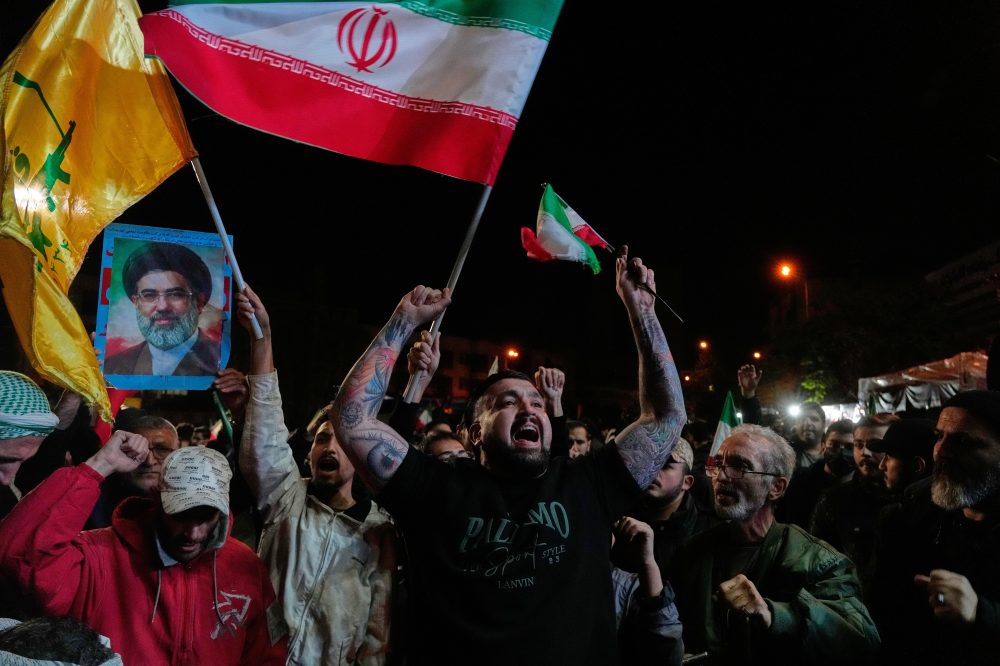
DUBAI, United Arab Emirates — A temporary truce that began Wednesday has sparked optimism about ending the conflict between Iran, Israel and the United States, though significant challenges persist.
Achieving a lasting agreement will be crucial to stopping a conflict that has disrupted the Middle East and worldwide energy markets. However, substantial disagreements exist between President Donald Trump and Iran’s current leadership, while Israel maintains its own strategic objectives.
Trump has indicated there has been “regime change” in Iran following U.S. and Israeli operations that eliminated 86-year-old Supreme Leader Ayatollah Ali Khamenei on the conflict’s opening day, along with numerous other senior officials and military commanders.
However, Khamenei’s successor is his son Mojtaba, who maintains close ties with Iran’s Revolutionary Guard and is viewed as even more antagonistic toward America. Reports suggest he sustained injuries in the attack that killed his father and has remained out of public view since hostilities began.
The governing structure supporting Iran’s Shiite theocracy continues to function. While many Iranians express frustration with their leadership, no popular revolt has emerged since authorities suppressed widespread demonstrations in January, prior to the war’s outbreak.
Iran’s stockpile of highly enriched uranium remains within the country, likely buried beneath enrichment facilities bombed by U.S. forces during a 12-day conflict last June. Iran has suspended enrichment activities since then but continues asserting its right to peaceful nuclear development while denying weapons ambitions.
Trump announced Wednesday that America would collaborate with Iran to “dig up and remove” the uranium, though Iranian officials have not verified this arrangement.
Both Trump and Israel have demanded Iran completely abandon its nuclear capabilities. Iran dismissed this demand in its 10-point peace framework.
Since fighting commenced February 28, Iran has deployed more than 5,000 drones, over 2,100 ballistic missiles and over 50 cruise missiles, based on data from the Washington-based Jewish Institute for National Security of America, which maintains strong connections to Israeli defense forces.
Prior to the conflict, JINSA assessed Iran’s missile inventory at 8,000 to 10,000 ballistic missiles of varying capabilities. No official estimate exists for Iran’s drone stockpile.
American and Israeli forces claim to have destroyed or buried numerous Iranian missile platforms. Israel reports significantly degrading Iran’s missile production and launch capabilities while acknowledging the threat persists, as Iran maintained its attacks throughout the conflict.
U.S. Central Command reported destroying more than 150 vessels, essentially eliminating Iran’s naval fleet. Numerous Iranian aircraft, helicopters and other equipment were destroyed, alongside military bases and weapons manufacturing facilities.
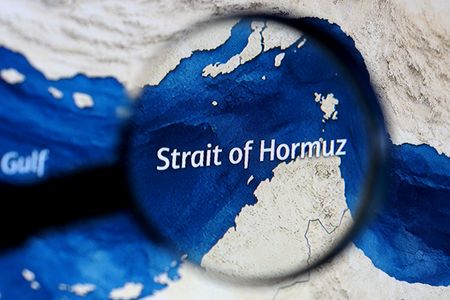
These losses did not prevent Iran from effectively blocking the Strait of Hormuz, the passage for approximately one-fifth of global oil trade, and establishing what amounts to a toll system for vessels seeking passage.
Israel severely damaged Iran’s allied militant organizations throughout the region during conflicts triggered by Hamas’ October 7, 2023, assault from Gaza.
Lebanon’s Hezbollah, the most powerful such organization, continues fighting Israel in battles that Israeli officials say will persist despite the ceasefire. Yemen’s Houthi rebels, targeted by Israeli and American airstrikes recently, launched only limited attacks against Israel during the war and avoided targeting Red Sea commerce. Hamas retains control over approximately half of Gaza and has not disarmed under a U.S.-mediated ceasefire.
Israel demands Iran cease supporting these groups, which Tehran has rejected and omitted from its peace proposal.
Previously, vessels moved freely through the Strait of Hormuz within Iranian and Omani territorial waters. Since the conflict began, Iran allegedly charges up to $2 million per ship for passage rights.
Iran and Oman are developing a proposal to share waterway fees, with Tehran insisting on maintaining military authority there, potentially creating a new revenue stream despite international sanctions.
Trump states America will be “hangin’ around” to guarantee shipping access. The U.S. and other nations will likely challenge this new arrangement, creating potential future tensions.
Persian Gulf Arab states cannot be pleased with the war’s outcome.
Iranian strikes caused extensive damage to petroleum facilities, airports and other infrastructure, undermining their carefully built reputation as secure business and tourism destinations. Qatar, among the world’s leading natural gas exporters, estimates years will be needed to restore production levels.
Gulf nations’ suspicion of Iran has reached new depths while their confidence in American protection has been undermined. U.S. military installations across the region sustained direct hits, though no signs indicate American withdrawal as Iran has requested.
Israel faced repeated Iranian attacks but its sophisticated air defense systems and extensive shelter networks provided substantial protection.
Prime Minister Benjamin Netanyahu claims Israel dealt serious damage to Iran, but America and Israel failed to eliminate its nuclear or missile capabilities. His anticipated popular uprising to overthrow the Islamic Republic has not occurred.
Israel reports receiving American assurances that Iran’s nuclear and missile programs will be addressed through negotiations. However, many Israelis may feel disappointed by another inconclusive conflict, which could impact Netanyahu’s prospects in upcoming elections.
WATERVILLE, Maine — In the days before Passover, Rabbi Rachel Isaacs was busy coordinating the preparation of traditional ceremonial foods at Beth Israel Congregation, a central Maine synagogue that has seen its membership grow fourfold in the past decade and a half.
Expanding congregations is at the forefront of Isaacs’ work these days, as she spearheads an initiative to bolster rural synagogues and Jewish communities nationwide. The effort has connected with dozens of communities, with plans to reach many more.
“Rural Jewish life is important for the Jewish people and it’s important for rural America,” Isaacs said. “Those people deserve to be served and shepherded.”
As executive director of the Center for Small Town Jewish Life at Colby College, a liberal arts institution in Waterville, Maine, Isaacs oversees programs that launched ten years ago. The center now supports more than 60 communities spanning 22 states, all focused on helping Jewish congregations located far from metropolitan areas.
While Jewish Americans make up slightly under 2.4% of the U.S. population, one out of every eight Jewish people lives beyond major urban centers, and the center works to help these communities flourish, Isaacs explained.
This outreach comes at a crucial moment, as America has approximately 20% fewer synagogues today compared to 1990, based on research by Alanna E. Cooper, a Jewish studies professor at Case Western Reserve University in Ohio. Rural areas face even steeper declines, with aging populations and resident relocations severely impacting congregations.
The rural synagogue initiative is also unfolding amid a surge in antisemitism and violent attacks targeting Jewish communities across America. The Anti-Defamation League documented nearly a 900% spike in antisemitic incidents over the decade ending in 2024. Several states with elevated incident rates include predominantly rural areas like Maine, New Hampshire and Wyoming, according to the ADL’s findings.
Isaacs believes the center’s mission can help counter this troubling pattern.
“You have more Jews that experience joy, who can locate strength, form connections with other Jews across the country and around the world,” Isaacs said. “In a world of rising antisemitism it’s more and more important that Jewish communities are joyful, strong and connected.”
Since its establishment, the center has assisted congregations stretching from Maine to California, Montana and Texas.
Isaacs also serves as rabbi at Beth Israel, a century-old synagogue located near Colby that stands as the sole Jewish house of worship within 20 miles of the campus. While the synagogue has expanded alongside the center, the Center for Small Town Jewish Life’s impact extends well beyond Maine’s borders, she noted.
Congregations that have partnered with the center describe its contributions as essential in a nation where Jewish populations have been predominantly urban since early immigration waves. In Helena, Montana, Rebecca Stanfel, executive director of the Montana Jewish Project, credits the center with helping unite her state’s relatively small Jewish community.
Connecting scattered faith communities holds special significance in places like Montana, Stanfel emphasized.
“In Helena, we have no choice but to rely on volunteers. And if we want to have something like a seder, High Holidays, it’s got to come from the community,” Stanfel said. “That is also a really important model for people outside rural America.”
The center supports congregations through three key approaches designed to strengthen rural synagogues. The first is Makom, a two-year mentorship initiative for rabbis in their early years of serving rural synagogues.
A second program prepares lay leaders to conduct prayer services and support congregations, enabling them to prosper without full-time rabbinical staff. The third component provides board leadership training, teaching synagogue presidents and boards effective management of small-town Jewish institutions.
Rabbi Lisa Rappaport, who serves Congregation Beth Israel in Chico, California, participated in the inaugural Makom program. Rural rabbis frequently oversee their town’s only Jewish congregation, making the work “special and it’s beautiful and it’s challenging,” she explained.
The Makom fellowship empowers rural rabbis to meet these unique challenges, Rappaport said.
“We have felt very validated as rabbis in small communities that our work is as important,” she said.
In Waterville, volunteers including Colby students and retirees prepared to welcome approximately 100 people for Passover. Though the community may be small, it remains strong and caring, said Jeff Lovitz, a synagogue member, while folding napkins.
“We’ve been here since the early ’70s. Our kids went to Hebrew school here,” he said. “I think it’s important to have a Jewish community in Waterville.”
Russian tennis star Daniil Medvedev experienced one of the most devastating defeats of his professional career Wednesday, falling to Italian wildcard Matteo Berrettini in a crushing 6-0, 6-0 result at the Monte Carlo Masters that left the world No. 10 so frustrated he destroyed his racket on court.
The shocking defeat lasted just 49 minutes and marked the first time in Medvedev’s career that he failed to win a single game in a professional match. The 30-year-old Russian, who captured championships in Dubai and Brisbane earlier this year, couldn’t manage to earn even one game point while serving and made 27 unforced errors throughout the contest.
In a display of visible anger, Medvedev repeatedly struck his racket against the court before tossing the broken pieces into a nearby trash bin.
For Berrettini, the victory represented a career milestone as his first perfect 6-0, 6-0 triumph at the professional level and his initial win against a top-10 ranked player since he defeated Alexander Zverev at Monte Carlo the previous season.
“I think it was one of the best performances of my life,” Berrettini said.
“I think I missed three shots in the entire match and it is not easy against a tricky player like Daniil. I think the game plan was perfect and my weapons were working.”
Medvedev’s emotional reaction has reignited conversations about how professional tennis players handle frustration during competition. Recently, world No. 1 Aryna Sabalenka expressed support for creating “rage rooms” where athletes could release their anger away from television cameras, following Coco Gauff’s racket-breaking incident at the Australian Open, where the American player was unaware her outburst was being televised globally.
Financial professionals are developing fresh investment strategies to handle market volatility stemming from Middle East conflicts and their impact on global economics, according to a Reuters analysis.
As worldwide inflation and interest rates become more difficult to forecast due to geopolitical tensions affecting economic projections, fund managers find it increasingly hard to make investment decisions based on long-range forecasts.
Instead, many financial experts are making short-term wagers on securities that may have been incorrectly valued during the Iran conflict.
Several key investment trends have emerged:
ENERGY PRICES EXPECTED TO STAY ELEVATED
Crude oil prices dropped nearly 15% on Wednesday, falling below $100 per barrel following ceasefire news, but analysts anticipate prices will remain elevated due to ongoing concerns about the Strait of Hormuz shipping route.
Six-month oil contracts are trading around $79, which is above pre-war levels from February 28.
These futures contracts typically fall sharply when diplomatic progress appears likely, and some market watchers believe they’ve declined too steeply.
Michael Haigh, Societe Generale’s global head of commodities research, predicts that even a successful ceasefire with no additional conflicts would establish an oil price floor of $85 per barrel by December. He noted that if countries become more focused on energy security and begin building oil reserves, prices could climb even higher.
This outlook has made investors less pessimistic about energy company stocks, which they’ve traditionally avoided. A Bank of America poll from March 31 showed that while 30% of investors still view the energy sector negatively due to environmental concerns, this represents a decline from 40% six months earlier.
Shell announced Wednesday that it anticipates stronger oil trading conditions ahead.
CURRENCIES OF OIL-PRODUCING NATIONS
The U.S. dollar has recovered strength after months of weakness, but if conflicts diminish and reduce demand for the reserve currency while crude prices stay high, currencies from certain oil-producing countries could perform well, market participants suggest.
Van Luu, Russell Investments’ global head of solutions strategy, explained a scenario involving a permanent ceasefire: “It will take a while for everything to ramp up again, for the tankers to travel again, and oil prices might have a higher floor.”
“If oil prices are $85 to $100 (a barrel) then energy exporters in politically stable countries, and you could consider Norway and Canada in that camp, should do better,” Luu added.
GOVERNMENT BOND RECOVERY POTENTIAL
President Trump’s ceasefire announcement caused British and European government borrowing costs to plummet as concerns about inflation among energy-importing nations decreased.
Investment managers believe these yields remain too elevated compared to interest rate and inflation projections, particularly in Britain where the base rate sits at 3.75%, consumer inflation stands at 3.2%, and the 10-year yield hovers just under 4.7%.
Nicolo Bragazza, a Morningstar Wealth associate portfolio manager who favors British government bonds, stated: “We don’t see something similar to 2022 when UK inflation went above 10%.”
In Europe, German 10-year yields are approximately 2.9% compared to interest rates at 2%. Markets now assign just a 20% probability to a European Central Bank rate increase in April, down from 60% before Trump’s Iran ceasefire announcement.
IDENTIFYING PRICING MISTAKES
Bragazza observed that investors frequently overreact to positive and negative developments, creating pricing errors as unrelated assets move together in markets driven by war concerns.
Bruno Taillardat, Edmond de Rothschild’s head of quantitative portfolio management, noted: “(Trading) is not as dispersed as it should be and there are some sectors which should be more immune to this at least in the medium term.”
He pointed to global healthcare stocks, typically viewed as relatively safe during economic downturns, having moved in sync with a worldwide index of economically sensitive businesses since the war began.
In markets driven by emotion, Taillardat said, investors who spot mispricing opportunities caused by daily cross-market movements would excel.
Taillardat expects Trump’s public statements to maintain market volatility and excessive reactions to news headlines.
“It’s this kind of asymmetric behaviour that generates the right opportunities,” Morningstar’s Bragazza concluded.
A temporary two-week ceasefire between the United States, Iran, and Israel has been brokered through Pakistani diplomatic efforts, with American and Iranian representatives scheduled to meet Friday for discussions about a permanent peace agreement.
Despite the agreement to hold talks, significant differences exist between Iran’s 10-point negotiation framework and the 15-point plan previously presented by Washington. President Trump described Iran’s proposal as providing “a workable basis” for discussions, though major disagreements remain unresolved.
Iran’s negotiation points include demands for uranium enrichment capabilities, which the United States has previously rejected. Additionally, Iran’s framework does not address its missile programs, which both America and Israel insist must be significantly reduced.
Pakistani Mediation Efforts
Pakistani Prime Minister Shehbaz Sharif announced the ceasefire agreement on social media platform X, stating both nations committed to an immediate halt to hostilities across all regions, including Lebanon where Israeli military operations had been conducted.
Sharif’s announcement did not reference either nation’s negotiation proposals and made no specific mention of any Israeli agreements. A Pakistani regional official indicated Iran might achieve many of its objectives, particularly regarding reconstruction assistance, compensation payments, and sanctions removal, but uranium enrichment approval remains unlikely.
American Position and Previous Proposals
President Trump announced on Truth Social that U.S. military operations against Iran would be suspended for two weeks, contingent upon Iran ensuring “the COMPLETE, IMMEDIATE, and SAFE OPENING of the Strait of Hormuz.”
Trump stated the parties were “very far along with a definitive Agreement concerning Longterm PEACE with Iran, and PEACE in the Middle East.” While acknowledging Iran’s 10-point framework offered “a workable basis” for negotiations, he did not detail specific points and claimed resolution of previously contentious issues.
Israeli sources revealed Trump’s earlier 15-point proposal, transmitted to Iran through Pakistani channels, demanded elimination of Iran’s highly enriched uranium stockpiles, cessation of enrichment activities, restrictions on ballistic missile development, and termination of funding for regional proxy groups.
Iranian Demands and Conditions
Iranian Foreign Minister Abbas Araqchi announced Iran’s agreement to suspend what it characterized as “defensive operations” contingent upon cessation of attacks against Iran, based on American requests for negotiations using Washington’s 15-point framework and Trump’s acceptance of Iran’s 10-point plan as a negotiation foundation.
Araqchi stated safe maritime passage through the Strait of Hormuz would be permitted for two weeks “via coordination with Iran’s Armed Forces and with due consideration of technical limitations.”
Iran’s Supreme National Security Council declared Washington had accepted Iran’s 10-point framework and “the United States has, in principle, committed to”: non-aggression policies; continued Iranian authority over the Strait of Hormuz; acceptance of enrichment activities; elimination of all primary and secondary sanctions; termination of all United Nations Security Council and International Atomic Energy Agency Board of Governors resolutions; withdrawal of American combat forces from the region; and cessation of military actions on all fronts, including against Islamic resistance forces in Lebanon.
Prior to the ceasefire agreement, a senior Iranian official had indicated Iran would impose transit fees for ships passing through the Strait of Hormuz, which is recognized as an international waterway.
Israeli Response
Israel confirmed its participation in the ceasefire with Iran but specified the agreement does not include suspension of military operations in Lebanon.
An Israeli official stated the United States coordinated the temporary ceasefire with Israel beforehand, noting Iran had agreed to open the Strait of Hormuz without commitments to permanent war termination, compensation payments, sanctions relief, or other concessions.
The official also indicated the Trump administration informed Israel that during the two-week negotiation period with Iran, the United States would demand removal of nuclear materials, cessation of enrichment activities, elimination of ballistic missile threats, and resolution of additional issues.
ANKARA – Turkey’s spy agency served as a crucial diplomatic intermediary in negotiations that resulted in a two-week halt to hostilities between the United States and Iran, according to reports from Turkish news outlets citing security officials.
The temporary truce, which Washington accepted late Tuesday evening, was officially facilitated through Pakistani mediation efforts. The broader conflict has extended throughout the Middle Eastern region and caused significant disruptions to worldwide energy markets.
According to Turkey’s state broadcaster TRT, the country’s National Intelligence Organization (MIT) maintained unique positioning as one of the limited entities capable of sustaining direct communications with both Western nations and neighboring Iran, including contact with Iran’s Islamic Revolutionary Guard Corps (IRGC).
The intelligence service worked to preserve diplomatic communication pathways, avoid potential miscommunications, transmit messages focused on reducing tensions, offered suggestions to prevent additional escalation, and collaborated with various international intelligence agencies, the report indicated.
MIT officials could not be reached immediately to provide commentary on these claims.
Although Pakistan spearheaded the mediation process, Iranian officials have acknowledged Turkey’s involvement after the country initially attempted to facilitate direct negotiations between the U.S. and Iran before hostilities commenced in late February. A diplomatic source stationed in Turkey confirmed separately that Ankara provided assistance during recent negotiation periods.
Turkish President Tayyip Erdogan, leading a nation that serves as both a NATO partner to the United States and shares a geographical boundary with Iran, expressed approval for the ceasefire agreement on Wednesday. He urged complete adherence to the truce terms and cautioned against any provocative actions or attempts at undermining the agreement.
Two French citizens arrived back in Paris Wednesday morning after being released from more than three years of detention in Iran, with President Emmanuel Macron greeting them at the presidential palace and describing their freedom as “the end of a terrible ordeal.”
Cecile Kohler, 41, and Jacques Paris, 72, had been staying at France’s embassy in Tehran since November following their imprisonment since 2022 at Iran’s infamous Evin prison. Iranian authorities had charged them with espionage, allegations that French officials consistently rejected as baseless.
Their unexpected departure from Iran occurred Tuesday as France has been working to maintain distance from Middle Eastern conflicts. The duo touched down in the French capital Wednesday morning.
Following their reunion in the Elysee palace gardens, Macron posted on social media: “We are delighted to welcome back Cecile Kohler and Jacques Paris to France after three and a half years of hardship in Iran. It is a huge relief for all of us.”
Iran’s Revolutionary Guards have imprisoned numerous foreign and dual citizens in recent years, typically on charges related to espionage. Human rights organizations and Western nations claim Tehran uses foreign prisoners as leverage in negotiations, an accusation Iran rejects.
Speaking to French defense and security personnel earlier Wednesday, Macron expressed gratitude to Omani officials for their assistance in facilitating the release.
During a brief media appearance after their presidential meeting, both individuals appeared weary but optimistic as they shared details of their imprisonment.
“We were under constant threat. We had no right to read, no right to write. As soon as we left our cell, we were blindfolded,” Paris told reporters. “Obviously, one of the objectives was undoubtedly to break us. For us, it is a new beginning. We are not broken. We will speak up and we will enjoy life.”
A Freeze Warning is in effect across the Delmarva Peninsula from 10 PM tonight through 9 AM Thursday morning, as temperatures are expected to plummet to as low as 28 degrees.
The National Weather Service warns that sub-freezing conditions will impact portions of Delaware, the Eastern Shore of Maryland, and parts of New Jersey. Locally, New Castle, Kent, and Inland Sussex counties in Delaware are under the warning, along with Kent, Queen Anne’s, Talbot, and Caroline counties on Maryland’s Eastern Shore.
This unseasonably cold snap poses a serious threat to tender plants, crops, and sensitive vegetation that may have emerged early due to recent warmer weather. The freeze could also damage unprotected outdoor plumbing, including hoses and pipes.
Residents should take immediate action to protect their gardens and outdoor equipment. Cover or bring in potted plants, wrap exposed pipes, and consider covering sensitive plants with blankets or tarps. Gardeners who have already planted spring vegetables or flowers should take extra precautions.
The Freeze Warning expires at 9 AM Thursday morning, with temperatures expected to return to more seasonal levels later in the day. Stay with TV Delmarva for continued weather updates throughout the night.
Drivers heading south on DuPont Boulevard (Route 113) are encountering lane restrictions this week as construction crews work in the area.
The Delaware Department of Transportation reports that the left lane remains closed where DuPont Boulevard intersects with Cypress Hall Boulevard. The lane closure is necessary to accommodate ongoing construction activities in the corridor.
Motorists should plan for potential delays and consider alternate routes if possible. The construction work is part of DelDOT’s ongoing infrastructure improvements throughout the state.
No timeline has been provided for when the lane will reopen to traffic.
Twelve months have passed since the implementation of what the Trump administration called ‘Liberation Day,’ but small business owners nationwide are finding themselves grappling with the financial consequences of ongoing tariff policies.
The impact is particularly visible in retail operations, where store owners report dramatic price increases on merchandise that directly affect their bottom line and customer relationships. These trade policy effects are creating a challenging environment for independent retailers trying to maintain competitive pricing.
At Misfit Toys, owner Paulina Gamino explains how the tariff structure has fundamentally altered their business model. Items that previously carried a $25 price tag now cost customers as much as $45, she reports. This dramatic markup has forced the store to significantly reduce their purchasing volume.
According to business owners affected by these policies, the combination of elevated costs and market unpredictability is creating a dual challenge. Not only are they dealing with higher wholesale prices, but the uncertain business climate is also discouraging customer spending and reducing profit margins across multiple sectors.
The situation illustrates how national trade policies can have far-reaching effects on local economies, particularly impacting smaller enterprises that lack the purchasing power and financial flexibility of larger corporations to absorb such cost increases.
The National Weather Service office in Mount Holly, New Jersey has issued a freeze warning for the region that will remain in effect from Monday evening through Tuesday morning.
The weather alert was issued on April 8th at 8:55 AM Eastern Daylight Time and will continue until April 9th at 9:00 AM EDT.
Residents should take precautions to protect sensitive plants and outdoor plumbing during this period of freezing temperatures. The warning indicates that sub-freezing conditions are expected that could damage or kill crops, other sensitive vegetation, and potentially cause problems with unprotected outdoor water pipes.
This week marks Holy Week for approximately 300 million Orthodox Christians worldwide, who will celebrate Easter this Sunday, May 12th. The Orthodox celebration occurs on a different date than Western Christianity because Orthodox churches still follow the Julian calendar system for determining religious holidays. This ancient calendar places Orthodox observances behind the Gregorian calendar that other Christian denominations adopted roughly four centuries ago. The majority of Orthodox believers reside in Russia, various Eastern European nations, and Greece.
OSLO – The Norwegian Nobel Committee issued a sharp rebuke Wednesday against Moscow’s efforts to brand Memorial, the Russian human rights organization that won the 2022 Nobel Peace Prize, as an extremist group.
Committee officials revealed they have been informed that Russia’s Justice Ministry has petitioned the nation’s Supreme Court seeking this controversial classification. “If the claim is upheld, all activities of Memorial will be criminalised,” the Nobel organization stated in their official response.
When Reuters reached out to the Russian embassy in Oslo for a response, officials had not provided any immediate comment via email.
Memorial was honored with the prestigious peace award alongside Ukrainian Center for Civil Liberties and Belarusian human rights advocate Ales Bialiatski. Many observers viewed the joint recognition as the Nobel Committee’s way of denouncing Russia’s military aggression against Ukraine that began in 2022.
Motorists traveling on Old Mill Bridge Road should expect delays today as construction crews continue work that requires intermittent lane closures.
The Delaware Department of Transportation reports that the affected area spans from Bayard Road to Millers Neck Road, where workers are conducting construction activities that periodically block traffic lanes.
The lane restrictions are expected to remain in effect until 4:00 PM today. Drivers are advised to plan alternate routes or allow extra travel time when navigating through this area.
DelDOT continues to monitor the situation and will update motorists as conditions change throughout the day.
Several committees under Maryland’s Agricultural Commission have scheduled virtual sessions for Wednesday, April 8th, according to a meeting announcement.
The day’s agenda includes three separate committee gatherings, beginning with the Farm Profitability & Sustainability Committee from 10:15 a.m. to 11:15 a.m. Following that session, the Committee on Agricultural Literacy & Education (CALE) will meet from 11:15 a.m. until 12:15 p.m. The Committee on Watershed Strategies (CoWS) is scheduled to begin at 12:15 p.m.
All sessions will be conducted online rather than in person. Those seeking access information for the virtual meetings or who have additional questions can reach out to Harrison Palmer via email at [email protected].
More than 270,000 Chevrolet Malibu sedans across the United States are being recalled by General Motors due to malfunctioning backup cameras that may show distorted or completely blank images.
According to the National Highway Traffic Safety Administration, when backup cameras fail to show proper images, drivers lose critical visibility when reversing, creating dangerous conditions that could lead to accidents.
Federal safety officials report that GM’s parts supplier discovered problems with the bonding process during camera housing assembly, which can cause adhesive connections to fail over time. The company’s investigation revealed that Sharp Electronics cameras installed in the Malibu are positioned in a way that allows moisture to penetrate weak housing seals.
The safety recall affects 2023, 2024, and 2025 model year Chevrolet Malibu vehicles.
General Motors reports no known accidents or injuries have occurred related to this camera defect.
Authorized dealerships will install replacement backup cameras at no cost to vehicle owners.
GM plans to begin mailing notification letters to affected owners starting May 18. Vehicle owners can reach Chevrolet customer service at 1-800-222-1020 or contact the NHTSA Vehicle Safety Hotline at 1-888-327-4236. Additional details are available at www.nhtsa.gov.
NATO’s top official is scheduled to sit down with President Donald Trump on Wednesday afternoon in an effort to ease tensions following the president’s threats to withdraw America from the military alliance over Iran conflict disputes.
Secretary-General Mark Rutte’s visit comes after Trump floated the possibility of the United States exiting the trans-Atlantic partnership when fellow NATO nations declined his request for assistance in reopening the Strait of Hormuz, a crucial shipping corridor that Iran had effectively blocked, causing fuel costs to spike.
The private White House meeting between Trump and Rutte, who previously enjoyed a positive working relationship, takes place just after the U.S. and Iran reached a temporary two-week truce late Tuesday that includes provisions for reopening the strategic waterway. This fragile agreement emerged following Trump’s stark warning that he would target Iran’s infrastructure, declaring that “a whole civilization will die tonight.”
Details surrounding the strait’s reopening remain uncertain and are anticipated to dominate Wednesday’s discussion. While the White House indicated the session would occur behind closed doors, such arrangements can shift unexpectedly in the current administration, potentially allowing press access.
Legislative action from 2023 requires congressional authorization before any president can withdraw the United States from NATO. Trump has consistently criticized the alliance throughout his political career and previously claimed during his initial presidency that he possessed unilateral authority to exit the organization, which formed in 1949 as a response to Soviet threats during the Cold War era.
The alliance’s foundation rests on a collective defense principle where an assault against one member constitutes an attack on all 32 nations. This provision has been invoked only once – in 2001 following the September 11 terrorist attacks on American soil.
Nevertheless, Trump has expressed frustration during the current Iran confrontation that NATO has demonstrated unwillingness to support the United States when needed.
Prior to Wednesday’s meeting, Kentucky Republican Senator Mitch McConnell released a statement Tuesday evening defending the alliance, emphasizing that “Following the September 11th attacks, NATO allies sent their young servicemembers to fight and die alongside America’s own in Afghanistan and Iraq.” McConnell, who serves on a defense spending oversight committee, encouraged Trump to remain “clear and consistent” and argued against spending more energy “nursing grudges with allies who share our interests than deterring adversaries who threaten us.”
Should Rutte fail to address Trump’s concerns during their discussion, uncertainty remains whether the administration would contest the congressional restriction on NATO withdrawal. The legislation received strong support from Marco Rubio, who now serves as Trump’s secretary of state but was a Florida senator when the measure passed.
NATO has faced significant strain over the past year as Trump resumed office, scaled back American military aid to Ukraine in its conflict with Russia, and made threats regarding Denmark’s control of Greenland.
Trump’s criticism of NATO escalated following the outbreak of the Iran war in late February, with the president maintaining that protecting the Strait of Hormuz fell outside America’s responsibilities and instead belonged to nations relying on oil shipments through the passage.
“Go to the strait and just take it,” Trump declared last week.
Additional friction arose when NATO members Spain and France either prohibited or limited American use of their airspace and joint military installations during the Iran conflict. These countries, along with other nations, have committed to participating in an international effort to secure the Strait of Hormuz once hostilities conclude.
British Prime Minister Keir Starmer, who has particularly frustrated Trump, planned to visit the Gulf region Wednesday to support ceasefire efforts. The United Kingdom has been developing post-conflict security arrangements for the narrow waterway between Iran and Oman, through which approximately 20 percent of global oil supplies flow.
Trump has repeatedly threatened NATO withdrawal and frequently stated he would abandon allies failing to meet military spending commitments. Former NATO Secretary-General Jens Stoltenberg revealed in his recent autobiography that he worried Trump might abandon the alliance in 2018 during his first presidential term.
Italian officials announced Wednesday they will refuse to deploy naval vessels for patrol duties in the Strait of Hormuz region following a ceasefire between America and Iran, unless the United Nations provides authorization for such operations.
Deputy Prime Minister Matteo Salvini, who also serves as infrastructure minister in Prime Minister Giorgia Meloni’s conservative administration, addressed reporters about the matter.
“It is not on the agenda. We have already said that we will not send ships unless there is a United Nations initiative,” Salvini stated.
The ongoing conflict between the United States, Israel, and Iran has created a significant energy crisis affecting the worldwide economy. Tehran’s decision to block the Strait of Hormuz to most maritime traffic has trapped substantial amounts of oil and gas in the Gulf region, creating particularly severe impacts for European nations including Italy.
The energy supply disruption has prompted some officials, including members of Salvini’s far-right League party, to suggest Europe should consider reestablishing energy trade relationships with Russia, which were terminated following Moscow’s 2022 invasion of Ukraine.
Salvini later reversed course on that suggestion, acknowledging such arrangements would be impossible while the Ukrainian conflict continues.
“I hope that a time will soon come when it will be possible to speak about reconstruction and cooperation, including partnerships and energy, once the conflict with Russia has ended,” he addressed the Foreign Press Association in Italy.
Similar to other NATO member nations hesitant to support President Donald Trump’s military strikes against Iran, Italy recently refused to grant landing rights for American military aircraft at the Sigonella air base in Sicily while en route to Middle Eastern operations.
When asked about potential tensions between Washington and European capitals that could result in American military withdrawal from Europe, Salvini downplayed such concerns.
“I don’t believe there is any imminent issue regarding NATO troop withdrawals from Europe,” he commented.
Israeli forces conducted their most extensive military operations against Hezbollah targets in Lebanon since the ongoing conflict commenced, according to military officials who spoke Wednesday.
The strikes focused on dismantling the militant organization’s infrastructure positioned throughout populated civilian neighborhoods across Lebanon, marking a significant escalation in the current war between the two sides.
Financial experts remain divided about the likelihood of success for billionaire investor Bill Ackman’s massive $64 billion acquisition proposal targeting Universal Music Group, the world’s largest music company.
The crucial decision rests with French business magnate Vincent Bolloré and his family’s investment firm Vivendi, who together control approximately 32% of UMG’s ownership. Market watchers are uncertain whether these major shareholders will embrace the potential benefits of a U.S. stock exchange listing or choose to maintain greater control over the entertainment giant. Both parties have remained silent regarding Ackman’s Pershing Square proposal.
On Wednesday, Universal Music Group announced its board of directors would examine the acquisition offer and evaluate its “implications” for all stakeholders, declining to elaborate further. The proposed deal combines cash and stock valued at roughly 30.40 euros per share, exceeding the company’s record high price of 29.49 euros reached in May 2024.
EXPERT OPINIONS VARY:
J.P. Morgan expects Bolloré and Vivendi to reject the proposal, stating “there is nothing in proposal that UMG could not do itself” and suggesting Bolloré prefers pursuing value opportunities independently.
AlphaValue researchers described the potential U.S. listing as a “merger” in disguise that could deliver beneficial cash infusions to both ownership groups if they choose to accept.
Morningstar avoided predicting shareholder support but indicated the combination might help realize UMG’s potential, calling the company “grossly undervalued.” The firm noted that beyond Bolloré, Vivendi, Tencent and Pershing Square, remaining investors would have “little to say in the outcome.”
Deutsche Bank provided no forecast on Bolloré’s decision while characterizing the bid as “opportunistic and timely” given UMG’s recent struggles, including a 14% stock decline this year through Tuesday.
ING researchers acknowledged “a bit of wishful thinking” regarding certain valuation assumptions but praised the proposal for highlighting legitimate concerns about UMG’s current challenges. On Tuesday, these analysts suggested the transaction “might well fail.”
Russian state internet company VK announced Wednesday that it’s drawing inspiration from Chinese tech giant Tencent’s messaging platforms to improve its domestic Max app, which has struggled to gain user adoption.
Vladimir Kiriyenko, who leads VK, revealed that his company is studying both WeChat and Douyin (TikTok’s Chinese counterpart) to enhance Max’s capabilities and attract more users away from the currently dominant Telegram platform.
Moscow has been actively encouraging citizens to switch from Telegram to Max, but faces significant pushback from users who find Max’s features inadequate compared to its competitor.
Over time, Telegram has evolved beyond simple messaging into a comprehensive platform offering business tools, revenue opportunities for content creators, and cryptocurrency features – despite facing periodic government pressure.
Russian leadership views this “platform economy” approach, where online services connect businesses with customers through e-commerce and banking partnerships, as essential for stimulating the nation’s sluggish economic expansion.
According to Kiriyenko, Max plans to follow WeChat’s strategy by opening its platform to external chatbot developers, enabling new business applications. He noted that half a million companies have already signed up for Max services.
“The Asian model, WeChat is often cited as an example, became successful thanks to its open system,” Kiriyenko stated during a Moscow conference, emphasizing that collaborative partnerships drive success.
Recent developments show Tencent introducing ClawBot technology in March, which connects WeChat with OpenClaw artificial intelligence software capable of handling file transfers and email tasks automatically.
Kiriyenko, son of former prime minister Sergei Kiriyenko who currently holds a senior Kremlin administrative position, assumed his VK leadership role in 2021.
He explained that his team is also examining how Douyin successfully built e-commerce operations around short-form video content.
“As people consume content, they also follow creators who promote specific products and services in areas like beauty, health, and fashion. So now I’m working on developing it into a more collaborative format,” he explained.
Energy giant Shell disclosed Wednesday that declining natural gas production and short-term cash flow pressures will be partially counterbalanced by improved oil trading performance, providing an early indication of how Middle East conflicts are affecting major energy companies’ financial results.
International oil prices for Brent crude surged to multi-year peaks approaching $120 per barrel following U.S.-Israeli military action against Iran that commenced in late February. Iran subsequently blocked the Strait of Hormuz shipping lane and launched attacks against neighboring Gulf states, including damaging Shell’s Pearl gas facility in Qatar, which may require approximately 12 months to fully repair.
The energy company reported that fluctuating commodity prices created significant changes in inventory valuations, resulting in working capital—calculated as current assets minus current liabilities—falling to negative $10 billion to $15 billion during the quarter.
Shell indicated it anticipates these working capital shifts will normalize over time should oil and natural gas prices stabilize.
Market Analysts Weigh In
Financial analysts from RBC noted the magnitude of these fluctuations highlights the extraordinary nature of current market dynamics, while expressing confidence that Shell’s financial foundation can weather these challenges.
RBC increased its projected net income estimate for Shell’s first quarter by 7 percent to $6.8 billion and forecasts a 31 percent increase in operating cash flow, excluding working capital effects, reaching $17.1 billion.
UBS analysts similarly boosted their first-quarter net income projections by 18 percent to $6.9 billion and raised operating cash flow estimates by 30 percent to $16.3 billion, not including working capital impacts.
Shell anticipates trading performance in its chemicals and products division, encompassing oil trading operations, will substantially exceed the previous quarter’s results. The company also expects improved adjusted earnings from its marketing segment, which includes retail fuel stations.
Natural Gas Production Targets Reduced
Despite trading gains, Shell decreased its first-quarter integrated gas production forecast to 880,000-920,000 barrels of oil equivalent daily, down from the previous guidance of 920,000-980,000 barrels. Fourth quarter 2025 production reached 948,000 barrels of oil equivalent per day.
The company’s liquefied natural gas production outlook remained within established parameters as operational limitations in Australia and equipment failures in Qatar were balanced by increased output from LNG Canada operations.
Shell cautioned that net debt will climb by $3 billion to $4 billion due to variable elements of long-term shipping lease agreements. Net debt totaled $45.7 billion at 2025’s conclusion, with a gearing ratio of 17.7 percent, remaining below Shell’s preferred threshold of 20 percent. UBS projects Shell’s net debt could rise by $11.2 billion.
Adjusted earnings from Shell’s renewables and energy solutions division are expected to increase to $200 million-$700 million, compared to $131 million in the prior quarter.
Complete quarterly financial results will be released on May 7.
A Freeze Warning remains in effect across much of the Delmarva Peninsula until 9 AM this morning, with temperatures dropping as low as 28 degrees in some areas.
The National Weather Service Mount Holly issued the warning for Kent and Inland Sussex Counties in Delaware, along with Caroline, Kent, Queen Anne’s, and Talbot Counties in Maryland. Temperatures between 28 and 32 degrees are expected, creating dangerous conditions for sensitive vegetation and outdoor plumbing.
Gardeners and homeowners should take immediate action to protect tender plants, crops, and any exposed outdoor water pipes. The freezing conditions could kill sensitive vegetation that may have started growing during recent warmer weather.
Looking ahead, another round of cold weather is possible. The Weather Service has issued a Freeze Watch for this evening through Thursday morning, when temperatures could again drop to between 30 and 32 degrees with possible frost development.
This late-season freeze is particularly concerning for local farmers and gardeners who may have already planted spring crops or seen early blooms on trees and shrubs. The current Freeze Warning expires at 9 AM this morning, but residents should continue monitoring weather conditions as additional cold snaps are possible through the week.
Motorists traveling through a section of Ingleside Road should plan for potential delays as construction crews continue work in the area.
According to DelDOT, drivers can expect intermittent lane restrictions along Ingleside Road in the stretch between South Dillwyn Road and Stafford Avenue. The construction-related closures are set to continue through 6 PM today.
Officials advise drivers to allow extra travel time and consider alternate routes when possible to avoid congestion in the work zone.
Delaware Department of Transportation crews are currently conducting a debris cleanup operation along Interstate 495 northbound in the median strip between Newport and Claymont.
The roadwork is expected to continue through 5 PM today, according to DelDOT’s traffic incident reporting system.
Motorists traveling on I-495 northbound in this area should expect potential delays and exercise caution while crews complete the median cleanup operation.
Delaware Department of Transportation crews are conducting cleanup operations along a busy stretch of Route 1 southbound today, potentially impacting traffic flow for commuters and shoppers.
The maintenance work is taking place in the median area between Exit 136 at Middletown Odessa Road and the Christiana Mall vicinity. DelDOT officials indicate the cleanup operations will continue through 5 PM this afternoon.
Drivers using this heavily traveled corridor should allow extra time for their commute and remain alert for work vehicles and personnel in the area. The cleanup effort covers several miles of the major north-south highway that serves as a primary route for Delaware residents and visitors.
Motorists traveling on Route 1 southbound should expect to see cleanup crews working in the median area today between Exit 136 for Middletown Odessa Road and the Christiana Mall area.
According to DelDOT, litter removal teams are actively working in the median strip and will continue their operations until 5PM this afternoon.
Drivers are advised to use caution when passing through the work zone and to be aware of crew members and equipment in the area.
Shares of Levi Strauss climbed approximately 12% on Wednesday after the iconic denim company reported its best quarterly revenue performance in almost four years, demonstrating resilience against import tariff pressures through strategic pricing adjustments.
The San Francisco-based company has successfully navigated roughly 10% tariffs on U.S. imports implemented in 2025 by capitalizing on strong consumer appetite for its loose-fitting jeans collection and expanding its reach among younger shoppers via online platforms. This strategy has allowed Levi’s to implement selective price increases while reducing promotional discounting.
“Demand hasn’t been affected (by) higher pricing, and we see benefits becoming more fully realized starting in F2Q,” Raymond James analyst Rick Patel noted in his research commentary.
The clothing manufacturer announced upcoming leadership changes, revealing plans to find a successor for Chief Financial Officer Harmit Singh, who plans to step down after approximately 13 years leading the company’s financial operations.
“While the announcement of the retirement of long-time CFO Harmit Singh was somewhat unexpected, we believe investors will be pleased that he will remain in his role through the search and transition period to ensure continuity,” Telsey Advisory Group analyst Dana Telsey wrote in her analysis.
The company’s stock has posted gains for three consecutive years. Currently trading at a forward price-to-earnings multiple of 12.91 for the coming year, Levi’s valuation sits between competitors Ralph Lauren at 19.23 and American Eagle at 9.68.
However, market watchers noted the company’s updated guidance remained cautious, especially regarding U.S. market expectations, suggesting potential demand softening despite Middle Eastern conflicts and elevated fuel costs not yet impacting sales performance.
Recent consumer behavior shows affluent Generation Z and Millennial buyers continuing to spend on discretionary items including apparel, accessories, beauty products, and fragrances, creating what economists describe as a divided marketplace where higher-income consumers maintain spending while budget-conscious households reduce purchases due to increased living expenses.
“We like Levi’s premium denim share leadership, focus on working capital discipline and unified product lines, and continued product and lifestyle innovation,” TD Cowen analyst Oliver Chen stated.
Motorists traveling on Old Orchard Road are experiencing delays today due to ongoing construction work that has forced the closure of one southbound lane.
According to DelDOT officials, the lane restriction affects the stretch of Old Orchard Road southbound running from Lewes Georgetown Trail to East Austin Street. The construction-related closure is scheduled to remain in effect until 5 PM today.
Drivers are advised to plan for potential delays and consider alternate routes if possible while crews complete their work in the area.
Law enforcement officials in New Castle County have activated a Gold Alert as they search for a missing 27-year-old man from Wilmington.
Edward Blackwell was last spotted in the Richardson Park neighborhood on Glenrich Avenue’s 100 block at approximately 11:45 a.m. this past Tuesday, April 7, 2026, according to the New Castle County Division of Police.
Police say they have conducted thorough search operations but have not succeeded in finding Blackwell or making contact with him despite their comprehensive efforts.
The Gold Alert system is used to help locate missing adults who may be in danger or unable to return home safely on their own.
Anyone with information about Edward Blackwell’s whereabouts is encouraged to contact local authorities immediately.
Purchasing a vehicle brings excitement and satisfaction, but watching its value decline over time is far less enjoyable. While depreciation affects nearly every vehicle, some models maintain their worth significantly better than others in the resale market, primarily based on consumer demand and desirability.
Automotive analysts at Edmunds recently examined transaction records to determine which SUVs best preserve their financial value. They compared current selling prices of used 2023 model year SUVs against their original sticker prices, then ranked the top two performers in five different size segments. While these findings focus on 2023 models, they may also indicate smart purchasing decisions for 2026 vehicles.
In the subcompact category, the Toyota Corolla Cross stands out as an exceptionally practical and affordable option. This no-frills vehicle includes numerous standard safety technologies and provides impressive cargo capacity despite its compact dimensions. Though not particularly stylish, the Corolla Cross delivers outstanding financial value by maintaining 81.7% of its initial worth after three years.
The Honda HR-V follows closely behind, appealing to buyers seeking reliable daily transportation. Analysts highlighted the HR-V’s spacious interior and cargo capacity, though noted disappointment with its sluggish acceleration performance.
Within the small SUV segment, the Toyota RAV4 excels across fundamental categories. This comfortable and spacious vehicle offers multiple trim options to accommodate various price points. Outstanding safety ratings and exceptional fuel efficiency contribute to the RAV4 Hybrid achieving an impressive 81.4% value retention rate.
The Honda CR-V ranks second among small SUVs, earning praise for its smooth driving experience and user-friendly technology systems. Experts also highlighted the CR-V’s comfortable handling characteristics, generous cargo space, and excellent fuel economy available with its hybrid engine option.
The Toyota 4Runner commands fierce loyalty among buyers wanting genuine off-road capabilities and rugged styling. Built on the Tacoma truck platform, this midsize SUV continues appealing to traditional enthusiasts seeking authentic trail performance. The 4Runner leads all vehicles in this study by retaining an average of 83% of its value after three years.
For those desiring even more adventurous capabilities while maintaining strong resale value, the Ford Bronco offers compelling appeal. This vehicle combines nostalgic design elements with exceptional off-road performance and extensive customization possibilities.
The Toyota Highlander has remained a favored three-row family vehicle for over twenty years. The current generation continues delivering comfortable driving dynamics and outstanding fuel economy through its hybrid powertrain. While the third-row seating proves somewhat cramped, buyers appreciate the Highlander Hybrid’s solid 77% value retention after three years.
The Honda Pilot earns second place recognition for its reputation providing abundant passenger and cargo space for expanding families. Though its third-row accommodations exceed the Highlander’s, Honda currently doesn’t manufacture a hybrid Pilot variant.
The Toyota Sequoia attracts shoppers requiring maximum interior space and robust performance capabilities. Its hybrid powertrain delivers strong acceleration and passing power, even though fuel economy matches most non-hybrid competitors. An 80% residual value after three years provides confidence this large SUV won’t devastate your finances upon purchase.
Chevrolet’s Tahoe claims second position among large three-row SUVs for value retention. With its selection of powerful V8 engines plus a turbocharged diesel six-cylinder option, the Tahoe excels for heavy towing applications. The vehicle also incorporates Chevrolet’s newest technological features.
Any SUV represents a substantial financial commitment regardless of size. Understanding that your chosen vehicle will maintain its worth provides valuable reassurance for such a significant purchase.
THE HAGUE, Netherlands — A Syrian asylum seeker facing charges of crimes against humanity rejected multiple allegations of torture and sexual violence as his trial commenced Wednesday at a Dutch court.
The 58-year-old defendant, known only as Rafiq al Q. under Dutch privacy laws, declared his innocence and dismissed claims that he supported former Syrian President Bashar Assad. Government prosecutors told The Hague District Court that the man served with the pro-Assad National Defence Force, functioning as the group’s primary interrogator throughout Syria’s ongoing conflict.
The accused man challenged the credibility of nine victims, witnesses, and Dutch law enforcement officials in his case. Speaking through a translator, he stated: “All of them are conspiring against me.”
When questioned by the court, he maintained that his employment was as a government worker in Salamiyah, a central Syrian city, and rejected any connection to torture activities.
In an unusual courtroom moment, the defendant tried to present evidence by displaying a document to the judge. His defense attorney, André Seebregts, acknowledged uncertainty about the nature of this evidence, prompting his client to respond: “I don’t tell my lawyer everything.”
This prosecution operates under universal jurisdiction principles, enabling countries to pursue legal action against individuals for international crimes like war crimes, regardless of where those offenses occurred.
The man requested asylum status in the Netherlands during 2021 and was residing in Druten, a small eastern Dutch community, before his 2023 arrest.
Dutch courts have handled multiple Syrian war crimes cases related to the nation’s conflict. A 2024 conviction involved a former senior militia member found guilty of unlawful imprisonment and torture involvement. Additionally, another Syrian received a 2021 war crimes conviction for participating in a prisoner’s summary execution.
Syria’s upheaval began with non-violent demonstrations opposing Assad’s administration in March 2011, eventually escalating into an extended civil war spanning nearly 14 years following the government’s harsh response to demonstrators.
Last year, rebel forces under current interim President Ahmad al-Sharaa’s Hayat Tahrir al-Sham organization advanced to Damascus and overthrew Assad’s government. Al-Sharaa, previously affiliated with al-Qaida’s Syrian operations, has since strengthened ties with Western nations and made history as the first Syrian leader to visit Washington since the country’s 1946 independence.
The Netherlands and Canada have jointly filed a separate action against Syria at the United Nations’ highest court, alleging Damascus conducted an extended torture campaign against its citizens. The International Court of Justice directed the Syrian government in 2023 to “take all measures within its powers” to halt torture practices.
Court proceedings will extend for two additional weeks, with a final ruling scheduled for June 9th.
Energy corporation Exxon Mobil announced Wednesday that escalating oil and natural gas prices stemming from the U.S.-Israeli conflict with Iran may generate upstream earnings increases reaching $2.9 billion during the first quarter, despite operational disruptions affecting some Middle Eastern production facilities.
The company’s downstream operations face different challenges, with projected losses of approximately $5.3 billion primarily due to timing factors, according to a regulatory filing. Exxon indicated these earnings will recover in subsequent quarters once oil and gas deliveries reach their destinations.
The military action that commenced February 28 caused oil prices to surge as high as 65%, forcing several Middle Eastern energy facilities to halt operations after the Strait of Hormuz – which handles one-fifth of worldwide energy transport – was essentially blocked. Data from LSEG shows Brent crude averaged $78.38 per barrel in the first quarter, representing a 24% increase from the prior three-month period.
According to the filing, Exxon’s first-quarter oil and gas output will drop 6% because of the conflict compared to fourth-quarter production of 5 million barrels of oil equivalent daily. The company noted that facilities in Qatar and the UAE represented 20% of Exxon’s worldwide oil production in 2025.
Complete first-quarter financial results are scheduled for release May 1. Market analysts closely monitor the company’s preliminary earnings data, which outlines market conditions affecting profits, as indicators for broader oil industry performance when results emerge next month.
Timing factors may reduce downstream first-quarter profits by $3.3 billion to $4.1 billion versus the fourth quarter. Chief Financial Officer Neil Hansen described this “unusually large, negative timing impact” as temporary, resulting from accounting regulations within the trading operations.
“These impacts will unwind over time and result in net positive profit once the underlying transactions are complete. These are sound trades and the profitability that will result from them will be material,” Hansen stated.
Similar to other petroleum companies, Exxon uses financial derivatives to hedge crude oil, natural gas, and refined product sales, reducing price volatility risks during shipping periods that can span weeks between the United States and Asia. The physical shipment value doesn’t appear in earnings until transactions conclude, the company explained.
Exxon will record impairment charges between $600 million and $800 million due to supply disruptions that prevented physical cargo deliveries associated with certain hedging positions.
ANKARA – Turkish President Tayyip Erdogan expressed his approval Wednesday for a ceasefire announcement regarding the Iran conflict, calling for complete adherence to the agreement while cautioning against provocative actions or sabotage attempts.
The Turkish leader expressed optimism that the truce would remain in effect, allowing the region to achieve stability following months of turmoil and unrest that began in late February. Erdogan emphasized that Turkey remains committed to backing initiatives aimed at establishing long-term peace in the area.
Financial markets worldwide may see some recovery following recent geopolitical developments, but experts warn they’re unlikely to return to conditions seen before the latest Middle East tensions, as energy costs and inflation pressures are expected to persist.
A ceasefire agreement between the United States and Iran was announced late Tuesday by President Donald Trump, establishing a two-week suspension of military actions. The deal requires Iran to reopen the Strait of Hormuz and guarantee safe passage for commercial vessels.
The announcement immediately caused oil prices to drop while stock and bond markets experienced gains across the globe.
Financial analysts note that earlier expectations for interest rate reductions in major economies including the United States, Britain, and Norway have been abandoned and are unlikely to return. Some experts suggest the ceasefire might actually increase the probability of higher rates, since severe oil supply disruptions that could slow economic growth appear less likely.
The recent energy crisis has brought inflation concerns into sharp focus, demonstrating how major world economies have struggled for years to bring inflation back to desired levels, according to market analysts.
Bond investors have faced significant challenges as a result. The FTSE World Government Bond Index dropped more than 3% during March, marking its steepest monthly decline in eighteen months.
Andrew Lilley, who serves as chief rates strategist at Sydney-based investment firm Barrenjoey, explained the market shift: “Sometimes these events, even when unwound, have changed the psyche of what the likely next move is for most central banks.”
“This temporary oil price shock has brought investors closer to the truth, which is that actually inflation has been persistently high for the last three years,” Lilley added.
Energy security concerns continue to create uncertainty, with oil prices reaching record levels this week and remaining elevated due to supply constraints. A recent survey conducted by Central Banking Publications found that more than two-thirds of central banks consider geopolitical risks their primary concern.
Central banks in India and New Zealand maintained their current interest rates on Wednesday at 5.25% and 2.25% respectively, while indicating future increases may be necessary.
The Reserve Bank of New Zealand stated: “The balance of risks has shifted, and there are likely to be differences between the near term and medium term. Any signs of significant second-round inflationary effects or increases in medium-term inflation expectations would require decisive and timely increases in the OCR to re-anchor inflation expectations.”
Markets responded positively to the ceasefire news, with stocks climbing, the dollar weakening, and Brent crude oil futures dropping below $100 per barrel for the first time in two weeks.
Treasury bonds and markets in Europe, Britain, and Australia also saw strong gains. However, yields only returned to mid-March levels, with 10-year Treasury yields at 4.85% and two-year yields at 3.72%, roughly matching current Federal Reserve rates.
While some analysts believe stocks could continue rising if peace is maintained, they expect short-term yields to face difficulty declining further as policymakers have limited room for rate cuts.
Federal funds futures, which had anticipated two U.S. rate cuts for 2026 at the beginning of the year, now suggest only a 50% probability of a single reduction.
Prashant Newnaha, senior rates strategist at TD Securities in Singapore, emphasized central bank vigilance: “Central banks will be on high alert that this supply shock does not feed into higher inflation expectations. Rate cuts should be off the table.”
Japan appears positioned for rate increases as well, with the ceasefire reducing concerns about Gulf energy supplies that the country depends upon.
Naka Matsuzawa, chief strategist at Nomura Securities in Tokyo, noted: “The BOJ was totally willing to raise rates without this Middle East uncertainty. And now this ceasefire will give a good reason for them to go ahead and raise rates in April. All the other conditions, including wages and inflation, were all met already.”
Even China, which has historically faced deflationary pressures, is seeing global investment banks withdraw previous predictions for rate cuts this year.
While bonds could see some recovery, particularly following heavy March selling and aggressive positioning that anticipated rate increases in Europe and Britain, the reduced recession risk from the ceasefire has policymakers moving away from rate cuts toward a more cautious approach.
As Indian central bank Governor Sanjay Malhotra stated Wednesday: “Risks are on the upside.”
The chief executive of Southeast Asia’s largest ride-hailing and delivery company says artificial intelligence will be key to overcoming rising fuel costs and economic challenges facing the industry.
Anthony Tan, CEO of Singapore-based Grab, told Reuters that AI-powered products and services will help the company maintain growth while addressing customer affordability concerns amid rising fuel prices linked to Middle East conflicts.
The company recently made its first expansion beyond Southeast Asia by acquiring Delivery Hero’s Foodpanda operation in Taiwan earlier this year.
However, Grab’s revenue projections for fiscal 2026 came in lower than what Wall Street analysts expected, suggesting slower growth in its primary ride-hailing and delivery sectors as consumers face economic uncertainty.
“Call us maybe bold, but we just have a lot of belief in our AI-led product strategy and it’s paying off. We’ve seen it in our results and we continue to see it grow,” Tan said during a Reuters interview following a Jakarta product launch event.
“The reality is that the fuel cost situation is real for everyone. How do companies like us translate that into a way of how to be even more conscious of our customers’ wallets?” he added.
Despite reporting its first annual net profit in February after 14 years of operation, the Nasdaq-traded company’s financial forecasts disappointed investors. Grab’s stock price has dropped nearly 30% year-to-date.
Tan emphasized that the company’s size, with an estimated market value of $14.5 billion according to LSEG, provides a competitive advantage by generating valuable data for growth initiatives.
“As we make things more affordable, more people are ordering. That’s the best way to drive growth, where you can find and build AI-led growth that no one else has shown and built before,” he explained.
On Wednesday, Grab introduced 13 new products, including a “group ride” option that uses artificial intelligence to automatically calculate more accurate fare splits for multiple passengers, potentially reducing costs by up to 40%.
The company did not disclose the total investment amount for developing these 13 AI-powered products.
Indonesia, which represents the region’s largest economy and Grab’s biggest market among eight countries where it operates, will see a broader rollout of these features soon.
“We are very happy to be in Indonesia and I can tell you, we’re just going to keep doubling down,” Tan stated.
Vice President JD Vance revealed Wednesday that President Donald Trump is pushing hard for diplomatic breakthroughs to resolve the ongoing Iran conflict, describing the commander-in-chief as eager to see results.
During remarks at an event in Budapest while visiting Hungary, Vance characterized the current situation between the two nations as a “fragile truce” and emphasized that any lasting agreement hinges on Iran’s commitment to honest negotiations.
“The President of the United States has told me, and he’s told the entire negotiating team, secretary of state, the special envoy Steve Witkoff, he said, go and work in good faith to come to an agreement,” Vance explained to the audience.
The vice president went on to detail Trump’s urgency regarding the diplomatic efforts, stating: “He’s impatient. He’s impatient to make progress. He has told us to negotiate in good faith, and I think if they negotiate in good faith, we will be able to find a deal. But that’s a big if, and ultimately, it’s up to the Iranians how they negotiate. I hope they make the right decision.”
Vance noted that while certain elements within Iran’s government appear willing to engage constructively in peace talks, other factions remain resistant to the diplomatic process.
The comments come as the United States and Iran have entered into a two-week cessation of hostilities, facilitated through Pakistani mediation efforts. This temporary pause aims to halt a six-week conflict that has resulted in thousands of casualties, expanded throughout the Middle East region, and created severe disruptions to global energy markets.
President Trump revealed the ceasefire arrangement Tuesday evening, announcing the agreement just two hours before his ultimatum deadline requiring Iran to reopen the blocked Strait of Hormuz or risk devastating military consequences against what he termed their “whole civilisation.”
A Freeze Warning remains in effect until 9 AM this morning across northern Delaware and much of New Jersey, with temperatures plummeting to dangerously low levels for this time of year.
The National Weather Service reports sub-freezing temperatures between 25 and 30 degrees are expected, with frost development likely across the region. Areas under the warning include New Castle County in Delaware, along with multiple New Jersey counties including Camden, Gloucester, Salem, Atlantic, Cape May, and Ocean counties.
These unseasonably cold conditions pose a serious threat to crops, gardens, and sensitive vegetation that may have already begun spring growth. Outdoor plumbing could also suffer damage if left unprotected.
Residents should take immediate action to protect tender plants by covering them or bringing potted plants indoors. The Weather Service also advises checking outdoor water pipes and faucets for potential freeze damage.
Looking ahead, another Freeze Watch has been issued for tonight through Thursday morning, with similar temperatures expected between 25 and 31 degrees.
The current Freeze Warning expires at 9 AM today, but residents should continue monitoring weather conditions as additional frost and freeze concerns persist through the week.
A Freeze Warning remains in effect until 9 AM this morning across parts of the Delmarva Peninsula, with temperatures expected to plummet between 28 and 32 degrees. The National Weather Service issued the warning for Kent and Inland Sussex Counties in Delaware, along with Caroline, Kent, Queen Anne’s, and Talbot Counties in Maryland.
Residents should take immediate action to protect sensitive plants and outdoor plumbing from potential damage. The combination of frost and freezing temperatures could kill crops and tender vegetation that may have emerged during recent warmer weather.
Looking ahead, conditions aren’t expected to improve significantly. The National Weather Service has issued a Freeze Watch for this evening through Thursday morning, with temperatures again dropping to 30-32 degrees and additional frost development possible.
To protect your property, bring potted plants indoors, cover sensitive garden plants with blankets or tarps, and ensure outdoor water pipes are properly insulated. Pet owners should also limit outdoor exposure for animals sensitive to cold temperatures.
The current Freeze Warning expires at 9 AM today, but residents should continue monitoring weather conditions as another freeze threat looms tonight. Stay with TV Delmarva for continued weather updates throughout the day.
President Donald Trump has turned to religious language and biblical references to shore up support for the Iran conflict among his evangelical base, as polling shows most Americans oppose the military action, according to political and religious analysts.
The president declared a two-week ceasefire on Tuesday amid declining public backing for the war, which has led to rising fuel costs, military casualties on both sides, and damaged Trump’s approval ratings with voters.
Trump has increasingly incorporated faith-based messaging into his war rhetoric, describing the recovery of a downed American pilot in Iran as an “Easter miracle” and implying divine approval for joint U.S.-Israeli military operations. Defense Secretary Pete Hegseth has taken this approach even further, referencing biblical passages to defend the use of “overwhelming violence” against adversaries he claims “deserve no mercy.”
Conservative Christian pastors across the country have echoed this messaging, from high-profile Trump allies like Texas pastor Robert Jeffress to local clergy in small communities. Many emphasize the religious importance of Israel in their sermons, which numerous evangelicals connect to biblical prophecies about Christ’s return.
Jackson Lahmeyer, a Tulsa, Oklahoma evangelical pastor seeking a congressional seat and Trump backer, explained his approach during an interview. He has addressed his congregation on Sundays about warfare as fundamentally a conflict between righteousness and wickedness, with Iran representing the latter.
“Evil people exist, and if you don’t deal with them, they’ll deal with you,” Lahmeyer stated. “Good and evil, that’s the story of the Bible. The good news is that at the end good always wins.”
White evangelical voters represent Trump’s most loyal constituency, with over 80% supporting him in 2024 elections based on exit polling data. Surveys indicate this demographic comprises roughly one-third of his overall support network.
Political analysts say this electoral math explains why Trump and his administration are increasingly adopting religious language when discussing the conflict.
“Look at Mr. Trump’s standing in the polls and recognize he only has a little more than a third of the public on his side. A big part of that constituency is made up of white evangelical Christians,” explained Jim Guth, a Furman University political science professor who researches religion’s role in American politics.
The White House declined to comment on Trump’s use of Christian messaging, but spokesperson Taylor Rogers issued a statement saying the president had acted decisively “to eliminate the threat of this terrorist regime, which will protect the American people for generations to come.”
While American presidents have historically referenced Christian faith during wartime, scholars interviewed say the Trump administration’s explicit religious justification for violence represents something unprecedented.
“It’s the same language as the crusades of the Middle Ages. You know, we must stop the infidel, we must defeat the wicked,” said John Fea, a Messiah University history professor who has authored books about evangelicals in politics. “We’ve never seen anything like this in American history.”
The religious messaging has faced pushback from Democratic politicians and progressive Christian voices, who view it as inappropriate use of faith to support an unpopular five-week conflict that has claimed 13 American military lives and thousands of Iranian casualties.
During Palm Sunday services at St. Peter’s Square before tens of thousands of Catholics worldwide, Pope Leo condemned the fighting as “atrocious” and declared that Jesus’ name should never be used to promote warfare.
Doug Pagitt, a progressive evangelical minister, believes the administration is employing “a very specific Christian narrative” to maintain evangelical loyalty and preserve Trump’s political coalition.
“What they are saying is Trump is on God’s side. You can rest easy at night,” Pagitt observed. “Because without the Christian coalition, the MAGA support base gets very fractured.”
A recent Reuters/Ipsos survey found 60% of Americans disapprove of military strikes against Iran, revealing sharp partisan divisions with 74% of Republicans supporting the war compared to just 22% of Democrats.
Prominent evangelist Franklin Graham has endorsed the Iranian strikes using biblical language and compared Trump to Queen Esther from scripture, a Jewish ruler who the Bible says God positioned to rescue her people from destruction in ancient Persia, the region now known as Iran.
Ken Peters, who leads the Patriot Church in Tennessee, shared this message with his congregation last Sunday, expressing hopes the war would create “a pro-Israel, pro-America Iran” — remarks that generated applause from attendees, according to video footage the pro-Trump minister provided.
“We see Trump as a man of the world that God is using to help us,” Peters said in an interview, adding his support for casting the conflict in religious terms.
Hegseth has been particularly vocal in using faith-based language about the war. Last Sunday, he compared the rescued American airman’s return to Jesus Christ’s resurrection on Easter.
“A pilot reborn, all home and accounted for, a nation rejoicing,” Hegseth declared. “God is good.”
Pentagon spokesperson Kingsley Wilson defended the approach, noting that wartime leaders have long invoked Christianity, citing former President Franklin D. Roosevelt’s distribution of Bibles to World War Two soldiers.
“Secretary Hegseth, along with millions of Americans, is a proud Christian. Encouraging the American people to pray for our troops is not controversial,” Wilson stated.
Religious leaders close to Trump used similar language during a White House Easter gathering last week. Televangelist Paula White-Cain, a senior adviser to the White House Faith Office, drew parallels between Trump and Jesus, saying both were “betrayed and arrested and falsely accused.”
Jeffress, the First Baptist Church pastor from Texas who participated in laying hands on Trump during the meeting, told reporters he doesn’t view the Iran war as targeting Islam or Muslims, but rather “a spiritual war between good and evil, between the kingdom of God and the kingdom of Satan.”
LIMA, April 8 – Citizens of Peru will cast ballots on April 12 to select their next president and congressional representatives, concluding a period marked by significant political instability, impeachment proceedings, and corruption investigations that have resulted in eight different presidents holding office since 2018.
An unprecedented number of candidates are vying for the presidency in the initial voting round. Should no candidate secure the required 50% majority for an outright victory, the top two vote-getters will proceed to a runoff election set for June 7. Polling data suggests a second round is probable, with approximately five of the 35 presidential candidates having realistic opportunities to secure one of the final two positions.
The following represents an overview of the primary candidates:
KEIKO FUJIMORI
The 50-year-old conservative politician is pursuing the presidency for the fourth time, having advanced to runoff elections in each of her three prior attempts — a track record that demonstrates both her persistence and her divisive influence on Peru’s political landscape.
The former congressional representative heads the conservative People’s Force party and serves as the oldest child of the late ex-President Alberto Fujimori, who governed from 1990 to 2000 before imprisonment for human rights violations.
Her party maintains significant influence in Congress, serving as the foundation of a right-wing coalition and providing her with benefits in a divided political environment. Polling consistently ranks her among the top candidates.
She previously confronted allegations regarding unlawful campaign funding, though Peru’s constitutional court rejected the charges last year due to procedural issues.
Having received her education in the United States, Fujimori has established herself as pro-American, promoting foreign investment through improved institutional frameworks and presenting herself as a more dependable ally for Washington compared to opponents she characterizes as having closer ties to Beijing.
Her campaign emphasizes law-and-order themes, reflecting the military-focused security approaches linked to her father’s 1990s administration.
RAFAEL LOPEZ ALIAGA, ‘PORKY’
The 65-year-old ultraconservative entrepreneur from the Popular Renewal party and former Lima mayor ranks among the most recognizable candidates, although recent polling indicates declining support. Previously employed as a Citibank corporate banker, he accumulated wealth through hotel and railway ventures and has spent considerable time developing a hardline political image.
Known by the nickname “Porky” referencing the animated character Porky Pig, Lopez Aliaga actively opposes abortion rights, same-sex marriage, and what he terms “gender ideology.” A past member of the Catholic organization Opus Dei, he remains unmarried and has stated he has maintained celibacy since age 19.
His business interests include connections to Peru’s mining industry, with his railway investments benefiting from mineral transportation including copper from the Las Bambas copper mine, which operates under Chinese ownership.
CARLOS ALVAREZ
At 62, Alvarez has achieved recognition throughout Peru as a popular entertainer who has criticized the political establishment and seeks to capitalize on voter dissatisfaction with current leadership. Representing the center-right Country for All party with a populist, anti-crime agenda, he has drawn comparisons between himself and Ukrainian President Volodymyr Zelenskiy, highlighting his own movement from entertainment into politics. Recent surveys indicate growing voter support.
His policy proposals include supporting death penalty implementation for specific offenses and expanded military involvement in addressing rising security concerns. Regarding international relations, Alvarez has expressed approval for U.S. President Donald Trump’s increased attention to Latin America while recognizing the economic significance of Chinese investment in Peru.
Opponents have raised questions about the comprehensiveness of his policy proposals and the capabilities of his advisory team should he achieve governmental position.
ALFONSO LOPEZ CHAU
The 75-year-old economist and academic represents the left-of-center Now Nation party. A former central bank board participant, he has partnered with a Marxist running mate who has advocated for changes to Peru’s market-based economic structure.
Lopez Chau has suggested establishing a sovereign wealth fund for infrastructure project financing, though specific details remain unclear, and has supported demands for constitutional revision. He faces investigation by Peru’s prosecutor’s office regarding alleged embezzlement during his service as National University of Engineering president from 2021 to 2025. He disputes these allegations.
JORGE NIETO
The 74-year-old former defense and culture minister under ex-president Pedro Pablo Kuczynski represents a centrist candidate with limited polling support who has presented himself as a unifying leader with institutional background.
He stepped down in opposition when Kuczynski granted clemency to Alberto Fujimori.
As founder of the centrist Party of Good Government, Nieto has advocated for civil rights reforms including same-sex marriage recognition and loosening restrictive abortion regulations. He has provided minimal commentary on foreign policy matters.
CESAR ACUNA
The 71-year-old leader of the right-wing Alliance for Progress party built his career in education through university campus development. The two-time presidential candidate has encountered numerous corruption allegations during his political tenure, which encompasses roles as congressman, governor of the gold-mining region of La Libertad, and mayor of its capital city, Trujillo. He has consistently rejected wrongdoing accusations and maintains no criminal convictions.
He has committed to prioritizing education reform and reducing government expenditures by decreasing the number of government ministries from 18 to 10.
ROBERTO SANCHEZ
A congressional representative campaigning for the left-leaning Together for Peru party, Sanchez has gained notice as a potential surprise factor in the fragmented competition. He advocates for constitutional revision to create a “plurinational” state providing enhanced representation for Indigenous communities, addressing longstanding complaints from regions feeling excluded from national governance.
Sanchez’s campaign closely connects to his ministerial service under former leftist president Pedro Castillo, who faces imprisonment on rebellion and conspiracy charges following his unsuccessful attempt to dissolve Congress in December 2022. From prison, Castillo has publicly supported Sanchez as his chosen successor.
Financial experts say the intense stock market selloff driven by volatility-focused investment funds appears to be winding down, which could pave the way for U.S. stock market gains if trading turbulence decreases in the weeks ahead.
Tensions between the United States and Iran, along with climbing oil costs, have created numerous reasons for investors to pull money from stocks. Automated trading systems that mechanically dump shares when market uncertainty increases have been a major driver of the selling pressure.
Investment strategies tied to volatility levels, which modify their stock holdings based on market risk assessments, have become increasingly common in recent years. While these funds control relatively small amounts compared to the entire market, financial analysts emphasize their importance since they purchase stocks during rallies and sell during downturns, potentially magnifying price movements in both directions.
These approaches, encompassing volatility control funds and commodity trading advisers (CTAs), sold off $24 billion worth of stocks in the previous week, pushing their total net sales since early March to approximately $108 billion, based on Nomura data. The combined assets under management for these strategies, including risk-parity funds, total around $1 trillion or more, according to Nomura estimates.
This selling activity has reduced these strategies’ stock market exposure to some of the smallest levels seen in recent years, with historical data showing only 20% of past periods had lower exposure levels, Nomura reports.
“The outlook is turning more neutral, but not yet a tailwind,” said Joanna Wang, Nomura’s cross-asset and equity derivatives strategist.
“If volatility picks up from here, there’s still meaningful selling capacity in the system,” Wang explained.
These investment approaches respond to actual volatility measurements from the past month or longer periods. Even though the Cboe Volatility Index (VIX), which tracks trader expectations for future market fluctuations, has declined, these backward-looking volatility measures remain near their peak levels since the tariff-related market disruption in April 2025.
The S&P 500’s one-month historical volatility currently sits at approximately 21%, close to its highest point since mid-May 2025, and more than 5 percentage points above its 20-year average.
For market optimists, there’s a clear positive sign: since stock exposure has already been dramatically reduced, these funds have much less ammunition for additional selling.
“We’re moving past the steepest selling,” Wang noted.
“Strategies like volatility control and CTAs have already taken a lot of risk off the table,” she continued.
If volatility remains at present levels or continues declining through late April, Nomura’s forecasting models suggest systematic strategies might become net purchasers of roughly $20 billion by early May.
Conversely, if volatility increases significantly, these strategies could potentially sell an additional $48 billion in stocks by the end of April, according to Nomura projections.
While the dollar amount of this selling activity is relatively small compared to the approximately $55 trillion total value of the S&P 500 index alone, analysts emphasize these funds deserve attention due to when and how they execute their market transactions.
A major data center company in Brazil has unveiled plans for a massive expansion worth $2 billion over the next four years, according to company officials who spoke with Reuters.
Tecto Data Centers, which receives financial backing from BTG Pactual’s investment funds, will construct five new data center facilities across Brazil as part of this ambitious growth strategy extending through 2028. The announcement comes as Latin America’s largest economy experiences a surge in data center development.
Brazil has been positioning itself as an attractive destination for major data center investments, drawing interest from American companies and Chinese tech giant TikTok by highlighting its affordable renewable energy sources and plentiful water supplies.
Tecto’s Chief Revenue Officer Tito Costa explained that while government tax incentives through the Redata program would be beneficial, they aren’t crucial for moving forward with the company’s expansion strategy. Brazilian officials have been working to restart this incentive program.
Costa emphasized that part of Tecto’s strategy involves bringing high-quality enterprise services to underserved regions throughout Brazil.
“Today, companies are often forced to go to Sao Paulo or Rio de Janeiro, the country’s main data center hubs, in order to access top-tier services. We see this as a very good opportunity, it helps to justify part of these investments outside Sao Paulo,” Costa stated.
The expansion includes a 20-megawatt capacity facility planned for Porto Alegre in southern Brazil, alongside a much larger 200-megawatt data center in Santana do Parnaiba, located in the greater Sao Paulo metropolitan region.
These two announced facilities, combined with three additional centers yet to be revealed, will expand Tecto’s current network of seven operational data centers. The existing facilities span from Rio de Janeiro to Fortaleza in Brazil’s northeast, and extend internationally to Barranquilla on Colombia’s coast.
This major investment follows Tecto’s separation last year from telecommunications infrastructure company V.Tal, another BTG-backed firm that manages an extensive network including 26,000 kilometers of underwater cables and 450,000 kilometers of terrestrial fiber networks.
NATO Secretary General Mark Rutte arrived at the White House Wednesday for talks with President Donald Trump as ongoing conflict with Iran creates unprecedented strain within the military alliance.
The meeting comes after Trump has harshly criticized European NATO members for failing to adequately back the U.S.-Israeli military operations against Iran. The president has even suggested pulling America out of the 32-nation defense pact entirely. Trump announced Tuesday that bombing operations would temporarily halt following agreement on a two-week ceasefire.
European nations remain reluctant to participate in missions aimed at clearing mines from shipping lanes or other efforts to restore navigation through the Strait of Hormuz while fighting continues, diplomatic sources indicate. Iran has pledged to block the crucial waterway with mines until hostilities cease.
Rutte, nicknamed a “Trump whisperer” by European colleagues, has maintained positive relations with the president despite mounting tensions. The NATO chief previously described Trump as a “daddy” managing disputes between Israel and Iran, with diplomats characterizing Rutte’s strategy as respectful yet productive.
“This is a dangerous point for the transatlantic alliance,” warned Oana Lungescu, former NATO spokesperson now with the Royal United Services Institute think tank.
During their discussions, Rutte plans to emphasize shared goals of reopening normal shipping routes after the conflict drove energy costs higher worldwide, according to diplomatic sources. He will likely try to discourage Trump from publicly attacking the alliance while highlighting European efforts to boost military spending.
A NATO representative said Rutte would focus on expanding defense industry partnerships and addressing both the Iran and Ukraine situations.
However, NATO’s potential involvement in Middle Eastern operations remains uncertain, given the alliance’s traditional focus on defending North America and Europe. European leaders have not authorized Rutte to commit forces to Strait of Hormuz operations during his White House visit.
“I expect he will keep up the dialogue on Ukraine and burden-shifting within NATO,” said a senior European diplomat, noting Rutte has suggested alliance members “should lean into opening Hormuz” following any ceasefire.
Trump’s Oval Office sessions with international leaders often become public displays where both compliments and complaints are aired before news cameras. The White House hasn’t announced whether media will have access to the Trump-Rutte meeting.
NATO was established in 1949 as protection against Soviet threats and has served as the foundation of Western security for decades. Recently, Trump has repeatedly labeled NATO a “paper tiger” that fails to help when needed. When asked about leaving NATO, Trump responded: “Wouldn’t you if you were me?”
The president’s Middle East focus has also raised concerns about diverting American weapons from Ukraine, which European NATO members consider a top priority. Trump’s Ukraine criticism, Russian outreach, and threats regarding Greenland have further worried European allies.
“He has been disappointed by NATO and other allies’ unwillingness to be helpful throughout Operation Epic Fury, even though his effort to destroy the threat posed by Iran is to their benefit,” stated White House spokeswoman Anna Kelly. “As he said, the United States will remember.”
MOSCOW – Russian leadership expressed approval Wednesday for the recently announced two-week ceasefire between the United States and Iran, while suggesting this development could pave the way for renewed diplomatic efforts regarding Ukraine.
Kremlin spokesperson Dmitry Peskov addressed reporters, stating: “We received the news of a truce with satisfaction. We welcome the decision not to proceed further down the path of armed escalation.”
When questioned about whether the Iran ceasefire might open doors for fresh Ukraine negotiations, Peskov responded: “We hope that, in the foreseeable future, (the U.S.) will have more time and greater opportunity to meet in a trilateral format,” referencing discussions between Russia, Ukraine and the United States.
Moscow had indicated earlier that diplomatic efforts regarding Ukraine were put on hold following the emergence of conflict involving Iran.
The peace negotiations initially launched last year in Istanbul, with three-party discussions including American participation taking place early this year in Abu Dhabi and Geneva.
However, diplomatic advancement has remained limited, primarily due to territorial disagreements. Moscow insists that Ukraine relinquish control of the remaining portions of the Donbas region, while Kyiv maintains its refusal to cede territory that Russian military forces have been unable to secure during more than four years of warfare.
ISLAMABAD – Iran’s President Masoud Pezeshkian has agreed to take part in diplomatic discussions with the United States scheduled to occur in Pakistan’s capital, according to an announcement from Pakistani Prime Minister Shehbaz Sharif’s office on Wednesday.
The upcoming negotiations in Islamabad are designed to address and potentially resolve ongoing tensions between Iran and the United States, the statement indicated.
The confirmation of Iran’s participation marks a significant diplomatic development in efforts to facilitate dialogue between the two nations that have experienced strained relations.
BANGKOK – Thailand’s Foreign Minister announced Wednesday that three sailors have died following last month’s assault on a Thai-registered ship in the Strait of Hormuz.
Foreign Minister Sihasak Phuangketkeow revealed the fatalities during a Wednesday press briefing, confirming the deaths of crew members aboard the vessel that came under attack in the critical waterway.
According to Thai officials, Oman’s naval forces successfully rescued 20 crew members following the incident, which resulted in a blast at the ship’s rear section and ignited flames in the engine compartment.
Phuangketkeow announced plans to visit Oman during the middle of April to request help in working with Iranian authorities to ensure safe transit for nine additional Thai vessels currently trapped in the Strait of Hormuz.
Officials noted that one Thai petroleum tanker successfully navigated through the strategic passage in recent weeks without being forced to make any payments to avoid the maritime blockade.
A major South Korean financial institution has begun divesting a significant portion of its Samsung Electronics holdings, putting roughly $2.1 billion worth of stock on the market, according to financial documents obtained by news agencies.
Shinhan Bank is making available 15 million Samsung Electronics shares, pricing them between 204,395 and 208,605 Korean won per share. This pricing strategy offers buyers a reduction of approximately 0.9% to 2.9% compared to Samsung’s closing price of 210,500 won on Wednesday.
The stock offering represents roughly 0.25% of Samsung Electronics’ total shares currently in circulation, the financial documents indicated. Samsung’s stock price jumped 7.1% during Wednesday’s trading session as investors responded positively to news of a Middle East ceasefire agreement.
Representatives from Samsung Electronics were not available for immediate comment regarding the share sale. Attempts to reach Shinhan Bank officials were unsuccessful as the inquiry was made outside normal business operating hours.
A Freeze Warning remains in effect until 9 AM this morning across northern Delaware and much of New Jersey, with another freeze watch issued for tonight through Thursday morning.
Temperatures dropped into the dangerous 25-to-30 degree range overnight, putting tender plants and outdoor plumbing at risk. The National Weather Service says these sub-freezing conditions could kill crops and sensitive vegetation while potentially damaging unprotected pipes.
The warning covers New Castle County in Delaware and multiple New Jersey counties including Middlesex, Mercer, Salem, Gloucester, Camden, Atlantic, Cape May, and parts of Burlington, Monmouth, and Ocean counties.
Residents should take immediate action to protect tender plants by covering them or bringing potted plants indoors. Check that outdoor plumbing is properly insulated or shut off water to exterior spigots.
While this morning’s freeze warning expires at 9 AM, another round of cold weather is coming. A Freeze Watch has been issued for tonight through Thursday morning, with lows again expected between 25 and 31 degrees and possible frost development.
This late-season freeze is unusual for April and serves as a reminder that spring weather on Delmarva can be unpredictable.
A Freeze Warning remains in effect until 9 AM this morning across much of the Delmarva Peninsula, with temperatures dropping as low as 28 degrees overnight. The National Weather Service in Mount Holly issued the warning for Kent and inland Sussex counties in Delaware, plus Caroline, Kent, Queen Anne’s, and Talbot counties in Maryland.
Temperatures between 28 and 32 degrees pose a serious threat to tender plants, crops, and exposed outdoor plumbing. Residents should take immediate action to protect sensitive vegetation by covering plants or bringing potted flowers indoors. Any unprotected outdoor pipes should be wrapped or have water turned off to prevent freezing and potential damage.
Looking ahead, another Freeze Watch has been issued for this evening through Thursday morning, with temperatures again expected to dip between 30 and 32 degrees. Frost development is also possible during this period.
This unseasonably cold weather is particularly concerning for local farmers and gardeners who may have already begun spring planting. The combination of freezing temperatures and potential frost could damage or kill crops and other sensitive outdoor vegetation.
The current Freeze Warning expires at 9 AM today, but residents should continue monitoring weather conditions as the Freeze Watch takes effect this evening.
Universities across the country have been cut off from accessing important data about student voter participation due to an ongoing investigation by the Trump administration.
Higher education institutions had been depending on research tracking campus voter registration and participation numbers to develop effective strategies for encouraging more students to vote. This information helped colleges understand voting patterns among their student populations.
The administrative probe has now prevented schools from obtaining updated information, leaving them without the resources they previously used to enhance student civic engagement efforts.
The data freeze affects colleges’ ability to analyze how well their voter outreach programs are working and to identify areas where they need to improve their efforts to get students registered and participating in elections.
Elon Musk’s space exploration company is targeting an astronomical $1.75 trillion price tag for its upcoming public stock debut, according to financial analysts who examined the numbers behind what could become a record-breaking initial public offering.
The massive valuation would instantly place the rocket and satellite company among America’s top six most valuable publicly traded corporations, surpassing established giants like Meta Platforms and Berkshire Hathaway in market worth.
Despite the stratospheric pricing that far exceeds typical Wall Street benchmarks, investor appetite appears insatiable. The planned stock offering could generate $75 billion or more in capital, potentially setting new IPO records. Some eager investors are already purchasing shares through complicated private market deals just to secure early ownership stakes.
“It has almost no comparable listed peer to benchmark a valuation off of and would likely come at a significant premium to anything else that is listed in the space tech sector, given its size and market leadership,” said Samuel Kerr, global head of equity capital markets at Mergermarket.
The company’s financial foundation rests primarily on its thriving Starlink satellite internet service, which now serves more than 10 million customers worldwide, alongside a rocket launch operation that has revolutionized space access. The reusable Falcon 9 rocket, which achieved the first successful controlled landing after an orbital mission in December 2015, completed a record-breaking 165 launches during 2025.
Investment professionals are also factoring in Musk’s proven ability to transform entire industries, betting that current experimental ventures like the Starship deep-space rocket, artificial intelligence subsidiary xAI, and planned data center satellites will eventually generate substantial returns.
“This is a set of proven juggernaut, mega-cap businesses,” said Daniel Hanson, portfolio manager at Neuberger’s Quality Equity Fund, an existing SpaceX investor with close to 10% of its $2.6 billion in assets allocated to the company. “The launch business and the Starlink business are proven, here and now. xAI is about optionality,” he said, referring to businesses that could add value over time as they benefit from long-term shifts toward AI, data and global connectivity.
The space company maintains an overwhelming advantage in deploying low-Earth orbit satellites for its Starlink internet service, which generates between 50% and 80% of total company revenues and operates profitably. However, several major initiatives remain in development stages, including the delayed Starship program designed for lunar and Mars exploration, plus ambitious plans to deploy up to one million data-processing satellites connected to its currently unprofitable AI division.
According to PitchBook analyst Franco Granda, justifying the enormous valuation will require “investors will need to keep strict tabs on the timing of Starship coming to market and on the ramp-up of Starlink service direct to cellphones.”
The company’s operational tempo exceeds all competitors, launching rockets approximately every two days – faster than any government space program or private competitor in history. This rapid launch capability provides crucial advantages in a market where limited launch access has become a major obstacle for rivals like Amazon, which is developing competing satellite networks.
“It’s a one-of-a-kind for a start,” said Mark Boggett, CEO of venture capital fund Seraphim Space.
Financial data exclusively obtained by Reuters shows the company generated approximately $8 billion in operating profits and between $15-16 billion in revenues during 2025, with growth rates ranging from 51% in 2024 to 100% in 2021.
Using conservative projections that assume revenues and cash flows will double in 2026, the proposed $1.75 trillion valuation would result in a price-to-revenue ratio of 56 and a price-to-EBITDA multiple of 109 – extraordinary figures even for rapidly expanding technology companies.
For comparison, Tesla trades at 12 times projected revenues and 79 times EBITDA, while high-flying AI company Palantir commands ratios of 43 and 75 respectively after its stock price increased 500% over two years.
“Starlink is the only reason this valuation is defensible,” said Shay Boloor, chief market strategist at Futurum Equities. Its subscriber base “is just growing at crazy levels.”
The company’s February merger with Musk’s xAI artificial intelligence startup established a combined valuation of $1.25 trillion, with SpaceX valued at $1 trillion and the Grok chatbot developer at $250 billion. Current private market trading values the merged entity at $1.54 trillion.
“SpaceX is consistently one of the most actively traded names on our platform because there’s nothing else like it in the private markets today,” said Greg Martin, co-founder at Rainmaker Securities, a trading platform for private pre-IPO shares. “Demand has also almost always outpaced supply, and that’s been true even during periods where broader secondary market activity has been more muted.”
MUMBAI, India (AP) — Mumbai’s historic Sassoon Dock, constructed in 1875, has served multiple roles throughout its nearly 150-year history: a commercial gateway linking India to the Persian Gulf, a vibrant marketplace for textiles and spices, and even a trading post for opium during colonial times.
In recent decades, the waterfront facility has transformed into a vital center for Mumbai’s fishing industry.
However, the once-bustling harbor now displays an unusual quiet.
Fishing vessels cluster together in the morning sunlight, their vibrant flags dancing in the breeze against Mumbai’s towering urban landscape.
Under typical circumstances, the dock pulses with activity. Workers haul nets from boats while diesel motors roar to life. Ice gets transported across the pier as vendors call out their prices above the commotion.
Now, that familiar energy has given way to mounting anxiety.
Shekhar Chogle, a boat owner whose face bears the weathered bronze of countless days on the water, has kept his fishing vessel docked since hostilities erupted in the Middle East. His earnings have plummeted while operating expenses continue, and skyrocketing diesel costs have made fishing ventures financially devastating.
A withered marigold garland drapes over the harbor’s fuel pump, symbolizing the current situation. A dock worker recently returned empty-handed from a nearby gas station, his wooden cart carrying six unfilled containers. Wholesale diesel rates have climbed beyond $1.20 per liter ($4.54 per U.S. gallon), creating hardships for cooperative groups that typically help fishermen access discounted fuel, ice, and equipment.
Throughout India and the broader Asian region, fishing crews confront the same devastating dilemma. They must choose between remaining on land or venturing out knowing they’ll lose money, placing both individual livelihoods and entire seaside communities in jeopardy.
News that Iran, the United States, and Israel have reportedly agreed to a two-week ceasefire provides some hope. However, energy experts caution that fuel supply chains will need considerable time to return to normal operations.
Time is becoming scarce for Chogle. “Our income has dropped significantly since we have not been able to take our boat out to sea,” he said.
Despite soaring fuel expenses, a handful of boats continue their fishing operations. Morning markets maintain some activity, though the daily catch has diminished considerably.
Women wearing bright saris negotiate prices over the limited seafood available. One mother, carrying her infant while examining the fish, carefully considers each purchase against her family’s budget.
“If diesel prices don’t come down soon, I don’t know how we’ll survive,” Chogle said.
VATICAN CITY – The head of the Catholic Church expressed his strong approval Wednesday regarding news of a temporary halt to fighting in the Iran conflict.
Pope Leo stated he received word of the two-week ceasefire with “great satisfaction,” according to Vatican officials.
The pontiff’s comments come just one day after he sharply criticized President Donald Trump’s recent statements targeting Iranian civilians. On Tuesday, Pope Leo called Trump’s threats against the Iranian population “unacceptable.”
In recent weeks, the Vatican leader has become increasingly vocal in his opposition to the ongoing military conflict, positioning himself as a prominent voice calling for peace in the region.
Leading international investment banks have abandoned their predictions for Chinese interest rate reductions this year, now forecasting that Beijing will maintain current rates as the nation demonstrates economic stability despite ongoing Middle East tensions.
The shift in expectations comes as China demonstrates stronger performance compared to neighboring countries during the Iran conflict, with economic indicators pointing toward recovery.
Goldman Sachs China economist Xinquan Chen explained the rationale behind the revised outlook in a recent analysis. “Against the backdrop of China’s relative resilience amid Hormuz disruptions, better-than-expected activity data in January-February, and the producer price index (PPI) likely turning positive in March, we see no clear catalyst for a policy rate cut in 2026,” Chen stated.
Chen confirmed Goldman Sachs is “removing our call for a 10-basis-point (bps) rate cut in the third quarter from our baseline,” though the bank continues to anticipate a 50 basis point decrease in required bank reserves.
Unlike numerous nations dealing with rising inflation pressures, China continues to face deflationary challenges, providing flexibility to address inflation concerns driven by increasing oil costs. Additionally, China’s substantial oil and gas stockpiles provide protection against energy supply disruptions.
Standard Chartered’s head of Greater China and North Asia economic research, Shuang Ding, emphasized China’s relative insulation from regional conflicts. “Middle East conflicts certainly had an impact on China, but it will be smaller than on other countries,” Ding noted.
“China has effectively ruled out the possibility of interest rate cuts (for now), and there is no need for interest rate hikes in the short term,” he added.
Following Tuesday’s agreement between the United States and Iran on a two-week ceasefire, market observers noted that China’s domestic policy adjustments since the Iran conflict began have remained measured, primarily limited to fuel price modifications.
China’s central banking authority has committed to sustaining an “appropriately loose” monetary approach throughout this year, utilizing various mechanisms including reserve requirement adjustments and interest rate tools to ensure sufficient market liquidity.
Banking sector indicators have demonstrated strong liquidity levels since early this month, with overnight repo rates reaching near three-year minimums and seven-day repo rates dropping below the primary policy rate.
ANZ analysts reinforced the trend toward stable rates in their assessment. “As the growth momentum is within the policy target, we no longer expect policy rate cuts in both 2026 and 2027,” the analysts concluded.
SEOUL – The South Korean government announced Wednesday it will work urgently to secure safe passage for dozens of its commercial vessels currently stuck in the strategically important Strait of Hormuz, following a temporary ceasefire between the United States and Iran.
Officials from the presidential office stated the administration will make every effort to get South Korean ships moving through the waterway as quickly as possible, taking advantage of the two-week truce between Washington and Tehran.
The government plans to work closely with shipping companies while stepping up diplomatic communications with relevant nations to clear the way for vessel transit, according to reports from Seoul.
South Korea’s maritime ministry released a statement Wednesday confirming that officials met with domestic shipping firms to discuss strategies for moving their ships through the strait safely.
Despite the ceasefire opportunity, maritime authorities are maintaining their current travel advisory warning ships to stay away from the strait area due to ongoing security concerns in the region. However, the ministry pledged complete assistance for the 26 South Korean-flagged ships currently stranded in the waterway.
A government official in Seoul confirmed to Reuters that the country intends to evacuate all vessels during the temporary two-week ceasefire window.
BEIJING – Chinese Foreign Minister Wang Yi is scheduled to make a two-day diplomatic trip to North Korea beginning Tuesday, marking Beijing’s latest attempt to rebuild relationships with Pyongyang that have deteriorated since the coronavirus pandemic began and North Korea increased support for Russia’s military campaign in Ukraine.
The upcoming diplomatic mission represents Wang’s first publicly announced journey to North Korea in his current role since late 2019, when both nations’ highest-ranking officials exchanged reciprocal visits.
During a routine media briefing, Chinese ministry spokesperson Mao Ning expressed her country’s desire to “strengthen strategic communication with North Korea and enhance exchanges and cooperation.”
Mao characterized Wang’s scheduled diplomatic mission as “an important move to advance bilateral ties.”
Chinese officials have been working to bring Pyongyang back under their influence following years of frozen diplomatic exchanges during the pandemic, while North Korean leader Kim Jong Un has simultaneously strengthened connections with Moscow by providing military personnel and armaments to support Russia’s conflict in Ukraine.
Transportation links between the two nations have recently been restored, with passenger rail service between Beijing and Pyongyang resuming in March after a six-year suspension that began when the pandemic started in 2020. Additionally, China’s national airline Air China has reestablished flight routes connecting both capital cities.
Last September, Kim Jong Un made the journey to Beijing aboard his armored railway car to participate alongside Russian President Vladimir Putin and other world leaders in a large-scale military demonstration in the Chinese capital, where Kim held discussions with Chinese President Xi Jinping.
Following that September gathering, China’s second-highest ranking official, Premier Li Qiang, made his own diplomatic journey to Pyongyang in October.
“Preserving, consolidating, and developing China-DPRK relations has always been an unwavering strategic policy of the party and government of China,” Mao stated during Wednesday’s briefing.
Greek Prime Minister Kyriakos Mitsotakis announced Wednesday that his country will prohibit children younger than 15 from using social media platforms, with the restriction taking effect on January 1, 2027. The decision stems from mounting concerns over youth mental health issues, including increased anxiety and sleep disorders linked to excessive screen time.
Speaking directly to young people in a video message, Mitsotakis explained that prolonged screen exposure prevents children’s minds from getting adequate rest while subjecting them to harmful pressures from constant social comparisons and online feedback.
The prime minister revealed that conversations with numerous parents highlighted troubling patterns: their children experience poor sleep quality, heightened anxiety levels, and excessive phone usage throughout the day.
Public support for such measures appears strong, with a February survey conducted by ALCO indicating approximately 80% of respondents favor implementing the ban. Greek officials have previously taken steps to address youth screen time by prohibiting mobile devices in educational settings and establishing parental oversight systems to monitor teenage internet usage.
“Greece will be among the first countries to take such an initiative,” Mitsotakis stated. “I am certain, however, that it will not be the last. Our goal is to push the European Union in this direction as well.”
The Greek initiative follows a growing international trend, with Slovenia, Britain, Austria, and Spain all developing comparable restrictions. Australia led the way last year by becoming the first nation worldwide to implement social media access blocks for children under 16.
A Freeze Warning remains in effect across much of the Delmarva Peninsula until 9 AM this morning, with temperatures dropping as low as 28 degrees in some areas.
The National Weather Service in Mount Holly issued the warning for Kent and Inland Sussex counties in Delaware, along with Caroline, Kent, Queen Anne’s, and Talbot counties in Maryland. Temperatures are expected to fall between 28 and 32 degrees, creating dangerous conditions for sensitive vegetation and outdoor plumbing.
Residents should take immediate action to protect tender plants by covering them or bringing potted plants indoors. Outdoor water pipes and faucets should also be protected from freezing temperatures that could cause costly damage.
The unseasonably cold weather poses a significant threat to crops and gardens that may have already begun spring growth. Frost and freeze conditions could kill sensitive vegetation that isn’t properly protected.
Looking ahead, another Freeze Watch has been issued for this evening through Thursday morning, with temperatures potentially dropping to 30-32 degrees and frost development possible.
The current Freeze Warning expires at 9 AM today, but residents should continue monitoring weather conditions as additional cold snaps are forecast. Stay with TV Delmarva for the latest weather updates.
A legal controversy surrounding a wall painting at a Kansas burger restaurant may eventually reach the United States Supreme Court, raising fundamental questions about the distinction between artistic expression and commercial promotion.
The central legal question being debated is whether the restaurant’s wall painting should be categorized as art or advertising. This determination could have far-reaching consequences for hundreds of communities across the nation that face similar classification challenges.
Listen to the Morning Delmarva Farm Report Update — April 8, 2026
DELMARVA — Agricultural experts are stressing the importance of proper timing when combining cover crops and manure application on Delmarva farms. When coordinated correctly, these practices boost nutrient efficiency and improve water quality protection. But poor timing creates significant management challenges for producers.
Specialists say farmers must understand the purpose behind both practices before implementing them together. The coordination can also provide additional forage benefits when done right.
Markets
Corn futures for May delivery settled at $4.49 per bushel. Soybeans closed at $11.58 per bushel for May contracts. Wheat futures showed strength, bucking the downward trend in other grains. Live cattle for June delivery finished at $245.80 per hundredweight.
Forecast
A Freeze Warning remains in effect until 9 o’clock this morning across Delmarva. Temperatures dropped to 29 degrees overnight with clear skies. Today looks sunny with highs reaching 52 degrees and light east winds.
Another freeze is possible tonight as temperatures fall to 33 degrees with areas of frost developing. Thursday brings mostly sunny skies with highs near 56 degrees before warming into the mid-60s Friday.
This article is based on the Delmarva Farm Report Update Morning Edition, April 8, 2026. Hosted by Tom Bradley.
PARIS – French President Emmanuel Macron announced Wednesday that roughly 15 nations are collaborating to restore shipping operations through the Strait of Hormuz, a critical waterway that typically handles one-fifth of global oil transport.
Speaking during a defense meeting with his advisers and cabinet members, Macron detailed the international coordination effort. “About 15 countries are currently mobilised and are participating in the planning, under France’s leadership, to enable the implementation of this strictly defensive mission in coordination with Iran to facilitate the resumption of traffic,” he stated.
The multinational initiative comes after the announcement of a ceasefire agreement between the United States and Iran. While Macron expressed support for the truce, he raised concerns about Lebanon’s status in the arrangement.
“Our wish in this context is to be assured that the ceasefire fully includes Lebanon,” Macron emphasized, highlighting France’s ongoing diplomatic ties with Lebanon, which was once under French control.
The French president stressed that the mission would be purely defensive in nature and would work in partnership with Iranian authorities to ensure safe passage through the strategic strait.
The Colorado Avalanche claimed the Western Conference’s top seed Tuesday night, defeating the St. Louis Blues 3-1 on the road behind a two-goal performance from Valeri Nichushkin.
Goaltender Scott Wedgewood turned away 18 shots while Martin Necas contributed a goal to push the Avalanche within reach of capturing their fourth Presidents’ Trophy in team history.
St. Louis managed just one goal from Robert Thomas, with Joel Hofer recording 34 saves in the losing effort that further damaged the Blues’ already slim postseason hopes.
Colorado’s conference-clinching win may have come at a cost, as Nazem Kadri exited the game early after blocking a shot with his hand.
Hurricanes 6, Bruins 5 (OT)
Carolina captured the Metropolitan Division title when Jaccob Slavin found the net 1:13 into overtime against Boston. The Hurricanes secured the division crown in their final home game of the regular season.
Logan Stankoven, William Carrier and Taylor Hall all scored within a 3½-minute span during the second period, joining earlier goals from Andrei Svechnikov and K’Andre Miller. Jackson Blake and Sean Walker each contributed two assists while Brandon Bussi made 16 saves.
Morgan Geekie recorded a hat trick for Boston, and Pavel Zacha added a goal and assist. Zacha’s tally with 7:27 remaining in regulation forced overtime, but the Bruins couldn’t convert a late power play opportunity.
Golden Knights 2, Canucks 1
Cole Smith delivered the deciding goal as Vegas defeated Vancouver to move into a first-place tie with Edmonton in the Pacific Division, though the Oilers maintain the tiebreaker advantage.
The Golden Knights improved to 4-0-0 under coach John Tortorella. Brayden McNabb also scored for Vegas, which completed a season series sweep of Vancouver and improved to 11-1-2 all-time at Rogers Arena.
Max Sasson scored for the Canucks, who have dropped three consecutive games and gone 1-9-0 over their last 10 contests. Nikita Tolopilo stopped 26 shots for Vancouver, which fell to 8-27-5 at home this season.
Senators 6, Lightning 2
Jake Sanderson scored twice and Brady Tkachuk registered four assists as Ottawa strengthened its playoff position with a decisive win over Tampa Bay.
Tim Stutzle added a goal and two assists for the Senators, who have won back-to-back games to maintain their hold on the second Eastern Conference wild-card position. Jordan Spence, Shane Pinto and Fabian Zetterlund each contributed goals, while Linus Ullmark made 28 saves.
Nick Paul and Corey Perry each tallied a goal and assist for Tampa Bay, with Jonas Johansson stopping 26 shots. The Lightning suffered consecutive losses for the first time since March 8-10 and now share first place in the Atlantic Division with Buffalo and Montreal.
Stars 4, Flames 3 (OT)
Wyatt Johnston scored his second goal of the game on a power play in overtime, completing Dallas’s comeback victory over Calgary after trailing by two goals in the third period.
Jason Robertson recorded a goal and assist while Justin Hryckowian added a single tally for the Stars, who maintained second place in the Central Division. Jake Oettinger made 17 saves in the comeback win.
Joel Farabee, Yegor Sharangovich and Zayne Parekh scored for Calgary. Adam Klapka collected two assists and Devin Cooley stopped 21 shots.
Blue Jackets 4, Red Wings 3 (SO)
Zach Werenski scored in regulation and delivered the decisive shootout goal as Columbus ended a six-game losing streak with a victory over Detroit in a crucial wild-card battle.
Adam Fantilli tied the game with 17 seconds left in regulation to force overtime, and Columbus won the shootout 3-2. Danton Heinen also scored while goalie Jet Greaves made 34 saves and added an assist.
Justin Faulk scored twice and Dylan Larkin added another goal for Detroit. John Gibson made 32 saves in the loss.
Mammoth 6, Oilers 5 (OT)
Clayton Keller scored on an overtime power play as Utah rallied to defeat Edmonton, extending their winning streak to four games.
Nick Schmaltz scored twice while Alexander Kerfoot and Keller each recorded a goal and assist. Sean Durzi, Michael Carcone and Dylan Guenther each contributed two assists, and Karel Vejmelka made 21 saves.
Connor McDavid had a goal and assist for Edmonton, with Tristan Jarry stopping 25 shots. The Oilers have lost two straight games.
Predators 5, Ducks 0
Justus Annunen recorded his first shutout of the season with 43 saves as Nashville blanked Anaheim to claim the second Western Conference wild-card spot.
Erik Haula contributed a goal and assist for the Predators, joining scorers Filip Forsberg, Brady Skjei, Zachary L’Heureux and Fedor Svechkov. Ryan O’Reilly and Joakim Kemell each added two assists.
Lukas Dostal made 20 saves for Anaheim, which has lost six straight games, five in regulation.
Canadiens 4, Panthers 3 (SO)
Cole Caufield and Alexandre Texier scored in the shootout to complete Montreal’s comeback victory over Florida.
Ivan Demidov, Phillip Danault and Nick Suzuki scored in regulation for the Canadiens, who have won nine of their last 10 games. Juraj Slafkovsky recorded two assists and Jakub Dobes stopped 30 shots.
Carter Verhaeghe, Cole Reinhart and Eetu Luostarinen scored for Florida, which has lost six of eight games. Danill Tarasov made 29 saves.
Flyers 5, Devils 1
Trevor Zegras and Tyson Foerster each scored twice as Philadelphia strengthened its playoff position with a convincing road victory in Newark.
Nick Seeler also scored, Zegras added an assist, and Matvei Michkov assisted on both Foerster goals. Dan Vladar stopped 23 shots for the Flyers, who have won three consecutive games.
Cody Glass scored and Jacob Markstrom made 14 saves for New Jersey, which was eliminated from playoff contention with the regulation loss combined with Ottawa’s victory.
Wild 5, Kraken 2
Joel Eriksson Ek scored and added two assists while Matt Boldy and Marcus Johansson each recorded a goal and assist as Minnesota won its fourth straight game, defeating Seattle at home.
Marcus Foligno and Vladimir Tarasenko also scored for the Wild, who trail second-place Dallas by two points in the Central Division. Jesper Wallstedt made 25 saves to win his third consecutive start.
Brandon Montour and Adam Larsson both scored for Seattle, which has lost six straight games and faces elimination from playoff contention.
Gunmen launched a deadly assault on two villages in Nigeria’s Niger state, leaving at least 20 people dead and taking an unknown number of hostages, according to police officials and local residents who spoke out Tuesday evening.
The coordinated strikes targeted the communities of Bagna and Erena in Niger’s Shiroro district, an area where criminal gangs and Islamic extremist groups frequently conduct operations. State police spokesman Wasiu Abiodun confirmed that attackers stormed both settlements on Tuesday, resulting in the deaths of two local security guards and a driver when authorities attempted to respond to the crisis.
However, community members painted a far more devastating picture of the violence. Residents reported that the death toll reached at least 20 individuals, with the assailants also setting fire to residential buildings during their multi-hour occupation of the area. The attackers reportedly overpowered local security forces who tried to intervene.
Many survivors escaped to the neighboring communities of Gwada Zumba and Galadima Kogo as the violence unfolded, according to witness accounts. The incident represents another chapter in the ongoing security crisis that has become Nigeria’s most pressing challenge.
President Bola Tinubu has been advocating for legislation that would permit Nigeria’s 36 individual states to create their own police departments as a strategy to combat the escalating violence throughout the nation.
BEIJING, April 8 – Chinese diplomatic officials announced Wednesday that representatives from Afghanistan and Pakistan have committed to seeking a comprehensive resolution to their ongoing dispute during mediated discussions held in the Chinese city of Urumqi.
During a routine press conference, Chinese Foreign Ministry spokesperson Mao Ning revealed that both nations made commitments during the China-hosted meetings to avoid any actions that might worsen tensions or create additional complications in their relationship.
The diplomatic efforts address a conflict that erupted between the neighboring countries in October of last year. Mao indicated that China plans to maintain its role as an intermediary, continuing discussions with both Afghanistan and Pakistan while offering a neutral venue for future diplomatic exchanges.
Financial markets rallied sharply Wednesday morning after news broke of a temporary ceasefire agreement between the United States and Iran, providing relief to investors who had been watching escalating tensions in the Middle East for more than a month.
The diplomatic breakthrough was announced Tuesday evening, coming just hours ahead of a deadline set by former President Trump, who had threatened devastating strikes against Iranian civilian infrastructure unless Tehran reopened the crucial Strait of Hormuz shipping corridor.
Markets worldwide responded enthusiastically to the news. Major stock indexes across Asia and Europe surged between 4% and 5%, while oil prices plummeted 16% to approximately $90 per barrel as traders anticipated the restoration of Middle Eastern energy shipments. The dollar, which had attracted safe-haven investment during the crisis, dropped 1% against the Japanese yen.
For weeks, investors have been dealing with the uncertainty of the ongoing conflict, complicated by mixed signals from both sides. While Trump had hinted at potential diplomatic solutions on multiple occasions, Iranian officials had consistently rejected reports of any negotiation efforts.
The extended conflict and resulting spike in energy costs had raised concerns about potential damage to economic growth and complications for Federal Reserve policy decisions. The S&P 500 experienced its worst monthly performance in a year during March.
Wednesday morning saw Treasury bond yields decline, reflecting changing expectations about interest rates. Current futures markets indicate investors now anticipate the Federal Reserve will maintain current borrowing costs throughout the year, based on data compiled by LSEG.
Prior to the conflict, market participants had expected at least two quarter-point rate reductions this year. However, inflation worries during the crisis had shifted expectations toward a possible rate increase at one point last month.
Early Wednesday trading showed significant gains across major indexes. Dow E-mini futures climbed 1,083 points or 2.31%, while S&P 500 E-minis advanced 168.5 points or 2.53%. Nasdaq 100 E-minis posted gains of 790.5 points or 3.24%.
The Russell 2000 Index futures, which are particularly sensitive to interest rate changes, jumped 3.4%. Meanwhile, the CBOE Volatility Index, commonly known as Wall Street’s fear gauge, fell 4.8 points to reach its lowest level in over two weeks.
More than 271,000 General Motors vehicles across the United States are being recalled due to defective backup camera systems, federal safety officials announced Wednesday.
The National Highway Traffic Safety Administration reported that the recall primarily affects Chevrolet Malibu sedan models. According to NHTSA, drivers may experience problems with their backup camera displays showing unclear, warped, or completely empty screens when reversing.
Safety regulators warn this malfunction significantly limits drivers’ ability to see what’s behind their vehicles while backing up, creating potential safety hazards. The federal agency stated that authorized dealerships will examine the faulty camera systems and install replacement units as needed.
Vehicle owners affected by this recall should contact their local Chevrolet dealers to schedule inspection and repair appointments.
BEIJING – Pedro Sanchez, Spain’s Prime Minister, will embark on his fourth journey to China within a four-year period this month, as the nation continues strengthening economic partnerships with the global economic powerhouse.
According to a Chinese foreign ministry representative who spoke Wednesday, Sanchez’s visit is scheduled for April 11 through April 15. During his stay, he will conduct meetings with Chinese President Xi Jinping, Premier Li Qiang, and the country’s leading legislative official Zhao Leji.
This marks Sanchez’s return to China following his previous visits in April 2025, September 2024, and March 2023.
The diplomatic relationship between the two nations was further highlighted when King Felipe conducted a state visit to China this past November – marking the first time a Spanish royal had visited the country in nearly two decades. This visit demonstrated the strong bilateral relationship despite growing skepticism toward Beijing from European Union partners and the United States.
Chinese foreign ministry spokesperson Mao Ning expressed enthusiasm about the upcoming discussions. “China is willing to work with Spain to take Prime Minister Sanchez’s visit to China as an opportunity to further deepen strategic mutual trust, intensify exchanges and cooperation, strengthen multilateral coordination, and push bilateral relations to new heights,” Ning stated.
President Trump has announced an immediate ceasefire agreement with Iran that will last for two weeks, marking a significant development in ongoing tensions between the nations.
Under the terms of this agreement, which goes into effect right away, Trump stated that both the United States and Israel will halt their bombing operations against Iran for the duration of the ceasefire. However, this suspension is contingent upon Iran fulfilling its part of the deal.
Iran has committed to ensuring the Strait of Hormuz remains open for safe passage throughout the ceasefire period. The strategic waterway is a crucial shipping route for global oil transport.
Images from Tehran showed Iranians gathering at Enqelab Square following news of the ceasefire announcement, reflecting the significant impact this development has had on the region.
Weather officials have issued a freeze warning for the region, cautioning residents about dangerously cold temperatures expected during the early morning hours of April 8th.
The National Weather Service office in Mount Holly, New Jersey, activated the warning at 3:00 AM EDT on April 8th, with the alert remaining in effect until 9:00 AM the same day.
The six-hour warning period covers the coldest part of the morning when freezing temperatures are most likely to occur and cause damage to temperature-sensitive plants and vegetation.
Residents are advised to take precautions to protect any outdoor plants, gardens, or crops that could be harmed by the freezing conditions during this timeframe.
Weather officials have issued a freeze warning for the region, alerting residents to dangerously cold temperatures expected during the early morning hours of April 8th.
The National Weather Service office in Mount Holly, New Jersey announced the warning at 3:00 AM EDT, with the advisory remaining in effect until 9:00 AM EDT the same day.
The warning indicates that freezing temperatures are anticipated during this six-hour window, posing potential risks to sensitive plants, crops, and outdoor vegetation that may have emerged with recent warmer spring weather.
Residents are advised to take precautionary measures to protect tender plants and ensure proper preparation for the cold snap during these morning hours.
Weather officials have issued a freeze watch effective Monday at 3:00 AM EDT continuing through Tuesday morning at 9:00 AM EDT, according to the National Weather Service Mount Holly office.
The alert warns residents across the region to prepare for potentially damaging cold temperatures that could affect sensitive vegetation and outdoor plumbing.
Residents are advised to take precautions to protect plants, pets, and pipes during the cold snap. The freeze watch indicates that conditions are favorable for temperatures to drop to levels that could cause frost formation.
The National Weather Service Mount Holly office will continue monitoring conditions and may update the alert as weather patterns develop.
Weather officials have issued a freeze watch that will remain in effect from Monday night through Tuesday morning, warning residents to prepare for potentially damaging cold temperatures.
The National Weather Service office in Mount Holly, New Jersey activated the freeze watch starting at 3:00 AM on April 8th, with the advisory continuing until 9:00 AM on April 9th.
Residents should take precautions to protect sensitive plants and outdoor plumbing during this period of freezing temperatures. The timing of the freeze watch covers the overnight hours when temperatures typically reach their lowest point.
COTONOU, April 8 – Benin’s Finance Minister Romuald Wadagni appears set to transition from economic policy architect to the nation’s top office this Sunday, as he enters the presidential race as the clear frontrunner amid ongoing security challenges from extremist groups in the country’s northern regions.
The 49-year-old former corporate executive has dedicated the last ten years to executing the financial policies of current President Patrice Talon, who cannot seek reelection due to constitutional restrictions on presidential terms.
Wadagni’s political platform highlights accomplishments including a threefold increase in the national budget and achieving the West African cotton producer’s strongest economic expansion in over twenty years.
The current administration has concentrated authority within the executive branch while effectively marginalizing opposition political forces, creating a clear pathway for Wadagni’s electoral success.
Following his nomination as the governing party’s standard-bearer last September, Wadagni has dismissed suggestions of any significant departure from his mentor’s policies, describing their bond to French publication “Jeune Afrique” last month as “almost like a father-and-son relationship”.
His policy proposals include establishing new economic development centers nationwide to spread industrial and tourism investment more evenly, plus expanding healthcare availability, while emphasizing the value of governmental continuity.
During a March rally, Wadagni reminded supporters that under Talon “I had the honor of managing one of your most precious assets: your money.”
Should he win the presidency, “I will do the job with the same seriousness and dedication,” he pledged.
DECEMBER MILITARY UPRISING THREATENED ELECTION
The democratic process nearly derailed completely.
Before sunrise on December 7, rebellious military personnel launched a failed overthrow attempt, briefly controlling the national broadcast facility and advancing close enough to Talon that he personally observed the fighting.
Nigerian forces conducted aerial bombardments while the West African organization ECOWAS sent troops from its rapid response unit to preserve Talon’s government. Approximately 100 suspected conspirators remain imprisoned pending prosecution.
The military rebels claimed their actions stemmed partly from official “neglect” of troops fighting in northern territories.
Among coastal West African nations, Benin has suffered the most severe impact from extremist organizations that have expanded significantly throughout the central Sahel region.
Militants associated with al Qaeda and Islamic State have dramatically escalated attacks along the border areas connecting Niger, Benin and Nigeria, transforming isolated transportation routes into active battlegrounds.
The al Qaeda affiliate Jama’at Nusrat al-Islam wal-Muslimin eliminated 54 Benin military personnel in a single assault one year ago, followed by another attack last month that killed 15 additional soldiers.
“Benin, historically, has never faced a situation like this, with serious threats, with these regular losses in the army,” observed Gilles Yabi, who established the West African research organization WATHI.
Wadagni has conducted multiple campaign events in rural areas, including stops in Parakou and Tanguieta, attempting to show that authorities maintain control throughout the nation’s territory.
He has additionally promised to establish local police units in northern frontier communities to provide protection against militant attacks.
INTERNATIONAL EDUCATION MEETS LOCAL HERITAGE
Born June 20, 1976, in Lokossa in Benin’s southern region, Wadagni pursued studies in management, finance and auditing at France’s Grenoble School of Management before joining Deloitte, where he advanced to partnership level. He has also completed executive education at Harvard University.
His campaign team, working to address questions about his connection to Benin following extensive time overseas, has stressed his “deep roots” in the nation and his “ordinary Beninese childhood”.
Throughout Talon’s presidency, opposition political movements have faced systematic weakening, making Wadagni’s electoral triumph virtually certain.
He confronts only one rival candidate: Paul Hounkpe representing the Cowry Forces for an Emerging Benin party, who argues that ordinary citizens have not gained from Talon’s impressive economic statistics and high-profile tourism developments.
The primary opposition organization, The Democrats, could not secure sufficient legislative endorsements for a presidential candidate and therefore does not appear on the ballot. The party also won no parliamentary seats during January’s legislative contests.
Talon’s allies argue that enhanced presidential authority enables more effective national development, while opponents condemn the reduction in political competition.
Should security problems continue, opposition groups may face even greater restrictions, according to Nina Wilen, who directs the Africa Programme at Belgium’s Egmont Royal Institute for International Relations.
“There is a risk that the government will be increasingly cracking down on any opposition to make sure they maintain that grip on power,” she warned.
“Where there is a jihadist expansion, the rulers want to have complete control.”
For the past month, Hussein Saleh has returned daily to a devastated piece of ground in southern Lebanon, searching through debris for any remnants of the eight family members he lost to an Israeli airstrike.
The 34-year-old man carefully combs through what remains of his former home in Tyre, hoping to discover small treasures that once belonged to his wife, daughter, and other loved ones who perished in the March 6 attack.
“Every day or two I come here, I check on things, I look around to find memories, to find a phone, to find anything that can soothe my heart and make things lighter,” Saleh explained.
The site offers few remnants of the vibrant household that once existed there: broken stones from his destroyed residence, metal fragments from the Israeli weapon, and a damaged book that had belonged to one of his daughter’s cousins.
“I feel the world is so hard, so cruel,” Saleh expressed, becoming emotional while speaking with reporters.
He recalled a modest dwelling that had been filled with activity, where his 5-year-old daughter Sarrah would play with her older cousins and help care for two young goats owned by his wife’s aunt.
However, on March 6, while Saleh was purchasing groceries, an Israeli missile hit his residence, killing his wife, daughter, sister-in-law and her spouse, their two children, and two of his wife’s aunts.
“I heard two strikes and my heart sunk. My heart … my heart felt they were gone,” he recalled.
The ongoing conflict between Israel and the Lebanese armed organization Hezbollah has claimed more than 1,500 lives in Israeli military operations throughout Lebanon since March 2.
Lebanese health officials report that 130 children and 101 women are among those who have died.
A two-week ceasefire arrangement between the United States and Iran was declared Wednesday. Sources close to the Iran-supported Hezbollah confirmed to Reuters that the group had halted its attacks following the agreement. Israeli operations have persisted, with Prime Minister Benjamin Netanyahu stating Lebanon was excluded from the truce.
Saleh described how the bombing that claimed his family’s lives dismembered their bodies, separating his daughter’s head from her body. He was forced to bury mixed body parts together because the remains were too damaged and disfigured to identify properly.
“The strike that happened here was full of hate. It wasn’t something normal. Why they targeted them, I don’t know,” he told reporters.
He emphasized that his family members were all non-combatants and no military materials were present in his home.
Israeli military officials have not yet responded to Reuters’ inquiries about the attack, including questions about the intended target.
Since March 2, Israel has issued evacuation notices for extensive areas of Lebanon, affecting approximately 15% of the nation, including Tyre. International legal authorities note that evacuation directives should relate to immediate attacks, and following strikes must still prevent civilian casualties.
Saleh mentioned that Sarrah had been receiving physical rehabilitation to regain her ability to walk after a medical condition caused partial paralysis.
“We hoped that in two months she would be able to walk again and play like the other kids … I don’t know how to describe this loss,” he said.
Currently, he finds it impossible to spend time alone because the isolation becomes unbearable.
“The loss, being apart from them, is so hard. My whole life has changed,” he concluded.
A temporary truce has been established in the Middle Eastern conflict as Iran, Israel, and the United States have agreed to a two-week cessation of hostilities. The agreement brings a pause to the warfare that has spread throughout the region and caused significant disruption to worldwide energy markets.
President Donald Trump has withdrawn his previous aggressive statements threatening to obliterate Iranian “civilization” as part of the ceasefire arrangement.
The Associated Press has compiled a collection of photographs documenting this developing story through their photo editors.
Greece’s Prime Minister Kyriakos Mitsotakis is preparing to unveil restrictions on Wednesday that would prohibit children younger than 15 from using social media platforms, government sources revealed.
The announcement comes as part of a growing international movement to protect minors online. Australia recently made headlines as the pioneer nation to implement such restrictions, blocking social media access for anyone under 16 years old.
Following Australia’s lead, multiple European countries including Slovenia, Britain, Austria, and Spain have indicated they are developing their own versions of youth social media restrictions.
Stephen Curry delivered when it mattered most, scoring 17 points including a crucial late three-pointer and creating the winning play as the Golden State Warriors defeated the Sacramento Kings 110-105 Tuesday night at home in San Francisco.
De’Anthony Melton topped all scorers with 21 points while Brandin Podziemski added 20 for Golden State (37-42), which broke a four-game skid while resting Kristaps Porzingis on the opening night of a demanding four-games-in-six-days stretch.
Sacramento (21-59) received a team-leading 18 points from bench player Killian Hayes in a well-distributed scoring effort, but fell for the second consecutive game.
The Kings mounted a dramatic comeback with a 13-0 scoring surge spanning the third and fourth periods, wiping out what had been a 16-point Golden State advantage and creating a nail-biting conclusion.
Doug McDermott’s three-pointer snapped a 101-101 deadlock and put Sacramento ahead with 2:53 remaining, but Curry answered right back with his fourth long-range shot of the evening.
When Curry’s next three-point attempt from the right corner rimmed out with 1:58 left, he grabbed his own rebound and made the decisive play. Instead of taking a mid-range shot, he found Podziemski open beyond the arc, and the second-year guard knocked down his fourth three-pointer to put the Warriors ahead for good.
Free throws from Seth Curry and Melton sealed the victory for Golden State.
In the first of two matchups this week between the Northern California neighbors, the Warriors closed the opening half with a 28-16 surge to take a 66-53 lead into the locker room.
While Melton sparked the run with a pair of three-pointers, Curry provided the fireworks by converting two four-point plays after being fouled on long-distance shots of 26 and 24 feet.
Playing just his second game following a 27-game absence due to a sore right knee, the Golden State superstar contributed 14 points in the first half alone.
Charles Bassey recorded a double-double with 14 points and 12 rebounds for the Warriors, while Pat Spencer also scored 14 points and Gary Payton II contributed 12. Draymond Green led all players with seven assists.
Sacramento had six players reach double figures, led by Maxime Raynaud’s 17 points, followed by McDermott (16), Precious Achiuwa (13), Nique Clifford (12) and Daeqwon Plowden (11). Dylan Cardwell grabbed a team-high nine rebounds while Devin Carter dished out five assists to pace the Kings.
Oklahoma City Thunder superstar Shai Gilgeous-Alexander put on a clinic Tuesday night, dropping 25 points in just 28 minutes of action as his team crushed the Los Angeles Lakers 123-87 in a lopsided affair at Crypto.com Arena.
The victory marked Oklahoma City’s sixth straight win and their 18th triumph in 19 contests, improving their record to 63-16. With the dominant performance, the Thunder moved to within one victory or a single San Antonio Spurs defeat of securing the Western Conference’s top seed for a third straight year.
Los Angeles entered the contest severely undermanned, missing stars LeBron James, Austin Reaves, and Luka Doncic from their lineup. Despite the absences, the Lakers (50-29) managed to stay competitive through the opening quarter and into the second period.
The competitive start stood in stark contrast to Thursday’s embarrassing 43-point defeat the Lakers suffered in Oklahoma City, when their full roster was available and they fell behind by 23 points after just one quarter.
Tuesday’s contest saw Los Angeles fight back from an early seven-point hole to even the score in the second quarter’s opening minutes.
But Oklahoma City seized control permanently with a devastating 23-5 scoring surge over the final 7 minutes and 16 seconds of the first half.
The Lakers managed just 33.3% shooting from the field during that crucial second quarter collapse.
Gilgeous-Alexander established his dominance early, connecting on 4 of 5 shot attempts while tallying 11 points and distributing five assists in the first quarter alone.
By the third quarter’s early stages, the game’s outcome was essentially decided, leaving only the question of whether Gilgeous-Alexander would maintain his NBA record streak of consecutive games with at least 20 points.
He moved within one point of that milestone with a three-pointer nearly seven minutes into the third quarter, extending Oklahoma City’s advantage to 27 points.
Approximately two minutes later, Gilgeous-Alexander capped his evening with a flourish, scoring on three consecutive Thunder possessions before calling it a night.
The star guard exited the contest with over a minute left in the third quarter, marking the 25th occasion this season he’s been able to rest during the entire fourth quarter.
Gilgeous-Alexander concluded his efficient evening shooting 10 of 15 from the floor while adding eight assists and two steals.
Supporting cast members stepped up for Oklahoma City, with Chet Holmgren contributing 15 points and 10 rebounds. Bench contributors Isaiah Joe and Jared McCain chipped in 18 and 15 points respectively.
Joe proved particularly effective from long range, connecting on 6 of 9 three-point attempts. Over his last three games, he’s shot an impressive 14 of 21 from beyond the arc.
The defeat dropped Los Angeles one game behind the Denver Nuggets for the Western Conference’s third seed, extending their losing streak to three games.
Rui Hachimura paced the Lakers’ scoring with 15 points on efficient 7-of-10 shooting. No other Los Angeles player managed more than 11 points in the lopsided loss.
The Atlanta Braves secured a 7-2 victory over the Los Angeles Angels Tuesday night in Anaheim, but the game will be remembered more for a dramatic bench-clearing brawl that erupted in the fifth inning than the final score.
Ozzie Albies launched a home run and Eli White contributed a double plus two RBIs, including the decisive run on a sacrifice fly, to power Atlanta’s offensive attack. Matt Olson added a double and crossed home plate twice, while Austin Riley and Mauricio Dubon each collected two hits and scored once. Drake Baldwin chipped in with two hits and one RBI for the Braves.
The fireworks began in the fifth inning when tensions boiled over between Jorge Soler and Atlanta pitcher Reynaldo Lopez. Soler, who had blasted a two-run homer in the opening frame and been hit by a pitch on his left hand in the third, became incensed after Lopez threw a high and inside fastball that deflected off catcher Jonah Heim’s glove and rolled to the backstop, allowing Nolan Schanuel to move to second base.
After glaring at Lopez for several moments, Soler charged toward the pitcher’s mound. The two players confronted each other and began exchanging punches, though none appeared to connect cleanly, as both dugouts emptied onto the field. Braves manager Walt Weiss eventually tackled Soler near the first base line to help end the melee.
Tyler Kinley (1-0) earned the victory in relief after Lopez was ejected following the altercation, recording two outs after taking over. Raisel Iglesias closed out the contest by striking out three batters over the final five outs to secure his second save of the season.
Angels starter Yusei Kikuchi (0-2) absorbed the loss, surrendering four runs on six hits across five innings while walking one and striking out eight. Lopez allowed two unearned runs while fanning seven in 4 2/3 innings, giving up three hits and two walks before his early exit.
The victory snapped Atlanta’s three-game skid while ending Los Angeles’ three-game winning streak.
The Angels struck first in the opening inning when Mike Trout reached base on a throwing error by Riley at third base and came home one out later on Soler’s line drive home run down the left field line. The blast marked Soler’s fifth homer in 23 career at-bats against Lopez.
Atlanta responded in the second inning, cutting the gap to 2-1 when Olson opened with a double and came around to score on White’s two-out double into the left field corner.
The Braves seized control with a three-run fourth inning to grab a 4-2 advantage. Olson drew a leadoff walk, advanced to second on a wild pitch, and scored on Riley’s single. Riley then moved to third on Dubon’s double before White brought him home with a sacrifice fly to make it 3-2. Heim followed with an RBI single to plate Dubon.
Albies padded the lead to 5-2 when he opened the eighth with his third home run of the season, a 379-foot blast to right field off reliever Shaun Anderson. Atlanta put the game away with two additional runs in the ninth, capped by Baldwin’s RBI single.
ZURICH, April 8 – A consortium of six major Swiss financial institutions announced Wednesday they are collaborating to explore practical applications for a digital currency tied to the Swiss franc.
The banking group, working alongside Swiss Stablecoin AG, plans to create a protected digital testing platform where they can examine methods to integrate blockchain technology with Switzerland’s national currency, according to their announcement.
The collaborative effort includes UBS, PostFinance, Sygnum, Raiffeisen, ZKB and BCV, with the initiative remaining open for additional banking partners to participate.
According to UBS, Switzerland currently lacks a regulated digital franc currency that has widespread practical use throughout the country. The testing platform is scheduled to operate during 2026 and is designed to bolster Switzerland’s digital financial infrastructure, the banking giant noted.
A Freeze Warning remains in effect until 9 AM this morning across northern Delaware and much of New Jersey, with temperatures expected to drop between 25 and 30 degrees.
The National Weather Service Mount Holly office issued the warning at 3 AM, affecting New Castle County in Delaware and numerous New Jersey counties including Mercer, Camden, Gloucester, Salem, Cumberland, Atlantic, Cape May, and Ocean counties, among others.
The dangerous cold snap could kill crops and sensitive vegetation that may have started growing during recent warmer weather. Residents should also be concerned about potential damage to unprotected outdoor plumbing.
Meteorologists urge residents to take immediate action to protect tender plants by covering them or bringing potted plants indoors. Outdoor faucets and exposed pipes should be checked and protected from freezing.
Looking ahead, another Freeze Watch has been issued for this evening through Thursday morning, with similar temperatures expected and frost development possible.
The current Freeze Warning expires at 9 AM today, but residents across the Delmarva region should continue monitoring weather conditions as spring temperatures remain volatile. Stay with TV Delmarva for the latest weather updates.
Bundle up, Delmarva! A Freeze Warning remains in effect until 9 AM this morning across much of our region, with temperatures expected to dip between 28 and 32 degrees.
The National Weather Service has issued the warning for Kent and Inland Sussex Counties in Delaware, along with Caroline, Kent, Queen Anne’s, and Talbot Counties in Maryland. These dangerous sub-freezing conditions pose a serious threat to crops, gardens, and outdoor plumbing.
Residents should take immediate action to protect tender plants and vegetation. Cover or bring potted plants indoors, and consider wrapping outdoor pipes to prevent freezing and potential damage.
Looking ahead, another Freeze Watch has been issued for this evening through Thursday morning, with temperatures again expected to drop between 30 and 32 degrees and frost development possible.
Gardeners and farmers should be especially vigilant during this unseasonably cold April weather, as newly planted crops and spring flowers are particularly vulnerable to frost damage.
The current Freeze Warning expires at 9 AM this morning, but keep checking TV Delmarva for updates on tonight’s Freeze Watch and changing weather conditions throughout the week.
KIGALI, Rwanda — Construction noise drowns out the sound of farming tools on a cold morning in Rwanda’s capital city, as new initiatives work to safeguard what’s left of agricultural areas from constant urban expansion in the continent’s most crowded nation.
Mukarusini Purisikira, 84, worked as a farmer before fleeing to Congo during Rwanda’s 1994 genocide. When she returned home, she discovered that her family’s expansive hillside property had been seized for building projects. She pointed toward the towering structures now dominating Kigali’s skyline.
Today, she cultivates corn and sweet potatoes on a plot no bigger than a small house, which she says provides barely enough food for survival.
“It is all I have,” she stated, nervously watching construction machinery operating on a nearby hilltop.
Her situation now has some protection. Beginning in September, Rwanda’s administration started creating detailed maps of farming areas and employing satellite technology to monitor any development that threatens agricultural zones and wooded areas in a nation whose population is projected to hit 22 million within the next few years.
Rwanda is working to guarantee food security while facing recent global challenges affecting farm supplies like fertilizer, whose costs have increased since the Iran conflict started.
Officials have established penalties reaching $3,000 and prison sentences up to six months for developers caught violating farmland boundaries.
Several structures in Kigali have been demolished, though individuals connected to these properties declined to speak publicly due to concerns about government consequences. Officials now intend to deploy drones for enhanced real-time surveillance.
Data from the mayor’s office reveals that Kigali’s master development plan allocates nearly one-fourth of the area — 22% — specifically for farming purposes.
Municipal leaders recognize that residential construction remains appealing because of high demand but emphasize that future analysis indicates “farming will be even more productive.” They note that food demand is also increasing and believe technological advances can enable cultivation on reduced land areas.
Although most food eaten in Kigali originates from other regions within Rwanda, agricultural space in those locations is also decreasing, according to mayoral office spokesperson Emma-Claudine Ntirenganya, who spoke with The Associated Press.
Last year, the government created and posted maps throughout Rwanda’s districts showing which zones are designated for development and which are protected for agriculture.
Ntirenganya discussed approaching agriculture “in an urban way. We will be able to show Kigalians that they can also do agriculture and be productive.”
The municipal government, which is installing a greenhouse on its building’s roof, mandates that developers applying for construction permits must incorporate green areas and gardens into their project plans.
Additional strategies in Kigali feature vertical farming operations, where crops and fruits like strawberries grow in stackable plastic systems.
Christian Irakoze helped establish a local business called Eza Neza, meaning “grow well,” which creates vertical farming installations throughout the city and calls them expandable. The AP toured two residential locations and another that supplies produce to a grocery retailer. One facility produces 600 plants arranged vertically along approximately 50 meters of perimeter fencing.
Irakoze characterized his work as “a different way of thinking about farming, from traditional large-scale upcountry farming to something smaller, modular, and that anyone can really do.”
By utilizing locally sourced materials like animal waste and volcanic soil as alternatives to traditional dirt, Irakoze explained that farming methods should adapt to reduce external dependencies.
“We really have to find ways to find our own solutions, whether through inputs like fertilizers or seeds. Some of these global events are always a reminder that we should definitely have some alternatives,” he stated.
In other parts of Kigali, a team of young agricultural specialists is teaching farmers to implement technologies like hydroponics to increase output using water rather than soil.
“The population is increasing, yet our land is not increasing. We make sure that we find solutions that can help farmers to overcome that, and then they produce more,” explained agronomist Richard Bucyana.
Bucyana confirmed that innovations like Rwanda’s help protect against international disruptions.
“African governments should start thinking how they can be self-sustainable,” he concluded.
WASHINGTON — In a stunning reversal within 24 hours, President Donald Trump shifted from warning Iran of complete destruction to accepting what he called a viable proposal that resulted in a 14-day ceasefire agreement, which he believes will help conclude the conflict that has lasted nearly six weeks.
This remarkable change in approach occurred while intermediaries, particularly Pakistan, worked intensively to prevent further escalation of hostilities. Sources who spoke anonymously revealed that China, Iran’s largest trade partner and America’s primary economic rival, also worked behind the scenes to establish a path toward ending hostilities.
“The reason for doing so is that we have already met and exceeded all Military objectives, and are very far along with a definitive Agreement concerning Longterm PEACE with Iran, and PEACE in the Middle East,” Trump stated on social media when announcing the temporary halt to fighting, approximately 90 minutes before his ultimatum for Tehran to reopen the vital Strait of Hormuz or witness the destruction of its power facilities and essential infrastructure.
The president plans to meet with NATO Secretary-General Mark Rutte at the White House on Wednesday, where discussions are expected to focus heavily on the developing ceasefire and plans to reopen the strategic waterway.
Before the deadline arrived, Democratic legislators condemned Trump’s threat to eliminate an entire nation as “a moral failure,” while Pope Leo XIV cautioned that attacks on civilian infrastructure would breach international law, describing the president’s statements as “truly unacceptable.”
However, Trump may have ultimately stepped back due to a fundamental reality: further escalation risked entangling the United States in the type of prolonged conflict that had troubled previous administrations and which he had promised voters he would avoid if returned to office.
While Trump celebrated American and Israeli military achievements over the past six weeks, he seemed to operate under the assumption that bombing campaigns could force Iran to surrender.
Beginning with Ayatollah Ali Khamenei’s death in the war’s initial attacks, he appeared to underestimate the Iranian leadership’s willingness to engage in an extended, costly conflict.
Throughout its 47-year history, the Islamic Republic has consistently demonstrated its readiness to maintain resistance, even when such actions appeared contrary to its own interests from an American perspective.
The religious leadership detained American hostages for 444 days from late 1979 to early 1981, damaging the nation’s global reputation. The clerical authorities permitted the devastating Iran-Iraq conflict to continue for years, resulting in hundreds of thousands of casualties. They supported Hamas following the October 7 attack that triggered a war with Israel, ultimately weakening both the Iran-supported organization in Gaza and Hezbollah in Lebanon, while creating circumstances that led to the downfall of Tehran-allied Bashar Assad’s authoritarian government in Syria.
Despite being weakened and outmatched militarily, Iran’s leadership projected confidence in their ability to entangle the world’s dominant military power in an expensive, prolonged engagement, even if they couldn’t defeat the formidable U.S. forces.
Military experts generally concurred that American forces could rapidly seize control of the Strait of Hormuz, the narrow Persian Gulf passage between Iran and Oman that handles approximately 20% of global daily oil transport. However, maintaining security over this waterway would demand a dangerous, resource-heavy operation potentially requiring years of American involvement.
Ben Connable, who leads the nonprofit Battle Research Group, explained that securing the strait would necessitate U.S. military control over roughly 600 kilometers (373 miles) of Iranian land, stretching from Kish Island westward to Bandar Abbas eastward, to prevent Iran from launching missiles at vessels navigating the strait. Connable estimated this mission would likely need three U.S. infantry divisions, approximately 30,000 to 45,000 soldiers.
“This would be an indefinite operation — so, you know, think: be ready to do this for 20 years,” explained Connable, a former Marine Corps intelligence officer. “We didn’t think we were going to be in Afghanistan for 20 years. We didn’t think we’re going to have to be in Vietnam as long as we were, or Iraq.”
The temporary ceasefire arrangement includes permitting both Iran and Oman to collect transit fees from vessels passing through Hormuz, according to a regional official. This source indicated Iran would direct its collected funds toward reconstruction efforts. The intended use of Oman’s portion remained unclear.
The strait lies within the territorial boundaries of both Oman and Iran. Previously, the global community treated this passage as international waters requiring no toll payments.
Following the ceasefire announcement, Sen. Chris Murphy, D-Conn., argued that Trump was essentially granting Tehran authority over the strait and providing “a history-changing win for Iran.”
“The level of incompetence is both stunning and heartbreaking,” Murphy stated.
The ceasefire declaration followed Pakistan Prime Minister Shehbaz Sharif’s appeal for Trump to postpone his deadline by two weeks to allow diplomatic efforts to progress, while simultaneously requesting Iran to open the strait for the same period.
Two weeks has emerged as Trump’s preferred timeframe for delaying major decisions. Last summer, the White House announced he would decide on launching initial bombing operations against Iran within two weeks, though the president ultimately ordered airstrikes claiming to have “obliterated” Iran’s nuclear capabilities before that period ended.
Trump has also frequently employed two-week deadlines during negotiations to end Russia’s conflict with Ukraine and, dating back to his first presidency, for resolving major policy challenges like healthcare reform, though these timeframes often produced minimal results.
Throughout the initial 15 months of his second presidency, Trump has consistently made extreme demands before moderating his position.
The president retreated from many of the comprehensive “Liberation Day” tariffs initially announced in April 2025 after they triggered financial market chaos. The most dramatic example occurred during a January World Economic Forum meeting in Davos, where Trump demanded U.S. control over Greenland “including right, title and ownership” before reversing course and abandoning his threat to impose extensive European tariffs to advance his position.
His justification for backing down involved claiming agreement with NATO leadership on a “framework of a future deal” regarding Arctic security, despite the U.S. already possessing substantial military access to Greenland, which belongs to Denmark’s kingdom.
The White House celebrated Tuesday evening, with staff attributing the ceasefire conditions to U.S. military strength and Trump’s strategic maneuvering.
“The success of our military created maximum leverage, allowing President Trump and the team to engage in tough negotiations that have now created an opening for a diplomatic solution and long-term peace,” declared White House press secretary Karoline Leavitt. She continued, “Never underestimate President Trump’s ability to successfully advance America’s interests and broker peace.”
A 62-year-old architect from Long Island will reportedly admit his guilt Wednesday in the notorious Gilgo Beach serial murder case, bringing closure to an investigation that has captivated the nation and tormented families for more than a decade.
Rex Heuermann faces charges for killing seven women, most of whom worked as sex workers, during a period spanning 17 years. An admission of guilt would guarantee he spends his remaining years behind bars.
Three sources with knowledge of the situation confirmed Heuermann’s intention to enter a guilty plea to The Associated Press, requesting anonymity since the court proceedings haven’t occurred yet. His sentencing will take place at a future date.
Suffolk County District Attorney Ray Tierney has arranged a press conference for Wednesday afternoon, after the morning court session. He’ll appear alongside family members of the victims and representatives from the Gilgo Beach Homicide Investigation Task Force, the team that solved the case using evidence including DNA recovered from thrown-away pizza remains.
Attempts to reach Heuermann’s attorney, Michael Brown, for comment were unsuccessful.
The investigation into the Gilgo Beach murders gained momentum in 2010 when authorities discovered multiple sets of human remains scattered along an isolated coastal highway on Long Island’s South Shore. This discovery launched an international manhunt for a suspected serial killer that inspired documentaries and a major motion picture.
Law enforcement officials employed DNA testing and additional forensic evidence to determine victims’ identities. In several instances, they successfully linked these remains to bodies discovered in other Long Island locations years before.
Six victims’ remains — Melissa Barthelemy, Maureen Brainard-Barnes, Amber Lynn Costello, Valerie Mack, Jessica Taylor and Megan Waterman — were discovered in brush alongside Ocean Parkway near Gilgo Beach. Another victim, Sandra Costilla, was found over 60 miles away in the Hamptons area.
Authorities have also confirmed the identity of an eighth woman, Karen Vergata, whose remains were located on Fire Island more than 20 miles west in 1996, with additional remains found near Gilgo Beach in 2011. Heuermann hasn’t been charged in connection with Vergata’s death.
Despite widespread media coverage, including documentary productions and the 2020 Netflix movie “Lost Girls,” the case remained unsolved for over ten years, marked by brief investigative leads and repeated disappointments.
In 2022, just six weeks after a newly appointed police commissioner established the Gilgo Beach task force, investigators pinpointed Heuermann as a suspect. They used vehicle registration records to link him to a pickup truck that a witness reported seeing when one victim vanished in 2010.
For decades, Heuermann resided in Massapequa Park, approximately 25 minutes by car across a causeway over South Oyster Bay from the sandy area where the women’s bodies were discovered. Several victims were thought to have vanished from that community, and their mobile phones had connected to nearby cell towers, officials reported.
Following the truck connection, a grand jury approved over 300 subpoenas and search warrants, enabling the task force to thoroughly investigate Heuermann’s background.
Investigators gathered phone records for disposable phones he supposedly used to schedule meetings with victims, re-examined DNA evidence found with the bodies, and analyzed Heuermann’s online browsing history. This revealed he had accessed violent torture content and showed significant interest in the Gilgo Beach murders and the ongoing investigation. Mobile phone records indicated Heuermann had communicated with some victims shortly before their disappearances, investigators stated.
To secure Heuermann’s DNA sample, surveillance officers followed him in Manhattan, where he was employed, and observed him discarding his lunch leftovers — a container of partially consumed pizza crusts — into a street trash receptacle.
Officers quickly retrieved the container and delivered it to the forensics laboratory, which successfully matched DNA from the crust to a male hair discovered on burlap material used to bind one victim. His arrest occurred in July 2023.
Following Heuermann’s detention, investigators spent over 12 days examining his property and residence, where they uncovered a basement storage area containing 279 firearms. On his computer system, officials reported finding what they characterized as a detailed plan for the murders, including multiple checklists with notes about minimizing sound, cleaning victims’ bodies, and eliminating evidence.
Last year, a judge denied Heuermann’s attempt to exclude DNA evidence collected through sophisticated methods that prosecutors claim definitively identifies him as the perpetrator.
Pittsburgh Pirates pitcher Paul Skenes delivered a masterful performance on Tuesday night, taking a no-hit bid deep into the game while leading his team to a commanding 7-1 victory over the San Diego Padres at home.
Skenes (2-1) maintained his no-hitter through five complete innings before Fernando Tatis Jr. broke it up with a single in the sixth. The talented right-hander worked 6 1/3 innings on 87 pitches, surrendering just two hits and one run – a home run by Xander Bogaerts in the seventh inning. He recorded six strikeouts while issuing two walks and hitting one batter.
The Pirates offense provided crucial support with timely two-run hits from both Oneil Cruz and Nick Gonzales. Rookie Konnor Griffin, Ryan O’Hearn, and Henry Davis each collected two hits in the victory. Pittsburgh sealed the win with a five-run explosion in the eighth inning against Adrian Morejon, marking their sixth victory in seven games.
San Diego managed only three hits total, with Miguel Andujar joining Tatis Jr. and Bogaerts as the lone Padres to reach base safely. The offensive struggle was a stark contrast to their previous two games where they had scored 13 runs combined. Nick Pivetta (1-2) took the loss after allowing two runs across five innings.
In other MLB action, the Boston Red Sox edged Milwaukee 3-2 behind Trevor Story’s bases-loaded double and strong pitching from Garrett Crochet. The Cleveland Guardians walked off against Kansas City 2-1 on Brayan Rocchio’s ninth-inning RBI single.
Baltimore rallied past Chicago 4-2 as Gunnar Henderson broke a tie with an eighth-inning two-run homer. The New York Mets defeated Arizona 4-3 in 10 innings on Ronny Mauricio’s game-winning single in his first plate appearance.
Cincinnati overcame Miami 6-3 in extra innings after being held scoreless by Sandy Alcantara until the ninth. St. Louis beat Washington 7-6 in 10 innings on run-scoring doubles by Thomas Saggese and JJ Wetherholt.
Texas topped Seattle 3-2 behind Nathan Eovaldi’s quality start in his 300th career appearance. Chicago dominated Tampa Bay 9-2 with Javier Assad throwing 5 2/3 scoreless innings.
The New York Yankees defeated Oakland 5-3 on Amed Rosario’s two home runs, including a three-run blast in the eighth. Colorado beat Houston 5-1 as Kyle Freeland became the first Rockies starter to pitch into the seventh this season.
Los Angeles Dodgers won 4-1 over Toronto with Yoshinobu Yamamoto earning the victory. Minnesota held off Detroit 4-2 behind Ryan Jeffers’ two-RBI double.
Atlanta defeated the Los Angeles Angels 7-2 in a game that featured a benches-clearing brawl in the fifth inning. San Francisco shut out Philadelphia 6-0 as rookie Daniel Susac went 3-for-4 with two RBIs.
A federal lawsuit has been filed against President Donald Trump by historians and government transparency advocates seeking to enforce compliance with presidential records preservation requirements.
The American Historical Association joined forces with American Oversight to challenge the administration in Washington federal court on Monday, following the Justice Department’s recent declaration that the Presidential Records Act violates constitutional principles.
The organizations are requesting the court to affirm the legitimacy of the nearly five-decade-old records law and prevent federal agencies from following the Justice Department’s legal opinion that labeled the statute unconstitutional.
Court documents also seek a judicial order that would mandate Trump’s adherence to the records law once his presidency concludes.
According to the filing, “This case is about the preservation of records that document our nation’s history, and whether the American people are able to access and learn from that history.”
The White House responded with a statement saying: “President Trump is committed to preserving records from his historic Administration and he will maintain a rigorous records retention program.”
Chioma Chukwu, who leads American Oversight, criticized the Justice Department for “pushing a sweeping view of presidential power that would hand control of those records to the White House — a position the Supreme Court has already rejected.”
The 1978 Presidential Records Act establishes guidelines for managing and safeguarding presidential documents, including procedures for record disposal. These materials are transferred to the National Archives and Records Administration when each presidency ends.
On April 1, the Justice Department’s Office of Legal Counsel issued a memorandum stating the law interferes with executive branch “independence and autonomy,” concluding that presidents may ignore it as constitutionally invalid.
T. Elliot Gaiser, the Trump-appointed director of the legal counsel office, authored the memo arguing the records law “exceeds any preservation power because Congress cannot preserve presidential records merely for the sake of posterity.”
The plaintiffs contend this memorandum conflicts with a 1977 Supreme Court ruling that validated an earlier presidential records preservation statute, asserting the executive branch lacks power to override that judicial decision.
The legal filing notes that no presidential administration from either major political party, including Trump’s first term, had challenged the records law’s constitutional validity since its passage.
The case has been assigned number 1:26-cv-01169 in the U.S. District Court for the District of Columbia.
Legal representation for the plaintiffs includes Daniel Jacobson from Jacobson Lawyers Group and Loree Stark from American Oversight, while defense counsel has not yet been announced.
A temporary two-week halt to hostilities has been agreed upon by Iran, the United States, and Israel, with Tehran announcing it will enter negotiations with Washington starting Friday in Islamabad.
President Trump initially described Iran’s 10-point proposal as “workable,” but subsequently denounced the plan as fraudulent, though he provided no additional details about his concerns.
Hours before the ceasefire agreement, Trump escalated his warnings to Iran, threatening catastrophic military action. “A whole civilization will die tonight, never to be brought back again,” he cautioned, if Iran refused to reach an agreement that included reopening the crucial Strait of Hormuz.
Israeli Prime Minister Benjamin Netanyahu’s office released a statement Wednesday morning expressing support for Trump’s choice to halt strikes against Iran for the two-week period. However, the office clarified that this pause does not extend to the ongoing conflict with Hezbollah in Lebanon, where casualties have exceeded 1,500 people.
International leaders have responded positively to the development. Malaysia’s Prime Minister Anwar Ibrahim stated Wednesday that the temporary ceasefire “augurs well for the restoration of peace and stability, not only to the region but also the rest of the world.”
Indonesia similarly praised the agreement as a diplomatic opportunity for reducing tensions. Yvonne Mewengkang, spokesperson for Indonesia’s Foreign Affairs ministry, commented: “The Indonesian government will always support any constructive diplomatic efforts, including those that have the potential to lead to a more permanent resolution, with the protection of civilians as our primary focus.”
South Korea’s Foreign Ministry issued a statement commending mediation work by nations including Pakistan and urged rapid restoration of Middle Eastern peace and stability. The ministry expressed expectations for the “prompt and safe” return of unrestricted navigation through the Strait of Hormuz for all vessels, including South Korean ships.
On social media, Trump characterized the ceasefire as a “big day for World Peace” and announced that America “will be helping with the traffic buildup in the Strait of Hormuz.”
“There will be lots of positive action!” Trump wrote in his post.
“Big money will be made. Iran can start the reconstruction process. We’ll be loading up with supplies of all kinds, and just ‘hangin’ around’ in order to make sure that everything goes well. I feel confident that it will.”
Trump’s message on his Truth Social platform reflects Washington’s ongoing concerns about Iran’s control over the narrow Persian Gulf passage, through which one-fifth of global oil and natural gas shipments travel during peacetime.
Despite the ceasefire announcement, Bahrain activated its missile warning systems Wednesday morning. The Interior Ministry of Bahrain confirmed the alert.
The exact timing for when the ceasefire would take effect remained unclear immediately following the announcement.
Following the deal’s announcement, Iran has continued launching missiles targeting Gulf Arab nations and Israel.
A Hong Kong conglomerate’s subsidiary has launched legal arbitration against Danish shipping giant Maersk, claiming the company collaborated with Panama’s government in a coordinated effort to seize control of crucial port facilities along the Panama Canal.
Panama Ports Company, which operates under Hong Kong’s CK Hutchison Holdings, announced Tuesday that Maersk A/S deliberately sabotaged their existing contract to operate terminals at both ends of the Panama Canal, creating an opening for a Maersk-affiliated company to assume control of the Balboa terminal.
The arbitration proceedings will take place in London, though the Hong Kong firm has not disclosed what specific compensation or remedies it plans to seek.
Earlier this year in February, Panama’s administration took control of both the Balboa and Cristobal port facilities following a Supreme Court decision that invalidated the concession agreement permitting Panama Ports Company to manage these operations. This judicial ruling prompted strong criticism from Chinese officials.
Subsequently, Panama’s leadership permitted subsidiaries of both Maersk and Mediterranean Shipping Company to assume operational control of these two strategic ports.
Panama Ports Company initiated separate arbitration against Panama in February, later expanding their compensation demands to exceed $2 billion by late March.
The company emphasized Tuesday that their legal action against Maersk represents a distinct case from their ongoing efforts to seek accountability from Panama for what they characterized as “anti-contract and anti-investor conduct.”
Both Panama’s administration and Maersk have not yet provided responses to these allegations.
These legal challenges may further complicate CK Hutchison’s original strategy to divest most of their global port portfolio, including the Panama facilities, through a $23 billion transaction involving a consortium that included U.S. investment giant BlackRock.
The divestiture proposal, initially revealed in March 2025, gained approval from U.S. President Donald Trump, who has previously raised concerns about Chinese influence over this vital shipping corridor. However, the planned transaction reportedly frustrated Beijing, leading China’s competition authority to announce a regulatory review of the arrangement last year.
The transaction participants have been exploring alternative approaches to complete the sale, including potential plans to incorporate a Chinese investor into the purchasing consortium.
SACRAMENTO, Calif. — During a campaign rally in California’s capital city on Tuesday, Congressman Eric Swalwell outlined harsh measures he would take against federal immigration enforcement agents if voters elect him as the state’s next governor.
The Democratic lawmaker told supporters he would bar Immigration and Customs Enforcement officers from obtaining state employment and revoke their driving privileges if they refuse to remove face coverings while working. “They think they’re invincible. They’re not,” Swalwell declared to the enthusiastic audience, though he did not detail how such policies would be implemented or survive expected court battles.
The Sacramento gathering launched a statewide tour of campaign events as mail-in voting approaches for the June 2 primary election. With numerous candidates competing for position, Democrats worry about potentially being excluded from the November runoff, since California’s system advances the top two vote-getters regardless of political party.
Swalwell emphasized his congressional experience confronting former President Donald Trump, highlighting his role as an impeachment manager during Trump’s second trial. The congressman has called for completely dismantling ICE and cutting off the agency’s funding, positions he adopted after facing criticism from Democratic opponents who questioned his commitment to immigration reform.
Presenting himself as a champion of workers and progressive values, Swalwell proposed closing state budget shortfalls through new business taxes while expanding healthcare coverage to include low-income residents and undocumented immigrants. He also endorsed allowing government workers to continue remote employment arrangements.
“I will root for the success of anyone who invests and does business in California, if they work with me to lift the wages of hard-working Californians and expand the benefits,” he stated.
This gubernatorial contest represents the first time California’s “top two” primary system will operate without a clear frontrunner since voters approved the format over ten years ago. Political observers consider Swalwell among the leading Democratic contenders, along with wealthy businessman Tom Steyer and former Representative Katie Porter. On the Republican side, ex-Fox News personality Steve Hilton recently secured Trump’s backing, while Sheriff Chad Bianco represents another major GOP candidate.
Fellow Democrats have recently targeted Swalwell with accusations of missing congressional votes and questions about his California residency. The congressman dismissed these attacks Tuesday, saying he would not let them derail his campaign focus.
Originally from Iowa, Swalwell won his House seat in 2012 representing districts east of San Francisco and briefly sought the presidency in 2019. Current Governor Gavin Newsom, who cannot seek reelection due to term limits, has not announced support for any successor candidate.
A civil trial is scheduled to commence Wednesday in a wrongful death case against the Los Angeles Police Department involving the shooting death of a teenage girl during a 2021 incident at a retail store.
Fourteen-year-old Valentina Orellana-Peralta was browsing for holiday clothing with her mother inside a Burlington retail location in North Hollywood on December 23, 2021, when a police bullet penetrated the fitting room wall and fatally wounded her.
Law enforcement had responded to emergency calls about an individual attacking two women with a bicycle lock inside the building. During the response, Officer William Dorsey Jones Jr. discharged his weapon three times, resulting in the deaths of both the attacker and Orellana-Peralta.
The civil action brought by the teenager’s parents claims wrongful death, negligence and negligent infliction of emotional distress.
According to the lawsuit, her mother Soledad Peralta “felt her daughter’s body go limp and watched helplessly as her daughter died while still in her arms.”
The legal filing contends that the LAPD failed to properly train and oversee the responding officers and “fostered an environment that allowed and permitted this shooting to occur.”
Family attorney Nick Rowley stated: “Valentina had her entire life in front of her, and it was taken in an instant due to reckless decisions made by the very people who were sworn to protect her. We intend to hold LAPD fully accountable for taking an innocent young woman’s life.”
The Los Angeles city attorney’s office, which is defending the LAPD, has not yet provided a response to requests for comment.
In 2022, the Los Angeles Police Commission, which provides civilian oversight, determined that Jones was justified in his initial shot but violated department policy with his second and third shots. Former Police Chief Michel Moore had previously concluded in his separate review that all three shots violated policy.
During testimony before the LAPD’s Use of Force Review Board, Jones explained that he believed an active shooter was inside the store and confused the bicycle lock for a firearm. He also stated he assumed a solid exterior wall was behind the suspect, when the area actually contained women’s changing rooms.
Rowley previously obtained a $30 million settlement from San Diego for the death of 16-year-old Konoa Wilson, representing one of the largest police shooting settlements in United States history. That agreement exceeded the $27 million settlement Minneapolis paid in the George Floyd case.
State fire investigators are looking into a house fire in Dover that sent two residents to the hospital earlier this week.
Emergency crews were called to Greenwich Drive in the 200 block just after 5:30 p.m. on April 7, 2026, after reports of a structure fire. Dover Fire Company arrived on scene with assistance from several neighboring fire departments and discovered flames visible from the residence.
Two people inside the home sustained injuries during the incident, though the extent of their injuries has not been disclosed. The Delaware State Fire Marshal’s Office has taken over the investigation to determine what caused the blaze.
Officials have not yet released additional details about the circumstances surrounding the fire or the current condition of the injured residents.
ST. LOUIS — Colorado Avalanche head coach Jared Bednar isn’t getting ahead of himself despite his team’s latest achievement.
Following Tuesday evening’s 3-1 victory over the St. Louis Blues that secured both the Central Division title and the Western Conference’s number one playoff seed, Bednar was already looking toward the team’s ultimate championship aspirations.
“We’re not all the way there yet,” Bednar said. “You know, like the goal for us started with winning the division, the conference, we still need another win to get first overall. Like, we’d be crazy not to chase that at this point, right? It’s important, if you get to where you want to go, you might as well try and get your home ice, especially after a season like this.”
This marks Colorado’s third conference-leading finish in the past five years, though their first since the 2023 season. While that 2023 campaign ended in a disappointing first-round playoff exit, the Avalanche captured their third Stanley Cup championship in 2022 after also finishing atop the Western Conference.
Despite posting an impressive 51-16-10 record for 112 points, Colorado has actually performed better away from home this season, going 27-7-5 on the road versus 24-9-5 at Ball Arena. However, goaltender Scott Wedgewood emphasized the importance of playoff home-ice advantage.
“Just atmosphere, altitude … you’re in your own bed the night before,” Wedgewood said. “You know, you still got to perform. It doesn’t mean you win because you’re at home, but like I said in between rounds, you’re able to knock a team out in five or six, you’re home for that many more days.”
Colorado stands one victory away from claiming the President’s Trophy, which goes to the league’s best regular-season team and guarantees home-ice advantage throughout the entire playoff tournament.
“Then obviously the fans, you get them going with a couple of hits, playoff hockey’s intense, and it’ll pay in your favor,” Wedgewood said.
With five regular-season games remaining, Bednar wants to see more consistent play from his squad, acknowledging recent inconsistencies in their performance.
“We’ve proven that we can do it when we want to set our minds to it, which is really important,” Bednar said. “I don’t have to see it for 60 minutes for every game the rest of the way, but we need to see it enough to secure our goal and making sure everyone’s confident in the way we play.”
BOSTON — For Boston Celtics star Jayson Tatum, Thursday’s game against the New York Knicks represents more than just another matchup on the schedule. It marks his emotional return to Madison Square Garden, where his season came to a devastating end nearly a year ago.
When asked about his feelings regarding the upcoming trip to New York, Tatum was candid about his reluctance following Boston’s victory over Charlotte on Tuesday.
“Nah, not really,” Tatum responded. “I mean, yeah, I thought about it. Not, like, thrilled to go back and play there. Last time I played there, obviously, it was a traumatic experience for me.”
That traumatic moment occurred during Game 4 of last season’s Eastern Conference semifinals when Tatum suffered a ruptured right Achilles tendon and had to be helped off the court. The injury not only ended the All-Star forward’s playoff run but also required surgery the following day and launched him into an extensive rehabilitation period lasting nearly 10 months.
Tatum successfully returned to action on March 6 and has shown impressive form over his 15 games back, posting averages exceeding 20 points and 10 rebounds as the playoffs approach. Despite his strong performance, the prospect of stepping back onto the court where his injury occurred still weighs on his mind.
“Obviously, at some point I knew I would have to get over that hurdle and play there again. So, it’s going to have to be this Thursday,” Tatum explained.
His teammate Jaylen Brown expressed confidence in Tatum’s mental state heading into the challenging return.
“I think he’s trending in the right direction,” Brown commented. “Mentally, it could possibly be something. But that’s what the teammates are there for. We got his back.”
Head coach Joe Mazzulla praised Tatum’s comprehensive recovery process, highlighting both the physical and mental aspects of his comeback journey.
“I think the entire process leading up from Day 1 with the surgery put him in position to be able to do that,” Mazzulla stated. “Just how he approached the entire journey and the people he had around him kind of put him in position. I think where he’s at now, it all goes together. How do you approach that day? How do you approach recovery? How he’s approached every step of the way that he’s taken. He did it with a lot of hard work and diligence. … That kind of set him up to be where he is now.”
For Tatum, Thursday’s game represents what may be the most significant psychological milestone in his recovery — confronting the location where his basketball career faced its biggest setback.
“It’s part of it,” Tatum acknowledged. “I decided to come back and play and I’m not necessarily, like, skipping certain games. I mean, I can’t play back-to-backs right now. But, I decided to come back and play, so it’s another game on the schedule.”
ANAHEIM, Calif. — A baseball game between the Atlanta Braves and Los Angeles Angels erupted into violence Tuesday evening when pitcher Reynaldo Lopez and designated hitter Jorge Soler exchanged blows on the field, leading to both players being thrown out of the game.
The confrontation began during the fifth inning when Lopez delivered a high inside pitch that deflected off catcher Jonah Heim’s mitt, causing Soler to rush toward the pitcher’s mound in anger.
Initially, Lopez raised his hands defensively as the two players stared each other down, but the situation quickly escalated into a fistfight. Players from both dugouts rushed onto the field in an attempt to break up the altercation, with Atlanta manager Walt Weiss among those who brought down Soler during the melee.
During the scuffle, Lopez managed to strike Soler’s batting helmet while still gripping the baseball in his hand.
The tension had been building throughout the game, as Soler had previously connected for a home run against Lopez during his first plate appearance, then took a hit-by-pitch during his second trip to the batter’s box. Atlanta held a 4-2 advantage when the fight erupted.
Lopez’s night ended after throwing 4 2/3 innings, giving up two runs on three hits while recording seven strikeouts. Soler’s performance included the home run and two runs batted in before his ejection.
The Angels had taken the series opener with a 6-2 victory on Monday in the first game of their three-game matchup.
In the summer of 1989, music enthusiast Aadam Jacobs slipped a small Sony cassette recorder into his pocket before heading to witness an emerging rock group from Washington state make their Chicago debut at a venue called Dreamerz.
Following a burst of guitar static, 20-year-old Kurt Cobain courteously greeted the audience at the intimate club: “Hello, we’re Nirvana. We’re from Seattle.” The four-piece band then dove into their heavy opening number, “School.”
Jacobs secretly captured that performance, preserving the emerging group in their raw, passionate state more than two years prior to Nirvana’s worldwide success with “Nevermind.”
Over the next four decades, Jacobs would go on to document more than 10,000 live performances across Chicago and beyond, upgrading his recording gear along the way. Today, a dedicated team of volunteers spanning the United States and Europe is systematically organizing, converting to digital format, and uploading these recordings individually.
The expanding Aadam Jacobs Collection has become an online goldmine for music enthusiasts, particularly those drawn to independent and punk music from the 1980s through early 2000s, when these genres flourished and entered the mainstream. The archive showcases early career performances from alternative and experimental acts including R.E.M., The Cure, The Pixies, The Replacements, Depeche Mode, Stereolab, Sonic Youth and Björk.
The collection also contains some hip-hop recordings, including a 1988 performance by pioneering rap group Boogie Down Productions. Phish followers were delighted to find a previously unreleased 1990 concert by the jam band. Additionally, hundreds of performances by lesser-known artists who remain obscure even to the most dedicated music collectors are included.
Everything is gradually being made accessible for streaming and free downloading through the nonprofit Internet Archive, including that early Nirvana recording with enhanced audio quality from Jacobs’ original cassette.
When Jacobs smuggled his recorder into that Nirvana concert, he had already been documenting live music for five years. As a teenager exploring music, Jacobs initially recorded songs from radio broadcasts.
“And I eventually met a fellow who said, ‘You can just take a tape recorder into a show with you, just sneak it in, record the show.’ And I thought, ‘Wow, that’s cool.’ So I got started,” Jacobs, now 59, recalled.
He cannot immediately recall his first recorded concert in 1984, but he captured it using a small Dictaphone-style device borrowed from his grandmother. Soon after, he purchased the Sony Walkman-style recorder. When it malfunctioned, he temporarily used his home cassette deck packed in a backpack, which a helpful sound engineer allowed him to connect.
“I was using, at times, pretty lackluster equipment, simply because I had no money to buy anything better,” he explained. Eventually, he upgraded to digital audio tape (DAT) and later to solid-state digital recording devices as technology advanced.
Jacobs rejects the label of obsessive or archivist that many apply to him, describing himself simply as a music lover. He reasoned that since he planned to attend multiple concerts weekly anyway, why not preserve them? Initially, he faced resistance from club owners attempting to stop his recording activities. However, they eventually accepted him as he became established in the music community, with many venues eventually admitting the “taper guy” without charge.
Writer Bob Mehr, who profiled Jacobs in 2004 for the Chicago Reader, considers him one of the city’s cultural landmarks.
“He’s a character. I think you have to be, to do what he does,” Mehr said. “But I think he proved over time that his intentions were really pure.”
Following a local documentary about Jacobs in 2023, an Internet Archive volunteer contacted him about preserving his collection. “Before all the tapes started not working because of time, just disintegrating, I finally said yes,” he said.
Monthly, Brian Emerick travels from Chicago’s suburbs to Jacobs’ city residence to collect 10 or 20 containers, each holding 50 to 100 recordings. Emerick’s responsibility involves transferring the analog recordings to digital format in real-time, which are then sent to other volunteers who enhance and prepare the performances for archive upload. Emerick has dedicated an entire room to his collection of vintage cassette and DAT players.
“So many of the machines I find are broken. They’re trashed. And so I learned how to fix those, get them running again,” said Emerick. “Currently, I have 10 working cassette decks, and I run those all simultaneously.”
Emerick calculates he has converted at least 5,500 performances since late 2024 and expects the project will require several more years to finish. The digital recordings are handled by approximately a dozen volunteer engineers across the United States, United Kingdom, and Germany who add information and improve audio quality. Brooklyn-based Neil deMause, one such volunteer, expresses amazement at the sound quality of the original recordings, particularly given Jacobs used “weird RadioShack mics” and other basic equipment.
“Especially after the first couple years, he’s got it so dialed in that some of these recordings, on, like, crappy little cassette tapes from the early 90s, sound incredible,” deMause said.
Emerick highlighted a 1984 James Brown performance as a standout discovery among the collection.
Frequently, identifying song titles proves most challenging. While Jacobs occasionally maintained useful notes, volunteers often spend days consulting one another, researching, and even contacting artists to ensure accurate setlist documentation.
Jacobs reports that most artists he recorded appreciate having their performances preserved. Regarding copyright issues, he willingly removes recordings upon request, though only one or two musicians have asked for removal so far.
“I think that the general consensus is, it’s easier to say I’m sorry than to ask for permission,” he said. The Internet Archive chose not to provide comment for this story. David Nimmer, an experienced copyright lawyer who also instructs at UCLA, explained that under anti-bootlegging regulations, artists technically control both original compositions and live recordings. However, since neither Jacobs nor the archive profit from this effort, legal action appears improbable.
The Replacements, an influential punk-alternative group, were so satisfied with Jacobs’ recording of a 1986 performance that they incorporated portions with a soundboard recording. They issued it in 2023 as a live album within a box set produced by Mehr.
Jacobs ceased recording several years ago as declining health reduced his motivation to attend live performances. Nevertheless, he continues enjoying live music discovered online, much of it captured by younger fans.
“Since everybody’s got a cellphone, anybody can record a concert,” he said.