Atlanta Falcons coach Kevin Stefanski confirmed Wednesday that James Pearce Jr. has not participated in the team’s voluntary offseason training sessions.
“I will tell you guys, James Pearce is not here,” Stefanski told reporters. “We’ve been in constant communication with his representation.”
The defensive player was taken into custody near Miami on February 7th following an altercation with his ex-girlfriend, WNBA athlete Rickea Jackson.
Pearce is currently facing three serious felony accusations: aggravated battery with a deadly weapon, fleeing and eluding law enforcement, and resisting an officer with violence. He also faces a misdemeanor charge for stalking.
Stefanski stressed that the current training sessions are not mandatory and declined to provide specifics about player attendance.
“It’s a voluntary program, so that’s up to each individual player to make those decisions,” the new Falcons head coach explained. “I would also add that we’ve had great discussions with his (Pearce’s) representation. I don’t want to get into the specifics of that.”
Among those participating in workouts is star running back Bijan Robinson, who received AP first-team All-Pro recognition after recording 2,298 yards from scrimmage and 11 total touchdowns in the 2025-26 campaign.
Robinson revealed he hasn’t communicated with Pearce since the arrest occurred.
“If he does come back, if he’s here in this building, I’m going to make sure that he’s all the way focused, all the way ready to go, make sure his mind is in the right place, so he can be at his best on and off the field,” Robinson stated.
Pearce’s future with Atlanta remains uncertain following his legal troubles. The organization’s leadership, featuring many new personnel this season, has maintained silence throughout the ongoing investigation.
“Obviously, we’re aware of the most recent articles and things that have come out regarding James Pearce,” Falcons General Manager Ian Cunningham commented in March. “Those are concerning, right, to say the least, but outside of that, I’ll just keep it just very similar to what we said at the combine. We’re not going to comment on an open legal matter here moving forward.”
During the 2025 season, Pearce topped the Falcons’ defensive statistics with 10.5 quarterback sacks. His additional contributions included 26 total tackles, five pass deflections, one forced fumble and one fumble recovery. Atlanta’s pass rush dramatically improved with Pearce’s presence, establishing a franchise record with 57 total sacks – an increase of 26 from the previous year.
Do you find yourself lingering in your vehicle after reaching your destination, whether that’s your workplace, home, or the grocery store?
Perhaps you spend a few minutes or even half an hour there, checking your phone, singing along to music, or simply gazing ahead without purpose.
Browse social media platforms and you’ll discover numerous posts from individuals questioning why they engage in this same pattern: reaching their destination and then remaining seated in their vehicle. Some deliberately arrive early to create this time. Others extend their stay well beyond when they’ve completed parking.
This practice has become so widespread that it’s evolved into its own type of routine, which people are more frequently acknowledging and discussing on digital platforms.
Research offers several explanations for this phenomenon. Whether inside a vehicle, standing on a walkway, or positioned outside an entrance, these momentary delays serve as transitions between different segments of the day. While comprehensive studies on this topic remain limited, mental health professionals indicate this practice can provide benefits — provided certain considerations are kept in mind.
“A lot of times we’re just going 100 miles an hour,” said Jenny Taitz, a clinical psychologist who runs her own practice in Beverly Hills. “But if we can literally stop, like slow down, take a step back, observe, proceed mindfully, maybe like a few minutes to reset between activities, it kind of gives you an ability to be intentional.”
Short periods of solitude can assist in emotional regulation when transitioning between activities — such as leaving workplace tensions behind before entering your home environment.
“By taking a brief little break, you can at least take a moment to relax and prepare before moving forward,” said psychologist Anthony Vaccaro with the University of North Carolina at Chapel Hill. Vaccaro sits in his parked car for a few minutes after arriving home from work, turning up the speakers to listen to just one more song.
Individuals pursue these intervals to reflect, readjust, and shed negative feelings. Choosing a vehicle for this purpose makes logical sense because “it’s an in-between space,” according to psychologist Thuy-vy Nguyen with Durham University in England and founder of Solitude Lab, which studies how being alone affects and rejuvenates us.
Vehicles provide an atmosphere where individuals maintain complete authority over their surroundings, including climate and audio selections.
Researchers indicate that incorporating short decompression periods throughout and after work hours can enhance mood, increase concentration, and elevate energy.
However, regarding vehicle-based breaks, the effectiveness of this pause depends entirely on how those minutes are utilized.
“If you’re in your car scrolling and thinking about something that’s upsetting to you or ruminating, you know, in your head spiraling, the parked car is not a reset. It’s the stressor,” said Taitz.
Using your mobile device can direct your focus toward screen content, potentially making relaxation more challenging to achieve.
For those who have developed this vehicular routine, consider how you’re utilizing these moments. Spend time controlling your breathing pattern, enjoying familiar music, or creating a basic strategy for your next interaction — whether that involves feeling more relaxed, displaying greater patience, or maintaining better concentration. Brief pauses can alter your mental condition.
“You could change your blood pressure in five minutes,” Taitz said, referring to simple techniques like slowing your breathing or relaxing your body.
There exists a distinction between beneficial resets and problematic avoidance. When these parking lot breaks cause tardiness for significant appointments or social gatherings, or when exiting the vehicle feels challenging, they might create more problems than solutions — or suggest deeper issues require attention.
“It’s really about why you’re doing it, and whether it’s interfering with other aspects of your life. That’s really what’s going to determine whether this is a good or bad behavior for you,” Vaccaro said.
Vehicle decompression extends beyond stress relief. The enormous amount of daily information people process makes quiet moments even more necessary and beneficial.
“We’re always juggling so much, not taking a lot of time to slow things down,” Taitz said. “Trying to find those moments can allow for things to be happier and more joyful and fulfilling.”
Consider this practice as preparation rather than procrastination.
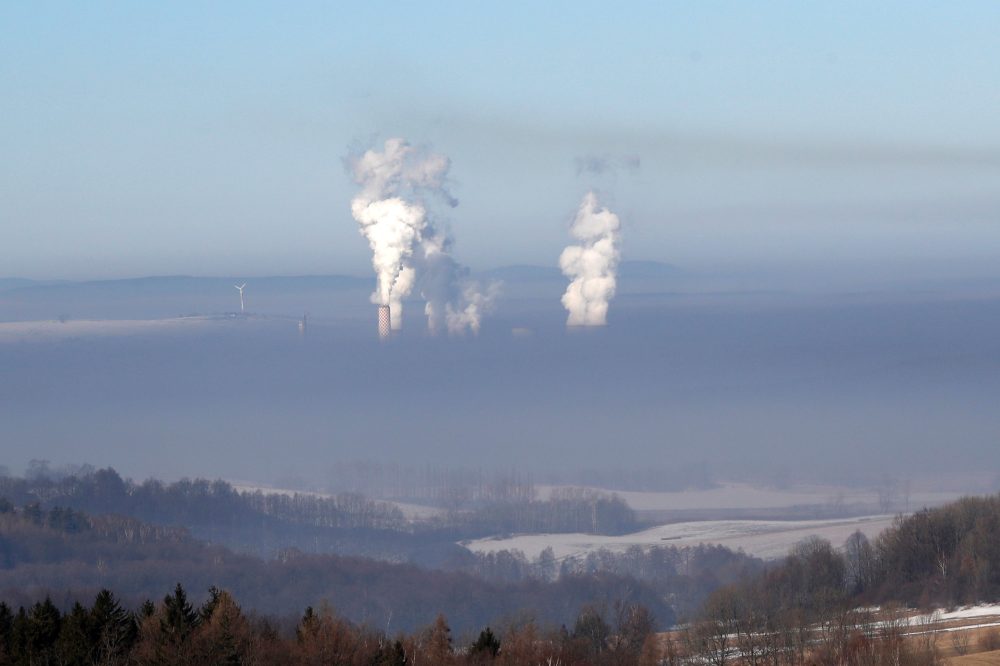
WARSAW, Poland (AP) — Environmental advocates are voicing concerns about the declining effectiveness of Poland’s major air quality improvement program, warning that the slowdown threatens both public health and national energy independence amid ongoing global conflicts like the Iran war that disrupt fuel markets.
Poland ranks among Europe’s most heavily polluted nations, prompting the government to introduce the comprehensive “Clean Air” initiative in 2018 following repeated violations of European Union air quality regulations. This program provides financial assistance to homeowners and businesses seeking to replace coal-burning heating systems, enhance building insulation, and reduce energy usage. The initiative targets coal-based residential heating — the primary contributor to the country’s air pollution — by encouraging transitions to gas, wood pellet, or electric heating alternatives.
Environmental organizations are now expressing alarm that the program’s effectiveness is diminishing, which not only hampers smog reduction efforts but also maintains Poland’s reliance on unstable energy imports during a period of heightened geopolitical uncertainty.
According to Krzysztof Bolesta, Secretary of State at Poland’s Ministry of Climate and Environment, approximately one million households across the nation of nearly 38 million residents have participated in the “Clean Air” program since its launch. However, 2.5 million coal-powered heating units still require modernization.
Andrzej Guła from the advocacy group Polish Smog Alert highlighted the program’s achievements, noting that Krakow experienced a dramatic reduction from 150 annual heavy smog days to just 30. “It’s still 30 days too much, but there is progress,” Gula stated.
The program reached its zenith in 2024 when more than 250,000 funding applications were submitted, though participation has declined sharply since then.
Government officials implemented program modifications at the end of 2024 to prevent fund misuse and temporarily suspended application approvals. Environmental groups contend that this abrupt program suspension damaged public confidence.
During a Warsaw press conference on March 31, Polish Smog Alert representatives presented data showing application numbers had fallen to one-fifth of peak levels in 2025, with the decline persisting into 2026.
The environmental advocates expressed concerns that Poland’s advancement in air quality improvement and domestic energy reduction has stagnated.
Bolesta defended the reforms as necessary measures to ensure appropriate project funding and prevent public money waste.
“Poland has a unique situation in the European Union, as only Poland has such a high share of coal in individual heating,” Bolesta explained, emphasizing the government’s dedication to air quality enhancement. “However, I have no illusions: this will be very difficult and we will continue to lag behind other countries in the EU.”
Piotr Siergiej, another Polish Smog Alert representative, argued that the energy crisis resulting from the Iran conflict should prompt urgent government action to repair the program.
Siergiej contended that reducing energy consumption strengthens Poland’s energy security by decreasing reliance on imported gas, coal, and wood pellets — an environmentally friendlier solid fuel made from compressed wood waste.
“This program can become an epochal chance to energetically transform our buildings and homes, to make us more independent from those energy crises which we are facing now and whose future we can’t predict,” he said.
BRASILIA — The Amazon region’s most recognized Indigenous leader, Raoni Metuktire, announced Wednesday his continued endorsement of Brazilian President Luiz Inácio Lula da Silva for the upcoming October election, even while opposing government-backed infrastructure initiatives that he and other Indigenous communities find troubling.
Metuktire’s declaration of loyalty follows his prominent appearance alongside Brazil’s leftist leader in January 2023, when he accompanied Lula as he entered the presidential palace to begin his third non-consecutive presidency.
Speaking to reporters Wednesday at the Free Land encampment — Brazil’s most significant Indigenous gathering — Raoni expressed his continued appreciation for the president’s efforts. “I like his work and am thinking about meeting him so we can address demarcation of Indigenous territories,” he stated. The demonstration has assembled approximately 7,000 Indigenous individuals representing 200 different groups, who have established camp in Brasilia for one week to advocate for their concerns.
Indigenous representatives are working to influence Lula, who has championed Indigenous rights and environmental protection throughout Latin America’s biggest country, while simultaneously advancing infrastructure developments that seem to contradict these principles.
Among these controversial initiatives is the Ferrograo railway development, designed to carry agricultural products like corn and soybeans across approximately 1,000 kilometers (621 miles) through Amazon rainforest territory. Indigenous communities have maintained long-standing opposition to this project.
Brazilian officials anticipate advancing the railway construction after the Supreme Court determines whether modifying national park boundaries for construction is legal and after congressional oversight committees give their approval.
Court proceedings were scheduled to continue Wednesday, prompting Indigenous protesters from the encampment, including Raoni, to demonstrate at the courthouse during afternoon hours.
Regarding the railway project, the Indigenous leader warned it could result in “great harm.”
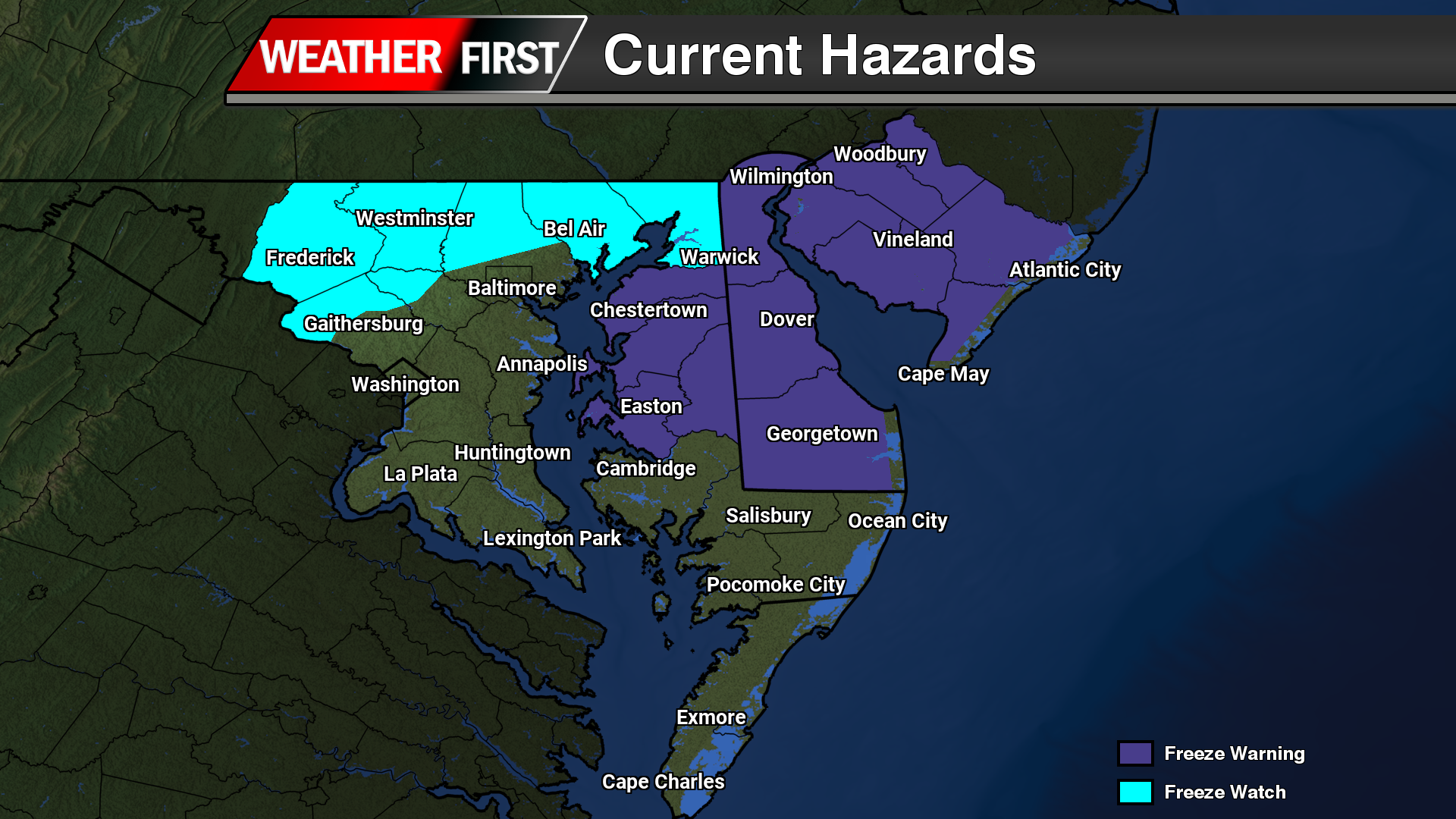
A Freeze Warning is in effect for much of the Delmarva Peninsula tonight through Thursday morning, as temperatures are expected to plummet to as low as 28 degrees.
The National Weather Service issued the warning this morning, covering New Castle, Kent, and Sussex counties in Delaware, along with Kent, Queen Anne’s, Talbot, and Caroline counties on Maryland’s Eastern Shore. The warning takes effect at 10 PM tonight and continues until 9 AM Thursday morning.
Meteorologists warn that these sub-freezing temperatures pose a serious threat to crops, gardens, and sensitive vegetation that may have already begun spring growth. The frost and freeze conditions could kill tender plants and potentially damage unprotected outdoor plumbing.
Residents are urged to take protective measures now, including covering or bringing indoors any sensitive plants, flowers, or garden vegetables. Homeowners should also ensure outdoor pipes are properly insulated or have water dripping to prevent freezing.
This unseasonably cold snap comes as many across Delmarva have been enjoying warmer spring weather in recent days. The Freeze Warning is set to expire Thursday morning at 9 AM, with temperatures expected to moderate as we head into the weekend.
SALISBURY, Md. – Salisbury University’s Sea Gulls athletic programs continue to demonstrate excellence across multiple sports in the latest weekly rankings released this Tuesday.
The university’s teams are showcasing particularly impressive performances in women’s lacrosse, men’s lacrosse, men’s track and field, and baseball, according to the newest Roadie Joes Rankings for the second week of April.
The sustained success across these four key programs highlights the strength of Salisbury University’s athletic department as spring sports reach their peak competition season.
The United States poultry industry is showing signs of growth, according to new federal agricultural data.
Recent statistics indicate that broiler-type eggs placed in incubators across the country increased by 2 percent during the reporting period. Additionally, the placement of broiler chicks in commercial operations rose by 3 percent nationwide.
These figures suggest continued expansion in the nation’s chicken production sector, which supplies meat to consumers across the country. The data reflects activity in hatcheries and production facilities that form the foundation of America’s poultry supply chain.
The statistics come from the National Agricultural Statistics Service, which regularly tracks livestock and poultry production trends to monitor the health of various agricultural sectors.
Virginia’s tidal rivers are experiencing peak shad season this month, offering exceptional fishing opportunities for anglers throughout the commonwealth. The Virginia Department of Wildlife Resources reports that April represents the optimal time to target these popular fish species.
The department’s latest fishing update emphasizes outstanding spring angling conditions, featuring a notable conservation achievement along the South Anna River where fish passage efforts have proven highly successful. Fishermen can focus their efforts on both American and hickory shad varieties during this seasonal migration.
According to wildlife officials, Virginia’s network of tidal waterways provides numerous locations where anglers can employ straightforward yet productive fishing methods. The department offers guidance on proper equipment selection, recommended lures, and proven tactics designed to maximize success during this annual spawning run.
For those interested in observing shad activity, the department maintains a live underwater camera feed at Bosher’s Dam, allowing viewers to watch the fish in real-time. Additionally, educational resources are available to help fishermen distinguish between American shad and hickory shad species.
The wildlife agency encourages anglers to take full advantage of this seasonal opportunity while following proper fishing regulations and conservation practices.
Mexican President Claudia Sheinbaum revealed Wednesday her administration’s intention to explore domestic unconventional natural gas reserves as a strategy to decrease the nation’s dependence on imported energy during a period of global market instability caused by Middle Eastern conflicts.
Despite her background as a scientist and climate specialist, Sheinbaum deliberately steered clear of mentioning hydraulic fracturing or “fracking” — the high-pressure liquid drilling technique used to extract oil and gas from deep rock formations. She instead described the proposal as pursuing “sustainable” extraction methods while promising to minimize environmental damage wherever possible.
Environmental scientists and energy professionals continue to debate whether “sustainable fracking” can actually be achieved. Sheinbaum explained that a technical panel will conduct a two-month study examining less damaging approaches, including the use of non-drinking water and fewer chemical compounds. The committee will also evaluate the financial implications of these protective measures.
“All the gas we import comes from a type of extraction that has environmental impacts” and is “100 meters from the Mexican border,” she stated, referring to Texas fracking operations.
Mexico holds the distinction of being the largest single purchaser of American natural gas globally.
Though she acknowledged that natural gas import agreements with the United States remain solid and diplomatic ties continue strong, Sheinbaum contended that boosting energy independence represents a prudent requirement. “Is more gas needed? Yes. Can all gas be replaced? Hardly,” she stated.
After taking office in October 2024, Sheinbaum has committed to expanding clean energy sources while simultaneously supporting the government-controlled Petróleos Mexicanos oil company. She justified this approach Wednesday by maintaining that fossil fuels continue to play a crucial role in Mexico’s energy portfolio.
Sheinbaum emphasized that the goal involves decreasing foreign energy dependence during unstable periods and preventing scenarios similar to Europe’s experience with Russian gas shortages during the Ukraine conflict or current disruptions from Middle Eastern warfare.
This controversial Wednesday announcement occurs as multiple infrastructure developments advance to boost American gas imports. These projects seek to meet Mexico’s growing domestic power requirements while establishing the nation as a distribution center for gas exports to Asian and European customers.
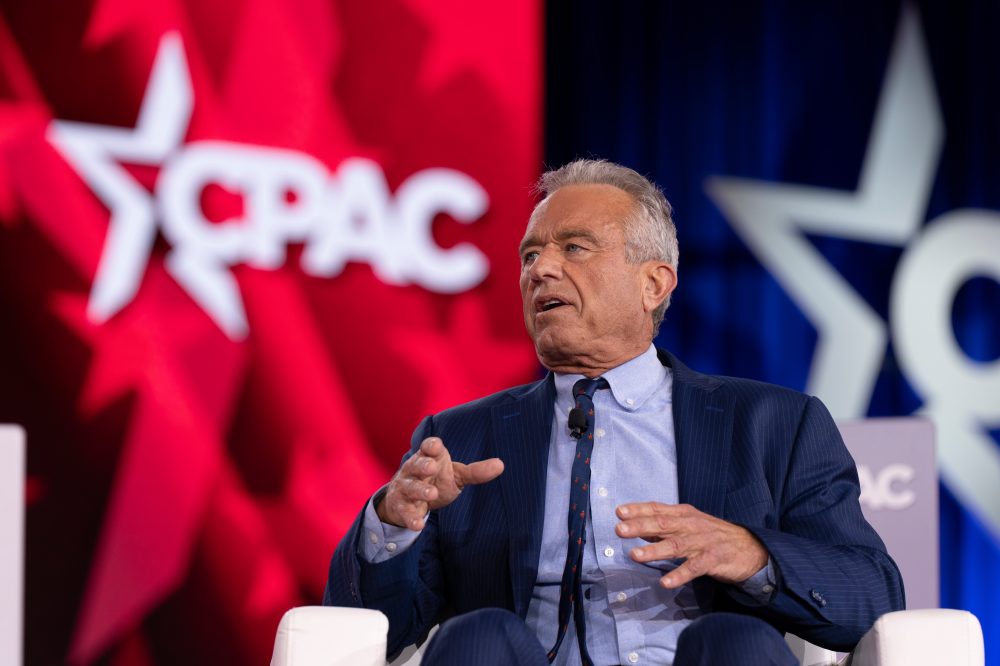
NEW YORK (AP) — Health Secretary Robert F. Kennedy Jr. will debut a new government podcast next week designed to promote what he calls unprecedented openness in federal health policy, according to a preview video exclusively shared with The Associated Press.
“The Secretary Kennedy Podcast” will showcase discussions between Kennedy and medical professionals, researchers, and department personnel, officials from the U.S. Department of Health and Human Services confirmed to the AP before the official announcement. The preview footage shows Kennedy in a professionally designed HHS studio with dramatic background music, positioning the program as a vehicle to reveal corruption and deception affecting American health outcomes.
“We’re going to name the names of the forces that obstruct the paths to public health,” Kennedy states in the minute-and-a-half promotional clip.
This new messaging initiative from HHS emerges during a challenging period for the department, which has encountered significant obstacles including widespread pushback against modified vaccination policies, a federal court decision last month halting several policy changes, and opposition from influential Republican senators preventing President Donald Trump’s surgeon general nominee from assuming office. The podcast launch could represent part of a comprehensive image makeover as the agency shifts focus from vaccination programs toward less controversial initiatives around nutrition policy in preparation for November’s midterm elections.
However, the program, which has been under development since the early days of the second Trump presidency, also showcases Kennedy returning to a medium where he has demonstrated comfort. Prior to his government role, the former anti-vaccine advocate and lawyer operated his own podcast and participated in numerous extended interviews on various platforms, including appearances as recent as this week.
Tyler Burger, who serves as HHS digital communications manager and will produce the new podcast, noted that while Food and Drug Administration Commissioner Marty Makary operates a podcast, department officials believe Kennedy’s program will mark the first hosted by an active cabinet member.
“We’re kind of bringing podcasting into the government as an official form and arm of our messaging,” Burger explained. He mentioned the studio setup utilized mostly existing department resources and can accommodate up to four participants in group discussions.
“This is part of our larger strategy to bring the Make America Healthy Again message to as wide an audience as we can,” stated Liam Nahill, HHS digital director.
Since modern podcasts typically include both audio and video components, they are frequently edited into clips and distributed across social media networks, providing them with “massive” audience reach, according to Melina Much, a postdoctoral researcher at NYU’s Center for Social Media and Politics.
Much explained that podcasts generally create a more personal, discussion-based, and welcoming atmosphere compared to standard interviews, enabling government officials to promote their initiatives while encountering less challenging questioning.
Although Kennedy’s promotional material emphasizes revealing deception, HHS spokesperson Andrew Nixon indicated the program will address cost concerns and other issues that polling data shows resonate with American voters before the midterm elections.
“Americans are united on the need to urgently address chronic disease, improve nutrition, strengthen food quality, and lower health costs,” he stated. “The Secretary Kennedy Podcast will cover all those issues.”
WASHINGTON — Federal Reserve meeting minutes released Wednesday reveal that more central bank officials are now open to raising interest rates this year, driven by concerns that escalating gas prices from the Iran conflict could fuel persistent inflation.
The March 17-18 meeting documents show that “some” of the Fed’s 19 policymakers on the rate-setting committee wanted to modify their official statement to signal potential future rate increases. This represents growth from “several” officials who held this view in January, and while the Fed doesn’t provide exact counts, “some” indicates greater support than “several” in central bank terminology.
Additionally, “many” officials highlighted concerns that elevated oil and gas costs might keep inflation high for “longer than expected, which could call for rate increases” to bring price pressures under control.
Despite these discussions, the Federal Reserve maintained its benchmark interest rate at approximately 3.6%. The central bank has held rates steady through its first two meetings of 2024, following three rate reductions at the close of 2023. Fed Chair Jerome Powell minimized expectations for rate cuts during his post-meeting press conference, suggesting officials’ projections of one potential reduction this year might not materialize.
Powell emphasized that any rate decrease would require consistent progress in lowering underlying inflation. “If we don’t see that progress then you won’t see the rate cut,” he stated at the time.
The meeting records, published three weeks following the gathering, highlight the challenging position facing the Fed as it works to achieve its dual congressional objectives of price stability and full employment. Policymakers recognized that the Iran situation could also pressure consumers to reduce spending to compensate for higher fuel costs, potentially slowing economic growth and increasing joblessness.
The Federal Reserve traditionally increases rates to slow economic activity and fight inflation, while reducing them to stimulate growth and job creation. This “two-sided” risk creates a complex balancing act for central bank officials.
WASHINGTON — A fragile two-week halt to hostilities between the United States and Iran has created breathing room for potential peace negotiations that could commence as early as Friday. However, the temporary truce has revealed deep disagreements between the two nations over fundamental aspects of any lasting agreement.
Key disputes center around Iran’s military oversight of shipping through the Strait of Hormuz and the future of Tehran’s uranium enrichment activities.
Questions also remain about whether the cessation of hostilities applies to Israeli military operations in Lebanon, and whether Iran will seek substantial financial concessions, sanctions relief, and American military withdrawal from the Middle East as conditions for sustained peace.
The conflicting interpretations from Washington and Tehran highlight the complexity of reaching any permanent resolution.
President Donald Trump declared Tuesday evening on his social media platform that the truce required Iran to ensure the “COMPLETE, IMMEDIATE, and SAFE OPENING of the Strait of Hormuz,” the critical Persian Gulf passage that handles one-fifth of global oil shipments during normal times.
Defense Secretary Pete Hegseth announced Wednesday at a Pentagon briefing that the waterway had reopened. However, Iran declared hours afterward that it was shutting the strait again due to Israeli strikes in Lebanon.
Tehran maintains that even if shipping resumes, it will only occur under Iranian military supervision. This arrangement allows Iran to claim continued control over the strategic waterway, preserving significant geopolitical and economic influence while potentially collecting substantial fees from vessels, generating billions in new income.
Iran’s peace proposal includes Washington’s “acceptance of enrichment” for its nuclear activities. This directly conflicts with Trump’s stated goal of preventing Iran from developing nuclear weapons capabilities.
Trump presented an alternative view Wednesday, posting that any peace deal would involve the United States working with Iran to “dig up” enriched uranium. The administration claims this material was buried following joint American-Israeli strikes in June.
However, Trump’s statement differed from Hegseth’s remarks. The Pentagon chief indicated Tehran would either “give it to us voluntarily” or face consequences similar to last summer’s strikes, when American and Israeli forces targeted Iran’s nuclear facilities.
Iran also insists that ending Israeli attacks in Lebanon, which have intensified recently, must be included in broader peace discussions.
This position aligns with Pakistani Prime Minister Shehbaz Sharif’s announcement on X, where the key mediator stated the ceasefire would extend to Lebanon.
Trump contradicted this interpretation, telling PBS NewsHour Wednesday that the truce would not cover Lebanon.
This matches the position of Israeli Prime Minister Benjamin Netanyahu’s office, which stated that the two-week suspension of Iranian strikes excludes the conflict with Hezbollah in Lebanon.
When Iran initially presented a 10-point peace proposal Monday, Trump characterized it as a “very significant step” but also “not good enough.”
However, approximately 90 minutes before his Tuesday night deadline to launch extensive American attacks on Iran’s infrastructure and power systems, Trump announced the two-week pause and described Iran’s offer as a “workable basis on which to negotiate.”
“Almost all of the various points of past contention have been agreed to between the United States and Iran,” Trump explained his decision to postpone threatened massive strikes on civilian targets.
The specific agreements remain unclear, with the White House declining to explain what developments between Monday and Tuesday evening prompted Trump’s changed stance toward the Iranian proposal.
Adding to the confusion, Iran has issued multiple versions of its 10-point framework for negotiations, with variations often appearing to depend on whether documents were prepared in English or Farsi.
Iran’s Supreme National Security Council claims “the United States has, in principle, committed to” several key demands that appear incompatible with longstanding American policies.
These alleged commitments include guaranteeing lasting peace without future attacks, maintaining Iranian control over the strait, accepting uranium enrichment activities, and removing all American economic sanctions. The council says this would encompass restrictions on international business with Iran and relevant United Nations Security Council resolutions.
The council also claims American agreement to ending international monitoring of Iran’s nuclear program, providing war damage compensation, extending the ceasefire to Lebanon, and withdrawing all American combat forces from the region.
The final demand would represent a dramatic shift, considering the United States has operated military bases throughout the Persian Gulf for decades since the 1991 Gulf War with Iraq. Complete sanctions removal also appears unlikely for American acceptance.
When asked how such proposals could be considered viable, White House press secretary Karoline Leavitt stated only that “negotiations will continue.”
“The truth is that President Trump and our powerful military got Iran to agree to reopening the Strait of Hormuz, and negotiations will continue,” Leavitt said in a statement.
Trump dismissed many of these points as “a FRAUD,” posting that the peace plan attributed to the council and covered by Iranian state media was a “false Statement was linked to a Fake News site (from Nigeria).”
Instead, the United States has presented its own 15-point peace framework. American officials have only confirmed general outlines.
“There is only one group of meaningful ‘POINTS’ that are acceptable to the United States, and we will be discussing them behind closed doors during these Negotiations,” Trump posted Wednesday.
Southwest Airlines announced it will increase baggage fees by $10 starting Thursday, marking another shift for the carrier that abandoned its famous “bags fly free” policy less than 12 months ago due to escalating jet fuel expenses linked to the Iran conflict.
Beginning Thursday, passengers will pay $45 for their first checked bag and $55 for a second bag, the airline confirmed. Certain passengers including select loyalty program members, qualifying co-branded credit card users, and active military personnel will continue to receive complimentary first bag privileges.
The Texas-based airline explained the fee adjustment comes “as part of an ongoing analysis of the business and against the evolving global backdrop,” according to their official statement.
Southwest eliminated its popular decades-long practice of providing two free checked bags per passenger in May 2025, ending a signature benefit the company had promoted as a major competitive advantage for years.
The carrier has joined several other major U.S. airlines implementing fee increases since Middle East hostilities commenced on February 28, triggering volatile oil markets as combat near the Strait of Hormuz has disrupted worldwide petroleum distribution. The strategic waterway typically handles approximately 20 percent of global oil transit, and threats to this passage have driven up aviation fuel prices derived from crude oil.
Delta Air Lines implemented its own baggage fee increases on Wednesday, while both JetBlue and United Airlines announced higher bag charges last week.
Crude oil prices dropped Wednesday toward $95 per barrel following President Donald Trump’s announcement of a two-week ceasefire agreement with Iran, reached just before his deadline for Tehran to reopen the Strait of Hormuz and restore oil tanker access to the Persian Gulf. However, prices continue trading significantly above pre-conflict levels due to persistent risks of renewed fighting.
The ceasefire’s stability remains questionable after Iran again blocked the Strait of Hormuz on Wednesday following Israeli strikes against Hezbollah forces in Lebanon, raising concerns about the agreement’s durability.
Jet fuel averaged $4.81 per gallon on Tuesday across major hubs in Chicago, Houston, Los Angeles and New York, representing a substantial jump from $2.50 the day before hostilities began, according to data from Argus Media. The energy intelligence firm monitors pricing through its U.S. Jet Fuel Index covering these critical markets.
International carriers have responded to rising fuel costs by implementing or expanding fuel surcharges, a strategy that American airlines historically avoid using.
Italian government officials called in Israel’s ambassador Wednesday following a shooting incident involving Italian peacekeepers serving with United Nations forces in Lebanon.
The incident occurred when Israeli military personnel fired warning shots at an Italian convoy operating as part of the UN peacekeeping mission known as UNIFIL, which monitors the volatile border region between Israel and Lebanon.
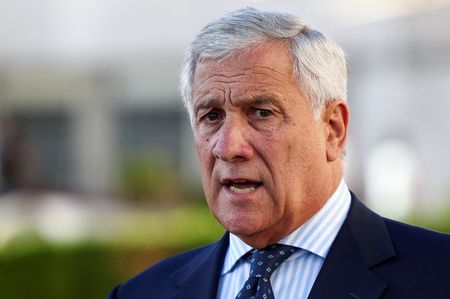
Foreign Minister Antonio Tajani told Italy’s parliament that “Israeli warning shots have damaged one of our vehicles; fortunately, no one was injured.” He later announced on social media that he had directed officials to summon the Israeli ambassador for an explanation.
Tajani emphasized that Israeli forces had “no authority to touch” Italian troops deployed in the region.
Prime Minister Giorgia Meloni issued a strong condemnation of the incident, stating “It is completely unacceptable that personnel operating under the U.N. flag should be put at risk by irresponsible actions such as today’s, which are in clear violation of U.N. Resolution 1701.”
According to Italy’s defense ministry, the logistics convoy was traveling from Shama to Beirut Wednesday morning when Israeli military forces opened fire with warning shots approximately two kilometers into their journey. The convoy immediately halted operations and returned to their base.
Meloni also called for an immediate end to Israeli military operations in Lebanon, which she said have caused excessive casualties and displaced numerous civilians. While acknowledging Hezbollah’s role in the conflict, she demanded that “Israel’s continued attacks in Lebanon which have already resulted in too many deaths and an unacceptable number of displaced people, must cease immediately.”
The shooting took place during what Israeli officials described as their most intensive strikes against Lebanon since fighting with Hezbollah militants escalated last month. Israeli authorities stated that a recent ceasefire agreement suspending hostilities with Iran does not extend to operations in Lebanon.
The UNIFIL peacekeeping operation currently includes approximately 7,500 personnel from various nations, with Italy serving as one of the largest contributors by deploying more than 750 soldiers to the mission.
The University of Delaware women’s tennis program received conference recognition this week as doubles partners Maryia Hrynashka and Paulina Jurkowska earned Conference USA Women’s Tennis Doubles Team of the Week honors.
The conference made the announcement on Wednesday, recognizing the Blue Hens duo for their performance during the week of April 8th.
This marks another achievement for the UD women’s tennis program as they continue their season in Conference USA competition.
University of Delaware women’s golf standout Kate Roberts has claimed her second Conference USA Women’s Golfer of the Week recognition in just three weeks, the league announced Wednesday.
The sophomore’s latest honor stems from her impressive showing at the Terps Invitational, which marked the conclusion of the Blue Hens’ regular season schedule.
Roberts’ back-to-back honors within such a short timeframe highlight her consistent excellence on the golf course as Delaware’s season comes to a close. The Energy Transfer Conference USA recognition underscores her impact on the team’s performance during this crucial stretch of competition.
The University of Delaware women’s lacrosse squad is preparing to close out their 2026 home season with a pair of upcoming matchups at their home venue.
The Blue Hens will welcome Kennesaw State and Coastal Carolina to campus for what will be their final two home contests of the 2026 campaign.
These closing home games represent the last opportunity for local fans to see the Delaware women’s lacrosse team in action on their home field this season.
The matchups against both Kennesaw State and Coastal Carolina will bring the curtain down on the Blue Hens’ home schedule for 2026.
Worcester County residents will have the opportunity to weigh in on potential increases to their water and sewer bills during a public hearing scheduled for May 5th.
County officials are seeking community input on proposed rate adjustments for water and wastewater services that would take effect in fiscal year 2027. The hearing provides an opportunity for residents to express their views and concerns about the potential changes to utility costs.
The public session represents part of the county’s process for reviewing and adjusting utility rates. Residents interested in participating in the discussion are encouraged to attend the May 5th hearing.
Meta Platforms introduced its newest artificial intelligence system called Muse Spark on Wednesday, marking the debut release from a specialized division the social media giant created through expensive recruitment efforts and major organizational changes as it works to compete in the rapidly evolving AI marketplace.
Technology companies across the United States face mounting expectations to demonstrate that their substantial investments in artificial intelligence will generate returns. Meta faces particularly intense scrutiny following last year’s acquisition of Scale AI CEO Alex Wang through a $14.3 billion agreement, along with compensation packages worth hundreds of millions of dollars offered to engineers joining the company’s newly formed superintelligence division.
The Muse Spark system represents the inaugural release from this specialized team, which focuses on developing artificial intelligence capabilities that could surpass human cognitive abilities.
The new technology will debut exclusively through Meta’s AI application and website before expanding in the coming weeks to replace current Llama systems that operate chatbot features across WhatsApp, Instagram, Facebook, and the company’s smart eyewear products.
According to a company blog post, the team stated: “This initial model is small and fast by design, yet capable enough to reason through complex questions in science, math, and health. It is a powerful foundation, and the next generation is already in development.”
Italy’s premier soccer league is exploring partnerships with private equity investors for a minority ownership stake in its international broadcasting rights division, according to three industry sources familiar with the discussions.
Serie A, which features powerhouse clubs like Inter Milan, AC Milan and Juventus, brought on investment bank JP Morgan last year to examine potential opportunities for the unit that manages the league’s global media rights, as previously reported.
The international broadcasting division brings in approximately 250 million euros ($292.6 million) annually, significantly less than what England’s Premier League and Spain’s LaLiga earn from their overseas media deals, based on UEFA data.
Investment firms including Apollo, CVC, Ares and Sixth Street are among the potential buyers that JP Morgan has preliminarily contacted regarding the possible transaction, sources revealed. A formal bidding process is anticipated to begin later this month, according to one source.
Representatives for Serie A, JP Morgan and Sixth Street declined to provide comment. Apollo, CVC and Ares have not yet responded to requests for comment.
The Italian league has faced challenges marketing its broadcasting rights internationally, as television networks have shown less interest due to an overcrowded schedule dominated by the expanded UEFA Champions League and the global appeal of England’s Premier League.
Serie A previously attempted a similar strategy in 2021, seeking to sell a portion of its more profitable domestic media division, but negotiations fell through when the league’s 20 member clubs couldn’t secure the necessary majority approval.
JP Morgan has been working with the league to develop a comprehensive business strategy for its international media operations, which also includes sponsorship deals and agreements to host Italian Super Cup matches in foreign markets, sources indicated.
The proposed agreement being presented to investment funds would allow the Italian league to divest up to 49% of the unit through a multi-year partnership, according to sources.
This potential Serie A transaction would follow similar private equity investments in other European soccer leagues, including those in Spain and France, where investors have acquired minority positions in media rights operations in return for immediate funding and long-term revenue participation, sources noted.
League regulations require approval from at least 14 clubs for any deals involving key commercial assets.
A freeze warning is in effect for the entire Delmarva Peninsula tonight through Thursday morning, with temperatures expected to drop as low as 28 degrees.
The National Weather Service issued the warning this morning, covering all of Delaware including New Castle, Kent, and Sussex counties, along with Eastern Shore Maryland counties including Queen Anne’s, Talbot, and Caroline. The warning takes effect at 10 PM tonight and remains in place until 9 AM Thursday morning.
Meteorologists warn that sub-freezing temperatures and frost conditions could be damaging to crops and other sensitive vegetation. Unprotected outdoor plumbing may also be at risk of freeze damage during the overnight hours.
Residents are urged to take protective measures now. Cover or bring indoors any tender plants, flowers, or vegetables that could be damaged by the freeze. Make sure outdoor faucets are covered and any exposed pipes are protected.
This late-season freeze is particularly concerning for farmers and gardeners who may have already planted spring crops or seen early blooms on fruit trees. The timing makes vegetation especially vulnerable to cold damage.
Temperatures are expected to rise above freezing after 9 AM Thursday as milder air moves into the region. The freeze warning expires Thursday morning at 9 AM.
COCKEYSVILLE, MD – Maryland’s State Soil Conservation Committee has announced plans for a public meeting scheduled for Thursday, April 16, 2026, running from 9:30 a.m. until noon.
The gathering will take place at the Baltimore County Ag Center, located at 114 Shawan Road in Cockeysville, Maryland 21030. Officials indicate the session will be conducted in hybrid format, allowing both in-person and remote participation.
According to the announcement, the committee’s agenda will center on soil conservation topics. The meeting remains open for public attendance.
SALISBURY, Md. – Salisbury University women’s golf standout Krista Brosius has earned her second Colonial Women’s Golf Conference Golfer of the Week recognition this season, the conference announced Wednesday.
The award comes after an exceptional performance that contributed to pushing the Sea Gulls golf program to unprecedented success levels during the past week.
This marks Brosius’s second time receiving the weekly honor from the CWGC this season, highlighting her consistent excellence on the golf course for Salisbury University.
The Securities and Exchange Commission has selected a seasoned white-collar defense attorney and former agency veteran to head its enforcement division following the unexpected departure of its previous director last month, according to three sources with knowledge of the decision.
David Woodcock, who works as a partner at the Dallas office of Gibson, Dunn & Crutcher, will take over the role previously held by Margaret Ryan. Ryan stepped down after serving only six months in the position, reportedly due to disagreements with SEC leadership regarding the direction of enforcement activities.
Woodcock brings extensive experience in securities law and previously served as director of the SEC’s Fort Worth regional office from 2011 through 2015. During his tenure there, he established a specialized task force focused on identifying and investigating accounting fraud and financial reporting violations, according to his professional profiles.
Both Woodcock and SEC representatives have not yet responded to requests for comment regarding the appointment.
The search for a missing Wilmington resident has come to a successful conclusion.
Edward Blackwell, who had been the subject of an active Gold Alert, has been found safe, according to authorities. Officials have now cancelled the alert that had been issued for the missing man.
No additional details about the circumstances of Blackwell’s disappearance or recovery have been released at this time.
Federal weather officials have confirmed that March delivered such extraordinary heat across the continental United States that it now holds the distinction of being the most unusually warm month in 132 years of temperature tracking.
According to data released Wednesday by the National Oceanic and Atmospheric Administration, March didn’t just break the record for hottest March ever recorded – it surpassed every other month in history for how far above normal temperatures climbed across the Lower 48 states. The month averaged 50.85 degrees Fahrenheit, soaring 9.35 degrees beyond the typical March temperature from the 20th century. This easily topped the previous record of 8.9 degrees above normal, which was also set during March 2012.
Daytime temperatures were particularly extreme, with maximum temperatures running 11.4 degrees higher than the 20th century average for March. NOAA noted these daily highs were nearly a full degree warmer than what’s typically seen during April.
The recent pattern of unusual warmth is becoming more frequent, with six of the nation’s ten most abnormally hot months occurring within the past decade. Even February ranked as the tenth most above-normal month, running 6.57 degrees warmer than historical averages.
Climate Central meteorologist Shel Winkley emphasized the significance of these conditions. “What we experienced in March across the United States was unprecedented,” Winkley stated. “One reason that’s so concerning is just the sheer volume of records, all-time records that were set and broken during that time period. But also this is coming on the heels of what was the worst snow year. And the hottest winter of record. So we’re seeing this continuation of extraordinary heat that took place during the winter months, continuing into the spring months as well. That’s where it’s really concerning, it’s just the duration of this heat.”
The widespread nature of the heat wave becomes clear when examining the numbers: meteorologist Guy Walton, who tracks NOAA statistics, reported that more than 19,800 daily temperature records were broken nationwide during March.
Weather experts warn that global temperatures may continue climbing over the next year, with some forecasts suggesting a developing El Nino weather pattern could reach exceptional strength.
SACRAMENTO, Calif. — California’s highest court issued an order Wednesday directing a county sheriff to temporarily halt his investigation into alleged voting irregularities after he confiscated more than 500,000 election ballots.
The judicial intervention follows a request made last month by California Attorney General Rob Bonta, a Democrat, who asked the state’s top court to intervene. A voting rights organization has also filed a legal challenge against the ballot confiscation.
The controversy began in February and intensified last month when Riverside County Sheriff Chad Bianco confiscated 1,000 boxes containing election materials. The seizure was part of his investigation into allegations made by a local citizen organization questioning the ballot tally from a November 2025 special election concerning redistricting. County election administrators informed the Board of Supervisors last month that the citizen group’s allegations lacked merit. Despite Bonta’s directive to stop the investigation, Bianco proceeded to confiscate an additional 426 boxes of ballots just last week.
According to Bonta, Wednesday’s court ruling is crucial for stopping the sheriff’s investigation.
“What the Sheriff says and what he does are often two different things,” Bonta stated. “Today’s decision by the California Supreme Court reins in the destabilizing actions of a rogue Sheriff, prohibiting him from continuing this investigation while our litigation continues.”
Bianco’s office has not yet provided a response to requests for comment.
The sheriff, who is among two leading Republican contenders for governor in the state, has previously justified his investigation by pointing out that a county judge authorized it. Last week, Bianco announced he would suspend the investigation due to increasing legal opposition.
WASHINGTON — The Justice Department announced that Pam Bondi, the recently dismissed Attorney General, will skip her planned testimony before House investigators examining the government’s mishandling of Jeffrey Epstein case materials.
House Oversight Committee spokesperson Jessica Collins revealed Wednesday that Justice Department officials indicated Bondi would not attend her April 14 scheduled appearance “since she is no longer attorney general and was subpoenaed in her capacity as attorney general.” Committee staff will now reach out to Bondi’s private attorneys to arrange future testimony dates, Collins explained.
The former Attorney General has come under fire for the Justice Department’s problematic handling of what lawmakers call the Epstein files. Last month, the Republican-controlled committee issued a bipartisan subpoena for Bondi’s testimony. The department’s publication of millions of documents related to Epstein, the deceased financier who sexually exploited minors, included numerous mistakes and missed congressional deadlines.
Following President Trump’s April 2 announcement of Bondi’s dismissal, she posted on social media that she would spend the coming month “working tirelessly to transition the office.” However, Deputy Attorney General Todd Blanche has assumed the top position on an interim basis and is now handling the department’s chief responsibilities. As of Wednesday, the Justice Department’s official website continued showing Bondi as attorney general.
Republican lawmakers who previously joined Democrats in subpoenaing Bondi are now demanding her appearance before the committee.
Representative Nancy Mace, who originally proposed the motion requiring Bondi’s testimony, posted on social media Wednesday that “Bondi cannot escape accountability simply because she no longer holds the office of Attorney General.”
The South Carolina Republican emphasized that the motion targeted her “by name, not by title” and stated “we expect her to appear as soon as a new date is set.”
Committee ranking Democrat Representative Robert Garcia of California also vowed to pursue enforcement of the subpoena and warned of potential contempt of Congress charges if Bondi fails to testify.
Garcia stated, “Now that Pam Bondi has been fired, she’s trying to get out of her legal obligation to testify before the Oversight Committee about the Epstein files and the White House cover-up.”
Committee Chairman Republican Representative James Comer of Kentucky has previously enforced subpoenas against Bill and Hillary Clinton this year, making the former president and former secretary of state among the most senior ex-government officials ever compelled to testify before Congress.
Drivers traveling on Wiggins Mill Road should plan for potential delays today as construction crews conduct mobile road work operations in the area.
The Delaware Department of Transportation reports that periodic lane restrictions are in effect along Wiggins Mill Road in the stretch between St. Annes Church Road and Main Street. The construction activity involves moving operations that may temporarily impact traffic flow.
Officials say the road work is expected to wrap up by 4 PM this afternoon. Motorists are advised to allow extra travel time and use caution when driving through the work zone.
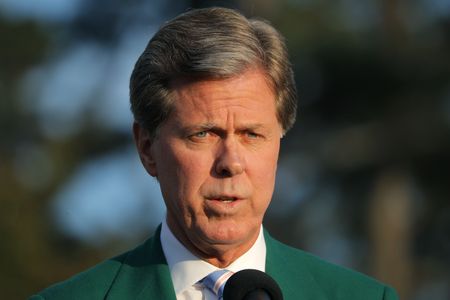
The head of Augusta National Golf Club believes golf’s governing organizations must follow through on proposed regulations to limit how far golf balls can travel, calling such changes essential for the sport’s future.
During his yearly media session before the Masters tournament on Wednesday, Augusta National Chairman Fred Ridley emphasized the urgent need to tackle the extraordinary distances today’s top golfers can achieve off the tee.
Last month, the United States Golf Association suggested delaying new testing standards that would reduce ball distances until 2030. The proposed Overall Distance Standard would modify testing speeds from 120 mph to 125 mph, potentially cutting driving distances by approximately 15 yards.
Working alongside the R&A, golf’s governing organizations are collecting additional input from various industry participants before settling on a final timeline.
Although Augusta National has continuously modified its layout and strategically extended certain holes to preserve the course’s original character and maintain competitive challenges, Ridley pointed out that most golf facilities lack such flexibility.
“Our position is grounded on much more than protecting the Augusta National golf course,” he said. “Unfortunately, many courses, including some iconic venues, do not have that option.”
“Until recent years golf has been a game of imagination, creativity and variety. The game has become much more one-dimensional. As players drive the ball prodigious distances and routinely hit short irons into par-4s and even some par-5s, this issue goes beyond competitive impacts. Increased course lengths results in more time, more cost and more environmental concerns,” Ridley explained.
According to Ridley, research indicates the changes would have minimal impact on amateur players, with most unlikely to detect any difference. His primary concern centers on professional golf and ensuring elite competitors are measured by their shot-making skills, strategic thinking, and performance under pressure.
“Regulation of the golf ball is not an attempt to turn back time or stifle progress. It is an effort to preserve the essence of what makes golf the great game that it is,” Ridley stated.
Despite Augusta National’s significant investments to adapt to modern golf, including property acquisitions and course expansions, Ridley acknowledged that even their famous venue faces challenges from the longest hitters.
He described a conversation with Jackson Herrington, a 19-year-old University of Tennessee sophomore nicknamed “Fridge,” who stands 6 feet tall. During practice, Herrington successfully drove over bunkers on the first and fifth holes, shots requiring approximately 325-yard carries, with one accomplished against the wind.
“I’ve said that we can make changes, but there’s not much we can do to make changes, No. 1, unless we tear down the Eisenhower Cabin, and we’re not going to do that,” Ridley said, referring to the historic structure built for President Dwight D. Eisenhower in 1953, located near the tenth tee behind the first hole.
“We’ll make changes when we can, but I think it’s time to really address this issue. It’s been talked about for a long time,” he added.
The initial proposal targeted only professional players starting in 2028, with recreational golfers affected beginning in 2030. However, the revised plan announced last month allows golf balls meeting current standards by October 6, 2027, to remain approved through 2029. New balls could be tested under updated standards starting this October 7.
The USGA reported that feedback highlighted concerns about implementing changes in phases, suggesting a single effective date would eliminate complications.
“My feeling on this subject is failure’s not an option. I think we need to continue to work together to come to some agreement,” Ridley emphasized. “Tough issues like this require compromise, and I think there has been some compromise to date.”
“It’s not the good old days, that’s not what we’re trying to do. What we’re trying to do is to protect the integrity of what makes golf so great. And that’s that it is more than about just hitting prodigious drives,” he concluded.
Seattle Mariners outfielder Victor Robles has been sidelined with a right pectoral strain, prompting the team to place him on the 10-day injured list on Wednesday.
To fill the roster vacancy, the Mariners promoted utility player Connor Joe from their Triple-A Tacoma affiliate. The team also moved pitcher Carlos Vargas from the 15-day injured list to the 60-day injured list in related roster moves.
The 28-year-old Robles has struggled early this season, recording a .231 batting average with three hits in 13 at-bats, along with one RBI and one stolen base across five games. His injury designation dates back to Tuesday. Robles previously dealt with injury issues last season when a dislocated shoulder kept him out for most of the year.
Joe, age 33, joined Seattle as a free agent signing in February. The veteran has posted a .235 batting average at Tacoma this season, collecting eight hits in 34 at-bats with one home run and four RBIs through nine games.
Meanwhile, the 26-year-old Vargas has been dealing with a right lat strain since being placed on the injured list on March 27. Last season, the reliever appeared in 70 games for Seattle, compiling a 5-5 record with a 3.97 ERA.
A former chief executive of mining giant Rio Tinto is orchestrating a massive $1 billion merger that could reshape the emerging deep-sea mining industry.
Tom Albanese, who headed Rio Tinto from 2007 to 2013, announced Wednesday that his company American Ocean Minerals will combine with Odyssey Marine Exploration through an all-stock transaction. The partnership seeks to establish one of the globe’s most extensive collections of underwater mineral rights.
This latest consolidation reflects growing momentum in the deep-sea mining sector, which targets critical materials beneath ocean waters covering most of Earth’s surface. However, the industry faces significant opposition from environmental groups and several nations concerned about ecological impacts.
Despite ongoing diplomatic and regulatory hurdles preventing actual deep-sea extraction, Western governments including the United States are actively pursuing alternative mineral sources to reduce dependence on China’s market control.
Albanese’s American Ocean Minerals, established this year, focuses on harvesting polymetallic nodules scattered across vast Pacific seafloor areas. These formations contain valuable metals including cobalt, nickel, copper and manganese essential for modern technology.
The merger will combine Odyssey’s holdings—including stakes in Ocean Minerals and Cook Islands exploration rights—with assets from CIC Limited, where Albanese serves as chairman and holds additional Cook Islands permits.
Approximately 30% of Odyssey’s current investors have already endorsed the transaction.
Beyond the primary metals, AOM believes its licensed territories may yield rare earth elements and titanium. While initially planning to contract third-party refiners, the company may eventually construct its own U.S. processing facility.
“What we’re seeing now is a concerted, bipartisan need to find energy and minerals resources, and deep-sea mining is a key part of that,” Albanese told Reuters in discussing the venture’s strategic importance.
The deal includes $150 million from institutional investors through private placement, plus $75 million in pre-public funding. Notable backers include Emmy-winning television personality Mike Rowe, host of “Dirty Jobs.”
Upon completion anticipated by August, the merged entity will begin trading on Nasdaq using the symbol “AOMC.” Odyssey Marine’s stock price surged 88% to $1.57 following Wednesday’s announcement.
The company has petitioned Washington for two international licenses covering the Pacific’s Clarion-Clipperton Zone, creating potential conflict with the International Seabed Authority.
President Donald Trump indicated in January his administration would accelerate permitting for international mining operations.
The ISA, established under the UN Convention on the Law of the Sea which the U.S. hasn’t ratified, has spent years developing mining regulations without reaching final standards during last month’s meetings.
Another industry player, The Metals Company, has similarly requested Trump administration permits for international operations.
Financial firms Citigroup and Cantor Fitzgerald—led by Brandon Lutnick, son of Commerce Secretary Howard Lutnick—structured the private placement. Moelis & Co provided advisory services to Odyssey.
American Ocean Minerals plans to host a conference call Monday to detail the merger terms.
The Washington Capitals’ legendary captain Alex Ovechkin, who holds the NHL record for most career goals, plans to determine whether he’ll keep playing hockey once this season concludes.
The 40-year-old veteran is currently in his 21st NHL campaign and the last year of his five-year deal worth $47.5 million. Ovechkin captured the Stanley Cup in 2018 and has earned the Hart Trophy three times during his illustrious career.
Speaking with Monumental Sports Network, Ovechkin explained his approach to the major decision ahead. “When you love something, you do it with heart,” he stated. “Obviously, I love playing hockey, I love scoring goals. … We’re going to make a decision in the summer. I have to talk to my family, with Ted (owner Ted Leonsis)” along with other franchise executives.
“I’m going to be 41 in September. You just have to be smart about it.”
The veteran’s season may end sooner than hoped, as Washington faces playoff uncertainty. The Capitals hold a record of 39-30-9 for 87 points, trailing Philadelphia by five points for the Metropolitan Division’s third position with just four contests left. They also sit five points behind Ottawa in the race for the Eastern Conference’s final wild-card berth.
Ovechkin made history this season when he eclipsed Wayne Gretzky’s legendary goal-scoring mark, netting his record-breaking 895th career goal against the New York Islanders on April 6, 2025, with Gretzky watching from the stands. Since then, he has extended his total to 928 goals after leading his team with 31 this season.
This year, Ovechkin has accumulated a team-high 61 points, bringing his career point total to 1,684, which places him 10th in NHL history.
Selected first overall by Washington in the 2004 NHL Draft, he has claimed the Maurice “Rocket” Richard Trophy as the league’s top goal scorer a record nine times throughout his career.
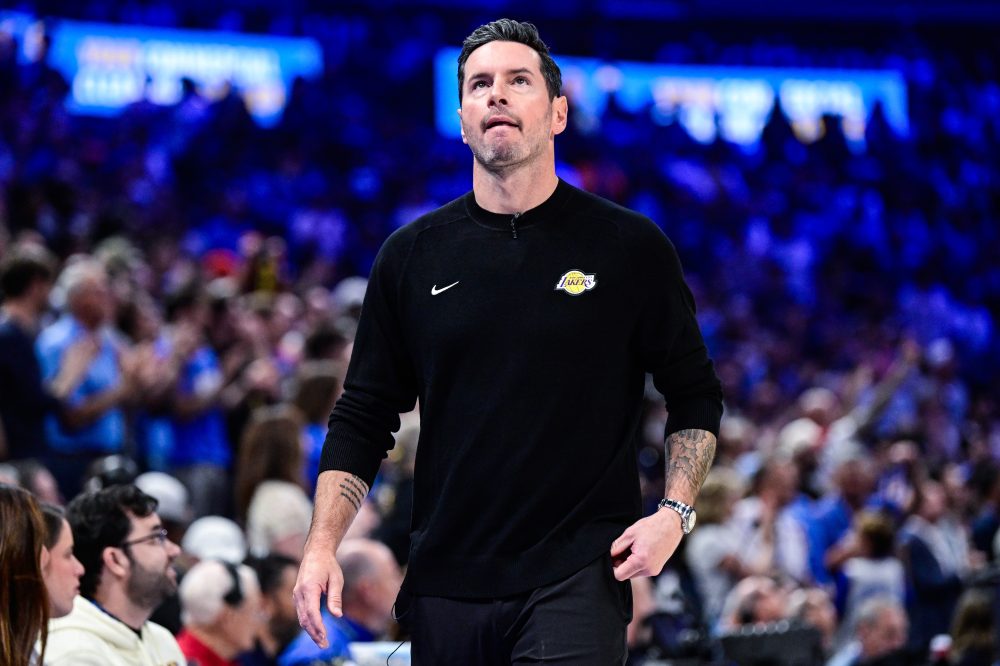
Los Angeles Lakers head coach JJ Redick brushed off his heated sideline confrontation with forward Jarred Vanderbilt during Tuesday evening’s contest, describing the public dispute as typical team communication amid challenging circumstances for his injury-riddled squad.
The confrontation erupted after Redick pulled Vanderbilt from the game against Oklahoma City merely 16 seconds into the second quarter, leading to an intense verbal exchange between the coach and player that was clearly visible to spectators.
When asked about the incident, Redick attributed the argument to “just a confluence of things,” but refused to elaborate on Vanderbilt’s specific mistakes that prompted his removal.
“Nothing personal with him,” Redick explained. “Normal stuff from my end. I think for all of us, being undermanned, we’ve got to scrap and claw. We’ve got to all be on the same page. We’ve got to be great teammates. We’ve got to all play hard. I called a timeout to get him out of the game, and he reacted.”
Following the timeout, Vanderbilt walked directly toward his coach on the court. As the situation escalated, injured guard Austin Reaves and assistant coach Nate McMillan intervened to defuse the tension between the two.
The heated discussion resumed when both returned to the bench area, where Redick made a dismissive hand gesture toward Vanderbilt that seemed to further agitate the forward.
Vanderbilt remained benched for the remainder of the contest and departed the team’s downtown facility without addressing media members.
During his brief 4½ minutes of action, Vanderbilt converted his lone field goal attempt and recorded two rebounds plus one steal, though he struggled at the charity stripe by missing three straight free throws before the opening quarter concluded. The defensive-minded player has received inconsistent playing time under Redick this season due to offensive limitations that have prevented him from securing a regular rotation spot.
The Lakers entered the matchup severely shorthanded, missing NBA scoring champion Luka Doncic, superstar LeBron James, Reaves, Marcus Smart, and Jaxson Hayes due to various injuries. The depleted roster proved no match for Oklahoma City, which dominated Los Angeles 123-87, handing the Lakers their third straight defeat following a impressive 13-1 stretch.
This loss marked Los Angeles’ first home defeat since February 24, snapping a 10-game home winning streak. With a 50-29 record, the Lakers now trail the surging Denver Nuggets (51-28) by a full game for the Western Conference’s third playoff seed, while holding only a tiebreaker advantage over the Houston Rockets (50-29) for the fourth position.
Before losing both Doncic and Reaves to season-ending injuries during last week’s blowout defeat in Oklahoma City, Los Angeles appeared positioned for a strong playoff push with hopes of securing home-court advantage. While Redick hasn’t completely abandoned those aspirations, he admitted before Tuesday’s game that any seeding improvements “probably went out the window after the (first) OKC game.”
Following his team’s lowest offensive output of the season, which included an inexplicable 17 missed free throws, Redick delivered pointed criticism of his available players.
“We’ve got to find nine guys that are, like, all in on us fighting,” Redick stated. “Whatever you’ve got to do to go out and fight and be all in on the team, we’ll find the nine guys. It’s a great opportunity for us over the next three games to find those guys.”
The frustrated coach revealed he had also removed forward Rui Hachimura earlier in the game because the player “didn’t do his job.”
Redick also expressed concerns about starting center Deandre Ayton’s performance, noting that Ayton has “had trouble catching the ball. We’ve had a bunch of plays for him. He’s just had trouble catching the ball, and I don’t know if that’s the passing or him trying to get position. He just hasn’t been able to catch the ball.”
Residents across the Delmarva Peninsula need to prepare for a hard freeze tonight, as the National Weather Service has issued a Freeze Warning effective from 10 PM this evening through 9 AM Thursday morning.
Temperatures are expected to plummet to as low as 28 degrees across much of our viewing area, including all of Delaware’s New Castle, Kent, and inland Sussex counties, as well as Maryland’s Eastern Shore counties of Kent, Queen Anne’s, Talbot, and Caroline.
The unseasonably cold weather poses a serious threat to crops and sensitive vegetation that may have already begun spring growth. Gardeners and farmers should take immediate action to protect tender plants, flowers, and newly planted seedlings. The freeze could also damage exposed outdoor plumbing, so residents should consider covering or insulating vulnerable pipes.
This April freeze is particularly concerning given the recent warm weather that encouraged early plant growth across the region. Agricultural officials recommend covering sensitive crops with blankets or tarps and bringing potted plants indoors if possible.
The Freeze Warning will remain in effect until 9 AM Thursday morning. Temperatures should return to more seasonal levels by Thursday afternoon, with highs climbing back into the 50s and 60s.
Rehoboth Beach Police are encouraging community members to bring their unused and outdated prescription drugs to the station this Saturday for secure disposal during the Drug Enforcement Administration’s twice-yearly National Prescription Drug Take Back Day event on April 25. Residents can visit the police station lobby at 229 Rehoboth Avenue between 10 a.m. and 2 p.m. to dispose of unwanted medications.
No identification is required for the medication drop-off service. However, illegal drugs, needles, and syringes cannot be accepted. Electronic cigarettes and vaping devices will only be taken if users first remove the batteries.
Since launching this program in 2021, the DEA has successfully gathered 10,000 tons of prescription medications nationwide. The National Prescription Drug Take Back Day initiative works to prevent drug abuse and misuse by providing a secure method for disposing of outdated or unnecessary prescription medications.
Democratic candidates maintained their streak of stronger-than-expected electoral performance in Tuesday’s contests held in Wisconsin and Georgia, continuing a pattern that has emerged since President Trump began his second term.
The results mark another chapter in what has become a consistent trend for the Democratic Party throughout 2025, as candidates have repeatedly exceeded their performance margins compared to the 2024 presidential race.
Tuesday’s elections included a Wisconsin Supreme Court race that expanded the liberal-leaning majority on the state’s highest court, along with various contests in Georgia.
Political analysts have been tracking this phenomenon of Democratic overperformance since the start of 2025, noting that the party has consistently improved upon its showing in last year’s presidential contest across multiple states and election types.
Delaware’s small business community will gather in Dover later this month as seventeen entrepreneurs compete for state grant funding through the EDGE 2.0 program.
The Delaware Division of Small Business has revealed the competitors who will participate in the grant pitch competition scheduled for April 30th and May 1st at Delaware Technical Community College in Dover. Both days will run from 9 a.m. to 4 p.m.
Among the selected participants, nine will compete in the Entrepreneur category while eight others will present in the STEM division. These finalists emerged from a pool of 123 applicants who sought funding in this latest round.
Community members interested in observing the presentations can attend without charge, though advance registration is necessary to guarantee seating. Those wishing to attend can register at https://bit.ly/4sAcqQa.
This competition marks the thirteenth iteration of the EDGE program since state officials first launched the initiative to support Delaware’s emerging businesses.
Two French citizens who spent more than three years imprisoned in Iran have finally made it back to their homeland following intensive diplomatic negotiations between Paris and Tehran.
Cécile Kohler, 41, and Jacques Paris, 72, touched down in France on Wednesday after departing Iran by vehicle on Tuesday, just as news broke of a potential ceasefire agreement between the United States and Iran aimed at ending regional hostilities that began February 28th. French officials are calling their freedom a significant diplomatic victory.
French President Emmanuel Macron, who has worked to keep France separate from Middle Eastern conflicts, greeted the pair at the presidential Elysee Palace upon their arrival.
The two were initially taken into custody on espionage allegations and were freed from their Iranian jail cells in November. But they remained stuck at French diplomatic facilities in Tehran because Iranian officials refused to grant them permission to exit the country. Macron announced they finally received authorization to begin their journey home on Tuesday.
“We understand how fortunate we are to have ‘barely made it out,’ because the situation could have been far more dire,” Kohler shared with media on Wednesday. “The past two days have been exhausting since we traveled by automobile and then aircraft. We haven’t gotten any sleep in 48 hours,” she explained.
The former prisoners made a nine-hour drive from Iran into neighboring Azerbaijan before boarding a flight to Paris, according to French officials. France’s Tehran ambassador Pierre Cochard escorted them throughout their entire journey home.
The president’s office described their release as the result of “sustained diplomatic work,” though discussions intensified recently due to pressure from the Iran conflict, which created urgency around the situation.
Macron stated last week that America couldn’t criticize allies for insufficient support after choosing to begin the Iran conflict without consulting partners. “This military action does not belong to us,” he informed reporters while visiting South Korea.
The French president became the first Western leader to have a phone conversation with Iranian President Masoud Pezeshkian on March 8th after fighting began. The two leaders have since spoken by phone two additional times, on March 15th and March 24th.
French leadership also expressed gratitude to Oman for helping broker the release of Kohler and Paris.
Omani officials “enabled us, during the crucial final phase, to communicate key messages within Iran’s government structure,” French Foreign Minister Jean-Noël Barrot explained during an appearance on France 2 television.
“This past Sunday evening, which was Easter Sunday, I got a phone call from Iran’s foreign minister confirming their government had made the decision,” he stated.
Barrot indicated that specific details about the Iranian negotiations would stay “private.”
But Iran’s official news agency IRNA reported on Tuesday that Iran had struck a deal with France to free both French nationals in return for Iranian citizen Mahdieh Esfandiari.
Macron’s administration rejected claims of any prisoner exchange arrangement.
Tehran has been advocating since last year for Esfandiari’s release after she was found guilty in France of promoting terrorism based on statements she made regarding the Hamas-orchestrated October 7, 2023 attacks against Israel.
Esfandiari received a one-year prison term in February plus a three-year suspended sentence and a lifetime ban from entering France. She has challenged the verdict.
She had been living under house arrest, a restriction that was removed Tuesday afternoon, just after news emerged that the two French citizens had departed Iran, her attorney Nabil Boudi confirmed to The Associated Press.
Kohler and Paris expressed appreciation on Wednesday to everyone who assisted in their escape from Iran.
Speaking with reporters, they described Iran’s Evin prison, which houses numerous political prisoners and opposition figures, as “hell.”
“We endured daily terror,” Kohler stated.
Paris mentioned they felt “continuously threatened” during their imprisonment.
“We were forbidden from reading or writing. Each time we exited our cell, they covered our eyes,” he recalled.
“One objective was probably to destroy our spirits,” Paris continued. “They failed to break us. We will tell our story, we will speak publicly, and we will embrace life once more.”
The pair had been on vacation in Iran when authorities arrested them in May 2022.
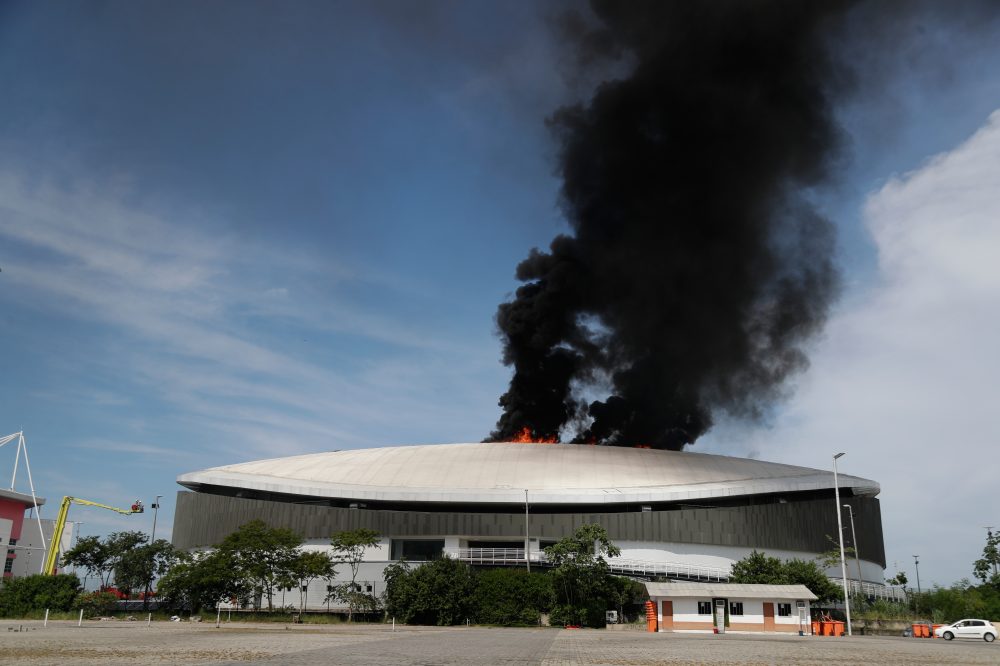
RIO DE JANEIRO — Emergency crews rushed to contain a blaze that erupted Wednesday morning at the velodrome within Rio de Janeiro’s Olympic Park, with approximately 80 firefighters and 20 emergency vehicles responding to the scene, according to local authorities.
Officials from Rio state’s military fire department confirmed the flames were brought under control and remained mostly limited to the building’s fabric roofing material. No casualties have been documented, and the structure’s interior spaces — which house the Olympic Museum — escaped damage.
Investigators are working to determine what sparked this most recent fire, though the velodrome has experienced similar rooftop incidents before. The facility suffered two comparable fires back in 2017, with both blazes traced back to paper sky lanterns that had fallen onto the roof.
The velodrome gained international attention when it hosted track cycling competitions during Rio’s 2016 Summer Olympic Games. Today, the facility functions as the main training headquarters for Brazil’s national cycling and weightlifting squads.
TORONTO — Another Conservative member of Canada’s Parliament has switched allegiance to Prime Minister Mark Carney’s Liberal Party, bringing his government tantalizingly close to securing a parliamentary majority.
Marilyn Gladu, who represents an Ontario district, cited concerns about President Donald Trump’s economic and territorial threats against Canada as the driving force behind her party switch. Trump has floated the idea of incorporating Canada as America’s 51st state while imposing harsh tariffs on key Canadian industries.
“The past year has been like no other Canada has ever faced,” Gladu said in a statement Wednesday. “I’ve heard from constituents that you want serious leadership and a real plan to build a stronger and more independent Canadian economy.”
Gladu becomes the fifth parliamentarian to join Carney’s ranks and the fourth former Conservative to make the switch.
“She is going to be a great member of our team,” Carney said outside his office. “This all comes at a time when the country as a whole is uniting.”
The party switch moves the Liberals to 171 seats in the House of Commons, just one short of the 172 needed for majority control that would allow them to pass legislation without requiring opposition support.
Carney has scheduled special elections in three districts for Monday that could deliver the majority he seeks if his party captures just one of the seats.
The prime minister announced March 8 that voting will take place April 13 in two Toronto-area constituencies — Scarborough Southwest and University-Rosedale — both considered likely Liberal victories, plus the Montreal-area district of Terrebonne, where the outcome remains uncertain.
The three other Conservative parliamentarians who recently joined the Liberals are Chris d’Entremont, Michael Ma and Matt Jeneroux.
Jeneroux has pointed to Carney’s World Economic Forum address in Davos as influential in his decision. During that speech, Carney criticized economic bullying by powerful nations against smaller countries, earning widespread acclaim and overshadowing Trump at the international gathering.
Since replacing Justin Trudeau as prime minister in 2025 and winning national elections, Carney has steered the Liberals toward the political center.
The latest defection represents another setback for Conservative leader Pierre Poilievre, who suffered defeat in last year’s national election and even lost his own parliamentary seat before later returning to the House of Commons.
Although Poilievre survived a party leadership review earlier this year, he continues to struggle with maintaining unity among his caucus members.
A decades-long investigation into murders near New York’s Gilgo Beach reached a major conclusion when Rex Heuermann entered guilty pleas for seven killings and confessed to an eighth victim’s death in court Wednesday.
The case began in 2010 when officers looking for a missing woman started discovering human remains scattered along Ocean Parkway near the Long Island beach community. Authorities quickly suspected the work of a serial killer.
Through years of DNA testing and investigative work, police identified victims and connected some remains to bodies found elsewhere on Long Island in earlier years.
The following chronology traces the investigation from the first victim’s discovery through Heuermann’s recent guilty plea:
November 20, 1993: Hunters find Sandra Costilla’s body, age 28, in wooded North Sea area of the Hamptons. Costilla had been residing in New York City.
April 20, 1996: Partial remains of Karen Vergata are located on Fire Island barrier beach. Investigators don’t identify her until 2022 using advanced DNA testing. Vergata, 34, was engaged in sex work when she disappeared.
June 28, 1997: A woman’s partial remains are found in a plastic container at West Hempstead state park. Detectives call her “Peaches” due to a body tattoo. She remains unidentified for years until 2025, when police determine she is Tanya Jackson, an Army veteran from Brooklyn.
September 2000: Partial skeletal remains of Valerie Mack, a Philadelphia escort, are located in Manorville woods. Mack, 24, was last seen by relatives in spring or summer 2000 in Port Republic, New Jersey.
July 26, 2003: Jessica Taylor’s partial skeletal remains are found in Manorville wooded area. She was 20 and working as an escort when she vanished.
July 9, 2007: Maureen Brainard-Barnes, 25, travels from Norwich, Connecticut for sex work and last contacts a friend from her hotel, saying she’s meeting a client. Cell phone records later show her phone’s final use was on Long Island.
July 10, 2009: Melissa Barthelemy, 24, leaves her Bronx apartment telling a friend she’s seeing a man and will return by morning. Phone data places her last known location on Long Island. Someone later uses Barthelemy’s phone to make harassing calls to her family members.
May 1, 2010: Shannan Gilbert vanishes in Oak Beach after running from a client’s home and seeking help from neighbors. In a recorded emergency call, she tells dispatchers people are pursuing her but refuses assistance. Witnesses say she appeared confused and fled into the darkness.
June 6, 2010: Megan Waterman, 22, who came to Long Island from Maine for sex work, is last spotted at a Hauppauge motel.
September 2, 2010: Amber Lynn Costello, 27, leaves her West Babylon home to meet a client. A friend later tells detectives the presumed client drove a Chevrolet Avalanche.
December 11, 2010: An officer training with his dog finds human remains along Ocean Parkway. Officials initially think they’ve found Gilbert but identify the victim as Barthelemy.
December 13, 2010: Police locate bodies of Costello, Brainard-Barnes and Waterman on the same quarter-mile Ocean Parkway section where Barthelemy was discovered.
December 14, 2010: Suffolk County Police Commissioner Richard Dormer announces the body discoveries publicly and suggests a serial killer may be responsible. The search expands while Gilbert remains missing.
March 29, 2011: Some of Taylor’s remains are found along Ocean Parkway.
April 4, 2011: More of Valerie Mack’s remains are discovered on Ocean Parkway. Nearby, investigators find a 2-year-old girl’s remains, later DNA-identified as Jackson’s daughter, Tatiana Dykes. Separately, they discover an unidentified Asian male’s remains, estimated to be from someone in his late teens or early twenties who died five to ten years prior.
April 11, 2011: Additional Vergata remains are found along Ocean Parkway, miles west of Gilgo Beach. Police also locate more of Jackson’s remains along the beach roadway.
December 13, 2011: Gilbert’s skeletal remains are discovered in Oak Beach tidal marsh. Following autopsy, Suffolk Police conclude she accidentally drowned.
January 2022: Suffolk County district attorney establishes new task force for Gilgo Beach killing investigation.
July 13, 2023: Authorities arrest Heuermann, charging him with murdering Costello, Waterman and Barthelemy. Primary evidence includes cell phone location data placing Heuermann and victims in similar locations at corresponding times, plus DNA traces on remains.
January 16, 2024: Heuermann faces charges in Brainard-Barnes’ death. Prosecutors cite hair found with her body that’s genetically similar to DNA from Heuermann’s wife.
May 20, 2024: New search of Heuermann’s residence begins, continuing nearly a week.
June 6, 2024: Heuermann is charged with Costilla and Taylor murders.
December 17, 2024: Unsealed indictment charges Heuermann in Mack’s killing.
December 18, 2025: Florida resident Andrew Dykes enters not guilty plea for killing Tanya Jackson and Tatiana Dykes. DNA evidence links Dykes, who was Tatiana’s father, to the crimes. Though ultimately unconnected to other Gilgo Beach deaths, authorities say this case benefited from resources devoted to the serial killer investigation.
April 8, 2026: Heuermann pleads guilty to seven murder counts for killing Barthelemy, Brainard-Barnes, Costello, Costilla, Mack, Taylor and Waterman. He also admits in court to killing Vergata. Sentencing is scheduled for June 17.
WASHINGTON — Environmental Protection Agency Administrator Lee Zeldin on Wednesday justified his agency’s elimination of a key climate regulation, encouraging a room full of climate change doubters that they should “celebrate vindication.”
Speaking as the featured presenter at an event organized by the Heartland Institute, a right-leaning research organization that disputes widely accepted climate science and opposes what it terms “climate alarmism,” Zeldin argued that eliminating the 2009 “endangerment finding” corrected years of blind acceptance of liberal political figures and environmental advocates regarding climate change threats.
“Today is a day to celebrate. It is a day to celebrate vindication,” Zeldin stated. The former New York Republican congressman is reportedly being considered for potential advancement to attorney general following Pam Bondi’s recent forced exit.
Earlier this year, the EPA eliminated the endangerment finding, a scientific determination that had provided the primary legal foundation for controlling planet-warming pollution from power facilities, automobiles and other emission sources for 16 years. The Trump administration contended the finding damaged business and economic interests, alleging that previous Obama and Biden administrations manipulated scientific data to conclude that greenhouse gases pose public health dangers.
Zeldin’s high-profile participation at an event sponsored by an organization that questions established climate science demonstrates the dramatic policy shift President Donald Trump’s administration has implemented regarding traditional environmental protections. The EPA has eliminated numerous air and water safeguards and has declared it lacks legal power to address climate change.
“You were right there on the front lines against there being an endangerment finding in 2009,” Zeldin addressed the Heartland audience.
Environmental advocates condemned Zeldin’s participation at the conservative organization’s gathering, charging him with “rallying climate deniers” during a period when climate change is increasing threats from severe weather events, including more powerful hurricanes, deadlier flooding and more devastating wildfires.
Joe Bonfiglio, an Environmental Defense Fund executive, said Zeldin’s address “promotes disinformation” and represents carrying out the agenda of Heartland’s undisclosed financial backers.
“The Heartland Institute is not a serious scientific organization. It’s a disinformation factory,” Bonfiglio stated. “Having the EPA administrator serve as their opening act isn’t just embarrassing — it’s a signal of how completely the Trump administration has abandoned its obligation to protect the public from pollution.”
An EPA representative dismissed the criticism, stating “the era of EPA as a vehicle for radical ideology is over.”
Agency spokesman Carolyn Holran said Zeldin addresses a “wide variety of ideologically different groups and individuals to promote the agenda of the Trump EPA.”
She wrote in an email that Zeldin has redirected the agency’s mission to fulfill its legal responsibilities for protecting human health and the environment, “backed by gold standard science, not doomsday models designed to scare the public into compliance.”
Heartland Institute President James Taylor praised Zeldin’s address and declared Zeldin “the greatest EPA administrator ever.”
The 2009 endangerment finding concluded that carbon dioxide and additional greenhouse gases pose risks to public health and welfare. The Obama administration’s determination provided the legal foundation for virtually all climate regulations under the Clean Air Act covering automobiles, power facilities and other pollution sources contributing to planetary warming.
The elimination removes all greenhouse gas emission requirements for automobiles and trucks and may trigger broader dismantling of climate regulations affecting stationary pollution sources including power plants and oil and gas operations, according to experts. Nearly two dozen states have filed legal challenges alongside public health and environmental organizations.
British Prime Minister Keir Starmer warned Wednesday that significant challenges lie ahead in efforts to reopen the Strait of Hormuz, despite the recent U.S.-Iran ceasefire agreement. The Prime Minister made these comments while visiting the Gulf region for discussions with area leaders.
During his trip, which had been scheduled prior to the ceasefire announcement, Starmer addressed military personnel at a Saudi Arabian base about the ongoing diplomatic efforts.
“We now … have a ceasefire, but there’s a lot of work to do, as you will appreciate, a lot of work to make sure that that ceasefire becomes permanent and brings about the peace that we all want to see,” Starmer told the assembled troops.
“But also a lot of work to do in relation to the Strait of Hormuz, which has an impact everywhere across the world,” he added.
The British leader has faced sharp criticism from U.S. President Donald Trump for not backing American and Israeli military actions against Iran. In response, Starmer has organized international conferences focused on coordinating allied efforts to restore access to the vital shipping corridor that serves as a lifeline for global energy markets.
“It’s our job to make sure that the Strait is open, that we’re able to get the energy that the world needs out and stabilise the prices back in the United Kingdom,” Starmer explained to journalists.
Meanwhile, British Foreign Secretary Yvette Cooper held discussions Tuesday with her American counterpart, Marco Rubio, regarding diplomatic strategies to secure the waterway’s reopening. Their conversation included details about a UK-organized summit last week that brought together more than 40 nations to address the shipping crisis.
QUITO, April 8 – Ecuador’s foreign ministry has withdrawn its ambassador from Colombia for diplomatic consultations following a public disagreement over a imprisoned former government official, marking another escalation in tensions between the two South American nations.
The diplomatic action came after Colombian President Gustavo Petro posted on social media Monday, describing former Ecuadorian Vice President Jorge Glas as a political prisoner and urging Ecuador’s President Daniel Noboa to either free him or transfer him to Colombia, pointing to Glas’s Colombian citizenship.
President Noboa fired back on social media, stating that labeling Glas a political prisoner represents an assault on Ecuador’s sovereignty and breaks international non-interference rules.
“There’s a corrupt official in jail who must answer to Ecuador,” he said.
Glas held the vice presidency under Rafael Correa between 2013 and 2017 before being found guilty on multiple charges including criminal association in the Odebrecht scandal, accepting bribes related to campaign funding from 2012 to 2016, and misappropriating public resources following Ecuador’s 2016 earthquake disaster.
“We are taking steps to express, to reiterate, Ecuador’s strong protest to Colombia regarding the terms used by President Petro and the interference in decisions made by different branches of the Ecuadorean state,” Foreign Minister Gabriela Sommerfeld told a local radio.
The neighboring countries have experienced repeated clashes in recent months, with Ecuador’s conservative president Noboa maintaining close ties to Washington while Colombia operates under leftist leader Petro, who has previously criticized former President Trump. Their disagreements over border protection and anti-drug strategies have already sparked a trade dispute, with both nations imposing tariffs on each other’s goods.
Lebanese health ministry officials reported Wednesday that Israeli military operations throughout the country resulted in 89 deaths and left 700 people injured.
A ministry representative confirmed to news agencies that the casualties included “89 martyrs and wounded 700 people” from the day’s attacks.
The official also disclosed that a dozen healthcare workers were among those killed during operations in Lebanon’s southern region.
OTTAWA – Canadian Prime Minister Mark Carney moved closer to securing a parliamentary majority Wednesday when a Conservative Party member switched allegiances to join his Liberal government.
Marilyn Gladu, a veteran Conservative legislator, announced her decision to join the centrist Liberals, bringing Carney’s party to 171 seats in the 343-member House of Commons – just one vote shy of majority control.
The timing proves crucial for Carney’s government, which has been operating as a minority administration since winning power in April 2025. Without a majority, the Liberals must rely on opposition party support to advance major legislation.
Carney has argued that majority control is essential for effectively responding to trade policies implemented by U.S. President Donald Trump. The prime minister praised Gladu’s decision, stating it would strengthen the government during a period of international instability.
The Liberal Party appears positioned to reach majority status through upcoming special elections scheduled for April 13, which will fill two vacant parliamentary seats.
Gladu represents the fourth Conservative member to join the Liberals since November, part of a broader trend that has also seen a New Democratic Party legislator make the same switch last month.
Achieving majority status would allow Carney to govern until October 2029, as Canadian federal elections must occur at least once every four years. Despite polling data showing the Liberals holding substantial leads over competing parties, Carney has stated he has no intention of calling early elections.
The latest party switch intensifies pressure on Conservative leader Pierre Poilievre, who retained his leadership position following a January review after losing the 2025 election despite holding significant polling advantages. Conservative Party officials were not immediately available to respond to requests for comment.
Media executive Jeff Shell has been removed from his position as president of Paramount Skydance, according to a Wednesday report from Deadline.
The departure follows a complex legal battle involving R.J. Cipriani, a Las Vegas gambler and FBI informant who filed a $150 million lawsuit against Shell. Cipriani claimed the executive failed to honor commitments related to developing a music program. Shell responded last month by filing his own legal action against Cipriani, claiming extortion and defamation, as reported by the Los Angeles Times.
This marks the second high-profile dismissal for Shell in recent years. In April 2023, he was terminated from his role as NBCUniversal’s chief executive following allegations of improper behavior involving a female CNBC journalist, Deadline noted.
According to the entertainment publication, Shell’s departure from Paramount follows several weeks of legal disputes stemming from misconduct allegations.
The report indicates that law firm Gibson Dunn had previously appeared to clear Shell of Cipriani’s accusations that the executive had disclosed confidential and potentially damaging information.
Shell took on the presidential role managing daily operations after Paramount Global finalized its acquisition of Skydance Media in the previous year.
Representatives from Paramount have not yet provided a response to requests for comment regarding Shell’s removal.
Motorists traveling on Pike Creek Road should plan for potential delays as construction crews continue work in the area between Abbey Lane intersections.
Delaware Department of Transportation officials report that drivers may encounter intermittent lane restrictions along this stretch of roadway as work progresses throughout the day.
The construction-related lane closures are expected to conclude by 5:30 PM this evening, according to DelDOT’s traffic management system.
Drivers are advised to allow extra travel time and exercise caution when passing through the work zone area.
Delta Air Lines announced Wednesday it’s abandoning all expansion plans for the upcoming summer travel season as skyrocketing fuel costs squeeze the airline industry.
The Atlanta-headquartered carrier revealed it’s eliminating planned capacity increases for the June quarter, reducing available flights by approximately 3.5 percentage points compared to original projections. Company executives stated that expansion efforts now face a “downward bias until the fuel environment improves.”
The airline’s revised outlook underscores mounting pressure across the aviation sector as Middle East tensions have sent energy markets into turmoil. Jet fuel prices have nearly doubled since late February, creating the industry’s most significant challenge since recovering from the pandemic.
Some optimism emerged Tuesday when President Donald Trump announced a two-week ceasefire agreement with Iran had been reached.
Despite the fuel concerns, Delta’s stock jumped 12% in early trading after reporting first-quarter earnings that exceeded expectations. Competing airlines United, American, and Southwest also saw shares climb 9% to 11% as investors reacted positively to potential fuel price relief and Delta’s strong quarterly performance.
Fuel expenses typically represent about 25% of airline operational costs, making carriers vulnerable when prices surge faster than they can adjust ticket prices, especially since seats are often sold months ahead of travel dates.
The current crisis threatens to reshape the industry landscape, potentially forcing weaker airlines to slash routes, increase borrowing, or face substantial losses while financially stronger competitors maintain investments and capture market share.
Delta Chief Executive Ed Bastian cautioned that rising fuel expenses will accelerate industry-wide changes.
“It’s going to separate the winners and force the weaker players to take some pretty significant steps to either get better or something else will happen,” Bastian stated.
United Airlines CEO Scott Kirby has indicated his company is preparing for Brent crude oil to potentially reach $175 per barrel and stay above $100 through 2027.
Airlines are responding by cutting flight schedules, especially on less profitable routes and non-essential business travel. Since mid-March, domestic carriers have reduced planned capacity growth by more than half a percentage point.
Delta projects adjusted earnings between $1.00 and $1.50 per share for the June quarter. The midpoint estimate of $1.25 falls short of analyst predictions averaging $1.41 per share.
The carrier anticipates paying roughly $4.30 per gallon for jet fuel during the second quarter, adding more than $2 billion to fuel expenses compared to the same period last year.
Airlines have leveraged robust travel demand to offset some increased fuel costs through higher ticket prices, baggage fees, and additional charges.
Bastian indicated Delta plans to recover approximately 40% to 50% of elevated fuel costs in the second quarter through fare increases, though he acknowledged full cost recovery will require more time.
The airline expects a $300 million boost from its refinery operations in the second quarter, up from about $60 million in the March quarter as refining profit margins expanded.
Tuesday brought news that Delta will increase checked baggage fees, matching recent moves by United and JetBlue Airways.
Bastian suggested the higher fees may become permanent. “At this level of fuel, it’s hard to call anything temporary,” he explained.
The CEO dismissed concerns that increased fares and fees might reduce demand, noting ticket sales have grown at double-digit rates year-over-year during the past month, with strong momentum continuing into the second quarter.
He emphasized that affluent travelers remain resilient and Delta hasn’t observed any demand impact among higher-income customers.
For the March quarter, Delta reported adjusted earnings of 64 cents per share, surpassing analyst expectations of 57 cents.
While Delta previously forecast full-year adjusted earnings between $6.50 and $7.50 per share in January, Bastian declined to update guidance given current market uncertainty. Analysts now project $5.40 per share.
The National Weather Service has issued a Freeze Warning for much of the Delmarva Peninsula, effective from 10 PM tonight through 9 AM Thursday morning. Temperatures are expected to plummet to as low as 28 degrees across the region.
The warning covers all of Delaware, including New Castle, Kent, and Sussex counties, as well as parts of the Eastern Shore of Maryland, including Queen Anne’s, Talbot, and Caroline counties. Areas of southern New Jersey are also under the warning.
The unseasonably cold temperatures pose a significant threat to crops and tender vegetation that may have already started growing with recent warmer weather. The National Weather Service warns that frost and freeze conditions could kill sensitive plants and potentially damage unprotected outdoor plumbing.
Residents are urged to take protective measures now. Cover or bring in tender plants, disconnect and drain outdoor hoses, and consider letting faucets drip slightly to prevent pipes from freezing.
This is particularly concerning for local farmers and gardeners who may have already planted spring crops or have flowering trees and shrubs vulnerable to frost damage.
The Freeze Warning will expire at 9 AM Thursday morning. Stay with TV Delmarva for continued weather updates.
A prolonged stretch of dry weather is expected to continue across the Delmarva Peninsula through the remainder of the week and likely into much of the upcoming weekend, as high pressure remains firmly in control of the region.
This expansive area of high pressure is currently centered over the Mid-Atlantic, providing clear skies and stable conditions. As a result, no meaningful precipitation is expected through the end of the workweek.
Despite the quiet weather, a very dry air mass will settle in, particularly midweek. Minimum relative humidity values are expected to drop into the 20 to 30 percent range, especially on Wednesday. While this is similar to earlier fire weather concerns, lighter winds will help limit the overall risk for rapid fire spread compared to previous days.
As the high pressure system gradually shifts offshore later this week, winds will turn out of the southeast on Thursday and southwest by Friday. This will allow humidity levels to slowly increase, though conditions will remain dry overall with no significant rainfall expected.
A weak cold front is forecast to slide southeast across Delmarva Friday night into early Saturday. However, moisture with this system appears limited, and only a slight chance of precipitation is expected at this time.
Behind the front, another area of high pressure is expected to build in, reinforcing dry conditions through the weekend. Temperatures will remain mild to warm, setting the stage for a notable warm-up early next week.
High temperatures are forecast to climb well into the 70s by Monday, with many areas likely reaching the 80s by Tuesday, marking a return to above-normal temperatures across the region.
While the stretch of dry and warm weather may be welcome for outdoor plans, the continued lack of rainfall could begin to raise concerns for drying soils and vegetation across Delmarva if the pattern persists.
MOSCOW – The Russian government accused European Union political forces Wednesday of working against Hungarian Prime Minister Viktor Orban’s re-election campaign and assisting his political challengers.
Moscow’s claims emerged one day after U.S. Vice President JD Vance visited Budapest and called EU involvement in Hungary’s April 12 election “disgraceful.” Current polling data indicates Orban’s 16-year hold on power may be coming to an end.
“Many forces in Europe, many forces in Brussels, would not like Orban to win the elections again,” said Kremlin spokesman Dmitry Peskov during a press briefing. His comments addressed questions about a leaked conversation transcript between Orban and Russian President Vladimir Putin that Bloomberg published.
“This is well-known, it’s obvious to the naked eye, and, of course, they’re playing into the hands of those forces that politically oppose Orban and believe that publishing such materials could harm him,” Peskov explained to journalists.
The Kremlin spokesman offered no proof of EU officials’ involvement in the document leak. A European Commission representative responded by stating: “Elections are the sole choice of the citizens.”
President Donald Trump has publicly backed Orban’s campaign for another term, with Vance reinforcing that support during his Tuesday visit to Budapest. The Hungarian leader, known for his nationalist positions, has continued friendly relations with Putin throughout the Ukraine conflict, even as the EU works to isolate Russia through multiple rounds of economic penalties.
Hungary continues depending heavily on Russian energy supplies for oil and natural gas. Orban has prevented implementation of a European Union loan package for Ukraine that was approved in December, citing disagreements with Kyiv regarding a war-damaged oil pipeline.
The Bloomberg-published transcript revealed Orban telling Putin he was at his service and referencing a Hungarian tale about a mouse assisting a lion.
Peskov declined to dispute the authenticity of those statements, instead characterizing them as evidence of Orban’s practical approach to governance.
“He is indeed a very effective politician… one who is specifically defending the interests of his own country,” Peskov stated.
Emergency responders mobilized a massive firefighting effort early Wednesday morning to combat a blaze at the Olympic Velodrome in Rio de Janeiro, Brazil’s state military fire department announced on social media platform X.
The department dispatched approximately 60 firefighters along with 20 fire trucks to tackle the flames after receiving the emergency call at 4:17 a.m. local time. Officials confirmed that no injuries occurred during the incident.
Constructed for the 2016 Summer Olympics in Rio, the facility operates under city government management and has earned recognition as Brazil’s premier track cycling training facility. The venue currently functions as the primary training headquarters for both the Brazilian national weightlifting and cycling squads.
This marks the third fire incident at the structure, following two separate blazes that damaged the roof in 2017, though those earlier fires resulted in only minimal structural harm.
Beyond its athletic facilities, the venue also accommodates the Olympic Museum, which showcases interactive displays and historic memorabilia from the Games, including authentic Olympic torches and medal collections.
Global financial markets experienced a massive surge Wednesday following the announcement of a temporary ceasefire between the United States and Iran, bringing relief to investors who have been closely watching oil prices since tensions escalated.
The two-week truce, which President Donald Trump revealed Tuesday night just before his deadline for Iran to reopen the Strait of Hormuz, sent shockwaves through trading floors worldwide. Crude oil futures for both Brent and WTI dropped below the $100 per barrel mark, while stock prices jumped and government bond values climbed.
Stock exchanges across the globe posted their strongest single-day performance since April of last year. The S&P 500 futures climbed 2.5%, Japan’s Nikkei index soared more than 5%, and South Korea’s KOSPI jumped over 6%. European markets also celebrated, with the STOXX 600 gaining approximately 3.5% during early trading hours.
Companies that benefit most from lower energy costs and declining interest rates led the rally, including travel companies, banks, technology firms, and industrial manufacturers. South Korean semiconductor company SK Hynix stood out with a remarkable 15% increase, boosted by optimistic earnings expectations following Samsung’s strong quarterly profit forecast announced Tuesday.
The U.S. dollar weakened from its recent 11-month peak as investors moved away from safe-haven assets. Even the struggling Japanese yen gained ground, pulling back from the critical 160-per-dollar level it nearly reached Tuesday.
Government bond markets also rallied strongly on the ceasefire news. U.S. Treasury yields declined as investors reconsidered the possibility of Federal Reserve interest rate cuts. European government bond yields similarly fell as traders reduced expectations for rate increases from the European Central Bank. British bonds saw the most dramatic movement, with yields dropping more than 20 basis points.
The ceasefire depends on Iran’s commitment to reopening the Strait of Hormuz, which Tehran has indicated it will do if attacks against Iran stop. Negotiations between the two nations are scheduled to begin Friday.
Despite the positive market reaction, analysts warn that current conditions still reflect underlying concerns. Oil prices above $90 per barrel would have been considered problematic for the global economy just months ago, and central bank policy expectations remain far from pre-conflict levels.
According to energy analysts, a temporary halt to hostilities and the reopening of the Strait of Hormuz would allow Middle Eastern oil producers to ship substantial quantities of crude that have been trapped in the Persian Gulf since fighting began, providing immediate relief to global energy markets.
The market response represents a dramatic shift from President Trump’s increasingly aggressive statements and threats earlier this week, with the relief rally demonstrating investors’ eagerness for any sign of de-escalation in the conflict.
MADISON, Wis. — The former head of Wisconsin’s university system says he was completely caught off guard when the board of regents unanimously voted to terminate him Tuesday evening, and he still doesn’t understand why it happened.
Jay Rothman, who led the Universities of Wisconsin for nearly four years before his dismissal, spoke with The Associated Press Wednesday in his first public comments since the firing. The regents made their decision after approximately half an hour of private deliberations, but have offered no public explanation for the action.
“Absolutely I was blindsided,” Rothman stated during the interview. He emphasized that despite multiple requests, no one has provided him with justification for the termination.
“I really don’t know,” Rothman explained. “I asked for reasons why. They were not able to articulate any.”
Despite the abrupt nature of his dismissal, the former president indicated he probably won’t pursue legal action against the university system. Rothman previously served as the leader of a major Milwaukee law practice with over 1,000 lawyers before taking the university position in 2022.
“We’ll have to see how circumstances develop,” Rothman commented. “I don’t think it’s likely that I would go in that direction. That’s not who I am.”
Earlier this month, news reports revealed that regents had given Rothman an ultimatum to step down voluntarily or face termination. Rothman acknowledged Wednesday that he had contemplated retirement, but ultimately chose not to resign because officials wouldn’t explain their concerns.
Before the dismissal vote, Board President Amy Bogost released a statement saying the decision focused on the system’s future direction. The university network includes 13 institutions, anchored by the Madison flagship campus, and serves approximately 165,000 students statewide.
“The Universities of Wisconsin must be led with a clear vision that both protects and strengthens our flagship, supports our comprehensive universities and ensures we are meeting the evolving needs of our students, workforce and communities across all 72 counties,” Bogost’s statement read.
The firing drew criticism from Republican state Senator Patrick Testin, who serves as Senate president. Testin characterized Rothman’s removal as a “blatant partisan hatchet job.”
However, Rothman declined to offer theories about the motivation behind his termination.
“I’ve asked multiple times for a reason,” Rothman reiterated. “I have not gotten one.”
Federal approval has cleared the way for a massive new shipping facility along Delaware’s waterfront. Governor Matt Meyer revealed that the Department of the Army has granted necessary permits for the Delaware Container Terminal project in Edgemoor.
The permits enable the Diamond State Port Corporation and their private partner Enstructure to move forward with dock construction and river dredging work. The new facility will be located along the Delaware River, positioned three miles northeast of the existing Port Wilmington.
Once completed, the cutting-edge container facility is designed to process up to 1.2 million TEUs of cargo shipments annually. Project leaders expect the development to generate employment opportunities spanning numerous sectors while boosting Delaware’s position in maritime commerce.
A groundbreaking study using daily satellite imagery has uncovered surprising patterns in how artificial lighting changes across our planet after dark, revealing a complex picture that goes far beyond simple urban growth.
Scientists analyzing over one million daily satellite images found that global nighttime illumination rose 16% between 2014 and 2022, but this increase wasn’t uniform across regions. Instead, researchers discovered a complex mix of brightening and dimming driven by vastly different factors worldwide.
The United States currently produces more nighttime light than any other nation, with China, India, Canada and Brazil rounding out the top five brightest countries in terms of total luminosity.
The most significant increases in artificial lighting occurred in developing regions, especially sub-Saharan Africa and Southeast Asia. Somalia, Burundi and Cambodia led this transformation, followed by several African countries including Ghana, Guinea and Rwanda.
“For decades, we’ve held a simplified view that the Earth at night is just getting steadily brighter as human population and economies grow,” explained Zhe Zhu, a remote sensing professor and director of the University of Connecticut’s Global Environmental Remote Sensing Laboratory, who led the research published Wednesday in Nature journal.
“We discovered that the Earth’s nightscape is actually highly volatile,” Zhu added. “The planet’s lighting footprint is constantly expanding, contracting and shifting.”
The research team utilized daily satellite observations from a U.S. government Earth-monitoring satellite, processed through NASA systems. This approach provided much more detailed data than previous studies that relied on monthly or yearly composite images.
Growing brightness in emerging economies reflects more than just city expansion, according to researchers. “This isn’t just urbanization. It is a massive expansion of energy access,” Zhu noted. “These numbers represent a profound shift as entire regions transition from near-total darkness to becoming part of the global electric network.”
However, some regions experienced dramatic lighting decreases due to conflict and infrastructure breakdown. Countries including Lebanon, Ukraine, Yemen and Afghanistan saw major light loss as warfare damaged electrical systems. Similar declines occurred in Haiti and Venezuela, where economic instability and unreliable power supplies caused the dimming.
“In Ukraine, we observed a sharp, sustained decrease in light that aligned perfectly with the escalation of the conflict in February 2022,” Zhu said, referring to Russia’s large-scale invasion. “We see similar abrupt darkness falling over regions in the Middle East during periods of conflict.”
Europe stood out for different reasons, showing a 4% overall reduction in nighttime brightness due to intentional policy changes and technological improvements.
“It is driven by a widespread shift from older, less-efficient streetlights like high-pressure sodium lamps to newer, directional LED systems, as well as strict national energy-efficiency mandates and dark-sky conservation efforts,” Zhu explained. “Europe is fascinating because it presents a very structured dimming pattern.”
France emerged as a global leader in dark-sky preservation and energy efficiency requirements, according to the study.
Co-author Christopher Kyba, who teaches nighttime light remote sensing at Germany’s Ruhr University Bochum, highlighted France’s innovative approach: “The dimming in France that took place because of deliberate decisions to turn streetlights off late at night when there is no longer any activity on the streets is extraordinary. It will be very interesting to see how this develops over time, and whether this practice expands beyond France.”
The United States showed a 6% net increase in lighting during the study timeframe, but with notable regional variations.
“Geographically, the USA offers a microcosm of this global light complexity. The West Coast largely brightened, consistent with population growth and vibrant tech economies. However, much of the East Coast and Midwest actually dimmed. This was driven by de-densification in older urban cores, the decline of certain manufacturing sectors, and aggressive adoption of smart, energy-efficient city lighting programs like those in Washington, D.C., and Chicago,” Zhu observed.
Artificial lighting on a massive scale began with gas-powered street lamps in early 1800s cities, followed by electric illumination later that century. This progression has continued steadily, creating the glowing urban landscapes that now obscure most stars visible to the naked eye.
“Light pollution has profound ecological consequences, disrupting nocturnal ecosystems, animal migrations and human circadian rhythms,” Zhu warned.
President Donald Trump announced Wednesday that the United States plans to collaborate closely with Iran and engage in discussions about removing tariffs and sanctions, following the establishment of a two-week ceasefire agreement.
The president’s optimistic statements about Iran across three social media posts Wednesday represented a striking shift from his aggressive rhetoric just one day prior. On Tuesday, Trump had threatened to destroy Iran’s entire “civilization,” but by Wednesday he was proclaiming “A big day for World Peace!”
According to Trump’s social media statements, Iranian officials have accepted many elements of a 15-point proposal presented by the United States, though he provided no additional specifics about the agreement.
“We are, and will be, talking Tariff and Sanctions relief with Iran,” Trump stated.
While Trump’s positive remarks brought relief to Iranian citizens and global financial markets celebrating the ceasefire, fundamental disputes between Washington and Tehran persist, with both nations maintaining conflicting requirements for any lasting peace agreement.
The president agreed to the two-week pause in hostilities less than two hours before his ultimatum deadline for Tehran to reopen the Strait of Hormuz shipping corridor or face destruction of its infrastructure and energy facilities.
Trump indicated Wednesday that America “will be helping the traffic buildup” in the strategic waterway. Experts estimate clearing the backlog of over 1,000 commercial vessels stranded in the Gulf region will likely require more than the two-week ceasefire period.
The president also warned that any nation providing weapons to Iran would immediately face 50% tariffs on exports to America, though he did not explain his legal authority for imposing such measures. The Supreme Court invalidated his previous tariff authority in February, and alternative options carry significant restrictions and implementation challenges.
China and Russia have previously assisted Iran’s military development to counter American and Israeli influence, providing missile systems, air defense technology, and other equipment designed to strengthen Iran’s deterrent capabilities. However, this support appeared limited during recent U.S.-Israeli military operations against Iran.
Both Beijing and Moscow have denied recent weapons deliveries, although accusations against Russia continue. American imports of Russian products have declined dramatically since the 2022 Ukraine invasion and subsequent sanctions.
Trump praised Iran’s new leadership Wednesday after U.S. and Israeli strikes eliminated several senior officials, including Supreme Leader Ayatollah Ali Khamenei, who has been succeeded by his son, Mojtaba Khamenei.
“The United States will work closely with Iran, which we have determined has gone through what will be a very productive Regime Change!” Trump posted on Truth Social.
White House press secretary Karoline Leavitt confirmed that face-to-face negotiations remain possible, though no final arrangements have been determined.
Vice President JD Vance, currently visiting Budapest, Hungary, said he has been working to advance diplomatic progress and described Trump as “impatient” for results.
Vance explained that the president instructed his negotiating team to engage in “good faith” discussions if Iran reciprocates. “But that’s a big if, and ultimately, it’s up to the Iranians how they negotiate. I hope they make the right decision.”
Trump, whose original justification for military action focused on preventing Iranian nuclear weapons development, also declared in his posts that there will be “no enrichment of Uranium, and the United States will, working with Iran, dig up and remove all of the deeply buried (B-2 Bombers) Nuclear ‘Dust.’”
“Nothing has been touched from the date of attack,” he added.
The military campaign conducted by America and Israel has not yet eliminated Iran’s stockpile of weapons-grade enriched uranium or disabled its capacity to strike neighboring countries with missiles and drones. Iran’s religious leadership, which survived mass protests months earlier, has endured the six-week military campaign without facing significant domestic opposition.
Nevertheless, Trump sees potential opportunities in Iran’s reconstruction efforts, promising America will be “hangin’ around” to help create a “Golden Age of the Middle East.”
“There will be lots of positive action!” Trump posted shortly after midnight Wednesday in Washington. “Big money will be made.”
Vice President JD Vance delivered sharp criticism Wednesday against Ukrainian President Volodymyr Zelenskyy, calling his recent statements about Hungarian Prime Minister Viktor Orban “scandalous” during a diplomatic visit to Budapest.
The vice president’s condemnation came as he supported Budapest’s claims that Ukraine is attempting to manipulate Hungary’s upcoming election through energy supply disruptions.
Vance made his remarks while visiting Budapest to strengthen ties with the nationalist Orban, who is confronting his most significant political challenge in 16 years of leadership. The April 12 election is being watched closely as a test of Donald Trump’s MAGA movement’s influence across Europe.
The controversy centers on Hungary’s deteriorating relationship with Ukraine, which has become a major issue in the election campaign. Hungarian officials claim Ukraine intentionally halted Russian oil deliveries through the Druzhba pipeline to interfere with their democratic process.
Ukraine maintains the pipeline suffered damage from a Russian drone strike in late January and repair work is proceeding as quickly as possible.
The dispute escalated when Hungary blocked a massive 90-billion-euro ($105 billion) European Union loan package for Ukraine. This prompted Zelenskyy to suggest he could provide the address of the responsible party to Ukrainian military forces, who could “speak with him in their own language.”
During his address at a Hungarian university, Vance revealed that Orban had briefed him on Zelenskyy’s threatening language.
“It’s completely scandalous,” Vance declared. “You should never have a foreign head of government… threatening the head of government of an allied nation.”
The vice president then criticized media outlets for applying inconsistent standards when covering foreign election interference, comparing the current situation to the 2016 U.S. presidential race.
“You saw this back in 2016 where a lot of the American media said that it was a true scandal that the Russian government bought like $500,000 of Facebook advertisements… That’s foreign influence,” he stated.
“But what’s not foreign influence is when the European Union threatens billions of dollars withheld from Hungary because you guys protect your borders… What’s not foreign influence is when the Ukrainians shut down pipelines, causing suffering among the Hungarian people in an effort to influence an election.”
Hungary has been locked in ongoing conflicts with the European Union over multiple issues, including judicial independence and immigration policies.
Vance had previously condemned what he characterized as EU interference in Hungary’s election during a Tuesday press conference. A European Commission spokesperson responded Wednesday that Brussels would use diplomatic channels “to convey our concerns to our U.S. counterparts” regarding those statements.
The Ukrainian presidency had not provided a response to requests for comment by Wednesday.
Financial markets witnessed a massive $950 million wager against oil prices positioned just hours before President Donald Trump revealed a ceasefire agreement with Iran, marking another substantial gamble on petroleum futures ahead of a significant policy declaration.
Market data from LSEG shows that on Tuesday evening, traders offloaded a total of 8,600 contracts combining Brent and U.S. crude oil futures at 1945 GMT.
Around 2230 GMT that same evening, Trump pulled back from his earlier threats of destroying “a whole civilization” and revealed a two-week ceasefire arrangement with Iran. This announcement sent crude oil futures tumbling approximately 15% to under $100 per barrel when Wednesday’s official trading began.
While substantial positions betting on petroleum price movements aren’t uncommon among traders who use them for hedging large physical oil transactions, executing such massive trades in concentrated blocks is extremely rare.
Typically, traders distribute sweeping orders across multiple exchanges and employ algorithmic trading systems over extended periods to minimize market impact from their positions. Additionally, large-scale orders are seldom processed after the 1830 GMT settlement time on weekdays.
This substantial wager mirrors a comparable situation from March 23, when market participants dumped $500 million worth of oil futures merely 15 minutes before Trump announced postponing strikes on Iran’s energy facilities. That revelation shocked markets and triggered a similar 15% crude price decline.
Tuesday’s activity involved approximately 6,200 Brent futures contracts changing ownership at 1945 GMT, representing roughly 1% of that day’s total regular session volume. Meanwhile, about 2,400 WTI futures contracts traded during this timeframe, also accounting for around 1% of daily regular trading.
CME Group chose not to provide commentary, while ICE did not respond immediately to requests for comment.
Market activity and price swings have surged dramatically since hostilities began. During the three-year period preceding the conflict, approximately 300,000 Brent crude futures contracts typically traded daily.
Over the past month, that figure has doubled as daily trading volumes reached unprecedented levels exceeding 1 million contracts, equivalent to one billion barrels of petroleum.
Brazilian President Luiz Inacio Lula da Silva announced Wednesday his administration plans to introduce legislation to Congress within days that would shorten the standard work week.
The upcoming bill represents a major campaign commitment Lula made during his successful October presidential run, designed to decrease work hours while keeping pay at current levels.
The president made the announcement from Sao Paulo on Wednesday, confirming the proposal would reach lawmakers before the week ends.
A Freeze Warning remains in effect until 9 AM this morning across northern Delaware and central New Jersey, with temperatures plummeting between 25 and 30 degrees overnight.
The National Weather Service Mount Holly has issued the warning for New Castle County in Delaware, along with multiple New Jersey counties including Camden, Gloucester, Salem, Mercer, and parts of Burlington County. Ocean, Atlantic, and Cape May counties are also under the warning.
Residents should take immediate action to protect tender plants and outdoor plumbing from potential damage. Cover or bring sensitive vegetation indoors, and ensure exposed pipes are insulated or allow faucets to drip slightly to prevent freezing.
The freezing conditions pose a significant threat to crops and early spring plantings that may have emerged during recent warmer weather. Gardeners who planted early should cover delicate flowers and vegetables with blankets or tarps.
Looking ahead, another round of freezing temperatures is possible Thursday morning, prompting meteorologists to issue a Freeze Watch from this evening through Thursday morning with lows again dropping between 25 and 31 degrees.
The current Freeze Warning expires at 9 AM today, but residents should remain vigilant for the potential freeze conditions later this week.
Motorists traveling on Route 13 should expect delays due to an ongoing moving operation affecting traffic in both directions.
The Delaware Department of Transportation reports that the moving operation is taking place along Route 13 in the stretch between Lebanon Road (Route 10) and Martin Luther King Jr. Boulevard.
Officials indicate the operation will remain active in the area until 2 PM today, potentially causing slower traffic conditions for drivers using this corridor.
Drivers are advised to allow extra travel time or consider alternate routes if possible while the moving operation is underway.
Drivers using Route 54 westbound are encountering traffic delays this afternoon due to ongoing construction work that has forced the closure of the right travel lane.
The Delaware Department of Transportation reports that the lane restriction is in effect on Lighthouse Road (Route 54) heading west, specifically in the stretch between Madison Avenue (Road 58E) and Dukes Avenue.
Officials expect the construction work to wrap up and the lane to reopen by 5 PM today. Motorists are advised to allow extra travel time and use caution when passing through the work zone.
The affected area is a busy corridor for beach traffic, particularly during summer months when visitors travel to and from coastal destinations.
A Freeze Warning is in effect for much of the Delmarva Peninsula tonight through Thursday morning, as temperatures are expected to plummet to as low as 28 degrees.
The National Weather Service issued the warning at 8:55 AM, covering New Castle, Kent, and Sussex counties in Delaware, along with Queen Anne’s, Talbot, and Caroline counties on Maryland’s Eastern Shore. The warning takes effect at 10 PM tonight and remains in place until 9 AM Thursday.
Meteorologists warn that sub-freezing temperatures could kill crops and other sensitive vegetation that may have emerged during recent warmer weather. Outdoor plumbing left unprotected could also suffer damage from the overnight freeze.
Residents are urged to take immediate action to protect tender plants by covering them or bringing potted plants indoors. Garden centers recommend using blankets, tarps, or specialized frost cloth to shield vulnerable vegetation.
This late-season freeze comes as many gardeners have already begun spring planting. The timing is particularly concerning for local farmers who may have crops in early growth stages.
Temperatures are expected to rebound Thursday, but tonight’s freeze could cause significant damage to unprotected plants. The Freeze Warning expires at 9 AM Thursday morning.
Fishing enthusiasts in Maryland have the opportunity to earn money while helping protect the Chesapeake Bay by participating in tournaments targeting invasive fish species throughout 2026.
Blue catfish, which are not native to Maryland waters, pose a significant threat to the bay’s ecosystem by consuming native species including blue crabs, white perch, and menhaden. These aggressive predators have no fishing restrictions – anglers can catch unlimited numbers at any size during any season. The current Maryland record stands at 82 pounds, a mark that has remained unbeaten since 2012.
Multiple organizations across Maryland are hosting tournaments and reward programs that encourage fishermen to remove these invasive species while competing for prizes:
Mid-Shore Fishing Club Invasive Species Tournament – Running through December 1, this Eastern Shore competition targets blue catfish and snakeheads, awarding payouts for both quantity and size. All tournament fish must be kept to qualify for rewards.
Lucky and Blessed Fishing Autism Awareness Invasive Species Tournament – Continuing until May 1, this nonprofit organization provides weekly prizes for the largest catches and top stringers. The program creates inclusive fishing opportunities for people of all abilities, with prizes including charter trips, equipment, and an awards ceremony on May 16 at Sandy Point State Park in Annapolis.
Environmental Justice Journalism Initiative Reel Rewards Program – From April 25 through July 18, this Baltimore nonprofit pays up to $30 per fish for invasive catfish and snakeheads caught in Baltimore Harbor up to the former Key Bridge location. The program is entering its third year and helps researchers study the environmental impact of these species.
Benedict Volunteer Fire Department Annual Catfish Tournament – Scheduled for May 2, this Charles County event supports the local volunteer fire department. Cash prizes are available in boat, kayak, and shore fishing categories, with the Patuxent River serving as the tournament boundary.
Back River Restoration Committee Millers Island Land Fishing Invitational – Taking place April 18 at Sparrows Point, this shore-based competition offers a $3,500 top prize for the heaviest three-catfish stringer. Proceeds support youth fishing programs and local schools.
Eric Altemus Memorial Catfish Tournament – Set for June 13 in Chesapeake City at Safe Harbor Bohemia Vista, this family-friendly event combines competition with charitable giving to local organizations.
Nanticoke River Invasive Fishing Derby – Salisbury University Assistant Professor Noah Bressman is organizing this research-focused tournament for the fifth consecutive year at Cherry Beach Park in Sharptown. The summer event features over $2,000 in prizes and includes scientific analysis of catches, followed by a complimentary catfish cookout.
Madness on the Marshyhope – The Coastal Conservation Association Maryland’s fourth annual tournament launches from Federalsburg Marina Park. Previous years have seen more than 50 participants catching nearly 200 catfish totaling over 400 pounds, with free equipment provided for young anglers.
Chester River Catfish Tournament – The Maryland Wildlife & Heritage Association hosts this August 29 event on the Chester River, awarding thousands of dollars in prizes for the largest blue, flathead, and channel catfish. Last year’s tournament included over 60 junior participants.
Fish For A Cure – Scheduled for November 7, this Chesapeake Bay tournament and fundraiser supports cancer care initiatives and includes an invasive species category alongside its Shore Party in Annapolis.
Tournament organizers interested in having their 2026 blue catfish events included in future listings can contact Hunter Dortenzo at [email protected].
Women’s professional sports worldwide are on track to break the $3 billion revenue barrier for the first time in 2026, according to a new analysis released Wednesday by consulting firm Deloitte.
The projected milestone represents a 25% jump from the $2.4 billion in earnings recorded last year across women’s elite athletics, with basketball and soccer driving much of the financial success.
The dramatic growth trajectory shows women’s sports revenue climbing 248% between 2022 and 2025, with projections indicating that figure will reach 340% by 2026 compared to 2022 levels.
Television broadcasting rights will account for 25% of the total earnings, while ticket sales and stadium revenue will make up 30% of the income stream, according to the report.
“Surpassing the three-billion-dollar mark in 2026 would be a phenomenal achievement and would cement women’s sport firmly in the spotlight,” said Jennifer Haskel, knowledge and insights lead in the Deloitte Sports Business Group.
However, Haskel cautioned that sustained success will require careful analysis and adaptation. “It is important to recognise that it is still early days… the industry’s enduring success will be built on diligently collecting data, analysing its impact, and making corrections driven by these learnings.”
Soccer and basketball are expected to continue dominating the revenue landscape, with each sport generating approximately 35% of total earnings in 2026.
Geographically, North America will lead the market with $1.64 billion in revenue representing 54% of the global total, while Europe is projected to contribute $434 million or 14% of worldwide earnings, Deloitte’s analysis found.
WASHINGTON – President Donald Trump declared Wednesday that any nation providing military weapons to Iran will immediately face 50% tariffs without exceptions, making the announcement via social media.
The tariff threat came just one day after Trump reached an agreement with Tehran for a two-week ceasefire arrangement.
Trump’s social media announcement did not specify which countries might be affected by the proposed trade penalties or provide additional details about implementation.
A Freeze Warning remains in effect across much of the Delmarva Peninsula this morning as temperatures plummet into the upper 20s and low 30s.
The National Weather Service issued the warning for Kent and inland Sussex counties in Delaware, along with Caroline, Kent, Queen Anne’s, and Talbot counties in Maryland. The warning continues until 9 AM this morning.
Temperatures are expected to drop between 28 and 32 degrees, creating dangerous conditions for tender plants and outdoor plumbing. The unseasonably cold weather could kill crops and other sensitive vegetation that have already begun growing this spring.
Residents should take immediate action to protect tender plants by covering them or bringing potted plants indoors. Don’t forget to check outdoor pipes and faucets for potential freeze damage.
Looking ahead, another Freeze Watch has been issued for this evening through Thursday morning, with temperatures again expected to dip between 30 and 32 degrees and possible frost development.
The current Freeze Warning expires at 9 AM this morning, but residents should continue monitoring weather conditions as another round of freezing temperatures approaches tonight. TV Delmarva will continue tracking this story and provide updates as conditions change.
Washington Capitals captain Alex Ovechkin plans to postpone any decision about retirement until his team’s current season concludes, the hockey legend revealed in a recent interview.
The NHL’s all-time goal-scoring champion shared his timeline during a pre-recorded conversation with Capitals radio host John Walton that was broadcast Wednesday.
“We’re going to make a decision in the summer,” Ovechkin stated, explaining he must first consult with his family, team owner Ted Leonsis, hockey operations president Brian MacLellan and general manager Chris Patrick.
Physical condition will play the primary role in his choice, according to Ovechkin: “I’m going to be 41 years old in September, so you just have to be smart about it.”
For months, reporters have continuously questioned whether the veteran will hang up his skates or continue for a 22nd NHL campaign. His current deal with Washington ends on June 30.
The Capitals have only three contests remaining after Wednesday’s matchup in Toronto and face challenging odds to secure a playoff berth.
Exactly one year ago Monday, the Moscow native netted his 895th career goal against the New York Islanders, surpassing Wayne Gretzky’s seemingly untouchable milestone.
Since that historic moment, Ovechkin has added 33 additional goals, including 31 during the current campaign, bringing his regular season total to 928. On March 22, he reached 1,000 career NHL goals when including playoff tallies.
His record collection also includes most power play goals at 331, most game-winners with 141, and most shots at 7,091. The 6-foot-3 forward has proven equally dominant physically, ranking third all-time in hits with 3,871.
Washington travels to face longtime rival Sidney Crosby and the Pittsburgh Penguins on Saturday before hosting them Sunday. The home finale has sold out completely, with ticket prices soaring well beyond normal rates as fans anticipate potentially witnessing their captain’s final appearance at home.
The team concludes the regular season Tuesday in Columbus, possibly marking Ovechkin’s last North American game. Coincidentally, he made his NHL debut against the Blue Jackets in Washington on October 5, 2005.
The Russian superstar could choose to extend his career by one season in the KHL, where he began professionally in what was then the Russian Superleague. He competed there from 2001-2005 and returned to Dynamo Moscow during the 2012-13 NHL work stoppage.
OIAPOQUE, Brazil — A distant Brazilian city in the northern Amapa state is witnessing dramatic changes as expectations of an oil-fueled economic expansion take hold. Thousands of job seekers have relocated to Oiapoque following Petrobras’ launch of exploratory operations off the Amazon rainforest coast, with many destroying forest areas to construct temporary shelters while hoping for future employment in oil production.
Key developments from this situation include:
The local economy in Oiapoque traditionally relies on fishing activities, unauthorized gold extraction, and commerce with visitors from nearby French Guiana. Residents report that sudden, uncontrolled population expansion is overwhelming the community’s limited infrastructure systems.
City councilman Tiago Vieira Araújo reports that seven brand-new residential areas have appeared, with some built on land that was untouched rainforest just twelve months earlier. Local residents frequently voice concerns about packed schools and the community’s sole medical facility running at maximum capacity.
Indigenous council representative Renata Lod explained that “Petrobras arrived in the city with strong political backing, promising progress as if we would go to sleep one way and wake up like Dubai.” She described the actual outcome as completely chaotic population expansion and encroachment on Indigenous territories.
Job seekers such as Reginaldo Nunes Fonseca were motivated by the prospect of new opportunities. He relocated from Maranhao, a northeastern state, after watching a January television news segment about Petrobras receiving authorization for exploratory operations.
Conservation organizations caution that petroleum accidents could destroy fishing grounds and marsh ecosystems, while Indigenous community leaders worry the development might threaten their territories and traditional lifestyle.
Government prosecutors have requested that Brazil’s environmental oversight agency cancel or halt the environmental permit, claiming Petrobras’ impact assessments are inadequate and that the corporation is hiding the complete scope of environmental consequences. No decision has been announced.
Petrobras stated it performed spill simulations to obtain licensing approval and has been using floating monitoring equipment to track ocean currents since beginning exploration activities in October.
This past January, Petrobras disclosed a drilling-fluid release that temporarily stopped operations. IBAMA, the environmental oversight agency, imposed a 2.5 million real ($470,500) penalty on the company.
During Brazil’s hosting of the yearly United Nations climate conference, COP30, last year, President Luiz Inácio Lula da Silva and Brazilian negotiators worked to promote an international strategy for eliminating fossil fuel dependence, which primarily causes global warming.
Yet the situation in communities like Oiapoque demonstrates a wider challenge facing much of the developing world. Various nations, Brazil included, have pledged to reduce greenhouse gas emissions such as carbon dioxide, which result from burning oil and contribute to climate change. Simultaneously, many citizens hope that fossil fuel revenues will boost their local economies.
Extending oil extraction into the Amazon territory, even through offshore projects like this one, also questions Lula’s electoral promise to safeguard the rainforest.
Salisbury residents should prepare for road detours and water disruptions this Sunday as the city tackles essential infrastructure repairs.
The Salisbury Department of Waterworks Utilities Division plans to install a new 4-inch water valve along the 100 block of 2nd Street on Sunday, April 12, assuming favorable weather conditions. Officials say this project supports the municipality’s continuous infrastructure improvement and maintenance program for the water distribution network.
Starting at 8 a.m., authorities will block 2nd Street to all vehicle traffic from Delaware Avenue to Hill Street. The street closure is anticipated to last until roughly 5 p.m.
Residents in the surrounding neighborhood should expect their water supply to be shut off from noon until 4:30 p.m. City officials project full water service restoration by 5 p.m., though unexpected complications could extend the timeline.
Municipal workers have already contacted utility locating services and Central Alarm regarding the scheduled maintenance. City leadership expressed gratitude for community members’ understanding during this essential infrastructure work.
Six outstanding agricultural educators across Delaware have been selected as finalists for the prestigious Golden Owl Award, a recognition program celebrating excellence in agricultural education.
The Delaware FFA, Delaware Farm Bureau, and Nationwide Insurance announced the finalists after collecting nominations throughout October 2025 from students, parents, fellow educators, and community members statewide.
This year’s finalists include Mark Breeding from Caesar Rodney High School, Holly Hufford from Smyrna Middle School, Lauren Ruskey from Caesar Rodney High School, Karen Breeding from Woodbridge High School, Stefane Freimuth from Smyrna Middle School, and Kellie Michaud from Smyrna High School.
Each educator received a personalized plaque during a ceremony attended by colleagues and students, along with a $500 grant to enhance their educational programs. The finalists will now advance to the final selection round, where one will be chosen as Delaware’s Agricultural Educator of the Year, earning an additional $3,000 grant from Nationwide and the Golden Owl Award trophy.
“Delaware FFA if proud to honor the educators who dedicate their time, passion, and knowledge to cultivating the next generation of agricultural leaders; creating an impact far beyond the classroom and into the communities they serve,” said Sarah Bell, State FFA Advisor.
The Golden Owl Award program was created by Nationwide to acknowledge teachers’ dedication and provide additional resources for their educational initiatives. This year’s program recognizes exceptional agricultural educators across 15 states, including California, Delaware, Illinois, Indiana, Iowa, Kansas, Kentucky, Maryland, Missouri, Nebraska, New York, Ohio, Pennsylvania, South Dakota, and Utah.
Brad Liggett, president of Agribusiness at Nationwide, emphasized the importance of supporting agricultural education. “As the need grows for more ag educators across the nation, we are proud to thank and honor these hardworking agricultural teachers for their dedication,” Liggett stated. “These educators play a crucial role in preparing students for successful careers in the industry.”
Additionally, Nationwide is providing a $5,000 donation to the Delaware FFA to support continued professional development and growth opportunities for students, teachers, and advisors throughout the state.
The Delaware FFA Association serves as a leading youth development organization that prepares students for careers in agriculture, food systems, and natural resources through classroom instruction, supervised agricultural experiences, and practical activities.
International investors withdrew a staggering $70.3 billion from emerging market investments during March, marking the most significant capital flight since the pandemic-induced selloff in March 2020, according to new data released Wednesday by the Institute of International Finance.
The massive outflow was primarily driven by investors abandoning emerging market stocks, particularly in Asian markets, though bond investments also saw withdrawals, the global banking trade group’s report revealed.
This dramatic shift represents a complete turnaround from what the IIF called “exceptionally large” investment inflows in January and continued positive flows in February. The organization characterized March’s reversal as a “sharp regime break following a major geopolitical shock.”
Stock market withdrawals alone totaled $56 billion, representing the largest such exodus in at least two decades, the data indicated.
Asian markets bore the brunt of the investment retreat, absorbing nearly all of the equity-related outflows after experiencing healthy investment inflows earlier this year. The region proved particularly susceptible to surging oil prices and “technology-linked equity repositioning,” according to IIF senior economist Jonathan Fortun.
The Iran conflict, which erupted in late February and rapidly expanded throughout the region, caused oil prices to surge 50% above $100 per barrel while diminishing investors’ willingness to take risks.
Emerging market assets, which had experienced tremendous growth over the previous eighteen months, suffered significant declines, draining capital from investment portfolios and reducing debt issuance to minimal levels. South Korean markets exemplified this volatility, climbing nearly 50% during the year’s first two months before losing more than one-third of those gains following the war’s outbreak.
The International Monetary Fund cautioned Tuesday that numerous emerging market countries now rely heavily on foreign financing from hedge funds, pension funds, and insurance companies, making them susceptible to rapid capital withdrawals during crisis periods.
Despite the massive outflows, Fortun noted that “March did not resemble a uniform, system-wide stop across all EM assets,” describing the situation instead as a “concentrated risk-off episode.”
“March data do not yet point to a fully generalized EM funding event,” Fortun explained.
Bond market outflows proved more contained at $14.2 billion and included some positive developments, such as China attracting $2.5 billion in inflows, slightly exceeding the previous month’s total.
Latin American stock markets also maintained positive momentum, drawing $1.4 billion in investments.
Should the Iran conflict prove brief, Fortun suggested, “March may end up looking like the peak month of liquidation.”
However, he warned that prolonged conflict could worsen conditions.
“Higher inflation, delayed easing in global financial conditions, a firmer dollar, and reduced policy flexibility across vulnerable EMs would all make it harder for flows to stabilize quickly,” he concluded.
A Connecticut-based aerospace components manufacturer announced Wednesday its plans to enter the stock market with a potential company valuation reaching $11.2 billion, joining a wave of defense technology firms going public during ongoing global conflicts.
Arxis, headquartered in Bloomfield, Connecticut and supported by private equity firm Arcline Investment Management, plans to raise as much as $1.06 billion through the sale of 37.7 million shares. Each share will be priced in the $25 to $28 range.
The timing reflects a broader trend where investment bankers are focusing on defense technology companies for stock market launches, believing these firms can better weather market uncertainty stemming from the ongoing U.S.-Israeli conflict with Iran.
Two other defense-related companies, drone manufacturer AEVEX and precision parts maker Elmet, have similarly announced plans for U.S. stock market debuts in recent weeks.
The company specializes in creating electronic and mechanical parts for the aerospace, defense, medical technology, and specialized industrial sectors. Arxis operates through two main business divisions focusing on electronic components and mechanical components respectively.
Company officials stated they plan to use the money raised from going public to reduce existing debt, with remaining funds allocated toward operational expenses and general business needs. Arcline, their private equity backer, focuses specifically on industrial sector investments.
Several major investment firms including Capital International Investors, Capital Research Global Investors, Janus Henderson Investors, and T. Rowe Price Investment Management have expressed preliminary interest in purchasing a combined $400 million worth of shares from the offering.
Goldman Sachs, Morgan Stanley, and Jefferies will serve as the primary underwriters for the stock offering. The company plans to trade on the Nasdaq exchange using the ticker symbol “ARXS.”
WASHINGTON – A senior United Nations diplomatic representative has touched down in Iran this week during a wider Middle Eastern diplomatic mission focused on achieving a comprehensive and lasting peace agreement, according to UN officials who announced the visit Wednesday.
Jean Arnault, serving as UN Secretary-General Antonio Guterres’s personal representative, will gather Iranian viewpoints on potential paths forward while reinforcing Guterres’s dedication to supporting peaceful conflict resolution, according to a UN spokesperson’s statement.
The UN spokesperson noted that Arnault has urged all regional leaders to “choose the path of peaceful resolution and the protection of civilians.”
The experienced UN diplomat, who received his appointment as Guterres’s special representative for the conflict just last month, departed for the Middle East region on Monday. However, United Nations officials have not released details about all destinations planned for his diplomatic tour.
Delaware’s Department of Natural Resources and Environmental Control revealed today that federal wildlife officials have officially endorsed the state’s updated conservation strategy.
The U.S. Fish and Wildlife Service has formally approved Delaware’s 2025 Wildlife Action Plan, known as DEWAP, which will serve as the roadmap for protecting the First State’s animals and natural habitats until 2035.
This federal endorsement allows Delaware to move forward with its comprehensive approach to wildlife preservation and habitat protection across the state for the coming decade.
A comprehensive new study from the International Monetary Fund reveals that armed conflicts inflict severe and long-lasting economic damage on nations where battles occur, with economic production falling approximately 7% over five years and financial wounds persisting for more than ten years.
The research, published Wednesday, analyzed active conflicts worldwide – which have reached their highest levels since World War Two ended – and examined how dramatic increases in defense spending affect national economies. The analysis will be part of the IMF’s complete World Economic Outlook report scheduled for release next Tuesday.
The study reviewed wartime economic data dating back to 1946 and military expenditure information from 164 nations, though it does not cover recent Middle East conflicts or the two-week ceasefire announced Tuesday by President Donald Trump.
According to the most recent available data from 2024, more than 35 nations experienced armed conflict within their borders, affecting approximately 45% of the global population living in conflict-affected countries.
“Beyond their devastating human toll, wars impose large and lasting economic costs, and pose difficult macroeconomic trade-offs, especially for those countries where the fighting is taking place,” the IMF stated in an accompanying blog post.
The research found that nations fighting wars on foreign soil can avoid physical destruction at home and minimize major economic losses, though neighboring countries and important trade partners still experience significant economic shocks.
“Output losses from conflicts persist even after a decade and typically exceed those associated with financial crises or severe natural disasters,” according to the IMF analysis.
IMF Managing Director Kristalina Georgieva told Reuters Monday that the organization plans to reduce its global growth projections and increase inflation forecasts due to the Iran war. World Bank President Ajay Banga echoed these concerns Tuesday, stating the conflict would cause slower growth and higher inflation regardless of how quickly it concludes.
The study found that warfare contributes to sustained currency devaluation, depletion of financial reserves, and rising inflation as growing external imbalances worsen economic stress.
Rising global tensions and more frequent conflicts have triggered substantial increases in military spending, with approximately half of all countries boosting their defense budgets over the past five years. Additional increases are expected as NATO members work toward spending 5% of their GDP on weapons by 2035.
The IMF discovered that arms sales from the world’s largest weapons manufacturers – predominantly U.S.-based companies – have doubled in real terms over the past twenty years.
Researchers identified that major defense spending increases have become more common, particularly in emerging-market and developing nations. These spending surges typically last about 2.5 years and see military expenditures jump by roughly 2.7% of GDP.
Approximately two-thirds of these military buildups were funded through increased government deficits, which could stimulate economic activity in the medium term but also drive up inflation and create future challenges. The IMF emphasized that such buildups require careful coordination with monetary policy.
Government budget deficits typically worsen by about 2.6 percentage points of GDP, while public debt increases by approximately 7 percentage points within three years of beginning a military buildup.
About one-quarter of these buildups were funded by shifting spending priorities, often resulting in sharp cuts to government social programs, explained IMF economist Andresa Lagerborg in a recorded discussion about the research.
The study also found that economic benefits were smaller when weapons were purchased from foreign suppliers. The IMF suggested that focusing on public investment in equipment and infrastructure would expand market size, support economies of scale, and strengthen industrial capacity while reducing dependence on overseas suppliers.
IMF economist Hippolyte Balima, a key author of the research, noted that the data demonstrates peace remains fragile, with about 40% of countries returning to conflict within five years.
Balima emphasized that early steps to stabilize economies, restructure debt, secure international support, and implement domestic reforms are essential for establishing strong recoveries.
The Pittsburgh Pirates have committed to their future by securing teenage sensation Konnor Griffin with a record-breaking contract worth $140 million over nine years, announced early Wednesday morning.
Griffin, just 19 years old, inked the historic deal less than a week following his major league debut, making it the most expensive contract the Pirates have ever offered. The agreement features performance incentives that could boost the total value to $150 million.
“Signing Konnor is a meaningful commitment to this team, this city and our fans,” stated team owner Bob Nutting. “It reflects our belief in Konnor, in this season’s club and in the future of the organization.”
The massive commitment materialized just one day after general manager Ben Cherington indicated that all the necessary “ingredients” were present for a long-term agreement.
Pittsburgh drafted Griffin as the ninth selection in the 2024 amateur draft, and he quickly advanced through their minor league system with impressive numbers: a .333 batting average accompanied by 21 home runs, 94 runs batted in, and 65 stolen bases. Despite being among the final players cut from spring training roster last month, his time at Triple-A Indianapolis was short-lived.
The Pirates promoted Griffin to the major leagues after only one week in Triple-A, and he has delivered strong performances in his initial big league appearances. In his very first major league at-bat against Baltimore last Friday, Griffin connected for an RBI double, and continued his success with two hits, including a two-run single, during Tuesday’s 7-1 victory over San Diego that contributed to the Pirates winning six of their last seven contests.
Griffin, who has consistently expressed his desire to remain with Pittsburgh long-term, has earned praise from teammates for both his maturity and exceptional abilities.
Paul Skenes, last year’s National League Cy Young Award winner, described Griffin as “a big leaguer through and through.” However, Griffin remains focused on staying grounded despite the significant attention surrounding his arrival to a franchise working to regain competitiveness and break a playoff absence stretching more than ten years.
“Just sticking to being myself, not trying to do too much,” Griffin explained Tuesday evening. “Just let the game tell me the situation. Compete one pitch at a time and let it all happen.”
As corporate charitable giving faces mounting pressure from economic uncertainties and policy changes, Liberty Mutual Foundation has stepped forward with a major commitment to nonprofit organizations nationwide.
The charitable foundation tied to the Boston-headquartered insurance giant announced Wednesday it has created a $600 million endowment designed to provide stable, long-term funding for community organizations. Foundation leaders say this permanent funding source will enable more responsive grantmaking during challenging times.
“We all know that we live in really challenging times. And that is very true for our nonprofit partners as well,” said Melanie Foley, who chairs the foundation’s board. “We’ll be there to continue to support them, be as flexible as we can be, really listening to what they need.”
The endowment represents a significant evolution for the foundation, which was established in 2003. Foley explained that the organization had reached sufficient maturity to warrant “a permanent, self-sustaining” funding mechanism. The Fortune 100 insurance company is financing the endowment through asset transfers, including shares from various Liberty Mutual business units.
This financial commitment elevates Liberty Mutual Foundation into an elite group of charitable organizations managing more than $100 million in assets. Foley believes nonprofit partners will gain “a sense of security” from this development, which should enable the foundation to expand its grantmaking beyond the approximately $50 million it has distributed in recent years.
While Foley stressed that Wednesday’s announcement wasn’t specifically prompted by current sector challenges, the timing comes during a particularly turbulent period for nonprofit organizations. Charitable giving has seen declining participation rates among American donors over several years, even as individual donations remain the primary source of philanthropic funding nationwide. Additionally, federal funding freezes and social service budget cuts proposed by the Trump administration have eliminated previously dependable revenue streams for many organizations. Corporate support for diversity and inclusion initiatives, which often benefited nonprofits serving marginalized communities, has also faced recent reversals.
Organizations most likely to benefit from this new endowment include Boston-area nonprofits working in housing stability, workforce development, and climate resilience—areas where foundation leaders believe they can apply Liberty Mutual’s insurance industry knowledge most effectively. According to company representatives, the foundation supported over 500 nonprofit organizations last year. Past beneficiaries have ranged from major national organizations like the American Red Cross to local Boys & Girls Clubs chapters and community groups such as Bridge Over Troubled Waters, which serves homeless youth.
According to Leah Battin, who manages strategic advisory services at Chief Executives for Corporate Purpose, corporate foundations can offer nonprofits enhanced “rigor and relevance” when their charitable focus aligns with their business expertise. She noted that a healthcare company, for example, might address health-related social issues like environmental pollution or nutrition with greater precision than family or community foundations lacking that specialized knowledge.
“They can take long-term views around ecosystems change that really benefit and draw from the expertise of the company,” Battin explained.
With the endowment now in place, Foley said Liberty Mutual Foundation plans to offer more substantial grants over extended timeframes. She highlighted a recent collaborative program that provides nonprofit partnerships with resources and time to address complex challenges beyond their individual capabilities. During its inaugural year, this initiative distributed over $9 million among more than a dozen partnerships tackling issues from employment readiness to food security. Several partnerships received three-year commitments, which Foley noted represents the maximum duration for their grant awards.
The foundation also plans to offer emergency grants similar to those deployed during the COVID-19 pandemic, aimed at helping organizations cope with inflationary pressures. Foley emphasized the goal is maintaining readiness for “the unexpected.”
“As things come up in the environment, we’re gonna be there to think with our partners of how we are best suited to support them,” Foley said.
A Freeze Warning is in effect across much of the Delmarva Peninsula from 10 p.m. tonight through 9 a.m. Thursday morning, with temperatures expected to plummet as low as 28 degrees.
The National Weather Service in Mount Holly has issued the warning for New Castle, Kent, and inland Sussex counties in Delaware, along with Kent, Queen Anne’s, Talbot, and Caroline counties on Maryland’s Eastern Shore. The warning also extends into parts of New Jersey.
These sub-freezing conditions pose a significant threat to tender plants, crops, and outdoor plumbing. Gardeners who have already planted spring flowers or started vegetable gardens should take immediate action to protect their investments.
Weather officials recommend covering or bringing tender plants indoors, wrapping exposed pipes, and allowing faucets to drip slightly to prevent freezing. Pet owners should also ensure outdoor animals have adequate shelter from the cold.
This late-season freeze is particularly concerning as many residents have already begun their spring gardening routines. The warning expires at 9 a.m. Thursday, with temperatures expected to rebound into more seasonal ranges by afternoon.
Stay with TV Delmarva for continued weather updates throughout the evening.
A widespread freeze is expected to impact the Delmarva region tonight into Thursday morning, prompting a Freeze Warning for much of the area.
The warning goes into effect at 10 PM this evening and continues through 9 AM Thursday, covering central, northern, and southern Delaware, along with portions of northeast Maryland and southern New Jersey.
Temperatures could fall as low as 28 degrees overnight as a cold, dry air mass settles across the region. Clear skies and light winds will create ideal conditions for rapid cooling, allowing temperatures to drop below freezing in many locations.
These conditions pose a significant threat to early-season vegetation. Frost and freezing temperatures can kill sensitive plants, damage crops, and impact blooming trees and flowers that have already begun growing due to recent warm weather.
Residents across Delmarva are urged to take precautions ahead of the cold. Bringing potted plants indoors, covering gardens, and protecting exposed pipes can help reduce damage from the freeze.
Temperatures are expected to rebound after sunrise Thursday, bringing an end to the immediate freeze threat, but the cold start could have lasting impacts on agriculture and landscaping across the region.
BEIRUT — Lebanese health officials report dozens killed and hundreds injured after Israeli military forces launched extensive airstrikes across central Beirut Wednesday afternoon, targeting crowded business districts and residential neighborhoods without advance notice. The bombardment came just hours following the announcement of a ceasefire agreement between the United States, Israel and Iran.
Israeli officials maintain the truce arrangement excludes their ongoing conflict with the Iran-supported militant organization Hezbollah operating in Lebanon, though Pakistani mediators assert the agreement covers all hostilities.
According to Israeli military officials, the operation represented their most extensive coordinated assault during the current conflict, with forces targeting over 100 Hezbollah positions across Beirut, southern Lebanon and the eastern Bekaa valley within a 10-minute timeframe.
Dark plumes of smoke rose above multiple sections of the Mediterranean coastal capital. The sound of explosions cut through the noise of traffic during what had been a busy afternoon under clear skies. Emergency vehicles rushed toward burning sites as apartment complexes sustained damage and rescue workers examined destroyed cars.
Multiple airstrikes targeted crowded business districts, creating widespread fear among people in the streets. Lebanon’s National News Agency documented attacks across at least five separate neighborhoods throughout central and coastal sections of Beirut.
In an Associated Press interview, Lebanon’s Minister of Social Affairs Haneed Sayed criticized Israel’s extensive bombing campaign, describing it as a “very dangerous turning point.”
“These hits are now at the heart of Beirut … Half of the sheltered (internally displaced persons) are in Beirut in this area,” she explained, noting she had recently driven through the affected zones.
Sayed indicated Lebanon’s government stands prepared to begin discussions with Israel aimed at ending the violence, reiterating an offer previously extended by the president. Israeli officials have not provided a response.
“There are calls and efforts being made as we speak,” Sayed stated.
In a public statement, Prime Minister Nawaf Salam criticized Israel for intensifying attacks precisely when Lebanese leaders were attempting to negotiate a peaceful resolution, condemning strikes on civilian locations showing “utter disregard for the principles of international law and international humanitarian law — principles it has, in any case, never respected.”
Israeli military representatives claimed they focused on missile launching sites, command headquarters and intelligence facilities while charging Hezbollah with using civilians as protective cover.
“The State of Lebanon and its civilians must refuse Hezbollah’s entrenchment in civilian areas and its weapons build-up capabilities,” military officials declared.
Local residents and municipal leaders disputed claims that targeted buildings served military purposes.
“Look at these crimes,” stated Mohammed Balouza, a Beirut municipal council member, speaking from a strike location in the central Corniche al Mazraa district, an area mixing commercial and residential properties. An apartment complex behind a well-known shop selling nuts and dried fruit had been damaged. “This is a residential area. There is nothing (military) here.”
Israeli forces had infrequently targeted central Beirut areas since the current Israel-Hezbollah conflict began March 2, typically focusing strikes on southern and eastern Lebanon along with Beirut’s southern suburbs.
Prior to the latest wave of attacks, a Hezbollah representative informed the AP that the organization was allowing mediators time to negotiate a Lebanese ceasefire, but “we have not announced our adherence to the ceasefire since the Israelis are not adhering to it.” The official requested anonymity due to lack of authorization for public statements.
The Hezbollah representative indicated the group would reject returning to pre-March 2 conditions, when Israel conducted almost daily Lebanese strikes despite a nominal ceasefire remaining from the previous major Israel-Hezbollah war that concluded in November 2024.
“We will not accept for the Israelis to continue behaving as they did before this war with regards to attacks,” he explained. “We do not want this phase to continue.”
Hezbollah had launched cross-border missiles days following U.S. and Israeli attacks on Iran, igniting a regional conflict. Israel responded with extensive Lebanese bombardment and ground invasion operations.
Israeli military leadership announced Wednesday they would continue to “utilize every operational opportunity” for Hezbollah strikes. Lt Gen. Eyal Zamir stated the goal involves protecting Israel’s northern residents, who have experienced heavy fire.
Israeli bombing campaigns have resulted in over 1,530 Lebanese deaths, including more than 100 women and 130 children. Israeli military officials report killing hundreds of Hezbollah fighters. More than one million Lebanese people have been displaced.
Early Wednesday, following the Iran ceasefire announcement, many displaced individuals sleeping in street tents throughout Beirut and the coastal city of Sidon began gathering belongings to prepare for home returns.
This occurred before Israeli Prime Minister Benjamin Netanyahu pledged continued military operations in Lebanon.
At an extensive displacement facility along Beirut’s waterfront, families confused by contradictory statements expressed bewilderment and hopelessness.
“We can’t take this anymore, sleeping in a tent, not showering, the uncertainty,” said Fadi Zaydan, 35. He and his parents had prepared to return to the southern city of Nabatieh before Netanyahu’s remarks halted their plans.
“But we’ll be targeted if we go home,” Zaydan explained. His family chose to temporarily remain in Sidon, somewhat closer to their home.
ISTANBUL — Nine individuals are now in custody following a deadly assault on law enforcement officers stationed outside the Israeli Consulate building in Istanbul, according to Turkey’s official news service reporting Wednesday.
The violent incident unfolded Tuesday in Istanbul’s commercial center, resulting in one attacker’s death while two accomplices suffered injuries during the exchange of gunfire with police. Two law enforcement officers received minor wounds in the confrontation, authorities confirmed.
The diplomatic facility was unoccupied during the assault, as Israel had previously evacuated its diplomatic personnel from Turkey due to security threats and worsening diplomatic ties following the outbreak of conflict in Gaza.
Interior Minister Mustafa Ciftci revealed that one attacker was connected to an organization that he described as one that “exploits religion,” though he declined to identify the specific group. Turkey has previously experienced fatal attacks orchestrated by the Islamic State organization.
The Anadolu Agency stated that law enforcement conducted raids across Istanbul and the provinces of Konya and Kocaeli, apprehending nine suspects. These individuals are undergoing interrogation alongside the two injured attackers, though additional information was not disclosed.
According to Cifti, the perpetrators had journeyed from Izmit in Kocaeli province using a rental vehicle. The two wounded suspects are siblings, named as Onur C. and Enes C., with the former having previous drug-related convictions.
On Tuesday, Israel’s Foreign Ministry issued a statement denouncing the assault while commending Turkish officials for stopping additional bloodshed.
OIAPOQUE, Brazil — Reginaldo Nunes Fonseca sheltered from heavy rainfall on his friend’s wooden porch, cigarette in hand, gazing across what locals call Nova Conquista — New Conquest — where untouched Amazon rainforest existed just twelve months earlier.
The downpour prevented Fonseca from constructing his home or finding day labor in the settlement, but weather wasn’t his biggest obstacle. Along with thousands of newcomers flooding into Oiapoque, a remote city in Brazil’s northern Amapa state, Fonseca waits for an economic transformation that remains uncertain.
This migration wave began after Petrobras, Brazil’s government-owned petroleum company, obtained environmental approval in 2023 for ocean drilling along the Equatorial Margin near the Amazon River’s mouth, approximately 180 kilometers offshore from Amapa.
“I figured this was positive news — the community would expand and create numerous employment possibilities,” Fonseca explained, recalling how a January television news segment about the licensing prompted his relocation from northeastern Maranhao state. “I began contacting my friends and declared: ‘I’m heading there since I’m jobless here with nothing to do.’”
Amapa ranks among Brazil’s most impoverished and underdeveloped regions. Oiapoque’s local economy depends on commercial fishing, unauthorized gold extraction, and tourists from adjacent French Guiana who visit daily spending euros, which maintain stronger value than Brazil’s currency. Though potential business opportunities inspire optimism, uncontrolled population expansion strains a community already lacking basic services.
This petroleum-driven enthusiasm illustrates a complex challenge facing developing nations: balancing greenhouse gas reduction goals with dependence on fossil fuel revenues for economic advancement.
The situation also questions President Luiz Inácio Lula da Silva’s environmental protection promises. Forest preservation became central to his administration, and Brazil hosted the 2023 United Nations climate conference COP30.
“We refuse to contaminate even one millimeter of water, yet nobody can prevent us from elevating Amapa from poverty if petroleum exists here,” Lula declared during his Amapa visit last year.
On March 10, roughly 2 miles from Fonseca’s residence, Petrobras conducted a public meeting with local officials, business leaders and community representatives to outline operational plans.
Corporate officials reported that exploratory drilling commenced in October with an expected five-month duration. Should substantial oil deposits be discovered and extraction considered, additional government approvals would be necessary — a potentially lengthy process requiring months or years.
Environmental organizations and Indigenous groups have filed lawsuits against Brazil’s government and Petrobras seeking exploration suspension, claiming inadequate consultation with traditional communities, underestimated contamination risks, and insufficient climate impact evaluation. Federal prosecutors requested IBAMA cancel or pause the environmental permit, arguing Petrobras conducted incomplete studies while concealing environmental damage scope. Courts have not yet ruled.
Meeting attendees learned Oiapoque primarily functions as a helicopter staging area for offshore personnel due to its proximity to drilling sites. Administrative oversight operates from Belem, a major city in neighboring Para state.
Despite uncertainties surrounding future extraction and Oiapoque’s minimal operational involvement, speculation has dramatically altered the community.
Census records show 27,482 residents in 2022, though recent population counts remain unavailable, making current numbers unclear.
“Over the previous 18 months, Oiapoque experienced substantial demographic increases,” stated Tiago Vieira Araújo, a city councilman who expressed concerns during the gathering. “Seven new neighborhoods have emerged, accompanied by social challenges.”
Oiapoque’s urban infrastructure remains inadequate. Under 2% of homes connect to proper sewage systems, while only 0.2% sit on paved roads, according to Brazil’s Geography and Statistics Institute.
Conditions worsen in newer settlements — termed “invasions” locally. Residents clear public forestland, establishing unofficial lots and constructing temporary shelters. Fresh tree stumps, wooden markers and crude dwellings emerge from muddy terrain, containing only essentials: cooking areas, sleeping spaces and basic restrooms.
“We understand forest clearing is inappropriate. Everyone recognizes this wrongdoing,” Fonseca acknowledged. “However, available land is scarce.”
Yuri Alesi, a 34-year-old attorney advocating for settlement land rights and former councilman, seeks the vice mayor position in April’s special election. He envisions Oiapoque becoming an “Amazonian Dubai” powered by petroleum revenues.
“Dubai sits within desert terrain, an improbable growth location,” he observed. “Oil industry development fueled its expansion.”
Brazil’s offshore Equatorial Margin, stretching from Suriname’s border to the nation’s northeast, potentially contains significant petroleum and natural gas reserves. Initial estimates suggest up to 10 billion barrels worth approximately 3.8 trillion reais ($719.7 billion). Alesi calculated royalties could generate roughly 100 million reais ($19 million) monthly for Oiapoque, matching the city’s annual economic output according to Brazil’s statistics bureau.
The Amazon forest plays a crucial role regulating global climate by storing carbon dioxide, yet faces constant pressure from agricultural deforestation, cattle operations and mining activities. Amapa experiences less intensive pressure, maintaining approximately 82% forest coverage according to MapBiomas, a land-use monitoring nonprofit.
Geographic isolation — surrounded by waterways and lacking road connections to mainland Brazil — has protected the state from southern Amazon deforestation patterns.
While some cite Dubai as Oiapoque’s development model, nearby petroleum-dependent cities offer cautionary examples.
Petrobras has conducted oil and gas exploration in Coari, another Amazon state, since the 1980s. Despite decades of activity, the city remains among Brazil’s poorest, with roughly 72% of residents experiencing extreme poverty according to recent research by Agenda Publica, a public policy nonprofit.
Other Amapa communities experienced boom-and-bust cycles linked to mining operations. Pedra Branca, located 280 miles from Oiapoque, flourished between 2007 and 2014 during iron ore expansion.
Pedra Branca’s prosperity attracted Selma Soares, 46, who relocated from Maranhao to Amapa in 2008 and established a grocery business.
A 2013 port collapse operated by Anglo American mining company killed six workers and disrupted iron ore production. India’s Zamin Ferrous later assumed mine control before suspending operations.
“Customers who shopped with us for years could barely afford food,” Soares recalled.
Recently, she heard increasing reports about Oiapoque’s growth. After visiting last year, she moved with her husband and son. The family now operates a small supermarket on the town’s outskirts. Soares noted many others have followed similar paths.
“People anticipate drilling commencement,” she explained. “They expect everything will get better.”
At the river boundary separating Oiapoque from French Guiana, a busy port bustles with boats connecting Brazil, its neighbor and surrounding communities. Green-and-yellow stickers declare: “Oil yes! Development yes!” — messaging promoted by local politicians.
Just 20 minutes away by boat, Indigenous Galibi Kali’na community members remain skeptical. Some recognize economic potential, but leaders oppose exploration, warning about environmental dangers and cultural threats.
“Petrobras arrived with powerful political support, promising advancement as though we would sleep one way and awaken like Dubai,” said Renata Lod, a representative on Oiapoque’s Indigenous council. “Instead, we’ve witnessed completely chaotic population growth and invasions of Indigenous territories.”
Lod detailed common complaints among Oiapoque residents, both Indigenous and non-Indigenous, including overcrowded educational facilities and the city’s sole hospital operating beyond capacity.
Concerns about potential petroleum spills also persist.
“Most Indigenous lands consist of flooded wetlands. How would you clean wetlands? Once oil reaches rivers, removal becomes impossible,” Lod warned.
Petroleum contamination could rapidly spread pollutants to nearby coastlines and waterways, threatening ecosystems and communities dependent on fishing and mangrove resources. Petrobras stated it performed spill modeling to secure environmental permits and has deployed floating monitoring devices to track ocean currents since October exploration began.
In January, Petrobras reported a drilling-fluid leak that temporarily suspended operations. IBAMA, the environmental regulatory agency, imposed a 2.5 million reais ($470,500) fine.
During the community gathering, Petrobras representatives attempted to address concerns while defending operational safety. They highlighted everyday products, from textiles to air conditioning systems, emphasizing oil’s economic significance.
“Residents view Petrobras as an economic solution,” observed Araújo, the city councilman. “However, even remedies produce side effects. We’re already experiencing negative consequences before seeing any benefits.”
DUBAI, United Arab Emirates — A temporary truce that began Wednesday has sparked optimism about ending the conflict between Iran, Israel and the United States, though significant challenges persist.
Achieving a lasting agreement will be crucial to stopping a conflict that has disrupted the Middle East and worldwide energy markets. However, substantial disagreements exist between President Donald Trump and Iran’s current leadership, while Israel maintains its own strategic objectives.
Trump has indicated there has been “regime change” in Iran following U.S. and Israeli operations that eliminated 86-year-old Supreme Leader Ayatollah Ali Khamenei on the conflict’s opening day, along with numerous other senior officials and military commanders.
However, Khamenei’s successor is his son Mojtaba, who maintains close ties with Iran’s Revolutionary Guard and is viewed as even more antagonistic toward America. Reports suggest he sustained injuries in the attack that killed his father and has remained out of public view since hostilities began.
The governing structure supporting Iran’s Shiite theocracy continues to function. While many Iranians express frustration with their leadership, no popular revolt has emerged since authorities suppressed widespread demonstrations in January, prior to the war’s outbreak.
Iran’s stockpile of highly enriched uranium remains within the country, likely buried beneath enrichment facilities bombed by U.S. forces during a 12-day conflict last June. Iran has suspended enrichment activities since then but continues asserting its right to peaceful nuclear development while denying weapons ambitions.
Trump announced Wednesday that America would collaborate with Iran to “dig up and remove” the uranium, though Iranian officials have not verified this arrangement.
Both Trump and Israel have demanded Iran completely abandon its nuclear capabilities. Iran dismissed this demand in its 10-point peace framework.
Since fighting commenced February 28, Iran has deployed more than 5,000 drones, over 2,100 ballistic missiles and over 50 cruise missiles, based on data from the Washington-based Jewish Institute for National Security of America, which maintains strong connections to Israeli defense forces.
Prior to the conflict, JINSA assessed Iran’s missile inventory at 8,000 to 10,000 ballistic missiles of varying capabilities. No official estimate exists for Iran’s drone stockpile.
American and Israeli forces claim to have destroyed or buried numerous Iranian missile platforms. Israel reports significantly degrading Iran’s missile production and launch capabilities while acknowledging the threat persists, as Iran maintained its attacks throughout the conflict.
U.S. Central Command reported destroying more than 150 vessels, essentially eliminating Iran’s naval fleet. Numerous Iranian aircraft, helicopters and other equipment were destroyed, alongside military bases and weapons manufacturing facilities.
These losses did not prevent Iran from effectively blocking the Strait of Hormuz, the passage for approximately one-fifth of global oil trade, and establishing what amounts to a toll system for vessels seeking passage.
Israel severely damaged Iran’s allied militant organizations throughout the region during conflicts triggered by Hamas’ October 7, 2023, assault from Gaza.
Lebanon’s Hezbollah, the most powerful such organization, continues fighting Israel in battles that Israeli officials say will persist despite the ceasefire. Yemen’s Houthi rebels, targeted by Israeli and American airstrikes recently, launched only limited attacks against Israel during the war and avoided targeting Red Sea commerce. Hamas retains control over approximately half of Gaza and has not disarmed under a U.S.-mediated ceasefire.
Israel demands Iran cease supporting these groups, which Tehran has rejected and omitted from its peace proposal.
Previously, vessels moved freely through the Strait of Hormuz within Iranian and Omani territorial waters. Since the conflict began, Iran allegedly charges up to $2 million per ship for passage rights.
Iran and Oman are developing a proposal to share waterway fees, with Tehran insisting on maintaining military authority there, potentially creating a new revenue stream despite international sanctions.
Trump states America will be “hangin’ around” to guarantee shipping access. The U.S. and other nations will likely challenge this new arrangement, creating potential future tensions.
Persian Gulf Arab states cannot be pleased with the war’s outcome.
Iranian strikes caused extensive damage to petroleum facilities, airports and other infrastructure, undermining their carefully built reputation as secure business and tourism destinations. Qatar, among the world’s leading natural gas exporters, estimates years will be needed to restore production levels.
Gulf nations’ suspicion of Iran has reached new depths while their confidence in American protection has been undermined. U.S. military installations across the region sustained direct hits, though no signs indicate American withdrawal as Iran has requested.
Israel faced repeated Iranian attacks but its sophisticated air defense systems and extensive shelter networks provided substantial protection.
Prime Minister Benjamin Netanyahu claims Israel dealt serious damage to Iran, but America and Israel failed to eliminate its nuclear or missile capabilities. His anticipated popular uprising to overthrow the Islamic Republic has not occurred.
Israel reports receiving American assurances that Iran’s nuclear and missile programs will be addressed through negotiations. However, many Israelis may feel disappointed by another inconclusive conflict, which could impact Netanyahu’s prospects in upcoming elections.
WATERVILLE, Maine — In the days before Passover, Rabbi Rachel Isaacs was busy coordinating the preparation of traditional ceremonial foods at Beth Israel Congregation, a central Maine synagogue that has seen its membership grow fourfold in the past decade and a half.
Expanding congregations is at the forefront of Isaacs’ work these days, as she spearheads an initiative to bolster rural synagogues and Jewish communities nationwide. The effort has connected with dozens of communities, with plans to reach many more.
“Rural Jewish life is important for the Jewish people and it’s important for rural America,” Isaacs said. “Those people deserve to be served and shepherded.”
As executive director of the Center for Small Town Jewish Life at Colby College, a liberal arts institution in Waterville, Maine, Isaacs oversees programs that launched ten years ago. The center now supports more than 60 communities spanning 22 states, all focused on helping Jewish congregations located far from metropolitan areas.
While Jewish Americans make up slightly under 2.4% of the U.S. population, one out of every eight Jewish people lives beyond major urban centers, and the center works to help these communities flourish, Isaacs explained.
This outreach comes at a crucial moment, as America has approximately 20% fewer synagogues today compared to 1990, based on research by Alanna E. Cooper, a Jewish studies professor at Case Western Reserve University in Ohio. Rural areas face even steeper declines, with aging populations and resident relocations severely impacting congregations.
The rural synagogue initiative is also unfolding amid a surge in antisemitism and violent attacks targeting Jewish communities across America. The Anti-Defamation League documented nearly a 900% spike in antisemitic incidents over the decade ending in 2024. Several states with elevated incident rates include predominantly rural areas like Maine, New Hampshire and Wyoming, according to the ADL’s findings.
Isaacs believes the center’s mission can help counter this troubling pattern.
“You have more Jews that experience joy, who can locate strength, form connections with other Jews across the country and around the world,” Isaacs said. “In a world of rising antisemitism it’s more and more important that Jewish communities are joyful, strong and connected.”
Since its establishment, the center has assisted congregations stretching from Maine to California, Montana and Texas.
Isaacs also serves as rabbi at Beth Israel, a century-old synagogue located near Colby that stands as the sole Jewish house of worship within 20 miles of the campus. While the synagogue has expanded alongside the center, the Center for Small Town Jewish Life’s impact extends well beyond Maine’s borders, she noted.
Congregations that have partnered with the center describe its contributions as essential in a nation where Jewish populations have been predominantly urban since early immigration waves. In Helena, Montana, Rebecca Stanfel, executive director of the Montana Jewish Project, credits the center with helping unite her state’s relatively small Jewish community.
Connecting scattered faith communities holds special significance in places like Montana, Stanfel emphasized.
“In Helena, we have no choice but to rely on volunteers. And if we want to have something like a seder, High Holidays, it’s got to come from the community,” Stanfel said. “That is also a really important model for people outside rural America.”
The center supports congregations through three key approaches designed to strengthen rural synagogues. The first is Makom, a two-year mentorship initiative for rabbis in their early years of serving rural synagogues.
A second program prepares lay leaders to conduct prayer services and support congregations, enabling them to prosper without full-time rabbinical staff. The third component provides board leadership training, teaching synagogue presidents and boards effective management of small-town Jewish institutions.
Rabbi Lisa Rappaport, who serves Congregation Beth Israel in Chico, California, participated in the inaugural Makom program. Rural rabbis frequently oversee their town’s only Jewish congregation, making the work “special and it’s beautiful and it’s challenging,” she explained.
The Makom fellowship empowers rural rabbis to meet these unique challenges, Rappaport said.
“We have felt very validated as rabbis in small communities that our work is as important,” she said.
In Waterville, volunteers including Colby students and retirees prepared to welcome approximately 100 people for Passover. Though the community may be small, it remains strong and caring, said Jeff Lovitz, a synagogue member, while folding napkins.
“We’ve been here since the early ’70s. Our kids went to Hebrew school here,” he said. “I think it’s important to have a Jewish community in Waterville.”
Russian tennis star Daniil Medvedev experienced one of the most devastating defeats of his professional career Wednesday, falling to Italian wildcard Matteo Berrettini in a crushing 6-0, 6-0 result at the Monte Carlo Masters that left the world No. 10 so frustrated he destroyed his racket on court.
The shocking defeat lasted just 49 minutes and marked the first time in Medvedev’s career that he failed to win a single game in a professional match. The 30-year-old Russian, who captured championships in Dubai and Brisbane earlier this year, couldn’t manage to earn even one game point while serving and made 27 unforced errors throughout the contest.
In a display of visible anger, Medvedev repeatedly struck his racket against the court before tossing the broken pieces into a nearby trash bin.
For Berrettini, the victory represented a career milestone as his first perfect 6-0, 6-0 triumph at the professional level and his initial win against a top-10 ranked player since he defeated Alexander Zverev at Monte Carlo the previous season.
“I think it was one of the best performances of my life,” Berrettini said.
“I think I missed three shots in the entire match and it is not easy against a tricky player like Daniil. I think the game plan was perfect and my weapons were working.”
Medvedev’s emotional reaction has reignited conversations about how professional tennis players handle frustration during competition. Recently, world No. 1 Aryna Sabalenka expressed support for creating “rage rooms” where athletes could release their anger away from television cameras, following Coco Gauff’s racket-breaking incident at the Australian Open, where the American player was unaware her outburst was being televised globally.
Financial professionals are developing fresh investment strategies to handle market volatility stemming from Middle East conflicts and their impact on global economics, according to a Reuters analysis.
As worldwide inflation and interest rates become more difficult to forecast due to geopolitical tensions affecting economic projections, fund managers find it increasingly hard to make investment decisions based on long-range forecasts.
Instead, many financial experts are making short-term wagers on securities that may have been incorrectly valued during the Iran conflict.
Several key investment trends have emerged:
ENERGY PRICES EXPECTED TO STAY ELEVATED
Crude oil prices dropped nearly 15% on Wednesday, falling below $100 per barrel following ceasefire news, but analysts anticipate prices will remain elevated due to ongoing concerns about the Strait of Hormuz shipping route.
Six-month oil contracts are trading around $79, which is above pre-war levels from February 28.
These futures contracts typically fall sharply when diplomatic progress appears likely, and some market watchers believe they’ve declined too steeply.
Michael Haigh, Societe Generale’s global head of commodities research, predicts that even a successful ceasefire with no additional conflicts would establish an oil price floor of $85 per barrel by December. He noted that if countries become more focused on energy security and begin building oil reserves, prices could climb even higher.
This outlook has made investors less pessimistic about energy company stocks, which they’ve traditionally avoided. A Bank of America poll from March 31 showed that while 30% of investors still view the energy sector negatively due to environmental concerns, this represents a decline from 40% six months earlier.
Shell announced Wednesday that it anticipates stronger oil trading conditions ahead.
CURRENCIES OF OIL-PRODUCING NATIONS
The U.S. dollar has recovered strength after months of weakness, but if conflicts diminish and reduce demand for the reserve currency while crude prices stay high, currencies from certain oil-producing countries could perform well, market participants suggest.
Van Luu, Russell Investments’ global head of solutions strategy, explained a scenario involving a permanent ceasefire: “It will take a while for everything to ramp up again, for the tankers to travel again, and oil prices might have a higher floor.”
“If oil prices are $85 to $100 (a barrel) then energy exporters in politically stable countries, and you could consider Norway and Canada in that camp, should do better,” Luu added.
GOVERNMENT BOND RECOVERY POTENTIAL
President Trump’s ceasefire announcement caused British and European government borrowing costs to plummet as concerns about inflation among energy-importing nations decreased.
Investment managers believe these yields remain too elevated compared to interest rate and inflation projections, particularly in Britain where the base rate sits at 3.75%, consumer inflation stands at 3.2%, and the 10-year yield hovers just under 4.7%.
Nicolo Bragazza, a Morningstar Wealth associate portfolio manager who favors British government bonds, stated: “We don’t see something similar to 2022 when UK inflation went above 10%.”
In Europe, German 10-year yields are approximately 2.9% compared to interest rates at 2%. Markets now assign just a 20% probability to a European Central Bank rate increase in April, down from 60% before Trump’s Iran ceasefire announcement.
IDENTIFYING PRICING MISTAKES
Bragazza observed that investors frequently overreact to positive and negative developments, creating pricing errors as unrelated assets move together in markets driven by war concerns.
Bruno Taillardat, Edmond de Rothschild’s head of quantitative portfolio management, noted: “(Trading) is not as dispersed as it should be and there are some sectors which should be more immune to this at least in the medium term.”
He pointed to global healthcare stocks, typically viewed as relatively safe during economic downturns, having moved in sync with a worldwide index of economically sensitive businesses since the war began.
In markets driven by emotion, Taillardat said, investors who spot mispricing opportunities caused by daily cross-market movements would excel.
Taillardat expects Trump’s public statements to maintain market volatility and excessive reactions to news headlines.
“It’s this kind of asymmetric behaviour that generates the right opportunities,” Morningstar’s Bragazza concluded.
A temporary two-week ceasefire between the United States, Iran, and Israel has been brokered through Pakistani diplomatic efforts, with American and Iranian representatives scheduled to meet Friday for discussions about a permanent peace agreement.
Despite the agreement to hold talks, significant differences exist between Iran’s 10-point negotiation framework and the 15-point plan previously presented by Washington. President Trump described Iran’s proposal as providing “a workable basis” for discussions, though major disagreements remain unresolved.
Iran’s negotiation points include demands for uranium enrichment capabilities, which the United States has previously rejected. Additionally, Iran’s framework does not address its missile programs, which both America and Israel insist must be significantly reduced.
Pakistani Mediation Efforts
Pakistani Prime Minister Shehbaz Sharif announced the ceasefire agreement on social media platform X, stating both nations committed to an immediate halt to hostilities across all regions, including Lebanon where Israeli military operations had been conducted.
Sharif’s announcement did not reference either nation’s negotiation proposals and made no specific mention of any Israeli agreements. A Pakistani regional official indicated Iran might achieve many of its objectives, particularly regarding reconstruction assistance, compensation payments, and sanctions removal, but uranium enrichment approval remains unlikely.
American Position and Previous Proposals
President Trump announced on Truth Social that U.S. military operations against Iran would be suspended for two weeks, contingent upon Iran ensuring “the COMPLETE, IMMEDIATE, and SAFE OPENING of the Strait of Hormuz.”
Trump stated the parties were “very far along with a definitive Agreement concerning Longterm PEACE with Iran, and PEACE in the Middle East.” While acknowledging Iran’s 10-point framework offered “a workable basis” for negotiations, he did not detail specific points and claimed resolution of previously contentious issues.
Israeli sources revealed Trump’s earlier 15-point proposal, transmitted to Iran through Pakistani channels, demanded elimination of Iran’s highly enriched uranium stockpiles, cessation of enrichment activities, restrictions on ballistic missile development, and termination of funding for regional proxy groups.
Iranian Demands and Conditions
Iranian Foreign Minister Abbas Araqchi announced Iran’s agreement to suspend what it characterized as “defensive operations” contingent upon cessation of attacks against Iran, based on American requests for negotiations using Washington’s 15-point framework and Trump’s acceptance of Iran’s 10-point plan as a negotiation foundation.
Araqchi stated safe maritime passage through the Strait of Hormuz would be permitted for two weeks “via coordination with Iran’s Armed Forces and with due consideration of technical limitations.”
Iran’s Supreme National Security Council declared Washington had accepted Iran’s 10-point framework and “the United States has, in principle, committed to”: non-aggression policies; continued Iranian authority over the Strait of Hormuz; acceptance of enrichment activities; elimination of all primary and secondary sanctions; termination of all United Nations Security Council and International Atomic Energy Agency Board of Governors resolutions; withdrawal of American combat forces from the region; and cessation of military actions on all fronts, including against Islamic resistance forces in Lebanon.
Prior to the ceasefire agreement, a senior Iranian official had indicated Iran would impose transit fees for ships passing through the Strait of Hormuz, which is recognized as an international waterway.
Israeli Response
Israel confirmed its participation in the ceasefire with Iran but specified the agreement does not include suspension of military operations in Lebanon.
An Israeli official stated the United States coordinated the temporary ceasefire with Israel beforehand, noting Iran had agreed to open the Strait of Hormuz without commitments to permanent war termination, compensation payments, sanctions relief, or other concessions.
The official also indicated the Trump administration informed Israel that during the two-week negotiation period with Iran, the United States would demand removal of nuclear materials, cessation of enrichment activities, elimination of ballistic missile threats, and resolution of additional issues.
ANKARA – Turkey’s spy agency served as a crucial diplomatic intermediary in negotiations that resulted in a two-week halt to hostilities between the United States and Iran, according to reports from Turkish news outlets citing security officials.
The temporary truce, which Washington accepted late Tuesday evening, was officially facilitated through Pakistani mediation efforts. The broader conflict has extended throughout the Middle Eastern region and caused significant disruptions to worldwide energy markets.
According to Turkey’s state broadcaster TRT, the country’s National Intelligence Organization (MIT) maintained unique positioning as one of the limited entities capable of sustaining direct communications with both Western nations and neighboring Iran, including contact with Iran’s Islamic Revolutionary Guard Corps (IRGC).
The intelligence service worked to preserve diplomatic communication pathways, avoid potential miscommunications, transmit messages focused on reducing tensions, offered suggestions to prevent additional escalation, and collaborated with various international intelligence agencies, the report indicated.
MIT officials could not be reached immediately to provide commentary on these claims.
Although Pakistan spearheaded the mediation process, Iranian officials have acknowledged Turkey’s involvement after the country initially attempted to facilitate direct negotiations between the U.S. and Iran before hostilities commenced in late February. A diplomatic source stationed in Turkey confirmed separately that Ankara provided assistance during recent negotiation periods.
Turkish President Tayyip Erdogan, leading a nation that serves as both a NATO partner to the United States and shares a geographical boundary with Iran, expressed approval for the ceasefire agreement on Wednesday. He urged complete adherence to the truce terms and cautioned against any provocative actions or attempts at undermining the agreement.
Two French citizens arrived back in Paris Wednesday morning after being released from more than three years of detention in Iran, with President Emmanuel Macron greeting them at the presidential palace and describing their freedom as “the end of a terrible ordeal.”
Cecile Kohler, 41, and Jacques Paris, 72, had been staying at France’s embassy in Tehran since November following their imprisonment since 2022 at Iran’s infamous Evin prison. Iranian authorities had charged them with espionage, allegations that French officials consistently rejected as baseless.
Their unexpected departure from Iran occurred Tuesday as France has been working to maintain distance from Middle Eastern conflicts. The duo touched down in the French capital Wednesday morning.
Following their reunion in the Elysee palace gardens, Macron posted on social media: “We are delighted to welcome back Cecile Kohler and Jacques Paris to France after three and a half years of hardship in Iran. It is a huge relief for all of us.”
Iran’s Revolutionary Guards have imprisoned numerous foreign and dual citizens in recent years, typically on charges related to espionage. Human rights organizations and Western nations claim Tehran uses foreign prisoners as leverage in negotiations, an accusation Iran rejects.
Speaking to French defense and security personnel earlier Wednesday, Macron expressed gratitude to Omani officials for their assistance in facilitating the release.
During a brief media appearance after their presidential meeting, both individuals appeared weary but optimistic as they shared details of their imprisonment.
“We were under constant threat. We had no right to read, no right to write. As soon as we left our cell, we were blindfolded,” Paris told reporters. “Obviously, one of the objectives was undoubtedly to break us. For us, it is a new beginning. We are not broken. We will speak up and we will enjoy life.”
A Freeze Warning is in effect across the Delmarva Peninsula from 10 PM tonight through 9 AM Thursday morning, as temperatures are expected to plummet to as low as 28 degrees.
The National Weather Service warns that sub-freezing conditions will impact portions of Delaware, the Eastern Shore of Maryland, and parts of New Jersey. Locally, New Castle, Kent, and Inland Sussex counties in Delaware are under the warning, along with Kent, Queen Anne’s, Talbot, and Caroline counties on Maryland’s Eastern Shore.
This unseasonably cold snap poses a serious threat to tender plants, crops, and sensitive vegetation that may have emerged early due to recent warmer weather. The freeze could also damage unprotected outdoor plumbing, including hoses and pipes.
Residents should take immediate action to protect their gardens and outdoor equipment. Cover or bring in potted plants, wrap exposed pipes, and consider covering sensitive plants with blankets or tarps. Gardeners who have already planted spring vegetables or flowers should take extra precautions.
The Freeze Warning expires at 9 AM Thursday morning, with temperatures expected to return to more seasonal levels later in the day. Stay with TV Delmarva for continued weather updates throughout the night.
Drivers heading south on DuPont Boulevard (Route 113) are encountering lane restrictions this week as construction crews work in the area.
The Delaware Department of Transportation reports that the left lane remains closed where DuPont Boulevard intersects with Cypress Hall Boulevard. The lane closure is necessary to accommodate ongoing construction activities in the corridor.
Motorists should plan for potential delays and consider alternate routes if possible. The construction work is part of DelDOT’s ongoing infrastructure improvements throughout the state.
No timeline has been provided for when the lane will reopen to traffic.
Twelve months have passed since the implementation of what the Trump administration called ‘Liberation Day,’ but small business owners nationwide are finding themselves grappling with the financial consequences of ongoing tariff policies.
The impact is particularly visible in retail operations, where store owners report dramatic price increases on merchandise that directly affect their bottom line and customer relationships. These trade policy effects are creating a challenging environment for independent retailers trying to maintain competitive pricing.
At Misfit Toys, owner Paulina Gamino explains how the tariff structure has fundamentally altered their business model. Items that previously carried a $25 price tag now cost customers as much as $45, she reports. This dramatic markup has forced the store to significantly reduce their purchasing volume.
According to business owners affected by these policies, the combination of elevated costs and market unpredictability is creating a dual challenge. Not only are they dealing with higher wholesale prices, but the uncertain business climate is also discouraging customer spending and reducing profit margins across multiple sectors.
The situation illustrates how national trade policies can have far-reaching effects on local economies, particularly impacting smaller enterprises that lack the purchasing power and financial flexibility of larger corporations to absorb such cost increases.
The National Weather Service office in Mount Holly, New Jersey has issued a freeze warning for the region that will remain in effect from Monday evening through Tuesday morning.
The weather alert was issued on April 8th at 8:55 AM Eastern Daylight Time and will continue until April 9th at 9:00 AM EDT.
Residents should take precautions to protect sensitive plants and outdoor plumbing during this period of freezing temperatures. The warning indicates that sub-freezing conditions are expected that could damage or kill crops, other sensitive vegetation, and potentially cause problems with unprotected outdoor water pipes.
This week marks Holy Week for approximately 300 million Orthodox Christians worldwide, who will celebrate Easter this Sunday, May 12th. The Orthodox celebration occurs on a different date than Western Christianity because Orthodox churches still follow the Julian calendar system for determining religious holidays. This ancient calendar places Orthodox observances behind the Gregorian calendar that other Christian denominations adopted roughly four centuries ago. The majority of Orthodox believers reside in Russia, various Eastern European nations, and Greece.
OSLO – The Norwegian Nobel Committee issued a sharp rebuke Wednesday against Moscow’s efforts to brand Memorial, the Russian human rights organization that won the 2022 Nobel Peace Prize, as an extremist group.
Committee officials revealed they have been informed that Russia’s Justice Ministry has petitioned the nation’s Supreme Court seeking this controversial classification. “If the claim is upheld, all activities of Memorial will be criminalised,” the Nobel organization stated in their official response.
When Reuters reached out to the Russian embassy in Oslo for a response, officials had not provided any immediate comment via email.
Memorial was honored with the prestigious peace award alongside Ukrainian Center for Civil Liberties and Belarusian human rights advocate Ales Bialiatski. Many observers viewed the joint recognition as the Nobel Committee’s way of denouncing Russia’s military aggression against Ukraine that began in 2022.
Motorists traveling on Old Mill Bridge Road should expect delays today as construction crews continue work that requires intermittent lane closures.
The Delaware Department of Transportation reports that the affected area spans from Bayard Road to Millers Neck Road, where workers are conducting construction activities that periodically block traffic lanes.
The lane restrictions are expected to remain in effect until 4:00 PM today. Drivers are advised to plan alternate routes or allow extra travel time when navigating through this area.
DelDOT continues to monitor the situation and will update motorists as conditions change throughout the day.