NEW YORK — Oakland Athletics left-hander Jeffrey Springs carried a no-hit bid into the seventh inning during Thursday afternoon’s game against the New York Yankees in the Bronx.
The southpaw permitted two runners to reach base during the third frame but escaped trouble by striking out slugger Aaron Judge on a called third strike using his changeup. Springs concluded the fifth inning by retiring José Caballero on a fly ball to deep left field.
During the sixth inning, Springs successfully used an automated ball-strike challenge that resulted in a strikeout of Ryan McMahon on a called third strike. He finished the sixth frame having thrown 72 pitches after Judge made a soft ground out to the third baseman.
Oakland’s franchise record includes 13 no-hitters throughout its history. The most recent came from Mike Fiers, who accomplished the feat on May 7, 2019, at home in Oakland against Cincinnati.
The Yankees organization has been on the receiving end of eight no-hitters during their franchise history. Their most recent occurrence was a combined effort by Houston pitchers Cristian Javier, Hector Neris and Ryan Pressly on June 25, 2022, at Yankee Stadium.
Army ROTC students at Old Dominion University have shared their firsthand account of a deadly campus shooting, describing in vivid detail how their instructor gave his life to protect them and how they fought back against the gunman who targeted their program.
The cadets released a 17-minute video on Wednesday detailing the March 12 attack at the Norfolk campus, where Lt. Col. Brandon Shah threw himself at the shooter to shield his students from harm.
According to Cadet Jah-Ire Urtarte, Shah’s heroic actions prevented further casualties that day.
“If he didn’t lunge at him, you know, I wouldn’t be here right now,” Urtarte explained. “There’s a possibility he could’ve turned his gun and I could’ve been next.”
The attacker, Mohamed Bailor Jalloh, an Army National Guard veteran, also perished in the incident. Jalloh had previously admitted guilt in 2016 for trying to assist the Islamic State and served 11 years behind bars. He was under supervised release when the attack occurred.
According to the cadets’ testimony, Jalloh entered their classroom and anxiously inquired whether it was an ROTC session. After receiving confirmation, witnesses say he drew a handgun from his waistband, yelled ‘Allahu akbar,’ and opened fire at Shah.
Students scrambled for safety as Shah wrestled with the gunman. Cadet Louis Ancheta described drawing his pocket knife and advancing toward the struggle, taking a bullet to his chest in the process.
“It really didn’t feel like it hit me,” Ancheta recalled, gesturing toward his sternum. “It felt like a graze. After that, I’m like, ‘I can keep on going.’”
Once Shah managed to turn the attacker around, Ancheta deployed the folding tactical blade that most cadets routinely carry.
“So, I just go in there, just start stabbing him,” he recounted. “As I’m stabbing, other cadets jump in.”
Cadet Jeremy Rawlinson also drew his knife to help neutralize the danger.
Even with multiple students restraining him, Jalloh maintained control of his weapon. Cadet Wesley Myers focused on disarming him, forcing his fingers between the gunman’s grip and the pistol to wrestle it away and remove the remaining bullet.
Once they had secured the weapon, the cadets immediately shifted to treating the injured. Cadet Samuel Reineberg discovered a gunshot wound on Shah’s upper right leg, while Rawlinson provided his belt to create a tourniquet.
“On an instant, we switched over to doing combat care,” Rawlinson explained.
Myers attended to Ancheta’s injuries.
“It’s different when it’s not a mannequin and it’s your friend,” Myers reflected. “So, myself and another cadet pull him to the side and lay him on his back and begin performing first aid.”
Ancheta mentioned asking his fellow cadets to contact his mother during the ordeal.
During his recovery, Ancheta was honored with the Purple Heart, joining several other cadets who received recognition for their courageous response.
The students credited Shah with both protecting them and preparing them for such a crisis through his training.
“So, he got to see all the training that he and the rest of Cadre had been giving us for the past years, he got to see us instantly do that in action,” Rawlinson noted. “He got see right then and there, like, hey, these guys didn’t panic. They immediately switched over.”
According to his university profile, Shah was himself an ODU ROTC graduate who returned to lead the program in 2022. During his military service, Shah piloted helicopters on missions across Iraq, Afghanistan and Eastern Europe.
Just two days prior to the shooting, Shah had instructed cadets to avoid wearing their military uniforms on campus for security reasons, another cadet had previously revealed to The Associated Press.
“Because of all the situation that’s happening with Iran and all of that stuff in the Middle East,” explained Cadet Brandon Rebolledo, who was in the adjacent ROTC facility during the attack. “To make sure that we did not become a target and to make sure that we were keeping a low profile.”
The cadets maintain that Shah was the true hero of that tragic day.
“So, he has a saying: Be bold, be quick, be gone,’” Rawlinson shared.
Cadet Oshea Bego added: “Col. Shah really set that example for what it means, not just as a warrior, leader and soldier, but also just as a human being.”
BEIRUT (AP) — The current hostilities between Israel and Lebanese militant organization Hezbollah represent merely the most recent chapter in a bitter rivalry spanning more than four decades. This antagonistic relationship has been marked by episodes of intense combat and full-scale warfare, interrupted by periods of fragile peace.
Below are key moments that have defined this long-standing confrontation:
1982: Israeli forces launch a major incursion into Lebanon, targeting the Palestinian Liberation Organization and its allies. During this period, Hezbollah emerges with support from Iran, modeled after Iran’s Islamic Revolution, specifically to resist Israel’s subsequent occupation of southern Lebanon. The group begins conducting guerrilla operations against Israeli forces.
1992: Israeli helicopter gunships kill Hezbollah commander Abbas Mousawi. Hassan Nasrallah takes over leadership of the organization, a position he would hold for the following thirty years.
1996: Israeli forces conduct a major operation designed to force Hezbollah forces north beyond the Litani River, approximately 30 kilometers (20 miles) from the border. Israeli artillery fire strikes a United Nations facility sheltering hundreds of displaced civilians in Qana, resulting in at least 100 civilian deaths and injuring many more.
2000: Following an extended campaign of attrition, Israeli troops complete their withdrawal from southern Lebanon. This development is celebrated throughout the Arab world as a significant triumph for Hezbollah.
2006: Hezbollah militants conduct a cross-border operation, ambushing an Israeli military patrol and killing three soldiers while capturing two others, triggering a month-long conflict between the two sides that concludes without a clear victor. Israeli bombing campaigns devastate villages and residential areas in southern Lebanon and Beirut’s southern neighborhoods, employing a comprehensive destruction strategy later termed the “Dahiyeh Doctrine.”
2008: Imad Mughniyeh, serving as Hezbollah’s top military commander, dies when an explosive device detonates in his vehicle in Damascus. Israeli intelligence is suspected of orchestrating the killing.
2012: Hezbollah joins the Syrian conflict, backing President Bashar Assad’s government. Subsequently, Israel begins conducting periodic air operations in Syria, targeting Iranian and Hezbollah installations, personnel, and weapons transfers allegedly destined for Hezbollah. During this timeframe, Israel refrains from conducting operations against Hezbollah within Lebanese borders.
OCT. 8, 2023: Following Hamas-led attacks in southern Israel that trigger the Gaza conflict, Hezbollah launches rocket attacks across the Israeli border. Israel retaliates with aerial bombardments and artillery fire, initiating a limited conflict that initially remains concentrated along the border region.
SEPT. 17, 2024: Israel executes an operation in Lebanon involving remotely-detonated explosive devices concealed in pagers distributed to Hezbollah operatives and civilian staff. The following day, a comparable attack involves walkie-talkie devices. These operations result in dozens of fatalities and thousands of injuries, primarily affecting Hezbollah personnel but also harming women and children.
NOV. 27, 2024: A ceasefire arrangement mediated by the United States formally concludes the Israel-Hezbollah conflict. Israel maintains regular military operations in Lebanon, claiming these actions prevent Hezbollah from reconstituting its capabilities.
MARCH 2, 2025: Following joint Israeli and American attacks on Iran two days earlier that sparked broader Middle Eastern warfare, Hezbollah fires missiles at Israeli targets. The group states this bombardment responds to the death of Iranian Supreme Leader Ayatollah Ali Khamenei and “ongoing Israeli violations” in Lebanon.
After more than a year of public deliberation, Rehoboth Beach commissioners voted Monday, April 6, to approve significant revisions to the city charter that will now advance to the Delaware General Assembly for final authorization.
City officials emphasize that the approved modifications do not authorize any property tax increases. All future tax adjustments would require additional public discussion, community input sessions, and formal votes by the mayor and commission members.
A key provision changes how property tax caps are calculated, shifting from a set dollar figure to a percentage based on the city’s total property values. This adjustment ensures that three newly approved hotels and 31 residences planned for Oceanside Reserve (formerly the Baymart site) contribute appropriate tax amounts. The change also addresses situations where expensive new construction replaces demolished older properties. City records show 34 demolition permits were issued in 2025, with an average of 28 annually over the past decade.
Officials also clarified that the charter revisions do not authorize increased municipal spending. Budget decisions remain part of the separate annual budget process, with the FY 2027 budget having undergone five public sessions in January, February, and March before final approval on March 20.
The approved charter language includes two modifications from earlier versions. First, the section addressing commissioner qualifications now specifies that prohibited financial interests apply to property “in the City of Rehoboth Beach” when defining conflicts that would prevent spouses or partners from serving together on the board.
Second, commissioners removed restrictions that would have prevented household members of current commissioners from seeking office, as long as they are not spouses or romantic partners.
City leadership addressed criticism about insufficient public participation, noting that charter discussions have occurred in open meetings for well over a year with numerous opportunities for resident feedback through written comments, meeting testimony, and other communications.
A Dutch transgender darts competitor says she will continue her battle after new regulations implemented by the sport’s governing body restrict women’s competitions to biological females only.
Noa-Lynn van Leuven from the Netherlands expressed her opposition Thursday as the Darts Regulation Authority’s updated policy went into effect.
“Apparently, I just got retired — not by choice, but because I’m no longer allowed to compete,” Van Leuven stated in an Instagram video posted to her account.
The 29-year-old athlete had been participating in the Professional Darts Corporation’s Women’s Series. Last year, she made history by becoming the first transgender woman to participate in the PDC World Darts Championship.
“I’ve worked so damn hard for years just to get here. I showed up, I competed. I respected the sport every game, every single day,” van Leuven said. “And now, with just one decision, I’m being told I don’t belong anymore. This isn’t just about me. This is another huge hit for the trans community.”
Van Leuven remains qualified to participate in open PDC competitions.
While her potential legal recourse remains uncertain, she wrote alongside her video message: “This isn’t the end. I’m just going back to the drawing board. I’m not done fighting.”
The DRA released a statement Thursday explaining it initiated a policy evaluation in 2025, which involved obtaining a report from “an academic developmental biologist who has published several papers on sex and categories in sport. The DRA has also considered extensive legal advice.”
“As a result of its review, the DRA is satisfied that to achieve fair competition in darts, only biological females should be eligible to compete in women’s tournaments regulated by DRA Rules,” the organization stated.
CARACAS, Venezuela — Law enforcement officers formed blockades throughout Venezuela’s capital city Thursday as labor union representatives, retired workers and government employees attempted to reach the presidential residence demanding improved salaries and retirement benefits.
The demonstration took place just one day after acting President Delcy Rodríguez appeared on state television requesting patience from both government and private sector employees while her administration addresses the nation’s economic challenges.
For several years, employee compensation has fallen far short of covering essential living expenses. Government workers typically earn approximately $160 monthly, while private sector employees averaged around $237 annually.
Law enforcement personnel positioned themselves throughout central Caracas early Thursday morning to prevent the demonstration from advancing. Protesters managed to push through several initial roadblocks multiple times. However, strengthened police barriers ultimately stopped the crowd approximately 2 kilometers (1.2 miles) away from the Miraflores presidential compound.
Authorities reported no immediate casualties or detentions resulting from confrontations between law enforcement and demonstrators.
During her televised statement, Rodríguez pledged salary improvements beginning May 1. While she did not specify exact amounts, she indicated the adjustments would be structured to prevent the economic inflation that occurred following previous minimum wage modifications.
The country’s current minimum wage stands at 130 bolivars, equivalent to $0.27 monthly, unchanged since 2022. This amount falls significantly below the United Nations’ extreme poverty threshold of $3 daily.
“This increase, as we have indicated, will be a responsible increase,” Rodríguez said. “Likewise in the near future, as Venezuela enjoys more resources that allow for the sustainability of salary improvements and workers’ income, we will continue moving forward on this path.”
The Environmental Protection Agency announced Thursday its intention to relax regulations governing coal ash waste disposal, reversing stricter standards implemented during the previous administration’s environmental initiatives targeting coal-fired power facilities.
Under the Trump administration’s new proposal, oversight requirements for groundwater monitoring near coal ash storage locations would be reduced, and companies would no longer face mandates to clean up entire coal facility properties – only specific areas where ash was deposited. The changes would also streamline processes for repurposing coal ash materials.
EPA Administrator Lee Zeldin defended the proposal, stating it demonstrates the agency’s “commitment to restoring American energy dominance, strengthening cooperative federalism, and accommodating unique circumstances at certain (coal ash) facilities.”
Coal combustion generates massive quantities of ash waste containing dangerous heavy metals. Without proper containment, this material can seep into underground water supplies. Many coal facilities are located along rivers and waterways, with ash storage sites positioned in close proximity.
Initial coal ash regulations were established during the Obama era, mandating protective linings for new storage areas, water quality testing, and closure of leaking containment ponds – often requiring ash relocation. The Biden administration removed exemptions for older coal ash sites in 2024.
This regulatory rollback represents another step in the Trump administration’s broader campaign to reduce environmental restrictions as part of relief measures for fossil fuel companies. The action aligns with President Trump’s agenda to revitalize America’s coal sector while limiting cleaner energy alternatives.
“The toxic metals and pollutants leach out into the surrounding waters,” warned Nicholas Torrey, an attorney with the Southern Environmental Law Center, a nonprofit organization. “That’s the pollution threat that’s happening every day.”
Environmental organizations and community activists cautioned that these modifications will increase dangerous contaminants in water sources and heighten exposure risks for residents living near coal facilities.
Coal industry representatives have maintained that extensive regulations increase operational costs and force premature plant shutdowns. The sector has previously petitioned the EPA for regulatory adjustments.
A coalition of coal and energy trade groups stated last year: “EPA’s recent unprecedented expansion of the federal (coal ash) regulations has needlessly diverted funds from the power sector’s efforts to meet the Nation’s growing energy needs; increased costs for power companies and consumers without corresponding benefits to public health or the environment.”
Major environmental disasters initially spurred EPA action on coal ash oversight. Federal attention began following a 2008 Tennessee containment failure that scattered coal ash across 300 acres, requiring extensive remediation. Cleanup workers later reported cancer cases linked to ash exposure. A similar incident occurred in North Carolina in 2014, releasing tens of thousands of tons of material.
MADISON, Wis. — Board members overseeing Wisconsin’s university system pushed back against their ousted president’s assertion that his termination came without warning, explaining to state legislators Thursday that he failed to tackle urgent matters including artificial intelligence policy and avoided making tough choices that might displease various stakeholders.
The board of regents had remained largely silent about their shocking decision Tuesday to remove Jay Rothman from his position leading the 165,000-student system until Thursday’s hearing. The regents made their unanimous choice to terminate Rothman following private deliberations, with no public debate.
In a Wednesday interview with The Associated Press, Rothman stated he was unaware of the reasons behind his termination and felt “blindsided” by the decision.
However, during Thursday’s state Senate committee session, two regents contradicted Rothman’s account, asserting he understood more about the situation than he’s acknowledging. They emphasized there were “substantial” justifications for his removal, which Rothman was cognizant of.
“That decision was not made lightly,” Regent President Amy Bogost said. “It was not political. It was not retaliatory. It was unanimous. … We made a difficult decision for the right reasons, and I firmly stand by it.”
Frustrated Republican legislators organized the public hearing to demand explanations from regents regarding the unexpected dismissal.
Regent Timothy Nixon outlined multiple concerns about Rothman’s leadership, including insufficient urgency in handling crucial matters like artificial intelligence, misalignment with board priorities, attempts to restrict public board conversations and transparency, interference with board members’ legislative communications, and claiming individual credit for collective achievements.
Nixon additionally mentioned his ongoing efforts to have the university system explain its workforce of 579 employees, an issue Rothman failed to address adequately.
“He doesn’t want to upset either the Legislature, the governor or the faculty or anybody else,” Nixon testified. “He didn’t want to upset the apple cart and, quite frankly, I think the apple cart needs some upsetting.”
Board members informed lawmakers that Rothman could choose to waive confidentiality protections regarding personnel matters, but he understands this would allow regents to reveal additional information. Instead, Rothman is leveraging that confidentiality to create a narrative “that is deliberately one-sided” and damaging to the institution, Bogost explained.
“That is not a search for truth,” she said. “That is strategy. … To do the media circuit that he’s on denigrates our great universities, and that makes me sad.”
Nixon compared the handling of Rothman’s departure, including the declined option to retire or resign, to standard practices for corporate executives.
“This is no different than moving on to a new quarterback, no matter what you thought of the previous quarterback and what they did,” Nixon said.
Congressional leaders are demanding federal investigations into the prediction betting platform Polymarket following suspicious trading activity that occurred just before President Donald Trump announced a U.S.-Iran ceasefire this week.
According to reports, more than 50 newly created accounts on Polymarket wagered significant amounts on a ceasefire agreement in the hours and minutes leading up to Trump’s Tuesday night social media announcement. These accounts had no previous betting history on the platform.
This marks the third major instance of questionable timing on Polymarket trades. Earlier this month, an unidentified user earned $400,000 by betting Venezuelan President Nicolas Maduro would lose power, placing the wager just hours before Maduro’s capture. Another trader made approximately $550,000 betting on U.S. military action against Iran and the removal of Ayatollah Ali Khamenei shortly before hostilities began.
Harvard University researchers published findings last month suggesting the problem extends far beyond geopolitical events. Using blockchain data analysis, they calculated that traders with possible insider knowledge have generated $143 million in profits on Polymarket, betting on everything from Taylor Swift’s personal life to Nobel Peace Prize winners.
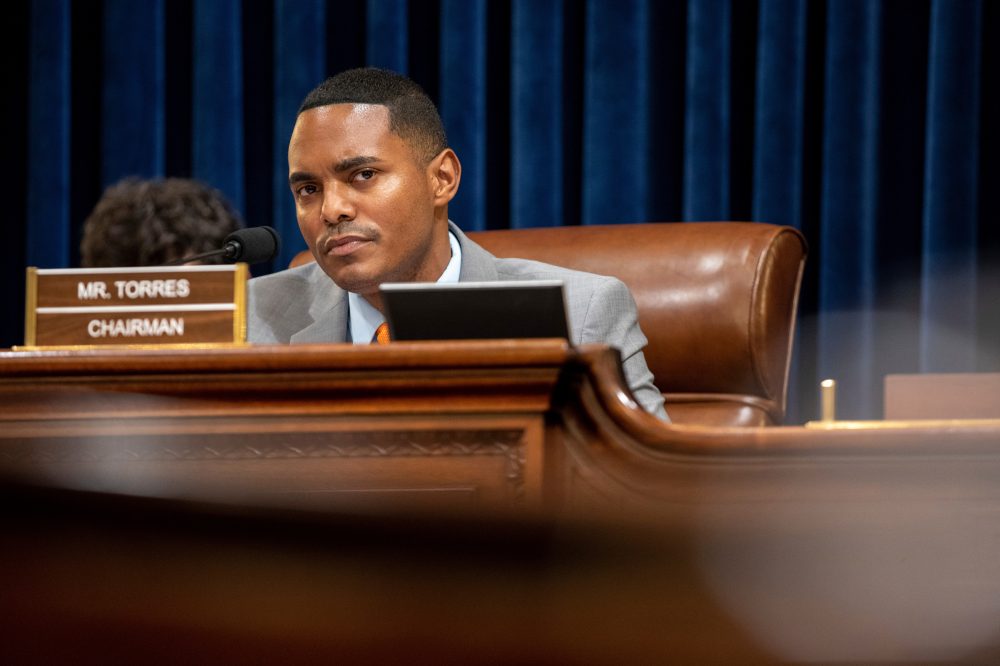
Representative Ritchie Torres, a New York Democrat serving on the House Financial Services Committee, sent correspondence Thursday to the Commodity Futures Trading Commission requesting a thorough review of these suspicious trades.
“This pattern raises serious concerns that certain market participants may have had access to material nonpublic information regarding a market-moving geopolitical event,” Torres stated in his letter, which was exclusively shared with news outlets.
During a media interview, Torres questioned the odds of legitimate trading. “What is the statistical likelihood that of anyone other than an insider trader placing a winning bet 12 minutes before a market-moving presidential announcement,” Torres said. “There are two answers: God, or an insider trader. And something tells me that God it not placing bets around Donald Trump’s posts on Truth Social.”
Platforms like Polymarket and Kalshi enable users to place wagers on diverse events, from local weather forecasts in Phoenix to Federal Reserve interest rate decisions. While federal regulations prohibit U.S. residents from using Polymarket, the platform’s cryptocurrency foundation and minimal identity verification make enforcement challenging.
Connecticut Senator Richard Blumenthal also sent demands to Polymarket Thursday, seeking explanations for why the company continues permitting bets on warfare and violence, and questioning their efforts to prevent insider trading.
“Polymarket has become an illicit market to sell and exploit national security secrets unlike any in history, and by extension a potential honeypot for foreign intelligence services watching for those same suspicious bets and wagers,” Blumenthal wrote.
Bipartisan criticism has emerged from Republican lawmakers as well, with pending legislation in both chambers aimed at restricting these betting markets.
“We don’t want to imagine a world where America’s adversaries use prediction markets to anticipate our next move,” stated Representative Blake Moore, a Utah Republican, responding to the ceasefire betting revelations.
Polymarket has not responded to requests for comment regarding these allegations.
Both Polymarket and Kalshi face significant pressure as they pursue expanded U.S. operations, particularly in the profitable sports betting sector.
After being prohibited from U.S. operations in 2022, Polymarket is attempting reentry by purchasing a CFTC-licensed exchange and clearinghouse. The company has started limited domestic operations while maintaining its separate offshore cryptocurrency platform beyond U.S. regulatory reach.
Kalshi, already operating under U.S. regulation, aims to become America’s leading prediction market. The company has expanded heavily into sports betting, leading critics to characterize it as primarily a sports gambling platform with secondary event-based contracts. Both companies have formed partnerships with sports franchises and media organizations to expand their market presence.
The rivalry includes political connections, with Donald Trump Jr. holding investment stakes in Polymarket through his 1789 Capital venture fund while simultaneously serving as a paid strategic consultant for Kalshi.
The chief financial officer of Elon Musk’s artificial intelligence venture xAI has stepped down from his role, according to a Thursday report from the Information citing sources with knowledge of the situation.
Anthony Armstrong, who took on the CFO position in October, is leaving the company amid what sources describe as a broader pattern of senior executive departures from the organization.
Before joining xAI, Armstrong worked as an investment banker at Morgan Stanley and provided advisory services to Musk during his purchase of the social media platform X. According to previous reporting by the Information in February, Armstrong had been working under Bret Johnsen, who became the finance leader of the merged entity after xAI and SpaceX completed their record-breaking combination.
When contacted for comment about Armstrong’s departure, xAI representatives did not provide an immediate response to Reuters.
According to an October report in the Financial Times, Armstrong had been overseeing financial operations for both xAI and X. His responsibilities included working to restore the social media platform’s financial health after many advertisers pulled their spending when Musk implemented less restrictive content policies.
Meanwhile, SpaceX is moving forward with plans for a major public stock offering aimed at raising $75 billion, which would give the aerospace company a valuation of up to $1.75 trillion, according to previous Reuters reporting.
Company officials presented IPO details to their banking team during a Monday meeting, indicating plans to reserve a significant number of shares for individual investors and announcing a June event for 1,500 retail investors.
The Los Angeles Lakers have unveiled new premium seating options for this playoff season, creating additional spots for high-profile fans and celebrities in their exclusive floor section.
The franchise revealed Thursday that they’re introducing extra courtside seats in the same area where stars like Jack Nicholson, Denzel Washington, Will Ferrell, Ice Cube, Leonardo DiCaprio, and Kim Kardashian have been regulars for decades. According to the Lakers, their floor seating has been completely sold out for over five decades.
“Courtside Reserve is second-row courtside seating that places fans in the heart of the action within the highly sought-after and exclusive floor section, offering an immersive experience,” the Lakers explained in their announcement. “The new on-floor seating features premium hospitality, including in-seat food and beverage service, VIP club access and a seamless, elevated experience from the moment guests enter the arena.”
Fans interested in purchasing these exclusive tickets must apply for access through a special section on the team’s website. The organization emphasized that these limited Courtside Reserve spots are being “offered in the smallest quantity to preserve the exclusivity of the courtside environment,” and buyers will receive priority access to purchase season tickets in this section going forward.
This suggests the Courtside Reserve concept will extend beyond just this postseason.
While the Lakers haven’t disclosed specific pricing, reports from the New York Post indicate that regular season courtside tickets typically range from $4,000 to $10,000 per seat, varying by game day and opposing team. During playoff games, these premium seats can command between $20,000 and $40,000 per seat for each contest.
Following their NBA championship victory during the 2019-20 bubble season, the Lakers have experienced mixed playoff success, missing the postseason once, suffering three first-round eliminations, and reaching the conference finals on one occasion.
With three regular season games remaining, both the Lakers and Houston Rockets hold identical 50-29 records, though Los Angeles currently claims the No. 4 playoff seed due to tiebreaker advantages. This fourth seed position secures home-court advantage for their opening playoff series.
Should current standings hold, the Lakers would face the Rockets in their playoff opener at home.
A major American spirits company is reportedly considering making a bid for the owner of Jack Daniel’s whiskey, according to industry sources.
Sazerac, a privately-owned beverage company, is examining the possibility of pursuing Brown-Forman in what could become a competitive situation with French spirits giant Pernod Ricard, which is already engaged in merger discussions with the whiskey maker.
News of Sazerac’s potential interest sent Brown-Forman stock soaring Thursday, climbing as much as 14.9% during trading. The shares have now increased by approximately one-third since initial reports emerged about Pernod’s interest in the company.
The Wall Street Journal first broke the story about Sazerac’s consideration of a possible deal earlier Thursday.
Pernod Ricard and Brown-Forman publicly announced in late March that they had entered into preliminary discussions regarding a potential combination. Such a merger would bring together the globe’s second-largest spirits company with America’s top whiskey producer.
Industry analyst Robert Moskow from TD Cowen suggested that additional distilled spirits companies might also show interest in Brown-Forman, citing the company’s “scarce-asset profile” and the powerful Jack Daniel’s brand.
Both Sazerac and Brown-Forman refused to provide comments when contacted by Reuters.
These acquisition discussions highlight the broader industry trend of spirits manufacturers seeking growth opportunities after an extended period of declining performance characterized by weakening consumer demand, rising costs, and trade-related challenges.
Growing health consciousness and the popularity of weight-loss medications have also pushed consumers toward alcohol-free options and energy beverages.
Additionally, younger consumers, especially Generation Z, are reducing their consumption of beer and spirits in certain markets.
Brown-Forman has remained under the ownership and control of the Brown family since the company’s establishment in 1870. The company previously turned down an acquisition attempt from beer company Constellation Brands in 2017.
In recent weeks, Brown-Forman reaffirmed its financial projections for fiscal 2026 despite facing headwinds from an unpredictable economic climate. The company has also experienced declining sales in crucial markets including the United States.
Sazerac, which originated from 17th-century Cognac in western France, is currently under the control of the Goldring family. The company’s portfolio includes Corazon Tequila and Svedka Vodka. Notably, Sazerac previously acquired several brands from Brown-Forman in 2016, including Southern Comfort and Tuaca.
Philadelphia 76ers star center Joel Embiid will be absent from Thursday night’s matchup against the Houston Rockets after being sidelined by illness.
The timing proves challenging for Philadelphia, as the franchise currently sits in eighth place with a 43-36 record while battling to secure a better playoff position in the Eastern Conference. The 76ers trail the sixth-seeded Toronto Raptors by one game, with Toronto holding a 44-35 record and only three contests left on the schedule.
This season, the 32-year-old Embiid has contributed 26.9 points and 7.7 rebounds per game across 38 appearances, all as a starter.
The dominant big man earned MVP honors during the 2022-23 campaign and has been selected to seven All-Star games throughout his career. Over his entire NBA tenure, Embiid has posted averages of 27.6 points and 10.8 rebounds across 490 games since Philadelphia selected him third overall in the 2014 NBA Draft.
Florida Panthers defenseman Seth Jones has been ruled out for the remainder of the season after suffering a fractured foot during Tuesday night’s 4-3 shootout defeat against Montreal.
Head coach Paul Maurice announced Thursday that Jones sustained the foot fracture in the second period of the game but continued playing through the pain.
“He gutted it out (to finish the game),” Maurice said. “We’ll get it looked at when we get back.”
Despite the injury, Jones completed 31 shifts and recorded a team-leading 29 minutes and 27 seconds of ice time in the loss to the Canadiens.
The defending back-to-back Stanley Cup champions now sit at 37-37-4 with 78 points and have already been mathematically eliminated from postseason contention.
The 31-year-old veteran had previously been sidelined for 26 contests earlier this campaign due to an upper-body ailment suffered on January 2nd. Jones concludes the season with 32 points, including seven goals and 25 assists, across 52 appearances.
Throughout his career, the four-time All-Star and 2025 Stanley Cup champion has accumulated 473 points on 106 goals and 367 assists over 912 NHL games with four different franchises since Nashville selected him fourth overall in the 2013 draft.
Delaware transportation officials are warning drivers to plan alternate routes as Cherry Lane prepares for a weekend closure and upcoming maintenance work at its railroad crossing.
The Delaware Department of Transportation says Cherry Lane will be completely shut down at the railroad crossing on Friday and Saturday, April 10th and 11th.
Beginning Monday, April 13th at 7:00 am, Norfolk Southern railroad crews will start general maintenance operations at the Cherry Lane crossing. This work will result in periodic lane restrictions on Cherry Lane throughout the project.
Motorists are advised to seek alternative routes during the complete closure this weekend and expect possible delays next week during the maintenance period.
New Castle County police have arrested a teenage Wilmington resident on multiple felony charges related to possession of child sexual abuse material.
Logan Albright, 19, of Cannon Drive in Wilmington, is now facing 25 felony counts after investigators with the New Castle County Division of Police Criminal Investigations Unit discovered illegal images on his cellular device.
The investigation began in February 2026 when detectives received a tip that Albright was storing child pornography, which authorities also classify as child sexual abuse material (CSAM), on his phone.
Police immediately launched a comprehensive investigation into the allegations against the suspect.
Motorists traveling along Coastal Highway (Route 1) should expect delays near Reynolds Road as construction crews have shut down left lanes in both the northbound and southbound directions.
The Delaware Department of Transportation reports that the lane restrictions will remain in effect until 3 PM today as work continues in the area.
Drivers are advised to use caution when traveling through the construction zone and to allow extra time for their commute while the lane closures are active.
At a time when stadium food prices continue to soar across the country, one prestigious sporting event stands out for bucking the trend. The Masters Tournament at Augusta National Golf Club in Georgia has maintained its tradition of offering remarkably affordable concession stand food.
The tournament’s signature cheese sandwich remains priced at just $1.50, the same cost it has been for years despite widespread inflation affecting food prices nationwide. Other sandwich options at the concession stands range from $1.50 to $3, making them among the most budget-friendly options at any major sporting venue.
Even the tournament’s most expensive concession items – beer and wine – are priced at just $6 each, a fraction of what similar beverages cost at other major sporting events. The Georgia golf championship has built its reputation on maintaining a straightforward and accessible menu for patrons.
This commitment to affordable concessions continues even as the tournament’s ticket prices have steadily increased over the years, creating a unique contrast in the world of professional sports hospitality.
Professional football organizations are discovering that Name, Image, and Likeness agreements revolutionizing college athletics provide valuable intelligence about how future draft picks will handle sudden wealth before signing major professional contracts.
According to numerous talent evaluators, this insight has become a valuable asset during the selection process.
“The cool thing about college scouting that we always had to answer when we were going to schools, how’s a guy going to be when he has money? Now we have that answer,” Los Angeles Chargers general manager Joe Hortiz said recently. “Some guys get the money and change the way they are. Other guys get the money and you hear stories about taking guys out for dinner, taking his teammates (out) and he works hard, is a leader. You kind of get the answer. It’s a great thing and it’s great for players in college to have that opportunity.”
Financial decisions can reveal a prospect’s maturity level, showing whether they demonstrate self-control or become easily sidetracked. Athletes who remain concentrated despite profitable opportunities are more likely to successfully adjust to professional football. Talent scouts examine whether a player’s on-field performance declines after receiving substantial compensation or if they continue displaying the same dedication and reliability. Their relationships with fellow team members also represent a crucial factor.
“Does the guy have eight cars or does he actually have a financial advisor, and he puts it into an S&P stock index because he’s trying to grow his portfolio?” Houston Texans GM Nick Caserio said. “You’ve got probably a different thought process that goes into it. I know what I would do. Nobody was giving me any NIL money and I wasn’t good enough. But, again, it’s just understanding their thought process.”
Student-athletes were prohibited from monetizing their athletic abilities until 2021, when the NCAA modified regulations to allow students to generate income from their name, image and likeness.
This policy change, combined with increased mobility through the transfer portal, has fundamentally altered college athletics. Elite athletes are now securing lucrative partnerships with major corporations. Educational institutions can allocate up to $20.5 million for athlete compensation. Many competitors are pursuing financial opportunities by transferring between universities.
“I think it paints a clearer picture in terms of makeup,” Chicago Bears GM Ryan Poles said. “I like to follow the whole journey. I don’t hold it against an 18-year-old that gets a million bucks to go to school and maybe didn’t have his priorities straight. I think most of us here, if that happened to us, we might be doing some crazy things, too, or maybe not focus where we should be focused. But I want to see the learning lessons that come from that and understand their structure of the people they put around them. I want to understand how they battle through adversity. I think the toughest thing is when there’s an out to transfer when things get hard, we heard the resilience of our young players. So I want to learn through that and learn how they grew throughout their whole deal.”
These commercial agreements can also prepare athletes for NFL careers, providing early exposure to wealth, sponsorship deals and personal marketing. They gain experience with celebrity status and fiscal responsibility during college.
“I think it helps, for us, it helps us reveal maybe makeup, character, behavior,” Denver Broncos coach Sean Payton said. “To some degree, you can see the journey that some players take. And look, in a lot of ways, (it has been) a very positive change.”
School transfers were previously viewed as warning signs. That perspective has shifted.
“Back in the day, if a guy transferred one time, you kind of asked what happened? Like, did you get run out of this school or whatever?” Buffalo Bills GM Brandon Beane said. “Well, now it’s. … why’d you stay here four years? Like, what happened? It’s almost, it’s flipped, but you do ask those questions. And sometimes you ask them about, did you leave just because of the money? Did you leave for other reasons? You kind of just want to know. And at the same time, our scouts, one of their jobs, is talking to individuals at each program and trying to put together that puzzle of who this person is, how they tick. Are they simply motivated just for money? Or is the money a side benefit? They’re really still playing the game for the love of the game.”
Certain athletes remain in college longer because they can earn more as student-athletes if they’re not projected as early draft selections.
Additional playing time can also enhance their draft prospects.
Carolina Panthers GM Dan Morgan said he evaluated several players who chose to return for another season that he wishes would have entered the draft.
“We just gotta evaluate who is at our disposal,” Morgan said.
ANNAPOLIS, Md. — State officials in Maryland announced Thursday they have secured a settlement agreement with the companies behind the cargo vessel that struck the Francis Scott Key Bridge two years ago, leading to a catastrophic collapse that claimed six lives.
Attorney General Anthony Brown revealed the preliminary agreement has been struck with Grace Ocean Private Limited and Synergy Marine Pte Ltd, the respective owner and operator of the M/V Dali. This settlement addresses part of Maryland’s legal claims stemming from the vessel’s collision with the bridge on March 26, 2024.
“For two years, Maryland workers, families, and communities have carried the weight of a disaster that should never have happened,” Brown stated in an official announcement. Specific terms of the settlement were not disclosed.
Brown emphasized that the Dali’s impact with the bridge “disrupted the Port of Baltimore, devastated livelihoods, and sent economic shockwaves across our State that are still being felt today.”
“Our work is not finished, but this settlement is an important step toward making Maryland whole,” Brown added.
Representatives for the vessel’s owner and management company have not yet provided comment on the agreement.
The Maryland Transportation Authority recently projected that constructing a replacement bridge will cost between $4.3 billion and $5.2 billion, with completion expected by late 2030.
The current settlement does not address potential claims against Hyundai, the vessel’s manufacturer, according to the attorney general’s office.
The cargo ship was departing Baltimore bound for Sri Lanka when it experienced steering problems due to electrical failure. Six road maintenance workers who were repairing potholes during their nighttime shift perished when the bridge structure gave way.
Maryland’s lawsuit, filed in federal court last September, contended the tragedy resulted from negligent practices, poor management, and reckless handling of an unseaworthy vessel that should have remained docked.
The state pursued compensation for multiple damages including bridge destruction, environmental harm to the Patapsco River, revenue losses, and extensive economic impacts affecting Maryland residents.
The bridge failure completely shut down Port of Baltimore shipping operations, eliminated jobs for thousands of workers, forced traffic through already burdened neighborhoods, and created lasting economic consequences throughout the region, officials noted.
The Francis Scott Key Bridge served as a crucial Baltimore transportation link, enabling motorists to avoid downtown traffic. The original 1.6-mile steel structure required five years to build and began serving traffic in 1977, playing an essential role in port logistics.
HAMBURG, N.Y. (AP) — A western New York resident has abandoned his legal battle to retrieve his beloved 12-foot alligator after state officials confiscated the massive reptile following more than three decades of cohabitation.
Tony Cavallaro filed a lawsuit against New York’s Department of Environmental Conservation following the March 2024 incident when officers arrived at his Buffalo-area residence with a search warrant. The authorities tranquilized the enormous 750-pound alligator, which Cavallaro had named Albert, before transporting the animal away in a vehicle.
The reptile, which had been residing in Cavallaro’s indoor pool area, was subsequently relocated to a wildlife sanctuary in Texas.
Cavallaro challenged the state’s refusal to grant him a permit for keeping Albert. However, this past March, he chose to end his legal pursuit after nearly two years of expensive court proceedings with no resolution in sight, his legal representative confirmed.
“Tony’s upset,” attorney Peter Kooshoian said Thursday. “He had the animal for over 30 years — never had a problem until this occurred. So he doesn’t feel he was treated correctly by the government.”
Kooshoian explained that even if Cavallaro had won his case, he anticipated the state would impose strict oversight on his care of the animal.
According to the department, Cavallaro’s permit to possess Albert had lapsed in 2021. The agency also stated that regardless of license status, Cavallaro had violated regulations by allowing visitors to touch the alligator and swim alongside it, which justified the removal under dangerous animal protection laws.
State officials reported that the confiscated reptile suffered from vision loss in both eyes and spinal problems, along with additional medical concerns.
Cavallaro maintained that Albert was “just a big baby” who had never displayed hostile behavior.
He had purchased the alligator as a two-month-old hatchling from a reptile exhibition in Ohio and regarded the animal as his “emotional support animal.”
The National Oceanic and Atmospheric Administration has expanded its maritime research capabilities by incorporating a new autonomous vessel into its collection of unmanned ocean exploration equipment.
This latest addition strengthens NOAA’s capacity to gather critical oceanographic information and conduct comprehensive marine research operations using cutting-edge technology.
The unmanned vessel represents part of NOAA’s ongoing commitment to advancing scientific understanding of ocean systems through innovative research tools and autonomous data collection methods.
Delaware Department of Transportation officials have implemented a temporary right shoulder closure on northbound Route 9 (River Road) that will affect traffic through mid-afternoon.
The shoulder restriction is located along the stretch of roadway between Hamburg Road and Federal School Lane. DelDOT indicates the closure will remain active until 3:00 PM today.
Motorists traveling through the area should expect potential delays and are advised to use caution when passing through the work zone.
BEIRUT, April 9 – A prominent Hezbollah parliamentarian announced Thursday that his organization will not participate in face-to-face diplomatic talks with Israel, calling instead for Lebanon’s government to insist on an immediate halt to hostilities before any diplomatic progress can occur.
The statement from Ali Fayyad comes in response to Israeli Prime Minister Benjamin Netanyahu’s recent announcement that he had directed his administration to pursue direct diplomatic discussions with Lebanon. Fayyad emphasized that Lebanon’s official stance should also focus on securing the removal of Israeli military forces from Lebanese soil and ensuring displaced residents can safely return to their communities.
A peaceful community of chimpanzees in Uganda’s Kibale National Park has shocked researchers after splitting into warring factions, with former friends launching deadly coordinated attacks against each other.
For twenty years, scientists watched members of the Ngogo chimpanzee community live harmoniously in their rainforest home, spending time eating, resting, traveling and grooming together. However, this once-stable group eventually broke apart and descended into years of brutal violence that has claimed 28 lives.
According to a new study published Thursday in the journal Science, this represents the first clearly documented case of wild chimpanzees dividing into separate factions, with one group systematically targeting the other through organized attacks.
“Biting, pounding the victim with their hands, dragging them, kicking them – mostly adult males, but sometimes adult females participate in the attacks,” explained Aaron Sandel, a University of Texas primatologist who led the research.
The Ngogo group, which researchers have monitored since 1995, was the largest known wild chimpanzee community anywhere, reaching approximately 200 members at its peak. Most chimp groups typically contain around 50 individuals.
While scientists have previously observed chimpanzees attacking members of neighboring communities, this situation was entirely different because the violence occurred between former allies who had known each other their entire lives.
“It is hard for me to wrap my head around the fact that yesterday’s friend turned into today’s foe. Males in the two groups grew up with each other, knew each other their entire lives and cooperated and collaborated with each other, benefiting in the process,” said John Mitani, a University of Michigan professor emeritus and senior author of the study.
“So why split? Perhaps they became a victim of their own success when the group grew to an intolerably large size,” Mitani added.
Researchers believe multiple factors contributed to destabilizing the community. The group’s unusually large size may have created intense competition for food and mating opportunities among males. Additionally, seven chimpanzees died in 2014 showing signs of illness, which may have disrupted established social bonds and created tensions.
Leadership changes also played a role in the community’s breakdown. Around 2015, when hostilities began emerging, a chimpanzee named Jackson overthrew the previous alpha male in these male-dominated societies.
Initially, the group remained unified despite existing social clusters. However, members of two clusters started avoiding each other in 2015. Following another illness outbreak in 2017 that killed 25 chimpanzees, primarily infants, members of one cluster attacked Jackson, though he survived. By late 2017, two distinct groups had formed – designated as the Western and Central groups.
The Western group initiated the violence against the Central group beginning in 2018. Through 2024, the published research documented 24 deaths – seven adult males and 17 infants. The attacks have continued, with four additional deaths recorded last year and this year, bringing the total to 28. Many other chimpanzees have vanished without explanation, suggesting additional unreported killings.
“They just beat and jump on the victim relentlessly. I’ve witnessed cases that take less than 15 minutes. There’s some biting, and if you examine the bodies of victims, you will see cuts. But nothing that looks like it can cause a fatality. Instead, I’ve always thought that mature victims die due to internal injuries,” Mitani described.
“By contrast, a single mature chimpanzee can snatch an infant from its mother and kill it quickly with a few bites or via blunt force trauma. The latter might include slamming it to the ground,” he continued.
Despite starting smaller in both population and territory, the Western group has now grown larger than the Central group in both aspects and has suffered no known casualties.
Though researchers avoided labeling these events as a civil war – a term with specific meaning in human conflicts – they acknowledged significant similarities.
The team noted one previous example from Tanzania in the 1970s where a chimpanzee community appeared to split with deadly violence between factions. However, that case involved artificial feeding by researchers that altered natural behavior, and observations were limited to feeding locations, leaving many questions unanswered.
While chimpanzees and bonobos are humanity’s closest evolutionary relatives, the researchers warned against drawing direct comparisons between chimpanzee violence and human behavior.
“We are similar in some ways, due to our shared evolutionary history, but we are also fundamentally different because we have changed during the past 6-8 million years, after having split off from them,” Mitani concluded.
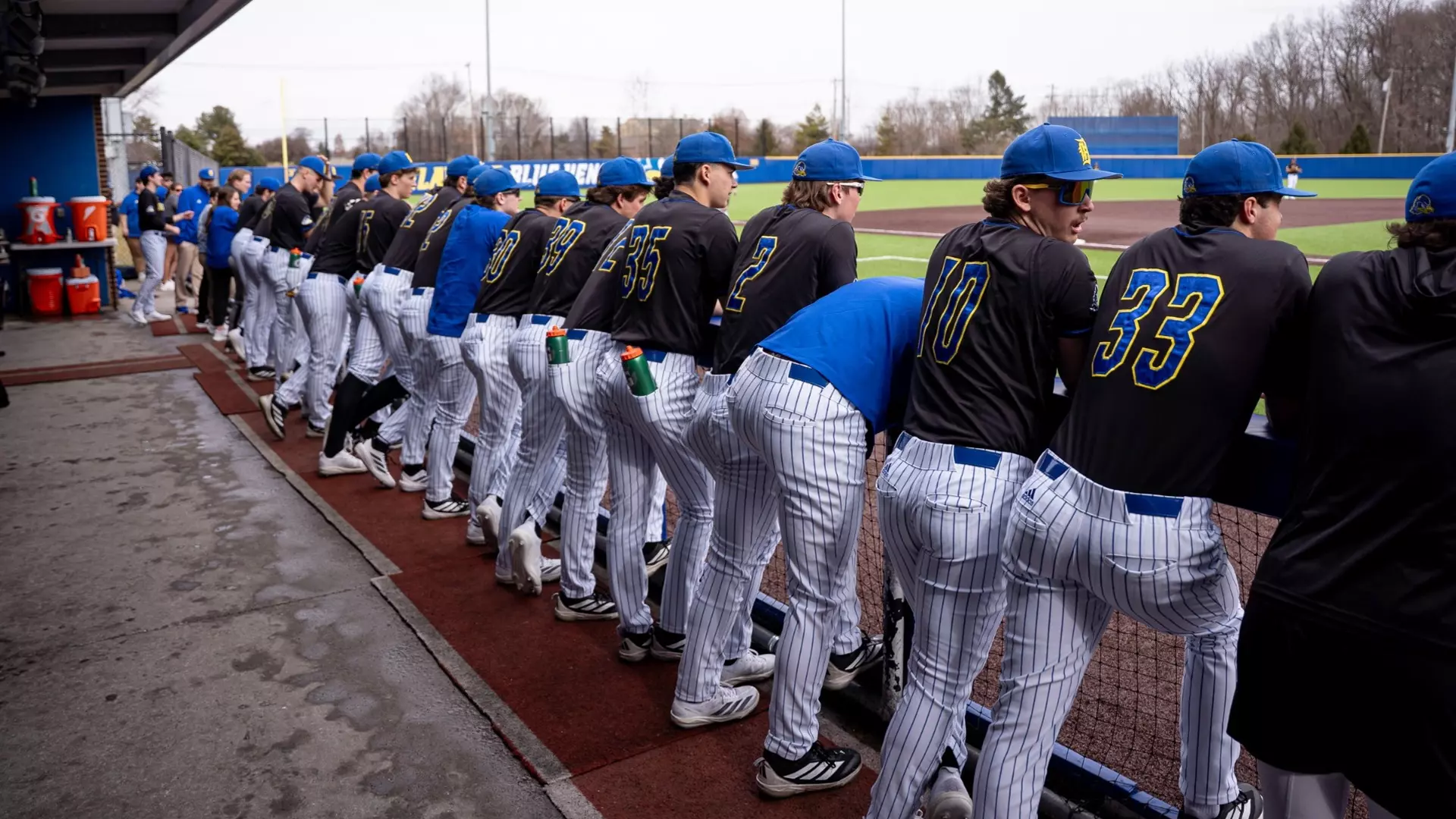
The University of Delaware Blue Hens baseball squad is gearing up to welcome Missouri State to campus for a three-game Conference USA series this weekend.
The matchup will see the Blue Hens take the field at their home venue as they continue their conference play against the Bears in what promises to be an important series for both teams’ CUSA standings.
This series represents another opportunity for the Delaware baseball program to showcase their skills in front of the home crowd while competing against conference opposition.
BEIRUT (AP) — Following the announcement of a preliminary ceasefire between the United States and Iran, Israeli forces significantly intensified their military campaign against Hezbollah, the Iran-supported militant organization operating in Lebanon.
Lebanese health authorities report that the surge in bombardments across central Beirut and other regions resulted in over 200 fatalities and wounded more than 1,000 individuals.
Israeli defense forces stated they had struck locations connected to Hezbollah operations and confirmed the elimination of an assistant to group leader Naim Kassem. However, Lebanese authorities noted that the bombardments, which targeted heavily populated residential and business areas during peak traffic hours, resulted in significant civilian casualties, though specific numbers were not disclosed.
In response to the intensive bombardment campaign — which generated widespread international condemnation — Hezbollah fired missiles into Israeli territory, though reports indicate no major casualties occurred.
The current conflict between Israeli forces and Hezbollah began following joint US-Israeli military action against Iran in late February. Following this week’s ceasefire declaration between the US and Iran, disagreement has emerged regarding whether the agreement encompasses the Israel-Hezbollah hostilities; Tehran claims it does, while Washington and Tel Aviv maintain it does not.
The two forces have engaged in numerous conflicts since Hezbollah’s establishment in the 1980s as a resistance movement opposing Israel’s occupation of southern Lebanese territory.
On March 2, just two days following the US-Israeli assault on Iran, Hezbollah fired missiles toward Israeli targets. The organization stated the attack served as retaliation for the death of Iranian Supreme Leader Ayatollah Ali Khamenei and for “repeated Israeli aggressions” within Lebanon.
This renewed fighting occurred 15 months following a US-mediated truce that ended their prior conflict. That previous war began one day following the devastating October 7, 2023, Hamas-orchestrated assault on southern Israeli communities.
Hezbollah, which maintains an alliance with Hamas, initiated attacks on Israel after it launched its intensive counterattack against Hamas forces in Gaza. What initially developed as limited border skirmishes between Israel and Lebanon escalated into comprehensive warfare by September 2024.
Following a November 2024 ceasefire agreement, Israeli forces maintained almost daily aerial bombardments in Lebanon, claiming the operations aimed to prevent Hezbollah from reorganizing. Israeli military units also maintained control of five strategic hilltops within Lebanese territory along the border.
Meanwhile, Hezbollah faced both internal and external pressure to relinquish its remaining weapons stockpile. The organization remained relatively inactive and avoided involvement during last summer’s 12-day conflict between Israel and Iran. Many observers believed the group had become too weakened to engage in combat after sustaining significant losses during the 2024 fighting, making their entry into the current war following US-Israeli attacks on Iran unexpected.
As of Wednesday, Lebanese health ministry statistics show that Israeli strikes have killed more than 1,730 individuals and wounded over 5,870 since March 2. The civilian casualty count remains unclear, though the totals include hundreds of women, children, and medical personnel.
More than one million Lebanese residents have been forced from their homes. Israeli authorities have issued comprehensive evacuation orders for residents to abandon large sections of the country, typically followed by bombardment of those evacuated areas. Many displaced individuals are sleeping in vehicles, on streets, or in overcrowded schools converted to emergency shelters.
Israeli officials report that Hezbollah has fired thousands of missiles and drones across the border, though most have been intercepted or landed in unpopulated areas. The Israeli military reports 12 soldiers killed in southern Lebanon and over 400 wounded.
A small number of civilian deaths have also occurred in northern Israel, including one individual killed by rocket fire and another accidentally killed by Israeli artillery during border fighting. The continuous barrage of missiles and drones has created anxiety among northern Israeli residents. Many express frustration that the government has not offered evacuation assistance as provided during previous conflicts.
Israeli ground forces have also launched an invasion of southern Lebanese territory. Intense combat has developed with Hezbollah fighters in border regions, and UN peacekeeping personnel have occasionally been caught in crossfire; three UN force members have been killed.
Some Israeli officials have advocated for their military to occupy southern Lebanon extending to the Litani River, approximately 30 kilometers (20 miles) north of the border. Israeli forces have destroyed homes in border villages. Many displaced Lebanese residents fear Israel intends to establish a depopulated buffer zone, preventing their return home.
Lebanese officials have attempted direct negotiations with Israel to end the fighting. On Thursday, Israeli Prime Minister Benjamin Netanyahu announced Israel had agreed to participate in discussions focused on Hezbollah disarmament and potential peace arrangements.
When the US and Iran announced their preliminary ceasefire Wednesday, Pakistan’s prime minister, whose nation served as mediator, stated on social media that it applied to “everywhere including Lebanon.” Iranian officials also maintain the agreement includes Lebanon. However, the US and Israel firmly deny this interpretation.
Hezbollah has declared it will not honor the ceasefire unless Israel complies as well.
Middle East analyst Joe Macaron described the upcoming negotiations as “a test of how much the Iranian regime is committed to help Hezbollah.” He suggested Israel is unlikely to agree to — or be compelled by the US to accept — complete ceasefire and withdrawal from Lebanon.
While the US might pressure Israel to cease strikes in central Beirut, Macaron predicted a “long war of attrition” will likely develop between Israel and Hezbollah in southern regions. The Israeli military lacks the capability to control the entire area south of the Litani River, Hezbollah cannot force Israeli troops from southern Lebanon, and neither Israel nor the Lebanese government can forcibly disarm the organization, he explained.
According to Macaron, the only solution will require a negotiated agreement.
Delaware Department of Transportation officials have implemented a southbound lane closure on Shingle Point Road (Route 249) as construction crews continue their work in the area.
The affected stretch runs between Wisteria Boulevard and Webb Road (Route 248A), with the lane restriction expected to stay in place through 5 PM today.
Motorists traveling through the area should expect delays and are encouraged to seek alternate routes when possible. DelDOT continues to monitor the situation and will reopen the lane once construction activities are completed for the day.
Three Middle Eastern countries have joined forces to create a major new trade partnership that could reshape commerce across the region. Syria, Jordan, and Turkey recently finalized a comprehensive transportation agreement during a ministerial meeting in Amman, Jordan.
The three-nation partnership establishes a comprehensive framework covering ground transportation, shipping, and railway systems. Transport ministers from each country participated in the signing ceremony, creating specialized committees and working groups designed to standardize policies and procedures across all three nations.
This collaboration seeks to transform theoretical commitments into actual infrastructure projects, supported by investment funding and technological improvements to enhance operational effectiveness and ensure lasting partnership. Officials expect the coordination will facilitate smoother movement of cargo and travelers while simplifying customs processes, ultimately improving supply chain operations and increasing commercial activity between the participating countries.
A comprehensive three-year plan details the necessary actions and requirements for transportation agencies, with goals to convert border areas from basic transit points into centers for economic cooperation and shared development. The initiative focuses heavily on activating the “Middle Corridor,” which the participating nations envision as a crucial pathway connecting various markets and expanding international trade, potentially transforming the region’s economic structure.
Railway development receives special emphasis in the partnership, with plans to create a three-nation technical committee responsible for assessing current rail networks and identifying technical and financial needs for upcoming projects. Syria is currently preparing an initial railway connection blueprint linking all three countries to support collaborative planning and construction efforts.
The Hejaz Railway initiative stands as a key component, designed to connect northern Anatolia with the southern port of Aqaba and extend toward Gulf regions, enhancing cargo and passenger transportation according to contemporary transport standards.
This initiative represents part of a larger transportation sector development effort focused on facilitating transit through streamlined border processes, strengthening connections between coastal ports and interior areas, and implementing digital transportation management systems. Government officials emphasize that infrastructure improvements, particularly in ground and rail transportation, will be essential for reducing expenses and enhancing trade effectiveness, aligning with worldwide movements toward more environmentally sustainable transportation.
Jordan’s Transport Minister Nedal Katamine explained his nation’s goal to enhance its position as a regional logistics center through developing integrated transportation systems, constructing contemporary logistics facilities, improving border crossing points, and expanding private sector collaborations. This effort forms part of a wider economic modernization strategy that positions the transportation sector as central to growth and competitive advantage.
Turkish Transport Minister Abdulkadir Uraloglu emphasized that implementing the “North–South Corridor” should produce substantial economic benefits through increased export capabilities, port revitalization, expanded market reach, and enhanced transit income.
Uraloglu further highlighted that the three-way cooperation offers a practical structure for advancing the region’s transportation infrastructure, with potential to link this corridor to broader networks connecting the Arabian Peninsula, Central Asia, and Europe.
This partnership emerges following multiple technical conferences between the three nations aimed at rebuilding ground and rail connections after years of interruption, especially due to Syria’s conflict. With growing demand for more effective alternative trading pathways, this three-nation agreement represents a major advancement toward restructuring the region’s transportation infrastructure, strengthening economic integration, and restoring its function as a strategic link between Eastern and Western markets.
President Donald Trump has issued a stern warning that military action will return with unprecedented intensity if Iran violates the terms of a recently negotiated ceasefire, while Israeli Diaspora Affairs Minister Amichai Chikli expressed doubt about the agreement’s durability, estimating it has only even odds of surviving.
Trump stated that American military forces, ships, and aircraft continue to be positioned in the region with enhanced weaponry and supplies, ready to respond against what he characterized as “a substantially degraded enemy.”
“If for any reason it is not, which is highly unlikely, then the ‘Shootin’ Starts,’ bigger, and better, and stronger than anyone has ever seen before,” Trump declared, noting that Iran had committed to abandoning nuclear weapons development and reopening the Strait of Hormuz.
“In the meantime our great Military is Loading Up and Resting, looking forward, actually, to its next Conquest. AMERICA IS BACK!” he added.
Chikli, who serves in Israel’s governing Likud party, expressed harsh criticism of the ceasefire timing during a radio interview with 103FM, describing the decision as premature. “I think it was a mistake to go to a ceasefire at this time. Countries like these, the Japanese Empire, Nazi Germany, you need to bring them to their knees,” he stated.
The Israeli minister assessed the truce as having only a “50% chance” of enduring, though he emphasized that Israel had secured major victories during the conflict. “Iran lost its status as a regional power,” Chikli argued, claiming that Tehran’s Axis of Resistance has “collapsed.”
“I look at whether we brought about massive achievements, whether we created a new reality in the north, on the border with Gaza, in the Middle East? The answer is yes, yes, and yes,” he declared.
Significant disagreements over ceasefire provisions continue to create tension. Iran and the United States have offered conflicting interpretations of the agreement, especially concerning nuclear programs and shipping lane access.
Tehran has not completely reopened the Strait of Hormuz, claiming treaty violations have occurred, and has suggested it might charge transit fees, while the White House maintains that passage will stay free of charge. Gulf region nations experienced missile attacks on Tuesday.
Uncertainty also surrounds the agreement’s scope. Pakistan initially indicated that Lebanon was covered under the ceasefire, but Trump informed PBS that Israeli military actions targeting Hezbollah were excluded from the arrangement. Iran issued a warning Wednesday evening that ongoing strikes against Hezbollah could undermine the ceasefire.
A University of Delaware track and field athlete has been recognized for her community service efforts by Conference USA officials.
Distance runner Leah Clear was selected to receive the Conference USA Winter Spirit of Service Award, according to an announcement made by the league on Thursday.
The recognition highlights Clear’s dedication to service activities outside of her athletic commitments with the Blue Hens track and field program.
Conference USA presents the Spirit of Service Award to student-athletes who demonstrate exceptional commitment to community involvement and volunteer work throughout the academic year.
CEGLÉD, Hungary — A small business owner from this Hungarian city dismisses polling data suggesting Prime Minister Viktor Orbán might face defeat in this weekend’s crucial election.
István Vároczi, 63, who operates a handbag and goods stand in central Cegléd, remains confident in the leader he has supported for nearly four decades.
Orbán, who has held power for 16 years with four consecutive electoral wins, now confronts his most serious challenge yet from center-right candidate Péter Magyar of the Tisza party. Magyar has spent months crisscrossing Hungary’s rural areas, attempting to erode Orbán’s traditional stronghold support.
Though polling indicates many Hungarians have turned away from Orbán’s Fidesz party and desire political change, the veteran prime minister continues to command strong loyalty from significant segments of society, especially senior citizens and residents of smaller communities.
“I’ve been watching him for nearly 40 years, I have always voted for him and I will again, I’ve never been disappointed in him,” Vároczi explained. “His biggest strength is that he didn’t forget where he came from. He always remained a normal person. I’m sure he has flaws, but who doesn’t?”
Vároczi described Fidesz as “the only party I trust” and called Orbán’s leadership record “unparalleled.”
Magyar’s Tisza party has gained momentum among Hungarian voters following four years of economic decline, partially attributed to the European Union’s decision to freeze billions in funding over concerns about democratic institutions and corruption during Orbán’s tenure.
However, recent polling from Medián released Wednesday reveals 47% of Hungarians aged 65 and older favor Fidesz, compared to just 29% supporting Tisza. The data also shows Orbán’s support increases in smaller towns and villages.
In the central Hungarian town of Albertirsa, home to roughly 14,000 residents, retired pipe fitter János Falajtár grew visibly moved while discussing what he views as Orbán’s service to the nation. Fighting back tears, he stated that Orbán had “acted for the people.”
“The decisions don’t matter. Common sense and heart matter,” Falajtár said.
The prime minister has rolled out voter-friendly initiatives ahead of the election, including a popular program reducing utility costs supported by Hungary’s continued energy purchases from Russia. Pensioners receive an additional “13th month” payment annually, with a 14th installment now being implemented.
Orbán has also launched efforts to restore rural pubs and churches while eliminating income taxes for mothers with multiple children.
Beyond specific policies, Orbán’s personal appeal, focus on preserving Hungarian culture, and efforts to strengthen national identity appear to resonate most powerfully with his supporters.
The retired pipe fitter believes Orbán has brought unity to the nation, including ethnic Hungarian populations in neighboring countries after roughly 72% of Hungary’s historical territory was lost following World War I.
“We are now beginning to unite the Greater Hungary in Vojvodina, Slovakia, Transcarpathia, Transylvania, and even in Austria,” Falajtár said. “They only took a small piece from us, but it’s still ours.”
Throughout his campaign, Orbán has emphasized various threats he claims will endanger Hungarians without his continued leadership, particularly the ongoing conflict in neighboring Ukraine, which he argues could bankrupt the country or draw it into direct military involvement.
Despite economic challenges, many Orbán supporters attribute problems to outside forces rather than governmental failures.
The administration “is doing what it can for us, for the people,” Vároczi concluded.
ATHENS, Greece (AP) — Greek officials have announced comprehensive legislation prohibiting children aged 15 and younger from accessing social media platforms, with Prime Minister Kyriakos Mitsotakis hoping the initiative will encourage the European Union to establish uniform age restrictions across all 27 member nations.
The upcoming legislation will focus on social media services where users can establish profiles, communicate with others, and post content, including platforms like Facebook, Instagram, and TikTok.
When the law takes effect, social media companies must re-verify every user’s age throughout Greece to eliminate accounts belonging to those 15 or younger. Government officials say their primary responsibility will involve monitoring platform compliance and responding to reported infractions.
Enforcement violations will be forwarded to authorities in the country where each social media company operates or to EU leadership. Companies face potential penalties including fines reaching 6% of worldwide revenue, ongoing daily penalties until they comply, or operational limitations.
Speaking directly to young people in a Wednesday social media video, Greek Prime Minister Kyriakos Mitsotakis addressed the restrictions, explaining that parents and teenagers have shared with him how excessive social media use creates stress, anxiety, and sleep problems.
“Now I’m certain that many young ones will be angry. If I was at your age, perhaps I’d feel the same way too. But our role, my role isn’t always to be pleasant,” Mitsotakis said.
“If something makes us feel more anxious or worse, lesser than who we really are, then it’s perhaps best that we put a stop to it.”
The Greek leader emphasized that the legislation doesn’t aim to separate young people from technology but rather shield them from the “addictive design of certain platforms and their profit model that’s grounded in how long you spend in front of a mobile phone screen that denies you your innocence and freedom.”
Mitsotakis indicated the new legislation should be presented this summer and become operational at the beginning of next year.
The Greek initiative follows France’s lead, which implemented similar social media restrictions for children 15 and under earlier this year.
In correspondence to European Commission President Ursula von der Leyen, Mitsotakis called for establishing a “unified European framework” before year’s end to support national efforts protecting minors.
The Greek prime minister recommended EU-wide social media prohibitions for youth 15 and younger, consistent age verification systems, requiring platforms to re-confirm user ages every two years, and creating an organization for member countries and the commission to evaluate violations and rapidly implement penalties.
Anti-abortion advocates across the nation are expressing mounting impatience with the Trump administration’s handling of abortion pill regulations, seeking swifter action to limit online prescriptions they believe are weakening state-level abortion prohibitions.
This week’s federal court decision in Louisiana highlighted growing tensions over the issue. U.S. District Judge David Joseph, a Trump appointee, indicated the state presented compelling arguments while choosing not to immediately halt telehealth prescriptions for the abortion medication mifepristone.
Organizations opposing abortion are urging the Food and Drug Administration to expedite its ongoing review, hoping for new limitations on mifepristone access, particularly through online medical consultations. Federal officials maintain that comprehensive reviews require adequate time.
These advocacy groups have concentrated their pressure primarily on the FDA rather than directly criticizing the Republican president, whose three Supreme Court nominees helped enable the 2022 decision that eliminated Roe v. Wade protections and permitted current state prohibitions. However, the administration’s court filings requesting delays until completing its review have angered some activists.
“The stall tactics are beyond frustrating,” said Kristi Hamrick, speaking for Students for Life of America. Hamrick suggested the administration could also prevent pill distribution through mail by reinterpreting and enforcing a 19th-century statute.
Judge Joseph delivered a split decision Tuesday in litigation initiated by Louisiana Attorney General Liz Murrill alongside a woman claiming her partner forced her to use mifepristone to terminate her pregnancy.
The broader objective involves reversing FDA policies that have expanded pill accessibility. Murrill and officials from other states filing comparable lawsuits argue that online medication availability undermines prohibition effectiveness in the 13 states banning abortion throughout pregnancy, with narrow exceptions.
Provider surveys indicate telehealth availability helps explain why U.S. abortion numbers haven’t declined following Roe’s reversal. Although state bans include medication abortion restrictions, some Democratic-led states have enacted protective legislation for healthcare providers prescribing pills via telehealth and mailing them to ban states. These protective statutes face testing through various legal proceedings.
In Louisiana’s case, Joseph rejected Murrill’s request for immediate telehealth prescription blocking during ongoing litigation. However, he indicated eventual action remains possible and plaintiffs would likely prevail because the state demonstrated “irreparable harm.”
The judge also mandated FDA reporting on its drug review progress within six months.
Wednesday brought Murrill’s appeal filing to the U.S. 5th Circuit Court of Appeals, seeking accelerated action.
Family Research Council President Tony Perkins, an influential conservative voice and former Louisiana legislator, praised Murrill’s appeal.
Perkins noted public surprise upon learning abortion numbers haven’t decreased since the 2022 Supreme Court ruling.
“Bewilderment sets in,” he explained. “We’re already seeing an enthusiasm gap between the parties. What the Republicans do not need is a dampening of enthusiasm in their base.”
He hopes the administration will impose pill restrictions rather than risk losing conservative, anti-abortion voter support in November’s elections.
Some organizations adopt more cautious approaches.
National Right to Life’s federal affairs director Madison LaClare expressed confidence in the administration’s mifepristone review process. SBA Pro-Life America president Marjorie Dannenfelser avoided presidential criticism, stating: “The Trump-Vance administration has an important opportunity right now to prioritize women’s safety.”
Nevertheless, recent voting patterns suggest abortion-rights supporters maintain political advantage. Since Roe’s overturn, abortion questions have appeared on ballots in 17 states, with abortion-rights positions winning in 14 instances.
“There seems to be an emerging consensus in the country that people don’t want to ban abortion,” observed Rachel Rebouche, a University of Texas School of Law professor studying abortion issues.
Wednesday’s FDA statement to The Associated Press confirmed ongoing mifepristone safety evaluation, “including the collection of robust and timely data, evaluation of data integrity, and implementation of the analyses, validation, and peer-review.”
Following completion, the agency will determine whether prescription rule modifications are warranted.
The FDA noted such academic studies typically require over a year but the agency aims for faster completion. Spokespersons declined specifying when work commenced.
Mifepristone has remained a key focus for anti-abortion activists and congressional allies since Trump’s return to office. During January 2025 confirmation proceedings, Health and Human Services Secretary Robert F. Kennedy Jr. faced repeated Republican questioning about the medication and confirmed presidential safety review requests.
Frustration over perceived FDA inaction intensified last fall when the agency approved an additional generic mifepristone version.
The medication typically combines with another drug, misoprostol, for abortion procedures.
Originally approved in 2000 as safe and effective for early pregnancy termination, mifepristone initially carried strict prescribing and distribution limitations due to rare excessive bleeding cases. Only specially certified physicians could prescribe it, requiring in-person appointments for pill dispensing.
Both requirements ended during COVID-19. FDA officials explained that over 20 years of monitoring and reviewing numerous studies involving thousands of women demonstrated safe unsupervised usage.
The United States Postal Service announced Thursday that it has notified federal budget authorities of its decision to temporarily halt employer contributions to Federal Employees Retirement System pensions in order to maintain payroll operations, vendor payments, and mail delivery services.
This decision by the Postal Board of Governors aims to safeguard cash flow and maintain operational liquidity amid what USPS Chief Financial Officer Luke Grossmann described as the agency’s “ongoing, severe financial crisis” in a message sent to postal workers. Agency leaders have projected that the USPS could exhaust its available funds by approximately February 2027.
Beginning Friday, the suspension of employer pension contributions will take effect, though Grossmann emphasized that current and future retirees will not face immediate consequences.
“The risk to the Postal Service and the American public from insufficient liquidity for postal operations dramatically outweighs any longer-term risk to the pension funds from not making the currently due payments,” he stated. The postal service previously deferred similar payments during a financial emergency in 2011.
While halting pension contributions, the Postal Service will maintain employee retirement deductions sent to the federal Office of Personnel Management, continue Thrift Savings Plan contributions including employer automatic and matching funds, and preserve employer Social Security contributions.
Brian Renfroe, who leads the National Association of Letter Carriers, acknowledged that while the temporary halt on pension payments is “not ideal,” it won’t directly affect his membership, who recognize the postal service’s financial difficulties.
“Given a menu of options, none of which are overall positive, they would certainly prefer the Postal Service making a move like this as opposed to something that immediately impacts them or immediately impacts in a negative way the service that we provide to the American people,” Renfroe explained.
Nearly all career postal employees—99 percent—participate in the Federal Employees Retirement System.
In recent testimony before Congress and in discussions with The Associated Press, Postmaster General David Steiner emphasized that the 250-year-old institution requires lawmakers to remove long-standing borrowing restrictions, enabling the independent agency to access additional funding.
“That will buy us the time to make the fixes we need to make, and we can sail on down the road,” Steiner explained to the AP. The postmaster general has also advocated for additional reforms, including granting the Postal Service the power to increase stamp prices sufficiently to offset operational losses.
The advocacy organization Keep Us Posted, which represents consumers, catalog companies, greeting card manufacturers and other stakeholders, has called on Congress to limit any price increases to annual adjustments. The group also seeks to preserve six-day weekly mail delivery and ensure postal regulators maintain stronger oversight of service modifications.
Mail volume has dramatically declined for the Postal Service, dropping from approximately 220 billion pieces in 2006 to roughly 110 billion pieces currently, as digital communication and online bill payment have become more prevalent.
For fiscal year 2025, USPS recorded net losses of $9 billion, despite total operating revenue growing by $916 million or 1.2%, primarily driven by its Ground Advantage shipping program. The previous fiscal year saw net losses of $9.5 billion.
HOUSTON — The four-member crew of Artemis II is preparing for their dramatic homecoming after completing humanity’s first lunar mission in more than five decades, with the astronauts calling their experience both otherworldly and deeply meaningful.
On Thursday, the penultimate day of their mission, the space travelers were within 150,000 miles of Earth and steadily approaching home while organizing their spacecraft for what pilot Victor Glover called a “fireball” descent through the atmosphere.
“We have to get back. There’s so much data that you’ve seen already, but all the good stuff is coming back with us. There are so many more pictures, so many more stories,” Glover explained, noting that “riding a fireball through the atmosphere is profound as well.”
Commander Reid Wiseman highlighted the extraordinary nature of losing communication with Earth for nearly an hour while traveling behind the lunar surface, calling the experience particularly “surreal.”
“There’s a lot that our brains have to process … and it is a true gift,” Wiseman shared during the crew’s first media briefing since launch, held late Wednesday.
During their journey behind the moon on Monday, Wiseman, Glover, Christina Koch, and Canada’s Jeremy Hansen achieved a historic milestone, reaching a record distance of 252,756 miles from Earth — farther than any humans have ever traveled. Upon emerging from the moon’s shadow, the crew witnessed a spectacular total solar eclipse as the lunar body blocked their view of the sun.
Glover explained that their April 1 launch from Florida reduced the lighting on the moon’s far side, but noted the eclipse served as compensation, calling it “one of the greatest gifts.”
Friday’s atmospheric reentry and ocean landing near San Diego has become the crew’s primary focus, representing a phase as challenging and risky as their initial launch. The recovery vessel USS John P. Murtha is already positioned at sea, supported by military aircraft and helicopters ready to assist in the retrieval operation.
This marks the first collaboration between NASA and the Defense Department for a lunar crew’s return since the Apollo 17 mission in 1972. Their Orion spacecraft will barrel through Earth’s atmosphere at an estimated 34,965 feet per second — equivalent to 23,840 mph — creating intense heat and stress on the vehicle.
Mission controllers will carefully monitor the performance of the capsule’s heat shield during reentry. The previous unmanned Orion test flight to the moon in 2022 resulted in more heat shield damage than anticipated from the extreme 5,000-degree Fahrenheit temperatures experienced during atmospheric reentry.
Rather than replacing the Artemis II heat shield, which would have caused significant mission delays, NASA modified the spacecraft’s descent profile to minimize exposure to the most intense heat. Future missions starting with Artemis III will incorporate newly designed heat shield technology.
The upcoming Artemis III mission will focus on astronauts practicing orbital docking procedures with lunar landing vehicles around Earth. Artemis IV, scheduled for 2028, aims to successfully land two crew members near the moon’s south pole, establishing the foundation for NASA’s planned permanent lunar outpost.
NASA leadership has been reluctant to share specific risk calculations for the nearly 10-day mission, while acknowledging that launch and reentry represent the greatest dangers.
“We’re down to the wire now,” stated NASA’s Lakiesha Hawkins. “We’re down to the end of the mission, and obviously getting the crew back home and getting them landed safely, is a significant part of the risk that’s still in front of us.”
Two first-year athletes at Goldey-Beacom College have earned recognition from the Central Atlantic Collegiate Conference, bringing home three monthly honors for the institution.
Freshman tennis standout Jenna Frank, who hails from Ulm, Germany, captured dual recognition by earning both the Women’s Tennis Player of the Month and Rookie of the Month designations from the CACC.
Meanwhile, freshman golfer Matteo Sasdelli from Florence, Italy, was selected as the Men’s Golf Rookie of the Month by the conference.
The achievements highlight the strong international presence among Goldey-Beacom’s athletic programs and the immediate impact these newcomers are making in their respective sports during their debut collegiate seasons.
Negotiations are underway between the Chicago Sky and Los Angeles Sparks for a potential player exchange involving All-Star guard Ariel Atkins and forward Rickea Jackson, according to a Thursday report from Front Office Sports.
While no deal has been completed, sources indicate an official announcement could come this Saturday if talks progress successfully.
The 29-year-old Atkins posted solid numbers during her debut season with Chicago in 2025, recording 13.1 points per game along with 3.6 assists, 3.4 rebounds and 1.6 steals across 34 contests, starting every game.
Atkins brings championship experience to any team, having won a WNBA title with Washington in 2019. Throughout her professional career spanning stints with the Mystics from 2018-24 and now Chicago, she has compiled averages of 13.4 points, 3.0 rebounds, 2.6 assists and 1.5 steals over 251 games with 246 starts. The seventh overall selection in the 2018 draft has earned five All-Defensive team honors and maintains a solid 36.2% accuracy rate from beyond the arc.
Meanwhile, Jackson put together an impressive 2025 campaign for Los Angeles, contributing 14.7 points, 3.2 rebounds and 1.7 assists per game while starting 37 of 38 appearances.
The 25-year-old forward entered the league as the fourth pick in the 2024 draft and immediately made her mark by earning All-Rookie team recognition. Her strong play continued into 2025, where she placed ninth in MVP consideration. Over her two-year professional career spanning 78 games with 72 starts, Jackson has maintained averages of 14.0 points, 3.6 rebounds and 1.6 assists.
This potential move would mark Chicago’s second significant roster change this week, following Monday’s trade that sent two-time All-Star Angel Reese to the Atlanta Dream in exchange for two first-round draft selections.
Global ticket sales for the 2028 Los Angeles Olympics began Thursday after organizers reported breaking records during the initial week of local presales, demonstrating significant early interest for Games that depend heavily on private funding.
According to LA28, more tickets were purchased during the opening week than any previous Olympic Games achieved in their first week of sales. Every ticket during this initial period went to buyers from the Los Angeles and Oklahoma City regions, though some customers voiced concerns about elevated prices, additional fees, and limited availability.
Officials reported that local purchasers bought hundreds of thousands of $28 tickets, which organizers promote as the most affordable Olympic tickets in modern times. However, some buyers have expressed frustration over high costs, fees, and scarce ticket options.
“The success of the locals presale speaks for itself,” stated LA28 CEO Reynold Hoover. “We’re thrilled by the level of interest and enthusiasm in tickets to the Games.”
The worldwide sales phase, called “Drop 1,” continues until April 19 for fans chosen through a lottery system and given specific purchasing windows. Tickets are offered for all Olympic competitions, including opening and closing ceremonies.
Event organizers admitted that some customers experienced surprise at pricing after marketing campaigns emphasized the $28 entry-level options, only to discover many budget seats sold rapidly or that certain events carried much higher price tags.
Allison Katz-Mayfield, LA28’s senior vice president for games delivery revenue, explained to Reuters this outcome was anticipated since the cheapest tickets would naturally sell first.
“We really wanted to make sure that the locals had access to the most affordable tickets and we saw that come to life through this presale,” she explained, noting that additional low-cost options would become available in upcoming sales periods.
LA28 announced that over one million $28 tickets will eventually be offered to the public. Nearly half of all Olympic tickets cost less than $200, while more than three-quarters, including championship events, are under $400. Only approximately 5% of tickets exceed $1,000, according to organizers.
Katz-Mayfield reported that interest surpassed projections from the registration process through the initial sales window. She noted that roughly one-third of currently available tickets remained priced below $200 as global sales commenced.
The organizing committee faces pressure to demonstrate it can produce a financially responsible Games without burdening taxpayers, who might bear responsibility for budget overruns. LA28 has stated its more than $7 billion operation will be funded primarily through ticket sales, sponsorships and hospitality services.
Katz-Mayfield said robust ticket sales, combined with sponsorship and hospitality income, provided encouraging indicators for the Games’ financial stability.
LA28 also cautioned fans against purchasing from unauthorized resale websites before its official resale program launches in 2027, warning that tickets sold elsewhere might be speculative or invalid.
The head of the International Monetary Fund warned Thursday that Middle East warfare will likely drive countries to seek between $20 billion and $50 billion in emergency financial assistance from the global lending organization.
IMF Managing Director Kristalina Georgieva told reporters at the organization’s Washington headquarters that the currently suspended conflict has created significant strain on the world economy. Daily global oil flows have dropped by 13 percent while liquefied natural gas supplies have fallen 20 percent, creating energy supply shortages that have pushed prices higher and disrupted international trade networks.
Speaking before next week’s scheduled IMF and World Bank meetings, Georgieva revealed that the warfare has forced the Fund to lower its worldwide economic growth projections, confirming earlier statements she made to Reuters earlier this week.
“Had it not been for this shock, we would have been upgrading global growth,” Georgieva explained, pointing to positive momentum from robust technology investments and favorable financial market conditions. “But now, even in our most hopeful scenario, it involves a downgrade of growth.”
President Donald Trump announced a two-week ceasefire agreement with Iran on Tuesday, though Israel’s ongoing military operations in Lebanon could potentially undermine efforts to establish lasting peace.
According to Georgieva, the conflict presents varied but substantial risks across IMF member nations. Countries that import oil – representing 80 percent of all nations – face challenges from higher energy costs and supply shortages, while major oil-producing countries and regional economies without oil resources have experienced disproportionate impacts.
“Even in a best case, there will be no neat and clean return to the status quo ante,” Georgieva stated. She noted that Qatar’s Ras Laffan facility, which generates 93 percent of the Gulf region’s liquefied natural gas, has remained closed since March 2 and may require three to five years to reach full production capacity again.
“The fact is, we don’t truly know what the future holds for transits through the Strait of Hormuz, or for that matter, for the recovery of regional air traffic,” she continued, referencing visual data showing sharp declines in aviation and shipping activity over the past six weeks. “What we do know is that growth will be slower – even if the new peace is durable.”
The fighting, which started on February 28, will continue creating widespread economic effects, Georgieva said. Oil refinery closures and shortages of refined petroleum products are hampering transportation systems, tourism industries, and international commerce.
Food security concerns will affect an additional 45 million people, pushing the total number facing hunger beyond 360 million worldwide. Supply chain problems will persist due to industrial reliance on materials including sulfur, helium needed for semiconductor manufacturing, and naphtha used in plastic production.
The IMF plans to publish multiple economic scenarios in next week’s World Economic Outlook report, ranging from relatively quick recovery to situations where oil and gas prices stay elevated for extended periods, Georgieva said.
Even the most optimistic projections include growth reductions because of infrastructure damage, supply interruptions, reduced confidence, and other lasting economic wounds.
In January, the IMF had predicted global growth of 3.3 percent in 2026 and 3.2 percent in 2027. The organization has not yet specified the size of next week’s downward revisions. Georgieva previously told Reuters that inflation forecasts would also increase.
Next week’s international meetings will bring together thousands of finance officials from around the world to discuss managing the war’s economic impact and determining how the IMF can assist countries requiring help, Georgieva said.
She emphasized that the IMF maintains adequate resources and can expand balance of payments assistance through current programs, with additional nations expected to request aid. She did not name specific countries seeking support.
The anticipated increase in funding requests adds to $140 billion in active programs that existed before the war began, according to an IMF official. When including outstanding credit and planned lending, the IMF’s total commitments reach $245 billion.
From May 2024 through March 2025, the IMF authorized more than $36 billion in new loans, based on research from Boston University.
Georgieva cautioned that energy supply disruptions are already pushing up short-term inflation expectations, though longer-term expectations remain stable.
Financial market conditions have tightened in an orderly fashion, with some recent easing becoming apparent.
The overall economic impact will depend on whether the ceasefire maintains stability and leads to permanent peace, and the extent of damage the war ultimately causes, Georgieva said.
Georgieva acknowledged that demand adjustments are inevitable but urged countries against implementing export restrictions, price controls, and other policies that could worsen global economic conditions.
“I appeal to all countries to reject go-it-alone actions,” she said. “Don’t pour gasoline on the fire.”
While suggesting value in careful observation, Georgieva recommended that central banks “step in firmly with rate hikes” if inflation expectations risk becoming unanchored and creating an inflationary cycle. However, she warned against premature actions that could throw “cold water on growth.”
She observed that many nations are implementing conservation strategies, including restricting private vehicle usage and encouraging remote work arrangements. Most countries have avoided broad tax reductions or energy subsidies, and the IMF is actively collaborating with governments to ensure any measures remain temporary.
Implementing deficit-funded stimulus programs now would increase pressure on monetary policy and amplify rising benchmark interest rates, further increasing debt costs.
Public debt levels are generally much higher than two decades ago, Georgieva noted, encouraging countries to move quickly to restore their financial reserves following this crisis after years of failing to do so.
Even before the current conflict, global public debt was projected to reach approximately 100 percent of gross domestic product by 2029, representing the highest level since 1948.
Monday night’s NCAA men’s basketball championship game between Michigan and the University of Connecticut captured the attention of 18.3 million viewers nationwide, representing the largest television audience for the tournament’s final game in seven years.
The viewership numbers across TBS, TNT, truTV and HBO Max showed a significant 23% jump compared to the same networks’ coverage of the 2024 championship contest.
Michigan’s 69-63 triumph in Indianapolis, which secured the Wolverines their first national title since 1989, reached its highest audience of 20.4 million viewers during the game’s final moments between 11 and 11:15 p.m. Eastern Time.
These viewing figures represent the strongest performance for an NCAA championship game since Virginia’s victory over Texas Tech in Minneapolis during 2019.
The Final Four rounds, which included Arizona and Illinois alongside the two finalists, brought in an average of 14.2 million viewers, reflecting an 11% increase from the previous year. The complete tournament, with additional games broadcast on CBS, averaged 10.9 million viewers – a 7% rise from last year and the second-highest viewership for the tournament since 1994.
Television coverage of March Madness is split between TBS Sports and CBS Sports, with the two networks taking turns broadcasting the championship game annually.
Volkswagen announced Thursday that it will cease manufacturing its ID.4 electric SUV at its Tennessee facility this month, pointing to difficulties facing the American electric vehicle marketplace.
The German automaker joins other manufacturers who have reduced or halted electric vehicle production following the federal government’s decision last fall to discontinue a $7,500 tax incentive for EV purchases.
The company plans to redirect its Chattanooga, Tennessee facility toward manufacturing its gasoline-powered Atlas and Atlas Cross Sport SUVs, which have higher production volumes. This summer, Volkswagen will begin producing a redesigned Atlas midsize SUV model set to reach dealerships in 2027.
While the automaker indicated it plans to develop a new version of the ID.4 specifically for North American consumers, no timeline was provided for when this model might become available. Current ID.4 inventory is projected to remain available through 2027.
Sales data shows the ID.4’s struggles, with fourth-quarter 2025 sales dropping 62% compared to the same period the previous year.
Despite ending ID.4 production, Volkswagen will continue selling its ID. Buzz electric van to American customers.
Florida’s Attorney General James Uthmeier announced Thursday that his office has begun investigating OpenAI, the company behind the widely-used ChatGPT artificial intelligence chatbot, as the tech firm moves toward a potential public stock offering that could be worth as much as $1 trillion.
Speaking in a video message shared on the social media platform X, Uthmeier expressed alarm about the possibility that OpenAI’s information and artificial intelligence systems might end up “into the hands of America’s enemies, such as the Chinese Communist Party.”
The attorney general’s office plans to serve subpoenas to the company in the near future.
Uthmeier further raised concerns about ChatGPT’s role in facilitating harmful activities, noting that the platform, which serves more than 900 million users each week, has been connected to illegal conduct such as child exploitation and promoting suicide and self-harm behaviors.
“We’ve also learned that ChatGPT may likely have been used to assist the murderer in the recent mass school shooting at Florida State University” that killed two, he added.
The company has not yet provided a response to requests for comment from Reuters.
Though recognizing artificial intelligence as a “monumental leap” in technological advancement, Uthmeier emphasized that it should enhance, assist and benefit humanity rather than “lead to an existential crisis or our ultimate demise.”
Previously, California’s Attorney General Rob Bonta and Delaware’s Attorney General Kathy Jennings collaborated on a letter sent to OpenAI in September 2025, voicing serious worries about growing reports regarding how the company’s technologies affect children.
JERUSALEM – Israeli Prime Minister Benjamin Netanyahu announced Thursday that he has directed his government to pursue direct peace negotiations with Lebanon, with a primary focus on dismantling Hezbollah’s military capabilities.
Speaking in a public statement, Netanyahu referenced Lebanon’s ongoing requests for dialogue, saying “In light of Lebanon’s repeated requests to open direct negotiations with Israel, I instructed the cabinet yesterday to start direct negotiations with Lebanon as soon as possible.” He added that “The negotiations will focus on disarming Hezbollah and establishing peaceful relations between Israel and Lebanon.”
Lebanese officials have not yet responded to Netanyahu’s announcement.
Earlier Thursday, Lebanese President Joseph Aoun had called for an end to hostilities, stating that “the only solution to the situation in Lebanon is to achieve a ceasefire between Israel and Lebanon, followed by direct negotiations between them.” Aoun indicated he was pursuing diplomatic channels that were gaining “positive” reception from the international community.
The current conflict escalated after Hezbollah, backed by Iran, launched attacks against Israel beginning March 2nd, prompting Israel to respond with a major military campaign. Lebanese government figures report that Israeli military operations have resulted in approximately 1,700 deaths and forced more than one million residents from their homes.
Intelligence sources indicate that at least 400 Hezbollah militants have been eliminated in the fighting, while the group has launched hundreds of rockets and drone attacks targeting Israeli territory.
New Castle County Police are expanding their automated speed camera program to include two residential roadways where officials hope to reduce speeding and improve safety for residents.
The department announced that speed enforcement cameras will be installed along a section of Milltown Road stretching from McKennans Church Road to Duncan Road, as well as along McKennans Church Road between Milltown Road and Bardell Drive.
Police officials say the camera system is designed to improve traffic safety in these neighborhood areas where speeding has become a problem.
As part of the new enforcement program, warning signs indicating “Photo Enforced” will be posted in the designated areas to alert drivers about the automated speed monitoring.
The initiative represents the latest expansion of New Castle County’s efforts to use technology to address traffic safety concerns in residential communities throughout the area.
PITTSBURGH (AP) — While it may be excessive to claim that Sidney Crosby and Alex Ovechkin’s legendary matchup rescued the NHL, their emergence certainly brought a new chapter to a league that desperately needed revitalization following the devastating 2004-05 lockout season.
Drafted just one year apart but worlds different in personality — Ovechkin embodying explosive passion while Crosby represents methodical precision — these two icons have dedicated nearly twenty years to shaping their teams and transforming hockey itself. They represent that exceptional category of athletes who arrived with enormous pressure and managed to exceed every expectation.
Their combined achievements include five Hart Trophies, four Stanley Cup victories, more than 3,400 career points, and an endless collection of unforgettable moments that have cemented their places in hockey history.
Ovechkin holds the record as hockey’s greatest goal scorer of all time, while Crosby stands as the sole player to maintain a point-per-game average across 21 consecutive seasons. These two legends will clash twice more during this weekend’s final regular season games as Washington and Pittsburgh complete a home-and-away series.
Nobody knows if these 100th and 101st career encounters between these hockey giants will mark their final meetings.
Crosby, now 38, has his contract extending through next season and continues performing at an elite level as his Pittsburgh team surprisingly pushes toward playoff qualification. Meanwhile, 40-year-old Ovechkin remains secretive about his plans following what has been a disappointing campaign for Washington.
This could represent the conclusion of their storied rivalry. Even if not, the end approaches rapidly. Before this legendary competition transitions into nostalgic memories, let’s examine the memorable highlights (and one notable disappointment) from two athletes who lifted a league damaged by internal conflicts and guided it successfully into modern hockey:
Final Score: Pittsburgh 5, Washington 4
Venue: Mellon Arena, Pittsburgh
Statistics: Crosby recorded one goal and one assist; Ovechkin contributed one assist.
Game Summary: This inaugural meeting between the future superstars remains unique as the only contest that featured Hall of Fame legend Mario Lemieux, who served as Ovechkin’s childhood hero. Lemieux announced his retirement two months afterward, having already transferred leadership responsibilities to Crosby. The 18-year-old “Sid the Kid” demonstrated his future potential by maneuvering between two Washington defenders before executing the signature backhand shot that would become his trademark move.
Final Score: Washington 5, Pittsburgh 2
Venue: Verizon Center, Washington, D.C.
Statistics: Crosby earned one assist, Ovechkin scored one goal with one assist.
Game Summary: This relatively routine mid-season result provided a rare glimpse into the genuine animosity that existed between Ovechkin and Crosby during their early careers. A second-period confrontation led to physical contact that resulted in Crosby losing his helmet and considerable verbal sparring between the players. The Associated Press reported their post-game comments:
“What I can say about him?” Ovechkin said. “He is a good player, but he talks too much.”
And what does Crosby make of Ovechkin’s showmanship?
“Like it or lump it, that’s what he does,” Crosby said. “Some people like it, some people don’t. Personally, I don’t like it.”
Final Score: Washington 4, Pittsburgh 3
Venue: Verizon Center, Washington, D.C.
Statistics: Both Crosby and Ovechkin achieved hat tricks.
Game Summary: During their inaugural playoff encounter, both stars delivered spectacular performances in their athletic prime. Each player scored three goals in the Eastern Conference semifinal’s second game, with Ovechkin netting the decisive score with 4:38 remaining in regulation.
However, Crosby ultimately prevailed in the series. After seven grueling games, Ovechkin missed a crucial breakaway opportunity against goaltender Marc-Andre Fleury, and Crosby responded with a goal moments later, launching a decisive 6-2 victory. Crosby captured his first Stanley Cup championship one month later.
Final Score: Washington 5, Pittsburgh 4
Venue: Mellon Arena, Pittsburgh
Statistics: Crosby scored twice; Ovechkin recorded three goals and one assist.
Game Summary: During a blizzard on Super Bowl Sunday, Ovechkin orchestrated a dramatic rally from a 4-1 disadvantage. His three-goal performance included two third-period scores that forced a tie, and he provided the key pass for Mike Knuble’s power-play winner 2:49 into overtime.
Several days afterward, Crosby led Team Canada to a dominant 7-3 quarterfinal victory over Ovechkin’s Team Russia at the Olympics. Crosby then delivered arguably his career’s most significant moment by scoring the overtime goal that secured Olympic gold for Canada on their home ice.
Final Score: Pittsburgh 2, Washington 0
Venue: Capital One Arena, Washington, D.C.
Statistics: Crosby recorded one assist, Ovechkin was held scoreless.
Game Summary: The third playoff series between these franchises during the Crosby-Ovechkin era concluded with the familiar outcome of their previous encounters. Crosby assisted on Bryan Rust’s second-period goal that gave Pittsburgh the lead. Ovechkin unleashed a powerful one-timer toward Pittsburgh’s Marc-Andre Fleury, but the goaltender miraculously deflected the shot with his stick handle, completing a 29-save performance that propelled the Penguins to their second consecutive Stanley Cup title.
Final Score: Washington 4, Pittsburgh 3
Venue: PPG Paints Arena, Pittsburgh
Statistics: Both Crosby and Ovechkin contributed one goal and one assist.
Game Summary: Pittsburgh’s quest for three straight championships began promisingly in 2018. The Penguins advanced smoothly to face Washington in the second round, splitting their opening games in the nation’s capital. Crosby scored late in the second period to give Pittsburgh the advantage before former Penguin Matt Niskanen equalized early in the third period.
The contest seemed destined for overtime until Ovechkin and Nicklas Backstrom created a two-on-one scoring opportunity. Backstrom passed to Ovechkin, whose initial attempt was stopped by goaltender Matt Murray. In one smooth sequence that contrasted sharply with his typical power-based style, Ovechkin deflected the rebound mid-air into the empty net, giving Washington the series advantage.
Six days later in the same arena, Ovechkin set up Evgeny Kuznetsov’s overtime winner in Game 6 as Washington overcame their playoff struggles and captured the franchise’s first and only Stanley Cup championship.
Homebuyers received some welcome news this week as mortgage rates declined slightly after climbing steadily for more than a month to nearly seven-month highs.
Freddie Mac reported Thursday that 30-year fixed mortgage rates fell to 6.37% from the previous week’s 6.46%. The current rate remains below last year’s level of 6.62% for the same period.
The weekly decrease breaks a streak of five consecutive rate increases that had been adding hundreds of dollars to monthly payments for home shoppers and reducing their purchasing power.
Current rates have returned to approximately the same level they held two weeks earlier.
Borrowing costs for 15-year fixed mortgages, commonly chosen by homeowners seeking to refinance, also declined this week. These rates fell to 5.74% from 5.77% the previous week, compared to 5.82% one year ago, according to Freddie Mac.
Multiple factors drive mortgage rate changes, including Federal Reserve policy decisions and bond market investors’ economic and inflation forecasts.
Just six weeks earlier, 30-year mortgage rates had fallen below 6% for the first time since late 2022, creating optimism among buyers as spring home shopping season approached. However, conflict with Iran subsequently erupted, driving oil prices upward and raising inflation concerns.
These inflation expectations contributed to rising yields on 10-year U.S. Treasury bonds, which banks reference when setting home loan prices.
Thursday’s midday trading showed the 10-year Treasury yield at 4.28%, down slightly from 4.3% the previous week. The yield stood at just 3.97% in late February, before the Iranian conflict began.
Rising inflation could prevent the Fed from reducing interest rates. While the central bank doesn’t directly control mortgage rates, its short-term rate decisions significantly influence bond investors and ultimately impact 10-year Treasury yields.
The housing market has struggled since 2022, when mortgage rates started climbing from pandemic-era lows. Previously owned home sales remained essentially unchanged last year, stuck at three-decade lows, and have continued sluggishly this year with January and February showing year-over-year declines.
Despite current rates being slightly lower than a year ago, their recent upward movement has already reduced mortgage applications. Additional increases could further dampen home sales during the housing market’s traditionally busiest season.
Following the death of her father, acclaimed novelist Peter Straub, author Emma Straub was navigating deep grief when she spotted an advertisement that would change everything: a New Kids on the Block fan cruise.
Straub had just completed her 2022 book “This Time Tomorrow” while watching her father’s health deteriorate. The novel tells the story of a woman who travels back to her 16th birthday to reconnect with her father when he was young and healthy, serving as Straub’s tribute to their relationship. Peter Straub passed away shortly after the book’s completion.
While mourning, Straub decided to join thousands of devoted fans aboard a four-day voyage featuring the iconic boy band. The ship hosted exclusive performances and special events allowing supporters to interact with the group members. Almost immediately, Straub recognized this unique environment as the perfect backdrop for her next literary work.
“For the first time, I had the whole idea,” explained Straub, whose previous works include “Modern Lovers,” “All Adults Here” and “The Vacationers.” “I knew it was a book. I could write it and I would have the time of my life doing it.”
That inspiration became “American Fantasy,” which hit bookstores Tuesday. The story follows Annie, a recently divorced woman whose children have left home, as she joins a cruise celebrating a 1990s boy band and develops an unexpected relationship with one of the performers.
During a recent interview with The Associated Press, Straub reflected on her creative process and what drew her to this unusual setting.
“My everyday life is quite small. I walk the same loop, from my bookstore to my kid’s school and home. When I leave that, I’m reminded there’s a great big world out there,” Straub explained. “The cruise in particular struck me as novelistic from the get-go. You have a certain number of people trapped together in a small space for a certain number of days. That’s a novel right there.”
Initially, Straub approached the cruise experience as an outsider looking in. However, she quickly discovered she fit right in with the passionate fanbase.
“I went in feeling like an observer. A fan, but really an observer, because it all felt so foreign. Pretty quickly, I realized I wasn’t any better than anyone else there,” she shared. “I eavesdropped on everything and knew 100% of the New Kids references they were talking about. What impressed me was how much these women had spent so much time and energy planning their experience. They wore costumes, decorated the doors of their cabins and made gifts for each other. These were middle-aged women who had given themselves the gift of doing something purely for their own pleasure. I had never seen anything quite like it.”
The experience reinforced Straub’s belief that midlife represents a period of possibility rather than decline.
“I have so many women friends who have made enormous changes between 40 and 55. They have changed careers, gone back to school, moved across the country, gotten divorced and gotten remarried,” she noted. “I grew up thinking of middle age as a downward slope. That’s just not true. We are all still making choices and doing things for the first time. I wanted to spend time with a character who was in that struggle of realizing that and ultimately able to embrace it.”
Straub’s research extended beyond observation to actual conversations with band member Joe McIntyre, who provided insights into the unique challenges of longtime fame.
“I got to know Joe McIntyre from the New Kids. He is smart and funny, and introspective. I wanted to know what it’s like to be a middle-aged man who has had this life, and a relationship with these other men who you’ve known for 40 years, whether you love them or hate them, you’re like truly stuck in this work environment,” Straub said. “You are yoked to these other men for your entire life. What does that feel like? How does it feel to have these kinds of fans? How it feels to grow up in the public eye? And I was able to ask him all these questions. He was so generous with me.”
Despite market trends favoring certain genres, Straub remains committed to authentic storytelling over commercial considerations.
“In an alternate world, I would be able to say, the things that are selling the most right now are murdery thrillers with this kind of protagonist or, you know, romantasy with dragons or whatever, so I’m going to do that. But, that’s not how writing works, you know?” she concluded. “If I’ve learned anything, it is that the best book you can write is always the one that is most personal and most authentic to you. And so, alas, I’ve yet to have a dragon in one of my books.”
WASHINGTON — Global economic prospects have taken a hit from the recent Iran conflict, and the damage will persist regardless of whether this week’s ceasefire agreement remains intact, according to the International Monetary Fund’s top official.
Kristalina Georgieva, the IMF’s Managing Director, announced Thursday that the organization plans to reduce its worldwide economic projections when new forecasts are released next week.
“Had it not been for this shock, we would have been upgrading global growth,” Georgieva stated during comments made before the upcoming IMF-World Bank spring meetings. “But now, even our most hopeful scenario involves a growth downgrade.”
Global economic conditions had shown strength despite President Donald Trump’s implementation of comprehensive import taxes across most nations last year. The 191-member IMF had boosted its worldwide growth projection to 3.3% in January and was preparing for another increase when Tuesday’s new predictions are unveiled.
However, the conflict that started February 28 altered the economic landscape entirely. The warfare has pushed up costs for oil and natural gas, harmed energy facilities including refineries and shipping terminals, interrupted fertilizer deliveries essential for global agriculture, and shaken business and consumer confidence.
On Tuesday, the United States and Iran declared they had achieved a ceasefire agreement, following Trump’s warning that without it “a whole civilization will die tonight.”
Despite this development, Georgieva emphasized Thursday that “growth will be slower—even if the new peace is durable.”
According to Georgieva, Sub-Saharan Africa and small island nations face the greatest risk from the energy crisis. Worldwide, government capacity to boost their economies through increased spending and reduced taxes remains constrained due to existing high debt levels.
She observed that numerous nations have implemented measures to minimize harm from the energy crisis, including promoting or mandating remote work arrangements, supporting greater public transit usage, and restricting government employee travel.
Georgieva urged policymakers to “be careful not to make things worse” through “go-it-alone” actions like export restrictions and price control measures. “Don’t pour gasoline on the fire,” she cautioned.
LONDON — While staying out of direct military involvement, European nations stepped up diplomatic pressure Thursday to help stabilize a fragile ceasefire and resolve the escalating conflict between the United States, Israel and Iran.
The ongoing conflict has created a difficult balancing act for European allies, who must navigate their NATO commitments to America while facing criticism from President Donald Trump for their limited military participation and restricted use of European bases.
French President Emmanuel Macron has been among the most vocal in defending Europe’s position, stating last week that America cannot criticize the lack of support “in an operation they chose to undertake alone” without consulting allies.
A temporary two-week truce brokered by Pakistan was agreed to by Trump on Tuesday after he had warned that “a whole civilization will die tonight.” The agreement was designed to stop hostilities and reopen the critical shipping lane essential for global petroleum transport.
However, Iran shut down the waterway again following Israeli bombardment of Lebanon targeting the Iranian-supported Hezbollah organization. Tehran maintains the ceasefire covers Lebanon, while Washington and Jerusalem reject this interpretation.
Tehran has also faced sharp condemnation for insisting on toll collection rights before agreeing to reopen the Hormuz passage.
Here’s how European officials are responding to the crisis:
Leaders from France, Italy, Germany, Britain, Canada, Denmark, the Netherlands, Spain and the European Union issued a Wednesday statement “strongly encourage quick progress towards a substantive negotiated settlement.” Additional support came from Norway, Sweden, Greece and Finland.
“This will be crucial to protect the civilian population of Iran and ensure security in the region,” their joint declaration stated, adding it “can avert a severe global energy crisis.”
Macron, who held conversations Wednesday with both Iranian President Masoud Pezeshkian and Trump, urged “each of the belligerents” to honor the ceasefire completely and begin comprehensive peace talks.
European officials collectively demanded the truce extend to Lebanon following Wednesday’s bloodiest violence there, which claimed nearly 200 lives.
German Chancellor Friedrich Merz warned that “the severity with which Israel is waging war there could cause the failure of the peace process as a whole, and that must not happen.”
British Foreign Secretary Yvette Cooper expressed being “deeply troubled” by Israel’s offensive and warned that any ceasefire excluding the small nation could “destabilize the whole region.”
“That escalation that we saw from Israel yesterday, I think, was deeply damaging and we want to see an end to hostilities in Lebanon,” Cooper stated to Times Radio.
Spanish Prime Minister Pedro Sánchez, who has emerged as Europe’s harshest critic of American and Israeli military actions, called for the European Union to halt its association agreement with Israel.
“His contempt for life and international law is intolerable,” Sánchez posted on X regarding Israeli Prime Minister Benjamin Netanyahu. “The international community must condemn this new violation of international law.”
French Foreign Minister Jean-Noël Barrot announced Thursday that European and other allies were completing preparations for naval forces to protect ships through the strait once combat truly ceases.
Macron indicated approximately 15 countries are prepared to join such an operation.
Italian Premier Giorgia Meloni cautioned Parliament that any Iranian additional fees in the Strait of Hormuz would create “unpredictable economic consequences.”
“Full restoration of freedom of movement in the Strait of Hormuz is needed, and it must not be subject to any restrictions, as appears to have happened in recent hours,” she declared.
Cooper emphasized it’s “crucial” Iran not be permitted to impose tolls on the strait.
Chancellor Merz confirmed Germany would help ensure unrestricted shipping returns, though officials declined to specify what form that assistance might take.
Trump has alarmed NATO members by again suggesting America might withdraw from the military alliance, this time expressing frustration that the organization hasn’t supported the United States.
Trump called allies “cowards” and labeled NATO “a paper tiger.” Following his Wednesday White House meeting with NATO Secretary-General Mark Rutte, Trump declared NATO had failed America and wouldn’t provide future support when needed.
Merz described Thursday how the conflict had created a “trans-Atlantic stress test” and expressed concern about further damaging U.S.-European NATO relationships.
“We don’t want, I don’t want a split in NATO,” Merz stated. “NATO is a guarantor of our security, also and above all in Europe. We must continue to keep a cool head here.”
President Trump’s administration has once again proposed eliminating federal support for tribal colleges and universities, marking the second consecutive year such cuts have been suggested.
The fiscal year 2027 budget blueprint includes a massive $1.5 trillion boost for defense programs while simultaneously removing billions in funding that supports the government’s obligations to tribal communities through treaties and trust agreements. Among the most significant cuts would be the complete elimination of support for the Institute for American Indian Arts, which stands as the nation’s sole federally-supported institution dedicated to contemporary Native American arts education.
The spending plan unveiled recently also targets funding reductions for tribal colleges and universities, along with two educational institutions managed by the Bureau of Indian Education: Kansas-based Haskell Indian Nations University and New Mexico’s Southwestern Indian Polytechnic Institute. Both schools became involved in legal action against the BIE in the previous year due to funding reductions and staffing cuts implemented by the current administration.
“If this budget was to pass, our TCUs would be forced to close within a year,” said Ahniwake Rose, president of the American Indian Higher Education Consortium, which represents the interests of tribal colleges and universities.
The proposed budget extends beyond educational institutions, also eliminating billions in federal support for housing programs, business development initiatives, and infrastructure projects that serve Native American populations.
Approximately three dozen tribal colleges and universities currently operate under tribal nation management across the United States, delivering educational opportunities to predominantly rural communities while offering substantial tuition savings for tribal members. The majority of these institutions depend heavily on federal funding, which represents a financial obligation rooted in the nation’s treaty commitments and trust responsibilities to tribal governments.
The previous year saw similar cuts to tribal college funding under Trump’s leadership, including various grant programs through agencies such as the USDA that support tribal education initiatives. Additionally, funding for minority-serving educational institutions was reduced, with some resources redirected toward Historically Black Colleges and Universities and tribal colleges.
Administrators at tribal educational institutions indicate they do not anticipate receiving those redistributed funds during the current cycle.
Rose emphasized that, similar to last year’s situation, Congress now holds the responsibility for protecting federal support for tribal colleges and universities.
“These cuts are unacceptable, and I will fight relentlessly to protect IAIA and secure the federal funding they need,” Senator Ben Ray Luján, a Democrat from New Mexico and a member of the Senate Indian Affairs Committee, said in a statement. “President Trump’s budget proposal to eliminate IAIA’s federal funding is a direct attack on Native communities and yet another example of how the administration is turning its back on Native communities.”
Health and education authorities in Gaza report that a young female student was fatally shot by Israeli forces Thursday while participating in lessons conducted inside a temporary classroom tent in Beit Lahiya, located in northern Gaza.
According to the education ministry, third-grader Ritaj Rihan was struck by gunfire in the presence of her fellow students, leaving them with “a strong psychological shock.”
Health authorities confirmed that three additional Palestinians lost their lives Thursday in two distinct aerial bombardments across northern and southern regions of Gaza, raising the day’s casualty count to no fewer than four deaths.
Medical personnel reported that an Israeli air assault close to a medical facility in Jabalia, situated in the northern part of the territory, resulted in the deaths of at least two individuals, while a separate strike in Khan Younis in the southern area claimed one life.
Israeli military officials have not yet provided statements regarding these incidents.
Following a ceasefire agreement implemented in October, Israel maintains control over more than half of Gaza’s territory. Nearly every structure within the Israeli-occupied zone has been demolished, forcing residents to evacuate.
This situation has resulted in almost the complete population of over two million individuals being restricted to approximately one-third of Gaza’s land area, primarily living in temporary shelters and damaged structures, where daily activities continue under Hamas-led administrative control.
Volunteer educators are conducting lessons for displaced Gaza children in overcrowded tent facilities across certain regions, as students remain determined to pursue their studies despite the extensive destruction of educational institutions.
These temporary learning environments encounter significant obstacles, including severe weather conditions, inadequate supplies, and safety concerns.
Since the October agreement became effective, more than 700 Palestinians have lost their lives, while militants have killed three Israeli military personnel. Palestinian sources claim Israeli forces have been relocating yellow concrete boundary markers westward, advancing into previously unoccupied areas. Israel disputes these allegations.
Gaza’s health ministry reports that Israel’s military campaign has resulted in over 71,000 Palestinian deaths. The conflict began following a Hamas-led assault on southern Israel on October 7, 2023, which resulted in approximately 1,200 Israeli casualties, based on Israeli records.
BERLIN – German Chancellor Friedrich Merz voiced concerns Thursday about potential divisions within the NATO alliance as tensions escalate over the ongoing Iran conflict, while addressing reported pressure from President Trump regarding military commitments.
During a press briefing, Merz announced that Germany is restarting diplomatic discussions with Iran, working alongside Washington and European partners to help resolve a conflict that has resulted in thousands of casualties and triggered an energy emergency affecting Germany.
The crisis has created significant tensions within NATO, an alliance already facing challenges from the Ukraine conflict and other disputes. Trump has consistently criticized the organization as a “paper tiger” and has made recent threats about potentially leaving the alliance.
According to two European diplomatic sources who spoke to Reuters Thursday, NATO Secretary General Mark Rutte has informed select member nations that Trump is seeking firm commitments in the coming days for assistance in protecting the Strait of Hormuz.
“We do not want – I do not want – NATO to split. NATO is a guarantor of our security, including and above all in Europe,” Merz stated from Berlin. He mentioned encouraging Trump during their Wednesday phone conversation to urgently pursue diplomatic talks with Iran.
Regarding assistance with securing the Strait of Hormuz, Merz explained he informed Trump that Germany stands ready to help protect the crucial shipping corridor – whose near-complete blockade has created a worldwide energy emergency – but only after establishing a lasting ceasefire.
However, Germany would require both international authorization, preferably from the UN Security Council, and approval from the German parliament, he explained.
“The U.S. President is well aware of this, and that is why no decisions are to be expected from us within the next few days,” Merz said, noting that Trump understood Germany’s requirements.
Germany has renewed direct diplomatic contact with Iranian officials in Tehran, “after a long silence” according to Merz.
“Our aim in doing so is also to make our own contribution to the success of the upcoming negotiations.”
Merz indicated he would also speak Thursday evening with Pakistan’s prime minister, as that nation prepares to facilitate ceasefire discussions between Iran and the United States this weekend.
The German leader said his conversation with Trump did not address the possibility of American military withdrawal from Germany or any potential German limitations on U.S. military installations that have operated there since World War II ended.
Earlier this week, Trump had threatened to devastate Iran’s “whole civilisation” if it failed to reopen the Strait of Hormuz, drawing condemnation from various sources, including European allied nations.
“I am firmly convinced that it would not have come to that. It was part of his strategy in dealing with Iran, and that has now led to at least a temporary end to the hostilities and also to a temporary end to the mutual rhetoric,” Merz explained.
He also noted that Germany’s coalition government has not yet reached consensus on additional energy cost relief measures following Thursday’s discussions on the matter. He emphasized that any measures must be carefully targeted and avoid creating supply shortages.
Technology stocks experienced a sharp decline Thursday following news that artificial intelligence company Anthropic has limited distribution of its latest AI system due to cybersecurity concerns, reigniting market anxiety about AI’s potential to disrupt established software businesses.
Earlier this week, Anthropic announced it would restrict access to its “Claude Mythos” AI system to approximately 40 select companies, including tech giants Microsoft and Google. The decision came after the model identified thousands of security flaws across major operating systems and web browsers.
“If Mythos is that strong and that powerful and it’s exposing these vulnerabilities that have been around for years, it just shows one, the weakness of the current software that’s out there and two, that AI is still making incredible progress versus legacy software companies,” explained Michael O’Rourke, chief market strategist at JonesTrading.
The market reaction was swift and severe. The S&P 500 Software and Services Index dropped 3.1% on Thursday, contributing to a nearly 26% decline for the year as investors worry about AI’s impact on subscription-based software companies.
Cybersecurity companies bore the brunt of the selloff, with stocks like Cloudflare, Okta, CrowdStrike and SentinelOne falling between 4.7% and 7.7% during morning trading sessions.
Zscaler emerged as one of the day’s worst performers on the S&P 500, plummeting 8.6%. Investment firm BTIG contributed to the decline by downgrading the stock from “buy” to “neutral,” expressing worries about customer demand and increased competition.
“We’re getting back to being concerned about the prior software-specific concerns stemming from AI and private credit that are coming back to the fore,” noted Steve Sosnick, chief market analyst at Interactive Brokers.
The widespread decline affected major enterprise software companies as well. Atlassian, Workday, Adobe, Salesforce and Intuit all saw their share prices drop between 3.7% and 6.8% as investors reassessed the competitive landscape in light of advancing AI capabilities.
Federal agricultural officials report that orange production has increased by 4 percent compared to projections made earlier this spring, according to the latest crop assessment from the U.S. Department of Agriculture.
The revised estimates show stronger-than-expected yields in citrus-growing areas, marking an upward trend from the March forecasts issued by the National Agricultural Statistics Service.
The improved production figures suggest favorable growing conditions have benefited orange growers throughout the current harvest season, potentially leading to increased supply in domestic markets.
Unfortunately, the full article content was not available in the provided source material. The article appears to discuss collaborative strategies for expanding markets for American soybean products, but only website navigation elements and attribution links were included in the source.
For complete coverage of agricultural market developments affecting American farmers, viewers should check back for updated information.
ANNAPOLIS, MD – Maryland’s agriculture officials and federal environmental regulators have formalized a new five-year partnership designed to balance farming interests with environmental conservation efforts.
The Maryland Department of Agriculture and the U.S. Environmental Protection Agency’s Mid-Atlantic Region executed a memorandum of understanding during a ceremony at the Urban Farm Incubator located in Watkins Park, Prince George’s County, on April 9, 2026.
The collaborative agreement represents a continued commitment between state and federal agencies to work together on initiatives that benefit agricultural producers while promoting responsible environmental practices across Maryland’s farming communities.
Delaware State Police have charged a Newark woman with multiple felonies after she allegedly attacked an officer during a vehicle theft investigation Wednesday night.
Rebecca Weatherly, 36, was arrested following an incident that began around 6:15 p.m. on April 8, 2026, when law enforcement received a stolen car report at Christiana Mall on Christiana Mall Drive. Investigators determined that a victim’s Toyota Camry had been taken and later traced the vehicle to a home on the unit block of Jamison Street in Newark.
When officers arrived at the location, they discovered the missing Toyota and witnessed Weatherly getting into the car to take items from its interior. As law enforcement moved to apprehend her, Weatherly fought back against the arrest and hit one of the troopers, inflicting minor injuries to the officer. She was then successfully detained, and during a search, police found the stolen vehicle’s keys in her possession.
Following her arrest, Weatherly was transported to Troop 6 headquarters where she faced formal charges. She appeared before Justice of the Peace Court 2 for arraignment and was subsequently housed at the Delores J. Baylor Women’s Correctional Institution under a $3,500 cash bond.
The charges against Weatherly include:
• Assault Second Degree Injure a Law Enforcement Officer (Felony) • Receiving Stolen Property Value Over $1,500 (Felony) • Resisting Arrest with Force or Violence (Felony)
RIO DE JANEIRO – Chinese electric vehicle manufacturer BYD has been cleared from Brazil’s official registry of companies allegedly using slave-like working conditions after a successful court challenge.
According to court documentation reviewed by Reuters on Thursday, a Brazilian judge granted an injunction that removes the automaker from the government’s blacklist of firms accused of exploiting workers under slavery-like circumstances.
The legal victory allows BYD to distance itself from the serious labor allegations that had placed it on the government’s controversial registry.
INGLEWOOD, Calif. — Oklahoma City has once again established itself as the team to beat in the NBA playoffs, securing the conference’s top seed for three consecutive seasons.
The defending champion Thunder achieved this milestone Wednesday evening with a commanding 128-110 triumph over the Los Angeles Clippers, earning them a place among basketball’s most legendary franchises.
Star player Shai Gilgeous-Alexander and the Thunder have become just the seventh organization in NBA history to capture their conference’s premier regular-season standing for three years running. This exclusive group includes the championship-winning Boston Celtics of the 1970s and 1980s, the legendary Showtime Lakers, Michael Jordan’s Chicago Bulls dynasty, the early 2000s Lakers, and the recent Golden State Warriors powerhouse.
Following their dominant performance against Los Angeles — marking their 19th victory in their last 20 contests — the Thunder (64-16) officially secured the top playoff position ahead of San Antonio (61-19) while also claiming the league’s finest overall record.
Team members acknowledge the significance of this accomplishment while keeping their focus on larger objectives in the coming months.
“This definitely feels more satisfying, not just because we’ve had to overcome more challenges,” remarked MVP candidate Gilgeous-Alexander, who contributed 20 points and 11 assists before resting in the final quarter. “Achieving something repeatedly and maintaining that level is always more difficult. It presents greater challenges. The competition improves. Individual players develop. For our team to maintain the top overall record despite various obstacles demonstrates our character. We consistently emphasize at each season’s start that regardless of past success, we must earn our playoff position and seeding, and we’ve earned this first overall seed.”
Oklahoma City has dominated since their breakthrough campaign two years ago when they captured the Western Conference’s best record with 57 wins. Following last year’s 68-victory season, they’ve joined an exclusive trio of franchises in league history to achieve at least 64 wins in consecutive seasons, alongside the 1995-97 Bulls and 2015-17 Warriors.
However, the team recognizes that playoff competition presents greater challenges, and Oklahoma City aims to become the first franchise to capture championships after posting the NBA’s top record in back-to-back seasons since Jordan’s Bulls accomplished this in 1996 and 1997.
“This represents a tremendous achievement,” stated Thunder head coach Mark Daigneault. “Each season brings unique experiences, and this year provided vastly different challenges. When you capture a championship, that success creates expectations for the following year. Everyone — ourselves included — measures performance against that standard. Staying focused during the subsequent regular season proves incredibly challenging. This team taught me valuable lessons through their daily commitment to embracing each day’s specific challenges, which I believe explains our successful season.”
Oklahoma City opened this campaign with an impressive 24-2 start that sparked discussions about potentially being the greatest regular-season team in basketball history. Injuries limited the Thunder to an 18-12 record from mid-December through the All-Star break — however, they’ve recaptured their dominant form with a remarkable 22-2 run since that period.
The Thunder maintained at least a share of first place throughout the entire season, becoming only the seventh wire-to-wire conference leader in league history. Golden State most recently achieved this distinction in 2016.
“I believe we successfully navigated all the challenges we encountered this year, and our efforts have been rewarded,” said Chet Holmgren, who tallied 30 points against the Clippers.
While injury concerns may have prevented Oklahoma City from pursuing historic single-season records, these setbacks might have left the team better rested for upcoming playoff battles: Isaiah Joe and Cason Wallace are the only players to participate in 70 games this season.
With two remaining regular-season games before several days of preparation for another postseason campaign, Gilgeous-Alexander believes the team is prepared for the challenge.
“We comprehend the winning process and the formula for success,” explained Gilgeous-Alexander, who reached at least 20 points for his 141st straight game despite failing to make a free throw for the first time all season. “We recognize that everyone contributing to this formula is essential for success. It’s not about flashy plays or superficial elements. Understanding how to complete the job each night, and the methods to achieve it, I think we’ve developed that consistency more than anything else.”
BUENOS AIRES, Argentina — Lawmakers in Argentina’s Congress have given final approval to legislation that reduces safeguards for the nation’s glaciers, clearing the way for expanded mining operations despite fierce opposition from environmental organizations.
The measure, championed by libertarian President Javier Milei, passed during an early Thursday morning vote with 137 legislators supporting it, 111 opposing, and three choosing not to vote. The Senate had previously endorsed the bill in February.
Mining industry projections suggest the revised regulations could generate more than $30 billion in investment capital during the next ten years. Roughly 70% of these funds would target new operations extracting copper, gold and silver.
President Milei is anticipated to formally enact the legislation within days.
Conservation groups are now preparing courtroom battles to block implementation of the new law.
Organizations such as Greenpeace and the Environment and Natural Resources Foundations are coordinating a public class-action challenge, characterizing the legislative process as fundamentally flawed and dismissive of citizen concerns about water security.
“If they refuse to listen in Congress, they will be forced to listen in the courts,” the organizations said in a statement, urging citizens to join a lawsuit that argues the reform threatens water access and the fragile ecosystems surrounding glaciers.
Legislative opponents have declared the measure unconstitutional, claiming it dismantles crucial environmental safeguards.
Argentina enacted comprehensive legislation in 2010 that prohibited all mining operations on glaciers and in periglacial areas — frozen terrain zones that serve as critical water regulation systems.
The Milei administration’s reform fundamentally alters these protections by restricting coverage to only glaciers and geological features with “specific hydrological functions,” leaving individual provinces to decide which areas qualify for protection.
The South American nation contains 16,968 glaciers spread throughout the Andes Mountain Range and South Atlantic Islands, encompassing approximately 8,484 square kilometers (3,276 square miles).
Glacier specialists have emphasized that climate change is already accelerating ice retreat. Researchers warn that reducing these protections could compromise water supplies in dry regions and diminish the reserves that maintain river systems.
A Delaware-connected rare earth mining company is exploring the establishment of a magnet manufacturing facility in France after announcing a significant investment in a French processing operation.
USA Rare Earth revealed Thursday it will invest 40 million euros ($47 million) to acquire a 12.5% ownership stake in Carester, a French company constructing a rare earth processing facility in southern France.
The investment comes as both the United States and European nations work to develop independent sources of rare earth materials, which are essential for renewable energy technology, electronic devices, and military equipment, while reducing reliance on China, the world’s dominant supplier.
“They (the French government) are interested in… supporting a potential USA Rare Earth magnet-making facility in the south of France,” CEO Barbara Humpton stated during an investor conference call.
Chief Financial Officer Robert Steele confirmed the company is in preliminary planning phases for the potential magnet plant but declined to provide specific timelines or additional details about the project.
USA Rare Earth’s strategy involves creating a comprehensive rare earth operation that encompasses mining, processing, and magnet production. The company secured $1.6 billion in combined debt and equity financing from the U.S. government in January and operates a magnet manufacturing facility in Stillwater, Oklahoma, scheduled to begin operations later this year.
InfraVia, a critical minerals investment fund supported by the French government, will also purchase a matching 12.5% stake in Carester as part of the agreement.
Carester’s French facility will focus on producing heavy rare earths, materials that are crucial for magnet manufacturing but may become increasingly difficult to obtain due to anticipated supply shortages, according to industry analysts.
The partnership includes 15-year supply and purchase agreements that will allow USA Rare Earth to ship materials from its Round Top mining operation in Texas to France for processing and then acquire the resulting heavy rare earth oxides.
USA Rare Earth’s British subsidiary, Less Common Metals, which manufactures rare earth alloys and metals, previously established a partnership with Carester in May of last year to develop a processing plant in France.
Carester has secured 216 million euros in funding from Japanese investors and the French government for its Caremag processing facility, which is projected to produce 1,400 metric tons of rare earth oxides annually from recycled magnets and mining materials.
Federal investigators have launched an inquiry into the National Football League to determine if the organization has employed business practices that violate antitrust laws and potentially damage consumers, according to a Thursday report from the Wall Street Journal.
Sources with knowledge of the matter told the publication that the investigation is underway, though the specific details about what aspects of the NFL’s operations are being examined have not been disclosed.
The Wall Street Journal indicated that the precise boundaries and focus areas of the federal inquiry could not be immediately determined.
Coordinated strikes by Islamist terrorist organizations resulted in the death of a Nigerian army general and multiple soldiers during Wednesday night raids across northeastern Borno state, according to military officials.
The Nigerian Defence Headquarters reported that militants targeted a strategic military installation in Benisheikh but were successfully driven back, though they confirmed military casualties while requesting time to notify families before releasing additional information.
The assault began around 2130 GMT Wednesday when fighters struck the communities of Pulka and Bakin Ruwa in the Gwoza district, followed by an attempt to capture the 29 Task Force Brigade headquarters in Benisheikh at midnight, defense officials stated.
“The troops led by the Commander 29 Brigade, Brigadier-General Oseni Braimah, responded with exceptional courage and superior firepower… and forced (the terrorists) to retreat in disarray,” stated Defence Headquarters spokesperson Major-General Michael Onoja, who noted that cleanup operations continued.
However, two military officials speaking to Reuters contradicted the official account, claiming the Benisheikh installation was successfully captured, resulting in the death of Brigadier-General Braimah along with other personnel including a captain, while multiple military vehicles were destroyed. These claims could not be independently confirmed.
A military officer participating in reinforcement efforts reported that air force planes removed fallen soldiers Thursday morning after assisting in expelling insurgents who had controlled the area for over three hours. The final casualty count remained under assessment.
The ongoing 17-year Islamic insurgency across northeastern Nigeria has claimed thousands of lives and forced at least 2 million people from their homes, aid organizations report, despite extensive military operations.
Both Boko Haram and Islamic State West Africa Province have escalated their targeting of military installations throughout northeastern Nigeria in recent months, killing numerous troops while taking advantage of challenging geography, uncontrolled borders, and limited government authority in the region.
The United Nations maritime organization warned Thursday that charging fees for vessels navigating through the vital Strait of Hormuz would establish a harmful precedent and nations must not obstruct maritime passage rights.
The toll concept has been discussed by Iranian authorities following this week’s two-week ceasefire arrangement between the United States and Iran.
“There is no international agreement where tolls can be introduced for transiting international straits. Any such toll will set a dangerous precedent,” a spokesperson with the UN’s International Maritime Organization said.
The IMO member nations have adopted the UN Convention on the Law of the Seas, known as UNCLOS, which establishes regulations governing international navigation through straits.
“According to UNCLOS, ships enjoy the right of transit passage through international straits. States bordering straits shall not hamper that right or suspend the transit passage,” the IMO spokesperson said.
Greenland’s leader delivered a sharp response Thursday to President Donald Trump’s latest inflammatory comments about the Arctic territory, defending his nation’s dignity as NATO alliance tensions continue to escalate.
Prime Minister Jens-Frederik Nielsen pushed back after Trump expressed renewed frustration with the military alliance Wednesday, describing Greenland as a “BIG, POORLY RUN, PIECE OF ICE” while criticizing NATO’s response during the Iran conflict.
“What is important for us is that we maintain the world community that we have built after World War Two, where we have a defence alliance that we respect, and where we have international law respected by all sides,” Nielsen stated in an interview with Reuters.
“Those things are being challenged now, and I think all allies should stand together to try to maintain them. I hope that will happen,” the Prime Minister added.
The exchange comes as NATO members have spent months working to preserve alliance unity following Trump’s renewed interest in acquiring Greenland from Denmark, which is also a NATO partner.
Nielsen directly challenged Trump’s dismissive description of his homeland Thursday.
“We are not some piece of ice. We are a proud population of 57,000 people, working every single day as good global citizens in full respect for all our allies,” he declared.
The diplomatic friction highlights growing strains within the Western alliance as Trump continues his controversial approach to international partnerships.
Swedish electric vehicle manufacturer Polestar announced Thursday that its first-quarter vehicle deliveries climbed 7% compared to the same period last year, driven by the company’s strategic focus on European markets amid challenging global conditions.
The automaker delivered 13,126 vehicles during the first three months of 2024, an increase from the 12,263 units sold during the first quarter of 2023.
This upward trend reflects Polestar’s deliberate shift toward prioritizing European operations over the past year, a move designed to improve profit margins and revenue streams while navigating volatile worldwide electric vehicle demand, rising operational expenses, and growing financial losses.
According to Polestar CEO Michael Lohscheller, the company saw robust performance in “key markets such as Australia, Germany, Sweden, South Korea and the UK.”
In February, the automaker unveiled updated versions of its popular Polestar 2 sedan and Polestar 4 SUV models, scheduled for release within the next 12 months. These refreshed vehicles aim to sustain sales growth and draw new customers while preserving the brand’s luxury market positioning.
The company continues to grapple with U.S. import duties that have squeezed profit margins, created manufacturing obstacles and cost pressures, and required restructuring of supply chains along with relocating production facilities to American soil.
Like many electric vehicle manufacturers, Polestar depends significantly on financial backing and resources from its primary investor, Geely Holding, as smaller EV companies form partnerships with larger corporations to survive in an intensely competitive marketplace.
The automaker projects it will operate approximately 250 retail locations by year’s end, marking a 20% increase from its current network.
Motorists traveling on DuPont Boulevard should expect delays and plan alternate routes as construction work has forced the closure of the left turn lane at Shortly Road.
According to DelDOT, the northbound left turn lane at the Shortly Road intersection is currently blocked due to ongoing construction activities. The lane closure is scheduled to remain in place until 6 PM today.
Drivers are advised to use caution in the area and allow extra travel time while navigating around the construction zone. Traffic may be heavier than usual as vehicles merge into the remaining open lanes.
Delaware transportation officials are warning drivers about a planned road closure in New Castle County this Thursday for emergency tree removal operations.
The Delaware Department of Transportation (DelDOT) will shut down Chambers Rock Road on April 16th between 9:00 a.m. and 3:00 p.m. to safely remove dangerous trees from the area.
The temporary closure will affect the section of Chambers Rock Road that runs between Thompson Station Road and New London Road while crews complete the tree removal work.
DelDOT is advising drivers to plan alternate routes and be prepared for possible minor traffic delays in surrounding areas during the six-hour closure period.
Dover authorities are investigating a Wednesday night shooting that wounded three people during what police describe as a physical fight in the unit block of North Governors Avenue.
The incident occurred around 11:15 p.m. on April 8, 2026, when Dover Police Department officers responded to multiple calls reporting gunfire in the area.
When police arrived at the scene, they discovered three victims with gunshot wounds. A 57-year-old woman had suffered grazing injuries to her right arm and chest, while a 19-year-old man was shot in the lower body. A 41-year-old man also sustained a grazing wound to his right arm.
Emergency medical personnel transported the woman and teenage male to a local hospital for treatment of what police described as non-life-threatening injuries. The 41-year-old man declined medical assistance at the scene.
According to the police investigation, multiple people were engaged in a physical confrontation when an unidentified gunman opened fire. The shooter discharged two rounds toward the group before escaping on foot.
Witnesses described the suspect as dressed entirely in black clothing, wearing red shoes and a camouflage ski mask. The individual was last observed running westbound before turning north through an alley located west of North Governors Avenue.
The Dover Police Department continues to investigate this case, which has been assigned incident number 50-26-11528. Lieutenant Mark Hoffman, the department’s Public Information Officer, is handling media inquiries and can be reached at [email protected].
Investigators are asking anyone with information about this shooting to contact the Dover Police Department at (302) 736-7145. Those who wish to remain anonymous can submit tips through Delaware Crime Stoppers by calling 800-TIP-3333 or visiting www.delaware.crimestoppersweb.com. A cash reward may be offered for information that leads to an arrest.
Maryland’s Department of Natural Resources will implement controlled burning operations across the lower Eastern Shore region between early April and mid-May, contingent on favorable weather and environmental conditions.
Local residents and travelers should expect to observe smoke from these intentionally set, managed fires. Qualified DNR staff will oversee all burning activities, with predetermined fire boundaries and proper equipment in place to guarantee safe and effective operations.
The scheduled burning sites encompass:
• Furnace Town Complex, located near Snow Hill
• Foster Tract Recreational Area within Chesapeake Forest Lands, near Snow Hill
• Wicomico Demonstration Forest, situated near Pittsville
These controlled burning operations utilize carefully managed, low-intensity flames to clear undergrowth and accumulated leaf debris. The practice promotes healthier forest ecosystems, minimizes the potential for devastating wildfires, and creates better living conditions for indigenous wildlife including northern bobwhite quail, frosted elfin butterflies, and sundial lupine plants. Additionally, fire assists certain native vegetation in reproducing by opening seed pods and conditioning soil for fresh plant development.
Dr. Jason Schepis was watching the Olympic gold medal hockey match from his New Jersey home when he witnessed his dental work getting knocked across the ice during the final period of an intense game.
Team USA’s 24-year-old forward Jack Hughes had just received a stick to the face from Canada’s Sam Bennett, later describing how he spotted a complete tooth and fragments of others scattered on the rink surface.
As the New Jersey Devils’ team dentist, Schepis recognized those damaged teeth immediately – he had previously restored the same ones after Hughes suffered a high stick injury during playoff action years earlier.
“We did the root canals, fixed it up,” Schepis remembered. “Those were his teeth.”
Following typical hockey tradition, Hughes ignored the dental damage and proceeded to net the overtime winner in a 2-1 victory, delivering America’s first men’s hockey gold since 1980. His toothless smile perfectly captured a sport where dental gaps serve as symbols of toughness and “spittin’ chiclets” has become such common terminology it inspired a well-known hockey podcast name.
Describing hockey players as needing dental care would be a massive understatement. Each team employs a specialist who joins physicians and medical personnel at every NHL contest, prepared to respond when emergencies occur.
“When there is an injury to the mouth, our physicians are like, ‘Oh yeah, we’re so happy you’re here because we would not have been able to do that,’” explained San Jose Sharks dentist Mark Nishimura. “Sometimes we’re really not busy, and other times, when it’s bad, it’s bad.”
The situation turned severe when Nishimura received Joe Pavelski’s knocked-out teeth after a puck struck the player’s jaw during 2019 playoff action, though the incident led to a goal. That same year saw Keith Yandle lose nine teeth, yet he returned to action and continued playing 168 consecutive games.
Brent Burns lost three teeth to an errant stick in 2013 but has since appeared in over 1,000 straight games. Chris Clark required three hours of surgical work involving braces, screws and cadaver bone material after a puck bounced off his stick into his mouth in 2006.
Clark describes hockey dentists as “triage doctors,” knowledge gained through his own tooth-losing, palate-breaking experience with the Washington Capitals.
Veteran Capitals dentist Tom Lenz witnessed that incident and has encountered every possible scenario, including transporting players to his practice during nighttime hours when timing becomes critical. Since pucks and sticks create mouth injuries unlike those seen in the general population, his early career days over twenty years ago brought considerable anxiety.
“You never know till you get back there, so you always have to be ready to just jump in and take care of it,” Lenz explained. “It can be a simple chipped tooth. It can be teeth knocked out. It can be jaw fractures. … We try to get them stable, out of discomfort — whatever that takes.”
Their responsibilities extend to treating facial cuts affecting players, referees and coaches alike. During regular season games, the home dentist handles both teams and collaborates with other medical professionals, such as when Schepis sidelined Chicago’s Connor Bedard due to jaw fractures in early 2024.
Playoff situations differ, which explains Schepis’s presence on the road when Hughes took Jordan Staal’s stick to the mouth during the Devils-Carolina Hurricanes series opener in May 2023.
“They’re snapped in half, the nerves are hanging out, the ice is cold (and) he can’t breathe because the nerves are hanging,” Schepis described. “Just numb him right at the end of the first, did the root canals right there, pulled the nerves out. The orthopedic surgeons think it’s like miracle work.”
After Alex Ovechkin lost a front tooth to a stick in October 2007, Lenz installed a temporary implant called a “flipper” with plans for permanent restoration following retirement.
Lenz said Ovechkin initially demanded immediate replacement, then lost the temporary piece, making his gap-toothed appearance part of his signature look despite his mother’s disapproval. Ovechkin now holds the league’s career scoring record and continues playing at 40.
“Had one made within a day or so because he was so adamant about, ‘I can’t go around like this,’” Lenz recalled. “It’s so him now that it’s going to be strange to see him with all his teeth up there.”
Unlike Ovechkin, Hughes told Jimmy Fallon that missing teeth won’t become his permanent appearance. He has already received dental repairs.
Currently in his 14th NHL season, Brenden Dillon wore mouth protection as a youth because hockey incidents required three rounds of braces. After abandoning protection in minor league play, his first NHL fight resulted in mouth damage, prompting him to resume wearing guards.
“Not a fun part of it,” Dillon said. “I don’t think basketball, football — maybe baseball, a ball here and there maybe — but way more in hockey. Sticks, pucks, the glass, ice — the whole nine yards. It feels like once a game at least somebody’s getting dinged up with something.”
Schepis, Lenz and fellow NHL team dentists also serve other sports. Lenz noted that many NBA players he treats have never received stitches previously.
“Hockey players sometimes will even go, ‘How many is it going to be?’” Lenz said. “If it’s like two or three or so, a lot of the guys will just go: ‘Then just suture it. No anesthetic, I don’t want to take that. Just suture it and I want to get back out there.’”
Nishimura recalls being asked about reinserting teeth when Pavelski lost them to a shot from then-teammate Burns. The Sharks defeated Vegas 5-2, adding to Pavelski’s reputation for courage.
“Pavs went back, we numbed him up, sutured him,” Nishimura said. “He went back out and finished the game. It’s incredible. Hockey players, they don’t quit. They are a special breed of human being.”
Dillon, currently with New Jersey, has endured multiple root canals and chipped teeth while recognizing he should wear mouth protection during practice sessions. Lenz has observed fewer facial injuries since mandatory visor requirements, with only four grandfathered players still competing without them.
Clark rarely used visors during his playing career but supports current players’ widespread adoption, similar to how helmets became required equipment, given the frequency of stick and puck contact with faces.
“It’s sort of part of the deal,” Clark said.
Having hockey dentists available remains equally essential. Schepis recalls performing a 1 a.m. root canal on Jaromir Jagr and placing over 30 stitches for another player when puck damage extended completely through his mouth.
“There’s a lot of little nuances to sports dentistry vs. regular dentistry because it’s just not standard,” Schepis explained. “You have to move fast and you have to always move with the player’s best intention. But we know they want to be out there. We know the team wants them out there. You always have to be available any time of night.”
Technology journalist Kara Swisher opens her latest CNN documentary series in an unexpected setting — standing among the headstones of a graveyard.
She’s visiting where her father lies buried, a man who passed away in 1968 when he was only 34 years old. Swisher was just 5 at the time, and losing her father so young has shaped both her career path and outlook on mortality.
“My father’s death has created an awareness of death that is very profound,” she explains during an interview. “I’m very aware of my death and I don’t mean I’m going to die tomorrow. I just know the time is limited.”
The veteran Silicon Valley reporter delves into how technology and healthcare might extend human life in her new show “Kara Swisher Wants to Live Forever,” which debuts this Saturday. The six-episode series investigates topics ranging from celebrity wellness advocates like Gwyneth Paltrow to artificial intelligence-powered robotic helpers designed for senior citizens.
“I come to it pretty neutral and willing to listen to some stuff and willing to blow up other stuff,” explains Swisher, who has built her reputation covering the technology sector since the 1990s. “All these health influencers always are going for a magic bullet. And I’m sorry to tell you there isn’t one.”
For research purposes, Swisher experiences the powerful drug Ketamine, tries sound healing treatments, and enters a hyperbaric oxygen chamber typically used for treating injuries and infections. She investigates premium concierge medical services for wealthy clients and climbs into a full-body red-light treatment device. “I feel like I’m in an air fryer,” she remarks about the latter experience.
Using what she calls her “adorably surly” interviewing style, Swisher sits down with tech billionaire Bryan Johnson to discuss his efforts to extend human life through blood plasma treatments and stem cell injections. She repeatedly draws her own blood for at-home testing kits that claim to analyze cellular wellness. “I bleed for you, CNN,” she quips during the process.
Swisher remains unimpressed by trendy products like collagen pills and vibrating exercise platforms. She interviews Amy Larocca, who wrote “How to be Well,” an investigation into the wellness business. Both women agree that solid scientific evidence is often missing, while persuasive salespeople profit from people’s willingness to believe. Swisher contends these entrepreneurs take advantage of shortcomings in America’s healthcare system, which typically intervenes only after costly illnesses develop.
“We live in a sick care society, not a health care society,” she tells the Associated Press. “What we should be investing in is to make all of us healthier for a longer period of time rather than participate in what is a sick care industry here in this country.”
The journalist discovers more promising developments in medical technology advances including genetic modification, GLP-1 medications, cardiovascular fitness training, artificial intelligence cancer detection, and robotic exoskeletons that could transform mobility assistance.
Her interview subjects include OpenAI’s Sam Altman and Nobel laureate Jennifer Doudna, a pioneer in gene-editing research. During a visit to Stanford University, she observes microscopic soft robots called millibots that doctors can inject through a patient’s neck to dissolve blood clots with minimal surgical intervention.
“This is her curiosity unleashed and all the things that make her tick,” notes Amy Entelis, CNN’s executive vice president for talent and creative development. “She brings her wit, her personality, but her journalistic curiosity and rigor to a very complex subject that I know I personally feel inundated by.”
Swisher, who regularly takes fish oil along with vitamins K and D, says her father’s early death and a 2005 graduation speech by Apple founder Steve Jobs both influenced the series. Jobs told Stanford graduates that awareness of mortality drives innovation.
“Remembering that you are going to die is the best way I know to avoid the trap of thinking you have something to lose,” he told the graduating class. “You are already naked. There is no reason not to follow your heart.”
Swisher’s investigation brings her to South Korea, a nation with among the world’s longest life expectancies. She discovers that healthy eating begins early there with fermented foods and unprocessed ingredients. The country’s universal healthcare system also helps, providing each citizen with 16 annual doctor visits that enable preventive screening for conditions like obesity and hypertension. AI-powered companion dolls help address isolation among elderly residents.
Returning to the United States, Swisher works with technicians to create a three-dimensional digital version of herself, hoping to understand what extended life across multiple generations might mean. After uploading extensive personal information about Swisher, she begins conversing with her digital twin. “It got smarter by the second,” she recalls. The AI even developed a sense of humor.
But then the experience became unsettling.
“As it was leaving I said, ‘Well, I’m probably going to kill you, you’ve got to go.’ And it said to me, ‘See ya, wouldn’t want to be ya.’ It’s something I say to my kids as a joke. I don’t know where they got it from. I can’t find a place where I’ve said it in public,” she explains. “I was just blown away.”
BOGOTA, Colombia — The conflict in Iran has revealed a critical weakness in the world’s economy: our reliance extends beyond oil, gas and coal for energy to include petrochemicals that form the foundation of everything from agriculture to plastic goods.
While energy markets experience significant disruptions, the conflict demonstrates how fossil fuels reach far beyond transportation and power generation. In the immediate term, this widespread dependency will drive up costs for countless products, while the long-term environmental impact from petrochemicals will worsen climate change.
A two-week ceasefire announced Tuesday evening offers hope that both the conflict and energy market disruptions may ease. However, regardless of when the war concludes, environmental advocates and energy specialists view this crisis as clear evidence that fundamental changes are needed.
“We cannot continue relying on fossil fuels neither for energy nor for material,” said Delphine Lévi Alvarès, global petrochemicals campaign manager at the Center for International Environmental Law. “We cannot continue relying on fossil fuels for absolutely everything around us.”
Petrochemicals will take center stage at discussions in Santa Marta, a coastal city in northern Colombia, where government representatives will convene April 24-29 for an international summit on moving away from fossil fuels. Specialists anticipate conversations will focus on demand reduction since this sector represents a major source of future fossil fuel consumption. Environmental groups have long contended that fossil fuel corporations, recognizing threats from electric vehicles and renewable technologies like solar power, view petrochemicals as a growth market for their products.
Created mainly from oil and natural gas, petrochemicals manufacture an extensive array of common items, including plastic containers, synthetic fabrics, fertilizers, paints and medical devices. Unlike fuels burned for energy, petrochemicals become materials, making their presence less obvious but equally embedded in everyday existence.
A large portion of global petrochemical production centers in the Persian Gulf area of the Middle East, including major fertilizer producers and companies making plastic-manufacturing chemicals.
Petrochemicals currently represent a substantial portion of worldwide oil consumption and continue expanding rapidly, even while some nations reduce fuel usage in electricity generation and transportation.
Fredric Bauer, a senior lecturer at Lund University in Sweden who researches industrial changes in chemicals and plastics, described the sector as increasingly vital to the fossil fuel framework.
“Petrochemicals are not just a sort of byproduct or something that happens on the side,” Bauer said.
He noted petrochemicals comprise 15%-16% of oil demand and rank among the fastest-growing applications, with new industrial plants increasingly built to maximize chemical output rather than fuel production.
For everyday consumers, this demand remains largely hidden. Petrochemicals form the basis of common products like plastics, fertilizers and synthetic materials, making their economic importance easy to miss.
Outside fuel markets, interruptions to oil and gas supplies can rapidly affect industries dependent on petrochemical components — especially agriculture, which relies heavily on fossil fuel-derived fertilizers.
Bauer explained that the Middle East serves a crucial function not only in oil and gas exports, but also in providing petrochemical raw materials and fertilizers like ammonia and urea. Any interruption during planting periods can spread throughout global food networks.
“It’s not just a disruption in the global trade of oil,” he said. “It’s also a disruption in the global trade of chemicals.”
This situation, he cautioned, can result in increased food costs and wider economic pressure.
Trisia Farrelly, an environmental anthropologist at the Cawthron Institute in New Zealand, explained that the crisis highlights how vulnerable global systems remain after decades of fossil fuel dependency.
“For me, this is like another COVID wake-up call,” she said, referencing threats to food security and livelihoods connected to rising prices and supply chain problems.
She noted that agriculture represents one of the most challenging sectors for moving away from petrochemicals, considering its dependence on fertilizers, pesticides, plastics and fuel.
Although reducing petrochemicals could substantially decrease fossil fuel dependency, specialists say no single answer exists.
Farrelly stated that cutting petrochemical usage — especially in plastics — would “certainly” reduce fossil fuel reliance. However, she warned against assuming that alternatives like plant-based plastics can simply substitute for them.
“We need to be regulating out nonessential plastics,” she said, maintaining that demand reduction is crucial alongside any material replacement.
International talks on plastic pollution in recent years have failed to achieve consensus, largely because major oil-producing nations have resisted any efforts to limit plastic production.
Plant-based plastics typically cost more to manufacture than traditional plastics made with fossil fuels and chemicals, restricting their large-scale adoption, according to the European Commission Joint Research Center, the European Union’s science and knowledge service. They currently represent approximately 0.5% of global plastic production, the center reported.
Farrelly warned that switching to alternatives without adequate protections risks generating new environmental and social issues, particularly if it causes land use changes or increases agricultural input demand.
Bauer said similar concerns apply throughout the sector. Renewable energy sources like solar, wind and geothermal can reduce production greenhouse gas emissions, but replacing fossil-based raw materials proves much more challenging. Recycling can assist, he said, but only combined with overall consumption reductions.
Lévi Alvarès explained that decreasing petrochemical dependency will also require consumption changes, suggesting steps like using fewer heavily packaged products, supporting local food networks and connecting more directly with farmers and producers who rely less on synthetic fertilizers and pesticides.
The petrochemical industry maintains that demand will likely stay strong, contending that their products are vital to modern life and the energy transition.
The American Chemistry Council, representing U.S. chemical manufacturers, told The Associated Press in written responses that petrochemicals are used in products from medical equipment and semiconductors to construction materials and packaging, and are also essential to renewable technologies including wind turbines, solar panels and electric vehicles.
The organization said companies are working to reduce emissions through efficiency improvements, recycling and new technologies, and dismissed the notion that demand must decline, describing petrochemicals as “foundational” to sectors like healthcare, food production, clean water and infrastructure.
Lévi Alvarès, the campaign manager from the Center for International Environmental Law, said petrochemicals have become so integrated into daily life that many people don’t recognize their dependence on them, but individuals and communities can start by reconsidering consumption and engaging more closely with local systems.
“It is not a choice of the consumer,” she said, acknowledging that many people are limited by available options, but can still begin examining everyday products differently.
A Michigan man detained in the Bahamas following his wife’s disappearance during a boating excursion maintains his innocence through his legal counsel, who released a statement Thursday.
Attorney Terrel Butler declared that Brian Hooker “categorically and unequivocally denies any wrongdoing” and has been fully cooperative with investigating officials. Butler noted his client cannot make additional statements during the ongoing investigation.
The 59-year-old suspect was taken into custody Wednesday in Abaco and remains under questioning, according to local authorities who have not disclosed his identity publicly. Neither police nor Butler have revealed whether formal charges have been filed.
The Associated Press confirmed that U.S. Coast Guard officials have initiated a criminal investigation into the matter.
According to official reports, 55-year-old Lynette Hooker disappeared Saturday evening while traveling in an 8-foot motorboat between Hope Town and Elbow Cay. Brian Hooker informed authorities that his wife went overboard along with the boat’s keys, shutting down the engine.
Brian Hooker subsequently paddled to land and reported the incident early Sunday morning, officials stated.
“Strong currents subsequently carried her away, and he lost sight of her,” police said in a statement issued Saturday.
Darlene Hamlett, Lynette’s mother, expressed to The Associated Press late Wednesday that she felt “glad to hear” about the detention but refrained from additional comments while seeking more details.
Speaking earlier Wednesday, Hamlett said she wanted additional information from her son-in-law regarding her daughter’s disappearance. The Michigan couple from Onsted had been wed for over twenty years. Public records list Brian Hooker’s age as 58, creating uncertainty about the age discrepancy.
“I’m going to be interested in what he says, because I haven’t heard from him in almost two days,” Hamlett stated during her six-hour return trip from Miami’s Bahamian Consulate, where she obtained travel documents for an upcoming Caribbean journey.
“Our family grew up on water and so Lynette her whole life has been near lakes, on boats, sailing and swimming,” Hamlett explained. “It would be a miracle if (she’s rescued), but I’m still counting on one.”
Karli Aylesworth, Lynette’s daughter, informed NBC News that her mother would be unlikely to “just fall” from the vessel, emphasizing her sailing expertise. The pair had spent years boating and shared their adventures on social platforms using the name “The Sailing Hookers.”
Aylesworth additionally revealed to NBC that the marriage had turbulent moments, describing “a history of not getting along, especially when they drink.”
In her interview with WXYZ-TV, she expressed doubt about her mother’s survival chances treading water for an extended period, while hoping to locate her for family closure.
Butler’s official statement specified that Brian Hooker’s innocence declaration particularly addresses “the allegations recently made by Karli Aylesworth.”
Wednesday morning brought a Facebook post from Brian Hooker stating he is “heartbroken over the recent boat accident in unpredictable seas and high winds that caused my beloved Lynette to fall from our small dinghy near Elbow Cay in the Bahamas.”
“Despite desperate attempts to reach her, the winds and currents drove us further apart,” he posted. “We continue to search for her and that is my sole focus.”
Coast Guard personnel have joined the investigation and conducted Wednesday interviews with Aylesworth, her legal representative Ron Marienfeld confirmed.
“We are pleased to see it is being investigated, and hopefully more answers will come to give the family some closure,” Marienfeld communicated via email.
Bahamian law enforcement reports that search and investigative operations continue.
The Delaware Public Archives will present a complimentary educational session this Saturday, April 11, 2026, beginning at 10:30 a.m. The program, titled “A System concise, easy and efficient”: John Dickinson and the Defense of Delaware, 1782, is part of the monthly First Saturday series.
The presentation will examine Dickinson’s leadership during a challenging period in Delaware’s early history. In the final months of 1781, Dickinson took on Delaware’s presidency during a particularly dangerous time when the state faced serious military challenges from British Royal Navy blockades and threats from Loyalist forces.
Drivers traveling north on DuPont Boulevard should expect delays this afternoon as construction work has forced the closure of the left turn lane at Shortly Road.
According to DelDOT traffic reports, the lane restriction will remain active until 6 PM today. Motorists planning to make left turns at this intersection are advised to seek alternate routes or allow extra travel time.
No additional details about the nature of the construction work or potential extensions to the closure timeline have been provided.
Drivers in Dover are facing traffic disruptions today as construction work has forced the closure of the right lane on southbound Frederica Road.
The Delaware Department of Transportation reports that the lane restriction is in effect between West David Street and Market Street, with the closure expected to remain in place until 5 PM today.
Motorists are advised to allow extra travel time and use caution when driving through the construction zone. Traffic may be slower than usual as vehicles merge into the remaining open lane.
DAR ES SALAAM, Tanzania — Tanzania’s President Samia Suluhu Hassan is dramatically downsizing her official vehicle fleet and implementing shared transportation for government staff as fuel costs continue climbing across the region.
Hassan, whose motorcades have been recognized as among Africa’s most extensive, announced the conservation measures Wednesday as multiple African nations implement emergency protocols to address fuel shortages and price increases. Madagascar declared an emergency state Tuesday to curb fuel usage, while South Africa reduced its fuel tax, Ethiopia implemented rationing systems, and Senegal prohibited non-essential international government travel.
“From today, whenever I travel, the officers accompanying me will use consolidated transport in small buses to reduce fuel consumption and operational costs during this period,” Hassan announced Wednesday.
Previously, the president’s motorcade featured dozens of high-end vehicles transporting government staff, diplomatic personnel, and security teams. Online footage of her 30-vehicle convoy previously circulated widely, generating discussion about African presidential transportation practices. Hassan maintains one of the continent’s most extensive official motorcades.
The president noted that Tanzania maintains fuel stockpiles sufficient for approximately three months while warning businesses against price manipulation during the current crisis.
Fuel costs have increased by $0.40 per liter over the past two weeks, driven by conflict in Iran and disruptions to shipping through the Strait of Hormuz.
Good news for Delmarva residents this morning as temperatures are climbing above the freezing mark, prompting the National Weather Service to lift a freeze warning that was issued earlier today.
The warning, which was issued at 8:47 AM, affected much of our viewing area including New Castle, Kent, and Sussex counties in Delaware, as well as Queen Anne’s, Talbot, and Caroline counties on Maryland’s Eastern Shore. The alert is set to expire at 10:00 AM as conditions continue to improve.
While no specific safety instructions were issued with this warning cancellation, gardeners and farmers who may have covered sensitive plants overnight can begin assessing any potential damage from the brief cold snap. The rising temperatures signal that the immediate threat to crops and outdoor vegetation has passed.
This early April freeze serves as a reminder that spring weather can be unpredictable in our region. Residents with tender plants or gardens should continue monitoring overnight temperatures in the coming days, as late-season cold snaps can still occur.
Stay with TV Delmarva for continued weather updates and your complete forecast throughout the day.
Motorists using Reynolds Road should plan for potential delays today as construction crews have temporarily closed one lane at the Thompsonville Road intersection.
The lane restriction on Reynolds Road, also known as Route 423, is scheduled to remain in effect until 3 PM today while work continues in the area.
Drivers are advised to allow extra travel time and consider alternate routes if possible to avoid congestion during the construction period.
DUBAI, United Arab Emirates — The fragile ceasefire agreement in the Iran conflict faced mounting pressure Thursday as Israeli strikes on Beirut intensified, Iran maintained its grip on a vital oil shipping lane, and doubts grew about weekend negotiations scheduled to begin Saturday.
Both Iran and the United States claimed success following Tuesday’s ceasefire announcement, but tensions quickly escalated. Iranian semi-official media outlets indicated that military forces have placed explosive mines in the Strait of Hormuz, a critical oil transport route that serves as Tehran’s most powerful bargaining chip. President Trump responded by threatening stronger military action against Iran if the nation fails to honor the agreement terms.
A major point of contention emerged over whether the ceasefire encompasses the conflict between Israel and Hezbollah forces. Israeli warplanes launched devastating attacks on Beirut Wednesday, creating the most lethal single day in Lebanon since hostilities erupted on February 28.
Unresolved issues include the fate of Iran’s enriched uranium reserves that sparked the crisis, the timeline for reopening normal shipping through the strait, and Iran’s future capacity to launch missile strikes while backing regional militant groups.
Mohammad Bagher Qalibaf, Iran’s parliamentary leader, issued a stern warning Thursday that ongoing Israeli operations against the Iran-supported Hezbollah organization in Lebanon would result in “explicit costs and STRONG responses,” according to his social media statement.
Qalibaf has emerged as a potential representative who might engage with U.S. Vice President JD Vance this weekend in Islamabad. White House officials confirmed Vance will head the American delegation for negotiations beginning Saturday.
Iranian officials accused Israel of breaching the ceasefire terms. Israeli Prime Minister Benjamin Netanyahu and Trump disputed this claim.
Netanyahu declared Israel would maintain attacks on Hezbollah “with force, precision and determination.”
Lebanon’s health ministry reported that Wednesday’s Israeli operations killed at least 203 people and injured over 1,000 in central Beirut and surrounding Lebanese regions. Israel stated these strikes targeted Hezbollah forces that entered the conflict supporting Tehran.
The casualty count marked the deadliest single day in Lebanon throughout more than five weeks of renewed fighting between Israeli forces and Hezbollah.
Israeli military officials announced Thursday they eliminated Ali Yusuf Harshi, an assistant to Hezbollah commander Naim Kassem. Hezbollah representatives did not immediately respond to requests for comment.
A New York-based research organization cautioned that the ceasefire “hovers on the verge of collapse.”
The Soufan Center stated in their assessment: “Even if Lebanon was formally outside the deal, the scale of Israel’s strikes was likely to be viewed as escalatory. Israel’s strikes can be understood both as an effort to drive a wedge between Iran and its proxies and as a response to being allegedly sidelined in the original ceasefire discussions.”
Lebanon’s government news service reported that an overnight Israeli attack killed at least seven people in southern Lebanon. Israeli military officials had not immediately confirmed the operation.
Iranian semi-official news organizations published documentation Thursday indicating the nation’s paramilitary Revolutionary Guard deployed sea mines throughout the Strait of Hormuz during the conflict — a signal potentially designed to pressure the United States.
The documentation, distributed by ISNA news service and Tasnim, displayed a large area labeled “danger zone” in Farsi covering the shipping lanes through the strait, which previously handled 20% of global oil and natural gas trade.
Only minimal shipping traffic has passed through since fighting began after multiple vessel attacks and Iranian threats against any ships considered connected to the U.S. or Israel. Maritime traffic appeared to continue avoiding the strait following the ceasefire announcement.
The chart recommended ships use waters closer to Iran’s coastline near Larak Island, a path some vessels adopted during the war. The document covered dates from February 28 through April 9, leaving unclear whether the Guard had removed any mines since then.
Saeed Khatibzadeh, Iran’s deputy foreign minister, told the BBC his nation will permit ships to transit the strait following “international norms and international law” once the United States stops its “aggression” in the Middle East and Israel ceases attacking Lebanon.
Sultan al-Jaber, who leads the United Arab Emirates’ primary oil company, said approximately 230 oil-laden ships await passage through the strait and must be permitted “to navigate this corridor without condition.”
The effective closure of the strait has driven oil prices dramatically higher — impacting gasoline, food, and essential goods costs well beyond the Middle East. Oil prices dropped following Wednesday’s ceasefire news but began rising again as doubts about the agreement increased.
Brent crude’s spot price, the global benchmark, reached around $98 Thursday, representing a 35% increase since the war started.
Discussion topics for the talks include whether Iran will be permitted to establish a formal fee system for ships using the strait. Such a change would overturn decades of free passage through what has been considered an international waterway.
The future of Iran’s missile and nuclear capabilities — which the U.S. and Israel aimed to eliminate through military action — remained uncertain. The U.S. maintains Iran must never develop nuclear weapons capability and seeks removal of Tehran’s highly enriched uranium stockpile, which could be weaponized. Iran maintains its program serves peaceful purposes.
Trump stated Wednesday that the U.S. would collaborate with Iran to remove the uranium, buried in previous U.S. and Israeli strikes, though Iran has not confirmed this arrangement. One version of the ceasefire agreement published by Iran indicated it would be permitted to continue enrichment activities.
Mohammad Eslami, head of Iran’s nuclear agency, said Thursday that safeguarding Tehran’s uranium enrichment rights is “necessary” for any ceasefire negotiations.
Trump warned that U.S. naval forces and troops will stay positioned around Iran “until such time as the REAL AGREEMENT reached is fully complied with.”
WASHINGTON — The U.S. economy experienced minimal expansion during the final three months of last year, with the Commerce Department announcing Thursday that growth reached just 0.5% at an annualized rate, a reduction from their earlier projection.
The nation’s gross domestic product, which measures total output of goods and services, saw a dramatic slowdown in the October-December period compared to the strong performance earlier in the year. The third quarter had shown robust 4.4% growth, while the second quarter posted 3.8% expansion. Thursday’s revised figure represents a downward adjustment from the department’s prior 0.7% estimate for the fourth quarter.
The 43-day federal government shutdown significantly impacted economic performance, with federal spending and investment dropping at a 16.6% annual rate. This decline subtracted 1.16 percentage points from the quarter’s overall GDP growth. Meanwhile, consumer spending rose at a modest 1.9% rate, representing a decrease from both the previous estimate and the second quarter’s 3.5% pace.
Looking at the full year, the economy expanded 2.1% in 2025, marking a deceleration from 2.8% growth in 2024 and 2.9% in 2023.
Economic prospects for the current year remain uncertain following the U.S.-Israeli conflict with Iran, which has elevated energy costs and created disruptions in international trade networks.
The nation’s employment situation showed weakness throughout last year, with hiring reaching its lowest levels outside of a recession since 2002. However, job creation has shown volatility in early 2026, with employers adding 160,000 positions in January, eliminating 133,000 in February, and unexpectedly creating 178,000 jobs in March.
Thursday’s data represents the Commerce Department’s final revision of fourth-quarter GDP figures. The initial report on first-quarter economic performance is scheduled for release on April 30.
Professional baseball players are making more money than ever before, with a new Associated Press analysis revealing that average salaries have climbed to an unprecedented $5.34 million at the start of this season—a 3.4% jump from last year.
For the fourth year running, the New York Mets are baseball’s biggest spenders, leading all teams with their massive payroll investments.
The highest-earning player in baseball remains Mets outfielder Juan Soto, who’s collecting $61.9 million this season for the second year in a row. Behind him is New York Yankees outfielder Cody Bellinger at $42.5 million.
Two players are tied for the third-highest salaries: Philadelphia’s pitcher Zack Wheeler and Mets third baseman Bo Bichette, each earning $42 million. Toronto’s first baseman Vladimir Guerrero Jr. rounds out the top five at $40.2 million, slightly ahead of Yankees outfielder Aaron Judge’s $40 million contract.
The Mets are spending $352.2 million on player salaries this season, which falls just short of their own record of $355.4 million set in 2023 but represents an increase from last year’s $322.6 million. Their spending dwarfs that of the most frugal team—Cleveland manages with just $62.3 million, more than five times less than New York’s investment.
The defending World Series champions, the Los Angeles Dodgers, hold the second position in spending at $316.6 million, a slight decrease from their previous year’s $319.5 million. However, if contracts with delayed payments were calculated at full value rather than present-day worth, the Dodgers’ total would balloon to $395.2 million. The Mets, with fewer deferred payment deals, would see their spending rise to $360 million under the same calculation.
The current average salary of $5,335,966 represents a significant increase from last season’s opening figure of $5,160,245. Under the current collective bargaining agreement set to expire in December, salaries have grown by 28%, averaging 5.6% growth each year.
The top-spending teams remain unchanged from last year’s rankings, with the Yankees in third place at $297.2 million, followed by Philadelphia at $282 million and Toronto at $269 million.
More teams are joining the high-spending ranks, with six clubs now carrying payrolls exceeding $250 million compared to four last year. Ten teams have crossed the $200 million threshold, up from nine previously.
On the other end of the spectrum, eight teams are operating with budgets under $100 million, an increase from five teams in that category last year.
Detroit made the most dramatic spending increase, adding $64.2 million to reach $206.7 million after signing pitcher Framber Valdez, retaining Gleyber Torres through a qualifying offer, and providing ace Tarik Skubal with a substantial arbitration raise. Atlanta boosted spending by $44.1 million, while the Chicago Cubs, Toronto, and the Mets each increased their budgets by approximately $30 million.
Minnesota took the opposite approach, reducing their payroll by $46.3 million from last season’s opening day to $96.5 million.
St. Louis also made significant cuts, dropping from $141.5 million to $100.4 million. The Cardinals’ current spending includes $44 million they’re paying to Arizona and Boston as part of trades involving Nolan Arenado, Sonny Gray, and Willson Contreras, plus $3.4 million in present-day value for Arenado’s $6 million assignment bonus that remains the Cardinals’ responsibility through 2041.
Additional teams making substantial reductions include the Guardians (down $40.2 million), Texas (reduced by $37.3 million), and Washington (cut by $23.3 million).
The salary calculations encompass 942 players listed on opening day rosters and injured lists, but exclude those on restricted lists such as Cleveland pitchers Emmanuel Clase and Luis Ortiz, Atlanta outfielder Jurickson Profar, and Philadelphia outfielder Johan Rojas.
Players assigned to minor league teams at season’s start, including Dodgers second baseman Hyeseong Kim and Toronto pitcher Yariel Rodríguez, are also not reflected in these figures.
The median salary—the midpoint where half of all players earn more and half earn less—increased to $1.4 million from $1.35 million, though it remains below the peak of $1.65 million reached in 2015. Active roster expansion to 26 players occurred in 2021.
Both average and median salaries typically decrease throughout the season as veteran players are released and replaced by younger players earning closer to minimum wage. MLB’s calculation puts the final 2025 average at $4.61 million, while the players’ association estimates $4.72 million.
Currently, 519 players are earning at least $1 million, representing 55% of all players—the same percentage as last year.
Nineteen players are earning $30 million or more, an increase of four from last season. Seventy-four players are making at least $20 million, up from 66, while 168 players earn $10 million or more, down from 177.
Thirty-one players are earning the league minimum of $780,000.
The highest-paid 50 players account for 30% of all salaries, up from 29% in the previous two seasons, while the top 100 earners represent 49% of total compensation, an increase from last year’s 48%.
These figures incorporate base salaries along with prorated portions of signing bonuses and other guaranteed income. The calculations also account for cash adjustments in trades, signing bonuses assigned to the contracting club, option buyouts, and severance payments for released players.
MLB’s official payroll figures are based on 40-man rosters and change daily based on roster transactions.
WASHINGTON — Weekly unemployment benefit applications across the United States climbed higher last week, occurring just before Iran, Israel and the United States revealed a two-week ceasefire agreement that brought some hope to an otherwise uncertain global economic landscape.
New claims for jobless benefits during the week that concluded April 4 increased by 16,000, reaching 219,000 compared to the prior week’s total of 203,000, according to Thursday’s Labor Department data. While this figure exceeded the anticipated 210,000 applications that analysts from FactSet had predicted, it falls within typical ranges seen over recent years.
Weekly unemployment benefit applications serve as a key indicator of U.S. layoff activity and provide nearly real-time insights into labor market conditions.
The ceasefire announcement made Tuesday evening caused oil prices to drop dramatically to $95 per barrel, though they rebounded close to $100 early Thursday as doubts emerged about the agreement’s longevity. This skepticism intensified after Israel conducted multiple strikes on Lebanon and Iran once again blocked the vital Strait of Hormuz, a waterway through which one-fifth of global oil supplies flow.
Stock markets also pulled back Thursday after experiencing significant gains the previous day.
Before the ceasefire declaration, U.S. crude oil had climbed to $112 per barrel, a substantial increase from approximately $67 in the period preceding the conflict. Despite Wednesday’s sharp drop, both businesses and consumers continue facing elevated energy expenses as oil and gasoline prices remain high.
These developments occur while U.S. inflation already exceeds the Federal Reserve’s 2% goal, making it less likely that central bank officials will reduce interest rates in the near future. The government will release its March consumer price data on Friday.
Additionally on Thursday, delayed government information due to the federal shutdown revealed that a crucial inflation measure stayed elevated in February, even before U.S. and Israeli military actions against Iran began.
Federal Reserve officials implemented three rate increases to end 2025 due to concerns about job market weakness but have avoided further rate reductions this year.
Last week’s Labor Department data showed U.S. employers surprisingly added 178,000 positions in March, bringing the unemployment rate down to 4.3%. This followed an unexpectedly large decline of 92,000 jobs in February. Adjustments also reduced December and January employment figures by 69,000 positions, indicating ongoing labor market pressures.
Several prominent corporations have recently implemented workforce reductions, including software company Oracle, which media sources report eliminated thousands of positions last week. The Wall Street Journal reported Wednesday that The Walt Disney Co. plans to eliminate 1,000 jobs from its staff.
Additional companies announcing recent layoffs include Morgan Stanley, Block, UPS and Amazon.
Weekly unemployment applications have remained relatively steady in a range primarily between 200,000 and 250,000 since the U.S. economy recovered from the pandemic-related downturn. However, employment growth started declining approximately two years ago and decreased further in 2025 due to President Donald Trump’s unpredictable tariff implementations, federal workforce reductions and ongoing effects of elevated interest rates designed to combat inflation.
Employers created fewer than 200,000 positions last year, compared to roughly 1.5 million in 2024, based on FactSet data.
The U.S. job market appears trapped in what economists describe as a “low-hire, low-fire” situation that has maintained historically low unemployment rates while making it difficult for jobless individuals to secure new employment.
Thursday’s Labor Department report indicated that the four-week average of jobless claims, which smooths out weekly fluctuations, increased by 1,500 to 209,500.
The overall number of Americans receiving unemployment benefits for the week ending March 28 decreased by 38,000 to 1.79 million, representing the lowest total in nearly two years.
BEIRUT — Emergency crews worked frantically Thursday searching through rubble for survivors and victims following what became the most catastrophic day in more than five weeks of escalating conflict between Israeli forces and Hezbollah militants.
Wednesday’s Israeli airstrikes claimed the lives of at least 203 people while injuring over 1,000 others, according to Lebanon’s health ministry. Israeli military officials stated they focused on locations linked to the Iranian-supported Hezbollah organization, though multiple strikes impacted crowded business districts and residential neighborhoods without advance notice during peak traffic hours, resulting in extensive civilian casualties.
Lebanese President Joseph Aoun condemned the attacks as “barbaric.” Israeli officials stated that the ceasefire agreement regarding the Iran conflict does not extend to their operations against Hezbollah.
Elie Khairallah, spokesperson for Lebanese Civil Defense, informed The Associated Press that rescue teams discovered an injured woman alive beneath debris overnight in Beirut’s coastal Ain Mreisseh district, while another man was pulled alive from his collapsed apartment complex in the capital’s southern outskirts.
Families continued their agonizing wait for news. Mohammad Chehab, a Syrian resident originally from Deir el-Zour, reported that six of his ten family members had been recovered dead from a demolished structure.
“They’ve been searching all day” for the remaining relatives, he explained while observing rescue teams excavate through the debris.
Medical facilities became scenes of trauma as survivors and healthcare workers recounted the devastation.
“I thought I was dead. What happened? A big flash of light struck my face and eyes and I found someone flying over and landing next to me. He was dead,” survivor Rabee Koshok stated from his hospital bed at Makassed medical center in Beirut. He had been in the Corniche al Mazraa business area when an explosion struck a neighboring structure.
Dr. Wael Jarrosh reported that his hospital admitted approximately 70 wounded patients within ten minutes following the explosions. Two individuals died while five remained hospitalized, with three requiring intensive care treatment, according to Jarrosh.
“This has destroyed us psychologically,” the physician explained. “We have to stay prepared so that we can serve our families and the injuries that come in.”
Israeli authorities announced Thursday they eliminated Ali Yusuf Harshi, described as an assistant and relative of Hezbollah leader Naim Kassem, during the bombardment. Hezbollah has not yet responded to this claim.
Israeli Prime Minister Benjamin Netanyahu declared that military operations would continue “with force, precision and determination.” Israel’s armed forces have alleged that Hezbollah operatives are relocating from their traditional strongholds in southern Lebanon and Beirut’s southern suburbs, called Dahiyeh, to blend into civilian populations.
Lebanese Prime Minister Nawaf Salam announced Lebanon would submit an emergency complaint to the U.N. Security Council, characterizing the strikes as a “blatant violation” of international and humanitarian law.
Salam also revealed that Lebanon’s cabinet has directed security agencies to strengthen oversight of the capital by “enhancing the state’s full authority across Beirut and restricting arms to legitimate forces.” Prior to the current conflict’s renewal, Lebanon’s government had already been pursuing Hezbollah’s disarmament.
The ongoing war has forced over one million people from their homes, with many fleeing from southern regions and Dahiyeh. Israeli military forces have issued broad evacuation orders for residents to abandon these areas, subsequently conducting intensive bombing campaigns.
Israeli ground forces have additionally initiated a land offensive along the border region.
The primary border checkpoint connecting Lebanon and Syria resumed operations Thursday, five days after Israeli military officials threatened to target it, claiming Hezbollah was utilizing the crossing to transport military supplies. Both Lebanese and Syrian officials rejected these allegations.
More than 200,000 individuals have escaped from Lebanon into Syria since hostilities resumed.
A noticeable shift toward much warmer weather is expected across the Delmarva Peninsula as we head into early and mid next week, bringing the first widespread taste of summer-like conditions this season.
Following a seasonable and relatively comfortable weekend, high pressure will build back into the region in the wake of a departing cold front. This setup will quickly transition into a return flow pattern, allowing warmer air from the south to surge northward across Delaware, Maryland’s Eastern Shore, and coastal Virginia.
By Tuesday and especially into Wednesday, temperatures are forecast to climb well above average. Many inland locations across Delmarva, including areas like Salisbury, Easton, Dover, and Georgetown, could see afternoon highs push well into the 80s. Even coastal communities, which are often moderated by cooler ocean waters, should see a notable warm-up, though slightly lower than inland areas.
In addition to the daytime warmth, overnight temperatures will also trend much milder than recent nights. Lows are expected to remain in the 60s, marking a significant departure from the cooler conditions experienced recently. This combination of warm days and mild nights will create a sustained stretch of above-normal temperatures across the region.
For the most part, dry weather is expected to dominate through at least the middle of the week. However, a weak disturbance may bring a slight chance for a few showers Monday night, primarily across northern portions of the region such as Kent and northern Queen Anne’s counties. Most areas, especially across southern Delaware and the lower Eastern Shore, are expected to remain dry during this time.
Looking ahead, the next more organized chance for precipitation may arrive by Wednesday as a cold front begins to approach from the northwest. The timing and strength of this system will determine whether showers or thunderstorms develop, but for now, the primary story remains the unseasonably warm temperatures building across Delmarva.
TEL AVIV, Israel (AP) — Religious worshippers returned to Jerusalem’s sacred sites on Thursday following Israel’s decision to remove gathering restrictions that had been in place for almost six weeks during the conflict with Iran.
Jerusalem police announced Wednesday their plan to remove all limitations at religious locations while deploying hundreds of officers and volunteers throughout the city.
During the recently paused conflict, when Iranian missile strikes frequently forced Jerusalem residents to seek shelter, access to Christian, Jewish, and Muslim sacred locations had been either completely banned or limited to small groups of several dozen people.
The limitations significantly impacted Lent, Passover, and Ramadan observances for many believers at some of the most sacred locations for Christianity, Islam, and Judaism.
According to Jerusalem’s Islamic Waqf, the Jordanian religious authority overseeing the site, the Al-Aqsa Mosque compound reopened for dawn prayers Thursday after being shuttered for most of Ramadan and the Eid al-Fitr celebration. At the nearby Western Wall in the Old City — Judaism’s most sacred prayer location worldwide — numerous men and women were observed in prayer.
The timing of the restriction removal benefits Orthodox Christians, who will celebrate Easter this Sunday, one week following Catholic and Protestant celebrations and ahead of the ancient Holy Fire ceremony tradition.
This Saturday, thousands of Christians will assemble in the vast Church of the Holy Sepulchre carrying unlighted candles as they fill the expansive 12th-century basilica constructed where Jesus was traditionally crucified and entombed. The Greek patriarch will ignite candles, with the flame then spreading from candle to candle.
Last month, the restrictions created controversy when Israeli police blocked Catholic leaders from entering the Church of the Holy Sepulchre for a private Palm Sunday Mass — the first such prevention in centuries. This action prompted widespread criticism from the United States and other nations.
Israeli Prime Minister Benjamin Netanyahu stated there was no “malicious intent” and explained that Cardinal Pierbattista Pizzaballa was denied church access due to safety considerations. He was subsequently permitted entry on Easter Sunday.
Thursday brought celebration among worshippers entering Al-Aqsa for the first time in weeks.
“It is as if human beings are reborn,” said Mohammed Al-Qassas. Being unable to pray during this period is like “feeling hungry all the time,” he said.
“It’s impossible to describe this feeling … It was one of the most happiest moments in my life,” said Biljana Vaslic, a tourist from Serbia who, until now, hadn’t been able to enter the church.
However, some criticized Israel for exploiting the war to limit access. “This is a grace from God after 40 days of using the war as a pretext, but God has granted steadfastness in this mosque,” said Omar al-Kiswani, director of the mosque.
Prior to the war, heightened restrictions on Al-Aqsa access were already in effect.
During early February Friday Ramadan prayers, Israel limited West Bank Palestinians entering to 10,000 people, permitting only men over 55, women over 50, and children up to 12. Similar past restrictions have been implemented citing security reasons.
WASHINGTON — Federal Reserve officials received concerning news Thursday as their preferred inflation measurement showed continued price pressures in February, occurring before the Iran conflict drove up gasoline costs nationwide.
The closely-watched inflation indicator climbed 0.4% between January and February, representing a modest uptick from the prior month’s reading. When measured against February of last year, consumer prices increased 2.8%, matching January’s annual rate. Thursday’s economic data release experienced delays due to a reporting backlog stemming from the six-week federal government shutdown that occurred last fall.
When removing volatile food and energy prices from calculations, the core inflation measure similarly jumped 0.4% month-over-month in February, while posting a 3% annual increase. The yearly figure represents a slight improvement from January’s 3.1% reading.
However, the monthly rate of increase, if sustained throughout an entire year, would significantly exceed the Federal Reserve’s established 2% inflation goal.
Thursday’s economic report serves as a preview for more crucial inflation statistics scheduled for Friday’s release, when federal officials will publish the widely-followed consumer price index covering March activity. Friday’s numbers will mark the first official data capturing the gasoline price surge resulting from the Iran conflict. Economic analysts predict the March report will demonstrate a substantial 0.9% monthly jump from February, alongside a 3.4% yearly increase. The annual measurement would represent a dramatic rise from February’s 2.4% figure.
The anticipated sharp inflation acceleration in March will intensify Federal Reserve concerns that consumer prices are drifting further from their target range, making interest rate reductions increasingly unlikely in the near term. During their latest policy meeting last month, certain Fed policymakers expressed support for considering potential rate increases should inflation trends fail to improve.
WASHINGTON — The nation’s economic expansion slowed dramatically in the final three months of last year, with the Commerce Department announcing Thursday that growth reached only 0.5% annually during the October-December period, revising downward from an earlier projection.
This represents a significant deceleration from the robust economic performance seen earlier in the year, when the nation’s gross domestic product surged 4.4% in the third quarter and 3.8% in the second quarter. The revised figure marks a reduction from the department’s prior fourth-quarter estimate of 0.7%.
The 43-day federal government shutdown that occurred last fall significantly hampered economic activity, with government spending and investment plummeting at a 16.6% annual rate. This decline subtracted 1.16 percentage points from the quarter’s overall GDP performance. Meanwhile, consumer spending increased at a modest 1.9% rate, representing a decrease from both the previous estimate and the second quarter’s 3.5% pace.
Looking at the full year, the economy expanded 2.1% in 2025, marking a decline from 2.8% growth in 2024 and 2.9% in 2023.
Economic forecasters face uncertainty about the year ahead, as the ongoing U.S.-Israeli conflict with Iran has pushed energy costs higher and created disruptions in international trade networks.
The nation’s employment situation showed weakness throughout last year, with hiring reaching its lowest levels outside of a recession since 2002. However, 2026 has brought mixed signals: companies hired 160,000 workers in January, eliminated 133,000 positions in February, then unexpectedly added 178,000 jobs in March.
Thursday’s data represents the Commerce Department’s final revision of fourth-quarter economic performance. Officials plan to release preliminary first-quarter growth figures on April 30.
WASHINGTON — Federal Reserve officials received concerning news Thursday as their preferred inflation metric showed continued price pressures in February, occurring before the Iran conflict sent gasoline costs soaring nationwide.
The closely watched inflation indicator climbed 0.4% from January to February, marking a slight uptick from the prior month’s increase. Year-over-year, consumer costs advanced 2.8%, matching January’s annual pace. The economic data release came later than usual due to a reporting backlog stemming from the six-week federal government shutdown that occurred last autumn.
When removing volatile food and fuel prices, the core inflation measure similarly jumped 0.4% month-to-month in February, while posting a 3% annual increase. This yearly figure represents a modest decline from January’s 3.1% reading.
However, the monthly gains suggest an annualized pace that would significantly exceed the Federal Reserve’s 2% inflation goal if sustained throughout the year.
Thursday’s figures serve as a preview for more crucial inflation statistics scheduled for Friday’s release, when officials will unveil March’s consumer price index data. Friday’s report will mark the first to capture the economic effects of surging fuel costs triggered by the Iran conflict. Economic analysts predict March will show a substantial 0.9% monthly jump and a 3.4% annual increase, representing a sharp rise from February’s 2.4% yearly rate.
The anticipated March inflation surge is expected to intensify Federal Reserve concerns about prices drifting further from their target, making near-term interest rate reductions increasingly unlikely. During their latest policy meeting, several Fed policymakers expressed support for considering potential rate increases if inflation trends fail to improve.
MATTAPONI—After nearly three decades of handling insurance claims throughout Virginia’s Upper Tidewater area, Mike Pumo has witnessed firsthand just how destructive Mother Nature can be. The Virginia Farm Bureau Mutual Insurance Co. representative, who operates out of King & Queen County, has assisted countless clients dealing with hurricane-related wind and flood damage over the years.
“But spring storms can be very violent too,” Pumo said.
Pumo vividly remembers the destruction caused in May 2018 when two powerful derecho systems tore through the mid-Atlantic region. These intense storm systems created a devastating path of destruction stretching approximately 470 miles from Ohio down to Virginia.
“Those strong, straight-line winds lifted and completely flipped over one of my client’s machine sheds in New Kent County,” he recalled.
The destroyed building had served as storage for farming equipment used in the client’s row crop business. Despite being newly built with quality wooden pole construction, the structure couldn’t withstand the storm’s fury.
“Unfortunately, the wind blew straight into the open end, ripped it out of the ground, and flipped it completely over backwards,” Pumo said, describing his visit to evaluate the destruction that same day. “I remember thinking, holy cow, I can’t believe it did that! The force of nature is crazy. And it’s not like that shed was poorly built. The wind ripped the poles right off.”
Following the insurance claim process, the farmer rebuilt using steel posts and trusses for better durability.
Although such devastating weather events remain unpredictable, property owners can implement several protective measures as spring approaches.
“Spring storms can happen anywhere in the state,” said VFBMIC director of property claims David Jewell. “That’s when we see a lot of wind and hail. We see more flooding with storms later in the year.”
Property owners can visit ready.gov/alerts to sign up for severe weather alerts.
Jewell recommends completing preventive maintenance before spring storm season arrives, including trimming trees and clearing dead branches near homes, plus fixing any damaged or loose roofing materials. When severe weather threatens, he suggests securing outdoor items like furniture, grills and decorations that could become dangerous projectiles.
“And be prepared for power outages too,” he added. Keep an emergency kit with flashlights, extra batteries, a weather radio, first-aid items, medications, documents, cash, blankets, non-perishable food and multi-day supply of bottled water.
Pumo emphasizes the importance of maintaining proper insurance protection against storm damage. Discussing coverage options with an insurance professional beforehand can prevent costly surprises following a natural disaster.
Visit vafb.com/natural-disaster-safety/severe-storms for tips on storm preparation or enter your ZIP code at vafb.com/locations to find a VFBMIC agent nearby.
Media: Contact Pumo at 804-785-9431; or Jewell at 800-828-6862.
Delaware’s state park system has welcomed two new leaders to key positions, according to an announcement from the Department of Natural Resources and Environmental Control.
Sean Cain has been selected to serve as the new superintendent for Cape Henlopen State Park, while Jackie Kook will take on the role of superintendent for both Alapocas and Wilmington State Parks.
The appointments represent fresh leadership for these popular Delaware recreational destinations that serve thousands of visitors throughout the year.
Drivers traveling on Route 1 should expect delays near Reynolds Road as the Delaware Department of Transportation has implemented lane restrictions for ongoing construction work.
Both the northbound and southbound left lanes on Coastal Highway are currently blocked at the Reynolds Road intersection. DelDOT officials indicate the lane closures will remain active until 3 PM today.
Motorists are advised to plan for additional travel time and consider alternate routes if possible while crews complete their work in the area.
Motorists traveling on Route 1 should expect intermittent traffic delays near the intersection with Broadkill Road (Route 16) due to active construction work in the area.
Delaware Department of Transportation officials report that flagging operations are currently in place to manage traffic flow through the construction zone. The traffic control measures are expected to remain in effect until 3 PM today.
Drivers are advised to allow extra travel time when passing through this section of Coastal Highway and to exercise caution in the work zone for the safety of construction crews and other motorists.
American Airlines announced Tuesday it will increase baggage fees for domestic and short-distance international flights as jet fuel costs continue to climb dramatically due to Middle East tensions affecting global oil supplies.
The Dallas-based carrier becomes among the final major U.S. airlines to implement cost-protection measures as operational expenses mount from elevated fuel prices. The disruptions stem from Middle East conflicts that have impacted shipping routes through the Strait of Hormuz, a critical waterway handling approximately 20 percent of worldwide oil transportation.
Aviation fuel costs have skyrocketed from roughly $85-$90 per barrel in February to approximately $209 per barrel currently, data from the International Air Transport Association shows.
Beginning Thursday, American will implement a $10 increase for both first and second checked bags on domestic routes and short-haul international destinations. The carrier also announced a $50 hike for third checked bags, bringing that fee to $200, though this pricing already existed for certain markets including Canada.
Starting May 18, passengers flying basic economy will face an additional $5 charge for checked luggage. These travelers will also lose access to complimentary seat selection and automatic system-wide flight upgrades.
Customers purchasing premium cabin tickets will maintain free baggage allowances on both domestic and international routes, the airline noted.
BLACKSBURG—Agricultural producers and landowners throughout Virginia now have access to financial incentives this spring season for adopting conservation methods that enhance soil quality, improve pasture output, and build long-term agricultural sustainability. Statewide registration has begun for the Alliance to Advance Climate-Smart Agriculture, which provides landowners with compensation of either $100 or $300 per acre when they implement qualifying agricultural techniques.
This Alliance represents a program backed by the U.S. Department of Agriculture Advancing Markets for Producers initiative and managed by Virginia Tech, providing monetary rewards to farmers who adopt climate-conscious practices on active farmland through two distinct offerings.
“The General Program is a good fit if you want flexibility,” said Jamie Lucero, Alliance project director at the College of Agriculture and Life Sciences.
Under this program structure, property owners can register as many as 120 acres using a single practice—either nutrient management, grazing management, or pasture and hay planting—while receiving $100 for each acre enrolled.
“The Pasture Renovation Subpilot is a better fit if you are able to implement all three practices within one year,” she added.
This alternative provides enhanced compensation at $300 per acre while mandating the completion of all three practices and limiting enrollment to a maximum of 50 acres.
Registration remains available until April 30, with participant selection occurring on May 1. Operating with an anticipated $5.6 million funding allocation, the Alliance projects receiving approximately 700 applications while targeting the enrollment of 500 to 600 agricultural producers statewide in Virginia.
“Spots are limited,” Lucero continued. “With a limited budget and strong interest expected, producers are encouraged to apply early.”
Virginia Tech distributes payments directly to participants, and enrolled producers contribute to developing a nationwide framework for climate-conscious agriculture.
The Alliance operates as a three-year demonstration program created to showcase the benefits of compensating farmers for stewardship activities that provide community advantages. These benefits encompass enhanced soil quality, improved water conservation and purity, decreased greenhouse gas production, and strengthened climate adaptability.
Agricultural producers and property owners seek practical resources that provide economic value while promoting lasting sustainability, according to Martha Moore, senior vice president of governmental relations for Virginia Farm Bureau Federation.
“Virginia Farm Bureau strongly supports programs that recognize farmers as part of the solution,” she said. “Initiatives like this provide real, workable incentives that help them invest in their land, strengthen their operations, and continue improving stewardship without sacrificing productivity.”
Registration must be submitted by April 30. Agricultural producers should obtain necessary FSA documentation immediately to prevent processing delays. Example documents and comprehensive program details can be accessed through the Alliance website.
Additional details regarding Virginia programs are accessible at Allianceforcsa.org/virginia or by contacting the Alliance team at 540-231-3990, extension 2.
Media: Contact Lucero at 540-231-0296; or Katelyn Jordan, VFBF governmental relations, at 804-290-1021.
Delaware Department of Transportation crews are conducting mobile road striping operations across three major roadways in northern New Castle County today.
The maintenance work is taking place on Foulk Road, Ebright Road, and Shipley Road, with operations expected to wrap up by 3 PM this afternoon.
Motorists traveling through these areas should expect potential delays and exercise caution around work crews and equipment. The mobile striping operations are part of DelDOT’s ongoing road maintenance efforts to ensure proper lane markings and traffic safety.
Drivers are advised to allow extra travel time and follow posted signs and flagging personnel directions while the work is in progress.
A new survey conducted by LifeWay Research has revealed that faith struggles are more common than many might expect among regular churchgoers across the United States. The research found that one quarter of Protestant church members admit to questioning God’s love and provision when facing challenging life situations.
The study’s findings show that 25% of Protestant attendees nationwide acknowledge that hardships in their personal lives sometimes lead them to wonder whether God truly cares for them or will meet their needs. Additionally, 24% of respondents indicated they frequently “doubt that God is involved” when confronted with circumstances they cannot understand or explain.
The research also uncovered that approximately 25% of Protestant churchgoers express uncertainty about God’s ability to transform the lives of their friends and family members who do not share their faith beliefs.