
Dr. Jason Schepis was watching the Olympic gold medal hockey match from his New Jersey home when he witnessed his dental work getting knocked across the ice during the final period of an intense game.
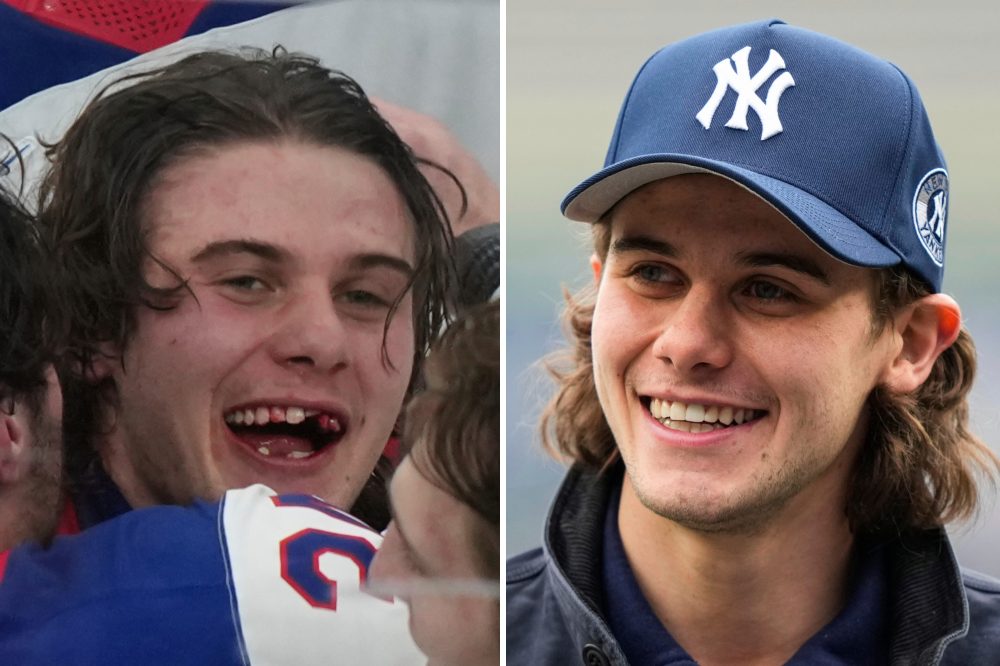
Team USA’s 24-year-old forward Jack Hughes had just received a stick to the face from Canada’s Sam Bennett, later describing how he spotted a complete tooth and fragments of others scattered on the rink surface.
As the New Jersey Devils’ team dentist, Schepis recognized those damaged teeth immediately – he had previously restored the same ones after Hughes suffered a high stick injury during playoff action years earlier.
“We did the root canals, fixed it up,” Schepis remembered. “Those were his teeth.”
Following typical hockey tradition, Hughes ignored the dental damage and proceeded to net the overtime winner in a 2-1 victory, delivering America’s first men’s hockey gold since 1980. His toothless smile perfectly captured a sport where dental gaps serve as symbols of toughness and “spittin’ chiclets” has become such common terminology it inspired a well-known hockey podcast name.
Describing hockey players as needing dental care would be a massive understatement. Each team employs a specialist who joins physicians and medical personnel at every NHL contest, prepared to respond when emergencies occur.
“When there is an injury to the mouth, our physicians are like, ‘Oh yeah, we’re so happy you’re here because we would not have been able to do that,’” explained San Jose Sharks dentist Mark Nishimura. “Sometimes we’re really not busy, and other times, when it’s bad, it’s bad.”
The situation turned severe when Nishimura received Joe Pavelski’s knocked-out teeth after a puck struck the player’s jaw during 2019 playoff action, though the incident led to a goal. That same year saw Keith Yandle lose nine teeth, yet he returned to action and continued playing 168 consecutive games.
Brent Burns lost three teeth to an errant stick in 2013 but has since appeared in over 1,000 straight games. Chris Clark required three hours of surgical work involving braces, screws and cadaver bone material after a puck bounced off his stick into his mouth in 2006.
Clark describes hockey dentists as “triage doctors,” knowledge gained through his own tooth-losing, palate-breaking experience with the Washington Capitals.
Veteran Capitals dentist Tom Lenz witnessed that incident and has encountered every possible scenario, including transporting players to his practice during nighttime hours when timing becomes critical. Since pucks and sticks create mouth injuries unlike those seen in the general population, his early career days over twenty years ago brought considerable anxiety.
“You never know till you get back there, so you always have to be ready to just jump in and take care of it,” Lenz explained. “It can be a simple chipped tooth. It can be teeth knocked out. It can be jaw fractures. … We try to get them stable, out of discomfort — whatever that takes.”
Their responsibilities extend to treating facial cuts affecting players, referees and coaches alike. During regular season games, the home dentist handles both teams and collaborates with other medical professionals, such as when Schepis sidelined Chicago’s Connor Bedard due to jaw fractures in early 2024.
Playoff situations differ, which explains Schepis’s presence on the road when Hughes took Jordan Staal’s stick to the mouth during the Devils-Carolina Hurricanes series opener in May 2023.
“They’re snapped in half, the nerves are hanging out, the ice is cold (and) he can’t breathe because the nerves are hanging,” Schepis described. “Just numb him right at the end of the first, did the root canals right there, pulled the nerves out. The orthopedic surgeons think it’s like miracle work.”
After Alex Ovechkin lost a front tooth to a stick in October 2007, Lenz installed a temporary implant called a “flipper” with plans for permanent restoration following retirement.
Lenz said Ovechkin initially demanded immediate replacement, then lost the temporary piece, making his gap-toothed appearance part of his signature look despite his mother’s disapproval. Ovechkin now holds the league’s career scoring record and continues playing at 40.
“Had one made within a day or so because he was so adamant about, ‘I can’t go around like this,’” Lenz recalled. “It’s so him now that it’s going to be strange to see him with all his teeth up there.”
Unlike Ovechkin, Hughes told Jimmy Fallon that missing teeth won’t become his permanent appearance. He has already received dental repairs.
Currently in his 14th NHL season, Brenden Dillon wore mouth protection as a youth because hockey incidents required three rounds of braces. After abandoning protection in minor league play, his first NHL fight resulted in mouth damage, prompting him to resume wearing guards.
“Not a fun part of it,” Dillon said. “I don’t think basketball, football — maybe baseball, a ball here and there maybe — but way more in hockey. Sticks, pucks, the glass, ice — the whole nine yards. It feels like once a game at least somebody’s getting dinged up with something.”
Schepis, Lenz and fellow NHL team dentists also serve other sports. Lenz noted that many NBA players he treats have never received stitches previously.
“Hockey players sometimes will even go, ‘How many is it going to be?’” Lenz said. “If it’s like two or three or so, a lot of the guys will just go: ‘Then just suture it. No anesthetic, I don’t want to take that. Just suture it and I want to get back out there.’”
Nishimura recalls being asked about reinserting teeth when Pavelski lost them to a shot from then-teammate Burns. The Sharks defeated Vegas 5-2, adding to Pavelski’s reputation for courage.
“Pavs went back, we numbed him up, sutured him,” Nishimura said. “He went back out and finished the game. It’s incredible. Hockey players, they don’t quit. They are a special breed of human being.”
Dillon, currently with New Jersey, has endured multiple root canals and chipped teeth while recognizing he should wear mouth protection during practice sessions. Lenz has observed fewer facial injuries since mandatory visor requirements, with only four grandfathered players still competing without them.
Clark rarely used visors during his playing career but supports current players’ widespread adoption, similar to how helmets became required equipment, given the frequency of stick and puck contact with faces.
“It’s sort of part of the deal,” Clark said.
Having hockey dentists available remains equally essential. Schepis recalls performing a 1 a.m. root canal on Jaromir Jagr and placing over 30 stitches for another player when puck damage extended completely through his mouth.
“There’s a lot of little nuances to sports dentistry vs. regular dentistry because it’s just not standard,” Schepis explained. “You have to move fast and you have to always move with the player’s best intention. But we know they want to be out there. We know the team wants them out there. You always have to be available any time of night.”