
DUBAI, United Arab Emirates — The fragile ceasefire agreement in the Iran conflict faced mounting pressure Thursday as Israeli strikes on Beirut intensified, Iran maintained its grip on a vital oil shipping lane, and doubts grew about weekend negotiations scheduled to begin Saturday.
Both Iran and the United States claimed success following Tuesday’s ceasefire announcement, but tensions quickly escalated. Iranian semi-official media outlets indicated that military forces have placed explosive mines in the Strait of Hormuz, a critical oil transport route that serves as Tehran’s most powerful bargaining chip. President Trump responded by threatening stronger military action against Iran if the nation fails to honor the agreement terms.
A major point of contention emerged over whether the ceasefire encompasses the conflict between Israel and Hezbollah forces. Israeli warplanes launched devastating attacks on Beirut Wednesday, creating the most lethal single day in Lebanon since hostilities erupted on February 28.
Unresolved issues include the fate of Iran’s enriched uranium reserves that sparked the crisis, the timeline for reopening normal shipping through the strait, and Iran’s future capacity to launch missile strikes while backing regional militant groups.
Mohammad Bagher Qalibaf, Iran’s parliamentary leader, issued a stern warning Thursday that ongoing Israeli operations against the Iran-supported Hezbollah organization in Lebanon would result in “explicit costs and STRONG responses,” according to his social media statement.
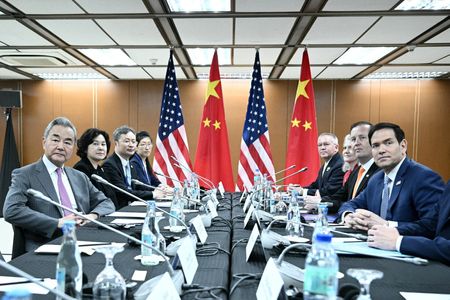
Qalibaf has emerged as a potential representative who might engage with U.S. Vice President JD Vance this weekend in Islamabad. White House officials confirmed Vance will head the American delegation for negotiations beginning Saturday.
Iranian officials accused Israel of breaching the ceasefire terms. Israeli Prime Minister Benjamin Netanyahu and Trump disputed this claim.
Netanyahu declared Israel would maintain attacks on Hezbollah “with force, precision and determination.”
Lebanon’s health ministry reported that Wednesday’s Israeli operations killed at least 203 people and injured over 1,000 in central Beirut and surrounding Lebanese regions. Israel stated these strikes targeted Hezbollah forces that entered the conflict supporting Tehran.
The casualty count marked the deadliest single day in Lebanon throughout more than five weeks of renewed fighting between Israeli forces and Hezbollah.
Israeli military officials announced Thursday they eliminated Ali Yusuf Harshi, an assistant to Hezbollah commander Naim Kassem. Hezbollah representatives did not immediately respond to requests for comment.
A New York-based research organization cautioned that the ceasefire “hovers on the verge of collapse.”
The Soufan Center stated in their assessment: “Even if Lebanon was formally outside the deal, the scale of Israel’s strikes was likely to be viewed as escalatory. Israel’s strikes can be understood both as an effort to drive a wedge between Iran and its proxies and as a response to being allegedly sidelined in the original ceasefire discussions.”
Lebanon’s government news service reported that an overnight Israeli attack killed at least seven people in southern Lebanon. Israeli military officials had not immediately confirmed the operation.
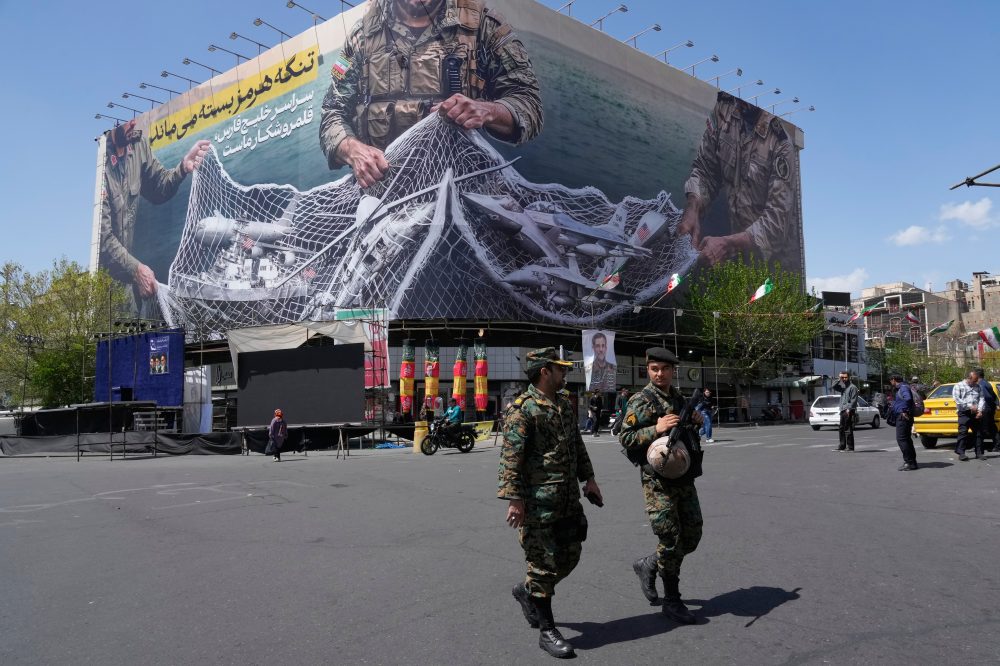
Iranian semi-official news organizations published documentation Thursday indicating the nation’s paramilitary Revolutionary Guard deployed sea mines throughout the Strait of Hormuz during the conflict — a signal potentially designed to pressure the United States.
The documentation, distributed by ISNA news service and Tasnim, displayed a large area labeled “danger zone” in Farsi covering the shipping lanes through the strait, which previously handled 20% of global oil and natural gas trade.
Only minimal shipping traffic has passed through since fighting began after multiple vessel attacks and Iranian threats against any ships considered connected to the U.S. or Israel. Maritime traffic appeared to continue avoiding the strait following the ceasefire announcement.
The chart recommended ships use waters closer to Iran’s coastline near Larak Island, a path some vessels adopted during the war. The document covered dates from February 28 through April 9, leaving unclear whether the Guard had removed any mines since then.
Saeed Khatibzadeh, Iran’s deputy foreign minister, told the BBC his nation will permit ships to transit the strait following “international norms and international law” once the United States stops its “aggression” in the Middle East and Israel ceases attacking Lebanon.
Sultan al-Jaber, who leads the United Arab Emirates’ primary oil company, said approximately 230 oil-laden ships await passage through the strait and must be permitted “to navigate this corridor without condition.”
The effective closure of the strait has driven oil prices dramatically higher — impacting gasoline, food, and essential goods costs well beyond the Middle East. Oil prices dropped following Wednesday’s ceasefire news but began rising again as doubts about the agreement increased.
Brent crude’s spot price, the global benchmark, reached around $98 Thursday, representing a 35% increase since the war started.
Discussion topics for the talks include whether Iran will be permitted to establish a formal fee system for ships using the strait. Such a change would overturn decades of free passage through what has been considered an international waterway.
The future of Iran’s missile and nuclear capabilities — which the U.S. and Israel aimed to eliminate through military action — remained uncertain. The U.S. maintains Iran must never develop nuclear weapons capability and seeks removal of Tehran’s highly enriched uranium stockpile, which could be weaponized. Iran maintains its program serves peaceful purposes.
Trump stated Wednesday that the U.S. would collaborate with Iran to remove the uranium, buried in previous U.S. and Israeli strikes, though Iran has not confirmed this arrangement. One version of the ceasefire agreement published by Iran indicated it would be permitted to continue enrichment activities.
Mohammad Eslami, head of Iran’s nuclear agency, said Thursday that safeguarding Tehran’s uranium enrichment rights is “necessary” for any ceasefire negotiations.
Trump warned that U.S. naval forces and troops will stay positioned around Iran “until such time as the REAL AGREEMENT reached is fully complied with.”