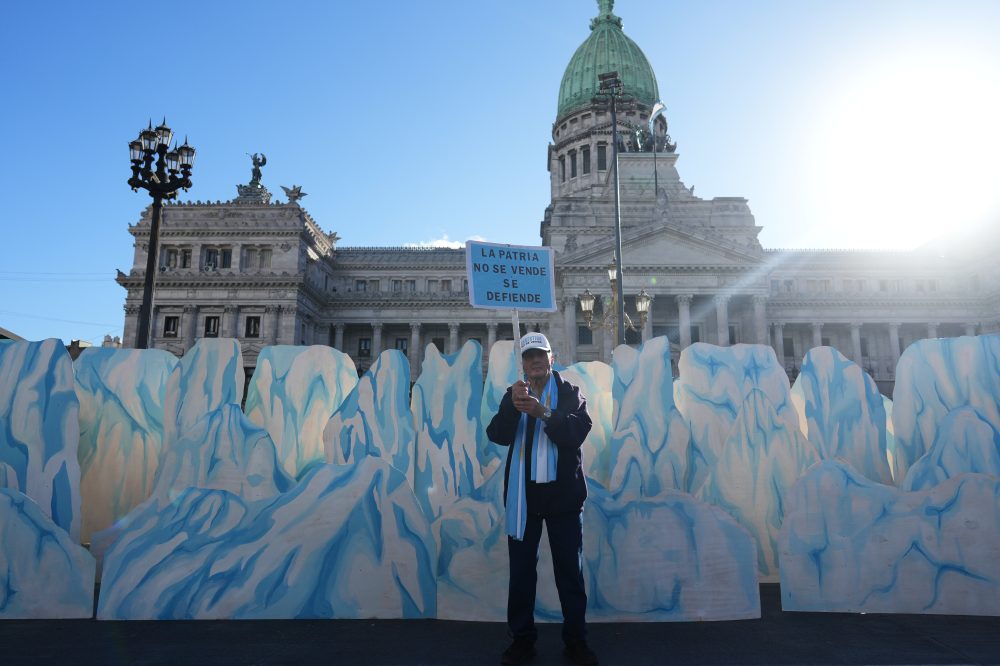

BUENOS AIRES, Argentina — Lawmakers in Argentina’s Congress have given final approval to legislation that reduces safeguards for the nation’s glaciers, clearing the way for expanded mining operations despite fierce opposition from environmental organizations.
The measure, championed by libertarian President Javier Milei, passed during an early Thursday morning vote with 137 legislators supporting it, 111 opposing, and three choosing not to vote. The Senate had previously endorsed the bill in February.
Mining industry projections suggest the revised regulations could generate more than $30 billion in investment capital during the next ten years. Roughly 70% of these funds would target new operations extracting copper, gold and silver.
President Milei is anticipated to formally enact the legislation within days.
Conservation groups are now preparing courtroom battles to block implementation of the new law.
Organizations such as Greenpeace and the Environment and Natural Resources Foundations are coordinating a public class-action challenge, characterizing the legislative process as fundamentally flawed and dismissive of citizen concerns about water security.
“If they refuse to listen in Congress, they will be forced to listen in the courts,” the organizations said in a statement, urging citizens to join a lawsuit that argues the reform threatens water access and the fragile ecosystems surrounding glaciers.
Legislative opponents have declared the measure unconstitutional, claiming it dismantles crucial environmental safeguards.
Argentina enacted comprehensive legislation in 2010 that prohibited all mining operations on glaciers and in periglacial areas — frozen terrain zones that serve as critical water regulation systems.
The Milei administration’s reform fundamentally alters these protections by restricting coverage to only glaciers and geological features with “specific hydrological functions,” leaving individual provinces to decide which areas qualify for protection.
The South American nation contains 16,968 glaciers spread throughout the Andes Mountain Range and South Atlantic Islands, encompassing approximately 8,484 square kilometers (3,276 square miles).
Glacier specialists have emphasized that climate change is already accelerating ice retreat. Researchers warn that reducing these protections could compromise water supplies in dry regions and diminish the reserves that maintain river systems.