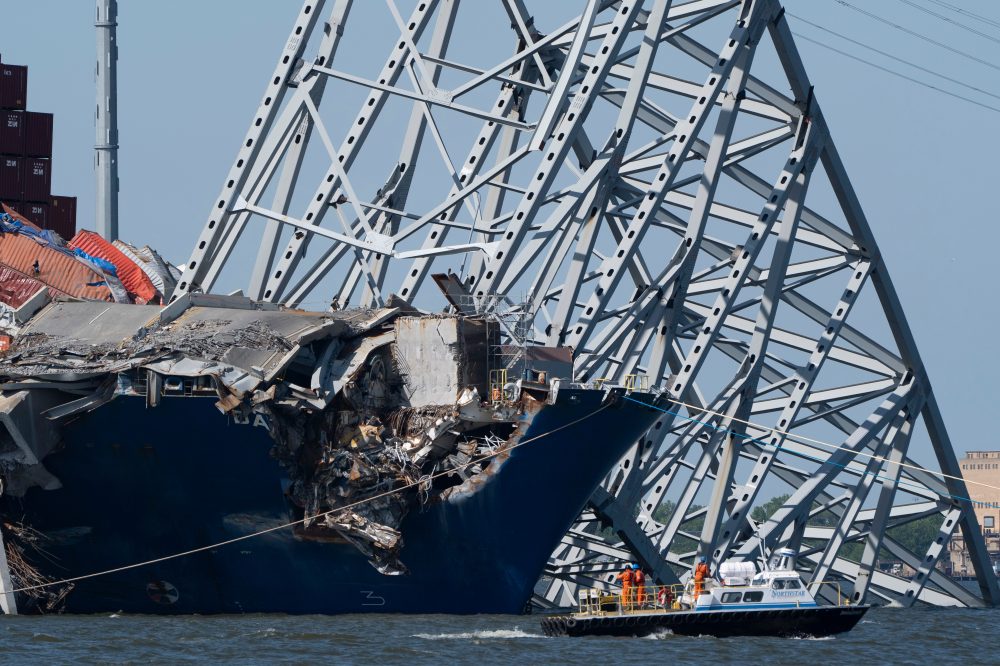

ANNAPOLIS, Md. — State officials in Maryland announced Thursday they have secured a settlement agreement with the companies behind the cargo vessel that struck the Francis Scott Key Bridge two years ago, leading to a catastrophic collapse that claimed six lives.
Attorney General Anthony Brown revealed the preliminary agreement has been struck with Grace Ocean Private Limited and Synergy Marine Pte Ltd, the respective owner and operator of the M/V Dali. This settlement addresses part of Maryland’s legal claims stemming from the vessel’s collision with the bridge on March 26, 2024.
“For two years, Maryland workers, families, and communities have carried the weight of a disaster that should never have happened,” Brown stated in an official announcement. Specific terms of the settlement were not disclosed.
Brown emphasized that the Dali’s impact with the bridge “disrupted the Port of Baltimore, devastated livelihoods, and sent economic shockwaves across our State that are still being felt today.”
“Our work is not finished, but this settlement is an important step toward making Maryland whole,” Brown added.
Representatives for the vessel’s owner and management company have not yet provided comment on the agreement.
The Maryland Transportation Authority recently projected that constructing a replacement bridge will cost between $4.3 billion and $5.2 billion, with completion expected by late 2030.
The current settlement does not address potential claims against Hyundai, the vessel’s manufacturer, according to the attorney general’s office.
The cargo ship was departing Baltimore bound for Sri Lanka when it experienced steering problems due to electrical failure. Six road maintenance workers who were repairing potholes during their nighttime shift perished when the bridge structure gave way.
Maryland’s lawsuit, filed in federal court last September, contended the tragedy resulted from negligent practices, poor management, and reckless handling of an unseaworthy vessel that should have remained docked.
The state pursued compensation for multiple damages including bridge destruction, environmental harm to the Patapsco River, revenue losses, and extensive economic impacts affecting Maryland residents.
The bridge failure completely shut down Port of Baltimore shipping operations, eliminated jobs for thousands of workers, forced traffic through already burdened neighborhoods, and created lasting economic consequences throughout the region, officials noted.
The Francis Scott Key Bridge served as a crucial Baltimore transportation link, enabling motorists to avoid downtown traffic. The original 1.6-mile steel structure required five years to build and began serving traffic in 1977, playing an essential role in port logistics.