
The head of the International Monetary Fund warned Thursday that Middle East warfare will likely drive countries to seek between $20 billion and $50 billion in emergency financial assistance from the global lending organization.
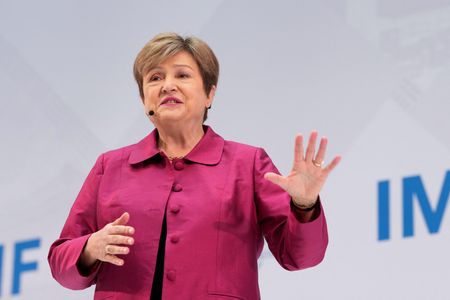
IMF Managing Director Kristalina Georgieva told reporters at the organization’s Washington headquarters that the currently suspended conflict has created significant strain on the world economy. Daily global oil flows have dropped by 13 percent while liquefied natural gas supplies have fallen 20 percent, creating energy supply shortages that have pushed prices higher and disrupted international trade networks.
Speaking before next week’s scheduled IMF and World Bank meetings, Georgieva revealed that the warfare has forced the Fund to lower its worldwide economic growth projections, confirming earlier statements she made to Reuters earlier this week.
“Had it not been for this shock, we would have been upgrading global growth,” Georgieva explained, pointing to positive momentum from robust technology investments and favorable financial market conditions. “But now, even in our most hopeful scenario, it involves a downgrade of growth.”
President Donald Trump announced a two-week ceasefire agreement with Iran on Tuesday, though Israel’s ongoing military operations in Lebanon could potentially undermine efforts to establish lasting peace.
According to Georgieva, the conflict presents varied but substantial risks across IMF member nations. Countries that import oil – representing 80 percent of all nations – face challenges from higher energy costs and supply shortages, while major oil-producing countries and regional economies without oil resources have experienced disproportionate impacts.
“Even in a best case, there will be no neat and clean return to the status quo ante,” Georgieva stated. She noted that Qatar’s Ras Laffan facility, which generates 93 percent of the Gulf region’s liquefied natural gas, has remained closed since March 2 and may require three to five years to reach full production capacity again.
“The fact is, we don’t truly know what the future holds for transits through the Strait of Hormuz, or for that matter, for the recovery of regional air traffic,” she continued, referencing visual data showing sharp declines in aviation and shipping activity over the past six weeks. “What we do know is that growth will be slower – even if the new peace is durable.”
The fighting, which started on February 28, will continue creating widespread economic effects, Georgieva said. Oil refinery closures and shortages of refined petroleum products are hampering transportation systems, tourism industries, and international commerce.
Food security concerns will affect an additional 45 million people, pushing the total number facing hunger beyond 360 million worldwide. Supply chain problems will persist due to industrial reliance on materials including sulfur, helium needed for semiconductor manufacturing, and naphtha used in plastic production.
The IMF plans to publish multiple economic scenarios in next week’s World Economic Outlook report, ranging from relatively quick recovery to situations where oil and gas prices stay elevated for extended periods, Georgieva said.
Even the most optimistic projections include growth reductions because of infrastructure damage, supply interruptions, reduced confidence, and other lasting economic wounds.
In January, the IMF had predicted global growth of 3.3 percent in 2026 and 3.2 percent in 2027. The organization has not yet specified the size of next week’s downward revisions. Georgieva previously told Reuters that inflation forecasts would also increase.
Next week’s international meetings will bring together thousands of finance officials from around the world to discuss managing the war’s economic impact and determining how the IMF can assist countries requiring help, Georgieva said.
She emphasized that the IMF maintains adequate resources and can expand balance of payments assistance through current programs, with additional nations expected to request aid. She did not name specific countries seeking support.
The anticipated increase in funding requests adds to $140 billion in active programs that existed before the war began, according to an IMF official. When including outstanding credit and planned lending, the IMF’s total commitments reach $245 billion.
From May 2024 through March 2025, the IMF authorized more than $36 billion in new loans, based on research from Boston University.
Georgieva cautioned that energy supply disruptions are already pushing up short-term inflation expectations, though longer-term expectations remain stable.
Financial market conditions have tightened in an orderly fashion, with some recent easing becoming apparent.
The overall economic impact will depend on whether the ceasefire maintains stability and leads to permanent peace, and the extent of damage the war ultimately causes, Georgieva said.
Georgieva acknowledged that demand adjustments are inevitable but urged countries against implementing export restrictions, price controls, and other policies that could worsen global economic conditions.
“I appeal to all countries to reject go-it-alone actions,” she said. “Don’t pour gasoline on the fire.”
While suggesting value in careful observation, Georgieva recommended that central banks “step in firmly with rate hikes” if inflation expectations risk becoming unanchored and creating an inflationary cycle. However, she warned against premature actions that could throw “cold water on growth.”
She observed that many nations are implementing conservation strategies, including restricting private vehicle usage and encouraging remote work arrangements. Most countries have avoided broad tax reductions or energy subsidies, and the IMF is actively collaborating with governments to ensure any measures remain temporary.
Implementing deficit-funded stimulus programs now would increase pressure on monetary policy and amplify rising benchmark interest rates, further increasing debt costs.
Public debt levels are generally much higher than two decades ago, Georgieva noted, encouraging countries to move quickly to restore their financial reserves following this crisis after years of failing to do so.
Even before the current conflict, global public debt was projected to reach approximately 100 percent of gross domestic product by 2029, representing the highest level since 1948.