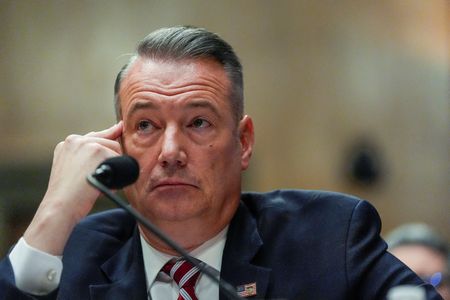
PARIS – France’s Finance Minister Roland Lescure expressed concerns this week about Europe’s limited presence in the digital currency market, urging the continent’s financial institutions to develop more euro-backed cryptocurrency options.
Speaking at a cryptocurrency conference in Paris on Friday, Lescure described the current disparity between euro-pegged and dollar-pegged digital currencies as unsatisfactory, given the small market share held by European alternatives.
Financial institutions across the globe are testing stablecoins – digital currencies engineered to hold steady values by being backed by traditional money. This experimentation has accelerated since former President Donald Trump enacted legislation last year that created regulatory framework for these digital assets.
Ten major European banking institutions, including ING, UniCredit, and BNP Paribas, established a joint venture last year with plans to introduce a euro-backed stablecoin during the latter half of 2026. This collaborative effort aims to challenge American supremacy in digital payment systems.
Lescure voiced support for this banking alliance, stating: “That is what we need and that is what we want.” He further emphasized his position by saying: “I also strongly encourage banks to further explore the launch of tokenised deposits.”
The market size difference is striking – Tether, the world’s leading stablecoin, reports over $185 billion worth of dollar-backed tokens currently circulating. Meanwhile, Societe Generale’s euro-pegged alternative, which debuted in 2023, has only 107 million euros in circulation.
A German medical packaging manufacturer has turned down an acquisition offer from an American competitor, according to industry sources familiar with the negotiations.
Gerresheimer declined the takeover proposal from US-based Silgan, and discussions between the two companies have ceased entirely, sources revealed.
The company’s stock initially dropped 5.4% following news of the rejected bid, though shares later recovered and moved slightly higher.
According to one insider, Gerresheimer is prioritizing the resolution of internal accounting issues and the sale of its American subsidiary Centor rather than pursuing acquisition talks.
In March, reports indicated that Silgan had expressed interest in acquiring Gerresheimer through a preliminary offer valued at 41 euros ($48.31) per share, representing more than twice the company’s current stock price.
When contacted for comment, a Gerresheimer representative stated the company does not address market speculation. Silgan has not responded to requests for comment.
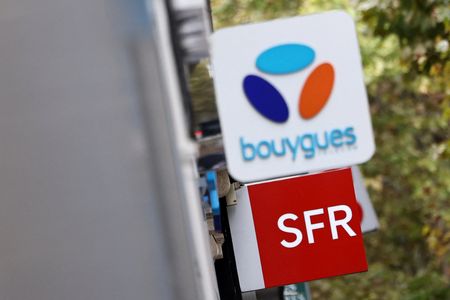
Three French telecommunications giants have submitted an enhanced joint proposal worth 20.35 billion euros ($24 billion) to acquire SFR, setting up a potential showdown with European Union competition authorities.
The consortium of Bouygues Telecom, Free (owned by Iliad), and Orange delivered their improved offer on Friday to purchase most of Altice France’s telecommunications assets. This represents a significant increase from their previous 17 billion euro proposal that Altice rejected in October.
EU competition watchdogs have historically maintained strict policies requiring four separate operators in each national market, pushing back against industry consolidation efforts aimed at competing with larger American and Asian telecommunications companies.
According to an Orange representative, each company’s acquisition of SFR assets will undergo individual antitrust examination. A European Commission representative confirmed they have not yet received official notification of the proposed transaction.
“If a transaction constitutes a merger and has an EU dimension, it is always up to the companies to notify it to the Commission,” the spokesperson added.
The potential acquisition of SFR, controlled by billionaire Patrick Drahi, could dramatically reshape France’s highly competitive telecommunications sector. French carriers have engaged in prolonged pricing battles for years, creating pressure on profit margins and revenue expansion.
EU antitrust officials have historically implemented strict conditions and complete prohibitions on telecommunications mergers attempting to reduce mobile network operators from four to three within individual country markets, prioritizing competition protection and preventing price increases.
However, a 2024 EU competitiveness assessment recommended regulators reconsider their approach, which has created a fragmented industry, and instead focus on helping companies achieve greater scale to compete internationally with American and Chinese competitors.
Industry executives have similarly advocated for the EU to support mergers by evaluating deals across regional rather than national boundaries and considering investment commitments.
Should the Altice France asset acquisition proceed, it would likely undergo European Commission review, which allows 25 working days for initial assessment after filing. The Commission may extend this period by 35 working days to evaluate proposed remedies or address member state requests to handle the case.
While most mergers receive approval, the Commission occasionally initiates comprehensive second-phase investigations lasting up to 90 additional working days, potentially extending to 105 days.
The French government will hold significant influence in any deal discussions, as it represents Orange’s largest shareholder. Through its board position, the government can impact negotiations, particularly regarding employment protection and national interests.
Finance Minister Roland Lescure has indicated he will remain “extremely vigilant,” especially concerning pricing and service quality standards.
France currently operates with four telecommunications providers, with Orange holding market leadership. This structure would limit Orange to acquiring only the smallest portion of SFR, which serves 19 million mobile customers and over 6 million fiber subscribers.
The French telecommunications landscape has experienced numerous changes, including France Telecom’s acquisition of Orange in 2000. In 2014, Vivendi sold SFR to Drahi’s Numericable for 13.4 billion euros in cash plus a 20% ownership stake, creating Altice France.
Altice completed debt restructuring last year, resulting in Drahi maintaining 55% control of Altice France while creditors hold 45%. Bouygues Telecom, seeking the largest share of Altice’s operations, has grown through acquiring La Poste Telecom, adding 2.3 million customers in 2024.
Iliad launched in the French market in 2012 with its budget Free brand, triggering intense price competition. The three carriers have proposed acquiring most SFR operations, excluding fiber asset stakes and holdings in French overseas territories.
The European Commission announced Friday it has selected four European technology firms to handle a massive $212 million cloud computing contract spanning six years, marking a significant step in Europe’s effort to break free from reliance on foreign tech companies.
The contract, initially put out for bid in October 2025, went to Post Telecom from Luxembourg, Germany-based StackIT, France’s Scaleway (owned by Iliad), and Belgium’s Proximus.
According to a statement from the EU’s executive branch, “This tender supports the Commission’s broader efforts to enhance its own sovereignty, reinforcing strategic control across key technologies and infrastructure.”
The winning companies were chosen because they met the Commission’s Cloud Sovereignty Framework requirements, which mandates that organizations outside the EU cannot have significant influence over the technologies or services being provided, officials explained.
EU digital chief Henna Virkkunen emphasized the importance of the decision on social media, stating: “Scaling the use of EU cloud is key to strengthening Europe’s digital sovereignty.”
The contracts involve partnerships between the selected companies and other tech firms. Post Telecom has teamed up with OVHcloud and CleverCloud, while Proximus is heading a group that includes Mistral AI, Clarence, Thales, and S3NS, which is a joint venture between Google Cloud and data center operations.
OVHcloud’s founder and CEO Octave Klaba celebrated the win on social media, noting that the Post Telecom partnership will serve more than 40 European Commission agencies and will help “prove there are credible alternatives in Europe.”
A Minnesota family has shared their extraordinary memories of knowing Prince long before he became a worldwide music sensation – when he was simply their neighborhood babysitter.
Through the StoryCorps oral history project, the family recalled their unique connection to the legendary artist during his formative years. Living in the same Minnesota community as Prince, they experienced a side of the future superstar that few people ever witnessed.
The family’s recollections offer a rare glimpse into Prince’s life before fame, showing him in the humble role of caring for neighborhood children rather than commanding stadium audiences around the globe.
Listen to the Morning Delmarva Farm Report Update — April 17, 2026
DELMARVA — Cattle ranchers across Delaware are focusing on strategic planning as dry weather conditions continue, with livestock producers taking proactive steps to safeguard their operations against potential drought impacts. Many farmers are prioritizing reproductive efficiency in their herds as part of their drought management strategy, following the principle that preparation beats scrambling for solutions during a crisis.
Markets
Corn and soybean farmers in eastern states are seeing improved pricing opportunities as robust demand creates favorable conditions. Josh Strine, a graduate research assistant at Purdue University, reports that basis has increased for both crops at levels greater than historical averages would suggest, offering potential benefits for agricultural operations.
At Laurel Grain Company in Laurel, Delaware, corn is bringing $5.01 per bushel for May delivery. Soybeans are trading at $11.23 for May.
Policy
The USDA is seeking farmer input on rising fertilizer costs through a confidential reporting system. Deputy Undersecretary Stephen Vaden says the agency wants as many on-the-ground stories as possible of what American farmers are experiencing. The reporting system extends beyond fertilizer to include other agricultural supply challenges.
Local
Spring planting season is bringing more farm equipment to area roads, requiring extra caution from motorists as slow-moving agricultural vehicles mix with regular traffic.
Forecast
Expect scattered rain showers today with a high near 74°F. Tonight will bring isolated showers then partly cloudy conditions with lows around 53°F. Tomorrow will be partly sunny with highs near 64°F.
This article is based on the Delmarva Farm Report Update Morning Edition, April 17, 2026. Hosted by Tom Bradley.
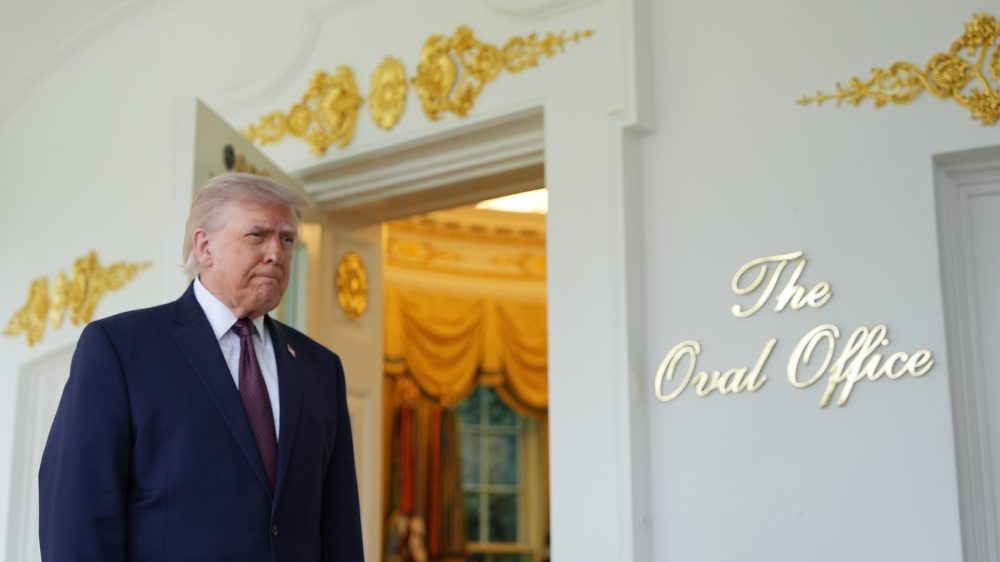
Former President Donald Trump has expressed anger over a federal court ruling that has once again halted his ambitious $400 million White House ballroom construction project.
The judicial decision prohibits any above-ground building activities for the massive ballroom complex, though it does permit continued underground construction of bunker facilities and other national security infrastructure at the Washington location.
Construction crews can only proceed with below-ground work on security bunkers and related “national security facilities” while the legal battle continues over the controversial project.
The ballroom construction site sits where the East Wing previously stood, representing a significant architectural change to the historic White House complex.
This latest court intervention marks another setback for the high-profile project, which has faced ongoing legal challenges since its inception.
The House of Representatives voted to temporarily extend federal surveillance authorities for a brief 10-day period after efforts to secure longer-term renewals fell short on Capitol Hill.
Republican leadership had originally attempted to pass more substantial extensions of the surveillance powers, seeking approval for either a five-year reauthorization or the 18-month extension that President Trump had requested. However, both of those proposals failed to gain the necessary votes during morning proceedings.
The short-term extension provides lawmakers with additional time to negotiate the terms of a longer reauthorization while preventing the surveillance programs from expiring immediately. The 10-day timeframe represents a compromise solution after the more ambitious renewal efforts collapsed.
House Speaker Mike Johnson and other GOP leaders had championed the longer extensions but were forced to settle for the temporary measure when it became clear they lacked sufficient support for their preferred options.
Global financial markets are showing signs of optimism this week as President Donald Trump expresses confidence that the conflict in Iran could conclude soon, with diplomatic discussions potentially resuming over the weekend.
However, this positive sentiment faces challenges from upcoming economic data expected to reveal sluggish business performance and mounting inflationary pressures, along with what could be an intense congressional examination of the Federal Reserve’s nominee for chair.
Kevin Warsh, Trump’s selection to head the Federal Reserve and a former Fed governor, will face lawmakers during his confirmation hearing on April 21, giving investors insight into the administration’s monetary policy direction.
Warsh enters a challenging environment as he works toward Trump’s goal of reduced interest rates, complicated by energy price increases from the Iran conflict that are raising inflation worries. Market expectations for rate cuts have shifted dramatically since the war began in late February, moving from anticipating two quarter-point reductions by December to expecting virtually no cuts.
Trump has publicly criticized current Fed Chair Jerome Powell for insufficient rate reductions. This week, he intensified his pressure tactics by threatening to remove Powell from his Federal Reserve board position if he refuses to step down when his chairmanship expires on May 15.
Meanwhile, Tesla leads a busy schedule of U.S. corporate earnings reports, while March retail sales figures may reveal whether rising prices are dampening consumer purchases.
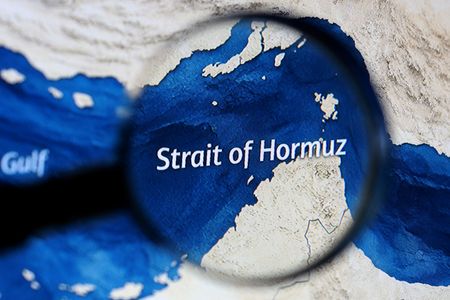
Iran continues to dominate market concerns as the United States and Pakistan promote the possibility of an agreement to resolve the conflict and reopen the vital Strait of Hormuz shipping route.
Stock markets, particularly in America, are anticipating a positive resolution. The S&P 500 has recovered to record territory, and despite Japan’s significant dependence on energy imports, the Nikkei has also reached record levels.
Market participants are betting that peace would restore the pre-conflict environment where robust earnings supported equity values.
Oil markets show more skepticism. While Brent crude prices sit below $100 per barrel, they remain 33% higher than late February levels. Physical crude prices for immediate delivery have reached unprecedented highs.
If diplomatic efforts fail to reopen the Strait, energy costs will stay elevated, compelling central banks to maintain high borrowing rates and potentially damaging corporate profits.
The upcoming week provides initial insights into how businesses worldwide managed as the Iran war reached its one-month milestone in April. March surveys indicated sharp increases in input costs and declining business activity as companies dealt with unstable energy markets, disrupted supply networks, and rapidly changing news developments.
While oil prices have moderated somewhat, the risk of global inflation remains present though reduced.
First-quarter earnings reports, especially from energy-import-dependent Europe, show airlines, retailers, and manufacturers facing significant uncertainty that could impact profitability.
The United States, being a net energy producer, enjoys some protection but cannot escape the impact of higher fuel costs. Investors will closely examine price and employment data in upcoming purchasing managers’ indices for indicators of economic strain.
Inflation data from Japan, Britain, New Zealand, and Canada are also expected to show concerning trends.
Emerging Asian central banks face their own pressures. China will announce its loan prime rate on April 20, though experts predict the central bank will maintain current benchmarks through year-end as economic growth resumes. Even with anticipated cooling due to Middle East crisis effects on corporate earnings and international demand, Asia’s largest economy remains in better position than many others.
Bank Indonesia, meeting April 22, must support a rupiah that recently hit record lows. The central bank’s governor indicated policy adjustments are needed to maintain financial market stability. The Philippines’ central bank, convening April 23, has cautioned about spillover effects after March inflation accelerated beyond policymakers’ target range.
Turkey’s central bank conducts one of its most important policy meetings Wednesday, testing its dedication to conventional monetary policy.
Given Turkey’s heavy reliance on imported energy, the nation has suffered severely from the Iran war’s economic consequences. It spent nearly $50 billion in reserves last month to stabilize the lira and became one of few countries to receive a credit rating outlook downgrade.
Prospects for lasting ceasefire will influence discussions. However, with inflation projected to reach nearly 30% by year-end according to economists, major financial institutions including JPMorgan and Bank of America anticipate rate increases of 300 basis points, returning to a punishing 40% level.
BARCELONA, Spain — Brazilian President Luiz Inácio Lula da Silva began a two-day diplomatic visit to Spain on Friday, where he and Spanish Prime Minister Pedro Sánchez will convene with fellow world leaders from predominantly smaller nations who share concerns about threats to democratic governance and the growing influence of far-right populist movements.
Both Lula and Sánchez have been vocal critics of U.S. President Donald Trump, who has issued threats of punitive tariffs against their nations. The two leaders are viewed as champions of progressive political movements in their regions, where conservative populist parties have gained momentum in recent years.
The Brazilian and Spanish leaders, accompanied by cabinet officials, gathered at a historic former royal palace in Barcelona on Friday to formalize agreements covering economic cooperation, technological partnerships, and social policy initiatives.
Friday’s bilateral discussions will set the stage for Saturday’s dual conferences at a major convention facility in Spain’s second-largest city, where Lula and Sánchez will host additional world leaders.
Saturday’s opening event marks the fourth Meeting in Defense of Democracy, an initiative established by Brazil and Spain in 2024 to create a platform for sharing strategies to counter what organizers describe as “extremism, polarization and misinformation” that weakens democratic participation. The forum’s initial sessions took place at United Nations headquarters, with last year’s gathering held in Santiago, Chile.
Despite both leaders’ public opposition to various Trump administration positions and policies, including military actions against Iran alongside Israel, Lula emphasized that the multilateral summit should not be viewed as anti-American.
“This is not going to going to be an anti-Trump meeting,” Lula stated in an interview with Spanish publication El País on Thursday. “We are going to discuss the state of democracy, to see what went wrong and what we have to do to repair it.”
This year’s democracy summit will feature European Council President Antonio Costa, Mexican President Claudia Sheinbaum, South African President Cyril Ramaphosa, Colombian President Gustavo Petro, and additional heads of state from nations including Uruguay, Lithuania, Ghana, and Albania.
Sheinbaum’s attendance follows the resolution of a diplomatic tension between Spain and Mexico after King Felipe VI recently recognized that Spain’s colonial conquest of the Americas resulted in “abuse” of indigenous populations.
As Latin America experiences a conservative political shift and increased pressure from the Trump administration, Sheinbaum has emerged as a prominent leftist leader in the region. She maintains high approval ratings in Mexico while successfully balancing diplomatic relations with Trump and defending Latin American independence on critical issues.
Many participants from the democracy meeting will remain for the first-ever Global Progressive Mobilization, taking place at the same location later Saturday. This gathering of left-leaning politicians and policy experts originated from discussions between Sánchez and former Swedish Prime Minister Stefan Löfven, now head of the Party of European Socialists, during a European Socialist meeting last year.
Both Sánchez and Lula will deliver keynote addresses at the progressive mobilization, which anticipates 3,000 participants, including U.S. Democratic Senator Chris Murphy. The program will include panel discussions on topics ranging from income inequality to strategies for improving electoral outcomes for progressive candidates.
The Barcelona meetings occur during an eventful period for Sánchez, who recently returned from his fourth visit to Beijing in three years for discussions with Chinese President Xi Jinping.
Sánchez’s administration has prohibited U.S. aircraft involved in the Iran conflict from using Spanish airspace and blocked American access to jointly operated military installations in southern Spain for Iran-related operations.
Earlier this week, Lula issued a video statement expressing “deep solidarity” with Pope Leo XIV after Trump publicly criticized the pontiff for condemning the Iran war.
Pol Morillas, who directs the Barcelona-based international affairs research institute CIDOB, explained that these gatherings represent an effort by established democratic leaders to demonstrate strength in response to the far-right populist movement’s successful promotion of anti-immigration and economic nationalist messages through international forums.
Morillas also connects the meetings to Canadian Prime Minister Mark Carney’s influential January speech at the Davos economic forum, which emphasized the need for “middle powers” to develop new approaches for navigating a world dominated by aggressive superpowers.
Lula, Sánchez, and other attending leaders “share the understanding that the world is not just for the great powers,” Morillas explained to The Associated Press.
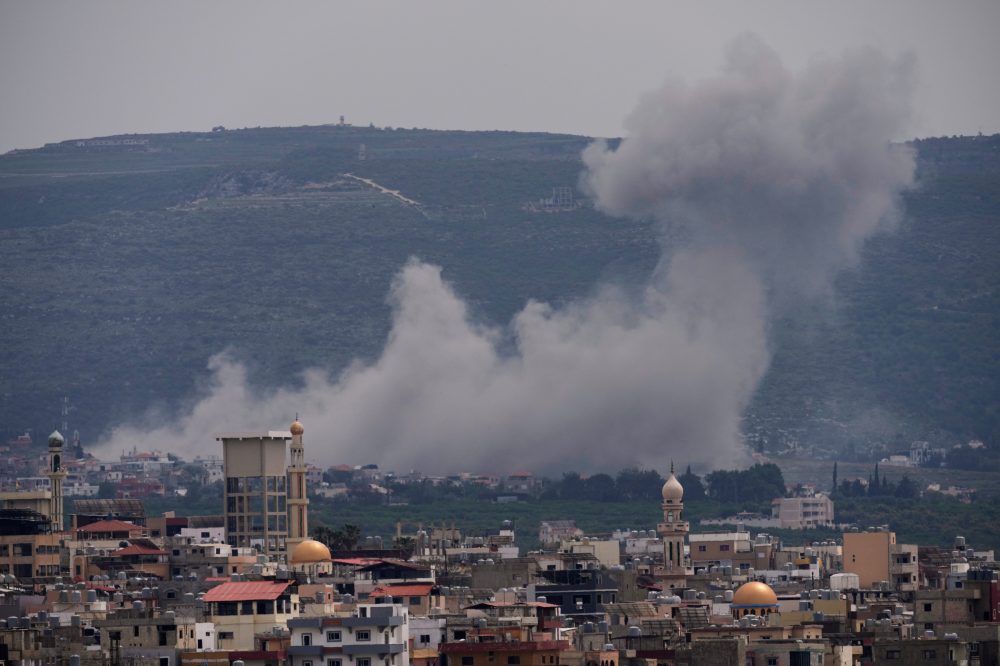
Displaced residents of Lebanon started making their way back to their communities Friday, surveying the damage to see if their homes survived the conflict, although many hesitated to stay permanently due to concerns the newly established 10-day truce between Hezbollah and Israel might not endure.
Massive piles of debris now occupy spaces where apartment buildings previously existed in Beirut’s southern districts under Hezbollah control, areas that suffered intense Israeli bombardment during more than six weeks of fighting that emerged from the broader conflict between the United States and Iran.
In the southern Lebanese town of Qasmiyeh, vehicles navigated a temporary bridge spanning the Litani River, quickly constructed after the truce took effect at midnight local time (2100 GMT). Israeli forces had demolished all river crossings during the hostilities, destroying the Qasmiyeh bridge just one day earlier.
“I inspected my home and praise God the building is still standing,” said Ali Hamza, who had just visited his house in the southern suburbs known as Dahiyeh.
However, he explained that “people are scared to come and live, and it is impossible to live in these circumstances, and with these smells. A full return is difficult now, despite the hardship of displacement.”
President Donald Trump revealed the ceasefire agreement between Lebanon and Israel’s governments on Thursday. Lebanon’s leadership has maintained strong disagreements with Hezbollah regarding its war participation and has pursued the group’s peaceful disarmament for the past year.
Lebanon’s military documented ceasefire breaches by Israeli forces, including sporadic bombardment of multiple southern Lebanese communities, and urged civilians to delay returning to southern areas.
Israeli military officials did not provide immediate response to the allegations.
In Nabatieh, a heavily damaged southern city, some returning inhabitants declared their intention to remain permanently. Others concluded there was nothing left worth returning to.
“There’s destruction and it’s unliveable. Unliveable. We’re taking our things and leaving again,” said Fadel Badreddine, who arrived with his wife and young son. “May God grant us relief and end this whole thing permanently – not temporarily – so we can return to our homes and lands.”
The Iranian-backed Shiite organization Hezbollah, established by Iran’s Revolutionary Guards in 1982, began attacking in support of Tehran on March 2.
Lebanese officials report the conflict claimed over 2,100 lives in Lebanon and displaced approximately 1.2 million people, with most evacuees belonging to the Shiite community that also suffered heavily during a 2024 war.
Israeli authorities state that Hezbollah attacks resulted in two civilian deaths, while 13 Israeli soldiers died in Lebanon since March 2. The militant group launched hundreds of rockets and drones toward Israel throughout the conflict.
Israel’s military operations in Lebanon had become a significant barrier to achieving the peace agreement Trump sought to conclude the war with Iran.
Following the ceasefire announcement, Trump informed reporters that Lebanon and Israel would pursue a more permanent agreement, noting Lebanon had committed to “take care of Hezbollah.”
Israeli Prime Minister Benjamin Netanyahu stated he had rejected Hezbollah’s requirement to remove forces that entered southern Lebanon, and would continue maintaining a comprehensive “security zone” extending to Syria’s border.
Netanyahu emphasized that Israel’s primary objective remained Hezbollah’s complete dismantlement.
Hezbollah declared that any ceasefire must prevent Israeli forces from operating freely within Lebanese territory. The organization issued a statement asserting that Israeli military presence on Lebanese soil provided Lebanon and its citizens the “right to resist.”
Israeli military units have occupied portions of southern Lebanon and had pledged to retain control over territory reaching the Litani River, which flows into the Mediterranean approximately 30 kilometers (20 miles) north of Israel’s border. During the war, Israel commanded residents to evacuate the area south of the Litani.
Israeli forces demolished Lebanese communities in the region, stating their objective was establishing a “buffer zone” to shield northern Israeli towns from Hezbollah assaults.
Trump announced plans to invite Netanyahu and Lebanese President Joseph Aoun to the White House for “meaningful talks” between the two nations, which have technically remained at war since Israel’s establishment in 1948.
The United States Ambassador to Turkey, Tom Barrack, expressed optimism Friday that America and Turkey will quickly resolve their ongoing dispute regarding US sanctions imposed over Turkey’s acquisition of Russian S-400 missile defense systems.
Speaking at the Antalya Diplomacy Forum, Barrack stated, “I think you are going to see the S-400 situation solved soon. From my boss’s point of view, acceptance into an F-35 programme is fine.”
The sanctions were implemented by the United States in 2020 against Turkey, despite both nations being NATO allies, following Turkey’s decision to purchase the Russian defense system. As part of the penalties, Turkey was also excluded from the F-35 fighter aircraft procurement and manufacturing program.
LONDON – British authorities announced Friday that three individuals have been formally charged in connection with a failed firebombing attempt targeting the offices of Iran International television station in northwest London earlier this week.
The suspects – two adult males and one teenager, all British citizens – face charges of arson with intent to endanger life following Wednesday evening’s incident. According to police, the group threw a burning container toward the building housing Volant Media, Iran International’s parent company, but the device landed in a parking area where the flames quickly extinguished themselves.
No injuries occurred and no property damage resulted from the attack.
Iran International, which operates from London and frequently criticizes Iran’s government, reported that security personnel had refused entry to a suspicious vehicle at their facility shortly before the incendiary devices were hurled at the building.
The charged individuals are Oisin McGuinness, 21, Nathan Dunn, 19, and a 16-year-old whose identity remains protected under legal guidelines. All three are scheduled for court appearances at Westminster Magistrates’ Court on Friday. McGuinness faces an additional charge of dangerous driving.
Law enforcement officials said the suspects’ vehicle sped away from the scene but crashed during a high-speed chase involving an armed police response team that happened to be operating in the vicinity.
This attack occurred just one day after police apprehended two individuals suspected of attempting to set fire to a synagogue, also located in north London.
Additionally, last month several ambulances owned by Hatzola, a Jewish volunteer emergency medical service, were deliberately set ablaze while parked near a synagogue in the Golders Green neighborhood of north London.
While investigators have not established connections between these separate incidents, Matt Jukes, deputy commissioner of London’s Metropolitan Police, acknowledged public concerns about escalating tensions.
“London’s Jewish communities and the Iranian diaspora in London have, in recent years, been increasingly targeted by individuals, groups and hostile states intent on spreading fear, hate and harm,” Jukes stated, adding that he recognized why overseas conflicts and rising domestic tensions would be “deeply worrying” to residents.
Smartphone sales in India experienced their worst quarterly performance in six years during the first three months of 2026, declining 3% compared to the same period last year, according to new research released Friday by Counterpoint Research.
The decline comes as manufacturers have raised prices on more than 80 smartphone models by an average of 15%, with analysts predicting additional price increases of 15% to 20% in the upcoming second quarter.
Senior analyst Prachir Singh explained the market challenges, stating: “The market is facing a clear affordability squeeze, driven by sharp memory-led cost inflation and currency pressures that have forced OEMs to raise prices across key models.”
The outlook for India’s smartphone industry remains concerning, with research director Tarun Pathak warning: “India’s smartphone market is expected to remain under pressure in the near term, with Q2 2026 likely to see a double-digit decline.”
Despite the overall market struggles, Vivo maintained its position as the leading smartphone brand with 21% market share, while Samsung and Oppo followed in second and third place respectively.
Apple managed to capture 9% of the market, benefiting from continued consumer interest in the iPhone 17 series. Meanwhile, Google emerged as the fastest-growing premium smartphone brand, recording a 39% increase in shipments compared to the previous year, largely attributed to artificial intelligence-powered features in their devices.
DOUALA, Cameroon – Massive crowds assembled early Friday morning in Cameroon’s economic center of Douala for what’s anticipated to be the most significant gathering during Pope Leo’s extensive African journey.
Vatican officials project approximately 600,000 attendees will pack the areas surrounding Japoma Stadium to participate in the religious service and listen to the pope’s remarks. Leo has gained attention for his bold statements regarding global conflicts and social disparities, drawing criticism from U.S. President Donald Trump.
Under tight security measures, Cameroonian faithful started entering the stadium Thursday evening, spending the night there to secure their opportunity to hear Leo’s sermon firsthand.
During Thursday’s events, the first American pontiff delivered sharp criticism of political leaders who allocate billions toward warfare. In particularly strong language while in Cameroon, he declared the world was “being ravaged by a handful of tyrants.”
The pope’s schedule called for arrival in Douala at approximately 9:55 a.m. local time following a one-hour helicopter journey from the nation’s capital, Yaounde. His four-hour stay in the city includes a stop at a Catholic medical facility before returning to Yaounde.
Throughout his 10-day African journey, Leo has condemned international law violations by “neocolonial” global powers and stated that “the whims of the rich and powerful” pose threats to worldwide peace.
The oil and cocoa-producing nation confronts serious security issues, including an ongoing English-speaking regional conflict that has claimed thousands of lives since 2017.
Enthusiastic crowds have welcomed the pontiff during his stay, gathering along his travel routes and displaying vibrant textiles bearing his image.
Bishop Léopold Bayemi Matjei described Leo’s presence as “a moment of great joy” and expressed hope that it would bring divine favor to Cameroon.
“Our country needs a lot of blessing, a powerful blessing, so that hope will come to rise again,” stated the bishop, who oversees the Church in Obala, located roughly one hour north of Yaounde.
Lebanese families who fled their homes during the recent conflict between Israel and Hezbollah are now making their way back to their villages after a ceasefire agreement took effect on Friday.
The truce has enabled thousands of displaced residents to begin returning to their communities after being forced to leave due to the fighting between the militant group and Israeli forces.
The Associated Press has compiled photographs documenting the homecoming of these families as they travel back to their villages across Lebanon.
A recent Associated Press investigation has revealed concerning issues with the hiring practices of U.S. Immigration and Customs Enforcement, finding that several newly recruited officers began their duties before completing comprehensive background screenings and had histories of financial difficulties, legal troubles, and employment issues.
ICE announced this year that it successfully completed a massive recruitment drive, bringing on 12,000 additional officers and special agents to effectively double its workforce size. These personnel are tasked with supporting President Donald Trump’s large-scale deportation efforts, backed by $75 billion in congressional funding allocated to the agency.
However, the rapid pace at which these individuals were added to federal employment rolls for positions with significant authority and national security importance has sparked concerns both within and outside the organization.
ICE maintains strict confidentiality regarding employee identities, claiming this protection is essential to prevent harassment, unlike many local police departments. This secrecy prevents a complete assessment of the new personnel.
The Associated Press examined over 40 officers who voluntarily disclosed their new ICE positions on LinkedIn profiles, utilizing public records to investigate their backgrounds. The investigation yielded several notable findings:
One new hire identified is Carmine Gurliacci, 46, who left his position as a Richmond Hill, Georgia police officer to join ICE’s Atlanta office in December, based on resignation documents obtained through public records requests.
Court documents reveal he declared bankruptcy in 2022, claiming zero income and two years of unemployment following his relocation from New York to Georgia. He reported residing with a friend and performing household tasks for shelter, while listing significant unpaid debts including loans, bills, child support, and other obligations totaling tens of thousands of dollars.
Records also show he previously filed for bankruptcy in 2013 while in New York, reporting $95,000 in debts. Gurliacci, who worked at six different Georgia law enforcement agencies over three years, refused to provide comment.
The investigation identified two additional new ICE employees with recent bankruptcy filings, including one officer and one agency attorney. Multiple other recent hires faced previous lawsuits regarding unpaid debts.
Claire Trickler-McNulty, who held ICE positions during the Obama, first Trump, and Biden administrations, described financial problems as a “pretty big red flag” for applicants since such issues could make them vulnerable to bribery and extortion schemes.
However, she noted that ICE’s aggressive promotion of signing bonuses reaching $50,000 would naturally appeal to financially struggling candidates.
Andrew Penland, 29, represents another concerning hire, joining ICE after leaving his position as a Greenwood County, Kansas sheriff’s deputy in December.
Penland spent most of his law enforcement career with Bourbon County, Kansas, but departed last year while facing litigation alleging he arrested a woman on fabricated charges in 2022. Settlement documents show the county’s insurance company paid $75,000 to resolve the woman’s lawsuit.
June Bench, who filed the lawsuit, expressed outrage upon learning of Penland’s ICE employment. She had previously attempted unsuccessfully to convince Kansas authorities to examine all his arrests and pursue disciplinary measures.
“That’s scary to me. He abuses his power,” Bench said regarding Penland’s work with ICE.
Following contact from reporters, Penland removed his LinkedIn profile and notified ICE about the media inquiry but provided no response to the Associated Press.
The investigation uncovered two other new ICE staff members who faced lawsuits alleging improper force during previous law enforcement roles, though those cases were ultimately dismissed.
The Department of Homeland Security, which oversees ICE, declined to address questions about individual hiring choices. However, officials confirmed that some candidates received “tentative selection letters” and temporary work authorization before completing full background investigations.
“ICE is committed to ensuring its law enforcement personnel are held to the highest standards and rigorously vets them throughout the hiring process,” the department stated. “Vetting is an ongoing process, not a one-time occurrence.”
The screening process involves examining criminal records and credit ratings, plus conducting background investigations that include interviewing former employers and associates, which can require several weeks. The massive hiring surge has overwhelmed the agency, which promoted positions that didn’t require college education.
An internal document first disclosed by Reuters in February instructed ICE supervisors to forward any “derogatory information about a newly hired employee’s conduct” to internal affairs for investigation. Such information might include employee terminations or forced resignations, according to the memo.
During a February congressional hearing, ICE’s acting director Todd Lyons expressed pride in the recruitment effort, which generated over 220,000 applications.
“This expansion of a well-trained and well-vetted workforce will help further ICE’s ability to execute the president’s and secretary’s bold agenda,” he stated.
A massive federal hiring campaign has brought thousands of new immigration enforcement officers onto the job, but many arrived with troubling employment histories that might have disqualified them under normal circumstances.
Immigration and Customs Enforcement expanded its workforce by 12,000 officers and agents after receiving $75 billion from Congress to support President Trump’s deportation initiatives. The agency processed over 220,000 applications in what officials called an unprecedented recruitment drive.
However, an Associated Press review of more than 40 recent hires who publicized their new positions on professional networking sites uncovered concerning patterns. Among the new employees were individuals with multiple bankruptcies, rapid job turnover, and previous allegations of law enforcement misconduct.
One case involved an officer with two bankruptcy filings and employment at six different law enforcement agencies within three years. Another new hire faced accusations of falsifying a police report that led to an innocent woman’s arrest, resulting in a $75,000 legal settlement. A third candidate had previously failed to complete police academy training and worked just three weeks as a patrol officer before resigning.
Claire Trickler-McNulty, who worked for ICE across multiple administrations, warned about the risks of rushed hiring processes. “If vetting is not done well and it’s done too quickly, you have higher risk of increased liability to the agency because of bad actions, abuse of power and the lack of ability to properly carry out the mission because people don’t know what they are doing,” she explained.
Acting ICE Director Todd Lyons defended the hiring surge during February congressional testimony, stating he was proud of the recruitment effort. “This expansion of a well-trained and well-vetted workforce will help further ICE’s ability to execute the president’s and secretary’s bold agenda,” Lyons testified.
The Department of Homeland Security acknowledged that some candidates received preliminary job offers and began working temporarily before completing full background investigations. Officials emphasized that screening remains an ongoing process rather than a single evaluation.
Among the specific cases examined was Carmine Gurliacci, 46, who left his position with Richmond Hill, Georgia police to join ICE’s Atlanta office in December. Court records show Gurliacci declared bankruptcy twice – once in 2013 with $95,000 in debts, and again in 2022 when he reported no income and was living with friends while unemployed.
Financial difficulties represent significant warning signs for federal law enforcement positions, according to experts, as they may make officers vulnerable to corruption or bribery – issues that have previously plagued ICE operations.
Following his 2022 bankruptcy discharge, Gurliacci worked for six different Georgia law enforcement agencies over three years, consistently resigning before moving to his next position. At one campus security job, he cited “unforeseen personal issues that render me unable to fulfill my duties” in his resignation letter.
Another new ICE employee, Andrew Penland, 29, joined the agency after leaving his deputy sheriff position in Greenwood County, Kansas. Penland’s previous employer, Bourbon County, Kansas, paid $75,000 to settle a lawsuit alleging he arrested a woman on fabricated charges in 2022.
The incident involved June Bench, who was accused by a county official neighbor of nearly striking him with her vehicle. Body camera footage showed Penland encouraging the neighbor to press charges and promising the case would be resolved through plea negotiations without requiring testimony.
Despite Bench’s denials and claims the accusation stemmed from a personal dispute, Penland arrested her on felony assault charges and impounded her car. His report claimed surveillance video showed Bench’s vehicle speeding and forcing the neighbor to jump aside.
Bench spent a week in jail before being released, and prosecutors eventually dismissed the charges due to insufficient evidence. When she obtained the surveillance footage Penland referenced, it showed her making a routine turn with no near-collision occurring.
“That’s scary to me. He abuses his power,” Bench said upon learning of Penland’s ICE employment.
A third hire, Antonio Barrett, initially failed to complete a Colorado law enforcement academy in 2020, requiring special arrangements for a one-day makeup session to graduate. He worked only three weeks as a police officer in La Junta, Colorado, before resigning and never returning to local law enforcement.
Barrett previously faced an excessive force lawsuit while working as a corrections officer, accused of inflicting unnecessary pain on a handcuffed inmate during a 2017 incident. Courts ultimately dismissed the case, ruling the officers’ actions were not excessive.
Marshall Jones, a police recruitment expert at Florida Institute of Technology, suggested ICE likely hired candidates who met minimum qualifications but would normally be rejected during typical hiring processes. “If you’re hiring hundreds or thousands of people, even with the best of background processes, there are going to be outliers,” Jones noted.
Former ICE academy instructor Ryan Schwank testified in February that agency leadership reduced training time for use of force, firearms safety, and protester rights. He reported that some new recruits are as young as 18, lack college education, and have limited English proficiency.
“We’re not giving them the training to know when they’re being asked to do something that they’re not supposed to do, something illegal or wrong,” Schwank testified.
ICE maintains that new officers receive 56 days of formal training plus 28 days of supervised field experience, and that most new hires have completed previous law enforcement academies. The agency offered signing bonuses up to $50,000 and eliminated college degree requirements to attract candidates.
An internal memo obtained by Reuters instructed ICE supervisors to refer any “derogatory information about a newly hired employee’s conduct” to internal affairs investigators, including information about terminations or forced resignations from previous positions.
Armed attackers seized high school students and fellow travelers in Nigeria’s Benue state on Thursday as the students were en route to take university entrance examinations, marking the first reported student kidnapping of the year in the West African nation.
Criminal gangs and extremist groups routinely attack travelers, school children and farming communities throughout Nigeria. Officials have not identified which group they suspect carried out Thursday’s kidnapping.
The assault took place on the Makurdi-Otukpo highway, according to Governor Hyacinth Alia, who condemned the incident as a “cowardly act.” While the governor did not specify the number of victims, news outlets in the region reported that 17 students remain unaccounted for.
“The targeting of innocent citizens, particularly students on their way to sit for examinations, is unacceptable and stands against every norm of humanity and civil order,” Alia said in a statement.
Law enforcement and military units have begun search and rescue missions, with the governor ordering that “no effort be spared” to find the missing individuals.
These large-scale abductions persist despite ongoing government promises to stop such attacks, continuing to interfere with schooling, business operations, and transportation while leaving angry citizens questioning whether officials can effectively combat the security crisis.
President Donald Trump has pointed to Nigeria’s security problems as justification for potential military intervention, claiming Christians face persecution in the country. Nigerian leadership, which includes both Christian and Muslim officials, maintains that the violence impacts followers of both faiths equally.
US Central Command has disclosed significant American military casualties from the ongoing conflict with Iran, revealing that 399 service members have sustained injuries while 13 have lost their lives in combat operations.
According to CENTCOM spokesperson Tim Hawkins, as reported by the Associated Press, 354 of the injured troops have been cleared to return to active duty following their treatment.
Peace negotiations continue to face obstacles despite recent diplomatic initiatives. Officials from the United States and Iran conducted multiple discussion sessions in Islamabad, Pakistan on April 11, though both nations acknowledged the talks did not yield a sustainable peace framework. The Associated Press indicates additional negotiations could occur on April 16.
On April 7, Washington declared a “double-sided” 14-day ceasefire agreement with Iran, characterizing the arrangement as a temporary halt to military actions.
The military confrontation commenced on February 28 when American and Israeli forces initiated coordinated strikes against Iranian targets. Tehran retaliated by blocking maritime traffic through the Strait of Hormuz for ships linked to the United States, Israel, and nations supporting the military campaign.
Iranian Emergency Medical Services has reported that 3,375 civilians died during US-Israeli bombing campaigns throughout 40 days of warfare.
Syrian officials have announced the discovery of an underground passage used for illegal weapons trafficking along the country’s border with Lebanon, marking another security challenge in the historically troubled region.
According to Syria’s Interior Ministry, authorities found the tunnel connecting rural areas south of Homs to Lebanese territory. Officials say weapons and ammunition were recovered from the tunnel and surrounding areas, suggesting an organized criminal operation was behind its construction and use.
The find represents part of increased security efforts to stop illegal border activities, which encompass not just arms trafficking but also the smuggling of fuel, food items, and people across the frontier.
The Syria-Lebanon border has long presented control challenges due to its mountainous, rural landscape that makes comprehensive monitoring difficult, creating opportunities for illegal crossings.
These smuggling activities grew significantly during Syria’s years of conflict, when government control weakened in certain regions while demand for weapons rose and underground economic networks expanded.
Years of regional instability have directly affected border security between the neighboring countries. Smuggling operations are now considered part of an alternative economic system that benefits from chaos and limited oversight, often connected to organized groups with the resources and planning capabilities to fund and execute such operations.
From a security standpoint, finding a tunnel of this magnitude indicates smuggling methods are becoming more advanced, moving beyond traditional routes to more complex and hidden approaches. Building tunnels demands significant human resources, technical expertise, and detailed knowledge of local terrain and border pathways, suggesting professional criminal networks are involved.
This development could create new opportunities for Syria and Lebanon to discuss strengthening security cooperation and implementing stricter border controls. While the countries have worked together on these issues before, ongoing smuggling suggests gaps remain in surveillance and intelligence sharing.
These illegal operations serve a double purpose: they generate unlawful income for individuals and groups while damaging both countries’ legitimate economies by draining resources and creating black markets that disrupt pricing and financial stability. With both nations facing economic difficulties, stopping these activities becomes more critical.
The current border situation raises questions about whether security measures alone can solve the problem. Experts suggest addressing underlying causes of smuggling, including poverty, joblessness, and limited economic opportunities in border communities. Without real and comprehensive development efforts, these activities may continue in different ways despite stronger security enforcement.
The tunnel discovery between Syria and Lebanon demonstrates the scope of challenges governments face in securing borders amid complex regional circumstances. While this represents an important victory against smuggling, it also shows the need for a complete strategy combining security, development, and regional partnership to achieve lasting results.
President Donald Trump secured a temporary halt to fighting between Israel and Lebanon on Thursday, announcing a 10-day ceasefire that will begin at midnight Friday Israel time as part of broader diplomatic efforts between the two nations.
The president revealed he had productive conversations with both Lebanese President Joseph Aoun and Israeli Prime Minister Benjamin Netanyahu, describing the discussions as “excellent talks.” Trump characterized the temporary truce as progress toward lasting peace and announced plans to bring both leaders together for “the first meaningful talks since 1983.”
While Trump indicated earlier Thursday that Netanyahu and Aoun were prepared for direct discussions, two Lebanese officials later clarified that Aoun would refuse to meet with Netanyahu face-to-face unless Israel first committed to ending hostilities.
According to Israel’s U.S. Ambassador Yechiel Leiter, “Lebanon has expressed willingness to disarm Hezbollah.”
Israeli media reported that Netanyahu informed his security cabinet he accepted the ceasefire because Trump requested it. “Trump asked, and I agreed,” Netanyahu reportedly told his ministers. The Israeli leader also indicated his country would maintain oversight of “strategic points” throughout the 10-day period.
The security cabinet did not formally vote on the ceasefire agreement, and several ministers reportedly voiced displeasure after learning about the decision through news coverage. Netanyahu promised to convene a security cabinet meeting to discuss the matter at a future date.
Israeli Opposition Leader Yair Lapid condemned the move, stating: “Not for the first time, all the promises of this government collapse in the face of reality.” He continued: “The confrontation in Lebanon can end in only one way—the permanent removal of the threat to the northern communities. With this government, that won’t happen. We’ll do it under the next government.”
Hezbollah representative Ibrahim Moussawi indicated his organization would respect the ceasefire provided Israeli military actions cease completely. “We in Hezbollah will cautiously adhere to the ceasefire on the condition that it is a comprehensive halt to hostilities against us and that Israel not use it to carry out any assassinations,” he stated.
Moussawi also acknowledged Iran’s role, saying: “We express thanks to Iran for having applied pressure in Lebanon’s favor,” and noted that “the ceasefire would not have happened without Iran considering the ceasefire as equal to closing the Strait of Hormuz.”
International Conflict Exposes Growing Divisions Among Western Allies
The escalating situation with Iran has become more than just a military crisis—it’s now revealing deep fractures within Western partnerships that threaten long-standing diplomatic relationships. Recent developments show mounting friction between the United States and its European partners, with disagreements surfacing over military support, diplomatic strategies, and fundamental approaches to international conflict.
These tensions have manifested across multiple fronts simultaneously: Washington has publicly criticized European nations for insufficient backing, Italy has adjusted its relationship with Israel following incidents in Lebanon, and an unprecedented public dispute has emerged between the White House and Vatican leadership, involving key European political figures.
Israeli Prime Minister Benjamin Netanyahu has characterized Europe’s position as more than mere strategic disagreement, describing it during Holocaust Remembrance Day as evidence of declining moral strength and weakening commitment to defending civilization.
The current developments represent interconnected episodes where military actions, diplomatic communications, and public political statements have begun influencing and amplifying each other, creating a complex web of international tensions.
Italian-Israeli Relations Cool Following Lebanon Incidents
The breakdown in Italian-Israeli diplomatic relations developed gradually rather than through a single decisive moment. The situation began deteriorating when Italian forces serving with the United Nations Interim Force in Lebanon (UNIFIL) encountered problems in southern Lebanon, where they work to maintain border stability.
An incident involving Israeli warning shots that struck an Italian UNIFIL vehicle immediately transformed from an operational concern into a diplomatic crisis. Italy, which contributes significantly to the peacekeeping mission, could not dismiss the episode as routine. Prime Minister Giorgia Meloni’s reaction—calling the incident “completely unacceptable”—marked a clear shift from careful diplomacy to direct criticism. Her additional statement demanding that “Israel’s continued attacks in Lebanon … must cease immediately” expanded her critique beyond the specific incident to encompass Israel’s broader military operations in the region.
Foreign Minister Antonio Tajani escalated matters further by publicly condemning Israeli bombardments affecting Lebanese civilians as “unacceptable,” demonstrating that Rome’s concerns now extended beyond protecting its own forces to include broader humanitarian and legal issues. Israel responded by summoning Italy’s ambassador, mirroring Italy’s earlier decision to summon the Israeli ambassador, establishing a pattern of reciprocal diplomatic protests that signaled a transition into open disagreement.
Following this sequence of events, Italy chose not to automatically renew its bilateral defense cooperation memorandum with Israel. The agreement, originally signed in 2003 and active since 2006, primarily serves as a framework for military collaboration including equipment procurement, joint operations, and defense industry partnerships. Its renewal process is typically administrative rather than political, usually occurring automatically every five years. In practical terms, suspending the agreement immediately doesn’t substantially change existing cooperation levels. Israeli officials attempted to downplay the impact, stating it would have “no practical effect.”
However, the limited operational impact actually enhances the decision’s political significance. By halting a largely ceremonial agreement, Italy is communicating a shift in political positioning rather than dismantling concrete military structures.
Leo Goretti, who leads the Foreign Policy Program at the Istituto Affari Internazionali, explained to The Media Line that the action was primarily political. “In reality, I don’t even have direct knowledge of the merits of the agreement. My impression is similar to what you have expressed, that in this case, it is a bit like Sigonella’s speech a while ago, that is, these positions are above all positions that want to send a signal to public opinion.”
Goretti noted: “This is in line with what we said before, that is, the awareness that a change of pace is necessary on the side of the Italian position at the international level. However, it will not be easy, in the sense that we are so out of time in taking a stance, compared to other European countries.”
From an Israeli analytical viewpoint, the move reflects longer-term trends rooted in domestic political dynamics within Italy and across Europe.
Dr. Esther Lopatin, who directs the Center for European Studies at Reichman University, told The Media Line: “The decision by Giorgia Meloni, the prime minister of Italy, to suspend the defense agreement with Israel is not surprising at all. Over the last few years, Meloni has become increasingly critical of Israel. While in the past she claimed that the Likud party inspired her, in reality, criticism of Israel and of Benjamin Netanyahu has grown steadily over time, in line with the rising criticism within Italy itself.”
She referenced polling data from May 2025 indicating approximately 70% of Italians hold highly critical views of Israel, with only 18% maintaining positive opinions and just 9% supporting Israel’s Gaza policies. The widening gap between public sentiment and government policy has weakened Italian support for Israel.
Lopatin added, “Meloni wants to be liked and admired by her public, and one way to achieve this is by expressing criticism of Israel. For example, after October 7, 2023, Italy decided to impose an arms embargo on Israel due to the war in Gaza. It is politically more convenient to be critical of Israel, as this also earns her support from the left—or at least reduces criticism from the left.”
US-Europe Divide Reflects Deep Strategic Differences
The disagreement between Washington and European capitals regarding Iran stems from fundamental differences in strategic thinking, threat assessment, and political capabilities that the current conflict has highlighted rather than created.
European governments have generally maintained preferences for diplomatic engagement despite escalating Iranian tensions. This approach combines normative commitments with structural limitations rather than simply representing “soft power” preferences.
Lopatin explained that Europe’s diplomatic focus reflects both strategy and constraints. “Europe—and especially the European Union—has long believed that the best way to manage international conflicts is through diplomatic means—what is often referred to as soft power,” she said.
“In contrast to the Americans, Europeans have traditionally argued that they do not believe in relying primarily on military force, and that the best way to handle conflicts is through negotiations and diplomacy.”
This approach has historical foundations in EU engagement with Iran during the 1990s, when economic relationships were maintained alongside efforts to influence Tehran’s domestic policies.
“In the case of Iran, for many years—especially during the 1990s—they promoted what was called a ‘critical dialogue’: continuing trade with Iran while at the same time trying to encourage it to respect human rights, including the rights of women and the LGBTQ,” Lopatin said.
“In practice, this approach did not fully succeed, but many Europeans still believe we should not abandon the diplomatic track.”
Simultaneously, Europe’s position is shaped by practical limitations. “Most EU countries are relatively small, such as Belgium, the Netherlands, and Luxembourg—countries that do not have the military capacity to fight a country like Iran. Even those that do have significant military capabilities, such as Germany, France, and Italy, lack the desire to engage in a war with Iran,” she said.
“The average German or Italian is not willing to die so that Iran becomes a democracy. After all, this is not an existential war for Europe.”
Trade between the European Union and Iran remains limited compared to pre-sanctions periods but continues to exist, with European governments weighing economic consequences of escalation. Lopatin cited approximate annual EU-Iran trade at around €5 billion, with Germany and Italy among the primary European commercial participants. Germany earns approximately €1.2 billion from Iranian exports and imports roughly €200 million in Iranian goods, while Italy exports around €700 million to Iran and imports about €170 million.
“These figures show that economic considerations play a role—Europe benefits economically from its relations with Iran. In conclusion, unlike Israel, this is not an existential war for Europe,” Lopatin said.
“Iran seeks to destroy Israel, not Italy or Germany. Looking at the economic benefits of trade with Iran, it is easier to understand the European approach.”
NATO Faces Unprecedented Strain Over Alliance Expectations
From Washington’s viewpoint, European restraint represents failure to meet alliance obligations rather than strategic caution. The Trump administration has characterized the issue in terms of burden-sharing, arguing that European allies have benefited from American security guarantees while refusing to support US-led efforts in the current conflict.
A White House official, speaking anonymously, told The Media Line: “The president speaks candidly to world leaders when he disagrees with them. This is nothing new.”
More formal communications have made underlying frustrations explicit. Anna Kelly, principal deputy press secretary at the White House Press Office, told The Media Line: “President Trump has made his disappointment with NATO and other allies clear. The United States has thousands of troops stationed in Europe—yet requests to use military bases in order to defend American interests were denied. The president has effectively restored America’s standing on the world stage and strengthened relationships abroad—but he simultaneously will never allow the United States to be treated unfairly and taken advantage of by so-called ‘allies.’”
Olivia Wales, White House assistant press secretary, was more direct. “NATO was tested, and they failed. The United States doesn’t need help from any other country—the blockade is working perfectly, implemented by the greatest Navy in the world, while Iran’s navy is at the bottom of the ocean,” she told The Media Line.
Lopatin said this perception shapes President Trump’s expectations. “Trump really expected Europe to assist him in the conflict with Iran, especially given that the United States has contributed to Europe’s security since the establishment of NATO in 1949, so there is a clear possibility that NATO could weaken or even begin to fall apart,” she said.
The tensions reached their most public point in an interconnected confrontation involving President Trump, Meloni, and Pope Leo XIV. What might have remained a policy disagreement expanded into symbolic and ideological conflict. The crisis intensified when the president directed criticism not only at Europe generally, but specifically at Meloni and Pope Leo XIV. In an interview with Italian newspaper Corriere della Sera, President Trump responded to Meloni’s condemnation of his papal comments by saying: “She’s unacceptable. She’s unacceptable because she doesn’t mind that Iran has a nuclear weapon and would blow up Italy in two minutes if they had the chance.”
His statements about Pope Leo were equally direct. The Washington Post reported that President Trump called the pope “WEAK on crime” and “terrible for Foreign Policy,” and said he was “not a fan of Pope Leo.” It also reported that the US president posted an AI-generated image depicting himself in a Jesus-like pose alongside the American flag. Reuters and AP both reported that the clash intensified after Pope Leo condemned the president’s threat against Iran as “truly unacceptable” and continued to insist on a message of peace and dialogue.
Vice President JD Vance then added another dimension to the dispute. Speaking on Fox News and at a Turning Point USA event, he said it would be “best for the Vatican to stick to matters of morality” and “let the president of the United States stick to dictating American public policy.” He also said it was “very, very important for the pope to be careful when he talks about matters of theology.” AP separately reported that Leo, while avoiding direct confrontation, continued speaking about peace, dialogue, and unity across religious and political differences.
Meloni’s response to the US president was politically significant because it marked a rare public break with President Trump, saying that Italy will always be a partner of the US but not its “subject,” also siding firmly with the pope. This mattered not only because Italy hosts the Vatican, but because Meloni had been treated as one of President Trump’s closest ideological partners in Europe. She was the only EU leader invited to the president’s second inauguration and had been widely regarded as his key European ally.
Goretti said the rupture was predictable. “The only gluing element between the right-wing and European nationalists like Meloni is an ideological glue, but if you look at the concrete interests, they are divergent, so in any case, this relationship would have been tested in the long run,” he said.
He added: “Returning to the theme of the Trump attacks on the pope, the first response of Giorgia Meloni was a very generic response to the limits of ambiguity, not to have a direct confrontation with Trump, but after a few hours she had to address this again and condemn what had been said.”
Netanyahu Frames European Position as Moral Failure
Benjamin Netanyahu’s Holocaust Remembrance Day speech connects to this broader narrative because it demonstrates how Israeli leadership now characterizes European hesitation as moral decline rather than prudent strategy. In his address at the official opening ceremony for Holocaust Martyrs’ and Heroes’ Remembrance Day, Netanyahu said Europe today was suffering from “deep moral weakness” and was “losing control over its identity, its values and its commitment to protect civilization from barbarism.” He said Europe had “forgotten so much since the Holocaust” and that Israel, alongside the United States and other allies, was defending not only itself but “the entire world.”
These comments are not casual rhetoric. They represent an attempt to place current European criticism of Israel—whether regarding Lebanon, Gaza, or the Iran conflict—within a much broader historical condemnation. In Netanyahu’s framework, Europe has not simply chosen different strategy; it has failed a civilizational test.
This framing reflects fundamental divergence in conflict perception. Lopatin said that was the core meaning of Netanyahu’s speech. “Iran seeks to destroy Israel, not Europe; this is the meaning behind the speech of Netanyahu,” she said.
Vatican’s Unique Role in International Politics Under Pressure
The dispute with the Vatican extends beyond typical Trump controversies. It matters because the Holy See maintains a distinctive position in international politics: it remains one of the few actors that can speak in explicitly moral terms while maintaining diplomatic channels across ideological divisions and conflict lines.
Massimo Faggioli, a professor of theology and religious studies at Trinity College Dublin, told The Media Line that President Trump’s approach reflected political self-legitimization. “It is the picture of a presidency that sees itself with a religious function … it is covered with a messianic cloak. Trump believes he is the savior of America, the savior of the Middle East, the savior of the world.”
He added: “It is a salvific vision of himself and therefore does not recognize the moral authority of anyone else who can act on what is being done in the United States.”
By contrast, Faggioli said the Vatican’s role is stabilizing. “The pope is not interested in humiliating the United States or Trump, but in having a more stable and responsible America in its international policy and in respecting democracy and peace,” he said.
Goretti added a geopolitical perspective. “The Vatican … is also an important diplomatic actor … which tends to try to bring conflicts to some kind of business resolution and thus to peace. If you politicize it, … you also burn bridges to those third actors who could help you to find a path to get out of this situation,” he said.
Collectively, these developments indicate broader transformation rather than temporary disruption.
Goretti said the shift is structural. “The US strategic interest … is progressively moving toward the so-called Asia-Pacific. … This means that NATO loses importance. You can have the maximum of values, visions, everything we want, but if the interests are divergent, notoriously, nationalists of different signs tend to clash,” he said.
He added: “In the contemporary world, the transatlantic relationship … is destined to be resized.”
At the same time, he cautioned against viewing the current moment as definitive. “If the day after tomorrow there are again talks in Pakistan and there is some kind of agreement, Trump will go around saying that he defeated Iran and made the most beautiful peace in the world and returns to be on good terms with Meloni as if nothing had happened. So let’s not believe word-for-word what he states in these circumstances,” he said.
The alliances remain formally intact. But their internal balance—between strategy, politics, and legitimacy—is increasingly unstable. The Iran conflict did not create this shift. It exposed it.
President Donald Trump has revealed that Israeli Prime Minister Benjamin Netanyahu and Lebanese President Joseph Aoun are scheduled to hold discussions Thursday, marking what would be the first direct communication between the two nations’ leaders in more than three decades.
Trump shared the news on his Truth Social platform, stating: “Trying to achieve a small breathing space between Israel and Lebanon. It’s been a long time since the two leaders spoke, something like 34 years. It will happen tomorrow.”
The development comes after a series of diplomatic meetings in Washington, where US Ambassador to Lebanon Michel Issa held discussions with Secretary of State Marco Rubio. This follows earlier meetings this week between Israeli and Lebanese ambassadors as both nations appear open to dialogue, despite ongoing disagreements about negotiation terms.
A correspondent from Saudi television network Al-Arabiya confirmed Netanyahu’s expected participation in Thursday’s conversation with Aoun. However, official Lebanese sources speaking to Kan News indicated they had no knowledge of such a scheduled meeting.
The diplomatic efforts face significant challenges, as Lebanese leadership seeks a ceasefire before beginning formal negotiations, while Israel maintains it will not suspend military activities as a prerequisite for talks. Adding complexity to the situation, Al-Akhbar newspaper, which has ties to Hezbollah, reported that Parliament Speaker Nabih Berri opposes any direct dialogue with Israel, whether or not a ceasefire exists.
“They came to the United States to achieve a ceasefire but returned to fight Hezbollah,” Berri stated, according to the newspaper’s reporting.
Netanyahu convened his security cabinet Wednesday to examine potential negotiations with Lebanon, according to reports from Walla, which noted that several ministers voiced opposition to ceasefire arrangements.
Meanwhile, a high-ranking Iranian official told Lebanese media that a preliminary agreement had emerged due to Iranian influence and would align with a ceasefire involving Tehran. These reports suggest the initiative aims to provide Iran with diplomatic gains before additional negotiations, though Jerusalem officials dismissed suggestions that an agreement was close to completion.
YAOUNDE, Cameroon — Pope Leo XIV reached the midpoint of his extensive African journey on Friday, dedicating the day to inspiring Cameroon’s youth through a massive public Mass followed by a university visit.
The pontiff traveled to Douala, the nation’s primary port city, where Vatican officials anticipated approximately 600,000 attendees for the religious service — marking the largest gathering expected during his 11-day continental visit, which represents the inaugural African trip by the first American pope in history.
Following the Mass, Pope Leo XIV returned to the capital city of Yaounde for a scheduled meeting with faculty, students, and leadership at the Catholic University of Central Africa. Such gatherings have traditionally served as platforms for papal leaders to inspire young populations in developing nations to overcome obstacles including poverty and governmental corruption.
Within Cameroon’s population of 29 million, Catholics comprise roughly 29 percent. The nation demonstrates remarkably youthful demographics, with a median age of just 18 years.
The Pope has already delivered encouraging messages to Cameroon’s younger generation, notably during his initial address to President Paul Biya, who at 93 holds the distinction of being the world’s most senior head of state. During that speech, Leo XIV called for breaking the “chains of corruption” in Cameroon and emphasized that the nation’s youth embody its future prospects and hope.
However, with Biya maintaining power since 1982, Cameroon exemplifies the stark contrast between Africa’s young population and the continent’s numerous elderly political leaders.
Although the country produces oil and experiences moderate economic expansion, young citizens report that financial benefits remain concentrated among elite groups rather than reaching broader society.
“Of course, when unemployment and social exclusion persist, frustration can lead to violence,” Leo warned in his opening address to Biya and government authorities earlier this week. “Investing in the education, training, and entrepreneurship of young people is, therefore, a strategic choice for peace. It is the only way to curb the outflow of wonderful talent to other parts of the world.”
World Bank statistics indicate Cameroon’s unemployment rate sits at 3.5 percent, yet 57 percent of workers between ages 18 and 35 are employed in informal sectors.
The challenging economic conditions have triggered substantial brain drain, particularly impacting the healthcare system as medical professionals seek better-paying positions in Europe and North America.
Data from the Ministry of Higher Education reveals that approximately one-third of newly graduated doctors departed Cameroon in 2023.
Public dissatisfaction with Biya’s lengthy tenure and governance record escalated during October’s contentious presidential election, where Biya won an eighth consecutive term.
When opposition leader Issa Tchiroma Bakary challenged the election results, violent demonstrations broke out across the country.
Several major journalism organizations are pressing Israel’s highest court to accelerate its decision regarding foreign reporter access to Gaza, claiming that ongoing restrictions on independent international news coverage can no longer be defended.
The Foreign Press Association, along with the Committee to Protect Journalists, Reporters Without Borders, and the Union of Journalists in Israel, announced Tuesday they had submitted an urgent request to Israel’s Supreme Court. The coalition filed their emergency motion on April 13, following the court’s acceptance of the Israeli government’s most recent petition to postpone proceedings until May 24.
According to a collaborative statement released April 15, international journalists operating independently have been barred from Gaza since October 7, 2023. The organizations characterized this 2.5-year prohibition as extraordinary and cautioned it might establish a concerning precedent for other war zones. They noted that authorities have consistently sought postponements since the FPA submitted its current legal challenge on September 10, 2024.
Following a US-mediated ceasefire in October, the court provided the state 30 days to outline its stance on permitting journalists to enter Gaza. However, officials responded by requesting additional extensions, the statement indicated.
While a hearing eventually occurred in January, the organizations contended that progress has since been hindered after the government received permission to file confidential documents not disclosed to the FPA. The groups dismissed justifications for ongoing delays, noting that hostages are no longer present in Gaza, a stable ceasefire exists, and no credible or specific dangers to journalists have been documented. The statement further criticized the government’s latest rationale involving conflict with Iran as irrelevant.
The coalition highlighted that Palestinian reporters have maintained coverage from within Gaza throughout the conflict despite facing extreme hardships including starvation, forced relocation, unlawful detention, family losses, and attacks by Israeli forces. CPJ and RSF reported that over 220 Palestinian journalists have died during the war, with at least 70 allegedly targeted by Israeli military forces due to their professional activities. Additionally, two Palestinian journalists from Gaza have been unaccounted for since October 7, 2023.
FPA chairperson Tania Kraemer stated: “This indefinite ban must end. The never-ending delays have made a mockery of the legal process. It is time for the justices to put an end to this once and for all. Let us into Gaza independently and immediately and work there alongside our Palestinian colleagues.”
CPJ chief executive Jodie Ginsberg noted that Israel has blocked independent media access to Gaza for over 900 days and criticized the court for failing to protect press freedoms. RSF Director General Thibaut Bruttin and Anat Saragusti, who leads press freedom efforts at the UJI, also demanded a decision that would permit foreign correspondents to enter Gaza and conduct independent reporting.
The four organizations emphasized that Palestinian journalists should not bear sole responsibility for Gaza coverage and maintained that, six months into a ceasefire, foreign reporters should no longer face exclusion.
The temporary truce between Israel and Lebanon remained intact on Friday morning, marking the first successful day of a 10-day pause in hostilities announced by President Donald Trump and accepted by both nations. This development may strengthen ongoing diplomatic efforts to broker a broader ceasefire involving Iran and the United States.
While uncertainty remains about whether negotiators can reach a permanent agreement before the temporary truce expires, the halt in combat between Israeli forces and Hezbollah suggests some diplomatic headway has been achieved.
Iranian representatives had insisted that stopping Israel’s conflict with Hezbollah was essential to any broader peace deal. The fighting has been between Israeli military units and the Iranian-supported Hezbollah organization operating within Lebanese borders, rather than with Lebanon’s government directly. Hezbollah released a statement declaring that “any ceasefire must be comprehensive across all Lebanese territory and must not allow the Israeli enemy any freedom of movement.”
Israeli Prime Minister Benjamin Netanyahu stated he supported the ceasefire “to advance” diplomatic initiatives with Lebanon, though he emphasized that Israeli military personnel would remain in position.
International diplomatic activity continued Thursday when Pakistan’s military leadership met with Iran’s parliamentary leadership, part of worldwide efforts to extend the temporary halt to nearly seven weeks of warfare.
Peace negotiators are working to resolve three major disagreements: Iran’s atomic weapons program, control of the Strait of Hormuz waterway, and financial reparations for war-related destruction, according to a regional diplomat participating in the mediation process.
Restoring navigation through the strait has become a top priority for American officials and the global community as an energy shortage intensifies due to the blockade of this vital petroleum shipping lane. French and British officials will convene representatives from numerous nations Friday to advance proposals for reopening the waterway, though American representatives will not participate.
The conflict has resulted in at least 3,000 deaths in Iran, over 2,100 fatalities in Lebanon, 23 deaths in Israel, and more than a dozen casualties in Persian Gulf nations. Thirteen American military personnel have also lost their lives.
In related developments, a South Korean oil tanker successfully navigated through the Red Sea carrying petroleum from Saudi Arabia’s Yanbu facility, marking the nation’s first such shipment since seeking alternate energy transportation routes while Iran maintains its blockade of the Strait of Hormuz.
South Korean President Lee Jae Myung described the successful passage Friday as a “valuable accomplishment” in government efforts to address war-related challenges. The Maritime Ministry has not disclosed how many additional tankers will attempt the Red Sea route or the arrival timeline for the vessel that completed the journey. Twenty-six South Korean ships remain trapped in the strait.
President Trump posted on social media Thursday evening that the day “could have been a historic day for Lebanon.” In a follow-up Truth Social message after the Israeli-Lebanese ceasefire began, Trump expressed hope that Hezbollah “acts nicely and well,” adding “It will be an GREAT moment for them if they do.”
Meanwhile, BP became the fifth corporation to secure an agreement with Australia’s government to guarantee fuel imports at elevated prices caused by the Iranian conflict. Prime Minister Anthony Albanese announced the BP arrangement Friday at Viva Energy’s Geelong facility near Melbourne, which suffered fire damage Wednesday evening but continues operating at reduced capacity.
Viva secured government backing Thursday for 570,000 barrels of diesel from Brunei and South Korea at prices that might otherwise be financially unfeasible. Australia has adequate fuel reserves contracted through May, though officials worry about potential shortages in coming months.
BEIRUT (AP) — A temporary 10-day ceasefire between Israel and Hezbollah took effect early Friday morning in Lebanon, offering the first break in weeks of intense fighting and potentially opening the door for broader peace negotiations involving Iran and the United States.
Questions remain about whether Israel will fully halt its military operations against Hezbollah and if the militant organization will honor an agreement it had no role in creating, especially with Israeli forces maintaining control over parts of southern Lebanon.
Celebratory gunfire echoed throughout Beirut shortly after midnight as Lebanese residents marked the start of the ceasefire, while displaced families immediately began traveling back to southern Lebanon and Beirut’s southern neighborhoods, ignoring government advisories to wait until the truce proves stable.
President Donald Trump called the agreement a “historic day for Lebanon” during remarks in Las Vegas, while also expressing optimism about ending the broader conflict with Iran.
“I will say the war in Iran is going along swimmingly,” Trump stated. “It should be ending pretty soon.”
Iranian negotiators had previously insisted on ending Israel’s conflict with Hezbollah as a central requirement, having accused Israel of violating earlier ceasefire agreements through continued strikes on Lebanon. Israeli officials maintained those previous deals did not apply to Lebanese territory.
International diplomatic efforts continued Thursday with Pakistan’s military leader meeting Iran’s parliamentary speaker to advocate for extending the ceasefire beyond the initial 10-day period.
Global oil markets responded positively to peace prospects, though the International Energy Agency’s director warned of worsening energy shortages if Iran doesn’t reopen the Strait of Hormuz quickly. Iran shuttered this critical shipping route, which typically handles one-fifth of global oil transport, when the conflict began. Europe faces approximately six weeks of remaining jet fuel supplies, with broader economic impacts mounting as the closure continues, IEA Executive Director Fatih Birol explained to The Associated Press Thursday.
France and the United Kingdom plan to convene dozens of nations Friday to develop strategies for reopening the strait, though the United States will not participate in these discussions.
The regional conflict has claimed at least 3,000 lives in Iran, over 2,100 in Lebanon, 23 in Israel, and more than a dozen across Gulf Arab nations. Thirteen American military personnel have also died in the fighting.
Israeli Prime Minister Benjamin Netanyahu stated he accepted the ceasefire “to advance” Lebanese peace initiatives, while emphasizing that Israeli military forces would remain in place.
Israeli troops have conducted intense combat operations with Hezbollah along the border region while establishing what officials describe as a “security zone” extending 10 kilometers (6 miles) into Lebanese territory.
“That is where we are, and we are not leaving,” Netanyahu declared in his video statement.
Hezbollah responded by asserting Lebanese citizens maintain “the right to resist” Israeli occupation forces and that their future actions “will be determined based on how developments unfold.”
According to the State Department, the agreement permits Israel to maintain self-defense rights “at any time, against planned, imminent or ongoing attacks.” However, Israel “will not carry out any offensive military operations against Lebanese targets, including civilian, military, and other state targets.”
While Trump characterized the deal as a ceasefire between Israel and Lebanon, a Hezbollah representative speaking anonymously said the agreement resulted from direct negotiations between the United States and Iran.
Israel and Hezbollah have engaged in multiple conflicts and sporadic fighting since the Gaza war began. Although Israel and Lebanon reached an agreement to end that conflict in November 2024, Israel continued nearly daily strikes claiming they were necessary to prevent the Iran-supported militant group from rebuilding strength. The situation escalated into renewed invasion after Hezbollah resumed missile attacks on Israel in response to its war with Iran.
The ceasefire emerged following a Washington meeting between Israeli and Lebanese ambassadors and subsequent phone conversations involving Trump and Secretary of State Marco Rubio, according to White House sources.
These represented the first direct diplomatic communications between the two nations in decades, with Hezbollah having previously blocked direct Israel-Lebanon negotiations.
Trump contacted Netanyahu Wednesday evening, securing the Israeli leader’s agreement to a ceasefire under specific conditions, according to an official speaking anonymously. Rubio then reached Lebanese President Joseph Aoun, who endorsed the proposal. Trump subsequently spoke with Aoun directly before having another conversation with Netanyahu.
The State Department collaborated with both governments to draft a formal memorandum outlining the truce terms.
Pakistan’s army commander met Thursday with Iran’s parliamentary speaker as part of ongoing efforts to extend a ceasefire that has temporarily halted nearly seven weeks of warfare between Israel, the United States, and Iran.
Despite tensions from the U.S. blockade of Iranian ports and renewed Iranian threats challenging the ceasefire, regional officials reported diplomatic progress, telling AP that the United States and Iran had reached an “in-principle agreement” to extend the truce for additional negotiations. These sources spoke anonymously due to the sensitive nature of ongoing talks.
Mediators are working toward compromises on three primary issues: Iran’s nuclear program, the Strait of Hormuz situation, and compensation for war damages, according to a regional official involved in mediation efforts.
Trump indicated willingness to extend the ceasefire if necessary.
“If we’re close to a deal, would I extend?” Trump responded to reporters. “Yeah, I would do that.”
Deutsche Bank has revised its Federal Reserve outlook, now predicting the central bank will maintain current interest rates throughout 2026 without any reductions.
The financial institution previously anticipated a quarter-point rate decrease in September but has shifted its position due to several economic pressures. Bank analysts point to inflation concerns stemming from oil price increases related to Middle East conflicts, continued strong economic performance, and competitive employment conditions that make rate cuts unlikely.
According to Deutsche Bank strategists writing in a Thursday analysis, any rate reductions this year would need to coincide with cooling job market conditions and declining inflation rates.
Wall Street remains divided on Fed policy direction. While financial firms like J.P. Morgan and HSBC have eliminated expectations for rate cuts this year, other major institutions including Goldman Sachs, Morgan Stanley, and BofA Global Research continue to forecast two rate decreases starting in September.
Federal Reserve officials have recently highlighted how Middle Eastern conflicts have intensified inflationary pressures, creating uncertainty that complicates the central bank’s ability to communicate future policy decisions clearly.
At its March policy session, the Fed maintained its benchmark interest rate target between 3.5% and 3.75%, while projecting one potential rate reduction later this year. The central bank’s next meeting is scheduled for April 28-29.
Market data from LSEG indicates nearly 69% probability that the Federal Reserve will avoid rate cuts through the end of 2026.
“A rate hike this year is no longer a trivial possibility, but we do not expect such conditions to manifest in 2026,” Deutsche Bank stated.
TAIPEI – While Chinese military forces conducted large-scale exercises around Taiwan last December, another form of warfare was simultaneously playing out across digital platforms.
A 51-second clip appeared on Douyin, the Chinese equivalent of TikTok, showing Taiwan opposition figure Cheng Li-wun criticizing President Lai Ching-te for provoking Chinese hostility. In the video, Cheng claimed Lai was leading “all 23 million of us” in Taiwan down a “dead end, a road to death” through independence pursuits. The footage quickly spread to Facebook, YouTube and other social networks widely used in Taiwan.
Beijing’s state-controlled media organizations are systematically highlighting Taiwan critics of the island’s governing Democratic Progressive Party (DPP), including social media personalities and politicians connected to the opposition Kuomintang (KMT), according to five Taiwan security officials and research data from IORG, a Taipei-based analysis group, shared with Reuters.
Chinese authorities collect public remarks from prominent KMT leaders and other opposition voices that attack Taiwan’s government, then distribute them through extensive anti-DPP messaging campaigns via state media and Chinese social platforms, the data and sources indicate. These clips subsequently get redistributed and frequently repackaged for audiences on Taiwan-popular platforms like Facebook, TikTok and YouTube, plus Douyin, sometimes enhanced or presented to hide Beijing’s involvement.
Though Beijing has previously utilized Taiwanese personalities in its propaganda efforts, it has significantly intensified this information warfare approach, Taiwan security officials noted: Recognizable voices and dialects can appear more trustworthy.
The objective involves discrediting a government that Beijing claims seeks independence, officials explained. Additionally, as the DPP pursues $40 billion in additional defense spending, the campaign seems designed to persuade Taiwanese citizens that China’s military superiority is so vast that Taiwan’s heavy investment in American weaponry is pointless, according to IORG and three security officials.
China’s Taiwan Affairs Office and defense ministry did not respond to inquiries regarding Beijing’s information warfare activities.
Taiwan’s defense ministry informed Reuters it is addressing a significant surge in Chinese “cognitive warfare” by enhancing military personnel’s media literacy capabilities and psychological strength. President Lai’s office stated that cross-strait stability must be “built on strength, not on concessions to authoritarian pressure.”
Facebook, TikTok and YouTube, all prohibited in China, failed to respond to questions about Chinese information warfare. Douyin similarly did not reply to comment requests.
Beijing views Taiwan as part of Chinese territory and has not eliminated the possibility of military action to control it. Taiwan’s leadership rejects China’s territorial claims, asserting it already functions as an independent nation called the Republic of China, its official designation. Beijing refuses communication with the DPP government and labels Lai a “separatist.”
As Chinese military preparations against Taiwan advance, information warfare represents part of Beijing’s approach to weaken Taiwan without armed conflict. The opposition KMT offers Beijing a significant opportunity: The party has moved toward closer Beijing relationships, hoping to prevent what it describes as a crisis worsened by DPP government provocations of China.
Cheng, the KMT leader, met Chinese President Xi Jinping this month in Beijing, where Xi told her the KMT and Communist Party must “consolidate political mutual trust” and “join hands to create a bright future of the motherland’s reunification.”
In a Reuters statement, the KMT said Cheng’s Beijing visit fulfilled a campaign promise and continued an established tradition of high-level KMT-Communist Party meetings. While the parties have many disagreements, both believe disputes should be settled through dialogue, it added.
Research data provided to Reuters by IORG, also called the Taiwan Information Environment Research Center, reveals the Chinese campaign’s mechanics. The nonpartisan organization of social scientists and data experts receives partial funding from U.S. and European governments, plus Taiwan academic institutions.
Approximately 560,000 videos were uploaded to Douyin by 1,076 accounts operated by official Communist Party media organizations during the fourth quarter of 2025. Roughly 18,000 videos addressed Taiwan. IORG employed facial-recognition technology to identify 57 Taiwanese individuals in 2,730 clips, with findings confirmed by IORG researchers and examined by Reuters.
Videos featuring Taiwanese voices more than doubled from the previous year during October and November, while monthly broadcast time increased 164% to 369 minutes.
Notably, among the top 25 Taiwanese personalities in Chinese videos, 13 have KMT affiliations, ranging from current legislators and party officials to former administrators under previous KMT-led governments. Two others are senior officials in a small pro-unification party, while 10 are influencers known for DPP criticism.
Cheng, the KMT leader, ranked as the most featured Taiwanese personality in Chinese clips, appearing in 460 videos across 68 Douyin accounts and generating over five million interactions, including likes, comments and shares. The videos promoted her “peace” appeals with China, her criticism of President Lai as an “pawn” of outside forces, and her characterization of the DPP’s Taiwan independence position as destructive. After broadcasting on Chinese state media and social platforms, some clips were repackaged and posted on Taiwan-popular platforms.
In its statement, the KMT said Cheng’s remarks reflected mainstream Taiwanese desires for peace. “Even if mainland state media tend to incorporate more Taiwanese voices, this is based on the diversity of public opinion that already exists in Taiwan,” it added.
Multiple influencers also received heavy coverage from Chinese outlets. These included Holger Chen Chih-han, a bodybuilder popular with younger demographics, and five retired senior military officials known for criticizing the DPP and Taiwan’s defenses.
“Happy birthday, motherland,” Chen declared on a YouTube livestream in late September, before China’s National Day. Brief segments of the broadcast, where he also stated Taiwan and China people were “one family,” were subsequently distributed by Chinese state media outlets, including China News Service.
Chen did not respond to comment requests.
In one China News Service video, former Taiwan Army Colonel Lai Yueh-chien alleged Chinese drones had “entered” Taiwan undetected during December military exercises. Lai also suggested China might execute a decapitation attack against “pro-independence leaders” while they slept. The video soon appeared on Facebook and YouTube.
The claim about Chinese drones approaching Taiwan originally appeared in a video posted on a Chinese military-operated social media account, according to IORG. Taiwan’s defense ministry rejected the drone allegation.
China News Service did not respond to Reuters inquiries. Lai Yueh-chien declined to discuss his presence in Chinese state media.
Taiwan’s Mainland Affairs Council told Reuters the government hoped retired military officers “will be mindful of public perception” and should not repeat Beijing’s messaging. Furthermore, it added, they “must not forget the oath they once swore to be loyal” to Taiwan.
Support in Taiwan for indefinitely maintaining current conditions has increased eight points to 33.5% since 2020, while support for maintaining current conditions but moving toward independence has decreased almost four points to 21.9%, according to a continuing annual survey series released in January by the Election Study Center at Taiwan’s National Chengchi University. The combined percentage wanting immediate unification with China or maintaining current conditions while moving toward unification has remained relatively stable around 7%.
Whether China’s intensified information warfare is creating impact remains unclear. No noticeable change in Taiwanese attitudes toward independence or unification has occurred since 2024, according to annual survey data. This timeframe roughly matches the period of escalated information warfare studied by IORG. The DPP, China’s main political opponent in Taiwan, lost its parliamentary majority in 2024 but has captured the last three presidential elections.
Nevertheless, the messaging bombardment “creates an environment in which China can more easily win support, because its strategy really is to lower morale, instill a sense of psychological despair, convince people they have no future in being autonomous and their best option is to join up with China,” said Bonnie Glaser, head of the Indo-Pacific program at the German Marshall Fund of the United States, a think tank receiving funding from U.S. and European governments and companies including technology and defense firms.
Taiwan’s intelligence officials documented over 45,000 sets of fake social media accounts and 2.3 million pieces of disinformation on China-Taiwan issues last year, a January report by Taiwan’s National Security Bureau stated. It described Beijing’s information warfare goals: to worsen divisions within Taiwan; weaken Taiwanese people’s resistance will; and gain support for China’s position.
“They want you to doubt the military and doubt Taiwan, to make you feel that no one will come to help you if war breaks out,” one Taiwanese security official said regarding China’s state media.
A civil defense manual that Taiwan’s government distributed to households last year went as far as stating preemptively that during heightened China tensions, any claims of Taiwan’s surrender must be considered false – acknowledging that the information battle is escalating, even without military engagement.
Myanmar’s military authorities have shortened the prison term of former leader Aung San Suu Kyi, according to her legal representative who spoke with Reuters on Friday, April 17.
The 80-year-old Nobel Peace Prize winner had been imprisoned under a 27-year term following convictions on multiple charges that her supporters describe as politically driven efforts to silence her opposition. These charges encompassed a wide range of accusations including incitement, corruption, election fraud, and breaching state secrets legislation.
According to her attorney, Myanmar’s government has reduced her prison term by one-sixth of the original sentence.
A California ice cream manufacturer has issued a comprehensive recall of all its retail products after discovering they were distributed without proper ingredient labeling, potentially exposing consumers to undeclared allergens.
Loard’s Ice Cream, operated by Silver Moon LP in San Leandro, California, announced the voluntary recall affects all products sold in retail packaging. The company stated the items were shipped to stores without ingredient labels, meaning they contain allergens and additives that are not disclosed to consumers.
The recall covers products that may contain undeclared milk, eggs, tree nuts, peanuts, soy, wheat, sulfites, and food coloring additives. Health officials warn that individuals with allergies or severe sensitivities to these substances could face serious or potentially life-threatening reactions if they consume the unlabeled products.
The Food and Drug Administration announced the recall as part of its ongoing food safety monitoring efforts. Consumers who have purchased Loard’s Ice Cream products are advised to check their freezers and dispose of any items from the company.
Anyone who has consumed the recalled ice cream and experienced an allergic reaction should seek medical attention immediately. The company is working with federal regulators to address the labeling issue and prevent future incidents.
The Department of Homeland Security has confirmed that Todd Lyons, who serves as acting director of U.S. Immigration and Customs Enforcement, plans to step down from his role when May concludes.
Lyons has played a central role in carrying out President Donald Trump’s large-scale deportation initiatives throughout his time leading the federal immigration enforcement agency.
Federal officials made the announcement regarding Lyons’ departure, though no immediate replacement has been named for the position.
NAIROBI, Kenya (AP) — Energy disruptions stemming from the conflict in Iran are prompting countries across Asia and Africa to expand their nuclear power capabilities, with some nations accelerating existing atomic energy programs while others rush to develop new ones.
Asian countries, which rely heavily on Middle Eastern oil and natural gas imports, experienced the most severe initial impact from shipping disruptions carrying these essential fuels. African nations quickly followed, while the United States and Europe are also experiencing increased energy costs due to the ongoing conflict.
Countries in both Africa and Asia that already operate nuclear facilities are ramping up production as they seek immediate energy alternatives, while nations without atomic power are fast-tracking nuclear development plans to protect against future fossil fuel supply disruptions.
Atomic energy won’t provide an immediate solution to the current energy shortage. Building nuclear capabilities can span decades, particularly for countries new to the technology. However, nuclear commitments made today will likely become permanent fixtures in nations’ energy portfolios, according to Joshua Kurlantzick from the Council on Foreign Relations.
Across Asia, the Iranian conflict is motivating South Korea to boost nuclear electricity production, while Taiwan debates bringing shuttered reactors back online. African nations including Kenya, Rwanda and South Africa are reinforcing their commitment to future reactor construction projects with renewed urgency.
Atomic power harnesses energy released when an atom’s nucleus, typically uranium, breaks apart through fission. This process generates electricity without producing carbon dioxide emissions that contribute to climate change. However, it creates radioactive waste that poses potential hazards, making many nations hesitant about nuclear development.
The conflict has accelerated a worldwide “nuclear renaissance,” according to Rachel Bronson from the Bulletin of the Atomic Scientists, as nations seek alternatives to volatile fossil fuel markets.
Currently, 31 nations utilize nuclear energy, which generates approximately 10% of worldwide electricity, reports the International Atomic Energy Agency. The organization notes that 40 additional countries are either evaluating the technology or preparing reactor construction.
Throughout Asia, where emergency energy measures include increased coal consumption and Russian oil purchases, countries with nuclear plants are working to maximize output from current reactors.
South Korea is boosting generation at operational nuclear facilities while expediting maintenance on five offline reactors, planning May restarts.
Taiwan and Japan are reversing policies that closed nuclear facilities following the 2011 Fukushima disaster, which occurred when an earthquake and tsunami knocked out reactor cooling systems.
Taiwan is evaluating the multi-year process of reactivating two reactors due to the current emergency, requiring thorough inspections, safety evaluations and control system confirmations.
Since the war began, Japanese Prime Minister Takaichi Sanae has finalized a $40 billion reactor agreement with the United States, established a nuclear fuel recycling partnership with France, and pledged nuclear cooperation with Indonesia. Japan reactivated the Kashiwazaki-Kariwa facility, the world’s largest nuclear plant, in January.
Renewable sources like solar and wind offer better solutions for energy affordability and security, says Michiyo Miyamoto from the U.S.-based Institute for Energy Economics and Financial Analysis.
Although the Iranian conflict is also increasing consumer and government interest in renewable energy worldwide and in Japan, record-high electricity prices combined with the current emergency are shifting Japanese public sentiment toward nuclear acceptance, she noted.
In South Asia, Bangladesh is hurrying to activate new reactors constructed by Russia’s state nuclear company Rosatom. Officials in Dhaka expect these facilities to contribute 300 megawatts to the national power grid this summer, easing current natural gas shortages.
Vietnam signed an agreement with Moscow in March for two Russian-designed reactors.
The Philippines, which recently announced a national energy emergency, is also considering activating a nuclear facility constructed after the 1973 oil crisis but never operated.
“I hope we learned our lesson,” said Alvie Asuncion-Astronomo from the Philippine Nuclear Research Institute. The Iranian conflict is “providing a needed push for nuclear.”
Rising energy costs and power shortages across Africa, triggered by the Iranian war, are generating public demands for nuclear cooperation and renewed interest in long-term atomic energy strategies, currently underway in over 20 of the continent’s 54 nations.
With Africa viewed as a growing atomic energy market, nuclear-capable countries including the United States, Russia, China, France and South Korea are promoting advanced technologies like small modular reactors (SMRs) as solutions to energy deficits.
These compact reactors offer a less expensive, smaller alternative to full-scale plants.
Supporters promote them as faster options, though projects still require years to complete. Kenya, for example, plans to bring a small modular reactor online in 2034 after beginning the initial phase in 2009.
Last month, Justus Wabuyabo from Kenya’s Nuclear Power and Energy Agency stated that “nuclear energy is no longer a distant aspiration for African countries; it is a strategic necessity.”
At a March summit organized by the U.N.’s nuclear oversight agency, Rwandan President Paul Kagame predicted Africa will become “one of the most important global markets” for smaller reactors in coming years.
Compact reactors, which can provide scalable, low-emission baseline power, are viewed as solutions to Africa’s growing electricity needs, fragile power grids and excessive dependence on imported diesel fuel.
Likewise, Loyiso Tyabashe from the South African Nuclear Energy Corporation said SMRs could “fulfill our strategic objective of positioning South Africa at the forefront of advanced nuclear technologies.”
South Africa, home to the continent’s only operational nuclear plants, wants atomic energy to increase from approximately 5% of its current energy portfolio to 16% by 2040.
These energy disruptions occur amid intensifying competition for African influence between Washington and Moscow.
Russia’s Rosatom is constructing Egypt’s first reactor and maintains cooperation agreements with Ethiopia, Burkina Faso, Ghana, Tanzania and Niger, covering major projects, research facilities, uranium processing plants and training initiatives.
While only Kenya and Ghana have joined an American-led modular reactor program, Washington is attempting to close the gap.
The United States and South Korea hosted a nuclear conference in Nairobi last month. Ryan Taugher from the U.S. State Department said Washington is collaborating with African nations to quickly develop secure and safe civilian nuclear reactors.
Ghana, which aims to start nuclear plant construction in 2027, is seeking international suppliers.
Dangers including meltdowns and improper waste management persist despite growing interest. Nuclear energy development could also provide pathways to nuclear weapons production.
Ayumi Fukakusa from the advocacy organization Friends of the Earth Japan warned that “nuclear is very risky” and will maintain countries’ dependence on imported materials like enriched uranium.
Since nuclear programs require years to establish, governments should concentrate on expanding renewable energy for long-term security, said Rex Amancio from the Global Renewables Alliance.
Bronson from the atomic scientists organization also noted that nuclear facilities become vulnerable during conflicts, pointing to recent cases where reactors were deliberately targeted during the Iranian war and Russia-Ukraine conflict.
“All of this comes into the mix of how we think about energy security,” she explained. “Countries are now weighing those kinds of risks against the other risks, which Asia and Africa are seeing first and foremost, about what happens when gas and oil stops.”
JAKARTA, Indonesia — Eight people died when their helicopter went down in the dense jungles of Indonesia’s Borneo Island while traveling between commercial palm oil operations, authorities confirmed Friday.
The Airbus H130 aircraft, operated by PT Matthew Air Nusantara, disappeared from communication systems Thursday just five minutes following its departure from Melawi district in West Kalimantan province. The flight was headed to a palm oil facility located in Kubu Raya district.
Recovery teams discovered the aircraft wreckage and retrieved the remains of all eight victims — including two pilots and six passengers — from the heavily forested terrain in Sekadau district, the National Search and Rescue Agency and Transportation Ministry reported.
Among the fatalities was one individual from Malaysia.
The Southeast Asian nation, home to approximately 270 million residents across thousands of islands, continues to struggle with recurring transportation disasters involving aircraft, helicopters, and maritime vessels.
MELBOURNE, Australia — A Sydney court approved bail Friday for Ben Roberts-Smith, Australia’s most highly decorated living military veteran, following his detention on war crimes allegations connected to five deaths during his Afghanistan service.
Judge Greg Grogin determined that the 47-year-old former Special Air Service Regiment corporal demonstrated extraordinary circumstances warranting his release from jail. Government attorneys had fought against bail, expressing concerns that Roberts-Smith might attempt to leave the country or tamper with evidence and witnesses.
Authorities detained Roberts-Smith on April 7, filing five war crime murder charges linked to Afghan civilian deaths in Uruzgan province during 2009 and 2012.
Under Australian legal standards, war crime murder involves deliberately killing someone not actively participating in combat during armed conflict, including civilians, captured soldiers, or injured personnel.
Roberts-Smith received both the Victoria Cross and Medal of Gallantry for his Afghanistan service and represents just the second Australian Afghanistan veteran to face war crime prosecution.
These charges stem from a 2020 military investigation that uncovered evidence of elite SAS and commando units illegally killing 39 Afghan detainees, farmers, and other non-combatants. Approximately 40,000 Australian service members deployed to Afghanistan from 2001 to 2021, with 41 losing their lives.
Comparable accusations against Roberts-Smith gained credibility during a 2023 civil court proceeding where a judge dismissed his defamation lawsuit against news organizations.
During that trial, Roberts-Smith maintained he never killed any unarmed Afghans and rejected all war crime allegations. He insisted he became a target of vindictive colleagues’ false statements and others’ resentment over his military honors.
While the civil court determined the war crimes accusations were likely true based on probability standards, the criminal charges must meet the higher threshold of proof beyond reasonable doubt.
Prosecutors allege Roberts-Smith personally executed two victims and directed subordinates to kill the remaining three.
Prosecutor Simon Buchen opposed bail, calling the charges against Roberts-Smith “among the most serious known to the criminal law.”
Buchen revealed that Roberts-Smith was “on the cusp of relocating overseas” without notifying authorities when he learned prosecutors were considering charges.
Roberts-Smith had developed “advanced plans to relocate overseas. Consideration was being given to moving to various destinations overseas,” Buchen informed the court.
Each conviction could result in a life sentence for Roberts-Smith, who has not yet entered formal pleas.
Defense attorney Slade Howell argued during the bail proceedings that Roberts-Smith’s situation “may properly be described as exceptional in the sense that it is out of the ordinary.”
“The use of domestic courts to prosecute alleged war crimes committed by a highly decorated Australian soldier deployed overseas repeatedly by the Australian government to fight a war on its behalf is unprecedented and is uncharted legal territory of the common law of this country,” Howell stated.
Howell also noted that Roberts-Smith’s “proceedings will be beset by a multitude of delays, many of which are peculiar to these proceeding.”
Potential delays might occur if prosecutors choose to charge additional veterans who served with Roberts-Smith, some of whom currently reside abroad, Howell explained.
Roberts-Smith participated in the bail hearing through video connection and only spoke when the judge requested confirmation that he could properly see and hear the proceedings.
SEOUL, South Korea — A two-year-old wolf that captivated South Korea during a dramatic nine-day escape has been safely returned to his zoo home, sparking nationwide celebration and relief.
The male wolf, called Neukgu, had tunneled his way out of his habitat at O-World zoo in Daejeon on April 8, launching an intensive search operation that gripped the entire country. Animal welfare advocates had expressed deep concerns about whether the young wolf could survive in the wild, and also feared he might be killed during capture efforts — a tragic outcome that befell a puma that fled the same facility in 2018.
The situation became so significant that President Lee Jae Myung felt compelled to publicly address the nation, assuring citizens that police, firefighters, and military personnel were working tirelessly to bring the wolf back alive.
Rescue teams came close to catching Neukgu earlier in the week when they located him on a mountainside near the zoo, but the clever animal managed to slip through their containment efforts. A motorist later filmed the wolf walking along a dark mountain roadway, illuminated by vehicle headlights.
Early Friday morning, searchers finally located and sedated Neukgu on a hillside close to an expressway, following an extensive overnight operation that deployed drones, law enforcement, emergency responders, and veterinary specialists, according to municipal and zoo authorities. Medical staff discovered the wolf was in good condition upon his return, though they did need to surgically extract a fishing hook from his digestive system. No other serious health concerns were identified.
City officials shared social media footage depicting rescue workers lifting the sedated animal from a drainage area and transporting him in a carrier, as well as scenes of his medical evaluation at the zoo facility.
Online platforms were flooded with joyful messages, featuring phrases such as “welcome back” and “Neukgu, it’s dangerous outside the house.” Daejeon Mayor Lee Jang-woo posted on Facebook expressing his “deepest gratitude to citizens of Daejeon and also the entire nation for your support in ensuring Neukgu’s safe return.”
Neukgu was born at the facility in 2024 and represents the third generation of wolves descended from a pack imported from Russia in 2008. This breeding program aims to reestablish wolves similar to those that roamed Korea’s wilderness before becoming extinct in the 1960s.
O-World director Lee Kwan Jong explained that Neukgu will remain isolated from other animals while receiving specialized care until he has completely healed and readjusted.
The zoo’s administration, which has faced criticism for multiple animal escape incidents, shuttered the facility after Neukgu’s breakout and has not announced a reopening date.
Lee Kwan Jong stated that the zoo is conducting a comprehensive review of its safety protocols and will focus on Neukgu’s rehabilitation.
Officials expect the famous wolf will draw massive crowds when the zoo eventually reopens to visitors.
Myanmar’s military government has released over 4,500 inmates from prison as part of a customary new year clemency order issued by President Min Aung Hlaing, according to state media reports on Friday.
Officials have not disclosed the names of those set free. Family members and friends gathered outside Insein Prison’s main entrance in Yangon’s northern suburbs, waiting since early morning for their loved ones.
No indication has emerged that former leader Aung San Suu Kyi will be among those released, nor whether the clemency will extend to the thousands of political prisoners detained for resisting military authority.
This prisoner release follows Min Aung Hlaing’s swearing-in ceremony one week ago, after winning an election that opposition groups denounce as rigged and designed to maintain the military’s authoritarian control.
During his inaugural address, he pledged his administration would carry out pardons that promote social healing, fairness and stability while advancing the nation’s progress.
Government-controlled MRTV television announced that 4,335 inmates received pardons, while approximately 180 foreign nationals will also be freed and expelled from the country.
The release conditions stipulate that any former prisoners who commit new crimes must complete their original sentences plus any additional punishment. A separate announcement revealed that death penalties were changed to life terms, life sentences were shortened to 40 years, and prison terms under 40 years were reduced by one-sixth.
Based on that formula, Suu Kyi’s 27-year sentence would decrease by 4½ years.
Releasing prisoners during holidays and important events is a longstanding practice in Myanmar.
Following the military’s 2021 seizure of power, approximately 8,000 civilians have died and roughly 22,170 political detainees, including Suu Kyi, remain imprisoned, according to the Assistance Association for Political Prisoners, a human rights monitoring organization. Actual casualty figures from the continuing conflict are believed to be significantly higher.
Numerous political prisoners face incitement accusations, a statute frequently employed to detain government and military critics that carries up to three years imprisonment. Others have been charged under anti-terrorism legislation that allows the death penalty and has targeted political and armed opposition members, reporters and other dissidents.
The military coup sparked widespread peaceful protests, which have evolved into an ongoing civil conflict.
HONG KONG (AP) — Markets across Asia declined Friday despite Wall Street achieving another record-breaking session, as traders monitored developments in potential ceasefire extension discussions between the United States and Iran regarding the ongoing conflict set to expire next week.
Petroleum prices dropped Friday while U.S. market futures showed modest gains.
Japan’s Nikkei 225 declined 1% to close at 58,930.87, falling from Thursday’s record peak. South Korea’s Kospi dropped 0.6% to 6,191.19. The Hang Seng in Hong Kong slipped 1% to 26,126.86, and Shanghai’s Composite index dipped 0.1% to 4,051.45.
The S&P/ASX 200 in Australia decreased 0.3%, and Taiwan’s Taiex fell 0.5%.
President Donald Trump indicated Thursday his willingness to consider prolonging the two-week Iran war ceasefire, while Iran’s United Nations representative expressed that Tehran remains “cautiously optimistic” about ongoing U.S. negotiations.
With growing confidence about a potential ceasefire extension, petroleum prices declined early Friday after Thursday’s increases. Brent crude, the global benchmark, fell 1.1% to $98.31 per barrel. The commodity had jumped approximately 40% since the Iran conflict began in late February. U.S. benchmark crude dropped 1.4% to $89.90 per barrel.
Worldwide energy concerns are escalating due to the Iran war’s effects, with the Strait of Hormuz staying mostly blocked as the United States maintains a naval blockade on Iranian ports. The International Energy Agency’s director informed The Associated Press Thursday that Europe has “maybe six weeks or so” of aviation fuel reserves left and cautioned about upcoming flight cancellations “soon.”
Thursday saw Wall Street achieve another milestone as the S&P 500 benchmark rose 0.3% to close at 7,041.28, one day after surpassing its previous January record. The Dow Jones Industrial Average increased 0.2% to 48,578.72, while the technology-heavy Nasdaq composite climbed 0.4% to 24,102.70.
PepsiCo stock jumped 2.3% following the company’s announcement of quarterly earnings that exceeded expectations. Transportation firm J.B. Hunt Transport Services surged 6.3% also due to results that beat forecasts.
In commodity trading, precious metals posted gains. Gold increased 0.1% to $4,814.60 per ounce, and silver advanced 0.4% to $79.04 per ounce.
Currency markets saw the U.S. dollar strengthen to 159.43 Japanese yen from 159.17 yen. The euro declined to $1.1778 from $1.1781.
WASHINGTON — Congressional representatives worked through the night Thursday into Friday morning to address a contentious intelligence surveillance authority that faces imminent expiration, with leadership summoning members back for an emergency late-night voting session.
GOP leadership introduced a modified proposal extending the surveillance authority for a five-year period with amendments — a departure from the unmodified extension that President Donald Trump had requested and that Speaker Mike Johnson had initially supported.
Democratic lawmakers criticized the rushed legislative process as votes were scheduled for the early morning hours Friday.
“Does anybody actually know what the hell is in this thing?” Massachusetts Rep. Jim McGovern said after the proposal was unveiled.
The legislative battle centers on Section 702 of the Foreign Intelligence Surveillance Act, which authorizes intelligence agencies including the CIA, National Security Agency, and FBI to gather and examine extensive overseas communications data without obtaining warrants. This process can inadvertently capture communications involving U.S. citizens who communicate with foreign surveillance targets.
The legislation’s prospects have remained uncertain throughout the week as Congress grapples with the familiar tension between protecting civil liberties and addressing intelligence officials’ warnings about potential national security threats. The surveillance authority expires April 20 and requires Senate approval following House passage.
“There are a lot of opinions,” Johnson said earlier Thursday. “We want to make sure that we have this very important tool for national security, but we also do it in a way that jealously guards constitutional rights.”
Estonia’s defense minister remains confident the United States will honor its commitment to protect NATO allies from Russian aggression, even as tensions within the alliance have escalated in recent weeks.
Speaking to Reuters during a Thursday visit to Vilnius, Lithuania’s capital, Defense Minister Hanno Pevkur dismissed concerns about NATO’s future stability despite recent diplomatic friction.
“Yes I trust the U.S. and yes I trust all our allies,” Pevkur stated when asked about American commitment to Baltic defense.
The minister’s comments come amid heightened uncertainty about NATO’s cohesion. President Donald Trump recently threatened American withdrawal from the alliance due to European nations’ reluctance to deploy naval forces for clearing the Strait of Hormuz near Iran. Trump’s plans regarding Greenland, a territory of NATO member Denmark, have also created additional alliance tensions.
Pevkur argued that mutual dependence makes NATO dissolution unlikely, noting that America requires European military cooperation as much as Europe depends on U.S. protection.
“I don’t believe that NATO will collapse,” he emphasized, drawing parallels between current alliance challenges and marital difficulties.
“There are no 50 years of purely smooth sailing. You have differences and problems, and you need to work through them,” the Estonian official explained.
However, Pevkur acknowledged significant European military shortcomings, admitting the continent cannot currently mount an independent defense against Moscow.
“Are we there where we want to be? No,” he conceded. “All of us (in NATO) need to invest more into defence.”
Estonian intelligence agencies warned in February that Russia continues accumulating military supplies for future conflicts following the conclusion of fighting in Ukraine. Russian officials have dismissed European claims about potential NATO attacks as unfounded.
Most NATO countries have failed to meet Trump’s demand for defense spending equal to 5% of national economic output, according to Pevkur. Estonia plans to allocate 5.1% of its gross domestic product to military expenses this year, ranking among NATO’s highest spenders.
The defense minister suggested NATO should prioritize resolving Middle Eastern conflicts, arguing this approach could enable greater American focus on Ukrainian support.
“Once it’s resolved, there is a chance to bring more U.S. focus towards Ukraine,” Pevkur noted. “For our region, that remains the main problem.”
Progressive leaders from around the world are converging in Barcelona this weekend for two major conferences designed to strengthen left-wing movements and counter the rising influence of far-right politics globally.
Spanish Prime Minister Pedro Sanchez and Brazilian President Luiz Inacio Lula da Silva are leading the charge in organizing these gatherings, which come as international relations face disruption from recent policy changes including cuts to humanitarian assistance and military interventions.
The first event, dubbed the “Global Progressive Mobilisation,” kicks off Friday and was conceived as a response to the significant gains made by far-right parties in the 2024 European Union elections. Organizers say the goal is to rally supporters of progressive policies and produce a joint statement outlining shared objectives, from protecting democratic institutions to advancing environmental initiatives.
Saturday’s conference, titled “In defence of democracy,” represents the fourth such summit initiated by Sanchez and Lula in 2024 and is being hosted by the Spanish government.
Both Spanish and Brazilian leaders have been outspoken opponents of recent U.S. policy shifts and are confronting growing far-right opposition in their own countries’ upcoming electoral contests.
The weekend events will also feature South African President Cyril Ramaphosa and Mexican President Claudia Sheinbaum, whose attendance marks the first visit by a Mexican head of state to Spain since 2018, following years of diplomatic strain over historical colonial issues.
Speaking from Beijing during a diplomatic visit to China, Sanchez emphasized the importance of the Barcelona meetings. “I think it’s important that progressive parties and governments unite to convey to the public, especially in Spain, that we belong to something that goes beyond domestic politics,” he said.
The Spanish leader has pointed to recent electoral developments as evidence that far-right momentum can be halted, particularly referencing Hungary’s recent election results that saw nationalist leader Viktor Orban face defeat. “The wave can be stopped, and Hungary proves it,” Sanchez declared.
The larger of the two gatherings is expected to draw approximately 3,000 participants over two days, including current and former world leaders, roughly 400 mayors, labor union representatives, activists, and political party officials. Spain’s Socialist Party is hosting the event, with Sanchez and Lula scheduled to deliver closing remarks.
Giacomo Filibeck, who serves as Secretary-General of the Party of European Socialists representing 33 political parties across the continent, explained the urgency behind the initiative. “Radical forces are at play in our countries to sponsor extreme right-wing movements … we have to show there is an alternative,” he stated.
Chinese leadership has pledged comprehensive railway infrastructure support to Vietnam, offering financing options, technological expertise, workforce development, and industrial capacity building, according to a joint statement released Friday by China’s foreign ministry.
The commitment emerged from discussions between Chinese President Xi Jinping and Vietnamese President To Lam during their Wednesday meeting, with China promising to encourage its companies to engage in railway development projects within Vietnam.
The railway collaboration represents what both nations describe as a “new bright spot” in their strategic partnership, reinforcing the leaders’ push for enhanced transportation and logistics connections between the countries.
Vietnam participates in China’s major Belt and Road Initiative, which aims to create transportation networks linking Asia and Europe through projects financed by Chinese state-backed institutions and investments.
During their talks, Xi emphasized to Lam the importance of maintaining strong strategic focus and placing political security as a top priority. Lam concluded his inaugural international visit as Vietnam’s newly elected president on Friday.
The leaders formalized their cooperation through 32 partnership agreements, including arrangements for railway project feasibility assessments and programs to develop skilled personnel in the sector, according to China’s official Xinhua news agency.
Their expanded partnership will encompass additional sectors including aviation, security cooperation, technological development, renewable energy initiatives, and critical mineral resources.
In a related business development, Vietnamese budget carrier Vietjet finalized a financing agreement this week with China’s SPDB Financial Leasing to acquire 10 C909 narrow-body aircraft manufactured by Shanghai-based COMAC.
Matt Savoie capped off the regular season in spectacular fashion, netting his inaugural NHL hat trick as Edmonton dominated Vancouver 6-1 on Thursday night, securing home-ice advantage for their upcoming playoff run.
The decisive victory in their final regular season matchup locked up second place in the Pacific Division for Edmonton. The Oilers will welcome the third-seeded Anaheim Ducks for the opening game of their Western Conference playoff series on Monday.
Colton Dach contributed a goal and assist for Edmonton, while Ryan Nugent-Hopkins and Josh Samanski also found the back of the net. Connor McDavid distributed four assists, completing his NHL scoring title campaign with 138 points, and Evan Bouchard recorded three helpers. Goaltender Connor Ingram faced minimal pressure, turning away just 11 shots for the victory.
Rookie Ty Mueller notched his first NHL goal for Vancouver, the league’s worst team, ending their three-game winning streak. Kevin Lankinen recorded 29 saves and earned an assist on Mueller’s tally.
Ducks 5, Predators 4
Troy Terry earned a high-sticking penalty call and capitalized on the resulting power play with 2:54 remaining, propelling visiting Anaheim past Nashville in both teams’ regular season conclusion.
Cutter Gauthier, Jackson LaCombe, Alex Killorn and Tristan Luneau also lit the lamp, while Mikael Granlund collected three assists, John Carlson added two helpers and Ville Husso stopped 17 shots for Anaheim, who return to playoff action for the first time in eight seasons.
Steven Stamkos recorded two goals and one assist, Filip Forsberg also scored twice, Luke Evangelista and Ryan Ufko each contributed two assists and Juuse Saros made 35 saves for Nashville, who dropped three of their final four contests.
Flames 3, Kings 1
Arsenii Sergeev turned in a stellar performance with 27 saves, including several highlight-reel stops, in his NHL debut as host Calgary defeated Los Angeles.
Morgan Frost, Zayne Parekh and Joel Farabee scored while Zach Whitecloud provided two assists for Calgary, who will sit out the playoffs for consecutive seasons.
Quinton Byfield scored for Los Angeles, who claimed the second wild-card playoff position in the Western Conference and will face the NHL-leading Colorado Avalanche in their first-round series beginning Sunday. Anton Forsberg made 18 saves in the Kings’ first regulation defeat in April following a 6-0-2 stretch.
Blues 5, Mammoth 3
Robert Thomas achieved his second career hat trick, powering St. Louis past Utah in both teams’ season finale in Salt Lake City.
Rookie defenseman Logan Mailloux delivered the decisive goal with 2:57 left in the final period. Pavel Buchnevich also scored, Dylan Holloway registered two assists and Joel Hofer made 20 saves as St. Louis entered the offseason riding a four-game winning streak.
Lawson Crouse matched his career high with his 24th goal of the campaign for Utah, while Kailer Yamamoto and Michael Carcone also scored and captain Clayton Keller and MacKenzie Weegar each recorded two assists. The Mammoth have dropped three of their last four games before their Western Conference first-round matchup with the Vegas Golden Knights.
Sharks 6, Jets 1
Macklin Celebrini posted one goal and two assists to establish a new franchise single-season scoring record, leading San Jose past host Winnipeg in both teams’ season finale.
The 19-year-old Celebrini accumulated 115 points (45 goals, 70 assists) to surpass Joe Thornton’s previous franchise mark of 114 points from the 2006-2007 campaign. William Eklund also contributed a goal and two assists, Will Smith added a goal and assist and Alex Nedeljkovic stopped 25 shots.
Cole Koepke provided the only goal for Winnipeg, who concluded their season with four consecutive defeats. Eric Comrie made 27 saves.
LONDON, April 17 – The ongoing Middle East conflict serves as the most recent example of how natural resources are transforming international politics, positioning currencies from resource-rich nations like Norway, Canada, Australia, and New Zealand to potentially surpass their larger counterparts.
These resource-backed currencies – termed as such because of their strong ties to their nations’ primary export materials – feature two standout winners among 10 advanced economies: Norway’s crown and Australia’s dollar.
Year-to-date, both currencies have climbed more than 7% against the U.S. dollar as the conflict triggers what experts describe as history’s most severe global energy crisis, creating ripple effects across world economies.
Investment professionals anticipate even greater gains ahead as an increasingly divided world order – accelerated by America’s isolationist approach and China’s growing influence – pushes countries to prioritize energy independence and secure materials crucial for artificial intelligence development and environmental transitions.
Multi-asset strategist Manish Kabra from Societe Generale highlighted a “big disconnect” between commodity currencies’ relative weakness and surging commodity indices in recent years, suggesting significant upward potential for these currencies.
Since the Middle East crisis began, Kabra has adjusted his strategy by reducing euro holdings while increasing investments in all four commodity currencies with equal weighting.
“The strategic and geopolitical focus on commodities has yet to be priced into these four commodity currencies,” Kabra said.
Lauren van Biljon, senior portfolio manager at Allspring Global Investments, recently established a long position on Norway’s crown versus the British pound – essentially betting the Norwegian currency will gain value.
As a leading oil and gas supplier, Norway serves as a crucial component of Europe’s energy independence, especially as the continent moves away from Russian energy sources following the Ukraine conflict.
Van Biljon explained that the shift toward commodity currencies motivated her decision, along with expectations that Norway’s central bank will maintain aggressive policies due to rising energy prices.
Rabobank analysts predicted euro weakness against the crown in a recent report and recommended selling sterling for Norwegian currency.
Currently trading around 9.37 per dollar, the crown sits near its highest levels since 2022.
Australia, Canada, and Norway all maintain top-tier AAA sovereign debt ratings and export more energy than they consume. Combined with increased commodity focus, these factors offer investors concerned about dollar dominance alternatives beyond the euro and Chinese yuan, according to market analysts.
Investment firm Ninety One described an emerging commodity landscape characterized by political fragmentation, electrification trends, supply limitations, regional energy markets, and restructured global supply networks in research published last week.
This transformation may explain the remarkable performance of broad commodity markets this year.
Commodities lead all asset classes in 2024, gaining approximately 42% compared to last year’s 6% increase, Bank of America data reveals.
Oil prices have experienced dramatic swings due to the Iran situation and trade near $100 per barrel, while copper reached six-week highs. Gold, despite recent declines, remains roughly 50% higher than a year ago.
SocGen’s Kabra pointed to the U.S. government’s November decision to classify copper as essential for economic and national security as evidence of commodities’ growing geopolitical importance.
However, commodity currencies face the same concerns about war’s economic impact that have affected other currencies, and the dollar’s recent safe-haven resurgence has somewhat diminished their attractiveness.
Though initially underperforming against the dollar when the conflict started, the Canadian, New Zealand, and Australian currencies are rebounding on ceasefire optimism.
Australia, a mining giant and major coal and liquefied natural gas exporter, depends on imports for refined petroleum products.
“Most important in the here and now is energy independence and energy security,” said Malin Rosengren, portfolio manager at RBC BlueBay Asset Management, noting Australia’s vulnerability in this area.
“And then the second leg of that will be the medium-term growth impact, in terms of how we’re looking at the impact of commodities on FX.”
Even with Middle East conflict resolution, energy costs are expected to remain elevated for an extended period. Energy supply chains won’t immediately normalize, and infrastructure repairs will require time.
This situation creates opportunities for commodity currency investments, according to Van Luu, global head of solutions strategy at Russell Investments.
“If the oil prices are $85 to $100 instead of $65, then energy exporters in politically stable countries, if you consider Norway and Canada in that camp, should do better,” he said.
Luu confirmed maintaining his exposure to these currencies.
Regardless of current peace negotiation outcomes, commodity currencies should remain attractive investments, said Andreas Koenig, head of global foreign exchange at Europe’s largest asset manager Amundi.
While global instability has highlighted these currencies, they’re also positioned to benefit from returning stability.
“They are still high beta currencies, and they profit from risk on,” he said.
PARIS (AP) — French President Emmanuel Macron and British Prime Minister Keir Starmer are bringing together representatives from dozens of nations Friday in an effort to restore access to the Strait of Hormuz, a vital oil shipping corridor that has been blocked due to the ongoing U.S.-Israeli conflict with Iran.
The gathering in Paris represents an effort by countries not directly involved in the warfare to address the economic fallout from a crisis they neither initiated nor joined. Since hostilities began on February 28, Iran has essentially closed the critical waterway that typically handles one-fifth of global oil shipments.
Notably absent from the planning process is the United States, as the initiative has been dubbed the Strait of Hormuz Maritime Freedom of Navigation Initiative. Writing on X before Friday’s conference, Macron described the shipping security mission as “strictly defensive,” restricted to non-combatant nations and to be implemented “when security conditions allow.”
Both Macron and Starmer have been at the forefront of international campaigns to intensify diplomatic and economic pressure against Iran. Starmer has criticized Iran for “holding the world’s economy to ransom.” The situation has become more precarious following President Donald Trump’s declaration of a counter-blockade targeting Iranian ports.
“The unconditional and immediate reopening of the Strait is a global responsibility, and we need to act to get global energy and trade flowing freely again,” Starmer stated prior to the conference.
The French and British governments have also taken the lead in military coordination discussions, similar to the “coalition of the willing” concept developed for potential Ukraine security arrangements in case of a ceasefire in that conflict.
French military representative Col. Guillaume Vernet indicated Thursday that the operation remains “in construction.”
According to Macron’s administration, participating countries will contribute “each according to its capabilities,” emphasizing that options for ensuring safe transit through the strait will depend on security circumstances following a sustainable ceasefire.
“What matters is that ship operators have all the means at their disposal to be sure their vessels will not be hit if they pass through the strait. That may require intelligence, mine-clearing capabilities, military escorts, communication procedures with coastal states, etc.,” stated a French official who requested anonymity following standard presidential office protocol.
Sidharth Kaushal, who studies maritime power at the Royal United Services Institute, suggested that mine removal and establishing early warning systems for shipping dangers would be more realistic roles for the coalition than providing warship escorts for commercial vessels through the strait.
“You need huge numbers of vessels for that sort of thing, which nobody has,” he explained.
Iran specialist Ellie Geranmayeh, who serves as deputy director of the Middle East and North Africa program at the European Council on Foreign Relations, indicated that mine clearance represents an area where European nations and their allies could contribute effectively.
“They would be a better party to do this than the United States, because once you have U.S. military doing this and lingering on Iranian shores, it creates a potential arena for Iran and the U.S. to have miscalculations and get back into a sort of military tension,” she noted.
Britain has explored deploying mine-detection drones from the vessel RFA Lyme Bay for operations in the Hormuz region.
The conflict has exposed the reduced capacity of Britain’s Royal Navy, which has positioned only one major vessel, the destroyer HMS Dragon, in the eastern Mediterranean. France, possessing the European Union’s strongest military force, has deployed its nuclear-powered aircraft carrier to the area along with a helicopter carrier and multiple frigates.
Over 40 countries have participated in diplomatic or military discussions coordinated by France and the United Kingdom in recent weeks, though fewer are expected to provide military assets.
Macron’s office announced that approximately 30 nations will participate in Friday’s discussions, including representatives from Middle Eastern and Asian countries. The complete participant list remains confidential. German Chancellor Friedrich Merz and Italian Prime Minister Giorgia Meloni are anticipated to attend personally, while others will join virtually.
The initiative serves partly as a response to Trump, who has criticized allies for not joining the conflict and declared that reopening the strait is not an American responsibility. The president has labeled allies “cowards,” claimed NATO “wasn’t there when we needed them” and told Britain: “You don’t even have a navy.”
“I imagine there’ll be some desire on the part of many European states, and potentially Canada, to demonstrate the ability to provide security in a way that’s distinct from if not completely separate from the U.S. and which also demonstrates a capacity for independent action,” Kaushal observed.
“How many states actually have spare capacity to offer to this is a pretty open question.”
During the week of April 10-16, 2026, several compelling moments were captured across Latin America and the Caribbean.
In Guadalajara, Mexico, an adorable infant monkey called Yuji captured widespread attention while being cared for alongside a plush toy dog serving as a maternal substitute.
Meanwhile, voters in Peru participated in presidential elections, choosing their country’s ninth leader within a single decade of political turnover.
In the Chilean town of Colina, mounted pilgrims participated in the traditional Quasimodo Feast celebration. This religious procession occurs on the Sunday after Easter, where participants accompany clergy members as they distribute communion to impoverished community members.
The photo collection was assembled by photo editor Jon Orbach, who works from Mexico City.
ATLANTA — The Democratic race for Georgia governor presents a stark contrast to four years ago when Stacey Abrams drew national attention and massive fundraising for her gubernatorial campaign.
This election cycle tells a different story. Despite potentially improved chances of victory, Democratic candidates are facing significantly less media coverage and financial support as they prepare for next month’s primary election.
These challenges create concern that Democrats might squander another opportunity to capture the governor’s mansion, which they haven’t held since 1998.
However, national Democratic leaders insist they won’t allow that outcome. Kentucky Governor Andy Beshear, who chairs the Democratic Governors Association, declared Georgia “in play” and promised adequate funding for whoever emerges as the nominee.
“We’re going to make sure the Democratic candidate in Georgia has the funding they need to compete,” Beshear stated during his Saturday visit to Atlanta for a party fundraising dinner.
The financial disparity is striking. Republicans have invested close to $100 million in television advertisements, while Democrats have allocated just $1.24 million. Political analysts predict no Democratic candidate will secure a majority in the May 19 primary, which would extend the party’s period of uncertainty.
Former Atlanta Mayor Keisha Lance Bottoms appears positioned for a potential June 16 runoff, benefiting from greater name recognition and her status as the sole Black woman candidate in a party that traditionally depends on Black women’s support. The competition for the second runoff position remains unpredictable, with several viable candidates including former Republican Lieutenant Governor Geoff Duncan, former state Senator Jason Esteves, and former state labor commissioner Mike Thurmond, who also served as DeKalb County’s CEO.
The Republican field features healthcare billionaire Rick Jackson, who has committed or spent $50 million on his campaign—double any previous Georgia gubernatorial primary candidate’s investment. Other GOP contenders include Lieutenant Governor Burt Jones, who has received President Donald Trump’s endorsement, Secretary of State Brad Raffensperger, and Attorney General Chris Carr.
This situation differs markedly from 2022, when Abrams out-fundraised Republican Governor Brian Kemp before ultimately losing her second consecutive race against him.
Despite the funding disadvantage, Democratic candidates express confidence about their prospects.
“I’ll still win,” Bottoms declared following a Monday campaign appearance, reflecting the sentiment among Democrats who believe financial resources cannot overcome voter dissatisfaction with Republican leadership.
Bottoms positions herself as a “battle-tested leader” who gained valuable national experience serving in President Joe Biden’s administration. She emphasizes healthcare expansion, affordable housing initiatives, and educational improvements as central campaign themes.
“When given the opportunity to lead, I led on behalf of not just the city of Atlanta, but people across the state, and I am ready to go and fight for all of our communities to make Georgia a better place for our children,” Bottoms explained Wednesday.
Unlike Democratic primaries elsewhere featuring sharp ideological divisions, Georgia’s contest lacks significant policy disagreements. The race also avoids the stylistic contrasts seen in other states’ recent primaries. Only Esteves, who began the campaign with minimal statewide recognition, has chosen to directly challenge his opponents.
Wednesday evening’s televised debate, featuring Bottoms, Duncan, and Thurmond, demonstrated the candidates’ reluctance to engage in aggressive attacks. Duncan offered only subtle criticisms of Bottoms’ mayoral tenure, while Thurmond clarified that his criticism of Duncan’s support for expanded gun-carry legislation wasn’t personally directed.
Esteves is counting on momentum building late in the campaign to secure a runoff spot. The 42-year-old candidate, whose heritage includes a Puerto Rican father and Black mother, has invested approximately $1 million in recent advertising—the only substantial Democratic spending so far. He argues his background enables him to construct the “multiracial, multigenerational coalition” necessary to appeal to Georgia’s young and diverse voter base.
His campaign messaging frequently highlights his background as a middle school educator and small business owner, alongside his professional experience as an attorney, school board member, and state legislator.
“A lot of the challenges that Georgians are facing, I am facing in real time,” Esteves said Wednesday. “They’re looking for someone who not only wants to solve their issues, but can identify personally with their issues.”
Esteves stands alone among Democrats in criticizing Bottoms’ handling of crime, civil unrest, and the COVID-19 pandemic during her mayoral tenure, particularly her unexpected decision to forgo seeking reelection.
“The fact that she did not run for reelection confirmed people’s belief that when the going gets tough, she stepped out on the city,” Esteves argued.
Bottoms defends her administrative record and explains her decision not to seek another term was “based on what was best for me personally and my family.”
Esteves has also consistently targeted Duncan, claiming he “oversaw some of the passage of the worst bills” during his lieutenant governor tenure, including Georgia’s abortion ban following detection of fetal cardiac activity. While numerous state legislators support Esteves, his most prominent advocate has been Shanette Williams, whose daughter Amber Nicole Thurman died at a suburban Atlanta hospital in 2022 after complications from abortion medication.
Duncan gained prominence for opposing Trump’s efforts to reverse his 2020 election defeat to Biden. He has spent recent months expressing regret for his Republican record while arguing he represents the only Democratic candidate capable of attracting sufficient moderate support to deliver victory for his new party. Duncan has recently begun receiving endorsements from moderate Democrats and labor organizations.
“I don’t want to only earn your vote, I want to earn your trust,” Duncan stated during Wednesday’s debate.
Thurmond describes himself as a “throwback” candidate whose extensive government experience—including leadership of the state child welfare agency, service as labor commissioner, and helping stabilize the DeKalb County school system as superintendent—would enable rapid implementation of Democratic priorities.
“I have a track record of service to the people of Georgia, and I believe this election would turn not on promises, but on performance,” Thurmond said following Wednesday’s debate.
His campaign strategy focuses on building support among rural constituents and veteran Democrats. His endorsers include Roy Barnes, Georgia’s most recent Democratic governor, and Andrew Young, former Atlanta mayor and surviving civil rights leader from the 1960s movement.
SALT LAKE CITY — Defense attorneys for Tyler Robinson, the defendant charged with murdering conservative activist Charlie Kirk, are requesting that a judge prohibit cameras from courtroom proceedings, claiming that televised coverage is compromising their client’s constitutional right to an impartial trial.
Robinson is scheduled to appear in court Friday as his legal team argues that prejudicial media reporting is influencing prospective jurors in the aggravated murder prosecution.
The defense pointed to multiple instances of problematic coverage, including a New York Post article that allegedly implied Robinson admitted guilt during a December 11 courtroom exchange with his lawyers at his initial appearance following formal charges. While the discussion between Robinson and his counsel was not audible, the publication relied on what it called “lip reading analysis” to claim Robinson stated, “I think about the shooting daily.”
“The predominant purpose being served by the live stream coverage has not been the educational reporting of the court proceedings, but rather advertising profit, sensationalism, political agendas, and, most prominently, the vilification of Mr. Robinson,” his attorneys wrote in their request to bar cameras.
The state plans to pursue capital punishment against Robinson if he is found guilty in the September 10 fatal shooting of Kirk, who was speaking before thousands of attendees at Utah Valley University in Orem. Robinson, who celebrated his 23rd birthday Thursday, has yet to formally respond to the charges.
Sensationalized reporting has affected the case from multiple angles. On March 30, the U.K.’s Daily Mail published a headline claiming the fatal bullet “did NOT match” the weapon allegedly used by Robinson. This report stemmed from inconclusive preliminary ballistics findings and sparked theories about potential innocence. Federal investigators continue conducting additional forensic examinations, court filings show.
News organizations, state prosecutors, and Kirk’s surviving spouse, Erika Kirk, support maintaining camera access in the courtroom. They contend that transparency represents the most effective method to combat the false information and conspiracy theories that worry Robinson’s defense counsel.
However, media livestreaming has already frustrated Judge Tony Graf on multiple occasions.
At the December proceeding, Graf temporarily halted the video feed and directed camera repositioning after footage revealed the defendant’s restraints, violating established courtroom protocols.
A January hearing was similarly disrupted when Robinson’s lawyers complained that close-up livestreamed images of their client by a regional television outlet could generate additional lip-reading speculation. This also breached Graf’s conduct guidelines. The judge instructed camera personnel to avoid filming Robinson for the session’s duration.
Mike Judd, representing a media coalition that includes The Associated Press in fighting for continued access, noted that Graf has concentrated on courtroom rule compliance rather than external media commentary.
“The court can do all of that in order to try to control what gets fed into that media ecosystem,” Judd said. “You reduce the likelihood of somebody publishing things that you think may be of potentially biasing concern later on.”
Camera and livestreaming protocols differ across states, with Utah among those granting judicial discretion over camera permissions. Federal courts typically ban cameras entirely.
“There’s Supreme Court precedent that says courts generally need to be open to the public, but that’s not an absolute right,” said University of Utah law professor Teneille Brown. “Even if they allow public access, that does not equal a right to broadcast or record.”
Robinson’s legal team seeks to postpone his May preliminary hearing, where prosecutors must demonstrate sufficient evidence to advance to trial.
State attorneys report that DNA matching Robinson’s profile was discovered on the weapon’s trigger mechanism, the discharged shell casing, two unused cartridges, and a towel that wrapped the rifle. Defense counsel emphasizes that forensic analyses show multiple individuals’ DNA on certain evidence, requiring more sophisticated evaluation.
According to prosecutors, Robinson allegedly sent text messages to a romantic partner stating he targeted Kirk because he “had enough of his hatred.”
WASHINGTON — During a recent flight from his Mar-a-Lago resort back to the nation’s capital, President Donald Trump had pressing matters on his mind that didn’t involve ongoing conflicts or government funding disputes.
Instead, the president was eager to showcase large artistic blueprints for a $400 million White House ballroom project featuring elaborate hand-carved Corinthian columns of the highest quality.
“I’m so busy that I don’t have time to do this. I’m fighting wars and other things,” Trump said before extensively detailing plans for “the greatest ballroom anywhere in the world.”
This split focus has become ammunition for Democratic critics and a source of worry for some Republicans concerned he’s not prioritizing issues voters care about most before November’s midterm elections.
The disconnect was evident Thursday when Trump traveled to Las Vegas to discuss tax relief for tip earners while his administration simultaneously advanced plans for a 250-foot Triumphal Arch near the Lincoln Memorial, complete with a Liberty-style statue and golden eagles.
The president’s ability to connect with working-class Americans has always seemed at odds with his background as a wealthy real estate mogul. However, his populist agenda and economic messaging during the 2024 campaign helped secure his return to office.
Republican strategist Rick Tyler observed that Trump’s wealth was actually an asset during his initial 2016 presidential bid.
“While other people, like Mitt Romney, played down how rich he was, Trump was giving free helicopter rides at the Iowa State Fair,” Tyler said. “People loved it.”
Nevertheless, Trump’s fixation on presidential luxuries while many Americans worry about expenses has prompted accusations that he resembles the infamous French queen.
“‘Fighting wars’ and surging gas prices, yet Trump has time to brag about his billionaire backed ballroom,” Sen. Andy Kim, a New Jersey Democrat, responded on X to Trump’s Air Force One presentation.
California Governor Gavin Newsom, considered a possible 2028 presidential candidate, has been more explicit in drawing parallels to the pre-revolutionary French monarch known for excessive luxury — even sharing an AI-created image showing Trump’s face on her body via social media.
“TRUMP ‘MARIE ANTOINETTE’ SAYS, ‘NO HEALTH CARE FOR YOU PEASANTS, BUT A BALLROOM FOR THE QUEEN!’” Newsom wrote in October 2025, during the beginning of a 43-day government shutdown.
When questioned about these Marie Antoinette references, White House spokesman Davis Ingle defended the president, stating Trump “is going to go down in history as the most successful and consequential president in our lifetime.”
“His successes on behalf of the American people will be imprinted upon the fabric of America and will be felt by every other White House that comes after him,” Ingle said in a statement.
Similar criticism followed Trump during his initial presidency. Recently, however, he’s shown little concern about allegations of being disconnected from Americans’ financial struggles, potentially creating challenges for Republicans trying to maintain congressional control.
Approximately two-thirds of Americans described Trump as “out of touch” with most people’s concerns in the United States, according to a February ABC News/Washington Post/Ipsos poll, though the same percentage expressed similar views about the Democratic Party.
Presidents typically become isolated from voters, protected by security layers and surrounded by supportive staff. Author Elaine Kamarck argues in “Why Presidents Fail And How They Can Succeed Again” that presidents become too absorbed in their political stories rather than public concerns. However, regarding Trump, “All of this stuff is frankly unique to him.”
She referenced the ballroom along with Trump’s other White House modifications, plans to add his signature to currency, and renaming the Kennedy Center after himself.
“It’s a reflection, I think, of his own background as a businessman and somebody who made his fortune selling his name,” said Kamarck, who worked in Bill Clinton’s White House.
As Trump concentrates on the ballroom and other Washington developments, certain public infrastructure projects elsewhere have stalled.
Joe Meyer, Covington, Kentucky’s former mayor, spent years advocating for essential upgrades to the Brent Spence Bridge linking his community with Cincinnati, a project designated as a federal priority since Trump’s first term.
Federal funding for improvements received approval under President Joe Biden but faced delays due to a Trump-mandated review. Construction is finally scheduled to start later this year, though postponements will likely restrict design choices and slow progress, Meyer explained.
“The ballroom is Washington inside-baseball,” Meyer said. “The bridge is just a wreck. It’s frustration that we’ve been dealing with forever.”
While promoting new tip tax deductions, Trump arranged for McDonald’s delivery to the gold-decorated Oval Office and gave the grandmother making the delivery a $100 tip. When she mentioned substantial medical expenses from her husband’s cancer treatment, Trump suggested she bring him to an upcoming UFC event on the White House lawn.
When hundreds of farmers visited the White House for an agricultural policy address, they gathered on the South Lawn next to a gold-painted tractor. Despite light rain, Trump remained dry while speaking to them from a covered second-floor balcony.
“You don’t mind rain,” the president told the farmers below.
He then departed for Miami to address a gathering of Saudi investors who, the president observed, were too wealthy to be impressed by American families struggling to save $5,000.
“I know they’re looking like, ‘What the hell is $5,000?’” Trump joked. “Their shoes cost them more than $5,000.”
When asked in February for advice to young people hoping to purchase homes, Trump responded: “Save a little longer. Wait a little longer.”
Cabinet members have also contributed to perceptions that Trump’s promised “Golden Age” may not benefit everyone. Health Secretary Robert Kennedy Jr. recommended Americans purchase liver instead of beef.
“If you go and buy a steak, it’s still pretty expensive. But if you buy the cheaper cuts, it’s great meat. And it is very, very affordable. Or liver, or, you know, all these alternatives,” he told podcast host Joe Rogan.
Agriculture Secretary Brooke Rollins suggested people could still afford meals consisting of “a piece of chicken, a piece of broccoli, corn tortilla and one other thing.”
The White House has attempted to demonstrate Trump’s awareness of voter concerns by sending him to politically competitive regions to highlight his cost-reduction efforts. However, Trump has undermined this messaging by claiming affordability concerns are a Democratic “hoax.”
Texas-based Republican consultant Brendan Steinhauser believes Trump “can kind of get away with” constructing a ballroom because voters expect such behavior from him as a bold dealmaker and businessman.
But Steinhauser expressed concern that significant gas price increases and a potentially declining economy could impact voters. Before the midterms, Steinhauser noted, Democrats could gain advantage “trying to make it more about Trump and his oligarch friends.”
Just months before The Beatles would captivate America and launch the British Invasion, a young George Harrison made a quiet visit to his sister’s home in Benton, Illinois in September 1963.
During that low-key trip, the future rock legend experienced small-town America in ways he’d never be able to again. Harrison went camping, played music with local bands, tried his first root beer served by roller-skating waitresses, browsed record shops, and purchased a guitar before returning to England.
Merely four months later, Harrison would appear alongside his bandmates on “The Ed Sullivan Show,” watched by 73 million Americans as The Beatles made their historic U.S. television debut and forever changed popular music and American culture.
The five-bedroom brick bungalow on McCann Street where Harrison and his brother Peter stayed during that visit is now listed for sale at $105,000 in the southern Illinois town of 6,700 residents, located 100 miles southeast of St. Louis.
Beatles enthusiasts have reason for concern about the property’s preservation. Back in 1995, the home at 113 McCann Street faced demolition until preservationists, including Harrison’s sister Louise Harrison Caldwell who had relocated in the late 1960s, intervened to rescue it.
Benton, previously known for conducting Illinois’ final public execution in 1928, was established around the area’s abundant coal deposits. Louise Caldwell had settled there when her mining engineer husband found work in what was then a booming industry.
The residence they selected was constructed in 1935, featuring a brick front and spacious front porch.
During the mid-1990s, a state agency acquired the property from a later owner with intentions to demolish it for parking space. Beatles expert and author Robert Bartel from Springfield notified media outlets and devoted fans about the demolition threat.
Local business people bought back the house from the state and established the Hard Day’s Nite Bed and Breakfast, displaying the sofa where Harrison had played guitar along with extensive Beatles collectibles, many contributed by Bartel.
The themed lodging closed its doors in 2010. Since then, Benton resident Grady Adams has managed it as standard rental apartments but now seeks to sell. Brian Calcaterra, who directs economic development for Benton, proposed creating city regulations to prevent future demolition, though Mayor Lee Messersmith indicated the city council hasn’t addressed this issue.
“Of course, if it doesn’t get demo’d, I would prefer that,” Adams said.
Questions remain about whether sufficient interest or motivation exists to restore the McCann Street property to its Beatles-themed status.
Author Jim Kirkpatrick from Creal Springs, who wrote “Before He Was Fab” about Harrison’s visit and has movie rights optioned for the book, reports having promising discussions with at least one potential buyer.
However, Robert Rea, a Benton business owner and historian who participated in the 1995 rescue effort, believes the enthusiasm has diminished.
“When we did this (in 1995), the world went crazy because they thought, ‘George is going to come, he’s going to save the house,’” Rea said. “And I’m just being honest with you, maybe I’m missing it or something, but that momentum is not here.”
Harrison’s Illinois journey likely represented his final experience with anonymity. He camped in Shawnee National Forest and performed with a well-known local band at a nearby VFW hall. The group’s bandleader brought him to a drive-in where car hops on roller skates served him his first taste of root beer.
At a record shop on Benton’s town square, Harrison purchased multiple vinyl albums, including James Ray’s R&B track “I’ve Got My Mind Set on You,” which Harrison would later cover for a number-one hit in 1987.
Harrison also acquired a Rickenbacker 425 guitar similar to bandmate John Lennon’s instrument. He used this guitar one month later during The Beatles’ recording of “I Want to Hold Your Hand.” The guitar eventually sold at auction in 2014 for $675,000.
During his stay, Harrison and Caldwell visited WFRX radio, where 17-year-old Marcia Schafer Raubach hosted a Saturday teen show. Harrison presented her with a copy of “She Loves You,” explaining it had just topped British charts.
Raubach conducted an on-air interview with Harrison, marking the first American radio interview with any Beatle, and played the record, which she still possesses. She noted the song sounded distinct from popular American jukebox music of the time, though it failed to impress her listeners.
Despite his longer hairstyle in an era of crew cuts, Raubach remembered Harrison, wearing a pressed white shirt, jeans and sandals, as “very clean cut, he was personable and mannerly and they call him the ‘quiet Beatle’ — well, he was.”
“If I had known what they were going to become, I would have handled that differently,” Raubach, now 79, said. “It’s still amazing that he even came here and that I met him. I think he really liked Southern Illinois.”
Harrison never made another trip to Benton, passing away in 2001 at age 58. Caldwell died in 2023 at 91.
House Republican leadership appears to be nearing an agreement to renew the Foreign Intelligence Surveillance Act with minor modifications, according to a Thursday report from Politico that cited four sources familiar with the negotiations.
Earlier this week, President Donald Trump urged GOP members of Congress to work collaboratively on extending the legislation that permits U.S. intelligence organizations to monitor foreign communications overseas through data collected from American digital networks. The current authorization is scheduled to lapse next week.
Congressional sources indicate a procedural vote on the measure is scheduled for roughly 12:15 a.m. on Friday.
Wipro, one of India’s major information technology companies, experienced a significant stock decline on Friday following the release of disappointing financial projections. The company’s shares dropped 2.9% after management issued a cautious revenue forecast for the current quarter.
The stock performance made Wipro the worst performer on both India’s technology sector index and the country’s primary Nifty 50 benchmark. Investors expressed concern over the company’s growth prospects and potential profit margin challenges based on the subdued outlook provided by the fourth-largest IT services firm in India.
The market reaction highlights broader worries within India’s technology sector about maintaining growth momentum amid challenging global economic conditions.
Chinese manufacturers are feeling the economic pinch from the ongoing conflict in Iran, with many reporting significant increases in production costs and declining profit margins at the country’s premier trade showcase.
At the Canton Fair in Guangzhou, China’s most significant trade exhibition, factory owners described the challenging business environment they now face. Shao Haixia, who runs Xiatao Plastic Industry, said her company has experienced a 20% spike in raw material expenses since the Iran conflict began, costs she hasn’t been able to fully transfer to international clients.
Her 27-year-old manufacturing operation, which produces electrical appliance components exclusively for overseas markets using materials from domestic refiners, has seen profit margins cut in half to just 5%-6%.
“We’ve had to re-quote prices and clients are still considering it,” Shao explained. “For foreign trade companies like us, things are difficult. We just hope the war will end as soon as possible.”
The Canton Fair features 32,000 exhibiting companies displaying their products to international buyers across a space exceeding 200 football fields in size.
Prior to the conflict, China’s export industry had been celebrating its resilience, having successfully navigated President Trump’s tariff increases by expanding into new markets and achieving a record trade surplus last year equivalent to the Netherlands’ entire GDP.
However, the energy crisis and elevated commodity prices are now increasing manufacturing costs across China, the world’s largest production hub, putting pressure on already narrow profit margins at factories that employ hundreds of millions of workers.
Simultaneously, global purchasing power is declining, as recent trade statistics from Beijing demonstrated, highlighting China’s heavy dependence on exports for economic expansion.
Among the most concerned exhibitors was Liang Su, who oversees operations at rice cooker and kettle manufacturer Weking. His production has dropped by half due to slower order volumes and surging costs for plastic, copper, and aluminum materials. Despite implementing a 15% price increase, Liang is currently operating at a loss.
“If the fighting keeps going, it’s not just us — Europe’s economy is in bad shape. Southeast Asia’s economy was already weak to begin with. Now the U.S. dollar has fallen as well,” Liang stated.
Should the conflict continue, his next step would be to “cut everything that can be cut,” including workforce reductions, he indicated.
Steven Shen, who operates a company manufacturing industrial blowers, vacuums, and hair dryers, expressed more optimism since he’s successfully transferred higher costs for fibers, metals, and plastics to customers. Without these price adjustments, rising material expenses and a strengthening yuan would have eliminated his company’s entire profit margin.
“It’s not just us, our competitors are also raising prices — so I think it’s okay,” Shen commented.
Taimu Electrical, which produces low-voltage circuit breakers and related products, faces more direct consequences as it had projected first-half Middle East sales reaching 30 million yuan ($4.4 million), according to sales director Wang Yuqing.
“Since the war, our sales in the Middle East have basically been on hold,” Wang reported.
Jojo Lei, home appliances unit manager at Golden Field Industrial, which manufactures ovens and computer accessories, said overall input costs have risen 7%-8%. However, his company plans to absorb these increases for at least six months to maintain orders and customer relationships.
Lei doesn’t anticipate a complete collapse in global demand, but if that scenario occurs, his backup plan involves accelerating production relocation to Southeast Asia, where U.S. tariffs are lower and labor costs are cheaper than in China.
Golden Field currently faces nearly 40% tariffs on U.S. sales, following a turbulent 2025 when Trump increased tariffs above 100% before Beijing responded with retaliatory measures and he partially reversed them.
Lei remains hopeful that Trump’s planned visit to China next month might indicate “somewhat lower” tariffs, though he acknowledges that “the U.S. side is full of uncertainty.”
Shao, the plastics factory manager, believes a Trump visit would signal improving stability in Washington-Beijing relations.
“If he really comes to China, for foreign trade companies like ours it would be a welcome sign, almost like the arrival of spring,” Shao said.
Star forward Napheesa Collier has committed to staying with the Minnesota Lynx after agreeing to a one-year supermax contract worth $1.4 million, according to ESPN reports released Thursday.
Once finalized, this agreement will place Collier among an exclusive group of just three WNBA players holding supermax contracts, joining Indiana Fever’s Kelsey Mitchell on a one-year deal and Las Vegas Aces’ A’ja Wilson on a three-year agreement.
The 29-year-old forward overcame injury challenges during the 2025 season, posting impressive numbers with 22.9 points, 7.3 rebounds and 3.2 assists per game across 33 contests. Her performance earned her second-place in MVP voting behind Wilson for consecutive seasons. Remarkably, Collier achieved a rare milestone by becoming only the second player in league history to record a 50-40-90 shooting split during regular season play.
Her shooting percentages were exceptional: 53.1% from the field, 40.3% beyond the three-point arc, and 90.6% from the free-throw line. This made her the first player ever to reach those benchmarks while maintaining a 20-plus point scoring average.
Injuries plagued Collier’s season as she missed seven games in August due to a right ankle problem, then suffered a left ankle injury during Game 3 of the WNBA semifinals that ended her season. The Lynx were eliminated by the Phoenix Mercury in five games.
As she prepares for her eighth campaign since Minnesota selected her sixth overall in the 2019 draft, Collier faces the start of the upcoming season on the sidelines while recovering from surgical procedures on both ankles.
Throughout her 193 career games with Minnesota, all as a starter, Collier has compiled averages of 18.4 points, 7.8 rebounds and 3.0 assists per contest.
Minnesota has retained Courtney Williams and Kayla McBride alongside Collier, while losing several players including Natisha Hiedeman, DiJonai Carrington, Alanna Smith and Jessica Shepard through free agency. The team also lost Bridget Carleton when Portland selected her in the expansion draft. The Lynx recently added Olivia Miles as the second overall selection in Monday’s WNBA draft.
Ukrainian Prime Minister Yulia Svyrydenko wrapped up her Washington visit Thursday with renewed optimism about American support for her nation, following what she described as encouraging conversations with senior U.S. officials, including Treasury Secretary Scott Bessent.
In an exclusive interview with Reuters during her trip for the International Monetary Fund and World Bank spring meetings, Svyrydenko emphasized her discussions with Bessent focused on maintaining strong sanctions against Russia following its invasion of Ukraine four years ago. She stressed these penalties should remain firm without any weakening or delays.
“I think Secretary Bessent stands with Ukraine and stands for Ukraine,” Svyrydenko stated during her sole media appearance while in the United States. “It was very friendly discussion, and he’s very supportive.”
The Prime Minister noted that American officials clearly recognize the importance of preventing sanctions evasion and strengthening existing measures to weaken Russia’s position. While Washington briefly eased some Russian oil sanctions during supply shortages from the Iran conflict, those restrictions have since been restored.
Despite recent diplomatic talks in Florida between U.S. and Ukrainian representatives about ending the conflict, prospects for a quick resolution appear limited. Ukraine continues demanding solid security assurances before accepting any peace agreement.
“I dream that this war will end, but it will end … with the proper security guarantees, the proper prosperity plan, with a proper plan for the reconstruction and the recovery,” Svyrydenko explained. “That would give the opportunity for Ukrainians to live the life that they deserve because they have been fighting so hard.”
The former economy minister highlighted strengthened U.S.-Ukraine relations through collaborative efforts on the U.S.-Ukrainian Reconstruction Investment Fund. This initiative approved its inaugural project last month and anticipates approving a second energy sector project this summer.
With over 200 applications submitted, Svyrydenko expressed hopes the fund could expand beyond its initial three-project annual target.
She also discussed advancement on an $8 billion IMF loan approved in February, noting an IMF staff mission will visit Kyiv in May. The international organization has shown understanding about Ukraine’s need for additional flexibility and willingness to provide support.
The IMF relaxed certain conditions in February after recognizing significantly worsened circumstances due to persistent Russian attacks that severely damaged Ukraine’s energy systems during winter months.
Following two days of continuous Washington meetings, Svyrydenko reported feeling reinvigorated support. “During this visit, I felt that everybody was very supportive,” she said, adding the atmosphere seemed more constructive than previous encounters.
Ukraine received additional encouragement from a Group of Seven finance ministers’ statement pledging continued assistance, including preparation for the upcoming winter season.
Svyrydenko expressed hope that recent Hungarian elections removing Prime Minister Viktor Orban could help advance a 20th European Union sanctions package against Russia and unlock a 90 billion euro EU loan that Hungary had previously blocked.
She believes these developments could also accelerate Ukraine’s EU membership aspirations. “All Ukrainians feel themselves like part of the EU family, and I think they deserve to be there. So now is the right time for us to move faster and to have the fast track for our EU integration,” Svyrydenko concluded.
VANCOUVER, British Columbia (AP) — Canada’s national postal service has launched efforts to eliminate door-to-door mail delivery across the country.
The government-owned mail carrier has started discussions with 13 communities to convert approximately 136,000 addresses from home delivery to community mailbox systems, where multiple households share a centralized pickup location. This marks the beginning of a five-year plan to eliminate home delivery for roughly 4 million addresses nationwide.
“It’s a process that can take six to nine months from beginning to end,” Canada Post spokesman Jon Hamilton said in an interview. “Nothing will happen right away.”
According to Hamilton, the postal service will collaborate with municipal planners and local neighborhoods to identify optimal locations for the community mailbox installations.
Hamilton noted that among the 17.6 million addresses currently served by Canada Post, three-quarters already receive mail through some form of centralized delivery system. These residents either use community mailboxes, post office boxes, or live in apartment and condominium buildings.
The elimination of door-to-door service would generate annual savings of approximately CDN $400 million (US$291.96 million) for Canada Post, Hamilton explained.
The postal service has been experiencing severe financial difficulties. In November, Canada Post reported losses exceeding CDN $1 billion (US$73 million) for the first nine months of 2025.
Hamilton emphasized that the delivery modifications would not result in employee layoffs. “This will reduce the number of letter carriers. They will have work, but it will be elsewhere,” he stated.
Canada Post’s workforce currently includes approximately 60,000 employees.
The initiative to eliminate home delivery is moving forward following discussions with union representatives, according to a corporate statement.
Starting Monday, members of the Canadian Union of Postal Workers will vote on whether to approve new contract agreements with the national mail service.
Workers have operated without a new contract since November 2023, with the union conducting two nationwide strikes and additional disruptions throughout the contract negotiation period.
One resident from an affected community expressed support for the change.
“It won’t actually bother me at all,” said Liane Beadon, 44, who lives in North Vancouver, British Columbia, and works remotely from home. “I think it’s a smart move in order to preserve having mail delivery and keeping costs low for Canadians.”
WELLINGTON, New Zealand — For economy passengers enduring marathon flights, getting quality rest has long seemed impossible. Air New Zealand plans to change that with an innovative solution featuring triple-stacked sleeping pods, though passengers must follow strict guidelines including wearing provided footwear.
Starting in November, the carrier will launch bookings for its Skynest sleeping compartments, offering four-hour rest periods that the company claims will be the world’s first horizontal sleeping option for budget travelers. However, the close quarters mean passengers face rules against eating, wearing strong fragrances, and sharing spaces.
These curtained sleeping areas will become available to economy and premium economy passengers aboard Air New Zealand’s newest Boeing 787-9 Dreamliner jets. The aircraft will operate the Auckland-New York route, among the globe’s most grueling commercial journeys, forcing economy travelers to remain seated upright for 16 to 18 hours.
Travelers can reserve a four-hour slot in these private, curtained compartments for an additional 495 New Zealand dollars ($291) beyond their standard ticket price. The six sleeping units are configured in triple-level arrangements between passenger sections, creating close contact that prompted the airline to establish behavior guidelines.
Food consumption inside the pods is prohibited, and children or additional occupants cannot use the facilities.
“That means solo snoozes only please, no musical nests or tag-teaming,” Air New Zealand’s website says. Addressing hygiene concerns, the airline promises that provided pillows, blankets and linens “are all refreshed” after each four-hour session.
Passengers must switch to airline-provided socks before entering pods, secure safety belts over their bedding, and avoid applying strong-scented “perfumes or potions.” At the conclusion of their rest period, gradual lighting changes will wake sleepers, or flight crew will intervene if passengers don’t wake up promptly.
Each sleeping space measures approximately 80 inches (203 cm) in length, similar to standard beds, though the pods lack sufficient height for sitting upright and entry “requires bending, kneeling, crawling, or climbing into the space,” according to the aircraft specifications. The bunks measure 25 inches (64 cm) wide at shoulder level, narrowing to 16 inches (41 cm) at the feet.
While convertible seating that transforms into beds has existed for business and first-class passengers, Air New Zealand believes its horizontal sleeping option for economy travelers represents a global innovation.
This new service from New Zealand’s flag carrier reflects the aviation industry’s push to market seat enhancements and additional services to budget travelers. Air New Zealand initially revealed plans for economy sleeping accommodations in 2020.
The airline has raised ticket prices and eliminated certain domestic routes due to rising jet fuel expenses amid Middle Eastern conflicts. In March, the company paused its financial projections citing fuel cost uncertainty and indicated additional route modifications might occur.
For passengers on this extended journey, quality sleep may finally be achievable, though they should anticipate snoring from fellow travelers, prompting the airline to supply earplugs.
“Statistically, someone’s going to do it,” Air New Zealand’s website reads. “It might be you.”
A California-based unmanned aircraft manufacturer completed a successful stock market launch Thursday, securing $320 million through its initial public offering by setting share prices at $20 each.
AEVEX, headquartered in Solana Beach, California, offered 16 million shares to investors, staying within their projected pricing window of $18 to $21 per share.
Defense technology firms are aggressively pursuing funding through stock markets, taking advantage of heightened investor interest driven by Middle Eastern conflicts and increased military spending nationwide.
Investment firms are showing greater interest in companies like AEVEX as they seek protection against worldwide uncertainty and geopolitical tensions.
The ongoing conflict in Ukraine has highlighted the essential nature of unmanned military technology, as modern combat increasingly relies on drone warfare. Ukraine alone manufactured approximately 4 million drones in 2025, according to information in AEVEX’s filing documents.
Meanwhile, aerospace component manufacturer Arxis saw its stock price jump 36% during its Thursday debut on the Nasdaq exchange.
AEVEX specializes in providing aerial intelligence gathering, surveillance, and reconnaissance services to the United States government and partner nations. The military contractor’s product line features unmanned aircraft capable of delivering weapons, explosive devices, and precision strikes on designated targets.
Goldman Sachs, BofA Securities, and Jefferies served as the primary underwriters for the offering. AEVEX plans to begin trading Friday on the New York Stock Exchange using the ticker symbol “AVEX.”
Criminal charges have been filed against a federal immigration enforcement officer in Minnesota following allegations that he threatened two motorists with his firearm during a February highway incident in Minneapolis.
Gregory Donnell Morgan, age 35, who works for U.S. Immigration and Customs Enforcement, faces two counts of second-degree assault stemming from the confrontation along a Twin Cities area highway. Authorities have issued a nationwide arrest warrant for Morgan.
Hennepin County Attorney Mary Moriarty announced the charges Thursday, noting she believes these represent the first criminal charges filed against an ICE officer in Minnesota related to the Trump administration’s enhanced immigration enforcement efforts this year.
According to prosecutors, the incident occurred when Morgan was attempting to navigate around slower-moving traffic. The alleged victims’ car “briefly moved into the shoulder to slow him down,” prompting Morgan to accelerate and pull up next to their vehicle.
Court documents state that Morgan then “opened his (vehicle’s) window, and pointed his duty weapon directly at both victims in the other vehicle while continuing to drive illegally on the shoulder.”
In the criminal complaint, prosecutors noted that Morgan claimed “he feared for his safety and the safety of others” when he drew his weapon.
Neither ICE nor the Department of Homeland Security provided responses to requests for comment regarding the charges.
The incident comes amid ongoing controversy surrounding ICE operations under President Trump’s immigration policies. Trump has defended the agency’s enhanced enforcement as essential for controlling illegal immigration, enhancing national security, and combating fraud.
However, civil rights organizations argue the intensified crackdown has infringed upon constitutional protections including free speech and due process, while fostering a hostile environment for minority communities.
ICE enforcement activities have sparked demonstrations in affected cities, with protests spreading nationally after the January fatal shootings of two American citizens in Minnesota — Alex Pretti and Renee Good.
Critics also contend the administration has exploited individual fraud cases to target entire communities, while questioning the administration’s commitment to fighting corruption given presidential pardons granted to individuals with fraud convictions.
The United States and Philippines have announced a partnership to construct a massive 4,000-acre manufacturing complex, marking Manila’s entry into a Washington-backed program designed to protect artificial intelligence and semiconductor supply networks, according to the U.S. State Department.
With this move, the Philippines joins 12 other nations participating in Pax Silica, an initiative focused on protecting the complete technology supply network, encompassing essential minerals, sophisticated manufacturing processes, computing systems and data infrastructure.
This program represents a cornerstone of the Trump administration’s economic diplomacy approach, designed to decrease reliance on competing nations while enhancing partnerships with allied countries. Nations already participating in the agreement include Australia, Finland, India, Qatar, South Korea and Singapore.
The planned manufacturing facility will be constructed within the Luzon Economic Corridor, a vital economic zone encompassing Manila and surrounding areas known for industrial and manufacturing operations. Under a three-way partnership agreement, the Philippines, Japan and the United States have pledged to increase infrastructure development in this corridor.
“It is intended to serve as a staging point for a purpose-built platform for allied manufacturing,” the State Department said in a statement.
“The two Allies are committed to strengthening shared supply chains in critical minerals, semiconductors, electronics, and other goods,” it added.
The partnership between Manila and Washington has strengthened significantly during the presidency of Ferdinand Marcos Jr., who has aligned more closely with American interests. The Philippines, a former U.S. territory, plays a crucial role in Washington’s strategy to address China’s growing influence in the South China Sea region.
Seoul’s Unification Ministry denied Friday having knowledge of any American complaints or intelligence restrictions following reports that Washington objected to public disclosure of a previously unconfirmed North Korean nuclear facility.
Ministry officials stated they had clarified to American counterparts that Minister Chung Dong-young’s public statements regarding a North Korean nuclear facility in Kusong were drawn from publicly accessible information, including international research studies, and believed their clarification was accepted.
According to the Dong-A Ilbo newspaper, the United States expressed dissatisfaction to Seoul after Chung revealed during a March 6 parliamentary hearing that North Korea operated a uranium enrichment facility in Kusong, in addition to the known locations at Yongbyon and Kangson.
The publication, referencing sources from both South Korea and the United States, reported that Washington suggested it might partially limit North Korea-related intelligence sharing with Seoul, with Chung’s statements acting as a catalyst amid broader American frustration over various bilateral foreign policy and security disputes.
During a press conference, a ministry representative stated they had “sufficiently explained the background” of Chung’s comments following an inquiry from the American embassy in South Korea and believed “the U.S. side had accepted” their explanation.
The representative also indicated the ministry had no knowledge of any American protest or intelligence-sharing restrictions.
In additional statements to Reuters, the ministry noted that if any American measures existed, they did not consider them directly connected to the minister’s statements.
The American embassy in Seoul provided no immediate response.
Chung informed the parliamentary committee in March that North Korea had been producing weapons-grade uranium at Yongbyon, Kangson and Kusong, referencing statements by International Atomic Energy Agency Director Rafael Grossi during a board of governors meeting that month.
However, the IAEA transcript of Grossi’s opening remarks indicates he only mentioned facilities at Yongbyon and Kangson, without any reference to Kusong.
Cleveland Guardians rookie Parker Messick came tantalizingly close to baseball history Thursday night, taking a no-hit bid into the final inning before Baltimore’s Leody Taveras broke it up with a leadoff single that sparked a two-run ninth-inning surge. Despite the late drama, Cleveland managed to secure a 4-2 win over the visiting Orioles.
The left-handed Messick, now 3-0 in his 11th big league outing, dominated Baltimore hitters through eight innings, allowing just two walks – one to Taylor Ward in the opening frame and another to Taveras in the sixth. He matched his personal best with nine strikeouts while issuing two free passes.
The magic ended when Taveras sent a ground ball to the left side of second baseman Juan Brito, who made a diving attempt but couldn’t contain the ball in the infield. Blaze Alexander then delivered another base hit, ending Messick’s night after eight-plus stellar innings. Reliever Cade Smith surrendered two hits and allowed both inherited runners to cross the plate, though he still earned his fourth save of the season.
Cleveland’s offense was powered by Jose Ramirez’s two-run blast, while George Valera and Steven Kwan each contributed RBI knocks. The victory ended a two-game losing streak for the Guardians in the series opener.
In other Thursday action, Detroit extended their hot streak to six consecutive wins with a thrilling 10-9 comeback victory over Kansas City. Colt Keith delivered the decisive blow with a ninth-inning single that completed a three-run rally after Riley Greene’s clutch two-out, two-RBI double had evened the score.
San Francisco snapped their four-game slide with a 3-0 shutout of Cincinnati, as Landen Roupp took a no-hit effort into the sixth before P.J. Higgins managed the Reds’ lone safety. Jung Hoo Lee paced the Giants’ attack with three hits and an RBI.
Mike Trout continued his torrid series at Yankee Stadium, launching his fourth consecutive homer to help Los Angeles cruise past New York 11-4. Trout’s five home runs in the four-game set made him just the fourth player in history to accomplish that feat against the Yankees.
Washington edged Pittsburgh 8-7 in extra innings on James Wood’s go-ahead RBI single in the tenth, while Milwaukee used small-ball tactics to defeat Toronto 2-1, scoring the winning run on Joey Ortiz’s sacrifice bunt.
Tampa Bay maintained their six-game winning streak with a 5-3 victory over Chicago, rallying after Junior Caminero’s game-tying solo shot with two bases-loaded walks in the ninth. Texas completed their series split with Oakland by scoring four runs in the final frame for a 9-6 triumph, highlighted by Joc Pederson’s go-ahead single.
Drivers using Route 13 should plan for delays this morning as construction crews have closed the left lanes in both the northbound and southbound directions.
The lane restrictions are in effect along the stretch of highway between Voshell Mill and Shamrock Avenue, with work expected to wrap up by 7 AM today.
Delaware Department of Transportation officials are advising motorists to allow extra travel time and use caution when passing through the construction zone.
The U.S. dollar is poised for its second straight week of decline as currency traders respond to diplomatic developments in the Middle East, including a ceasefire agreement and potential peace negotiations.
A 10-day truce between Lebanon and Israel became effective Thursday, while President Donald Trump indicated that upcoming discussions with Iran may occur over the weekend.
Negotiators from the United States and Iran have reportedly lowered expectations for a broad peace agreement, instead pursuing a temporary understanding aimed at preventing renewed hostilities. Nuclear issues continue to present significant challenges in the diplomatic process.
Currency trading in Asian markets remained relatively stable as investors waited for additional information. The euro held steady against the dollar at $1.1783, marking its third consecutive week of gains, while the British pound traded at $1.3526.
Both European currencies have essentially recovered from losses caused by the Iran conflict, reaching levels not seen in seven weeks.
The dollar index, which tracks the greenback’s performance against six major currencies, remained unchanged at 98.212. The measure is experiencing its second week of losses, erasing most war-related gains as ceasefire optimism diminishes appetite for safe-haven investments.
“The markets are in a bit of a consolidation phase because they have already priced in some optimism about the ceasefire being extended earlier in the week,” said Sim Moh Siong, FX strategist at OCBC.
“You will need the next catalyst to provide a more directional move. It’s no longer a one-way street for the dollar from here.”
The Australian dollar remained near four-year peaks at $0.7163, supported by positive risk sentiment. New Zealand’s currency declined 0.06% to $0.5888.
The dollar gained slightly against the Japanese yen, reaching 159.26. Bank of Japan Governor Kazuo Ueda stated Thursday that decisions regarding interest rate increases must consider the country’s currently low real interest rates.
Financial markets are closely monitoring how central banks will address inflation pressures stemming from the conflict, with monetary authorities maintaining cautious approaches.
U.S. Treasury yields remained stable Friday following gains in the previous session, as elevated oil prices sustained inflation concerns. The two-year yield stood at 3.7758%, while the 10-year benchmark yield held at 4.3132%.
Federal funds futures indicate market expectations that the Federal Reserve will maintain current interest rates throughout the year.
Group of Seven finance ministers and central bank leaders have committed to taking action if needed to address economic and inflation risks from Middle East conflict-related energy price volatility and supply disruptions, according to French Finance Minister Roland Lescure’s Thursday statement.
European Central Bank officials echoed this cautious approach, downplaying expectations for rate increases this month and emphasizing the need for additional economic data before making policy changes.
Weekly unemployment benefit applications in the United States dropped more than anticipated, indicating continued labor market stability. This development supports the Fed’s position to maintain unchanged rates while assessing war-related inflation impacts.
“Hiking into a negative supply shock cannot compensate for energy-driven inflation in the near term and risks exacerbating growth headwinds,” ANZ noted in a research report.
Popular recording artist D4vd has been arrested following an extensive investigation that began when authorities discovered a teenage girl’s body in his vehicle several months ago.
The 21-year-old musician, born David Burke in Houston, was taken into custody after being the subject of a confidential grand jury investigation in Los Angeles County. The probe was launched after investigators found the decomposed remains of a 14-year-old girl inside his car.
Burke, who performs under the stage name D4vd, has gained significant popularity in recent years as a recording artist. The arrest comes after what authorities describe as a thorough investigation into the circumstances surrounding the discovery of the victim’s body.
Details about the timeline between when the remains were found and the recent arrest have not been fully disclosed by law enforcement officials.
WASHINGTON — The acting director of U.S. Immigration and Customs Enforcement, Todd Lyons, will step down from his position on May 31, federal authorities confirmed Thursday.
Department of Homeland Security Secretary Markwayne Mullin revealed Lyons’ upcoming departure, praising his tenure as head of the immigration enforcement agency. Mullin credited Lyons with strengthening community safety during his time leading ICE.
“We wish him luck on his next opportunity in the private sector,” Mullin stated.
Lyons began his career with ICE in 2007, starting as an immigration enforcement officer in Texas before rising to lead the agency that became central to President Trump’s immigration reform initiatives.
During Lyons’ tenure, Congress provided ICE with significant additional funding, which the agency used to expand its workforce and detention facilities while increasing arrest operations to align with administration priorities.
The agency conducted several prominent enforcement actions in major metropolitan areas, including operations in Chicago and Minneapolis. These deployments were later halted following public outcry after two American protesters, Renee Good and Alex Pretti, were killed during the operations.
The identity of Lyons’ replacement remains unknown. The incoming director will inherit an agency with substantial resources but also ongoing political tensions. Congressional Democrats are pushing for new restrictions on immigration enforcement officers before agreeing to approve standard DHS funding.
White House spokesperson Abigail Jackson praised Lyons on social media platform X, describing him as “an American patriot who made our country safer.”
Stephen Miller, who serves as the president’s deputy chief of staff and designed the administration’s immigration strategy, also commended Lyons’ service.
“His courageous work at ICE has saved countless thousands of American lives and helped deliver safety and tranquility to millions of Americans,” Miller stated.
Officials have not disclosed the reasons behind Lyons’ decision to resign.
Public opinion polling shows ICE faced criticism during Lyons’ leadership. An AP-NORC survey conducted in February found that most Americans, including independent voters, viewed the agency unfavorably.
During congressional testimony, lawmakers questioned Lyons about the fatal shootings of Good and Pretti, asking whether he would apologize for how some administration officials described Good as a troublemaker. Lyons refused to offer an apology.
“I welcome the opportunity to speak to the family in private. But I’m not going to comment on any active investigation,” Lyons responded.
When asked about video footage of Pretti’s shooting, Lyons acknowledged viewing it but declined to discuss details, citing the ongoing investigation.
Under Lyons’ authority, ICE implemented a policy memo, initially revealed by The Associated Press, that authorized federal immigration officers to enter private residences and conduct arrests without obtaining warrants from judges.
Tom Homan, Trump’s border security coordinator, praised Lyons’ dedication, describing him as “a highly respected and effective acting Director of ICE” who served with distinction.
More than four months following a catastrophic apartment fire in Hong Kong’s Tai Po district, survivors are finally getting the chance to return and salvage what’s left of their possessions.
Fanny Mok, age 59, is utilizing robotic exoskeleton technology to assist her journey up to her 13th-floor unit, where she had made her home for three decades before the devastating November fire claimed 168 lives and forced over 4,000 people from their residences.
“My knees hurt, I don’t have enough strength, and I get short of breath,” Mok explained. She’s currently residing temporarily in a cramped hostel room approximately 25 minutes away from her previous residence.
Mok has been training to navigate stairs with the mechanical leg supports in a building close to Wang Fuk Court, the site where flames destroyed seven towering residential structures.
Beginning April 20 through May 4, displaced residents will receive their first opportunity to access their former homes, with each family allocated a three-hour period to gather personal items.
Mok joins several dozen fire victims who are utilizing the exoskeleton technology and participating in instructional courses to master their operation.
“There’s a real need. If I were 30, I wouldn’t need it. But at 60, I genuinely do,” she stated.
The AidVengers Federation, a non-governmental organization, is facilitating the program and requires former residents to successfully complete an examination before operating the exoskeletons, which are manufactured by Shanghai-based robotics firm Hypershell. According to the NGO, 70% of participants have passed the required test.
Constructed during the 1980s, Wang Fuk Court housed 4,600 individuals, with over one-third of the population being seniors above 65 years old. The majority are currently residing in temporary housing throughout the city.
The residential towers reach 31 stories high, creating a challenging ascent for many older former tenants. Additionally, residents expressed difficulty in gathering all personal possessions within the limited timeframe.
Betty Ho, 61, who occupied a 15th-floor unit for 35 years, expressed her desire to recover money and family photograph collections documenting her life from childhood through adulthood.
“How can you take everything you’ve lived with for decades out in just three hours? It’s basically impossible. Letting go of things is really very difficult,” Ho said.
PARIS – European leaders are spearheading international talks this Friday to organize a multinational naval operation that would restore commercial shipping through a critical Middle Eastern waterway once the current conflict comes to an end.
The meeting, co-hosted by France and Britain with approximately 40 nations participating, aims to demonstrate to Washington that key allies stand ready to help reestablish safe passage through the Strait of Hormuz when circumstances permit.
Since U.S.-Israeli military operations began on February 28, Iran has effectively blocked the strategic waterway to all vessels except its own fleet. This week, the United States responded by establishing a naval blockade preventing ships from entering or exiting Iranian harbors.
President Donald Trump has repeatedly urged other nations to assist with enforcing the blockade while criticizing NATO partners for their reluctance to participate.
European officials maintain that joining the current blockade would constitute entering the war directly. However, they have expressed willingness to contribute to keeping the waterway operational once a durable ceasefire takes effect or hostilities cease entirely.
The proposed initiative excludes both the United States and Iran from current planning, though European diplomatic sources acknowledge any viable mission would eventually require coordination with both nations. American officials will receive briefings on the meeting’s outcomes.
According to invitation documents distributed to participating countries, the gathering seeks to reinforce complete diplomatic backing for unrestricted maritime passage through the Strait of Hormuz while emphasizing adherence to international legal frameworks.
Discussions will also address economic hardships affecting the shipping sector and the welfare of more than 20,000 stranded crew members and trapped merchant vessels currently unable to move through the region.
The meeting will outline preliminary preparations for deploying a strictly defensive international military presence designed to guarantee navigation freedom once appropriate conditions exist.
A formal statement from meeting organizers is anticipated following the talks, providing clearer details about the potential mission’s scope, though specific national contributions are not expected to be announced.
French President Emmanuel Macron will host British Prime Minister Keir Starmer, German Chancellor Friedrich Merz, and Italian Prime Minister Giorgia Meloni in Paris for the discussions. Representatives from European, Asian, and Middle Eastern nations will participate via video link.
China has received an invitation to join the talks, though its participation remains uncertain.
Multiple diplomatic sources suggested the proposed mission might never become necessary if normal conditions return to the Hormuz region naturally.
Other officials indicated that shipping corporations and insurance companies might request such a deployment during any transitional period to provide confidence in resumed operations.
“It can involve intelligence sharing, mine-clearance capabilities, military escorts, information procedures with neighbouring countries and more,” a senior French official briefing reporters said.
“The objective is clear, and the resources deployed will naturally depend on the situation.”
British officials confirmed that Friday’s discussions will directly inform a multinational military planning session scheduled for next week.
A tragic helicopter accident in Indonesia’s West Kalimantan province has claimed the lives of all eight individuals aboard the aircraft, according to rescue officials who are now working to recover bodies and aircraft debris from the remote crash site.
Mohammad Syafii, director of Indonesia’s national rescue agency, reported that the Airbus H130 aircraft vanished from communication systems Thursday morning just five minutes following its departure from a plantation site in the Melawi region.
“The location of the crash or loss of contact is in a densely forested area with steep hilly terrain,” Syafii explained, noting that recovery teams have located suspected helicopter tail debris roughly 3 kilometers west of the point where radio contact ended.
Officials have not yet determined what caused the fatal accident. Local rescue agency representatives confirmed that both crew members and all six passengers perished in the crash.
Recovery operations continued Friday as rescue teams, supported by military and police units, worked to access the crash location through overland routes. Syafii indicated that the plantation facility was operated by Indonesian palm oil corporation Citra Mahkota, while the aircraft was owned by Matthew Air Nusantara.
The University of Georgia basketball program secured its inaugural transfer portal acquisition for this recruiting period on Thursday with the signing of Penn State guard Freddie Dilione V.
The talented guard was the Nittany Lions’ top offensive performer this season, averaging 14.0 points per game overall and 14.1 points per game during Big Ten Conference matchups. Throughout 32 games with 15 starting appearances, Dilione also contributed 3.2 rebounds, 2.2 assists, and 1.2 steals per outing.
These statistics represent personal bests across all four statistical categories during his third collegiate basketball campaign.
Over his college career spanning 81 games with 43 starts between Tennessee (2023-24) and Penn State (2024-26), Dilione maintains career numbers of 9.5 points, 2.5 rebounds, and 1.7 assists per game.
The guard will be joining a Georgia squad that brings back four players who made at least eight starts last season — Blue Cain, Kanon Catchings, Marcus “Smurf” Millender, and Kareem Stagg — while dealing with the departures of leading scorer Jeremiah Wilkinson and center Somto Cyril to the transfer portal.
Los Angeles authorities have taken into custody David Burke, the 21-year-old recording artist who performs under the stage name D4vd, charging him with the killing of teenager Celeste Rivas, according to police officials Thursday.
The 14-year-old victim, who lived in a community roughly 70 miles southeast of Los Angeles, had been missing for approximately 18 months before her decomposed body was located in September 2025. Investigators found her remains inside the front storage compartment of a vehicle that belonged to Burke, which had sat abandoned in a Hollywood Hills area for several weeks before being removed to a towing facility where employees noticed a strange smell.
Burke rose to prominence in 2022 when music he created using his mobile phone for Fortnite gaming content became popular on TikTok. His track “Romantic Homicide” became a breakout success, leading to a recording contract with Darkroom/Interscope Records, the same label that represents artist Billie Eilish.
Media outlets began connecting Burke to the case shortly after Rivas’s body was discovered, though law enforcement officials said they were pursuing a thorough investigation and waited until now to file formal charges.
“Detectives from Los Angeles Police Department, Robbery‑Homicide Division have arrested David Burke, a 21‑year‑old resident of Los Angeles, for the murder of Celeste Rivas,” Los Angeles police said in a statement on X.
Authorities are holding Burke without the possibility of posting bond, and prosecutors will review his case beginning Monday, according to the police announcement.
Burke’s legal representative, Blair Berk, has not yet provided a response to requests for comment. Berk has generally avoided making public statements about the case. Before the arrest occurred, Berk maintained that no evidence had been made public that would connect her client to any criminal activity and stressed his constitutional protections while the investigation remained ongoing.
Japanese officials announced Friday they will award Sony up to 60 billion yen (approximately $380 million) in government subsidies to support construction of an image sensor manufacturing facility in Kumamoto prefecture, located in western Japan.
Industry Minister Ryosei Akazawa revealed the subsidy details during a Friday press conference, emphasizing the strategic importance of these components. The minister stated that image sensors will be “indispensable for autonomous driving and physical AI” and expressed hopes that “a stable supply of image sensors… will be secured.”
The electronics giant has established itself as a dominant force in the image sensor market, particularly for smartphone cameras, while also maintaining strong positions across entertainment sectors including gaming, film production, music, and animation.
The current exchange rate stands at $1 equals 159.22 yen.
Transportation officials have mandated that Chicago O’Hare International Airport slash approximately 300 daily flights during its busiest summer periods in a bid to combat chronic delays, authorities announced Thursday.
Transportation Secretary Sean Duffy emphasized passenger reliability in his announcement, stating: “If you book a ticket, we want you and your family to have the certainty that you’ll fly without endless delays and cancellations.”
The Chicago hub processes more air traffic than any other airport in the United States and recorded among the nation’s poorest on-time performance statistics in the previous year.
Peak summer operations had been scheduled to reach more than 3,080 daily flights, marking a 14.9% jump from last summer’s numbers, according to Transportation Department and Federal Aviation Administration data. These increases coincide with ongoing runway construction that has forced taxiway closures.
Federal authorities noted in their preliminary directive that both American Airlines and United Airlines had announced expansion strategies at O’Hare that threatened to create substantial delays during the summer months while overwhelming the facility’s operational capacity.
Duffy characterized the proposed schedule as unworkable, stating it would have surpassed the airport’s capabilities. The new restrictions cap daily operations at 2,708 flights maximum, which still exceeds last summer’s peak of 2,680 flights. He indicated this adjustment “will reduce delays and make this busy summer travel season a little easier.”
Days with traditionally lower passenger volumes will see fewer required cancellations since airlines had scheduled reduced service to begin with. Tuesday, Wednesday, and Saturday typically see lighter flight loads compared to other weekdays.
The operational restrictions become effective May 17 and continue through October 24.
Carriers must now analyze the directive to determine which specific flights require cancellation before contacting affected passengers.
American Airlines expressed support for the federal action, stating the FAA’s directive will enhance dependability and minimize delays for travelers using O’Hare during summer months.
“We are grateful to Secretary Duffy, Administrator Bedford, and their leadership teams for acting swiftly to ensure that Chicagoans and all consumers continue to benefit from sensible competition and to help minimize flight disruptions during the busy summer season,” American said in a statement.
United Airlines indicated appreciation for what it called “a solution that makes sense for everyone who cares about O’Hare’s success.”
Both carriers plan to examine the order alongside their current schedules to identify where reductions will occur before notifying impacted travelers.
SEOUL, South Korea — Following a devastating stroke that left the right side of his body paralyzed in 2012, South Korean pianist Lee Hun initially focused solely on whether he’d regain the ability to walk. The thought of returning to music seemed impossible.
His journey back to the piano began only when a former teacher informed him about the extensive collection of compositions written specifically for left-hand performance.
Through intensive training and determination, Lee made his return to performing as South Korea’s sole recognized professional pianist who plays exclusively with his left hand.
Now, the 54-year-old musician faces his biggest challenge yet: performing alongside an orchestra at an international music festival scheduled for next month.
“I’m so, so nervous I could die,” Lee shared with a smile during a recent interview with The Associated Press at his Seoul residence. “It’s just one concerto but working with an orchestra has its own difficulties.”
The medical emergency struck in August 2012 while Lee was pursuing his doctoral studies at the University of Cincinnati’s music program. He suddenly collapsed at his residence.
Emergency surgery saved his life, but the stroke affected approximately 60% of his brain’s left hemisphere. The damage left him unable to move his right arm and leg, and he temporarily lost his ability to speak.
Lee returned to South Korea requiring a wheelchair. His father, Lee Hae Chang, who achieved legendary status in South Korean baseball, revealed that his son couldn’t even recognize him when he arrived home.
“After the stroke, I didn’t even imagine paying the piano. I only thought about whether I could stand on my feet again,” Lee Hun explained.
The situation proved challenging for his entire family, who became his daily caregivers. His mother, Poong Ok Hee, remembered frequent conflicts with her son due to his emotional instability. He frequently rejected her guidance and help.
A turning point came during a 2013 dinner with his former instructor, Chun Yung Hae. Chun motivated him to return to piano performance, explaining that over 1,000 compositions exist for left-hand solo performance. This conversation reignited his musical passion, and Lee started practicing that very evening.
Lee’s official return as a single-handed pianist occurred in 2016 at Seoul St. Mary’s Hospital, the facility where he underwent treatment and recovery. Following his performance of Camille Saint-Saens’ “6 Etudes for the Left Hand Alone,” Lee joined Chun for “Amazing Grace,” with Lee playing left-hand parts while Chun handled the right-hand melody. The emotional performance moved at least one audience member to tears.
“He is a pianist so he must play the piano. He was completely hopeless and in despair, so I tried to give him some hope. But I didn’t expect him to play as well as this,” explained Chun, who previously served as dean of the College of Music at Seoul’s Kyung Hee University.
Since his comeback, Lee has maintained a regular performance schedule, made television appearances, and published his autobiography. He now moves independently and communicates effectively in Korean.
Korean media outlets have nicknamed him “Korea’s Paul Wittgenstein,” referencing the celebrated Austrian pianist who pioneered one-handed piano performance. Wittgenstein lost his right arm during World War I and commissioned left-hand compositions from renowned composers including Ravel, Strauss, Prokofiev, and Britten. His sibling was the famous philosopher Ludwig Wittgenstein.
Lee’s upcoming performance on May 2 at the annual Icheon Young-Artist International Music Festival in South Korea will feature him with the festival orchestra. Their program includes Ravel’s “Piano Concerto for the Left Hand,” another piece originally commissioned by Wittgenstein.
While acknowledging the composition’s extreme difficulty, Lee expressed his long-standing desire to perform this particular work.
Chung Eun-hyon, who heads Lee’s representation at Tool Music, noted that Lee has shared his dream of performing this concerto. Chung described feeling deeply moved while helping “make his dream come true.”
Lee’s artistic approach has evolved since becoming a one-handed performer. Previously, he concentrated on technical perfection to impress audiences. Currently, he focuses on communicating his emotional connection and musical interpretation to listeners.
“He plays a sort of music that truly touches the heart of people and it’s not about finger dexterity,” observed Lee Eungkwang, who directs the cultural foundation organizing the Icheon festival.
“I’m really curious what it was like when he played with both hands,” Lee added.
Lee Hun maintains hope for eventually returning to two-handed performance, noting that he managed to press a single piano key with his right hand during a November 2024 concert.
However, Dr. Koo Jaseong from St. Mary’s Hospital, who treats Lee, believes the medical outlook for regaining right-hand function and returning to two-handed performance remains unlikely.
“I still would like to give him a round of applause to his efforts. Though rare, there have been reports of miraculous recoveries too,” Koo stated.
WASHINGTON — Members of a House subcommittee voiced deep anxieties about artificial intelligence during a Thursday roundtable discussion that quickly shifted from exploring the technology’s promise to confronting its potential perils.
During the session, Virginia Democrat James Walkinshaw raised concerns about federal employees potentially using AI chatbots to process classified government information. South Carolina Republican William Timmons questioned whether creating fake pornographic content using someone’s appearance through AI should be criminalized.
Virginia Republican John McGuire worried that AI systems might prevent American military personnel from taking necessary lethal action based on the technology’s programmed sense of ethics. Arizona Democrat Yassamin Ansari brought up multiple issues including the Trump administration’s AI use in the Iran conflict, the technology’s heavy energy consumption, and climate implications.
The House Oversight Committee’s subcommittee roundtable titled “Artificial Intelligence and American Power” brought together AI company executives, researchers, and corporate implementation specialists with members of Congress. This occurred while other lawmakers debated federal surveillance authority, the Iran war, and Department of Homeland Security budget matters.
The Thursday meeting highlighted how Capitol Hill leaders are struggling to keep pace with rapid technological advances that increasingly influence global events. However, the discussion soon turned to whether artificial intelligence might overshadow all other national challenges.
“People in our districts across this country are going to start feeling impacts very soon, and if we don’t start thinking properly and aggressively and proactively about the challenges that AI creates, I fear that we’re going to have a revolution on our hands,” said California Democrat Dave Min.
Florida Democrat Maxwell Frost, the subcommittee’s ranking minority member, acknowledged AI’s potential to eliminate diseases and strengthen the economy. However, Frost, who holds the distinction of being Congress’s youngest member, expressed concern that the technology’s advancement would outstrip lawmakers’ ability to respond, potentially creating catastrophic outcomes without early intervention.
“I don’t have faith in this institution to actually put the common sense guardrails in place. And then we fast forward ten years, and the house is on fire,” said Frost. “That won’t be good for anybody, whether it’s the industry or working families and people, or this institution itself.”
Missouri Republican Eric Burlison opened the meeting by commending the industry and expressing amazement at how one panelist’s organization employed AI to streamline and accelerate production processes in their manufacturing facilities.
“It’s truly like the closest thing to Star Trek I’ve ever seen,” Burlison remarked. He subsequently asked about strategies congressional districts could use to attract AI companies as business partners.
Several participants also expressed concern about revelations from technology companies like Anthropic, which recently revealed its Mythos AI system possesses such advanced capabilities that the company is restricting access to selected clients due to its apparent ability to circumvent standard cybersecurity measures and penetrate major institutions including financial institutions, government departments, and large corporations.
“I recognize AI is not going anywhere,” said Arizona Republican Eli Crane, a former Navy SEAL with combat experience. “That being said, does anyone on this panel feel or believe, in any way, that as we are going down the road in this AI race, we might be simultaneously engineering our own destruction?”
The gathered specialists and business representatives emphasized AI’s extensive and expanding abilities. Along with their policy suggestions, they encouraged lawmakers to approach policy-making with careful consideration and thorough knowledge.
Mark Beall, who serves as president of government affairs at AI Policy Network Inc. and previously worked at the Pentagon, cautioned that Congress could jeopardize America’s AI leadership position by failing to address critical national security issues.
“I don’t think it’s going to kill us,” Robert Atkinson, who founded the Information Technology and Innovation Foundation technology think tank, told the assembled lawmakers.
“At the same time, I do think it’s important for the federal government to seriously fund AI safety research,” Atkinson continued. “We need to know a lot more about how the models work.”
When lawmakers questioned whether AI firms were acting responsibly, George Washington University law professor Spencer Overton said the incentives for AI companies “are really what they should be.”
“Constituents are looking for you, not for companies, to step up and protect them,” Overton said. “They’re trusting you, the person that they voted for, to do that, as opposed to companies. That’s the way the system works, right?”
Former Navy SEAL Cameron Hamilton is set to be nominated by President Donald Trump as the permanent head of the Federal Emergency Management Agency, despite being dismissed from the same position just months ago, sources reveal.
Hamilton served as FEMA’s interim chief from January through May of the previous year before his termination came one day following his congressional testimony. During his appearance before a House Appropriations subcommittee, he publicly opposed the president’s repeated suggestions to eliminate the disaster response agency.
“I do not believe it is in the best interest of the American people to eliminate the Federal Emergency Management Agency,” he stated during his Capitol Hill testimony.
The emergency management agency has operated without a Senate-confirmed leader during Trump’s entire second presidency and is now under the guidance of its third interim chief. Critics argue this leadership instability weakens the agency’s ability to respond effectively to disasters.
Sources indicate Trump extended the nomination offer to Hamilton on Wednesday. The individual providing this information requested anonymity as they were not cleared to speak publicly about the matter. White House officials have not yet responded to requests for comment. The New York Times was first to report on Trump’s intention to select Hamilton for the position.
Crude oil markets experienced significant drops Friday morning as investors showed optimism about potential resolution to Middle East conflicts that have severely impacted global energy supplies.
Brent crude futures dropped $1.34 per barrel, representing a 1.35% decrease to $98.05, while U.S. West Texas Intermediate crude saw an even steeper decline of $1.65 per barrel, falling 1.74% to $93.40 during early trading hours.
The market movement comes amid growing hopes for diplomatic progress, including a 10-day ceasefire agreement between Lebanon and Israel that has already begun, and potential discussions between the United States and Iran over the weekend.
President Trump addressed reporters Thursday evening outside the White House, revealing that Iran has proposed abandoning nuclear weapons development for over two decades as part of ongoing negotiations.
“We’re going to see what happens. But I think we’re very close to making a deal with Iran,” Trump stated.
The current Iran conflict, which Trump and Israel initiated in late February, has resulted in a seven-week blockade of the Strait of Hormuz, cutting off approximately 20% of global oil supplies. Energy analysts from ING calculate that this closure has disrupted roughly 13 million barrels of daily oil flow.
Oil markets saw dramatic increases throughout March, rising 50% in what analysts called a record surge, only recently falling back below the $100 per barrel threshold while remaining in the $90 range this week.
According to Iranian sources who spoke with Reuters Thursday, both American and Iranian negotiators have adjusted their goals, now focusing on a temporary agreement to prevent renewed hostilities rather than pursuing a comprehensive peace settlement.
Israel’s military operations in Lebanon have presented a significant challenge to Trump’s efforts to broker a peace agreement and conclude the Iranian conflict.
The New Jersey Devils announced Thursday they have named Sunny Mehta as their new general manager, bringing back a familiar face who previously worked in the organization’s analytics department.
The 48-year-old executive spent the last four years with the Florida Panthers, serving as assistant general manager and head of analytics while helping the team capture back-to-back Stanley Cup championships.
According to ESPN, Mehta will oversee all hockey operations for New Jersey. The organization plans to assess head coach Sheldon Keefe and his staff following the team’s failure to reach the playoffs in two of the past three seasons.
“This is a dream come true for a New Jersey kid, who grew up watching Devils’ practices just 20 minutes away in Totowa,” Mehta said. “New Jersey has a tremendous young core that will be looking to get back to being a contender, a complement of young assets and draft picks, and a passionate fan base hungry for success. I was fortunate enough to watch the New Jersey Devils raise three Stanley Cups and am excited to get to work to return to that level.”
A New Jersey native who played hockey in high school, Mehta had an unconventional path to hockey management, working as a musician, professional poker player and derivatives trader before joining the Devils’ front office from 2014 to 2018.
Mehta steps into the position vacated when the Devils fired Tom Fitzgerald earlier this month. The 57-year-old Fitzgerald is reportedly being considered for the general manager opening with the Nashville Predators.
The Devils boast a young roster featuring Olympic standout Jack Hughes, along with Jesper Bratt, Simon Nemec and Luke Hughes, Jack’s younger brother. A key decision looms regarding captain Nico Hischier, as the team faces a July 1 deadline to offer him a contract extension. Hischier has one season remaining on his seven-year, $50.75 million agreement. According to PuckPedia, New Jersey is projected to have $12.18 million in salary cap flexibility this summer.
Duke University announced Thursday that football coach Manny Diaz has secured a contract extension that will keep him with the Blue Devils through the 2031 season.
In his two years leading the program, Diaz has compiled an 18-9 record and guided Duke to its first outright Atlantic Coast Conference championship since 1962. The Blue Devils captured the ACC title with a 27-20 overtime victory over Virginia in the conference championship game, then closed out the season with a 42-39 win against Arizona State in the Sun Bowl on New Year’s Eve.
According to AVG Recruit Ranking, Diaz has secured the program’s most impressive recruiting class in school history for the 2026 season.
Duke officials did not disclose the financial details of the contract extension.
“Manny Diaz is exactly the right leader at exactly the right time for Duke University,” athletic director Nina King said in a statement. “His clear vision for Duke football, deep understanding of our student-athletes and strong alignment with campus and athletics leadership have positioned us for sustained success in the years ahead. We are incredibly proud to have him leading the Blue Devils, and with his passion, integrity and expertise, Duke football will continue to pursue excellence on and off the field well into the future.”
The 52-year-old coach took over the program after Mike Elko departed for Texas A&M following the 2023 season. Under Diaz’s leadership in 2024, the Blue Devils posted a 9-4 record, though they suffered a 52-20 defeat to Ole Miss in the Gator Bowl.
A Miami, Florida native, Diaz previously coached his hometown Hurricanes from 2019-21, recording a 21-15 mark. Miami reached three straight bowl games during his tenure, though Diaz was let go before the 2021 Sun Bowl and the team chose not to participate in that contest.
Following his Miami departure, he spent two seasons as Penn State’s defensive coordinator before accepting the Duke position.
During the 2025 season, Duke showcased the aggressive defensive style that has become Diaz’s trademark. The Blue Devils ranked 11th nationally in fumble recoveries with 10, placed 13th in turnover margin at +0.71, finished 14th with 24 turnovers gained, and ranked 16th in tackles for loss per game at 6.6.
Three Chinese astronauts currently orbiting Earth will extend their space station mission by approximately one month, according to an announcement Friday from China’s state television network.
The Shenzhou-21 crew launched from the Jiuquan Satellite Launch Centre in northwestern China on October 31 aboard a Long March-2F rocket. The mission was originally scheduled to conclude around April after a standard six-month deployment.
The crew consists of Commander Zhang Lu, age 48, who previously participated in the 2022 Shenzhou-15 mission, along with Zhang Hongzhang, 39, and Wu Fei, 32. Wu Fei holds the distinction of being China’s youngest person ever launched into space.
According to China’s Manned Space Engineering Office, the astronauts have successfully accomplished multiple objectives during their time aboard the station. These achievements include mounting protective shields against space debris and conducting thorough inspections of equipment used for spacewalks, CCTV reported.
The space agency noted that all three crew members remain in excellent physical condition and continue performing their duties effectively after more than five months in orbit. They have been working alongside the station’s mechanical arm system and ground-based research teams.
“To further verify the technologies related to long-term astronaut stays in orbit … it is planned to extend the crew’s stay in orbit by approximately one month,” CCTV reported, though no specific return date was provided.
During their extended time in space, the astronauts will continue performing various scientific experiments and technology demonstrations, according to the space office.
PANAMA CITY, April 16 – Officials with the Panama Canal Authority are disputing claims that a liquefied petroleum gas tanker shelled out $4 million to cut in line for quicker passage through the vital waterway, as conflicts in the Middle East drive increased shipping traffic to the canal.
Canal administrators issued a statement Thursday characterizing the auction outcome as a reflection of shifting market dynamics rather than pricing established by the waterway itself, though they declined to verify the actual amount paid during the bidding process.
“The recent outcome of an auction awarded to an LPG vessel reflects temporary market shifts and is not the result of a rate set by the Panama Canal,” authority officials stated.
According to the canal administration, auction pricing depends on multiple variables such as shippers’ time constraints, business priorities, shipping costs, fuel expenses, and worldwide supply and demand patterns.
Officials emphasized that auctions represent just one of multiple options for obtaining passage slots and are primarily utilized by customers requiring immediate scheduling confirmation.
The canal authority’s response came after Bloomberg News reported Thursday that one ship had paid the substantial sum during a recent auction to guarantee expedited transit as bottlenecks along the waterway intensified.
Vessel movement through the canal has surged as ongoing conflicts involving Iran disrupt established trade routes and compel buyers to find alternative supply sources, increasing shipments from American ports to Asian markets and other destinations.
Canal administrators stated they continue maintaining dependable operations despite instability in international commerce and global political tensions.
The authority also clarified that published waiting time statistics may exaggerate actual delays since their tracking system includes vessels arriving ahead of their scheduled transit windows as waiting, even when they show up early.
Current data from Thursday showed 102 ships holding confirmed reservations for canal passage, while another 25 vessels were queued without secured time slots.
During the initial six months of fiscal year 2026, the waterway processed 6,288 ocean-going vessel transits, representing a 3.7% increase compared to the previous year’s figures. Daily transit averages hit 34 ships in January and 37 during March, with busiest days recording more than 40 crossings.
WASHINGTON, DC — The Delaware State University women’s tennis squad experienced a tough 5-2 loss against Mid-Eastern Athletic Conference opponent Howard University at the Southeast Tennis & Learning Center in the nation’s capital.
While the Hornets couldn’t secure an overall victory, they demonstrated strength in doubles play by winning two of the three doubles competitions against their MEAC rivals.
The match showcased the competitive nature of conference play as both teams battled on the courts in Washington, DC.
Motorists traveling along McKennans Church Road are facing temporary lane restrictions as construction crews continue their work in the area.
The Delaware Department of Transportation reports that lanes are being closed intermittently along the stretch of McKennans Church Road running from Newport Gap Pike to Bardell Drive.
The construction-related lane closures are expected to remain in effect until 6 AM, potentially impacting morning commute times for drivers using this route.
Drivers are advised to allow extra travel time and exercise caution when navigating through the work zone area.
The New Jersey Devils have appointed Sunny Mehta as their new general manager, welcoming back a former team executive who most recently worked with the Stanley Cup-winning Florida Panthers.
Team owner David Blitzer made the announcement Thursday evening, just two days following the conclusion of the Devils’ disappointing regular season that failed to secure a playoff berth. Mehta served as an assistant with Florida during their back-to-back championship victories over the last two seasons.
“We quickly realized this job was in high demand and were incredibly fortunate to meet with many qualified candidates,” Blitzer said. “Sunny’s familiarity with our organization and experience with a two-time Stanley Cup-winning team are characteristics that will serve as a foundation for future success. Our expectations are to be a perennial playoff team and compete for the Stanley Cup, and I look forward to Sunny leading us there.”
The 48-year-old Mehta previously created the NHL’s inaugural comprehensive analytics division during his initial tenure with New Jersey from 2014 through 2018. Following his departure from the Devils, he worked briefly with Washington before joining the Panthers organization.
A native of Wyckoff, New Jersey, Mehta grew up supporting the Devils and brings an unconventional background to hockey management, having worked as both a professional poker player and in the financial sector before entering the sport.
“I knew this was the place I wanted to be,” Mehta said, thanking the Panthers for the chance to take the next step in his career. “New Jersey has a tremendous young core that will be looking to get back to being a contender, a complement of young assets and draft picks, and a passionate fan base hungry for success.”
The Devils dismissed longtime general manager Tom Fitzgerald during the latter part of the season. The organization has yet to determine the status of head coach Sheldon Keefe moving forward.
CLEVELAND — First-year Cleveland Guardians pitcher Parker Messick is on the verge of baseball history, holding the Baltimore Orioles without a hit through eight complete innings Thursday evening.
The 25-year-old southpaw has issued two walks while recording nine strikeouts, tying his personal best, across 106 pitches with 73 finding the strike zone. Cleveland holds a commanding 4-0 advantage as the game heads to the ninth.
Should Messick complete the feat, it would mark the first major league no-hitter since September 4, 2024, when Shota Imanaga and two Chicago Cubs relief pitchers combined to shut out Pittsburgh 12-0.
Thursday’s outing represents the deepest Messick has ever pitched in his young career. His previous longest appearance came last season when he threw seven scoreless frames against Tampa Bay.
The Guardians organization has endured the longest current drought between no-hitters in Major League Baseball. Their last one occurred on May 15, 1981, when Len Barker threw a perfect game against Toronto.
Cleveland has come tantalizingly close in recent years. Carlos Carrasco pitched 8⅔ hitless innings against Tampa Bay on July 1, 2015, while Gavin Williams carried a no-hitter through 8⅓ innings last August 6 versus the New York Mets.
Carrasco came within a single strike of completing his bid when Rays outfielder Joey Butler connected on an 0-2 slider that barely escaped the reach of diving Cleveland second baseman Jason Kipnis.
Juan Soto ended Williams’ attempt with a home run to center field.
Messick has faced just one batter beyond the minimum tonight. After walking leadoff man Taylor Ward, he retired the following 15 batters in succession. Ward hit a deep fly ball to center in the third that Steven Kwan hauled in at the warning track, while José Ramírez made an impressive defensive play on a Coby Mayo ground ball deep in the hole at third to close the fifth.
Though Messick walked Leody Taveras to open the sixth inning, Ward immediately grounded into a double play to end the threat.
Ramírez contributed another stellar defensive moment, making a spectacular catch in foul territory to retire Samuel Basallo leading off the eighth.
This marks Messick’s 11th career major league start. Selected 54th overall in the 2022 amateur draft from Florida State University, he made his big league debut last season.
Entering tonight’s contest, Messick carried a 5-1 career record with a 2.04 earned run average. He had posted a 2-0 mark with a 0.51 ERA through his first three starts this season.
Cleveland has provided offensive support with Ramírez’s two-run homer in the opening inning, plus RBI singles from Kwan in the fifth and George Valera in the sixth.
Maryland State Police are conducting an investigation following an officer-involved shooting that occurred during a disturbance call in Queen Anne’s County this afternoon.
Troopers from the Centreville Barrack were dispatched at 3:40 p.m. to the unit block of Sherman Way in Chester after receiving a 911 call about a disturbance. The caller reported that a man was brandishing a knife and making threatening statements.
When officers arrived at the scene, they began speaking with the person who had called for help. During this interaction, the armed individual moved toward the trooper while holding a knife. The officer then discharged her service weapon, hitting the suspect.
Emergency medical care was provided to the wounded man immediately at the location. He was then flown by Maryland State Police Aviation Command to a nearby trauma facility for further medical treatment. No additional injuries occurred during this incident.
Following standard department protocol, the officer who fired the weapon has been assigned to administrative leave while the investigation proceeds.
Queen Anne’s County Sheriff’s Office deputies provided support at the scene. Crime scene specialists from Maryland State Police also arrived to collect evidence and document the area.
The Maryland State Police Homicide Unit is overseeing the investigation while working with the Queen Anne’s County State’s Attorney’s Office. Additionally, the Maryland State Police Internal Affairs Unit will conduct its own review, which is standard procedure for such incidents.
The investigation is ongoing, and authorities plan to release more information as it becomes available.
The International Monetary Fund announced Thursday that it has reestablished formal relations with Venezuela, ending a suspension that lasted more than six years due to disputes over government recognition.
Kristalina Georgieva, the IMF’s Managing Director, confirmed that the organization is now conducting business with Venezuela’s government under interim President Delcy Rodriguez’s leadership.
Last month, the fund indicated it was starting to reconnect with the South American country by gathering fundamental economic information and evaluating the nation’s financial situation following years without official contact.
Financial markets have made substantial investments in Venezuelan bonds, anticipating that the governmental transition could facilitate debt restructuring efforts. Such restructuring typically requires support from new IMF lending programs and accompanying data that helps determine sustainable debt levels for nations. The IMF hasn’t released a comprehensive economic evaluation of Venezuela since 2004.
This restoration of official ties follows the Trump administration’s January operation that removed President Nicolas Maduro from power through a raid in Caracas. Subsequently, Washington has been collaborating with Rodriguez while seeking to increase American involvement in Venezuela’s petroleum and mining industries.
A devastating food emergency continues to grip Haiti as new data shows 5.8 million residents will confront severe food shortages in the months ahead, highlighting how criminal gang activity, widespread displacement, and economic turmoil are intensifying the Caribbean nation’s humanitarian emergency.
The Integrated Food Security Phase Classification released findings Thursday revealing that more than half of Haiti’s population now experiences dangerous levels of food insecurity, with over 1.8 million citizens requiring immediate emergency food aid.
According to the assessment, escalating violence from armed groups, economic disruptions, and constant interference with agricultural activities and market operations have driven the catastrophe. Criminal organizations have seized greater territorial control while forcing more than 1.4 million residents from their homes, creating additional pressure on already limited food resources and pushing struggling families toward starvation.
The current projection represents a modest improvement from previous estimates of 5.91 million people experiencing acute hunger, with the emergency category also showing slight decreases. Relief organizations attribute these gains partially to food distribution programs, reduced inflation rates, and improved crop yields in certain regions.
The World Food Programme reported that continuous food aid programs helped approximately 200,000 Haitians escape emergency hunger levels since the previous year, though relief agencies caution that recent progress remains vulnerable.
“Fighting hunger is essential to restoring stability in Haiti. We cannot build peace if families cannot feed their children,” stated WFP Haiti Country Director Wanja Kaaria.
Relief organizations cautioned that circumstances could worsen again without increased international support, pointing to rising global fuel costs linked to conflicts in Iran that have elevated transportation expenses and agricultural production costs throughout the region.
WASHINGTON – The interim director of Immigration and Customs Enforcement will step down from his federal role this summer, CBS News reported Thursday, according to two government sources with knowledge of his intentions.
Todd Lyons has informed his coworkers that he intends to leave the agency in June, the report stated.
The immigration enforcement agency, operating under the Department of Homeland Security, has been central to President Donald Trump’s immigration enforcement policies that civil rights organizations claim have infringed upon free speech protections and due process guarantees.
A deadly January incident in Minnesota where ICE agents fatally shot two American citizens – Alex Pretti and Renee Good – triggered widespread demonstrations across the country, with human rights advocates arguing the agency’s conduct has fostered dangerous conditions, especially for minority communities.
The Trump administration maintains these enforcement measures are essential for strengthening national security and reducing unauthorized immigration.
Neither ICE nor the Department of Homeland Security provided immediate responses to requests for comment.
Motorists traveling along US Route 13 should expect periodic lane restrictions during overnight hours between Millside Drive and New Sweden Street.
The Delaware Department of Transportation reports that intermittent lane closures will remain in effect until 6:00 AM along this stretch of the highway.
Drivers are advised to allow extra travel time and exercise caution when navigating through the affected area during the restriction period.
The U.S. House of Representatives voted to approve legislation that would extend immigration safeguards for Haitian nationals currently residing in the United States.
In a bipartisan vote, ten Republican members joined their Democratic colleagues to support the measure, delivering a clear rejection of the current administration’s approach to immigration policy.
The legislation seeks to continue Temporary Protected Status (TPS) for Haitian immigrants, a program that shields individuals from deportation to countries experiencing ongoing crises or dangerous conditions.
Despite the House approval, the bill faces significant obstacles ahead. The White House has already announced that President Trump would veto the legislation if it reaches his desk, even if it manages to pass through the Senate.
The vote represents a notable instance of Republican lawmakers breaking with their party’s leadership on immigration matters, highlighting divisions within the GOP on how to handle protected status programs.
Supporters of the extension argue that conditions in Haiti remain too unstable and dangerous to safely return migrants to their home country. The Caribbean nation continues to face political turmoil, economic hardship, and security challenges that advocacy groups say make deportation unsafe.
Delaware State Fire Marshal investigators are examining the cause of a blaze that erupted at a chicken house facility in Harrington earlier this week.
Emergency crews were dispatched to the 300 block of Hayfield Road on April 15, 2026, shortly after 3:00 PM following reports of a fire at the poultry operation. The Harrington Fire Company responded to the scene alongside several mutual aid departments from neighboring areas.
Upon arrival, firefighters encountered the chicken house engulfed in flames. The Delaware State Fire Marshal’s Office has taken over the investigation to determine what sparked the fire.
Northbound traffic on Interstate 95 has come to a standstill after a vehicle caught fire near Harvey Road, prompting authorities to shut down all lanes in that direction.
The Delaware Department of Transportation reported the incident, which has blocked the highway as emergency responders work to extinguish the blaze and clear the roadway.
Motorists traveling north on I-95 are advised to seek alternate routes or expect significant delays while crews handle the situation. The closure affects all northbound lanes approaching the Harvey Road area.
Officials have not yet announced when the highway will reopen to normal traffic flow.
EL SEGUNDO, Calif. — The James family dynasty could reach unprecedented heights this month as LeBron and Bronny James prepare to potentially become the first father-son combination to share significant playoff action in NBA history.
After making league history last season as the first parent-child duo to compete together professionally, the James pair has elevated their on-court partnership this year with substantial shared minutes and the NBA’s inaugural father-to-son assist.
With the Los Angeles Lakers set to battle the Houston Rockets in their opening playoff series, the basketball legend and his 21-year-old son appear positioned to add another groundbreaking achievement to their remarkable story. Despite nearly two seasons as teammates, the possibility of this fresh milestone continues to resonate with both players.
“It’s insane,” Bronny commented Thursday following practice at the Lakers’ training facility. “I mean, I’ve literally watched his whole career. Now I’m a part of it. So it’s a great experience. I’m appreciative of it — but I’m part of the job, too. So I have to do my job as well. I’ve got to lock in.”
The younger James has seen his court time expand significantly during recent weeks, becoming a consistent rotation player since injuries sidelined Austin Reaves and Luka Doncic two weeks ago.
LeBron expresses clear paternal satisfaction watching Bronny develop into a reliable contributor for their injury-depleted squad.
“Every moment we get an opportunity to play together is something I never take for granted,” LeBron said.
“Me being on the floor with him postseason, regular season, training camp, practices, it’s the best thing that’s ever happened to me in my career, above everything I’ve accomplished,” he added. “The fact that he’s put himself in position to get his number called for a postseason game is pretty remarkable and pretty cool, given the circumstances that he’s been through over the last couple of years. He earned it. He deserves it. He’ll be ready.”
Following limited appearances during his initial NBA season and a half, Bronny has emerged as a steady rotation piece — initially from necessity with the Lakers’ primary scorers injured, but also through merit-based performance. He has logged 13 or more minutes in seven of the team’s most recent 10 contests, averaging 19 minutes across the past four games.
This expanded role appears likely to persist throughout the playoffs, as neither Doncic nor Reaves will participate in Saturday’s Game 1, with no established timeline for their return.
Lakers head coach JJ Redick acknowledged he plans to utilize every available healthy player as Los Angeles attempts to overcome steep odds without their regular starting backcourt.
“We’re going to have to have all hands on deck in this series,” Redick said. “That’s just what we’re handed. I think Bronny has improved a lot. We trust him. The shooting piece (of his game), I’m a believer in, because of how well he shot it the last two years in the G League. … He’s improved a ton defensively, in terms of his body positioning, both on and off ball. We want him to continue to evolve as a disruptive defender as well.”
Bronny appeared in just four playoff minutes last season during two of the Lakers’ first-round defeats to Minnesota, and he admits he hasn’t participated in many high-stakes games throughout his brief basketball journey.
His only college campaign occurred at Southern California, though he didn’t compete for the Trojans until mid-season following recovery from an offseason cardiac event, and that squad failed to qualify for the NCAA Tournament.
“It’s what I’ve wanted, to play in the playoffs,” Bronny said. “I wasn’t able to play in March (Madness), and this is a bigger stage than that. I’m so excited to get out there with my teammates and try to get some wins and try to make it further in the playoffs.”
Should they share court time this month, Bronny believes they can develop immediate chemistry. After all, he possesses intimate knowledge of LeBron’s playing style.
“I don’t want to give all the answers to the test, but I’ve been watching him for a long time, and I’ve kind of picked up on his tendencies,” Bronny said with a grin. “I think it’s good that I’m paying attention during his career and what he likes to do in the postseason. I think we’ll be able to play good together. My IQ isn’t going to be far behind him, but I know what he’s doing and where he likes to get the ball on the floor.”
NEW YORK (AP) — Federal officials have decided to reinstate financial support for a major Manhattan transit expansion following legal action by New York state authorities.
In a Thursday court document, the U.S. Department of Transportation announced it had finished evaluating the Second Avenue subway extension and would restart reimbursements to state transit agencies for project expenses.
MTA Chief Executive Janno Lieber described the decision as bringing “long-awaited transit justice” to upper Manhattan communities. The subway expansion is creating new stations moving north through Manhattan’s Upper East Side, extending rail service into sections of Harlem.
“It shouldn’t have taken seven months and a lawsuit to get here,” Lieber stated.
Transportation Department officials said the settlement ensures taxpayers’ “hard-earned dollars will not fund unconstitutional DEI initiatives,” referencing diversity, equity, and inclusion policies. Federal administrators claimed such principles have driven up costs on government projects and violate constitutional requirements.
“This has always been about securing the best deal for the American taxpayer and ensuring their dollars are spent efficiently and fairly,” the department declared.
MTA representatives did not immediately address the federal agency’s assertions, though during Thursday’s Washington court proceedings, state officials maintained they were already following federal guidelines and funding should never have been suspended, according to The New York Times.
Transportation officials had blocked approximately $60 million from the Second Avenue development during their assessment. The complete project carries a $7.7 billion price tag, with federal contributions totaling roughly $3.4 billion.
The Second Avenue subway disagreement represents one of several major infrastructure initiatives in New York and New Jersey that Trump has attempted to derail while clashing with Democratic leadership in those regions.
In October, the administration also suspended billions in support for a new rail connection linking New York and New Jersey. However, a federal judge in February directed government officials to restart funding for the Hudson River tunnel initiative.
Previously, the Transportation Department canceled approval for New York’s pioneering congestion pricing program and warned of funding cuts if the state continued with the toll affecting drivers entering Manhattan’s busiest areas.
A federal judge determined last month that the agency overstepped its authority by unilaterally withdrawing approval of the $9 charge.
A defendant in the disappearance of a Native American grandmother whose case brought national focus to crimes against Indigenous people admitted guilt to robbery charges Thursday as part of a revised plea deal with federal prosecutors.
Preston Henry Tolth, 26, faces up to five years in federal prison under the new agreement terms, though he would receive credit for the three years he has already spent behind bars.
During Thursday’s court proceedings in Phoenix, U.S. District Judge Douglas Rayes questioned Tolth about whether he was admitting guilt because he actually committed the crime.
“Yes, your honor,” Tolth responded.
Ella Mae Begay was 62 years old when she disappeared in 2021 from Sweetwater, Arizona, a town in the northern region of the Navajo Nation. She had been known for spending time with family members and creating handwoven rugs that she would sell to local trading posts.
The following year, Begay’s niece Seraphine Warren made a cross-country journey on foot from the Navajo Nation to the nation’s capital to bring attention to her aunt’s case and the alarming rates of violence and disappearances affecting Native American communities. The case has gained widespread media coverage and become a rallying point for tribal officials and advocates demanding increased law enforcement resources and better coordination between tribal and federal investigators.
Authorities with the Navajo Nation police department identified Tolth as a person of interest shortly after Begay went missing. Tolth’s father had been in a romantic relationship with Begay’s sister at the time.
According to the plea agreement terms, Tolth admitted to forcibly taking Begay’s pickup truck, repeatedly hitting her in the face, and abandoning her alongside a road before driving off with the vehicle. He later exchanged the truck for cash and methamphetamine.
Judge Rayes has set a May date to examine the updated plea agreement, which would shield Tolth from potential murder or manslaughter prosecution related to Begay’s disappearance.
Begay’s relatives say federal prosecutors developed the agreement without consulting them and contrary to their desires.
Gerald Begay, the missing woman’s son, paused his construction work in Denver to participate in Thursday’s hearing via telephone. He told The Associated Press he intends to appear at the upcoming court session to urge the judge to dismiss the plea deal and pursue a trial instead.
“The prosecutors aren’t thinking about our rights or what we need as a family,” he stated.
Lennea Montandon, a representative for the U.S. Attorney’s Office for the district of Arizona, said in a written response that the office has followed federal victims’ rights laws throughout Tolth’s prosecution and will continue doing so. Tolth’s court-appointed attorney refused to discuss the revised agreement.
During a 2021 FBI questioning session, Tolth admitted to assaulting Begay during an angry outburst and leaving her to die. However, Judge Rayes significantly damaged the prosecution’s case by determining that confession could not be used as evidence, ruling that the FBI agent had improperly pressured Tolth into giving up his right to stay silent. Court documents show prosecutors acknowledged this ruling substantially weakened their case.
Earlier this month, Rayes took the unusual step of rejecting a previous agreement that would have freed Tolth after serving three years in exchange for a guilty plea. The judge made this decision after hearing emotional testimony from Begay’s family members, who argued Tolth should not be released without revealing the location of her body.
“Accountability is not time served,” Begay’s niece Seraphine Warren had told the judge. “It’s about truth, and we still don’t have the truth.”
The NHL postseason will launch Saturday with three playoff matchups, though final seeding won’t be determined until Thursday evening when the last Western Conference regular season games conclude.
Saturday’s playoff action begins at 3 p.m. ET when the Ottawa Senators take on the Carolina Hurricanes, who claimed the Eastern Conference’s top position. The day continues with Minnesota Wild facing the Dallas Stars at 5:30 p.m. ET, followed by a Pennsylvania rivalry showdown as Philadelphia Flyers travel to face Pittsburgh Penguins at 8 p.m. ET.
Carolina secured the Eastern Conference’s number one ranking by finishing four points ahead of Buffalo, earning the right to host the second wild card team. Though Pittsburgh and Philadelphia ended the regular season tied in points within the Metropolitan Division, the Penguins gained home ice advantage through a tiebreaker based on regulation victories, winning 34 compared to Philadelphia’s 27.
The Western Conference picture remains partially unclear, though Dallas and Minnesota have been confirmed for the Central Division’s second-versus-third seed battle longer than any other playoff pairing. Only one additional Western series has been finalized: Pacific Division champions Vegas will meet the top wild card team Utah Mammoth, beginning Sunday.
Sunday’s schedule, with start times yet to be announced, features Boston visiting Buffalo, Montreal traveling to Tampa Bay, and the Presidents’ Trophy champion Colorado hosting the West’s second wild card team.
The Pacific Division’s second and third seeds will start their series Monday, though their exact positioning awaits Thursday’s results. Edmonton (40-30-11, 91 points), Anaheim (42-33-6, 90 points), and Los Angeles (35-26-20, 90 points) will complete their regular seasons Thursday night, determining the final playoff seeding order.
Second-seeded tennis player Coco Gauff battled back from an early deficit to defeat Russia’s Liudmila Samsonova 7-5, 6-1 in her first-round match at the Porsche Tennis Grand Prix on Thursday, securing her spot in the quarterfinals in Stuttgart, Germany.
Despite falling behind 0-3 in the opening set, Gauff regrouped to claim four consecutive games and seize control of the match before cruising through the second set. The American recorded seven aces while committing five double faults during the contest. Her next opponent will be seventh-seeded Karolina Muchova from the Czech Republic, who mounted her own comeback to defeat Belgium’s Elise Mertens 1-6, 6-3, 6-0. Gauff enters the matchup with a perfect 6-0 record against Muchova and is seeking her first semifinal berth at the Stuttgart tournament.
Top-seeded Elena Rybakina from Kazakhstan also advanced with a 6-3, 6-4 triumph over Russia’s Diana Shnaider in a match lasting 73 minutes, while sixth-seeded Mirra Andreeva of Russia defeated Alycia Parks 7-6 (3), 6-3. The only seeded player to suffer an upset was eighth-seeded Ekaterina Alexandrova, who lost decisively to Czech competitor Linda Noskova 6-1, 6-1 in just 58 minutes.
The day’s final match featured Canada’s Leylah Fernandez enduring a grueling three-hour battle against Turkey’s Zeynep Sonmez, ultimately prevailing 6-7 (2), 6-1, 7-6 (5) to earn a quarterfinal meeting with Rybakina.
At the Rouen Metropolitan Open in France, Belarus player Iryna Shymanovich achieved her first career victory over a top-50 opponent by defeating fourth-seeded Hailey Baptiste 6-3, 5-7, 6-3. Although Baptiste served seven aces compared to Shymanovich’s none, the 28-year-old Belarusian converted four breaks of serve to Baptiste’s two, earning her maiden tour-level quarterfinal appearance. Shymanovich will next face unseeded German Tatjana Maria, who advanced with a 6-3, 6-2 victory over Czech player Dominika Salkova.
Second-seeded Sorana Cirstea of Romania moved into the quarterfinals when China’s Xinyu Wang withdrew from their first-round match, while seventh-seeded Elisabetta Cocciaretto was eliminated by Ukraine’s Veronika Podrez 7-6 (5), 4-6, 6-4. Hungary’s Anna Bondar completed the day’s results with a 6-0, 4-6, 6-0 victory over Ukraine’s Oleksandra Oliynykova in the tournament’s opening match.