
ATLANTA — The Democratic race for Georgia governor presents a stark contrast to four years ago when Stacey Abrams drew national attention and massive fundraising for her gubernatorial campaign.
This election cycle tells a different story. Despite potentially improved chances of victory, Democratic candidates are facing significantly less media coverage and financial support as they prepare for next month’s primary election.
These challenges create concern that Democrats might squander another opportunity to capture the governor’s mansion, which they haven’t held since 1998.
However, national Democratic leaders insist they won’t allow that outcome. Kentucky Governor Andy Beshear, who chairs the Democratic Governors Association, declared Georgia “in play” and promised adequate funding for whoever emerges as the nominee.
“We’re going to make sure the Democratic candidate in Georgia has the funding they need to compete,” Beshear stated during his Saturday visit to Atlanta for a party fundraising dinner.
The financial disparity is striking. Republicans have invested close to $100 million in television advertisements, while Democrats have allocated just $1.24 million. Political analysts predict no Democratic candidate will secure a majority in the May 19 primary, which would extend the party’s period of uncertainty.
Former Atlanta Mayor Keisha Lance Bottoms appears positioned for a potential June 16 runoff, benefiting from greater name recognition and her status as the sole Black woman candidate in a party that traditionally depends on Black women’s support. The competition for the second runoff position remains unpredictable, with several viable candidates including former Republican Lieutenant Governor Geoff Duncan, former state Senator Jason Esteves, and former state labor commissioner Mike Thurmond, who also served as DeKalb County’s CEO.
The Republican field features healthcare billionaire Rick Jackson, who has committed or spent $50 million on his campaign—double any previous Georgia gubernatorial primary candidate’s investment. Other GOP contenders include Lieutenant Governor Burt Jones, who has received President Donald Trump’s endorsement, Secretary of State Brad Raffensperger, and Attorney General Chris Carr.
This situation differs markedly from 2022, when Abrams out-fundraised Republican Governor Brian Kemp before ultimately losing her second consecutive race against him.
Despite the funding disadvantage, Democratic candidates express confidence about their prospects.
“I’ll still win,” Bottoms declared following a Monday campaign appearance, reflecting the sentiment among Democrats who believe financial resources cannot overcome voter dissatisfaction with Republican leadership.
Bottoms positions herself as a “battle-tested leader” who gained valuable national experience serving in President Joe Biden’s administration. She emphasizes healthcare expansion, affordable housing initiatives, and educational improvements as central campaign themes.
“When given the opportunity to lead, I led on behalf of not just the city of Atlanta, but people across the state, and I am ready to go and fight for all of our communities to make Georgia a better place for our children,” Bottoms explained Wednesday.
Unlike Democratic primaries elsewhere featuring sharp ideological divisions, Georgia’s contest lacks significant policy disagreements. The race also avoids the stylistic contrasts seen in other states’ recent primaries. Only Esteves, who began the campaign with minimal statewide recognition, has chosen to directly challenge his opponents.
Wednesday evening’s televised debate, featuring Bottoms, Duncan, and Thurmond, demonstrated the candidates’ reluctance to engage in aggressive attacks. Duncan offered only subtle criticisms of Bottoms’ mayoral tenure, while Thurmond clarified that his criticism of Duncan’s support for expanded gun-carry legislation wasn’t personally directed.
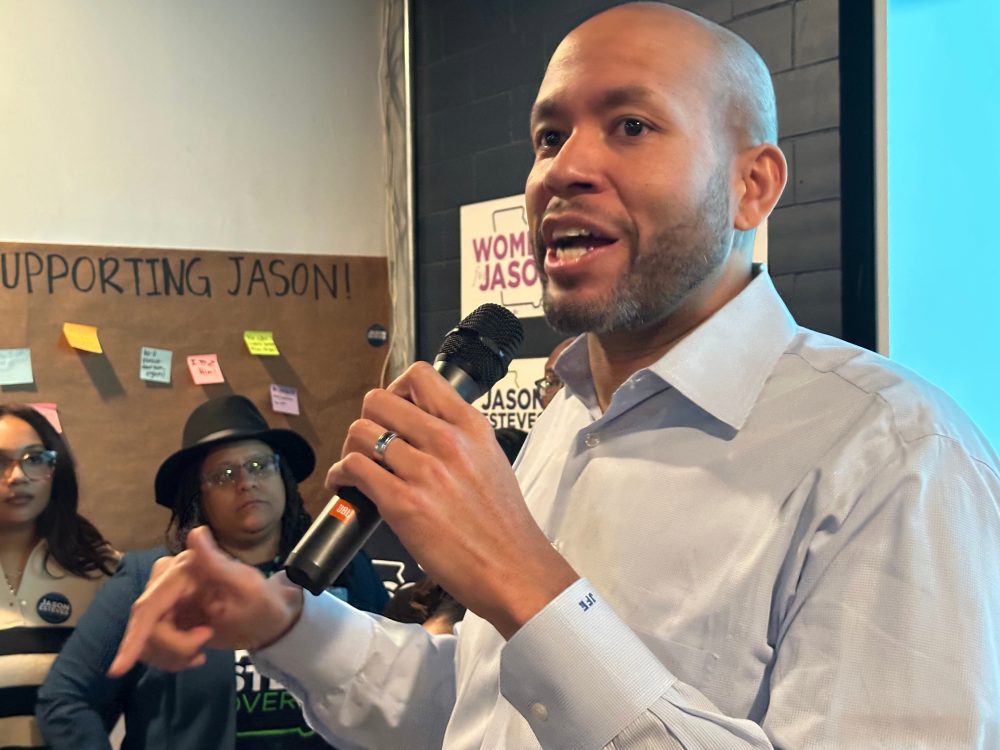
Esteves is counting on momentum building late in the campaign to secure a runoff spot. The 42-year-old candidate, whose heritage includes a Puerto Rican father and Black mother, has invested approximately $1 million in recent advertising—the only substantial Democratic spending so far. He argues his background enables him to construct the “multiracial, multigenerational coalition” necessary to appeal to Georgia’s young and diverse voter base.
His campaign messaging frequently highlights his background as a middle school educator and small business owner, alongside his professional experience as an attorney, school board member, and state legislator.
“A lot of the challenges that Georgians are facing, I am facing in real time,” Esteves said Wednesday. “They’re looking for someone who not only wants to solve their issues, but can identify personally with their issues.”
Esteves stands alone among Democrats in criticizing Bottoms’ handling of crime, civil unrest, and the COVID-19 pandemic during her mayoral tenure, particularly her unexpected decision to forgo seeking reelection.
“The fact that she did not run for reelection confirmed people’s belief that when the going gets tough, she stepped out on the city,” Esteves argued.
Bottoms defends her administrative record and explains her decision not to seek another term was “based on what was best for me personally and my family.”
Esteves has also consistently targeted Duncan, claiming he “oversaw some of the passage of the worst bills” during his lieutenant governor tenure, including Georgia’s abortion ban following detection of fetal cardiac activity. While numerous state legislators support Esteves, his most prominent advocate has been Shanette Williams, whose daughter Amber Nicole Thurman died at a suburban Atlanta hospital in 2022 after complications from abortion medication.
Duncan gained prominence for opposing Trump’s efforts to reverse his 2020 election defeat to Biden. He has spent recent months expressing regret for his Republican record while arguing he represents the only Democratic candidate capable of attracting sufficient moderate support to deliver victory for his new party. Duncan has recently begun receiving endorsements from moderate Democrats and labor organizations.
“I don’t want to only earn your vote, I want to earn your trust,” Duncan stated during Wednesday’s debate.
Thurmond describes himself as a “throwback” candidate whose extensive government experience—including leadership of the state child welfare agency, service as labor commissioner, and helping stabilize the DeKalb County school system as superintendent—would enable rapid implementation of Democratic priorities.
“I have a track record of service to the people of Georgia, and I believe this election would turn not on promises, but on performance,” Thurmond said following Wednesday’s debate.
His campaign strategy focuses on building support among rural constituents and veteran Democrats. His endorsers include Roy Barnes, Georgia’s most recent Democratic governor, and Andrew Young, former Atlanta mayor and surviving civil rights leader from the 1960s movement.