Japanese officials announced Friday they will award Sony up to 60 billion yen (approximately $380 million) in government subsidies to support construction of an image sensor manufacturing facility in Kumamoto prefecture, located in western Japan.
Industry Minister Ryosei Akazawa revealed the subsidy details during a Friday press conference, emphasizing the strategic importance of these components. The minister stated that image sensors will be “indispensable for autonomous driving and physical AI” and expressed hopes that “a stable supply of image sensors… will be secured.”
The electronics giant has established itself as a dominant force in the image sensor market, particularly for smartphone cameras, while also maintaining strong positions across entertainment sectors including gaming, film production, music, and animation.
The current exchange rate stands at $1 equals 159.22 yen.
Transportation officials have mandated that Chicago O’Hare International Airport slash approximately 300 daily flights during its busiest summer periods in a bid to combat chronic delays, authorities announced Thursday.
Transportation Secretary Sean Duffy emphasized passenger reliability in his announcement, stating: “If you book a ticket, we want you and your family to have the certainty that you’ll fly without endless delays and cancellations.”
The Chicago hub processes more air traffic than any other airport in the United States and recorded among the nation’s poorest on-time performance statistics in the previous year.
Peak summer operations had been scheduled to reach more than 3,080 daily flights, marking a 14.9% jump from last summer’s numbers, according to Transportation Department and Federal Aviation Administration data. These increases coincide with ongoing runway construction that has forced taxiway closures.
Federal authorities noted in their preliminary directive that both American Airlines and United Airlines had announced expansion strategies at O’Hare that threatened to create substantial delays during the summer months while overwhelming the facility’s operational capacity.
Duffy characterized the proposed schedule as unworkable, stating it would have surpassed the airport’s capabilities. The new restrictions cap daily operations at 2,708 flights maximum, which still exceeds last summer’s peak of 2,680 flights. He indicated this adjustment “will reduce delays and make this busy summer travel season a little easier.”
Days with traditionally lower passenger volumes will see fewer required cancellations since airlines had scheduled reduced service to begin with. Tuesday, Wednesday, and Saturday typically see lighter flight loads compared to other weekdays.
The operational restrictions become effective May 17 and continue through October 24.
Carriers must now analyze the directive to determine which specific flights require cancellation before contacting affected passengers.
American Airlines expressed support for the federal action, stating the FAA’s directive will enhance dependability and minimize delays for travelers using O’Hare during summer months.
“We are grateful to Secretary Duffy, Administrator Bedford, and their leadership teams for acting swiftly to ensure that Chicagoans and all consumers continue to benefit from sensible competition and to help minimize flight disruptions during the busy summer season,” American said in a statement.
United Airlines indicated appreciation for what it called “a solution that makes sense for everyone who cares about O’Hare’s success.”
Both carriers plan to examine the order alongside their current schedules to identify where reductions will occur before notifying impacted travelers.
SEOUL, South Korea — Following a devastating stroke that left the right side of his body paralyzed in 2012, South Korean pianist Lee Hun initially focused solely on whether he’d regain the ability to walk. The thought of returning to music seemed impossible.
His journey back to the piano began only when a former teacher informed him about the extensive collection of compositions written specifically for left-hand performance.
Through intensive training and determination, Lee made his return to performing as South Korea’s sole recognized professional pianist who plays exclusively with his left hand.
Now, the 54-year-old musician faces his biggest challenge yet: performing alongside an orchestra at an international music festival scheduled for next month.
“I’m so, so nervous I could die,” Lee shared with a smile during a recent interview with The Associated Press at his Seoul residence. “It’s just one concerto but working with an orchestra has its own difficulties.”
The medical emergency struck in August 2012 while Lee was pursuing his doctoral studies at the University of Cincinnati’s music program. He suddenly collapsed at his residence.
Emergency surgery saved his life, but the stroke affected approximately 60% of his brain’s left hemisphere. The damage left him unable to move his right arm and leg, and he temporarily lost his ability to speak.
Lee returned to South Korea requiring a wheelchair. His father, Lee Hae Chang, who achieved legendary status in South Korean baseball, revealed that his son couldn’t even recognize him when he arrived home.
“After the stroke, I didn’t even imagine paying the piano. I only thought about whether I could stand on my feet again,” Lee Hun explained.
The situation proved challenging for his entire family, who became his daily caregivers. His mother, Poong Ok Hee, remembered frequent conflicts with her son due to his emotional instability. He frequently rejected her guidance and help.
A turning point came during a 2013 dinner with his former instructor, Chun Yung Hae. Chun motivated him to return to piano performance, explaining that over 1,000 compositions exist for left-hand solo performance. This conversation reignited his musical passion, and Lee started practicing that very evening.
Lee’s official return as a single-handed pianist occurred in 2016 at Seoul St. Mary’s Hospital, the facility where he underwent treatment and recovery. Following his performance of Camille Saint-Saens’ “6 Etudes for the Left Hand Alone,” Lee joined Chun for “Amazing Grace,” with Lee playing left-hand parts while Chun handled the right-hand melody. The emotional performance moved at least one audience member to tears.
“He is a pianist so he must play the piano. He was completely hopeless and in despair, so I tried to give him some hope. But I didn’t expect him to play as well as this,” explained Chun, who previously served as dean of the College of Music at Seoul’s Kyung Hee University.
Since his comeback, Lee has maintained a regular performance schedule, made television appearances, and published his autobiography. He now moves independently and communicates effectively in Korean.
Korean media outlets have nicknamed him “Korea’s Paul Wittgenstein,” referencing the celebrated Austrian pianist who pioneered one-handed piano performance. Wittgenstein lost his right arm during World War I and commissioned left-hand compositions from renowned composers including Ravel, Strauss, Prokofiev, and Britten. His sibling was the famous philosopher Ludwig Wittgenstein.
Lee’s upcoming performance on May 2 at the annual Icheon Young-Artist International Music Festival in South Korea will feature him with the festival orchestra. Their program includes Ravel’s “Piano Concerto for the Left Hand,” another piece originally commissioned by Wittgenstein.
While acknowledging the composition’s extreme difficulty, Lee expressed his long-standing desire to perform this particular work.
Chung Eun-hyon, who heads Lee’s representation at Tool Music, noted that Lee has shared his dream of performing this concerto. Chung described feeling deeply moved while helping “make his dream come true.”
Lee’s artistic approach has evolved since becoming a one-handed performer. Previously, he concentrated on technical perfection to impress audiences. Currently, he focuses on communicating his emotional connection and musical interpretation to listeners.
“He plays a sort of music that truly touches the heart of people and it’s not about finger dexterity,” observed Lee Eungkwang, who directs the cultural foundation organizing the Icheon festival.
“I’m really curious what it was like when he played with both hands,” Lee added.
Lee Hun maintains hope for eventually returning to two-handed performance, noting that he managed to press a single piano key with his right hand during a November 2024 concert.
However, Dr. Koo Jaseong from St. Mary’s Hospital, who treats Lee, believes the medical outlook for regaining right-hand function and returning to two-handed performance remains unlikely.
“I still would like to give him a round of applause to his efforts. Though rare, there have been reports of miraculous recoveries too,” Koo stated.
WASHINGTON — Members of a House subcommittee voiced deep anxieties about artificial intelligence during a Thursday roundtable discussion that quickly shifted from exploring the technology’s promise to confronting its potential perils.
During the session, Virginia Democrat James Walkinshaw raised concerns about federal employees potentially using AI chatbots to process classified government information. South Carolina Republican William Timmons questioned whether creating fake pornographic content using someone’s appearance through AI should be criminalized.
Virginia Republican John McGuire worried that AI systems might prevent American military personnel from taking necessary lethal action based on the technology’s programmed sense of ethics. Arizona Democrat Yassamin Ansari brought up multiple issues including the Trump administration’s AI use in the Iran conflict, the technology’s heavy energy consumption, and climate implications.
The House Oversight Committee’s subcommittee roundtable titled “Artificial Intelligence and American Power” brought together AI company executives, researchers, and corporate implementation specialists with members of Congress. This occurred while other lawmakers debated federal surveillance authority, the Iran war, and Department of Homeland Security budget matters.
The Thursday meeting highlighted how Capitol Hill leaders are struggling to keep pace with rapid technological advances that increasingly influence global events. However, the discussion soon turned to whether artificial intelligence might overshadow all other national challenges.
“People in our districts across this country are going to start feeling impacts very soon, and if we don’t start thinking properly and aggressively and proactively about the challenges that AI creates, I fear that we’re going to have a revolution on our hands,” said California Democrat Dave Min.
Florida Democrat Maxwell Frost, the subcommittee’s ranking minority member, acknowledged AI’s potential to eliminate diseases and strengthen the economy. However, Frost, who holds the distinction of being Congress’s youngest member, expressed concern that the technology’s advancement would outstrip lawmakers’ ability to respond, potentially creating catastrophic outcomes without early intervention.
“I don’t have faith in this institution to actually put the common sense guardrails in place. And then we fast forward ten years, and the house is on fire,” said Frost. “That won’t be good for anybody, whether it’s the industry or working families and people, or this institution itself.”
Missouri Republican Eric Burlison opened the meeting by commending the industry and expressing amazement at how one panelist’s organization employed AI to streamline and accelerate production processes in their manufacturing facilities.
“It’s truly like the closest thing to Star Trek I’ve ever seen,” Burlison remarked. He subsequently asked about strategies congressional districts could use to attract AI companies as business partners.
Several participants also expressed concern about revelations from technology companies like Anthropic, which recently revealed its Mythos AI system possesses such advanced capabilities that the company is restricting access to selected clients due to its apparent ability to circumvent standard cybersecurity measures and penetrate major institutions including financial institutions, government departments, and large corporations.
“I recognize AI is not going anywhere,” said Arizona Republican Eli Crane, a former Navy SEAL with combat experience. “That being said, does anyone on this panel feel or believe, in any way, that as we are going down the road in this AI race, we might be simultaneously engineering our own destruction?”
The gathered specialists and business representatives emphasized AI’s extensive and expanding abilities. Along with their policy suggestions, they encouraged lawmakers to approach policy-making with careful consideration and thorough knowledge.
Mark Beall, who serves as president of government affairs at AI Policy Network Inc. and previously worked at the Pentagon, cautioned that Congress could jeopardize America’s AI leadership position by failing to address critical national security issues.
“I don’t think it’s going to kill us,” Robert Atkinson, who founded the Information Technology and Innovation Foundation technology think tank, told the assembled lawmakers.
“At the same time, I do think it’s important for the federal government to seriously fund AI safety research,” Atkinson continued. “We need to know a lot more about how the models work.”
When lawmakers questioned whether AI firms were acting responsibly, George Washington University law professor Spencer Overton said the incentives for AI companies “are really what they should be.”
“Constituents are looking for you, not for companies, to step up and protect them,” Overton said. “They’re trusting you, the person that they voted for, to do that, as opposed to companies. That’s the way the system works, right?”
Former Navy SEAL Cameron Hamilton is set to be nominated by President Donald Trump as the permanent head of the Federal Emergency Management Agency, despite being dismissed from the same position just months ago, sources reveal.
Hamilton served as FEMA’s interim chief from January through May of the previous year before his termination came one day following his congressional testimony. During his appearance before a House Appropriations subcommittee, he publicly opposed the president’s repeated suggestions to eliminate the disaster response agency.
“I do not believe it is in the best interest of the American people to eliminate the Federal Emergency Management Agency,” he stated during his Capitol Hill testimony.
The emergency management agency has operated without a Senate-confirmed leader during Trump’s entire second presidency and is now under the guidance of its third interim chief. Critics argue this leadership instability weakens the agency’s ability to respond effectively to disasters.
Sources indicate Trump extended the nomination offer to Hamilton on Wednesday. The individual providing this information requested anonymity as they were not cleared to speak publicly about the matter. White House officials have not yet responded to requests for comment. The New York Times was first to report on Trump’s intention to select Hamilton for the position.
Crude oil markets experienced significant drops Friday morning as investors showed optimism about potential resolution to Middle East conflicts that have severely impacted global energy supplies.
Brent crude futures dropped $1.34 per barrel, representing a 1.35% decrease to $98.05, while U.S. West Texas Intermediate crude saw an even steeper decline of $1.65 per barrel, falling 1.74% to $93.40 during early trading hours.
The market movement comes amid growing hopes for diplomatic progress, including a 10-day ceasefire agreement between Lebanon and Israel that has already begun, and potential discussions between the United States and Iran over the weekend.
President Trump addressed reporters Thursday evening outside the White House, revealing that Iran has proposed abandoning nuclear weapons development for over two decades as part of ongoing negotiations.
“We’re going to see what happens. But I think we’re very close to making a deal with Iran,” Trump stated.
The current Iran conflict, which Trump and Israel initiated in late February, has resulted in a seven-week blockade of the Strait of Hormuz, cutting off approximately 20% of global oil supplies. Energy analysts from ING calculate that this closure has disrupted roughly 13 million barrels of daily oil flow.
Oil markets saw dramatic increases throughout March, rising 50% in what analysts called a record surge, only recently falling back below the $100 per barrel threshold while remaining in the $90 range this week.
According to Iranian sources who spoke with Reuters Thursday, both American and Iranian negotiators have adjusted their goals, now focusing on a temporary agreement to prevent renewed hostilities rather than pursuing a comprehensive peace settlement.
Israel’s military operations in Lebanon have presented a significant challenge to Trump’s efforts to broker a peace agreement and conclude the Iranian conflict.
The New Jersey Devils announced Thursday they have named Sunny Mehta as their new general manager, bringing back a familiar face who previously worked in the organization’s analytics department.
The 48-year-old executive spent the last four years with the Florida Panthers, serving as assistant general manager and head of analytics while helping the team capture back-to-back Stanley Cup championships.
According to ESPN, Mehta will oversee all hockey operations for New Jersey. The organization plans to assess head coach Sheldon Keefe and his staff following the team’s failure to reach the playoffs in two of the past three seasons.
“This is a dream come true for a New Jersey kid, who grew up watching Devils’ practices just 20 minutes away in Totowa,” Mehta said. “New Jersey has a tremendous young core that will be looking to get back to being a contender, a complement of young assets and draft picks, and a passionate fan base hungry for success. I was fortunate enough to watch the New Jersey Devils raise three Stanley Cups and am excited to get to work to return to that level.”
A New Jersey native who played hockey in high school, Mehta had an unconventional path to hockey management, working as a musician, professional poker player and derivatives trader before joining the Devils’ front office from 2014 to 2018.
Mehta steps into the position vacated when the Devils fired Tom Fitzgerald earlier this month. The 57-year-old Fitzgerald is reportedly being considered for the general manager opening with the Nashville Predators.
The Devils boast a young roster featuring Olympic standout Jack Hughes, along with Jesper Bratt, Simon Nemec and Luke Hughes, Jack’s younger brother. A key decision looms regarding captain Nico Hischier, as the team faces a July 1 deadline to offer him a contract extension. Hischier has one season remaining on his seven-year, $50.75 million agreement. According to PuckPedia, New Jersey is projected to have $12.18 million in salary cap flexibility this summer.
Duke University announced Thursday that football coach Manny Diaz has secured a contract extension that will keep him with the Blue Devils through the 2031 season.
In his two years leading the program, Diaz has compiled an 18-9 record and guided Duke to its first outright Atlantic Coast Conference championship since 1962. The Blue Devils captured the ACC title with a 27-20 overtime victory over Virginia in the conference championship game, then closed out the season with a 42-39 win against Arizona State in the Sun Bowl on New Year’s Eve.
According to AVG Recruit Ranking, Diaz has secured the program’s most impressive recruiting class in school history for the 2026 season.
Duke officials did not disclose the financial details of the contract extension.
“Manny Diaz is exactly the right leader at exactly the right time for Duke University,” athletic director Nina King said in a statement. “His clear vision for Duke football, deep understanding of our student-athletes and strong alignment with campus and athletics leadership have positioned us for sustained success in the years ahead. We are incredibly proud to have him leading the Blue Devils, and with his passion, integrity and expertise, Duke football will continue to pursue excellence on and off the field well into the future.”
The 52-year-old coach took over the program after Mike Elko departed for Texas A&M following the 2023 season. Under Diaz’s leadership in 2024, the Blue Devils posted a 9-4 record, though they suffered a 52-20 defeat to Ole Miss in the Gator Bowl.
A Miami, Florida native, Diaz previously coached his hometown Hurricanes from 2019-21, recording a 21-15 mark. Miami reached three straight bowl games during his tenure, though Diaz was let go before the 2021 Sun Bowl and the team chose not to participate in that contest.
Following his Miami departure, he spent two seasons as Penn State’s defensive coordinator before accepting the Duke position.
During the 2025 season, Duke showcased the aggressive defensive style that has become Diaz’s trademark. The Blue Devils ranked 11th nationally in fumble recoveries with 10, placed 13th in turnover margin at +0.71, finished 14th with 24 turnovers gained, and ranked 16th in tackles for loss per game at 6.6.
Three Chinese astronauts currently orbiting Earth will extend their space station mission by approximately one month, according to an announcement Friday from China’s state television network.
The Shenzhou-21 crew launched from the Jiuquan Satellite Launch Centre in northwestern China on October 31 aboard a Long March-2F rocket. The mission was originally scheduled to conclude around April after a standard six-month deployment.
The crew consists of Commander Zhang Lu, age 48, who previously participated in the 2022 Shenzhou-15 mission, along with Zhang Hongzhang, 39, and Wu Fei, 32. Wu Fei holds the distinction of being China’s youngest person ever launched into space.
According to China’s Manned Space Engineering Office, the astronauts have successfully accomplished multiple objectives during their time aboard the station. These achievements include mounting protective shields against space debris and conducting thorough inspections of equipment used for spacewalks, CCTV reported.
The space agency noted that all three crew members remain in excellent physical condition and continue performing their duties effectively after more than five months in orbit. They have been working alongside the station’s mechanical arm system and ground-based research teams.
“To further verify the technologies related to long-term astronaut stays in orbit … it is planned to extend the crew’s stay in orbit by approximately one month,” CCTV reported, though no specific return date was provided.
During their extended time in space, the astronauts will continue performing various scientific experiments and technology demonstrations, according to the space office.
PANAMA CITY, April 16 – Officials with the Panama Canal Authority are disputing claims that a liquefied petroleum gas tanker shelled out $4 million to cut in line for quicker passage through the vital waterway, as conflicts in the Middle East drive increased shipping traffic to the canal.
Canal administrators issued a statement Thursday characterizing the auction outcome as a reflection of shifting market dynamics rather than pricing established by the waterway itself, though they declined to verify the actual amount paid during the bidding process.
“The recent outcome of an auction awarded to an LPG vessel reflects temporary market shifts and is not the result of a rate set by the Panama Canal,” authority officials stated.
According to the canal administration, auction pricing depends on multiple variables such as shippers’ time constraints, business priorities, shipping costs, fuel expenses, and worldwide supply and demand patterns.
Officials emphasized that auctions represent just one of multiple options for obtaining passage slots and are primarily utilized by customers requiring immediate scheduling confirmation.
The canal authority’s response came after Bloomberg News reported Thursday that one ship had paid the substantial sum during a recent auction to guarantee expedited transit as bottlenecks along the waterway intensified.
Vessel movement through the canal has surged as ongoing conflicts involving Iran disrupt established trade routes and compel buyers to find alternative supply sources, increasing shipments from American ports to Asian markets and other destinations.
Canal administrators stated they continue maintaining dependable operations despite instability in international commerce and global political tensions.
The authority also clarified that published waiting time statistics may exaggerate actual delays since their tracking system includes vessels arriving ahead of their scheduled transit windows as waiting, even when they show up early.
Current data from Thursday showed 102 ships holding confirmed reservations for canal passage, while another 25 vessels were queued without secured time slots.
During the initial six months of fiscal year 2026, the waterway processed 6,288 ocean-going vessel transits, representing a 3.7% increase compared to the previous year’s figures. Daily transit averages hit 34 ships in January and 37 during March, with busiest days recording more than 40 crossings.
WASHINGTON, DC — The Delaware State University women’s tennis squad experienced a tough 5-2 loss against Mid-Eastern Athletic Conference opponent Howard University at the Southeast Tennis & Learning Center in the nation’s capital.
While the Hornets couldn’t secure an overall victory, they demonstrated strength in doubles play by winning two of the three doubles competitions against their MEAC rivals.
The match showcased the competitive nature of conference play as both teams battled on the courts in Washington, DC.
Motorists traveling along McKennans Church Road are facing temporary lane restrictions as construction crews continue their work in the area.
The Delaware Department of Transportation reports that lanes are being closed intermittently along the stretch of McKennans Church Road running from Newport Gap Pike to Bardell Drive.
The construction-related lane closures are expected to remain in effect until 6 AM, potentially impacting morning commute times for drivers using this route.
Drivers are advised to allow extra travel time and exercise caution when navigating through the work zone area.
The New Jersey Devils have appointed Sunny Mehta as their new general manager, welcoming back a former team executive who most recently worked with the Stanley Cup-winning Florida Panthers.
Team owner David Blitzer made the announcement Thursday evening, just two days following the conclusion of the Devils’ disappointing regular season that failed to secure a playoff berth. Mehta served as an assistant with Florida during their back-to-back championship victories over the last two seasons.
“We quickly realized this job was in high demand and were incredibly fortunate to meet with many qualified candidates,” Blitzer said. “Sunny’s familiarity with our organization and experience with a two-time Stanley Cup-winning team are characteristics that will serve as a foundation for future success. Our expectations are to be a perennial playoff team and compete for the Stanley Cup, and I look forward to Sunny leading us there.”
The 48-year-old Mehta previously created the NHL’s inaugural comprehensive analytics division during his initial tenure with New Jersey from 2014 through 2018. Following his departure from the Devils, he worked briefly with Washington before joining the Panthers organization.
A native of Wyckoff, New Jersey, Mehta grew up supporting the Devils and brings an unconventional background to hockey management, having worked as both a professional poker player and in the financial sector before entering the sport.
“I knew this was the place I wanted to be,” Mehta said, thanking the Panthers for the chance to take the next step in his career. “New Jersey has a tremendous young core that will be looking to get back to being a contender, a complement of young assets and draft picks, and a passionate fan base hungry for success.”
The Devils dismissed longtime general manager Tom Fitzgerald during the latter part of the season. The organization has yet to determine the status of head coach Sheldon Keefe moving forward.
CLEVELAND — First-year Cleveland Guardians pitcher Parker Messick is on the verge of baseball history, holding the Baltimore Orioles without a hit through eight complete innings Thursday evening.
The 25-year-old southpaw has issued two walks while recording nine strikeouts, tying his personal best, across 106 pitches with 73 finding the strike zone. Cleveland holds a commanding 4-0 advantage as the game heads to the ninth.
Should Messick complete the feat, it would mark the first major league no-hitter since September 4, 2024, when Shota Imanaga and two Chicago Cubs relief pitchers combined to shut out Pittsburgh 12-0.
Thursday’s outing represents the deepest Messick has ever pitched in his young career. His previous longest appearance came last season when he threw seven scoreless frames against Tampa Bay.
The Guardians organization has endured the longest current drought between no-hitters in Major League Baseball. Their last one occurred on May 15, 1981, when Len Barker threw a perfect game against Toronto.
Cleveland has come tantalizingly close in recent years. Carlos Carrasco pitched 8⅔ hitless innings against Tampa Bay on July 1, 2015, while Gavin Williams carried a no-hitter through 8⅓ innings last August 6 versus the New York Mets.
Carrasco came within a single strike of completing his bid when Rays outfielder Joey Butler connected on an 0-2 slider that barely escaped the reach of diving Cleveland second baseman Jason Kipnis.
Juan Soto ended Williams’ attempt with a home run to center field.
Messick has faced just one batter beyond the minimum tonight. After walking leadoff man Taylor Ward, he retired the following 15 batters in succession. Ward hit a deep fly ball to center in the third that Steven Kwan hauled in at the warning track, while José Ramírez made an impressive defensive play on a Coby Mayo ground ball deep in the hole at third to close the fifth.
Though Messick walked Leody Taveras to open the sixth inning, Ward immediately grounded into a double play to end the threat.
Ramírez contributed another stellar defensive moment, making a spectacular catch in foul territory to retire Samuel Basallo leading off the eighth.
This marks Messick’s 11th career major league start. Selected 54th overall in the 2022 amateur draft from Florida State University, he made his big league debut last season.
Entering tonight’s contest, Messick carried a 5-1 career record with a 2.04 earned run average. He had posted a 2-0 mark with a 0.51 ERA through his first three starts this season.
Cleveland has provided offensive support with Ramírez’s two-run homer in the opening inning, plus RBI singles from Kwan in the fifth and George Valera in the sixth.
Maryland State Police are conducting an investigation following an officer-involved shooting that occurred during a disturbance call in Queen Anne’s County this afternoon.
Troopers from the Centreville Barrack were dispatched at 3:40 p.m. to the unit block of Sherman Way in Chester after receiving a 911 call about a disturbance. The caller reported that a man was brandishing a knife and making threatening statements.
When officers arrived at the scene, they began speaking with the person who had called for help. During this interaction, the armed individual moved toward the trooper while holding a knife. The officer then discharged her service weapon, hitting the suspect.
Emergency medical care was provided to the wounded man immediately at the location. He was then flown by Maryland State Police Aviation Command to a nearby trauma facility for further medical treatment. No additional injuries occurred during this incident.
Following standard department protocol, the officer who fired the weapon has been assigned to administrative leave while the investigation proceeds.
Queen Anne’s County Sheriff’s Office deputies provided support at the scene. Crime scene specialists from Maryland State Police also arrived to collect evidence and document the area.
The Maryland State Police Homicide Unit is overseeing the investigation while working with the Queen Anne’s County State’s Attorney’s Office. Additionally, the Maryland State Police Internal Affairs Unit will conduct its own review, which is standard procedure for such incidents.
The investigation is ongoing, and authorities plan to release more information as it becomes available.
The International Monetary Fund announced Thursday that it has reestablished formal relations with Venezuela, ending a suspension that lasted more than six years due to disputes over government recognition.
Kristalina Georgieva, the IMF’s Managing Director, confirmed that the organization is now conducting business with Venezuela’s government under interim President Delcy Rodriguez’s leadership.
Last month, the fund indicated it was starting to reconnect with the South American country by gathering fundamental economic information and evaluating the nation’s financial situation following years without official contact.
Financial markets have made substantial investments in Venezuelan bonds, anticipating that the governmental transition could facilitate debt restructuring efforts. Such restructuring typically requires support from new IMF lending programs and accompanying data that helps determine sustainable debt levels for nations. The IMF hasn’t released a comprehensive economic evaluation of Venezuela since 2004.
This restoration of official ties follows the Trump administration’s January operation that removed President Nicolas Maduro from power through a raid in Caracas. Subsequently, Washington has been collaborating with Rodriguez while seeking to increase American involvement in Venezuela’s petroleum and mining industries.
A devastating food emergency continues to grip Haiti as new data shows 5.8 million residents will confront severe food shortages in the months ahead, highlighting how criminal gang activity, widespread displacement, and economic turmoil are intensifying the Caribbean nation’s humanitarian emergency.
The Integrated Food Security Phase Classification released findings Thursday revealing that more than half of Haiti’s population now experiences dangerous levels of food insecurity, with over 1.8 million citizens requiring immediate emergency food aid.
According to the assessment, escalating violence from armed groups, economic disruptions, and constant interference with agricultural activities and market operations have driven the catastrophe. Criminal organizations have seized greater territorial control while forcing more than 1.4 million residents from their homes, creating additional pressure on already limited food resources and pushing struggling families toward starvation.
The current projection represents a modest improvement from previous estimates of 5.91 million people experiencing acute hunger, with the emergency category also showing slight decreases. Relief organizations attribute these gains partially to food distribution programs, reduced inflation rates, and improved crop yields in certain regions.
The World Food Programme reported that continuous food aid programs helped approximately 200,000 Haitians escape emergency hunger levels since the previous year, though relief agencies caution that recent progress remains vulnerable.
“Fighting hunger is essential to restoring stability in Haiti. We cannot build peace if families cannot feed their children,” stated WFP Haiti Country Director Wanja Kaaria.
Relief organizations cautioned that circumstances could worsen again without increased international support, pointing to rising global fuel costs linked to conflicts in Iran that have elevated transportation expenses and agricultural production costs throughout the region.
WASHINGTON – The interim director of Immigration and Customs Enforcement will step down from his federal role this summer, CBS News reported Thursday, according to two government sources with knowledge of his intentions.
Todd Lyons has informed his coworkers that he intends to leave the agency in June, the report stated.
The immigration enforcement agency, operating under the Department of Homeland Security, has been central to President Donald Trump’s immigration enforcement policies that civil rights organizations claim have infringed upon free speech protections and due process guarantees.
A deadly January incident in Minnesota where ICE agents fatally shot two American citizens – Alex Pretti and Renee Good – triggered widespread demonstrations across the country, with human rights advocates arguing the agency’s conduct has fostered dangerous conditions, especially for minority communities.
The Trump administration maintains these enforcement measures are essential for strengthening national security and reducing unauthorized immigration.
Neither ICE nor the Department of Homeland Security provided immediate responses to requests for comment.
Motorists traveling along US Route 13 should expect periodic lane restrictions during overnight hours between Millside Drive and New Sweden Street.
The Delaware Department of Transportation reports that intermittent lane closures will remain in effect until 6:00 AM along this stretch of the highway.
Drivers are advised to allow extra travel time and exercise caution when navigating through the affected area during the restriction period.
The U.S. House of Representatives voted to approve legislation that would extend immigration safeguards for Haitian nationals currently residing in the United States.
In a bipartisan vote, ten Republican members joined their Democratic colleagues to support the measure, delivering a clear rejection of the current administration’s approach to immigration policy.
The legislation seeks to continue Temporary Protected Status (TPS) for Haitian immigrants, a program that shields individuals from deportation to countries experiencing ongoing crises or dangerous conditions.
Despite the House approval, the bill faces significant obstacles ahead. The White House has already announced that President Trump would veto the legislation if it reaches his desk, even if it manages to pass through the Senate.
The vote represents a notable instance of Republican lawmakers breaking with their party’s leadership on immigration matters, highlighting divisions within the GOP on how to handle protected status programs.
Supporters of the extension argue that conditions in Haiti remain too unstable and dangerous to safely return migrants to their home country. The Caribbean nation continues to face political turmoil, economic hardship, and security challenges that advocacy groups say make deportation unsafe.
Delaware State Fire Marshal investigators are examining the cause of a blaze that erupted at a chicken house facility in Harrington earlier this week.
Emergency crews were dispatched to the 300 block of Hayfield Road on April 15, 2026, shortly after 3:00 PM following reports of a fire at the poultry operation. The Harrington Fire Company responded to the scene alongside several mutual aid departments from neighboring areas.
Upon arrival, firefighters encountered the chicken house engulfed in flames. The Delaware State Fire Marshal’s Office has taken over the investigation to determine what sparked the fire.
Northbound traffic on Interstate 95 has come to a standstill after a vehicle caught fire near Harvey Road, prompting authorities to shut down all lanes in that direction.
The Delaware Department of Transportation reported the incident, which has blocked the highway as emergency responders work to extinguish the blaze and clear the roadway.
Motorists traveling north on I-95 are advised to seek alternate routes or expect significant delays while crews handle the situation. The closure affects all northbound lanes approaching the Harvey Road area.
Officials have not yet announced when the highway will reopen to normal traffic flow.
EL SEGUNDO, Calif. — The James family dynasty could reach unprecedented heights this month as LeBron and Bronny James prepare to potentially become the first father-son combination to share significant playoff action in NBA history.
After making league history last season as the first parent-child duo to compete together professionally, the James pair has elevated their on-court partnership this year with substantial shared minutes and the NBA’s inaugural father-to-son assist.
With the Los Angeles Lakers set to battle the Houston Rockets in their opening playoff series, the basketball legend and his 21-year-old son appear positioned to add another groundbreaking achievement to their remarkable story. Despite nearly two seasons as teammates, the possibility of this fresh milestone continues to resonate with both players.
“It’s insane,” Bronny commented Thursday following practice at the Lakers’ training facility. “I mean, I’ve literally watched his whole career. Now I’m a part of it. So it’s a great experience. I’m appreciative of it — but I’m part of the job, too. So I have to do my job as well. I’ve got to lock in.”
The younger James has seen his court time expand significantly during recent weeks, becoming a consistent rotation player since injuries sidelined Austin Reaves and Luka Doncic two weeks ago.
LeBron expresses clear paternal satisfaction watching Bronny develop into a reliable contributor for their injury-depleted squad.
“Every moment we get an opportunity to play together is something I never take for granted,” LeBron said.
“Me being on the floor with him postseason, regular season, training camp, practices, it’s the best thing that’s ever happened to me in my career, above everything I’ve accomplished,” he added. “The fact that he’s put himself in position to get his number called for a postseason game is pretty remarkable and pretty cool, given the circumstances that he’s been through over the last couple of years. He earned it. He deserves it. He’ll be ready.”
Following limited appearances during his initial NBA season and a half, Bronny has emerged as a steady rotation piece — initially from necessity with the Lakers’ primary scorers injured, but also through merit-based performance. He has logged 13 or more minutes in seven of the team’s most recent 10 contests, averaging 19 minutes across the past four games.
This expanded role appears likely to persist throughout the playoffs, as neither Doncic nor Reaves will participate in Saturday’s Game 1, with no established timeline for their return.
Lakers head coach JJ Redick acknowledged he plans to utilize every available healthy player as Los Angeles attempts to overcome steep odds without their regular starting backcourt.
“We’re going to have to have all hands on deck in this series,” Redick said. “That’s just what we’re handed. I think Bronny has improved a lot. We trust him. The shooting piece (of his game), I’m a believer in, because of how well he shot it the last two years in the G League. … He’s improved a ton defensively, in terms of his body positioning, both on and off ball. We want him to continue to evolve as a disruptive defender as well.”
Bronny appeared in just four playoff minutes last season during two of the Lakers’ first-round defeats to Minnesota, and he admits he hasn’t participated in many high-stakes games throughout his brief basketball journey.
His only college campaign occurred at Southern California, though he didn’t compete for the Trojans until mid-season following recovery from an offseason cardiac event, and that squad failed to qualify for the NCAA Tournament.
“It’s what I’ve wanted, to play in the playoffs,” Bronny said. “I wasn’t able to play in March (Madness), and this is a bigger stage than that. I’m so excited to get out there with my teammates and try to get some wins and try to make it further in the playoffs.”
Should they share court time this month, Bronny believes they can develop immediate chemistry. After all, he possesses intimate knowledge of LeBron’s playing style.
“I don’t want to give all the answers to the test, but I’ve been watching him for a long time, and I’ve kind of picked up on his tendencies,” Bronny said with a grin. “I think it’s good that I’m paying attention during his career and what he likes to do in the postseason. I think we’ll be able to play good together. My IQ isn’t going to be far behind him, but I know what he’s doing and where he likes to get the ball on the floor.”
NEW YORK (AP) — Federal officials have decided to reinstate financial support for a major Manhattan transit expansion following legal action by New York state authorities.
In a Thursday court document, the U.S. Department of Transportation announced it had finished evaluating the Second Avenue subway extension and would restart reimbursements to state transit agencies for project expenses.
MTA Chief Executive Janno Lieber described the decision as bringing “long-awaited transit justice” to upper Manhattan communities. The subway expansion is creating new stations moving north through Manhattan’s Upper East Side, extending rail service into sections of Harlem.
“It shouldn’t have taken seven months and a lawsuit to get here,” Lieber stated.
Transportation Department officials said the settlement ensures taxpayers’ “hard-earned dollars will not fund unconstitutional DEI initiatives,” referencing diversity, equity, and inclusion policies. Federal administrators claimed such principles have driven up costs on government projects and violate constitutional requirements.
“This has always been about securing the best deal for the American taxpayer and ensuring their dollars are spent efficiently and fairly,” the department declared.
MTA representatives did not immediately address the federal agency’s assertions, though during Thursday’s Washington court proceedings, state officials maintained they were already following federal guidelines and funding should never have been suspended, according to The New York Times.
Transportation officials had blocked approximately $60 million from the Second Avenue development during their assessment. The complete project carries a $7.7 billion price tag, with federal contributions totaling roughly $3.4 billion.
The Second Avenue subway disagreement represents one of several major infrastructure initiatives in New York and New Jersey that Trump has attempted to derail while clashing with Democratic leadership in those regions.
In October, the administration also suspended billions in support for a new rail connection linking New York and New Jersey. However, a federal judge in February directed government officials to restart funding for the Hudson River tunnel initiative.
Previously, the Transportation Department canceled approval for New York’s pioneering congestion pricing program and warned of funding cuts if the state continued with the toll affecting drivers entering Manhattan’s busiest areas.
A federal judge determined last month that the agency overstepped its authority by unilaterally withdrawing approval of the $9 charge.
A defendant in the disappearance of a Native American grandmother whose case brought national focus to crimes against Indigenous people admitted guilt to robbery charges Thursday as part of a revised plea deal with federal prosecutors.
Preston Henry Tolth, 26, faces up to five years in federal prison under the new agreement terms, though he would receive credit for the three years he has already spent behind bars.
During Thursday’s court proceedings in Phoenix, U.S. District Judge Douglas Rayes questioned Tolth about whether he was admitting guilt because he actually committed the crime.
“Yes, your honor,” Tolth responded.
Ella Mae Begay was 62 years old when she disappeared in 2021 from Sweetwater, Arizona, a town in the northern region of the Navajo Nation. She had been known for spending time with family members and creating handwoven rugs that she would sell to local trading posts.
The following year, Begay’s niece Seraphine Warren made a cross-country journey on foot from the Navajo Nation to the nation’s capital to bring attention to her aunt’s case and the alarming rates of violence and disappearances affecting Native American communities. The case has gained widespread media coverage and become a rallying point for tribal officials and advocates demanding increased law enforcement resources and better coordination between tribal and federal investigators.
Authorities with the Navajo Nation police department identified Tolth as a person of interest shortly after Begay went missing. Tolth’s father had been in a romantic relationship with Begay’s sister at the time.
According to the plea agreement terms, Tolth admitted to forcibly taking Begay’s pickup truck, repeatedly hitting her in the face, and abandoning her alongside a road before driving off with the vehicle. He later exchanged the truck for cash and methamphetamine.
Judge Rayes has set a May date to examine the updated plea agreement, which would shield Tolth from potential murder or manslaughter prosecution related to Begay’s disappearance.
Begay’s relatives say federal prosecutors developed the agreement without consulting them and contrary to their desires.
Gerald Begay, the missing woman’s son, paused his construction work in Denver to participate in Thursday’s hearing via telephone. He told The Associated Press he intends to appear at the upcoming court session to urge the judge to dismiss the plea deal and pursue a trial instead.
“The prosecutors aren’t thinking about our rights or what we need as a family,” he stated.
Lennea Montandon, a representative for the U.S. Attorney’s Office for the district of Arizona, said in a written response that the office has followed federal victims’ rights laws throughout Tolth’s prosecution and will continue doing so. Tolth’s court-appointed attorney refused to discuss the revised agreement.
During a 2021 FBI questioning session, Tolth admitted to assaulting Begay during an angry outburst and leaving her to die. However, Judge Rayes significantly damaged the prosecution’s case by determining that confession could not be used as evidence, ruling that the FBI agent had improperly pressured Tolth into giving up his right to stay silent. Court documents show prosecutors acknowledged this ruling substantially weakened their case.
Earlier this month, Rayes took the unusual step of rejecting a previous agreement that would have freed Tolth after serving three years in exchange for a guilty plea. The judge made this decision after hearing emotional testimony from Begay’s family members, who argued Tolth should not be released without revealing the location of her body.
“Accountability is not time served,” Begay’s niece Seraphine Warren had told the judge. “It’s about truth, and we still don’t have the truth.”
The NHL postseason will launch Saturday with three playoff matchups, though final seeding won’t be determined until Thursday evening when the last Western Conference regular season games conclude.
Saturday’s playoff action begins at 3 p.m. ET when the Ottawa Senators take on the Carolina Hurricanes, who claimed the Eastern Conference’s top position. The day continues with Minnesota Wild facing the Dallas Stars at 5:30 p.m. ET, followed by a Pennsylvania rivalry showdown as Philadelphia Flyers travel to face Pittsburgh Penguins at 8 p.m. ET.
Carolina secured the Eastern Conference’s number one ranking by finishing four points ahead of Buffalo, earning the right to host the second wild card team. Though Pittsburgh and Philadelphia ended the regular season tied in points within the Metropolitan Division, the Penguins gained home ice advantage through a tiebreaker based on regulation victories, winning 34 compared to Philadelphia’s 27.
The Western Conference picture remains partially unclear, though Dallas and Minnesota have been confirmed for the Central Division’s second-versus-third seed battle longer than any other playoff pairing. Only one additional Western series has been finalized: Pacific Division champions Vegas will meet the top wild card team Utah Mammoth, beginning Sunday.
Sunday’s schedule, with start times yet to be announced, features Boston visiting Buffalo, Montreal traveling to Tampa Bay, and the Presidents’ Trophy champion Colorado hosting the West’s second wild card team.
The Pacific Division’s second and third seeds will start their series Monday, though their exact positioning awaits Thursday’s results. Edmonton (40-30-11, 91 points), Anaheim (42-33-6, 90 points), and Los Angeles (35-26-20, 90 points) will complete their regular seasons Thursday night, determining the final playoff seeding order.
Second-seeded tennis player Coco Gauff battled back from an early deficit to defeat Russia’s Liudmila Samsonova 7-5, 6-1 in her first-round match at the Porsche Tennis Grand Prix on Thursday, securing her spot in the quarterfinals in Stuttgart, Germany.
Despite falling behind 0-3 in the opening set, Gauff regrouped to claim four consecutive games and seize control of the match before cruising through the second set. The American recorded seven aces while committing five double faults during the contest. Her next opponent will be seventh-seeded Karolina Muchova from the Czech Republic, who mounted her own comeback to defeat Belgium’s Elise Mertens 1-6, 6-3, 6-0. Gauff enters the matchup with a perfect 6-0 record against Muchova and is seeking her first semifinal berth at the Stuttgart tournament.
Top-seeded Elena Rybakina from Kazakhstan also advanced with a 6-3, 6-4 triumph over Russia’s Diana Shnaider in a match lasting 73 minutes, while sixth-seeded Mirra Andreeva of Russia defeated Alycia Parks 7-6 (3), 6-3. The only seeded player to suffer an upset was eighth-seeded Ekaterina Alexandrova, who lost decisively to Czech competitor Linda Noskova 6-1, 6-1 in just 58 minutes.
The day’s final match featured Canada’s Leylah Fernandez enduring a grueling three-hour battle against Turkey’s Zeynep Sonmez, ultimately prevailing 6-7 (2), 6-1, 7-6 (5) to earn a quarterfinal meeting with Rybakina.
At the Rouen Metropolitan Open in France, Belarus player Iryna Shymanovich achieved her first career victory over a top-50 opponent by defeating fourth-seeded Hailey Baptiste 6-3, 5-7, 6-3. Although Baptiste served seven aces compared to Shymanovich’s none, the 28-year-old Belarusian converted four breaks of serve to Baptiste’s two, earning her maiden tour-level quarterfinal appearance. Shymanovich will next face unseeded German Tatjana Maria, who advanced with a 6-3, 6-2 victory over Czech player Dominika Salkova.
Second-seeded Sorana Cirstea of Romania moved into the quarterfinals when China’s Xinyu Wang withdrew from their first-round match, while seventh-seeded Elisabetta Cocciaretto was eliminated by Ukraine’s Veronika Podrez 7-6 (5), 4-6, 6-4. Hungary’s Anna Bondar completed the day’s results with a 6-0, 4-6, 6-0 victory over Ukraine’s Oleksandra Oliynykova in the tournament’s opening match.
California’s top prosecutor spoke with NPR about this week’s court decision involving entertainment giant Live Nation.
Attorney General Rob Bonta participated in an interview with NPR host Mary Louise Kelly on Wednesday, discussing the outcome of the Live Nation legal proceedings that concluded earlier that day.
The conversation with California’s chief legal officer focused on the implications of the court’s ruling in the closely-watched case against the major concert and ticketing company.
In Los Angeles, a band called Los Jornaleros Del Norte has become the musical voice of immigration demonstrations taking place across the area. The group performs songs that tell the stories of undocumented workers and their daily challenges.
The musicians create protest anthems with lyrics that capture both the dreams and hardships faced by immigrants who must avoid federal immigration enforcement officers while navigating city streets. Their performances have become a regular feature at rallies opposing the government’s current deportation efforts.
The band’s name translates to “The Day Laborers of the North,” and their music serves as both entertainment and inspiration for protesters gathered to oppose ICE operations in the region.
HARTFORD, Conn. — Security personnel quickly detained a man Thursday morning after he entered Aetna’s corporate headquarters in Hartford while carrying an AR-style pistol concealed in a backpack, according to local authorities.
The individual was apprehended by building security within three minutes of entering the facility, shortly after 10 a.m., and was held until Hartford police officers responded to the scene, according to a Hartford police spokesperson.
Police Lt. Aaron Boisvert stated that investigators have not yet determined the individual’s intentions. Authorities have not disclosed the suspect’s identity or detailed what criminal charges may be filed. The individual was transported to Hartford police headquarters following the arrest.
CVS Health, the Rhode Island-based parent corporation of Aetna, issued a brief response regarding the incident but did not provide additional details when contacted for further comment.
“Earlier today, a suspicious person attempted to enter our office, was apprehended immediately by our security team and taken into custody by local police,” the statement said.
This detention occurs during a period of heightened security awareness for healthcare industry leadership, particularly following the December 2024 murder of UnitedHealthcare CEO Brian Thompson in New York City. Luigi Mangione, an Ivy League graduate from a wealthy Maryland family, has pleaded not guilty to state and federal charges connected to the killing. He has become a cause célèbre for people upset with the health insurance industry.
CVS Health announced in February that it would eliminate more than 300 remote positions that were managed from the Aetna headquarters location.
The co-founder who helped build Netflix into a streaming powerhouse will leave the company’s board of directors this summer, the entertainment giant announced Thursday.
Reed Hastings, who also served as the company’s chairman, will depart when his board term concludes in June. The executive plans to dedicate his time to charitable endeavors and new projects.
Hastings led Netflix as chief executive officer for more than two decades before stepping down in 2023. He originally assumed the CEO position in the late 1990s, taking over from Marc Randolph, his friend and co-founding partner.
In a company statement, Hastings reflected on his tenure: “My real contribution at Netflix wasn’t a single decision; it was a focus on member joy, building a culture that others could inherit and improve, and building a company that could be both beloved by members and wildly successful for generations to come.”
The streaming service revealed Hastings’ exit alongside its quarterly financial results on Thursday. This marks the first earnings announcement since Netflix abandoned its February bid to acquire Warner Bros. Discovery’s studio operations and streaming platform.
Following the quarterly report, Netflix stock dropped almost 9% to $98.32 during after-hours trading. The decline came as the company’s future projections failed to meet investor expectations, despite posting solid quarterly performance numbers.
President Donald Trump announced Thursday his selection of Erica Schwartz, who previously held the position of deputy surgeon general, to serve as the next head of the Centers for Disease Control and Prevention.
Trump praised Schwartz on social media, calling her “incredibly talented” and declaring, “She is a STAR!”
The federal health agency, headquartered in Atlanta and tasked with safeguarding Americans against preventable disease outbreaks, has experienced significant leadership instability since Trump took office more than a year ago, cycling through multiple acting directors.
Health Secretary Robert F. Kennedy Jr. oversees the organization and had initially pledged to maintain existing vaccination protocols. However, after assuming his role, Kennedy announced plans to review childhood immunization guidelines and attempted major changes to pediatric vaccine recommendations. A federal judge recently halted some of these initiatives.
The administration initially chose former Florida Representative Dr. David Weldon to lead the CDC, but his Senate confirmation hearing scheduled for March 2025 was abruptly cancelled just one hour beforehand. Weldon later revealed he was informed that insufficient senators supported his nomination.
The White House subsequently turned to Susan Monarez, who had been filling the acting director role. While the Senate confirmed Monarez, she was removed from the position within a month. Trump administration officials stated her termination resulted from misalignment with their priorities.
Multiple senior CDC scientists stepped down in protest following Monarez’s removal, expressing concern that her dismissal eliminated hopes for agency leadership that could protect scientific research and health guidance from political interference.
Following this upheaval, the agency has seen constant turnover in leadership, with various Health and Human Services officials from Washington temporarily filling the acting director position. Jay Bhattacharya, who directs the National Institutes of Health, has been managing CDC operations in recent weeks.
Speaking at a House Appropriations Committee session Thursday, Kennedy praised the incoming CDC leadership team as “extraordinary.”
“I think this new team is really going to be able to revolutionize CDC and get it back on track,” he said.
Schwartz brings extensive educational background to the role, having earned both medical and legal degrees. Her professional experience centers primarily on military service, including a leadership role with the U.S. Coast Guard where she managed operations for 41 medical facilities and 150 treatment centers.
In her subsequent role as deputy surgeon general, she helped direct uniformed healthcare professionals stationed at the CDC and other federal health agencies serving American citizens.
Attempts to reach Schwartz for comment were unsuccessful.
Trump simultaneously announced additional appointments: Sean Slovenski, a former Walmart executive, will serve as CDC deputy director and chief operating officer. Dr. Jennifer Shuford, currently Texas health commissioner, received the appointment as CDC deputy director and chief medical officer. Dr. Sara Brenner, previously with the Food and Drug Administration, was designated as Kennedy’s senior public health counselor.
Kennedy celebrated these appointments on social media Thursday, expressing his anticipation for collaborative efforts to “restore trust, accountability, and scientific integrity” within the CDC.
However, Aaron Siri, an attorney and Kennedy associate known for challenging vaccines and pharmaceutical companies, voiced opposition to Schwartz’s selection. Siri criticized her history of supporting vaccination programs and claimed “she lacks the basic ethics and morals to lead the CDC.”
This nomination occurs while Dr. Casey Means, Trump’s choice for U.S. surgeon general, continues facing confirmation challenges.
The prolonged delay in confirming Means following her February confirmation hearing demonstrates the bipartisan congressional concerns regarding Kennedy’s departmental direction.
A former Brazilian intelligence director who was detained by U.S. immigration authorities earlier this week has been freed and is crediting President Donald Trump for his release, despite offering no proof of the president’s involvement.
Alexandre Ramagem, who previously headed Brazil’s intelligence agency and served as a congressman, was released by Immigration and Customs Enforcement after spending two days in custody. He had been sentenced to 16 years behind bars in Brazil last September for participating in the 2023 coup attempt orchestrated by supporters of former Brazilian President Jair Bolsonaro.
Rather than begin serving his prison term, Ramagem escaped from Brazil and has been seeking political asylum in the United States.
“I am here to thank the U.S. government, the highest ranking members of the Trump administration,” Ramagem stated through his social media accounts. He noted that his freedom “did not require any bail payment, which is common in migration cases” such as his own situation.
Immigration officials took Ramagem into custody on Monday while he was in Florida. That same day, Brazilian senator Jorge Seif contacted the U.S. embassy in Brazil’s capital, arguing that his political ally should be freed because he was facing persecution in his home country.
According to local news outlets, Ramagem was set free late Wednesday evening.
The former intelligence official had previously submitted an application for political asylum, but U.S. authorities have not yet made a determination on his request.
Records from ICE’s online detainee system confirmed Ramagem was in federal custody on Monday. The agency has not responded to media inquiries seeking comment about the circumstances surrounding his release.
In December, Brazil’s congress voted to remove Ramagem from his legislative seat as a direct result of his criminal conviction related to the attempted coup.
Federal authorities are issuing stern warnings after numerous unauthorized drones were detected flying near Coors Field during the Colorado Rockies’ opening home series against the Philadelphia Phillies.
Between April 3 and April 5, law enforcement tracked more than six separate drone incidents around the baseball stadium, though no arrests were made during the games. However, the drone operators may still face significant penalties down the road. On Thursday, both the Federal Aviation Administration and FBI released public warnings aimed at preventing similar violations during upcoming home games, citing concerns about security risks.
“The illegal drone activity did not jeopardize anyone’s safety, but there were enough violations that the teams on the ground were concerned about the number of operators that did not seem to understand the seriousness of the situation. Thus the proactive messaging,” FBI spokeswoman Vikki Migoya said.
Federal aviation officials regularly establish no-fly zones around major sporting venues to safeguard spectators and prevent game disruptions.
Security experts worry most about potential terrorist attacks using unmanned aircraft, similar to deadly drone strikes seen in conflicts in Ukraine and Iran. This concern has led federal agencies and World Cup organizing committees to invest hundreds of millions of dollars in anti-drone technology for upcoming matches.
Beyond terrorism concerns, Migoya explained that unauthorized drone flights create unnecessary burdens for security teams.
“Every instance of illegal drone activity requires a law enforcement intervention to ensure the intent is not nefarious; the fewer violations there are, the more law enforcement can focus on what might be a true threat,” she said.
Aviation regulations prohibit all aircraft within a three-mile radius of Coors Field beginning one hour before kickoff and lasting until one hour after baseball or football games conclude. Drone pilots must verify these restrictions before takeoff.
According to the FAA, violators could receive penalties reaching $75,000 for each infraction and may have their pilot certifications revoked.
While drones must transmit location data, law enforcement agencies possess additional tracking capabilities to identify operators.
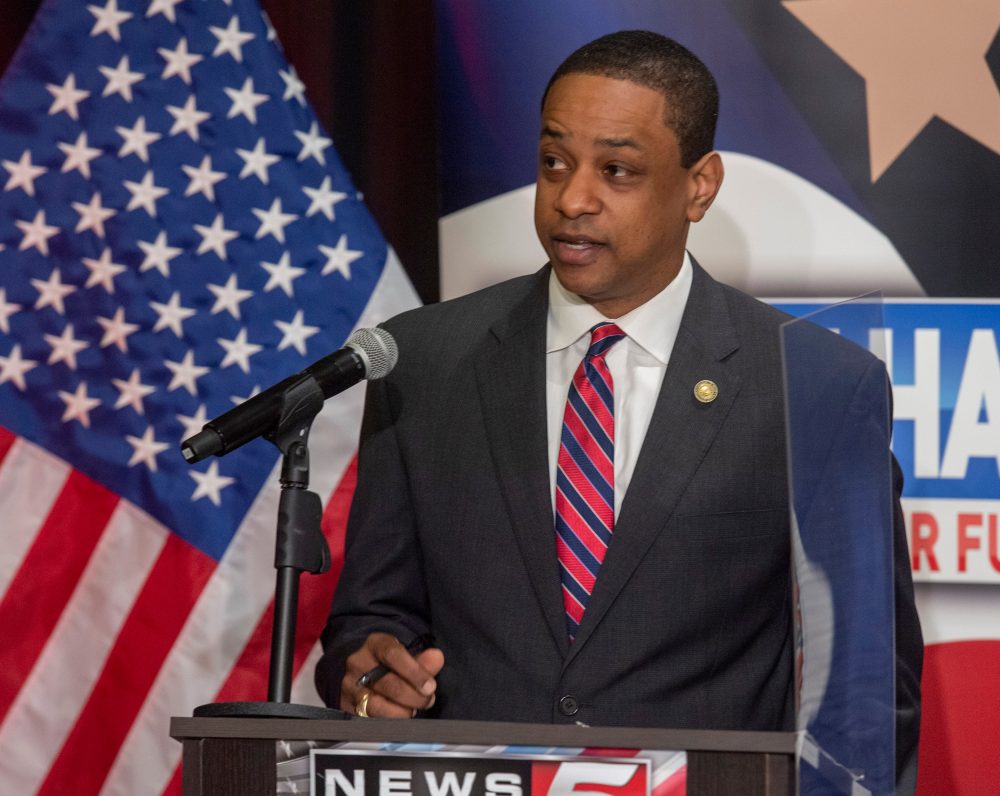
Back in 2019, when Virginia Governor Ralph Northam faced intense scrutiny over a racist yearbook photo, Lieutenant Governor Justin Fairfax appeared ready to step into the governor’s mansion and make history as the state’s second African American chief executive.
But that moment never came to pass. Shortly afterward, Fairfax confronted his own crisis when two women publicly accused him of sexual assault from incidents years before. While Fairfax maintained his innocence and faced no criminal charges, the allegations severely damaged his standing.
According to court records and those close to him, his life deteriorated dramatically in subsequent years. On Thursday — seven years after he came close to the governor’s office — authorities say he took his own life and that of his wife, Dr. Cerina Fairfax, while their two children were present in their home. The tragic incident occurred during ongoing divorce proceedings and just two weeks before a court-ordered deadline requiring him to vacate the family residence in Annandale, a Washington, D.C. suburb.
Fairfax’s background included work as a federal prosecutor and civil attorney. He initially sought the Democratic nomination for attorney general without success in 2013, then secured victory in the lieutenant governor’s race four years later, sharing the ticket with Northam.
Supporters viewed Northam, a former Republican, as a practical gubernatorial candidate due to his bipartisan approach. Fairfax earned recognition for taking measured stances on divisive topics including Confederate monuments and wage policies.
However, just twelve months into their administration, Northam’s medical school yearbook resurfaced, featuring an image of someone in blackface alongside another person dressed in Ku Klux Klan attire. The governor never clarified which costume he had worn.
Public demands for Northam’s resignation mounted rapidly. If he had stepped down, Fairfax would have automatically assumed the governorship.
Instead, two women stepped forward with accusations against Fairfax.
Vanessa Tyson alleged that Fairfax sexually assaulted her in his Boston hotel room during the 2004 Democratic National Convention. At that time, Fairfax was attending Columbia Law School and working as an assistant to Democratic vice presidential candidate John Edwards.
Tyson stated Wednesday that the incident left her feeling deeply humiliated and ashamed, leading her to bury the memory while building her academic career. She first began sharing details of the alleged assault with friends in October 2017 after encountering a photograph of Fairfax in campaign coverage.
Just 48 hours after Tyson’s public statement, Meredith Watson released her own accusation, claiming Fairfax had raped her in 2000 during their time as Duke University students.
The Associated Press follows a policy of not identifying alleged sexual assault victims unless they choose to speak publicly, as both Tyson and Watson did.
These allegations created a political firestorm and widespread turmoil. Many Democratic leaders who had remained cautious after the initial accusation quickly denounced Fairfax following the second woman’s statement. Politicians from both parties soon joined calls for his resignation, matching similar demands directed at Northam.
Even under enormous public and political pressure, both Northam and Fairfax completed their full terms, which concluded in 2022.
Fairfax attempted to revive his political ambitions in 2021 through a gubernatorial campaign.
During that race, his campaign staff acknowledged that the sexual assault allegations had fundamentally altered the political landscape. Fairfax maintained that voters, especially African American constituents, would recognize what he claimed — without providing evidence — was a coordinated attack on his reputation.
He placed fourth among five Democratic primary candidates, capturing less than 4% of the total vote.
Legal documents reveal that Fairfax experienced significant financial difficulties after the allegations emerged, leading to his departure as a partner from a prominent law firm. Court papers indicate his “mental and emotional health” deteriorated substantially, resulting in heavy drinking and isolation from his family.
Records show that in 2022, Justin Fairfax purchased a firearm using funds earmarked for his children’s horseback riding instruction. Court documents also detail an incident that year when he left home carrying the weapon and clothing in a suitcase, and was subsequently discovered in a wooded area of a nearby public park.
The murder-suicide occurred just weeks before a judicial deadline requiring Fairfax to leave the family home, according to court filings.
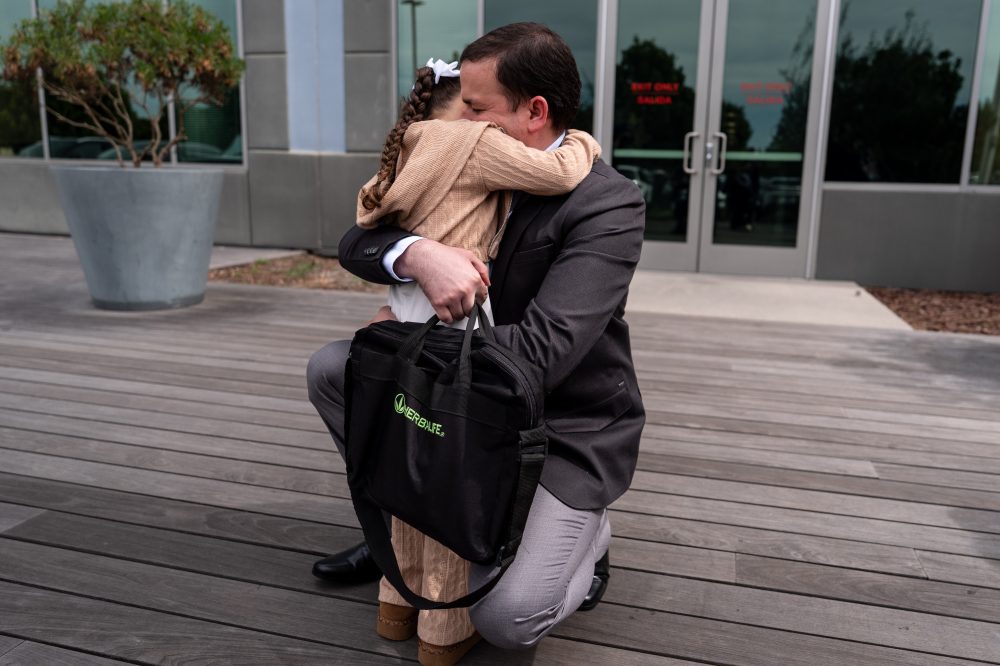
A Venezuelan physician serving an underserved community in South Texas found herself in immigration detention this week, unable to join her husband for a crucial asylum hearing they had awaited for more than a decade.
Dr. Rubeliz Bolivar, 33, was taken into custody by Border Patrol agents at McAllen International Airport on Saturday as she prepared to fly to California with the couple’s 5-year-old American-born daughter. Her husband, Milenko Faria, proceeded alone with his asylum interview at U.S. Citizenship and Immigration Services offices near Los Angeles on Thursday, marking Bolivar’s sixth day in federal custody.
The emergency room physician had been working at a McAllen hospital since June 2025 as part of her medical residency program in the Rio Grande Valley, an area officially classified as medically underserved.
Bolivar’s detention represents the second arrest of a Venezuelan doctor in the region within a week. Dr. Ezequiel Veliz was apprehended at a Border Patrol checkpoint in South Texas on April 6, though his attorney Victor Badell successfully secured his release Thursday after posting an $8,000 bond following approximately ten days in custody.
These arrests reflect the current administration’s strict immigration enforcement policies. After an enforcement operation in Minnesota in January that resulted in two U.S. citizen deaths, the Department of Homeland Security has shifted toward less conspicuous detention actions.
“She was always focused on the community, and when she was accepted, it was an immense joy,” Faria, 36, told The Associated Press during a phone interview. “We have never done anything outside the law. We have done everything by following the steps in accordance with the law to obtain permanent residency.”
According to Faria, his wife entered the United States on a tourist visa in 2016 following her graduation from medical school in Venezuela. Before her authorized stay period ended, she was included in her husband’s asylum petition. The couple is also pursuing permanent residency through a skilled worker application sponsored by Faria’s California employer, where he has worked as an information systems technician since 2019.
Both individuals had been protected under Temporary Protected Status for Venezuela, which safeguarded over 600,000 Venezuelans from deportation. The Trump administration eliminated these protections for Venezuela, Haiti, Syria, Afghanistan, Nicaragua and other nations, though this decision faces ongoing federal court challenges.
Department of Homeland Security officials justified Bolivar’s arrest by citing her illegal presence in the country.
“She has overstayed her visa since 2017, nearly a decade, and had no legal status,” stated DHS spokesperson Lauren Bis.
Immigration attorney Jodi Goodwin, practicing in South Texas, identified a policy shift around September or October 2025 regarding travel by individuals with pending USCIS applications.
“It just became a very apparent trend where anyone that had some kind of application pending with USCIS, whether it was an adjustment of status or asylum, anything like that, they were going to be arrested,” Goodwin explained.
The couple had lived together in Santa Maria, California, until Bolivar relocated to Texas for her medical residency in summer 2025. Faria made bimonthly visits to see his wife and daughter, with Saturday marking Bolivar’s first attempt to travel since beginning her Texas residency.
Border Protection officers detained Bolivar before she could complete airport security screening, requesting identification documents. She presented her Real ID-compliant driver’s license and valid work authorization extending through 2030.
Despite explaining her pending green card adjustment and the purpose of her California trip for the asylum interview, officers detained her after questioning her nationality and demanding proof of permanent legal residency, according to Faria, who received text updates from his wife during the arrest.
Their 5-year-old daughter, an American citizen, was also taken into custody before being released to her grandfather 19 hours later. The child is now in California with her father.
Immigration and Customs Enforcement assumed custody of Bolivar on Sunday, and she remains held at El Valle Detention Facility in Texas.
Faria reported that his wife has repeatedly requested explanations for her detention but has received no responses from authorities.
The other detained Venezuelan physician, Ezequiel Veliz, arrived in the United States in 2018 on a tourist visa with plans to practice medicine. Friend Hector Ruiz characterized him as a compassionate doctor who cares for his cats and demonstrates dedication to his profession.
Veliz transitioned his immigration status from student to physician at a Rio Grande Valley hospital while working under TPS protection. The suspension of protected status immediately impacted his two-year residency program.
“He was one year and four months into that. He couldn’t continue working legally. He had to stop,” said his attorney Badell.
Veliz was awaiting a hospital-sponsored visa when Border Patrol detained him at a checkpoint while traveling to Houston with his husband on April 6.
State authorities in Minnesota are pursuing multiple investigations targeting federal immigration enforcement officers following controversial operations conducted during the previous Trump administration in the Minneapolis-St. Paul area.
Hennepin County officials announced Thursday that they have filed criminal charges against Immigration and Customs Enforcement agent Gregory Donnell Morgan Jr., alleging he aimed his firearm at a driver and passenger while on a Minneapolis freeway. According to a local prosecutor, this marks the first criminal prosecution of a federal officer connected to Minnesota’s immigration enforcement operations.
Federal authorities have challenged Minnesota’s legal authority to investigate federal personnel. Despite this pushback, state officials filed a lawsuit last month seeking access to evidence related to three shooting incidents during the enforcement period, two of which resulted in fatalities.
Several major cases remain under review:
On January 24, Pretti, a 37-year-old critical care nurse, was fatally shot by federal officers while participating in demonstrations on a business corridor. Federal officials claimed they fired in self-defense against Pretti, stating he possessed a semi-automatic weapon and was aggressively fighting officers. However, multiple video recordings dispute this account, revealing Pretti held only a cell phone when officers brought him to the ground. Footage shows an officer discovering a pistol in Pretti’s waistband just before a different officer shot him in the back.
The Justice Department confirmed the FBI is conducting a civil rights probe into Pretti’s death, while Customs and Border Protection is performing its own internal review.
On January 7, Good, a 37-year-old mother, was positioned in a residential street with her SUV, sounding her horn, when immigration agents approached her vehicle. As she started moving forward, an ICE agent positioned in front of her car discharged at least two rounds into the vehicle, resulting in Good’s death.
The Department of Homeland Security maintains the incident is still being examined but claims video evidence demonstrates Good interfered with law enforcement activities and used her vehicle as a weapon, prompting the officer’s defensive response.
Acting U.S. Attorney General Todd Blanche stated that the department’s Civil Rights Division does not review every police-involved shooting and requires specific conditions and evidence to justify an inquiry.
Sosa-Celis sustained injuries on January 14 when a federal agent shot him in the right leg. Federal authorities initially claimed Sosa-Celis and an associate attacked an ICE officer using a broomstick and snow shovel. However, federal prosecutors subsequently dismissed all charges against both men, and officials launched a criminal probe into whether two immigration officers provided false testimony regarding the shooting.
DHS reported both officers are currently on administrative duty while ICE and DOJ perform a collaborative investigation.
Ramsey County, encompassing St. Paul, is examining federal officers’ January 18 detention of ChongLy “Scott” Thao, a Hmong American resident, for possible kidnapping, burglary and unlawful detention charges.
ICE personnel forced entry into Thao’s St. Paul residence with weapons drawn, then escorted him outside wearing only underwear and a blanket despite frigid weather. The incident was recorded and widely circulated on social media.
Ramsey County Attorney John Choi and Sheriff Bob Fletcher announced Monday they are seeking information from DHS but have been unable to confirm whether ICE officers possessed an arrest warrant for Thao.
DHS responded in a statement that ICE does not engage in kidnapping and characterized the county’s investigation as a political maneuver.
In early March, Hennepin County Attorney Mary Moriarty announced her office was examining at least 17 incidents and evaluating potential misconduct charges against federal officers, including Border Patrol official Greg Bovino.
The investigation encompasses an incident where Bovino hurled a smoke device at demonstrators on January 21. Another case from January 7 involved federal agents conducting an arrest near a high school while using chemical agents with students and faculty in the vicinity.
CASCADE LOCKS, Ore. (AP) — Genetic testing has confirmed that human remains discovered inside a submerged vehicle in the Columbia River belong to an Oregon family who disappeared nearly 67 years ago during a Christmas outing, officials announced Thursday.
Oregon’s state medical examiner has positively identified the remains as Kenneth Martin, his wife Barbara Martin, and their daughter Barbie, according to the Hood River County Sheriff’s Office. Investigators have closed the case after finding no indication of criminal activity.
A diver who had spent years searching for the missing family located their Ford station wagon in the river during 2024. Recovery teams extracted portions of the vehicle from the water the next year.
The Martin family disappeared in December 1958 during what was supposed to be a holiday trip to gather Christmas decorations. While the bodies of two other family children were recovered months following their disappearance, the remaining three family members were never found.
The mystery captivated the nation and sparked theories about possible criminal involvement, with authorities offering a $1,000 reward for tips.
“Where do you search if you’ve already searched every place logic and fragmentary clues would suggest?” an Associated Press report questioned in 1959, months following the family’s vanishing.
Recovery teams could only retrieve the vehicle’s frame and certain attached parts due to how extensively sediment had buried the car over the decades, sheriff’s officials explained. Examination of these components confirmed the vehicle belonged to the Martin family.
The same diver discovered human remains in 2025, which were subsequently transferred to state medical examiners.
Forensic experts extracted genetic material from the remains and created DNA profiles that were matched against samples from Martin family relatives, enabling positive identification, authorities reported.
Drivers traveling on Interstate 495 southbound are facing significant delays this morning after a vehicle accident forced the closure of two left lanes near the Holly Oak turnaround.
The Delaware Department of Transportation reports that the crash is blocking traffic in the left lanes of the southbound direction, creating a bottleneck for commuters heading through the area.
Motorists are advised to use caution when approaching the scene and allow extra travel time. Drivers may want to consider using alternate routes to avoid the congestion.
Emergency crews are working to clear the accident and reopen the affected lanes. No information has been released yet regarding injuries or the cause of the crash.
This is a developing story and updates will be provided as more information becomes available from authorities.
Delaware State University students recently participated in an international research opportunity that took them to Central America for hands-on learning experiences.
The academic program allowed DSU students to conduct field research in Belize, giving them practical experience beyond traditional classroom settings.
This international research initiative represents part of Delaware State University’s commitment to providing students with diverse educational opportunities that enhance their academic and professional development.
Gas prices in California have skyrocketed to unprecedented levels as fuel shortages intensify across the Golden State due to ongoing Middle East conflicts that have effectively shut down a crucial shipping route for global oil supplies.
Drivers throughout California are now spending an average of $5.86 per gallon at the pump as of Thursday, making it the most expensive state for gasoline in the country. This price point sits well above the national average of $4.09 per gallon, according to data from the American Automobile Association.
The state’s fuel reserves have dropped to their lowest point since record-keeping began, with gasoline stockpiles averaging just 9.44 million barrels during the four-week period ending April 10. This figure represents the smallest inventory in the California Energy Commission’s database, which extends back to 2005.
Energy experts are sounding alarms that the situation may deteriorate further as California depends heavily on fuel imports from Asian refineries, which process Middle Eastern crude oil before shipping finished products to the West Coast.
“The Energy Commission is in close communication with all in-state refiners to ensure adequate transportation fuels supply during this volatile period of supply contraction due to the effective closing of the Strait of Hormuz,” stated agency spokesperson Niki Woodard.
The Strait of Hormuz, now closed due to the Iranian conflict, serves as a vital passageway for approximately one-fifth of the world’s oil and gas shipments. California’s geographic isolation from major U.S. fuel pipeline networks makes it particularly susceptible to supply disruptions from this region.
Current gas prices reflect a 26% jump since the Iranian war began, according to AAA statistics. California’s elevated fuel costs stem from multiple factors including state taxes and the expense of producing the state’s specialized gasoline formula designed to combat smog pollution that historically plagued the Los Angeles area.
University of Southern California professor Michael Mische warned in a recent analysis that the complete impact of reduced fuel imports has not yet reached California’s distribution system. Since shipping refined petroleum products from Asia typically requires several weeks, the worst effects may still be ahead.
“Over the next one to two weeks, gasoline imports are expected to drop off sharply,” Mische’s analysis indicated. “This will mark the point at which the import shock becomes fully visible in terminal supply and, ultimately, at the gas pump.”
Susan Bell from Rystad Energy echoed these concerns, predicting that California’s gasoline stockpiles could continue shrinking over the coming weeks.
The state’s vulnerability has increased in recent years as California transitioned from a major oil producer to becoming more reliant on imported crude and refined products. Two refineries representing roughly 20% of the state’s refining capacity have permanently shut down, further straining the supply chain.
California’s crude oil reserves currently stand at 10.09 million barrels, representing a decline of more than 23% compared to the same period last year, according to California Energy Commission data.
Despite the challenging circumstances, Woodard expressed cautious optimism about near-term supplies. “We are not predicting a near-term supply challenge,” she said, noting that refineries are actively seeking alternative sources for imported crude and gasoline to replace lost Middle Eastern shipments.
State officials project that current inventory levels should remain adequate through mid-May. California residents consume approximately 36 million gallons of gasoline daily.
EagleRock Land submitted paperwork Thursday to become a publicly traded company, marking another energy firm’s attempt to enter the stock market during challenging times for the sector.
The company generates income by collecting royalty payments and fees from oil and natural gas operations conducted on properties under its control.
This public offering announcement arrives during a period when energy companies have largely avoided going public due to years of investor hesitancy toward the sector. However, recent spikes in oil prices, fueled by conflicts in the Middle East and potential disruptions in the Strait of Hormuz shipping lanes, appear to be rekindling investor appetite for energy investments.
Major financial institutions including Goldman Sachs, Barclays, J.P. Morgan, Piper Sandler and Raymond James will serve as the lead underwriters managing the stock offering.
The company plans to trade its shares on the New York Stock Exchange using the ticker symbol “EROK” once the offering is completed.
Diplomatic efforts to resolve a longstanding territorial dispute between Moldova and its breakaway Transdniestria region ended in failure Thursday, with negotiators unable to reach any agreements during talks held in the separatist territory.
The discussions took place in Tiraspol, the main city of the pro-Russian breakaway region, as Moldova pushes forward with plans to become a European Union member by 2030. Representatives from both sides pointed fingers at each other for the lack of progress.
Moldova’s Deputy Prime Minister Valeriu Chiveri criticized Transdniestria officials for declining to approve a joint statement about restarting official settlement negotiations.
“We believe that this demonstrates just how serious Tiraspol views the process of a settlement,” he said.
However, Transdniestria’s Foreign Minister Vitaly Ignatiev accused Moldovan representatives of undermining the diplomatic process. “We have seen no implementation from Moldova of a single issue on the agenda,” Ignatiev stated.
The unrecognized territory of Transdniestria has operated independently from Moldova for over thirty years, backed by Russia but lacking international legitimacy. The region separated from Moldova prior to the Soviet Union’s dissolution in 1991, with only a short military confrontation in 1992 before relative peace was established.
Energy issues have complicated the situation recently, as Transdniestria lost access to heavily subsidized Russian natural gas when Ukraine stopped allowing transit through its borders last year.
Moldova escalated tensions Thursday by implementing new restrictions that prevent 1,500 Russian “peacekeeping” forces from entering the country. These troops have maintained the ceasefire between the two territories since the early 1990s.
Additional disputes center on Moldova’s proposals to apply uniform tax policies across all regions, including extending excise taxes and other fees to the separatist area.
Moldovan President Maia Sandu, who strongly opposes Russia and its war in Ukraine, stated last year that challenges with the separatist territory “do not mean we will put off European integration for 10 or 20 years.”
Ignatiev recently told Russian media that Moldova cannot successfully join the EU without resolving this conflict, “as the EU does not want to import a conflict.”
Good evening, Delmarva! We’re looking at a pleasant Thursday night with partly cloudy skies and mild temperatures holding steady around 66 degrees. There’s just a slight chance we could see some light rain showers between 2 and 5 AM, but most of us will stay dry with only a 20% chance of precipitation. Gentle southwest winds around 5 mph will keep things comfortable.
Friday brings warmer weather as we climb to around 80 degrees, though we’ll need to keep an eye on the sky as there’s a better chance for rain showers throughout the day. Don’t forget that umbrella if you’re heading out!
The good news is that any lingering showers should clear out Friday night, with temperatures dropping to a refreshing 57 degrees under mostly clear skies. Saturday is shaping up beautifully with mostly sunny conditions and highs around 70 – perfect weather for any weekend plans you might have.
Stay dry tonight, Delmarva, and I’ll see you tomorrow with your updated weekend forecast!
Motorists traveling on Route 113 should expect traffic delays due to ongoing construction work that requires periodic lane closures in both the northbound and southbound directions.
The Delaware Department of Transportation reports that lanes will be intermittently closed along the stretch of highway between Oak Avenue and Avenue of Honor. These traffic restrictions are scheduled to remain in effect until 4:30 a.m.
Drivers are advised to allow extra travel time and exercise caution when passing through the construction zone. The lane closures may cause temporary backups during peak travel periods.
Delaware Department of Transportation officials have temporarily shut down Airport Road at the Nonesuch Creek crossing due to flooding conditions that have made the roadway impassable.
The closure affects the section of Airport Road that spans the creek, where rising water levels have created unsafe driving conditions for motorists.
DelDOT has not provided an estimated timeline for when the road will reopen, as conditions depend on water levels receding to safe levels.
Drivers in the area are advised to seek alternate routes and avoid the flooded section until further notice from transportation officials.
Officials at the Fulton County detention facility in Georgia have deployed specialized drone technology to prevent contraband from reaching incarcerated individuals. The aerial surveillance system is designed to stop unauthorized deliveries of prohibited materials to the jail population.
The drone equipment comes from Flock, a technology firm that has faced questions regarding the extent of its surveillance operations and monitoring capabilities.
CAPE CANAVERAL, Fla. — Four astronauts who completed NASA’s historic return to lunar exploration shared positive feedback Thursday about their spacecraft’s capabilities, with particular emphasis on how well the heat shield functioned during their return to Earth.
During their initial press conference following their homecoming, the crew of three American astronauts and one Canadian team member expressed confidence that their successful lunar mission positions NASA well for achieving a crewed moon landing within the next two years and establishing a permanent lunar base. The astronauts spoke from NASA’s Johnson Space Center in Houston, where they are based.
The diverse crew included Commander Reid Wiseman, pilot Victor Glover, Christina Koch, and Canada’s Jeremy Hansen, who departed from Florida on April 1 for NASA’s first crewed lunar mission in over 50 years.
The team achieved a new distance record for human space travel, surpassing Apollo 13’s mark as they traveled around the moon’s far side. During their journey, they witnessed lunar features never before seen by human eyes and experienced the spectacular sight of a total lunar eclipse.
Their Orion spacecraft, which they christened “Integrity,” touched down safely in the Pacific Ocean last Friday, concluding their nearly 10-day mission. The crew’s return to Houston occurred on the 56th anniversary of Apollo 13’s launch.
According to Wiseman, he and Glover observed only minimal heat shield material loss during Integrity’s passage through the most intense phase of atmospheric reentry. After boarding the recovery vessel, they examined the capsule’s underside as thoroughly as possible, discovering slight charred material loss where the heat shield connects to the main capsule.
“For four humans just looking at the heat shield, it looked wonderful to us. It looked great, and that ride in was really amazing,” Wiseman said.
However, he emphasized that comprehensive analysis remains necessary. “We are going to fine-tooth comb every single, not even every molecule, probably every atom on this heat shield,” he said.
The heat shield from the initial unmanned Artemis test mission in 2022 returned with extensive damage that delayed Artemis II for months or potentially years. Rather than redesigning the shield, NASA modified the capsule’s reentry trajectory to reduce thermal stress. Upcoming capsules will feature an updated heat shield design.
Glover described the sensation when parachutes deployed just before ocean landing as feeling like free fall, comparing it to “diving backward off a skyscraper.” “That’s what it felt like for five seconds,” he said, noting that once the descent stabilized, “It was glorious.”
Following their return, all four crew members have undergone extensive medical evaluations to assess their balance, eyesight, muscle condition, coordination, and general health status. They also participated in spacesuit exercises under simulated lunar gravity conditions to evaluate the endurance and dexterity future moon explorers might possess upon landing.
NASA has already begun preparations for Artemis III, the subsequent phase in their ambitious lunar base development program. The launch platform returned Thursday to Kennedy Space Center’s Vehicle Assembly Building for preparation of next year’s Artemis mission.
Artemis III, which has not yet received crew assignments, will orbit Earth while astronauts practice connecting their Orion capsule with lunar landing vehicles being developed by Elon Musk’s SpaceX and Jeff Bezos’ Blue Origin.
Artemis IV is scheduled for 2028 according to NASA’s current timeline, with plans for two astronauts to land near the moon’s south pole.
NASA’s goal this time involves establishing a permanent lunar presence, unlike the brief Apollo missions. Twelve astronauts explored the moon’s surface during the Apollo era, starting with Neil Armstrong and Buzz Aldrin in 1969 and concluding with Gene Cernan and Harrison Schmitt in 1972.
Koch expressed that since their return, she and her teammates are “feeling even more excited and just ready to take that on as an agency.”
“We made it happen,” she added.
Hansen noted that achieving these ambitious goals will require accepting additional risks and trusting that future challenges can be resolved as they arise. “We’re not going to be able to pound everything flat before we go. We’re going to have to trust each other,” he said.
Despite their smooth mission experience, Hansen acknowledged that “it was also very clear to us that it can get pretty bumpy.” He emphasized that future crews must “understand it can get real bumpy real fast.”
Listen to the Evening Delmarva Farm Report Update — April 16, 2026
DELMARVA — Spring planting season is in full swing across Delmarva, bringing increased farm equipment traffic to area roads. Tractors, combines, and other large machinery are moving between fields as farmers begin spring field prep and planting operations. Motorists and agricultural workers both need extra vigilance to prevent accidents as slow-moving equipment mixes with regular traffic.
Fire
19 fire departments battled a massive poultry house blaze yesterday afternoon in Harrington. The alarm came in at 3:15 p.m., bringing crews to Hayfield Road where 2 buildings, each measuring 60 feet by 500 feet, were fully engulfed. Flames spread to a storage facility and threatened nearby propane tanks. Firefighters brought it under control in about an hour but stayed on scene until 8:30 p.m. dousing hot spots.
Markets
Grain prices retreated today as the rally from Middle East tensions continues fading. Corn at Laurel Grain Company is bringing $4.99 a bushel for May delivery. Soybeans are $11.24.
Policy
At the national level, Agriculture Secretary Brooke Rollins called foreign purchases of U.S. farmland a significant security threat, particularly pointing to Chinese acquisitions.
Forecast
The area is finishing this afternoon near 79 degrees under partly sunny skies. Tonight drops to 61 with partly cloudy conditions. Tomorrow brings a chance of rain showers with highs around 74.
This article is based on the Delmarva Farm Report Update Evening Edition, April 16, 2026. Hosted by Tom Bradley.
PORT-AU-PRINCE, Haiti (AP) — A new international assessment released Thursday reveals that while Haiti’s hunger crisis may be stabilizing slightly, rising fuel costs tied to Middle Eastern conflicts could quickly undo any progress in the Caribbean nation.
The Integrated Food Security Phase Classification, a leading global authority on food crises, projects that more than 5.83 million Haitians will experience severe hunger between March and June — representing over half the nation’s population. This marks a modest decrease from the earlier projection of 5.91 million people.
The report also indicates that approximately 1.9 million individuals are anticipated to endure emergency-level food shortages, down slightly from the previously estimated 2 million.
The organization attributed the marginal improvement to several factors: inflation declining from 32% to 22%, generally favorable winter growing conditions, and better road accessibility in certain regions.
Despite these developments, the authority emphasized that these limited improvements are “insufficient” to counter the overall pattern of severe food insecurity plaguing the nation.
“The outbreak of the conflict in the Middle East and the blockade of the Strait of Hormuz have caused a major disruption to the global food system with direct implications for Haiti,” the report said.
The assessment also pointed to armed groups as contributors to the food emergency, noting that “violence continues to suffocate the Haitian economy and limit the transportation of goods and the movement of people, with many of the most vulnerable people forced to join armed actors in order to feed their families.”
Food insecurity is anticipated to deteriorate further after Haiti’s administration raised fuel prices in early April — increasing kerosene costs by 40%, diesel by 37%, and gasoline by 29% due to the continuing conflict.
The analysis emphasized that elevated fuel costs would affect transportation across the board and contribute to higher food prices.
The majority of those experiencing emergency hunger levels reside in Haiti’s northwest areas, including Artibonite, where criminal organizations have conducted devastating attacks over recent years, destroying communities and agricultural land.
“Fighting hunger is essential to restoring stability in Haiti. We cannot build peace if families cannot feed their children,” said Wanja Kaaria, World Food Program’s country director and representative in Haiti, who stressed the need for emergency food assistance and the rebuilding of local food systems.
Emergency-level hunger is also prevalent in impoverished areas of Haiti’s capital, which authorities say gangs now control 72% of, down from an estimated 90%.
The worsening food situation stems from gang violence that has forced a record 1.4 million people from their homes throughout Haiti. The assessment found that 70% of those living in displacement camps face high levels of food insecurity.
At an overcrowded and unsanitary shelter that formerly served as a school, 25-year-old Feguens Jean explained he would have little to eat Thursday due to poor weather conditions.
Jean makes money selling secondhand shoes to support himself and send money to his mother and sister in rural areas “for them to survive.” However, rainy conditions kept him from working.
“If I don’t sell, I don’t eat, which means today, what I have is very little to eat,” said Jean, who was studying to be a carpenter at a technical school but was forced to become a street vendor to support himself and his family.
Antony Joassainte, 40, lives among the hundreds of people in the overcrowded shelter with Jean. Though trained as a mason and plumber, he explained that employment is extremely difficult to find currently.
“Nobody is building anything,” said Joassainte, the father of two children, ages 11 and 13. “I find myself having to feed a family with nothing.”
He explained they depend primarily on bread.
“It’s cheaper,” he said. “We have one strong meal if we can; that might be rice and beans.”
Bernadette Toussaint, a 37-year-old mother of two boys, also worries about providing food.
She operates a small business selling rice, beans and chicken sauce, but with rising oil prices, she’s been forced to reduce her family’s meals.
“I cannot provide what I used to for my kids,” she said. “I don’t have a husband, and I have to depend on my business.”
The United States Treasury Department announced new financial penalties Thursday targeting two sons of Nicaragua’s ruling couple Daniel Ortega and Rosario Murillo, along with various officials and businesses connected to the nation’s gold mining sector for supporting what Washington describes as an oppressive regime.
These financial restrictions represent part of President Donald Trump’s intensified approach toward hostile Latin American nations, marking some of the strongest U.S. pressure on the region in decades. Though Washington has consistently criticized Nicaragua for authoritarian practices, the Central American country had previously avoided the severe sanctions imposed on nations like Cuba and Venezuela.
The Nicaraguan administration has conducted an extensive campaign against opposition voices following widespread civil unrest in 2018, which authorities suppressed through violent means.
Maurice Ortega and Daniel Edmundo Ortega, both offspring of the co-ruling pair and government employees, represented the most prominent individuals affected by Thursday’s penalties, which the Treasury Department attributed to their governmental positions.
Nicaraguan authorities have not yet issued a response regarding the newly imposed sanctions.
Veteran political figure Ortega formally designated Murillo — his spouse and former deputy leader — as co-president twelve months ago. Political analysts interpreted this decision as an effort to strengthen the family dynasty’s control over Nicaragua while establishing a succession plan for their offspring.
Treasury officials stated Thursday that the additional sanctioned entities and individuals exploited corrupt practices within the gold mining sector to enrich government accounts. The department noted that several of those penalized participated in last year’s seizure of a mining operation that included American investments.
“The United States will not allow the illicit confiscation of American-owned assets and will continue to target revenue streams that empower the corrupt Murillo-Ortega regime,” U.S. Secretary of the Treasury Scott Bessent said in a statement.
United Nations specialists reported last month that Nicaragua’s administration employs corruption as a mechanism to fund widespread political suppression and maintain authority.
The Nicaraguan government has also detained political opponents, religious figures, media professionals and others, subsequently forcing them into exile while revoking hundreds of citizens’ nationality and property rights. Since 2018, authorities have closed over 5,000 organizations, predominantly religious institutions, and compelled thousands to leave the country.
Government officials frequently claim that critics and targeted organizations operate on behalf of the United States and other adversaries to weaken their authority.
WASHINGTON — The Trump administration is pushing an international campaign to replace traditional foreign assistance with private sector investment, drawing sharp criticism from United Nations officials and former diplomats who warn the approach could harm the world’s most vulnerable people.
Secretary of State Marco Rubio has directed American diplomats worldwide to secure support for the “Trade Over Aid Initiative” from foreign government leaders by Monday, according to a diplomatic message obtained by The Associated Press. The proposal will be officially presented at the UN by the end of April.
The administration’s plan encourages UN member countries to implement business-friendly changes to their assistance programs by fostering dialogue between governments, private companies and international groups. The initiative promotes free-market policies designed to attract foreign investment, including minimal regulations, reduced taxes, diverse energy options, protection of private property, contract enforcement and reliable court systems.
“The idea that trade and free market capitalism is the surest path to prosperity has been proven by the facts and by history,” State Department spokesman Tommy Pigott said. “The U.S. remains the most generous country in the history of the world, but those arguing for ‘aid not trade’ are really arguing for lining the pockets of a corrupt NGO industrial complex.”
While countries wouldn’t be legally bound by signing onto the proposal, their participation would signal international sentiment on global aid challenges as major donors including the United States and United Kingdom have reduced humanitarian funding while boosting military spending.
UN officials and international organizations view this latest development as another step away from established aid systems during a time of escalating global conflicts, potentially opening doors for exploitation by profit-seeking corporations.
UN spokesperson Stephane Dujarric emphasized the organization’s commitment to achieving its sustainable development goals by 2030, which encompass eliminating poverty, promoting gender equality and addressing climate change urgently.
“For us, trade, investment, and private sector engagement can be powerful drivers of inclusive growth and job creation,” Dujarric told AP. “They should, however, not be used to substitute international development cooperation or for principled humanitarian assistance.”
Eric Pelofsky, a former State Department official under Presidents Obama and Bush who now works at the Rockefeller Foundation, strongly condemned the initiative.
“There’s no American who looks at a picture of a starving child and sees an opportunity for companies to enrich themselves,” Pelofsky stated. “That’s because Americans have historically run to the fire to help rather than looking for ways to sell fire hoses to those suffering. This approach betrays America’s traditions, values, and national security interests — and it makes us less safe.”
This initiative continues the Trump administration’s pattern of withdrawing from international cooperative organizations since taking office in January 2025. The administration has halted support for the World Health Organization, UN Human Rights Council and UNESCO, while also eliminating the U.S. Agency for International Development.
The administration now takes a selective approach to UN funding, choosing to support only operations and agencies that align with Trump’s priorities while avoiding those deemed contrary to American interests.
In December, American officials committed $2 billion for UN humanitarian programs — significantly less than previous contributions but still maintaining the country’s position as the world’s largest humanitarian donor, according to the administration.
CAPE CANAVERAL, Fla. — Four astronauts who completed NASA’s groundbreaking return to lunar exploration offered glowing reviews of their spacecraft Thursday, particularly highlighting how well the heat shield performed during their journey back to Earth.
During their initial press conference since touching down, the international crew of three Americans and one Canadian expressed confidence that their successful moon flyby significantly advances NASA’s timeline for putting astronauts on the lunar surface within two years and establishing a permanent lunar outpost. The astronauts addressed media from NASA’s Johnson Space Center in Houston.
Mission Commander Reid Wiseman, along with pilot Victor Glover, Christina Koch, and Canada’s Jeremy Hansen, departed Florida on April 1 aboard what became NASA’s first crewed lunar expedition in more than five decades and the most diverse crew ever assembled for such a mission.
The team achieved a new human spaceflight distance record, surpassing Apollo 13’s mark as they traveled around the moon’s far side, where lighting conditions allowed them to observe lunar features never before seen by human eyes. A total lunar eclipse during their voyage added to the spectacular experience.
Their Orion spacecraft, christened “Integrity” by the crew, safely descended by parachute into Pacific waters last Friday, concluding their nearly 10-day expedition. The crew’s return to Houston the following day marked exactly 56 years since Apollo 13’s launch.
According to Wiseman, he and Glover observed “maybe saw two moments of a touch of char loss” from the heat shield during Integrity’s descent through the most intense phase of reentry. After boarding the recovery vessel, they examined the capsule’s underside as thoroughly as possible, discovering minor charred material loss where the heat shield connects to the main capsule.
“For four humans just looking at the heat shield, it looked wonderful to us. It looked great, and that ride in was really amazing,” Wiseman stated.
However, he emphasized that comprehensive analysis remains ahead. “We are going to fine-tooth comb every single, not even every molecule, probably every atom on this heat shield,” he explained.
The heat shield from the unmanned 2022 Artemis test mission returned so severely damaged that it delayed Artemis II by several months or potentially years. Rather than redesigning the shield, NASA modified the capsule’s reentry trajectory to reduce thermal stress. Upcoming capsules will feature updated heat shield technology.
Glover described the sensation when parachutes deployed just before ocean landing as feeling like freefall — comparable to “diving backward off a skyscraper.” “That’s what it felt like for five seconds,” he recalled, noting that once the descent stabilized, “It was glorious.”
Following their return, all four crew members have undergone extensive medical evaluations examining their balance, eyesight, muscle condition, coordination, and general health status. They also tested spacewalking equipment under simulated lunar gravity conditions — one-sixth of Earth’s gravity — to assess how future moon explorers might perform immediately after landing.
NASA has already begun preparations for Artemis III, the subsequent phase in its ambitious lunar base development program. The launch platform returned Thursday to Kennedy Space Center’s Vehicle Assembly Building for preparation ahead of next year’s Artemis mission.
Artemis III, which has not yet received crew assignments, will orbit Earth while astronauts practice connecting their Orion capsule with lunar landing vehicles being developed by Elon Musk’s SpaceX and Jeff Bezos’ Blue Origin companies.
Artemis IV is scheduled for 2028 according to NASA’s current timeline, featuring two astronauts landing near the moon’s south polar region.
NASA seeks to establish a lasting lunar presence this time, contrasting with the brief Apollo missions. Twelve astronauts walked on the moon during the Apollo era, starting with Neil Armstrong and Buzz Aldrin in 1969 and concluding with Gene Cernan and Harrison Schmitt in 1972.
Koch expressed that since returning, she and her teammates are “feeling even more excited and just ready to take that on as an agency.”
“We made it happen,” she added.
Hansen noted that achieving these ambitious goals will require accepting increased risks and trusting that unexpected challenges can be resolved in real time. “We’re not going to be able to pound everything flat before we go. We’re going to have to trust each other,” he said.
Despite their smooth mission experience, “it was also very clear to us that it can get pretty bumpy,” Hansen observed. Future crews must “understand it can get real bumpy real fast.”
NEW YORK — A distinguished newspaper editor who previously led The Washington Post has delivered pointed criticism of today’s media landscape, warning that journalists are losing their shared ethical foundation.
Marty Baron, who also served as editor at The Boston Globe and The Miami Herald, delivered his concerns during a keynote speech at New York University’s journalism awards ceremony on Wednesday. Baron warned that the news industry risks adopting a “to each his own” approach to ethics rather than maintaining unified standards.
“We will be doing ourselves no favors if that turns out to be the case,” Baron stated. “All of us will likely be tainted by the worst practices of any one of us.”
During the ceremony, NYU recognized The Associated Press for its “unyielding defense of ethical standards and principles” after the news organization refused to alter its style guidelines when President Donald Trump renamed the Gulf of Mexico. The AP is currently pursuing a lawsuit against the White House over restricted access, with the case pending before an appeals court.
The university also recognized The Atlantic for its transparent reporting when its editor was accidentally added to communications between Trump administration officials and military personnel, along with student journalists from NYU, Stanford, and the University of Texas at Dallas.
Baron acknowledged he might appear preachy but expressed deep concern that journalists cannot find common ground on ethical principles. He advocated for “seeking the truth with humility” as the profession’s guiding principle.
While Baron highlighted exemplary journalism, including Miami Herald reporter Julie K. Brown’s investigation into Jeffrey Epstein and Knight Ridder’s pre-Iraq War coverage from over twenty years ago, he focused primarily on troubling trends he’s observed.
He specifically targeted CBS News leadership under Paramount Global executive David Ellison and his selection of Free Press founder Bari Weiss as editor-in-chief. Paramount is currently seeking Trump administration approval for its acquisition of Warner Bros. Discovery, which would also place CNN under its control. Ellison has promised editorial independence for both CBS News and potentially CNN.
Baron took issue with Ellison’s stated goal of targeting Americans who consider themselves politically center-left or center-right, describing this demographic as the country’s majority. “That is a political goal. It is not a journalistic one,” Baron declared.
He argued that news organizations following such guidelines “are fated to compromise ethics when a rock-solid story moving toward publication is deemed to fall outside the designated political comfort zone.” CBS News did not provide immediate response to requests for comment.
The perceived relationship between Ellison and the Trump administration has influenced how observers view CBS News coverage. Critics pointed to the network’s February reporting on ICE arrests during immigration enforcement actions, where initial reports emphasized that 40% of arrestees had no criminal background and only 14% faced violent crime charges or convictions — contradicting administration claims about targeting the “worst of the worst.” Later CBS Evening News coverage shifted focus to highlight that 60% of arrestees did have criminal histories.
CBS News has also drawn attention for extending invitations to Trump administration officials for its table at the upcoming White House Correspondents Association dinner. While such invitations are standard practice across news outlets at the event, they’re receiving heightened scrutiny given the administration’s media criticism.
Baron also condemned “cable networks that function as mouthpieces and bullhorns for the administration, who routinely funnel on-air personalities into its top positions and who supply them with lucrative landing spots when they exit. These outlets render themselves largely indistinguishable from the governments they are supposed to cover.”
His comments preceded Defense Secretary Pete Hegseth’s Thursday criticism of journalists from his Pentagon podium. The former Fox News Channel personality accused reporters of “only looking for the negative” in Iran war coverage, comparing them to biblical Pharisees who doubted Christ’s miracles.
“Your politically motivated animus for President Trump nearly completely blinds you from the brilliance of our American warriors,” Hegseth declared Thursday.
Baron criticized media personalities across the political spectrum who view everything through partisan filters, consult only sources who confirm their beliefs, and use isolated facts to support broad conclusions. “This is an outrage and advocacy industry,” he stated, “not a fact-finding profession.”
He also suggested many journalists failed their professional duty regarding former President Biden’s cognitive and physical challenges during his presidency. Baron stepped down from The Washington Post in January 2021, shortly after Biden assumed office.
“Did some among us shy from aggressively exploring his intellectual and physical health for fear of aiding Donald Trump’s campaign and alienating loyal readers, viewers and listeners?” Baron questioned. “My guess is yes. If so, would that be an ethical breakdown in our profession? Again, I’d say yes.”
Drivers traveling on Churchmans Road in New Castle County should prepare for overnight lane restrictions as bridge repair work gets underway.
DelDOT officials say crews will implement intermittent closures of either the left or right lane near Iroquois Court while conducting concrete patching work on the bridge deck spanning the Christina River. Traffic control personnel will manage the flow of vehicles through the construction zone.
The repair operations are scheduled to take place during nighttime hours between 9:00 PM and 5:00 AM, running Monday through Friday. Work began on Monday, April 6th and is expected to wrap up by Friday, May 1st, with DelDOT extending the original completion timeline.
Motorists are advised to allow extra travel time and exercise caution when driving through the work zone during the specified hours.
Reed Hastings, the co-founder and chairman of Netflix, will step away from the streaming giant he helped create nearly three decades ago when his term expires in June.
The company announced Thursday in a letter to shareholders that Hastings will not seek re-election at the upcoming annual meeting, choosing instead to dedicate his time to charitable work and other ventures.
Netflix emphasized in its 14-page investor communication that the company’s core objective stays “ambitious and unchanged” — delivering entertainment globally through movies and series that appeal to diverse audiences, cultures, and languages.
The streaming service recently benefited from a $2.8 billion termination payment following the collapse of a major deal involving Warner Bros movie studio and HBO, though officials have not disclosed specific plans for those funds. This windfall helped boost earnings per share to $1.23 in the latest quarter, nearly doubling the 66-cent figure from the same period last year.
First-quarter revenue reached $12.25 billion, marking a 16% jump from the previous year and slightly surpassing Wall Street projections of $12.18 billion.
Having previously described the Warner Bros acquisition as a “nice to have, not need to have” opportunity to investors, Netflix outlined several areas for future expansion.
The company highlighted its growing investments in diverse entertainment formats, including video podcasts and live programming such as Japan’s World Baseball Classic coverage, which are driving increased viewer engagement. Netflix plans to leverage advanced technology to enhance user experience and boost revenue generation, with advertising income projected to double and reach $3 billion by 2026.
Motorists traveling on Moonlight Court are experiencing periodic lane restrictions today as construction crews work along the roadway.
The Delaware Department of Transportation reports that the lane closures are affecting the stretch of Moonlight Court between Abbey Road and the cul-de-sac. The construction-related traffic restrictions are expected to remain in place until 5:30 PM this evening.
Drivers are advised to plan for potential delays and consider alternate routes if possible while the work continues.
NEW YORK — Los Angeles Angels superstar Mike Trout delivered another thunderous blast at Yankee Stadium Thursday, launching his fifth home run across the four-game series with a towering 446-foot shot in the seventh inning.
The slugging outfielder became just the fourth player in baseball history to connect for five home runs during a single series against the Yankees, joining an exclusive group that includes Jimmie Foxx (1933), Darrell Evans (1985), and George Bell (1990), according to MLB statistics expert Sarah Langs. Trout’s power surge began Monday with two home runs, followed by additional long balls in each of the next two contests.
During Thursday’s series conclusion, the three-time Most Valuable Player launched a 2-2 slider from Yankees reliever Angel Chivilli deep into the left field bleachers, propelling the Angels to their 7-4 advantage.
Throughout the four-game stretch, Trout posted impressive numbers with six hits in 16 at-bats, collecting nine runs batted in alongside his five home runs. His hot streak at the Bronx ballpark now extends to five consecutive games with a homer.
For the season, Trout maintains a .246 batting average with seven home runs and 16 RBIs. During the Angels’ current road swing, he’s batting .333 with nine hits in 27 at-bats, driving in 13 runs with five homers after implementing a mechanical adjustment to his swing.
Trout’s personal record for consecutive games with home runs stands at seven, which he accomplished during a stretch from September 4-12 in 2022.
Health Secretary Robert F. Kennedy Jr. returned to Capitol Hill Thursday for his first congressional appearance since September, facing intense scrutiny from Democratic lawmakers over proposed budget reductions exceeding 12% for his department.
During his appearance before the House Ways and Means Committee, which marks the beginning of seven budget hearings scheduled for the coming week, Kennedy highlighted the administration’s efforts to overhaul dietary guidelines and eliminate wasteful spending.
Committee Republicans welcomed Kennedy as a “breath of fresh air” and invited him to discuss his department’s recent initiatives. However, Democrats, who have criticized Kennedy’s extensive restructuring of the U.S. Department of Health and Human Services, pursued a more confrontational approach.
Democratic members challenged Kennedy on what they characterized as administrative inconsistencies regarding fraud prevention, questioned his rationale for program budget reductions, and criticized his decision to scale back vaccine promotion efforts, which they argued has led to preventable fatalities.
Kennedy responded forcefully, frequently elevating his voice while accusing Democratic representatives of distorting his record and previous public statements.
A particularly tense moment occurred when Rep. Linda Sanchez of California confronted Kennedy about recent measles cases nationwide and questioned his role in the Centers for Disease Control and Prevention’s decision to reduce pro-vaccination public communications.
“As a mother, this horrifies me,” Sanchez said. “Did President Trump approve your decision to end CDC’s pro-vaccine public messaging campaign?”
Kennedy consistently avoided providing a direct response, stating he first wanted to address the “misstatements that you’ve made” and subsequently defending the Trump administration’s measles prevention efforts, despite declining vaccination rates in certain regions.
“That’s not answering my question,” Sanchez said as the two talked over each other.
However, Sanchez managed to get Kennedy, who was known as an anti-vaccine advocate before entering government, to concede that vaccination might have prevented the death of a 6-year-old Texas child who died from measles last year.
“Do you agree with the majority of doctors that the measles vaccine could have saved that child’s life in Texas?” she asked.
“It’s possible, certainly,” Kennedy said.
Another confrontation developed between Kennedy and Alabama Democrat Rep. Terri Sewell when Kennedy strongly disputed making statements he had actually made in 2024.
The remarks originated during Kennedy’s presidential campaign. Speaking on the “High Level Conversations” podcast last July, he said, “Psychiatric drugs — which every Black kid is now just standard put on Adderall, SSRIs, benzos, which are known to induce violence, and those kids are going to have a chance to go somewhere and get re-parented to live in a community where there’ll be no cellphones, no screens, you’ll actually have to talk to people.”
“Have you ever re-parented, or parented, I should say, a Black child?” Sewell asked, as her staff held up a poster featuring an abbreviated version of the quote.
“I don’t even know what that phrase means,” Kennedy said. “I’m not going to answer something I didn’t say.”
“You’re making stuff up,” he later claimed.
Podcast recordings confirm he made these statements while discussing proposed free rehabilitation centers he planned to establish in rural locations nationwide.
HHS spokesperson Emily Hilliard explained that Kennedy, before joining the administration, was describing environments where young people experiencing isolation, mental health issues and hopelessness could receive re-parenting, which she defined as a psychotherapy concept for “developing the emotional regulation, discipline, boundaries, and self-worth that may not have been established in childhood.”
Kennedy, who spent most of his career as a Democrat and comes from one of America’s most prominent political dynasties, found himself at odds with his former party throughout the hearing. Both Republican and Democratic lawmakers opened their remarks by acknowledging their respect for Kennedy’s family members, including former President John F. Kennedy.
The deteriorating relationship between Kennedy and his previous political allies was evident as bitter exchanges continued throughout Thursday’s session.
The health secretary became increasingly defensive and visibly frustrated, repeatedly criticizing Democratic committee members for not allowing him adequate response time.
“They’ve all shut me up,” Kennedy said at one point. “They give a little speech that they can go and market, you know, for fundraising, and they don’t allow me to answer the question.”
Occasionally, interactions remained respectful. Wisconsin Representative Gwen Moore employed humor to maintain civility.
“I promise to give you easy, comfortable questions if you don’t yell at me and hurt my feelings,” she told Kennedy. He promised he wouldn’t.
NEW YORK — An emerging aviation fuel crisis in Europe and Asia, triggered by the ongoing Iran conflict and blockade of the Strait of Hormuz, threatens to severely disrupt international air travel in the coming weeks, potentially causing increased ticket prices and canceled flights just as summer vacation season begins.
During an exclusive interview with the Associated Press on Thursday, Fatih Birol, who leads the International Energy Agency, warned that European nations have “maybe six weeks” of aviation fuel reserves remaining and described the situation as the world’s “largest energy crisis.”
Typically, various European nations maintain jet fuel stockpiles lasting several months, based on a recent IEA analysis.
Aviation fuel — a kerosene-derived petroleum product — represents airlines’ largest expense, accounting for approximately 30% of total operating costs, data from the International Air Transport Association shows. Since the conflict started, aviation fuel costs have approximately doubled, with potential shortages looming.
“Each day the Strait of Hormuz stays closed brings Europe nearer to fuel shortages,” explained Amaar Khan, who oversees European aviation fuel pricing at Argus Media. “This waterway handles roughly 40% of Europe’s jet fuel imports, yet no aviation fuel has transited the strait since hostilities began.”
Aviation industry leaders have responded cautiously, recognizing possible fuel challenges while attempting to calm passenger concerns. However, several carriers have already transferred expenses to travelers through increased baggage charges and other service fees, higher ticket costs, or additional fuel surcharges.
Some airlines have begun reducing flight schedules. Industry analysts predict other aspects of air service — including route flexibility and scheduling options — will likely face impacts.
Aviation fuel originates from crude oil processing at refineries that also produce gasoline and diesel fuel.
Airlines typically purchase jet fuel from refineries or fuel suppliers, comparable to motorists buying gas at stations, but on a vastly larger commercial scale. The fuel moves via tanker ships and pipeline systems before being stored by airlines at airport facilities.
Individual airlines handle their own fuel procurement. When regional supplies dwindle, this doesn’t automatically mean all flights will cease. Some carriers may maintain larger reserves than competitors.
However, available flights will likely carry premium pricing that reflects elevated fuel expenses.
Major airlines possess advantages during regional shortages due to their financial capacity to manage high costs, noted Jacques Rousseau, managing director at financial consultancy Clearview Energy Partners.
Currently, multiple European countries are operating with fewer than 20 days of fuel coverage, this week’s IEA analysis revealed. Reserve levels haven’t dropped below 29 days since 2020, the assessment noted.
Should supplies fall under 23 days, actual shortages may develop at certain airports, leading to flight cancellations and reduced travel demand, the report cautioned.
Asia-Pacific nations depend most heavily on Middle Eastern oil and jet fuel imports, with Europe ranking second, Rousseau stated.
While European refineries produce most of the continent’s jet fuel, approximately 20-25% of normal supply has vanished due to the war, Rousseau explained.
To address some shortfalls, America has dramatically boosted jet fuel exports to Europe, shipping roughly 150,000 barrels daily in April — six times typical volumes, Rousseau reported.
Jet fuel availability poses less concern in the United States, a significant oil producer, he noted.
“I tell my kids … we’re not so much going to run out of supply,” Rousseau stated. “It’s just going to cost more here, whereas in different parts of the world you could actually get to a point where there’s just no fuel.”
The global market is losing 10 million to 15 million oil barrels daily because of the Strait of Hormuz closure, said Pavel Molchanov, senior investment strategist at Raymond James & Associates.
“There are exactly the same refineries in exactly the same places in Asia and Europe, but if there is not enough oil for those refineries to operate, it’s going to lead to physical supply disruption,” he explained.
Despite the IEA releasing 400 million barrels from member nations’ emergency stockpiles, this won’t provide immediate relief, he added.
“It could take until the end of the year to get all of those barrels onto the market,” he said.
Christopher Anderson, who teaches operations, technology and information management at Cornell University, advised travelers to expect more than simply higher ticket prices.
“This is no longer just a fuel-price story. For airlines, it is now a network-planning story,” he explained. “Higher fuel costs matter, but so do longer routings, reduced scheduling flexibility and greater uncertainty about what demand will look like even a few weeks out.”
Passengers may encounter “a market with later booking patterns, more schedule volatility and fewer low-fare options if this disruption lasts into the core summer season,” he predicted.
Dutch carrier KLM and British budget airline easyJet informed AP they weren’t currently facing fuel shortages, declining further comment on the IEA’s alert.
Nevertheless, both carriers are among those experiencing increased costs impacting their finances.
Thursday, KLM announced plans to eliminate 160 flights next month — roughly 1% of its European route network. The carrier blamed “rising kerosene costs” and stated some flights are “no longer financially viable to operate.”
In Thursday’s financial update, EasyJet projected a pretax loss between 540 million and 560 million pounds (approximately $731 million to $758 million) for the first half of fiscal 2026. However, CEO Kenton Jarvis reported strong overall demand — highlighting that Easter travel marked easyJet’s busiest holiday period ever.
Lufthansa announced Thursday that labor conflicts and elevated fuel prices are compelling it to immediately close feeder airline CityLine ahead of schedule and retire its 27 older, less efficient aircraft. This decision accelerates a closure originally planned for next year.
American carrier Delta Air Lines — which operates frequent European routes — stated Thursday it was “aware of the potential jet fuel supply issue” on the continent and monitoring developments. Delta, which purchased a Philadelphia refinery in 2012 to control its largest expense, said it anticipates no “near-term impact to our operations.”
Additional airlines have raised concerns about climbing fuel costs, with some already transferring new expenses to travelers through ticket prices and additional fees.
American carriers Delta, United, American Airlines, Southwest Airlines and JetBlue have all raised checked baggage charges recently.
United CEO Scott Kirby warned staff in a recent communication that sustained high fuel prices could add $11 billion in yearly expenses. “For perspective,” Kirby noted, “in United’s best year ever, we made less than $5B.”
Meanwhile, Hong Kong’s Cathay Pacific recently increased fuel surcharges by approximately 34% across all destinations, while Air India imposed up to $280 in additional fees on certain flights this month. Emirates, Lufthansa and KLM have similarly modified charges or fares to address price fluctuations.
A special recognition ceremony took place today at the Delaware Agricultural Museum, where three farming families were honored for their remarkable dedication to agriculture spanning more than 100 years.
These families were formally welcomed into the Delaware Century Farm Program, which was created in 1987 to recognize farming families who have maintained ownership and actively worked their land for at least a century.
The ceremony celebrated not only the agricultural achievements of these families but also their role in preserving Delaware’s rich farming traditions and heritage. Each family represents generations of commitment to working the same land, creating lasting legacies of cultivation and stewardship.
The Delaware Century Farm Program serves as an important recognition of the state’s agricultural roots and honors families who have contributed to maintaining the First State’s farming culture through multiple generations.
For the second year in a row, Goldey-Beacom College’s esports program has secured its spot in the Valorant National Esports Collegiate Conferences Tournament.
The Lightning’s qualification comes on the heels of an impressive season that saw the college claim three Central Atlantic Collegiate Conference championship titles across different esports competitions.
This back-to-back national tournament appearance demonstrates the continued growth and success of Goldey-Beacom’s competitive gaming program as collegiate esports continues to expand nationwide.
More than twelve years after a deadly shooting in a Wilmington neighborhood, New Castle County Police continue their search for answers in the killing of a young man.
Jalil Johnson, age 22, lost his life on April 16, 2012, in what remains an open homicide investigation. The fatal incident occurred at 33 North Cannon Drive in the Edgemoor Gardens community.
Law enforcement officers arrived at the scene around 6:50 that morning after receiving an emergency call directing them to the unit block of North Cannon Drive. The case has since been classified as a cold case homicide, with investigators still working to identify those responsible for Johnson’s death.
Authorities are encouraging anyone with information about this unsolved murder to come forward and assist with the ongoing investigation into the circumstances surrounding Johnson’s killing in the Edgemoor Gardens area.
The University of Delaware baseball squad is set to make the journey to Middle Tennessee State University for a Conference USA weekend series matchup.
The Blue Hens will face the Blue Raiders in what promises to be a crucial conference road series for Delaware’s baseball program. The team will be looking to continue building momentum in Conference USA play during their visit to Tennessee.
This weekend series represents another opportunity for the Blue Hens to compete against conference opposition away from home as they work through their Conference USA schedule.
BRAZZAVILLE, Republic of Congo — Denis Sassou N’Guesso officially began another five-year presidential term Thursday during an inauguration ceremony held at a crowded stadium in the Central African nation.
The swearing-in event occurred in Kintélé, located north of Brazzaville, the country’s capital.
The president secured reelection in March after capturing 94.8% of votes cast, continuing his four-decade leadership of the petroleum-wealthy nation. His competition included six lesser-known challengers.
During his inauguration address, Sassou N’Guesso pledged he would not “betray the people who mobilized to honor him and reaffirm their support.”
The nation faces significant economic challenges, including an extremely high debt-to-GDP ratio — a measurement comparing national debt to total economic production — along with rising unemployment among young people, according to World Bank data.
Among African leaders, Sassou N’Guesso holds the third-longest tenure in power, trailing only Paul Biya of Cameroon and Teodoro Obiang Nguema Mbasogo of Equatorial Guinea. Constitutional changes approved through a 2015 referendum eliminated both age restrictions and term limits for the presidency, enabling Sassou N’Guesso to continue seeking office.
COTONOU, Benin (AP) — The Constitutional Court in Benin has officially validated the landslide presidential victory of Finance Minister Romuald Wadagni following the West African nation’s weekend voting.
The 49-year-old Wadagni, who served as a close ally to departing President Patrice Talon, secured an overwhelming 94.27% of ballots cast in Sunday’s election. His challenger Paul Hounkpè managed to capture just 5.73% of the vote. Court officials reported that 63.57% of eligible voters participated in the election. The losing candidate has a five-day window to submit any challenges before officials announce the final outcome.
Political observers had anticipated Wadagni’s decisive victory, largely due to backing from Talon, who is stepping down after a decade in power. Critics have alleged that Talon systematically weakened opposition forces in the lead-up to the voting.
The leader of the main opposition Democrats party, Renaud Agbodjo, found himself barred from the race after failing to obtain required legislative endorsement under recently enacted regulations that critics claim were crafted to limit competitive candidates.
The incoming president will face significant challenges, including rising militant activity in Benin’s northern territories. The previous year saw an unsuccessful military coup attempt targeting Talon’s government.
A traffic accident has forced the closure of two right lanes on westbound Delaware Route 273, creating potential delays for commuters in the area.
According to the Delaware Department of Transportation, the crash has blocked traffic flow in the right lanes of DE-273 westbound. Emergency crews are currently working at the scene to clear the roadway.
Drivers traveling on this route should anticipate slower traffic conditions and may want to consider using alternative routes until the situation is resolved. DelDOT has not yet provided an estimated time for when the lanes will reopen.
This is a developing situation, and motorists are advised to exercise caution when traveling through the area.
Minnesota prosecutors have filed criminal assault charges against a federal Immigration and Customs Enforcement agent in connection with incidents that occurred during a massive immigration enforcement operation earlier this year.
Hennepin County Attorney Mary Moriarty announced the charges during a press conference on April 16, 2026, in Minneapolis. According to county officials, this marks the first time criminal charges have been brought against a federal immigration agent related to the large-scale crackdown that brought thousands of federal officers into Minnesota.
The enforcement operation, which took place in February, has drawn significant scrutiny after resulting in the fatal shootings of two American citizens during the widespread immigration raids.
County officials did not immediately release additional details about the specific assault allegations or the identity of the charged ICE agent. The case represents a rare instance of state prosecutors pursuing criminal charges against federal law enforcement personnel.
The Delaware State Housing Authority announced Tuesday a comprehensive overhaul of its home mortgage assistance program, introducing new loan options and expanded financial support for prospective homeowners.
Officials revealed the updated Delaware Mortgage Program will maintain its competitive interest rates while broadening assistance opportunities for down payments and closing costs, specifically targeting households with low to moderate incomes.
The housing authority’s announcement, made on April 16, 2026, from Dover, highlighted the program’s rebrand alongside the introduction of additional loan products designed to provide increased flexibility for first-time homebuyers.
The enhanced mortgage lending initiative represents DSHA’s effort to make homeownership more accessible across Delaware by expanding the range of financial assistance available to qualifying families.
BUDAPEST, Hungary — Following a devastating electoral defeat that terminated his decade-and-a-half grip on power, Hungarian Prime Minister Viktor Orbán announced Thursday that his Fidesz party must undergo thorough restructuring.
The shocking Sunday election results granted Orbán’s center-right challenger, Péter Magyar of the Tisza party, a commanding two-thirds parliamentary majority. The magnitude of this defeat has sparked questions about whether Orbán might step down from his party leadership role, which he has maintained almost continuously since the early 1990s.
Speaking during a Thursday interview on a pro-Orbán YouTube program, the embattled leader acknowledged that “a political era has ended,” while indicating he plans to remain involved in rebuilding his party’s foundation.
“It is more than having to change one position or two. We are in a situation where, in its former form, the right-wing community cannot continue to exist. A complete renewal is required,” he said.
The election outcome represents a dramatic setback for Orbán, who maintains close relationships with both U.S. President Donald Trump and Russian President Vladimir Putin. He acknowledged the defeat following what he described as a “painful” electoral outcome.
Magyar, once a loyal Orbán supporter who focused his campaign on anti-corruption measures and practical concerns including healthcare and transportation infrastructure, has committed to restoring Hungary’s damaged relationships with the European Union and NATO.
The incoming leader is pushing for a swift transition of authority. After meeting privately with Hungary’s president Wednesday, Magyar informed journalists that the new Parliament’s opening session, where his prime ministerial election appears likely, will probably occur on May 6 or 7.
During Thursday’s interview, Orbán described election night as an “emotional roller coaster,” revealing he experienced “pain and emptiness” following the loss.
“I too thought that we were going to win. There were so many of us everywhere,” he said.
Despite the defeat, Orbán emphasized that his party maintains significant support, noting that approximately 2.4 million Hungarians voted for Fidesz in the nation of 9.5 million residents.
“Let’s not act like the whole country rejected our government,” he said.
SEATTLE — The Chinese government is warning its citizens to stay away from Seattle’s main airport, claiming U.S. border officials are systematically harassing Chinese travelers.
China Consular Affairs reported on social media that approximately 20 Chinese academics holding valid visas were recently turned away at Seattle-Tacoma International Airport despite traveling to participate in an educational conference. The officials described the border inspection process as “unreasonable” and said the scholars were unjustly denied entry into the country.
Representatives from U.S. Customs and Border Protection, the Chinese Embassy in Washington D.C., and the Chinese consulate in San Francisco were contacted Thursday for additional details and responses to the allegations.
Due to what they describe as ongoing harassment of Chinese academics at the facility, China’s foreign ministry and embassy are now advising their citizens to prioritize safety when considering U.S. travel and to bypass the Seattle airport entirely, according to their social media statement.
Chinese officials also recommended that their nationals familiarize themselves thoroughly with American entry requirements before traveling.
“If you encounter questioning from U.S. enforcement personnel, you should deal with it calmly and rationally,” the translated social media post advised.
According to 2019 data from the Pew Research Center, the Seattle metropolitan region housed approximately 166,000 Chinese residents, making it the nation’s sixth-largest Chinese population center.
WASHINGTON — Kevin Warsh, President Donald Trump’s pick to lead the Federal Reserve, is expected to encounter intense scrutiny regarding his extensive financial portfolio during his upcoming Senate Banking Committee hearing next week.
Senator Elizabeth Warren of Massachusetts, the ranking Democrat on the committee, revealed to reporters following a Thursday meeting with Warsh that she had pressed him to reveal additional details about his assets beyond what appeared in this week’s financial disclosure documents. The former Fed official and wealthy investor reported financial holdings exceeding $100 million, though exact amounts remain unclear due to range-based reporting requirements.
The nominee maintains significant positions in multiple investment funds and operates his own financial advisory business, Vicarage LLC. While Warsh has committed in ethics documents to divest these holdings and cease advisory work upon confirmation as Fed chair, he has not revealed the complete value of his fund investments or identified certain clients.
“This is a real problem,” Warren stated. “No one has gone forward in the Trump administration without disclosing fully their financial holdings.”
This represents another obstacle for the 55-year-old Warsh, who already confronts an unusually challenging confirmation process for the Fed chairmanship he has pursued for over ten years. Republican Senator Thom Tillis of North Carolina, also a Banking Committee member, announced this week his opposition to Warsh’s nomination until a Justice Department probe involving current Fed Chair Jerome Powell concludes. This impasse could push back Warsh’s confirmation beyond Powell’s May 15 term expiration.
Should Warsh gain confirmation, he will likely encounter continued pressure from Trump to lower the Fed’s benchmark interest rate, even as the Iran conflict drives inflation upward and fellow policymakers question rate reductions. He might also serve alongside Powell, who would remain on the Fed’s governing board—an awkward situation not seen since the 1940s.
Warsh served on the Fed’s governing board between 2006 and 2011 and is wed to Jane Lauder, whose father is billionaire cosmetics magnate Ronald Lauder, a prominent Republican contributor. His financial background includes earning approximately $10 million as an advisor to billionaire investor Stanley Druckenmiller’s family office, his disclosure documents show.
Warren reported that Warsh refused during their discussion to provide additional information about his holdings, “which, frankly, raises more concerns.” She characterized his extensive investment portfolio as “a red flag surrounded by fireworks and sparklers.”
In his disclosures, Warsh cited “pre-existing confidentiality” agreements as preventing him from specifying individual holding sizes or, in some instances, their nature. He owns a position in Polymarket, the prediction betting platform, without indicating its size. He pledged to meet all ethics requirements by divesting these investments if confirmed.
Also Thursday, all eleven Banking Committee Democrats requested postponing next week’s hearing until the Justice Department ends its investigation into cost overruns for a $2.5 billion Fed building renovation project and Powell’s involvement, plus Trump’s attempt to remove Fed governor Lisa Cook.
Both actions “appear to be part of the Trump Administration’s broader effort to take control of the Fed,” their letter stated.
The federal government has pulled more than $73.5 million in funding from New York State after officials there declined to cancel approximately 33,000 problematic commercial driving permits held by immigrants, the Transportation Department announced Thursday.
Federal auditors discovered that over half of 200 licenses they examined contained serious issues, including permits that stayed active well beyond the time when immigrants had legal permission to remain in the United States. Following these findings, New York was directed to examine all similar licenses and eliminate those issued illegally.
Transportation Secretary Sean Duffy launched a nationwide examination of these specialized non-domiciled commercial licenses following a deadly August collision in Florida that claimed three lives. While most states have either followed federal directives or entered into discussions with the Federal Motor Carrier Safety Administration, California has forfeited $200 million in funding. Pennsylvania, Minnesota and North Carolina have received warnings about potential funding cuts.
“I promised the American people I would hold any state leader accountable for failing to keep them safe from unvetted, unqualified foreign drivers. I’m delivering on that promise today,” Duffy said.
According to Duffy, immigrants make up roughly 20% of the nation’s truck drivers, though these special non-domiciled permits represent only about 5% of all commercial driving licenses nationwide, totaling around 200,000 drivers. New York had issued 32,606 such licenses.
New York state leaders have stood by their licensing procedures, arguing they follow federal regulations and pointing to audits conducted during the previous Trump presidency that validated their practices. This licensing dispute represents the most recent clash between federal authorities and New York and New Jersey officials regarding transportation funding. Duffy previously froze $18 billion designated for a subway expansion and Hudson River tunnel project in August. He has also warned of funding cuts if New York maintains its congestion pricing program in New York City or fails to address subway crime.
Sean Butler, a spokesman for Governor Kathy Hochul, characterized the commercial license action as part of a broader campaign targeting Democratic-led states.
“This continues a yearlong pattern of Secretary Duffy threatening to withhold money that keeps our roads, subways, and other infrastructure safe for New Yorkers. We will fight back, and once again we will win,” Butler said.
Transportation industry organizations have applauded the department’s initiatives to remove unqualified drivers from highways, shut down questionable driving schools, and pursue trucking companies that break regulations and then simply rebrand themselves to continue operations. Industry representatives argue that too many drivers lacking proper qualifications or English language skills have been permitted to operate 80,000-pound commercial vehicles.
However, immigrant advocacy organizations contend that some drivers are facing unfair targeting. Sikh truckers have faced particular scrutiny following the Florida incident and another fatal crash in California in October, both involving Sikh drivers.
President Donald Trump announced Thursday his selection of Erica Schwartz, who previously served as deputy surgeon general, to lead the Centers for Disease Control and Prevention.
Trump praised his nominee in a social media announcement, calling Schwartz “incredibly talented” and declaring, “She is a STAR!”
The federal health agency, headquartered in Atlanta and responsible for safeguarding Americans against preventable health risks, has experienced significant leadership instability since Trump’s return to the presidency over a year ago, cycling through multiple temporary directors.
Health Secretary Robert F. Kennedy Jr. oversees the agency and had initially pledged to maintain current vaccination schedules. However, after assuming his role, Kennedy announced plans to examine childhood vaccination protocols and attempted major changes to pediatric vaccine guidelines. A federal judge recently halted some of these initiatives.
The administration’s initial choice for CDC leadership was former Florida Representative Dr. David Weldon, but his scheduled March 2025 Senate confirmation hearing was abruptly cancelled just one hour beforehand. Weldon explained he was informed that insufficient senators supported his nomination.
The White House subsequently turned to Susan Monarez, who had been fulfilling the role as acting director. While the Senate confirmed Monarez, she was removed from the position within a month. Administration officials stated her removal was due to misalignment with their policy objectives.
Multiple senior CDC scientists stepped down in objection, explaining that Monarez’s firing destroyed their confidence that a CDC director could protect the agency’s scientific work and health guidance from political interference.
Following this period, the agency has experienced constant leadership changes, with various Washington-based Health and Human Services officials temporarily filling the acting director position. National Institutes of Health Director Jay Bhattacharya has supervised the CDC in recent weeks.
During Thursday’s House Appropriations Committee session, Kennedy praised the incoming CDC team as “extraordinary.”
“I think this new team is really going to be able to revolutionize CDC and get it back on track,” he said.
This nomination announcement coincides with confirmation challenges facing Dr. Casey Means, Trump’s selection for U.S. surgeon general, another significant health leadership position.
Means’ stalled confirmation process following her February hearing demonstrates the bipartisan congressional concerns regarding Kennedy’s departmental direction.
WASHINGTON – Following Thursday’s announcement of a 10-day ceasefire between Lebanon and Israel, President Donald Trump revealed that he may host leaders from both nations at the White House in the coming weeks.
The president confirmed he had conversations with officials from both countries as the temporary truce was declared, while also indicating his administration is pursuing a more comprehensive agreement.
“It’s very exciting. I think we’re going to have a deal where we’re going to have a meeting, first time in 44 years, and Lebanon will be meeting with Israel, and they’re probably going to do it at the White House over the next week or two,” Trump stated.
The potential diplomatic gathering would represent the first face-to-face meeting between Lebanese and Israeli leadership in more than four decades, marking a significant development in Middle Eastern diplomacy.
WASHINGTON, April 16 – American defense officials have notified their European allies that military equipment shipments are expected to face significant delays due to ongoing conflicts involving Iran that have strained weapons inventories, according to three individuals with knowledge of the discussions.
The confidential briefings, shared by sources who requested anonymity due to the sensitive nature of the communications, indicate that multiple European nations will experience postponed deliveries, with countries in the Baltic and Scandinavian areas particularly affected.
The delayed military hardware includes equipment that European governments had already purchased through the Foreign Military Sales program, though the actual delivery dates will now be pushed back, the sources confirmed.
Representatives from the White House, Pentagon, and State Department have not yet provided responses to inquiries seeking official comment on the matter.
WASHINGTON – President Donald Trump has selected former Deputy Surgeon General Erica Schwartz to serve as the new director of the Centers for Disease Control and Prevention, following a series of leadership changes at the federal health agency.
The nomination, announced Thursday, taps Schwartz who previously worked in Trump’s administration and played a key role in the government’s COVID-19 response efforts, managing national emergency preparedness and public health coordination initiatives.
Through a Truth Social post, Trump also revealed his intentions to appoint healthcare executive Sean Slovenski, Texas health commissioner Jen Shuford, and senior FDA official Sara Brenner to key positions within the CDC.
The agency has experienced significant turnover since Trump dismissed Director Susan Monarez in August following her resistance to vaccine policy modifications proposed by Health Secretary Robert F. Kennedy Jr. Since Monarez’s departure, the CDC has operated under interim leadership, first with Health and Human Services Deputy Secretary Jim O’Neill, followed by Jay Bhattacharya, who currently directs the National Institutes of Health, taking over the role in February.
WASHINGTON – Health and Human Services Secretary Robert F. Kennedy Jr. announced Thursday that his department is working to restore its workforce following major reductions implemented by the Department of Government Efficiency.
Kennedy revealed that the health agency currently employs 72,000 people and plans to recruit an additional 12,000 workers to rebuild its operations.
The department previously operated with 82,000 employees before DOGE-led efficiency measures slashed the workforce to 62,000 positions last year, according to Kennedy’s statement.
The hiring initiative represents an effort to restore capacity to the nation’s primary health agency after the significant downsizing period.
President Donald Trump defended his stance on Iran’s nuclear capabilities Thursday, emphasizing that Pope Leo needs to recognize the global threat posed by the Middle Eastern nation.
Speaking to reporters at the White House, Trump addressed recent tensions with the religious leader, who has become a vocal opponent of the ongoing U.S.-Israeli military campaign against Iran in recent weeks.
“The Pope has to understand – it’s very simple – Iran cannot have a nuclear weapon. The world would be in great danger,” Trump declared during the press briefing.
The President has previously labeled Pope Leo as “weak” regarding foreign policy matters and claims responsibility for the Pope’s appointment to his position.
Pope Leo, a Chicago native, made headlines Saturday when he condemned what he called the “madness of war” in a public peace statement.
The current conflict began when U.S. and Israeli forces launched attacks against Iran on February 28. Iran retaliated with strikes targeting Israel and Gulf nations hosting American military installations. The escalating violence, including continued U.S.-Israeli operations in Iran and Israeli attacks in Lebanon, has resulted in thousands of casualties and displaced millions of people.
Despite Trump’s public disagreement, Pope Leo told Reuters Monday that he plans to continue speaking out against the military actions.
Trump attempted to clarify his position, stating: “The Pope can say what he wants, and I want him to say what he wants, but I can disagree. I think that Iran cannot have a nuclear weapon.”
The President’s public criticism of the Pope has sparked significant opposition from Christian communities throughout the United States, spanning various political affiliations.
OpenAI unveiled a specialized artificial intelligence system Thursday aimed at advancing biological research and accelerating medical breakthroughs.
The new technology, called GPT-Rosalind in honor of renowned 20th-century British scientist Rosalind Franklin, focuses specifically on supporting scientific work in biochemistry, pharmaceutical development, and medical research translation.
Pharmaceutical companies, universities, and biotechnology firms have increasingly sought AI-powered solutions to speed up research processes and drug development timelines.
“By supporting evidence synthesis, hypothesis generation, experimental planning, and other multi-step research tasks, this model is designed to help researchers accelerate the early stages of discovery,” OpenAI said in a blog.
According to company officials during a press briefing, scientists can use the system to search scientific databases, analyze current research publications, integrate additional scientific tools, and receive recommendations for new experimental approaches. The technology builds upon OpenAI’s most advanced internal systems.
The research tool is currently accessible through ChatGPT, Codex, and the company’s API for approved users via OpenAI’s secure access program. Additionally, the company has released a complimentary Life Sciences research plugin for Codex that connects researchers to more than 50 scientific tools and data repositories.
OpenAI reports partnerships with major companies including Amgen, Moderna, and Thermo Fisher Scientific to integrate GPT-Rosalind into their research operations.
This announcement follows Tuesday’s release of GPT-5.4-Cyber, another specialized version of OpenAI’s technology focused on cybersecurity defense, which came after competitor Anthropic introduced its own advanced AI system called Mythos.
The United States announced that Israel and Lebanon have agreed to a temporary halt in hostilities starting Thursday at 5 p.m. Eastern Time, creating a 10-day window for peace negotiations that could potentially be lengthened if both nations consent.
According to the State Department, this cessation of fighting represents a crucial step toward resolving the conflict that has become a significant barrier to President Donald Trump’s broader peace initiative aimed at ending the war with Iran that began in late February alongside Israel. The ongoing conflict has caused major disruptions to worldwide energy markets, driving up oil costs and threatening additional economic consequences.
Under the terms of the agreement released by U.S. officials, Lebanon’s government must ensure that Hezbollah and other armed non-governmental organizations within its borders refrain from launching attacks against Israel once the truce begins.
The ceasefire document states: “All parties recognize Lebanon’s security forces as having exclusive responsibility for Lebanon’s sovereignty and national defense; no other country or group has claim to be the guarantor of Lebanon’s sovereignty.”
While Israel retains the right to defend itself against planned or active threats during this period, the nation has committed to avoiding any offensive military actions within Lebanese territory throughout the 10-day timeframe.
Both countries have asked the United States to help mediate ongoing discussions to address outstanding concerns, including establishing clear borders between the two nations, as outlined in the ceasefire terms.
The State Department’s released text indicates: “Israel and Lebanon affirm that the two countries are not at war and commit to engaging in good-faith direct negotiations, facilitated by the United States, with the objective of achieving a comprehensive agreement that ensures lasting security, stability, and peace between the two countries.”
President Donald Trump expressed optimism Thursday about ongoing negotiations with Iran, telling reporters he would consider traveling to Pakistan’s capital if a peace agreement is finalized there.
Speaking to media on the White House lawn before departing for Nevada and Arizona, Trump conveyed a positive outlook regarding diplomatic progress with Tehran. The president indicated he has the option to extend a ceasefire between the United States and Iran that is scheduled to end next week, though he suggested such an extension might not be necessary.
“If a deal is signed in Islamabad I may go,” the president told reporters. “They want me.”
Trump claimed that Iranian officials have accepted nearly all proposed terms, though he offered no supporting documentation for this assertion. He also stated that Iran has committed to surrendering enriched uranium materials that are believed to have been concealed following joint U.S.-Israeli military strikes conducted last year.
The president continues advocating for a comprehensive agreement that would require Tehran to abandon its nuclear development activities entirely.
Drivers on northbound Interstate 495 are facing significant delays this morning after a vehicle accident forced the closure of two left lanes near Exit 1.
According to the Delaware Department of Transportation, the crash has created a traffic bottleneck in the area, with vehicles being directed around the incident scene. Transportation officials are on site managing the situation and working to restore normal traffic flow.
Motorists are advised to expect delays and consider alternate routes if possible while crews work to clear the accident and reopen the affected lanes.
No additional details about the crash or potential injuries have been released at this time.
CHARLOTTE, N.C. – The University of Delaware women’s lacrosse team secured their spot atop the Atlantic Sun Conference standings Thursday with a dominant 19-7 victory over Queens at Delaware Stadium.
Leading the charge for the Fightin’ Blue Hens was Jaclyn Marszal, who delivered a standout performance by recording career-best numbers in both assists and total points. Marszal distributed eight assists while accumulating 10 points overall in the conference matchup.
The decisive victory guarantees Delaware will claim at least a portion of the ASUN regular season championship while also locking up the number one seed position for the 2026 ASUN Championship tournament.
The Blue Hens controlled the game from start to finish, outscoring their opponents by 12 goals in what proved to be a comfortable afternoon on their home field.
For the past month, the Golden State Warriors accepted their destiny. Before officially qualifying for the play-in tournament, they understood their path would require winning two consecutive games to secure an improbable playoff berth.
They’ve been treating this as a two-game championship.
In their view, they’re only halfway to completing their objective.
The Warriors, Charlotte, Orlando, and Phoenix face elimination games Friday night as the play-in tournament concludes, determining which two franchises will claim the remaining playoff positions.
Charlotte travels to face Orlando, while Golden State heads to Phoenix. The victors will earn Game 1 matchups Friday evening — against Detroit in the Eastern Conference and Oklahoma City in the Western Conference.
“This is literally it,” Magic coach Jamahl Mosley said. “This is it.”
Golden State orchestrated a dramatic 41-23 surge during the final 9:49 minutes to complete a stunning road victory against the Los Angeles Clippers, erasing a 13-point disadvantage for a 126-121 triumph that extended their season. The Warriors connected on six more three-point shots than the Clippers during that crucial period, with those 18 additional points accounting for precisely their margin of victory in the closing stretch.
“That was fun,” Warriors guard Stephen Curry said. “That’s what you live for, right there.”
Charlotte advanced to Friday’s action with a triumph over Miami, though LaMelo Ball’s uncalled flagrant foul against Bam Adebayo dominated postgame discussions. The Magic fell in Philadelphia, handing the 76ers the seventh seed in the East and a first-round series against Boston. Phoenix suffered a home defeat to Portland, giving the Trail Blazers the seventh seed in the West and a playoff date with San Antonio.
Everything is now on the line. Miami and the Clippers have already been eliminated, and two additional franchises will begin their offseason Friday evening.
“We’ve got to be ready,” Magic forward Paolo Banchero said. “I’ve got to be ready.”
This marks Phoenix’s inaugural appearance in the play-in tournament format. The remaining three teams have all participated previously.
Golden State enters their fourth play-in appearance, Charlotte their third, and Orlando their second. Philadelphia and Portland, who have already advanced, were making their second play-in appearances.
Golden State holds a 2-3 play-in record. Orlando stands at 1-1, Charlotte at 1-2, and Phoenix at 0-1.
Regular season matchups: Charlotte won the series 3-1.
Vegas odds: Charlotte favored by 3.5 points.
What’s at stake: The victor advances to face top-seeded Detroit in the Eastern Conference quarterfinals beginning Sunday. The defeated team’s season ends.
Game preview: Multiple storylines converge here. LaMelo Ball delivered the game-winning shot in their previous contest, injured Bam Adebayo, and learned a day later from league officials that he should have been ejected. Orlando dropped their last three encounters against Charlotte by a total of 61 points and has struggled with consistency throughout the campaign. Charlotte captured both previous games in Orlando this season; no visiting team has achieved three or more victories against the Magic in a single season — excluding the bubble year — since Detroit in 2006-07. Charlotte’s Miles Bridges has appeared in more regular-season contests (501) than any other active player without playoff experience. Friday could end that streak.
Regular season matchups: Golden State won the series 3-1.
Vegas odds: Phoenix favored by 2.5 points.
What’s at stake: The winner advances to face top-seeded Oklahoma City in the Western Conference quarterfinals beginning Sunday. The losing team’s season concludes.
Game preview: Golden State captured their initial meeting by 11 points, with Phoenix trailing by 25 before possessing the ball with an opportunity to cut the deficit to single digits with three minutes remaining. The remaining contests were decided by margins of one, three, and four points. The Warriors approach this game with a fearless mentality, understandably so after an injury-riddled campaign that produced a 37-45 record and a month-long preparation for an expected play-in run. Phoenix exceeded most preseason projections by winning 45 games but must now defeat Stephen Curry, arguably basketball’s greatest shooter, to avoid becoming the first franchise to lose twice at home during a play-in tournament.
LONDON — UK Prime Minister Keir Starmer is confronting mounting pressure to step down following Thursday’s disclosure that Peter Mandelson was originally rejected for security approval before being named ambassador to the United States, a position he ultimately lost due to his ties with convicted sex offender Jeffrey Epstein.
After The Guardian broke the story, government officials acknowledged that Starmer remained unaware the Foreign Office had bypassed standard security protocols for Mandelson’s Washington ambassadorship “until earlier this week.”
The prime minister had previously maintained that proper procedures were adhered to during the selection process and claimed Mandelson, dismissed in September 2025, had been dishonest regarding his Epstein connections.
Upon learning of the situation, a government representative stated Starmer “immediately instructed officials to establish the facts about why the developed vetting was granted, in order to enact plans to update the House of Commons.”
Political opponents are demanding Starmer’s resignation if parliamentary deception occurred.
Conservative Party leader Kemi Badenoch declared Starmer is “definitely in resigning territory,” while Liberal Democrat chief Ed Davey stated Starmer “must go” if he deceived Parliament and the British people.
Starmer’s leadership encountered its most severe challenge in February when the US Justice Department released extensive Epstein-related documentation revealing the depth of Mandelson’s association with the financier.
Questions surrounding Starmer’s decision-making intensified after correspondence within the Epstein Files indicated Mandelson may have shared confidential government intelligence with the disgraced businessman in 2009 during his Labour government tenure.
The prime minister has issued multiple public apologies to citizens and Epstein’s trafficking victims for trusting what he called “Mandelson’s lies.” During these statements, he consistently maintained that appropriate screening procedures for the prestigious US ambassador role were properly executed.
Law enforcement subsequently initiated a criminal investigation, conducting searches of Mandelson’s London and western England residences. Authorities arrested Mandelson on February 23 for suspected misconduct in public office, releasing him on bail after over nine hours of interrogation.
Mandelson maintains his innocence and faces no formal charges at this time.
Prior to Mandelson’s arrest, Andrew Mountbatten-Windsor, previously Prince Andrew, was detained on identical charges. King Charles III’s brother also maintained close connections with Epstein.
Despite awareness of the Epstein relationship, Starmer selected Mandelson for the ambassadorial position in late 2024. Officials valued Mandelson’s trade knowledge as crucial for convincing the Trump administration to avoid imposing substantial tariffs on British exports, a strategy that appeared successful when both nations reached a trade agreement months later.
Starmer terminated Mandelson’s appointment in September following earlier Epstein connection revelations.
Recently released British documentation, including vetting materials, confirmed Starmer proceeded with Mandelson’s selection despite advisories about potential “reputational risk.” Officials have committed to releasing additional documents concerning Mandelson’s appointment following parliamentary pressure.
American military personnel finished evacuating the Qasrak air base on Thursday as the final group of soldiers and equipment left the facility located in Syria’s Hasakah province, according to officials from both nations.
Syrian forces have now assumed complete authority over nearly all military installations throughout the nation that previously housed American troops.
Damascus issued a statement through Syria’s foreign ministry declaring that “the Syrian state’s restoration of sovereignty over areas that were outside its control, including the northeast and border regions, is the result of the Syrian government’s continuous efforts to unify the country within the framework of a single state.”
The ministry attributed the American pullout to successful negotiations between Damascus and the Kurdish-led Syrian Democratic Forces, which had previously maintained authority over much of northeastern Syria, along with victories against remaining Islamic State fighters.
Capt. Tim Hawkins, chief spokesperson for U.S. Central Command, verified the evacuation.
“U.S. forces have completed turning over all of our major bases in Syria, as part of a deliberate and conditions-based transition,” Hawkins stated, noting that American military operations will “continue to support partner-led counterterrorism efforts, which are essential to ensuring the enduring defeat of ISIS and strengthening regional security.”
Military vehicles and equipment could be observed departing the installation Thursday aboard truck convoys.
American personnel started evacuating Qasrak in late February as part of what seemed to be a broader reduction of U.S. military presence in Syria. Earlier in February, Central Command and Syria’s defense ministry revealed that American forces had also departed the al-Tanf installation in eastern Syria near Jordan’s border.
The military evacuation followed the completion of transferring approximately 5,700 suspected Islamic State fighters from detention facilities in northeastern Syria to Iraqi prisons, where they await trial.
The primary objective of American troops in Syria has been preventing an Islamic State comeback. While the terrorist organization lost its final territorial holdings in Syria in 2019, dormant cells continue launching sporadic attacks across Syria, Iraq and internationally.
AUSTIN, Texas — A Colombian national who served as a Drug Enforcement Administration informant for over two decades escaped prison time this week despite admitting he never paid taxes on almost $4 million in government payments.
Andres Zapata, 48, received a sentence of time served Wednesday in an Austin federal court after agreeing to assist in an extensive corruption probe that has ensnared multiple DEA agents, according to two sources familiar with the ongoing investigation who spoke anonymously to the Associated Press.
Authorities extradited Zapata from Colombia last year, where he had maintained close ties with José Irizarry, a disgraced former DEA agent now serving 12 years in prison for stealing millions from money laundering operations to bankroll lavish trips, high-end vehicles and wild parties.
Court documents reveal the DEA compensated Zapata $3.8 million between 2015 and 2020 for his services as a confidential source. The professional money launderer entered a guilty plea last July to one count of tax evasion. While DEA policy requires informants to declare such payments to the Internal Revenue Service, prosecutions for non-compliance are uncommon.
Neither the Justice Department’s criminal division, which handled the prosecution, nor the DEA provided statements when contacted for comment.
Defense attorney Don Bailey contended during the sentencing that pursuing someone who endangered his life assisting American law enforcement against dangerous cartels for a violation he was unaware of committing was unprecedented.
Bailey explained that Zapata and similar informants “don’t get 1099s or W-9s,” referencing standard tax forms for independent contractors. “You don’t know what you owe. You sign a piece of paper for money. You don’t get receipts.”
During the proceedings, Zapata expressed his desire to rebuild his life after spending more than a year in harsh conditions at a Medellin-area detention facility while awaiting extradition.
“I’ve learned my lesson,” Zapata stated, according to court transcripts.
U.S. District Judge David Ezra praised Zapata’s cooperation with federal authorities during the hearing. The judge rejected an Associated Press motion to make sentencing documents public. Along with the time-served ruling, Ezra mandated Zapata pay $1.2 million in restitution to cover the government’s tax losses.
DEA internal documents obtained by the AP reveal Zapata’s recruitment as an informant began in 1998, when the agency enlisted the former vacuum cleaner salesman after his brother-in-law faced drug trafficking charges.
Throughout the following twenty years, he emerged as one of the agency’s most productive sources, facilitating undercover cash collections and supporting investigations spanning from Peru to Los Angeles, accumulating over $4.6 million in DEA payments.
However, Zapata provided more than intelligence gathering services.
Using his DEA assignment as cover, the dual Colombian-American citizen traveled internationally with agents and Miami-based prosecutors in what Irizarry characterized as a “world debauchery tour” that violated strict regulations against inappropriate relationships with informants.
A confidential WhatsApp group chat used by agents to document their international escapades reveals Zapata’s involvement in arranging prostitutes and assisting what Irizarry dubbed “Team America” in avoiding consequences. During a 2018 Madrid assignment, Zapata was present when an agent was temporarily held and accused of sexual assault while drinking.
Irizarry informed investigators that Zapata shared portions of his informant payments as kickbacks. He described one incident where Zapata arrived at his Colombian residence carrying $40,000 in cash, which Irizarry used to buy his wife a Tiffany ring.
Zapata allegedly also facilitated payments that Irizarry acknowledged receiving from Diego Marin, Colombia’s “Contraband Czar” — a former DEA informant apprehended in Spain in 2024 during a Colombian corruption investigation. Video footage obtained by the AP shows Marin and Zapata celebrating with agents at a Madrid establishment.
Worcester County officials have announced an upcoming Technical Review Committee meeting scheduled for Wednesday, May 13, 2026, beginning at 1:00 PM.
The session will be held in the Commissioners Meeting Room, located on the first floor of the Worcester County Government Center at 1 West Market Street in Snow Hill, Maryland 21863.
An agenda for the meeting has been made available to the public through the county’s website. Residents interested in attending or reviewing the agenda items can access the documentation online.
The meeting represents part of the county’s ongoing technical review processes and regular governmental operations.
Federal agencies could soon receive access to a cutting-edge artificial intelligence system designed to strengthen cybersecurity defenses, according to a Bloomberg News report published Thursday.
The Biden administration is exploring plans to distribute a specialized version of Anthropic’s advanced AI model, known as Mythos, to key government departments. However, officials are proceeding cautiously due to concerns that the powerful technology could potentially create new security risks.
Mythos was unveiled on April 7 as part of Anthropic’s controlled program called “Project Glasswing.” Under this limited rollout, selected organizations can access the unreleased Claude Mythos Preview model specifically for protecting against cyber threats.
The AI system has demonstrated remarkable capabilities, discovering “thousands” of significant security flaws in operating systems, internet browsers, and various software applications. Technology experts note that Mythos possesses advanced programming skills that give it extraordinary abilities to detect cybersecurity weaknesses and understand how they might be exploited.
Gregory Barbaccia, who serves as federal chief information officer at the White House Office of Management and Budget, sent an email to Cabinet department leaders on Tuesday outlining plans to establish security measures for agency use of Mythos, Bloomberg reported.
“We’re working closely with model providers, other industry partners, and the intelligence community to ensure the appropriate guardrails and safeguards are in place before potentially releasing a modified version of the model to agencies,” Barbaccia wrote in the message titled “Mythos Model Access,” according to the report.
Bloomberg noted that Barbaccia’s communication did not guarantee that agencies would ultimately receive Mythos access, nor did it specify when such access might be granted or how the technology would be implemented.
Neither the White House nor Anthropic provided immediate responses to requests for comment from Reuters.
Anthropic co-founder Jack Clark revealed on Monday that the company has been in discussions about Mythos with the Trump administration. These talks continue despite the Pentagon recently ending its business relationship with the AI company following a contractual disagreement.
Chile’s newly elected President Jose Antonio Kast has begun delivering on his tough immigration campaign promises, with officials announcing Thursday that the country conducted its first deportation flight since he took office.
According to Deputy Interior Minister Maximo Pavez, the aircraft departed from Iquique in northern Chile carrying 40 foreign nationals who were returned to Bolivia, Colombia, and Ecuador.
Officials refused to disclose how frequently these deportation operations will occur going forward.
“This flight, the first of many, is part of a commitment and an immigration reform plan that we have been working on since this government took office on March 11,” Pavez told the media. “From now on, we will intensify these measures through a planned approach.”
Government records show that among those removed from the country, 15 individuals had been ordered deported by courts due to criminal convictions for offenses such as theft and narcotics violations, while the remaining 25 faced administrative immigration violations.
During his presidential campaign, Kast frequently connected unauthorized immigration with increasing criminal activity and has since called on undocumented immigrants to depart voluntarily or face forced removal.
Chile’s immigration service director Frank Sauerbaum reported that 2,180 Venezuelan nationals have chosen to leave Chile voluntarily since Kast won the election.
WASHINGTON – In an unusual challenge to President Donald Trump’s immigration policies, the U.S. House of Representatives passed legislation Thursday that would extend deportation protections for approximately 350,000 Haitians currently residing in America.
The chamber approved the measure by a vote of 224-204, with some Republicans crossing party lines to support the bill alongside Democrats. The legislation would grant Haitians an additional three years of eligibility for Temporary Protected Status, even after the Department of Homeland Security moved to end these humanitarian safeguards.
The bill now moves to the Senate, where Republican leadership makes its prospects unclear.
Thursday’s vote demonstrates growing Republican willingness to oppose the White House on immigration matters, particularly as the Supreme Court considers whether the Trump administration can legally eliminate the deportation protections currently shielding Haitians.
Eleven lawmakers broke ranks with their party – ten Republicans and one independent – to support the Democratic-backed legislation.
Temporary Protected Status serves as a safety net for individuals from countries facing natural disasters, military conflicts, or other exceptional circumstances. The designation grants qualifying immigrants permission to work legally in the United States while protecting them from removal proceedings.
NEWARK, Del. – The University of Delaware Blue Hens softball program has made adjustments to their upcoming contest versus Maryland, moving the matchup to an earlier date and different start time.
The game was initially set for Wednesday, April 22 at 3:00 p.m., but will now take place one day earlier on Tuesday, April 21 with a 6:00 p.m. first pitch.
The scheduling modification affects the Blue Hens’ weekly slate as they continue their season. No additional details were provided regarding the reason for the timing adjustment.
MURFREESBORO, Tenn. – The University of Delaware women’s tennis squad made program history Thursday by claiming their inaugural victory at the Conference USA Championships, defeating Jacksonville State by a score of 4-2.
This landmark achievement marks a significant milestone for the Blue Hens tennis program as they secured their first-ever win in the prestigious conference tournament.
With this quarterfinal victory now behind them, Delaware will advance to compete against Louisiana Tech in the semifinal round of the championship tournament.
The historic win represents a breakthrough moment for the program as they continue their pursuit of conference championship glory in Murfreesboro, Tennessee.
The United States industrial hemp market has reached a substantial $739 million in value for 2025, according to newly released federal agricultural data.
The National Agricultural Statistics Service has documented this milestone for the hemp industry, which has experienced remarkable expansion since federal legalization removed previous restrictions on cultivation.
This valuation reflects the growing acceptance and commercial viability of hemp products across various industries, from textiles and construction materials to food products and wellness items.
The hemp sector’s growth represents a significant development in American agriculture, providing farmers with new crop opportunities and contributing to rural economic development nationwide.
Federal agencies continue to monitor and report on this emerging agricultural market as it establishes itself within the broader farming economy.
A federal jury has reached a verdict that Live Nation and Ticketmaster function as a monopoly, determining that the entertainment giants have been suppressing competitive practices and inflating costs for consumers attending live events.
The companies, which joined forces through a merger in 2010, now face the next phase of legal proceedings as Washington D.C. and 33 states must present arguments supporting specific penalties and corrective measures.
However, music fans hoping for immediate ticket price relief may need to wait. The implementation of any remedies could face delays if Live Nation chooses to challenge the decision through an appeals process.
Industry analysts indicate that predicting the long-term effects on ticket pricing remains difficult, even with this legal victory against the entertainment conglomerate.
Three educational institutions across Delaware have been awarded Purple Star School status in recognition of their exceptional support for students from military families.
The 2026 honorees include J. Ralph McIlvaine Early Childhood Center in the Caesar Rodney School District, Lake Forest High School within the Lake Forest School District, and the charter institution Providence Creek Academy.
This prestigious designation acknowledges schools that demonstrate outstanding dedication to addressing the specialized academic and emotional requirements of military-connected students and their families.
NEW YORK — Former professional basketball player and assistant coach Damon Jones will likely become the initial defendant to enter a guilty plea in a sweeping gambling investigation that resulted in more than 30 arrests, including alleged organized crime members and other basketball personalities.
Court documents filed Thursday reveal that Jones has a plea change hearing set for May 6 in federal court in Brooklyn.
The 49-year-old Jones had initially entered not guilty pleas to two separate indictments. The charges accuse him of benefiting from manipulated poker games and sharing confidential injury information about NBA superstars LeBron James and Anthony Davis with sports gamblers.
Both cases include charges of wire fraud conspiracy and money laundering conspiracy against Jones.
His attorney Kenneth Montgomery could not be reached for comment immediately. During Jones’ November court appearances, Montgomery informed the judge that they “may be engaging in plea negotiations.”
The arrest of Jones occurred in October alongside Portland Trail Blazers head coach and Basketball Hall of Fame member Chauncey Billups, Miami Heat player Terry Rozier, and several others, including a gambler accused of profiting from insider injury details.
Among all defendants, Jones faces charges in both the poker manipulation and sports betting conspiracies. He continues to remain out of custody on bond.
Born in Galveston, Texas, Jones accumulated over $20 million during his professional career, playing for 10 different franchises across 11 seasons between 1999 and 2009. He was teammates with James in Cleveland from 2005 to 2008 and worked as an unofficial assistant coach with James’ Los Angeles Lakers during the 2022-2023 campaign.
Federal prosecutors allege that Jones sold or tried to sell confidential information to gamblers regarding James’ injury status before a February 9, 2023, matchup against the Milwaukee Bucks. He allegedly texted an unidentified accomplice: “Get a big bet on Milwaukee tonight before the information is out.”
At the time Jones sent the message, James wasn’t included on the Lakers’ official injury report. However, the NBA’s career scoring champion was subsequently ruled out due to a lower body ailment, and Milwaukee defeated Los Angeles 115-106.
On January 15, 2024, authorities claim sports gambler Marves Fairley compensated Jones roughly $2,500 for inside information that Davis, then the Lakers’ forward-center, would have restricted playing time against Oklahoma City Thunder due to injury.
Fairley subsequently wagered $100,000 on the Thunder to win, but the information proved inaccurate. Davis played his typical minutes, recording 27 points and 15 rebounds in a 112-105 Lakers victory, leading Fairley to request a $2,500 refund, according to prosecutors.
Regarding the poker conspiracy, authorities say Jones was among former NBA athletes recruited to attract unsuspecting players into rigged games using modified shuffling devices, concealed cameras, specialized eyewear, and even X-ray technology embedded in tables.
The indictment states Jones received $2,500 for participating in a Hamptons game where he was directed to cheat by carefully observing other scheme participants. His instructor compared those individuals to James and NBA All-Star Stephen Curry. When uncertain, Jones was advised to fold, prosecutors stated.
Jones allegedly responded via text: “y’all know I know what I’m doing!!”
The poker operation frequently utilized illegal games controlled by New York organized crime families, requiring operators to share profits with the Gambino, Genovese, and Bonanno crime families.
These crime family members also participated in violent activities, including assault, extortion, and robbery, to ensure debt collection and maintain operational success, court documents indicate.
Known for his three-point shooting ability, Jones once declared himself in an insidehoops.com interview as “the best shooter in the world.” He appeared in every regular season contest for three straight seasons from 2003 to 2006.
Following his playing career, he served as a “shooting consultant” for the Cavaliers and worked as an assistant coach when the James-led team captured the NBA championship in 2016.
LIMA, Peru — Thursday’s election results from Peru revealed an extremely close contest for second and third positions, potentially requiring several weeks to determine which two candidates will advance to the mandatory June runoff election.
A nationalist representative with ties to a jailed former president and an ultraconservative political figure advocating for capital punishment restoration are the leading contenders to challenge Keiko Fujimori, who appears certain to claim first place among the 35 presidential hopefuls from Sunday’s voting.
Official tallies covering 93% of cast ballots showed Fujimori, the conservative offspring of discredited ex-President Alberto Fujimori, commanding 17.06% of votes — well short of the 50% threshold required to prevent a runoff.
In second position, Roberto Sánchez, a nationalist representative and former cabinet member under jailed ex-President Pedro Castillo, captured 11.97% of votes. Following closely in third was Rafael López Aliaga, the ultraconservative ex-mayor of Peru’s capital city, Lima, with 11.91%.
Uncertainty grew regarding which candidate would proceed to the June 7 runoff, as fewer than 8,000 votes separated Sánchez and López Aliaga according to the latest tallies.
The two politicians represent completely opposite political philosophies.
Sánchez, regularly appearing in his signature wide-brimmed peasant hat, has pledged significant economic reforms, including substantial increases in government expenditures, comprehensive tax system overhauls, and partial state control of Peru’s natural resources.
López Aliaga, the ultraconservative former Lima mayor, emphasizes strict security measures, proposing Amazon region prison construction, allowing judicial anonymity, and deporting undocumented foreign residents.
The slim vote difference is complicated by roughly 1,600 outstanding ballot counts from isolated communities and overseas locations. Furthermore, another 5,000 ballot sheets face disputes, creating an appeals procedure that may require weeks to complete.
“In Peru, a percentage of tally sheets are always ‘challenged’ due to potential mathematical errors,” explained Álvaro Henzler, president of Transparencia, a democracy-watchdog group that deployed 4,000 observers. “When this occurs, they are sent to 60 special electoral boards for review.”
During 2021, Peru’s electoral tribunal announced first-round outcomes 37 days following the April 11 election. However, the gap between second-place competitors exceeded 238,000 votes initially, eliminating uncertainty.
“In this case, since the race is so tight, the contested tally sheets could end up altering the standings; that is why it is taking longer,” Henzler noted.
Presidential candidates require over 50% of votes for immediate victory. The two highest vote-getters in the initial round proceed to the June 7 runoff.
The victor will become Peru’s ninth president within a decade and will succeed José María Balcázar, who gained the interim presidency in February. He followed another temporary leader who was removed due to corruption charges just four months after taking office.
In her fourth presidential campaign, Fujimori has pledged to combat crime while supporting legislation that analysts claim hinders criminal prosecutions. These laws, endorsed by her political party recently, eliminated pretrial detention in specific situations and increased requirements for confiscating criminal proceeds.