
A defendant in the disappearance of a Native American grandmother whose case brought national focus to crimes against Indigenous people admitted guilt to robbery charges Thursday as part of a revised plea deal with federal prosecutors.
Preston Henry Tolth, 26, faces up to five years in federal prison under the new agreement terms, though he would receive credit for the three years he has already spent behind bars.
During Thursday’s court proceedings in Phoenix, U.S. District Judge Douglas Rayes questioned Tolth about whether he was admitting guilt because he actually committed the crime.
“Yes, your honor,” Tolth responded.
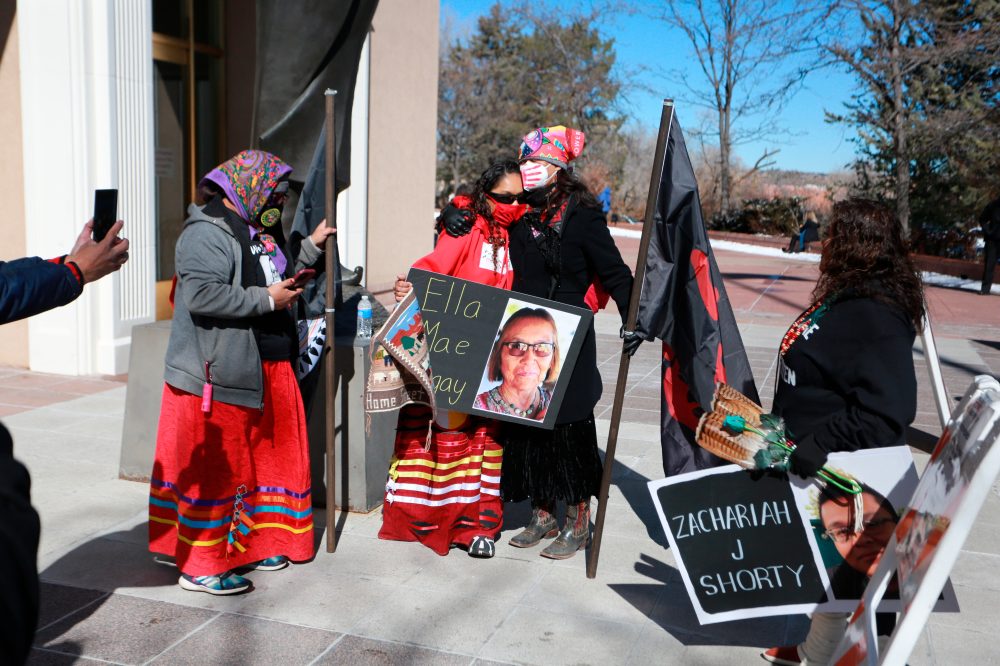
Ella Mae Begay was 62 years old when she disappeared in 2021 from Sweetwater, Arizona, a town in the northern region of the Navajo Nation. She had been known for spending time with family members and creating handwoven rugs that she would sell to local trading posts.
The following year, Begay’s niece Seraphine Warren made a cross-country journey on foot from the Navajo Nation to the nation’s capital to bring attention to her aunt’s case and the alarming rates of violence and disappearances affecting Native American communities. The case has gained widespread media coverage and become a rallying point for tribal officials and advocates demanding increased law enforcement resources and better coordination between tribal and federal investigators.
Authorities with the Navajo Nation police department identified Tolth as a person of interest shortly after Begay went missing. Tolth’s father had been in a romantic relationship with Begay’s sister at the time.
According to the plea agreement terms, Tolth admitted to forcibly taking Begay’s pickup truck, repeatedly hitting her in the face, and abandoning her alongside a road before driving off with the vehicle. He later exchanged the truck for cash and methamphetamine.
Judge Rayes has set a May date to examine the updated plea agreement, which would shield Tolth from potential murder or manslaughter prosecution related to Begay’s disappearance.
Begay’s relatives say federal prosecutors developed the agreement without consulting them and contrary to their desires.
Gerald Begay, the missing woman’s son, paused his construction work in Denver to participate in Thursday’s hearing via telephone. He told The Associated Press he intends to appear at the upcoming court session to urge the judge to dismiss the plea deal and pursue a trial instead.
“The prosecutors aren’t thinking about our rights or what we need as a family,” he stated.
Lennea Montandon, a representative for the U.S. Attorney’s Office for the district of Arizona, said in a written response that the office has followed federal victims’ rights laws throughout Tolth’s prosecution and will continue doing so. Tolth’s court-appointed attorney refused to discuss the revised agreement.
During a 2021 FBI questioning session, Tolth admitted to assaulting Begay during an angry outburst and leaving her to die. However, Judge Rayes significantly damaged the prosecution’s case by determining that confession could not be used as evidence, ruling that the FBI agent had improperly pressured Tolth into giving up his right to stay silent. Court documents show prosecutors acknowledged this ruling substantially weakened their case.
Earlier this month, Rayes took the unusual step of rejecting a previous agreement that would have freed Tolth after serving three years in exchange for a guilty plea. The judge made this decision after hearing emotional testimony from Begay’s family members, who argued Tolth should not be released without revealing the location of her body.
“Accountability is not time served,” Begay’s niece Seraphine Warren had told the judge. “It’s about truth, and we still don’t have the truth.”