Technology glass manufacturer Corning experienced a significant stock decline Tuesday after announcing revenue projections for the upcoming quarter that fell short of Wall Street expectations, despite robust performance in its data center operations.
The company’s stock price dropped more than 10% during premarket trading following the announcement on April 28.
Economic uncertainty has led consumers to hold onto their electronic devices longer and spend more cautiously, creating headwinds for Corning’s business even as its fiber-optic communications division sees strong growth.
The manufacturer projects core revenue of approximately $4.6 billion for the quarter ending June 30, which falls below the analyst consensus estimate of $4.63 billion compiled by LSEG.
As a major supplier to Apple, Corning has experienced challenges from declining global smartphone sales, which has reduced demand for its specialized glass products used in display technology.
The company’s glass innovations division, encompassing display and specialty materials, saw net revenue increase 1% to $1.42 billion during the first quarter that concluded March 31.
However, Corning continues to see strong performance from growing data center investments, which has increased demand for its fiber-optic offerings.
The optical communications business unit, covering fiber-optic cables, hardware and connection equipment, generated net revenue of $1.85 billion in the first quarter, surpassing analyst projections of $1.7 billion.
The company announced it has secured long-term contracts with two major cloud computing providers. These partnerships follow a similar pattern to the $6 billion agreement with Meta announced in January, designed to support connectivity requirements for high-capacity data centers.
First-quarter core revenue totaled $4.35 billion, exceeding analyst estimates of $4.26 billion. The company reported adjusted earnings of 70 cents per share, slightly above the 69-cent estimate.
SAO PAULO – A new survey released Tuesday shows Brazil’s upcoming presidential race could be extremely close, with current President Luiz Inacio Lula da Silva and Senator Flavio Bolsonaro running virtually even in polling data.
The AtlasIntel/Bloomberg survey indicates that in a hypothetical second-round matchup, the conservative challenger Bolsonaro would capture 47.8% of voter support, while the leftist president would earn 47.5%.
This represents a slight shift from March polling, which had shown Bolsonaro at 47.6% compared to Lula’s 46.6%. Another recent survey from BTG Pactual/Nexus released Monday similarly found the two leading candidates in a statistical dead heat.
When looking at potential first-round voting scenarios, the polling data suggests Lula could earn between 44.2% and 46.6% of votes, while Bolsonaro might receive between 39.3% and 39.7%, with exact percentages varying based on which other candidates participate.
Under Brazil’s electoral system, any race where no candidate secures more than half of valid votes triggers a runoff between the top two finishers – a scenario that has occurred in every presidential election since 2002.
The South American nation’s general elections are scheduled for October, and financial markets have been closely monitoring polling trends since December, when former President Jair Bolsonaro – currently under house arrest – threw his support behind his 44-year-old son Flavio.
The 80-year-old Lula, who previously defeated the elder Bolsonaro in the 2022 election, is now pursuing what would be his fourth non-consecutive presidential term.
The AtlasIntel poll questioned 5,008 respondents between April 22 and 27, with a margin of error of plus or minus 1 percentage point.
The University of Delaware has published their latest weekly athletics roundup, providing Blue Hens fans with current information about upcoming sporting events and team activities.
The weekly athletics digest serves as a comprehensive resource for supporters following the various Blue Hens athletic programs throughout the academic year.
University athletics officials regularly distribute these updates to keep the campus community and local fans informed about scheduling changes, game results, and other important announcements related to Delaware’s collegiate sports teams.
Motorists traveling on Old Mill Bridge Road northbound should plan for potential delays due to ongoing construction work affecting traffic flow between Waters Run and County Lane.
Delaware Department of Transportation officials report that crews are implementing periodic lane restrictions in the area as part of construction activities. The temporary traffic pattern is expected to remain in effect until 6 PM today.
Drivers are advised to allow extra travel time and exercise caution when navigating through the work zone. The intermittent nature of the lane closures means traffic conditions may vary throughout the day as construction crews complete their scheduled tasks.
Motorists traveling on Old Mill Bridge Road should expect delays and plan alternate routes as construction crews continue work that requires intermittent lane restrictions.
The Delaware Department of Transportation reports that northbound traffic between Waters Run and County Lane is being impacted by the ongoing construction project. Drivers in the area are experiencing periodic lane closures that are expected to continue through 6 PM today.
Officials advise commuters to allow extra travel time when using this route and to exercise caution when approaching the work zone. Traffic may be temporarily stopped or redirected as crews complete their work.
Motorists traveling on Sussex Highway in the northbound direction should plan for potential delays this evening due to ongoing construction work.
Delaware Department of Transportation officials report that the right lane of Route 13 North has been closed to traffic in the area between Boyce Road and the Waller Road/Mount Zion Road intersection, also known as Road 480.
The lane restriction is expected to remain in place until 8 PM today as crews complete their work. Drivers are advised to use caution when traveling through the construction zone and allow extra time for their commute.
Traffic is being maintained in the left lane during the closure period.
Wilmington police are investigating a significant package theft that occurred Friday afternoon at a business on Capitol Trail.
Law enforcement responded to the 3600 block of Capitol Trail around 4:00 p.m. on April 10, 2026, after receiving reports of stolen mail packages valued at roughly $3,700.
Investigators examined evidence from the scene and have identified a Hyundai vehicle connected to the theft. The investigation remains ongoing as officers work to track down the suspect.
The incident highlights ongoing concerns about package theft affecting local businesses in the Wilmington area.
Financial data provider S&P Global announced Tuesday that first-quarter earnings climbed as clients increasingly turned to the company’s analytical services during a period marked by global tensions and market instability.
The earnings boost sent the company’s stock price up approximately 1.3% during premarket trading sessions.
Market turbulence, concerns about private lending, and international conflicts have driven investors to seek out sophisticated risk evaluation and market analysis tools, benefiting companies like S&P Global that specialize in these services.
The Manhattan-headquartered firm delivers credit evaluations, market benchmarks, analytical services, and workflow systems across global capital markets, commodities trading, and automotive sectors.
Fellow ratings company Moody’s similarly announced profit gains earlier in April, also citing increased client interest in research and analytical products.
S&P Global’s ratings division, which delivers credit evaluations, research, and analytics to investment clients, saw revenues surge 13% to reach $1.3 billion during the January-March period.
The company’s market intelligence division, serving investment professionals, corporations, and government entities with data and analytical tools, recorded an 8% revenue increase to $1.3 billion.
Overall company revenues grew 10% to $4.17 billion for the quarter.
Earnings per share reached $4.69 for the three-month period, marking an increase from the previous year’s $3.54 per share.
Despite the positive quarterly results, S&P Global stock has declined more than 15% year-to-date as investors express concerns about artificial intelligence potentially disrupting the software and services industry.
Delaware Department of Transportation officials are reporting a traffic disruption on South Fifth Street at Main Street where the left lane remains blocked following a vehicle accident.
The lane closure is impacting traffic flow in the area as emergency responders and cleanup crews work at the crash site. Drivers traveling through this intersection should anticipate possible delays and consider using alternative routes if possible.
DelDOT has not provided information about when the lane is expected to reopen or details about any injuries from the collision. Motorists are advised to exercise caution when driving through the area and follow any posted detour signs.
THE HAGUE, Netherlands — An international court has mandated that a militant extremist pay 7.2 million euros ($8.4 million) in compensation to those harmed during his leadership of religious police forces in Mali’s historic city of Timbuktu.
The International Criminal Court’s ruling Tuesday targets Al Hassan Ag Abdoul Aziz Ag Mohamed Ag Mahmoud, who received a 10-year prison sentence in 2024 following his conviction on charges including torture, religious persecution and cruel treatment. Court officials determined he played a central role in brutal control after Islamic militants seized Timbuktu in 2012.
“Mr. Al Hassan, as the person found responsible for the crimes, which caused the harm to the victims, is the person financially liable for the cost of repairing the harm,” Presiding Judge Kimberly Prost said, addressing the courtroom in the Dutch city of The Hague.
However, the tribunal cannot recover funds from the 49-year-old defendant, who was deemed financially unable to pay and required court-appointed legal representation throughout his proceedings.
The Trust Fund for Victims, established by court member nations to distribute compensation, will instead provide reparations to more than 65,000 affected individuals.
“We are one of the many innovations of the Rome Statute,” the fund’s executive director, Deborah Ruiz Verduzco, told The Associated Press.
According to the court’s founding document, the Rome Statute, the fund “responds to the harm resulting from the crimes under the jurisdiction.”
Ruiz Verduzco oversees 24 staff members responsible for supporting victims and families, creating programs in violence-affected communities and securing financial backing for their mission.
Throughout its twenty-year history, the trust fund has collected money directly from convicted individuals in just one instance.
“Substantial fundraising will need to take place,” Prost said.
Member nations provide most funding, though the organization also welcomes private contributions. Germany donated 40,000 euros ($46,000) in March, while Sweden and the Netherlands serve as primary supporters.
Court officials determine compensation distribution methods while seeking input from affected parties through their legal representatives and the trust fund.
For Al Hassan’s case, compensation will fund “socio-economic support, educational programs or trainings and psychological support,” the ruling states. Initiatives should prioritize women and girls, who experienced particularly severe treatment under extremist control.
Malian communities have previously received assistance. Ahmad Al Faqi Al Mahdi admitted guilt and faced conviction in 2016 for demolishing historic burial sites in Timbuktu. The trust fund launched building restoration efforts in 2021.
Mali and neighboring Burkina Faso and Niger have confronted more than ten years of insurgent violence from armed organizations, including groups affiliated with al-Qaida and Islamic State. After recent military takeovers in all three countries, new governments have removed French troops and sought security assistance from Russian mercenary forces.
Tuesday’s announcement follows recent large-scale coordinated attacks in Mali by an alliance of al-Qaida-affiliated militants and separatist groups, marking the biggest such offensive in more than a decade.
WARSAW, Poland — A well-known journalist who spent three years behind bars in Belarus has walked free following an international prisoner exchange involving 10 people, according to officials from multiple countries who announced the development Tuesday.
Andrzej Poczobut, who writes for Poland’s major newspaper Gazeta Wyborcza and serves as a prominent voice for Belarus’s Polish community, had been sentenced to eight years in prison in what critics called a politically driven prosecution.
Authorities arrested Poczobut in 2021, sparking condemnation across Europe. The European Union later honored him with the Sakharov Prize, its highest human rights recognition.
The prisoner release represents another example of U.S.-brokered exchanges that have characterized improving ties between Belarus’s capital and Western governments since President Trump began his second presidency.
According to a Polish Foreign Ministry representative, Belarus freed five prisoners, with three traveling to Poland in return for three individuals Poland sent to Belarus. The broader exchange involved additional nations and totaled 10 people.
Earlier this year in March, Belarus’s leader Alexander Lukashenko authorized the freedom of 250 political detainees as part of an agreement with Washington that resulted in the lifting of certain American sanctions.
Belarus, which maintains close ties with Russia, has endured years of international isolation. Lukashenko has controlled the country of 9.5 million people with authoritarian rule for over thirty years, facing repeated Western sanctions for human rights violations and for permitting Moscow to launch its 2022 Ukraine invasion from Belarusian soil.
On the social media platform X, John Coale, Trump’s special representative for Belarus, confirmed that three Polish citizens and two Moldovan nationals gained their freedom through the exchange.
“We thank Poland, Moldova, and Romania for their invaluable support in this effort, as well as President Lukashenka’s willingness to pursue constructive engagement with the United States,” Coale posted.
United Parcel Service exceeded Wall Street expectations for quarterly earnings on Tuesday while maintaining its annual revenue projections, as the shipping giant continues repositioning itself away from Amazon deliveries toward more profitable business partnerships.
The Atlanta-based delivery company has been strategically reducing its dependence on Amazon while pursuing lucrative contracts with healthcare providers and data centers that require specialized logistics services and generate higher profit margins.
Throughout the past year, UPS has eliminated thousands of positions while implementing automated systems at its sorting facilities to reduce operational expenses.
This business transformation occurs as American shipping companies, including competitor FedEx, face challenges from evolving trade regulations, particularly the elimination of duty-free status for low-value packages from Chinese-connected retailers like Shein and Temu.
Chief Executive Carol Tome stated the company anticipates returning to revenue and profit increases beginning in the second quarter, driven by its focus on premium shipping services and recent cost-reduction measures.
UPS confirmed its projection of 1.2% revenue growth reaching $89.7 billion by 2026, with an adjusted operating margin of approximately 9.6%. Despite the positive earnings report, company stock declined 4.7% during pre-market trading.
Evercore ISI analyst Jonathan Chappell noted that investors may react negatively to the absence of detailed second-quarter guidance and disappointing margins in the company’s primary U.S. Domestic division.
Jefferies analysts also expressed concern that the domestic segment’s 4% adjusted operating margin fell at the bottom of their projected 4% to 5% range.
For the quarter ending March 31, UPS reported adjusted earnings of $1.07 per share, down from $1.49 the previous year but exceeding analyst predictions of $1.02 according to LSEG data.
Quarterly revenue at the world’s largest package delivery service decreased 1.6% to $21.2 billion. However, revenue per package in its primary U.S. Domestic operation increased 6.5%.
PARIS – What typically amounts to a mundane parliamentary procedure has been converted into a divisive political theater, providing France’s far-right movement with an unexpected opportunity to launch a cultural battle against state-funded television and radio networks.
The investigation is being spearheaded by Charles Alloncle, a 32-year-old politician allied with National Rally leader Jordan Bardella, who has converted the process into a compelling clash between far-right parliamentary members and media organizations they’ve long claimed show political favoritism.
Through his confrontational questioning of well-known reporters, celebrity hosts and top-level management – while sharing attention-grabbing clips across social platforms – Alloncle has generated remarkable public interest and positioned himself as an emerging figure within the far-right movement.
With the six-month investigation into France’s 4-billion-euro annual public broadcasting system nearing completion, media experts and politicians predict its influence will extend far beyond the actual hearings.
They caution that the inquiry has contributed to undermining confidence in public media and established a foundation for the National Rally’s (RN) commitment to sell off the industry should they gain control in the 2027 elections.
RN leadership has enjoyed directing attention toward public broadcasters that have historically examined the far right and its media supporters closely.
For Alloncle, who currently serves with a faction of former conservatives now supporting the RN, the potential reward could include a ministerial position in a future far-right administration, according to RN insiders.
“He really did the job,” RN lawmaker Renault Matthias told Reuters. “It’s part of a culture war. Privatising public broadcasting is in our manifesto, so this serves our programme.”
FINANCIAL CRITICISMS CONNECT WITH VOTERS
Opponents argue the investigation has exceeded typical parliamentary supervision, drawing parallels to assaults by Britain’s conservative parties against the BBC surrounding the Brexit vote.
Although initial questions concentrated on supposed editorial prejudice, the focus moved toward expenses, employing cherry-picked instances and unsubstantiated suggestions to diminish public backing for government-funded media, according to critics.
“The strategy is not so much to debate editorial bias, but to hammer home the message that it ‘costs too much’,” said Erwan Balanant, a centrist lawmaker on the committee. “It’s a very effective way of destroying the legitimacy of public broadcasting.”
Alloncle highlighted a 60,000 euro payment made to actress Virginie Efira for hosting the 2022 Cannes Film Festival opening ceremony – a standard amount by global measures – as evidence of what he characterized as wasteful expenditure by public broadcasters.
He additionally disclosed the total sum the public broadcaster paid for the festival’s broadcast rights – confidential business information that private rivals could exploit to submit lower bids in future negotiations.
When the investigation began in December, surveys indicated 70% of French citizens held positive views of public broadcasting. However, Alloncle’s budget-centered messaging has gained traction during a period of economic strain.
During Reuters’ conversation with Alloncle near parliament, a pedestrian approached to praise him. “Keep up the good work,” the man said.
Alloncle informed Reuters he entered politics from the financial industry after encountering Bardella at a tech conference. He was subsequently selected as a candidate through an agreement between the RN and a smaller coalition ally.
He offered no regrets for his aggressive approach, which he attributed to toughness developed in business rather than politics. He stated his only objective was enforcing French media regulations that ensure diverse political perspectives.
“That means making sure public broadcasters do not chronically under-represent the RN, but also, say, the hard-left party France Unbowed,” he said.
CONCERNS ABOUT BOLLORE’S MEDIA INFLUENCE
Alloncle’s narrative has received support from conservative Catholic billionaire Vincent Bolloré’s media conglomerate, which stands to gain from any privatization of state media. His properties – including CNews, Journal du Dimanche and Europe 1 – have provided substantial coverage of the investigation and Alloncle’s public appearances.
Several lawmakers claim Bolloré’s media division, Lagardère News holding, went beyond coverage – alleging it distributed suggested question lists reflecting what they characterized as an antagonistic stance toward public broadcasters.
“It was a clear case of interference, and I told them to stop,” the inquiry’s chair, centrist lawmaker Jeremie Patrier-Leitus told Reuters, confirming an earlier Le Monde report.
Neither Lagardère News nor Alloncle responded to requests for comment regarding the question lists.
Media historian Alexis Lévrier views the situation as demonstrating a wider alignment between media ownership and political influence. “It’s a political and media empire aspiring to wield power in 2027,” he said.
During his testimony before the same investigation last month, Bolloré rejected any coordination with Alloncle. “I had never seen him before today,” Bolloré told lawmakers. “But he seems very likeable — and very effective.”
Technology stocks took a hit during Tuesday’s pre-market session after the Wall Street Journal published a report indicating that OpenAI has failed to meet its targets for both new user acquisition and revenue generation in recent months, sparking questions about the artificial intelligence company’s future growth trajectory.
According to sources familiar with the situation cited in the report, OpenAI’s Chief Financial Officer Sarah Friar has voiced worries about whether the company will generate sufficient revenue to cover upcoming computing service agreements.
Oracle experienced the steepest decline, with shares falling 7.7% to $159.80 in pre-market activity. The database giant reportedly entered into one of the largest cloud computing agreements with OpenAI, valued at $300 billion for computing services spanning five years.
CoreWeave, an AI startup supported by Nvidia, saw its stock price decrease 7.4% to $104. The company recently finalized an $11.9 billion deal with OpenAI last month to supply artificial intelligence infrastructure services.
International markets also felt the impact, with Japan’s SoftBank Group, a significant OpenAI investor, ending Tokyo trading nearly 10% lower, while Arm Holdings dropped 8.1%.
SoftBank has committed to providing $22.5 billion in funding to OpenAI before the end of the year through various fundraising methods, which could include utilizing unused margin loans secured against its stake in Arm Holdings, according to sources who spoke with Reuters in December.
A journalist of Polish descent has been freed from a Belarusian prison through a prisoner exchange conducted at the border between the two nations on Tuesday.
Polish Prime Minister Donald Tusk announced the release of Andrzej Poczobut, who holds both Polish and Belarusian citizenship, on social media. “Andrzej Poczobut is free! Welcome to your Polish home, my friend,” Tusk wrote on social media platform X, posting a picture of himself with the journalist of Polish origin.
The exchange involved five prisoners from each country, according to Belarus’s state-run news agency Belta.
Poczobut had been behind bars since his arrest in March 2021. A Belarusian court handed him an eight-year prison sentence in 2023 after convicting him of inciting ethnic hostility and undermining Belarusian security.
Polish officials have consistently maintained that the accusations against Poczobut were unfair and driven by political motives.
Poland has served as a safe haven for critics and dissidents fleeing the authoritarian rule of Belarusian President Alexander Lukashenko. The country has also emerged as one of Ukraine’s strongest allies following Russia’s full-scale military assault on Ukraine that began in 2022, with Russia being Belarus’s primary partner.
LONDON – British authorities announced Tuesday they are examining a suspected arson incident targeting a memorial wall located in Golders Green, a north London neighborhood with a significant Jewish population, following a series of recent incidents throughout the capital city.
The Metropolitan Police of London confirmed that Counter Terror Policing units are spearheading the inquiry, although officials clarified the case is not being classified as terrorism-related.
Authorities reported that no individuals have been taken into custody in connection with the incident, and the memorial wall itself sustained no damage from the attack.
“We recognise that this incident will heighten concerns in the Golders Green area, where residents have already faced a series of attacks,” stated Detective Chief Superintendent Luke Williams.
During the past month, counter terrorism investigators have taken more than two dozen individuals into custody as part of ongoing probes into assaults on Jewish-affiliated properties, including an incident on March 23 where ambulances owned by Hatzola, a Jewish volunteer emergency service, were set ablaze in Golders Green.
Motorists traveling southbound on North Star Road are dealing with traffic restrictions today as DelDOT has temporarily closed the right turning lane and right shoulder.
The closure affects the stretch of roadway between Celestial Way and Papermill Road, with normal traffic patterns expected to resume by 5 PM this evening.
Drivers are advised to allow extra travel time and exercise caution when navigating through the work zone area.
Motorists traveling on northbound Revel Road should plan for delays as Delaware Department of Transportation crews continue work operations in the area.
The ongoing project is affecting Route 410 northbound in the stretch between Godwin School Road and Lakeview Road, where flagging personnel are directing traffic around intermittent lane restrictions.
DelDOT officials indicate the traffic control measures will remain in effect until 6 PM today. Drivers are advised to allow extra travel time and exercise caution when approaching the work zone.
Motorists traveling through the intersection of Doncaster Road and E Edinburgh Road should plan for potential delays as construction crews continue work in the area.
DelDOT reports that intermittent lane restrictions are currently in effect at this location, with the closures expected to remain in place through 6 PM today.
Drivers are advised to use alternate routes when possible or allow extra travel time if passing through the construction zone is necessary.
BERLIN — Mechanical canines bearing incredibly lifelike silicone replicas of famous personalities’ faces are wandering through a German art gallery, periodically “defecating” printed photographs of their environment that they’ve captured using built-in cameras.
The robotic creatures feature heads modeled after tech titans Elon Musk, Mark Zuckerberg, and Jeff Bezos, along with artistic legends Andy Warhol and Pablo Picasso, as part of an interactive art piece by American creator Beeple (Mike Winkelmann) currently on display at Berlin’s New National Gallery.
Every printed photograph displays a slice of reality altered by artificial intelligence to mirror the character of each mechanical dog — essentially representing how the human figure attached to each robot might view the world. For instance, the Picasso-headed canine generates images in a Cubist aesthetic, while Warhol’s version produces pop art-style prints.
Exhibition organizers describe the installation as a statement about how algorithms and digital platforms influence our understanding of reality.
“In the past, our view of the world was shaped in part by how artists saw the world,” Beeple explained to the Associated Press. “How Picasso painted changed how we saw the word, how Warhol talked about consumerism, pop culture, that changed how he saw those things.”
Today, however, technology executives who control sophisticated algorithms determine what information we encounter and what remains hidden from view, the artist explained.
“That’s an immense amount of power that I don’t think we’ve fully understood, especially because when they want to make a change, they don’t need to lobby the U.N. They don’t need to get something through Congress or the EU, they just wake up and change these algorithms.”
Some of the mechanical animals also sport heads resembling Beeple himself.
Lisa Botti, who curated the Berlin exhibition, explained that artificial intelligence represents one of today’s most significant influences on daily life, and “museums are the places where society can reflect” on such changes, which motivated her decision to showcase Beeple’s creation.
The installation, called “Regular Animals,” made its debut at Art Basel Miami Beach 2025.
Beeple, a graphic artist from South Carolina, produces various forms of digital artwork and helped establish the “everyday” movement in 3D graphics by creating and sharing one image daily online for years without interruption.
Christie’s auction house ranks him as the third most valuable living artist by auction sales, trailing only David Hockney and Jeff Koons.
In spring 2021, Christie’s began accepting bids for Beeple’s digital compilation titled “Everydays: The First 5000 Days,” which eventually sold for more than $69 million. The auction house characterized the piece as “critiques of modern society, the government and social media” presented through “grotesque, dystopian futures, often featuring celebrities like Donald Trump and Kanye West.”
Christie’s noted this sale represented the first occasion a major auction house sold a purely digital artwork authenticated by a non-fungible token, and the first time cryptocurrency served as payment for an auctioned artwork.
Non-fungible tokens, or NFTs, function as digital certificates that verify the authenticity of digital collectibles by storing information on a blockchain digital ledger. These tokens have recently gained popularity in online collecting circles, emerging alongside the cryptocurrency surge.
During the Art Basel 2025 event, Beeple distributed the photographs produced by his robotic dogs to attendees, including certificates labeled “100% organic GMO-free dog shit.” Several prints contained QR codes providing access to complimentary NFTs, effectively allowing Beeple to distribute his digital creations at no cost for potential future monetization by recipients, including sometimes the photograph subjects themselves.
KYIV, Ukraine — Ukrainian defense forces successfully intercepted more than 33,000 Russian drones of different varieties during March, marking the highest monthly total since Moscow began its full-scale invasion over four years ago, according to Ukraine’s defense minister.
Simultaneously, Ukrainian-manufactured long-range attack drones targeted a Russian oil refinery and terminal along the Black Sea coast for the third occasion in under two weeks, leading to precautionary evacuations of area residents.
The nation has created advanced and combat-proven drone technology that has become vital for defending against Russia’s larger military force and has attracted military attention from nations worldwide.
Ukrainian officials report that Middle Eastern and Gulf nations are now seeking interceptor drones as components of comprehensive air defense systems due to ongoing conflicts involving Iran.
Ukraine continues expanding its supply of interceptor drones to counter Russian aerial assaults, with the military establishing a new command structure within the air force to enhance the nation’s defensive abilities, Defense Minister Mykhailo Fedorov announced in a Monday evening Telegram post.
Ukrainian offensive capabilities have similarly advanced, with the Defense Ministry announcing Tuesday that the country’s forces have more than doubled their deep-strike range since Russia’s February 2022 invasion began.
Initially, Ukrainian forces could engage military targets approximately 630 kilometers (400 miles) away, the ministry stated. Current operations now reach targets roughly 1,750 kilometers (1,100 miles) behind enemy lines, according to the ministry’s statement.
This enhanced capability has enabled Ukraine to target Russian oil facilities that generate essential funding for Moscow’s military operations. Ukrainian forces have also struck manufacturing facilities supplying Russia’s armed forces.
Ukraine hit a Russian oil refinery at the Black Sea port of Tuapse for the third time this month through a coordinated operation involving multiple defense and security service branches, Ukraine’s Unmanned Systems Forces announced Tuesday.
The two previous strikes this month eliminated 24 oil storage tanks and damaged four additional tanks, according to the report.
Independent confirmation of these claims was not available.
Residents living near the Tuapse refinery underwent evacuation Tuesday, stated Krasnodar Gov. Veniamin Kondratyev. He provided no specifics regarding evacuation numbers or duration.
The Russian Defense Ministry reported Tuesday that its air defenses intercepted 186 Ukrainian drones overnight across Russian regions, annexed Crimea, and the Black and Azov seas.
In the border region of Belgorod adjacent to Ukraine, three individuals died and three others sustained injuries in a drone strike, Gov. Vyacheslav Gladkov reported.
Russian drone strikes on Ukraine resulted in three civilian deaths and five injuries, Ukrainian authorities confirmed.
Two fatalities occurred in Chuhuiv city within the northeastern Kharkiv region, reported regional military administration head Oleh Syniehubov.
A 40-year-old man perished and five other men were injured in Kryvyi Rih, the hometown of Ukrainian President Volodymyr Zelenskyy.
An additional Russian assault on Konotop in Ukraine’s northern Sumy region disrupted the city’s electrical and water services.
Motorists are experiencing traffic delays on a busy downtown stretch of Route 36 as construction crews continue their work through the afternoon hours.
The Delaware Department of Transportation reports that Market Street, also known as Route 36, is experiencing periodic lane restrictions between Church Street and Mill Street. These temporary closures are part of ongoing construction activities in the area.
The lane restrictions are expected to remain in effect until 5:00 PM today, with traffic patterns returning to normal after that time.
Drivers are advised to allow extra travel time when passing through this section of the roadway and to use alternate routes when possible to avoid potential delays.
Motorists traveling through a busy section of Route 36 should plan for potential delays this afternoon due to construction activity.
Delaware Department of Transportation officials report that Market Street, also known as Route 36, will experience periodic lane restrictions between Church Street and Mill Street until 5 PM today.
The lane closures are not continuous but will occur intermittently as construction crews work in the area. Drivers are advised to allow extra travel time and consider alternate routes if possible.
DelDOT has not provided details about the specific nature of the construction work or how long the project is expected to continue beyond today’s scheduled closure time.
Delaware Department of Transportation officials are alerting drivers about ongoing construction work that has temporarily shut down one lane of traffic on the Indian River Inlet Bridge.
The right lane for southbound traffic on the bridge is currently blocked off to accommodate construction activities. DelDOT expects the lane restriction to remain in place until 5 p.m. today.
Drivers heading south across the bridge should plan for potential delays and consider using alternate routes if possible during the construction period.
Diplomatic efforts to end the Middle East conflict have reached an impasse, with negotiators unable to bridge fundamental disagreements over Iran’s atomic weapons development and strategic waterway access.
The peace process has stalled for two months since hostilities began between Iran and the U.S.-Israeli coalition, according to international reports. Mediators cite two primary obstacles preventing any breakthrough in talks.
The first major dispute involves Iran’s nuclear capabilities and future atomic program development. The second centers on which nation will maintain military authority over the Strait of Hormuz, a critical shipping corridor for global oil transport.
These unresolved issues continue to prevent meaningful progress toward ending the regional conflict that has disrupted international stability and energy markets worldwide.
A comprehensive investigation has uncovered how companies previously focused on boarding schools for wealthy troubled teens have shifted their attention to a vulnerable new market: adopted children.
Despite representing only 2% of children nationwide, adopted youth comprise an estimated 25-40% of those placed in the loosely regulated network of for-profit residential treatment facilities, wilderness programs, and boarding schools that experts call the “troubled teen industry.”
Former residents shared with investigators their belief that they became trapped in what amounts to a hidden orphanage system, where children face the exact outcome adoption was meant to prevent — instead of permanent loving homes, they found themselves warehoused for years in harsh and sometimes abusive institutions.
Former participants described these programs as prison-like environments, despite having committed no crimes and facing no formal sentences or judicial oversight. Parents typically make unilateral decisions about sending children away and determining the length of their stay.
Investigators spoke with numerous program participants, families, former staff members, government officials, lawyers and specialists, while reviewing hundreds of official documents and business records to understand how adopted children end up in these facilities despite their troubling histories.
These institutions command fees reaching $20,000 monthly by marketing themselves as specialists in treating adopted children for reactive attachment disorder, commonly known as RAD. They present themselves as solutions for overwhelmed adoptive parents, claiming children’s behavioral issues stem from an inability to form healthy relationships with caregivers that can be corrected through distant treatment.
However, mental health professionals assert that most teenagers in these facilities likely don’t suffer from RAD, and the treatments provided wouldn’t address the condition even if they did have it.
According to Brian Allen, a psychologist who directs the mental health program at Penn State’s Center for the Protection of Children, the diagnosis applies to young children who experienced such severe early neglect that forming bonds with caregivers becomes difficult.
Allen explained that the condition was originally identified in severely understaffed foreign orphanages where infants received minimal human contact or affection. The Diagnostic and Statistical Manual of Mental Disorders specifies it affects children under 5 who become so emotionally withdrawn they don’t seek comfort when frightened or upset. The condition is exceptionally uncommon and doesn’t apply to older children who experienced early neglect but exhibit behavioral problems years later.
Yet some practitioners broadly apply RAD diagnoses to virtually any adopted pre-teen or teenager displaying behavioral challenges, Allen noted. His clinic examined 100 adopted and foster children referred for treatment and found that while roughly 40% had received RAD diagnoses, none actually met the clinical criteria.
Allen advocates removing RAD from official diagnostic manuals, arguing the diagnosis has become too “corrupted.” Nevertheless, numerous facilities continue advertising RAD treatment services.
“Often what sweeps in is this overpromise, a very seductive promise from residential treatment centers,” explained Sloan Nova, a University of California San Francisco psychologist who was adopted from South Korea in the 1980s and later placed in a treatment facility as a teenager.
“So it just sounds almost too good to be true.”
The investigation identified significant financial incentives driving the targeting of distressed adopted children. Researchers found at least 80 private facilities marketing services for adoption-related issues.
Many operations began as small programs using behavioral modification methods historically based on Christian principles, according to experts. Today, public and private investment firms attracted by substantial profit potential and steady client flow have been purchasing centers and commercializing treatment approaches.
This dependable revenue stream enables investors to enter “into these markets risk free,” according to Raj Kumar, a healthcare analyst at financial services firm Stephens.
Kumar noted that residential treatment centers promise attractive 20% profit margins by minimizing staff expenses and maximizing treatment duration. This approach succeeds partly because these facilities face far fewer regulations than other residential healthcare settings like nursing homes.
Family Help & Wellness, a private equity-backed company operating more than a dozen facilities nationwide, currently faces multiple abuse-related lawsuits.
In a statement, the company said its programs operate independently and that it supports stronger industry regulations while working to enhance oversight and improve care quality aligned with current best practices.
“The safety, well-being, and long-term success of every young person and family are our priority,” the company stated. “We recognize this is an area of increasing public attention and scrutiny, understandably so, given the real impact on young lives.”
The consequences can be severe: Two of the company’s North Carolina facilities closed in the past two years following student deaths.
Kate, whose full name is being withheld due to her status as a sexual assault victim, spent most of her adolescence in institutions, including two later acquired by Family Help & Wellness. She reports being sexually assaulted by another student at Asheville Academy before transfer to Utah’s Uinta Academy.
Kate was 13 upon arriving at Uinta Academy. During her first night, she experienced a panic attack when her roommate extinguished her night light. She had feared darkness since the assault at her previous facility and ran to curl up while crying and hyperventilating.
Three staff members approached her, but instead of offering comfort, they forced her face-down onto the carpet while shouting that she was “OIC” — “out of instructional control.” For approximately an hour, they restrained her with one person on each arm and a third holding her legs.
Kate described screaming “I can’t breathe” as mucus ran from her nose. Eventually she fell silent from exhaustion and was released to sleep without her night light.
Students were required to follow all instructions without question while maintaining neutral facial expressions — no sighing, frowning, or crying permitted. Rule violations resulted in hours of scrubbing floors with toothbrushes while kneeling, or outdoor labor in 100-degree heat raking moldy hay and pulling weeds. The smell of freshly pulled weeds continues to nauseate her.
“We were afraid all of the time,” she recalled.
Her experience reflects broader patterns documented in a congressional investigation led by U.S. Senator Ron Wyden of Oregon, which found that facilities nationwide suffered from chronic understaffing leading to inappropriate physical restraints, inadequate mental healthcare, and widespread physical, sexual, and emotional abuse. The report, titled “Warehouses of Neglect,” detailed pervasive use of improper restraints, insufficient mental health services, and extensive abuse.
The investigation concluded that these facilities often operated more like detention centers for troubled youth rather than therapeutic environments where vulnerable children could heal.
SRN News has unveiled a new daily programming feature designed to keep audiences informed about religious developments worldwide. The audio segment, titled “Global Landscape,” offers a brief two-minute overview of faith-related news stories each day.
The program aims to keep listeners updated on important religious developments, community changes, and major events that highlight how faith intersects with current affairs across the globe. The compact format allows audiences to quickly catch up on significant stories affecting religious communities and spiritual matters worldwide.
Motorists navigating through a busy intersection in the Milford area should prepare for temporary lane changes due to ongoing construction work.
DelDOT reports that periodic lane shifts are currently affecting traffic at the intersection where Milford Harrington Highway meets Holly Hill Road. The construction-related traffic adjustments began earlier today and are scheduled to continue through 5 PM this evening.
Drivers are advised to allow extra travel time and exercise caution while passing through the work zone. The lane shifts are described as intermittent, meaning traffic patterns may change throughout the day as construction crews complete their work.
As the United States prepares to celebrate its 250th anniversary, researchers are drawing attention to the religious language woven throughout the Declaration of Independence. The founding document contains several references to divine authority, with Thomas Jefferson writing that “the Laws of Nature and of Nature’s God” provide humans with equal standing and justified America’s break from British rule. Historical records show Benjamin Franklin contributed the phrase indicating these rights were “endowed by their Creator,” while the document also references the Supreme Judge of the world.
Internationally, Kenya joins the global conversation on abortion rights as an appeals court reversed a previous decision that had supported abortion access. The ruling creates a legal battle expected to reach Kenya’s highest court. The appeals judges reinforced that abortion violates constitutional protections for children’s right to life and remains illegal except when maternal life is threatened. Under Kenyan criminal law, attempting or obtaining an abortion carries potential prison sentences of up to 14 years.
American voters will weigh in on reproductive rights across multiple states this November. Missouri legislators want citizens to eliminate the “right to reproductive freedom” amendment they added to their state constitution last year. Nevada voters must approve their 24-week abortion access constitutional amendment a second time for implementation, having passed it once in 2024. Virginia residents will consider a ballot initiative protecting reproductive freedom, including contraception access and abortion decisions during the first six months of pregnancy. Pro-choice organizations are investing heavily in campaigns across all three states.
The Trump administration has opened an inquiry into New York City’s education department following allegations of antisemitic practices. Federal education officials report receiving complaints about district employees organizing seminars titled “Palestine, Zionism, and Resistance” that allegedly encouraged teachers to promote pro-Palestinian viewpoints to students as young as kindergarteners. The Department of Education stated, “No child should be taught by his or her teachers to hate their peers. Neither should Jewish children be taught that being Jewish somehow makes them inherently guilty.”
Religious congregations across Virginia will find it simpler to develop affordable housing projects on their property thanks to recently passed legislation. The new measure comes as the state grapples with significant homelessness challenges, prompting faith communities to seek meaningful ways to address the crisis.
The legislation has garnered support from advocacy groups who see it as a practical solution to housing shortages. According to Sheila Hennessee from the Virginia Interfaith Center for Public Policy, who spoke with the Christian Post, the law “allows faith communities to care for neighbors and is the most meaningful policy addressing the housing shortage to pass this year.”
The partnership between religious organizations and housing development represents a collaborative approach to tackling one of Virginia’s most pressing social issues, with churches positioned to play a direct role in providing shelter for those in need.
Colorado state legislators have moved forward with initial approval of a proposal that would mandate all higher education institutions within the state to make abortion medication accessible to their student populations. The proposed legislation would encompass both publicly funded and privately operated colleges and universities throughout Colorado.
While the bill includes provisions allowing educational institutions to request exemptions based on legitimate religious objections, the final determination of what constitutes a valid religious basis would rest with state authorities. Currently, medication-induced abortions represent the predominant method used for pregnancy terminations across the United States.
ATHENS, Greece — Greek police launched a manhunt Tuesday after an elderly shooter attacked two government buildings in downtown Athens, injuring multiple victims with a shotgun. Media reports identified the suspect as an 89-year-old man.
The violence began at a social security office in central Athens, where authorities say the armed suspect shot and wounded a worker. Emergency responders provided medical care to the victim before the shooter escaped the scene.
The same individual later targeted a courthouse in a different area of downtown Athens, where additional people were injured, according to police. Officers recovered the shotgun used in both incidents.
Video from Greece’s state television network ERT captured paramedics loading at least three victims from the courthouse into ambulances for transport to area hospitals.
Authorities have not determined what motivated the attacks. ERT reported that the gunman scattered envelopes containing documents across the courthouse floor following the second shooting, suggesting they explained his reasons for the violence.
Alexandros Varveris, who leads the National Social Security Fund (EFKA), described how the attacker entered the Kerameikos district office and climbed to the fourth floor before opening fire. The gunman concealed his weapon beneath a trench coat and warned one worker to take cover before shooting another employee in the leg.
“He went in, went up to the fourth floor, raised his shotgun, told an employee to duck and hit another one,” Varveris explained during an ERT radio interview. The official noted that the shooter did not appear to deliberately target the specific employee he wounded.
Medical personnel transported the injured worker to a hospital after police applied emergency first aid, including a tourniquet, at the scene.
Such violent incidents remain uncommon in Greece, where citizens may own firearms but face strict government regulations.
SEOUL, South Korea — A South Korean appeals court has extended the prison term for Kim Keon Hee, spouse of impeached President Yoon Suk Yeol, increasing her sentence from 20 months to four years on corruption-related charges. This development comes roughly two months following her husband’s life sentence for rebellion.
Kim, the former first lady, initially received a 20-month prison sentence in January from a district court after being found guilty of accepting luxury items, including a diamond necklace from Graff and a Chanel handbag, from the Unification Church in exchange for pledges of political influence. At that time, she was cleared of charges related to stock manipulation that allegedly occurred before her tenure as first lady.
Following appeals from both sides, the Seoul High Court on Tuesday extended her imprisonment to four years after finding her guilty of accepting an additional Chanel bag from the religious organization and the stock manipulation allegations.
The presidential pair experienced a steep decline after Yoon’s December 2024 martial law declaration triggered his impeachment and ultimate removal from the presidency. Yoon now confronts multiple criminal proceedings stemming from his martial law actions and additional controversies. Authorities have stated that Kim played no role in her husband’s martial law implementation.
The Seoul High Court emphasized that as a first lady, being in the closest position to a president, Kim represents the nation alongside her spouse and wields considerable influence over him. The court determined that Kim disappointed public trust expectations and instead leveraged her prominent position to obtain gifts from the Unification Church.
Kim and the independent prosecutor have seven days to file an appeal with the Supreme Court, South Korea’s highest judicial authority. Independent prosecutor Min Joong-ki’s team had previously sought a 15-year sentence, while Kim’s legal representatives have contended that Min’s probe was politically motivated.
Kim has remained in custody since August when the Seoul district court granted an arrest warrant, citing concerns she might tamper with evidence. During Yoon’s presidency, Kim became entangled in multiple controversies that damaged her husband’s public approval and gave his political opponents continuous ammunition.
On December 3, 2024, Yoon, representing the conservative faction, suddenly imposed martial law and deployed military and law enforcement to the National Assembly, claiming his goal was to eliminate “anti-state forces” and “shameless North Korea sympathizers.” He has justified his actions as a last-resort effort to gain public backing in his conflict with the liberal opposition Democratic Party, which blocked his legislative priorities.
In February, the Seoul Central District Court convicted Yoon of rebellion for illegally deploying military and police forces in an attempt to take control of the Assembly, detain political adversaries, and establish unlimited authority for an undetermined duration.
An artificial intelligence application named ‘Text With Jesus’ has launched, offering users the ability to engage in digital conversations with biblical personalities through AI technology. The primary feature presents users with a Christ-like figure, complete with traditional religious imagery, and is designed to provide responses based on biblical teachings.
However, a review of the application’s Frequently Asked Questions reveals that the platform extends beyond conversations with Jesus. Users can also engage in text-based discussions with other biblical characters, including controversial figures such as Satan and Judas Iscariot, according to the app’s documentation.
A controversial bill allowing physician-assisted death in England and Wales has been rejected by the United Kingdom’s House of Lords. The proposed legislation would have permitted terminally ill individuals to end their lives with medical assistance.
Advocates for the measure have announced plans to reintroduce the bill during the upcoming summer legislative session, though they acknowledge the procedural challenges ahead will be complex.
The proposal faces considerable resistance from both the general public and pro-life organizations. Critics cite evidence from other European nations where similar laws have been enacted, noting significant increases in suicide rates following legalization of the practice.
Nearly eight weeks have passed, yet Rabih Khreiss struggles to accept his drastically changed circumstances.
The 45-year-old mechanic once supported his nine children through his automotive repair business in southern Lebanon, but now finds himself barely getting by while living in a makeshift tent in Lebanon’s capital city.
The Khreiss family joined countless others who evacuated their home community of Khiyam during the early morning hours of March 2nd, after receiving word that Hezbollah militants had launched attacks against Israel, marking the beginning of renewed warfare.
As a seasoned resident, Khreiss quickly realized that Israeli forces would likely respond with airstrikes against southern Lebanese communities and immediately moved his family to safety, taking only what they wore.
His prediction proved accurate as bombing commenced almost immediately. However, Khreiss never anticipated that nearly eight weeks later, his family would remain on Beirut’s streets as fighting continues, surviving solely through charitable assistance.
“I feel like my children and I are prisoners in a room, sentenced to life imprisonment. But when will relief come so we can get out of this life sentence? No one knows,” said Khreiss.
Each morning, the family awakens inside shelters constructed from wooden supports and plastic sheeting that shake ominously during strong winds. Without access to proper bathing facilities, they wash using plastic containers and clean their clothing by hand.
Adding to their hardships, Khreiss’s elderly sister who lives with the family battles cancer but has difficulty accessing medical treatment.
“We’re living in tents, not knowing where these days will take us. We start thinking, ‘if only we could wake up and win the lottery so we could get out of this mess’,” Khreiss said.
Even with a United States-mediated truce in place, Israeli military operations have continued throughout Lebanon while forces maintain control over portions of the southern region, demolishing structures they claim serve as Hezbollah facilities.
This includes regular controlled explosions in Khiyam, which has been almost completely leveled and abandoned by its previous population of approximately 10,000 residents.
Hezbollah forces have maintained their offensive operations against Israeli soldiers stationed in Lebanon and continue targeting northern Israeli territory.
Both Israeli and Hezbollah representatives claim the opposing side has violated the ceasefire agreement, which received signatures from Israeli and Lebanese government officials but not directly from Hezbollah leadership.
The persistent violence has intensified feelings of hopelessness among many Lebanese citizens, especially the 1.2 million displaced individuals who expected the ceasefire would enable their homecoming but instead remain permanently blocked from southern regions.
“Khiyam is my town, my region, my land, my home, my work, my people, my loved ones, everything. Of course, all my memories are in Khiyam. I miss everything about it,” said Khreiss, describing his community situated among rolling hills and agricultural areas including olive orchards.
During the previous Hezbollah-Israel conflict in 2024, one of Khreiss’s older sons suffered the loss of an eye when an Israeli attack struck their Khiyam residence. Khreiss personally extracted his children from the debris and recalls aging “years” during that single hour.
His repair shop sustained damage during that earlier conflict. Nevertheless, he returned and reconstructed his business, though he remains uncertain whether his workshop or residence survived the current destruction.
Khreiss worries that stress about his children’s prospects might cause him to suffer a stroke. He contemplates selling his vehicle if employment opportunities don’t materialize.
“It’s showing in my children that they’ve never known joy or happiness, never been to an amusement park, never had fun like other children,” he said.
“I brought them into this world, and I have to take responsibility for them and secure their future. But circumstances have forced me to do nothing for them. There’s nothing I can do.”
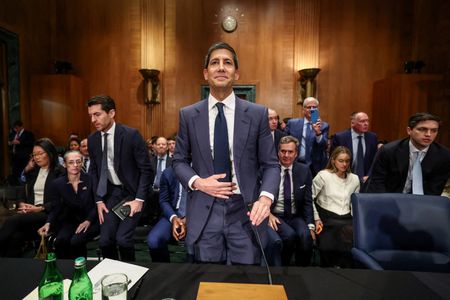
Federal Reserve nominee Kevin Warsh has expressed his desire for robust debate among policymakers once he assumes leadership of the nation’s central bank, describing his preference for what he calls a “good family fight” at decision-making meetings.
However, Warsh may encounter significant pushback if he attempts to implement the dramatic interest rate reductions that President Donald Trump anticipates from his Fed chair pick when Jerome Powell’s term concludes on May 15.
Among the 19 Federal Reserve officials responsible for setting interest rates, who are scheduled to meet Tuesday for what will likely be their last two-day policy session under Powell’s guidance, approximately half maintain hawkish positions. These officials prioritize concerns about potential inflation increases over employment market deterioration, making them reluctant to support rate reductions.
Roughly one-third of the officials hold centrist views, while only three have advocated for immediate cuts to borrowing costs. Fed Governor Stephen Miran, who belongs to this dovish group, is preparing to resign to allow Warsh to join the Federal Reserve’s Board of Governors.
The Senate Banking Committee is anticipated to move forward with Warsh’s nomination on Wednesday for full Senate consideration, improving prospects that the 56-year-old attorney and financial expert will be positioned to lead the Fed’s June 16-17 meeting.
Regarding employment conditions, Warsh shared his perspective with legislators during his confirmation hearing last week: “I think broadly speaking, the economy is running about close to full employment … if Americans that want a job can find a job, by the Fed’s metric we’re at full employment.”
This assessment may find agreement among his future colleagues. While monthly job growth has declined significantly over the past year, the number of people seeking employment has also decreased, primarily due to reduced immigration levels and the ongoing retirement of aging U.S.-born workers. These factors have maintained relatively low unemployment, which dropped to 4.3% in March.
Nevertheless, some Fed officials express concern about employment market vulnerability, particularly those with more dovish leanings.
“I continue to see weakness in the labor market that leaves it vulnerable, starting with data showing low numbers of both hires and people losing their jobs,” Fed Governor Christopher Waller stated earlier this month.
Currently, most Fed policymakers view the employment situation as stable and are examining inflation data to guide monetary policy decisions.
On inflation matters, Warsh testified during his confirmation that he believes inflation “has improved somewhat in the last year,” a perspective that differs from many Fed officials who cite the Trump administration’s new import tariffs as contributing to stagnant inflation progress. They also express concerns that the Iran conflict and substantially higher oil prices could drive inflation upward again.
Core inflation, measured by the year-over-year change in the core Personal Consumption Expenditures Price Index, reached 3% in February, with economists projecting an increase to 3.2% in March. The 12-month PCE Price Index change, which the Fed aims to keep at 2%, is estimated to have reached 3.5% in March.
During his testimony, Warsh indicated his preference for trimmed-mean measurements, which exclude the most rapidly rising and falling prices to provide a clearer picture of overall price trends. The Dallas Fed’s trimmed mean reading was 2.3% in March.
If these remarks suggested Warsh’s interest in reconsidering the Fed’s 2% inflation target, he may find limited support. Nearly all current central bank policymakers have indicated no interest in revising this goal, particularly given the Fed’s failure to meet it for five consecutive years.
However, most central bankers already examine various inflation indicators. Dallas Fed President Lorie Logan, whose regional bank produces the most recognized trimmed-mean measure, ranks among the central bank’s most hawkish policymakers.
Powell has characterized the Fed’s monetary policy as “well-positioned,” language adopted by many colleagues that indicates satisfaction with maintaining the current 3.50%-3.75% policy rate range, which the central bank is expected to preserve at this week’s meeting.
Some hawkish-leaning officials have even suggested modifying the Fed’s policy statement to show equal consideration for rate increases and decreases as potential next steps. Others argue that inflation pressures warrant postponing any rate cuts, possibly until next year. Financial markets currently expect no rate reductions this year.
At his confirmation hearing, Warsh did not repeat his earlier support for immediate rate cuts that he had expressed while Trump was considering his Fed chair selection. His silence on this topic may reflect his belief that Fed policymakers should avoid providing “forward guidance” about upcoming decisions or rate projections.
Warsh did not object when questioned about Trump’s suggestion that the Fed should reduce its policy rate to 1% by year’s end, a dramatic decrease typically associated with recessions and crises rather than economic growth.
Concerning the Fed’s balance sheet, Warsh told lawmakers that interest rate discussions should include balance sheet considerations because “those tools should be working in concert, not at cross purposes.” He contends that reducing the balance sheet would provide room for lowering short-term rates, a viewpoint that has gained public support from only one Fed policymaker so far.
Most of Warsh’s prospective colleagues view balance sheet discussions as separate from interest rate policy, except during crises. Warsh advocates shrinking the balance sheet while most Fed officials expect modest expansion aligned with economic growth and currency demand. They do appear to agree with Warsh that balance sheet changes should occur gradually.
Warsh’s belief that artificial intelligence will likely boost long-term economic productivity finds receptive listeners among policymakers. Enhanced productivity growth could potentially justify rate cuts by allowing faster economic expansion without inflation risks.
However, timing remains crucial. Several Fed officials have cautioned that artificial intelligence investment may currently contribute to price pressures. The long-term rate implications remain uncertain as AI will also impact employment in ways Fed policymakers are just beginning to understand.
SpaceX directors have given the green light to an extraordinary pay structure for company founder Elon Musk that connects his earnings to some of the most ambitious goals ever set by a corporation: establishing a human settlement on Mars and creating orbital data facilities.
Information about Musk’s unprecedented compensation arrangement, which had not received broad media coverage previously, emerged from SpaceX’s private filing documents submitted to federal securities regulators in recent weeks and examined by Reuters.
The ambitious incentives offered to Musk by SpaceX illustrate the difficulty of maintaining the focus of the multi-venture business leader as the rocket company moves toward going public. Corporate governance specialists warn this could also create friction between SpaceX stakeholders and Tesla investors, where Musk serves as chief executive.
Blending science fiction aspirations with financial obligations, SpaceX’s board gave approval in January to a compensation structure for the world’s wealthiest individual that would grant him 200 million super-voting restricted shares if the company achieves a $7.5 trillion market valuation and creates a sustainable human settlement on Mars housing no fewer than 1 million residents, based on portions of the company’s regulatory filing examined by Reuters.
His space-focused performance package additionally provides up to 60.4 million restricted shares granted on March 23 if SpaceX achieves distinct valuation benchmarks and runs orbital data facilities delivering no less than 100 terawatts of computing power – an enormous energy requirement equivalent to 100,000 gigawatts, or roughly 100,000 one-gigawatt nuclear facilities operating simultaneously. Both compensation awards include super-voting Class B restricted stock, providing 10 votes for each Class A share, and become available in portions as company value increases.
Nevertheless, Musk will receive no shares whatsoever if the company cannot meet the board’s ambitious valuation benchmarks, which lack specific deadlines beyond his ongoing employment. Since 2019, he has earned a basic annual salary of $54,080 from SpaceX.
Determining the compensation package’s worth remains impossible since SpaceX operates as a private company. The rocket manufacturer plans an initial public offering around Musk’s June 28 birthday, potentially valuing the enterprise at approximately $1.75 trillion, according to Reuters reporting.
By December 31, Musk possessed 68.8 million previously granted Class B stock options with an exercise price near $42 that expire in 2031, enabling him to capture any gains beyond that threshold if he uses the options before expiration.
Forbes estimates Musk’s current wealth at $776 billion. Beyond SpaceX, he could potentially more than double that figure by meeting separate, demanding performance objectives at Tesla, the electric vehicle manufacturer he also leads. According to the registration documents, he controlled roughly 20% of Tesla’s shares as of November.
Neither SpaceX nor Tesla provided responses to comment requests. Both The Information and Reuters have previously covered SpaceX compensation targets for Musk connected to Mars colonization and orbital data centers.
Executive pay specialist Eric Hoffmann, who serves as chief data officer for corporate governance consulting company Farient Advisors, stated he was unaware of anything even remotely similar in other companies’ compensation arrangements.
“I’m not a physicist or astronomer and I wouldn’t know where to start,” Hoffmann explained. “The measuring stick is, has it been done in human history? These haven’t. So that’s hard.”
Currently, SpaceX and Tesla are essentially competing for Musk’s attention, according to Hoffmann. He pointed out how Tesla’s board argued just last fall that it required generous compensation to maintain Musk’s focus on the automotive company. Tesla previously revealed that Musk actually threatened to depart if shareholders rejected the proposal.
“What’s interesting about this situation is now, SpaceX and Tesla, both effectively controlled by Elon Musk, are now bidding against each other for his attention,” Hoffmann observed.
Equilar Director of Research Courtney Yu also noted the Mars colonization and space data center objectives were remarkable because he could not recall any other corporation – except Tesla – employing metrics beyond traditional financial measures like earnings or revenue to establish CEO compensation.
The responsibility lies with the respective company boards, SpaceX and Tesla, to decide how to best allocate Musk’s time, Yu explained. Although a $7.5 trillion market value for SpaceX might appear extraordinary, Yu said in a phone conversation, “it does help with setting expectations for investors as to what the goals of the company really are.”
Good morning, Delmarva! We’re looking at a pleasant spring day across the peninsula with partly sunny skies and comfortable temperatures reaching around 65 degrees.
There’s just a slight chance – about 20% – of some light rain showers between 11 AM and 5 PM, so you might want to keep an umbrella handy just in case. Winds will be light from the south at 10 mph or less, making it feel quite nice out there.
Tonight will be partly cloudy with temperatures dropping to a cool 49 degrees – perfect sleeping weather!
Looking ahead to Wednesday, that’s when things get more interesting. We’ll start mostly cloudy, but showers and thunderstorms become likely as the day progresses. Highs will be similar around 66 degrees. Wednesday night continues the wet pattern with showers and storms expected, and lows near 51.
So enjoy today’s relatively quiet weather, but definitely have those rain plans ready for tomorrow! This is your TV Delmarva weather team keeping you prepared for whatever Mother Nature sends our way. Stay safe out there!
Countless households across America are living without home insurance protection, largely due to dramatically rising premium costs in recent years. National Public Radio is now seeking personal stories from homeowners about the difficult insurance decisions they’re facing as costs continue to climb.
The situation has become particularly urgent as recent disasters, like the January 2025 Eaton Fire that devastated parts of Altadena, California, highlight the risks of being unprotected. Aerial photographs show the stark contrast between cleared residential lots where homes were completely destroyed and neighboring properties that survived the blaze.
Rising insurance premiums have forced many homeowners nationwide to make tough financial choices about their coverage levels or whether to maintain insurance at all. NPR is encouraging affected homeowners to share their experiences navigating these challenging decisions in today’s insurance market.
Delaware Department of Transportation officials are advising drivers of an ongoing lane restriction on Route 896 southbound that will remain in effect until 6 AM.
The right travel lane is currently blocked along the southbound direction between Welsh Tract Road and the Route 896 interchange, creating potential delays for morning commuters and travelers in the area.
Motorists are encouraged to allow extra travel time and exercise caution when driving through the work zone. Drivers should also consider alternate routes if possible to avoid congestion in the affected area.
State Farm Insurance is facing multiple legal challenges alleging the company has engaged in covert practices to reduce claim payments for hail damage to homeowners.
The legal action emerges during a period when property owners across the nation are grappling with dramatically increasing insurance premiums, with climate change-driven severe weather contributing to the cost surge.
According to data from the Insurance Information Institute, an organization supported by the insurance industry, severe weather events resulted in $51 billion in covered losses during the previous year, with hail damage representing a significant portion of those claims.
The lawsuits contend that State Farm has systematically worked to avoid paying the full amounts owed to policyholders who have suffered hail-related property damage, though specific details of the alleged practices were not disclosed in the available court documents.
MELBOURNE, Australia — The Australian government has unveiled new draft legislation targeting major social media platforms with a revenue-based tax designed to support local journalism funding.
Officials released the proposed bill on Tuesday, planning to present it to Parliament before July 2nd. The legislation would establish financial pressure on companies like Meta, Google, and TikTok to negotiate compensation agreements with news publishers for journalistic content.
The social media companies have criticized the initiative, calling it a misguided “digital services tax” that fails to recognize changes in the advertising landscape and won’t create long-term sustainability for news organizations.
Prime Minister Anthony Albanese emphasized the importance of compensating journalists for their work during a press conference.
“It shouldn’t just be able to be taken by a large multinational corporation and used to generate profits for that organisation with no compensation appropriate for the people who produce that creative content,” Albanese told reporters.
“We think that investment in journalism is critical to a healthy democracy,” he added.
This represents Australia’s second legislative effort to require these platforms to compensate for Australian news content and imagery consumed by their users.
Previously, the 2021 News Media Bargaining Code had pressured digital companies to establish payment agreements with Australian news publishers rather than face mandatory arbitration proceedings.
Initially, the platforms opted to negotiate commercial agreements with content creators to avoid court-mandated pricing. However, they subsequently discontinued these arrangements by eliminating news content from their platforms entirely.
Under the new News Bargaining Incentive proposal, major platforms that refuse to establish commercial agreements with news publishers would face a 2.25% tax on their Australian earnings.
Companies would receive tax reductions and lower overall expenses if they choose to compensate publishers for journalism, according to government officials.
Australian authorities anticipate the incentive could generate between 200 to 250 million Australian dollars ($144 million-$179 million) annually. This amount roughly matches what platforms previously paid news outlets when the original News Media Bargaining Code was most effective.
Communication Minister Anika Wells explained that the government would allocate these funds to news organizations based on their journalist employment numbers.
The tax would target Meta Platforms (Facebook and Instagram’s parent company), Google (owned by Alphabet Inc.), and TikTok (majority-owned by U.S.-backed investors).
Meta strongly opposed the proposed legislation, stating that news organizations “voluntarily post content on our platforms because they receive value from doing so.”
“The idea that we take their news content is simply wrong. This proposed legislation, which would apply to platforms regardless of whether news content even appears on our services, is nothing more than a digital services tax,” Meta said in a statement.
“A government-mandated transfer of wealth from one industry to another, with no connection to the value exchanged, will not deliver a sustainable or innovative news sector. Instead, it will create a news industry dependent on a government-administered subsidy scheme,” Meta added.
Google responded by saying “we reject the need for this tax.”
“It ignores the fact that Google already has commercial agreements with the news industry, misunderstands how the ad market changed and mandates payments from some companies while arbitrarily excluding platforms like Microsoft, Snapchat and OpenAI — despite the major shift in how people consume news,” a Google statement said.
TikTok had not provided an immediate response to requests for comment.
All three targeted platforms are American companies. U.S. critics have previously argued that Australia’s News Media Bargaining Code unfairly burdened American corporations.
Albanese dismissed concerns about potential U.S. government opposition to the measure.
“We’re a sovereign nation and my government will make decisions based upon the Australian national interest,” Albanese said.
A growing movement within the education community is challenging one of the most fundamental aspects of traditional schooling: homework assignments.
According to federal statistics, mathematics homework given to students in fourth and eighth grades has experienced a consistent downward trend over recent years.
However, education specialists are raising concerns about this shift away from take-home assignments. They worry that reducing homework requirements could further harm student performance in mathematics, particularly given that standardized test results across the country have reached concerning lows.
The debate highlights a fundamental question facing schools nationwide as they balance student well-being with academic rigor and achievement expectations.
BANDAR SERI BEGAWAN, April 28 – During a diplomatic meeting in Brunei on Tuesday, European Union foreign policy chief Kaja Kallas encouraged Southeast Asian nations to avoid purchasing Russian oil as they navigate fuel supply challenges stemming from Middle East conflicts.
Earlier this month, the EU implemented new sanctions targeting Russia, which included stricter limitations on oil commerce, as part of efforts to weaken Moscow’s financial capacity to continue its military operations in Ukraine.
According to Kallas, Russia has gained advantages from the U.S.-Israeli conflict with Iran, which has resulted in the practical shutdown of the Strait of Hormuz – a crucial shipping lane that handles approximately 20 percent of global oil transportation and other essential commodities.
“Just let me remind you that the oil revenues are the revenues that Russia is using to fund this war (in Ukraine). We have an interest that this war stops,” she stated to journalists following her discussions with foreign ministers from the Association of Southeast Asian Nations (ASEAN).
“That’s why we are, of course, advocating for diversifying resources and finding them elsewhere, not from Russia,” Kallas added.
The EU diplomat did not clarify whether this topic was specifically discussed during her formal meetings with ASEAN officials.
According to previous Reuters reporting from last month, several Southeast Asian countries, including Vietnam, Thailand, the Philippines and Indonesia, have been exploring increased oil purchases from Russia.
Investment professionals are reevaluating their long-term market strategies as concerns mount over artificial intelligence’s potential to disrupt established business models, according to new analysis from Goldman Sachs released Thursday.
The financial services giant reports that expected earnings beyond the next decade – known in investment circles as terminal value – currently represent approximately 75% of the S&P 500’s total worth, marking a 25-year peak for this metric.
“Today’s share of value in the terminal value is elevated versus history and mirrors other periods where investor long-term growth expectations were increasingly optimistic, including the dotcom boom,” Goldman stated in their research note.
Market anxiety surrounding AI disruption has intensified following Anthropic’s introduction of advanced automation tools designed for marketing and data analysis functions, sparking questions about competitive pressures facing established software companies.
Technology stocks have felt the impact, with the S&P 500 software and services sector declining roughly 17% year-to-date as investors worry about potential revenue and profit margin erosion from emerging AI capabilities.
Goldman’s calculations suggest significant vulnerability in current market valuations, estimating that each percentage point reduction in projected long-term growth could slash S&P 500 companies’ combined enterprise values by approximately 15%.
High-growth companies face particularly steep risks, with potential valuation drops of around 29%, while slower-growth stocks might see declines of about 10%.
“The value of a high-growth company is especially sensitive to changes in its long-term growth outlook,” Goldman’s analysts noted.
The investment bank anticipates that AI disruption debates will continue creating market uncertainty for multiple quarters ahead.
“The threat of disruption will likely represent a persistent overhang until later stages of AI adoption,” the firm’s researchers added.
Goldman highlighted a communication gap between corporate leadership and investors, noting that only 5% of S&P 500 companies addressed financial projections beyond five years during recent quarterly earnings presentations.
“We think more managements should prioritize discussions of the long-term outlook (to investors),” Goldman recommended.
Federal highway safety officials announced Tuesday they are intensifying their investigation into dangerous steering defects that could affect more than 330,000 Jaguar Land Rover vehicles across the United States.
The National Highway Traffic Safety Administration has elevated its inquiry to an engineering analysis phase, focusing on Range Rover and Range Rover Sport models manufactured between 2014 and 2022.
Safety regulators initially launched their investigation last year after receiving multiple reports describing cracks developing where aluminum steering components connect to suspension parts. The fractures occur at the connection point between the steering knuckle and the upper control arm ball joint.
According to NHTSA officials, when these front suspension components break apart, the upper suspension arm can become detached, leaving drivers unable to maintain control of their vehicles and dramatically increasing the likelihood of serious accidents.
As part of the expanded investigation, federal regulators plan to examine the component’s engineering design, determine the scope of safety risks, and review potential recall solutions.
Jaguar Land Rover operates as a British-based company under the complete ownership of India’s Tata Motors corporation.
ACCRA, April 28 – Armed attackers ambushed a Ghanaian military convoy escorting 140 civilians through the northern town of Binduri on Monday, leaving three civilians dead and one wounded, according to military officials.
The convoy was traveling through Ghana’s Upper East Region from Bawku toward Bolga when unknown gunmen launched multiple attacks on the vehicles, military authorities reported in an official statement.
Binduri sits near the violence-plagued town of Bawku, where ongoing ethnic tensions between the Mamprusi and Kusasi communities have centered around disputes over traditional leadership appointments in the region.
This ethnic conflict has claimed over 300 lives since 2021, with the bloodshed now extending beyond Bawku’s city limits into surrounding areas like Binduri.
Local authorities had previously implemented nighttime curfews in Binduri Township starting in March 2025, which were lifted in February 2026 after security conditions showed signs of improvement.
Military personnel fought back against Monday’s assault, fatally shooting seven of the attackers, according to army officials. Following the confrontation, troops seized a G3 automatic rifle, two loaded magazines containing 20 rounds each, and an additional 176 rounds of ammunition from a suspect who had sought refuge in a local mosque.
Authorities have taken ten additional suspects into custody, who are now cooperating with ongoing investigations into the attack, military sources confirmed.
Motorists traveling along US Route 13 at South Street should expect intermittent lane restrictions through the early morning hours due to construction activity in the area.
According to DelDOT traffic officials, the periodic lane closures will remain in effect until 7:00 AM as crews continue their work on the roadway.
Drivers are advised to use caution when traveling through the construction zone and allow extra time for their commute during the affected hours.
Listen to the Morning Delmarva Farm Report Update — April 28, 2026
DELMARVA — Delaware specialty crop growers now have access to more than $402,000 in federal grant funding. The Delaware Department of Agriculture opened applications Monday for its 2026 Specialty Crop Block Grant Program with $402,000 available.
Individual grants range from $5,000 to $75,000 for projects lasting 1 to 3 years. Proposals are due May 18 at 4:30 p.m. Qualifying crops include fruits, vegetables, tree nuts, nursery plants, and flowers.
Delaware producers, nonprofits, government agencies, and educational institutions can all apply. The program does not cover traditional field crops like corn and soybeans or livestock projects.
Planting Progress
Nationwide planting progress continues ahead of schedule. The USDA reports 23% of the nation’s soybean crop is already in the ground with 8% emerged, both above the 5-year average.
Markets
Corn and soybean futures posted gains Monday on technical buying and short covering.
Turning to local cash markets, corn at Laurel Grain Company in Laurel, Delaware is bringing $5.14 a bushel for May delivery. Soybeans there are $11.34 for May.
Forecast
On the forecast for Delmarva, Tuesday’s high reaches 62°F with a slight chance of rain showers and southeast winds 5 to 10 mph. Wednesday turns wetter with rain showers likely and a high of 61°F.
This article is based on the Delmarva Farm Report Update Morning Edition, April 28, 2026. Hosted by Tom Bradley.
Drivers on Route 13 should expect delays as construction work has forced the closure of left lanes in both directions along a busy stretch of the highway.
The Delaware Department of Transportation reports that the left lanes are blocked on both the northbound and southbound sides of Route 13 from Willow Grove Road to Shamrock Avenue.
The lane restrictions are scheduled to remain in effect until 7 a.m., when normal traffic patterns are expected to resume.
Motorists are advised to allow extra travel time and use caution when driving through the construction zone.
Morning commuters on US Route 13 will need to plan for delays as construction crews continue work that has shut down left lanes in both directions.
The Delaware Department of Transportation reports that the left lanes on northbound and southbound US-13 are blocked between Willow Grove Road and Shamrock Avenue due to ongoing construction activities.
These lane restrictions are scheduled to remain in place until 7:00 AM, potentially impacting the morning rush hour commute for drivers traveling through the area.
Motorists are advised to allow extra travel time and use caution when driving through the construction zone.
National Public Radio’s A Martinez conducted an interview with Juliette Kayyem, who previously served with the Department of Homeland Security, regarding the challenges and requirements involved in presidential security during public appearances.
The conversation centered on the security protocols and operational limitations that arise when safeguarding President Trump at public gatherings, specifically referencing Saturday’s dinner event as an example of such security challenges.
The nation’s highest court examined arguments Tuesday concerning accountability for Monsanto, the company behind Roundup herbicide, and whether federal regulations should override state-level legal action regarding alleged health complications.
During oral arguments, Supreme Court justices seemed split on the question of whether federal oversight should block individual state lawsuits that claim the widely-used garden and agricultural chemical caused health problems for users.
The case centers on the legal principle of federal preemption, which can prevent state courts from hearing cases when federal law already governs an issue. Monsanto argues that federal pesticide regulations should shield the company from state liability claims.
Members of Congress are expressing concerns about Secret Service security protocols after authorities prevented an assault targeting the White House Correspondents’ Association dinner.
The foiled attack has prompted some legislators to question current protection measures and renew calls for creating a dedicated ballroom within the White House complex for hosting such high-profile events.
Iran’s Deputy Defense Minister announced Tuesday that the country stands ready to transfer its defensive military technology to allied nations, particularly those belonging to the Shanghai Cooperation Organisation, according to reports from Iranian state media.
Deputy Defense Minister Reza Talaei-Nik made the announcement during a defense ministers’ meeting in Kyrgyzstan’s capital city. The statement follows a two-month military confrontation between Iran and both the United States and Israel that stretched from late February through early April.
During that conflict, Iranian forces deployed multiple waves of unmanned drones and missile strikes targeting American military installations throughout the region and Israeli locations. Iran also successfully intercepted various U.S. aircraft, mostly drones, that entered Iranian airspace during the hostilities.
“We are ready to share the experiences of America’s defeat with other members of the organisation,” Talaei-Nik stated during the SCO defense ministers’ gathering.
The Iranian defense official has recently conducted discussions with military leaders from Russia and Belarus, with both Moscow and Minsk expressing their commitment to maintaining collaborative relationships with Tehran.
While a ceasefire declaration earlier this month has temporarily suspended the two-month military confrontation, diplomatic initiatives aimed at achieving a permanent resolution to the conflict have reached an impasse.
Stock prices for chemical manufacturer Bayer dropped sharply Tuesday morning following uncertainty from the U.S. Supreme Court regarding the company’s legal battle over its popular Roundup herbicide.
The German-based company’s shares plummeted as much as 6.5% during early trading, settling at a 3.2% decline by 7:31 GMT.
During Monday’s Supreme Court session, justices seemed uncertain about Bayer’s request to dismiss thousands of legal claims alleging the corporation failed to properly alert consumers that Roundup’s main chemical component may lead to cancer development.
The chemical giant’s stock performance has struggled throughout April, losing nearly 7% of its market value this month and heading toward its third straight month of declining prices.
Iran has identified underwater internet cables running through the Strait of Hormuz as potential targets, sparking worries about threats to critical digital infrastructure that keeps the global internet running.
This strategic waterway, already crucial for worldwide oil transport, serves as an equally important pathway for digital communications. Multiple fiber-optic cables run along the ocean floor through the strait, linking nations from India and Southeast Asia to Europe through Gulf nations and Egypt.
These underwater cables carry approximately 99% of global internet traffic, according to the International Telecommunication Union, the UN’s digital technology agency. The cables also transport telecommunications signals and electrical power between nations, making them essential for cloud computing services and online communications worldwide.
“Damaged cables mean the internet slowing down or outages, e-commerce disruptions, delayed financial transactions … and economic fallout from all of these disruptions,” explained geopolitical and energy analyst Masha Kotkin.
Gulf nations, especially the UAE and Saudi Arabia, have poured billions into artificial intelligence and digital infrastructure as they work to reduce their dependence on oil revenues. Both countries have created national AI companies serving regional customers — all depending on these underwater cables for high-speed data transmission.
Key cable systems passing through the Strait of Hormuz include the Asia-Africa-Europe 1 (AAE-1), which links Southeast Asia to Europe through Egypt with connection points in the UAE, Oman, Qatar, and Saudi Arabia. The FALCON network connects India and Sri Lanka to Gulf states, Sudan, and Egypt. The Gulf Bridge International Cable System links all Gulf nations, including Iran. Several additional networks are currently being built, including one led by Qatar’s Ooredoo.
While submarine cable length has expanded significantly from 2014 to 2025, cable failures have held steady at approximately 150-200 incidents annually, according to the International Cable Protection Committee. Though state-sponsored sabotage remains a concern, 70-80% of cable damage results from accidental human activities, mainly fishing operations and ship anchors.
Additional threats include ocean currents, seismic activity, underwater volcanic activity, and severe storms, noted Alan Mauldin, research director at telecommunications research company TeleGeography. The industry mitigates these dangers by burying cables, adding protective armor, and choosing safer routes.
The Iran conflict, now approaching its second month, has caused unprecedented disruption to global energy supplies and regional infrastructure, including damage to Amazon Web Services data centers in Bahrain and the UAE. The submarine cables have remained undamaged thus far.
However, an indirect threat exists from damaged ships accidentally striking cables while dragging anchors.
“In a situation of active military operations, the risk of unintentional damage increases, and the longer this conflict lasts, the higher the likelihood of unintentional damage,” Kotkin stated. A comparable incident happened in 2024 when a commercial ship attacked by Iran-backed Houthis drifted in the Red Sea and cut cables with its anchor.
The extent to which cable damage might affect connectivity in Gulf countries depends heavily on individual network operators’ reliance on them and available backup options, according to TeleGeography.
Fixing damaged cables in war zones presents unique challenges beyond simply protecting them. While the actual repair work isn’t extremely complex, repair ship owners and insurance companies may hesitate due to risks from combat or mines, experts explain.
Getting permission to enter territorial waters creates another complication. “Often one of the biggest problems with doing repairs is you have to get permits into the waters where the damage is. That can take a long time sometimes and can be the biggest source (of problems),” Mauldin explained.
After conflicts end, industry operators must also re-examine the sea floor to identify safe cable locations and avoid ships or debris that may have sunk during fighting.
While potential submarine cable damage wouldn’t cause complete connectivity loss due to land-based connections, experts agree that satellite systems cannot serve as adequate replacements since they cannot manage the same traffic volume and cost significantly more.
“It’s not as though you could just switch to satellite. That’s not an alternative,” Mauldin emphasized, explaining that satellites depend on ground-based network connections and work better for mobile applications like aircraft and ships.
Low-Earth-orbit systems like Starlink represent “a boutique solution, which is not scalable to millions of users, at this time,” Kotkin added.
A South Korean appeals court on Tuesday handed down a four-year prison term to Kim Keon Hee, the country’s former First Lady, following her conviction on charges of stock manipulation and accepting bribes.
The Tuesday ruling represented an increase from her previous sentence, as the appeals court decided to impose harsher punishment for the financial crimes.
Kim Keon Hee faced charges related to illegally manipulating stock prices and receiving bribes during her time in the public spotlight.
Federal highway safety regulators have concluded their investigation into more than 120,000 Tesla Model Y vehicles on Tuesday, determining no recall or manufacturer action was necessary.
The National Highway Traffic Safety Administration launched its preliminary investigation in early 2023 following two separate incidents where steering wheels completely separated from the steering column because of a missing bolt designed to keep them attached.
Tesla acknowledged that both affected vehicles had been shipped to customers without the crucial retaining bolt and subsequently repaired both cars at no cost to the owners under warranty coverage.
According to NHTSA, both problematic vehicles rolled off production lines during the opening week of January 2023 from Tesla’s manufacturing facilities in Austin, Texas, and Fremont, California. The agency noted that both cars had received final assembly repairs before customer delivery that required technicians to remove and reinstall the steering wheels.
Safety investigators discovered no further cases of the same problem and determined that both steering wheel failures happened within the vehicles’ first 400 miles of operation, suggesting any other potentially affected cars would have likely already shown the same defect by now.
NHTSA emphasized that ending this investigation does not mean officials have determined no safety defect exists, and the agency reserves the right to reopen the matter if additional information comes to light.
Musician Kid Rock and Defense Secretary Pete Hegseth took rides in Army Apache helicopters at a Virginia military installation on Monday, according to reports.
The helicopter flights occurred just weeks following controversy surrounding military pilots who were criticized for flying aircraft in the vicinity of the rock star’s residence.
Both the entertainer and the Defense Secretary participated in the helicopter experience at the Army base, though specific details about the purpose or duration of the flights were not immediately available.
The timing of Monday’s helicopter rides has drawn attention given the recent scrutiny faced by military aviators over flights that occurred near Kid Rock’s home property.
The Food Safety and Inspection Service has released updated financial thresholds that determine when retail establishments must comply with federal inspection regulations.
Under the new guidelines, retail outlets can continue operating without federal inspection requirements as long as their sales of meat and poultry products to restaurants, hotels, and similar commercial establishments stay below specified dollar amounts.
The adjusted monetary limits serve as a benchmark for determining which businesses qualify for exemptions from federal oversight. Stores that exceed these sales thresholds to institutional buyers would lose their exempt status and become subject to federal inspection protocols.
These revised financial parameters affect how retail meat and poultry vendors structure their business relationships with commercial food service operations while maintaining compliance with federal regulations.
PHOENIX — The Oklahoma City Thunder’s playoff opening-round mastery rolled on Monday night as they completed another flawless series performance.
With tougher challenges awaiting in upcoming rounds, the reigning champions appear fully prepared to pursue another title defense.
Oklahoma City capped off a complete four-game series victory over Phoenix with Monday’s 131-122 win, pulling clear during the final quarter. The Thunder have now claimed victory in all 12 first-round contests across the last three playoff seasons.
“It’s a really good feeling,” guard Shai Gilgeous-Alexander said of the sweep. “Just for our confidence as a group, it’s good to get the playoff run started the right way. You never know what can happen — and usually the later you go, the better the teams, and the series won’t go like that. You want to give yourself as many days as possible to rest.”
The 27-year-old Gilgeous-Alexander demonstrated why he earned Most Valuable Player honors throughout the series against Phoenix, posting 33.8 points per game while connecting on 55.1% of his field goal attempts. His finest performance came in the third game when he tallied 42 points on an exceptional 15-of-18 shooting display.
Monday’s series clincher saw him contribute another strong showing with 31 points on 10-of-17 shooting. Oklahoma City’s offensive attack reached peak efficiency in the final game, getting 24 points from Chet Holmgren and 22 from Ajay Mitchell.
The Thunder connected on nearly 54% of their field goals while draining 17 of 34 three-point attempts for a 50% success rate from beyond the arc.
“We played the right way, nothing out of the usual,” Gilgeous-Alexander said. “Guys were out there making aggressive plays and playing for each other. We have a formula we try to play with and we try to impose it every night.”
Oklahoma City will next meet either the Los Angeles Lakers or Houston Rockets in the Western Conference semifinals, with the Lakers currently ahead 3-1 following Houston’s Game 4 victory.
Despite the series sweep, the Thunder faced some challenges when starter Jalen Williams suffered a hamstring injury during the second game. Oklahoma City’s roster depth proved sufficient to overcome the determined but outmatched Suns, who secured their playoff spot by defeating Golden State in the play-in tournament.
Mitchell seamlessly transitioned into the starting role replacing Williams and displayed growing confidence, especially in the final game. He recorded 22 points and six assists, proving capable of handling increased responsibilities during postseason play.
The 6-foot-4 guard, selected in the second round of the draft from Santa Barbara, has rapidly established himself as a crucial rotation player.
“Ajay is one of the toughest dudes in the league,” Gilgeous-Alexander said. “Mentally, he’s never shaken. He’s never afraid of the moment. Ajay can be having the worst day ever and you would never know because he’s so solid.”
Oklahoma City’s size advantage proved decisive against Phoenix, who played without starting center Mark Williams due to a foot injury. The 7-foot-1 Holmgren and 7-foot Isaiah Hartenstein grabbed 24 rebounds in Monday’s game, including nine offensive boards.
Holmgren noted that Phoenix employed a guard-heavy lineup that emphasized smaller lineups. He expects future opponents to use varying strategies but believes Oklahoma City is prepared for any approach.
“We’re going to see different teams match up in different ways,” Holmgren said. “Some are going to go big and some are going to go small and play with more pace and open the floor. But I think we’ve seen a lot of what we could see at this point. Now it’s just about going out and executing.”
German military officials have ruled out working with American defense technology firm Palantir, citing national security concerns about data access, according to statements made to a German business publication.
Thomas Daum, who oversees cyber defense operations for Germany’s armed forces, told Handelsblatt newspaper that such partnerships are not being considered currently. “I don’t see that happening at all at the moment,” Daum stated in the publication’s Tuesday edition.
The military official explained that while German forces recognize the potential benefits of the company’s database capabilities, security protocols prevent such collaboration. “As much as we are interested in the functionality for our own database, it is simply inconceivable at the moment to grant industry staff access to the national database,” Daum explained.
This decision comes as Palantir has secured significant contracts with the U.S. military. Last month, reports indicated that the company’s artificial intelligence technology had been formally adopted by the Pentagon for long-term use, particularly for weapons-targeting applications across American military branches.
German military leaders have been exploring artificial intelligence solutions to process battlefield information more quickly than traditional human analysis methods allow.
Rescue operations have concluded following a devastating train accident near Jakarta, Indonesia, with officials confirming 14 fatalities and 84 people wounded in the collision.
The tragic incident occurred Monday evening in Bekasi, located just outside Indonesia’s capital, when a commuter train and a long-distance train crashed into each other.
PT KAI, Indonesia’s state railway company, confirmed through CEO Bobby Rasyidin that the death count had reached 14 people.
Mohammad Syafii, who leads Indonesia’s search and rescue operations, announced Tuesday that all evacuation efforts had wrapped up. He described the complex nature of freeing passengers who were stuck inside the destroyed train cars.
“We needed to involve personnel with certain skills to perform a measured extrication,” Syafii explained, noting that while no additional passengers remain to be found, rescue workers will continue searching the debris for any remaining body parts.
The crash’s most severe damage occurred to a car designated exclusively for female passengers. According to Syafii, every person who died was a woman, with the majority crushed beneath twisted metal.
Emergency responders used specialized cutting equipment, including angle grinders, to slice through the metal compartments and reach those who survived before separating the trains.
Railway executive Bobby explained during a news briefing that the sequence of events began when the commuter train struck a taxi positioned on the railway tracks, followed by the long-distance train hitting the commuter train.
Green SM Indonesia, the taxi company involved, confirmed through social media that one of their vehicles was part of the accident. The company stated it provided information to investigators to help with their inquiry.
The taxi service operates as the Indonesian division of Green and Smart Mobility JSC, a Vietnamese electric vehicle company connected to Vingroup.
Following a visit to a Bekasi medical facility, President Prabowo Subianto announced plans to construct an overpass near the railway to address severe traffic problems in the area. He also promised a thorough investigation into the accident and acknowledged that significant portions of the country’s rail system lack proper maintenance.
The crash is currently under review by Indonesia’s National Transportation Safety Committee.
Family members and concerned individuals gathered at the train station Tuesday, many searching for missing relatives.
Heriyati, who was traveling on the train, shared that she had originally planned to board the women’s car but chose the one directly behind it instead. She was speaking with her husband by phone, arranging for him to collect her from the station, when the collision happened.
“I haven’t even finished with the call and the trains collided,” she recalled.
The commuter rail system serves as one of Jakarta’s busiest transportation networks in what ranks as the world’s most populated urban area. PT KAI announced that several commuter routes were shortened Tuesday due to the crash aftermath.
Adriansyah Yasin Sulaeman, who holds an executive position at the Forum Transport for Jakarta research organization, emphasized the need for government investment in upgrading the deteriorating railway infrastructure. He specifically recommended creating separate tracks for express long-distance services and local commuter trains.
“These commuter trains are a symbol for the working class,” Sulaeman stated. “It’s a big alarm for the government to seriously improve it.”
Transportation accidents involving land vehicles occur frequently throughout Indonesia. A separate train accident in West Java province during 2024 resulted in four deaths and numerous injuries.
TOKYO – Stock values for Nippon Express Holdings, a major Japanese shipping and logistics company, climbed as high as 15% on Tuesday after American investment firm Elliott Investment Management revealed it had acquired a 5.04% ownership stake in the business.
This investment marks another addition to Elliott’s growing portfolio of Japanese company holdings as the activist investor increases its presence in Japan during a period of widespread corporate transformation across the nation.
Stock prices for Nippon Express later pulled back from their peak gains, settling at approximately 8% higher at 4,186 yen per share during afternoon market activity.
Under Japanese financial law, investors must publicly report their holdings once they exceed a 5% ownership threshold. Elliott has not yet provided any public statements explaining their rationale for purchasing the stake.
In recent months, Elliott has become increasingly active in Japanese markets. The firm previously pushed for higher pricing in Toyota group companies’ acquisition of supplier Toyota Industries last year, and in 2026 revealed investments in shipping company Mitsui O.S.K. Lines and air conditioning manufacturer Daikin, advocating for these companies to concentrate more on their primary operations and deliver better returns to shareholders.
War-displaced civilians who sought safety in a remote South Sudan village have been cut off from critical humanitarian assistance by their own government, despite mounting casualties, according to witnesses and relief organizations.
The Associated Press interviewed individuals who recently escaped to Nyatim, a community surrounded by marshland. They reported severe food shortages and contaminated water sources in such an isolated location that satellite internet was their only means of requesting emergency help.
However, when humanitarian workers contacted South Sudan’s leadership requesting permission to provide emergency supplies, officials refused. Even reports indicating dozens had perished, some apparently from hunger, failed to change their decision.
“It was a ‘no’ from local and national authorities and from the military,” said Yashovardhan, the head of mission for Doctors Without Borders in South Sudan, who goes by one name. “Meanwhile, people are eating leaves and roots to survive.”
The U.N. World Food Program, typically cautious about addressing this ongoing issue in South Sudan, confirmed to the AP that authorities had prevented their assistance despite “numerous engagements with both national and local authorities,” according to the agency’s country director, Adham Effendi.
This pattern has repeated throughout South Sudan’s history, where citizens battled for independence from Sudan before civil conflict erupted internally. Whichever faction controls relief supplies stands accused of preventing the opposition from accessing them, leaving ordinary people to bear the consequences.
Current violence has escalated since Riek Machar, President Salva Kiir’s longtime political adversary, was removed from his position as first vice president and placed under house detention for alleged conspiracy last year. These leaders commanded rival armies during a brutal civil conflict that claimed approximately 400,000 lives before a 2018 peace accord established their unstable coalition government.
Last December, opposition troops supporting Machar captured military installations in Jonglei state. Government armies retaliated the next month.
On February 7, government soldiers approached Lankien town’s perimeter, where days before an air assault had targeted a Doctors Without Borders medical facility. Local residents described heavy weapons fire before troops invaded the settlement using armored vehicles.
Thomas Nim was among the evacuees. Accompanied by his expecting wife, three young children, and elderly mother, they navigated through wetlands, praying soldiers wouldn’t pursue them.
They joined many others who eventually reached Nyatim, roughly one day’s journey on foot.
“Some of the most vulnerable, like the elderly and children, ended up in Nyatim because they couldn’t make it any farther,” said Nim, a 43-year-old pharmacist.
As time went on and fatalities began occurring due to hunger and contaminated water, he requested assistance. Yet no help arrived.
Gatkhor Dual, an opposition representative managing relief efforts in Jonglei state, pointed to county commissioner James Bol Makuei for preventing humanitarian access. Makuei refuses aid to reach individuals who “support the opposition,” Dual explained, particularly when they’re located near government-controlled territories.
Makuei confirmed that entry to Nyatim had been limited but argued that population estimates of displaced persons — 30,000 according to Doctors Without Borders — were inflated. He charged South Sudan’s primary opposition movement, identified by its acronym SPLM-IO, with keeping civilians in Nyatim to draw aid and establish a strategic position near the county’s government center.
Nim, the pharmacist, insisted no opposition fighters were present in the region.
Worries about aid misappropriation have historical basis. Armed factions in South Sudan, including government forces, have extensively redirected humanitarian resources for military use. During recent Jonglei fighting, combatants ransacked more than two dozen humanitarian-operated medical centers, the U.N. reported.
Doctors Without Borders indicated it initially contacted authorities about Nyatim on February 22. The organization made another appeal on March 3 after receiving death reports. By March’s end, the medical organization released a public statement highlighting their efforts.
Providing assistance in South Sudan presents constant challenges. Transportation networks are inadequate. Water-based transport, when possible, faces attack risks. Official authorization remains mandatory.
The humanitarian emergency has worsened significantly. In March, more than half of over 1,000 children examined by Doctors Without Borders in Chuil, where South Sudan’s government has permitted humanitarian entry, showed severe malnutrition.
Relief workers face overwhelming demands. During February, Doctors Without Borders expanded a four-bed clinic to 60 beds, then 80. The facility is now expanding to accommodate 100 patients.
Meanwhile, some people are abandoning isolated Nyatim and returning to destroyed homes.
“People are returning to their homes,” said one of them, Koang Pajok. “There was no food and shelter.”
Unable to access the region through ground or water routes, the World Food Program has conducted airdrops of 415 metric tons of food supplies to Chuil since March, country director Effendi reported.
However, as civilians arrive seeking help, armed young men carrying assault rifles also appear. Some residents fear this could make Chuil a military target.
During an April morning, an aircraft circling above created nervous spectators.
“It’s a surveillance plane,” said Gal Wai Tut, who had reached the area days earlier with his wife and infant child. He remembered observing a similar aircraft over Lankien on the day he claimed a December bombing killed at least 11 civilians.
An elderly man warned against clustering together, explaining that groups are more vulnerable to attack.
Security fears are mounting across Colombia as insurgent forces have launched a devastating campaign of violence just weeks before the nation’s May presidential election.
Since Friday, militant groups have carried out more than 24 violent strikes targeting both civilian populations and government military installations throughout Colombia’s southwestern regions.
The escalating attacks have heightened concerns about safety and stability as the country prepares for its upcoming presidential vote.
The violence represents a significant security challenge for Colombian authorities as they work to ensure safe conditions for the democratic process.
BEKASI, Indonesia — Emergency teams have finished retrieving the final casualties from a deadly railway accident that occurred just outside Indonesia’s capital city on Tuesday. The tragic collision took place Monday evening when a passenger train traveling long distances struck the back end of a commuter train that had stopped at the Bekasi station near Jakarta.
Recovery operations continued through Tuesday as rescue workers worked to extract all victims from the wreckage at the station located in the outskirts of the Indonesian capital.
BEIJING (AP) — More than 200 people were forced from their homes after intense rainfall created dangerous flooding conditions in a southern Chinese city, according to state media reports released Tuesday.
Emergency responders used inflatable boats to reach residents who became trapped inside their homes in Qinzhou, located in the Guangxi region, the official Xinhua news agency reported. Video from the scene showed rescue workers moving through water that reached their chests, while firefighters physically carried elderly residents to safety.
Local officials in Qinzhou reported that weather monitoring equipment measured more than 270 millimeters of precipitation — approximately 10 inches — in the 24-hour span that concluded Monday morning at 8 a.m. This rainfall total set a new single-day record for the month of April in the area.
Weather expert Lin Nan explained in a social media post that this type of extreme precipitation normally doesn’t occur in coastal areas of southern China until the summer monsoon season begins in the middle to end of May. “It is rare to see such a heavy downpour in late April,” Lin said.
By Tuesday morning, educational institutions throughout Qinzhou had reopened for regular classes, and vehicle movement had returned to normal conditions in most areas of the city, according to reports from a news organization run by China’s emergency management officials.
The Trump administration showed little enthusiasm Tuesday for Iran’s diplomatic overture to halt current hostilities and restore access to the Strait of Hormuz in return for the United States ending its economic sanctions against the nation.
Iran’s proposal would delay negotiations regarding the country’s nuclear capabilities, an approach that Secretary of State Marco Rubio seemingly rejected during a Monday Fox News appearance.
“We have to ensure that any deal that is made, any agreement that is made, is one that definitively prevents them from sprinting towards a nuclear weapon at any point,” Rubio stated regarding the proposal, which Pakistan delivered to American officials.
White House officials confirmed that President Donald Trump’s national security advisors reviewed the Iranian offer and indicated Trump would respond to it at a later time.
The diplomatic initiative surfaced Monday while Iranian Foreign Minister Abbas Araghchi conducted meetings in Russia, a nation that has historically supported Tehran. Officials have not clarified what support, if any, Moscow might provide in this situation.
Casualty figures from the ongoing conflict show at least 3,375 deaths in Iran and a minimum of 2,521 fatalities in Lebanon, where clashes between Israel and Iran-supported Hezbollah forces restarted just two days following the Iran conflict’s beginning. Additional deaths include 23 Israelis, more than a dozen people in Gulf Arab nations, 16 Israeli military personnel in Lebanon, 13 American service members in the region, and six United Nations peacekeepers stationed in southern Lebanon.
During his Fox News interview, Rubio addressed Iran’s latest diplomatic effort, which would delay nuclear program discussions while ending Iran’s control over the Strait of Hormuz if America removes its sanctions and concludes the war.
“There’s no doubt in my mind that at some point in the future if this radical clerical regime remains in charge in Iran, they will decide they want a nuclear weapon,” Rubio explained.
“That fundamental issue still has to be confronted,” he continued. “That still remains the core issue here.”
When questioned about Iranian sincerity regarding potential negotiations, Rubio characterized them as experienced diplomats seeking to gain additional time.
“We can’t let them get away with it,” Rubio emphasized. “We have to ensure that any deal that is made, any agreement that is made, is one that definitively prevents them from sprinting towards a nuclear weapon at any point.”
NAIROBI/GENEVA – The Middle East conflict involving Iran has created devastating consequences for Somalia’s most vulnerable population: severely malnourished children who were already facing the dual crises of potential famine and significant reductions in international assistance.
Medical facilities across Somalia are being forced to deny treatment to critically undernourished children and limit their supply distributions due to shortages of essential therapeutic nutrition products caused by maritime shipping interruptions, according to recent reporting.
Nearly 500,000 children below the age of 5 are experiencing severe acute malnutrition, also known as wasting – the deadliest category of hunger – and the transportation delays are amplifying the impact of reduced humanitarian funding.
Medical staff in the cities of Baidoa and Mogadishu report they must carefully ration their limited inventory of specialized milk products and nutrient-rich peanut-based therapeutic paste that are essential for saving these young lives.
“Since the needs are large and we don’t have a lot of supplies, we have had to keep reducing the amount we give children,” said nurse Hassan Yahye Kheyre.
Kheyre’s medical facility treats over 1,200 children but has only 225 containers of peanut paste remaining, which the International Rescue Committee estimates will be depleted in approximately two weeks.
“If treatment is on-and-off, the children will become very weak, physically and mentally. And it may not be possible to reverse it,” Kheyre explained.
Three humanitarian organizations, including the IRC, have confirmed that transportation setbacks and increased expenses connected to the Iranian conflict are compounding an already dire situation.
At the medical center in Baidoa’s southwestern region, operated by IRC partner READO, Muumino Adan Aamin, a mother of nine children, has repeatedly attempted to obtain peanut paste for her 11-month-old daughter Ruweido.
Although Ruweido requires three packets daily, Aamin has been denied treatment twice due to supply shortages at the clinic.
Aamin previously almost lost her daughter Anisa during a 2017 drought that brought Somalia close to famine conditions. The child was reduced to “just bone and skin” but survived thanks to peanut paste treatment, Aamin recalled.
Nine years later, another drought has left 6.5 million people – representing one-third of Somalia’s population – facing severe hunger, while aid organizations struggle desperately to address the gaps.
An IRC shipment of peanut paste sufficient to feed more than 1,000 children became stranded two months ago at Mundra port in India, which is now overcrowded with redirected cargo unable to reach Gulf ports, explained Shukri Abdulkadir, IRC’s Somalia coordinator.
When informed that the Indian-manufactured peanut paste would require at least 30 additional days to arrive, IRC canceled the shipment.
The organization then placed an urgent order for 400 containers from Nairobi and is transferring existing supplies from Mogadishu to Baidoa while waiting for the new delivery.
However, increased transportation and production expenses have driven the cost of individual containers from $55 to $200, according to CARE International, whose most recent purchase now provides supplies for only 83 children instead of 300.
During 2024, shipments of therapeutic milk and ready-to-use therapeutic food from Europe to Somalia normally required 30-35 days, extending to 40-45 days in 2025 as vessels rerouted around Africa due to Red Sea security concerns.
Following the February 28 U.S.-Israeli attack on Iran and Iran’s subsequent closure of Gulf access, vessel shortages have extended delivery times to 55-65 days, said Mohamed Omar, Health and Nutrition director at Action Against Hunger in Mogadishu.
Currently in Somalia, the IPC global hunger monitoring system indicates that over 2 million people have reached the “Emergency” classification, just one step below official famine status.
Between January and March, admissions of severely malnourished children to health centers supported by ACF increased by 35% compared to the previous year.
Personnel at Daynile General Hospital, currently treating 360 children for wasting, reported on April 20 that they possessed barely adequate supplies for one week.
“Some children’s nutritional status has already worsened,” stated health and nutrition supervisor Xafsa Ali Hassan.
Somalia was excluded from the 17 impoverished countries selected to receive portions of this year’s funding allocated to the U.N. Office for the Coordination of Humanitarian Affairs by the United States, which has implemented the most severe reductions among international aid contributors.
OCHA reports that more than 200 medical facilities have shut down and mobile treatment teams have been dissolved.
The organization announced in December that over 60,500 severely malnourished children had received no treatment as a consequence, with projections indicating this number could reach 150,000 if funding shortfalls continue.
When the Iranian conflict began, domestic fuel costs increased by 150%.
“Somalia is really hard hit by the Iran war because people are still reeling from the impact of the previous drought,” said IRC’s Abdulkadir. “It’s very difficult for people to absorb these shocks.”
OCHA has requested $852 million from international donors to prevent complete famine conditions.
This represents a significant decrease from last year’s $1.42 billion request, yet only 14% of the reduced amount has been received so far.
German pharmaceutical company Boehringer Ingelberg announced Tuesday that their investigational weight loss medication achieved remarkable results in a major clinical study, with participants shedding an average of 16.6% of their body weight.
The comprehensive Phase III clinical trial tracked patients for 76 weeks and found those receiving survodutide experienced substantial weight reduction compared to just 3.2% weight loss among participants who received a placebo treatment.
The study focused on adults who were either obese or overweight but did not have type 2 diabetes as a complicating factor.
The German pharmaceutical giant obtained exclusive development and marketing rights for survodutide in 2011 through an agreement with Denmark-based Zealand Pharma, which will receive royalty payments from worldwide sales of the drug.
Complete findings from the Phase III study, designated as SYNCHRONIZE-1, are scheduled to be unveiled at the American Diabetes Association’s 2026 Scientific Sessions conference, taking place June 5-8.
The medication works by copying the effects of GLP-1, an appetite-reducing hormone found in the digestive system that is also targeted by injection treatments like Novo Nordisk’s Wegovy. However, survodutide also mimics glucagon, another digestive hormone, creating a dual-action approach that researchers believe may enhance weight reduction results.
Another pharmaceutical company, Altimmune, is also working on a treatment that harnesses these same two hormone pathways.
Earlier this year, survodutide showed encouraging results in middle-stage trials for treating fatty liver disease, also called metabolic dysfunction-associated steatohepatitis or MASH.
MEXICO CITY – Mexico’s President Claudia Sheinbaum announced Monday that her administration has formally complained to the United States through diplomatic channels about the unsanctioned participation of American officials in a counter-narcotics mission in northern Chihuahua state.
Four people died in a vehicle accident on April 19 following the drug operation – two American officials and two Mexican personnel. Sources have identified the U.S. officials as CIA operatives. The incident has reignited diplomatic friction between the neighboring countries regarding security collaboration.
The controversy led to the resignation of Chihuahua’s top prosecutor, Cesar Jauregui, late Monday evening. He stepped down after admitting he had given contradictory statements about what happened.
Sheinbaum emphasized that Mexico’s federal authorities had no knowledge that the American officials, reportedly CIA agents, were participating in the mission.
“What we told (the U.S.) was that the federal government didn’t know about the involvement of these people (in the operation) and we hope that it’s an exception,” Sheinbaum stated during her regular morning news briefing.
The Mexican leader said her country demanded that “our constitution and national security law should be followed,” and noted that Washington had expressed its understanding.
The participation of American personnel in anti-cartel missions remains an extremely contentious issue in Mexico. While Sheinbaum supports intelligence coordination and security partnership, she firmly opposes allowing U.S. agents or military forces to conduct operations within Mexican borders.
This stance contrasts sharply with U.S. President Donald Trump’s approach, who has consistently advocated for expanded American military involvement against Mexican drug cartels and has warned that the United States might act unilaterally if Mexico’s efforts prove insufficient.
Mexico’s security leadership revealed Saturday that the American officials lacked proper authorization to engage in security activities within the country, with one having entered Mexico using tourist documentation.
Initially, prosecutor Jauregui claimed the day after the crash that the U.S. officials had not participated in the laboratory raid itself, but were collected by Mexican operatives at a different location afterward. He said they were being transported to the state capital when the fatal accident happened.
However, Jauregui acknowledged Monday that his earlier statements contained inaccuracies, though he did not specify which details were wrong.
“Regarding the events that have come to light around the presence of individuals who identified themselves as alleged foreign officials, the information we initially had – and which I shared with the public – was inconsistent,” he stated in an announcement from the Chihuahua Attorney General’s office, which he also read during a news conference.
“There were omissions both in the information and in the institutional handling of points of contact with those individuals.” He expressed hope that his departure would help authorities “restore public trust.”
North Korea dramatically escalated its use of capital punishment during COVID-19 border restrictions, with the majority of death sentences connected to consuming prohibited foreign entertainment and religious activities, according to a human rights organization based in Seoul.
Research conducted by the Transitional Justice Working Group reveals that 148 individuals were executed in 60 separate incidents from 2020 through 2024, representing a significant jump from 41 death penalty cases during the preceding five-year span.
The organization compiled its findings through conversations with 880 North Korean refugees currently residing in South Korea and utilized satellite imagery to identify locations where executions took place. Researchers emphasized that their data should not be viewed as comprehensive.
Violations involving foreign cultural content and religious practices, such as viewing South Korean television programs and films, represented the highest percentage of execution cases, the study found.
Prior to pandemic restrictions, homicide had been the primary offense leading to death sentences.
Political crimes resulting in executions climbed to 28 cases from just four during the comparable earlier timeframe, as leader Kim Jong Un intensified efforts to suppress opposition during isolation measures.
Cultural offense executions also took place in the nation’s interior regions rather than solely near the Chinese border, indicating South Korean entertainment had penetrated across the entire country, according to Hubert Lee, who serves as the organization’s executive director.
North Korea has gradually begun loosening restrictions and permitted the 2023 return of citizens who had been overseas, while recently restoring passenger rail connections with China.
However, the count of North Korean defectors, which serves as a measure of the country’s external engagement, stayed minimal at 223 in 2025, down from 1,275 recorded in 2015, based on South Korean official statistics.
The expected leadership transition to Kim’s daughter, identified as Ju Ae, might also lead to increased executions, Lee suggested.
“The number of executions may surge when the time for Ju Ae to succeed is imminent, to remove the inner circle of her father and appoint her people,” Lee stated.
North Korean diplomatic missions in Singapore and London, along with Pyongyang’s permanent United Nations office, did not provide immediate responses to requests for comment regarding the report’s conclusions.
PITTSBURGH (AP) — The moment perfectly captured what Pittsburgh’s entire season has looked like.
Sidney Crosby was hobbling toward the tunnel during Monday night’s Game 5 matchup with Philadelphia, his left knee aching from taking a hard shot fired by his own teammate Ryan Shea from the blue line.
While Pittsburgh’s veteran leader was getting treatment in the locker room, Philadelphia managed to even the score. What had been a game largely dominated by the Penguins suddenly shifted momentum. The inexperienced Flyers, many playing their first playoff series, began to take control. It appeared Pittsburgh’s remarkable season might end with a swift postseason departure.
Then Crosby’s recognizable No. 87 jersey appeared back on the bench. Moments later, he was back on the ice. Before long, he was setting up a play by sending the puck to Pittsburgh defender Kris Letang at the edge of Philadelphia’s defensive zone.
Crosby wasn’t watching when Letang’s seemingly harmless shot from the point missed wide of the Philadelphia goal. Flyers netminder Dan Vladar was positioned for a big rebound that never materialized.
Instead, the puck bounced off Vladar’s left leg, then his right, before slowly crossing the goal line for what became the decisive score in Pittsburgh’s 3-2 win that staved off elimination and likely planted some uncertainty in Philadelphia’s minds. The Flyers’ once-commanding 3-0 series advantage doesn’t seem quite as secure following Pittsburgh’s victory.
Wednesday’s Game 6 takes place in Philadelphia, where the Penguins will arrive carrying both momentum and confidence in their undisputed captain, who appeared to rediscover his championship form after a surprisingly quiet series start.
Apart from his brief medical timeout, Crosby was a constant presence. He set up Connor Dewar’s second-period goal, earned another primary assist on Letang’s second consecutive game-winning goal, and nearly scored himself when his desperate attempt at an empty net in the closing minutes hit the left goalpost.
Age 38 seemed irrelevant on Monday night as Crosby delivered a classic performance.
“When things get hard and your back is against the wall, there is no doubt in my mind that he’s going to lead the charge in terms of elevating and finding a way to do everything possible to help us win this game,” first-year Penguins coach Dan Muse said.
Throughout his career, Crosby has accumulated 21 points across 24 elimination games. His 100th career playoff victory resembled all the others, featuring Crosby contributing across all areas of the game, including absorbing a painful blow to his knee before returning as though nothing occurred.
“I feel good,” he said. “I mean, that’s stuff that happens sometimes and you try to go to the front of the net and it’s just one of those ones that found its way. Sometimes they hit you, sometimes they go by.”
Crosby took a direct blow from his own teammate’s shot and immediately recovered. This resilience has defined Pittsburgh’s unexpected season, consistently finding ways to recover just when circumstances appeared to be deteriorating.
Their current comeback attempt would surpass all previous achievements by a considerable margin. The statistics remain challenging — only four teams in history have recovered from a 3-0 series deficit — but the odds have improved since Game 4 began.
Crosby welcomes those chances, as does his entire team.
“I think the last couple games we found our stride a bit,” he said. “We should feel good about that … we’re playing good hockey and we’ve got to go in there and find a way to win again.”
ORLANDO, Fla. — The Detroit Pistons’ impressive 60-win regular season and top playoff seeding may not matter much longer.
Following a disappointing 94-88 defeat to the Orlando Magic on Monday evening, Detroit finds itself trailing 3-1 in their Eastern Conference opening round matchup and facing potential elimination.
Throughout NBA history, only six eighth-seeded teams have managed to knock out a top seed in playoff competition. Since the league switched to best-of-seven formats for all playoff rounds in 2003, this feat has occurred just four times.
Detroit’s performance was marked by poor ball handling and overall carelessness against Orlando, putting them on the brink of joining this exclusive group of upset victims.
“We have to take care of the basketball. We have to win the rebound battle. We just have to be in the moment of what this is. This is playoff basketball,” said Tobias Harris, who scored 20 points. “We have to be more ready to just go out and there and scrap up. We are a little too casual. Everyone knows that in our locker room. We have to be better every single guy. All of us have to be better. We have to look ourselves in the mirror and be better.”
The veteran leader’s comments reflected the team’s frustration with their current predicament.
While Cade Cunningham paced Detroit with 25 points, he also contributed eight of the team’s problematic 20 turnovers. In contrast, Orlando managed to limit their giveaways to just 12.
“We did so many positive things but 20 turnovers and give up 16 offensive rebounds. That’s hard to overcome and that’s what it comes down to,” Pistons coach J.B. Bickerstaff said. “They’re sending a lot of bodies to (Cunningham). We have to help him by giving him more space so he has room to operate, set screens, be more physical, get the guys off of him but, again, we have to do a better job taking care of it.”
Detroit hasn’t reached the second round since their Eastern Conference finals appearance in 2008. After enduring five consecutive losing campaigns, Bickerstaff arrived last season and guided the franchise to 44 victories before falling to New York in six games.
This matchup differs from typical 1-versus-8 scenarios. Orlando showed strong play before struggling late in the regular season and needed to survive an elimination contest in the play-in tournament to reach this point.
Detroit climbed to the conference’s summit while second-seeded Boston played without Jayson Tatum during the early portion of the season.
Beyond ball security issues, the Pistons have failed to establish consistent scoring threats outside of Cunningham and Harris throughout this series. Detroit connected on only 6 of 30 three-point attempts (20%) in Game 4 and shot 31 of 82 (37.8%) from the field overall.
“Back’s against the wall. Whatcha gonna do? You’re gonna fight,” Pistons forward Isaiah Stewart said. “You have to fight until the end so let’s get back to the crib, protect the crib and take it one game at a time. The series is not over. We’re gonna keep fighting.”
ARLINGTON, Texas — During Monday night’s Yankees victory over Texas, Aaron Judge made sure Ben Rice’s home run total stayed behind his own by just one swing of the bat.
The powerful duo has now achieved a milestone for the New York Yankees that hasn’t been seen since Hall of Famers Mickey Mantle and Yogi Berra did it decades ago.
Rice launched a two-run blast 404 feet to left field in the Yankees’ 4-2 victory on Monday evening, marking his 10th home run of the campaign. Judge wasted no time responding, crushing a full-count curveball 414 feet to claim a share of the MLB lead with his 11th homer.
“After he hit his, he said, ‘I’m not going to let Benny catch me,’” Rice said with a smile. “Just trying to keep him honest, keep him motivated.”
The pair became only the second set of Yankees players to both reach double-digit home runs within the team’s first 29 games, matching the achievement of Mantle and Berra from 1956.
“I’m glad that I don’t have to face them, let’s just put it that way,” said Yankees pitcher Max Fried (4-1), who delivered six shutout innings for New York (19-10).
“Benny’s off to an amazing start. Judgie, ho-hum, 11 homers already,” manager Aaron Boone said. “It’s a pretty good combo there.”
The 27-year-old first baseman Rice is batting .322 with 23 RBIs, while Judge sits at .252 with 19 RBIs.
“Just consistent at-bat after consistent at-bat. Like it’s must-watch TV at this point,” Judge said of Rice. “He’s going to put something in play hard or he’s going to take his walk and pass the baton. It’s just impressive to watch, and I get a front-row seat. … And, makes my job easier when he does that.”
Rice connected on a 95 mph first-pitch fastball from Jack Leiter, sending it into the Yankees bullpen in left-center field for a 2-0 lead with two outs in the third inning. The blast was Rice’s sixth long ball in 11 contests.
Judge followed by driving his shot into the left-field seats, with the ball landing near the same area where he hit his American League record-setting 62nd home run on Oct. 4, 2022. He also collected two doubles and was hit by a pitch in his other trips to the plate.
“Maybe his best game of at-bats. … On all four times, stings two doubles, smokes the homer where he just rides out the curveball,” Boone said.
The performance came just one day after Judge also went yard on his 34th birthday.
Judge has connected for 260 of his 379 career home runs since the beginning of the 2021 season and already boasts four 50-homer campaigns.
Rice has tallied 43 home runs in 216 career games since making his debut in June 2024.
Following their explosive starts in 1956, Mantle went on to lead the majors with 52 home runs while Berra concluded the season with 30.
When Rice was questioned about whether he could maintain this pace alongside Judge throughout the entire season, he expressed his appreciation for the current moment.
“Yeah, I don’t know how long this is going to last, but I’m enjoying it. I’m enjoying it right now being this close,” Rice said before considering the historical significance he now shares with three former MVPs: Judge and two Hall of Fame legends.
“It’s pretty cool. I definitely would not have anticipated something like that,” he said. “But obviously the three names I’m surrounded with there are pretty big ones, so definitely very humbling.”
CAIRO (AP) — Iran’s renowned carpet manufacturing region has seen production come to a virtual standstill. Dairy companies can’t secure packaging materials for their milk and butter products. Massive steel production facilities that previously powered the nation’s economy have ceased operations. Hundreds of thousands have become unemployed, with millions more facing potential job losses.
Following more than five weeks of sustained attacks, American and Israeli military operations have targeted thousands of manufacturing facilities. The destruction is creating shockwaves throughout Iran’s economic system, threatening successive rounds of unemployment while Iranians confront dramatically rising costs. Chicken prices have surged 75% in the past month, while beef and lamb costs have climbed 68%. Numerous dairy items have seen price increases of 50%.
The situation may deteriorate further as America implements a naval blockade of Iranian harbors, severely restricting imports and petroleum exports worth billions annually. Economic hardships previously triggered widespread demonstrations that were violently suppressed before the current conflict and might once again drive citizens to protest publicly.
However, Iran possesses its own economic leverage against the world through its control of the Strait of Hormuz. Iranian officials declare they will only allow the crucial global energy passage to reopen when the blockade ends and hostilities cease. They’re wagering that an economy designed for self-sufficiency through decades of international sanctions can withstand hardship longer than U.S. President Donald Trump.
According to state media reports, Deputy Labor Minister Gholamhossein Mohammadi stated that Iran has lost no fewer than 1 million jobs directly due to the conflict.
However, the cascading consequences threaten between 10 million and 12 million positions — representing half of Iran’s workforce — according to Iranian economist Hadi Kahalzadeh’s warning.
Israel has asserted it targeted the industrial infrastructure of Iran’s paramilitary Revolutionary Guard. However, the attacks extended far beyond this scope, damaging facilities not controlled by the organization.
According to Kahalzadeh, a research fellow at Brandeis University, military strikes damaged 20,000 manufacturing plants, representing approximately 20% of the nation’s production facilities. Among the affected sites was Tofigh Daru, Iran’s largest pharmaceutical company, which produces cancer treatment medications and other medicines. Optical equipment and chemical manufacturing plants, along with aluminum and cement production facilities, also sustained damage.
Most significantly destructive were Israel’s attacks on Iran’s largest steel production and petrochemical manufacturing plants, primarily during a series of strikes just prior to the April 8 ceasefire. The nation’s two largest steel companies, Mobarakeh Steel and Khuzestan Steel, along with smaller operations, suspended production. Over 50 petrochemical facilities have ceased operations, according to Iran’s semiofficial Jamaran news agency.
This has severely damaged Iran’s two largest non-petroleum export sectors, causing price increases for everything from plastic products to piping, textiles and food packaging for items like milk, butter and cheese.
Military attacks aren’t the sole source of economic difficulties. Internet services have been mostly disabled since the protests began, devastating small and medium businesses dependent on online commerce. Even prior to the U.S. blockade, Iranian attacks on the United Arab Emirates, which supplied roughly one-third of Iran’s imports, prompted that nation to sever trade relations.
Approximately 80% of carpet and rug producers have halted operations in the industrial district of Kashan, the hub of Iran’s rugmaking sector, according to a rugmaker’s son. His family’s factory, which employs 20 to 30 workers and previously manufactured hundreds of rugs monthly using machines, is among those that have closed, though his father continues visiting the facility daily.
“Never have I heard my father so upset,” said the son, who lives in the United States and spoke on condition of anonymity for his family’s security.
Kashan, housing hundreds of carpet producers, “relies on the rug industry and unfortunately it’s been crippled,” he explained. Export sales have plummeted since the conflict started, and domestic purchases are nearly nonexistent. Synthetic fiber costs have jumped 30%-50% — partially resulting from damage to petrochemical plants, he noted.
Mehdi Bostanchi operates a ventilation and air conditioning manufacturing facility, plus a second plant producing household fans, employing more than 1,130 workers total. Both continue functioning. However, the HVAC factory depends heavily on the construction sector, and “construction is facing a massive shock,” he explained.
Most new construction projects are suspended, while iron sheeting prices have more than doubled.
Bostanchi, who serves on a council representing Iranian manufacturers, explained that “all the country’s industries in some way rely on our petrochemical industry.” Even businesses that don’t directly require steel or petrochemical materials have contracts with companies that do.
A chemical engineer employed at one of Iran’s largest private construction companies reported it eliminated half of its 180 headquarters employees and was forced to cancel a project with Mobarakeh Steel, eliminating 1,000 positions.
A Tehran resident resigned from his consulting engineering position just before the conflict began, and the new position he had secured is now uncertain.
“I am at the top 1% (of society), and I am without a job. I am super worried about my future,” he stated, noting that people’s savings will begin running out in coming weeks.
Both he and the chemical engineer requested anonymity due to security concerns.
Millions demonstrated in January’s protests initially sparked by worsening inflation but evolved into demands for ending the Islamic Republic, resulting in violent government suppression.
Government officials are attempting to assure citizens that Iran can endure the economic suffering. The administration has pledged to expand unemployment benefits. However, the strain on Iran’s social security system is increasing while its funding sources are being damaged, since it relies heavily on investments in petrochemical companies and other essential industries, Kahalzadeh explained.
The U.S. blockade threatens to eliminate export income: Iran earned approximately $98 billion from exports in 2025, with just under half coming from oil sales.
However, implementing a complete blockade presents challenges; roughly half of Iran’s non-oil commerce travels overland or through Caspian Sea harbors, according to economic expert Esfandyar Batmanghelidj.
Iran has also developed substantial resilience and “readiness for worst-case scenarios,” Batmanghelidj wrote for the Bourse and Bazaar Foundation, a research organization he leads focusing on economic development in West and Central Asia.
Iran maintains substantial reserves of essential materials. By the end of 2025, Iran had stockpiled enough electrical equipment for nearly eight months, cement supplies lasting nearly six months and sufficient steel and iron for four months, he wrote, noting that supplies could be extended further through rationing.
Bostanchi, the factory owner, expressed belief that Iran’s economy could recover after the conflict ends. However, the extent depends on whether Iran can achieve an end to international sanctions.
“If we cannot lift the sanctions in any agreements, then no, the optimistic forecast … will not happen,” he stated.
WIENER NEUSTADT, Austria — Legal proceedings commence Tuesday against a young man charged with swearing loyalty to ISIS and conspiring to launch an attack during Taylor Swift’s Vienna concert performances in August 2024.
While authorities successfully prevented the assault, officials made the decision to call off Swift’s trio of scheduled shows. Disappointed fans, called Swifties, had traveled internationally to witness her phenomenally successful Eras Tour but responded by transforming Vienna into an impromptu community for bracelet exchanges and group singing.
The accused, identified as 21-year-old Beran A. under Austria’s privacy protocols, confronts multiple charges including terrorism violations and terrorist group participation. A conviction could result in a maximum 20-year prison sentence.
Defense lawyer Anna Mair informed The Associated Press Monday that her client intends to admit guilt to several charges, though she declined to detail which specific accusations he would acknowledge.
Investigators allege he intended to harm crowds congregating outside Ernst Happel Stadium — potentially 30,000 nightly, plus 65,000 inside — using bladed weapons or improvised bombs. Officials stated in 2024 that the suspect aimed to “kill as many people as possible.” American intelligence contributed to the concert cancellation decision.
Beran A. reportedly communicated with additional ISIS members while preparing the assault. Legal authorities claim conversations included weapon purchases and explosive device construction, with the defendant attempting illegal firearm acquisition before the scheduled performance. He also reportedly declared loyalty to the extremist organization.
Law enforcement raided his residence on August 7, 2024, discovering bomb-creation supplies. The concerts were supposed to commence the following day.
“Having our Vienna shows cancelled was devastating,” Swift wrote in a statement posted to Instagram two weeks later. “The reason for the cancellations filled me with a new sense of fear, and a tremendous amount of guilt because so many people had planned on coming to those shows.”
Court proceedings are taking place in Wiener Neustadt, approximately one hour from Vienna. The case will resume May 12.
Legal officials have additionally brought terrorism-related accusations against Arda K., whose complete identity remains confidential, in the same trial.
Prosecutors contend that Beran A. and Arda K., alongside another individual called Hasan E., coordinated to execute concurrent strikes in Saudi Arabia, Turkey and the United Arab Emirates during 2024’s Ramadan period for ISIS.
Hasan E. reportedly attacked a security officer with a blade at Mecca’s Grand Mosque in Saudi Arabia on March 11, 2024. He was apprehended and continues in Saudi custody awaiting trial, Austrian prosecutors confirmed.
Beran A. and Arda K. abandoned their Turkey and UAE operations. Beran A. returned to Vienna and subsequently began developing the Swift concert attack plan.
The Vienna conspiracy reminded many of a 2017 suicide bombing at an Ariana Grande performance in Manchester, England, which claimed 22 lives. The explosive detonated as the concert concluded and thousands of young attendees were departing, marking the UK’s most lethal extremist incident in recent memory.
TOKYO — Asian stock markets declined Tuesday while crude oil costs surged as diplomatic attempts to resolve the Iran conflict appeared to hit another roadblock.
Although a fragile ceasefire remains in place, the Strait of Hormuz continues to be effectively blocked. Many Asian nations, particularly resource-dependent Japan, depend on this shipping lane for their petroleum imports.
Japan’s primary Nikkei 225 index dropped 1.1% to 59,884.12 following the central bank’s decision to maintain its benchmark interest rate at 0.75%.
The Bank of Japan indicated that although the nation’s economy continues to expand at a moderate pace, growth is anticipated to decelerate as the conflict drives up costs for petroleum and other commodities. The monetary policy board’s decision was split 6-3, showing division among members. Mounting pressure exists for Japan to incrementally increase interest rates after maintaining them at or below zero for years to fight deflation.
“There are various risks to the outlook,” the bank stated. “For the time being it is necessary to pay particular attention to the impact of the future course of the situation in the Middle East.”
Other Asian markets showed mixed results, with South Korea’s Kospi climbing 1% to 6,683.10.
Hong Kong’s Hang Seng index fell 0.7% to 25,751.04, while Shanghai’s Composite index declined 0.2% to 4,078.77.
Australia’s S&P/ASX 200 dropped 0.6% to 8,717.80.
June delivery Brent crude oil increased $1.11 to $109.34 per barrel. July Brent contracts, where most current trading activity occurs, gained $1.08 to $102.77 per barrel.
Brent crude was trading around $70 per barrel before the conflict began and has temporarily spiked near $120. U.S. benchmark crude rose 96 cents to $97.33 per barrel.
The Federal Reserve, European Central Bank, and Bank of England are all scheduled to announce interest rate decisions this week.
Monday saw the S&P 500 edge up 0.1% to a new record high of 7,137.91, marking a slowdown after weeks of substantial gains fueled by robust corporate earnings and optimism that the economy might sidestep severe consequences despite the ongoing conflict.
The Dow Jones Industrial Average slipped 0.1% to 49,167.79, while the Nasdaq composite gained 0.2%.
Market watchers are anticipating earnings announcements from major technology companies including Alphabet, Amazon, Meta Platforms, Microsoft and Apple.
Bond market activity showed Treasury yields rising alongside oil prices. The 10-year Treasury note yield increased to 4.33% from Friday’s close of 4.31%.
Currency markets early Tuesday showed the dollar declining slightly to 159.04 Japanese yen from 159.42 yen. The euro traded at $1.1716, down from $1.1720.
The St. Louis Cardinals delivered one of baseball’s most dramatic comebacks Monday night, rallying from a near no-hitter to defeat the Pittsburgh Pirates 4-2 with a spectacular four-run ninth inning at PNC Park.
Jose Fermin delivered the decisive blow with a two-run double that completed an extraordinary turnaround for St. Louis, which had entered the final frame trailing 2-0 and managed just one hit through eight innings.
The Cardinals faced an uphill battle against Pittsburgh reliever Dennis Santana, who entered the game boasting impressive numbers – two saves, a 0.69 ERA, and just one earned run surrendered across 13 outings this season.
Those stellar statistics quickly crumbled as backup catcher Pedro Pages and rookie JJ Wetherholt connected on consecutive home runs off Santana (2-2), knotting the score and setting the stage for Fermin’s heroics.
Pages launched his third homer of the campaign and second in his past two contests, while Wetherholt extended his power surge with his third straight game going deep and sixth long ball this season.
The victory snapped a four-game skid for St. Louis, which had dropped five of its previous six contests before Monday’s turnaround.
Pittsburgh received RBI contributions from Ryan O’Hearn and Jake Mangum but suffered its second consecutive defeat.
In other Monday action, the New York Yankees topped Texas 4-2 behind Max Fried’s six shutout innings and home runs from Ben Rice, Aaron Judge, and Jazz Chisholm Jr. The Yankees captured their ninth victory in 10 games while Fried (4-1) recorded his fourth scoreless outing this season.
Tampa Bay edged Cleveland 3-2 as Ryan Vilade’s eighth-inning RBI single broke the tie. Steven Matz worked seven strong innings for the Rays, who overcame a 2-0 deficit with three unanswered runs.
Boston dominated Toronto 5-0 as Ranger Suarez nearly threw a no-hitter, allowing just one hit over eight innings while striking out 10 batters. The Red Sox broke open the game early against Dylan Cease.
Minnesota crushed Seattle 11-4 behind Kody Clemens’ five-RBI performance, snapping a five-game losing streak with the lopsided victory over the Mariners.
A former NBA player and assistant coach is scheduled to admit his guilt Tuesday in federal court for his role in elaborate gambling schemes involving rigged card games and insider sports betting information.
Damon Jones, 49, is expected to become the first defendant to enter a guilty plea in a massive federal investigation that resulted in arrests of more than 30 individuals, including suspected organized crime members and basketball industry figures.
The scheduled plea hearing will take place in Brooklyn federal court before Magistrate Judge Joseph Marutollo, where Jones is anticipated to admit guilt to conspiracy to commit wire fraud charges.
Federal authorities allege Jones profited from fraudulent poker games and provided confidential player injury details to sports gamblers, including information about his former Cleveland Cavaliers teammate LeBron James.
While Jones prepares to change his plea, other defendants in the case have not indicated any intention to accept responsibility. Prosecutors announced Monday they plan to file additional charges against co-defendant Terry Rozier, a former Miami Heat player.
Jones had initially entered not guilty pleas to wire fraud conspiracy and money laundering conspiracy charges, both carrying potential 20-year prison sentences. He continues to remain free while awaiting sentencing.
His attorney, Kenneth Montgomery, refused to provide comment on the pending plea agreement.
The arrest occurred last October alongside Rozier, Portland Trail Blazers head coach Chauncey Billups, and several others, including a bettor accused of using inside injury information for gambling purposes.
During his playing career from 1999 to 2009, the Galveston, Texas native earned over $20 million while competing for 10 different franchises across 11 seasons. Jones and James were teammates in Cleveland between 2005 and 2008, and Jones later worked as an unofficial assistant coach with James’ Los Angeles Lakers during the 2022-2023 campaign.
According to federal prosecutors, Jones sold or attempted to sell confidential information to gamblers about injuries to James and former Lakers forward Anthony Davis, including whether they would miss games or have limited playing time.
In the poker conspiracy, authorities say Jones helped recruit unsuspecting players into games that were manipulated through doctored shuffling equipment, concealed cameras, specialized eyewear, and even X-ray technology embedded in gaming tables.
Court documents reveal Jones received $2,500 for participating in a rigged game in the Hamptons, where he was directed to cheat by carefully observing other conspirators. When uncertain about his actions, prosecutors say Jones was instructed to fold his cards.
In response to those instructions, according to federal authorities, Jones sent a text message stating: “Y’all know I know what I’m doing!!”
New York Yankees power hitter Giancarlo Stanton has been placed on the injured list due to a minor strain in his right calf muscle.
The slugger left last Friday’s game against Houston when he felt tightness in his calf while running bases and sat out the next three contests, including Monday’s 4-2 victory against Texas.
Manager Aaron Boone disclosed the MRI findings following Monday’s game.
“It doesn’t look too serious, but enough to not want to wait a couple of more days,” Boone said.
When questioned whether Stanton might return immediately after his 10-day injured list stint ends, Boone indicated it was a possibility but declined to establish any specific timeline.
The team brought up outfielder Jasson Domínguez from their Triple-A affiliate in Scranton/Wilkes-Barre prior to Monday’s contest. The switch-hitting prospect recorded one hit in four at-bats with one strikeout while serving as designated hitter in his first major league appearance this year.
New York had a roster opening after sending right-handed pitcher Luis Gil back to Triple-A following Sunday’s defeat to Houston. Gil’s record dropped to 1-2 with a 6.05 ERA across four starts this season.
The five-time All-Star Stanton is batting .256 this year with three homers and 14 RBIs across 24 appearances.
Injuries have consistently troubled him, and he hasn’t completed an entire campaign since his debut Yankees season in 2018. His injury history includes problems with his elbows in 2019, left hamstring issues in 2020, 2023 and 2024, a left quadriceps injury in 2021, and right ankle plus left Achilles problems in 2022.
LAS MINAS, Cuba (AP) — In the rural town of Las Minas, 58-year-old farmer Eduardo Obiols Sobredo faces an impossible challenge: feeding his fellow Cubans while battling crippling fuel shortages caused by US energy sanctions that have triggered widespread power outages and water disruptions.
“I feel like crying,” Obiols Sobredo expressed. “It’s so sad to see crops grown with so much effort go to waste, especially when you know there are so many who need them.”
Agricultural machinery sits idle throughout Cuba as fuel supplies dwindle to nothing. Farmers such as Obiols Sobredo have resorted to using oxen and hand labor, though many cannot afford these alternatives and resources remain scarce.
The crisis has worsened poverty and expanded hunger throughout the Caribbean nation, home to almost 10 million residents. Fresh produce quality and availability continue declining while costs climb beyond what most citizens can afford.
Unlike other nations experiencing energy shortages due to global conflicts, Cuba directly attributes its struggles to targeted measures implemented by the Trump administration.
For three months, Cuba received no fuel deliveries after the US targeted Venezuela, a crucial oil partner, and issued threats of tariffs against any nation providing petroleum to the island.
The country was already struggling under intensified US sanctions that have existed for decades, blocking imports of essential items. The Trump administration has demanded Cuba’s socialist leadership free political detainees, enact significant economic changes, and alter its governing structure to eliminate perceived national security risks. Cuban officials consistently deny posing any danger to America.
With diplomatic tensions persisting, high-level government representatives are traveling to farms across Cuba, encouraging producers to increase output for greater national independence.
However, the impact of US energy restrictions is clearly visible in Las Minas, where 65 farmers share just 18 oxen.
Obiols Sobredo rents these animals and their operators when possible, but depends on manual work for smaller farming tasks. His crops include tomatoes, sorghum, cassava and other vegetables. He also maintains goats whose milk feeds local schoolchildren.
He joins other agricultural workers in a system that provides for Cuba’s most needy populations, including orphanages and elder care facilities.
Land preparation that once required 15 minutes using motorized equipment now demands three full days. His last government gasoline allocation arrived in January.
“It has forced us to take other kinds of actions in order to survive,” Obiols Sobredo explained.
Petroleum shortages also mean delivery vehicles don’t always arrive, compelling farmers to use their limited fuel reserves to transport milk to freezing facilities, hoping it won’t spoil before collection.
Electrical outages prevent Obiols Sobredo from processing feed for his goats, which produce less milk due to poor nutrition.
Crop irrigation has also suffered. Though a charitable organization funded solar irrigation equipment for his property last year, he lacks the gasoline needed for installation. He depends on rainfall that hasn’t occurred in almost two months.
Distribution companies increasingly use horse-drawn vehicles to move produce, causing bruising during extended journeys to marketplaces.
At a government market in Havana offering relatively affordable prices, 68-year-old customer Juan Lázaro expressed disappointment with produce quality.
“Look,” he stated, indicating a display of small, unripe tomatoes. “They’re lacking fertilizer, you can tell they’re lacking water. Look at their color.”
Lázaro retired from industrial mechanics but returned to work at a small shop to survive financially. During a recent visit, he purchased six potatoes as an unusual luxury.
“I’ve had to cut back. I either buy bread or I buy potatoes,” he noted.
He emphasized that Cuba’s present difficulties exceed the “Special Period” of the 1990s, when Soviet Union collapse eliminated aid and created widespread hardship. “We’ve been hitting rock bottom for a while.”
Fellow shopper Griselle Guillot, 64, now hesitates before buying rice.
“I need to see how much I can buy, because I also need onions,” she said.
Anthony Batista Guerra, a 47-year-old produce seller, noted customers understand the declining standards without explanation: “They know things are bad right now.”
As the market prepared to close, one vendor discarded a tomato into the street after shoppers rejected it as unsuitable.
On a steamy morning, 82-year-old Argelio González Juvier wielded a hoe against weeds surrounding cassava plants at his workplace.
A former interior ministry official who retired in 1995, he returned to work for additional income and selected agriculture.
“The earth provides everything. That’s what we should focus on,” he stated. “We have no other alternative.”
He condemned US energy restrictions, describing them as criminal.
“Cuba doesn’t deserve what they’re doing to us,” he declared. “The Americans think they’re the owners of the world.”
Working beside González Juvier was 36-year-old Jordanis Ríos, formerly a truck operator transporting construction materials until fuel shortages eliminated his position.
He now uses a machete to clear agricultural land, cutting dried vegetation each morning for $4 daily wages. He hopes to resume truck driving.
“My job is there. Just waiting for the country to improve,” he said.
Ríos avoided discussing recent US-Cuba negotiations, with American representatives visiting the island this month for the first time since 2016. Conversation details remain confidential, though Cuba has stated lifting the blockade remains its top priority.
Ríos indicated the outcome rests with leadership: “My goal is to survive here and see what happens.”
LONDON — British Prime Minister Keir Starmer confronts escalating political turmoil Tuesday as Parliament prepares to vote on launching a formal investigation into his controversial selection of Peter Mandelson for the U.S. ambassador position.
The House of Commons will debate whether to refer Starmer to Parliament’s standards watchdog following the botched diplomatic appointment that has dominated headlines for months. Mandelson, who had ties to convicted sex offender Jeffrey Epstein, was ultimately removed from consideration after security vetting failures came to light.
Adding to Starmer’s challenges, his former top aide Morgan McSweeney is scheduled to appear before the Foreign Affairs Committee to answer questions about the flawed appointment process. McSweeney stepped down in February, accepting blame for recommending Mandelson despite the security red flags.
The twin proceedings represent significant political risks for Starmer, who has weathered weeks of resignation calls stemming from the Mandelson controversy. The Prime Minister terminated Mandelson’s appointment in September when additional information surfaced regarding his relationship with Epstein, who died in federal custody in 2019.
Authorities launched a criminal probe into Mandelson in February following accusations that he shared classified government intelligence with Epstein during his government service in 2009.
During Tuesday’s hearing, McSweeney — a longtime Mandelson associate who previously served as Starmer’s chief of staff — will likely face tough questions about claims from former Foreign Office permanent secretary Olly Robbins. Robbins alleged that Starmer’s team inappropriately pressured civil servants to expedite Mandelson’s clearance to ensure he could begin work when President Donald Trump’s second term commenced.
Starmer has categorically rejected assertions that his administration applied undue influence on government bureaucrats.
The Prime Minister dismissed Robbins earlier this month following revelations that security officials had recommended against Mandelson’s appointment. Starmer described it as “staggering” that Foreign Office personnel failed to inform him about the vetting concerns.
Political opponents argue Starmer’s initial decision to nominate Mandelson demonstrates poor judgment from a leader who has stumbled repeatedly since guiding the Labour Party to an overwhelming electoral triumph in July 2024.
Starmer previously navigated a potential crisis in February when some Labour members of Parliament called for his resignation over the ambassador selection. He may encounter fresh difficulties if Labour performs poorly in upcoming May 7 local elections, which will serve as a referendum on his government’s performance.
Whether sufficient Labour lawmakers will join opposition members in referring Starmer to the Privileges Committee remains uncertain. The committee possesses authority to suspend parliamentarians, including prime ministers, for rule violations.
Conservative Party leader Kemi Badenoch accused Starmer of repeatedly “misled the House of Commons” when claiming “full due process” guided Mandelson’s selection.
Starmer’s office dismissed Tuesday’s proceedings as “a desperate political stunt by the Conservative Party the week before the May elections.”
Committee censure also creates substantial moral pressure to step down. The panel’s examination of lockdown violations in government facilities during the COVID-19 crisis contributed to former Prime Minister Boris Johnson’s political downfall.
Johnson resigned from Parliament in 2023 after the committee determined he had consistently misled lawmakers regarding the “Partygate” controversy.
TALLAHASSEE, Fla. — Florida Governor Ron DeSantis, who was previously viewed as a rising star in Republican politics before Donald Trump’s successful return to the presidency, is making another bid for national attention through congressional redistricting efforts.
More than two years have passed since DeSantis concluded his presidential bid and backed Trump, and now the Florida governor is stepping back into the national arena. He’s urging state legislators to redraw the state’s congressional boundaries during a special session, part of a nationwide redistricting effort before this year’s midterm elections. DeSantis’ plan could help Republicans secure four additional House seats, matching potential Democratic gains from Virginia’s recent referendum.
As DeSantis approaches the end of his second gubernatorial term, this special legislative session beginning Tuesday represents one of his remaining chances to demonstrate his potential as a future party leader. However, the 47-year-old governor faces significant challenges ahead.
Several Republicans express concern that revised maps might backfire, potentially creating opportunities for Democrats to gain seats instead. Additionally, DeSantis is seeking enhanced artificial intelligence regulations and reduced vaccine mandates — two initiatives that have previously failed to advance in Tallahassee.
While Trump cannot constitutionally seek a third term in 2028, DeSantis’ path to party leadership remains unclear, as he would likely face competition from Vice President JD Vance or Secretary of State Marco Rubio in any Republican primary.
“The window for Ron looks reasonably narrow at this point,” stated Whit Ayres, who worked as DeSantis’ polling consultant during his initial 2018 gubernatorial campaign.
DeSantis appears to welcome this national confrontation. After House Minority Leader Hakeem Jeffries of New York challenged Florida Republicans to proceed with their special session last week, the governor responded with characteristic boldness reminiscent of his early presidential campaign days.
“I will pay for you to come down to Florida and campaign,” DeSantis told Jeffries. “I’ll put you up in the Florida governor’s mansion. We’ll take you fishing.”
On Monday, DeSantis revealed his proposed redistricting plan to Fox News before it had been widely shared with legislators. He claimed the 2020 census undercounted Florida’s population, necessitating boundary adjustments.
If legislators approve the governor’s map, it would restructure districts in Democratic strongholds surrounding Orlando and Tampa Bay, while concentrating Democratic voters into fewer South Florida districts. These modifications could threaten the seats of Representatives Jared Moskowitz and Debbie Wasserman Schultz, among others.
Current district maps produced a 20-8 Republican advantage in 2024. DeSantis’ proposal aims for a 24-4 split favoring Republicans.
DeSantis initially announced this special session in January, following months of Trump encouraging Republican-controlled states to redraw their congressional maps. This sparked an ongoing redistricting competition between parties seeking midterm election advantages.
New maps don’t guarantee the outcomes parties anticipate. Texas, for instance, based its revised boundaries largely on Trump’s 2024 performance, theoretically spreading the president’s supporters across additional districts to bring them into Republican control. However, Trump’s approval has declined since his reelection, particularly among Latino voters who play significant roles in the state.
Florida might encounter similar complications. Creating more Republican-majority districts with smaller margins could weaken their advantage and provide Democrats additional winning opportunities, particularly if anti-Trump sentiment emerges in this year’s elections.
“If Florida moves like it can, the Republicans will at least be even,” commented Karl Rove, former senior political advisor to President George W. Bush. If Republicans become too aggressive, “they may lose a seat or two.”
Brian Ballard, a prominent Florida lobbyist who has served as DeSantis’ primary fundraiser, emphasized that DeSantis orchestrated the 2021 map that expanded Republican advantages to current levels.
“He’s incredibly smart and capable,” Ballard noted. “And he doesn’t get enough credit for that map. He’s done this before.”
Nevertheless, DeSantis will challenge his legislative relationships, particularly in a state House that has shown increasing independence from the governor in recent sessions. House Speaker Daniel Perez and Senate President Ben Albritton have indicated for weeks they wouldn’t develop their own proposals and would only respond to DeSantis’ plan.
Albritton has distributed multiple memos to senators highlighting Florida’s constitutional redistricting limitations and requirements that it not be conducted as overtly partisan action. Perez, who established a redistricting committee last year, has expressed expectations that something will be accomplished while remaining cautious in public statements.
“We’re ready to have that conversation,” he recently informed WPLG in South Florida, before DeSantis unveiled his proposal.
Beyond redistricting, other agenda items present equal challenges. DeSantis seeks to mandate that technology companies ensure children cannot engage with chatbots without parental approval. He also wants to prevent AI from creating harmful content for minors. This proposal conflicts with Trump, who prefers federal government oversight of AI technology.
Regarding vaccines, DeSantis wants to establish conscience-based exemptions for public school vaccination requirements, similar to existing religious exemptions. This aligns him with anti-vaccine elements of Trump’s base that influenced the president’s selection of Robert F. Kennedy Jr. as health secretary.
Previous versions of DeSantis’ proposals have passed the state Senate but stalled in the state House, where Perez has expressed skepticism.
Ballard dismissed these concerns. What appears to some as strained relationships with certain Republican legislative leaders, he explained, simply reflects measuring DeSantis against his early tenure achievements.
“I mean, he went from batting a thousand to maybe batting .600,” Ballard said, referencing the governor’s Yale baseball background. “That isn’t failure.”
How this session will impact DeSantis’ relationship with Trump or the president’s supporters remains uncertain.
Trump became frustrated with DeSantis during their presidential primary competition, dubbing him “Ron DeSanctimonious” on the campaign trail. The governor initially provided conservative establishment figures and major donors an alternative to the then-former president.
However, Trump apparently forgave DeSantis when he withdrew from the race and endorsed Trump after his Iowa caucus victory. He even pledged to use DeSantis’ actual name.
More tension exists within the White House, though. Chief of Staff Susie Wiles, a Florida native, managed DeSantis’ narrow 2018 victory before the governor had a disagreement with her.
Wiles didn’t respond to comment requests. But Ayres said he’s confident she’s monitoring the situation.
“Donald Trump has a long memory, and Susie Wiles has a longer one,” he stated. “And that doesn’t bode well for Gov. DeSantis to be Donald Trump’s Republican successor.”
King Charles III is preparing for a landmark moment in Washington Tuesday, becoming the first British royal to speak before the United States Congress in more than three decades as he works to strengthen diplomatic ties between two historic allies.
The monarch will follow in the footsteps of his late mother, Queen Elizabeth II, who last addressed lawmakers in 1991 with remarks focused on shared democratic principles and common heritage between the nations. Charles is expected to echo similar themes during what will likely be his most significant public remarks of a four-day American tour celebrating the country’s upcoming 250th independence anniversary.
This rare congressional appearance places Charles among an exclusive group of world figures granted such an honor, joining the ranks of Pope Francis, former Czechoslovakian President Václav Havel, and wartime British Prime Minister Winston Churchill.
House Speaker Mike Johnson made history himself earlier this year as the first sitting House leader to address Britain’s Parliament. After attending a Washington garden party with the king Monday, Johnson assured Charles he would receive a warm congressional welcome.
The royal visit begins Tuesday morning with an Oval Office meeting between Charles, Queen Camilla, and President Donald Trump. Despite Trump’s sometimes unpredictable diplomatic style, the encounter may prove less contentious given the traditionally nonpartisan role of British royalty and Trump’s well-documented appreciation for the royal family. Trump will cap the day by hosting Charles at a formal White House state dinner.
However, the visit unfolds amid strained relations between Washington and London. Trump’s relationship with British Prime Minister Keir Starmer has deteriorated significantly as the president seeks international backing for military action in Iran. Trump has openly criticized Starmer’s reluctance to provide support, stating “this is not Winston Churchill that we’re dealing with.”
Economic tensions have also emerged, with Trump implementing tariffs on British goods and threatening additional trade penalties despite a recent Supreme Court decision limiting such unilateral actions. Just last week, Trump warned of imposing substantial tariffs unless Britain eliminates its digital services tax affecting American technology companies.
Trump’s broader foreign policy approach has challenged traditional Atlantic partnerships through attempts to acquire Greenland and repeated threats to withdraw from NATO. He has also targeted Canada, a Commonwealth nation, with both tariffs and public criticism.
The royal visit has drawn some controversy on Capitol Hill, with certain lawmakers calling for Charles to meet with Jeffrey Epstein victims during his stay. No such meetings are planned, despite ongoing scandal surrounding the convicted sex offender that has implicated the king’s brother, who was arrested in February on misconduct charges he denies.
California Representative Ro Khanna urged Charles over the weekend to address the Epstein matter during his congressional address.
House Democratic Leader Hakeem Jeffries criticized Republican policies Monday for damaging the Anglo-American relationship. “Hopefully, the king’s visit is going to go a long way toward repairing the damage that this administration has done to one of our most important allies in the world,” Jeffries said.
Charles and Camilla arrived in the nation’s capital Monday for tea with President Trump and First Lady Melania Trump. Their American tour continues later this week with scheduled visits to New York City and Virginia.
The pharmaceutical giant responsible for manufacturing OxyContin stands on the brink of dissolution this week as a sweeping legal agreement addressing thousands of lawsuits nears implementation.
On Tuesday, a federal judge is anticipated to hand down criminal penalties against the company, fulfilling the final requirement needed for the comprehensive settlement to move forward following a Department of Justice investigation.
However, individuals who have struggled with opioid addiction or mourned family members lost to these substances plan to urge the judge to reject the negotiated penalties, claiming the agreement fails to deliver genuine accountability.
The Connecticut-based pharmaceutical company struck an agreement with federal prosecutors in 2020 to settle both criminal and civil investigations it was confronting.
Purdue acknowledged it lacked adequate safeguards to prevent its potent prescription pain medications from reaching illegal markets, despite assuring the Drug Enforcement Administration otherwise.
The company also confessed to compensating physicians through speaker programs to promote prescriptions and funding an electronic health records firm to provide doctors with patient data that promoted increased opioid prescribing.
Criminal charges were filed solely against the corporation, not against individual executives.
The corporate admission of guilt and civil resolution with federal authorities carried $8.3 billion in asset forfeitures, financial penalties and fines. However, federal officials agreed through negotiations to accept only $225 million in return for the company securing a separate resolution to thousands of legal claims from state, municipal and tribal governments, plus additional organizations.
Following years of complex legal proceedings and over $1 billion in attorney and professional costs for all parties involved, a bankruptcy court judge gave approval to the broader agreement in November.
Implementation cannot proceed until criminal penalties are imposed. Federal District Judge Madeline Cox Arleo has scheduled consideration for Tuesday at a Newark, New Jersey courthouse.
Judge Arleo had initially planned to conduct last week’s sentencing through video conference exclusively.
Individuals affected by the opioid epidemic, which has contributed to over 900,000 fatalities nationwide since 1999, were set to deliver victim impact testimony.
The judge postponed proceedings after several dozen protesters—including those with addiction histories and bereaved family members—demonstrated outside the courthouse. She explained her desire to provide them an opportunity to speak and announced a one-week delay while offering in-person attendance options.
Over 54,000 individuals with personal injury claims supported the litigation settlement, while approximately 200 opposed it.
Critics have maintained vocal and persistent opposition.
Michele Wagner, whose son died from an overdose, expressed outside the courthouse last week her desire to see Sackler family members who control Purdue face criminal prosecution. “Justice to me looks like more than just money,” she said.
Kara Trainor, who is recovering from addiction that started with an OxyContin prescription in 2002 and participated on a settlement committee, supports approving the sentence because she believes it can provide resolution.
“For me to be the best version of myself in my own recovery, I had to start healing and gravitate away from the anger I felt,” she said. “The anger itself was poisonous to me. It was destroying my mental health.”
According to Purdue, if the judge delivers the criminal sentence Tuesday, the settlement could become effective by Friday.
The agreement requires Sackler family owners to provide up to $7 billion across 15 years. The majority of funds will support government efforts to combat the opioid crisis.
This represents one of the largest among numerous recent settlements involving drug manufacturers, distributors and pharmacies—and the only significant agreement including compensation for individual victims or their families.
Individual victim payments are projected to range between approximately $8,000 and $16,000.
Collectively, these settlements total more than $50 billion, with most funding designated to address the overdose crisis.
The Purdue agreement would protect Sackler family members from opioid-related litigation by those accepting payments. Family members withdrew approximately $10.7 billion from the company between 2008 and 2018, though they claim nearly half went toward business tax obligations.
Under settlement terms, Purdue would dissolve and transform into Knoa Pharma, a new entity with state-appointed leadership focused on addressing the opioid crisis. Millions of internal company documents will become publicly available.
Sackler family members have also committed not to challenge removal of their names from museums and other institutions they have funded.
A member of the U.S. special forces will face a federal judge in New York Tuesday following accusations that he exploited classified military intelligence to earn more than $400,000 through betting on a prediction platform.
Gannon Ken Van Dyke, age 38, faces multiple federal charges including unlawful exploitation of confidential government data for personal profit, theft of classified information, commodities fraud, wire fraud, and conducting illegal financial transactions.
The charges emerge as prediction markets face increased examination from regulators, with lawmakers demanding tighter oversight of these platforms due to growing concerns about insider trading violations.
According to federal prosecutors, Van Dyke participated in both the planning and implementation of an operation targeting the capture of Venezuela’s former leader Nicolás Maduro. Despite having signed confidentiality agreements regarding these military operations, he allegedly made multiple wagers betting that Maduro would lose power before January 31st.
The suspicious betting patterns were detected by Polymarket, a major prediction trading platform, which reported the activity to federal authorities, according to company CEO Shayne Coplan.
Van Dyke, who serves at Fort Bragg located near Fayetteville, North Carolina, received bond following a court appearance in North Carolina last week and will now proceed with his case in New York. Court documents do not indicate he has secured legal representation in New York.
The current Trump administration has shown favor toward expanding the prediction market sector. The president’s oldest son serves as an advisor for both Polymarket and its primary rival Kalshi, while also holding investment stakes in Polymarket. Additionally, Trump’s Truth Social platform is developing its own prediction market service called Truth Predict.
WASHINGTON — The Federal Reserve faces a crucial week as uncertainty swirls around an upcoming leadership change, with Wednesday’s press conference expected to provide much-needed clarity on the transition.
On the same day, the Senate Banking Committee is scheduled to vote on confirming Kevin Warsh, President Trump’s choice to replace current Fed Chair Jerome Powell. Warsh’s confirmation is anticipated to move forward to a full Senate vote.
During Wednesday’s afternoon press conference, Powell may announce his decision about staying on the Fed’s governing board once his chairmanship concludes on May 15. While Powell holds a separate governor position extending through January 2028, departing chairs traditionally leave the board entirely. However, Powell has hinted he might break with this tradition, which would mark the first instance of a former chair remaining as a governor since 1948.
Should Powell choose to remain, it would prevent Trump from selecting a replacement and filling another position on the Fed’s seven-member governing board. Currently, three of the seven governors were appointed by Trump. However, this decision could create friction with the Trump administration and establish what some experts call a “two Popes” situation, potentially causing internal conflicts with both current and former chairs serving together.
The choice may have limited impact on interest rate policies. Powell has consistently favored rate reductions and would likely support similar moves once current inflation pressures from the Iran conflict’s effect on gas prices subside.
While Warsh advocated for rate cuts previously, he’s unlikely to implement immediate reductions, as most Fed officials prefer waiting to assess the war’s economic consequences.
Warsh’s confirmation path became clear Sunday when Senator Thom Tillis of North Carolina announced his support. Tillis had previously threatened to block the nomination until a Justice Department probe into Powell concluded. On Friday, U.S. Attorney Jeanine Pirro announced the investigation’s closure.
Powell stated in March he wouldn’t resign from the board until the Trump administration’s investigation ended “with transparency and finality.” Pirro indicated her office could reopen the probe “if the facts warrant doing so.” Additionally, the Justice Department plans to appeal a court decision that dismissed subpoenas from its Fed investigation.
Sunday on NBC’s “Meet the Press,” Tillis explained he received assurances that the appeal challenges the ruling’s principle rather than continuing the investigation. Justice Department officials confirmed the probe would only resume if the Fed’s inspector general discovers evidence of criminal behavior.
“We worked a lot over the weekend to make sure that we were very clear that we had the assurances from the DOJ that I needed to feel like they were not using the DOJ as a weapon to threaten the independence of the Fed,” Tillis stated.
Tillis also suggested Powell might delay his departure beyond May 15, saying: “I suspect Mr. Powell wants to see what happens with the appeal and to make sure that it is fully settled.”
When asked Monday if Trump would oppose Powell remaining on the board, White House press secretary Karoline Leavitt responded, “I think the president will be satisfied once Kevin Warsh is confirmed as the Fed chair,” indicating Trump may not pursue his previous threats to dismiss Powell.
Powell mentioned last month that even with the investigation’s conclusion, he wouldn’t automatically leave the board.
“I will make that decision based on what I think is best for the institution and for the people we serve,” Powell explained.
This leadership uncertainty occurs during a particularly challenging economic period for the Fed. Inflation has risen to 3.3%, reaching a two-year peak as the Iran conflict drives up fuel costs. This complicates the central bank’s ability to lower rates, as the Fed typically maintains or increases rates during inflationary periods. Officials are virtually certain to keep their benchmark rate steady at approximately 3.6% Wednesday.
Meanwhile, March unemployment figures declined and jobless benefit claims remain minimal, suggesting the employment market may be recovering from earlier weakness this year. Steady job growth reduces pressure for rate cuts, which the Fed typically uses to stimulate borrowing, spending, and employment.
In a significant development this month, Christopher Waller, an influential Fed board member, expressed concern that rising inflation might require maintaining current rates. He also noted that with unemployment at a relatively low 4.3%, rate reductions might not be needed soon. Waller had previously dissented in favor of a January rate cut.
Economists will closely examine whether the Fed modifies its post-meeting statement to indicate their next action could be either a rate decrease or increase. Currently, the statement suggests any rate change would be a reduction. According to March meeting minutes, many of the 19 rate-setting committee members support considering an increase, though this likely doesn’t represent a majority position.
WASHINGTON — After the Supreme Court struck down his preferred import levies in February, President Donald Trump quickly implemented temporary trade taxes as replacements. However, these interim measures will end in under three months.
The current administration is now working urgently to establish more permanent import fees that will continue generating revenue for the federal treasury while maintaining the president’s protective trade barriers around America’s economy.
Beginning this week, the Office of the U.S. Trade Representative will commence hearings for two separate investigations expected to result in additional U.S. import taxes — fees paid by American importers and typically transferred to consumers through increased prices, adding to existing cost-of-living concerns.
While Trump’s latest import tax initiative will likely encounter legal opposition, it appears more legally sound than the version the Supreme Court overturned.
The first hearing, scheduled for Tuesday and Wednesday, will examine whether 60 nations — spanning from Nigeria to Norway and representing 99% of American imports — adequately prevent trade in goods produced through forced labor.
“For too long, American workers and firms have been forced to compete against foreign producers who may have an artificial cost advantage gained from the scourge of forced labor,” U.S. Trade Representative Jamieson Greer stated in March. The administration may impose new import taxes on violating countries.
The following week will feature hearings investigating whether 16 American trading partners — including China, the European Union and Japan — are manufacturing excess goods, reducing prices and disadvantaging U.S. producers. These nations under scrutiny represent 70% of U.S. imports, according to Tax Foundation analyst Erica York. This investigation could also trigger additional import fees.
Most significant economies, including China, the EU and Japan, appear on both investigation lists.
The administration has initiated these cases using Section 301 of the Trade Act of 1974, which permits import taxes and other penalties against nations engaging in “unjustifiable,” “unreasonable” or “discriminatory” trade practices.
Trade Representative Greer, who leads these investigations, has stated he will not predetermine their outcomes.
However, importers and foreign governments question whether the process will be impartial. Treasury Secretary Scott Bessent has already announced the government will replace original tariff income with new import taxes, including Section 301 levies, before investigations conclude. Trump himself has declared that new import fees “are going to get us more money.”
“If you believe the Treasury secretary and the president, then the cake is already baked,” said Scott Lincicome of the libertarian Cato Institute’s Center for Trade Policy Studies. “These investigations will result in tariffs that approximate what the Supreme Court overruled in February.”
On February 20, the Supreme Court determined Trump exceeded his authority by using the 1977 International Emergency Economic Powers Act (IEEPA) to impose substantial import taxes on nearly every global nation. Trump had utilized this act extensively to place taxes on imports. For instance, he threatened new fees on Canada over a Canadian television advertisement criticizing his trade policies.
He leveraged IEEPA tariff threats to pressure major trading partners — including the EU, Japan and South Korea — into accepting unfavorable trade deals. These levies generated significant income — $166 billion — before the Supreme Court ended them, ruling IEEPA couldn’t authorize import taxes. The federal government must now reimburse importers who paid those fees.
Trump had an immediate method to recover some lost income — previously projected at $1.6 trillion over ten years — at least temporarily. Section 122 of the Trade Act of 1974 permits presidents to impose global import taxes up to 15% for 150 days maximum.
The administration acted immediately. Two days following the Supreme Court ruling, it imposed 10% Section 122 import taxes. Trump indicated he would increase these to the 15% maximum but hasn’t.
These temporary measures expire July 24. Congress could extend them, but lawmakers show little interest in approving what essentially amounts to a major tax increase as November’s midterm elections approach, given voters’ existing anger over high prices partly attributable to import taxes.
Section 301 provides another avenue to recreate the protective effects of the rejected IEEPA levies. Section 301 import taxes have no size limitations and last four years with possible extensions.
Most importantly for the Trump administration after its Supreme Court loss, Section 301 import taxes survived legal challenges when the president used them during his first term against China over Beijing’s aggressive policies promoting domestic technology companies.
Future 301 import taxes will certainly face court challenges, but judges may uphold them.
“Even if it is a veiled — or less-than-veiled — attempt to reinitiate the IEEPA tariffs, he still has the cover of the process itself,” explained trade attorney Joyce Adetutu, a partner at Vinson & Elkins law firm.
Critics have highlighted the rapid pace of Trump’s current investigations. Implementing Section 301 import taxes against China during the president’s first term required nearly a year of investigation and public input. If current investigations produce new taxes in time to replace expiring Section 122 levies, the timeline will be less than half as long.
“It’s such a short timeframe,” said Kenya Davis, a partner at Boies Schiller Flexner law firm who has worked pro bono on human trafficking and forced labor issues. “It’s so condensed that it doesn’t make a lot of sense that they can do it that quickly.”
Importers preparing for renewed costly import taxes can find some reassurance knowing Trump’s Section 301 levies likely won’t be as unpredictable as his IEEPA fees, since he must follow established procedures before implementation.
“One of the reasons Trump used IEEPA is because it was just a complete blank slate” — or appeared to be before the Supreme Court ruling, Cato’s Lincicome explained, describing it as “a little tariff switch in the Oval Office that Trump could flip on and off anytime he wants; he wakes up in the morning and he doesn’t like a Canadian television commercial, he flips the switch … You really can’t do that with 301.”
The Denver Nuggets face a must-win situation in Game 5 against the Minnesota Timberwolves without one of their essential players, as Aaron Gordon has been declared unavailable due to a calf injury.
Denver officials announced Monday night that Gordon would sit out the crucial matchup at home. The Timberwolves currently hold a commanding 3-1 advantage in their first-round playoff matchup after defeating Denver 112-96 on Saturday. During that contest, Gordon took the court but appeared hampered by his injury, managing just 9 points on 4-of-11 shooting and connecting on only one of five three-point attempts.
The veteran forward, who has played 12 seasons in the NBA, first hurt his calf during Game 2 of the series and was unable to participate in Game 3.
Throughout the regular season, Gordon contributed 16.2 points, 5.8 rebounds and 2.7 assists per contest.
Both teams will be dealing with significant absences Monday night, as Minnesota will play without guard Donte DiVincenzo, who suffered a torn Achilles tendon that ended his season during Game 4. The Timberwolves will also be missing star player Anthony Edwards, who hurt his knee and suffered a bone bruise in the same game.
Should Minnesota move forward in the playoffs, Edwards is expected to be sidelined on a week-to-week basis.
Global financial markets showed little movement Tuesday as investors assessed ongoing Middle East tensions, while Japan’s currency gained strength following the Bank of Japan’s decision to maintain current interest rates despite internal pressure for increases.
Japan’s central bank kept short-term interest rates unchanged at 0.75% in a widely anticipated decision, though three of the nine board members voted to raise borrowing costs, highlighting growing concerns about inflation stemming from the Middle East war.
Market participants are now watching for guidance from Bank of Japan Governor Kazuo Ueda regarding how the extended Iran conflict might influence future rate decisions.
The Japanese yen gained slightly against the U.S. dollar, trading at 159.21, though it remains close to the 160 threshold that has concerned traders who fear Tokyo might intervene to bolster its currency. The yen has hovered around 159 since mid-March, while Japan’s Nikkei index fell 0.5% after reaching new highs in Monday’s session.
“A close call for the BOJ,” said Fred Neumann, chief Asia economist at HSBC, noting the three dissenting votes highlight the tensions monetary officials face, with Japan not alone in facing the dilemma whether to tighten policy into an energy price shock.
“Still, today’s message from the Bank of Japan is that it remains poised to tighten policy sooner than later.”
On the geopolitical front, Washington continues evaluating Tehran’s most recent proposal to end the Middle East war, though a U.S. official indicated President Donald Trump expressed dissatisfaction with the offer since it fails to address Iran’s nuclear program.
This ongoing impasse leaves the two-month conflict unresolved, with energy and other shipments through the vital Strait of Hormuz completely halted, maintaining oil prices well above $100 per barrel.
Asian stock markets showed mixed performance, with MSCI’s Asia-Pacific index excluding Japan declining 0.22% while remaining near Monday’s record high. The index is tracking toward a 17% April increase after falling 13.5% in March.
The S&P 500 managed small gains Monday and appears headed for roughly a 10% monthly increase. U.S. futures remained flat during Asian trading hours Tuesday, while European futures indicated a positive opening.
Central bank decisions from multiple major economies will dominate this week’s financial calendar, with the Federal Reserve, Bank of England, and European Central Bank all scheduled to announce policy decisions following Japan’s move. All are expected to maintain current rates, though investors will closely watch policymaker commentary on inflation pressures.
The euro held steady at $1.1716, while the dollar index measuring the U.S. currency against six major counterparts stood at 98.498.
The dollar gained in March from safe-haven demand as Middle East warfare began but lost most of those gains on peace deal optimism this month. It has stabilized recently after U.S.-Iran negotiations stalled.
The conflict has driven oil prices higher, increased inflation, and created uncertainty about global economic growth, with the Strait of Hormuz closure eliminating a fifth of worldwide oil and gas shipments and representing a major risk factor.
Brent crude futures rose to $109.19 per barrel, approaching a three-week peak. U.S. West Texas Intermediate traded at $97.22. Oil prices remain well above pre-war levels though have retreated from peaks on peace deal hopes.
Investors are also concentrating this week on earnings reports from technology leaders Microsoft, Alphabet, Amazon, Meta Platforms, and Apple, which will test the AI-driven market surge in April.
Anthony Saglimbene, chief market strategist at Ameriprise, noted the earnings will give markets real-time insight into whether artificial intelligence investments are producing commercial returns.
“The divergence between equity market optimism and the more cautious signals from bond and oil markets, however, reinforces the view that geopolitical developments remain an active and important variable in risk management,” Saglimbene said.
China’s top automotive exporter is drawing lessons from two automotive giants as it sets its sights on international markets, according to company leadership.
Chery’s chairman Yin Tongyue revealed during a Monday interview that the automaker is exploring expanded manufacturing capabilities in Barcelona, Spain, through its existing joint venture operations. The company is also actively pursuing opportunities to collaborate with European car manufacturers on shared production facilities.
Established in 1996 along the Yangtze River, the automaker produced its inaugural vehicle in 1999. Initially marketed as “Cheery” with a focus on affordability and positivity, the brand has since evolved its vision to mirror the reliability associated with Toyota and the technological advancement characteristic of Tesla.
“Our strategy, we call it ‘double T,’” Yin explained from Chery’s worldwide headquarters in Wuhu. “Toyota plus Tesla.”
This approach involves manufacturing vehicles that combine dependable quality for long-term customer satisfaction with cutting-edge technology designed to appeal to younger consumers, according to Yin.
Chery joins fellow Chinese manufacturers BYD and Geely in revolutionizing the international automotive landscape through advanced electric vehicles offered at competitive pricing that established automakers struggle to match. China’s automotive exhibition, taking place in Beijing this year and opening to public attendance this week, has become the world’s premier event of its kind.
Sales figures show Chery moved 2.8 million vehicles in the previous year, representing an almost 8% increase compared to the prior year, based on industry statistics. The company manufactures its Ebro vehicle line in Spain through a local partnership at a Barcelona facility previously operated by Nissan.
“Right now it’s very good,” Yin commented regarding the Spanish operations, noting that Chery aims to “enlarge this capacity in Barcelona” while potentially distributing vehicles to additional markets.
Nevertheless, shipping automobiles internationally in high volumes lacks sustainability, he noted. Rather than relying on exports, Chery prefers establishing local manufacturing and is actively seeking European automotive partnerships for facility sharing, though Yin declined to specify target countries.
“We can share profits, we can share models,” he stated regarding potential collaborative arrangements.
Chery’s international sales have experienced dramatic growth recently, increasing nearly four times from 2020 to 2025. Despite this progress, the manufacturer still trails domestic competitor BYD, which achieved 4.6 million vehicle sales in 2025, securing the fifth position globally by volume.
The company introduced two international brands, Omoda and Jaecoo, during 2023. Combined sales of these brands reached 380,000 units last year, with company officials announcing to dealers and employees over the weekend in Wuhu that they’re pursuing combined sales of 1 million vehicles by 2027.
Chery organized an “international business summit” in Wuhu recently, with company representatives reporting approximately 4,000 attendees, including international dealers and suppliers.
The Jaecoo 7 SUV has achieved notable success in certain markets, becoming Britain’s best-selling vehicle during March.
Sport utility vehicles dominate Chery’s portfolio, accounting for 2.3 million of the 2.8 million vehicles sold globally last year. The company is currently developing smaller models to diversify its offerings.
This shift toward compact vehicles reflects Chery’s global aspirations, as Chinese buyers typically favor larger automobiles unlike European consumers, Yin observed.
Similar to other domestic competitors, Chery faces intense pricing competition domestically, where over 100 automotive brands compete. However, Yin expressed confidence that a long-anticipated industry consolidation is approaching.
“In a couple of years, maybe a very few can survive and be healthy,” he predicted. “Right now, it’s coming.”
Rescue operations have concluded following a devastating train accident outside Indonesia’s capital that claimed 14 lives and left 84 others wounded, according to railway officials.
The fatal accident occurred Monday evening in Bekasi, located just beyond Jakarta’s borders, when a commuter train and a long-distance passenger train collided.
PT KAI, Indonesia’s government-owned railway company, confirmed through CEO Bobby Rasyidin that fatalities had reached 14 people.
Mohammad Syafii, who leads Indonesia’s search and rescue operations, announced Tuesday that all evacuation work had been finished. He described the rescue mission as requiring extreme care due to passengers being stuck inside severely damaged train cars.
“We needed to involve personnel with certain skills to perform a measured extrication,” Syafii explained, noting that while no additional passengers remain missing, crews will continue searching the debris for any remains.
The crash primarily impacted a car designated exclusively for female passengers. According to Syafii, every victim was a woman, with most having been trapped beneath twisted metal debris.
Before separating the crashed trains, emergency responders used power tools to slice through metal compartment walls to reach those still alive inside.
Railway executive Bobby explained during a media briefing that the commuter train initially struck a taxi on the railway before being hit by the approaching long-distance train.
Green SM Indonesia, the taxi company involved, posted on Instagram acknowledging one of their vehicles was part of the incident. The company stated they provided information to investigators to help with their inquiry.
Green SM Indonesia operates as the local division of Vietnamese electric taxi company Green and Smart Mobility JSC, which is connected to Vingroup.
Following a hospital visit in Bekasi, President Prabowo Subianto announced plans to construct an overpass near the railway to address severe traffic problems in the area. He also ordered a full investigation into the crash and acknowledged that significant portions of the country’s rail system lack proper maintenance.
Indonesia’s National Transportation Safety Committee has launched its own investigation into the accident.
Family members and concerned residents gathered at the train station Tuesday, with some searching for missing relatives.
One passenger, Heriyati, shared that she had originally planned to board the women-only car but chose the one directly behind it instead. She was speaking with her husband by phone, arranging for him to collect her from the station, when the crash happened.
“I haven’t even finished with the call and the trains collided,” she recalled.
Jakarta’s commuter rail system serves one of the world’s most densely populated metropolitan areas. PT KAI announced Tuesday that several commuter routes were shortened due to the accident.
Transportation accidents involving ground vehicles occur frequently throughout Indonesia. A separate train crash in West Java province during 2024 resulted in four deaths and multiple injuries.
Japan’s central bank maintained its current interest rate policy on Tuesday, though a significant portion of its leadership pushed for higher borrowing costs amid growing concerns about inflation stemming from Middle East tensions.
The Bank of Japan concluded its two-day policy meeting by keeping its short-term rate unchanged at 0.75%, as most market observers had anticipated. However, three board members – Hajime Takata, Naoki Tamura, and Junko Nakagawa – broke ranks to advocate for an increase to 1.0%.
The ongoing conflict involving the U.S., Israel and Iran has created complications for Japanese monetary officials as they attempt to slowly move rates toward what economists consider a neutral level of approximately 1.5%. This geopolitical uncertainty has made policymakers more cautious about timing rate adjustments.
Financial markets are now closely watching for signals from Bank of Japan Governor Kazuo Ueda’s upcoming press conference to understand how the prolonged Middle East situation might influence future rate decisions.
Market analysts offered varied perspectives on the central bank’s action and its implications:
Singapore-based strategist Sim Moh Siong from OCBC characterized the decision as a “hawkish hold,” noting that the three dissenting votes suggest rate increases might have occurred without the war’s influence. “It looks like June could be the next live date in terms of rate hikes, but we’ll need to see what Ueda says this afternoon,” Sim explained. He also warned about potential yen intervention risks if the governor’s comments appear too dovish.
Kieran Williams from InTouch Capital Markets in London highlighted the significance of the 6-3 voting split compared to March’s 8-1 outcome. “The dissent from Nakagawa, who surprised markets given her reputation as one of the more dovish board members, suggests the hawkish shift could run deeper than the headline split implies,” Williams observed. He noted that Nakagawa’s term expires June 29, with her replacement expected to be more dovish.
Tokyo economist Kanako Nakamura from Daiwa Institute of Research expressed surprise at both the number of dissenters and upward revisions to fiscal 2026 inflation forecasts. “I expect the next rate hike to come as early as June,” she predicted, citing wage negotiations and the wage-price cycle as factors supporting higher inflation expectations.
Stock market strategist Kazuaki Shimada from IwaiCosmo Securities noted that while the decision was “a bit hawkish,” the day’s market decline was primarily driven by specific companies like Advantest and SoftBank Group rather than monetary policy concerns.
Several other financial experts weighed in on the implications:
Maybank’s Saktiandi Supaat emphasized the importance of Governor Ueda’s upcoming comments, suggesting they could trigger significant yen movements depending on their tone.
Olivier D’Assier from SimCorp stressed that investors want to see commitment to policy normalization and controlled withdrawal from bond yield suppression, warning that continued bond-buying could damage the central bank’s credibility.
Saxo’s Charu Chanana noted that while the headline decision wasn’t surprising, “the statement and vote split were more hawkish than the market would have liked.” She pointed out that the Bank of Japan is no longer simply waiting for sustainable inflation but is actively acknowledging building price pressures.
Ben Bennett from L&G Asset Management highlighted the central bank’s balancing act between inflation and growth risks, suggesting the hawkish bias should support the yen, which has been trading near the critical 160 level against the dollar.
Tokyo-based economist Masato Koike from Sompo Institute Plus found the hawkish tone somewhat unexpected given ongoing Middle East tensions. He emphasized that the upcoming press conference will be crucial for determining whether rate hikes might come as early as June.
ANZ’s Khoon Goh stressed that the three dissenters highlight the central bank’s challenging balancing act, with ongoing yen weakness serving as an additional policy consideration beyond inflation concerns.
Former Bank of Japan official Tohru Sasaki attributed immediate yen appreciation to the three dissenting votes and upward inflation forecast revisions, calling the overall decision “hawkish.”
The consensus among analysts appears to be that while geopolitical uncertainty has delayed immediate action, the central bank remains positioned to raise rates in the coming months, with June emerging as a likely timeframe for the next policy adjustment.
Motorists traveling on Route 896 southbound should expect delays as one lane remains closed between Plymouth Drive and Welsh Tract Road.
According to DelDOT traffic information, the right lane closure will stay in place until 6 AM, potentially impacting early morning commuters in the area.
Drivers are advised to allow extra travel time and exercise caution when passing through the work zone. Traffic may be backed up during peak travel periods.
Mexican armed forces dealt a devastating blow to one of the world’s most dangerous criminal organizations Monday with the arrest of a high-ranking commander from the Jalisco New Generation Cartel in northwestern Mexico.
Military personnel apprehended Audias Flores Silva, nicknamed “El Jardinero” or The Gardener, as he attempted to hide in a roadside ditch near El Mirador in Nayarit state, according to Mexican government officials. The operation concluded without casualties or injuries.
The arrest carries significant weight as Flores Silva was considered a likely candidate to lead the criminal organization following the February death of longtime boss Nemesio Oseguera Cervantes, known as “El Mencho.” The United States government had placed a $5 million bounty on information leading to Flores Silva’s capture.
Oseguera Cervantes was eliminated during a dramatic military assault in February, triggering widespread retaliation from cartel members. The violent response included attacks on civilian businesses, vehicle arsons, and highway blockades that resulted in over 70 deaths, including 25 National Guard personnel.
Nevertheless, Mexican officials viewed the elimination of “El Mencho” as a major triumph for President Claudia Sheinbaum’s administration, which has adopted more aggressive anti-cartel tactics than previous governments. This tougher stance comes amid pressure from U.S. President Donald Trump, who has threatened intervention measures.
Trump previously classified the Jalisco New Generation Cartel along with five other Mexican criminal groups as foreign terrorist organizations last year.
The detention of Flores Silva represents another serious setback for the criminal empire, which has rapidly expanded to become one of the most influential in the Western Hemisphere. Mexican security sources identified him as Oseguera Cervantes’ former security chief, who also oversaw drug manufacturing and smuggling activities across Nayarit, Jalisco, Mexico State, and Zacatecas.
Following the arrest, local media outlets in Nayarit documented multiple incidents of vehicle and business fires, indicating cartel retaliation.
U.S. Ambassador to Mexico Ronald Johnson commended the operation through social media, describing Flores Silva’s detention as an “important step” in fighting fentanyl trafficking networks.
“Actions like this strengthen security and help dismantle criminal networks that threaten our communities. Together, we achieve results that make our nations safer,” he added.
Flores Silva’s criminal history includes an early arrest in the United States, where he completed a five-year prison term for drug trafficking before returning to Mexico. Mexican authorities detained him in 2016 for allegedly participating in a police ambush in Jalisco, but he was freed three years afterward.
American authorities have sought his extradition since 2021 to face drug conspiracy and weapons charges.
Security expert David Saucedo characterized Flores Silva’s capture as a “significant blow” to the CJNG leadership structure, which was still reorganizing following their founder’s death on February 22.
However, Saucedo cautioned The Associated Press that criminal organizations “can quickly reinvent themselves despite the arrest of their leaders,” noting that even after major disruptions, “they can continue” their illegal operations.
The U.S. Drug Enforcement Agency has documented CJNG operations in 21 of Mexico’s 32 states, exceeding the reach of the Sinaloa Cartel, which operates in 19 states.
Some experts estimate the CJNG’s influence spans 25 states, with their primary base in Jalisco. The organization has expanded internationally to approximately 100 countries, including significant operations in the United States.
BEKASI, Indonesia — Emergency teams continued their delicate rescue operation Tuesday to free three individuals still stuck inside a severely damaged commuter train car following a fatal collision near Jakarta that claimed at least seven lives.
The deadly accident occurred Monday when a long-distance train slammed into the back of a stationary commuter train at Bekasi Timur Station, located outside Indonesia’s capital city. The damaged car was part of a women-only section, which Indonesian railways commonly provide to prevent harassment of female passengers.
Hospital officials reported treating 81 people for injuries sustained in the crash. Bobby Rasyidin, who leads the state railway company PT Kereta Api Indonesia, explained the challenging nature of the rescue operation to news media. “The evacuations are taking a long time … and we’re doing it very carefully,” Rasyidin stated.
Railway officials confirmed that all 240 passengers aboard the Argo Bromo Anggrek long-distance train escaped without injury.
Jakarta Police Chief Asep Edi Suheri announced that investigators are examining what led to the collision.
According to Rasyidin, the incident may be connected to a separate crash involving a commuter train and a stalled taxi at a nearby crossing, which potentially caused disruptions to the rail system.
“As for the chronology of events, we are leaving it to the National Transportation Safety Committee to investigate the cause of tonight’s train accident in greater detail,” Rasyidin explained.
Train accidents occur frequently across Indonesia’s deteriorating railway infrastructure. Earlier this year in January, a collision between two trains in West Java province resulted in at least four fatalities.