
The pharmaceutical giant responsible for manufacturing OxyContin stands on the brink of dissolution this week as a sweeping legal agreement addressing thousands of lawsuits nears implementation.
On Tuesday, a federal judge is anticipated to hand down criminal penalties against the company, fulfilling the final requirement needed for the comprehensive settlement to move forward following a Department of Justice investigation.
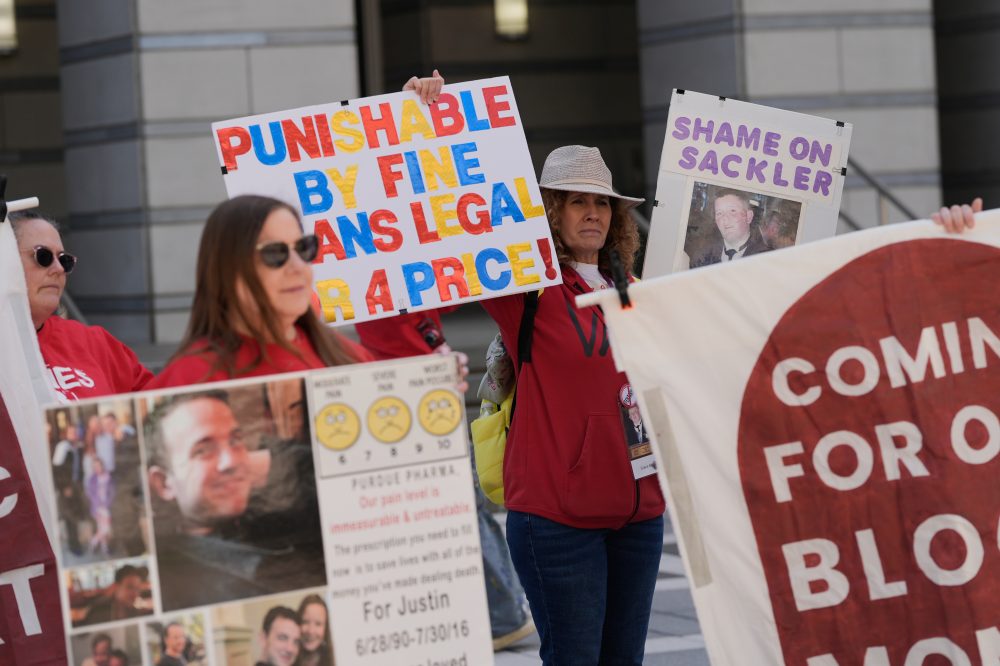
However, individuals who have struggled with opioid addiction or mourned family members lost to these substances plan to urge the judge to reject the negotiated penalties, claiming the agreement fails to deliver genuine accountability.
The Connecticut-based pharmaceutical company struck an agreement with federal prosecutors in 2020 to settle both criminal and civil investigations it was confronting.
Purdue acknowledged it lacked adequate safeguards to prevent its potent prescription pain medications from reaching illegal markets, despite assuring the Drug Enforcement Administration otherwise.
The company also confessed to compensating physicians through speaker programs to promote prescriptions and funding an electronic health records firm to provide doctors with patient data that promoted increased opioid prescribing.
Criminal charges were filed solely against the corporation, not against individual executives.
The corporate admission of guilt and civil resolution with federal authorities carried $8.3 billion in asset forfeitures, financial penalties and fines. However, federal officials agreed through negotiations to accept only $225 million in return for the company securing a separate resolution to thousands of legal claims from state, municipal and tribal governments, plus additional organizations.
Following years of complex legal proceedings and over $1 billion in attorney and professional costs for all parties involved, a bankruptcy court judge gave approval to the broader agreement in November.
Implementation cannot proceed until criminal penalties are imposed. Federal District Judge Madeline Cox Arleo has scheduled consideration for Tuesday at a Newark, New Jersey courthouse.
Judge Arleo had initially planned to conduct last week’s sentencing through video conference exclusively.
Individuals affected by the opioid epidemic, which has contributed to over 900,000 fatalities nationwide since 1999, were set to deliver victim impact testimony.
The judge postponed proceedings after several dozen protesters—including those with addiction histories and bereaved family members—demonstrated outside the courthouse. She explained her desire to provide them an opportunity to speak and announced a one-week delay while offering in-person attendance options.
Over 54,000 individuals with personal injury claims supported the litigation settlement, while approximately 200 opposed it.
Critics have maintained vocal and persistent opposition.
Michele Wagner, whose son died from an overdose, expressed outside the courthouse last week her desire to see Sackler family members who control Purdue face criminal prosecution. “Justice to me looks like more than just money,” she said.
Kara Trainor, who is recovering from addiction that started with an OxyContin prescription in 2002 and participated on a settlement committee, supports approving the sentence because she believes it can provide resolution.
“For me to be the best version of myself in my own recovery, I had to start healing and gravitate away from the anger I felt,” she said. “The anger itself was poisonous to me. It was destroying my mental health.”
According to Purdue, if the judge delivers the criminal sentence Tuesday, the settlement could become effective by Friday.
The agreement requires Sackler family owners to provide up to $7 billion across 15 years. The majority of funds will support government efforts to combat the opioid crisis.
This represents one of the largest among numerous recent settlements involving drug manufacturers, distributors and pharmacies—and the only significant agreement including compensation for individual victims or their families.
Individual victim payments are projected to range between approximately $8,000 and $16,000.
Collectively, these settlements total more than $50 billion, with most funding designated to address the overdose crisis.
The Purdue agreement would protect Sackler family members from opioid-related litigation by those accepting payments. Family members withdrew approximately $10.7 billion from the company between 2008 and 2018, though they claim nearly half went toward business tax obligations.
Under settlement terms, Purdue would dissolve and transform into Knoa Pharma, a new entity with state-appointed leadership focused on addressing the opioid crisis. Millions of internal company documents will become publicly available.
Sackler family members have also committed not to challenge removal of their names from museums and other institutions they have funded.