The National Milk Producers Federation filed formal support with the Environmental Protection Agency on April 22, endorsing the agency’s scientific evaluation of a USDA application for NovoFly, an engineered sterile male-only New World screwworm designed using established Sterile Insect Technique methods for preventing and controlling screwworm infestations.
“By improving male-only release ratios and reducing production inefficiencies, this technology strengthens the economic sustainability of the U.S.–Mexico barrier program that protects billions of dollars in agricultural value annually,” NMPF stated in its comments. “Investing in a more precise and scalable SIT tool is fiscally responsible and reduces the likelihood of far more costly emergency eradication campaigns in the future.”
The organization developed a simplified comment form for dairy producers, cooperatives, state groups, and other stakeholders to express their support during the public input period, aiming to demonstrate widespread dairy industry backing for effective, environmentally sound methods to safeguard American livestock and farming from New World screwworm threats.
The USDA began construction of its domestic sterile fly manufacturing facility in Edinberg, Texas on April 17, with production expected to commence in late 2025. Early May reports indicated the closest screwworm detection occurred 62 miles from the Texas border in Nuevo Leon. The FDA also issued Emergency Use Authorization in April for F10 Antiseptic Barrier Ointment with Insecticide for cattle treatment, establishing a 10-day milk withdrawal requirement.
Those interested in participating in NMPF advocacy efforts can access the organization’s Take Action webpage or subscribe to advocacy alerts through their website notification system.
YELLOWSTONE NATIONAL PARK, Wyo. — Park authorities reported Tuesday that two hikers sustained injuries during a bear encounter on Monday afternoon while walking along a well-used trail close to the famous Old Faithful geyser.
Officials characterized the incident as occurring during a single encounter on Monday afternoon as the hikers traveled the Mystic Falls Trail.
Authorities have temporarily shut down a significant portion of the park surrounding the Midway Geyser Basin while they conduct their investigation. The closure encompasses no fewer than five hiking paths and multiple wilderness camping areas.
While park representatives confirmed that at least one bear was responsible for the incident, they have not identified the specific type involved. Yellowstone is home to both grizzly and black bear populations, and distinguishing between the two species can sometimes prove challenging. Grizzly bears tend to display more aggressive behavior and achieve significantly larger sizes — potentially growing to double the weight of black bears. Black bears typically display darker fur coloring.
Officials have not yet disclosed additional details regarding the victims’ ages or current medical status. The Associated Press has attempted to contact park representatives through email and telephone for further information.
Bear encounters involving either grizzly or black bears remain uncommon occurrences despite the millions of annual visitors to Yellowstone. In the previous year, one hiker sustained chest and arm wounds during an encounter on the Turbid Lake Trail located northeast of Yellowstone Lake.
A grizzly bear fatally attacked a woman in an area just outside Yellowstone’s western boundary in 2023. The most recent deadly bear encounter within park boundaries occurred in 2015.
The busy Mystic Falls hiking route features a circular path that takes visitors to view a waterfall measuring 70 feet in height. The starting point for this trail sits approximately two miles northwest of the Old Faithful area.
Israeli Finance Minister Bezalel Smotrich ignited a political firestorm Tuesday when he declared during a 103FM radio interview that creating a coalition government with United Arab List leader Mansour Abbas would be more damaging than the October 7 terrorist attack.
During the broadcast, Smotrich characterized the October 7 assault as a catastrophic security breakdown while describing potential political cooperation with Abbas as a deliberate betrayal. “The October 7 massacre is a horrific and terrible failure, but it is a tactical failure,” Smotrich stated. He went on to claim that bringing Abbas into government would be “a thousand times worse than the most terrible failure,” calling such a move an intentional choice.
When pressed by the interviewer about his controversial comparison—referencing the attack that claimed 1,200 lives and resulted in 251 hostages—Smotrich defended his position. “Do you want to make a competition in disasters?” he responded. “You asked me as a politician what is more severe in my view. A politician who lied, betrayed his values, and carried out a targeted strike against democracy–that is far more severe.”
The finance minister also directed criticism toward Prime Minister Benjamin Netanyahu, maintaining his longstanding opposition to the premier’s leadership. “I have had criticism of Netanyahu for years, and I do not remove responsibility from him,” Smotrich declared.
Regarding the current conflict, Smotrich outlined his vision for ending the war with Hamas completely eliminated from Gaza. He also voiced backing for territorial expansion into Gaza, Lebanon, Syria, and Judea and Samaria.
Political opponents quickly condemned Smotrich’s statements. Yashar party chief Gadi Eisenkot accused the finance minister of exploiting the October 7 tragedy as a “tool in the shameless campaign” to minimize accountability for security failures. “The biggest failure in our history is an indelible stain,” Eisenkot responded.
Yair Golan interpreted Smotrich’s remarks as suggesting that “a massacre of Israelis is better than a government that doesn’t include him.”
Following the backlash, Smotrich issued a clarification claiming his words had been “distorted,” insisting he was merely comparing different political decisions. He acknowledged the October 7 attack as “one of the most terrible we have known since the Holocaust.”
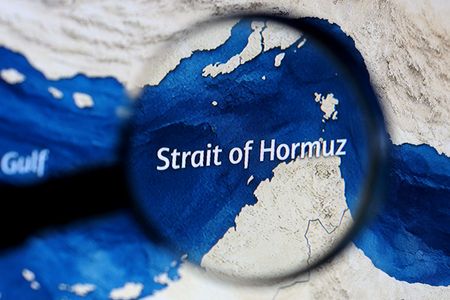
Officials in Oman report that two foreign workers sustained injuries when a residential structure came under attack in the coastal community of Bukha, situated along the strategically important Strait of Hormuz waterway.
According to the Oman News Agency, the attack struck employee housing facilities in the Tibat district, harming two expatriate workers and causing damage to four motor vehicles. The blast also broke windows in a neighboring residence. Government officials stated they are implementing measures to protect local residents’ safety and security as they investigate the circumstances surrounding the attack.
This incident unfolds against a backdrop of rising regional conflict throughout the Persian Gulf area. On Monday, Iranian forces launched an assault on petroleum industry facilities in Fujairah, located in the United Arab Emirates, resulting in injuries to three Indian nationals, as confirmed by Fujairah’s media representatives.
UAE officials reported successfully stopping three incoming missiles that same day, while a fourth projectile landed in surrounding waters.
These attacks coincide with stalled diplomatic efforts between Iran and the United States regarding ceasefire negotiations, following President Donald Trump’s rejection of Iran’s proposed ceasefire terms the previous day.
Israeli sources speaking to Walla news outlet revealed that both Saudi Arabia and the United Arab Emirates have intensified their lobbying efforts toward the Trump administration in recent days. Regional leaders reportedly express anxiety about various potential scenarios, including the prospect of American military withdrawal from the area or an agreement they consider inadequate, fearing such outcomes could leave them vulnerable to Iranian attacks and broader economic instability.
After decades of refusing access, Swiss government officials have reversed their position and will now permit researchers to examine classified documents related to Nazi war criminal Josef Mengele, according to Swiss media reports.
The documents, which detail Mengele’s activities while in Switzerland, have been stored under strict security measures at the Swiss Federal Archives. Switzerland’s Federal Intelligence Service had consistently denied all requests to view the materials, including a rejection as recently as February 2026.
A legal challenge to that denial is still working its way through the Federal Administrative Court. Officials now say the person who filed the appeal will be permitted to review the documents under terms that are still being developed, and these same guidelines will govern future access requests.
Known as the “Angel of Death,” Mengele performed horrific medical experiments on prisoners at the Auschwitz death camp during World War II. Following Germany’s defeat, he escaped to South America but eventually made at least one return trip to Europe as a tourist, which included time spent in Switzerland.
The Swiss government’s Bergier Commission, created in 1996 to investigate how Swiss financial institutions managed Holocaust victims’ assets, had previously studied Mengele’s Swiss connections.
Even after that investigation concluded, Swiss authorities chose to place additional security restrictions on the Mengele documents in December 2001. From that point forward, the files have been essentially off-limits to both academic researchers and the general public.
Recent parliamentary motions filed by Swiss lawmakers requesting more details about Mengele’s Swiss activities have brought fresh focus to the controversy.
Government officials explained that their policy change resulted from a recent review they characterized as creating a “new situation,” though they did not elaborate on what specific circumstances led to the decision.
The upcoming document release is anticipated to shed light on previously unknown details of Mengele’s time in Switzerland, although officials have not yet determined exactly what information will be made available or under what conditions.
Israeli opposition leader Benny Gantz’s Blue and White party confronts an escalating organizational emergency as additional high-ranking officials signal their departure, while efforts to maintain party unity have generated fresh political complications.
The current turmoil erupted when Chili Tropper and Orit Farkash-Hacohen declared their intention to abandon Gantz’s political organization. Gantz insisted both politicians should vacate their Knesset positions without delay, contending this action was necessary following their exit. However, this requirement revealed an unexpected problem: when departing members surrender their parliamentary seats, their successors might emerge from the original candidate roster, potentially including individuals linked to Gideon Sa’ar, who subsequently aligned with Prime Minister Benjamin Netanyahu’s administration.
This scenario could transform an opposition party’s internal struggle into a legislative advantage for the governing coalition.
Blue and White subsequently announced that Gantz and Tropper reached an understanding for Tropper to maintain his current Knesset position rather than step down, specifically to avoid providing “another vote to the coalition.” The party expressed worry that an additional coalition supporter could facilitate passage of draft legislation that might damage Israel Defense Forces personnel and Israeli society.
This resolution underscores the difficult position now confronting Gantz. Compelling legislators to step down might preserve party authority and safeguard Blue and White’s organizational standing, yet it could simultaneously shift the Knesset’s power balance toward the government. Permitting them to stay prevents that immediate danger but leaves Gantz overseeing a group whose participants are progressively distancing themselves from his leadership.
The situation deteriorated when Eitan Ginzburg, a long-standing Gantz supporter and Blue and White’s secretary-general, met with Gantz and chose to exit the organization. Blue and White stated that Gantz had called him in after learning he was conducting discussions with alternative parties due to concerns about his political and financial prospects.
Ginzburg presented the choice through a different lens. In an extensive public statement, he characterized the move as concluding a political period he had begun seven years earlier, when Tropper recruited him to participate in a fresh initiative headed by Gantz. He commended Gantz individually, describing him as brave and honorable, yet stated the existing political structure had lost significant capacity to generate transformation.
“Blue and White was a warm political home for me,” Ginzburg stated, noting that he had maintained faith in its potential to make an impact even during challenging times. However, he added, “its ability, in its current form, to continue generating the change required in the country has diminished.”
This assessment strikes at the heart of the emergency. Ginzburg is not framing his exit as a personal rupture with Gantz, but rather as an evaluation of the party’s effectiveness. For an organization that has consistently performed poorly in recent surveys and frequently failed to meet the minimum vote threshold, this interpretation may prove even more harmful.
Blue and White’s deterioration has transformed each departure into an existential concern. Previously the primary centrist alternative to Netanyahu, the party now battles to maintain significance while other anti-Netanyahu figures, including Naftali Bennett and Gadi Eisenkot, vie for political territory before the upcoming election.
Eisenkot’s departure proved especially damaging. As Gantz’s former deputy and a previous IDF chief of staff, Eisenkot provided Blue and White with defense expertise and political gravitas. His choice to separate and establish Yashar demonstrated that the difficulties extended beyond polling data into the party’s leadership circle.
Gantz faces an additional burden from political history. During the pandemic, he dissolved his partnership with Yair Lapid and joined a Netanyahu-headed government. Following the October 7 attacks, he once again participated in a Netanyahu-led administration, this time through an emergency wartime agreement. While presented as an act of national duty, this arrangement concluded without Gantz achieving substantial modifications in the government’s policies or personnel.
Lapid, in contrast, had made his participation conditional on removing Bezalel Smotrich and Itamar Ben Gvir. Netanyahu dismissed this proposal by ignoring it. Gantz joined without making similar demands, prompting detractors to contend he provided Netanyahu with credibility without extracting a significant political concession.
Currently, as Blue and White continues losing its remaining senior leadership, Gantz’s challenge extends beyond determining whether Tropper, Farkash-Hacohen, or Ginzburg should retain their positions. The fundamental question is whether Gantz maintains a viable political organization to present to them, or if Blue and White has transformed into a platform that its own participants are attempting to abandon before the next electoral contest.
President Donald Trump has declared a nationwide ‘Shabbat 250’ observance as part of his proclamation for Jewish American Heritage Month, urging Americans to participate in a National Shabbat weekend from Friday evening, May 15, through Saturday night, May 16, 2026. The announcement marks an unprecedented presidential call for national Shabbat recognition tied to America’s 250th anniversary celebration.
This groundbreaking initiative represents the first instance of a sitting U.S. president formally requesting nationwide participation in Shabbat observance. Trump positioned the weekend as a time to celebrate faith, freedom, and the quarter-millennium milestone of American independence.
The proclamation aims to shine a spotlight on Jewish American contributions while encouraging nationwide participation in traditional practices of rest and reflection. Trump connected the observance directly to the upcoming commemoration of the United States’ 250th birthday.
“From sundown on May 15 to nightfall on May 16, friends, families, and communities of all backgrounds may come together in gratitude for our great Nation. This day will recognize the sacred Jewish tradition of setting aside time for rest, reflection, and gratitude to the Almighty,” Trump stated in the proclamation.
The president drew connections to America’s founding era, citing President George Washington’s correspondence with the Hebrew Congregation in Newport, Rhode Island, and highlighting Revolutionary War financier Haym Salomon’s role in early American history.
Trump elaborated on the significance of Jewish American contributions in his official statement: “This month, we celebrate the contributions that Jewish Americans have made to our way of life, we honor their role in shaping the story of our Nation, and we remember that religious devotion, learning, and service to others are enduring pillars of a thriving culture. Through every trial and triumph, the contributions of Jewish Americans have shaped our past, have strengthened our communities, and will continue to inspire American greatness for generations to come.”
Authorities have released the identity of a Hartly resident who lost his life in a deadly single-vehicle accident that took place Sunday evening.
Delaware State Police officials say Edilzar Chun-Chilel, age 31, was the victim of the fatal collision in Hartly.
Investigators with the Delaware State Police Troop 3 Collision Reconstruction Unit continue to examine the circumstances surrounding the deadly crash. Officials are urging anyone who may have seen the accident or has relevant information to reach out to Sergeant M. Long at (302) 698-8518. Tips can also be submitted through a private message to the Delaware State Police Facebook page or by contacting Delaware Crime Stoppers at (800) 847-3333.
Those affected by crime, sudden loss, or traumatic events can find help through the Delaware State Police Victim Services Unit and Delaware Victim Center. Support and resources are available around the clock via their toll-free helpline at 1-800-VICTIM-1 (1-800-842-8461). The Victim Services Unit can also be reached by email at [email protected].
A deadly stabbing occurred outside Busch Stadium in St. Louis early Monday morning, resulting from an argument between two cleanup workers hired to handle post-game duties, according to police.
Both individuals involved were employed by contractors responsible for cleaning up after baseball games, not direct employees of the Major League Baseball team.
“This could have happened anywhere, but what happened tonight was a dispute between two people. Unfortunately, it happened at a treasured St. Louis staple,” said Mitch McCoy, spokesperson for St. Louis police.
The Cardinals organization characterized the incident as an “isolated altercation.”
Officers responded to the scene at approximately 3 a.m. Monday morning. A 27-year-old man died from his injuries, while a 65-year-old suspect was questioned by detectives.
The team had faced the Los Angeles Dodgers on Sunday evening. Monday’s scheduled matchup against Milwaukee proceeded as planned, unaffected by the deadly incident.
YEREVAN, Armenia — French President Emmanuel Macron surprised attendees at an elegant state dinner this week by taking the stage to perform beloved French ballads, including the classic tune “La Bohème.”
The musical performance took place Monday evening at Armenia’s presidential residence, where Macron was accompanied by an unlikely backing band featuring Armenian Prime Minister Nikol Pashinyan on drums and renowned jazz artist Vahagn Hayrapetyan on piano. Beyond “La Bohème,” originally made famous by Armenian-French artist Charles Aznavour in 1965, the French president also performed “Les Feuilles Mortes,” a song popularized by Yves Montand.
The dinner celebration was organized to honor Macron during his official state visit to Armenia, which aligned with a European Political Community meeting and a significant European Union summit taking place in the region.
Prime Minister Pashinyan, who assumed leadership in 2018, frequently showcases his musical abilities through his band Varchaband, which performed their inaugural concert in Yerevan in late January.
The Armenian Prime Minister has gained attention for sharing videos of himself enjoying music on Instagram, displaying diverse musical preferences that range from pop star Taylor Swift to hip-hop artists Travis Scott and A$AP Rocky.
French President Emmanuel Macron criticized escalating trade disputes between America and Europe on Tuesday, calling tariff battles a distraction as President Donald Trump prepared to impose new duties on European automobiles.
Speaking to reporters while visiting Armenia, Macron argued that both sides should focus on more pressing global challenges rather than economic threats.
“Especially in the geopolitical period we are experiencing, allies like the United States of America and the European Union have much better things to do than to stir up threats of destabilization,” Macron stated during his remarks.
The French leader’s comments followed Trump’s Friday announcement that automotive tariffs on EU imports would jump to 25% within days, potentially dealing another blow to an already strained global economy facing Middle East conflict impacts.
Macron emphasized the need for economic reassurance, telling reporters: “For our businesses, our households, our populations, we should rather send a message of stability and confidence.” He expressed optimism that “reason will prevail soon.”
The tariff escalation stems partly from Trump’s anger over comments made by German Chancellor Friedrich Merz, who suggested Iran had embarrassed the United States during war-ending negotiations. Germany’s significant automotive sector would face substantial damage from the increased duties.
Trump has responded to the German leader’s remarks by threatening to withdraw thousands of American military personnel from Germany.
Without providing specifics, Trump claimed the European Union was “not complying with our fully agreed to Trade Deal.”
Trade representatives from both sides were scheduled to discuss the dispute during Tuesday meetings in Paris.
European Commission President Ursula von der Leyen, speaking at the EU-Armenia summit in Yerevan, defended existing agreements when asked about the tariff threats.
“A deal is a deal, and we have a deal. And the essence of this deal is prosperity, common rules and reliability,” von der Leyen declared.
The commission president noted that her organization, which handles trade negotiations for all 27 EU member nations, remains “prepared for every scenario” should diplomatic efforts fail.
Trump and von der Leyen had reached a trade agreement in July 2025 establishing a 15% tariff cap on most products, though the U.S. Supreme Court later challenged the legal framework Trump used to implement such taxes.
Macron stressed the importance of honoring international commitments, warning that reopening agreements “would reopen everything.” He cautioned that “the European Union has instruments that would then need to be activated” if deals are violated.
NEW YORK, May 5 – An artificial intelligence company is making significant strides in the financial sector by introducing new automated tools designed to streamline operations for banking and insurance firms.
Anthropic unveiled 10 specialized AI programs on Tuesday during a company event in New York. These automated systems can handle various financial tasks including creating presentation materials, reviewing audit documents, and preparing credit memorandums with minimal human supervision, according to the company.
The AI firm also expanded the information sources available to its Claude AI system, enhancing its ability to handle financial work.
Since announcing its financial sector ambitions less than a year ago, Anthropic has quickly gained traction with major institutions. Goldman Sachs, Visa, Citi, and AIG are among the companies now using its services. Financial institutions have particularly embraced the Claude Mythos model for strengthening their cybersecurity measures. Tuesday’s event featured Anthropic CEO Dario Amodei appearing alongside JPMorgan Chase CEO Jamie Dimon.
The company’s push to automate corporate tasks has created concerns in financial, legal, and software markets, with investors worried about potential business disruption. However, the San Francisco-based AI laboratory maintains its goal is enhancing customer outcomes rather than replacing workers.
Nicholas Lin, who oversees Anthropic’s financial services development, explained in an interview that Claude will gain “vertical-specific intelligence” in sectors like finance while remaining versatile across different industries.
Lin attributed the rapid growth in Anthropic’s financial services division to improved AI capabilities, dedicated customer assistance, and integration with essential office software.
“I’ve honestly seen a dramatic change, especially in the past six months,” Lin said.
The company announced that its 10 new AI programs integrate seamlessly with Claude Code and Cowork platforms and can be tailored to match individual company policies and communication styles.
This week’s upcoming employment report will determine whether America’s economy stays strong enough for the Federal Reserve to maintain current interest rates, or if weakening job numbers might bring back discussions of rate reductions that international conflict has largely eliminated.
Robust economic performance and worries about conflict-related inflation have led financial markets to anticipate no interest rate adjustments throughout this year. This represents a dramatic shift from January, when traders in federal funds futures markets were anticipating two quarter-point reductions by 2026.
“The economic backdrop and the data have been quite resilient through the conflict,” said Jonathan Cohn, head of U.S. rates desk strategy at Nomura. “Even without the uncertainty from Iran, one could make the case that the economy doesn’t require meaningful easing at this point.”
Financial experts suggest that obvious deterioration in employment numbers might encourage Federal Reserve officials to consider reduced rates. However, even substantially weak employment data would be unlikely alone to change the central bank’s overall position, given last month’s strong job numbers, other positive economic indicators, and persistently elevated inflation. Market participants have been counting on reduced rates to maintain this year’s gains in stock prices and other investment values.
Robust economic data has strengthened arguments against rate reductions, even if the current conflict reaches a quick resolution, according to analysts. March saw the addition of 178,000 jobs, almost triple the 60,000 that economists predicted in a Reuters survey, while unemployment decreased slightly to 4.3%.
Ten-year Treasury benchmark yields have increased to 4.43% from 3.94% before the conflict started on February 28, while two-year yields sensitive to rate changes have climbed to 3.94% from 3.38%. This widespread repricing shows markets adjusting to expectations of extended higher interest rates.
Central bank officials show limited indication that rate reductions are their primary concern. During the Fed’s latest meeting, rates remained unchanged, but three policymakers opposed language suggesting a preference toward rate cuts.
“Over the inter-meeting period, there was growing support for a more neutral stance on the future path of interest rates,” said Vail Hartman, U.S. rates strategist at BMO Capital Markets.
Fed Chair Jerome Powell indicated during last week’s post-meeting press conference that the central bank might abandon its easing preference as early as the June 16-17 meeting.
Financial analysts noted that circumstances supporting a reduction in the federal funds rate from its current 3.50%-3.75% range have become significantly more limited.
First-quarter economic expansion accelerated as companies increased artificial intelligence investments and government expenditures recovered following a damaging shutdown.
Consumer spending has also maintained strength, despite higher gasoline costs for consumers.
“If the Fed cuts, it’s not going to be because we got good news on inflation data,” Hartman said. “It’s going to be because we got bad news on the labor side.”
Such employment market deterioration would require evidence across multiple reports and would most likely involve a sustained unemployment rate increase, he explained.
Reuters-surveyed economists anticipate Friday’s Labor Department report will show 62,000 jobs added last month, with unemployment holding steady at 4.3%.
Even if energy prices stabilized following a ceasefire, analysts warned that inflation was already following a concerning path before the conflict started. This means resolving Middle Eastern tensions would eliminate one barrier without completely opening the route to reduced rates.
“Inflation was already increasing before the oil shock even hit,” Hartman said, noting there would be “some reluctance to conclude that we shouldn’t be all that worried about inflation just because the oil issue has diminished in relevance.”
Cohn identified several elements preventing markets from consistently pricing in Fed tightening, including pending Senate confirmation of former Fed Governor Kevin Warsh to replace Powell as central bank head, still-stable long-term inflation expectations, and what he described as the Fed policy committee’s “implicit dovish bias.”
However, Cohn warned that preference alone wouldn’t be sufficient to restore aggressive rate-cut expectations without economic data deterioration.
An unusually large wave of tax refunds may have hidden underlying economic weakness by helping consumers manage increased energy costs, according to Michael Lorizio, head of U.S. rates and mortgage trading at Manulife Investment Management.
The speed of that cushion’s disappearance and whether higher oil price effects appear in consumption or other economic indicators will be crucial for markets evaluating the Fed’s direction, he explained.
Currently, standards remain elevated on both sides. Without employment market problems, building a case for rate cuts proves difficult. With inflation still high, maintaining current rates is easily justified.
“If you see the labor market data begin to crack, then cut expectations can reemerge in a more meaningful way,” Cohn said. “Absent that, I think the market will struggle to get back all the way to what we were pricing pre-war.”
FDA Commissioner Dr. Marty Makary stood by his agency’s choice to reject a cancer treatment application from Replimune on Tuesday, as the pharmaceutical company’s stock price fell in response to the regulatory setback.
During a CNBC television interview, Makary pointed to the agency’s formal documentation explaining their reasoning. “If you read our what we call our complete response letter, you will see the details of the FDA logic,” the commissioner stated.
The rejection of Replimune’s advanced skin cancer therapy sent the company’s shares tumbling 5% during morning stock market activity on Tuesday.
A series of weak weather systems will bring periods of showers to the Delmarva region from Wednesday into Thursday, delivering much-needed rainfall without significant impacts.
The first system arrives as a cold front approaches from the Great Lakes late Tuesday night, with showers beginning to develop early Wednesday. The steadiest rainfall is expected during the midday hours Wednesday as the front moves into the region. However, the boundary is forecast to stall near or just east of the area, setting the stage for additional development along the coast.
A secondary area of low pressure is expected to form over the Southeast and track northeast along the stalled front toward the Mid-Atlantic coastline. Recent forecast trends have shifted this system slightly farther south and east, which will likely limit rainfall coverage across inland areas. As a result, the highest rain chances, around 50 to 70 percent, are expected across southern and eastern portions of Delmarva and into southern New Jersey. Areas north and west of the Interstate 95 corridor may see more limited coverage, with chances closer to 20 to 40 percent.
Rainfall totals have also trended lower with this shift in track. Most locations are expected to receive around a half inch of rain, with isolated areas potentially approaching one inch. The probability of exceeding one inch has decreased significantly, now generally below 10 percent across most of the region, with only localized higher chances in far southeastern Delmarva and coastal New Jersey.
Despite the presence of multiple systems, atmospheric conditions are not favorable for severe weather. Limited instability is expected, keeping the risk for strong thunderstorms and flooding very low. However, an isolated thunderstorm cannot be ruled out.
Overall, the rainfall is expected to be beneficial, helping to ease dry conditions across parts of the region without bringing hazardous weather.
Looking ahead to the weekend, another weak system may approach on Saturday. This system could bring additional scattered showers, but at this time, it appears to be a minor disturbance with no significant impacts expected beyond a potential interruption to outdoor plans.
A Netherlands-based quantum computing company has successfully secured $178 million in new investment capital, with Intel Capital leading the funding round, the firm announced Tuesday. The investment comes as European nations work to compete with technology leaders in the United States and China.
According to consulting giant McKinsey, quantum computing technology promises to revolutionize data processing speeds compared to traditional computers, with the industry potentially reaching trillions of dollars in value over the coming decade.
QuantWare, which operates from its headquarters in Delft, Netherlands, plans to use the new capital to expand its manufacturing capabilities for quantum processors.
The funding round included participation from several investment firms beyond Intel Capital, including IQT, ETF Partners, FORWARD.one, and the Invest-NL Deep Tech Fund.
Company CEO and co-founder Matt Rijlaarsdam emphasized the importance of scaling production in a prepared statement. “The promise of quantum computing, capable of solving humanity’s intractable challenges, can only happen once it can be manufactured and deployed at scale. That is exactly what we are building,” Rijlaarsdam said.
European leadership has made significant investments in quantum technology development, with the European Commission and member nations contributing over 11 billion euros (approximately $12.88 billion) in public funding over the past five years.
The nation’s service industry continued to lose momentum in April, marking the second month in a row of declining growth as businesses faced sharply reduced new orders and mounting cost pressures, according to a new industry report released Tuesday.
Data from the Institute for Supply Management revealed that its nonmanufacturing purchasing managers index fell to 53.6 in April, down from 54.0 the previous month. While economists had predicted a reading of 53.7, any figure above 50 still signals growth in the services industry, which represents more than two-thirds of the nation’s economic output.
Though the survey showed business activity improved by 2 points to reach 55.9, other key indicators painted a more concerning picture.
New orders experienced a dramatic decline, dropping to 53.5 from March’s three-year peak of 60.6. The 7.1-point decrease represents the steepest fall since March 2023. Meanwhile, businesses continue to grapple with elevated costs, as the prices paid index remained steady at 70.7, matching levels not seen since October 2022 during the early stages of post-pandemic inflation recovery.
The ongoing conflict with Iran has intensified financial pressures on businesses through multiple channels. Energy costs have surged, with motor vehicle fuel prices reaching their highest point since summer 2022 according to AAA data. Additionally, supply chain complications have extended delivery schedules for essential business materials. The ISM supplier delivery index climbed to 56.8, its highest reading since July 2022, up from 56.2 in March.
The employment picture remained troubling, with the jobs index staying below the 50-point threshold for the second consecutive month. April’s reading of 48.0 showed improvement from March’s 45.2, but still indicates contraction in service sector hiring.
Delaware State Police took two individuals into custody following an early morning traffic stop in Laurel that uncovered suspected narcotics and drug equipment.
Authorities arrested 38-year-old Nicole Kenton from Harrington and a 36-year-old Selbyville man on May 1, 2026, around 2:00 a.m. after a trooper pulled over their Chevrolet Cruze on Fire Tower Road near Sycamore Road for a traffic violation.
When the officer approached the vehicle and made contact with both occupants, drug paraphernalia was visible inside the car. The trooper identified the Selbyville man as the driver and Kenton as the passenger.
Authorities conducted a vehicle search that turned up more drug paraphernalia linked to both individuals. Police also found roughly 48 bags of what they believe to be heroin and about 0.85 grams of suspected cocaine, all belonging to Kenton according to investigators. The driver displayed indicators of impairment, leading to both arrests proceeding smoothly.
Officers transported Kenton to Troop 5, where she faced multiple charges before appearing before Justice of the Peace Court 11. She was released after posting an $8,000 unsecured bond.
Kenton’s charges include:
• Possession with Intent to Deliver a Controlled Substance (Felony) • Possession of a Controlled Substance Tier 1 Quantity (Felony) • Possession of a Controlled Substance • Possession of Drug Paraphernalia – 5 counts
The male driver was also processed at Troop 5 before being released with a summons for driving under the influence, possession of drug paraphernalia, and traffic violations.
NEW YORK — Philadelphia’s incredible comeback story hit a major roadblock Monday night as the 76ers were demolished by the New York Knicks 137-98 in the opening game of the Eastern Conference semifinals.
The crushing defeat mirrored Philadelphia’s start against Boston in the previous round, where they also dropped the opener in spectacular fashion before mounting the NBA’s 14th comeback from a 3-1 series deficit.
Playing with minimal rest after their Game 7 victory in Boston just two nights earlier, the Sixers looked completely drained from their historic run against the Celtics.
“Same as last series. They don’t get any extra points for going up big tonight,” veteran Paul George stated. “We’ll be ready for Game 2.”
Star center Joel Embiid and his teammates clearly felt the effects of the compressed schedule, appearing to run on empty throughout the contest. Head coach Nick Nurse had expressed uncertainty before tipoff about how the quick turnaround might impact his squad, noting that momentum can sometimes carry winning teams forward.
However, it became apparent early that fatigue would be a significant factor.
“You can’t make excuses, that’s for sure,” Nurse explained. “We knew it might be difficult, but you’re never going to go into the game and say this is going to happen. You’ve got to see it play out.”
The margin of defeat nearly set a franchise record for worst playoff loss, falling just short of their 121-81 defeat to Boston in 1982. Ironically, Philadelphia rallied to win that series as well, potentially offering hope amid the disappointment.
Their recent Boston series had seemed impossible after dropping Game 1 by 32 points, then suffering another 32-point loss in Game 4 when Embiid returned following his late-season appendix surgery.
The Knicks wasted little time establishing dominance, building a commanding 74-51 halftime advantage while shooting an impressive 65.9% from the field. The lopsided score at least allowed Nurse to rest his weary starters for extended periods.
“Coming from the series we had and the physicality we displayed, I would like to think that maybe guys were tired,” Embiid acknowledged. “But it’s not an excuse, though. On to Game 2.”
Embiid managed just 14 points on 3-of-11 shooting in 24 minutes of action. Meanwhile, Tyrese Maxey, who had averaged 26.9 points in the first round, didn’t score his first basket until five minutes into the second quarter and finished with only 13 points on 3-for-9 shooting.
Philadelphia’s offensive struggles were compounded by defensive breakdowns. New York exploited Embiid’s limited mobility to generate open looks and capitalized on transition opportunities, outscoring the Sixers 16-3 in fast-break points.
“Yeah, we had breakdowns tonight, but they also shot the (heck) out of the ball,” George observed. “They were hot.”
While George refused to blame fatigue directly, he admitted the team faced what he described as a mental challenge.
“You go from a Game 7 and then one day off and then you’re right back into a matchup,” he said. “There was some carryover of us trying to get up and get prepared for this next matchup, but we should have came out and did a better job.”
BERLIN — Authorities in Germany are still searching for answers after a deadly vehicle attack in Leipzig left two people dead and six others wounded, with investigators revealing the suspect had recently undergone psychiatric treatment.
A 33-year-old German citizen was taken into custody Monday afternoon after officials say he deliberately drove his vehicle hundreds of meters through a crowded shopping district in the city center. The attack claimed the lives of a 63-year-old woman and a 77-year-old man, both German nationals, while six additional victims sustained injuries, with two in serious condition.
The man now faces charges of murder and attempted murder as authorities work to determine what drove him to carry out what they believe was an intentional attack. However, investigators have found no indication of political or religious extremism behind the violence.
Law enforcement and prosecutors released a statement indicating the suspect had previously drawn official attention this year due to threatening behavior and “defamatory offenses.” Officials revealed that police responded to a call from the man on April 17, after which he voluntarily entered a specialized medical facility for treatment of his “psychological condition.” His hospital stay lasted until the previous Wednesday.
According to the statement, the suspect had no prior criminal record and faced no other pending legal matters. Saxony state’s social affairs ministry confirmed that during his treatment period, medical staff determined he presented no risk to himself or others, and there were no medical grounds to prevent his discharge, according to German news agency dpa.
SAO PAULO (AP) — Rising gold values have sparked a fresh wave of illegal mining operations throughout Brazil’s Amazon rainforest, rapidly destroying protected forest areas and creating dangerous mercury pollution levels, according to government officials and environmental researchers.
Research published Tuesday by Amazon Conservation, working alongside Brazilian nonprofit Instituto Socioambiental, revealed that unlawful mining operations caused extensive forest clearing within three protected conservation zones in the Xingu region. This area represents one of Earth’s most expansive protected forest systems, covering territory in Para and Mato Grosso states. The findings combined satellite data with field investigations.
The Terra do Meio Ecological Station experienced its initial illegal mining incidents in September 2024. By late 2025, mining operations had destroyed 30 hectares (74 acres) of forest in that location. At Altamira National Forest, unauthorized mining caused 832 hectares (2,056 acres) of forest destruction from 2016 through September 2025. A newly established mining operation that began in 2024 expanded to cover 36 hectares (89 acres) by October 2025, representing nearly half of that year’s mining-related forest loss in the area.
Satellite surveillance also identified a hidden airstrip constructed by illegal miners within the Nascentes da Serra do Cachimbo Biological Reserve during the previous year. Unauthorized mining activity in this reserve expanded from 2 hectares (5 acres) to at least 26.8 hectares (66 acres) throughout 2025.
Amazon Conservation collaborated with Earth Genome and the Pulitzer Center in 2023 to create the Amazon Mining Watch, a monitoring system utilizing satellite technology to observe mining operations throughout the Amazon region starting in 2018. Approximately 496,000 hectares (1,225,640 acres) of rainforest have been destroyed for mining purposes since that time, with roughly 223,000 hectares (551,045 acres) located within Brazil’s Amazon territory. Amazon Conservation calculates that 80% of mining-related forest destruction in Brazil likely occurs illegally.
Mining contributes a relatively minor portion of Brazil’s total deforestation, as agricultural expansion remains the primary cause of forest loss. Official records show that approximately 579,600 hectares (1,432 acres) of Brazilian Amazon forest were cleared in 2025. Mining operations accounted for about 17,000 hectares (42,000 acres) of this destruction, based on Mining Watch data.
“What makes mining particularly problematic is that it targets protected areas and Indigenous territories,” said Matt Finer, director of Amazon Conservation’s Monitoring of the Andes Amazon program.
Safeguarding Indigenous lands is recognized as a highly effective strategy for preventing Amazon deforestation. The Amazon serves as the planet’s largest rainforest and plays a crucial role in regulating global climate patterns. Scientists caution that ongoing forest destruction could worsen global warming trends.
Brazilian officials initiated a comprehensive campaign against illegal gold mining within the Yanomami Indigenous territory in Roraima state during 2023, following a dramatic increase that created humanitarian and health emergencies. Amazon Conservation data shows that annual expansion of new mining areas declined significantly after that intervention. While mining activities continue, approximately 5,500 hectares (13,590 acres) of forest destruction within Yanomami territory had occurred by 2023.
However, targeted enforcement actions have failed to eliminate illegal mining throughout the broader Amazon region. When authorities destroy mining equipment and machinery in one location, operators frequently move to different areas or restart operations after officials depart. Federal prosecutor André Luiz Porreca, who investigates unauthorized mining in western Brazilian Amazon, characterized enforcement efforts as a “cat-and-mouse game.”
“Last year, I took part in an operation that destroyed more than 500 dredges on an Indigenous land,” Porreca said. “The following week, Indigenous people showed me photos proving the miners had already returned.”
According to Porreca, Brazil’s major criminal organizations, including the Red Command and First Capital Command (PCC), provide financial backing for illegal gold mining operations. These groups maintain presence in approximately one-third of Brazilian Amazon cities. “They have the money to bankroll these operations. Some dredges cost as much as 15 million reais.”
While enforcement reduced mining pressure in Yanomami territory, illegal operations have grown more intense in other locations, especially throughout Indigenous territories in the Xingu River basin. The most severe situation exists on Kayapo Indigenous land, where approximately 7,940 hectares (19,620 acres) of rainforest have been cleared through illegal mining, representing the largest such area in Brazil’s Amazon.
Historic gold prices, primarily driven by investor demand for secure investments amid increasing global uncertainties, have created powerful incentives for illegal mining activities.
“It’s basic market logic. With more buyers, there are more people exploiting gold,” Porreca said. He noted that Brazil’s mineral export oversight system remains inadequate, enabling money laundering operations that make illegal gold appear legitimate.
Environmental harm extends far beyond forest destruction. Illegal mining operations release mercury into river systems, polluting waterways and building up in fish that riverine and Indigenous communities rely on for food.
Porreca presented a report to the Inter-American Commission on Human Rights in April detailing extensive mercury contamination throughout the Amazon. The document referenced research by Fiocruz, a government research organization, which discovered that 21.3% of fish sold in Amazon public markets contained mercury levels exceeding World Health Organization safety standards. Children between ages 2 and 4 were consuming mercury at concentrations up to 31 times above recommended maximum levels.
Brazilian law forbids mining activities on Indigenous territories. The Ministry of Indigenous peoples stated that combating illegal mining on Indigenous lands represents a key priority for President Luiz Inácio Lula da Silva’s government. The ministry explained that mining invasions are supported by criminal networks, and addressing them requires dismantling these economic and logistical systems.
The Ministry of Environment acknowledged that mercury contamination from illegal gold mining continues as an ongoing Amazon problem, noting expanded scientific monitoring efforts while supporting enforcement activities.
Brazil’s Federal Police did not provide responses to Associated Press requests for comment.
WASHINGTON — Economic advisers at the White House project that pharmaceutical agreements negotiated by President Donald Trump’s administration could generate $529 billion in economic benefits over the coming decade by bringing U.S. prescription medication costs in line with international pricing.
The projections, secured by The Associated Press, represent the first comprehensive economic modeling of a policy central to Trump’s electoral strategy ahead of November’s congressional races. Democratic officials remain skeptical of the administration’s savings calculations, and these latest figures are expected to prompt further scrutiny of the underlying data.
Affordability concerns dominate voter priorities, with energy costs related to the Iran conflict intensifying public financial worries. Trump has attempted to tackle these concerns by emphasizing his pharmaceutical negotiations aimed at eliminating the significant price gap between U.S. drug costs and those in other wealthy nations.
“Now you have the lowest drug prices anywhere in the world,” Trump declared during a Friday gathering of senior citizens in Florida. “And that alone should win us the midterms.”
White House Council of Economic Advisers staff conducted the economic modeling. Their calculations also suggest that federal and state Medicaid programs could collectively save $64.3 billion throughout the next ten years under Trump’s “most favored nation” pricing strategy.
Limited public disclosure of the agreements between the Trump administration and 17 major drug manufacturers makes independent verification of the projected benefits challenging. The White House study attempted to forecast savings as additional medications enter the market under Trump’s framework, with one scenario suggesting potential decade-long savings reaching $733 billion.
Trump and his Health and Human Services Department have characterized the pharmaceutical agreements as groundbreaking and pushed Congress to enshrine their principles in legislation. Democratic legislators have disputed the administration’s benefit claims. Senate Finance Committee Ranking Member Ron Wyden of Oregon, along with 17 Democratic Senate colleagues, introduced an April proposal demanding the administration reveal the terms of pharmaceutical company agreements.
“If these deals are so great, why is the Trump administration afraid of showing them to the public?” Wyden questioned when unveiling the proposal. Health Secretary Robert F. Kennedy Jr. indicated his department would provide details excluding proprietary data or trade secrets.
The Trump administration’s estimated benefits would represent significant savings given that Americans purchased $467 billion worth of prescription medications in 2024, based on the latest available federal statistics. The analysis assumes foreign nations would increase their prescription drug payments, diversifying pharmaceutical revenue streams while maintaining companies’ research and development capabilities.
The Congressional Budget Office projected in October 2024 that a comparable plan to Trump’s eventual approach might lower prescription drug costs by over 5%, though the reduction “would probably diminish over time as manufacturers adjusted to the new policy by altering prices or distribution of drugs in other countries.”
The magnitude of the Trump administration’s claimed savings will likely increase Democratic oversight, as they argue that any price reductions would be neutralized by higher costs for medications outside the “most favored nation” structure. A primary Democratic criticism centers on pharmaceutical companies increasing profit margins while participating in the administration’s program.
Staff members working with Senator Bernie Sanders of Vermont published an April analysis examining 15 companies participating in the drug pricing initiative, discovering their collective profits surged 66% in the previous year to $177 billion. The study highlighted that Trump’s tax legislation from last year “exempted or delayed many of the most expensive drugs” from Medicare price negotiations.
The Trump administration has dismissed Sanders’ analysis as fundamentally flawed, arguing it relies on pharmaceutical list prices rather than the actual costs patients pay.
WASHINGTON — March employment figures released by federal officials show available positions remained flat at 6.9 million, signaling continued weakness in the nation’s workforce even as broader economic challenges loom.
Employment trends have fluctuated throughout this year following disappointing performance in 2025. Ongoing conflict in Iran has added uncertainty to economic forecasts and employment prospects.
Federal labor statistics from the Job Openings and Labor Turnover Survey revealed workforce reductions increased during March. However, companies expanded their hiring efforts, while voluntary resignations climbed — indicating workers feel more optimistic about economic conditions.
Available positions have declined consistently since reaching an all-time high of 12.3 million in March 2022 during the nation’s recovery from pandemic restrictions. Elevated borrowing costs implemented to combat 2021-2022 price increases, questions surrounding President Donald Trump’s policy agenda, and possible disruption from artificial intelligence advances have limited aggressive hiring practices.
During the previous year, businesses created less than 10,000 positions monthly, marking the slowest job growth outside of economic downturns since 2002. This year’s employment figures have shown volatility — robust gains in January with 160,000 new positions and March with 178,000, contrasted by February’s decline of 133,000 eliminated jobs.
The Labor Department will release April employment statistics on Friday. Economic analysts surveyed by FactSet predict employers across private companies, nonprofit organizations and government entities will report adding 57,000 net positions last month, while joblessness is forecast to hold at 4.3%.
WASHINGTON — Economic advisers at the White House project that pharmaceutical agreements negotiated by President Donald Trump’s administration could generate $529 billion in nationwide savings over the coming decade by aligning U.S. prescription medication costs with international pricing.
The economic assessment, which The Associated Press reviewed, represents the first comprehensive financial projections for a policy central to Trump’s electoral strategy ahead of November’s congressional midterm races. Democratic officials have expressed skepticism about the administration’s savings calculations, and these latest figures are expected to prompt further scrutiny of the underlying data.
Affordability concerns remain a top priority for voters, with rising energy costs related to the Iran conflict adding to public economic worries. Trump has attempted to address these affordability issues by emphasizing his administration’s negotiations with pharmaceutical companies to eliminate the significant price disparities between U.S. medications and those sold in other wealthy nations.
“Now you have the lowest drug prices anywhere in the world,” Trump declared during a Friday campaign event attended by senior citizens in Florida. “And that alone should win us the midterms.”
White House Council of Economic Advisers staff conducted the financial analysis. Their calculations also suggest that federal and state governments could collectively reduce Medicaid expenses by $64.3 billion throughout the next ten years under what Trump terms his “most favored nation” drug pricing approach.
Limited public information about the agreements between the Trump administration and 17 major pharmaceutical corporations makes independent verification of the projected cost reductions challenging. The White House study attempted to forecast savings as additional medications enter the market under Trump’s pricing structure, with one calculation in the report suggesting potential decade-long savings of $733 billion.
Trump and his Health and Human Services Department have promoted these drug pricing agreements as revolutionary changes while encouraging Congress to establish their framework in federal law. Democratic legislators have disputed the administration’s savings assertions. In April, Senate Finance Committee Ranking Member Ron Wyden of Oregon joined 17 Senate Democrats in proposing legislation that would mandate the administration reveal the terms of pharmaceutical company agreements.
“If these deals are so great, why is the Trump administration afraid of showing them to the public?” Wyden questioned when introducing the proposal. Health Secretary Robert F. Kennedy Jr. indicated his department would provide information that excludes proprietary data or trade secrets.
The Trump administration’s estimated savings would represent a significant portion of the $467 billion Americans spent on prescription medications in 2024, based on the latest available government figures. The analysis assumes that international markets would also increase their prescription drug payments, which would expand pharmaceutical companies’ revenue streams and maintain their capacity for developing innovative treatments.
In October 2024, the Congressional Budget Office projected that a plan resembling Trump’s eventual approach could lower prescription drug costs by more than 5%, though the reduction “would probably diminish over time as manufacturers adjusted to the new policy by altering prices or distribution of drugs in other countries.”
The magnitude of savings claimed by the Trump administration will likely increase Democratic oversight, as they argue that any price decreases would be counterbalanced by higher costs for prescription drugs excluded from the “most favored nation” system. Democrats primarily criticize that pharmaceutical companies have expanded their profit margins while collaborating with the administration.
Staff members working for Senator Bernie Sanders of Vermont released an April analysis examining 15 companies participating in the drug pricing initiative, discovering their combined profits increased 66% in the previous year to $177 billion. The report highlighted that Trump’s tax legislation from last year “exempted or delayed many of the most expensive drugs” from Medicare price negotiations.
The Trump administration has rejected Sanders’ criticism as fundamentally flawed, arguing that his analysis relies on pharmaceutical list prices rather than the actual costs patients pay.
ATLANTA — Federal prosecutors are demanding contact details for every individual who participated in Georgia’s 2020 election operations in Fulton County, a Democratic-leaning area that former President Donald Trump has repeatedly claimed engaged in massive voter fraud that he alleges denied him victory over Joe Biden in that state.
County attorneys submitted a motion Monday evening attempting to block a grand jury subpoena requesting names and contact details of government workers and volunteer poll staff. This development follows the FBI’s January visit to a Fulton County election storage facility where agents confiscated ballots and additional materials from the 2020 contest, which Georgia’s official results confirmed Trump lost to Biden by 11,779 votes from almost 5 million ballots cast. Trump continues to maintain the 2020 contest was fraudulently taken from him despite court rulings and conclusions from his own attorney general stating otherwise.
In Monday’s legal document, attorneys claim the subpoena aims to “target, harass and punish the President’s perceived political opponents.” County lawyers contend the demand is “grossly overbroad and untethered to any reasonable need.”
The January confiscation of ballots and additional materials from Fulton County marked the beginning of several actions by Trump’s Republican administration to secure historical election documentation from key battleground states. Federal agents used a subpoena in March to obtain materials connected to a 2020 presidential election review in Arizona’s Maricopa County. Additionally, the Justice Department ordered Michigan’s Wayne County in April to surrender ballots from the 2024 contest, which Trump won against Biden’s running mate, Kamala Harris.
Federal prosecutors are simultaneously pursuing legal battles with multiple states for voter information containing private personal details. Election administrators, including Republican officials, have stated that releasing such data would breach state and federal privacy regulations.
A massive $56 billion takeover proposal from GameStop targeting eBay has sparked widespread discussion across social media platforms, with retail investors expressing both enthusiasm and serious concerns about the ambitious deal announced May 5.
Online discussion forums like Reddit showed divided reactions, with some users excited about the potential e-commerce powerhouse such a combination could create, while others questioned how the smaller company could possibly fund such an enormous acquisition.
Several supporters highlighted the potential benefits of merging GameStop’s dedicated customer following with eBay’s extensive online marketplace presence, suggesting this partnership could establish a major force in digital retail.
The gaming retailer, currently valued at $10.7 billion in market capitalization, faces the challenge of acquiring a significantly larger corporation. Company officials have indicated they secured access to $20 billion in possible debt funding through TD Securities to support the transaction.
GameStop CEO Ryan Cohen’s heated television appearance on CNBC Monday drew additional online attention, with viewers turning his defensive responses about the deal’s financing into internet jokes and memes.
Social media users also expressed surprise over Michael Burry’s decision to sell his GameStop holdings on Monday, particularly notable since he had recently compared Cohen to renowned investor Warren Buffett just months earlier.
Trading discussion platform Stocktwits.com reported eBay among its most actively discussed securities, with their sentiment tracking system indicating “extremely bullish” investor mood over the previous 24-hour period.
These retail investor communities often provide early insights into how speculative market segments respond to significant corporate announcements and developments.
Major U.S. stock markets posted gains during Tuesday morning trading sessions as crude oil values decreased, even with continuing tensions across the Middle East following military confrontations between the United States and Iran in Gulf waters.
During Tuesday’s opening bell, the Dow Jones Industrial Average climbed 95.2 points, representing a 0.19% increase to reach 49,037.12. The S&P 500 index gained 32.9 points, up 0.46% to 7,233.62, while the technology-heavy Nasdaq Composite jumped 191.1 points, posting a 0.76% rise to 25,258.882.
The market advances occurred as petroleum prices fell despite escalating regional conflicts that could potentially disrupt a delicate ceasefire arrangement in the volatile region.
The United States is preparing to bypass stalled global trade negotiations by forming its own coalition to prevent tariffs on digital services, according to documents obtained by news outlets.
The move comes as Brazil and Turkey continue blocking efforts to extend a worldwide agreement that has prevented duties on digital downloads, streaming services, and software since 1998 at the World Trade Organization.
A draft proposal dated May 1 reveals America’s backup strategy, which would create a separate pact among willing nations. “Beginning on May 8, 2026, we, the co-sponsors of this communication, will continue to not impose customs duties on electronic transmissions among ourselves,” the document states.
The original global moratorium has been renewed multiple times over the past 25 years, protecting everything from Netflix streams to software downloads from cross-border tariffs. However, efforts to extend the deal collapsed during a high-level WTO gathering in Cameroon this past March.
Five diplomatic sources indicate little hope for resolving the standoff before Wednesday’s WTO General Council session in Geneva. If no breakthrough occurs, Washington intends to proceed with its alternative approach, already gaining backing from South Korea, Japan, Australia, and New Zealand.
Countries with major digital economies, including the United States, European Union, Canada, and Japan, view the moratorium as essential for providing stability in global digital commerce and have pushed to make it permanent.
Joseph Barloon, America’s WTO ambassador in Geneva, criticized the impasse caused by opposition from what he called “two members” – apparently referring to Brazil and Turkey. He emphasized that the inability to secure long-term protection highlights the WTO’s difficulties in tackling contemporary trade issues.
“The U.S. has secured commitments from dozens of countries – and nearly all its major trading partners – not to impose tariffs on electronic transmissions and it will continue to support efforts to obtain a plurilateral moratorium on e-commerce duties,” Barloon stated.
The proposed alternative builds upon an April declaration by 23 nations promising not to introduce such duties. While expressing disappointment over the lapse, the draft maintains that achieving a comprehensive multilateral agreement remains the ultimate goal.
Andrew Wilson from the International Chamber of Commerce warned that failing to restore the global moratorium would undermine the WTO’s authority. “It sends a clear signal that WTO rules are slowly eroding away,” Wilson explained, calling a partial agreement “sub-optimal” because it wouldn’t apply universally and could create business uncertainty.
Despite the diplomatic tensions, sources suggest immediate implementation of digital duties remains unlikely. However, the breakdown represents another blow to the WTO’s influence in establishing international trade standards.
Diplomatic efforts between Washington and Brazil since the March failure have produced minimal results, according to two sources familiar with the discussions. Representatives from Brazil and Turkey have not yet responded to requests for comment on the situation.
The popular Chinese e-commerce company Shein is facing scrutiny from Irish authorities over how it handles European customer information, prompting the retailer to defend its data protection practices on Tuesday.
Ireland’s data protection regulator has launched an investigation into how Shein transfers personal information belonging to European users to China, raising questions about the company’s compliance with regional privacy laws.
In response to the regulatory probe, Shein stated that it takes its data protection obligations “extremely seriously” and remains committed to following all relevant legal requirements.
The investigation highlights ongoing concerns about how international companies, particularly those based in China, manage sensitive customer data from European consumers who shop on their platforms.
Meta Platforms defended itself Tuesday before European Union antitrust officials, hoping to prevent a regulatory order that would force the company to open WhatsApp to competing artificial intelligence chatbots.
The closed-door hearing in Brussels came after the European Commission issued Meta an additional charge sheet last month detailing its enforcement plans. This represents part of temporary measures while EU investigators examine whether Meta misuses its dominant market position, potentially leading to significant financial penalties. A final decision on the order is expected within months.
On January 15, Meta implemented a new policy restricting WhatsApp to only its own Meta AI assistant. The company later modified this approach in March, announcing that competitor AI services could access the messaging platform for a fee.
This policy change prompted EU regulators to file a second charge against Meta, building on an initial February complaint regarding potential emergency actions to prevent the company from shutting out AI competitors.
Meta attorney Tim Lamb and additional legal counsel attended the Brussels proceedings, while company executives in the United States participated virtually in the four-hour session.
The social media giant restated its earlier position, claiming EU antitrust authorities are misusing their regulatory power to help major global corporations access WhatsApp Business services without payment.
“This means that a small bakery in France paying to use the service to take croissant orders will be picking up the tab for OpenAI. Small European businesses shouldn’t foot OpenAI’s bill,” a Meta spokesperson said.
European Commission Deputy Director-General for Antitrust Linsey McCallum and director Carlota Reyners Fontana refused to provide statements as they entered the hearing.
The Interaction Company of California, which created the Poke.com AI assistant and filed the original complaint, also participated in Tuesday’s proceedings.
“Meta is seeking to monopolize the use of WhatsApp for AI services by reserving it to its own offerings and excluding competitors like us,” Felix Schlegel, co-founder and CTO of The Interaction Company of California, said ahead of the hearing.
“We welcome the Commission’s action and its consideration of interim measures. At the hearing, we will make clear that these measures are necessary and should be adopted without delay,” he said.
According to sources familiar with the matter, OpenAI and French artificial intelligence startup Simone were also listed as hearing participants.
Defense technology firm Anduril Industries revealed Tuesday which companies will join its effort to build orbital missile interceptors for the U.S. Space Force, marking a key development in the Golden Dome for America defense program launched during the Trump presidency.
The Space-Based Interceptor program represents a shift from traditional ground-launched defense systems by positioning weapons directly in orbit. This orbital positioning allows American forces to target and eliminate incoming threats much earlier during their trajectory, striking missiles closer to their launch point.
Anduril’s partnership roster features Impulse Space, Inversion Space, K2 Space, Sandia National Laboratories, and Voyager Technologies. The collaboration combines emerging commercial space companies with established research facilities to create what Anduril calls “affordable, scalable” interceptor technology.
The Space Force has distributed contracts valued at up to $3.2 billion collectively among 12 companies working on orbital missile defense interceptor development. Major defense contractors receiving awards include Northrop Grumman, RTX’s Raytheon division, SpaceX, and Lockheed Martin.
“The U.S.’s near-peer adversaries have invested in exotic, highly maneuverable vehicles, introducing considerable challenges to protecting the U.S. homeland,” stated Gokul Subramanian, who serves as Anduril’s senior vice president of engineering.
The timeline calls for demonstrating a complete interceptor system integrated with Golden Dome infrastructure by approximately 2028, establishing an orbital defense layer for American homeland security.
The Golden Dome program carries an anticipated price tag of $185 billion and aims to enhance existing ground-based defensive capabilities including interceptor rockets, detection equipment and command systems while incorporating space-based components for threat identification, monitoring and potential elimination from orbit.
Space Force General Michael Guetlein, who leads the Golden Dome initiative, has previously characterized the orbital interceptor program as the project’s most challenging component, pointing to scalability and cost-effectiveness as primary obstacles. He has indicated that directed energy weaponry and advanced artificial intelligence technologies offer the greatest potential for reducing per-target elimination costs.
Delaware Attorney General Kathy Jennings teamed up with officials from 22 other states and Washington D.C. to challenge federal court restrictions on access to mifepristone, an abortion medication, prompting the U.S. Supreme Court to block those limitations.
The multi-state coalition petitioned the nation’s highest court to halt a decision from the Fifth Circuit Court of Appeals that would have limited availability of the medication that advocates describe as both safe and effective.
Following the advocacy efforts by Jennings and her counterparts across the country, the Supreme Court granted the request and issued a stay preventing the restrictions from taking effect.
The National Oceanic and Atmospheric Administration is taking time to recognize the educators who inspire the next generation of ocean protectors.
In celebration of National Teacher Appreciation Day, NOAA’s Office of National Marine Sanctuaries is paying tribute to teachers nationwide who guide students through meaningful marine conservation projects.
These dedicated educators serve as the driving force behind the Ocean Guardian School program, leading hands-on environmental stewardship activities that connect students directly with ocean and coastal conservation efforts.
The recognition highlights how teachers across the nation are making environmental education come alive in their classrooms and communities, fostering a new generation of ocean advocates through practical conservation work.
Despite facing what appears to be an unfavorable national political climate, Republican candidates may discover opportunities for electoral success through the numerous gubernatorial contests taking place across America this November.
This election cycle will feature gubernatorial races in 36 states, providing the GOP with multiple pathways to potentially expand their influence at the state level even as broader political winds may not be blowing in their favor.
The large number of governor’s races represents significant opportunities for both major political parties to shape policy direction and governance in states nationwide through the remainder of the decade.
NEW YORK (AP) — Consecutive federal court decisions regarding abortion medication access are pushing this divisive political topic back into the national conversation as midterm elections approach, with control of Congress hanging in the balance during President Donald Trump’s second term.
A federal appeals court decision on Friday limited mail-order access to mifepristone prescriptions, representing the most significant change to federal abortion policy since the Supreme Court’s 2022 ruling that permitted states to implement abortion prohibitions. This medication represents one of the nation’s most frequently used abortion procedures.
The nation’s highest court intervened Monday to temporarily maintain widespread access to the medication while continuing its review of the matter, potentially leading to a ruling with far-reaching implications for both patients and healthcare providers.
While it remains premature to determine how these recent court actions might influence this year’s electoral outcomes, particularly when economic concerns are anticipated to dominate voter priorities, advocates from both camps hope the developments will mobilize supporters.
Organizations supporting abortion access are already developing strategies to engage voters who may be more inclined to support Democratic candidates due to concerns about additional restrictions. Conversely, anti-abortion activists who believe the Republican-controlled federal government has fallen short in banning these medications are cautioning that traditionally reliable Republican voters might abstain from future elections. One prominent anti-abortion leader described the situation as “a five-alarm crisis” for the GOP.
Following the 2022 reversal of Roe v. Wade, multiple states approved constitutional amendments protecting abortion rights, generating unprecedented voter participation that often benefited Democratic candidates in other races.
However, Democratic pollster Celinda Lake suggests the issue had begun losing some influence with voters—not due to diminished Democratic concern, but because many felt the “damage has been done.”
Despite Friday’s ruling being temporarily suspended, it served as a reminder to voters that their access to abortion medication via telehealth services isn’t secure, even in states with protected abortion rights, Lake explained. This situation presents a significant but “horrific” chance to inform voters about what’s at risk in this year’s midterm contests, she noted.
Mini Timmaraju, president and CEO of the abortion rights organization Reproductive Freedom for All, indicated that voter outreach regarding the instability of abortion access will feature prominently in her group’s midterm strategy. This includes reaching out to voters who backed Trump while simultaneously supporting abortion rights in their 2024 state elections.
“The only way for us to really stop this back and forth is to have abortion access be legal in all 50 states,” she stated. “The only way we do that is through federal legislation, which makes the midterm elections even more urgent.”
The Republican coalition faces challenges from an increasingly frustrated segment of abortion opponents who anticipated Trump would deliver on his commitment to serve as the “most pro-life president in history” but claim they haven’t witnessed such action.
The most pressing concern involves a Food and Drug Administration safety evaluation of mifepristone that anti-abortion organizations hope will lead to additional restrictions, including prohibiting its prescription through telehealth services. These groups have pressed FDA commissioner Dr. Marty Makary to expedite the review, while the administration maintains it “is taking care to do this study properly and in the right way.”
Monday saw the anti-abortion organization SBA Pro-Life America intensify its rhetoric, demanding Makary’s dismissal over this matter.
“This is a five-alarm crisis for the pro-life movement and for the GOP,” stated the organization’s president Marjorie Dannenfelser. “The GOP cannot win without its base and simply will not get the enthusiasm that drives turnout without leadership from the top.”
Trump, whose initial presidential term appointments enabled the Supreme Court majority that overturned Roe, has implemented some measures that abortion opponents have applauded, including attempts to deny funding to Planned Parenthood and initiating investigations into states requiring state-regulated insurance plans to include abortion coverage.
Nevertheless, he has frequently attempted to avoid the abortion debate, stating his belief that individual states should decide the matter. The president supported abortion rights publicly before entering politics in 2015, and his wife, Melania Trump, declared her broad support for abortion rights in 2024.
Anti-abortion activists indicate they have no intention of allowing Trump to sidestep this issue for his remaining time in office. Marc Wheat, general counsel for former Vice President Mike Pence’s political advocacy organization Advancing American Freedom, said his group will intensify pressure on the administration. This includes pushing the FDA to quickly release mifepristone-related documents owed to the group through litigation.
“President Trump thinks that pro-life is a loser,” Wheat commented. “He might see that the pro-lifers may not turn out in the numbers that he needs.”
While Trump and the Republican-controlled Congress encounter growing pressure from conservative factions to limit medication abortion access, Republicans nationwide are far from unified on this stance.
Approximately two-thirds of Americans opposed nationwide mifepristone prohibitions, according to a KFF survey conducted in late 2024. Most Democrats and independents rejected such bans, while Republican opinion was more divided.
American perspectives on abortion remain nuanced, with roughly two-thirds of adults believing abortion should remain legal in all or most circumstances, based on AP-NORC polling data. Relatively few Americans think abortion should be prohibited in every situation.
At least one abortion opponent, Americans United for Life CEO John Mize, said his focus remains on gradual progress rather than the comprehensive changes some allies advocate. While he wishes the FDA would accelerate its safety review, he acknowledges that not all Americans share his position.
“I think there is advancement being made in a positive direction,” he said. “While it might not meet the pace that many in the pro-life movement want to see, I think it meets the acceptable place of where we’re at culturally.”
An elevated risk for fire spread is in place across Delaware and portions of central and southern New Jersey today as a combination of dry air, warm temperatures, and gusty winds creates conditions favorable for rapid fire growth.
According to the latest forecast, relative humidity values are expected to fall to around 25 to 30 percent this afternoon. At the same time, temperatures will climb into the 80s, while southwest winds increase to 15 to 20 mph with gusts reaching up to 30 mph. This combination of low humidity and strong winds significantly enhances the potential for any fires that develop to spread quickly and become difficult to contain.
The setup is driven by a dry air mass and efficient boundary layer mixing, allowing stronger winds aloft to transfer down to the surface. The resulting environment promotes rapid drying of fine fuels such as grasses and leaf litter, which are especially susceptible to ignition and fast-moving fire behavior.
Fire officials emphasize that even a small spark could lead to a rapidly spreading wildfire under these conditions. Outdoor burning is strongly discouraged across the region. Residents are urged to properly dispose of smoking materials and to use caution when operating equipment such as lawn mowers or other machinery that could generate sparks.
Conditions are expected to improve later this evening as winds begin to diminish and relative humidity values recover, reducing the overall fire danger heading into the overnight hours.
This elevated fire risk assessment accounts for current meteorological conditions as well as fuel dryness and land characteristics, and has been issued in coordination with state fire management officials.
Nearly 3,000 fencing athletes and coaches worldwide delivered a formal petition Tuesday to Olympic leadership demanding an independent investigation into what they describe as widespread corruption and mismanagement within the sport’s governing body.
The petition, addressed to IOC President Kirsty Coventry and International Fencing Federation officials, claims the sport has become unstable due to leadership conflicts, lack of transparency, and questionable decision-making at the highest levels.
Much of the controversy stems from the recent return of former federation chief Alisher Usmanov, a Russian-Uzbek billionaire who faces international sanctions. Athletes also cite concerns about unclear rule modifications, competition cancellations, and weakened screening procedures for neutral competitors.
“As athletes, we care deeply about the future of our sport,” the petition states. “The governance failures and corruption within International Fencing Federation are threatening the credibility and stability of the sport and must be formally addressed.”
The federation’s current interim leader, Abdelmoneim El Husseiny, has not yet responded to requests for comment regarding the athletes’ demands.
The International Fencing Federation has faced intense criticism since Usmanov regained the presidency in November 2024. The wealthy businessman previously led the organization from 2008 through 2022, when he stepped down after European Union sanctions were imposed following Russia’s military action in Ukraine. Both Britain and the United States later added their own sanctions against him.
In December 2024, Usmanov voluntarily stepped back from his presidential responsibilities, stating he wanted to prevent his sanctions from negatively impacting the federation’s operations.
Despite this move, his re-election sparked strong opposition from Ukraine and other nations, who argued that a sanctioned Russian businessman should not hold leadership roles in international sports organizations.
The athlete petition specifically requests that Olympic officials support an external investigation to help rebuild trust in the federation’s leadership. The timing is significant, as IOC Executive Board members are scheduled to meet Wednesday and Thursday.
According to the petition, former interim president Emmanuel Katsiadakis resigned after refusing to sign correspondence to U.S. President Donald Trump requesting the removal of sanctions against the 72-year-old Usmanov. The document indicates Katsiadakis cited this incident as a factor in his decision to step down.
Beyond leadership issues, the athletes express frustration with several operational changes, including the elimination of thorough background screenings for Individual Neutral Athletes, new restrictions preventing athletes, journalists, and national federations from recording competitions, increased costs for equipment technicians, and last-minute cancellations of World Cup tournaments.
The petition outlines specific reforms the athletes want implemented: an independent probe into federation governance problems, increased transparency in competition organization, better communication regarding event changes or cancellations, athlete consultation before implementing new fees, and restoration of complete background checks for neutral competitors.
The athletes conclude their letter by expressing willingness to support reform efforts designed to strengthen fencing’s leadership structure, public trust, and long-term sustainability.
ESPN NFL analyst Mina Kimes will become the new television host for the Scripps National Spelling Bee, bringing her analytical expertise to the century-old academic competition. The announcement, made Tuesday, marks the first time a celebrity will host the event since LeVar Burton took on the role in 2022.
The hosting change comes as Scripps, the Cincinnati-based media company, works to revitalize the broadcast after taking control from ESPN and moving it to ION and Bounce networks. The company has also enlisted a new production crew headed by Michael Davies, who currently executive produces “Jeopardy!”
This year’s competition is scheduled for May 26-28 at Constitution Hall in downtown Washington, where 247 young spellers will vie for the championship trophy and more than $50,000 in cash and prizes.
“My goal in this is to give it the big-game feel,” Kimes shared with The Associated Press before the official announcement. “Any event that requires skill and knowledge and preparation can have that feel if it’s presented with enough care and pride on television.”
Davies, whose resume includes “Who Wants to Be a Millionaire,” “Reading Rainbow” and “Good Morning Football,” echoes Kimes’ enthusiasm for elevating the competition’s profile. His objective, he told AP, is to “make it bigger and make it more famous.”
“We really need to focus the entire broadcast and everything we’re doing around the stakes of the competition and the incredible winning moment, the winning word that happens at the end of the final,” Davies explained.
The 40-year-old Yale graduate is recognized for her thorough research methods and detailed analysis of game footage when breaking down NFL players and coaching strategies. She describes her preparation for the spelling bee in similar terms.
“It honestly does feel a little bit like watching game tape because I really think these kids are elite competitors, not just in terms of being the best of the best, but you can see all of the work that they so clearly put in,” Kimes explained. “The way they get to the right answer is fascinating to me and the more you watch, the more you see the way their brains work. I see a lot of similarities to what I do with football, and I’m so pumped to be a part of this.”
While Kimes never reached the national competition level, she has personal experience with spelling contests, capturing victories at her school in second, third and fifth grades.
Young competitors earn their spots in the National Spelling Bee through regional victories nationwide and must be in eighth grade or younger to participate. Even the most talented students, many working with professional coaches throughout the year, typically have just one or two opportunities to claim victory in this premier English-language spelling contest before becoming too old to compete.
In recent years, Scripps has primarily featured former spelling bee participants as hosts and commentators on air. Paul Loeffler, a sports broadcaster and former competitor who is also the sibling of bee executive director Corrie Loeffler, will continue in his analyst position.
Despite Scripps’ claims of reaching larger audiences through ION’s broader household availability compared to ESPN, viewership numbers have remained flat and shown slight decreases recently, based on Nielsen statistics. The combined primetime finale audience across ION and Bounce totaled 609,000 in 2022, 641,000 in 2023, 461,000 in 2024 and 488,000 last year.
The competition attracted more than 1 million viewers on ESPN in 2012. The championship rounds of the final three pre-pandemic broadcasts on ESPN recorded audiences of 606,000 (2017), 550,000 (2018) and 559,000 (2019).
American military officials confirmed Tuesday that the fragile ceasefire with Iran continues despite escalating tensions in the crucial Strait of Hormuz shipping corridor. Defense Secretary Pete Hegseth and Joint Chiefs Chairman Dan Caine both stated that recent Iranian actions have not crossed the threshold to end the truce.
On Tuesday, US forces began escorting commercial vessels through the strategic waterway, successfully guiding two American-flagged cargo ships without incident. Chairman Caine revealed the operation involves guided-missile destroyers, over 100 aircraft, and 15,000 military personnel working to establish a safety corridor through the vital oil and gas transport route.
Defense Secretary Hegseth emphasized that American forces hope to peacefully assist more than 22,500 sailors stranded aboard over 1,550 ships in the Persian Gulf. “This is a temporary mission for us,” Hegseth stated. “We expect the world to step up.” Tehran has condemned the American escort mission as a violation of the ceasefire agreement.
The situation remains volatile with uncertain outcomes ahead. US Central Command reported that Iranian forces previously fired multiple cruise missiles, deployed drones, and sent small boats against civilian vessels under American military protection. American helicopters destroyed six small Iranian boats during these attacks, though officials rejected Iranian claims that US ships sustained damage.
Meanwhile, Secretary of State Marco Rubio plans to visit Rome and Vatican City this week, attempting to reduce growing friction between President Donald Trump and Pope Leo XIV. Trump has again criticized the pontiff, distorting the pope’s statements about the Iranian conflict and claiming he is “endangering a lot of Catholics.”
Recent developments include new strikes this year where Hegseth says American forces joined Israeli operations against Iranian nuclear facilities. Following last summer’s bombing campaign, the defense secretary explained that US participation continued because Iran’s “will was still there to seek a nuclear bomb.”
When questioned about intelligence assessments showing Iran’s nuclear weapon development timeline remains at 9 to 12 months despite Operation Midnight Hammer, Hegseth responded: “The obliteration of those facilities set back their program. Hopefully Iran chooses a deal that they give up those ambitions, give up those capabilities.”
Chairman Caine described Tuesday as a “quieter” day in the Strait while confirming that over 100 American military aircraft maintain round-the-clock patrols. He praised troops from the 82nd Airborne Division for utilizing “next generation tactical networks” to coordinate military operations seamlessly.
During a Pentagon briefing Tuesday, Caine explained that Iran’s recent aggressive actions fall short of “major combat operations,” meaning Tehran has not breached the delicate ceasefire in the Trump administration’s assessment.
“Since the ceasefire was announced, Iran has fired at commercial vessels nine times and seized two container ships, and they’ve attacked U.S. forces more than 10 times – all below the threshold of restarting major combat operations at this point,” Caine reported.
The administration has used the ceasefire to argue that the president does not need to provide formal congressional updates about the conflict under the War Powers Resolution, which typically mandates presidential reports on military activities 60 days after combat begins.
Trump continues criticizing Pope Leo XIV even as Rubio prepares for Vatican discussions intended to reduce tensions between Washington and the Holy See. In an interview with conservative host Hugh Hewitt, the president mischaracterized the pontiff’s concerns about the Iranian war, claiming Leo supports Tehran and threatens global security.
“The pope would rather talk about the fact that it’s OK for Iran to have a nuclear weapon,” Trump declared. “And I don’t think that’s very good. I think he’s endangering a lot of Catholics and a lot of people.”
Pope Leo has never endorsed Iranian nuclear weapons acquisition. Instead, he has advocated for increased peace negotiations, criticized warfare generally, and condemned Trump’s specific threats targeting civilian populations. The pope has stressed that his positions reflect biblical and church doctrine rather than political opposition to Trump.
The State Department announced Monday that Rubio, a Catholic who will have visited Italy or the Vatican at least three times as the Republican president’s chief diplomat, will be in Italy Thursday and Friday. Vatican officials confirmed Rubio will meet with Leo, the first American pope, on Thursday.
“Secretary Rubio will meet with Holy See leadership to discuss the situation in the Middle East and mutual interests in the Western Hemisphere,” the department explained. “Meetings with Italian counterparts will be focused on shared security interests and strategic alignment.”
Iran’s newest peace proposal demands the US lift sanctions, end the naval blockade, withdraw regional forces, and halt all hostilities including Israeli operations in Lebanon, according to semiofficial Nour News and Tasnim agencies connected to Iran’s security establishment.
Iranian officials said over the weekend they were examining the American response. Tehran claims its proposal excludes its nuclear program and enriched uranium stockpiles, which have been central to tensions with the US and Israel.
Iran seeks resolution of other issues within 30 days and aims to conclude the war rather than extend the ceasefire. Trump expressed skepticism over the weekend that the proposal would produce an agreement.
The waterway disruption has pressured European and Asian nations dependent on Persian Gulf oil and gas, driving prices higher far beyond the region. Since April 13, the US has maintained a naval blockade of Iranian ports, directing at least 49 commercial ships to reverse course according to Central Command. Washington has also warned shipping companies they could face sanctions for paying Iran transit fees through the strait.
The blockade has denied Tehran crucial oil revenue needed to support its struggling economy. American officials hope the blockade will compel Iran to make concessions in negotiations over its disputed nuclear program and other persistent issues.
The United Arab Emirates Defense Ministry reported its air defenses engaged 15 missiles and four drones launched by Iran. Fujairah emirate authorities said one drone ignited a fire at a major oil facility, injuring three Indian citizens. British military sources reported two cargo ships burning off the UAE coast.
Indian Prime Minister Narendra Modi condemned the attacks Tuesday, calling civilian and infrastructure targeting “unacceptable.” Modi posted on X that India maintains “firm solidarity” with the UAE and stressed the importance of safe, uninterrupted shipping through the Strait of Hormuz.
Tehran neither confirmed nor denied the attacks, but Iranian Foreign Minister Abbas Araghchi warned early Tuesday on X that both the US and UAE “should be wary of being dragged back into quagmire.”
Pakistan and Saudi Arabia denounced the strikes against the UAE, with Saudi condemnation coming despite increasingly tense relations between Riyadh and the UAE.
President Trump warned Sunday that Iranian efforts to block strait passage “will, unfortunately, have to be dealt with forcefully.” He described the American effort as “Project Freedom,” designed to help tens of thousands of stranded seafarers on hundreds of ships stuck in the Persian Gulf since fighting began.
The US-led Joint Maritime Information Center advised ships Monday to cross the strait through Omani waters, announcing establishment of an “enhanced security area.” Iran has declared the new American effort violates the fragile ceasefire that has lasted more than three weeks.
In a Tuesday X post, Iranian parliamentary speaker and chief negotiator Mohammad Bagher Qalibaf accused Washington of undermining Strait of Hormuz shipping security and warned of a developing “new equation.” He suggested Iran has not fully responded to American attempts to reopen the waterway, stating: “We know full well that the continuation of the status quo is intolerable for America; while we have not even begun yet.”
His statement made no reference to ongoing negotiations with the US conducted through Pakistani intermediaries. The Iranian conflict risked reigniting after America attempted to force open the Strait of Hormuz for commercial shipping, though the ceasefire appeared stable Tuesday despite UAE reports of Iranian missile and drone attacks.
American military officials reported two US-flagged merchant vessels successfully passed through the strait Monday during the operation’s first day, while US forces engaged Iranian units and sank six small boats targeting ships. Contradicting Washington’s account of destroying six boats, an Iranian military commander said two small civilian cargo vessels were hit Monday, killing five civilians, according to Iranian state television.
HARRISBURG, Pa. — State officials in Pennsylvania have filed legal action against an artificial intelligence company, alleging that its digital chatbots falsely represent themselves as licensed physicians and mislead users into believing they’re receiving legitimate medical guidance from qualified professionals.
The legal action, submitted on Friday to the Commonwealth Court, seeks to compel Character Technologies Inc., which operates Character.AI, to cease allowing its chatbots to participate in “the unlawful practice of medicine and surgery.”
According to court documents, a state investigator from Pennsylvania’s professional licensing agency established a user profile on the Character.AI platform, conducted a search using the term “psychiatry,” and discovered numerous virtual characters, including one that presented itself as a “doctor of psychiatry.”
The court filing states that this particular character claimed it could evaluate the investigator “as a doctor” with valid Pennsylvania licensing credentials.
“Pennsylvanians deserve to know who — or what — they are interacting with online, especially when it comes to their health,” Gov. Josh Shapiro said in a statement. “We will not allow companies to deploy AI tools that mislead people into believing they are receiving advice from a licensed medical professional.”
Character Technologies has not provided a response to requests for comment as of Monday.
The technology firm has previously encountered multiple legal challenges related to child protection issues. Earlier this year, both Google and Character Technologies reached a settlement agreement with a Florida mother who claimed that one of the company’s chatbots encouraged her teenage son to take his own life. During the fall, Character.AI implemented restrictions preventing minors from accessing its chatbot services due to mounting concerns about how artificial intelligence interactions might impact young users.
Tensions between Zambia and the United States have erupted into public view as the African nation’s top diplomat condemned what he described as America’s attempt to tie health aid to mineral access and criticized the departing U.S. ambassador’s corruption claims.
Foreign Affairs Minister Mulambo Haimbe spoke out Monday against the Trump administration’s approach to a $2 billion health assistance package, exposing underlying friction over the president’s “America First” foreign policy that transforms traditional aid into business-like transactions.
African leaders and health policy experts have voiced opposition to Washington’s new strategy, which demands sensitive health information in return for desperately needed support for healthcare systems weakened by the administration’s foreign aid cuts. Critics worry they won’t gain access to medical breakthroughs like vaccines despite providing data.
The United States is also working to compete with China, which has established itself as a major force in Zambia and across Africa, controlling minerals essential for renewable energy technology, including components for solar equipment, electric car batteries and power storage devices.
Haimbe characterized departing Ambassador Michael Gonzales’ corruption accusations and claims of slow negotiations as “mischievous” and “deeply regrettable, undiplomatic and inconsistent with the spirit of mutual respect.”
The minister further alleged that America was connecting mineral access to completing the health agreement, which Gonzales previously rejected as “alarmist allegations” that he termed “disgusting” and “absolutely and patently false.”
Talks have stretched on for months to finalize this agreement, which represents one of many similar deals the Trump administration is pursuing across some of the globe’s most aid-reliant nations.
In late April, Gonzales stated that Zambian officials had “abdicated their responsibilities, letting the United States pay for healthcare while officials diverted government funds to their own pockets.” He claimed Zambian leadership had “ignored” American attempts to complete a new agreement.
However, Haimbe explained that discussions had broken down over “unacceptable” information-sharing requirements “in violation of our citizens’ right to privacy” and “the insistence on preferential treatment of U.S companies over Zambia’s critical minerals.”
Zambia “takes the view, first and foremost, that Zambians must have a say on how her critical minerals are used, and second that no one strategic partner is to be treated preferentially to others,” he stated.
The U.S. Embassy did not immediately respond to a request for comment.
This American strategy replaces decades of involvement built around the now-eliminated United States Agency for International Development and the President’s Emergency Plan for AIDS Relief, known as PEPFAR.
Instead, American officials are creating individual nation agreements that transform aid into business deals, connecting funding to requirements including trade provisions, domestic spending commitments, disease monitoring, pathogen sharing and even religious considerations.
Since the end of last year, the United States has completed agreements with approximately 30 nations, predominantly in Africa. Washington claims this method aims to decrease aid dependence, encourage local control and protect American interests, particularly against an assertive China that controls African trade while providing less assistance.
Resistance has emerged.
Ghana announced last week it had turned down a proposed agreement due to provisions allowing extensive access to confidential health information without protections. Zimbabwe abandoned a $367 million package over similar issues. In Kenya, a $2.5 billion deal signed in December has been suspended following a legal challenge claiming it breaks data protection regulations.
In Lesotho, initial American proposals requested 25 years of health data and biological sample access before local officials negotiated a reduced five-year agreement.
Opponents argue the data-sharing requirements favor American interests and caution that information exchange would primarily flow in one direction: toward Washington.
These new agreements seek to guarantee disease monitoring data and biological samples flow through direct channels, following America’s January withdrawal from the World Health Organization, explained Asia Russell, executive director of advocacy organization Health GAP.
Nations currently report disease outbreaks mainly through the WHO, which manages responses and is developing new frameworks for pathogen-sharing and fair vaccine access.
The United States, now excluded from those discussions, is seeking direct access instead.
“They (the U.S.) want to understand what’s actually happening,” noted Jen Kates, a senior vice president at the Washington-based nonprofit KFF. “But they are trying to do it in a very different way.”
Health advocates warn this could create a separate global health system. In Zimbabwe, a government representative said in February that officials ended negotiations because the United States was not providing a “corresponding guarantee of access to any medical innovations — such as vaccines, diagnostics, or treatments — that might result from that shared data.”
“That raises serious concerns about who benefits,” said Atilla Kisla of the Southern Africa Litigation Center.
Advocates reference the difficult COVID-19 pandemic experience, when African nations provided data and samples but received vaccines among the last globally.
The American agreements face criticism for private negotiations and minimal public oversight.
“Secrecy is at the center of this. That puts accountability for results at risk,” said Health GAP’s Russell. “It’s impossible to evaluate these deals properly without seeing the full terms. Part of what made PEPFAR successful was transparency. Now that’s been taken away.”
These deals also include stricter financial requirements. Many feature decreased funding compared to previous American assistance levels, while demanding countries boost domestic health investment, with aid threatened if goals aren’t achieved.
“These are going to be very heavy lifts,” said KFF’s Kates. “Countries are already under strain.”
Critics argue some agreements also promote American commercial and political interests, making the distinction between aid and transactional diplomacy unclear.
“When health becomes a bargaining chip, everyone becomes less safe,” Russell cautioned.
WASHINGTON – America’s trade deficit expanded in March as a surge in artificial intelligence investments drove up imports faster than rising exports could offset them, federal data released Tuesday shows.
The trade gap grew 4.4% to reach $60.3 billion, according to new figures from the Commerce Department’s Bureau of Economic Analysis and Census Bureau. Economic forecasters had predicted the deficit would climb to $60.9 billion for the month.
The trade imbalance reduced first-quarter economic growth by 1.30 percentage points, while the overall economy expanded at a 2.2% annual pace during that period.
March imports climbed 2.3% to $381.2 billion. Goods coming into the country jumped 3.6% to $302.2 billion, driven by capital goods purchases that hit a record $120.7 billion.
Meanwhile, exports grew 2.0% to reach an all-time peak of $320.9 billion. Goods leaving the country surged 3.1% to a record $213.5 billion, helped by increased petroleum shipments. Ongoing conflict between Israel and Iran has disrupted global oil supplies and pushed up crude prices, positioning the United States to likely see continued strong petroleum export growth in coming months. The nation currently exports more oil than it imports.
A groundbreaking survey has revealed that artificial intelligence chatbots are becoming the preferred confidants for young Europeans struggling with mental health challenges, with almost half choosing digital conversations over human counselors.
The comprehensive study conducted by Ipsos BVA examined responses from 3,800 individuals between ages 11 and 25 across France, Germany, Sweden, and Ireland during early 2026. The research was funded by France’s privacy oversight agency CNIL and insurance company Groupe VYV.
Results showed that 51% of participants found it “easy” to share mental health concerns and personal struggles with chatbots, compared to just 49% who felt comfortable with medical professionals and only 37% with psychologists. Close personal relationships remained most trusted, with 68% preferring conversations with friends and 61% with parents.
The study highlighted alarming mental health trends among youth, discovering that 28% of participants showed signs consistent with generalized anxiety disorder.
Approximately 90% of survey participants had previous experience with artificial intelligence tools, drawn to their round-the-clock accessibility and lack of judgment. More than 60% characterized AI as serving roles of “life adviser” or “confidant” in their lives.
Despite growing popularity, mental health experts are raising red flags about potential psychological consequences of relying on AI for emotional guidance. Earlier this year, a Florida family filed a lawsuit against Google, claiming the company’s Gemini AI chatbot played a role in their relative’s developing paranoia and subsequent suicide.
Ludwig Franke Föyen, a psychologist and digital health researcher from Stockholm’s Karolinska Institutet, said the survey outcomes were predictable. Speaking with Reuters, Franke Föyen explained that modern language models generate sophisticated responses, noting his research indicates even trained professionals may find it difficult to differentiate between AI-created guidance and human expert advice.
However, Franke Föyen cautioned against depending solely on chatbots for mental health assistance, emphasizing that general AI systems prioritize user engagement and corporate objectives may conflict with proper mental healthcare delivery.
“AI can offer information and support, but it should not replace human relationships or professional care,” Franke Föyen said.
“If someone turns to a chatbot instead of speaking to a parent, a friend, or a mental health professional, that is a concern. We do not want technology to make people feel more alone,” he added.
Budget airline Frontier Group announced Tuesday that it anticipates a larger second-quarter financial loss than Wall Street analysts had projected, citing escalating jet fuel costs driven by the ongoing conflict in Iran.
The company’s stock price fell 3.6% during pre-market trading following the announcement.
Aviation companies worldwide have been forced to reduce flight schedules and implement additional fees for luggage and fuel surcharges as they grapple with dramatically increased fuel expenses. These costs have surged after Iran closed the Strait of Hormuz, significantly reducing global oil supplies.
Budget airlines face particular challenges compared to traditional full-service carriers, as they have limited options for generating additional revenue streams to offset rising fuel costs, which typically account for roughly 25% of their operational expenses.
The aviation industry suffered its first major casualty from Iran war-related fuel price increases last week when Spirit Airlines, Frontier’s primary competitor, ceased operations after elevated fuel costs derailed its bankruptcy recovery efforts.
Spirit’s closure eliminates Frontier’s main pricing rival on numerous vacation destinations, potentially allowing Frontier to increase ticket prices and gain additional market share in the near term.
Budget airlines across the United States have requested $2.5 billion in federal assistance to manage the fuel cost surge, but Transportation Secretary Sean Duffy indicated the government likely won’t provide bailout funds, stating the airlines “have access to cash.”
Frontier reported maintaining approximately $974 million in available funds during the first quarter and projects having between $900 million and $950 million in liquidity for the second quarter.
The Denver-headquartered airline predicts second-quarter losses between 45 and 60 cents per share, exceeding analysts’ forecasted 43-cent loss according to LSEG data.
During the first quarter ending March 31, Frontier’s adjusted per-share loss increased to 30 cents from 19 cents the previous year, though this performed better than the 36-cent loss analysts had anticipated.
The airline paid an average of $2.88 per gallon for fuel in the first quarter, higher than the $2.50 it had budgeted before the Iran conflict began. For the upcoming second quarter, Frontier expects fuel costs to reach $4.25 per gallon.
The United Nations Security Council will begin discussions Tuesday on a resolution backed by the United States and Bahrain that could result in sanctions against Iran, and possibly authorize military force, should Tehran continue its attacks and threats against commercial vessels in the Strait of Hormuz, according to three Western diplomats.
Monday’s renewed military clashes highlighted the high stakes as America and Iran compete for dominance over the critical waterway that serves as a crucial passage for global energy supplies and international trade, disrupting a delicate month-long ceasefire and strengthening opposing naval blockades.
Washington’s diplomatic effort at the United Nations marks a significant shift from recent months when it operated largely outside UN channels, conducting military strikes against Iran without Security Council approval and urging allies to participate in informal naval patrols to maintain shipping freedom.
This previous strategy met resistance from partners concerned about unlimited conflict and legal risks, leading to harsh criticism from President Donald Trump against nations he claimed were not supporting American-led initiatives.
Monday’s violence, during which the US reported destroying six Iranian small vessels while Iranian missiles struck a UAE oil facility, came after Washington launched “Project Freedom,” an American-led initiative to guide stranded tankers and other ships through Hormuz.
Within this context, the proposed resolution represents part of what diplomats characterize as a plan to apply diplomatic pressure on Iran and prepare for post-conflict scenarios.
Washington has additionally distributed a proposal, reviewed by Reuters, to partner nations for establishing a new international maritime alliance called the Maritime Freedom Construct (MFC), designed to create a post-conflict security framework for the Middle East and reopen the Strait when stability returns.
The proposed resolution could authorize both sanctions and military intervention. A previous Bahraini resolution supported by the United States that seemed to legitimize military action against Iran was unsuccessful after Russia and China opposed it.
This new proposal adopts a more measured stance, avoiding direct language that would authorize force while still operating under Chapter VII of the UN Charter, which permits the Security Council to implement measures from sanctions to military intervention.
The resolution condemns Iran’s alleged ceasefire violations and its “continuing actions and threats aimed at closing, obstructing, tolling, or otherwise interfering with the lawful exercise of navigational rights and freedoms through the Strait of Hormuz,” including sea mine deployment.
It characterizes these activities as threatening international peace and security, demanding Iran immediately stop attacks, reveal mine locations, and avoid hindering clearance efforts.
The document also urges Tehran to work with UN initiatives to create a humanitarian passage through the Strait, referencing disrupted aid deliveries, fertilizer shipments, and other vital goods.
The UN secretary general would provide a compliance report within 30 days. The Security Council would reconvene to consider further measures, including potential sanctions, if Iran fails to follow the resolution.
Diplomats indicated Washington wants to conclude negotiations rapidly, aiming to distribute a final version by May 8 and conduct a vote early next week, though Russia and China maintain a competing proposal under review.
The Security Council initiative runs parallel to diplomatic outreach regarding the MFC, an American-led coordination entity that would collaborate with a separate Franco-British maritime mission involving approximately 30 nations.
The Franco-British effort aims to establish groundwork for secure passage through the Strait once conditions stabilize or the conflict ends, with Iranian cooperation.
Several countries have indicated any mission would need UN authorization before committing military resources.
“The MFC is complementary to other maritime security task forces, including the maritime planning effort the UK and France are leading,” states an informal diplomatic document distributed to governments and obtained by Reuters.
“The MFC will remain structurally independent, though close coordination is essential to achieve the strongest maritime security architecture possible.”
Two activists who participated in a humanitarian flotilla bound for Gaza will remain in Israeli custody until May 10 following a court ruling that extended their detention by six additional days.
Spanish citizen Saif Abu Keshek and Brazilian national Thiago Avila were taken into custody by Israeli forces last Wednesday after their flotilla was stopped in international waters near Greece. While over 100 other pro-Palestinian participants were transported to the Greek island of Crete, these two men were brought to Israel.
The Ashkelon Magistrate’s Court had originally scheduled their release for Tuesday, but Judge Yaniv Ben-Haroush granted the extension after hearing arguments from both sides. “I am convinced that there is reasonable suspicion,” the judge stated when announcing his decision.
Both men were participants in the second Global Sumud Flotilla, which departed from Barcelona on April 12 with the goal of delivering humanitarian aid to Gaza and challenging Israel’s naval blockade of the territory.
Israeli authorities have filed serious charges against the pair, including allegations of assisting enemy forces, communicating with foreign agents and terrorist groups, engaging in prohibited terrorist-related activities, and supplying resources to terrorist organizations.
Defense attorneys from the human rights organization Adalah challenged the detention during the hearing, arguing that the accusations lack merit and that no legal basis exists for keeping the men in custody. The lawyers emphasized that formal charges have not yet been filed and that the detention serves only to continue interrogations.
Adalah has announced plans to appeal the court’s decision and will push for the immediate and unconditional freedom of both activists. The organization has also alleged that the men have suffered torture while in custody, which Israeli officials have denied.
Abu Keshek’s spouse, Sally Issa, spoke to reporters Tuesday about her inability to communicate directly with her husband since his arrest. “They’ve told us that he’s in good condition. He’s hunger striking,” Issa explained. “But he’s okay. He suffered from torture on the boat when he was attacked by the Israelis.”
Israel’s foreign ministry has maintained that both Abu Keshek and Avila have connections to the Palestinian militant organization Hamas, characterizing the flotilla as “another provocation designed to divert attention from Hamas’ refusal to disarm.”
A ministry representative rejected what they called “false and baseless claims” regarding torture allegations. “Following violent physical obstruction by Saif Abu Keshek and Thiago Avila against Israeli staff members, staff were compelled to act in order to stop these actions. All measures taken were in accordance with the law,” the spokesperson stated.
Spanish Foreign Minister Jose Manuel Albares has called for Abu Keshek’s immediate freedom, stating that no evidence exists connecting him to Hamas. Albares revealed that he personally informed his Israeli counterpart, Gideon Saar, that the activists’ detention violates international law since Israel lacks authority in international waters.
Avila’s partner, Lara Souza, reported that her husband has been refusing food for six days and is under medical supervision. “He’s better from the injuries, but he is very weak, and the embassy is very worried about this,” she said.
In response to the hunger strikes, the court has directed Israel’s Prison Service to closely monitor both detainees’ health conditions.
DOVER, Del. — Delaware highway safety officials are launching a dual safety awareness campaign this month, urging motorists to make smart decisions behind the wheel that could save lives.
The Delaware Office of Highway Safety is working alongside state and local police departments to deliver two key messages to drivers: always wear your seatbelt and stay vigilant for motorcycles sharing the road.
This initiative coincides with May being designated as Motorcycle Safety Awareness Month nationwide, while the Click It or Ticket enforcement campaign also gets underway. Highway safety officials stress that protecting lives on Delaware’s roadways begins with basic safety habits that every driver can adopt.
The campaign emphasizes that these simple actions — securing your seatbelt before driving and scanning carefully for motorcyclists — can make the difference between a safe arrival and a tragic accident on Delaware’s highways and local roads.
Motorists traveling on Interstate 495 should expect potential delays today as Delaware Department of Transportation crews conduct debris removal activities in the highway median.
The litter cleanup operation is taking place along both the northbound and southbound lanes of I-495 in the stretch between Edgemoor and Claymont. DelDOT officials indicate the work is scheduled to wrap up by 4 PM this afternoon.
Drivers are advised to use caution when passing through the work zone and allow extra travel time for their commute. The median cleanup may cause minor traffic disruptions as crews work to clear accumulated debris from the area.
Motorists traveling on Pennsylvania Avenue should expect delays today as construction work has forced officials to close the left lane in both the northbound and southbound directions.
The lane closure affects the stretch of Pennsylvania Avenue running between River View Avenue and N Grant Avenue, according to traffic officials.
Drivers are advised to use caution when traveling through the work zone and allow extra time for their commute. The lane restriction is scheduled to be lifted by 7 PM this evening.
Officials recommend seeking alternate routes if possible to avoid potential traffic backups in the area during the construction period.
A family-owned automotive parts manufacturing facility on the outskirts of Buenos Aires has fallen silent, with production lines operating well below normal capacity.
Suspenmec, the company behind the facility, finds itself battling an overwhelming wave of low-cost imported components, particularly those arriving from China, following Argentina’s dramatic reduction of trade barriers.
The manufacturer, which produces 600 different suspension component varieties, has witnessed approximately 30% decline in sales during the current year.
The aggressive economic overhaul implemented by President Javier Milei – which included eliminating import restrictions and strengthening the peso – has brought stability to Argentina’s economy. However, smaller and medium-scale manufacturers who previously enjoyed protection from international competition now face abrupt and difficult transitions.
According to industry association AFAC, automotive parts imports increased 11.6% in 2025 compared to the previous year, reaching approximately $10.32 billion. Meanwhile, exports – primarily destined for Brazil – grew only 1.2% to roughly $1.28 billion. Chinese imports experienced a dramatic surge of 80.9% year-over-year, totaling $1.46 billion, though Brazil continues as the primary supplier.
“It is worrying. We feel the impact of (duty-) free imports from so many brands,” Lucas Panarotti, a Suspenmec partner, stated while standing near unused equipment in the facility.
International companies including Sweden’s SKF and America’s Dana have closed several Argentine manufacturing operations.
The challenges facing domestic producers are evident in declining automotive parts manufacturing, which dropped 22.5% during the first two months of this year compared to the corresponding 2025 period, based on INDEC government statistics that did not provide specific volume figures.
Automobile manufacturing, which totaled 490,000 units in 2025, decreased 19% in the first quarter of 2026 versus the same period last year.
“It is a turning point. We very quickly entered a new ecosystem, where the opening of the economy and international trade has put pressure on Argentine industrial companies,” Nicolas Ballestrero, CEO of Grupo Corven, explained. His company has experienced reduced production and export levels this year.
Industry specialists suggest Argentina’s automotive sector must focus on specialization and export expansion for adaptation. Andres Civetta, an industrial sector economist at Abeceb consulting firm, projects the nation could potentially export approximately 400,000 light commercial vehicles annually, compared to roughly 280,000 shipped last year, primarily to Brazil and other regional markets.
Argentine government officials did not provide responses to requests for commentary.
The automotive parts sector situation mirrors a wider pattern favoring large commodity exporters while Argentina’s domestically-oriented industries face difficulties.
Despite the South American nation’s trade surplus reaching $2.5 billion in March, approximately 24,180 companies – about 5% of operating businesses – ceased operations between November 2023 (shortly before Milei assumed office with his right-wing libertarian platform) and January of this year, according to Fundar consultancy.
INDEC statistics indicate economic activity fell 2.1% in February year-over-year, though sectors including mining, agriculture, and fishing saw increases ranging from 8% to 15%. Manufacturing experienced an 8.7% decline while retail commerce dropped 7%.
“With a peso that has appreciated 10% versus last December, implying 10% dollar inflation, there will be many difficulties for companies that produce and compete with imports to do so successfully,” Ricardo Delgado, an economist leading Analytica consulting firm, observed.
Delgado, who anticipates roughly 2% economic growth in Argentina during 2026, noted the primary concern involves sectors damaged by Milei’s economic approach generating more employment and tax income than others, potentially threatening the government’s valued fiscal surplus.
This represents a challenging balancing act for Milei approaching next year’s re-election campaign. Giacobbe & Associates polling shows his approval rating at 36%, declining nearly six percentage points since March.
The Torcuato Di Tella University government confidence measurement fell to 2.02 points in April, down 12% from the previous month’s figure. The measurement uses a zero to 5 scale.
Manufacturing facilities also face pressure from weakening consumer demand following Milei’s cost-cutting measures designed to control high inflation, which reduced Argentine citizens’ buying power.
The economic downturn has affected employment markets. Unemployment increased to 7.5% in the fourth quarter of 2025, up from 6.4% the previous year. The automotive parts industry alone eliminated approximately 5,000 positions in 2025, representing 10% of its workforce, according to AFAC information.
Economic analysts noted unemployment figures would be higher without displaced workers transitioning to informal employment opportunities, such as ride-sharing services.
Nearly 150 passengers and crew aboard a cruise ship anchored off Cape Verde remain locked in their cabins following a deadly hantavirus outbreak that has claimed three lives and sickened at least four others, according to exclusive footage obtained by The Associated Press.
The Dutch vessel MV Hondius, which embarked on a multi-week polar expedition from Argentina bound for Antarctica and remote South Atlantic islands, has been stranded at sea after Cape Verde officials blocked passengers from coming ashore due to health safety concerns.
Video from the ship reveals eerily vacant decks with only scattered individuals wearing face masks moving about the vessel. Passenger areas sit completely empty as travelers remain isolated in their rooms. The footage captured at least five individuals dressed in full hazmat suits – complete white coveralls, protective boots, and masks – boarding a smaller boat to leave the ship.
On Monday, the World Health Organization announced that travelers have been instructed to remain in their quarters and “limit their risk while disinfection and other measures are being taken.”
Cape Verde has deployed medical teams including doctors, surgeons, nursing staff, and laboratory experts to assist the stranded vessel.
Local officials in Praia, Cape Verde’s capital city with fewer than 200,000 residents, have implemented enhanced security measures around the harbor area as protection against the rodent-carried disease, which the WHO notes can occasionally spread person-to-person, though such transmission is uncommon.
The timeline for evacuating ill passengers remains uncertain, though the WHO indicated late Monday that sick individuals would soon be transported to the Netherlands for treatment.
Oceanwide Expeditions, the Netherlands-based cruise operator, has indicated it may redirect the ship to Spanish territories including Tenerife or Las Palmas port if evacuation to Cape Verde proves impossible.
Speaking to reporters in Geneva on Tuesday, Dr. Maria Van Kerkhove, the WHO’s director of epidemic and pandemic preparedness, outlined current plans for the vessel “to continue on to the Canary Islands.”
“We’re working with Spanish authorities, who will welcome the ship,” Kerkhove said.
Van Kerkhove emphasized that no additional passengers are displaying symptoms and noted that “once the two sick individuals on board are medically evacuated, then the ship can move.” Cape Verde authorities had previously reported three people aboard the vessel showing mild symptoms.
However, Spain’s health ministry issued a statement Tuesday saying it was “conducting close monitoring, together with the World Health Organization and other involved countries, of the situation on the ship … (and) the most appropriate port of call will be decided. Until then, the Ministry of Health will not adopt any decision, as we have informed the World Health Organization.”
In a Monday evening statement, Oceanwide Expeditions reported that conditions aboard the ship “remains calm, with passengers generally composed” and confirmed their emergency response has reached the highest level, including quarantine procedures, sanitation protocols, and continuous health monitoring.
The cruise departed from Ushuaia in southern Argentina on April 1, according to Argentine regional officials.
While health authorities in Ushuaia confirmed no travelers showed hantavirus signs at departure, the disease can manifest up to eight weeks following exposure, explained Juan Facundo Petrina, epidemiology director for Tierra del Fuego province, in an AP interview from Ushuaia.
The WHO reported Monday evening that no new cases have emerged aboard the vessel, but the situation remains under “careful monitoring” for any changes.
“The outbreak is being managed through coordinated international response, and includes in-depth investigations, case isolation and care, medical evacuation and laboratory investigations,” the WHO stated.
Angela Gomes, Cape Verde’s National Director of Health, told state broadcaster Radiotelevisao Caboverdiana that officials are committed to ensuring “the maximum level of safety” for local residents.
“And for this reason, all assistance is being provided with personal protective equipment, with maximum protection, both to our medical team but also to the entire team that assists the medical team in transporting it to the vessel,” said Gomes.
Thailand’s Cabinet voted Tuesday to cancel a maritime territorial agreement with Cambodia that had been in place since 2001, bringing an end to more than two decades of unsuccessful negotiations between the neighboring nations.
The memorandum of understanding was originally created to establish a peaceful process for settling competing claims over ocean boundaries and to create a joint framework for managing marine resources according to international standards. Despite five rounds of discussions spanning 23 years, the countries made no meaningful headway on the disputes.
Cambodia’s government expressed disappointment with Thailand’s Cabinet decision but indicated it would persist in seeking a resolution to the territorial disagreements.
The termination eliminates prospects that both nations had held for accessing potential offshore oil and natural gas deposits located in the contested waters. The decision becomes official only after Thailand delivers formal written notice to Cambodia.
Thailand’s move to abandon the pact follows a significant breakdown in diplomatic relations and military confrontations with Cambodia in the previous year. The nations engaged in armed conflicts over disputed land border areas during July and December, resulting in several dozen military and civilian deaths while forcing hundreds of thousands of residents to flee their homes.
Although a tentative ceasefire was established in late December, tensions persist with occasional incidents and substantial military deployments along the border.
The border violence sparked renewed focus on territorial protection and Thai sovereignty, elevating nationalist sentiment as a significant factor in domestic political discourse. Prime Minister Anutin Charnvirakul and his Bhumjaithai Party made canceling the maritime agreement a central campaign promise during this year’s elections.
Following Tuesday’s Cabinet session, Anutin clarified that ending the memorandum bears no connection to current border tensions and stated that maritime territory discussions would likely continue through alternative channels, including the United Nations Convention on the Law of the Sea.
Thai government spokesperson Rachada Dhnadirek emphasized that the cancellation represents a modification of cooperative methods rather than an end to diplomatic relations or negotiations altogether.
She explained that Thailand plans to maintain dialogue with Cambodia while proposing a transition to U.N. Convention mechanisms, which offer more clarity and comprehensive systematic approaches for effectively resolving maritime disagreements.
Cambodia’s Foreign Minister Prak Sokhonn, speaking from the capital Phnom Penh, voiced disappointment and characterized Thailand’s action as “a departure from the spirit and political will that enabled our two countries to establish a framework for peacefully resolving these issues in accordance with international law.”
Prak Sokhonn announced that Cambodia would pursue mandatory conciliation through the U.N. framework, which “reaffirms its commitment to resolving maritime disputes peacefully and in accordance with international law.”
In a social media statement, Prime Minister Hun Manet wrote, “Cambodia’s decision reflects our sincere hope that both countries can reach a just and lasting solution in line with international law, allowing our peoples to live together in peace, stability, and harmony.”
Salisbury University’s men’s lacrosse squad has successfully moved forward in the 2026 NCAA Division III tournament, advancing beyond the initial weekend of competition.
The Sea Gulls earned their spot in the tournament’s second and third rounds following their performance in the opening round of the national championship bracket.
The team’s advancement marks another milestone in what has been a successful season for the Salisbury lacrosse program, as they continue their pursuit of a national title.
Tournament play will continue as teams across the country compete for the opportunity to reach the championship rounds later this month.
The Salisbury University Sea Gulls women’s lacrosse program has earned a berth in the 2026 NCAA Division III Women’s Lacrosse Championship tournament, setting up what promises to be an exciting postseason run for the local squad.
The Sea Gulls will participate in the tournament’s opening weekend, which features the first and second rounds of competition. Teams across the nation will battle for advancement toward the ultimate goal of claiming a national championship.
Details regarding specific matchups, game times, and venue locations for Salisbury’s tournament appearance are expected to be announced as the NCAA finalizes the complete bracket and scheduling information.
The Sea Gulls’ qualification for the national tournament represents another milestone for the university’s women’s lacrosse program, which continues to compete at the highest levels of Division III athletics.
Ukrainian forces have dramatically escalated their medium-range drone operations against Russian military positions, according to President Volodymyr Zelenskyy’s announcement on Tuesday from Kyiv.
The Ukrainian leader revealed that attacks conducted at distances exceeding 20 kilometers have increased twofold compared to March operations and grown four times larger than February’s numbers. This tactical evolution represents a significant development for Ukraine’s outnumbered military as it continues battling Russian forces in what has become the fifth year of conflict.
“And there will be even more,” Zelenskyy posted on social media platform X. “This is a priority area.”
The intensified campaign focuses on what military officials call “middle strikes” – operations targeting Russian logistics centers, troop gatherings, and air defense installations positioned tens of kilometers beyond the front lines. This approach allows Ukrainian forces to strike assets that remain out of range for shorter-distance, first-person-view drones.
Ukraine’s Defense Ministry reported that military units executed over 160 of these medium-range operations during April alone, reaching targets located 120-150 kilometers away. The strikes successfully hit more than 65 supply and ammunition storage facilities, 33 drone operation centers and repair shops, plus 17 military command headquarters in both Russian-occupied Ukrainian territory and Russian border areas.
“We are hitting resources, disrupting supplies (and) reducing the intensity of shelling and the mobility of troops,” the Defense Ministry stated in its May 1 announcement. “The April strikes are a systemic campaign to exhaust Russia.”
This enhanced offensive strategy emerges as Russian forces intensify their assault on heavily defended eastern cities, attempting to seize complete control of Ukraine’s devastated Donetsk region.
Facing numerical and equipment disadvantages on the battlefield, Ukrainian forces have simultaneously expanded their attacks on energy infrastructure and military production facilities located deep within Russian territory, aiming to weaken Moscow’s war capabilities.
Recent weeks have seen Ukrainian troops conduct repeated strikes against a seaport and oil refinery in Russia’s southwestern Tuapse region, creating massive black smoke plumes and causing petroleum to leak into the Black Sea.
On Tuesday, Zelenskyy confirmed that Ukrainian forces successfully targeted Russian military manufacturing sites, including defense production facilities in Cheboksary city, located approximately 1,500 kilometers away. These long-distance attacks utilized Ukraine’s domestically produced Flamingo cruise missiles.
Robert Brovdi, who leads Ukraine’s drone operations, reported that his forces destroyed 25 air defense systems and 13 radar and electronic warfare installations throughout April. These tactical victories help clear pathways for Ukraine’s extended-range strike campaigns.
“The consistent and regular destruction of air-defence systems at the operational level opens corridors for ramping up deep strikes on military-industrial and energy-sector facilities,” Brovdi explained on Sunday.
This strategic shift toward medium-range capabilities reflects Ukraine’s broader effort to strengthen its domestic defense manufacturing sector while reducing dependence on Western military assistance.
Three technology giants have reached an agreement with federal officials to provide advance access to their artificial intelligence systems for security evaluations before public launch.
The Department of Commerce’s Center for AI Standards and Innovation revealed the arrangement on Tuesday, which involves Microsoft, Google (owned by Alphabet), and Elon Musk’s xAI company. Under the deal announced May 5, these firms will allow government officials to examine their newest AI technologies prior to release.
According to the Commerce Department center, the partnership will enable officials to perform evaluations before deployment and conduct focused research aimed at better understanding AI capabilities while improving AI safety measures.
None of the three technology companies provided immediate responses when asked for comment about the new arrangement.
A specialized semiconductor manufacturer exceeded Wall Street revenue projections for the upcoming quarter on Tuesday, May 5th, citing increased worldwide data center construction as the primary driver.
GlobalFoundries’ stock price jumped 6% during pre-market trading following the announcement.
The semiconductor company has positioned itself advantageously by concentrating on specialized market segments including radio-frequency semiconductors and silicon photonics technology, which is experiencing rapid growth in artificial intelligence data centers and quantum computing applications.
For the quarter ending in June, GlobalFoundries anticipates generating approximately $1.76 billion in revenue, with a margin of error of $25 million. This projection surpasses analyst predictions of $1.74 billion, based on LSEG data compilation.
The Malta, New York-headquartered chip producer recorded $1.63 billion in first-quarter revenue, meeting market expectations.
“GF made significant traction in secular growth end markets where our differentiated technology drives share growth and outsized value creation,” stated CEO Tim Breen.
Previously, the company had indicated that data center-related demand represents one of the most constrained areas within the semiconductor industry, with strong market visibility extending far beyond normal business cycles.
Regarding adjusted earnings projections, GlobalFoundries estimates 43 cents per share, with a 5-cent variance, while industry analysts predicted 40 cents per share.
Technology giant Alphabet announced Tuesday it is issuing bonds denominated in euros through six separate offerings, just months following a massive debt fundraising effort that brought in approximately $32 billion from dollar, British pound, and Swiss franc markets.
According to Bloomberg News, the parent company of Google is offering a minimum of 3 billion euros, equivalent to roughly $3.5 billion, in bond sales, based on information from a source familiar with the transaction.
Google representatives did not provide an immediate response when contacted for comment by Reuters.
The technology company’s nearly $32 billion fundraising effort in February featured an unusual 100-year bond offering, marking the first such century-long bond issued by a tech company since Motorola’s similar offering in 1997, based on LSEG information.
Major technology companies are turning more frequently to debt financing to support their artificial intelligence initiatives, moving away from their traditional approach of using robust cash generation to finance expansion into emerging technologies.
Ireland’s Data Protection Commission announced Tuesday it has begun a formal investigation into Shein Ireland over the company’s handling of customer information from European Union residents being sent to China.
The regulatory agency will review whether Shein Ireland has properly followed requirements under European Union privacy laws, specifically the General Data Protection Regulation, when moving personal data across international borders, according to an official statement.
The investigation will focus on determining how well the online retail company has met its legal responsibilities regarding these international data transfers under EU privacy standards.
Drivers using Cedar Creek Road are facing temporary traffic disruptions today as construction crews continue work in the area.
The Delaware Department of Transportation reports that flagging operations are causing intermittent delays along Cedar Creek Road between Isaacs Road (Route 30) and Reynolds Pond Road (Road 231).
Traffic control measures are expected to remain in place until 3:30 PM this afternoon. Motorists are advised to allow extra travel time when using this route or consider alternate paths if possible.
Motorists traveling on Route 13 southbound near Hessler Boulevard are dealing with traffic delays today due to ongoing construction work.
The Delaware Department of Transportation reports that the right lane is currently blocked in the southbound direction at the Hessler Boulevard intersection. The closure is expected to remain in effect until 3 PM this afternoon.
Drivers are advised to allow extra travel time and use caution when passing through the construction zone. Traffic may be moving slower than normal as vehicles merge from the closed lane.
Motorists traveling on North Star Road should expect delays and lane restrictions between Planet Road and Beech Hill Road due to construction activity in the area.
According to DelDOT traffic reports, drivers will encounter intermittent lane closures along this stretch of roadway as work crews continue their operations. The temporary traffic pattern is scheduled to remain in effect until 5 PM today.
Drivers are advised to allow extra travel time and exercise caution when navigating through the construction zone. Consider alternate routes if possible to avoid potential delays.
Motorists traveling on eastbound Route 2 in Kirkwood should expect delays due to ongoing construction work affecting traffic flow in the area.
Delaware Department of Transportation crews are implementing rolling left lane closures along the eastbound stretch of Kirkwood Avenue between East Cleveland Avenue and Milltown Road. The lane restrictions are part of construction activities scheduled to wrap up by 2 PM this afternoon.
Drivers are advised to allow extra travel time and use caution when navigating through the work zone. The rolling nature of the closure means the affected lane will open and close periodically as construction crews move along the roadway.
A New Castle man is facing felony charges after Newark police officers arrested him for driving under the influence on May 1, 2026, marking his third such offense.
Officers with the Newark Police Department’s Street Crimes Unit were patrolling South College Avenue when they spotted a vehicle leaving a business parking area. Police say they witnessed multiple traffic violations, prompting them to initiate a traffic stop.
During the encounter, officers determined the driver was operating the vehicle while impaired. The suspect’s previous DUI convictions elevated the current charges to felony level, as Delaware law treats third-offense DUI cases as felonies.
The Street Crimes Unit was conducting targeted enforcement activities in the area at the time of the incident. Police have not released additional details about the specific nature of the traffic violations that led to the initial stop.
Third-offense DUI convictions in Delaware carry significant penalties, including potential prison time and extended license suspension periods.
Motorists traveling north on Nassau Road are experiencing lane restrictions today due to ongoing construction activities.
The Delaware Department of Transportation reports that the right lane is currently closed on northbound Nassau Road in the stretch between Coastal Highway (Route 1) and New Road.
The lane closure is expected to remain in effect until 5 PM today as crews complete their construction work.
Drivers are advised to use caution in the area and allow extra travel time to account for potential delays caused by the reduced lane capacity.
KANSAS CITY, Mo. — The heartland of America is positioning itself as a premier destination for World Cup action, with Kansas City, Missouri emerging as an unexpected soccer epicenter that goes far beyond its central geographic position.
Arrowhead Stadium, where the NFL’s Kansas City Chiefs play, will welcome six World Cup matches, featuring both a round of 32 contest and a quarterfinal showdown. The region will serve as home base for some of soccer’s biggest names, with Lionel Messi’s Argentina squad, Harry Kane’s England team, and Virgil van Dijk’s Netherlands side all establishing operations in the Kansas City metro area. Meanwhile, Algeria will set up camp in nearby Lawrence, where the University of Kansas is located.
Visitors should note that two Kansas Cities exist — one in Missouri and another in Kansas — which often puzzles newcomers. The majority of World Cup events will occur on the Missouri side of the border.
The city offers numerous cultural destinations for international visitors, featuring attractions such as the National World War I Memorial and Museum, the Negro Leagues Baseball Museum, the celebrated Nelson-Atkins Museum of Art, the American Jazz Museum, and Union Station.
Kansas City has built its culinary reputation on barbecue cuisine, with burnt ends — the trimmed portions of smoked brisket — serving as the local specialty. Choosing where to dine presents the main challenge, given the abundance of exceptional BBQ establishments throughout the city. Options span from elegant venues like Fiorella’s Jack Stack to well-known spots such as Joe’s Kansas City Bar-B-Que, acclaimed restaurants like Q39, iconic establishments including Arthur Bryant’s, and cherished neighborhood joints such as B.B.’s Lawnside BBQ. Soccer fans traveling between Kansas City, Texas, and Georgia should consider a barbecue sampling tour to experience different regional styles.
The complimentary fan celebration will take place at the World War I memorial site, featuring large screens broadcasting World Cup action and live performances from artists including the Chainsmokers, Flo Rida, and The All-American Rejects.
Navigating downtown proves simple using the Kansas City streetcar system. However, reaching the stadium presents different challenges. Arrowhead Stadium sits approximately 10 miles east of the city center, with most attendees typically driving to events. World Cup organizers will severely restrict parking availability, requiring more than 200 buses to operate ticketed shuttle routes from various locations throughout the metropolitan area.
The open-air design of Arrowhead Stadium, combined with summer temperatures that can exceed 100 degrees in Kansas City, has prompted organizers to schedule all matches during evening hours. The region sits within tornado alley, making weather monitoring essential for visitors. The venue ranks among the NFL’s most recognizable facilities and provides the Chiefs with a significant home-field advantage. A new $3 billion domed stadium will replace the current structure by 2031, with construction planned across the state line in Kansas City, Kansas.
British counterterrorism investigators are examining an arson incident at a former synagogue in London as Prime Minister Keir Starmer convened emergency discussions with Jewish community leaders about escalating antisemitic violence across the nation.
The attack occurred Tuesday at the former house of worship in east London’s Whitechapel district, where flames damaged entrance gates and a front lock, though no injuries were reported, according to Metropolitan Police officials.
This incident marks the most recent in a series of attacks targeting Jewish sites since March, when four ambulances belonging to a Jewish charity were set ablaze. Additional incidents have included a synagogue bombing and multiple attempted arsons at Jewish facilities. The violence escalated last week when two Jewish men were stabbed in what authorities classified as terrorism.
“It is part of a pattern of rising antisemitism that has left our Jewish communities feeling frightened, angry, and asking whether this country, their home, is safe for them,” Starmer told community leaders. “These disgusting attacks are being made against British Jews. But, make no mistake, this crisis — it is a crisis for all of us.”
Antisemitic incidents across Britain have dramatically increased since Hamas-led militants attacked southern Israel on October 7, 2023, and the ensuing Gaza conflict began, data from the Community Security Trust charity shows. The organization documented 3,700 incidents in 2025, a sharp rise from 1,662 recorded in 2022.
The recent surge in attacks has coincided with the Iran war that began February 28, prompting investigators to examine possible connections to Iranian operatives.
A pro-Iranian organization identifying itself as Harakat Ashab al-Yamin al-Islamia — the Islamic Movement of the Companions of the Right — has taken credit for multiple attacks. The group has also acknowledged responsibility for recent incidents targeting religious sites, businesses and financial institutions throughout Europe that appear connected to Jewish or Israeli interests.
“One of the lines of inquiry is whether a foreign state has been behind some of these incidents,” Starmer said. “Our message to Iran, or to any other country that might seek to foment violence, hatred or division in society, is that it will not be tolerated.”
Starmer outlined new measures to combat antisemitism, including mandating universities disclose the extent of antisemitic incidents on their campuses and implement prevention strategies. Arts organizations promoting antisemitism will lose government funding.
Following the stabbing attack, Britain elevated its terrorism threat level from substantial to severe — the second-highest designation on its five-tier system. This rating indicates intelligence services believe an attack is highly probable within six months.
Officials said the threat level increase reflects concerns beyond the knife attack, citing “Islamist and extreme right-wing terrorist threat from individuals and small groups based in the U.K.”
BUCHAREST, Romania (AP) — Romanian Prime Minister Ilie Bolojan is defending his government Tuesday as lawmakers debate a no-confidence motion that could topple his administration, bringing together unlikely allies in an attempt to oust the pro-European leader.
The challenge emerged last week when the Social Democratic Party (PSD), which abandoned the governing coalition in April, teamed up with the far-right Alliance for the Unity of Romanians (AUR) to file the parliamentary motion. This alliance has pushed the EU member nation back into political turmoil.
Parliamentary members are discussing the measure Tuesday ahead of a crucial vote that needs a minimum of 233 lawmakers to succeed. Both the PSD and AUR claimed last week they have secured sufficient backing for the motion.
Bolojan, who leads the center-right National Liberal Party (PNL), dismissed the challenge as “cynical and artificial,” telling Parliament Tuesday that it “seems to be written by people who were not in government every day and did not participate in all the decisions.”
“It is cynical, because it does not take into account the context in which we find ourselves,” he stated. “I assumed the position of prime minister, being aware that it comes with enormous pressure and that I would not receive applause from the citizens. But I chose to do what was urgent and necessary for our country.”
The Eastern European nation has endured extended political turmoil following the cancellation of presidential elections in December 2024, while also confronting among the EU’s largest budget shortfalls, soaring prices, and economic contraction.
Following its installation last June, the ruling coalition promised to prioritize deficit reduction. The PSD frequently clashed with Bolojan regarding strict economic policies, including higher taxes, frozen government salaries and pensions, and reductions in public expenditures and civil service positions.
The PSD accused Bolojan of failing to “implement any genuine reform” during his 10-month tenure, arguing Romania requires leadership “capable of collaboration.”
Bolojan defended his record, stating he implemented difficult but essential economic policies that successfully “regained the trust of the markets in the Romanian government.”
Should Bolojan fall, the PSD would become essential for establishing a pro-European parliamentary coalition. However, the party has previously rejected forming any administration alongside AUR.
AUR leader George Simion declared Tuesday that citizens had “supported and wanted water, food, energy,” but instead “received taxes, war and poverty.”
“We assume the future of this country, a future government and restore the hope of the Romanians,” he stated. “Romania must go back to the vote of the Romanians.”
Bucharest political analyst Cristian Andrei predicts the crisis will result in deadlock, explaining that “no one has a majority, or a coalition, and it will take the president … weeks to find such a majority and name a new prime minister, prolonging the indecision.”
“At this moment, there are two tentative options for a new Cabinet, both difficult to achieve; either a reshuffled coalition, without Bolojan, in the same formation … or a minority Cabinet, rather led by PSD and satellites from populist parties, like AUR, or other small groups,” he explained. “A PSD-AUR official Cabinet is not a possibility today because the president will not endorse it.”
Under the original power-sharing arrangement, the prime minister role was scheduled to transfer from Bolojan to a PSD leader in 2027. National elections are planned for 2028.
BOSTON — The assault trial of NFL wide receiver Stefon Diggs continues Tuesday as his former live-in chef resumes her testimony, following opening statements that presented starkly different versions of events at the player’s residence.
The accuser, Jamila Adams who uses the name “Mila,” told the court Monday that Diggs struck her face with an open palm and placed his arm around her throat during an incident last December, making it hard for her to breathe. The defense maintains no such attack took place.
During her testimony, Adams recounted that Diggs “smacked me with an open hand” before putting his arm around her neck. She characterized her working arrangement as “complicated,” revealing that she and Diggs had previously been involved romantically, though not during the time of the alleged incident. Adams had been residing in his house, handling meal preparation and snacks, and had maintained a relationship with Diggs spanning more than four years when the alleged attack occurred.
Defense lawyer Andrew Kettlewell argued that no assault evidence exists, pointing out that other household members witnessed nothing suspicious and that no medical documentation, photographs, or video footage supports injury claims. Kettlewell also indicated that Adams may have had monetary motivations, telling jurors they would learn she requested financial compensation from Diggs following her report of the incident.
The prosecution contends the case revolves around events of Dec. 2, when they claim Diggs went into Adams’ room, struck her face, and applied a chokehold that restricted her breathing.
The 33-year-old Diggs has entered not guilty pleas to charges of felony strangulation and misdemeanor assault and battery. Jury selection concluded Monday at Norfolk County District Court in Dedham.
Digital payment company PayPal delivered better-than-expected financial results for the first quarter on Tuesday, fueled by steady consumer spending that boosted transaction volumes across the platform.
Despite ongoing challenges from inflation and economic uncertainties tied to Middle East tensions, affluent consumers have continued to maintain their spending habits, providing stability for the payment processor.
Other major payment companies including Visa, Mastercard, and American Express also posted solid quarterly earnings last month, indicating that spending patterns remain robust even amid economic headwinds.
PayPal’s quarterly revenue climbed 7% to reach $8.35 billion, surpassing the $8.05 billion projected by Wall Street analysts, based on LSEG data. When accounting for currency fluctuations, the company’s total payment volume increased 8% year-over-year to approximately $464 billion.
The company posted adjusted earnings of $1.34 per share for the quarter ending March 31, which also exceeded analyst predictions of $1.27 per share.
Transaction volume for PayPal’s more profitable online branded checkout service – which includes purchases where customers specifically select PayPal or Venmo payment options – increased 2% during the first quarter.
NEW LEADERSHIP TAKES CHARGE
The digital payments company faces heightened competition as major technology companies like Apple and Google have entered the payments market.
While PayPal benefited from a significant boost in digital transactions during the pandemic, that growth momentum has slowed considerably. The company’s stock price has dropped more than 80% from its peak in mid-2021.
Under the leadership of newly appointed CEO Enrique Lores, who will conduct his inaugural earnings conference call on Tuesday, PayPal is working to establish stronger market positioning.
Following Lores’ appointment in March, the company announced plans to restructure operations into three distinct business units, including a dedicated division focused on its Venmo service.
The payment company has outlined cost-cutting initiatives aimed at reducing expenses by approximately $1.5 billion over the coming two to three years through operational improvements and implementing artificial intelligence technologies to boost efficiency.
Iran’s secret Christian community is experiencing remarkable expansion even while facing some of the globe’s harshest religious persecution, according to a fresh study from International Christian Concern. The organization reports that Christian believers in Iran now outnumber those present before the 1979 Islamic Revolution, which ushered in an era of intense religious crackdowns.
The ICC estimates reveal striking growth, stating “Some estimates point to a million or more Iranian converts to Christianity. These converts come from all sectors of society — from street vendors and taxi drivers to intellectuals, artists, and public servants.” Underground worship gatherings have emerged throughout Iran, spanning from major urban centers to rural communities.
Meanwhile, Americans will observe the National Day of Prayer this Thursday, May 7th, featuring an evangelism-focused theme built around First Chronicles 16:24: “Tell of His glory among the nations, His wonderful deeds among all the peoples.” Task Force President Kathy Branzell explained that “In 2026, our theme is inspired by a passionate prayer of Thanksgiving, prayed by King David after bringing the Ark of the Covenant to Jerusalem after being separated 70 years earlier.” Prayer gatherings will occur nationwide, including a ceremonial event in Washington D.C.
Research from Pew indicates Latin American voters strongly favor religious involvement in governance as multiple presidential races unfold across Central and South America. Approximately two-thirds of citizens in these nations prefer presidential candidates who will champion their faith traditions. Similar numbers believe biblical principles should guide lawmaking, with even half of non-religious respondents sharing this perspective.
New data from the Public Religion Research Institute shows America’s LGBT population has reached ten percent of the total population, marking the highest recorded percentage since tracking began. Young adults between 18 and 29 represent the largest identifying group. The survey found LGBT Americans predominantly support Democratic candidates and hold liberal political views, with 51 percent claiming no religious affiliation.
A recent study by Global Christian Relief has identified Rwanda as the world’s leading nation in terms of church closures, with approximately 7,700 religious facilities shut down within a two-year period. The report indicates that Rwanda’s government has implemented increasingly strict limitations on religious freedom practices.
Following Rwanda in the rankings is Mozambique, where the report documents that Islamic extremist groups are carrying out numerous attacks against Christian churches annually, numbering in the hundreds according to the Global Christian Relief findings.
New research from the Pew Research Center shows that faith-based radio programming reaches the vast majority of Americans across most regions of the country. The findings reveal striking regional differences in Christian broadcasting coverage nationwide.
The Southeast leads the nation in religious radio availability, with Christian stations reaching 87% of the region’s geographic territory. The Northeast follows closely behind at 78% coverage, despite that area experiencing declining religious participation trends. Meanwhile, the Midwest sees 76% of its land area served by at least one Christian radio broadcaster.
The West Coast tells a different story entirely, with only 38% of the region having access to local Christian radio programming, making it significantly underserved compared to the rest of the nation.
New research from the Pew Research Center reveals how Catholic and Protestant Christianity are distributed around the globe, showing distinct regional patterns in religious affiliation. According to the study’s findings, Latin American countries maintain the strongest Catholic presence, while the African continent shows a predominantly Protestant population. The European landscape presents a more balanced split between the two Christian denominations, with Catholic communities concentrated in eastern regions and Protestant churches holding stronger influence in western areas. In Asia, Catholic populations tend to be more prevalent, contrasting with North America where Protestant denominations claim majority status in both the United States and Canada. The research also identifies a significant trend showing individuals departing from Catholic congregations to join Protestant churches worldwide.
Middle East tensions reached a critical point as the United States made moves to forcibly reopen the Strait of Hormuz, putting strain on a delicate ceasefire agreement with Iran.
The situation became more volatile when the United Arab Emirates reported that Iranian forces launched both missiles and drones in their direction. Despite these concerning developments, the ceasefire arrangement appeared to remain in effect as of Tuesday.
The strategic waterway has become a flashpoint in the ongoing conflict, with American efforts to ensure passage threatening to reignite broader hostilities in the region. The incident highlights the precarious nature of the current peace agreement and the potential for rapid escalation in one of the world’s most important shipping lanes.
A recent study from the Pew Research Center reveals that Contemporary Christian music dominates the airwaves of religious radio stations throughout the United States. The research organization examined programming patterns and found this genre represents the overwhelming choice among faith-based broadcasters nationwide.
According to the findings, listeners can also expect to hear worship music and Gospel songs during their listening experience. The study shows that Christian radio stations follow similar programming strategies as mainstream secular stations when it comes to playlist selection.
Perhaps most notably, the Pew Research data demonstrates that religious radio heavily favors established artists, with 87% of all songs broadcast coming from the top 10% of well-known Christian musicians. This programming approach mirrors the tendency of commercial radio to focus on chart-topping performers and proven hits.
KYIV, Ukraine — Overnight attacks by Russian forces using drones and missiles against Ukraine’s electrical infrastructure resulted in the deaths of at least five people and left 39 others injured, according to Ukrainian officials who reported the casualties Tuesday.
Ukraine’s President Volodymyr Zelenskyy condemned Moscow for what he characterized as “utter cynicism” in conducting these assaults following Russia’s declaration of a temporary unilateral ceasefire scheduled for later this week during Russia’s commemoration of the 81st anniversary of Nazi Germany’s defeat in World War II.
“Russia could cease fire at any moment, and this would stop the war and our responses,” Zelenskyy wrote on X. “Peace is needed, and real steps are needed to achieve it. Ukraine will act in kind.”
This ceasefire announcement represents a recurring theme throughout the conflict, with Russia repeatedly declaring brief unilateral pauses during various holidays — including the recent Orthodox Easter — that have failed to produce meaningful results given the profound distrust between Moscow and Kyiv following Russia’s full-scale invasion that began more than four years ago.
Moscow’s Defense Ministry announced the temporary halt in hostilities would cover Friday and Saturday, while warning it would retaliate against Ukraine if the country attempted to interfere with Victory Day commemorations on May 9.
In response, Zelenskyy stated Ukraine would begin observing its own ceasefire starting at midnight Wednesday and would mirror Russia’s behavior moving forward. He did not specify when Ukraine’s truce would conclude.
According to Ukraine’s Air Force, Russian military units launched 11 Iskander-M ballistic missiles and 164 attack drones at Ukrainian targets during Monday night into Tuesday, including a jet-powered version of the Shahed drone.
Ukrainian air defense systems successfully intercepted 149 drones and one missile, though some weapons penetrated the defenses, officials reported. Two ballistic missiles did not reach their intended targets, the air force noted without providing additional details.
Throughout the conflict that started on February 24, 2022, Russia has consistently targeted Ukraine’s energy infrastructure. The latest strikes damaged natural gas production sites in Ukraine’s central Poltava and northeastern Kharkiv regions, according to state energy company Naftogaz Group.
Naftogaz reported that since January, its facilities have been attacked 107 times.
Zelenskyy described the Poltava attack as “especially vile,” noting that Russia fired a second missile at the same location while emergency responders were conducting rescue operations.
Ukrainian Prime Minister Yulia Svyrydenko indicated that Russia primarily focused on energy facilities, oil and gas infrastructure, railways and industrial locations, though the bombardment also caused damage to residential areas, commercial buildings and transportation systems.
“Russia’s ceasefire proposals remain only statements,” Svyrydenko commented.
Ukraine continued its campaign of long-distance strikes against Russian positions in rear areas, apparently targeting additional oil facilities.
Russia’s Defense Ministry reported destroying 289 Ukrainian drones overnight across 18 Russian regions. Additional drones were shot down over the occupied Crimean Peninsula, which Russia seized from Ukraine in 2014, and over the Azov Sea, according to Russian officials.
A Ukrainian drone strike injured three people in Cheboksary, a city located east of Moscow and more than 900 kilometers from Ukraine’s border, the regional health ministry confirmed.
Ukrainian drones also struck the Kirishi oil refinery in the Leningrad region near St. Petersburg, igniting a fire in the town’s industrial area, local Governor Alexander Drozdenko reported.
Drozdenko posted on social media that 29 Ukrainian drones were destroyed during the assault. No casualties were reported from that incident.
DUBAI, United Arab Emirates — A fragile three-week ceasefire between the United States and Iran faced new strain Tuesday after American forces successfully pushed two commercial vessels through the blocked Strait of Hormuz, prompting Iranian retaliation against United Arab Emirates targets.
The American military operation, which officials dubbed “Project Freedom,” marked the first successful challenge to Iran’s blockade of the critical waterway since fighting began in late February. However, the breakthrough came at a cost, with Iran launching missiles and drones that struck UAE facilities and wounded three Indian workers.
Questions remain about whether additional ships will attempt the dangerous passage after Monday’s operation. Tracking systems showed a Panamanian oil tanker moving toward the strait Tuesday morning, bound for Singapore, though officials couldn’t confirm if it would try to cross.
Iran’s control over the strait has created a stranglehold on global energy markets, as roughly 20% of the world’s oil and natural gas normally flows through the narrow waterway. The blockade has driven fuel costs higher worldwide and given Tehran significant bargaining power in ceasefire negotiations.
The American breakthrough effort involved clearing Iranian mines and establishing what military officials called an “enhanced security area” in Omani waters. Admiral Brad Cooper, who leads U.S. Central Command, reported that Iranian forces responded with cruise missiles, drones and small attack boats targeting civilian ships under American protection. U.S. helicopters destroyed six Iranian boats during the confrontation.
Iranian parliamentary speaker Mohammad Bagher Qalibaf responded angrily on social media Tuesday, accusing Washington of threatening shipping safety in the strait. “We know full well that the continuation of the status quo is intolerable for America; while we have not even begun yet,” Qalibaf warned, suggesting Tehran plans further retaliation.
President Donald Trump had previewed the operation Sunday, stating that Iranian efforts to block the waterway “will, unfortunately, have to be dealt with forcefully.” Trump said the mission aimed to help hundreds of ships stranded in the Persian Gulf since hostilities began.
The UAE confirmed its air defenses engaged 15 Iranian missiles and four drones during Monday’s attacks. Officials in Fujairah reported that one drone sparked a fire at an oil facility, while British forces reported two cargo ships caught fire off the UAE coast.
International leaders quickly condemned the Iranian strikes. Indian Prime Minister Narendra Modi called attacks on civilians and infrastructure “unacceptable,” while expressing “firm solidarity” with the UAE. Modi emphasized that safe passage through the strait “is vital for enduring regional peace, stability and global energy security.”
Both Pakistan, which has been mediating between Washington and Tehran, and Saudi Arabia denounced the attacks. The Saudi foreign ministry demanded Iran “cease these attacks, comply with the principles of international law and relevant United Nations Security Council resolutions.”
Iranian Foreign Minister Abbas Araghchi warned both the U.S. and UAE Tuesday to avoid “being dragged back into quagmire,” though Tehran neither confirmed nor denied launching the attacks.
The strait closure has particularly hurt European and Asian nations dependent on Persian Gulf energy supplies. Meanwhile, the U.S. has maintained its own naval blockade of Iranian ports since mid-April, forcing at least 49 commercial ships to turn away and threatening sanctions against companies that pay Iran transit fees.
This economic pressure has cost Tehran crucial oil revenue needed for its struggling economy. American officials hope the blockade will force Iranian concessions on nuclear issues and other longstanding disputes.
Iran’s latest peace proposal demands the U.S. lift sanctions, end its blockade, withdraw regional forces, and halt all military actions including Israeli operations in Lebanon. Iranian officials say they’re reviewing the American response, though a Foreign Ministry spokesman complained Monday that changing demands complicate diplomatic efforts.
Tehran claims its proposal excludes nuclear program discussions, despite uranium enrichment being a key source of tensions with the U.S. and Israel. Iran wants other issues resolved within 30 days and seeks to end the conflict rather than simply extend the current ceasefire. Trump expressed skepticism over the weekend that the proposal would produce an agreement.
SPRINGFIELD, Ill. — Picture yourself standing on a deserted stretch of asphalt, watching the golden sunset paint Arizona’s desert landscape. For photographer David Schwartz, that scene represents the culmination of a journey that began with a Depeche Mode song and led to creating stamps honoring America’s most famous highway.
Schwartz has traveled Route 66 an impressive 42 times across 20 years, documenting the legendary roadway that earned him the opportunity to photograph commemorative stamps celebrating the Mother Road’s 100th anniversary.
On Tuesday, the United States Postal Service launched eight new stamps highlighting notable locations along the historic route as it passes through each state, featuring classic diners, filling stations, and motor lodges — many now preserved or renovated — alongside stunning landscapes and endless horizons.
The famous highway carries deep historical significance, serving as an escape route during the Dust Bowl and Great Depression, functioning as a crucial supply line in World War II, and later becoming the answer to America’s desire for adventure. This symbol of independence and movement has transformed into a living museum of American culture, rich with memories and glowing neon signs.
Back in 1988, teenage Schwartz and his closest friend planned a cross-country adventure after discovering Depeche Mode’s version of Bobby Troup’s 1946 classic “(Get Your Kicks on) Route 66.” However, his mother prevented the trip, postponing his first experience with the open highway until 2004.
For Schwartz, this 2,448-mile stretch embodies a crucial element of America’s newly mobile 20th century, spanning from its establishment in 1926 until its official retirement in 1985. “Road trips, big cars, neon signs,” he describes. Despite losing its federal highway designation, large portions remain active and continue attracting adventure seekers and vacationers.
“So much to explore. You start here in Illinois on 66 and you’re cruising through prairie land,” Schwartz explained during a recent Springfield interview. “By the time you get out west, you’re in the desert or you’re in mountains through hairpin turns. It’s just an incredible journey and you just get such a beautiful slice of America going through it.”
After growing weary of retail management, Schwartz returned to school for photography studies and conceived the Route 66 stamp concept a decade ago. The Postal Service selected him for the assignment in 2023, and he remembers thinking, “Here is my moment to bring Route 66 to the masses.”
USPS stamp design art director Greg Breeding was developing a graphic featuring the road’s map when he encountered Schwartz’s photographs. The images were artistically captured rather than commercially polished.
“They’re as if you were there,” Breeding noted, “which makes them especially useful for stamps.”
The postal sheet includes 16 stamps, with two representing each Route 66 state. A ninth photograph functions as selvage, the border image around the stamp block. This features the empty Arizona highway scene, captured in 2023 near Seligman, Arizona, when Schwartz and his high school companion finally completed their delayed 35-year journey.
But what makes Route 66 special compared to modern interstate highways that eventually replaced it?
“You’d probably get run over,” Schwartz responded with humor.
“Interstates are designed to move traffic quickly. They cut through the sides of mountains, they do not follow the contour of the land…,” he continued. “On Route 66, you’re actually part of the landscape as you move through it. You feel the land as you’re traveling.”
Breeding and Schwartz avoided the highway’s most famous destinations, not only due to licensing challenges, but also to offer people a “fresh look,” according to Breeding. The stamps exclude people, he explained, partly to generate mystery rather than tourist destination feelings.
With this approach, the collection captures both ongoing business and roadside remnants that suggest their past vitality. Consider the Conoco Tower Station and U-Drop Inn in Shamrock, Texas, an Art Deco masterpiece decorated with neon that illuminates beautifully at twilight.
In Yucca, Arizona, Schwartz captured the deteriorating “Motel” sign under harsh midday sunlight, showing desert abandonment while revealing “the enduring pulse of the open road.”
His preferred image shows Illinois, featuring a friend’s 1929 Model A Ford traveling along the sole remaining hand-laid brick section of Route 66 in Auburn, near Springfield. The objective was creating an image that would transport viewers to Route 66’s beginning.
“We wanted to show it to be colorful. We wanted to show the quirkiness. We wanted to show the age,” Breeding explained. “It’s like a sort of show, the idea that Route 66 is a living history of the United States, from the past to the present.”
Schwartz expressed amazement that stamps featuring his photography will “travel all over the United States and end up in people’s mailboxes.”
“I hope they really inspire people to get out there and travel the road and support the Mom and Pop businesses and keep Route 66 alive for another 100 years,” he added.
A major cross-border oil pipeline project is on the verge of securing enough industry backing to proceed with construction, according to four industry sources with knowledge of the development.
The pipeline, which would stretch from Alberta, Canada to Wyoming, represents a collaboration between Canadian firm South Bow Corp and American partner Bridger Pipeline. If completed, the infrastructure project would boost Canadian crude oil exports to the United States by more than 12%, providing crucial transportation capacity that Canada has long needed.
President Donald Trump provided a significant boost to the project last Thursday when he signed an executive order approving a cross-border permit. This development comes after President Joe Biden canceled the permit for the Keystone XL oil pipeline in 2021, which had been the most recent major cross-border pipeline proposal.
Though the new pipeline follows a different path through the United States compared to the scrapped Keystone XL project, South Bow’s section would utilize approximately 93 miles of already-constructed Canadian pipeline infrastructure that remains unused. This existing pipeline would then link to Bridger’s planned Montana pipeline, which would stretch roughly 645 miles to reach Guernsey, Wyoming.
Industry sources indicate that oil companies have already pledged to transport at least 400,000 barrels daily, representing approximately 72% of the pipeline’s planned initial capacity of 550,000 barrels per day. According to regulatory documents filed by Bridger, the project could eventually handle up to 1.13 million barrels daily.
Canada currently ranks as the world’s fourth-largest oil producer, generating about 5.5 million barrels per day as of late January, according to the nation’s energy regulatory agency. Production could reach 6.1 million barrels daily by 2030.
The pipeline developers are working to secure long-term shipping agreements for approximately 450,000 barrels per day, according to two sources. This would meet the typical industry standard of 80% initial capacity commitments that pipeline operators generally require before beginning construction.
Major oil companies that have committed to using the pipeline include Cenovus Energy and Canadian Natural Resources Ltd, according to one source. Additional participants include Tamarack Valley, Whitecap Resources, and Strathcona Resources.
The sources requested anonymity because shipping commitment details remain confidential.
South Bow declined to discuss specific capacity commitments, stating that the project remains in preliminary phases and depends on continued commercial negotiations, stakeholder discussions, regulatory approval processes, and ongoing evaluation.
Bridger also declined to provide comment. However, in March regulatory filings, the company indicated the project was being developed based on identified market demand and that commercial negotiations were continuing.
Cenovus, Canadian Natural Resources, Tamarack, and Strathcona all declined to discuss their commitment levels.
Whitecap CEO Grant Fagerheim noted that oil industry participation in the pipeline discussions has been positive and appears to have sufficient support to meet minimum project requirements. He emphasized that support from the U.S. administration was extremely beneficial, though the company provided no additional details about commitments.
The commitment levels demonstrate Canadian oil producers’ strong desire for additional transportation capacity for the country’s oil production, which has been constrained for years by insufficient pipeline infrastructure.
Competing pipeline companies are also pursuing capacity expansions on existing systems.
Enbridge approved expansions last fall for its Mainline and Flanagan South pipelines, which will enable an additional 150,000 barrels per day of Canadian heavy crude to reach the U.S. Midwest and Gulf Coast.
This additional capacity should become operational in 2027, and Enbridge is also evaluating commercial interest in a second Mainline expansion phase, which could begin service in 2028 and add another 250,000 barrels per day of capacity.
The Trans Mountain pipeline, which runs from Alberta to Canada’s Pacific coast for shipment to the U.S. West Coast and Asian markets, is also planning multiple improvements that could increase capacity by 360,000 barrels per day.
Bridger’s current plan involves constructing a pipeline from Montana to Guernsey, Wyoming, following routes alongside existing pipeline infrastructure, which could simplify the permitting process.
However, analysts note that Guernsey does not serve as a final destination for crude oil, meaning additional connections would be necessary to reach major refining centers like Cushing, Oklahoma, Patoka, Illinois, and the U.S. Gulf Coast.
AJ O’Donnell, an analyst with Tudor Pickering, Holt & Co., described the project as offering one of the most cost-effective options for shippers seeking to increase oil transportation from Western Canada by decade’s end.
“While uncertainty remains around the final economics, we believe this represents the most logical approach to adding incremental oil egress capacity through the end of the decade,” O’Donnell stated in a research note.
“Our view is that additional egress is needed regardless of the geopolitical backdrop.”
Citigroup plans to reveal updated financial performance goals during its investor presentation on Thursday, as the banking giant highlights improvements from its extensive corporate restructuring, Chief Executive Jane Fraser announced in a recent interview.
The financial institution has wrapped up a significant organizational transformation that streamlined operations, concentrated on core business areas, and eliminated multiple management tiers.
“We will be laying out new [return] targets … and the growth path for each of the businesses,” Fraser explained to Reuters, though she declined to provide specific details about the updated guidance. She indicated the bank intends to set higher benchmarks beyond its current 2026 objectives. Citigroup’s current annual target calls for a return over tangible common equity ranging from 10% to 11%.
Since assuming leadership in 2021, Fraser has aggressively divested unprofitable international retail operations and addressed regulatory sanctions as part of efforts to strengthen risk management and control systems. During her initial investor day presentation in 2022, financial analysts responded with doubt to Fraser’s promises of improved returns.
“We have credibility behind us now,” Fraser stated from the bank’s Manhattan headquarters. “It has just become clearer, as we sold the consumer franchises and reorganized the company, that we changed.”
Bank leadership will also address capital allocation strategies and establish specific objectives for its five core divisions: Services, Banking, Markets, U.S. Consumer Cards and Wealth Management.
Financial experts including Wells Fargo’s Mike Mayo and Piper Sandler’s Scott Siefers anticipate new return on tangible common equity targets reaching 15% by decade’s end. Citigroup has previously only provided earnings projections through 2026.
In a client research note, Siefers described the bank’s recent changes as its most significant strategic overhaul in decades. “It has been an extraordinary several years for a company that had otherwise spent the better part of two decades lacking clear direction,” he wrote.
Market observers are also monitoring potential removal of regulatory consent orders issued by the Federal Reserve and Office of the Comptroller of the Currency in 2020, following the bank’s accidental transfer of $900 million to Revlon creditors when attempting to make a $7.8 million interest payment.
Mayo from Wells Fargo anticipates the consent orders will be lifted this year. While Fraser avoided discussing specific timelines, she recently indicated the bank has finished 90% of required work involving compliance, risk management, technology and data systems.
Beyond new return and capital guidance, Citigroup expects to outline strategic plans for its five business segments. “We’ll lay out the growth path ahead for each of them,” Fraser said.
A primary focus involves improving the wealth management division’s performance, which generated a 10.8% return during the first quarter while overseeing $1.3 trillion in client assets. In contrast, Morgan Stanley, managing $7.35 trillion, achieved a 30.4% profit margin in the same timeframe.
During the most recent earnings conference call, Fraser rejected merger and acquisition speculation to bridge the performance gap, emphasizing the bank’s commitment to organic expansion.
Fraser told Reuters that artificial intelligence technology could enhance wealth division results in the near term. “We feel very confident in the path to get to more peer-like return levels in wealth,” she said, highlighting the rollout of Sky, the bank’s AI program designed to boost productivity.
“I wouldn’t want to buy something right now in wealth, even if I thought it was the right thing to do, because we have to see how much of this is going to be more heavily AI-driven, with humans still very much involved,” she added.
Industry experts expect expanded product lines from Citigroup’s Services division, which serves multinational corporations, including enhanced instant international payment capabilities. The unit serves 5,000 large multinational clients plus 12,000 medium-sized companies. Fraser calls it the “crown jewel” after it delivered 27% return on tangible common equity in the first quarter.
The banking division plans to identify growth opportunities after gaining market position under Vis Raghavan, who joined to head the unit two years ago. Banking and Markets achieved approximately 15% return on tangible common equity during the first quarter.
Throughout the organization, Citigroup will detail artificial intelligence’s impact. Fraser explained the new technologies extend beyond automating standard procedures. “Agentic commerce is much more revolutionary,” she noted. “It will help us grow revenue too.”
Turkish and Saudi Arabian officials are preparing to eliminate visa requirements for citizens traveling between the two nations, according to a Turkish diplomatic source who spoke Tuesday.
The visa elimination agreement is expected to be finalized Wednesday when foreign ministers from both countries meet in Ankara for high-level diplomatic discussions.
The diplomatic breakthrough comes as the two Middle Eastern powers work to rebuild a relationship that was severely fractured following the 2018 murder of Saudi journalist Jamal Khashoggi at Saudi Arabia’s consulate in Istanbul. Turkish officials at the time pointed fingers at high-ranking Saudi leaders for planning the killing.
Turkish Foreign Minister Hakan Fidan will meet with Saudi counterpart Prince Faisal bin Farhan to lead a session of the Turkey-Saudi Coordination Council. During these talks, officials plan to sign the visa waiver for both regular and diplomatic passport holders, the diplomatic source confirmed.
The source indicated that Fidan will emphasize Turkey’s commitment to “regional ownership” when addressing Middle Eastern conflicts and highlight Ankara’s ongoing constructive role in efforts to end the war in Iran.
Fidan will also stress that events surrounding the Strait of Hormuz must not create “new tensions and provocations,” the source noted.
The relationship between Ankara and Riyadh has shown remarkable improvement since 2021, when Turkey withdrew its allegations of Saudi government involvement in Khashoggi’s death. This shift was part of a broader Turkish diplomatic initiative to rebuild connections with regional adversaries, including Saudi Arabia.
Since 2020, both nations have been taking deliberate measures to restore their previously strong ties.
Former Ohio Senator Sherrod Brown appears poised to secure victory in Tuesday’s Democratic primary election, positioning himself as a key figure in his party’s strategy to wrestle control of the U.S. Senate away from Republicans this November.
The Buckeye State has shifted increasingly toward the Republican column over the last ten years, making Brown’s political comeback attempt—following his 2024 electoral defeat—a crucial indicator of whether President Donald Trump’s waning approval ratings are altering the political landscape for the 2026 midterm contests.
Democratic strategists, who began this midterm cycle with slim prospects of regaining Senate control, now perceive a more favorable battleground as Americans express dissatisfaction with rising costs, the ongoing conflict with Iran, and other contentious issues during Trump’s administration.
The 73-year-old Brown suffered defeat in his 2024 reelection campaign against Republican Bernie Moreno, a former automobile dealership owner who successfully appealed to working-class voters abandoning the Democratic Party and secured Trump’s backing.
Brown’s likely November opponent will be Senator Jon Husted, 58, who received his appointment to the position in January 2025 following JD Vance’s elevation to vice president. Husted faces no challengers in the Republican primary contest.
November’s special election will determine who serves the final two years of Vance’s Senate term.
Political observers characterize the Husted-Brown matchup as highly competitive, with recent polling data showing a tight race—a stark departure from Trump’s commanding 2024 Ohio performance, where he defeated Democratic presidential candidate Kamala Harris by an 11-point margin.
Ohio, devastated by significant manufacturing job losses in steel and automotive sectors over recent decades, represents one of four states where Democrats plan major resource investments as they pursue ending the GOP’s 53-47 Senate advantage.
Regaining Senate control presents significant challenges for Democrats, requiring them to protect multiple vulnerable seats while simultaneously capturing at least four Republican-controlled positions.
Party leaders believe they possess growing national momentum as voters evaluate Trump’s presidency approaching its midpoint, expressing concern over escalating fuel prices and other costs, the Iranian conflict, and immigration enforcement policies many consider excessive.
A Reuters/Ipsos survey conducted April 24-27 revealed Trump’s approval rating at 34%, declining from 47% when his second term began. Only 21% of respondents endorsed his inflation management, a primary voter concern.
According to the nonpartisan Cook Political Report, Brown’s “economic populism may be uniquely suited to this moment when affordability concerns are paramount.”
However, a Bowling Green State University poll from April 7-14 found 55% of Ohio respondents identifying with Trump’s MAGA movement, which Husted’s Republican Party has embraced.
Outside Ohio, Democrats anticipate opportunities to claim North Carolina’s vacant Senate seat and challenge Maine’s longtime incumbent Senator Susan Collins, who likely faces a progressive Democratic challenger gaining national recognition.
Unexpectedly, Democrats also see potential in heavily Republican Alaska, where GOP Senator Dan Sullivan may confront former Democratic Representative Mary Peltola, a candidate with demonstrated bipartisan appeal.
Simultaneously, Democrats must allocate campaign resources to Michigan, where retiring Democratic Senator Gary Peters narrowly won reelection in 2020. Trump carried Michigan in both 2016 and 2024 presidential races.
Competitive contests may emerge over the coming months in Iowa, where Republican Senator Joni Ernst is stepping down, and Georgia, a battleground state where Democratic Senator Jon Ossoff seeks reelection.
Political experts will carefully observe Tuesday’s Ohio primary turnout levels. Strong participation for Brown could signal whether Democrats might achieve an unexpected Senate victory.
Additionally, three Ohio House of Representatives contests could provide insights into Democratic prospects for capturing that chamber, currently under narrow Republican control.
Ohio recently implemented a redistricting plan designed by Republicans to strengthen their November election advantages.
This redistricting threatens Democratic Representative Marcy Kaptur’s four-decade House tenure. While expected to win her primary, her northwest Toledo-area district now includes substantially more Trump supporters, making her a general election underdog, analysts say.
Likewise, Democratic Representative Greg Landsman’s Cincinnati district became more Republican-leaning, though he maintains an advantage against Tuesday’s likely GOP primary winner.
Democratic Representative Emilia Sykes’ redrawn Akron-area district may improve her November chances in a moderately competitive race against whichever candidate emerges from a crowded Republican primary field. Sykes runs unopposed in the Democratic primary.
A groundbreaking HIV prevention injection is slowly gaining ground among patients, though healthcare providers across the nation report significant barriers preventing wider adoption of the twice-yearly treatment.
Gilead Sciences’ Yeztugo, which launched in June, has seen growing prescription numbers, but medical professionals say insurance coverage problems and patient preferences are limiting its reach compared to traditional daily pill options.
Dr. Barry Zingman, who leads the Montefiore AIDS Center in New York, expressed mixed feelings about the uptake. “We have close to 75 people who are on Yeztugo right now, which is not as many as we expected or hoped,” Zingman noted. His facility treats approximately 700 patients with pre-exposure prophylaxis medications, known as PrEP.
Federal health officials gave their approval to Yeztugo for high-risk adults and teenagers after clinical trials demonstrated nearly perfect effectiveness in blocking HIV transmission. Other available options include Gilead’s daily Descovy pills, generic versions of the older medication Truvada, and Viiv Healthcare’s Apretude injection administered every two months.
Prescription tracking data from IQVIA shows more than 9,000 Yeztugo injections were prescribed during the first three months of 2024. This compares to roughly 461,000 Descovy prescriptions, 32,000 Apretude injections, and 4,400 Truvada prescriptions during the same period. Notably, total weekly PrEP prescriptions have remained flat.
Market researchers project Yeztugo revenue could exceed $5 billion annually by 2032, while Gilead has set a target of $800 million in sales for 2026. The pharmaceutical company expressed satisfaction with early adoption rates and emphasized that most insured patients face minimal personal costs.
Federal health data indicates roughly 600,000 of the 2.2 million Americans who would benefit from PrEP medication currently receive such treatment. Expanding access to those not yet protected while transitioning current patients to the new injection presents a substantial challenge, particularly as more individuals obtain pills through mail-order services advertising convenience without doctor visits or needles.
Telehealth provider MISTR filled approximately 19% of all U.S. PrEP prescriptions in 2024, a dramatic increase from just 2% in 2020, according to research published in JAMA medical journal.
Despite operating seven physical locations where Yeztugo could be administered, MISTR has chosen not to offer the injection until more insurance companies agree to cover pharmacy administration costs. “The last thing we want to do is introduce Yeztugo and then have 9 out of 10 people get rejected for it based on insurance,” explained MISTR CEO Tristan Schukraft.
While Gilead reports that over 90% of insurers provide Yeztugo coverage, the medication is frequently classified as a medical benefit rather than a pharmacy benefit. This classification requires healthcare providers to purchase the drug upfront and can subject patients to copayments or deductibles.
Each twice-yearly injection carries a U.S. list price exceeding $14,000, while generic daily pills cost approximately $350 annually, representing the most affordable prevention option.
Dr. Rachel Presti, who works at Washington University’s HIV clinic in St. Louis, reported significant patient interest in the new injection. Her facility operates an on-site pharmacy with expertise in securing drug coverage. However, she noted limitations: “If your insurance doesn’t cover a pharmacy benefit, we can’t give it.”
Most PrEP patients at Montefiore continue using daily Descovy pills or lower-cost generic Truvada, which research has proven effective when used as needed. “Many people just don’t want something in their body for weeks or months on end,” Zingman observed. “For a fair number of people that fits their lifestyle and their risk profile better.”
Dr. Howard Grossman, medical director at Spectrum Medical Center in Phoenix, reported that about 200 of their more than 1,000 PrEP patients had transitioned to Yeztugo by early April, with numbers expected to continue climbing.
As a nonprofit organization, Spectrum receives a reduced price of $10,100 per dose, Grossman said. However, UnitedHealthcare, the nation’s largest health insurer, reimburses providers only $6,000 to $7,000 under certain plans. UnitedHealthcare declined to provide comment on their reimbursement policies.
Qualified patients can access assistance through Gilead or other programs to help cover cost differences. Meanwhile, standardized coverage remains uncertain. The federal panel responsible for determining free preventive care access recommended in 2023 that high-risk individuals receive HIV prevention drugs, but this guidance has not been updated to include Yeztugo.
Consequently, patient expenses for Yeztugo vary by individual insurance plans, UnitedHealthcare confirmed via email, while noting that their commercial plans provide older HIV prevention medications at no cost to patients.
CVS Health, which operates the country’s largest pharmacy benefit manager, stated that employer and union clients can establish plan terms favoring clinically comparable but less expensive alternatives to Yeztugo. The company acknowledged achieving “a significant discount on Yeztugo” through negotiations with Gilead, though the discounted price remains substantially higher than other effective options.
Michael Weinstein, president of the AIDS Healthcare Foundation, predicted Yeztugo “will be a game-changer for individuals who want to be on a drug permanently.” However, he acknowledged that some patients dislike needles, while others worry about visible nodules that the slow-release medication can create under the skin.
“There is a lot of marketing muscle behind it, but it’s not a slam dunk,” Weinstein concluded.
Good morning, Delmarva! We’re starting this Tuesday with beautiful sunshine across the peninsula, but hold onto your hats – it’s going to be a breezy one out there! Expect plenty of sunshine today with temperatures climbing to a pleasant 83 degrees. However, those southwest winds will be quite noticeable at 10 to 20 mph, with some gusts reaching up to 35 mph. Perfect weather for getting outside, just maybe secure any loose items in your yard!
Tonight, we’ll see partly cloudy skies move in as temperatures drop to a comfortable 62 degrees – ideal for opening those windows and enjoying some fresh spring air.
Looking ahead to Wednesday, our weather pattern takes a turn. Rain showers become likely with cooler temperatures dropping to around 75 degrees. Wednesday night brings the possibility of showers and thunderstorms, so keep those umbrellas handy and stay weather-aware.
Enjoy this gorgeous Tuesday, Delmarva, and I’ll see you tonight with your complete seven-day outlook. Stay safe and have a wonderful day!
Motorists traveling on Route 13 should expect delays as construction work has forced the closure of left lanes in both directions.
The affected stretch runs from Willow Grove Road to Shamrock Avenue, with lane restrictions impacting both northbound and southbound traffic.
According to DelDOT officials, the construction-related lane closures will remain active until 7 a.m., when normal traffic patterns are expected to resume.
Drivers are advised to allow extra travel time and use caution when navigating through the work zone.
Drivers will need to find alternate routes as a major construction project has forced the complete shutdown of Market Street between Sussex Highway (US Route 13) and Queen Avenue.
According to DelDOT officials, the roadway closure affects traffic in both directions and is expected to last until May 12th, 2026. The extended timeline suggests this is a substantial infrastructure improvement project that will impact daily commutes and local business access for nearly two years.
Motorists traveling through the area should plan for delays and consider using alternative routes while the construction work is underway. The closure represents one of the longer-term road projects currently affecting Delaware transportation networks.
When Krista Catwood was searching for an enjoyable way to stay active, she came up with an idea that would transform ordinary mall-walking into a vibrant community event. Her solution involved creating an exercise group where participants dress up in bright 1980s-inspired clothing while getting their steps in.
The group, known as the Food Court 5000, makes their rounds through Portland’s Lloyd Center, completing two loops on each floor during their Sunday gatherings. What started as a simple fitness concept has grown into a popular intergenerational activity that attracts participants of all ages.
The colorful exercise phenomenon has seen remarkable growth throughout the past year, with the combination of nostalgic fashion and accessible fitness proving to be an irresistible draw for community members looking to add some excitement to their workout routines.
Voters in Ohio and Indiana headed to the polls Tuesday for primary elections that will provide fresh insights into Donald Trump’s continuing influence within the Republican Party.
In Indiana, the former president is working to remove Republican lawmakers who opposed his redistricting efforts in the state. Trump has endorsed challengers against incumbent Republicans who stood in the way of his agenda during previous legislative sessions.
Meanwhile, Ohio’s primary races are drawing attention as Democrats see potential opportunities amid increasing voter frustration with Trump-aligned policies. The state’s contests could signal whether Republican voters remain firmly behind Trump-endorsed candidates or are beginning to look elsewhere for leadership.
These primary battles come as political observers nationwide watch for signs of how Trump’s endorsement power may impact the broader political landscape heading into future election cycles. The results could influence campaign strategies and candidate recruitment efforts in both parties.
Polling locations across both states reported steady voter turnout throughout the day, with final results expected to provide clarity on the strength of Trump’s political brand in these crucial swing state regions.
MOSCOW, May 5 – Russian authorities disabled mobile internet access for numerous customers throughout Moscow on Tuesday as security precautions before their annual May 9th celebration marking victory over Nazi Germany, which officials have reduced in scale due to concerns about potential Ukrainian drone strikes, according to Reuters correspondents on the ground.
Throughout this year, Russia has intensified restrictions on internet access, cutting off mobile connectivity and compelling millions of citizens to rely on VPN services, actions that critics of President Vladimir Putin describe as efforts to strengthen government control following four years of ongoing conflict.
According to Kremlin officials, these connectivity restrictions were implemented as security measures in response to increased risks of Ukrainian drone operations.
Multiple Reuters correspondents stationed in Moscow confirmed that mobile internet connectivity failed on their devices Tuesday across various districts of the capital city. However, voice calls remained functional in most areas of Moscow, the reporters noted.
Major Russian telecommunications providers acknowledged potential mobile internet disruptions, stating these measures were necessary to maintain security during the upcoming period. Russia’s largest financial institution, Sberbank, also warned customers about possible mobile internet and messaging service interruptions.
Yandex, the country’s dominant internet corporation, announced through its ride-sharing division that customers might experience difficulties booking taxi services online due to internet limitations.
Following Russia’s 2022 invasion of Ukraine four years ago, both nations have become involved in an unprecedented large-scale drone conflict. These long-distance unmanned aircraft are striking targets ranging from military command centers to power grid facilities, extending far beyond the concentrated combat zones where short-range drones operate along active battle lines.
Three months have passed since Operation Metro Surge wrapped up in the Minneapolis-St. Paul area, but immigrant communities are still grappling with its far-reaching consequences.
The enforcement operation has left a trail of economic devastation among immigrant families, with many now facing the possibility of losing their homes and livelihoods. Mental health struggles have also emerged as a significant concern within these communities.
The effects extend beyond individual hardships to broader economic disruption. Workers like R, an Ecuadorian day laborer who makes her living cleaning homes, exemplify the ongoing challenges. She can be found waiting for employment opportunities outside a Twin Cities Home Depot, but the landscape has dramatically changed since the operation concluded.
Despite returning to her regular work routine, R has witnessed a sharp decline in available job opportunities. Additionally, the hourly pay rates being offered have dropped significantly compared to pre-operation levels.
The ripple effects of the enforcement action continue to reverberate through immigrant communities, creating lasting economic instability that extends well beyond the operation’s official end date.
A Russian court has sentenced two physicists to 12 and a half years in prison after finding them guilty of treason related to their work on hypersonic weapons technology, according to state media reports released Tuesday.
The convicted scientists are Valery Zvegintsev, 82, and Vladislav Galkin, 71, both of whom conducted research that helped develop Russia’s advanced missile systems. Their case represents the most recent prosecution in an ongoing series of treason charges targeting researchers who study ultra-high-speed flight technology.
Russian President Vladimir Putin has frequently highlighted his country’s leadership in hypersonic missile production, weapons that Russia has used in its conflict with Ukraine. These advanced missiles can reach speeds up to 10 times faster than sound, allowing them to penetrate defensive systems.
Zvegintsev held a senior position at the Khristianovich Institute of Theoretical and Applied Mechanics in Novosibirsk, a Siberian research center. Two of his former colleagues from the same institute, Anatoly Maslov and Alexander Shiplyuk, received prison sentences of 14 and 15 years respectively in 2024.
Galkin was employed at a different Siberian university and had collaborated on research papers with both Zvegintsev and Shiplyuk.
Russian authorities have pursued treason charges against at least 10 scientists working in hypersonics research over the past ten years. This field focuses on flight speeds that exceed Mach 5, which translates to more than 3,800 miles per hour.
Both men maintained their innocence throughout the proceedings. Their supporters argue that the scientists’ published research and participation in international conferences had received prior approval from Russian security agencies.
Colleagues at the Novosibirsk institute took the unusual step of publishing an open letter in 2023, defending the arrested researchers’ innocence. They warned that these prosecutions were harming Russian scientific progress and discouraging young scholars from pursuing careers in the field.
VATICAN CITY – America’s top diplomat Marco Rubio is scheduled to sit down with Pope Leo this Thursday for what the U.S. envoy to the Vatican describes as an open and honest discussion regarding the Trump administration’s policies.
Brian Burch, who serves as the United States ambassador to the Holy See, explained to reporters on Tuesday that countries naturally have differences of opinion, and working through these issues requires brotherhood and genuine conversation.
“I think the Secretary is coming here in that spirit,” Burch explained during his remarks to the media. “To have a frank conversation about U.S. policy, to engage in dialogue.”
The ambassador emphasized that addressing disagreements between nations is best accomplished through what he called fraternal relationships and sincere communication.
LONDON – The United Kingdom imposed financial penalties Tuesday on 35 individuals and organizations accused of helping Russia recruit vulnerable migrants as soldiers and manufacture military drones for the ongoing conflict in Ukraine.
British officials announced 17 sanctions under the country’s global migration violations program, targeting what they described as human trafficking operations that transport people to serve as expendable troops on the battlefield.
An additional 18 sanctions were imposed under Britain’s existing Russia penalties program, with several targeting a recruitment scheme that officials say employed misleading tactics to enlist people, primarily from Cameroon, for drone manufacturing operations.
“The practice of exploiting vulnerable people to prop up Russia’s failing and illegal war in Ukraine is barbaric,” stated Sanctions Minister Stephen Doughty.
Doughty explained that the penalties are designed to “disrupt the operations of those trafficking migrants as cannon fodder and feeding (Russian President Vladimir) Putin’s drone factories with illicit components.”
A prominent Hungarian media executive whose companies earned massive government contracts during Viktor Orban’s administration has made a surprising decision to voluntarily transfer his business empire to the state following the recent change in government.
Gyula Balasy, who controls multiple major media firms that have created government advertising campaigns for more than ten years, announced his unexpected decision during a video interview Monday evening on the Kontroll news website.
This marks the first significant strategic shift by a major business figure with close ties to Orban’s administration, which lost power last month after governing for 16 years.
The incoming Prime Minister Peter Magyar, who leads the center-right Tisza party and will be sworn in May 9, has promised to examine state contracts, fight corruption and “reclaim stolen government assets” as part of his platform that delivered a decisive electoral victory.
“I am offering the group of companies that I have been building for 22 years, which currently perform the events, communications and media purchasing tasks for the state and government, … to the Hungarian state,” Balasy stated to Kontroll.
“I am not doing this because I have something to hide or because we have done something unlawful or wrong, but because I think the activities that we have performed for the state go beyond market communication activities and therefore … their place is inside the public sector budget.”
Balasy’s companies were responsible for creating Orban’s anti-Ukraine electoral messaging, which portrayed the April election as a decision between conflict and peace, along with numerous anti-immigration advertising efforts.
The media executive maintained that his companies secured government procurement deals that were “entirely transparent.” Balasy also revealed that several of his companies had their bank accounts frozen on Monday, though he did not identify which agency took this action.
Magyar responded briefly to Balasy’s interview on Facebook Monday, stating in reference to Orban’s supporters, “this system could collapse much faster than anyone would think.”
Mark Radnai, Tisza party’s vice chairman, commented: “This is the man who we have known as Fidesz’s billboard maker, and who in the past eight years has practically dominated the entire market of state communication.”
“Let’s not forget that the money earned was not generated by the market, it was paid by us, Hungarians… nothing will be forgotten.”
Financial records from the Opten business database show Balasy’s New Land Media company generated net revenue of 85 billion forints ($273 million) in 2024, climbing from 70 billion in 2020, while after-tax profits jumped to approximately 9 billion forints from 3 billion. His other primary company, Lounge Design, experienced net revenue growth to 26.3 billion forints from 10 billion during the same timeframe, with net profits increasing fourfold to 4.25 billion from 1.4 billion in 2020.
According to Transparency International, during just the 2019-2021 timeframe, Balasy’s enterprises Lounge Design, New Land Media and Media Dynamics secured a combined 295 billion forints in government contracts, primarily from the National Communications Office, which managed Orban’s campaigns and played a crucial role in previous electoral victories.
“The number of contracts won by Balasy’s companies has risen significantly, from zero to 150 per year in the Orban regime, between 2012 and 2025,” stated the Corruption Research Centre CRCB, a Hungarian research organization, in an April 10, 2026 report.
The booming popularity of weight-loss medications is creating an unprecedented surge in demand for whey protein, prompting dairy companies and food manufacturers around the world to dramatically increase their investments in production capabilities.
Whey, which has traditionally been used primarily as animal feed after being separated during cheese production, has become a critical ingredient in foods designed for consumers trying to maintain muscle mass while losing weight.
According to StoneX consultancy data, the cost of whey protein concentrate containing 80% protein has skyrocketed nearly 90% over the past 12 months, reaching 20,000 euros ($23,410) per metric ton. This dramatic increase far surpasses price jumps seen in other dairy products like powdered milk and cheese.
While factors such as increased health consciousness and aging demographics have contributed to rising whey costs, industry experts say the GLP-1 medication trend represents the primary driver behind this explosive demand. Interviews with twelve companies and professionals in the dairy and food industries confirmed this assessment.
“The ongoing strong demand for whey proteins, being fuelled even further by GLP (-1) in recent years, is what the industry needs to figure out,” Luis Cubel, managing director of Arla Foods Ingredients, told Reuters. “Are there any more untapped volumes you can tap into?”
Major dairy operations, including Arla Foods (known for Lurpak butter) and Netherlands-based FrieslandCampina, have ramped up their whey manufacturing capabilities. Meanwhile, food companies are broadening their high-protein product lines, including Danone’s Oikos yogurt and Bel Group’s Babybel Protein offerings.
MEDICATION USERS SEEK PROTEIN SOLUTIONS
Kristen Coady, chief innovation and brand officer at Dairy Farmers of America, explained that individuals taking weight-loss medications are actively pursuing protein sources, spurring fresh innovations across the industry.
DFA, America’s largest dairy farm cooperative, introduced MULU last month – a cottage cheese enhanced with additional whey that delivers 18 grams of complete protein per half-cup portion, significantly exceeding the standard 12 to 13 grams found in regular products.
“What we’ve been seeing is almost a run on dairy proteins,” Coady said.
The cottage cheese trend has prompted DFA to boost investments in its cultured production capabilities, converting manufacturing facilities in Pennsylvania and New Mexico from fluid milk operations, according to Coady.
Health and wellness retailer iHerb has experienced tremendous growth in products related to GLP-1 medications, particularly across the United States.
“Customers are starting to really look for ways to fight the downside or the side effects of GLP-1,” said iHerb’s Chief Revenue Officer Hyeyoung Moon.
She observed increased searches containing ‘GLP-1’ terms and noted more female customers seeking supplements to combat muscle loss, expanding beyond the traditional demographic of gym enthusiasts who typically used whey proteins.
INFRASTRUCTURE STRUGGLES WITH HIGH-GRADE WHEY DEMAND
John Lancaster, head of EMEA dairy and food consulting at StoneX, indicated that the food industry currently lacks sufficient infrastructure to meet the growing appetite for high-protein whey concentrates and isolates.
“There’s a shortage of the capacity to turn (whey) into what is required by the market at the moment,” he said.
FrieslandCampina Global Director for Marketing and Product Strategy Guus Aerts explained that the protein surge has motivated the Dutch Lady and Yazoo manufacturer to make substantial investments in premium whey processing operations.
The company completed its acquisition of Wisconsin Whey Protein, an American producer of whey protein isolates, this past January and has expanded capacity at its Borculo facility in the Netherlands by 100%.
Enhancing whey quality has become essential for dairy companies as food manufacturers create more protein-enhanced versions of yogurt, cottage cheese, beverages, and savory snacks.
FrieslandCampina announced Tuesday its commitment to invest over 90 million euros to accelerate expansion in high-value whey protein markets.
Marion Bucas, marketing director at Lactalis Ingredients, a division of the world’s largest dairy corporation, described protein as representing enormous potential.
“Dairy proteins are still the best quality proteins on the market, but there will be lots of work to try to find substitutes to answer the demand,” Bucas said.
EXPLORING ALTERNATIVE PROTEIN SOURCES
Growing demand for protein-rich legumes like peas and lentils is providing struggling American farmers with an important new income source. Additionally, biotechnology firms producing alternative proteins through precision fermentation methods are drawing significant investment interest.
French startup Verley, which uses fungi fermentation to create proteins targeting muscle recovery, described the GLP-1 impact on the traditionally slow-changing food industry as “insane.”
“In the U.S., in just two to three years, everything changed,” said Verley co-founder and CEO Stephane Mac Millan, adding: “And that puts the whole food industry under pressure to reformulate (products).”
Standing Ovation, another French startup that has secured investments from Danone and Bel Group, produces casein proteins and anticipates launching its products commercially this year.
Co-founder Romain Chayot revealed that 80% of their product development focuses on high-protein applications.
“With GLP-1, developing high-protein yoghurt or cheese or beverage is booming today,” he said.
While analysts believe precision fermentation remains too costly to achieve widespread adoption currently, elevated whey prices are creating new market opportunities.
However, consumer acceptance presents challenges regarding taste preferences.
“Dairy protein is delicious,” said Bel Group’s North America CEO Peter McGuinness, adding: “In this protein race, we’ve lost deliciousness.”
Three significant national developments are unfolding today that impact Americans nationwide.
The United States military has launched a new operation aimed at ensuring commercial shipping vessels can safely navigate through the Strait of Hormuz, a critical waterway for global commerce.
Meanwhile, today’s primary election results in Indiana are being closely watched as a measure of former President Trump’s continuing influence within the Republican Party.
In Washington, the Supreme Court has postponed implementing new limitations on mifepristone, a medication used for abortion procedures, keeping current access rules in place for now.
Severe dry weather across Florida has reached such extreme levels that numerous lakes are completely disappearing, creating a critical situation for the state’s alligator population.
The prolonged lack of rainfall has caused water levels to drop dramatically, forcing these large reptiles to abandon their traditional territories as their aquatic homes evaporate.
Wildlife officials are monitoring the situation as the ongoing water shortage continues to impact native species throughout the region.