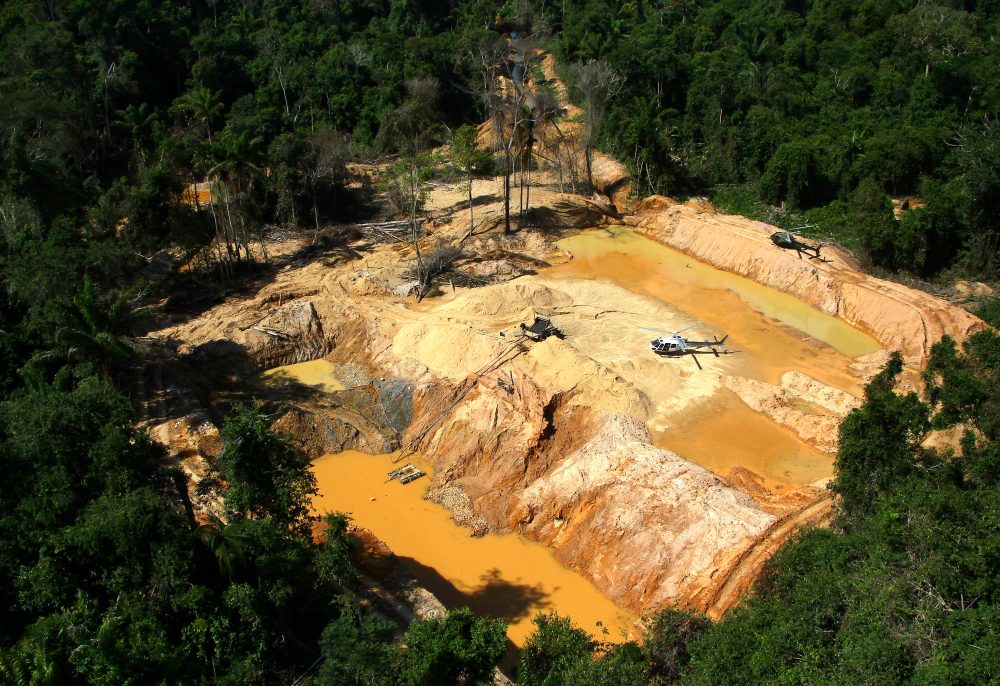

SAO PAULO (AP) — Rising gold values have sparked a fresh wave of illegal mining operations throughout Brazil’s Amazon rainforest, rapidly destroying protected forest areas and creating dangerous mercury pollution levels, according to government officials and environmental researchers.
Research published Tuesday by Amazon Conservation, working alongside Brazilian nonprofit Instituto Socioambiental, revealed that unlawful mining operations caused extensive forest clearing within three protected conservation zones in the Xingu region. This area represents one of Earth’s most expansive protected forest systems, covering territory in Para and Mato Grosso states. The findings combined satellite data with field investigations.
The Terra do Meio Ecological Station experienced its initial illegal mining incidents in September 2024. By late 2025, mining operations had destroyed 30 hectares (74 acres) of forest in that location. At Altamira National Forest, unauthorized mining caused 832 hectares (2,056 acres) of forest destruction from 2016 through September 2025. A newly established mining operation that began in 2024 expanded to cover 36 hectares (89 acres) by October 2025, representing nearly half of that year’s mining-related forest loss in the area.
Satellite surveillance also identified a hidden airstrip constructed by illegal miners within the Nascentes da Serra do Cachimbo Biological Reserve during the previous year. Unauthorized mining activity in this reserve expanded from 2 hectares (5 acres) to at least 26.8 hectares (66 acres) throughout 2025.
Amazon Conservation collaborated with Earth Genome and the Pulitzer Center in 2023 to create the Amazon Mining Watch, a monitoring system utilizing satellite technology to observe mining operations throughout the Amazon region starting in 2018. Approximately 496,000 hectares (1,225,640 acres) of rainforest have been destroyed for mining purposes since that time, with roughly 223,000 hectares (551,045 acres) located within Brazil’s Amazon territory. Amazon Conservation calculates that 80% of mining-related forest destruction in Brazil likely occurs illegally.
Mining contributes a relatively minor portion of Brazil’s total deforestation, as agricultural expansion remains the primary cause of forest loss. Official records show that approximately 579,600 hectares (1,432 acres) of Brazilian Amazon forest were cleared in 2025. Mining operations accounted for about 17,000 hectares (42,000 acres) of this destruction, based on Mining Watch data.
“What makes mining particularly problematic is that it targets protected areas and Indigenous territories,” said Matt Finer, director of Amazon Conservation’s Monitoring of the Andes Amazon program.
Safeguarding Indigenous lands is recognized as a highly effective strategy for preventing Amazon deforestation. The Amazon serves as the planet’s largest rainforest and plays a crucial role in regulating global climate patterns. Scientists caution that ongoing forest destruction could worsen global warming trends.
Brazilian officials initiated a comprehensive campaign against illegal gold mining within the Yanomami Indigenous territory in Roraima state during 2023, following a dramatic increase that created humanitarian and health emergencies. Amazon Conservation data shows that annual expansion of new mining areas declined significantly after that intervention. While mining activities continue, approximately 5,500 hectares (13,590 acres) of forest destruction within Yanomami territory had occurred by 2023.
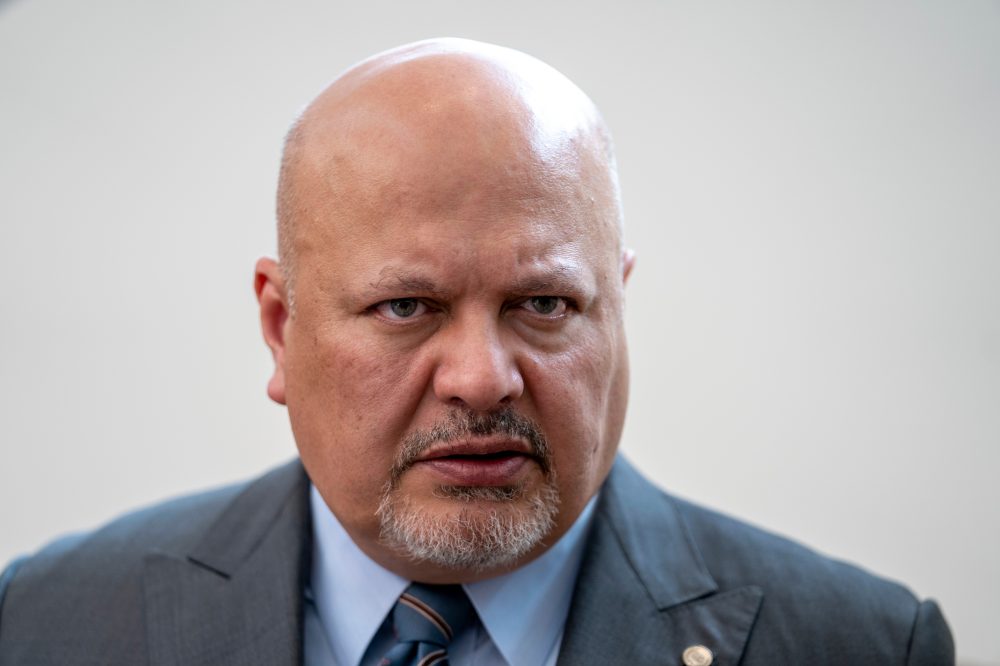
However, targeted enforcement actions have failed to eliminate illegal mining throughout the broader Amazon region. When authorities destroy mining equipment and machinery in one location, operators frequently move to different areas or restart operations after officials depart. Federal prosecutor André Luiz Porreca, who investigates unauthorized mining in western Brazilian Amazon, characterized enforcement efforts as a “cat-and-mouse game.”
“Last year, I took part in an operation that destroyed more than 500 dredges on an Indigenous land,” Porreca said. “The following week, Indigenous people showed me photos proving the miners had already returned.”
According to Porreca, Brazil’s major criminal organizations, including the Red Command and First Capital Command (PCC), provide financial backing for illegal gold mining operations. These groups maintain presence in approximately one-third of Brazilian Amazon cities. “They have the money to bankroll these operations. Some dredges cost as much as 15 million reais.”
While enforcement reduced mining pressure in Yanomami territory, illegal operations have grown more intense in other locations, especially throughout Indigenous territories in the Xingu River basin. The most severe situation exists on Kayapo Indigenous land, where approximately 7,940 hectares (19,620 acres) of rainforest have been cleared through illegal mining, representing the largest such area in Brazil’s Amazon.
Historic gold prices, primarily driven by investor demand for secure investments amid increasing global uncertainties, have created powerful incentives for illegal mining activities.
“It’s basic market logic. With more buyers, there are more people exploiting gold,” Porreca said. He noted that Brazil’s mineral export oversight system remains inadequate, enabling money laundering operations that make illegal gold appear legitimate.
Environmental harm extends far beyond forest destruction. Illegal mining operations release mercury into river systems, polluting waterways and building up in fish that riverine and Indigenous communities rely on for food.
Porreca presented a report to the Inter-American Commission on Human Rights in April detailing extensive mercury contamination throughout the Amazon. The document referenced research by Fiocruz, a government research organization, which discovered that 21.3% of fish sold in Amazon public markets contained mercury levels exceeding World Health Organization safety standards. Children between ages 2 and 4 were consuming mercury at concentrations up to 31 times above recommended maximum levels.
Brazilian law forbids mining activities on Indigenous territories. The Ministry of Indigenous peoples stated that combating illegal mining on Indigenous lands represents a key priority for President Luiz Inácio Lula da Silva’s government. The ministry explained that mining invasions are supported by criminal networks, and addressing them requires dismantling these economic and logistical systems.
The Ministry of Environment acknowledged that mercury contamination from illegal gold mining continues as an ongoing Amazon problem, noting expanded scientific monitoring efforts while supporting enforcement activities.
Brazil’s Federal Police did not provide responses to Associated Press requests for comment.