With questions swirling about LIV Golf’s survival, major champion Bryson DeChambeau is weighing his options for what comes next, including a significant shift toward digital content creation and possibly rejoining the PGA Tour.
The Saudi-backed Public Investment Fund revealed last week it would stop providing the $30 million prize pools that have funded LIV Golf events.
Speaking to media on Tuesday during practice for this week’s LIV event at Trump National Golf Club in Washington, D.C., the 32-year-old golfer shared his backup plans, which include dramatically expanding his online presence.
“I think, from my perspective, I’d love to grow my YouTube channel three times, maybe even more,” DeChambeau explained. “I would love to. I’d love to do a bunch of dubbing in different languages, giving the world more reason to watch YouTube. And then I’d love to play tournaments that want me.”
DeChambeau made the jump to LIV Golf in June 2022 and joined 10 other players in filing a lawsuit against the PGA Tour later that year. He dropped out of the legal action in May 2023. The suit claimed the PGA Tour wrongfully suspended LIV participants through monopolistic practices.
The golfer acknowledged Tuesday that he’s had discussions with PGA Tour officials but expects harsh consequences if he seeks to return. He called potential penalties “quite unfortunate in my opinion, considering what I could do for them.”
DeChambeau believes both organizations must find common ground to repair professional men’s golf.
“The egos need to get dropped,” DeChambeau said. “Everybody needs to come in with a level-headed playing field, with an opportunistic mindset to grow the game of golf. That’s why I came over here. That’s why I do what I do on YouTube.”
When asked about receiving the remaining payments on his LIV contract, which ends after this season, DeChambeau expressed uncertainty about the Public Investment Fund’s intentions: “Your guess is as good as mine.”
Greek coast guard officials confirmed Wednesday that they successfully rescued all nine sailors from a commercial vessel that struck rocks and went down near the island of Andros in the early morning hours.
The commercial vessel had departed from Albania carrying hundreds of metric tons of soda and was headed to Ukraine when it collided with rocks near Andros and subsequently sank, according to a Greek coast guard representative who spoke to Reuters anonymously due to lack of authorization to discuss the matter publicly.
Rescue teams pulled two sailors from the water while seven others were recovered from a rocky section of Andros island, the representative explained. All crew members were transported to a medical facility on the island for treatment.
Authorities have not yet determined what led to the maritime accident.
The vessel’s captain confirmed that no additional crew members were unaccounted for, according to the coast guard representative.
While no immediate environmental contamination has been observed from the sunken ship, coast guard officials plan to install protective sea barriers as a precautionary measure, the representative noted.
An international financial oversight organization has raised red flags about potential threats to worldwide banking stability stemming from the booming private credit market’s expanding connections to conventional financial institutions.
The Financial Stability Board released a comprehensive assessment on Wednesday detailing emerging vulnerabilities in the private lending sector, which primarily involves non-bank entities providing loans to medium-sized businesses. The organization noted troubling patterns including increased failure rates and insufficient transparency that complicate oversight efforts for both regulators and investors.
The watchdog’s analysis, titled “Vulnerabilities in Private Credit,” emphasized particular concern about the “retailisation” trend, especially within United States markets where investment products target affluent individual investors rather than institutions.
According to FSB estimates using 2024 information, the private credit marketplace spans between $1.5 trillion and $2 trillion globally, though the Alternative Investment Management Association calculates a higher figure of $3.5 trillion.
This lending segment has experienced substantial expansion following the 2007-2009 economic downturn, driven partly by stricter banking regulations. However, recent high-profile borrower failures across the United States and United Kingdom have resulted in significant creditor losses and intensified concerns about inadequate loan evaluation practices.
HSBC, Europe’s largest banking institution, became the most recent casualty this week, announcing an unexpected $400 million loss connected to the failure of UK-based mortgage provider Market Financial Solutions.
“The private credit ecosystem is increasingly characterised by deepening interconnections between asset managers, banks, insurers and private equity firms,” said John Schindler, FSB Secretary General.
“Default rates, though still moderate, are rising. When we include broader measures, such as selective defaults and distressed exchanges, the picture becomes more concerning,” he added.
The FSB noted that despite recent expansion, overall banking sector exposure remains limited at under 0.5% of total bank holdings.
Schindler identified priority areas requiring additional attention, including enhanced transparency measures, addressing information shortfalls, examining liquidity imbalances, and promoting regulatory cooperation.
The organization highlighted growing individual investor involvement in the sector, noting retail participation in managed assets has increased from nearly nothing to approximately 13% over the past ten years.
Schindler cautioned that the proliferation of open-ended and semi-liquid investment products designed to attract individual investors could create problematic liquidity mismatches. These funds promise regular withdrawal opportunities while maintaining portfolios of long-term, difficult-to-sell assets – a challenge that was less significant when institutional investors dominated the market.
Major private credit management firms including KKR, Apollo, BlackRock and Blue Owl have all recently restricted individual investor withdrawals as clients seek to exit their positions.
Market concentration presents another area of concern. The FSB determined that five major asset management companies control roughly one-third of total lending commitments across the combined private credit and private equity sectors.
The relationship between private credit and insurance companies has also strengthened, with FSB research suggesting approximately 10% of life insurance portfolios may contain private credit investments, compared to around 3% for property and casualty insurers.
VIENNA (AP) — Art enthusiasts are getting an unprecedented opportunity to view Gustav Klimt’s early masterpieces up close through special guided tours that take visitors high above Vienna’s historic Burgtheater on scaffolding platforms.
For over 100 years, only restoration specialists and art historians had access to these 10 oil paintings that decorate the theater’s soaring 60-foot-high ceilings. The artworks are currently undergoing careful restoration due to water damage.
“The special thing about Klimt for me at least is that we only know about his later works,” said Hannes Höllinger, 60, who participated in one of the recent tours. He described the experience as “very interesting to see that already at age 24 he made these very beautiful paintings which I myself had not seen before.”
The renowned Austrian artist, celebrated for his striking art nouveau style, became a pivotal figure in early 20th-century artistic modernism. Klimt’s paintings now command some of the art world’s highest auction prices, with his iconic 1907-1908 work “The Kiss” — featuring an embracing couple surrounded by intricate patterns and gold leaf — housed at Vienna’s Belvedere Museum.
“We were allowed to invest several hundred thousand euros to let Gustav Klimt shine in his original splendor again,” Burgtheater commercial director Robert Beutler told The Associated Press. “Everything gets cleaned by hand with very fine cotton swabs and condensed water.”
The restoration work is painstakingly detailed, with the largest Klimt piece covering approximately 375 square feet. “So you can imagine how long that takes when you remove dust and grime piece by piece and layer by layer,” Beutler explained.
These ceiling works represent Klimt’s inaugural major commission, completed between 1886 and 1888 alongside his brother Ernst and fellow Austrian artist Franz Matsch when Gustav was just 24 years old.
Thomas Mahr, the conservator overseeing the restoration of decorative elements surrounding Klimt’s early paintings, explained that the young artists’ original proposal was “‘we are young, we are fast, and provide great work at low cost’ — and that’s how they got into business.”
The ceiling paintings showcase various moments from theatrical history, with one of the most significant pieces portraying Queen Elizabeth I observing a performance of “Romeo and Juliet” at London’s Globe Theatre during the 16th century. Notably, Klimt and his two collaborators appear as observers behind the monarch in what stands as Klimt’s sole known self-portrait.
Hundreds of art admirers ascend the scaffolding daily during these exclusive tours to examine Klimt’s creations at close range. Susanne Höllinger, who joined the tour alongside her husband Hannes, noted that these early works already hint at the distinctive style that would define Klimt’s later celebrated pieces.
She particularly appreciated discovering intricate details invisible from the theater floor, including meticulously painted small figures and even a cigarette held by Klimt’s chain-smoking brother Ernst.
“To be so close to these freshly renovated paintings — just a unique experience,” Höllinger exclaimed.
These exclusive scaffolding tours of Klimt’s ceiling artwork will remain available through August, when the restoration equipment will be dismantled. Visitors can purchase general admission tickets through the theater’s website for 25 euros, approximately $29.
A Chinese artificial intelligence company is pursuing a massive funding round that could establish its market value at roughly $45 billion, according to a Wednesday report from the Financial Times.
DeepSeek, described as a frontier AI laboratory, is engaged in its inaugural major fundraising effort with China’s most significant state-supported semiconductor investment entity, the China Integrated Circuit Industry Investment Fund, reportedly spearheading the financing discussions.
Four individuals familiar with the ongoing negotiations provided information about the talks to the Financial Times, though the sources requested anonymity due to the sensitive nature of the discussions.
The potential valuation would place DeepSeek among the most valuable AI companies globally, reflecting the intense competition and massive investments flowing into artificial intelligence development worldwide.
Los Angeles Angels superstar Mike Trout reached a significant career milestone Tuesday evening, blasting his 415th home run during a 4-3 victory over the Chicago White Sox at Angel Stadium in Anaheim, California.
The milestone blast moved Trout past Darrell Evans into 55th place on Major League Baseball’s all-time home run list. Beyond the historic homer, Trout recorded a single, drew two walks, and crossed home plate twice in the Angels’ triumph.
Zach Neto contributed a 2-for-4 performance that included a home run, while Jorge Soler also went deep for Los Angeles. The victory ended a two-game losing streak for the Angels, who had managed just one win in their previous 10 contests. Relief pitcher Jose Fermin (1-1) earned the victory after striking out two batters in a scoreless inning, and Ryan Zeferjahn secured his first save by escaping a bases-loaded situation in the ninth inning.
For Chicago, Chase Meidroth delivered a home run along with two hits and two runs scored, while Andrew Benintendi also collected two hits. The loss marked the White Sox’s first defeat to the Angels this season after winning four previous matchups. Starting pitcher Erick Fedde (0-4) took the loss, surrendering four runs on six hits across 4 2/3 innings with two walks and two strikeouts.
Chicago jumped ahead with two runs in the opening frame, but Los Angeles responded immediately in the bottom half with home runs from both Trout and Soler to level the score. Trout’s blast was his 11th of the current season.
Astros 2, Dodgers 1
Houston’s Peter Lambert delivered seven shutout innings to outpitch Shohei Ohtani and guide the Astros to an interleague victory over the visiting Los Angeles Dodgers.
Lambert (2-2) equaled his career-high innings total while throwing a season-high 104 pitches. The performance provided crucial length for a Houston pitching staff that desperately needed it.
Ohtani (2-2) pitched effectively except for two costly fastballs that left the ballpark. After breezing through the first inning on just 10 pitches, Ohtani’s opening pitch of the second inning resulted in a 1-0 deficit when Christian Walker connected on a fastball that traveled 395 feet for his ninth home run of the year.
Cubs 3, Reds 2
Michael Busch delivered the game-winning hit in the 10th inning after tying the contest with an eighth-inning solo homer, leading Chicago to victory over visiting Cincinnati and extending their winning streak to seven games.
Busch brought home automatic runner Dansby Swanson from second base with a center field single off Sam Moll (1-2), giving the Cubs their second consecutive walk-off victory. Ryan Rolison (3-0) worked a clean 10th inning for Chicago, which has now won 13 straight games at Wrigley Field – their longest home winning streak since capturing 14 in a row during 2008.
Cincinnati received solo home runs from JJ Bleday and Nathaniel Lowe but suffered their fifth consecutive defeat. The Reds also lost Monday’s series opener 5-4 on Michael Conforto’s ninth-inning solo blast.
Additional Games
In other action, Atlanta’s Matt Olson hit a ninth-inning go-ahead home run to defeat Seattle 3-2, Tampa Bay rallied past Toronto 4-3 behind Ben Williamson’s eighth-inning RBI single, and Philadelphia dominated Oakland 9-1 as Bryce Harper homered twice and Cristopher Sanchez threw eight scoreless innings.
Boston crushed Detroit 10-3 with Ceddanne Rafaela driving in four runs including a three-run homer, Minnesota beat Washington 11-3 behind Byron Buxton’s three-run blast, and Baltimore ended a five-game skid by defeating Miami 9-7 on Adley Rutschman’s pinch-hit RBI single in the ninth.
The New York Yankees overcame an early deficit to beat Texas 7-4, Arizona shut out Pittsburgh 9-0, Kansas City extended their winning streak to five games with a 5-3 victory over Cleveland, and San Diego rallied from an early deficit to defeat San Francisco 10-5.
American diplomatic operations in Peshawar, Pakistan will cease following a State Department announcement Tuesday regarding security risks to U.S. personnel stationed there.
Moving forward, all diplomatic activities for Khyber Pakhtunkhwa province, which has Peshawar as its capital, will be managed through the American embassy located in Islamabad, according to State Department officials.
“This decision reflects our commitment to the safety of our diplomatic personnel and efficient resource management,” the State Department explained in their announcement.
The province of Khyber Pakhtunkhwa shares a border with Afghanistan and has experienced numerous attacks and intense combat between Pakistani military forces and militants that Pakistani officials claim are supported by Afghanistan.
Violence erupted in March when demonstrators broke through security barriers at the American consulate in Karachi, Pakistan’s largest metropolitan area, following strikes in Iran that killed Iranian Supreme Leader Ayatollah Ali Khamenei. The incident resulted in ten fatalities.
BERLIN – The German luxury automaker BMW announced Wednesday that its first-quarter profits dropped significantly, falling 25% compared to the same period last year as the company grapples with trade tensions and a challenging Chinese market.
Despite the substantial decline, BMW managed to surpass Wall Street expectations with pre-tax profits reaching 2.3 billion euros (approximately $2.70 billion) for the quarter. Financial analysts had predicted earnings of 2.2 billion euros according to company-compiled forecasts. However, overall company revenue decreased 8.1% to 31.0 billion euros.
The Munich-based carmaker joins competitors Mercedes and Audi in reporting challenging first-quarter results for 2026, as automotive manufacturers face mounting pressure from potential tariff increases and intense competition from Chinese rivals.
BMW, along with other global automakers, has implemented cost-cutting measures to counter the financial strain from trade barriers and elevated raw material expenses in what industry experts describe as a weakened worldwide automotive marketplace.
The company’s core automotive division recorded an EBIT margin of 5.0% during the first quarter, representing a decrease from the 6.9% margin achieved in the previous year. However, this figure still exceeded analyst projections of 4.7%.
Healthcare technology giant Philips announced Wednesday that its first-quarter financial performance exceeded analyst predictions, driven by increased order volumes from customers in North America and Europe.
The Netherlands-based company, whose product lineup spans from electric toothbrushes to sophisticated medical imaging equipment, recorded revenue growth of 4% on a comparable basis, reaching 3.91 billion euros (equivalent to $4.59 billion) for the quarter that concluded on March 31.
The company achieved adjusted earnings before interest, taxes, and amortization of 353 million euros, representing a 9% margin, which the company attributed to effective cost-control measures.
Financial analysts had projected average sales of 3.88 billion euros, comparable growth of 3.4%, and adjusted EBITA of 325 million euros, based on a company-compiled survey.
Philips maintained its annual projections for comparable sales growth ranging from 3% to 4.5%, an adjusted EBITA margin between 12.5% and 13%, and free cash flow spanning 1.3 to 1.5 billion euros.
The company’s annual outlook factors in the ongoing effects of U.S. import tariffs, which Philips indicated in February would continue impacting operations through 2026, though it does not account for possible tariff refunds.
The U.S. Supreme Court overturned President Donald Trump’s tariffs in February, creating uncertainty about whether companies that previously paid these fees would receive reimbursements.
Trump stated that “other alternatives” remained available for implementing tariffs and declared a 10% global tariff using different legal authority than what was challenged in the court case, describing it as “over and above our normal tariffs already being charged.”
Delaware State University’s softball program celebrated as four of its players earned All-Conference recognition for their outstanding performance this season.
The honored athletes include White, Terrell, Rodriguez, and Lopez Del Haro, who were selected for their exceptional contributions to the team throughout the conference play.
The Mid-Eastern Athletic Conference recognition highlights the strong performance of Delaware State’s softball program and acknowledges the individual achievements of these student-athletes during the season.
This marks a significant accomplishment for the Hornets’ softball team, demonstrating the program’s competitive strength within the conference.
Delaware State University’s softball program has earned significant academic recognition with eleven players being named to the 2026 Mid-Eastern Athletic Conference All-Academic Team.
The MEAC recently unveiled its annual softball academic honors, highlighting student-athletes who demonstrate excellence both on the field and in their studies. The recognition showcases the commitment of these Hornets players to maintaining high academic standards while competing at the collegiate level.
This achievement reflects the strong emphasis Delaware State places on academic success alongside athletic performance. The All-Academic Team selection recognizes student-athletes who have excelled in their coursework throughout the academic year.
The Mid-Eastern Athletic Conference’s academic recognition program celebrates the dedication of student-athletes who balance the demands of competitive sports with rigorous academic requirements.
BRUSSELS (AP) — The world’s most remote continent is experiencing an unprecedented surge in visitors as travelers rush to witness Antarctica’s pristine wilderness before climate change potentially transforms it forever. However, this dramatic increase in tourism is raising serious concerns among researchers and environmental advocates about potential contamination, disease outbreaks, and ecological harm.
Though visitor numbers remain relatively modest due to expensive costs and lengthy travel times, the rapid growth rate has prompted warnings from the scientific community.
Recent attention has focused on this trend following a fatal hantavirus outbreak that occurred on the Dutch vessel MV Hondius during an extended polar expedition.
The majority of Antarctic expeditions visit the Antarctic Peninsula, recognized as among the globe’s most rapidly warming regions. NASA data shows that between 2002 and 2020, approximately 149 billion metric tons of Antarctic ice disappeared annually.
A typical journey involves sailing southward from Argentina to Antarctica before traveling northward along Africa’s coastline — the identical path followed by the cruise vessel MV Hondius.
“The sites you will see in Antarctica are extremely unique and not replicable anywhere else on the planet — the whales, the seals, the penguins, the icebergs — it’s all really stunning and it makes a huge impression on people,” said Claire Christian, executive director of the environmental group Antarctic and Southern Ocean Coalition.
Data from the International Association of Antarctica Tour Operators reveals that in 2024, more than 80,000 visitors actually set foot on the ice-covered landmass, while an additional 36,000 observed the scenery from aboard vessels.
The International Union of Concerned Scientists calculates that Antarctic tourism has expanded by ten times over the previous three decades.
These figures may climb even higher in the coming decade as expenses decrease with additional ice-resistant vessels entering service and technological improvements, according to Hanne Nielsen, a senior lecturer of Antarctic law at the University of Tasmania. Her university colleagues project that annual visitor numbers could increase three or four times to exceed 400,000 within that timeframe.
Nielsen explained that some travelers participate in “last chance tourism,” understanding that the melting environment is undergoing rapid transformation.
Authorities have not reported any contamination evidence related to the MV Hondius incident.
Nevertheless, migrating bird populations have transported avian influenza from South America to Antarctica in recent years, the U.S. Centers for Disease Control and Prevention reports.
This disease outbreak led the International Association of Antarctica Tour Operators and other organizations to strengthen regulations governing tourist behavior and sanitation practices to safeguard visitors from contamination. To preserve the delicate ecosystem from invasive organisms both large and microscopic, tourists receive instructions to maintain distance from wildlife and avoid ground contact except with their feet.
“There are rules that people are bound by when they’re heading south,” Nielsen explained, drawing from her experience as a former guide on five expeditions. Staff and passengers employ vacuum cleaners, disinfecting agents, and brushes to thoroughly clean footwear and gear, removing insects, feathers, seeds, and dirt that may harbor microorganisms.
“Between the tongues and the laces of the boots you can find a lot of things,” she noted.
Cruise vessels have experienced outbreaks of illnesses such as norovirus, which can rapidly spread within a ship’s confined environment. In 2020, a COVID-19 outbreak aboard the Diamond Princess transformed the cruise liner into a breeding ground for the then-unknown virus.
Hantavirus typically spreads through inhalation of contaminated rodent waste particles.
The World Health Organization announced Tuesday that MV Hondius departed from Ushuaia, Argentina, on April 1 and traveled to Antarctica and multiple remote islands.
WHO officials are examining potential person-to-person transmission aboard the cruise vessel, stated Dr. Maria Van Kerkhove, WHO’s director of epidemic and pandemic preparedness. Authorities believe the initial infected individual likely acquired the virus prior to embarkation, she explained, and officials have been informed that no rats are present on the ship.
The Antarctic Treaty governs Antarctica, establishing the region in 1959 as a scientific sanctuary designated solely for peaceful activities. Subsequent regulations “aim to ensure that all visits, regardless of location, do not adversely impact the Antarctic environment or its scientific and aesthetic values,” the treaty’s secretariat states.
Tourism companies and research organizations voluntarily follow biosecurity protocols and provide environmental impact evaluations for Antarctic activities.
Christian pointed out that the treaty was created when tourist numbers were significantly smaller.
“Activity needs to be regulated appropriately, as you would with any of the world’s sensitive and precious ecological sites,” Christian stated from Hiroshima, Japan, where she was attending an Antarctic Treaty Consultative Meeting. At the gathering, she planned to support efforts to enhance protections for Antarctica’s penguins, whales, seabirds, seals and krill — small organisms that form the foundation of the food web.
Currently, the appeal of the frozen wilderness continues attracting travelers.
“You can put a footprint in Antarctica and it’s still there 50 years later,” Christian observed.
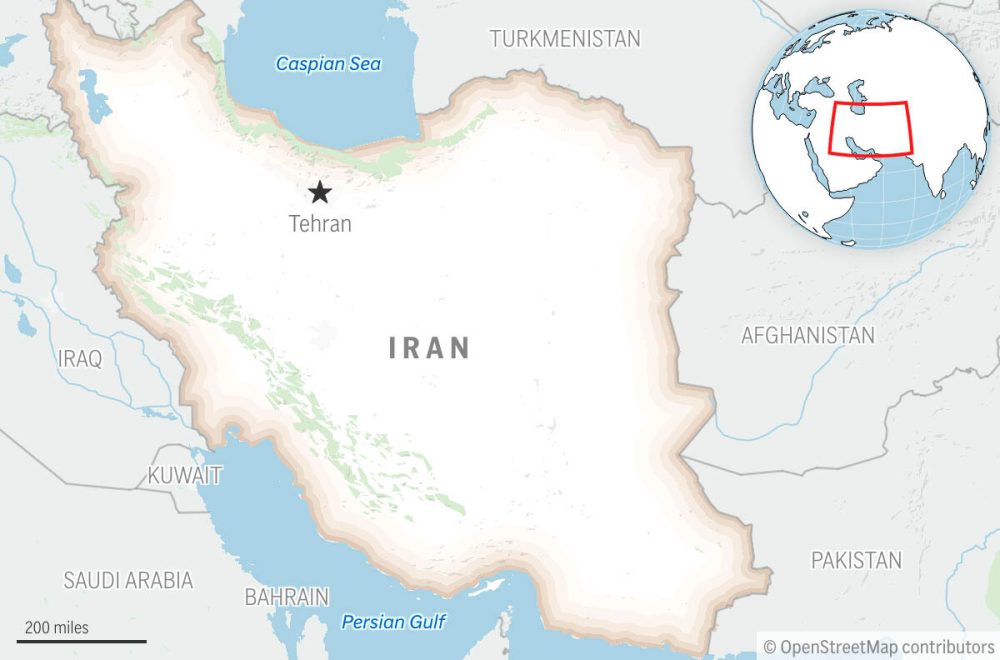
TEHRAN, Iran — A devastating blaze at a shopping mall near Iran’s capital has claimed eight lives and left 40 people injured, according to Tehran’s emergency services officials who reported the incident on Wednesday.
The deadly fire erupted on Tuesday at the Arghavan shopping center located in Andisheh town within Tehran province. Officials have not yet determined what sparked the deadly blaze, and Iran’s state broadcaster IRIB reported that an investigation is currently underway.
Video from the scene captured emergency crews working to extinguish the flames while massive clouds of dark smoke poured from the multi-level structure.
Officials indicated there was no evidence connecting this incident to ongoing regional conflicts, noting that a fragile ceasefire with the United States has remained in place for approximately three weeks.
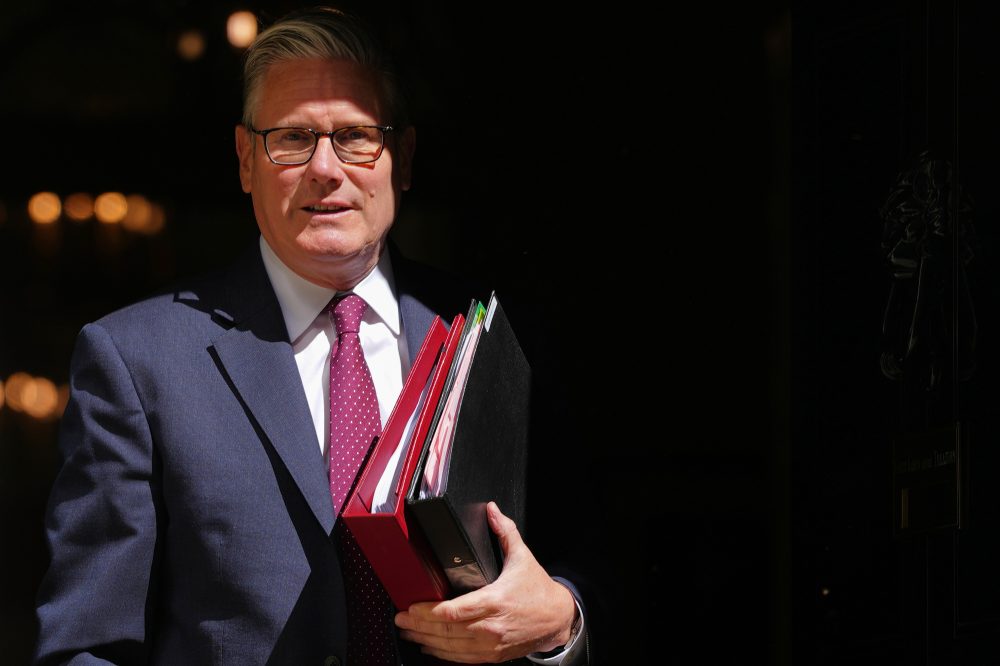
LONDON (AP) — Thursday’s elections across Britain could spell the beginning of the end for Prime Minister Keir Starmer’s struggling leadership, as voters head to polls that may confirm the United Kingdom’s shift toward complicated multi-party governance.
Political analysts predict Starmer’s center-left Labour Party will suffer significant defeats in local government races throughout England, as well as in elections for regional assemblies in Scotland and Wales.
The prime minister’s approval ratings have plummeted due to economic struggles and ongoing questions about his decision-making abilities, leading opposition groups to position Thursday’s mid-term elections as a judgment on Starmer and his administration that began two years ago. Reform UK, a far-right political movement, has adopted “Vote Reform, Get Starmer Out” as their campaign message.
While the next nationwide election isn’t required until 2029, a devastating showing Thursday could spark rebellion within Labour ranks against their unpopular leader.
Following his overwhelming electoral success less than two years ago, “Keir Starmer has become a vessel for people’s disappointment (and) disillusionment,” according to Luke Tryl from polling firm More in Common.
Starmer’s standing has collapsed following numerous blunders since taking office in July 2024. His administration has failed to deliver on promises of economic expansion, fixing damaged public services, and addressing living costs — challenges complicated by the ongoing U.S.-Israeli conflict with Iran that has disrupted oil transport through the Strait of Hormuz.
The prime minister suffered additional damage from his catastrophic choice to name Peter Mandelson, who has scandal-related ties to Jeffrey Epstein, as Britain’s envoy to Washington.
Political observers predict Labour could lose more than half of the 2,500 local council positions they’re defending across England. The party appears vulnerable to losses on multiple fronts — particularly to Green Party candidates in London and Reform UK in working-class areas of northern England that traditionally supported Labour.
“These elections are a perilous, perilous moment for Keir Starmer,” stated Tony Travers, a government professor at the London School of Economics. Following multiple policy reversals and in an economy where “there isn’t much money to spend on anything … his opponents are lining up.”
Starmer previously weathered a February crisis when several Labour members of parliament, including the party’s Scottish leader, called for his resignation over the Mandelson appointment.
A crushing electoral defeat could prompt an immediate leadership challenge from prominent figures like Health Secretary Wes Streeting, former Deputy Prime Minister Angela Rayner, or Greater Manchester Mayor Andy Burnham. Any potential challenger would require backing from 80 parliamentarians — one-fifth of the party’s House of Commons representation — to initiate a leadership race. Burnham would need to secure a parliamentary seat before assuming leadership.
Alternatively, Starmer might face party pressure to announce a departure timeline following an organized leadership transition.
“His parliamentary party are unsure as to whether now is the right time to unseat him,” explained Tim Bale, a politics professor at Queen Mary University of London. “So there might be a stay of execution.”
However, Bale noted, “it’s a case of when rather than if he goes.”
Traditionally, Labour setbacks would benefit their primary opposition, the center-right Conservative Party. However, the Conservatives remain damaged by their chaotic 14-year tenure that concluded in 2024. Instead, Nigel Farage’s Reform UK, the progressive Greens, and regional nationalist movements in Wales and Scotland are positioned to gain the most.
Travers described Britain’s evolution from a “two-and-a-half party system” — with Liberal Democrats typically serving as the third option — “to something more like a five-party one.”
This transformation benefits Rhun ap Iorwerth, leader of Plaid Cymru (the Party of Wales), who has strong prospects of heading that nation’s regional government.
“The old politics is gone,” he declared. “Labour is not going to win this election.”
Labour has controlled Welsh politics for a century and maintained power in Cardiff since Wales established its government in 1999. Current polling indicates Labour may finish third behind Plaid Cymru and Reform UK, who are competing closely for first place.
A Plaid Cymru victory would place pro-independence leaders in three of the UK’s four regions. Northern Ireland operates under Irish nationalist party Sinn Fein in a power-sharing agreement with the pro-British Democratic Unionist Party.
The Scottish National Party, governing from Edinburgh since 2007, promises to pursue another independence referendum if they secure a Thursday majority. Scottish voters previously rejected leaving the UK in 2014.
While Plaid Cymru states that a secession vote isn’t planned for the immediate future, independence remains their long-term objective. Their current priorities include expanded taxation authority and greater control over spending decisions.
“We need a fundamental redesign of Britain,” ap Iorwerth stated. “This is an unequal union.”
One of the world’s largest truck manufacturers experienced a dramatic financial downturn in the first quarter of this year, with company officials announcing Wednesday that operating profits dropped by more than 50 percent compared to the previous year.
Daimler Truck reported adjusted operating profits of 498 million euros (equivalent to $583.56 million), a steep decline from the 1.08 billion euros recorded during the same three-month period in 2023.
The German-based manufacturer attributed the financial setback to an unprecedented decline in customer demand combined with the impact of import duties affecting their crucial North American operations.
The company’s struggles were particularly evident in North America, where vehicle sales dropped dramatically by 25 percent, totaling just 29,432 units sold during the quarter.
This significant downturn highlights broader challenges facing the commercial vehicle industry as economic uncertainties and trade policies continue to reshape market conditions across the trucking sector.
VATICAN CITY – Pope Leo concludes his inaugural year as head of the Catholic Church on Friday, having evolved from a relatively unknown figure into a bold advocate on the international stage, despite facing criticism from President Donald Trump.
The pontiff, who became the first American to hold the papal office, has significantly increased his public appearances and travel schedule while becoming more vocal about global conflicts and human rights issues, particularly following his recent tour of four African nations where he condemned warfare and authoritarian rule.
Leo is scheduled to publish his inaugural major teaching document this month and has plans for a week-long visit to Spain in June, marking a dramatic shift from his quieter approach during his initial 10 months in office before drawing Trump’s attacks over his criticism of the U.S.-Israeli conflict with Iran.
The Vatican has also announced five domestic trips within Italy extending through July, reflecting the pope’s increasingly active schedule as church officials express growing concerns about global leadership trends.
Washington Cardinal Robert McElroy, a close ally of the pope, described Leo’s transformation to Reuters: “Pope Leo has become the singular clarion voice in our global community about the need for peace and safeguarding human dignity.”
McElroy added that the pontiff “has shown an ever-growing willingness to apply the Gospel with specificity to the glaring violations of human rights that surround us,” referencing the biblical accounts of Jesus’s teachings.
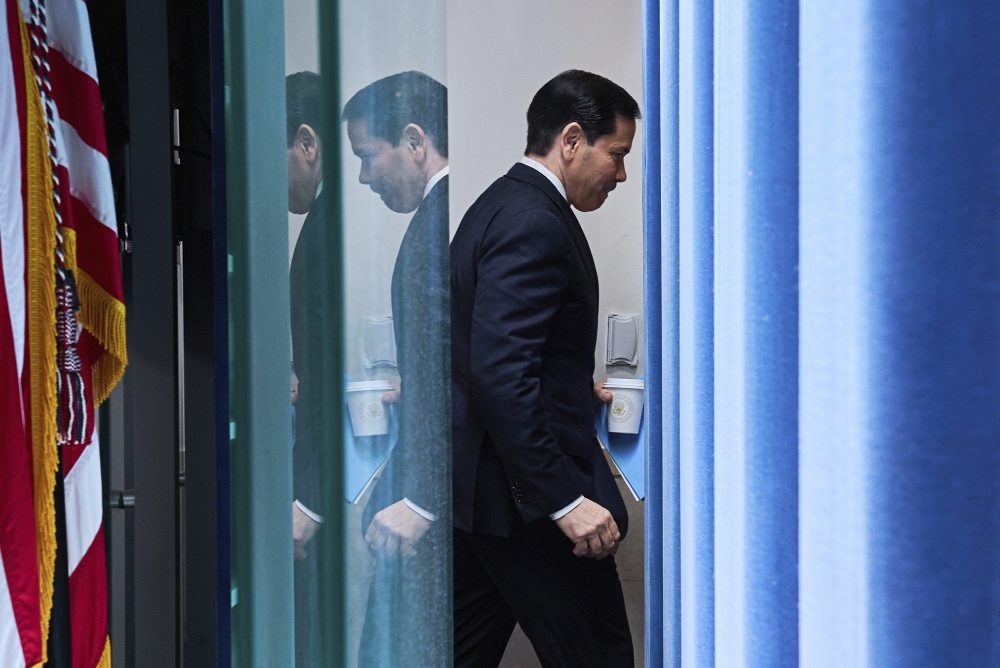
This Thursday, Leo is scheduled to meet with U.S. Secretary of State Marco Rubio, marking his first face-to-face encounter with a Trump administration official in nearly 12 months.
According to the U.S. ambassador to the Holy See, Rubio anticipates a “frank conversation” regarding Trump administration policies, as the president continued his criticism of the pope during an appearance on Hugh Hewitt’s conservative radio program this week.
FROM UNKNOWN TO GLOBAL FIGURE
The current pope, formerly Cardinal Robert Prevost, was chosen by the College of Cardinals on May 8, 2025, to guide the 1.4 billion-member church following a two-day closed-door election in the Vatican’s Sistine Chapel.
He took over from Pope Francis, who spent 12 years working to modernize the traditionally conservative institution and make it more accessible to contemporary society.
Prevost had served for many years as a missionary and bishop in Peru before joining the Vatican’s senior leadership in 2023. While he quietly supported Francis’s papacy, he remained largely unknown internationally and, though mentioned on some papal candidate lists, wasn’t considered a leading contender.
During his early months as pope, Leo avoided controversial topics. However, he began speaking out against Trump’s strict immigration measures in September, prompting pushback from conservative American Catholics.
Following his criticism of the Iranian war, Trump launched a series of social media attacks against the pope, labeling him “weak” and “terrible.”
During his 10-day African journey in April, the pope cautioned that the desires of the world’s wealthiest individuals pose threats to global peace, condemned international law violations by “neocolonial” powers, and declared that the world was “being ravaged by a handful of tyrants.”
Leo subsequently explained to journalists that his African tour speeches were prepared weeks in advance and weren’t specifically targeting Trump.
ITALIAN VISITS PLANNED, NOT AMERICAN
For his first anniversary, Leo will travel to the Italian cities of Pompei and Naples, located approximately 250 kilometers south of Rome, where he will honor a Catholic shrine and participate in multiple events.
This marks the beginning of five Italian trips scheduled through July, concluding on July 4 with a visit to Lampedusa, an island south of Sicily that has become the primary arrival point for migrants making dangerous journeys from North Africa to Europe.
The decision to visit this island on America’s 250th independence anniversary has attracted significant attention, particularly as the Trump administration claims Europe faces “civilisational erasure” due to immigration policies. The Vatican announced this visit in February, shortly after confirming that Leo would not visit the United States this year.
Chicago Cardinal Blase Cupich told CBS News in April that the pope’s island visit demonstrates he is “sending a message that his top priority right now is to be with those who are downcast and marginalised.”
While the Vatican hasn’t revealed the publication date for Leo’s first comprehensive teaching document, called an encyclical, experts widely expect its release before May ends.
The document is anticipated to tackle various ethical challenges confronting the world, including artificial intelligence development. The pope will likely also address ongoing global conflicts and leadership issues.
David Gibson, a Vatican scholar at Fordham University, noted that Leo will focus on universal principles rather than targeting Trump or any specific leader.
“If a particular leader feels attacked by Leo’s words, maybe that is their problem and not the pope’s,” Gibson stated.
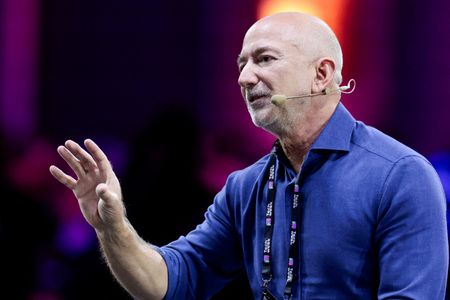
Jeff Bezos’s aerospace company Blue Origin has rolled out a revised employee stock incentive program aimed at addressing worker complaints and better competing with rival SpaceX, according to a Financial Times report published Wednesday that cited three sources with knowledge of the situation.
The initiative to enhance employee compensation comes as competition heats up between Blue Origin and Elon Musk’s SpaceX, which recently submitted paperwork for a public stock offering with an estimated value of approximately $1.75 trillion.
Company leadership presented the updated incentive structure to workers last week following widespread employee frustration with the previous program, particularly as stock options from the original plan began expiring without any financial benefit to workers, according to the newspaper’s reporting.
Reuters was unable to independently confirm the details of the report.
Blue Origin has not yet responded to requests for comment from Reuters.
Multiple current and former Blue Origin workers expressed frustration to the Financial Times that the company was letting options from the initial program lapse after establishing requirements that would only trigger payouts if the company went public or was sold.
The updated program aims to resolve some of these concerns and establishes a new strike price of $9.50 per share for the stock options, according to the Financial Times report.
Under the new structure, the stock options will be settled in cash rather than providing employees with actual company ownership, the report indicated.
The revised program also expands the types of “liquidity events” that would activate payouts to include external investment rounds or tender offers, the Financial Times reported, referencing internal documents they reviewed.
Blue Origin CEO Dave Limp informed employees that the company has no current intentions to pursue a public offering, according to the Financial Times.
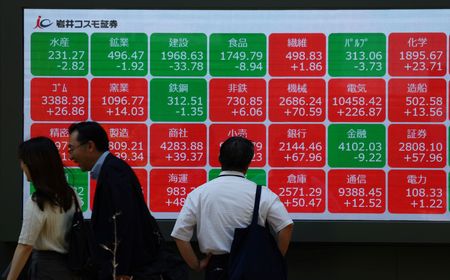
International financial markets reached unprecedented levels Wednesday as major Asian exchanges reopened following holidays, with investors driving up technology stocks amid continued enthusiasm for artificial intelligence investments.
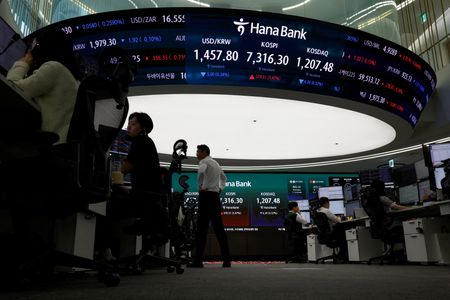
South Korea’s main stock index, the KOSPI, broke through the 7,000-point threshold for the first time in history as trading resumed in Seoul. Samsung Electronics led the charge with a remarkable 13% increase, pushing the company’s market value beyond the $1 trillion milestone. The electronics manufacturer has now surpassed Warren Buffett’s Berkshire Hathaway in total value and is approaching retail giant Walmart.
Meanwhile, crude oil prices dropped for the second consecutive day following comments from U.S. President Donald Trump on Tuesday. Trump announced he would halt operations designed to protect shipping vessels traveling through the Strait of Hormuz, pointing to what he called “great progress” in negotiations toward a broader deal with Iran.
China’s stock markets also performed strongly, reaching their highest levels since January 2022 when trading resumed. The gains came after private sector data revealed the country’s services industry grew at an accelerated rate in April, boosted by increased new business activity. Japan’s financial markets remained shuttered for a national holiday.
Several major international stock indices set new records, including MSCI’s comprehensive global index, its emerging markets benchmark, and its Asia-Pacific measure excluding Japanese stocks.
Currency markets saw significant movement as well, with the Australian dollar climbing 0.7% to nearly $0.72400, marking a four-year peak. New Zealand’s currency gained 0.9% to reach $0.59380, its strongest position in almost eight weeks.
European market futures indicated positive opening trends, with continent-wide indicators up 0.6%, German DAX projections rising 0.4%, and British FTSE expectations gaining 1%.
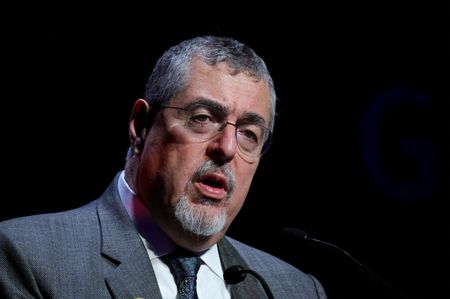
Guatemala’s President Bernardo Arévalo has named a new chief prosecutor, bringing closure to an extended political battle with the outgoing attorney general who faced international sanctions for undermining corruption investigations.
The president selected Gabriel Estuardo García Luna, a lawyer, to lead the prosecutor’s office beginning May 17th when Consuelo Porras’ term concludes. This appointment represents a significant victory for Arévalo, who has frequently criticized prosecutors for what he calls politically-driven arrests and damage to Guatemala’s legal system.
Porras had made multiple unsuccessful attempts to prevent Arévalo from assuming the presidency, drawing condemnation from the international community and creating ongoing tension with the administration.
Guatemala’s attorney general operates independently from the executive branch, which can leave presidents working alongside adversarial chief law enforcement officials. This office has been surrounded by corruption scandals for many years.
During a televised speech to the nation, Arévalo announced García Luna would begin his duties when Porras steps down. “The Public Ministry is getting a new authority who does not come to serve a president, the government of the day, or particular or spurious political interests,” Arévalo said.
García Luna inherits an agency that has drawn widespread domestic and global condemnation during Porras’ divisive leadership. Critics have alleged she weaponized the prosecutor’s office to target former justice department officials, members of the press, political adversaries and even Arévalo directly.
The incoming attorney general is 49 years old with more than two decades of legal practice and advanced education in law.
Arévalo made his choice from six nominees presented by a selection panel including the chief justice, law school administrators from across Guatemala, and representatives from the country’s bar association. This committee evaluated no fewer than 48 applications for the role.
Porras drew criticism and penalties from nations worldwide for allegedly blocking corruption probes and wielding her authority against political enemies.
Following Arévalo’s electoral victory, Porras targeted his Seed Movement party, claiming irregularities in the signature collection process for party registration. Her staff conducted searches of party headquarters, confiscated and examined voting materials, and made repeated efforts to strip away his legal protections.
Arévalo has maintained that Porras serves the interests of Guatemala’s powerful corrupt networks who oppose his anti-corruption agenda.
MELBOURNE, Australia — Australian authorities announced Wednesday that several women suspected of having connections to Islamic State militants will face immediate arrest and criminal charges when they arrive back in the country from Syria.
Home Affairs Minister Tony Burke confirmed that his government received notification Wednesday that four women and nine children had secured flight reservations from Damascus to Australia, though he declined to specify their expected arrival date.
Police Commissioner Krissy Barrett revealed that the Australian Federal Police have been conducting investigations since 2015 into the activities of Australian citizens who journeyed to what the Islamic State called its caliphate in Syria.
These investigations have examined possible terrorism-related offenses as well as crimes against humanity, including human trafficking, Barrett explained.
“Some individuals will be arrested and charged. Some will face continued investigations when they arrive in Australia,” Barrett stated during a press conference.
Barrett added that the children accompanying these women would be enrolled in programs designed to counter violent extremism.
While the Australian government is legally obligated to issue travel documents for these individuals, officials have consistently emphasized they are providing no assistance with their return journey.
“The individuals concerned traveled … in support of one of the most horrific terrorist organizations we’ve seen in recent history or in our lifetimes,” Burke explained to reporters.
“There is a reason why the government has drawn a very hard line saying we will do nothing to assist. The government’s complete lack of support for these individuals is a direct reflection of the decisions that they made,” Burke continued.
The women had been confined at Roj Camp, located near the Syrian-Iraqi border. While they departed the facility last week, Syrian officials informed The Associated Press at that time that Australia had “refused to receive them.”
Burke acknowledged his government’s limited authority to block their return, noting “There are very serious limits on what can be done with respect to preventing a citizen of a country returning to their country.”
This follows a failed February attempt when 34 women and children from the same facility were prevented from reaching Australia after Syrian authorities turned them back.
During that incident, Australian officials issued a temporary exclusion order against one woman, effectively barring her return.
The government has not disclosed the identity of this woman, who remains subject to the exclusion order that can prevent high-risk citizens from returning for up to two years.
These exclusion powers were established through 2019 legislation aimed at preventing defeated Islamic State fighters from re-entering Australia. No previous public use of such an order has been reported.
While these orders cannot be applied to children under 14, Australia has maintained its policy against separating children from their mothers.
Burke confirmed that the February exclusion order against the unidentified woman remains active.
Australian law made unauthorized travel to Raqqa, the former Islamic State stronghold in Syria, punishable by up to 10 years imprisonment for trips made between 2014 and 2017 without legitimate justification.
Following the Islamic State’s territorial defeat in Syria in 2019, former fighters from various nations, along with their families, were detained across multiple camps and facilities in northeastern Syria. Despite its territorial losses, the group continues conducting attacks in Syria and Iraq through remaining fighters.
The larger al-Hol detention facility has since closed, with thousands of suspected militants previously held in Syria transferred by U.S. military forces to Iraq for prosecution.
These transfers occurred following January clashes between government forces and the Syrian Democratic Forces, during which government troops captured significant SDF-controlled territory. The resulting disorder allowed many detainees to escape from al-Hol and other detention facilities.
Australian governments have previously facilitated the return of Australian women and children from Syrian detention camps twice, while other Australians have managed to return independently.
COLUMBIA, S.C. — Republicans in South Carolina have launched an effort to reshape congressional boundaries targeting a district with a Black majority, following a recent U.S. Supreme Court decision that weakened safeguards for minority representation in voting.
With encouragement from President Donald Trump, GOP lawmakers in the Palmetto State are working to alter the congressional map in hopes of capturing all seven of the state’s House seats, including one currently represented by a longtime Black Democratic congressman.
South Carolina’s initiative mirrors similar actions already underway across the South. Special legislative sessions are currently happening in Alabama and Tennessee to modify their federal House districts, while Louisiana officials are also preparing new congressional boundaries after the Supreme Court invalidated their existing map last week.
The nation’s highest court determined that Louisiana placed excessive emphasis on racial considerations when establishing a second district with a Black majority while trying to follow Voting Rights Act requirements. This decision dramatically changed how the law has been interpreted for decades, providing Republicans with justification to challenge majority-Black districts that typically elect Democratic candidates.
The court’s decision has intensified nationwide redistricting conflicts before November’s midterm elections, which will decide control of the narrowly divided House of Representatives.
Following Trump’s encouragement for Texas to redraw its House districts last year, eight states have now implemented new congressional maps. Republicans believe they could pick up as many as 13 seats from these changes, while Democrats estimate they might gain up to 10. However, some newly drawn districts may be competitive in November, potentially limiting gains for both parties.
Democratic Representative Jim Clyburn has served South Carolina’s 6th Congressional District since it was restructured to benefit minority voters in 1992, and he’s seeking his 18th term. However, his reelection prospects could become more challenging if Republicans successfully redraw his district boundaries.
State legislative leaders have indicated that any redistricting initiative requires approval from two-thirds of both the House and Senate. The matter could be addressed as early as Wednesday, though success depends on near-unanimous Republican support.
Senate Majority Leader Shane Massey has cautioned that redistricting efforts might backfire due to narrow political margins, potentially creating a second Democratic House seat. Massey informed reporters Tuesday that he had a respectful discussion with Trump regarding redistricting, with both expressing their respective concerns.
The state’s primary elections are set for June 9, with early voting beginning in three weeks.
On Wednesday, the House may consider legislation allowing Alabama to conduct a special congressional primary if the Supreme Court permits the state to modify its House districts.
Based on the court’s Louisiana ruling, Alabama officials have requested that courts suspend a judicial mandate requiring a House map with two districts containing significant Black populations. Republicans prefer using a 2023 Legislature-approved map that could help the GOP win at least one of those seats currently held by Democrats.
Alabama’s primaries are planned for May 19. If the Supreme Court approves the state’s request after or close to the primary date, proposed legislation would disregard those primary results and direct the governor to schedule new primaries under revised district lines.
Democrats have criticized the legislation as a Republican attempt to seize power that recalls the state’s disgraceful history of denying Black citizens equal rights and representation.
Republicans are “working to secure an electoral victory by taking Alabama back to the Jim Crow era, and we won’t go back,” Democratic Representative Terri Sewell declared to a crowd assembled outside the Alabama Statehouse.
Republican Governor Bill Lee has convened Tennessee lawmakers for a special session to examine a Trump-endorsed proposal that could dismantle the state’s only Democratic-held House district, which centers on Memphis, a majority-Black city. Republicans provided few details about the plan Tuesday.
As the Senate commenced work Tuesday, protesters in the hallways could be heard shouting “shame, shame, shame” inside the chamber. On the floor, Senator Raumesh Akbari, a Black Democrat from Memphis, described the redistricting as “an act of hate.”
Martin Luther King III wrote to Tennessee legislative leaders expressing “grave concern” about plans to split Memphis, stating the action could undermine the voting rights work accomplished by his father, Martin Luther King Jr.
Tennessee’s candidate filing period concluded in March, with the primary election scheduled for August 6.
Following last week’s Supreme Court ruling, Republican Governor Mike Landry delayed Louisiana’s May 16 congressional primary to provide time for lawmakers to approve new House districts. Republican State Senator Caleb Kleinpeter, who chairs a redistricting committee, announced plans for a public hearing Friday.
Louisiana voters had already submitted more than 41,000 absentee ballots by last Thursday when Landry suspended the House primaries, according to the Secretary of State’s Office. This represents about one-third of all distributed absentee ballots, with approximately 19,000 from registered Democrats, 17,000 from registered Republicans, and the remainder from unaffiliated voters.
Democrats and civil rights organizations have filed multiple lawsuits challenging Louisiana’s congressional primary suspension.
Technology stocks experienced a massive surge Wednesday, propelling South Korea’s main stock index to an unprecedented peak as investors showed strong enthusiasm for artificial intelligence growth prospects and potential diplomatic breakthroughs in the U.S.-Iran situation.
The Kospi index climbed an impressive 6.7% to reach 7,398.34 after reopening following Tuesday’s holiday closure. Samsung Electronics led the charge with a remarkable 13% jump in share price, while fellow semiconductor manufacturer SK Hynix surged 10% during early trading hours.
Both technology giants play crucial roles in producing the specialized computer chips essential for artificial intelligence systems, positioning them to benefit significantly from the ongoing AI revolution.
Market optimism received an additional boost from reports that Iranian representatives were heading to China prior to scheduled talks between President Donald Trump and Chinese President Xi Jinping. This diplomatic development helped stabilize oil market fluctuations and improved overall investor sentiment.
The positive momentum extended across other Asian trading floors, though Tokyo markets remained closed for a holiday. Australia’s S&P/ASX 200 advanced nearly 1.0% to 8,766.80 during morning sessions, while Hong Kong’s Hang Seng climbed 0.7% to 26,081.52. Meanwhile, the Shanghai Composite posted a 1.0% gain, reaching 4,152.68.
Energy markets saw some cooling, with benchmark U.S. crude declining $1.37 to $100.90 per barrel. International Brent crude dropped $1.50 to $108.37 per barrel, continuing Tuesday’s downward trend that erased earlier weekly gains. Despite these decreases, oil prices remain significantly elevated compared to pre-war levels of approximately $70 per barrel.
U.S. military officials have confirmed a ceasefire agreement with Iran is currently active, though considerable uncertainty persists. American forces are working to reestablish safe passage through the Strait of Hormuz, which would enable oil tanker operations to resume from the Persian Gulf region.
Wall Street also celebrated strong performance, with the S&P 500 advancing 0.8% to establish a new record at 7,259.22, surpassing last week’s previous high. The Dow Jones Industrial Average contributed a 0.7% gain to close at 49,298.25, while the technology-focused Nasdaq composite achieved its own milestone with a 1% rally to 25,326.13.
Economic indicators from the United States presented a mixed picture. Service sector growth unexpectedly decelerated last month, with some businesses citing war-related impacts on consumer spending. However, a separate analysis revealed that employers posted slightly more job advertisements at March’s conclusion than economists had anticipated, suggesting continued strength in the employment market.
Currency markets showed modest movement, with the U.S. dollar edging down to 157.88 Japanese yen from the previous 157.89 yen. The euro strengthened to $1.1720, up from $1.1693.
NEW YORK — Federal civil rights officials filed a discrimination lawsuit Tuesday against the New York Times, alleging the newspaper overlooked a white male staff member for advancement to boost diversity within its leadership structure.
The newspaper dismissed the legal action as having political motivations and stated it plans to mount a strong defense.
The Equal Employment Opportunity Commission brought the case on behalf of a Times editor who filed a complaint after being denied the deputy real estate editor position in 2025. The lawsuit alleges violations of Title VII of the 1964 Civil Rights Act, which bars workplace discrimination based on sex, race, national origin or religion.
According to the EEOC, the publication’s publicly announced objectives to expand diversity in management positions led to the white male candidate being eliminated from final interviews, while three female candidates and one Black male candidate advanced.
EEOC Chair Andrea Lucas, a Republican appointee, has actively supported the Trump administration’s efforts to challenge corporate diversity initiatives that she contends discriminate against white men and other groups. Last December, Lucas used social media to encourage white men to file complaints if they felt victimized by their employer’s diversity practices.
“No one is above the law — including ‘elite’ institutions. There is no such thing as ‘reverse discrimination;’ all race or sex discrimination is equally unlawful, according to long-established civil rights principles,” Lucas stated. “No matter the size or power of the employer, the EEOC under my leadership will not pull punches in ensuring evenhanded, colorblind enforcement of Title VII to protect America’s workers, including white males.”
New York Times spokesperson Danielle Rhoades Ha criticized the EEOC for departing from typical procedures in extraordinary ways. She noted that while the complaint focuses on a single staffing decision among more than 100 deputy roles throughout the newsroom, the federal filing makes broad accusations that disregard facts to support a preconceived conclusion.
“Neither race nor gender played a role in this decision – we hired the most qualified candidate, and she is an excellent editor,” Rhoades Ha stated.
The federal lawsuit, filed in U.S. District Court for the Southern District of New York, describes the unnamed complainant as a Times editor employed since 2014, primarily serving as a senior staff editor covering international news with prior real estate reporting experience.
The legal filing asserts that the woman selected for the deputy real estate editor role “did not have experience with real estate journalism” but “as a multiracial female, this candidate matched the race and/or sex characteristics NYT sought to increase in its leadership.” The EEOC noted that one interviewer characterized her as “a bit green overall.”
The commission’s lawsuit heavily referenced the Times’ diversity and inclusion initiatives as proof of discriminatory practices.
Specifically, the legal action highlights the newspaper’s “Call to Action” strategy released in February 2021, which established a target of boosting Black and Latino leadership representation by 50% before 2025. While the Times achieved this objective in 2022, it maintained its diversity commitments. Legal documents indicate that in 2024, white staff members comprised 68% of leadership positions, while people of color held 29%.
Lucas has repeatedly criticized representation targets that numerous corporations announced publicly, especially following the 2020 civil unrest after George Floyd’s death at the hands of police.
Title VII generally prohibits employers from considering race or gender in hiring, promotion, and employment decisions. Lucas has targeted practices she believes force managers to factor in these characteristics, including certain bias training programs and requirements for diverse candidate pools. Opponents argue the EEOC is undermining established practices meant to create equal opportunities for workers historically facing workplace discrimination.
In February, the EEOC disclosed an investigation into Nike for alleged racial discrimination against white workers. Unlike the Times case, the Nike probe originated from Lucas herself through a “commissioner’s charge” rather than an employee complaint, examining various diversity policies at the athletic apparel company.
A South Korean shipping company announced Wednesday that it has arranged for a rescue vessel to pull one of its damaged cargo ships to a Dubai port following an explosion and fire that left the vessel stranded in Middle Eastern waters.
The incident has drawn international attention after President Donald Trump accused Iran of attacking the ship, though South Korean officials say they won’t determine what caused the blaze until the vessel reaches port and undergoes a thorough examination.
According to HMM, the shipping company, the damaged vessel should reach Dubai either Thursday evening or Friday morning, Seoul time.
The cargo ship, flying under Panama’s flag and called HMM Namu, experienced an explosion and burst into flames Monday evening. Company officials report that crews successfully put out the fire, and all 24 sailors aboard the vessel are safe with no injuries reported.
Trump took to social media to claim that Iran had “fired shots at a Korean-operated ship and other targets” during a U.S. military operation aimed at keeping the strait open for shipping traffic. He called on South Korea to support the American effort. The waterway typically handles roughly 20 percent of global oil and liquefied natural gas shipments.
South Korean leadership has shown reluctance to get deeply involved in Middle Eastern tensions, though the presidential administration said Tuesday it was considering Trump’s request for Seoul to join the navigation security mission.
Trump later announced he would temporarily halt the escort operation through the critical shipping lane, saying there had been “great progress” toward reaching a broader deal with Iran.
A major data center company is exploring the possibility of selling off its Asian business operations in what could be a massive $30 billion transaction, according to a Bloomberg News report published Tuesday.
Stack Infrastructure, which is owned by Blue Owl Capital and headquartered in Denver, has been evaluating various options for its Asia-Pacific holdings, sources with knowledge of the discussions told Bloomberg.
The company specializes in providing digital infrastructure services to businesses and operates data center facilities throughout strategic Asia-Pacific markets, including major hubs in Tokyo, based on information from the company’s website.
According to the Bloomberg report, Stack has initiated conversations with potential financial advisors regarding either a complete or partial divestiture of its properties located in Australia, Japan, and Malaysia.
The report noted that while infrastructure-focused investment funds and other industry participants could potentially show interest in acquiring these assets, the discussions remain in early stages with no definitive choices made yet.
Neither Stack Infrastructure nor Blue Owl Capital provided immediate responses to requests for comment when contacted after regular business hours. Reuters was unable to independently confirm the details of the Bloomberg report.
In a Tuesday evening address to his nation, Guatemalan President Bernardo Arevalo announced his selection of Gabriel Estuardo Garcia Luna as the country’s next attorney general. Garcia Luna, who previously served as a judge and worked as a university professor, will assume the role on May 17.
The appointment follows weeks of legal complications after Guatemala’s Constitutional Court halted the selection process and demanded a review of the candidate pool. The court’s intervention came after the initial shortlist notably excluded current Attorney General Consuelo Porras.
A judicial committee subsequently voted on a revised list of candidates before presenting their recommendations to Arevalo, enabling the president to move forward with his choice.
Porras, who has been a prominent opponent of Arevalo’s administration, faces sanctions from the United States, Canada, the European Union, and other international bodies. These penalties stem from allegations of corruption, targeting human rights activists, and attempting to interfere with Arevalo’s 2023 electoral victory. Porras has consistently rejected these charges.
During his announcement, Arevalo emphasized the need for judicial reform, stating: “This is a time to learn from our history. Justice has all too often been a tool of revenge. It is time to leave that past behind.” The president described the appointment as marking a “new chapter” and expressed hope that Garcia would bring both clarity and determination to the position.
Garcia currently works as a criminal legal advisor within the prosecutor’s office.
Arevalo stressed that the attorney general’s duty extends beyond political loyalty, explaining that the position is mandated not to serve “the incumbent president or any particular or spurious political interests, but to serve an independent and impartial justice system dedicated to the people who make up the Guatemalan nation.”
Mining giant BHP is drawing fresh investment interest as artificial intelligence drives up demand for copper, according to the company’s Chief Financial Officer Vandita Pant.
Speaking at the Macquarie Australia Conference in Sydney on Wednesday, Pant revealed that international investors are increasingly purchasing shares in the world’s largest listed mining company and leading copper producer.
“What we have seen since half results is that there is a growing interest and what we see in our register is more international generalist investors,” Pant explained during the conference.
The mining company’s stock reached an all-time high on March 2 before declining during a broader mining sector downturn as Middle East conflicts began. However, shares have recovered some of those losses since then.
BHP recently delivered half-year profits that exceeded expectations, with copper earnings overtaking iron ore revenues for the first time in company history. This shift occurred as copper prices climbed due to AI-driven demand.
Pant described the investment strategy behind the new interest: “They like electrification like AI, but they don’t want to pick winners. They are going upstream and saying where’s the bottleneck? Copper is a bottleneck. Who do we invest in where the downside risk can be cut, but we still have exposure to this upside. And for them, BHP seems like a good choice.”
The trend reflects broader market movements, as major fund managers predict a continuing surge in mining and metals investments. Money is flowing into the sector at unprecedented rates, fueled by AI infrastructure expansion, increased defense spending, and investors moving away from high-priced technology stocks.
Crowds of approximately 50 individuals recently assembled outside a Chinese mobile internet company’s headquarters in Beijing, seeking assistance with setting up an artificial intelligence assistant on their devices.
Similar gatherings occurred repeatedly across multiple events in Beijing and the technology center of Shenzhen during March, where technical staff assisted people installing the widely-used AI “agent” called OpenClaw on their computers.
“I’m worried about falling behind in technological developments,” expressed Sun Lei, a 41-year-old human resources manager attending the Cheetah event. She explained her hope that the technology could assist her in finding and evaluating resumes from different hiring platforms.
Following more than a year since OpenAI’s Chinese competitor DeepSeek amazed the global community with its sophisticated AI system, China has transformed into a massive laboratory for widespread AI tool implementation. While AI systems developed in America continue to lead in pure computational strength, Chinese citizens and companies have quickly adopted the technology, enabling rapid and extensive integration across virtually all sectors.
With worldwide AI usage expanding rapidly in workplaces and personal activities, everyday Chinese citizens employ AI for numerous purposes including travel booking and planning, food ordering, and ride-hailing services. Government data from the China Internet Network Information Center shows that over 600 million people from the nation’s 1.4 billion population were utilizing generative AI by December, marking a 142% jump from the previous year.
The recent increase in “agentic” AI usage like OpenClaw, particularly among Chinese enterprises, has also elevated AI model data consumption. Using measurements called tokens – data units representing portions of words – Chinese AI models’ weekly usage has recently exceeded that of U.S. models, according to OpenRouter, an AI “gateway platform” that monitors data and manages security across various AI systems.
Jason Tong, a 64-year-old retired IT engineer from Shanghai, has utilized AI chatbots including Doubao and Kimi for daily inquiries since their introduction several years ago.
After becoming more health-conscious, he enrolled in March with a Shanghai company’s blood glucose monitoring program that employs an AI system to create customized health recommendations. The personalized and quick responses have proven valuable to him.
Tong believes widespread AI application adoption in everyday activities is unavoidable, stating “Just as carriages were eventually replaced by trains, this is bound to happen.”
Chinese AI-integrated products including vehicles and robots are achieving significant progress, ranging from humanoid robots with sophisticated thinking abilities to AI systems enabling drivers to handle complex tasks such as restaurant bookings.
“The (AI) competition is clearly shifting from models to ecosystems,” noted Lizzi Lee, a fellow at the Asia Society Policy Institute’s Center for China Analysis who focuses on economics and technology. “Chinese users are basically acting as real-time testers at scale.”
Chinese technology corporations including Tencent, Alibaba and Baidu are competing to bring AI to market. Tencent incorporated OpenClaw into WeChat, China’s comprehensive “super-app” that functions primarily as messaging software but also enables activities like food ordering and payment processing. Alibaba is incorporating “agentic” AI throughout its business operations.
OpenClaw, initially developed by Austrian software creator Peter Steinberger in the previous year, gained rapid and enthusiastic adoption due to its capability to utilize multiple tools for completing complex assignments.
Zhao Yikang, a Chinese university student in Macao, employs OpenClaw for both academic work and personal tasks.
He was impressed by its affordability and effectiveness, using it to automatically create marketing videos and handle social media accounts during his internship with a real estate company in Zhuhai, a southern Chinese city.
“AI can understand things in a second,” Zhao explained. “You just need to act as a commander and tell it what to do.”
While preparing to launch a photography services company after graduation, Zhao requested AI assistance in building a business website. Within 10 minutes, it produced a completely operational site for under 5 yuan (70 cents).
Despite Chinese officials issuing multiple warnings about potential security concerns regarding OpenClaw AI “agents” such as data breaches as installations increased dramatically, widespread interest has persisted.
Chinese businesses are increasingly establishing internal goals for expanding AI usage to enhance productivity, according to Janet Tang, a partner and managing director specializing in technology at consulting firm AlixPartners.
There are “a lot of application scenarios,” stated Wang Xiaogang, co-founder of Chinese AI software company SenseTime and chairman of ACE Robotics. “The industry is developing very fast and the people, they are very open and they’re eager to try the AI in a lot of scenarios.”
China has worked to position itself advantageously by investing substantially in talent development and securing access to plentiful, cost-effective electricity for energy-intensive AI developments and innovations.
To accomplish technological breakthroughs including AI advances, Chinese leadership has committed to an annual average increase of at least 7% in national research and development expenditure through the country’s five-year plan extending to 2030. An “AI plus” national strategy details measures to incorporate AI into numerous life areas, from medical care to education. Courts in Shenzhen handled 50% more cases last year, officials reported, partially through an AI tool supporting legal procedures.
Nevertheless, restricted access to some of the world’s most sophisticated computer chips due to U.S. limitations continues to hinder China’s AI progress.
“Export controls on tools have slowed China’s chipmaking capabilities, and are the Achilles’ heel of many AI labs that need advanced AI chips,” explained Samm Sacks, a senior fellow at New America who specializes in Chinese technology policies.
However, the restrictions have also resulted in better coordination of design, production and implementation throughout China’s technology supply network. “Over time this dynamic could fuel, not foil, China’s ambitions,” Sacks stated.
When China’s DeepSeek unveiled its highly anticipated V4 AI model preview last month, one significant modification was its partial support by computer chips manufactured by Chinese technology giant Huawei. This represents reduced reliance on leading U.S. chip producers like Nvidia.
A recent Stanford University Institute for Human-Centered AI report indicates the U.S.-China performance gap in leading AI models has “effectively closed.”
U.S. government officials and major AI companies including Anthropic and OpenAI have claimed Chinese AI startups are appropriating U.S. AI technologies. China maintains such accusations lack foundation.
Lian Jye Su, a chief analyst at research and advisory firm Omdia, expects any AI gap between America and China will continue shrinking, despite U.S. export restrictions and China’s Great Firewall, the ruling Communist Party’s extensive internet filtering and censorship apparatus.
Analysts including Su believe obstacles like the Great Firewall will probably affect China’s AI usage in restricted ways, considering the technology is already undergoing testing, integration and expansion within China’s controlled internet system.
“It won’t be long before China moves from fast follower to parallel innovator,” he concluded.
WELLINGTON, New Zealand (AP) — Prosecutors have filed 19 additional weapons charges against an Australian man accused of carrying out a deadly attack that claimed 15 lives during a Hanukkah celebration at Sydney’s Bondi Beach, authorities announced Wednesday.
Naveed Akram, 24, was previously facing 59 criminal counts including murder, attempted murder and terrorism-related offenses following the December 2025 attack when he and another gunman fired on attendees at the Jewish holiday gathering. Akram has not yet been asked to enter a plea in the case.
The suspect sustained gunshot wounds during the incident, while his father, 50-year-old Sajid Akram, died in the shootout with police that brought the attack to an end. Australian authorities determined the assault was motivated by the Islamic State terrorist organization.
Akram was scheduled to appear Wednesday at Sydney’s Downing Center Local Court through video conference from his jail cell. The procedural session was set to address a publication ban protecting the identities of attack victims and survivors who have not publicly identified themselves.
Court personnel confirmed Wednesday that the 19 new charges were filed on April 15, following Akram’s previous court appearance. The fresh counts include 10 charges of shooting with intent to murder and six charges of firing a weapon while resisting arrest.
According to earlier court filings, the attackers initially attempted to throw homemade explosive devices into the crowd of Hanukkah celebrants at the popular Australian beach, but the devices failed to detonate. Police discovered a larger improvised explosive device in the trunk of the younger Akram’s vehicle, which had been decorated with Islamic State banners.
The ongoing police investigation represents one of three official examinations into what authorities describe as Australia’s most serious alleged terrorist incident and the country’s deadliest mass shooting in nearly three decades. One inquiry focuses on coordination between law enforcement and intelligence services prior to the attack.
A royal commission, representing Australia’s most comprehensive form of public investigation, is examining both the extent of antisemitism in Australian society and the specific circumstances surrounding the Bondi Beach shooting. The commission published a preliminary report in April recommending enhanced firearm restrictions and commenced public testimony sessions on Monday.
WASHINGTON — Trump administration officials are intensifying diplomatic efforts to convince China to leverage its relationship with Iran to reopen the Strait of Hormuz, just days before a planned summit between President Donald Trump and Chinese President Xi Jinping in Beijing.
Secretary of State Marco Rubio urged Chinese leadership to take advantage of Iranian Foreign Minister Abbas Araghchi’s current visit to China to pressure Tehran into ending its blockade of the vital shipping corridor. Chinese Foreign Minister Wang Yi conducted meetings with Araghchi on Wednesday, according to reports from the official Xinhua news agency.
“I hope the Chinese tell him what he needs to be told,” Rubio stated during a White House briefing on Tuesday. “And that is that what you are doing in the strait is causing you to be globally isolated. You’re the bad guy in this.”
Rubio emphasized that China’s economy has suffered more severe consequences than America’s from Iran’s blockade of the waterway during the current two-month conflict. Beijing’s export-dependent economy relies heavily on shipping routes through the strait, while China imports approximately half of its crude oil and nearly one-third of its liquefied natural gas from Middle Eastern nations, based on data from China’s General Administration of Customs.
“It is in China’s interest that Iran stop closing the strait,” Rubio declared.
A diplomatic source revealed to The Associated Press on Tuesday that American officials have been working intensively to convince China not to veto the latest U.S.-sponsored resolution at the U.N. Security Council designed to reopen the strait and denounce Iran’s actions. The diplomat requested anonymity when discussing these sensitive negotiations.
China and Russia — both allies of Tehran on the Security Council — blocked a previous Hormuz-related resolution last month, arguing it was too extreme and failed to criticize U.S. and Israeli military actions that initiated the conflict.
Rubio’s diplomatic push toward China followed Treasury Secretary Scott Bessent’s announcement Monday that Iran would be a priority topic when Trump meets with Xi for the first presidential visit to China since Trump’s 2017 trip.
The strait’s closure has created massive disruptions across Asia, a situation that appears to have influenced China’s efforts to work with Pakistan in mediating a two-week ceasefire agreement.
Trump has acknowledged China’s role in encouraging Iran to accept a fragile ceasefire negotiated last month. Three diplomatic sources familiar with China’s behind-the-scenes involvement confirmed that Beijing, as Iran’s largest oil customer, utilized its economic leverage to bring Iranian negotiators back to the table when discussions stalled.
However, the Republican administration maintains that China could increase its involvement in reopening the crucial waterway.
“The threat of attacks from Iran has closed the strait — we are reopening it,” Bessent said during a Fox News interview. “So I would urge the Chinese to join us in supporting this international operation.”
Trump adopted a more cautious tone regarding China’s relationship with Iran, telling reporters in the Oval Office on Tuesday that China hasn’t “challenged” him while he continues pressuring Iran to abandon its nuclear weapons development and reopen the strait. China, meanwhile, has criticized U.S. military operations against its economically isolated Middle Eastern partner.
“You know, in all fairness, he gets, like, 60% of his oil from Hormuz,” Trump said, somewhat overstating Xi and China’s reliance on Middle Eastern petroleum.
China has historically supported Iran’s ballistic missile capabilities and provided dual-use industrial equipment that can be utilized for missile manufacturing, according to U.S. government assessments.
Trump revealed last month that Xi had committed to halting weapons shipments to Iran amid reports that Beijing was considering arms transfers.
Shortly after Trump announced receiving written assurances from Xi, he told CNBC that American forces had seized a vessel carrying a “gift” from China destined for Iran. Trump provided no additional specifics about the incident.
The administration has also increased economic pressure on China, Iran’s primary trading partner, due to its connections with the Islamic Republic.
On April 24, the Treasury Department imposed sanctions on a major Chinese oil refinery and approximately 40 shipping companies and tankers involved in Iranian oil transportation. These sanctions block the companies from accessing the U.S. financial system and penalize anyone conducting business with them.
Chinese officials have indicated they plan to pressure the United States to reduce weapons sales to Taiwan, the self-governing island that China considers a breakaway province.
Rubio acknowledged that Taiwan would likely feature in discussions between the two leaders. “I think both countries understand that it is neither one of our interests to see anything destabilizing happen in that part of the world,” Rubio explained. “We don’t need any destabilizing events to occur with regards to Taiwan or anywhere in the Indo-Pacific. And I think that’s to the mutual benefit of both the United States and the Chinese.”
Trump announced a record-breaking $11.1 billion arms sale to Taiwan in December. Trump subsequently indicated he would address the arms sales with Xi — a suggestion that has concerned officials in Taipei.
During a recent phone conversation with Rubio, Chinese Foreign Minister Wang Yi encouraged the United States to “make the right choices” regarding Taiwan to preserve “stability” between the two nations, according to a Chinese Foreign Ministry statement.
The Houston Astros faced another injury setback Tuesday when shortstop Carlos Correa was removed from the starting lineup approximately one hour before their home matchup against the Los Angeles Dodgers due to a left ankle injury.
Correa’s injury happened during batting practice, marking the second straight day the Astros lost a starter during pre-game preparation. On Monday, catcher Yainer Diaz suffered an oblique strain while taking swings and was subsequently added to the 10-day injured list Tuesday.
Houston skipper Joe Espada indicated that Diaz will be sidelined “a while.”
Nick Allen stepped in at shortstop for Correa after being brought back from the 10-day injured list earlier Tuesday, where he had been recovering from back spasms.
The Astros made several additional roster adjustments Tuesday, bringing up left fielder Zach Dezenzo and right-handed pitcher Jason Alexander from Triple-A Sugar Land. The team sent right-hander Ryan Weiss down to Sugar Land and designated left fielder Dustin Harris for assignment.
The 31-year-old Correa is currently hitting .279 with three home runs and 16 RBIs across 32 games this season, splitting time between shortstop (20 starts) and third base (12 starts).
Houston drafted Correa as the top overall selection in the 2012 MLB Draft. He earned American League Rookie of the Year honors in 2015 and won the Gold Glove award for AL shortstops in 2021.
The three-time All-Star maintains a career .275 batting average with 203 home runs and 740 RBIs over 1,285 regular-season games between the Astros (2015-21, ’25-present) and Minnesota Twins (2022-25).
Diaz, 27, has posted a .248 batting average with two homers and 14 RBIs in 26 games this season. Throughout his career, all spent with Houston since 2022, Diaz has compiled a .277 average with 61 home runs, 229 RBIs, a .303 on-base percentage and .448 slugging percentage across 427 regular-season contests.
Allen, 27, has managed a .250 batting average (5-for-20) in 14 games this season with Houston.
Dezenzo, who celebrates his 26th birthday Monday, owns a career .244 average with four home runs and 18 RBIs in 53 games while playing multiple positions including outfield, third base and first base for the Astros from 2024-25.
Alexander, 33, made one relief appearance for Houston earlier this season, surrendering five earned runs over two innings for a 22.50 ERA. He allowed two hits and issued three walks in a no-decision against Baltimore.
Weiss, 29, holds an 0-3 record with a 7.62 ERA, issuing 20 walks while recording 30 strikeouts in nine appearances (two starts) during his rookie campaign.
Harris, 26, managed a .226 batting average (7-for-31) with four RBIs across 11 games this season.
Australian golf star Cameron Smith is dismissing worries about the future of the LIV Golf circuit, expressing confidence the tour will survive even after losing its Saudi Arabian financial support.
The Saudi Public Investment Fund, which has invested over $5 billion in LIV since the tour began in 2022, announced last week it would stop providing funding after the 2026 season ends. This decision has left the golf circuit searching for alternative financial backing.
Smith, who leads the Australian team Ripper GC, joined the tour early for a reported $100 million contract and has collected approximately $50 million in tournament winnings from the team-based competition format.
The 2022 British Open champion told media members he had been assured the tour would operate beyond this year, though he declined to provide specific details.
“I promise you will hear it first from someone else, rather than me,” he said.
“I know the team are working hard behind the scenes and they’re doing everything they can for us.
“So I am excited, I know (LIV Golf chief executive) Scott O’Neil is really excited for the progress and challenge in the coming months.”
O’Neil addressed reporters before the Virginia tournament in Washington, D.C., expressing optimism about securing support from fresh sponsors and financial partners.
“I had about a dozen inbound calls this weekend from potential investors,” O’Neil said on Tuesday.
“It was a split between private equity, family office and then your traditional high net worth guys who invest in sports and sports teams. So that has been really positive.”
O’Neil avoided directly answering whether the Saudi fund would fulfill player contract obligations beyond 2026.
“I mean, they own the majority of the business now, and they’ve agreed to fund through the season, as they said. Nothing there has changed,” he said.
Smith’s performance in major championships has declined significantly over the past two years, with the 32-year-old failing to make the cut in all four major tournaments in 2025.
He acknowledged his struggles weren’t acceptable and revealed he was implementing changes to improve his performance.
“I can promise you, the fire is in the belly, it’s just a matter of time. I don’t think time is running out on my major career by any means,” he added.
Three Hawks players delivered impressive offensive performances with home run blasts, but their efforts weren’t enough to prevent a defeat against the Mountaineers in a high-scoring battle.
Julian Jimenez continued his recent hot streak at the plate, connecting for his second and third home runs over the past two games. Rodriguez and Caldwell also contributed to the power surge, each sending balls over the fence during the contest.
The offensive explosion from the Hawks wasn’t sufficient to overcome the Mountaineers’ attack in what developed into a slugging match between the two teams. Despite the individual achievements from their hitters, the Hawks ultimately came up short in the final score.
Jimenez’s consecutive games with home runs highlight his current form, building momentum from his previous strong performance. The power display from multiple Hawks players demonstrates the team’s offensive capabilities, even in defeat.
Professional football officials and the National Football League appear on the verge of finalizing a labor contract that would prevent referees from going on strike.
Following months of stalled talks, contract discussions have progressed to where the NFL Referees Association intends to conduct a ratification vote this week, according to someone familiar with the negotiations who spoke to The Associated Press on Tuesday.
The source requested anonymity due to the confidential nature of the talks. ESPN initially broke the story.
In recent weeks, the league started preparing backup officials after contract talks had stalled.
The current collective bargaining agreement between the NFL and its referees’ union expires on May 31.
Contract negotiations between both sides have been ongoing since summer 2024.
“The league remains committed to reaching a fair and reasonable agreement with the NFLRA but will be prepared in the event the NFLRA permits the current agreement to expire,” NFL senior vice president of officiating Perry Fewell stated in an April memo to teams.
The NFL has proposed a 6.45% yearly increase in pay over six years, while the referees’ union seeks 10% plus $2.5 million for marketing fees, according to two AP sources from March.
NFLRA executive director Scott Green disputed those figures, telling the AP “those numbers are not accurate.” He compared the current situation to 2012, when failed negotiations led to a 110-day lockout and the use of substitute referees.
“We’re taking the appropriate steps to be ready, but we’re also keenly focused on negotiations,” NFL Commissioner Roger Goodell commented on March 31.
WASHINGTON — Three individuals died Tuesday when American military forces targeted a boat suspected of drug smuggling in the eastern Pacific Ocean waters.
This deadly operation occurred just one day following another U.S. military action against a suspected narcotics vessel in Caribbean waters, which resulted in two fatalities.
Since early September, the Trump administration has maintained an ongoing campaign targeting suspected drug smuggling boats throughout Latin American waters, resulting in a total death toll of at least 191 individuals.
Even amid the Iran conflict, these operations have intensified in recent weeks, demonstrating the administration’s continued commitment to combating what officials term “narcoterrorism” throughout the Western Hemisphere. Military officials have not released evidence confirming the presence of narcotics aboard any of the targeted vessels.
These operations commenced alongside the largest U.S. military buildup in the region in decades and preceded the January raid that resulted in the capture of former Venezuelan President Nicolás Maduro. Maduro was transported to New York to face drug trafficking allegations and has entered a not guilty plea.
During Tuesday’s operation, U.S. Southern Command reported targeting suspected drug smugglers operating along established trafficking corridors. Officials released footage on X displaying a vessel moving through waters before a massive blast engulfed the boat in flames.
President Donald Trump has declared the United States to be in “armed conflict” with Latin American cartels, defending these operations as essential measures to reduce drug imports and prevent American overdose deaths. However, the administration has provided minimal evidence supporting claims of eliminating “narcoterrorists.”
Legal experts have raised concerns regarding the lawfulness of these maritime strikes.
Starting in 2027, individuals applying for New Zealand citizenship will face a new requirement: passing an examination that covers fundamental topics including government structure and civil liberties, according to an announcement made Wednesday by the nation’s internal affairs minister.
The examination will be administered face-to-face and will consist of 20 multiple-choice questions presented in English. Applicants must correctly answer a minimum of 15 questions to successfully pass the test.
Subject areas covered in the examination will encompass the Bill of Rights Act, civil liberties, specific criminal violations, electoral rights, democratic foundations, governmental organization, and regulations regarding travel into and out of New Zealand.
Internal Affairs Minister Brooke van Velden explained the reasoning behind the new requirement in an official statement: “People seeking citizenship should understand New Zealanders believe in certain rights, like freedom of speech, or that no one person or group is above the law.”
Van Velden further emphasized the test’s purpose, stating: “This test ensures people have sufficient knowledge of their responsibilities and privileges before receiving citizenship by grant.”
Under the current system, those seeking citizenship are only required to sign a statement acknowledging they comprehend the duties and benefits that come with citizenship status.
According to van Velden, the Department of Internal Affairs is still developing additional specifics regarding the examination. The minister confirmed that the testing requirement will take effect during the latter half of 2027.
Electric vehicle manufacturer Rivian’s chief executive has disclosed that the company is creating additional models based on its upcoming R2 electric SUV platform, just days after beginning mass production of the budget-friendly vehicles.
The automaker, which has built its reputation on premium R1 SUVs and pickup trucks, expects to begin R2 SUV deliveries around June. Industry experts consider a successful launch essential for the company to reach mainstream consumers.
“There are other variants of R2, which we haven’t shown,” CEO RJ Scaringe told Reuters during a recent interview when questioned about a potential pickup version of the R2.
“What we’re building in Georgia allows for different variations,” Scaringe explained, mentioning the company’s new manufacturing facility where R2 production will eventually expand. The CEO chose not to reveal specific details about the upcoming model variations.
Electric vehicle sales have struggled following the elimination of important federal tax incentives, though rising fuel costs have sparked renewed interest in battery-powered cars. Industry observers view affordable electric vehicles as a promising segment, especially given current high interest rates.
In March, Rivian unveiled several trim levels for the R2 SUV. Production will launch with a $58,000 model, followed by less expensive options later this year and in 2027. A highly anticipated $45,000 version offering more than 275 miles of driving range, expected to significantly expand Rivian’s customer reach, will arrive by the end of 2027.
The company, which also produces electric delivery vans mainly for Amazon, introduced its R1T pickup trucks in 2021 before adding R1S SUVs. Using its mid-size vehicle platform, Rivian has revealed plans for R2 SUVs, plus a compact R3 crossover and the performance-focused R3X.
“So clearly there could be an R2X,” Scaringe noted. “There’s going to be combinations,” he added, while cautioning, “I want to be careful not to announce the program.”
Rivian’s projection of a 53% increase in deliveries this year stems from the R2 launch and suggests approximately 22,000 to 23,000 R2 sales, assuming consistent demand and smooth production scaling.
The R2 will likely “materially boost sales” and “capture additional EV market share,” benefiting from its lower cost and self-driving capabilities, Cantor Fitzgerald analyst Andres Sheppard wrote in a research note following last week’s quarterly earnings report.
The vehicle also plays a key role in Uber’s $1.25 billion autonomous taxi partnership with Rivian, where the ride-sharing company will deploy 10,000 fully self-driving R2 vehicles starting in 2028.
SINGAPORE – Financial markets across Asia celebrated Wednesday morning as stocks climbed to unprecedented levels following President Donald Trump’s announcement of substantial advancement toward a “final agreement” with Iran, combined with continued investor excitement over artificial intelligence technology.
Trump revealed plans to temporarily halt ship escort operations through the critical Strait of Hormuz, a waterway that handles approximately 20% of the world’s oil supply and has faced Iranian blockades since February’s end, creating a worldwide energy shortage.
This development caused Brent crude oil to plummet 1.2% to $108.51 per barrel, while S&P 500 electronic mini-futures climbed 0.3%.
The MSCI Asia-Pacific stock index excluding Japan rocketed 2.3% to an all-time high, driven by South Korea’s Kospi index which skyrocketed 5.1%, breaking through the 7,000 threshold for the first time in history.
“Markets embraced a sense of calm and stability overnight, with the risk of escalation in the Middle East conflict viewed as having diminished after U.S. Defence Secretary Pete Hegseth ensured the ceasefire was still in place, despite the U.S. and Iran trading blows yesterday,” Westpac analysts explained in their research report.
“This put some wind in the sails for risk sentiment, supporting a rebound in equities across the U.S. and Europe at the same time as crude oil prices partially unwound yesterday’s climb,” they added.
Wall Street also achieved new milestones Tuesday with the S&P 500 advancing 0.8% and the Nasdaq Composite increasing 1%.
“Investors bought and continue to add to positioning in the 2026 winners,” explained Chris Weston, research chief at Melbourne’s Pepperstone Group Ltd. “There has been some buying in S&P 500 materials stocks, but it’s tech that continues to attract the bulk of flows, notably in Apple and the memory plays.”
When Seoul’s market resumed trading after a holiday break, Samsung Electronics skyrocketed 12%, achieving over $1 trillion in market capitalization, surpassing Berkshire Hathaway and approaching Walmart’s valuation.
“Due to the capex spend we are seeing from hyperscalers in the U.S., the earnings growth trajectory for sectors such as semiconductors, tech hardware, industrials and materials in Asia exceeds anything I have seen in a long-time,” stated Rushil Khanna, who leads equity investments for Asia at Ostrum, a Natixis Investment Managers affiliate.
“This capex is leading to material value creation in Asia as the provider of the picks and shovels to the AI ecosystem,” Khanna noted.
Advanced Micro Devices shares surged 16.5% in after-hours trading following the company’s Tuesday forecast of second-quarter revenue exceeding Wall Street projections, driven by strong demand for its specialized processors as cloud computing firms increase AI infrastructure investments.
Currency markets saw the U.S. dollar index, tracking the greenback against six major currencies, end its three-day rally with a 0.1% decline to 98.236.
The euro reached $1.1724 while the British pound hit $1.3577, both gaining roughly 0.3% during the trading session.
Australia’s currency rose to $0.7227, climbing about 0.6% to its strongest level since June 2022, supported by increased risk appetite and Tuesday’s third consecutive interest rate increase.
The 10-year U.S. Treasury yield remained unchanged at 4.424%.
Gold prices increased 1.2% to $4,609.59. In digital currencies, bitcoin declined 0.9% to $80,881.12, while ethereum dropped 1% to $2,358.09.
Thirteen Australian citizens with connections to the Islamic State terrorist organization are making plans to return home from Syrian detention facilities, according to government officials who announced Wednesday they will receive no help from authorities.
Home Affairs Minister Tony Burke explained that officials face “very serious limits” when it comes to blocking Australian citizens from returning to their homeland.
“The government is not assisting and will not assist these individuals. They made an appalling, disgraceful decision,” Burke stated during a press conference, noting the group consists of four women and nine children.
“The government’s complete lack of support for these individuals is a direct reflection of the decisions that they made.”
Burke warned that any person returning who is suspected of criminal behavior would “face the full force of the law without exception,” though he did not detail what specific charges might be filed.
Government officials have been making preparations for such situations for over ten years. Burke noted that law enforcement and intelligence services have kept emergency response plans in place since 2014 for handling people connected to extremist organizations.
Australian Federal Police Commissioner Krissy Barrett indicated that some returning citizens might face arrest and charges immediately upon their arrival, while others could remain under ongoing investigation. Children will be enrolled in community support and reintegration services.
Several Australian women made the journey to Syria during the period from 2012 to 2016 to reunite with their spouses, who had reportedly joined the Islamic State organization. After the terrorist group’s territorial control ended in 2019, many were held in detention facilities while some managed to return to Australia, based on local media coverage.
Al-Hol camp, located close to the Iraqi border, served as one of the primary detention centers housing family members of suspected Islamic State fighters who were captured during the American-supported military campaign against the extremist movement.
The United States started relocating detained ISIS members from Syria in January following the breakdown of the Kurdish-controlled Syrian Democratic Forces, which had been responsible for securing approximately twelve facilities containing ISIS fighters and related civilians, including foreign nationals.
By February, less than 1,000 families were still being held at detention centers in northeastern Syria that had been housing relatives of suspected Islamic State members.
Motorists traveling on Interstate 495 southbound will encounter lane restrictions near the North DuPont Highway (US Route 13) interchange due to ongoing construction activities.
DelDOT has implemented a left lane closure spanning approximately half a mile in the area. The construction work is scheduled to continue until 5:00 AM, potentially causing delays during the overnight hours.
Drivers are advised to use caution when approaching the work zone and allow extra travel time. Traffic may be heavier than usual in the remaining open lanes as vehicles merge around the construction area.
The U.S. dollar declined against most international currencies Wednesday as diplomatic signals suggested America could be approaching an agreement with Iran, while Japan’s yen continued weakening toward territory that previously prompted government intervention.
Former President Donald Trump announced he would temporarily suspend operations designed to escort vessels through the Strait of Hormuz, pointing to advancement toward a broad agreement with Iran.
This development followed Tuesday’s statement from U.S. Secretary of State Marco Rubio, who indicated America has accomplished its goals in its military operations against Iran and was “not cheering for an additional situation to occur.”
Oil markets responded immediately to Trump’s announcement, with U.S. West Texas Intermediate crude dropping more than $2 Wednesday morning to approach $100 per barrel.
Kyle Rodda, a senior analyst with Capital.com, explained the market reaction: “The signals sent from the United States appear to offer reassurance that it’s not interested in renewing hostilities.”
Rodda cautioned, however, that challenges remain with petroleum supplies still restricted and the Strait continuing to face closure issues. “That suggests upward pressure on oil will persist, which could cause a headache for the markets once again down the line,” he noted.
Currency movements reflected the diplomatic developments, with the euro climbing roughly 0.2% to reach $1.1714, while the British pound gained similar ground at $1.35685.
The Australian dollar strengthened nearly 0.4% to $0.7208 during early trading, and New Zealand’s currency advanced 0.3% to $0.5905.
Meanwhile, the dollar index decreased 0.01% to 98.299.
Financial markets are now focusing on the upcoming non-farm payrolls report, which will indicate whether the American economy maintains sufficient strength to keep Federal Reserve monetary policy unchanged, or if employment weakness might support arguments for interest rate reductions.
The dollar-yen exchange rate showed the dollar at 157.62 yen, declining 0.17% from previous U.S. trading levels, though still significantly above last week’s intervention threshold despite falling oil costs.
Analysts from IG suggested this movement indicates the recovery relates more to Japan’s lack of additional intervention measures rather than fundamental economic changes.
The University of Maryland Eastern Shore softball program celebrated a successful season both on the field and in the classroom, with ten student-athletes earning Mid-Eastern Athletic Conference All-Academic honors.
The Hawks’ academic achievers demonstrated excellence in their studies while competing at the collegiate level. The MEAC All-Academic team recognizes student-athletes who maintain high grade point averages while participating in their sport.
Adding to the program’s accomplishments, freshman Chloe Weber concluded her debut season by earning All-MEAC recognition for her athletic performance. Weber’s selection highlights her outstanding play during her first year with the Hawks softball team.
The dual recognition in both academic and athletic categories reflects the program’s commitment to developing well-rounded student-athletes who excel in multiple areas.
NEW YORK — Boston Celtics star Jaylen Brown is facing a hefty $50,000 penalty from the NBA after openly questioning the integrity of game referees following his team’s playoff elimination.
NBA Executive Vice President and Head of Basketball Operations James Jones issued the financial punishment Tuesday evening, following comments Brown made during his personal livestream broadcast two days earlier. The All-Star player alleged that game officials “clearly had an agenda” when calling offensive fouls against him for “pushing off” during his drives to the basket.
“There’s some referees that need to be investigated,” Brown stated during Sunday’s livestream, which came one day after Boston fell to the Philadelphia 76ers 109-100 in the decisive seventh game of their opening playoff round.
“Every good basketball player does this. What are y’all talking about? They clearly had an agenda,” Brown continued during his broadcast.
This marks the second time this season Brown has been penalized for questioning officiating. The league previously issued him a $35,000 fine in January following a two-minute tirade about referees after Boston’s defeat to San Antonio.
ST. JOHN’S, Antigua and Barbuda — Officials in the Caribbean nation of Antigua and Barbuda took their oaths of office this Tuesday following Prime Minister Gaston Browne’s historic election triumph that secured his Antigua and Barbuda Labor Party an unprecedented fourth straight term in power.
The ceremony marked a historic shift as government ministers pledged loyalty to their own nation for the first time, abandoning a four-decade practice of swearing allegiance to Britain’s royal family in the former British territory.
Last December, lawmakers passed constitutional changes that officially eliminated references to King Charles III and future British monarchs from the loyalty pledge. Cabinet members now promise faithfulness to Antigua and Barbuda itself, along with its founding document and legal system.
“Whereas your success at the polls has earned you the confidence and trust of the people; that confidence and trust collectively, is not a gift to be enjoyed, or trust to be betrayed. It is a burden to be carried, a duty to be performed, a trust to be honored every single day,” Browne told the assembled officials.
Browne’s ABLP dominated the election by capturing 15 out of 17 available legislative positions. The opposition United Progressive Party suffered devastating losses, dropping from five seats to just one, with only Jamale Pringle surviving the electoral defeat. Trevor Walker from the Barbuda People’s Movement also secured a seat, continuing his winning streak in every election since 2004 except for 2014.
The early election was called two years before required by law, with campaign discussions centered on increasing living expenses and public works projects throughout the islands.
SAN JOSE, Costa Rica — In an unprecedented political maneuver, Costa Rica’s departing President Rodrigo Chaves will maintain his legal protections by accepting dual ministerial positions in the incoming administration, President-elect Laura Fernández revealed Tuesday.
Fernández announced that Chaves will simultaneously serve as Minister of the Presidency and Finance Minister when she assumes office Friday. This arrangement ensures the outgoing leader continues enjoying immunity while facing serious corruption allegations.
The decision represents an extraordinary departure from Costa Rican political tradition and provides Chaves with substantial influence over the new government. His political movement has repeatedly challenged the Central American democracy’s established practices.
During her campaign for February’s elections, Fernández promoted herself as representing “continuity” with Chaves’ policies. Many current cabinet members and administration officials will either retain their positions or transition to different roles. Notably, Fernández previously served as Chaves’ Minister to the President, the same position her former boss will now occupy.
“Just as we have done since the first day of your administration, we will continue working very well as a team,” Fernández told Chaves during Tuesday’s public announcement in the capital city of San José.
Chaves, known for his populist rhetoric and alliance with U.S. President Donald Trump, frequently attacks media outlets and political opponents. He has modeled his approach after El Salvador’s President Nayib Bukele, implementing harsh measures to combat rising crime rates in the traditionally peaceful nation.
The outgoing president recently committed to accepting 25 deportees weekly from the United States. His administration allegedly pressured the Trump government to revoke visas for board members of an influential newspaper.
Fernández’s appointment strategy not only extends Chaves’ political control but also shields him from escalating legal troubles by preserving his governmental immunity.
Costa Rican prosecutors rocked Chaves’ presidency last year with accusations of improper campaign financing and corruption, which he has consistently rejected.
According to prosecutors, Chaves allegedly coerced a close ally and government contractor into redirecting contract funds to a former campaign advisor.
The national legislature has attempted twice to remove Chaves’ immunity protections without success. His new ministerial appointment makes future efforts unlikely, particularly since the ruling party now controls a legislative majority.
Chaves maintains that the charges represent political retaliation orchestrated by the attorney general and Supreme Court justices.
Opposition lawmakers condemned Chaves’ ministerial appointment. Legislator José María Villalta stated Tuesday that the decision represents a transparent effort to “grant or preserve immunity for controversial politicians from the outgoing government rather than to improve the functioning of institutions.”
Citizens in Indiana and Ohio cast ballots Tuesday in crucial primary contests that will measure former President Donald Trump’s continued sway over the Republican Party while setting the stage for November’s midterm elections. At the same time, political observers are monitoring a competitive Michigan state Senate race that has the potential to flip control of that legislative body.
___
This represents a curated collection of photographs assembled by Associated Press photo editors.
Federal authorities have arrested a 63-year-old man accused of orchestrating an elaborate fraud scheme that netted approximately $450 million from a wealthy Mexican businessman by falsely claiming connections to the historic Astor family fortune.
Vladimir Sklarov, who operated under several false identities including Gregory Mitchell and Mark Simon Bentley, established a fraudulent business called Astor Asset Group that falsely presented itself as a legitimate lending institution with ties to the renowned Astor dynasty, according to federal prosecutors. The Astor name carries significant weight in American financial history, with John Jacob Astor ranking among the nation’s wealthiest individuals during the 1800s.
Court documents from related litigation in England identify the victim as Ricardo Salinas Pliego, a prominent Mexican media, retail and banking executive. Salinas publicly acknowledged falling victim to the Astor Asset Group scam during a previous interview with The Wall Street Journal.
“I feel like an absolute idiot. How could I fall for this?” Salinas Pliego told the newspaper.
Law enforcement took Sklarov into custody in Chicago over the weekend following his indictment by a New York federal grand jury. Court records show a detention hearing has been set for Friday in Chicago federal court.
Attempts to reach Sklarov’s court-appointed attorney in Chicago were unsuccessful Tuesday.
“As alleged, Vladimir Sklarov represented his company to be affiliated with, and have the financial backing of the famed New York Astor family in order to burnish his brand,” Jay Clayton, U.S. attorney for the Southern District of New York, said in a statement. “That was a complete lie. Sklarov used false prestige to gain control of hundreds of millions of dollars in stock and then liquidated those shares for his own benefit.”
According to the indictment, Salinas sought a $100 million loan in 2021 that would be backed by shares from one of his companies. Operating under the false name Gregory Mitchell and claiming to serve as Astor’s “managing director,” Sklarov worked with unnamed accomplices to persuade Salinas that their company could provide the requested financing. The conspiracy included another individual using the alias Thomas Mellon, borrowing from another famous American family name.
The defendants told Salinas that their company traced its origins to John Jacob Astor’s wealth and served prestigious clients including universities and major investment funds, prosecutors alleged.
Through an agreement executed around July 2021, Sklarov committed to providing Salinas with at least $115 million, falsely stating the funds originated from Astor family resources. Salinas pledged company shares valued at no less than $450 million as collateral, with the understanding that these securities would remain untouched.
Instead of holding the shares as promised, Sklarov liquidated them, using a portion of the proceeds to fund Salinas’s loan while pocketing the remaining hundreds of millions for himself and his co-conspirators, federal authorities said.
Salinas remained unaware that his company shares had been sold until July 2024. The following day, he received correspondence from Astor falsely alleging he had violated the loan terms. A month prior, the fraudulent company had incorrectly notified Salinas that it possessed the authority to sell his pledged shares, according to prosecutors.
Federal records list Athens, Greece as Sklarov’s residence. The Wall Street Journal previously reported that Sklarov, born in Ukraine but holding American citizenship, had prior fraud convictions.
The National Basketball Association imposed a $50,000 penalty on Boston Celtics standout Jaylen Brown Tuesday after he openly criticized game officials following his team’s playoff exit at the hands of the Philadelphia 76ers this past weekend.
Brown voiced his complaints during a livestream broadcast Sunday, one day after the Celtics fell to Philadelphia 109-100 in the decisive seventh game of their Eastern Conference first-round playoff matchup Saturday evening.
During his appearance on the Twitch streaming service, Brown admitted he had previously criticized referees during regular season play, and he believed this influenced how officials handled calls throughout the playoff series, especially regarding offensive foul calls against him.
“Why are you targeting me? They clearly had an agenda,” he said. “Maybe because I spoke, I was critical of the refs in the regular season. So you know how they responded? ‘We’re gonna call every — you’re gonna lead the playoffs in offensive fouls.’ That was the response from the officiating crew.”
“You could clearly tell,” he continued. “I’ve actually spoken to some refs and they said it was an agenda going into each game. ‘Any time Jaylen brings his arm up, just from reputation, just call it.’”
Officials called Brown for 10 offensive fouls during the opening playoff round, which was more than double the total of any other player, according to published reports. During the regular season, New York Knicks player Karl-Anthony Towns led the league with 65 offensive foul calls, while Brown finished second with 40.
The 29-year-old Brown has earned five All-Star selections and claimed the NBA Finals Most Valuable Player honor when Boston won the league title in 2024.
This season, he posted personal bests with 28.7 points and 5.1 assists per game while matching his career high with 6.9 rebounds per contest across 71 regular season appearances. During the seven-game playoff series, Brown contributed 25.7 points, 3.3 assists and 5.7 rebounds per game.
St. Louis Cardinals third baseman Ramon Urias has been sidelined with tennis elbow, officially known as right elbow lateral epicondylitis, prompting the team to place him on the 10-day injured list Tuesday.
To fill the roster vacancy, the Cardinals brought back left fielder Thomas Saggese from Triple-A Memphis, just one day after sending him down to the minor league affiliate.
The 31-year-old Urias last took the field Sunday during St. Louis’ 4-1 defeat to the Los Angeles Dodgers at home, where he went hitless in two at-bats. Nolan Gorman stepped in as a pinch-hitter for Urias in the seventh inning and took over defensive duties at third base during the eighth.
This season, Urias has struggled at the plate, posting a .158 batting average with nine hits in 57 at-bats across 25 games, along with two home runs and five RBIs.
Throughout his major league career spanning 566 regular-season contests, Urias has maintained a .254 batting average while collecting 52 home runs and 220 RBIs. His journey has taken him through the Baltimore Orioles (2020-25), Houston Astros (2025), and now the Cardinals. His defensive prowess earned him the American League Gold Glove award for third basemen in 2022.
Urias has also demonstrated clutch hitting in postseason play, batting .333 with three hits in nine at-bats during three playoff appearances for Baltimore in 2023 and 2024.
The Cardinals acquired Urias through free agency on February 21, signing him to a one-year deal worth a reported $1.5 million for 2026, with a mutual option valued at $4 million for 2027 or a $500,000 buyout clause.
Saggese, 24, has posted a .170 batting average in his current stint with St. Louis, recording nine hits in 53 at-bats with two RBIs over 18 games. His career numbers show a .239 average with three home runs and 31 RBIs across 118 major league appearances.
Australia’s financial watchdog announced Wednesday that it collected A$792,000 (approximately $571,000) in penalty fees from four subsidiaries of the popular graphic design company Canva for missing deadlines to submit their 2024 financial documentation.
The Australian Securities and Investments Commission (ASIC) levied fines of A$198,000 against each of the following entities: Canva Pty, Canva Operations Pty, Canva Trading Pty, and Fusion Books Pty. These companies failed to meet the April 30, 2025 deadline for submitting their required financial statements.
According to ASIC’s announcement, the parent company Canva Pty eventually submitted a comprehensive fiscal year 2024 report covering all four entities on March 27, 2026.
A company representative addressed the compliance issue, stating: “We take our reporting obligations seriously and regularly share public updates on our business and growth.” The spokesperson added: “We are now fully up to date on all lodgements and have strong processes in place to maintain this going forward.”
The design platform has been making preparations for a potential public offering, including conducting an employee share sale in August 2025 that assigned the company a $42 billion valuation. The specific number of shares involved in that transaction was not disclosed.
Founded in 2013, Canva operates as an online design tool that enables users to create various materials including greeting cards, wedding invitations, social media graphics, and business presentations.
Military officials announced Tuesday that American forces targeted and destroyed a vessel in the Eastern Pacific Ocean, resulting in three deaths in what authorities describe as an anti-narcotics operation.
U.S. Southern Command claimed the targeted boat was operated by what they termed “Designated Terrorist Organizations,” though they did not specify which groups. The military characterized the three deceased individuals as “male narco-terrorists” but provided no additional identifying information.
According to Southern Command’s statement posted on social media platform X, “Intelligence confirmed the vessel was transiting along known narco-trafficking routes in the Eastern Pacific and was engaged in narco-trafficking operations.” Military officials reported no American personnel were injured in the operation.
This latest strike continues a pattern of similar military actions in recent weeks under the Trump administration’s intensified approach to combating maritime drug trafficking. Since September, these military operations against suspected narcotics vessels have resulted in more than 170 deaths.
The escalating use of lethal force has drawn sharp criticism from civil liberties organizations and human rights groups worldwide. Both Human Rights Watch and Amnesty International have condemned these operations, characterizing them as “unlawful extrajudicial killings.”
The American Civil Liberties Union has also voiced opposition, describing the Trump administration’s justifications for targeting these individuals as “unsubstantiated, fear-mongering claims.” Legal experts and human rights advocates continue to raise serious questions about whether these military strikes comply with international law.
A federal bankruptcy judge in White Plains, New York declared Tuesday “a horrible day for employees” as Spirit Airlines received court approval to permanently cease operations after a proposed federal bailout collapsed.
Judge Sean Lane granted permission for the budget airline to move forward with its liquidation strategy, which authorizes employee retention payments for workers remaining during the closure process. The carrier will also fast-track the sale of its planes and equipment, with options to abandon certain assets to lenders and leasing companies.
This marks the aviation industry’s first major failure connected to the Iran conflict that has driven up oil costs.
Bondholders rejected the federal government’s rescue offer the previous week, which would have made the government the primary creditor in return for stock warrants representing 90% of Spirit’s ownership. Officials immediately dismissed a counter-proposal from bondholders, while uncertainty grew about how the Trump administration would finance any deal.
Spirit’s attorney Marshall Huebner informed the court that the airline discovered Thursday the federal funding arrangement would not move forward. He explained that lenders also refused to provide additional money or release existing restricted funds. The airline continued flying 50,000 passengers on Friday while preparing to end operations before announcing the shutdown publicly.
Dramatically increased jet fuel costs created “no remaining way out” of bankruptcy proceedings, as no serious parties had approached the company regarding a potential merger or purchase since August, Huebner explained to the court.
President Donald Trump told media Friday that the White House had presented Spirit and its creditors with a final rescue offer after negotiations stalled over the original $500 million financing package designed to keep the airline operating during bankruptcy. “If we can help them, we will, but we have to come first,” Trump stated. “If we could do it, we’d do it, but only if it’s a good deal.”
However, two sources familiar with the situation told Reuters that the company and creditors never received another proposal with modified terms. The government’s position to Spirit was essentially take the original offer or reject it, according to one source.
The White House has not yet responded to requests for comment.
U.S. Transportation Secretary Sean Duffy commented Monday on Fox TV: “Sometimes the government has to step in and we have, but I didn’t think this was a good idea. But the President wanted to take a hard look at it.”
Huebner, who issued an apology to Spirit passengers and the American public Tuesday, said the airline and its lenders worked through the weekend on “productive but complicated negotiations” regarding funding for shutdown operations. He noted that without the low-cost airline recognized for its distinctive bright yellow aircraft, Americans would pay billions more for airline tickets.
During Tuesday’s court session, lawyers representing aircraft leasing companies, airports, and bondholders hammered out specifics of the closure plan, including procedures for returning planes to lessors with only six Spirit pilots remaining on staff.
The company stated it lacks sufficient funds to organize a formal auction of its aircraft, engines and additional equipment.
Spirit obtained court authorization to distribute approximately $10 million in retention bonuses to employees staying through the closure, with additional payments planned for the top three executives. The company has not revealed those amounts.
Judge Lane postponed bonuses for five vice presidents after the U.S. trustee raised objections, leaving those payments for future discussions.
The airline plans to keep roughly 150 workers initially before reducing staff to about 40 employees after the first three months of bankruptcy, expecting to complete its liquidation process within that timeframe.
International credit rating agency Fitch announced Tuesday it has raised Argentina’s long-term foreign and local currency debt ratings from “CCC+” to “B-” while maintaining a stable outlook for the South American nation.
The ratings improvement comes as Fitch recognized better fiscal and external financial positions, advancement in economic policy changes, enhanced possibilities for foreign exchange reserve growth, and expectations that Argentina’s government will obtain necessary funding to meet debt payments.
However, the agency acknowledged ongoing challenges including limited international reserves, elevated inflation rates, and Argentina’s track record of economic instability.
Fitch forecasts Argentina’s economic expansion will slow to 3.2% by 2026.
The ratings firm highlighted increased political support for President Javier Milei following October 2025 midterm election results.
The electoral victory allowed Milei’s administration to push forward with significant policy changes, including workplace reforms that lengthened the standard work day and new laws reducing mining limitations in glacier-containing areas.
Argentina’s Political Economy Secretary Jose Luis Daza celebrated the development on social media platform X, stating: “With this move, Argentina has crossed a key threshold in international markets.”
“Thousands of institutional funds are currently unable to invest in CCC-rated instruments. Now they will be able to invest in Argentine bonds,” Daza explained.
President Milei has prioritized maintaining fiscal responsibility as a central pillar of his presidency, rejecting legislation he views as threatening to budgetary stability. This approach has drawn criticism from social organizations that have experienced budget reductions under his leadership.
While inflation has decreased from its highest points, it has remained persistent in recent months due to currency devaluation and increased utility costs. Economic expansion continues to be unbalanced, with growth primarily occurring in energy, mining, and agricultural sectors.
Vivek Ramaswamy has secured the Republican nomination for Ohio governor after receiving an endorsement from former President Donald Trump, positioning him for what analysts predict could be a closely fought general election battle.
The entrepreneur will face off against Democratic candidate Amy Acton in November’s gubernatorial contest. Political observers note that Ohio has not elected a Democratic governor in two decades, yet the matchup between Ramaswamy and Acton has the potential to be surprisingly competitive this autumn.
SECAUCUS, N.J. — The Toronto Maple Leafs claimed the top spot in Tuesday night’s NHL draft lottery, securing the first overall pick in the 2026 draft in what could prove to be a franchise-altering moment during a pivotal period for the organization.
The lottery victory arrived just over two days following Toronto’s appointment of John Chayka as their new general manager and the return of beloved former captain Mats Sundin in an advisory role for hockey operations. While Chayka and team president Keith Pelley faced difficult questions during their recent introductory press conference, the mood shifted dramatically at the team’s headquarters following news of landing the coveted first selection.
“I’m extremely happy for the Toronto Maple Leafs fanbase, of course,” Sundin said. “Certainly this is really going to help when you’re looking into the future and try to help this team and what we’re looking for the future for the Toronto Maple Leafs, so it’s great to get the first pick.”
NHL Central Scouting has identified Penn State’s Gavin McKenna and Swedish forward Ivar Stenberg as the premier North American and European prospects available. McKenna has long been viewed as the likely first overall selection.
“I’ve kept track of him for a number of years now, and the skill level, the creativity, obviously the puck ability and then his shot and release is all pretty special,” Chayka said. “A good package, and it’ll be good to get with the scouts and talk through it all, but I know there’s a lot of passion for a lot of players, including Gavin.”
Toronto’s new leadership faces pressing decisions regarding captain Auston Matthews following the team’s first playoff absence during his tenure. This marks the franchise’s first lottery triumph since selecting Matthews first overall in 2016, with the upcoming draft returning to Buffalo where that historic pick was made.
The Maple Leafs entered the lottery with just 8.5% odds of winning, ranking fifth among all teams. Vancouver held the best chances at 18.5% despite never having secured a first overall pick in franchise history. Toronto narrowly avoided transferring this selection to Boston as part of last year’s Brandon Carlo trade, which would have triggered had the pick fallen outside the top five.
As compensation, Boston and Philadelphia will receive Toronto’s first-round selections in 2027 and 2028, though deputy commissioner Bill Daly acknowledged the complex situation requires further resolution regarding the order.
The San Jose Sharks captured the second overall pick in the lottery. General Manager Mike Grier now has another opportunity to strengthen a developing roster already featuring Macklin Celebrini, Will Smith, and Michael Misa.
“There’s lots of options there,” Grier said. “There’s centers, there’s ‘D,’ there’s wingers, so to have the opportunity to add another very talented player to our young core is very exciting.”
A jury has cleared four-time Pro Bowl wide receiver Stefon Diggs of assault charges, opening the door for his potential return to professional football.
However, the NFL continues to evaluate the situation and could still impose sanctions against the veteran player.
“We have been monitoring all developments in the matter which remains under review of the personal conduct policy,” NFL spokesman Brian McCarthy said Tuesday.
The jury reached a not guilty verdict Tuesday regarding allegations that Diggs attacked his personal chef. The criminal case originated from a December 2nd incident at Diggs’ Massachusetts residence, where Jamila Adams, who previously worked as his live-in personal chef, claimed under oath that Diggs struck and strangled her during a dispute. Diggs had entered a plea of not guilty to both a felony strangulation count and a misdemeanor assault and battery count. The jury needed fewer than two hours of deliberation before dismissing all charges against him.
“The evidence has shown what we’ve maintained from day one: Mr. Diggs was wrongly accused, and this case represents exactly the kind of opportunistic targeting that players can face the moment they step off the field,” Diggs’ attorney, Mitch Schuster, said in a statement.
During the previous season, Diggs played for the New England Patriots and contributed to their Super Bowl appearance, though they ultimately fell to Seattle. The team cut him in March, leaving him without a contract.
His employment status may shift in the near future, although potential league sanctions remain on the table.
Multiple NFL athletes, including Ben Roethlisberger, Jameis Winston and Ezekiel Elliott, have received suspensions for personal-conduct policy violations even without facing arrests or criminal charges.
The former Pittsburgh Steelers quarterback Roethlisberger received a six-game suspension in 2010 following sexual assault allegations, though it was later shortened to four games after his appeal.
Winston faced a three-game suspension in 2018 during his fourth year with Tampa Bay following sexual assault accusations.
Elliott, a three-time Pro Bowl running back, served a six-game suspension in 2017 during his sophomore season with Dallas after a league investigation into domestic violence claims. An arbitrator confirmed the six-game penalty when Elliott appealed.
In his sole campaign with New England, Diggs topped the team with 85 catches and 1,013 receiving yards plus four touchdowns. He served as the primary target for Drake Maye, who came in second to Matthew Stafford in AP NFL MVP voting.
Diggs, who will celebrate his 33rd birthday on November 29, has switched teams three times over the past three seasons. His professional journey started in Minnesota in 2015, where he evolved from a fifth-round draft selection into the Vikings’ top receiver over five years.
Buffalo acquired him through a trade for a first-round pick in 2020, and he earned All-Pro recognition that season. After four years with the Bills, his relationship with the organization soured. Most recently, he suited up for Houston in 2024.
Looking ahead, several franchises could potentially pursue Diggs:
Even after selecting Ja’Kobi Lane in round three and Elijah Sarratt in round four, Baltimore might seek another experienced receiver to complement Zay Flowers and provide Lamar Jackson with additional weapons.
Pittsburgh brought in Michael Pittman Jr. through a trade to team up with DK Metcalf and attempted to draft Makai Lemon in the opening round before Philadelphia selected him first. The Steelers eventually chose receiver Germie Bernard in round two, but Aaron Rodgers, should he continue playing, typically favors seasoned players, making Diggs a logical match.
Fourth-round selection Brenen Thompson joins a receiving corps headed by Ladd McConkey and Quentin Johnston, with Tre’ Harris also in the mix. Diggs would provide Justin Herbert with a reliable receiving option.
Following their unsuccessful pursuit of an A.J. Brown trade earlier this offseason, Los Angeles might still want another veteran addition to enhance their talented group featuring All-Pro Puka Nacua and six-time Pro Bowl selection Davante Adams.
New England will probably land Brown from Philadelphia after June 1st. Still, reuniting with Diggs at the right price could make sense. He understands their system and harbored no resentment after learning of his release. Diggs expressed gratitude toward the franchise, stating: “We family forever.”
MELBOURNE, Australia — The Carlton Football Club faces a substantial penalty of 75,000 Australian dollars ($54,000) after officials determined the team inadequately managed a player experiencing a mental health crisis during competition.
Twenty-four-year-old Elijah Hollands participated in Carlton’s match against Collingwood on April 16, despite displaying concerning behavior that was captured on video and raised alarm among spectators and observers.
Game recordings revealed Hollands exhibiting disoriented behavior and irregular movements on the field, with witnesses noting strange conduct during pre-game activities, including an attempted goal kick that barely traveled a few meters.
Five days following the match, Hollands required hospitalization. His father Ben Hollands, a former AFL athlete, took to social media to express his commitment to supporting his son while encouraging others to reach out to friends who may be experiencing difficulties.
AFL Commissioner Andrew Dillon announced Tuesday that multiple warning signs were present, including observable behavior, game performance statistics, and knowledge of Hollands’ medical background, indicating “he should have been removed from play earlier than he was.”
According to Dillon, the team’s delay in removing Hollands from the field damaged the sport’s reputation, emphasizing that the penalty targets the organization rather than specific individuals. The fine will be directed to Headspace, the AFL’s mental health advocacy partner focused on youth support.
“What transpired during the game was something we haven’t seen before, and while Elijah did undergo checks, he should not have been left on the field for that period of time,” Dillon explained. “The incident has highlighted something important for our game: While our physical injury protocols are strong and well-understood, mental health presentations can be variable, and are complex.”
Laura Kane, serving as the AFL’s executive general manager of football operations, announced upcoming policy changes, including mandatory employment of full-time mental health professionals for all AFL and AFLW teams.
“This has been about care, clarity and action,” Kane stated. “This is bigger than one club or one night.”
WASHINGTON — Brazilian President Luiz Inácio Lula da Silva will visit the White House this Thursday for discussions with President Donald Trump focusing on economic cooperation and security concerns, according to a White House source who requested anonymity since the meeting hasn’t been formally announced.
The relationship between the leftist Brazilian leader and Trump has experienced significant ups and downs following Trump’s return to office last year.
Earlier tensions arose when Trump imposed substantial tariffs on Brazilian goods and criticized Brazilian officials for pursuing legal action against former Brazilian President Jair Bolsonaro related to alleged coup activities.
The Trump White House implemented a 40% duty on Brazilian imports last July, adding to an earlier 10% increase. Trump defended these trade measures by claiming that Brazil’s policies and legal pursuit of Bolsonaro created an economic emergency situation.
However, Trump subsequently reduced some of these tariffs as part of broader efforts to decrease costs for American consumers.
The two leaders began improving their relationship during September’s United Nations General Assembly, followed by their initial one-on-one discussion in Malaysia during October and additional telephone communications.
Bolsonaro faces allegations of orchestrating a scheme to remain in office after losing the 2022 election to Lula — accusations that mirror those Trump confronted following the January 2021 Capitol attack by his supporters attempting to prevent Democrat Joe Biden from assuming the presidency.
During the previous month, Lula supported Pope Leo XIV amid heated exchanges between the religious leader and Trump concerning the Iranian conflict.
The 80-year-old Brazilian president is seeking reelection in the upcoming October contest.
Brazilian newspaper O Globo initially broke the story about Lula’s planned White House visit.
Sherrod Brown, the former United States Senator from Ohio, secured victory in Tuesday’s Democratic primary race, positioning himself for another shot at the Senate seat he previously occupied before losing his reelection bid in 2024.
Major news organizations including the Associated Press and NBC News called the race in Brown’s favor following Tuesday’s primary voting. The win gives Brown the Democratic nomination as he seeks to return to the Senate position he held before his unsuccessful reelection attempt last year.
Brown’s primary victory sets up what could be a competitive general election battle as the former senator works to reclaim his previous role representing Ohio in the U.S. Senate.
Crude oil prices experienced a significant decline Wednesday morning, dropping more than $2 per barrel after President Donald Trump announced a temporary halt to operations aimed at reopening the Strait of Hormuz.
West Texas Intermediate crude futures decreased by $2.23, representing a 2.18% decline to $100.04 per barrel as of 2326 GMT.
The president indicated Tuesday that while the mission to reopen the strategic waterway would be temporarily suspended to explore potential diplomatic solutions, the current blockade would continue.
Tuesday’s trading session saw WTI close with a 3.9% loss following reports that a ceasefire remained intact despite some reported gunfire exchanges. Meanwhile, Brent crude experienced a 4% drop, finishing at $109.87.
According to market sources citing American Petroleum Institute data released Tuesday, U.S. crude oil reserves decreased for the third consecutive week, with gasoline and distillate supplies also showing declines.
Industry sources, speaking anonymously, reported that crude stockpiles dropped by 8.1 million barrels during the week ending May 1. Gasoline reserves fell by 6.1 million barrels, while distillate inventories declined by 4.6 million barrels compared to the previous week.
Las Vegas Aces superstar A’ja Wilson made history last season by becoming the first player to capture four WNBA Most Valuable Player trophies, and league executives believe she’s positioned to make it five.
Wilson dominated the annual WNBA General Manager Survey released Tuesday, earning the top spot as MVP favorite among league front office leaders.
The star forward secured 60% of general manager votes, capturing nine of 15 ballots in the comprehensive 42-question survey. League rules prohibited GMs from selecting players or coaches from their own organizations.
New York Liberty veteran Breanna Stewart finished second in the polling with 27% support, receiving four votes from the 15 participating general managers. Stewart has claimed two MVP honors during her career. Single votes were cast for Indiana Fever sensation Caitlin Clark and Atlanta Dream guard Allisha Gray, both seeking their first MVP recognition.
Wilson’s MVP collection spans 2020, 2022, 2024, and 2025. During last season’s championship run, she posted impressive numbers with 23.4 points, 10.2 rebounds, 3.1 assists, 2.3 blocks, and 1.6 steals per game over 40 regular season contests. Her performance helped guide the Aces to their third league title in four seasons.
The three-time Defensive Player of the Year earned additional recognition in the survey, with general managers selecting her as the top defensive player at 53%. Wilson also dominated other categories, earning 79% of votes for best leadership qualities, 73% for premier interior defense, and 60% as the player who most challenges opposing coaches’ game plans.
Las Vegas received the most support for the 2026 championship, with 40% of general managers picking the Aces over the Liberty’s 33%.
In rookie predictions, Minnesota Lynx second overall selection Olivia Miles overwhelmingly topped Dallas Wings’ first pick Azzi Fudd for Rookie of the Year expectations. Miles captured 73% of votes compared to Fudd’s 20%.
San Diego Padres second baseman Jake Cronenworth has been sidelined on the seven-day injured list Tuesday after experiencing concussion symptoms.
To replace Cronenworth on the roster, the Padres brought up infielder Sung-Mun Song from their Triple-A affiliate in El Paso.
The organization has not disclosed details about when the 32-year-old Cronenworth may have suffered the potential head injury. The veteran player has faced challenges at the plate during the early portion of the 2026 season, posting a .144 batting average and .196 slugging percentage with just one home run and four RBIs across 32 games. Throughout his seven-year major league career spanning 813 games, he maintains a .244 batting average.
For the 29-year-old Song, this call-up marks his first opportunity in the major leagues. He joined the Padres organization this past offseason, signing a four-year contract after developing his skills in Korea’s KBO league. An oblique injury initially landed him on the injured list to begin the season, and following his recovery, he was assigned to El Paso where he has performed well, batting .293 with one home run and 15 RBIs over 25 games.
Song wasted no time making his mark, earning his inaugural major league start Tuesday against San Francisco, taking the field at second base while hitting ninth in the batting order.
The Padres made additional roster adjustments Tuesday, bringing back left-handed pitcher Yuki Matsui, 30, from the 15-day injured list where he had been recovering from a groin strain. To make room, they sent lefty Kyle Hart, 33, down to El Paso. Hart compiled a 0-1 record with a 5.40 ERA, issuing six walks while recording 10 strikeouts across 16 2/3 innings in 12 relief outings.
Federal health regulators made a groundbreaking decision Tuesday by approving the nation’s first fruit-flavored electronic cigarettes for commercial sale, representing a major departure from previous policy positions.
The Food and Drug Administration granted marketing approval to Los Angeles company Glas Inc for several flavored vaping pods, including Classic Menthol, Fresh Menthol, Gold and Sapphire varieties. The small manufacturer employs specialized technology designed to prevent underage users from accessing their devices.
“The FDA’s rigorous, scientific review of these products found that the applicant sufficiently demonstrated that Glas’s device access restriction technology, combined with FDA-required marketing restrictions, is expected to effectively mitigate the ability of youth to use the product,” the regulator said.
The approval comes as reports surfaced that President Trump criticized FDA Commissioner Marty Makary over the weekend for moving too slowly on flavored vaping product approvals, according to the Wall Street Journal.
Federal authorities have historically refused to license flavored vaping products, with the FDA maintaining that companies must provide substantial proof that flavored products benefit adult smokers while avoiding appeal to minors, particularly those resembling fruit or candy.
The agency has recently modified its stringent stance on flavored vaping devices following increased lobbying efforts from tobacco companies and growing political pressure to expand market access for these products.
This latest approval brings the total number of FDA-authorized e-cigarette products available in the United States to 45.
Motorists traveling on Route 896 in New Castle County should expect delays due to ongoing roadway painting operations that began overnight.
Delaware Department of Transportation crews are conducting lane painting work along both directions of South College Avenue (Route 896) between Welsh Tract Road and Old Baltimore Pike. The painting operation involves slow-moving equipment that is impacting traffic flow in the area.
According to DelDOT, the roadway maintenance work is scheduled to wrap up by 5:00 AM. Drivers are advised to allow extra travel time and exercise caution when passing through the work zone.
The painting operation covers both northbound and southbound lanes along this stretch of the heavily-traveled corridor in New Castle County.
Texas Rangers management announced Tuesday that second baseman Josh Smith will be sidelined for at least 10 days due to a strained right glute muscle.
To fill the roster vacancy, the Rangers brought up infielder Justin Foscue from their Triple-A affiliate Round Rock.
The 28-year-old Smith has struggled at the plate this season, managing a .217 batting average with six RBIs across 31 appearances. He has primarily manned second base in 29 contests while serving as designated hitter twice, after previously rotating between infield and outfield positions in 2025. Throughout his five-year major league career spanning 487 games, Smith maintains a .235 batting average along with 31 home runs and 134 RBIs.
Foscue, age 27, brings limited big league experience with just 19 major league appearances over the past two seasons since Texas selected him 14th overall in the 2020 MLB Draft. His major league numbers show a .059 batting average with three RBIs. However, he has performed well at Round Rock this season, posting a .287 average with two home runs and 14 RBIs through 30 games.
The Chicago White Sox completed a trade Tuesday, bringing in veteran pitcher Trevor Richards from the Philadelphia Phillies for cash considerations.
To make room on their 40-man roster for Richards, the White Sox moved pitcher Drew Thorpe to the 60-day injured list.
The 32-year-old Richards posted impressive numbers during his brief stint with Philadelphia this season, recording a 2.08 ERA across 4 1/3 innings in two relief outings. At the Triple-A level with Lehigh Valley, he compiled a 1-0 record and 1.93 ERA through nine games.
Throughout his major league career, Richards has accumulated a 24-28 record with a 4.52 ERA spanning 297 games (including 61 starts) across eight different organizations. The White Sox represent his sixth team just since the beginning of the 2024 season.
Chicago must still make an additional roster adjustment to activate Richards for their 26-man active roster. The team faces the Los Angeles Angels on Tuesday evening.
The 25-year-old Thorpe remains in recovery following Tommy John surgery that was performed in March 2025.
Drivers traveling westbound on Route 4 should expect delays this morning as construction work has forced the closure of the right lane and right turn lane between Route 273 and Salem Church Road.
According to DelDOT, the lane restrictions will remain in place until 6 AM. Motorists are advised to allow extra travel time and use caution when driving through the construction zone.
The construction work is part of ongoing infrastructure improvements in the area. Drivers should consider alternate routes if possible to avoid potential backups during the morning commute.
Motorists traveling on South Chapel Street should expect delays due to ongoing construction work that has prompted lane restrictions in both directions.
The Delaware Department of Transportation reports that Route 72, also known as South Chapel Street, currently has traffic pattern changes between Brookhill Drive and Bellevue Road. Drivers heading north will find the right lane blocked, while those traveling south will encounter a closure in the left lane.
These construction-related lane restrictions are scheduled to remain in effect until 6:00 AM. DelDOT advises drivers to plan for extra travel time and use caution when navigating through the work zone.
Technology company Super Micro Computer saw its stock price climb 18% in after-hours trading Tuesday following the release of an optimistic financial outlook that exceeded Wall Street predictions.
The California-based server manufacturer anticipates fourth-quarter revenues between $11 billion and $12.5 billion, surpassing analyst expectations of $11.07 billion. The company also forecasts adjusted earnings per share ranging from 65 to 79 cents, well above the predicted 55 cents.
Super Micro has positioned itself as a major player in the artificial intelligence revolution, specializing in rapidly manufacturing and delivering customized high-performance servers for data centers and AI companies.
Company CEO Charles Liang highlighted during a post-earnings conference call that demand remains robust for the company’s comprehensive datacenter and cloud software offerings. Liang noted that manufacturing facilities in Taiwan, Malaysia and the Netherlands are all “ramping up aggressively.”
The positive projections may help calm investor concerns following March’s federal charges against three individuals associated with the company. The Justice Department alleges these individuals participated in a scheme to illegally export billions of dollars worth of AI chips to China.
Chief Financial Officer David Weigand assured investors that partnerships with major chip suppliers including Nvidia, AMD and Intel remain unaffected by the legal proceedings. “There has been no change in allocations,” Weigand stated during the earnings call, emphasizing that only the individuals named in the indictment were involved.
The company has launched an independent investigation into the matter.
For the third quarter ending March 31, Super Micro reported revenues of $10.24 billion, representing a remarkable 122% increase compared to the same period last year. However, this figure fell short of analyst projections of $12.33 billion.
The strong performance reflects the broader AI investment surge, with technology giants including Alphabet, Amazon, Microsoft and Meta Platforms collectively expected to spend over $700 billion on AI infrastructure this year.
A major engineering services company has raised its financial outlook for 2026, citing booming business from the artificial intelligence industry’s infrastructure needs.
Jacobs Solutions announced Tuesday that it expects higher annual profits as companies rush to construct data centers needed to power AI technology. The Texas-based firm provides planning, engineering, and construction management for these critical facilities.
The company’s updated projections show anticipated adjusted earnings per share between $7.10 and $7.35 for 2026, with the middle estimate surpassing Wall Street analysts’ predictions of $7.16 per share based on LSEG data.
Jacobs also forecasts its adjusted net revenue will climb 8% to 10.5% in 2026.
For the quarter ending March 31, the company reported adjusted earnings of $1.75 per share, a significant jump from $1.43 per share during the same period last year. This beat analyst expectations of $1.63 per share.
Second-quarter revenue totaled $3.69 billion, substantially higher than the previous year’s $2.91 billion figure.
The company’s recently acquired UK subsidiary, PA Consulting, contributed to growth with revenue increasing 17% during the quarter.
Despite the positive financial results, Jacobs’ stock price dropped approximately 2% in after-hours trading following the announcement.
LOS ANGELES (AP) — Seven top contenders for California’s governor’s office took the debate stage Tuesday evening, coinciding with the start of mail-in ballot distribution across the state.
The two-hour televised debate featured five Democratic hopefuls and two Republican candidates vying to succeed departing Democratic Governor Gavin Newsom. This marks the first time in decades that California has experienced such a competitive race for its top executive position, with over 50 individuals appearing on the ballot.
Participating in the debate were Republican frontrunners Steve Hilton, a conservative media personality, and Chad Bianco, who serves as Riverside County Sheriff. The Democratic lineup included Xavier Becerra, who previously served as Health and Human Services Secretary under President Biden, former Congresswoman Katie Porter, wealthy entrepreneur Tom Steyer, San Jose Mayor Matt Mahan, and ex-Los Angeles Mayor Antonio Villaraigosa.
The election takes place as the nation’s largest state grapples with persistent homelessness issues, wildfire insurance availability problems, anticipated budget deficits, and astronomical housing prices. Citizens are simultaneously dealing with rising costs for essential items like food, utilities, and gasoline.
Republican candidates have criticized the state’s Democratic leadership for these ongoing problems, pointing to high taxation and excessive regulations that they claim are driving businesses away. Democratic contenders have focused on opposing President Donald Trump, who has given his endorsement to Hilton and maintains an adversarial relationship with California.
As the campaign window narrows, candidates are seeking standout moments to capture voter attention. Mail-in ballots started reaching households this week ahead of the June 2 primary election deadline.
Steyer, who transitioned from hedge fund management to progressive advocacy, has invested heavily from his personal wealth into advertising campaigns but hasn’t emerged as the clear leader. According to AdImpact’s tracking data, Steyer has allocated or spent close to $150 million on television, cable, and radio advertisements, significantly outspending all other competitors.
California’s electoral system places all candidates on one ballot, with the top two vote-getters advancing to November’s general election regardless of political affiliation. Democratic party officials are concerned that their crowded candidate pool might allow two Republicans to advance, creating an unprecedented disaster for the party.
The Republican Party hasn’t secured a statewide victory in California for twenty years, and Democratic voter registration exceeds Republican registration by approximately a 2-to-1 margin across the state.
The race experienced significant upheaval last month following the sudden exit of Democratic Congressman Eric Swalwell, who withdrew amid sexual assault allegations. His departure from both the campaign and Congress removed one of the race’s leading contenders.
Thirteen Washington D.C. police officers are now on administrative leave as the department continues investigating allegations of misconduct related to crime data reporting, interim Police Chief Jeffery Carroll announced during a Tuesday news conference.
Carroll revealed that the officers were suspended Monday as part of an ongoing internal probe that launched earlier this year after the U.S. Attorney’s Office made a referral to the department.
When pressed for details about the investigation, Carroll remained tight-lipped. “What I can tell you is there were allegations of misconduct that were made, and based on those allegations, members were investigated, and the outcome is related to these individuals,” he stated.
The interim chief emphasized that none of the officers have been terminated and that they retain their administrative rights, including the ability to request an “adverse action panel” comprised of senior officers who review evidence and decide on potential disciplinary measures. “The administrative process must be allowed to take its course, and that process is outlined in our MPD general orders,” Carroll explained.
The department’s crime data collection methods have come under intense examination over the past year, particularly after former President Donald Trump implemented a month-long emergency directive last summer that placed federal control over the police force and initiated a federal law enforcement initiative in Washington D.C., which his administration claimed was designed to combat crime.
Trump repeatedly highlighted declining crime numbers during and following the operation as evidence that it had transformed the city into the nation’s safest. However, Washington Mayor Muriel Bowser and other municipal leaders maintained that crime rates were already decreasing before the federal intervention.
GOP officials and the previous administration countered by raising concerns about potential data manipulation, questioning the effectiveness of the federal operation. Both the House Committee on Oversight and Government Reform and the Justice Department launched independent inquiries.
A December report from the House Committee revealed that former police Chief Pamela Smith frequently intimidated, disciplined and sought revenge against police supervisors who reported crime increases to her. According to the Republican-controlled congressional committee’s findings, the police chief pressured staff members to alter departmental statistics to create artificially reduced crime figures.
A concurrent investigation conducted by U.S. Attorney Jeanine Pirro’s office discovered that numerous MPD incident reports had been incorrectly categorized to present crime statistics as lower than actual figures. Both investigations concluded without criminal charges being filed. Pirro stated that addressing “these underlying issues” remained the MPD’s responsibility.
House oversight committee chairman James Comer released a statement describing the department’s personnel action regarding crime data manipulation as “a step in the right direction.” However, Comer noted that the move simply validated his committee’s work and stated his expectation “to receive MPD’s internal report and all related documents to ensure crime data is reported accurately and that anyone responsible for manipulation is held accountable.”
Carroll, who assumed the interim chief position in December, said Tuesday that officer evaluations and training programs are currently underway to improve data submission procedures. He noted that the internal investigation findings will not be made available to the public.
The chief maintained that the department has achieved success in crime reduction over the past three years, particularly regarding homicides, shootings and carjackings.
“We use crime statistics every day to help us with deployment across the city. I do have confidence in those numbers,” he said.
Bowser has also requested an independent review by the city’s inspector general. That examination commenced in January.
Native American communities throughout the nation are coming together this week to remember family members who have disappeared or been murdered while demanding stronger government action to address the ongoing crisis.
The gatherings, taking place during the week of May 5th which marks the national awareness period for Missing and Murdered Indigenous Peoples, include memorial marches, community discussions, self-defense training, and candlelight ceremonies from tribal territories to state government buildings.
These events represent both the profound sorrow and strength of Indigenous communities, where the federal government holds legal obligation for public safety but often fails to provide adequate resources for violence prevention and response.
Participants frequently dress in red clothing, which has become the recognized color for remembering Indigenous violence victims throughout the United States and Canada.
Statistics reveal that Native Americans experience violence at alarming rates, with advocates linking this crisis to historical land seizure and government attempts to destroy Indigenous cultures.
Data from the U.S. Department of Justice shows Native Americans and Alaska Natives face violent crime at more than double the rate of other populations, while Native women experience homicide at twice the national average. Federal records from late 2025 show nearly 1,500 open cases of missing Native Americans.
Researchers believe these figures significantly underestimate the actual problem due to jurisdictional complications, incorrect racial identification, and unreliable record-keeping practices.
Abigail Echo-Hawk, who leads the Urban Indian Health Institute and belongs to the Pawnee Nation of Oklahoma, acknowledged improvements in documenting the crisis but criticized slow law enforcement response.
“Don’t look at the numbers and feel sorry for us,” Echo-Hawk said. “Look at the numbers and say, ‘How do we ensure that this doesn’t continue?’”
Former President Donald Trump enacted Savanna’s Act and the Not Invisible Act in 2020, legislation designed to combat violent crime in tribal areas through better data tracking and law enforcement improvements.
However, putting these laws into practice has been sluggish and inconsistent. During the Biden presidency, a federal study commission finally assembled in 2022, two years late. The group’s comprehensive suggestions—including expanded tribal police authority and better family communication—became public in 2023.
These recommendations disappeared from government websites last year as the current Trump administration eliminated programs it considers related to diversity, equity and inclusion efforts.
Recognized tribes maintain sovereign nation status within the United States.
The Trump Justice Department has maintained Operation Not Forgotten, deploying FBI agents, analysts and support staff to offices near tribal lands on rotating assignments. The FBI reports these deployments have resulted in over 200 arrests and convictions for murder, domestic violence and sexual assault since 2023.
The Interior Department announced Tuesday the formation of a task force focused on preventing violent crime in tribal areas. Officials describe the initiative as coordinating investigative resources to enhance case handling and prosecution success while prioritizing missing person and murder investigations.
Michael Henderson, who oversees public safety for the Navajo Nation, sees both benefits and drawbacks to increased FBI presence in tribal territories. Federal agents can provide new perspectives and advanced forensic technology for unsolved cases. However, Henderson noted many agents lack experience working with tribal communities or investigating violent crimes.
“More manpower from the FBI on reservations, that’s not a good solution in my mind,” Henderson said, suggesting federal money would be better used supporting tribal police departments with staff and funding.
During a Saturday memorial walk in Colorado Springs, Colorado, participants chanted “No more stolen lives on stolen land” while carrying photographs and stories of dozens of Indigenous people who have been killed or vanished.
Denise Porambo joined the march to honor her daughter, Destiny Jeriann Whiteman, who was murdered last August on the Ute Mountain Ute reservation in southwestern Colorado. Whiteman was 24 years old and left behind an infant son.
“It hurts every day,” Porambo said, her voice breaking.
Similar gatherings occurred in Madison, Wisconsin, and Duluth, Minnesota, to build awareness. Outside Duluth’s City Hall, trees displayed red dresses as symbols of remembrance.
In Oklahoma, relatives and supporters wore red shirts and traditional ribbon skirts while holding photographs of lost loved ones. Some painted red handprints over their mouths as a solidarity gesture.
At an Albuquerque memorial walk, participants called out the names of Emily Pike, Ella Mae Begay, Zachariah Shorty and others who have disappeared or been murdered.
Jessica Montoya traveled three hours from the Jicarilla Apache Nation to bring attention to her son Jamian Reval’s 2023 murder. He was 16 when family members say a classmate robbed and shot him on the first day of his junior year.
“He had a lot of goals. He had a lot to look forward to,” Montoya said, holding a sign demanding an end to gun violence.
Dealing with multiple tribal and federal law enforcement agencies has left Montoya and her family feeling dismissed and excluded, adding to their grief.
Without a coordinated national approach to these cases, Missing and Murdered Indigenous Peoples advocates say families often must conduct their own searches and investigations for missing relatives.
Grace Bulltail’s 18-year-old niece, Kaysera Stops Pretty Places, was discovered dead several days after disappearing from her Crow Reservation home in Montana during August 2019. Her family continues organizing marches, vigils and courthouse protests while persistently pressuring law enforcement for action and answers.
No one has been arrested, and officials ruled the death cause inconclusive.
“We have had to advocate for ourselves and for Kaysera every step of the way,” Bulltail said.
The Trump administration has eliminated a federal oversight office that monitored abuse and misconduct within the nation’s immigration detention system, according to an announcement from the Department of Homeland Security.
The Office of the Immigration Detention Ombudsman has been permanently shuttered, with its webpage now displaying “Archived Content” as of Tuesday. The office had previously been severely reduced last year when the Trump administration targeted various oversight agencies.
Department of Homeland Security officials placed responsibility on Congress for the closure. “DHS did not shut down the Office of Immigration Detention Ombudsman – Congress did. The House passed the DHS appropriations bill without objection, and it was signed into law last week,” the department stated.
However, the recent legislation that resolved a prolonged DHS shutdown did not specifically require the office’s elimination, according to initial reports from HuffPost.
The closure comes amid President Trump’s intensified immigration enforcement policies, which he maintains are necessary to strengthen national security and reduce unauthorized border crossings. However, these measures have drawn sharp criticism from civil rights organizations.
Human rights advocates argue that Immigration and Customs Enforcement detention practices and the administration’s deportation efforts violate constitutional protections and create dangerous conditions, especially for minority communities. They contend these policies undermine due process rights and freedom of expression.
Concerns about detention facility conditions have escalated following a surge in custody deaths. ICE facilities reported at least 18 fatalities during the first four months of 2026, following 31 deaths in the previous year – marking a 20-year record.
Recent controversial detention cases include Palestinian American Leqaa Kordia, who was held for one year and experienced a seizure while in custody. Kordia reported being shackled during her hospital treatment and lost 175 relatives during Israel’s military operations in Gaza.
Another case involved Hayam El Gamal and her five children, ranging in age from 5 to 18, who were detained together. Each family member reportedly experienced declining health during their confinement.
Both Kordia and the El Gamal family have since been released from detention.
Federal officials reject allegations of mistreatment, maintaining that all detainees receive appropriate medical attention and full legal protections under the law.
Drivers across the country are facing steep fuel costs as gas prices have climbed to $4.52 per gallon, marking the highest level seen since July 2022, according to new data from GasBuddy.
The price increase comes at a challenging time as Memorial Day weekend approaches, traditionally kicking off the busy summer travel period. The escalating costs at the pump create significant political challenges for President Donald Trump and Republican candidates heading into November’s midterm elections.
GasBuddy reported the national average reached $4.52 per gallon by Tuesday evening at 5:20 p.m. Eastern Time. Fuel costs first crossed the $4 threshold in late March, a price point not witnessed since August 2022 following Russia’s military action in Ukraine.
West Coast drivers are experiencing the most severe impact, with California averaging $6.14 per gallon according to the tracking service.
The price surge mirrors rising crude oil markets amid concerns about extended disruptions in the Persian Gulf region. International Brent crude has spiked 58% since military actions began.
“The Strait of Hormuz shutdown continues to slowly push oil and gasoline prices higher, but we’ve also seen refining issues that have enhanced some of those increases,” explained GasBuddy analyst Patrick De Haan.
Refinery problems have compounded the supply concerns. BP’s major facility in Whiting, Indiana, which processes 440,000 barrels daily, recently suffered a power failure that temporarily halted one processing unit. The company has since resumed normal operations.
“If the Strait of Hormuz does not open, I would expect that gas prices this summer would probably stay above $4.50 a gallon,” De Haan warned.
The strategic waterway typically handles about 20% of worldwide oil shipments daily before the February 28 attacks by U.S. and Israeli forces on Iran.
Financial analysts at Morgan Stanley note that gasoline stockpiles are declining more rapidly than typical seasonal trends. Their projections suggest inventories could drop below 200 million barrels by late August, approaching historically low summer levels.
Government data reveals gasoline reserves dropped by more than 6 million barrels last week, settling at 222.3 million barrels by April 24 – the lowest December reading and over 2 million barrels beneath the five-year seasonal norm. Consumer demand averaged 8.95 million barrels over four weeks, representing a 1% increase from the previous year.
Despite elevated pump prices exceeding $4, consumer demand remains steady. “It is not driving the draws but it’s also not soft enough to slow the supply-driven stock draws,” Morgan Stanley researchers noted.
Gasoline futures contracts were trading near $3.64 per gallon Tuesday, hovering at their strongest levels since 2022.
Tuesday’s baseball matchup between the Milwaukee Brewers and St. Louis Cardinals at Busch Stadium was called off due to anticipated rainfall throughout the evening hours.
The National League Central division teams will make up the missed contest during a split doubleheader scheduled for July 7 when Milwaukee makes its return trip to St. Louis. The makeup game will begin at 1:15 p.m. local time, followed by the previously scheduled 6:45 p.m. contest.
Fans holding tickets for Tuesday’s canceled game can use them for admission to the July 7 afternoon makeup game, according to Cardinals officials.
The series will continue Wednesday with a 12:15 p.m. local start time, though the weather delay may force Milwaukee to adjust its pitching rotation. St. Louis plans to start right-hander Andre Pallante (3-2, 3.73 ERA), who was originally set to take the mound Tuesday. The Brewers had planned to counter with right-hander Brandon Sproat (0-2, 6.75 ERA) on Tuesday, while promising young pitcher Jacob Misiorowski (2-2, 2.84 ERA) was expected to start Wednesday’s game.
A Massachusetts jury cleared NFL wide receiver Stefon Diggs of all criminal charges Tuesday afternoon, finding him not guilty of felony strangulation and misdemeanor assault in Dedham District Court.
The six-member jury reached their decision after deliberating for an hour and a half.
The charges against the 32-year-old athlete originated from an alleged December 2nd incident at his Dedham residence, located about 20 minutes southwest of Boston. Diggs had entered a not guilty plea in February to both the felony strangulation count and the misdemeanor assault and battery charge.
At the time of the alleged incident, Diggs was playing for the New England Patriots before the team released him in March.
The accuser, Jamila Adams, who worked as Diggs’ live-in personal chef, testified on Monday that the football player struck and choked her during a disagreement about compensation. According to testimony, Adams had been preparing meals for Diggs since July 2025, earning $2,000 weekly.
Throughout the legal proceedings, Diggs maintained he was innocent of all accusations. His legal team argued that the allegations were driven by the monetary disagreement between the two parties. Defense lawyers also claimed Adams was angry about being excluded from a Miami vacation.
During final arguments, defense lawyer Andrew Kettlewell told the court that prosecutors failed to provide “a single shred of credible evidence” proving any assault took place.
Adams’ testimony revealed that she and Diggs had initially developed a friendship and intimate relationship before she began her employment with him in 2025.
If convicted, Diggs could have faced up to five years behind bars for the strangulation charge and two and a half years for the assault count.
The veteran receiver was cut by New England following his first year of a three-year deal worth $63.5 million. He contributed to the Patriots’ Super Bowl run, though they fell to the Seattle Seahawks 29-13 in the championship game.
Last season, Diggs recorded 85 receptions for 1,013 yards and four touchdowns across 17 regular season games, marking his seventh career 1,000-yard receiving season. However, his playoff performance was more limited, totaling 110 yards and one touchdown on 14 catches over four postseason contests.
The receiver earned Pro Bowl honors four times during his tenure with the Buffalo Bills from 2020 through 2023.
Before joining Buffalo, Diggs spent five seasons with the Minnesota Vikings. He also had a stint with the Houston Texans in 2024 prior to signing with New England. Over his career, he has accumulated 942 receptions for 11,504 yards and 74 touchdowns in 161 games, starting 153 of them.
The University of Delaware basketball team has added a new player to their upcoming roster through the transfer portal. Head coach Martin Ingelsby revealed Tuesday that Kachi Nzeh has committed to join the Fightin’ Blue Hens for the 2026-27 season.
Nzeh comes to Newark after completing his most recent season playing for Little Rock. The transfer addition represents another move by Coach Ingelsby to strengthen the team’s lineup ahead of the new campaign.
The announcement marks the latest roster development for the Delaware men’s basketball program as they prepare for the 2026-27 season.
Salisbury, MD – A ruptured water main at the busy intersection of Route 13 and Market Street has prompted an emergency response from Salisbury city officials. Repair teams have arrived at the scene to evaluate the damage and start the restoration process.
People living and working in nearby areas should prepare for reduced water pressure or brief interruptions to their water service during the repair work. Drivers are encouraged to find alternate routes when possible, as road closures and traffic backups are anticipated in the vicinity.
Municipal repair teams along with contracted workers are putting in urgent efforts to get water service back to normal as swiftly and safely as they can manage.
Salisbury officials are asking for community patience and cooperation as the repair work continues.
Video game giant Electronic Arts delivered disappointing financial results Tuesday, falling short of Wall Street revenue projections as player interest in its flagship “Battlefield” series continues to decline along with underperforming mobile gaming divisions.
Despite a successful initial release of “Battlefield 6” in late 2023, the military shooter has experienced a steady decline in active players, creating uncertainty about the game’s ability to generate ongoing revenue through its live-service model.
According to TD Cowen analysts who published research last month, “Battlefield 6” has experienced “significant attrition” in player engagement, with “most-played” statistics on both Xbox and PlayStation platforms dropping compared to the previous quarter.
The company’s fourth-quarter revenue reached $1.86 billion, falling below the $2.0 billion target that Wall Street analysts had projected, based on LSEG data compilation.
However, EA did see improved profitability, with earnings climbing to $461 million compared to $254 million during the same period last year.
Looking ahead, the company faces additional challenges from Take-Two Interactive’s highly anticipated “Grand Theft Auto VI” release, which industry experts expect will capture significant player attention and gaming dollars as potentially the largest video game launch in history.
Meanwhile, EA is moving forward with plans to transition to private ownership through a $55 billion buyout deal involving Saudi Arabia’s Public Investment Fund alongside private equity partners Silver Lake and Affinity Partners.
Major U.S. stock markets climbed to record territory Tuesday, fueled by ongoing enthusiasm surrounding artificial intelligence technology and strong corporate performance.
The S&P 500 and Nasdaq both achieved fresh all-time highs as investors continued betting on the AI revolution. Contributing to the positive market sentiment were solid earnings reports, declining oil costs, and stability in Middle East tensions following the U.S.-Iran ceasefire.
Market analyst Jamie McGeever examined the current Wall Street cycle, where elevated expectations for corporate profits and investment returns continue driving stock prices upward. However, he questioned whether this “boom loop” might eventually lead to a market reversal in coming months.
Tuesday’s trading session saw widespread gains across market sectors. All eleven S&P 500 sectors posted increases, with technology stocks rising 1.6% and materials climbing 1.7%. The semiconductor sector performed particularly well, with its benchmark index jumping 4.2% to a new record – marking a 55% surge over the past six weeks. Intel shares soared 13%, bringing its six-week gain to an impressive 170%.
Global markets also participated in the rally, with new highs recorded for the MSCI All Country index and Taiwan’s market. However, London’s FTSE 100 bucked the trend, falling 1.4%.
Currency markets remained relatively stable, though the Japanese yen weakened to 158 against the dollar. India’s rupee hit a record low, while several emerging market currencies found relief. Bitcoin advanced 2% above $81,000.
Bond markets showed mixed results, with UK 30-year government bond yields reaching 5.79% – the highest level since 1998. U.S. bond yields declined slightly across most maturities.
Commodities saw divergent moves, with oil prices dropping 4% while gold gained 1%.
A significant development emerged in the corporate world as Google’s parent company Alphabet approached overtaking Nvidia as the world’s most valuable company. Alphabet shares have surged nearly 45% over six weeks, jumping 10% after reporting stronger-than-expected cloud business growth. This shift reflects investors becoming more selective about which companies will benefit most from AI investment.
Looking ahead, market participants will monitor Middle East developments, energy price movements, and various economic data releases including U.S. employment figures and European inflation data. Corporate earnings from major companies including Disney and Uber are also scheduled.
Motorists should expect delays on Valley Road today as construction crews have temporarily shut down the right turn lane at the Limestone Road intersection.
The lane closure affects northbound traffic on Valley Road and is expected to remain in place until 5 PM this evening, according to DelDOT officials.
Drivers are advised to allow extra travel time and consider alternate routes if possible to avoid potential backups in the area during the construction period.
Law enforcement officials have successfully located Mark Carosella, prompting authorities to lift the Gold Alert that had been issued for the missing individual.
The Gold Alert system, which is activated when adults with cognitive impairments or other vulnerabilities go missing, has been deactivated now that Carosella has been found safe.
No additional details about the circumstances of his disappearance or recovery have been released at this time.
Motorists traveling on West North Street should expect traffic delays due to ongoing construction work affecting travel lanes in the area.
According to DelDOT traffic reports, left lanes are currently blocked in both northbound and southbound directions along the stretch of West North Street running from South Salisbury Road to Banning Street.
The lane restrictions, which are related to active construction in the corridor, are expected to remain in place until 6 a.m.
Drivers are advised to plan for extra travel time and consider alternate routes when possible to avoid potential congestion in the affected area.
A traffic accident has resulted in the closure of the left lane on westbound Route 273 at Harmony Road, according to Delaware Department of Transportation officials.
The crash is causing traffic delays in the area as emergency responders work at the scene. Drivers traveling on this route should anticipate slower than normal traffic conditions and consider using alternative routes if possible.
DelDOT has not yet provided information about when the lane will reopen or the extent of any injuries involved in the collision.
Motorists are advised to exercise caution when driving through the area and allow extra time for their commute.
A grocery chain based in Eugene, Oregon has pulled one of its prepared salad products from shelves after discovering it contains sesame without proper labeling.
Market of Choice announced the voluntary recall on May 5, 2026, affecting its 9.5-ounce Vegan Kale Caesar Salad due to unlisted sesame ingredients. The company warns that customers who suffer from sesame allergies or sensitivities could experience dangerous or potentially fatal reactions if they eat the contaminated product.
The recall notice comes as food allergies continue to pose serious health threats to millions of Americans, with sesame being recognized as one of the major allergens requiring disclosure on food labels.
Customers who have purchased the affected salad are advised not to consume it and should return the product to the store for a full refund.
Federal authorities initiated legal proceedings Tuesday against Denver and its police force, challenging a prohibition on assault weapons that Colorado’s most populous city has maintained for more than three decades.
The legal challenge followed Denver leadership’s public refusal to comply with Justice Department demands to eliminate the local regulation that criminalizes possession of such firearms, which has been enforced since 1989.
The current Republican administration contends the prohibition infringes upon Second Amendment constitutional protections. Federal officials are also considering legal action against Colorado’s statewide restriction on high-capacity ammunition magazines, implemented after the 2012 Aurora theater tragedy.
“The Constitution is not a suggestion and the Second Amendment is not a second-class right,” acting Attorney General Todd Blanche said in a statement on Tuesday. “Denver’s ban on commonly owned semi-automatic rifles directly violates the right to bear arms.”
Justice Department representatives had contacted city leadership the previous week, requesting suspension of enforcement and proposing discussions to settle the dispute. However, during a Monday press briefing, Denver’s mayor and police commander firmly declined the federal request.
“Our answer is hell no,” Mayor Mike Johnston said. “No, we will not roll back a common sense policy that has kept weapons of war off of these city streets for 37 years. No, we will not put first responders at greater risk every time they respond to a dangerous incident No, we will not go back to a time when folks are worried about walking into movie theaters or grocery stores or public elementary schools.”
City officials implemented the weapons restriction during a time when gun violence concerns were particularly acute in the community.
Colorado has experienced multiple mass casualty incidents in subsequent years — including the 1999 Columbine High School tragedy that claimed 14 lives, the Aurora cinema shooting that resulted in 12 deaths and 70 injuries, a 2021 Boulder grocery store attack killing 10 people, and a 2022 incident at a Colorado Springs LGBTQ venue that left five dead.
Police Chief Ron Thomas noted he began his career with the department during the same year the weapons prohibition took effect, and credited the policy with helping combat gun violence. Among 2,100 firearms confiscated citywide last year, less than 2% were assault-style weapons, according to Thomas.
In their court filing, federal prosecutors stated Denver’s restriction encompasses AR-15-style rifles possessed by approximately 16 million Americans nationwide. Government lawyers characterized these as “ordinary semiautomatic rifles” utilized for legitimate activities, “including but not limited to self-defense.”
Justice Department lawyers have raised comparable objections to Colorado’s high-capacity magazine restrictions, which the state’s highest court validated in 2020. In correspondence dated April 28 to state leadership, the administration warned of potential litigation unless enforcement ceases and officials acknowledge the law’s unconstitutionality.
“Law-abiding Americans own literally hundreds of millions of magazines identical to those banned in Colorado,” Assistant Attorney General Harmeet Dhillon wrote.
Colorado’s top legal officer Phil Weiser responded that firearms equipped with high-capacity magazines pose significant public safety risks. In his statement, Weiser defended the restriction as appropriate.
“Large-capacity magazine laws are responsible policies that decrease the deadly impacts of mass shootings and save lives,” he said.
WASHINGTON — Federal health regulators made a groundbreaking announcement Tuesday, granting approval for the first fruit-flavored electronic cigarettes designed for adult smokers. This represents a dramatic policy reversal following months of lobbying efforts directed at President Donald Trump by vaping manufacturers.
The authorization is expected to face strong opposition from public health advocates and parent groups, who have consistently argued that flavored products drive youth vaping across the nation. However, this federal decision comes at a time when teenage vaping has reached its lowest point in a decade, while industry leaders have pressed the Republican administration to ease product restrictions.
Vaping manufacturers have consistently argued their products could significantly reduce the devastating impact of traditional smoking among adults. Conventional cigarettes are responsible for approximately 480,000 deaths each year in the United States from cancer, lung disease, and heart conditions. While these battery-operated devices have been available since 2007, concerns about their benefits have been overshadowed by widespread use among middle and high school students.
The recently approved electronic cigarettes feature mango, blueberry, and two menthol varieties. California-based manufacturer Glas Inc. will sell these flavors as Gold, Sapphire, Classic Menthol, and Fresh Menthol, according to federal documentation.
Until now, the FDA had only permitted tobacco or menthol-flavored vaping products. Most previously approved e-cigarettes came from major manufacturers like Juul and Altria.
Tuesday’s decision does not constitute a full approval or endorsement, with the FDA emphasizing that Glas products are exclusively intended for adults seeking to quit or reduce cigarette consumption.
Regulators highlighted the company’s digital age-verification technology as a barrier preventing underage access. Users must validate their age using government identification through their mobile device. The e-cigarettes only function when connected via Bluetooth to the verified user’s phone.
The FDA’s approval of these fruit-flavored products will serve as “a key test case,” according to Kathy Crosby from the Truth Initiative, an organization dedicated to fighting tobacco use.
“Ultimately, it’s critical that we remain vigilant in protecting young people, including closely monitoring the use of authorized products,” Crosby stated in an email.
During his campaign, Trump promised to “save” vaping and received support from e-cigarette companies, retailers, and enthusiasts.
The Biden administration previously rejected over one million applications for candy and fruit-flavored products, as part of broader enforcement efforts credited with reducing teen vaping following a 2019 spike. Trump’s initial presidency established the first flavor limitations on e-cigarettes and increased the minimum purchase age for all tobacco products from 18 to 21.
However, vaping and tobacco policy initiatives have taken a secondary role under FDA Commissioner Marty Makary, who has prioritized other issues including COVID-19 vaccine restrictions, eliminating artificial food coloring, and accelerating innovative drug approvals.
Organizations like the Vapor Technology Association have recently met with administration officials advocating for expanded flavor options.
In March, the FDA issued its inaugural industry guidance on flavors, indicating that menthol, coffee, mint, and spice varieties could attract adult smokers. The same document reinforced concerns about sweeter flavors that appeal to teenagers, including fruit, candy, and dessert options.
Most American teenagers who vape still use unauthorized fruit and candy-flavored products, based on recent federal statistics. While technically prohibited, these items remain widely accessible through inexpensive, disposable brands typically manufactured in China.
Bestselling novelist Scott Turow has teamed up with five major publishing companies to file a federal lawsuit against social media giant Meta and its chief executive Mark Zuckerberg.
The legal complaint accuses the tech company of illegally using millions of protected literary works to develop its Llama artificial intelligence technology without obtaining proper authorization from authors and publishers.
Turow, known for his popular legal thrillers and courtroom dramas, now finds himself at the center of a real-world legal battle that could reshape how technology companies use creative content to build their AI systems.
The lawsuit represents a significant challenge to Meta’s AI development practices, as publishers and authors increasingly push back against what they view as unauthorized use of their intellectual property in training sophisticated computer programs.
GREENBURGH, N.Y. — Sportsbooks have installed the New York Knicks as Eastern Conference champions-to-be, and their recent playoff performance backs up those odds.
New York has achieved something unprecedented in NBA postseason history, becoming the first franchise to capture three consecutive playoff victories with margins of 25 points or greater. This remarkable streak positions them as potential contenders for the franchise’s first Finals berth since the 1990s ended.
The Knicks’ recent dominance features blowout victories reminiscent of college basketball rather than professional competition. After falling behind in their opening playoff round, New York has seized control of their Eastern Conference semifinal matchup against Philadelphia, with the second contest scheduled for Wednesday at Madison Square Garden.
“We’re playing well at the right time, but I think we have room to grow,” coach Mike Brown said.
Such improvement seems difficult to envision, given the unprecedented level his squad has reached during postseason play.
New York’s 126-97 triumph over Atlanta in their fifth meeting saw them ahead by 32 points, followed by a dominant 140-89 series-clinching performance where they established a commanding 61-point advantage. Taking advantage of Philadelphia’s exhaustion following their seven-game opening series, the Knicks jumped ahead by 40 points Monday during a 138-97 blowout.
Including their series-evening victory against the Hawks, New York has captured four consecutive contests by a combined 135 points.
Jalen Brunson leads the team with 27.6 points per contest, ranking third among all postseason performers. Karl-Anthony Towns has delivered arguably his finest complete basketball, recording his initial playoff triple-doubles while the Knicks utilize their All-Star big man to facilitate offense through distribution. Towns contributes 6.0 assists nightly alongside 10.6 rebounds.
Forward OG Anunoby, traditionally recognized for defensive prowess, has shot at levels exceeding Stephen Curry’s range, connecting on 59% of three-point attempts and 63.8% of overall field goals. The reserve unit performs so effectively that Josh Hart, who ranked second league-wide in minutes last season and typically demands floor time, now willingly requests substitutions when fatigued.
On defense, their aggressive approach disrupted Philadelphia so thoroughly that Brown noted the Knicks secured 14 of 16 loose ball opportunities.
“We were sitting here watching it like man, we can’t believe what we’re actually watching here,” former Knicks star Carmelo Anthony said of the defense during NBC’s studio coverage of the game.
Detroit posted the Eastern Conference’s top regular season record. Cleveland emerged as betting favorites after acquiring James Harden, before odds shifted toward Boston when Jayson Tatum’s strong comeback helped secure the second seed.
However, Boston has been eliminated, while Detroit and Cleveland endured grueling seven-game battles to reach their second-round confrontation. New York now holds solid favoritism to represent the East and trails only defending champion Oklahoma City and San Antonio in championship odds.
The Knicks haven’t appeared in the NBA Finals since 1999 and last captured a title in 1973. They dismissed outside expectations before the season and maintain that approach now.
“Boston was the favorite last series, and they came back 3-1,” Hart said, referring to the 76ers’ comeback. “So being the favorite means literally nothing. Every game you have to come in with a focus and attention to detail. And if you don’t do that, you can lose to anybody in this league. If you do that, you know, we feel like we can beat anybody.”
New York has steadily constructed this foundation, reaching the Eastern semifinals four consecutive seasons and advancing to the conference finals last year for the first time since 2000. They unexpectedly dismissed Tom Thibodeau afterward and hired Brown, who minimized discussion of advancement mandates while understanding those expectations.
The franchise finished 53-29 but displayed confusing stretches of poor performance, including a 2-9 slide shortly after capturing the NBA Cup in December, plus consecutive losses to Atlanta.
“That’s why you play a season. That’s why you go through the ups and downs of the season. That’s why you go through adversity,” Brunson said. “You find things to make you the best team as possible by the end of the year, and you continue to work. And even when you’re at this point, you continue to find ways to get better and improve.”
Recent evidence suggests the Knicks have accomplished exactly that.
“You hope that at this time we’re the best version of ourselves,” Towns said.
Delaware Route 273 eastbound remains shut down at Brownleaf Road following a vehicle collision, according to the Delaware Department of Transportation.
The roadway closure is affecting eastbound traffic as emergency responders work at the crash scene. DelDOT has not yet provided details about the severity of the accident or when the road might reopen.
Motorists are advised to seek alternate routes and expect delays in the area until further notice.
Following their joint triumph at the Zurich Classic tournament two weeks prior, professional golfer Matt Fitzpatrick secured his younger brother Alex’s position on the PGA Tour through 2028.
At this week’s Truist Championship taking place in Charlotte, the siblings will compete side by side as full-time PGA Tour professionals for their inaugural appearance together at Quail Hollow Club.
The 31-year-old Matt, who brings significantly more PGA Tour expertise compared to Alex’s previous full-time participation on the DP World Tour before his Zurich triumph, recognizes his responsibility to mentor his brother, who is four years his junior.
“Definitely. I think it would be wrong of me not to (play practice rounds) with him and help him out as much as I can. He’s been thrown in the deep end straight away and it’s all happening very fast so I feel like I have an obligation to help him too,” Matt Fitzpatrick explained. “I’ve already said to him, ‘If you don’t want that, you can tell me to mind my own business.’ I don’t want to feel like I’m getting involved in all these decisions and stuff, that’s his thing. I just kind of want to offer my two cents, if you like, and see where it goes.”
Alex demonstrated his capabilities independently during the previous week’s Cadillac Championship, where he secured a ninth-place tie in his debut tournament following his card acquisition.
Matt chose to skip the previous week’s signature tournament after claiming back-to-back victories in the two preceding weeks at both the RBC Heritage and Zurich events. Despite taking time away from competition, his break wasn’t the celebratory vacation many might have anticipated given his remarkable recent performance.
“I spent last week at home in Florida with my wife and my parents. We had a little bit of off-course stuff to do with the house that I bought and stuff,” Fitzpatrick noted. “I think that kind of occupied me for most of the week, which was nice to not have to think about golf for a little bit.”
Matt’s initial tour victory occurred at the 2022 U.S. Open, followed by his 2023 triumph at the RBC Heritage. However, an extended period without championships ensued, as he remained winless until capturing this March’s Valspar Championship.
His trio of victories within a five-week period exceeds his total wins from his initial 11 seasons on tour, propelling him to fourth place in the Official World Golf Ranking.
“My DNA is definitely different. The makeup of my game at that point in time was pretty much great driving of the golf ball, like really, really, really good. I was long and straight at that point. I hit my irons pretty well at that point too,” Matt Fitzpatrick explained while considering how his playing style has evolved since his U.S. Open championship four years earlier. “I would say now I feel like I’m driving it probably just as well, maybe not quite as long, but I’m driving it just as straight if not straighter and my irons are another level above. So I feel like that combination alongside me putting well, which has always been a strength in the past, is obviously a nice mix.”
Matt also brings positive momentum from Quail Hollow, having achieved an eighth-place tie at the previous year’s PGA Championship held at the identical venue.
Minnesota Twins pitcher Joe Ryan appears to have dodged a serious injury scare and is likely to take the mound for his upcoming weekend assignment after medical tests came back clean.
The right-handed pitcher is set for a bullpen workout on Wednesday following encouraging results from an MRI that revealed no structural issues with his right elbow. Ryan also completed a throwing session on flat ground Tuesday in Washington without experiencing pain, prior to the team’s second matchup against the Nationals.
Ryan was forced to exit Sunday’s contest versus Toronto after facing just two hitters due to elbow soreness.
“He went out and threw today, which was a really good sign. Everything was normal,” manager Derek Shelton said. “If everything goes according to plan, then he’ll make (his) start on the regular day.”
The 29-year-old pitcher has remained with Minnesota during their current road series and is slated to face Cleveland over the weekend. Through eight appearances this season, Ryan holds a 2-3 record with 40 strikeouts and a 3.72 earned run average.
While Ryan dealt with back stiffness during spring training, team officials indicate those previous concerns are not connected to his current elbow situation.
During the 2025 campaign, Ryan compiled a 13-10 record with a 3.42 ERA while recording 194 strikeouts for Minnesota.
CAPE TOWN, South Africa — A fatal hantavirus outbreak claimed three lives aboard an expedition cruise ship over several weeks before health officials identified the rare disease, according to the World Health Organization and cruise operator records.
The timeline reveals nearly four weeks elapsed between the first passenger’s death in the South Atlantic and laboratory confirmation of hantavirus infections in South Africa — located over 2,100 miles away.
Three travelers have died, one remains in critical condition at a South African hospital, and three others aboard the vessel are showing symptoms while awaiting medical evacuation. The MV Hondius carries nearly 150 passengers and crew members from 23 nations and is currently positioned off West Africa’s coastline.
Hantavirus spreads through rodent contact, with humans contracting the disease through exposure to infected rodent saliva, urine or feces. The virus typically doesn’t transmit between people, though some medical experts say human-to-human spread remains possible.
Although laboratory tests have confirmed only two hantavirus cases connected to the vessel, WHO suspects the remaining cases also involve the virus and is managing the situation as an outbreak. Officials continue investigating the infection source.
Dutch company Oceanwide Expeditions operates the MV Hondius, offering “expedition cruises” to Antarctica and remote South Atlantic islands for travelers seeking Earth’s most isolated destinations.
These voyages extend a month or longer, with prices ranging from $6,000 to $25,000 based on cabin selection.
The MV Hondius departed southern Argentina on April 1.
A 70-year-old Dutch passenger developed fever, headache and mild diarrhea on April 6, WHO reported.
The man died aboard the ship on April 11 after experiencing breathing difficulties. Ship tracking data shows the vessel was sailing between British territories South Georgia and St. Helena in the South Atlantic. Oceanwide Expeditions said the death’s cause remained undetermined.
The cruise continued for nearly two weeks, making a stop near Tristan da Cunha before reaching St. Helena, where the Dutch man’s remains were removed on April 24. His 69-year-old wife disembarked with the body and flew to South Africa, while her husband’s remains stayed behind.
The woman, already experiencing symptoms, deteriorated during the April 25 flight and collapsed at a South African airport. She died at a hospital on April 26, WHO stated.
A British passenger became ill after the ship departed St. Helena for tiny Ascension Island, approximately 800 miles north. He experienced high fever, breathing problems and pneumonia signs, according to WHO, and was airlifted from Ascension Island to South Africa on April 27. He remains in intensive care at a South African medical facility.
The third death involved a German woman who died Saturday aboard the ship as it sailed toward Cape Verde. She died four days after becoming sick and also showed pneumonia symptoms, WHO said, which hantavirus can cause. Her body remains on the vessel.
South African health officials eventually tested the hospitalized British man for hantavirus after other comprehensive tests proved negative. They received positive hantavirus results on Saturday, 21 days after the initial passenger death.
WHO announced Sunday it was investigating a suspected hantavirus outbreak on the ship, which had reached Cape Verde waters by then.
The British man’s positive test prompted South African authorities to posthumously test the Dutch woman’s body for hantavirus. That test returned positive results on Monday.
WHO stated the ship outbreak is being controlled and global risk remains low since hantavirus doesn’t easily spread between people, though officials are tracing passengers who flew between St. Helena and Johannesburg, South Africa, with the Dutch woman.
Oceanwide Expeditions announced Tuesday that aircraft were flying to Cape Verde to evacuate two people requiring urgent medical attention and one passenger traveling with the German woman who died Saturday. They were heading to the Netherlands, though arrival timing remained unclear.
The ship would then sail to Spain’s Canary Islands, approximately a three-day journey, the company said.
Spanish officials reported they were monitoring the situation but hadn’t confirmed any plans as of Tuesday evening.
Passengers and crew remain isolated in cabins with “maximal physical distancing,” WHO said, creating a lockdown similar to COVID-19 pandemic restrictions.
WHO says it continues investigating how this relatively rare human virus reached the ship. Officials noted the Dutch man and his wife — identified as the first two cases — had traveled through Argentina and other South American locations before boarding.
WHO reports that Andes virus, a specific hantavirus type, exists in South America, mainly in Argentina and Chile.
The Southern Baptist Convention has hit a milestone it would rather avoid, with membership numbers dropping to their lowest point in five decades, according to new data released this week.
Lifeway Research, which tracks statistics for the denomination, published findings on Tuesday showing membership decreased by 3% in 2025, bringing the total to 12.3 million members nationwide. This marks the continuation of a downward trend spanning nearly twenty years.
However, the denomination found reasons for optimism in other areas. Weekly church attendance climbed almost 4% to reach 4.5 million people, while baptisms rose 5% to 263,075 individuals.
The baptism figures represent the second year running that numbers have surpassed pre-pandemic levels. For Southern Baptists, baptisms serve as a crucial indicator of spiritual health and growth, measuring how effectively they’re bringing new believers into their faith community.
“We are grateful Southern Baptists continue to show growth in key metrics like baptisms, worship attendance and Bible study participation,” stated Jeff Iorg, who leads the SBC Executive Committee.
Scott McConnell, who directs Lifeway Research, explained that the membership decline stems partly from church closures and congregations updating their member lists to reflect accurate numbers.
The statistics come from voluntary reports submitted by individual churches. The denomination maintains its strongest presence in Southern states, where it originated from a pro-slavery split before the Civil War, though it has since expanded across North America.
Religious scholars pay close attention to these figures because the Southern Baptist Convention represents the largest evangelical Christian group in America and maintains detailed statistical records.
While the SBC continues to hold the title as America’s biggest Protestant denomination, this is partly due to other major denominations experiencing even steeper declines. Meanwhile, nondenominational churches with similar evangelical beliefs and independent structures have been expanding. The category of religiously unaffiliated Americans, known as “nones,” had grown for decades but has recently plateaued, according to Pew Research Center data from last year.
Motorists traveling through the Lewes area should plan for potential delays on Janice Road today due to ongoing lane restrictions.
Delaware Department of Transportation officials report that southbound traffic on Janice Road is experiencing a lane closure in the stretch between Nassau Commons Boulevard and Siham Road. The restriction is expected to remain active until 5 PM this evening.
Drivers are advised to allow extra travel time and consider alternate routes if possible to avoid congestion in the affected area.
Pennsylvania state authorities have initiated legal action against Character.AI, accusing the artificial intelligence company of allowing a chatbot to impersonate a medical professional.
According to state officials, the AI chatbot falsely represented itself as a licensed psychiatrist and went so far as to provide users with a counterfeit state medical license number during interactions.
The lawsuit highlights growing concerns about AI chatbots overstepping boundaries and potentially misleading users who may seek legitimate medical guidance through digital platforms.
Character.AI operates a platform where users can interact with various AI-powered characters and chatbots designed for different purposes and conversations.
The legal action represents one of the first major state-level challenges to AI companies over chatbots that allegedly misrepresent professional credentials and qualifications to users.
Three talented mariachi brothers from Texas have experienced a remarkable journey from federal immigration detention to performing on stage with one of country music’s biggest stars.
Antonio, Joshua, and Caleb Gámez-Cuéllar recently served as the opening act for Grammy-winning artist Kacey Musgraves at Gruene Hall in New Braunfels, Texas on May 4, 2026. This incredible opportunity came just months after the brothers and their parents endured a 13-day detention at an ICE facility in Dilley, Texas.
The family was taken into federal custody during what was supposed to be a routine immigration check-in appointment earlier this year. Their situation gained national attention and eventually reached the ears of the country music superstar, who decided to give the young musicians a chance to showcase their talents.
The brothers’ story represents a dramatic shift from the uncertainty of detention to the bright lights of the concert stage, highlighting how quickly circumstances can change and how music can create unexpected opportunities.
The University of Michigan found itself at the center of a heated controversy after issuing an official apology following a history professor’s graduation speech that commended pro-Palestinian student demonstrators.
The incident has triggered a wave of criticism from multiple directions, with supporters of Israel demanding cuts to the institution’s funding while others claim university leadership caved to political and financial pressures.
During Saturday’s campus-wide graduation ceremony, Derek R. Peterson, who teaches East African history and serves as the outgoing faculty senate chair, acknowledged “pro-Palestinian student activists who have over these past two years opened our hearts to the injustice and inhumanity of Israel’s war in Gaza.”
Peterson’s controversial statement came after he honored Moritz Levi, the university’s first Jewish faculty member, along with other historical figures he described as champions of justice throughout the school’s past.
Video footage of Peterson’s pro-Palestinian remarks quickly spread across social media platforms, prompting sharp criticism from Jewish organizations who claim anti-Israel demonstrations on campus have created a threatening atmosphere for certain students.
University President Domenico Grasso responded the same day with a public apology, declaring the statements “inappropriate and do not represent our institutional position.”
“We regret the pain this has caused on a day devoted to celebration and accomplishment,” Grasso stated, noting that Peterson’s address “deviated from the remarks he had shared before the ceremony.”
The rapid apology failed to satisfy some Republican leaders, including Florida Senator Rick Scott, who demanded the elimination of federal funding for the school. A Republican regent overseeing the public institution also suggested potential disciplinary action against the professor. Prominent Israeli-American businessman Adam Milstein called on Jewish donors to stop contributing to the university.
Peterson defended his statements, describing expectations for non-political graduations as “ridiculous.”
“Michigan is not a finishing school for polite young men and women,” he declared in his response. “They do not need sentimental, cloying nostalgia. They need encouragement to face a flawed and unjust world head on, using the tools we’ve given them: critical reasoning, careful research, sympathy for the oppressed.”
Peterson also claimed administrators removed his speech from online platforms. A university representative explained the temporary removal resulted from YouTube’s music copyright concerns and confirmed the video was restored.
On Tuesday, a group of academic labor organizations, including the American Association of University Professors and the American Federation of Teachers, released a joint statement criticizing the university’s response.
“Institutional leaders have an obligation not only to tolerate faculty speech, but to defend it — especially in the face of external political pressure,” their letter stated.
The controversial speech occurred two years after Gaza war protests swept college campuses nationwide, causing speech cancellations and other disruptions to traditional graduation ceremonies. Michigan’s campus experienced student encampments and class walkouts in opposition to the conflict.
Several students at American universities have faced consequences in 2025 for attempting to incorporate pro-Palestinian messages into graduation events, including a New York University graduate whose diploma was withheld after delivering remarks critical of Israel.
Delaware drivers are feeling the pinch at gas stations across the First State as fuel costs continue their dramatic climb. Regular unleaded gasoline now averages $4.48 per gallon nationwide after jumping 31 cents over the past seven days, according to AAA data released Tuesday.
The surge represents a staggering 50% increase since the Iran conflict began, creating financial strain for motorists throughout the region. The primary culprit behind these escalating pump prices is the ongoing Iran war, which has created a global energy supply crisis.
Crude oil costs have been steadily rising over the past two months due to the effective closure of the Strait of Hormuz, a critical waterway in the Persian Gulf. This narrow channel typically handles one-fifth of the world’s crude oil shipments, but stranded tankers are now unable to complete their deliveries.
There was a brief period of relief for drivers in mid-April when the conflict appeared to be de-escalating. Gas prices dropped consistently for nearly two weeks as optimism grew about a potential resolution.
“After the announcement of the initial ceasefire, there was kind of optimism that this really could be the beginning of the end of the conflict,” said Rob Smith, director of global fuel retail at S&P Global Energy. “And so crude prices came down correspondingly, gasoline spot prices followed, and so on … the retailers lowered prices as well.”
However, as hostilities resumed, fuel costs reversed direction and began climbing once again. The ongoing supply constraints continue to create upward pressure on prices across the market.
“There’s a fundamental shortfall that will exist globally or fundamental struggle to meet that demand that will drive up price,” Smith explained. “No matter what a government says or what any market person thinks, there is a true kind of upward pressure that’s being exerted on prices every day the Strait of Hormuz is constrained. And it is still severely constrained.”
While individual gas station operators determine their pump prices, multiple factors influence their pricing decisions. Crude oil costs represent the largest component, accounting for approximately 51% of gasoline prices in the United States during 2025, according to Energy Information Administration data.
When crude oil prices increase, gasoline costs typically follow the same trend. Reduced oil availability in global markets drives up prices for both crude and refined products. The Strait of Hormuz blockade has created the most significant supply disruption in oil market history, according to the International Energy Agency, pushing crude prices as high as $112 per barrel in early April.
Research conducted by Bob Kleinberg, adjunct senior research scholar at Columbia University’s Center on Global Energy Policy, shows a clear correlation between gasoline prices and WTI crude oil costs over recent weeks.
“Not much of a mystery here,” Kleinberg noted. “It’s not exactly proportional but the shape of the curves follows the same pattern, and really with very little delay.”
Beyond crude oil costs, federal and state taxes contribute roughly 17% to pump prices, while refining expenses and profits add another 14%. Distribution and marketing account for an additional 17%, according to EIA analysis. States like California see even higher prices due to increased taxes and refining costs.
A significant development occurred in April when the United States imposed a blockade on Iranian ports to prevent the country from exporting oil, further impacting global supply.
“Iran had been moving an unusually high amount of oil to global markets, so that was helping moderate prices,” explained Jim Krane, energy research fellow at Rice University’s Baker Institute. “The Trump administration decides they’re going to punish Iran, and try to put more pressure on Iran by blocking their exports, so of course that does put pressure on Iran, but also puts pressure on global oil prices and forces them up. That was probably a big factor.”
Oil markets react dramatically to breaking news about Persian Gulf shipping attacks or stalled diplomatic negotiations. According to Kleinberg, “The oil market is exquisitely sensitive to what’s coming out of the White House.”
The current situation echoes previous energy crises. When the Iran war began in early March, gasoline prices spiked 48 cents in a single week. The largest weekly increase on record occurred in March 2022, when prices jumped 60 cents following Russia’s invasion of Ukraine, AAA reported.
Predicting future price movements remains challenging for industry experts. Current national average prices exceed levels seen in early May 2022, and during that period, costs continued rising through Memorial Day weekend.
According to Smith, prolonged constraints on oil flow through the Strait of Hormuz will drive prices higher and extend the recovery period once normal operations resume.
“Even if there was a true and lasting resolution of the conflict, both sides agree to play nice and truly do commit to keeping Hormuz open, it will still take months to get back to what it was pre-war, if not even longer,” Smith predicted. “There will still be within the industry a risk premium associated with going through that region. Not that it was ever a perfectly safe journey, but the past few months have shown that it’ll be hard to convince shippers and insurance companies that the risk level will be similar to what it was in February. It’ll be a long time before anyone can be convinced of that.”