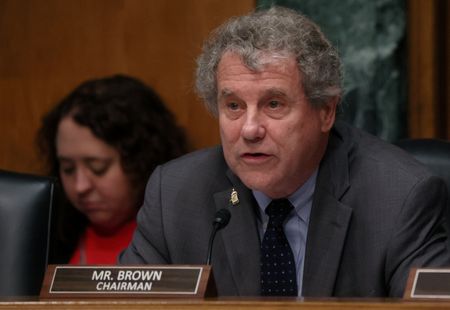

Former Ohio Senator Sherrod Brown appears poised to secure victory in Tuesday’s Democratic primary election, positioning himself as a key figure in his party’s strategy to wrestle control of the U.S. Senate away from Republicans this November.
The Buckeye State has shifted increasingly toward the Republican column over the last ten years, making Brown’s political comeback attempt—following his 2024 electoral defeat—a crucial indicator of whether President Donald Trump’s waning approval ratings are altering the political landscape for the 2026 midterm contests.
Democratic strategists, who began this midterm cycle with slim prospects of regaining Senate control, now perceive a more favorable battleground as Americans express dissatisfaction with rising costs, the ongoing conflict with Iran, and other contentious issues during Trump’s administration.
The 73-year-old Brown suffered defeat in his 2024 reelection campaign against Republican Bernie Moreno, a former automobile dealership owner who successfully appealed to working-class voters abandoning the Democratic Party and secured Trump’s backing.
Brown’s likely November opponent will be Senator Jon Husted, 58, who received his appointment to the position in January 2025 following JD Vance’s elevation to vice president. Husted faces no challengers in the Republican primary contest.
November’s special election will determine who serves the final two years of Vance’s Senate term.
Political observers characterize the Husted-Brown matchup as highly competitive, with recent polling data showing a tight race—a stark departure from Trump’s commanding 2024 Ohio performance, where he defeated Democratic presidential candidate Kamala Harris by an 11-point margin.
Ohio, devastated by significant manufacturing job losses in steel and automotive sectors over recent decades, represents one of four states where Democrats plan major resource investments as they pursue ending the GOP’s 53-47 Senate advantage.
Regaining Senate control presents significant challenges for Democrats, requiring them to protect multiple vulnerable seats while simultaneously capturing at least four Republican-controlled positions.
Party leaders believe they possess growing national momentum as voters evaluate Trump’s presidency approaching its midpoint, expressing concern over escalating fuel prices and other costs, the Iranian conflict, and immigration enforcement policies many consider excessive.
A Reuters/Ipsos survey conducted April 24-27 revealed Trump’s approval rating at 34%, declining from 47% when his second term began. Only 21% of respondents endorsed his inflation management, a primary voter concern.
According to the nonpartisan Cook Political Report, Brown’s “economic populism may be uniquely suited to this moment when affordability concerns are paramount.”
However, a Bowling Green State University poll from April 7-14 found 55% of Ohio respondents identifying with Trump’s MAGA movement, which Husted’s Republican Party has embraced.
Outside Ohio, Democrats anticipate opportunities to claim North Carolina’s vacant Senate seat and challenge Maine’s longtime incumbent Senator Susan Collins, who likely faces a progressive Democratic challenger gaining national recognition.
Unexpectedly, Democrats also see potential in heavily Republican Alaska, where GOP Senator Dan Sullivan may confront former Democratic Representative Mary Peltola, a candidate with demonstrated bipartisan appeal.
Simultaneously, Democrats must allocate campaign resources to Michigan, where retiring Democratic Senator Gary Peters narrowly won reelection in 2020. Trump carried Michigan in both 2016 and 2024 presidential races.
Competitive contests may emerge over the coming months in Iowa, where Republican Senator Joni Ernst is stepping down, and Georgia, a battleground state where Democratic Senator Jon Ossoff seeks reelection.
Political experts will carefully observe Tuesday’s Ohio primary turnout levels. Strong participation for Brown could signal whether Democrats might achieve an unexpected Senate victory.
Additionally, three Ohio House of Representatives contests could provide insights into Democratic prospects for capturing that chamber, currently under narrow Republican control.
Ohio recently implemented a redistricting plan designed by Republicans to strengthen their November election advantages.
This redistricting threatens Democratic Representative Marcy Kaptur’s four-decade House tenure. While expected to win her primary, her northwest Toledo-area district now includes substantially more Trump supporters, making her a general election underdog, analysts say.
Likewise, Democratic Representative Greg Landsman’s Cincinnati district became more Republican-leaning, though he maintains an advantage against Tuesday’s likely GOP primary winner.
Democratic Representative Emilia Sykes’ redrawn Akron-area district may improve her November chances in a moderately competitive race against whichever candidate emerges from a crowded Republican primary field. Sykes runs unopposed in the Democratic primary.