
WASHINGTON — Economic advisers at the White House project that pharmaceutical agreements negotiated by President Donald Trump’s administration could generate $529 billion in nationwide savings over the coming decade by aligning U.S. prescription medication costs with international pricing.
The economic assessment, which The Associated Press reviewed, represents the first comprehensive financial projections for a policy central to Trump’s electoral strategy ahead of November’s congressional midterm races. Democratic officials have expressed skepticism about the administration’s savings calculations, and these latest figures are expected to prompt further scrutiny of the underlying data.
Affordability concerns remain a top priority for voters, with rising energy costs related to the Iran conflict adding to public economic worries. Trump has attempted to address these affordability issues by emphasizing his administration’s negotiations with pharmaceutical companies to eliminate the significant price disparities between U.S. medications and those sold in other wealthy nations.
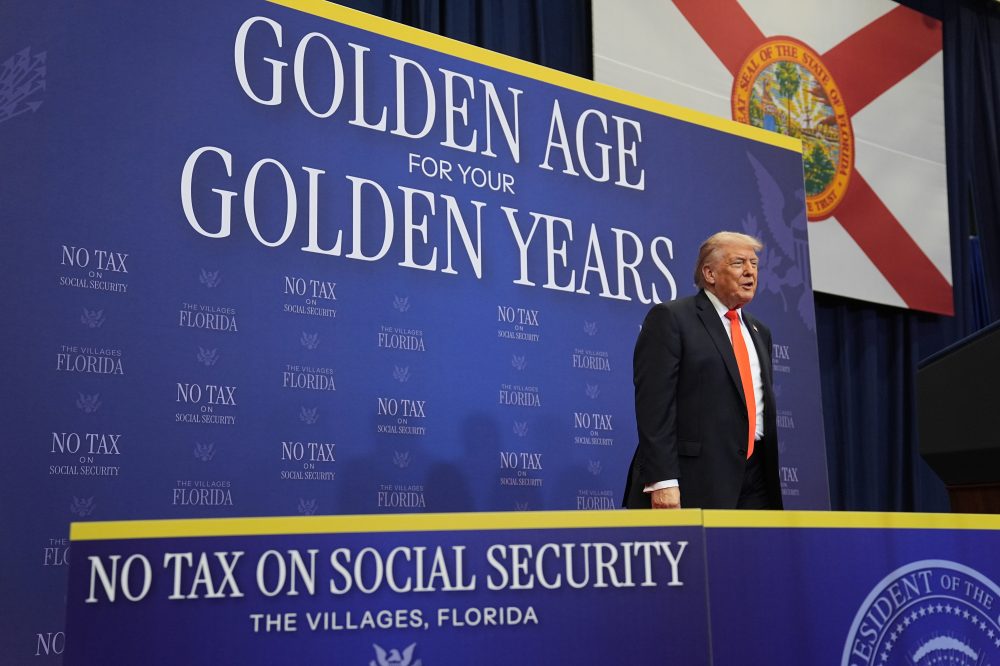
“Now you have the lowest drug prices anywhere in the world,” Trump declared during a Friday campaign event attended by senior citizens in Florida. “And that alone should win us the midterms.”
White House Council of Economic Advisers staff conducted the financial analysis. Their calculations also suggest that federal and state governments could collectively reduce Medicaid expenses by $64.3 billion throughout the next ten years under what Trump terms his “most favored nation” drug pricing approach.
Limited public information about the agreements between the Trump administration and 17 major pharmaceutical corporations makes independent verification of the projected cost reductions challenging. The White House study attempted to forecast savings as additional medications enter the market under Trump’s pricing structure, with one calculation in the report suggesting potential decade-long savings of $733 billion.
Trump and his Health and Human Services Department have promoted these drug pricing agreements as revolutionary changes while encouraging Congress to establish their framework in federal law. Democratic legislators have disputed the administration’s savings assertions. In April, Senate Finance Committee Ranking Member Ron Wyden of Oregon joined 17 Senate Democrats in proposing legislation that would mandate the administration reveal the terms of pharmaceutical company agreements.
“If these deals are so great, why is the Trump administration afraid of showing them to the public?” Wyden questioned when introducing the proposal. Health Secretary Robert F. Kennedy Jr. indicated his department would provide information that excludes proprietary data or trade secrets.
The Trump administration’s estimated savings would represent a significant portion of the $467 billion Americans spent on prescription medications in 2024, based on the latest available government figures. The analysis assumes that international markets would also increase their prescription drug payments, which would expand pharmaceutical companies’ revenue streams and maintain their capacity for developing innovative treatments.
In October 2024, the Congressional Budget Office projected that a plan resembling Trump’s eventual approach could lower prescription drug costs by more than 5%, though the reduction “would probably diminish over time as manufacturers adjusted to the new policy by altering prices or distribution of drugs in other countries.”
The magnitude of savings claimed by the Trump administration will likely increase Democratic oversight, as they argue that any price decreases would be counterbalanced by higher costs for prescription drugs excluded from the “most favored nation” system. Democrats primarily criticize that pharmaceutical companies have expanded their profit margins while collaborating with the administration.
Staff members working for Senator Bernie Sanders of Vermont released an April analysis examining 15 companies participating in the drug pricing initiative, discovering their combined profits increased 66% in the previous year to $177 billion. The report highlighted that Trump’s tax legislation from last year “exempted or delayed many of the most expensive drugs” from Medicare price negotiations.
The Trump administration has rejected Sanders’ criticism as fundamentally flawed, arguing that his analysis relies on pharmaceutical list prices rather than the actual costs patients pay.