
WASHINGTON (AP) — After one month of military operations against Iran, President Donald Trump is hinting at winding down the conflict despite failing to fully accomplish several key objectives he established for the campaign.
The president recently expanded his goals to five priorities for the extensive bombing campaign, growing from the original four outlined by his administration when hostilities began February 28th. This represents an increase from the three objectives initially described by Pentagon officials and Secretary of State Marco Rubio. While Trump’s team maintains their aims remain consistent and well-defined, the expanding list of priorities has evolved as the military action has impacted global markets, strained international partnerships, and generated questions about strategic planning and long-term consequences.
Military analysts acknowledge that American and Israeli airstrikes have substantially weakened Iran’s armed forces and eliminated numerous high-ranking military officials. However, these battlefield victories don’t guarantee the fulfillment of the president’s broader strategic goals.
Several of Trump’s stated aims present significant challenges, and if the United States withdraws without completing these missions while Iran’s paramilitary Islamic Revolutionary Guard maintains control, the president may encounter domestic political criticism and international consequences regarding the achievements of his decision to initiate this optional military engagement that destabilized Middle Eastern stability and disrupted worldwide economic markets.
The Trump administration and White House continue asserting the military action proceeds successfully toward meeting established targets. Press secretary Karoline Leavitt informed journalists this week that “We are very close to meeting the core objectives of Operation Epic Fury, and this military mission continues unabated,” describing the campaign as “ahead of schedule and performing exceptionally.”
Below is an examination of Trump’s stated objectives and their current status:
A primary goal outlined by the president regarding Iran involved plans to “destroy their missiles and raze their missile industry to the ground.”
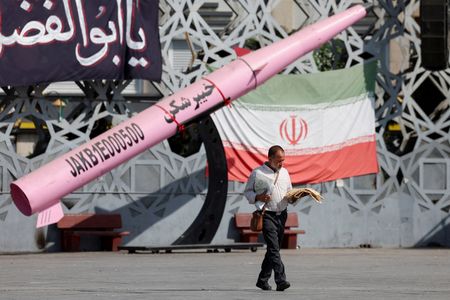
Administration officials claim this capability has suffered major damage. However, Iran continues firing missiles and unmanned aircraft, including multiple attacks against Israel while Trump announced ongoing diplomatic discussions with Iranian representatives.
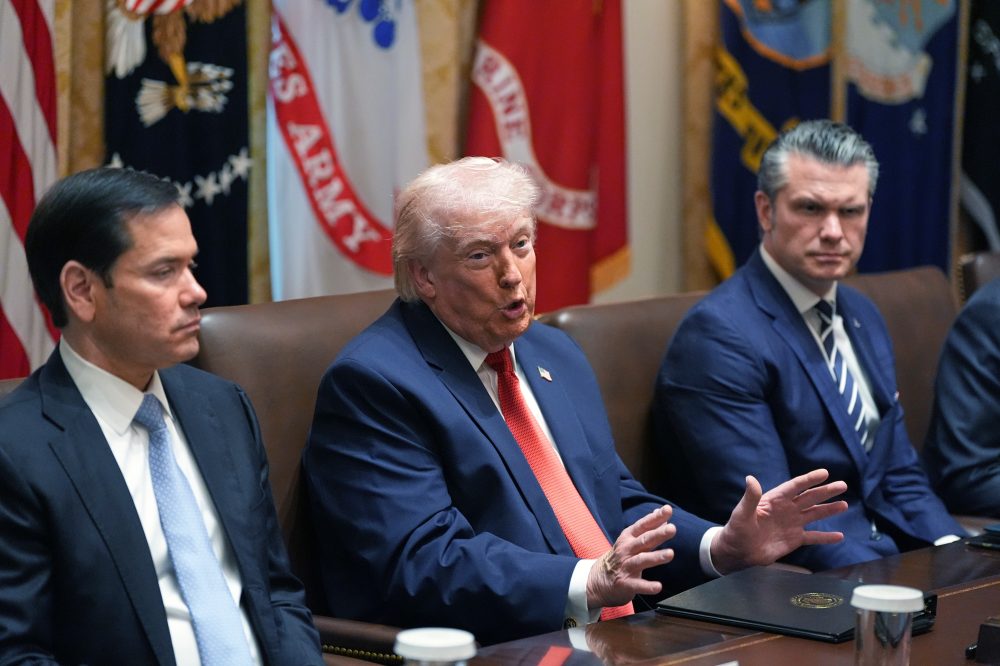
Speaking Thursday from the White House, Trump stated that approximately 90% of Iran’s missiles and launching systems have been eliminated, and that unmanned aircraft plus manufacturing facilities producing drones and missiles “are way down.”
Prior to recent statements, the president and his team sometimes presented this as an independent goal, characterizing it as an objective to “raze their missile industry to the ground.” At other times, this priority disappeared from official lists. Pentagon leadership typically incorporates this into their primary objective of eliminating Iran’s missile capabilities.
U.S. Central Command reports targeting weapons manufacturing and missile production facilities in Iranian strikes. Nevertheless, Iranian attacks against Gulf region neighbors and Israel persist.
American and Israeli forces rapidly gained aerial dominance over Iranian airspace, conducting operations with minimal resistance. Defense Secretary Pete Hegseth announced Thursday that U.S. forces have damaged or destroyed over 150 Iranian naval vessels.
Following a U.S. submarine’s torpedo attack that sank an Iranian warship in early March, two additional Iranian ships — the IRIS Bushehr and IRIS Lavan — sought refuge in Sri Lankan and Indian ports requesting assistance. The U.S. has provided no updates indicating these vessels have been subsequently destroyed or captured.
Iran’s Revolutionary Guard operates its own naval force utilizing smaller craft for coordinated attacks and mine deployment. The remaining strength of this fleet remains unclear, as does whether any mines have been positioned. Iranian missiles continue disrupting commercial shipping through the Strait of Hormuz.
Trump dramatically changed his position over recent months after claiming the U.S. had “obliterated” Iran’s nuclear program last June, only to have advisors later warn that Iran approached weapons capability within weeks, justifying current military operations.
Iranian government media reported nuclear facility attacks on Friday. Strikes hit a heavy water facility and yellowcake production plant, with Israel subsequently confirming responsibility for these attacks.
Israel had previously announced strikes against other nuclear-related targets, including assassinating a senior Iranian nuclear scientist.
A critical wartime question involves whether Trump will attempt seizing or destroying approximately 970 pounds of enriched uranium held by Tehran that could potentially support weapons development.
For the first time Monday, Trump indicated the U.S. would recover this uranium, believed stored deep within a mountain facility. However, he suggested this would occur through some agreement with Iran permitting U.S. retrieval. Military experts warn that seizing this material without Iranian consent would constitute an extremely dangerous mission requiring substantial U.S. ground force deployment into Iranian territory.
Trump recently added a fifth objective through social media: “Protecting, at the highest level, our Middle Eastern Allies, including Israel, Saudi Arabia, Qatar, the United Arab Emirates, Bahrain, Kuwait, and others. The Hormuz Strait will have to be guarded and policed, as necessary, by other Nations who use it — The United States does not!”
The U.S. currently stations thousands of military personnel at regional bases and installations. Trump’s willingness to expand protection for Middle Eastern allies against threats remains uncertain, particularly as Iran retains attack capabilities against these nations. The extent of U.S. commitment to maintaining Strait of Hormuz accessibility also remains unclear. Trump has wavered on American responsibilities for policing this waterway. He recently extended Iran’s deadline for reopening the Strait of Hormuz or facing power plant attacks, now setting the date for April 6th.
Trump has discussed governmental overthrow since warfare began, urging Iranian citizens to “take over your government” after Israeli strikes, supported by the U.S., killed Iran’s supreme leader and most senior leadership.
However, Trump and his administration have never formally declared regime change as an Iranian objective, despite clearly expressing desires to end the oppressive theocracy’s 47-year rule.
Speaking Thursday at the White House, Trump described the regime as “largely decimated.”
“You could really say we have regime change because they have been killed,” he stated during a Fox News Channel interview.
Currently, the U.S. claims to conduct negotiations with elements of the same Iranian government while seeking rapid conflict resolution and Strait of Hormuz reopening for maritime commerce. Iran continues publicly denying any negotiations with the White House.
Trump’s initial expectations regarding Iranian popular uprising appear likely to remain unmet.
Trump administration officials have provided limited updates on this objective, which the president described as ensuring “the region’s terrorist proxies can no longer destabilize the region or the world and attack our forces” and “ensuring that the Iranian regime cannot continue to arm, fund, and direct terrorist armies outside of their borders.”
While the U.S. has targeted Iranian-aligned militia groups in Iraq, and Israel appears expanding operations against Hezbollah in Lebanon, the administration has not detailed plans for permanently stopping Tehran’s support for militant organizations.
The White House stated that preventing Iranian proxy groups from further regional destabilization remains a key goal and that “proxies are hardly putting up a fight because our United States Military is so strong and lethal.”