
DUBAI – Persian Gulf nations are pressuring Washington to ensure that any agreement with Iran extends far beyond simply halting the current conflict, insisting that Tehran’s missile and drone programs must be permanently restricted and that global energy supplies can never again be used as weapons, according to four Gulf sources.
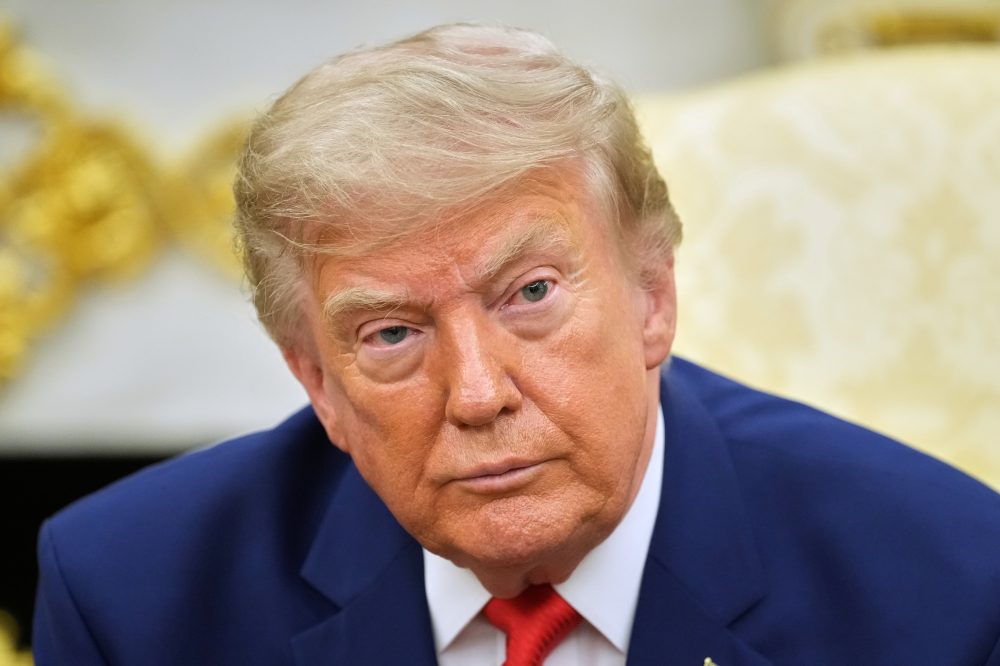
President Donald Trump has given Iran additional time to reopen the Strait of Hormuz, a critical waterway that handles approximately 20% of the world’s oil and liquefied natural gas shipments, or risk having its energy facilities destroyed.
However, Gulf policymakers say their primary concern has shifted from how the Iranian conflict concludes to what type of regional stability will emerge afterward, the four Gulf sources familiar with the discussions told Reuters.
SIMPLE CEASEFIRE WON’T SUFFICE
Gulf leadership, representing nations that have faced repeated attacks from Tehran during the ongoing U.S.-Israeli conflict with Iran, have informed Washington during private discussions that the Islamic Republic has provided them with no diplomatic escape route, sources indicated.
These officials are demanding that any agreement include enforceable limitations on missile and drone strikes against energy infrastructure and civilian targets, restrictions on threats to oil transportation routes and shipping lanes, and an end to proxy conflicts, sources added.
Any settlement must establish new rules of engagement that guarantee the Strait of Hormuz will never again serve as a weapon of war, and Gulf nations must be included in the framework of whatever follows, they argue.
“The real challenge is not persuading Iran to stop the war, but ensuring the Gulf is not left exposed to the same dynamics that made it possible in the first place,” Ebtessam Al-Kerbi, president of the Emirates Policy Centre, told Reuters.
Yousef al-Otaiba, the United Arab Emirates’ ambassador to the United States, has characterized the conflict not as a crisis to be temporarily halted but as a test of whether Iran can continue threatening the global economy in the future.
“A simple ceasefire isn’t enough,” Otaiba wrote in a column for the Wall Street Journal. “We need a conclusive outcome that addresses Iran’s full range of threats: nuclear capabilities, missiles, drones, terror proxies and blockades of international sea lanes.”
An agreement that merely suspends missiles, drones and proxy conflicts, he argued, would only postpone the next crisis.
Gulf nations’ economies, which depend heavily on energy exports and international travel, have suffered significant damage from the war, which has created shockwaves throughout the global economy. Disruptions in the strait have increased energy costs, disrupted supply chains and contributed to inflation.
The United States can confirm with certainty that it has eliminated approximately one-third of Iran’s extensive missile stockpile, according to five individuals with access to U.S. intelligence information.
Gulf officials say their doubts stem from past experience.
Iran’s nuclear enrichment activities – which are part of nuclear weapons development though Tehran denies pursuing such weapons – were limited under a 2015 agreement, but Tehran maintained its ability to threaten the region through missiles, drones, proxy conflicts and maritime security threats. Gulf states argue this possibility must now be eliminated for regional stability.
In 2018, Trump announced America’s exit from the 2015 Iran nuclear agreement, describing it as a “defective” and “one-sided” deal that failed to serve U.S. interests.
IRANIAN ATTACKS STRENGTHEN UAE-U.S. TIES
Qatar, Oman and Kuwait are privately advocating for a rapid end to the conflict, concerned about economic consequences and potential retaliation, sources revealed.
The UAE, Saudi Arabia and Bahrain indicate they are prepared to accept an escalation of the conflict and will not tolerate a post-war Iran that can still use the Strait of Hormuz as leverage or for what they consider extortion.
Trump has announced he will extend his deadline for Tehran to open the strait until April 7 at midnight GMT, and has stated that discussions with Iran are proceeding “very well.”
An Iranian official has characterized a U.S. proposal for ending the conflict as “one-sided and unfair,” and Tehran has demanded the shutdown of U.S. military bases in the Gulf as a prerequisite for any agreement.
However, UAE presidential adviser Anwar Gargash stated that Iran’s strikes against Gulf nations have had “profound geopolitical repercussions,” establishing Tehran as the primary threat influencing Gulf strategic planning. The consequence, he said, will be stronger security cooperation between the UAE and Washington.
“This is the cost of Iran’s misguided calculations,” he said.
GULF NATIONS SEEK SECURITY ASSURANCES
Abdulaziz Sager, chairman of the Saudi-based Gulf Research Center, said the Gulf states’ communication to Washington has become direct rather than subtle – that any deal with Iran must specifically address and guarantee Gulf state security.
“The United States protects its interests, and Israel’s. Now it is our turn to protect and defend ours,” he said.
This position was supported by the Gulf Cooperation Council, an organization that includes Bahrain, Kuwait, Saudi Arabia, Qatar, Oman and the UAE, which has demonstrated a united stance against any settlement that ignores Gulf security concerns.
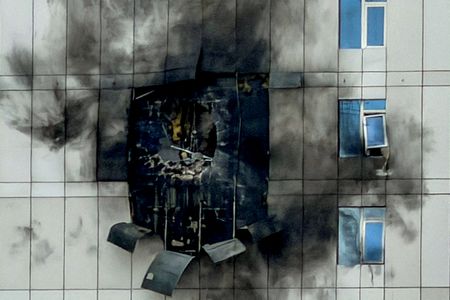
Referencing 5,000 missile and drone strikes on Gulf energy installations, civilian infrastructure and maritime traffic, GCC Secretary-General Jasem Al-Budaiwi has declared that Iran has “crossed all limits.”
He stated that the Gulf has shown restraint to prevent a broader conflict but that the region will not tolerate being attacked again, clarifying that while diplomatic solutions are preferred, every nation maintains the right to self-defense.
Trump has been considering whether to deploy ground troops to capture Iran’s strategic oil facility at Kharg Island, which processes 90% of Iran’s oil exports, according to a U.S. official and three individuals familiar with the situation.
Capturing it, analysts suggest, would provide Washington with significant control over Iran’s economy.
Tehran has cautioned that any such action would prompt Iranian strikes against the “vital infrastructure” of any nation that assisted such a U.S. military operation.
Some Gulf partners have been advising Washington against deploying ground forces, including troops to Kharg Island, believing this would expand the conflict, provoke substantial Iranian retaliation, and possibly target Gulf energy and civilian infrastructure, a senior Gulf official stated. However, Gulf states are encouraging Washington to continue weakening Iran’s cruise and ballistic missile capabilities since these have long represented the primary threat to their nations, the Gulf official said.