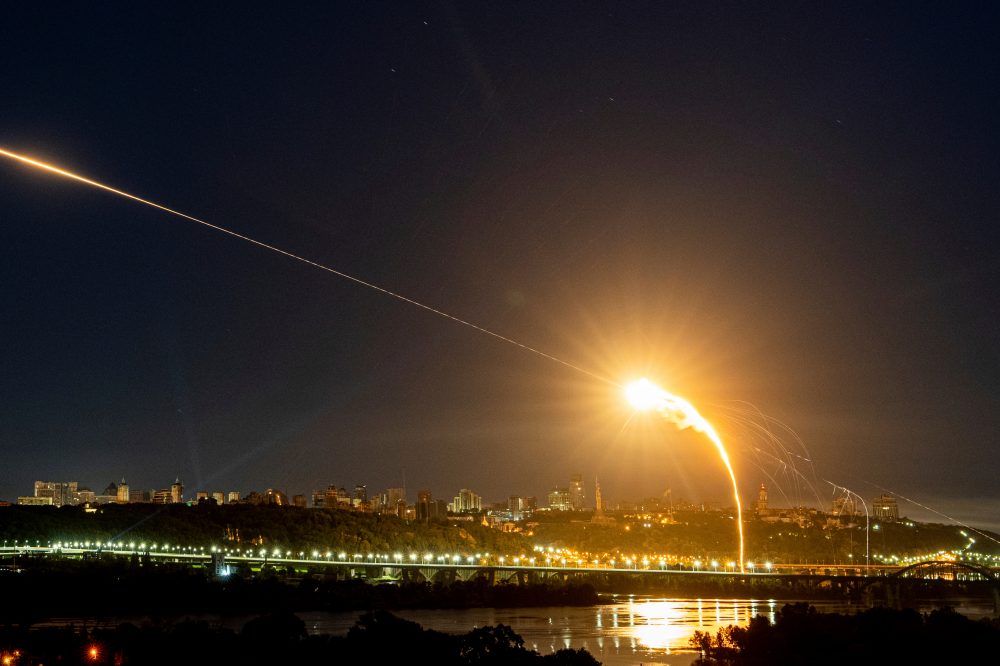

Intelligence officials from the United States and Europe have confirmed to The Associated Press that Moscow is delivering drone technology to Tehran, including enhanced versions of the same unmanned aircraft Iran initially provided to Russia following the 2022 Ukraine invasion.
Tehran has launched multiple drone attacks against Israeli targets, neighboring Gulf states, and American military installations throughout the Middle East over the past month, following recent U.S. and Israeli strikes on Iranian territory. Although Iran maintains its own inventory of Shahed drones, Moscow has enhanced the original design throughout the Ukraine conflict, incorporating improved navigation systems and other battlefield upgrades.
A European intelligence source revealed to AP that Russian and Iranian representatives have engaged in “very active” negotiations this month concerning the drone transfer from Moscow to Tehran. According to a U.S. defense source, it remains uncertain whether this represents a single delivery or part of an ongoing series. Neither source could specify the shipment’s scale or the exact number of drones involved. A separate European official noted that a limited drone delivery would unlikely significantly alter the war’s trajectory. All sources requested anonymity when discussing classified information.
The U.S. defense official noted that Moscow’s reasoning for providing Tehran with more sophisticated drones remains puzzling, considering each weapon sent to Iran represents one fewer munition available for use against Ukraine.
During a Friday press conference in Paris following the Group of Seven foreign ministers summit, U.S. Secretary of State Marco Rubio stated that “there is nothing Russia is doing for Iran that is in any way impeding or affecting our operation or the effectiveness of it.” Neither the White House nor Pentagon responded to requests for additional comment.
The European source indicated their intelligence points to a drone shipment currently in transit, though they cannot verify the exact transportation method. Two truck convoys carrying what Moscow has labeled humanitarian assistance have traveled from Russia through Azerbaijan to Iran, potentially containing the drones, according to the European official.
Russia’s Embassy in Azerbaijan’s capital Baku reported that seven trucks carrying 150 tons of food and additional aid crossed into Astara in northern Iran on Friday, while Russia’s Emergency Ministry confirmed delivering 313 tons of medical supplies to Astara by rail, according to Interfax news agency reports.
A second European official stated their nation has not verified Russian drone transfers to Iran, but suggested that if drones are being transported by truck, the quantities are probably minimal and could represent a largely symbolic effort to preserve Moscow-Tehran relations. The official also noted that Moscow is providing targeting assistance to Iran.
Britain’s most recent defense intelligence evaluation indicates Russia almost certainly provided training and intelligence support, including information about drone types and electronic warfare tactics, to Iran before the Middle East conflict began. Iran is also sharing intelligence with Russia “quite generously,” the European intelligence official revealed, noting that Russian officials learned of Ali Larijani’s death — a senior Iranian security official — before the information became public.
However, the Russia-Iran relationship has experienced tension, the European official explained, with Iranian leadership feeling “deeply disappointed” after Russia failed to assist Iran during its 2025 confrontation with Israel, which resulted in Trump authorizing strikes on three major Iranian nuclear facilities.
When questioned Thursday about Financial Times reports regarding Russian drone supplies to Iran, Kremlin spokesperson Dmitry Peskov dismissed them as “false news stories.”
Russia and Iran finalized a $1.7 billion agreement for Iran’s Shahed drone technology after President Vladimir Putin’s Ukraine invasion in 2022, with Moscow deploying the Iranian-supplied drones in combat later that year.
Initially, Iranian drones arrived in Russia disassembled, but a manufacturing facility was subsequently established at the Alabuga plant in Russia’s Tatarstan region. The facility has since undergone rapid expansion and increased its workforce, including African women who claim they were deceived into drone production work.
Russian engineers have modified and improved the Shahed drone by developing decoy versions without explosives intended to overwhelm air defense systems. They have also incorporated various enhancements including jet engines, cameras, sophisticated anti-jamming technology, radio communication systems, artificial intelligence computing platforms, and Starlink internet connectivity.
Drone wreckage recovered in Ukraine also demonstrates continued Iran-Russia collaboration on military technology, including exchanges involving advanced anti-jamming capabilities and jet-powered engines that also propel Iran’s cruise missiles.
The U.S. official confirmed uncertainty regarding which drone version or versions Moscow is shipping to Iran.
Earlier this year, Ukrainian officials reported that Russian forces lost access to their Starlink satellite internet terminals at the front lines after Ukraine requested Elon Musk’s SpaceX company to block Russian use of the service in Ukraine. Russian forces subsequently experienced degraded command-and-control capabilities and navigation systems for Starlink-equipped drones.
Moscow might be transferring its Starlink-capable drones to Iran because Russian forces face increased difficulty using them in Ukraine, the U.S. official suggested. Alternatively, Moscow could be supplying Iran with other Shahed variants featuring jet propulsion, AI-powered autonomous flight capabilities without signal requirements, or camera equipment for surveillance missions, the U.S. official added.
The transfer of advanced Russian drones to Iran could complicate U.S. and allied efforts to intercept incoming drones, depending on the quantity of Russian drones delivered or how Iran utilizes the enhanced Russian technology, the official warned.
Jet-powered drones operate at higher speeds and therefore present significantly greater challenges for current U.S. anti-drone systems deployed in the Middle East, which would need to rely on limited supplies of costly advanced weapons for successful interception.