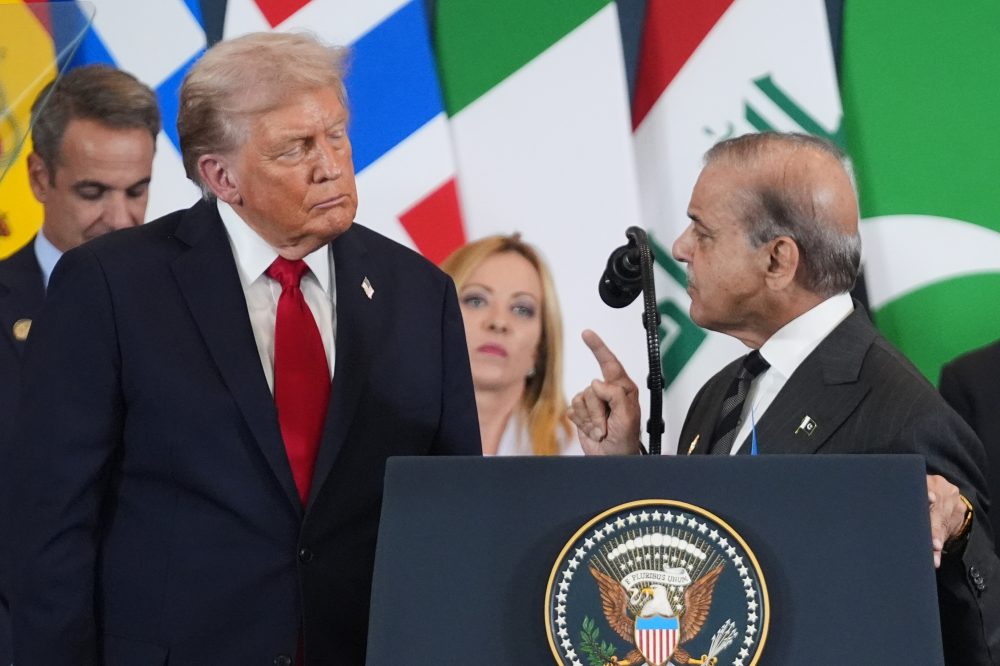

ISLAMABAD (AP) — With concerns growing about broader Middle East conflict after recent U.S. and Israeli military actions against Iran starting in late February, Pakistan has surprisingly positioned itself as a peace broker, volunteering to facilitate dialogue between Washington and Tehran.
While Islamabad doesn’t typically serve in such high-level diplomatic roles, the nation has taken on this responsibility due to its positive relationships with both the U.S. and Iran, plus its significant interest in seeing regional tensions de-escalate.
Pakistani leadership has indicated their public peace initiatives follow several weeks of behind-the-scenes diplomatic work, though specific details remain limited. Officials have also expressed Islamabad’s willingness to serve as a venue for direct discussions between American and Iranian representatives.
Pakistan’s involvement in U.S.-Iran diplomatic channels only became public knowledge recently through news coverage. Islamabad officials later confirmed they had transmitted an American proposal to Iranian leadership.
The identity of Iran’s primary contact in these indirect negotiations remains unknown. While Iran has denied participating in such discussions and rejected the U.S. proposal, Tehran has confirmed sending counter-proposals in response.
Pakistani officials report they are serving as a communication bridge, delivering U.S. messages to Iran and Iranian responses back to Washington, though they haven’t detailed the exact process or identified specific participants. Foreign Minister Ishaq Dar noted this week that Turkey and Egypt are also conducting behind-the-scenes efforts to encourage negotiations.
Abdullah Khan, managing director of the Pakistan Institute for Conflict and Security Studies, suggested Pakistan’s mediation work may be helping maintain relative calm in the situation. He observed that President Donald Trump has postponed threatened major strikes against Iran’s energy sector due to diplomatic developments, while Iranian actions against U.S. Gulf interests have been restrained, possibly to maintain diplomatic opportunities.
Past U.S.-Iran negotiations have typically involved Middle Eastern nations like Oman and Qatar as facilitators, but with these countries now facing Iranian attacks during the current conflict, Pakistan has assumed this responsibility.
Experts note Pakistan’s border with Iran, combined with its established U.S. relationship, creates a distinctive advantage when direct U.S.-Iran communication remains difficult.
Islamabad maintains functional relationships with most major conflict participants, including both America and Iran. The country has strong strategic connections with Gulf nations like Saudi Arabia, signing a defense partnership agreement last year. However, Pakistan doesn’t maintain Israeli diplomatic ties due to the unresolved Palestinian statehood question.
U.S.-Pakistan relations have strengthened since last year through increased diplomatic contact and growing economic connections. Pakistan also joined Trump’s Board of Peace focused on Gaza stability, despite domestic Islamist opposition.
Recently, President Trump contacted Pakistani army chief Field Marshal Asim Munir, whom Trump has publicly called his “favorite Field Marshal.” Experts describe Munir as someone who maintains good connections with both Iranian and American military leadership.
The regional crisis presents some of Pakistan’s most severe economic and energy security threats in history, according to Islamabad security analyst Syed Mohammad Ali.
Pakistan depends on Middle Eastern sources for most oil and gas supplies, while approximately five million Pakistani workers in Arab nations send home annual remittances roughly matching the country’s total export revenue.
Increased regional tensions have already driven up global oil costs, forcing Pakistan to raise fuel prices about 20% and creating pressure for Prime Minister Shehbaz Sharif’s government.
The conflict is also intensifying domestic unrest, as Pakistan has been managing its own border dispute with Afghanistan for months. Islamabad has blamed Afghanistan’s Taliban leadership for allowing militant organizations responsible for Pakistani attacks.
Nationwide protests broke out earlier this month following U.S. strikes on Iran, with demonstrators confronting security personnel in multiple cities.
Following the U.S. and Israeli attack on Iran that killed Supreme Leader Ayatollah Ali Khamenei, violence erupted in Pakistan’s southern port city of Karachi and northern regions, resulting in at least 22 deaths and over 120 injuries across the country.
At least 12 people died near the U.S. Consulate in Karachi when crowds breached the facility and tried to ignite it.
Khamenei held significant religious and political importance for global Shiites, including Pakistani communities.
Although Pakistan seldom acts as a mediator, the nation has participated in several significant diplomatic initiatives.
Former President Gen. Yahya Khan enabled secret communications that resulted in President Richard Nixon’s groundbreaking 1972 China visit. This breakthrough led to formal U.S.-China diplomatic relations in 1979.
Subsequently, Pakistan has contributed to various complex regional disputes, particularly during the 1988 Geneva Accords that enabled Soviet forces to leave Afghanistan. As a frontline nation and crucial intermediary, Islamabad joined U.N.-mediated discussions while collaborating with America and other partners to pressure Moscow’s withdrawal.
More recently, Pakistan enabled Afghan Taliban-Washington contact that produced Doha negotiations, resulting in a 2020 agreement that established conditions for U.S.-led NATO departure and the Taliban’s 2021 return to power.