
TUNIS – Family members of imprisoned Tunisian opposition leaders have emerged as the primary advocates for democratic reform, taking up the fight for their detained relatives in what human rights organizations describe as President Kais Saied’s systematic suppression of political dissent.
Over the past three years, Tunisia’s major opposition party leaders have been incarcerated alongside numerous politicians, media figures, business leaders and activists. Authorities have charged them with plotting against national security, financial crimes, and corruption – accusations the defendants claim are completely false.
Youssef Chaouachi, a 35-year-old engineer, transformed into an activist following his father’s arrest three years ago. His father Ghazi Chaouachi, a Social Democratic leader, received a 20-year prison sentence in 2025 for allegedly conspiring to remove Saied from power, charges he vehemently rejects.
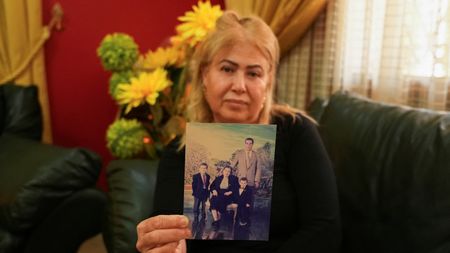
“We are now the ones organizing protests, speaking to the media, and putting ourselves on the front lines. We didn’t choose this role,” Youssef Chaouachi explained while holding his father’s photograph during a demonstration in Tunis last month.
The widespread arrests and legal proceedings have silenced nearly all opposition voices in a country that was once celebrated as the Arab Spring’s greatest democratic achievement, according to domestic and international human rights organizations.
“It feels like the revolution never happened,” Chaouachi stated.
Tunisia’s government media representatives did not respond to requests for comment regarding allegations of political persecution and false charges. During recent ministerial meetings at the end of 2025, the president has repeatedly declared he is “in the process of cleansing the country of the corrupt and traitors.”
In 2022, President Saied dismantled Tunisia’s Supreme Judicial Council and removed dozens of judges, citing corruption and obstruction of justice. Opposition leaders argue this action destroyed judicial independence.
Justice Minister Leila Jeffel addressed parliament last December, stating that courts enforce the law, the ministry upholds justice principles, and will not harm innocent people. She emphasized that the judiciary operates independently and judges need not fear reprisals.
Ministry officials were unavailable for additional comment.
The suppression of political opposition motivated four family members of different detainees interviewed by Reuters to expand beyond simple release campaigns. They now organize demonstrations, establish advocacy organizations, and conduct media interviews demanding political reform and the restoration of civil rights.
Currently in Tunisia, most political organizations are either dormant or have leadership in prison.
Family members of detainees have become increasingly prominent in street demonstrations and sit-ins outside courthouses and correctional facilities, joining other civil society activists.
While there’s minimal indication they can achieve their demanded changes, they appear to be gaining public support, evidenced by growing participation in at least three major demonstrations in recent months, as observed by Reuters journalists.
These family-led efforts coincide with Saied’s administration confronting labor strikes, public anger over lost civil freedoms, economic difficulties, and environmental deterioration, according to activists.
Saied disbanded parliament in 2021 and began governing through executive orders to eliminate what he termed widespread corruption and poor governance. A new parliament was elected in 2022 with only 8% voter participation.
“Tunisia has become a huge prison,” Youssef Chaouachi shouted at a February protest, while dozens of police officers watched nearby.
His father is among various imprisoned figures including moderate Islamist Rached Ghannouchi, Abir Moussi (a supporter of former President Zine El Abidine Ben Ali), and veteran leftist politician Nejib Chebbi along with his brother Issam.
Defense attorneys claim the cases are fabricated and politically driven, designed to eliminate opposition, arguing no concrete evidence exists to establish guilt.
Reuters did not independently examine the evidence.
Government officials have maintained the charges are legitimate.
The son of prominent attorney Ahmed Souab organized protests attracting thousands before Souab’s release following a successful appeal, while the son of detained politician Chaima Issa regularly demonstrates outside prisons.
Faiza Rahem, wife of imprisoned opposition figure Issam Chebbi, said the absence of opposition leaders motivated her involvement.
“We were not politically active, but injustice forced us to be,” she explained, adding it has brought together families of the imprisoned from various political backgrounds.
She described how the imprisonments now control family routines. When relatives plan gatherings or trips, they must coordinate around prison visiting hours and meal preparations.
The Chaouachi family’s suburban Tunis residence feels unusually quiet. Dining table seats that once hosted spirited discussions remained vacant during Ramadan meals. In the kitchen, Ghazi’s wife Sofia Ben Agla prepared a week’s supply of food for her husband’s prison visits.
Some relatives have faced legal action themselves.
Ghazi Chaouachi’s son Elyes, Youssef’s brother, now lives in exile and faces over 70 years imprisonment after convictions on multiple charges including terrorism, defamation for criticizing Saied and judges on Facebook, and inciting judicial violence, which he denies.
“I could have stayed silent and lived a normal life — visiting my father during holidays. But I chose another path. I chose to be a voice for those who have none,” he told Reuters from France, where he currently resides.
Last year, during a meeting with the prime minister at the presidential palace in Carthage, the president stated that Tunisia guarantees freedoms.