
JERUSALEM — The militant organization Hamas is evaluating a disarmament proposal that could represent a significant compromise, potentially opening the door for President Trump’s reconstruction initiative in the war-torn Gaza Strip.
The group’s decision, anticipated within the next several weeks, carries enormous consequences for Gaza’s 2 million residents, who have endured uncertain conditions since a truce began nearly six months ago.
Since its establishment, Hamas has maintained armed opposition to Israel as a core principle, making the organization hesitant to surrender weaponry including rockets, anti-tank missiles and explosives that define its fundamental mission.
Given this history, compliance remains highly uncertain. Hamas has expressed dissatisfaction with the current U.S.-supported proposal being discussed. The ongoing U.S.-Israel conflict with Iran has added complexity to Gaza negotiations, potentially causing additional setbacks as regional focus shifts elsewhere.
Meanwhile, essential elements of Trump’s reconstruction strategy remain stalled, particularly the critical rebuilding of the devastated region.
“The future of Gaza … is entirely dependent now on Hamas decommissioning its weapons,” Mike Waltz, the U.S. ambassador to the United Nations, told the Security Council this week. “We truly stand at an inflection point now.”
The October 10th truce sought to end over two years of conflict while initiating a comprehensive process to conclude Hamas’ twenty-year governance and reconstruct Gaza.
While the ceasefire has stopped major combat operations and improved humanitarian assistance delivery to Gaza, providing some respite, challenges persist.
However, Israeli military actions have resulted in nearly 700 Palestinian deaths since the truce began, according to local medical authorities, with Israel maintaining control over more than half of Gaza. Israeli officials justify these strikes as responses to ceasefire violations.
The comprehensive aspects of the 20-point U.S. ceasefire framework remain unimplemented.
These components encompass deploying a U.N.-authorized international peacekeeping mission and foreign-trained Palestinian security forces, establishing a recently named Palestinian administrative committee for Gaza’s governance, additional Israeli military withdrawals, and a multi-year reconstruction program.
Hamas’ weapon surrender is essential for advancing these initiatives. Israeli Prime Minister Benjamin Netanyahu has stated no advancement will occur without disarmament, while numerous donor nations hesitate to provide funding or personnel for Gaza’s recovery if warfare might resume.
Trump’s comprehensive plan mandates that all Hamas “military, terror and offensive infrastructure, including tunnels and weapon production facilities” in Gaza must be eliminated. The framework also requires weapons be placed “permanently beyond use.”
Both Israel and the United States interpret this language as unambiguous, requiring Hamas to relinquish all armaments.
According to Hamas representatives and mediators speaking anonymously about ongoing talks, Hamas has attempted to distinguish between “heavy” weaponry like rockets and “light” arms such as rifles and handguns.
The organization also seeks to connect any demilitarization with Israeli troop withdrawals.
Nickolay Mladenov, director of the U.S.-supported Board of Peace, a newly established Trump-led organization supervising the ceasefire, informed the U.N. Security Council this week that mediating nations Turkey, Qatar and Egypt have submitted a proposal to Hamas.
“Serious discussions are underway as we speak,” he said.
According to Mladenov, the proposal demands “complete decommissioning” of all Hamas armaments while transferring Gaza security responsibilities entirely to the new administrative committee.
He explained that disarmament would start with the “most dangerous weapons,” including rockets, explosives and assault weapons, then progress to “personal weapons.”
This process would occur alongside gradual Israeli withdrawals.
Mladenov emphasized that disarmament represents “the only way forward” for reconstruction and the Palestinian governing committee’s success. “For the people of Gaza, the implications are profound.”
Hamas has responded with skepticism.
Senior Hamas official Bassem Naim criticized Mladenov for allegedly favoring Israel. In a Thursday post on X, he accused the envoy of trying “to be more royalist than the king himself, as he attempts to tie everything to the weapons dossier.”
Other Hamas representatives, speaking anonymously about negotiations, indicated they had accepted the new proposal “in principle,” while maintaining reservations about certain plan elements.
They explained that their response will include modifications addressing concerns, particularly the absence of “crucial” assurances that Israel will cease Gaza attacks and avoid resuming warfare.
The timing of Hamas’ formal response remains unclear.
This uncertainty suggests additional delays or worse outcomes may await Gaza’s war-exhausted population.
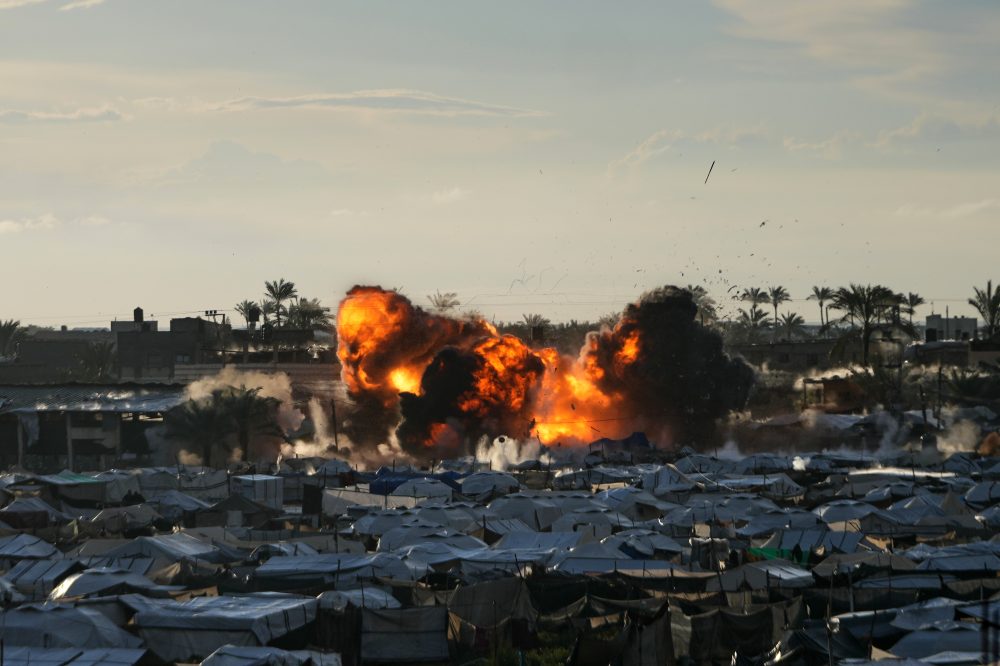
Israel’s two-year military campaign, initiated following Hamas’ October 7, 2023 assault on southern Israel, destroyed extensive areas of Gaza and displaced approximately 90% of residents. Hundreds of thousands continue living in temporary shelters, unable to reconstruct their homes or lives while depending heavily on humanitarian assistance.
Extended negotiations would mean postponed Gaza reconstruction and heightened risk of renewed conflict.