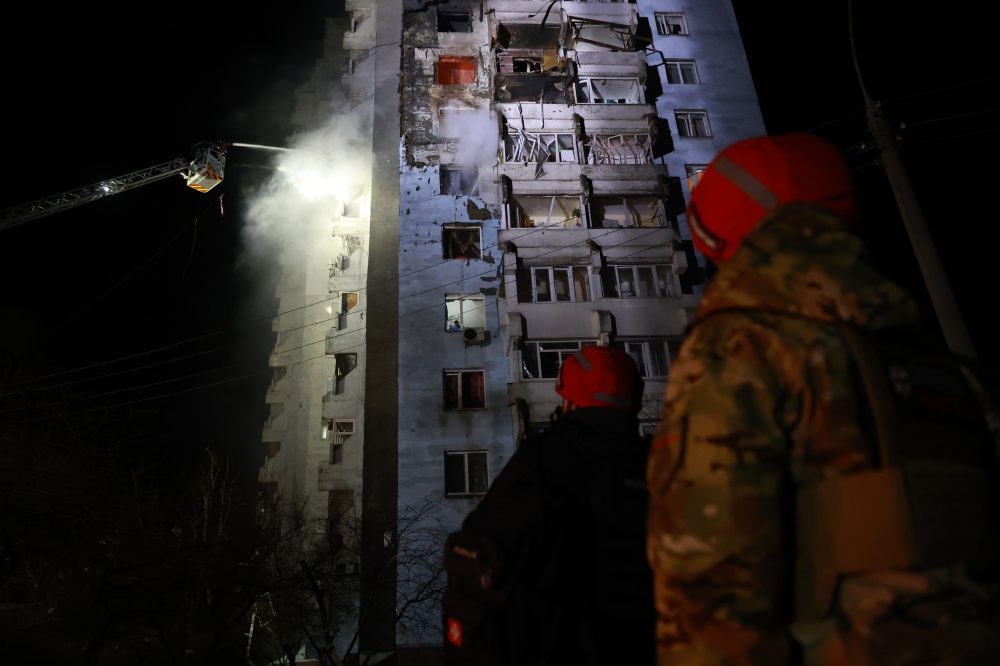
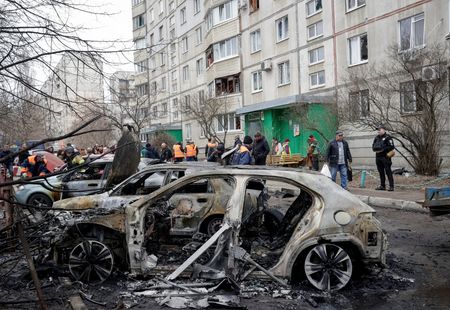
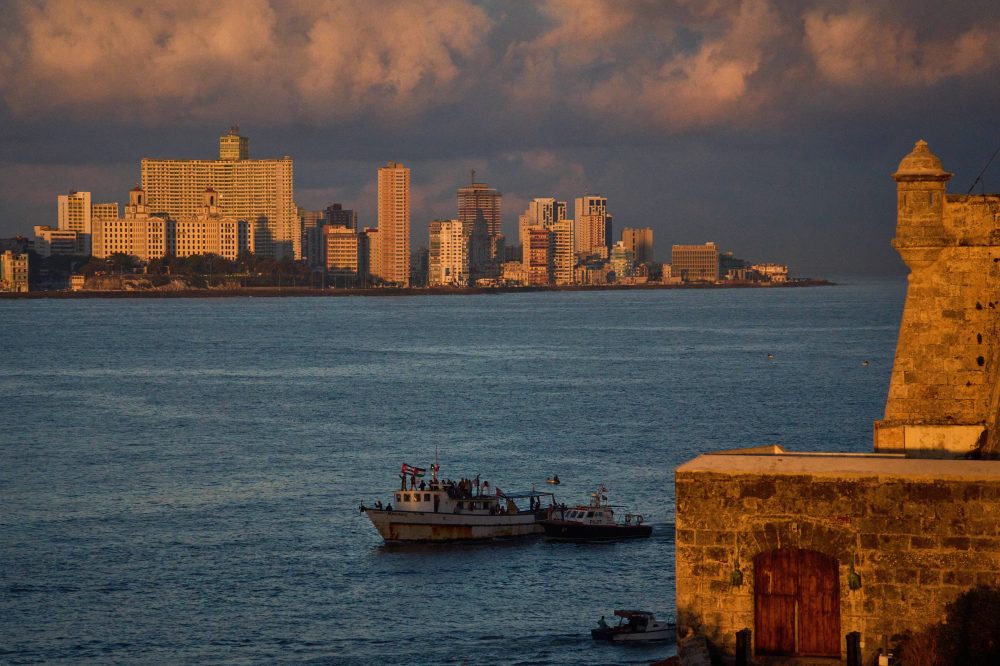
During the week of March 20-26, 2026, significant events unfolded across Latin America and the Caribbean region.
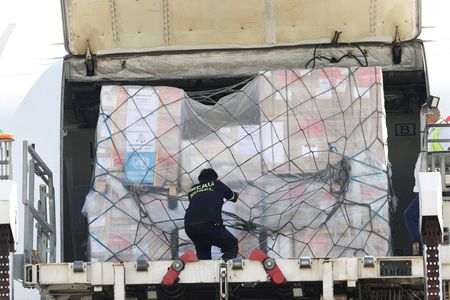
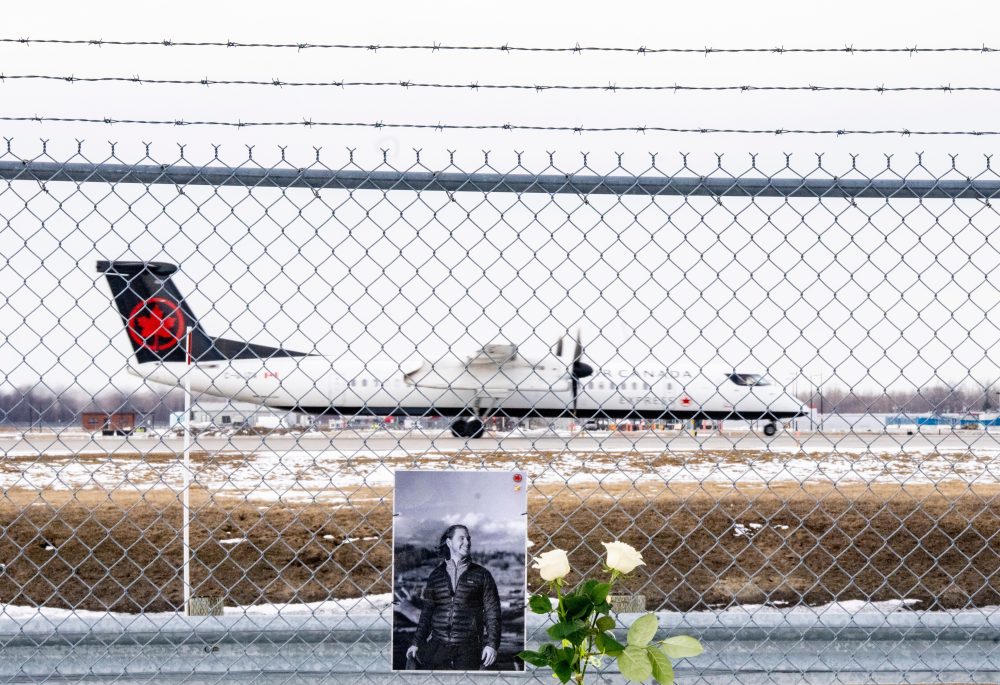
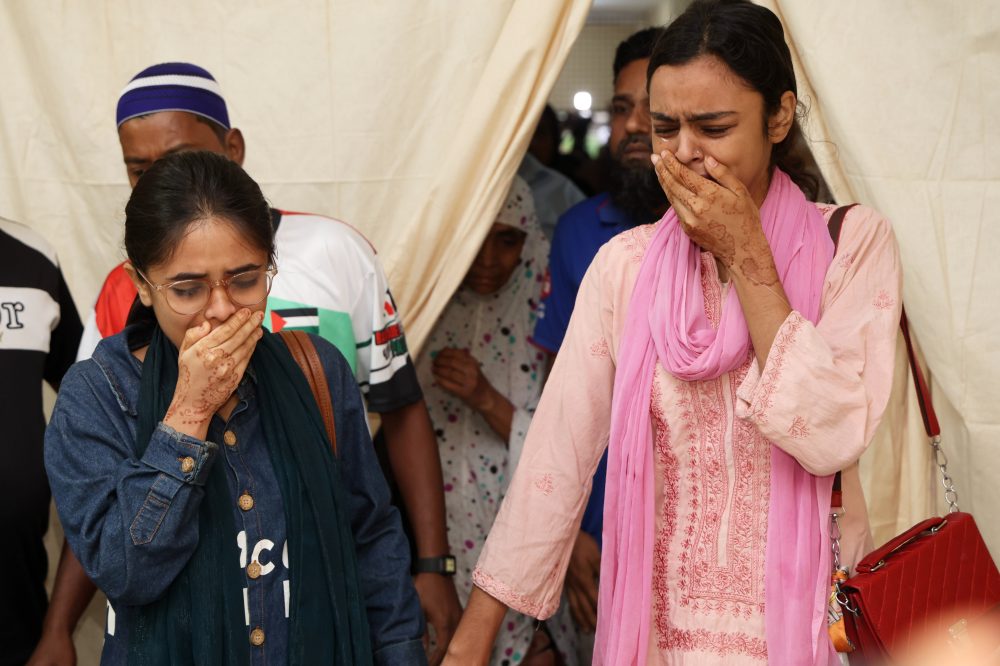
In Colombia’s capital of Bogotá, military personnel conducted a memorial ceremony honoring those who perished in a cargo aircraft accident that occurred in Puerto Leguizamo, located in the nation’s southern territory.
Meanwhile, world-renowned soccer player Lionel Messi participated in practice sessions in Buenos Aires as Argentina’s national team prepared for an exhibition match against Mauritania.
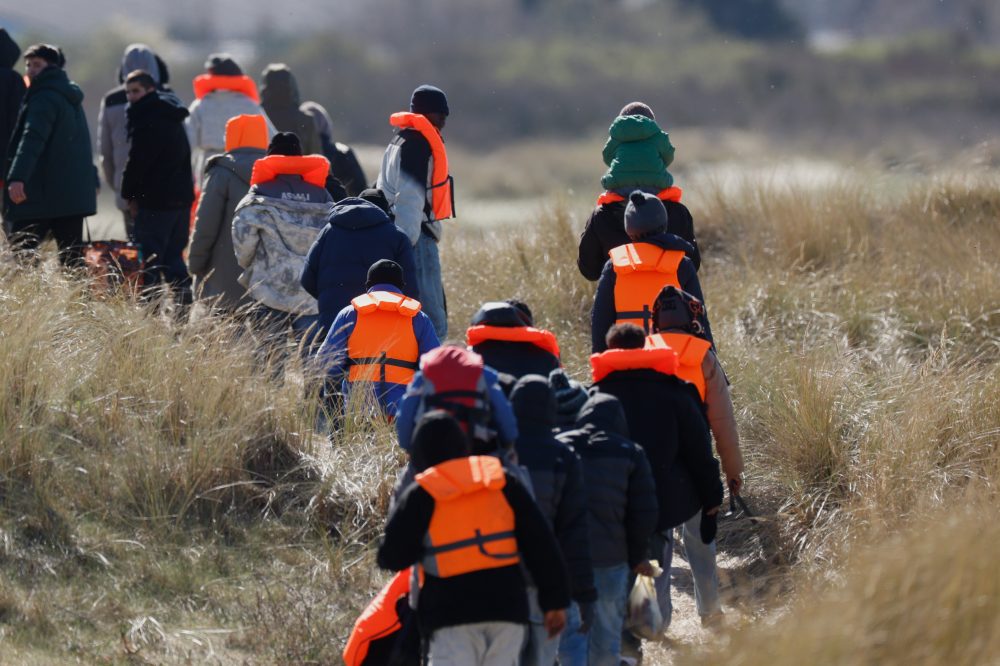
In Mexico, groups of migrants traveled through Chiapas state to demonstrate against extended delays in processing their documentation and to seek permission to relocate to regions offering better job opportunities.
The photo collection highlighting these events was assembled by photographer Martín Mejía, who works from Lima, Peru.
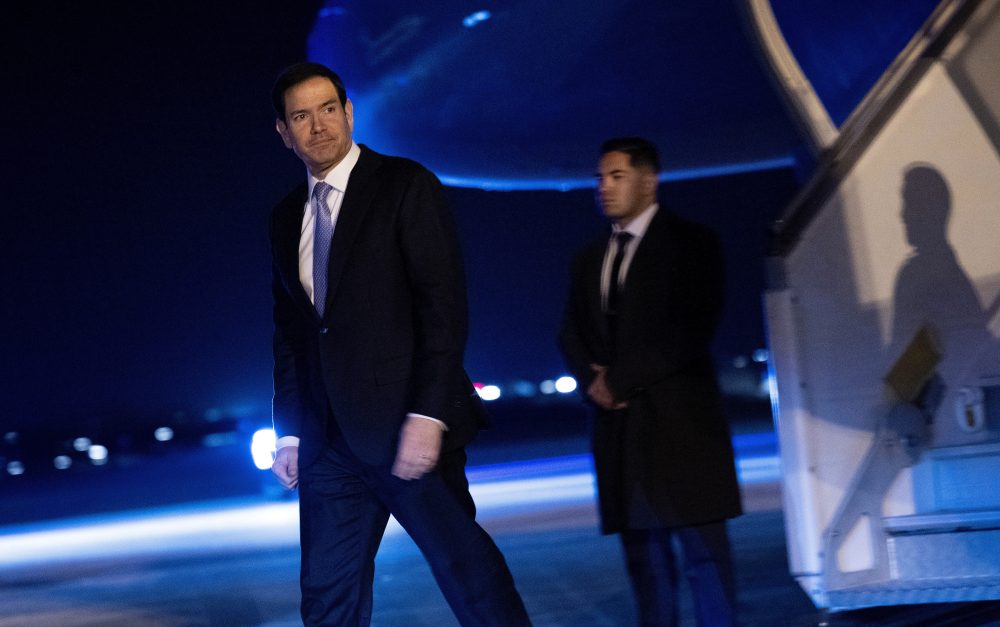
WASHINGTON (AP) — Following President Donald Trump’s sharp criticism of NATO allies regarding their reluctance to support U.S. military action in Iran, Secretary of State Marco Rubio traveled to France Friday to meet with his Group of Seven diplomatic counterparts amid growing international skepticism about the conflict.
The diplomatic mission faces significant challenges as Rubio attempts to convince other G7 foreign ministers to back America’s Iran strategy, which has drawn objections from nearly all partner nations. Trump’s harsh remarks about NATO during Thursday’s Cabinet meeting have complicated Rubio’s diplomatic efforts even further. Among G7 members beyond the United States, five nations — Britain, Canada, France, Germany and Italy — belong to the transatlantic defense alliance, with only Japan remaining outside the organization.
Rubio departed Washington for the G7 gathering near Paris shortly after Trump expressed strong frustration with NATO countries for failing to support the United States and Israel in the Iran conflict.
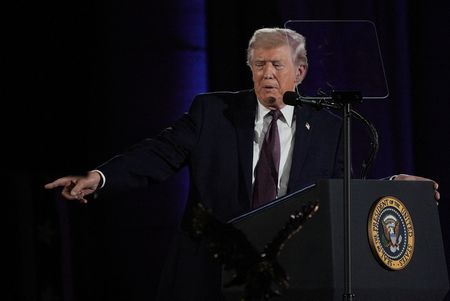
“We are very disappointed with NATO because NATO has done absolutely nothing,” Trump said.
The Secretary of State faces the challenge of repairing relationships with European allies who have endured criticism and direct threats from Trump’s administration. European leaders continue to feel stung by Trump’s previous demands for Denmark to surrender Greenland, while also harboring concerns about continued American support for Ukraine against Russia. The Middle Eastern conflict has created an additional source of diplomatic friction.
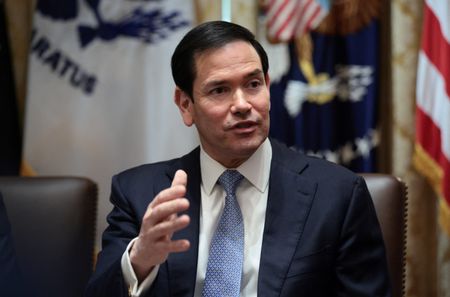
“Frankly, I think countries around the world, even those that are out there complaining about this a little bit, should actually be grateful that the United States has a president that’s willing to confront a threat like this,” Rubio said at the Cabinet meeting.
When questioned by journalists about the expected response from allies, Rubio expressed optimism before departing for France, stating he anticipated productive discussions with his G7 colleagues and predicted “we’re going to have great meetings.”
He subsequently shared on X that he would engage with “world leaders about the security concerns we share around the world and opportunities to address the situation in the Middle East and the Russia-Ukraine war.”
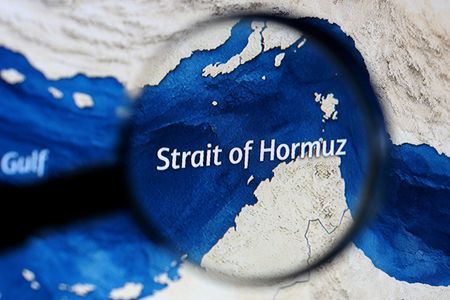
Trump has expressed frustration over his inability to build coalition support for his chosen military campaign against Iran, with NATO and most other allies declining his requests to help maintain security in the Strait of Hormuz, where Iranian interference has disrupted petroleum transport and elevated energy costs worldwide.
“We’re there to protect NATO, to protect them from Russia. But they’re not there to protect us,” Trump said Thursday. He later added: “I never thought we needed them. I was more doing a test.”
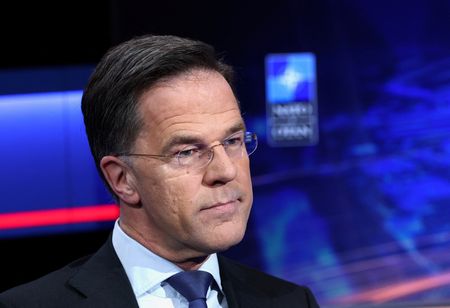
Prior to the American president’s statements, NATO Secretary-General Mark Rutte highlighted increased defense expenditures by alliance members — something Trump has consistently demanded — acknowledging that Europe and Canada had previously relied too heavily on American military strength, though a “shift in mindset” has emerged.
Rutte emphasized NATO’s position that Iran must not acquire nuclear weapons and noted the alliance has “long recognized the threat Iran’s missile program posed to allies and their interests. And what the United States is currently doing is degrading those capabilities, both the nuclear and the missile.”
France, which is hosting the G7 discussions at a historic abbey near Versailles, has expressed considerable doubt about the military campaign. French defense chief Gen. Fabien Mandon criticized American officials this week for failing to notify allies before beginning combat operations.
“They have just decided to intervene in the Near and Middle East without notifying us,” Mandon said. “We acted immediately, surprised by an American ally, who remains an ally, but who is less and less predictable and doesn’t even bother to inform us when it decides to engage in military operations. This affects our security. This affects our interests.”
Nevertheless, 35 nations participated in military discussions led by Mandon regarding plans to restore access to the Strait of Hormuz “once the intensity of hostilities has sufficiently decreased,” according to France’s Defense Ministry.
Rubio argued that with Iran threatening international maritime commerce, nations committed to international law “should step up and deal with it.”
Other allies have voiced concerns similar to Mandon’s while also questioning America’s dedication to Ukraine as the Iran conflict approaches its fourth week.
“We must avoid further destabilization, secure our economic freedom and develop perspectives for an end of and the time after the hostilities,” German Foreign Minister Johann Wadephul said Thursday. “Our joint support for Ukraine … must not crumble now. That would be a strategic mistake with a view to Euro-Atlantic security.”
Wadephul indicated his expectation “that we can define a joint position” regarding the Middle Eastern situation.
“Of course, this is about ending this conflict as quickly as possible, but also ending it sustainably, and that means bringing about security in the Strait of Hormuz and ensuring overall that the Iranian regime, which in the past has behaved negatively enough, is also curtailed in the future,” Wadephul said.
Early Friday morning, Israeli military forces carried out attacks in central Tehran, according to military officials, as smoke clouds were visible over Beirut following President Donald Trump’s decision to postpone his ultimatum regarding Iran’s blockade of the Strait of Hormuz.
Israeli forces have deployed thousands of soldiers into Lebanese territory, with government officials stating their intention to secure control over all territory south of the Litani River, located approximately 20 miles north of the Lebanese border.
With stock markets in turmoil, Trump announced Thursday that he was pushing back his deadline for the strait’s reopening to April 6, claiming Iran had requested additional time and describing negotiations as progressing positively. However, Iranian officials continue to deny any diplomatic engagement with Washington regarding a 15-point peace proposal.
The ongoing conflict has resulted in devastating casualties, with over 1,900 fatalities reported in Iran and nearly 1,100 deaths in Lebanon. Israeli losses include 18 civilians and three military personnel killed during operations in Lebanon. Additionally, 13 American service members have lost their lives, along with numerous civilians throughout the Gulf area. The violence has forced millions to flee their homes across Lebanon and Iran.
In related developments, New Zealand Finance Minister Nicola Willis announced Friday a comprehensive four-stage framework to address potential fuel shortages. The most restrictive phases would impose purchasing limits on gasoline and prioritize distribution for essential services.
Willis explained that specific benchmarks, including export limitations and national fuel reserve levels, would determine transitions between the four stages.
The minister emphasized that New Zealand currently operates under the first phase, representing minimal restrictions, but stressed the importance of public awareness regarding potential future limitations.
No fuel purchasing or usage restrictions are currently in effect within New Zealand.
MANILA – Despite ongoing turmoil in the Middle East, the Association of Southeast Asian Nations will move forward with its scheduled May leadership summit, Philippine President Ferdinand Marcos Jr. announced Friday.
The summit will be streamlined to concentrate on critical regional concerns including energy supply chains, rising food costs, and the welfare of migrant workers throughout the region, Marcos explained.
After discussions with fellow leaders from the 10-member Southeast Asian bloc, Marcos said he had inquired whether they would prefer delaying the gathering due to the Middle Eastern crisis.
“The consensus that we came to is that it is precisely now that we must coordinate our efforts,” Marcos told reporters.
The decision reflects the regional group’s commitment to addressing pressing economic and humanitarian challenges affecting Southeast Asia, even as global attention remains focused on conflicts elsewhere.
Secretary of State Marco Rubio conducted a telephone conversation with Kurdistan Regional Government Prime Minister Masrour Barzani on Thursday, according to a State Department announcement.
During the discussion, Rubio thanked Kurdish leadership for their role in facilitating the flow of Iraqi oil, including petroleum from the Kurdistan region, to international markets. The State Department noted that “The secretary also expressed his gratitude to the Kurdistan Regional Government for enabling oil from Iraq, including from the Iraq Kurdistan Region, to reach global markets.”
Oil market volatility has increased due to the ongoing conflict with Iran, affecting global energy prices.
Rubio also conveyed sympathy regarding recent casualties, as the State Department reported he “offered his condolences to the families of the Peshmerga killed in an Iranian missile attack on March 24 and wished a speedy recovery to those injured.”
The deadly incident occurred when Iranian forces launched a missile assault on a Kurdish military installation located north of Erbil in Iraqi Kurdistan. According to Peshmerga officials, the Tuesday morning attack resulted in at least six Kurdish fighters losing their lives and left 30 others wounded.
Kurdish military leadership described Iran’s actions as a “treacherous attack,” stating that six Iranian ballistic missiles targeted the Peshmerga military headquarters facility north of Erbil during the early morning hours.
The broader conflict with Iran commenced on February 28 when American and Israeli forces initiated strikes against Iranian targets. Iran retaliated with its own military operations against Israeli territory and Gulf nations hosting American military installations. The escalating violence, including continued joint American-Israeli operations in Iran and Israeli military action in Lebanon, has resulted in thousands of casualties.
President Donald Trump has provided varying objectives and timeframes for the military campaign, from regime change in Iran to dismantling the country’s military and missile infrastructure. During Thursday’s remarks, Trump again claimed victory in the ongoing conflict.
HONG KONG – Chinese education officials unveiled new guidelines on Friday designed to safeguard student wellbeing by implementing restrictions on excessive homework assignments and protecting student break periods.
The Education Ministry’s new framework prohibits educational institutions from overwhelming students with too many tests or adding to their “academic burden,” according to an official statement released through the ministry’s WeChat platform.
This policy shift reflects government efforts to address mounting academic stress and support student mental health, marking a significant change from China’s long-standing educational philosophy that emphasized rigorous study habits and high academic achievement.
Educational experts note that overwhelming homework assignments have become standard practice in Chinese schools, resulting in sleep deficits and rising rates of anxiety and depression among students.
Previous regulations announced by China last November required schools to “strictly control” homework volumes while ensuring primary and secondary students receive “at least” two hours of daily physical activity during school hours.
The new guidelines also mandate that kindergartens cannot implement elementary school teaching approaches or advance elementary curriculum content.
Additionally, primary and secondary educational institutions are forbidden from conducting entrance examinations for student selection purposes, and schools cannot reward or penalize educators for “hyping up” students who achieve top scores on college entrance examinations.
The ministry emphasized that schools must not “encroach on students break time in anyway, or prohibit students from leaving the classroom during breaks.”
These measures follow China’s recent announcement introducing spring and autumn school holidays to supplement existing summer and winter vacation periods.
The Sichuan Southwest Vocational College of Aviation recently announced through its official WeChat that their six-day spring break from April 1-6 will focus on helping students “see the flowers and enjoy romance,” as government officials explore innovative approaches to encourage future marriages and stimulate domestic spending.
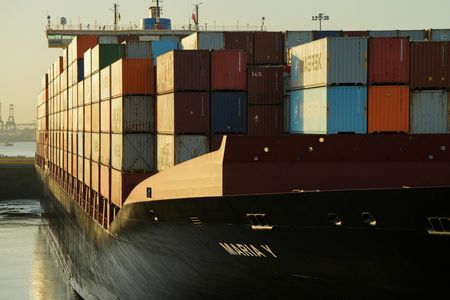
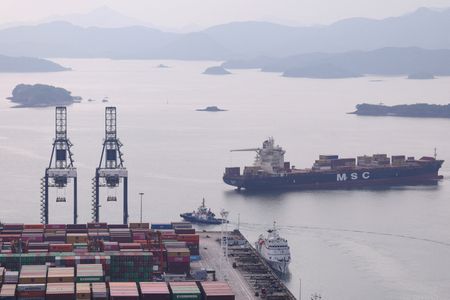
Federal maritime officials are keeping close watch on an extraordinary increase in ship detentions by Chinese authorities, which appears linked to an ongoing dispute over control of key Panama Canal ports.
The U.S. Federal Maritime Commission announced Thursday it’s monitoring the situation after Panama’s highest court struck down the legal basis for a 1997 agreement that allowed Hong Kong-based CK Hutchison’s Panama Ports Company to run the Balboa and Cristobal terminals. These facilities sit on opposite sides of the Panama Canal.
After the court decision in late January, Panama’s government named American subsidiaries Maersk APM Terminals and Mediterranean Shipping Company’s Terminal Investment Limited as temporary operators through 18-month contracts.
The port takeover came after growing pressure from Washington to reduce Chinese control around the vital waterway, which handles roughly 5% of worldwide shipping traffic.
FMC Chair Laura DiBella noted that China’s detention of Panama-registered vessels has far surpassed typical levels, with Lloyd’s List Intelligence reporting almost 70 ships held since March 8.
“These intensified inspections were carried out under informal directives and appear intended to punish Panama after the transfer of Hutchison’s port assets,” DiBella said in a statement.
She warned that since Panama-flagged vessels transport a substantial portion of U.S. containerized cargo, the detentions “could result in significant commercial and strategic consequences to U.S. shipping.” DiBella added that the FMC has authority to examine whether foreign government actions might damage American trade interests.
Chinese transport officials have also called Maersk and MSC representatives to Beijing for senior-level meetings, according to DiBella.
CK Hutchison, which ran the ports for almost three decades, has firmly disputed Panama’s court decision and accused the country’s officials of illegally confiscating assets. The company has initiated international arbitration proceedings against Panama, seeking more than $2 billion in compensation.
The conflict has also created complications for CK Hutchison’s proposed $23 billion deal to sell a controlling interest in its worldwide port operations to a group headed by BlackRock and MSC.
China’s Ministry of Transport has not yet provided a response to requests for comment on the situation.
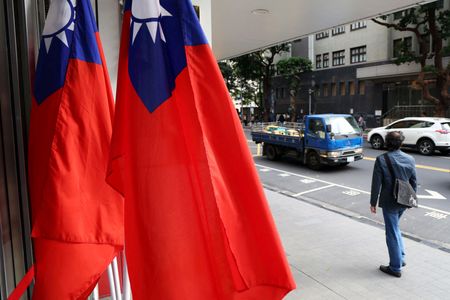
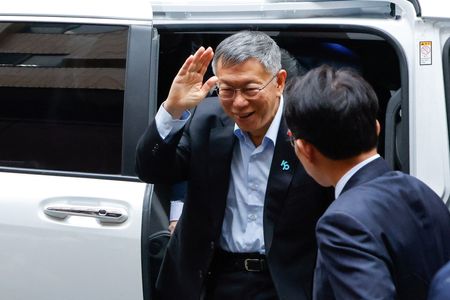
Taiwan’s foreign ministry announced Thursday that the island nation will skip an upcoming World Trade Organization conference in Cameroon due to severely flawed travel documentation provided by the African host country.
The controversy began when Cameroon initially listed Taiwan as “Taiwan, province of China” in pre-conference paperwork, prompting formal complaints from Taiwan’s government to both the WTO and Cameroon officials.
When Cameroon attempted to resolve the issue by offering visa exemptions for Taiwan’s delegation, the replacement documents contained numerous mistakes, including misspelled names and incorrectly identifying nearly all delegation members as female.
“This shows that the Cameroonian side handled the matter carelessly and without sincerity,” Taiwan’s foreign ministry stated.
“If our personnel were to enter Cameroon carrying documents full of errors, there would be an even greater risk of being obstructed or humiliated upon arrival. After a comprehensive assessment, we have therefore decided not to attend.”
Cameroon’s foreign ministry has not responded to requests for comment on the matter.
A WTO representative confirmed that corrected visas were issued on March 20 following intervention by the organization’s director general, though they declined to provide additional details.
This absence represents a historic first for Taiwan, which has participated in every WTO ministerial conference since becoming a member in 2002 under the designation “Separate Customs Territory of Taiwan, Penghu, Kinmen and Matsu.”
The WTO remains one of the limited international organizations where Taiwan, a major semiconductor producer, maintains membership despite China’s claims over the island.
Beijing has intensified efforts to limit Taiwan’s global participation, particularly in Africa where China maintains strong economic and political relationships. Chinese Foreign Ministry spokesperson Lin Jian accused Taiwan of “engaging in political manipulation despicably under the pretext of participation in the WTO conference to create disruption and serve their ‘Taiwan independence’ agenda.”
Taiwan has expressed particular frustration over Chinese pressure preventing its participation in World Health Organization activities, even in observer roles, despite not holding United Nations membership.
Taiwan’s democratically elected leadership maintains that Beijing lacks authority to represent or speak for the island.
MANILA – A new military cooperation agreement between the Philippines and France will enable both countries to conduct joint training exercises on each other’s soil, as the Philippines seeks to strengthen defense partnerships while facing increased tensions with China over South China Sea territorial claims.
The visiting forces pact was formalized on March 26 when Philippine Defense Secretary Gilberto Teodoro met with French Minister for the Armed Forces and Veterans Catherine Vautrin in Paris. During their discussions, both officials addressed regional security concerns and emphasized their commitment to maintaining international law and order.
Both nations stressed the importance of “the peaceful resolution of disputes” and highlighted the necessity of building stronger supply chain networks during times of crisis.
According to a statement from the Philippine defense department, “The agreement will greatly bolster bilateral cooperation and offer an adequate level of legal protection to the joint activities between the Armed Forces of the Philippines and the French Armed Forces.”
France now joins the Philippines’ network of military partnership agreements, which already includes similar arrangements with the United States, Australia, Japan, and New Zealand.
The timing of this military agreement is significant, occurring just one day after Philippine military officials reported that a Chinese missile frigate “executed an unsafe and unprofessional manoeuvre” against a Philippine Navy ship operating near Thitu Island, a crucial Philippine military position in the contested waters.
China maintains territorial claims over nearly all of the South China Sea, a vital shipping corridor that handles over $3 trillion in annual trade.
The regional powerhouse continues to reject a significant 2016 international court decision that declared its expansive territorial claims in the waterway invalid.
Iran’s struggling economy faces complete breakdown as weeks of ongoing conflict drive food costs skyward, with some essential items climbing 50% beyond pre-war prices and others doubling entirely.
The economic devastation extends far beyond rising grocery bills. Internet disruptions have crippled online services, manufacturing plants cannot secure necessary raw materials, and government operations have been severely hampered. One resident of Tehran expressed their desperation to The Media Line, stating: “It has become impossible to endure this situation any longer.”
Statistics from government-linked organizations and economic experts reveal that over 40% of Iran’s population currently exists below the absolute poverty threshold, with the capital city seeing rates exceed 50%. Economic analysts caution that actual poverty levels may have surged past 60% across the entire nation.
The disappearing middle class has created a stark divide between those making under 50 million tomans monthly (approximately $320) and higher earners bringing in over 200 million tomans per month (roughly $1,280).
Most workers and skilled laborers in Tehran earn no more than 25 million tomans monthly (about $160), placing them well below what economists consider necessary for basic living standards – at least double that amount.
The timing compounds these difficulties, as the Persian New Year traditionally brings increased household spending on food, clothing, and celebrations. This year’s seasonal price increases have been dramatically amplified by wartime conditions.
In the previous year, 180 Iranian economists published a warning about impending economic collapse caused by uncontrolled inflation and currency policies that provided special advantages to government-connected organizations, including the Islamic Revolutionary Guard Corps (IRGC).
Official attempts to stabilize currency exchange rates have proven unsuccessful. The US dollar’s value nearly doubled within seven months, causing Iran’s national currency to plummet.
Last summer’s initial war impact destabilized Iran’s oil-reliant economy, leading to mounting tensions that exploded into countrywide protests in January. These demonstrations quickly became political in nature, with millions participating in cities and rural communities alike in unprecedented shows of dissent that authorities eventually crushed through violent suppression.
Currently, despite Central Bank efforts to strengthen the currency, the introduction of one-million-toman banknotes signals further economic deterioration in a system largely dominated by the IRGC and other leadership-connected institutions.
The International Monetary Fund has identified Iran among nations experiencing severe economic decline in 2025, estimating that real household income values have dropped 31% from the previous year amid extremely high inflation.
Economic journalist Arezoo Karimi explained to The Media Line: “One month before the war began, official statistics showed inflation in Iran had reached its highest level since World War II.” She noted that internet shutdowns have directly harmed online businesses while indirectly impacting the broader economy.
Karimi warned that continuing these conditions will further destabilize the war-torn economy and increase unemployment. She characterized Iran’s economy as a fragile combination of high inflation, stagnant financial markets and economic activity, and increasing instability – all worsened by warfare.
She observed that escalating food costs have forced lower and middle-income families to eliminate certain foods from their meals, with the economic crisis hitting these groups hardest.
Even if Iran’s government and the United States reached an agreement, Karimi suggested the immediate economic benefits would likely be minimal, as underlying issues like poor growth, excessive liquidity, and ongoing inflation would persist without sanctions relief and new fiscal policies.
Before January’s protests, Iranian website Rouydad 24 reported food inflation exceeding 66% and presented a grim forecast. The site wrote: “What we see today in economic charts and data is the erosion of the middle class, widespread despair, depression, rising suicide rates, and the collapse of a nation’s hopes,” adding that most economists believe “this is only the beginning, and a harsh winter lies ahead for Iran.”
This prediction came true weeks later when the national currency’s collapse against the US dollar effectively destroyed private businesses competing in a market controlled by state-connected entities, including IRGC-linked networks. Small protests grew into nationwide demonstrations. The situation has continued, with the war’s start effectively extending that “harsh winter” into economic chaos this spring.
Mahtab, a senior office employee in central Tehran, shared with The Media Line: “Prices are rising every day, and some food items have increased by 70 to 80% since the war began.” Earning approximately 40 million tomans monthly, she struggles to afford basic food and household necessities. Traditional Nowruz holiday gatherings with extended family were reduced to immediate relatives only due to soaring expenses. Living in constant fear of missile, bomb, or drone attacks on her home, she believes the deteriorating economic situation has pushed citizens to their limit and could spark new protests.
Government officials have promised worker wage increases up to 60%. While authorities claim oil production and exports continue, further war escalation could worsen budget deficits during wartime when the government already faces pressure to expand subsidies to prevent renewed unrest that could seriously threaten its survival in coming weeks.
Describing wartime price increases before Nowruz, Mahtab noted food costs rising 70% to 80% compared to pre-conflict levels. “Some items like cooking oil have actually doubled in price,” she explained, adding: “Every time we go to the store, we’re shocked.” Many families initially relied on stored supplies like pasta and canned tuna, but these reserves are now exhausted and unsustainable for daily needs.
“Yesterday, I bought three loaves of bread, a few oranges, a tray of eggs, and one bottle of milk—it cost 700,000 tomans ($4.6). If I want to buy meat, chicken, rice, and oil tomorrow, I’d have to spend half my monthly salary,” Mahtab explained as air defense sounds could be heard nearby.
She mentioned that Persian New Year visits were reduced due to war and warned that prices might not decrease even after fighting ends. “Even if the war ends tomorrow, there’s no guarantee prices will go back down.” Government efforts to inject dollars to maintain exchange rates below 150,000 tomans have not reduced food costs.
Daily existence has been severely disrupted with internet outages, mostly inactive markets and industries, and widespread fear. “Every night we lie awake in fear, wondering when it will be our turn to be hit by a missile. People have reached their breaking point.”
WASHINGTON – Military experts are raising serious concerns about a potential ground operation against Iran’s most critical oil export facility, warning that American forces could face significant dangers despite the strategic value of the target.
President Trump is currently considering whether to deploy ground troops to capture Kharg Island, Iran’s primary oil shipping hub located 16 miles off the Iranian coastline in the northern Persian Gulf. The island sits approximately 300 miles northwest of the Strait of Hormuz in waters deep enough to accommodate large oil tankers that cannot reach Iran’s shallow coastal ports.
The facility processes 90% of Iran’s petroleum exports, making its capture potentially devastating to Tehran’s economy. Iran ranks as the third-largest oil producer within OPEC, giving the island enormous strategic importance.
Earlier this month, American forces conducted airstrikes against military installations on Kharg Island. Trump stated they “totally obliterated” all military targets and indicated oil infrastructure could be the next objective.
According to Reuters sources, administration officials are evaluating options for a ground invasion. Two Marine units may deploy to the region by month’s end, while the Pentagon reportedly plans to send thousands of airborne soldiers to provide Trump with additional military choices.
However, defense analysts warn that capturing the island could create more problems than it solves. Ryan Brobst and Cameron McMillan from the Foundation for Defense of Democracies cautioned that occupying Kharg Island would more likely escalate and prolong the conflict rather than achieve decisive results.
“A seizure and occupation of Kharg Island is more likely to expand and extend the war than it is to deliver any sort of decisive victory,” the analysts wrote.
American troops stationed on the island would face constant threats from missile strikes and unmanned aircraft attacks, including sophisticated camera-equipped drones similar to those extensively used in Ukraine. These small but deadly “first-person view drones” pose particular risks to ground forces.
“Upon any successful strikes, the Iranian regime would be expected to release videos of those attacks online, using the graphic deaths of American service members as propaganda,” the experts warned.
While Trump hopes that controlling Kharg Island would pressure Iran to reopen the Strait of Hormuz and create negotiating leverage, Tehran could respond by deploying additional naval mines throughout the waterway. Such defensive measures would make the already disrupted shipping lanes even more hazardous for commercial vessels.
Joseph Votel, former commander of US Central Command, told TWZ.com that approximately 800 to 1,000 troops would be required to hold Kharg Island, but they would need extensive logistical support that would also require protection.
Votel emphasized the extreme vulnerability of forces stationed on the island and questioned whether capturing it would provide meaningful tactical benefits.
“It would be kind of an odd thing to do… But we could certainly do it if we had to,” Votel stated.
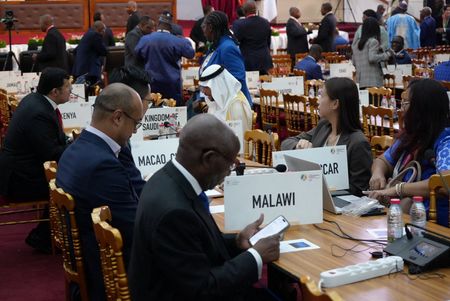
China’s Commerce Minister Wang Wentao has expressed his country’s interest in enhancing economic partnerships with the United States during discussions with US Trade Representative Jamieson Greer, according to an official statement from China’s Commerce Ministry.
The conversation took place Thursday at a World Trade Organization conference in Cameroon, ministry officials reported.
During the meeting, Wang emphasized that economic and commercial relationships should serve as the foundation of US-China relations, stating that both nations must “properly handle the relationship between competition and cooperation.”
The Chinese minister advocated for enhanced mutually beneficial partnerships while urging both countries to “avoid vicious competition” and work together to “look forward” toward establishing healthy and stable bilateral trade relationships.
Wang also voiced “serious concern” about America’s Section 301 trade investigations targeting multiple countries, including China.
Earlier this month, the US Trade Representative’s office announced it had launched a new round of Section 301 investigations examining unfair trade practices across 60 nations, focusing on what officials described as inadequate responses to forced labor issues.
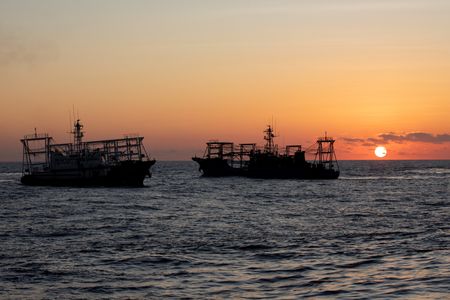
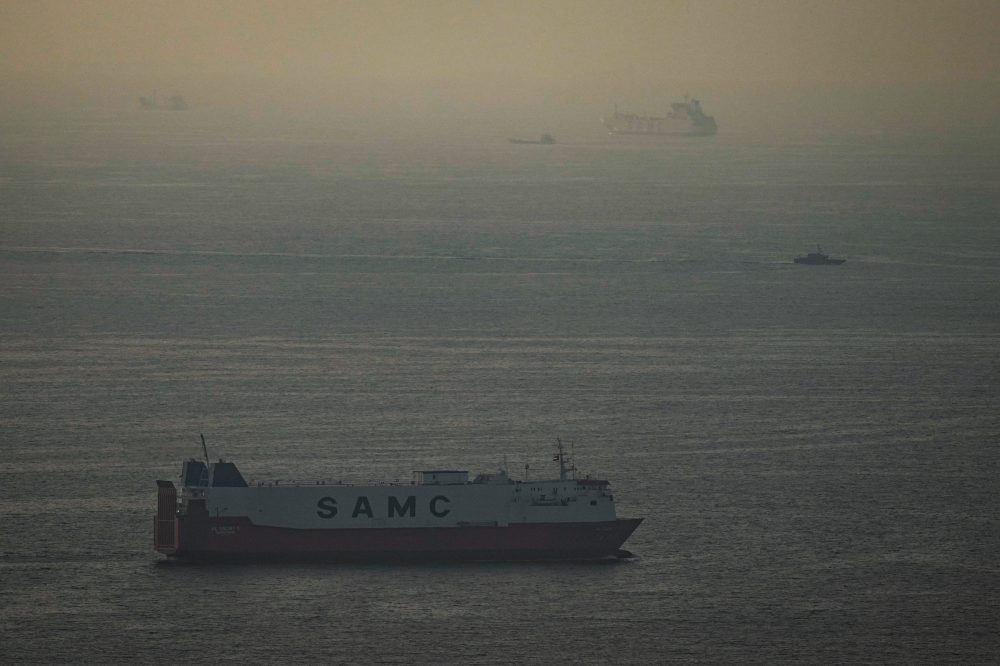
A cargo vessel flying under Thailand’s flag has become stranded near Iran’s Qeshm Island after being struck by unidentified projectiles in the Strait of Hormuz earlier this month, according to Iran’s Tasnim news agency reporting Friday.
The vessel, named Mayuree Naree, suffered an explosion in its rear section that sparked a fire in the engine compartment. Omani naval forces successfully rescued 20 crew members from the damaged ship, though Thai officials report three crew members remain unaccounted for.
The incident highlights ongoing tensions in the strategically important Strait of Hormuz, a critical shipping lane for global oil transport.
President Donald Trump has declared a temporary halt to strikes on Iran’s energy infrastructure for 10 days following Tehran’s request, while asserting that diplomatic negotiations are proceeding “very well.” However, an Iranian official has rejected the American peace proposal as “one-sided and unfair.”
The ongoing conflict has claimed thousands of lives, expanded into neighboring countries, and severely impacted the global economy through skyrocketing energy costs since the United States and Israel began military operations on February 28, following unsuccessful negotiations over Tehran’s nuclear program.
During a White House cabinet meeting Thursday, Trump warned of escalating pressure on Iran without a deal, then later announced on social media his decision to suspend strikes on Iranian energy facilities for 10 days, lasting until April 6, 2026 at 8:00 PM EDT.
“Talks are ongoing and, despite erroneous statements to the contrary by the Fake News Media, and others, they are going very well,” Trump wrote on Truth Social.
Speaking later on Fox News’ “The Five,” Trump revealed that Iranian officials had requested a seven-day suspension. Tehran has not immediately responded to these claims.
According to peace negotiation mediators cited by the Wall Street Journal, Iran has not actually requested a 10-day suspension of energy facility strikes.
The conflict has severely disrupted global shipping routes, driving crude oil prices up approximately 40% and causing liquefied natural gas shipments to Asia to surge by roughly two-thirds. Nitrogen-based fertilizer prices, essential for food production, have increased by about 50%.
Despite Trump’s optimistic outlook, Iran has continued retaliatory strikes against U.S. and Israeli targets, hitting Israel and American military bases while also attacking Gulf nations and effectively shutting down Middle Eastern fuel exports through the Strait of Hormuz.
The Pentagon confirmed to Reuters that the United States has deployed unmanned drone speedboats for patrol operations against Iran, marking the first time Washington has acknowledged using such technology in active combat.
Trump warned that America would become Iran’s “worst nightmare” if Tehran fails to meet U.S. demands, which include reopening the strait and dismantling the nuclear program. He mentioned seizing control of Iranian oil as a possibility but provided no specifics.
An Iranian official informed Reuters that senior Iranian leaders and a representative of Iran’s supreme leader thoroughly examined a 15-point American proposal on Wednesday, which Pakistan had delivered to Tehran. While they viewed it as serving only U.S. and Israeli interests, diplomatic efforts continue, the official noted.
Combat operations have persisted despite diplomatic efforts. Thursday saw Iran launch multiple missile attacks against Israel, targeting Tel Aviv, Haifa, and other locations, including a Palestinian community in central Israel.
Israeli military sources confirmed at least one ballistic missile struck Tel Aviv, while others deployed cluster munitions that scattered smaller explosives, causing damage to residential properties and vehicles. Israel’s emergency services reported one fatality in Nahariya following a Hezbollah rocket attack on the northern city.
Within Iran, strikes targeted the southern port city of Bandar Abbas and a village near Shiraz. Reports indicate a university facility in Isfahan was also hit.
Trump proposed Thursday that Iran allow 10 oil tankers, including some flying Pakistani flags, to pass through the Strait of Hormuz as a diplomatic gesture during negotiations.
The president has deployed thousands of military personnel to the Middle East region, with some already arriving, fueling speculation about a potential ground invasion, though specific details remain limited.
Steve Witkoff, Trump’s special envoy, confirmed that the U.S. has presented a “15-point action list” as the foundation for war-ending negotiations. Sources and reports indicate the demands range from dismantling Iran’s nuclear capabilities to restricting its missile program and essentially surrendering control of the strait.
Pakistan’s foreign minister described “indirect talks” between Washington and Tehran occurring through messages relayed by Islamabad, with Turkey and Egypt also supporting mediation initiatives.
Any diplomatic resolution appears extremely challenging. Iranian sources indicate the country has taken a harder position since hostilities began, demanding assurances against future military action, financial compensation for damages, and official control over the strait.
Regional sources report that Iran has also informed intermediaries that Lebanon must be included in any ceasefire agreement.
Trump has not disclosed which Iranian officials the U.S. is negotiating with, as many high-ranking leaders are among the thousands killed in the widespread Middle Eastern conflict.
Pakistan’s Deputy Prime Minister and Foreign Minister Ishaq Dar confirmed Thursday that his country continues facilitating secret communications between the United States and Iran, even after Tehran publicly dismissed a 15-point American ceasefire proposal on Wednesday.
Writing on X, Dar stated that Pakistan is actively serving as a conduit for messages between Washington and Tehran, with the U.S. having presented a 15-point framework that Iran is now reviewing. He criticized what he called “unnecessary speculation” in media reports about the peace negotiations aimed at resolving the ongoing Middle Eastern conflict.
Dar emphasized that other nations including Turkey and Egypt are also backing the diplomatic initiative. He reaffirmed Pakistan’s dedication to fostering peace through all available means, stating that conversation and diplomatic solutions represent the only viable path forward.
The foreign minister’s social media post tagged key officials including U.S. Secretary of State Marco Rubio, Iranian Foreign Minister Abbas Araghchi, and Steve Witkoff, the U.S. special envoy for the Middle East.
Speculation about U.S.-Iran negotiations first surfaced Monday when Donald Trump posted on Truth Social that discussions were ongoing between the two nations and that plans for potential strikes against Iranian power facilities had been postponed.
Shortly afterward, reports emerged indicating that indirect communications were occurring through Pakistani mediation.
On Tuesday evening, Prime Minister Shehbaz Sharif posted on X: “Subject to concurrence by the US and Iran, Pakistan stands ready and honored to host and facilitate meaningful and conclusive talks for a comprehensive settlement of the ongoing conflict.”
President Trump subsequently shared Sharif’s statement on Truth Social, sparking speculation that Washington might be receptive to Pakistani-facilitated negotiations.
According to sources, Pakistani officials have conducted phone conversations with both Iranian and American presidents within the last 72 hours.
The White House acknowledged to the BBC that Trump spoke with Pakistan’s Asim Munir, though no additional information was released.
Prime Minister Sharif also held a telephone conversation with Iranian President Masoud Pezeshkian, stressing the importance of lowering tensions “through dialogue and diplomacy.”
The Iranian news agency Tasnim reported that Iran has officially responded to the American 15-article proposal, with Tehran’s answer delivered through intermediaries Wednesday night. Iran now awaits Washington’s reaction.
According to Tasnim, Iran’s response outlined several demands: an end to assassination operations, concrete measures to prevent future warfare, guaranteed compensation and war reparations, and cessation of hostilities across all fronts involving regional resistance groups.
Iran also insisted that its sovereignty over the Strait of Hormuz represents a natural and legal right that must be acknowledged, Tasnim reported.
Experts suggest Pakistan’s strong relationships with both Washington and Tehran make it an effective and reliable mediator for resolving the dispute.
Diplomatic sources in Islamabad characterize Iran’s rejection of the U.S. 15-point ceasefire plan as merely a diplomatic strategy. Within hours, an Iranian Foreign Ministry statement acknowledged receiving the American proposal, followed by reports that Iran had transmitted its own requirements to Washington through intermediaries.
This has positioned Islamabad as the center of diplomatic efforts seeking an immediate ceasefire and lasting global peace. Following Pakistan’s formal offer to host negotiations, regional experts shared their perspectives on Islamabad’s role and the rapidly changing regional dynamics.
Political analyst Sajjad Azhar from Rawalpindi explained to The Media Line: “The Iranian regime now seeks both a seat at the negotiating table and face-saving, because at stake is not only its authority within Iran but also its influence over the global Shia population, including in the Middle East and Pakistan, which idealizes it.”
Azhar suggested that President Trump isn’t being completely transparent, conscious of his weakening domestic credibility, while Netanyahu aims to keep Israeli citizens uninformed.
“This creates an extremely delicate situation, with slim prospects for peace and a higher likelihood that, should negotiations fail, all three parties could drag the entire region into a survival struggle. There is also the danger—albeit uncertain—of prohibited weapons being used against Iran,” Azhar emphasized.
He observed that while Pakistan maintains neutrality, the United States seeks to involve it in the conflict.
“Even a minor misstep by Iran could make Pakistan a party to the dispute. With a defense agreement in place with Saudi Arabia, Islamabad faces a highly sensitive and precarious situation.”
Colorado-based security analyst Steven Radil told The Media Line that “Pakistan is well-positioned for the current moment for several reasons.”
“Despite its defense ties with Saudi Arabia, it is still viewed as relatively neutral among the warring parties, while its large Shia population creates a cultural linkage with Iran that few other potential mediators—such as Turkey, Egypt, or Gulf states—can match,” Radil explained.
“Pakistan also has its own economic incentives to press for an end to the war, which has disrupted its oil and natural gas supply chains,” Radil added.
Regarding regional signaling, Radil noted: “Pakistan’s reported strikes on the former US Bagram air base in Afghanistan could indicate [more] strategic alignment with Washington.”
He concluded: “More importantly, Islamabad may see mediation in the Iran conflict as a way to strengthen its position with the US, potentially gaining leverage in any future confrontation with India.”
Retired Colonel Asad Mehmood, an Islamabad-based security and geopolitical analyst, told The Media Line that “America of February 28 is not the same as the Washington of today and that the attack on Iran was a clear violation of international laws and principles, even during the negotiations that preceded the current war.”
Mehmood added that “the situation has changed dramatically, even within the US, opposition is growing among Trump and his closest allies. Unlike in Afghanistan, NATO is not backing the United States this time.”
He noted that observers suggest President Trump, apparently coordinating with Israel, may have taken this extreme step to divert attention from the Epstein Files scandal. Consequently, he said, the U.S. now stands largely isolated globally, with Israel appearing as its sole ally.
Mehmood further observed that “the Iranian people have never wanted to remain in a constant state of war, and for the first time, their nationalism is visible worldwide. Few expected such resilience, which has surprised the international community.”
Meanwhile, American citizens are questioning President Trump about the cost of his policies. While Iran hasn’t “won,” he noted, it has sustained significant losses and will need billions for reconstruction.
He stressed that “the key question now is what comes next. Pakistan holds a pivotal role as a mediator between Tehran and Washington.” According to Colonel Mehmood, the coming days will clarify the situation, and the U.S.-brokered ceasefire “is expected to be extended.”
He emphasized that Pakistan’s role is essential in ending the conflict and ensuring regional stability.
Reuters reported, citing a Pakistani official, that Israel had removed Iranian Foreign Minister Abbas Araghchi and Parliament Speaker Mohammad Bagher Ghalibaf from its target list.
The report indicated Pakistan had urged Washington not to target these individuals.
The official told Reuters that “Israel had their coordinates and intended to eliminate them. We conveyed to the United States that if they were also taken out, there would be no one left to negotiate with. Subsequently, the US asked Israel to step back.”
When asked whether Araghchi and Ghalibaf had been removed from an Israeli target list following Pakistani requests, Israeli military spokesman Nadav Shoshani said the military “has a rigorous process before every operation and every strike,” but added: “I’m not going to go into specific potential targets.”
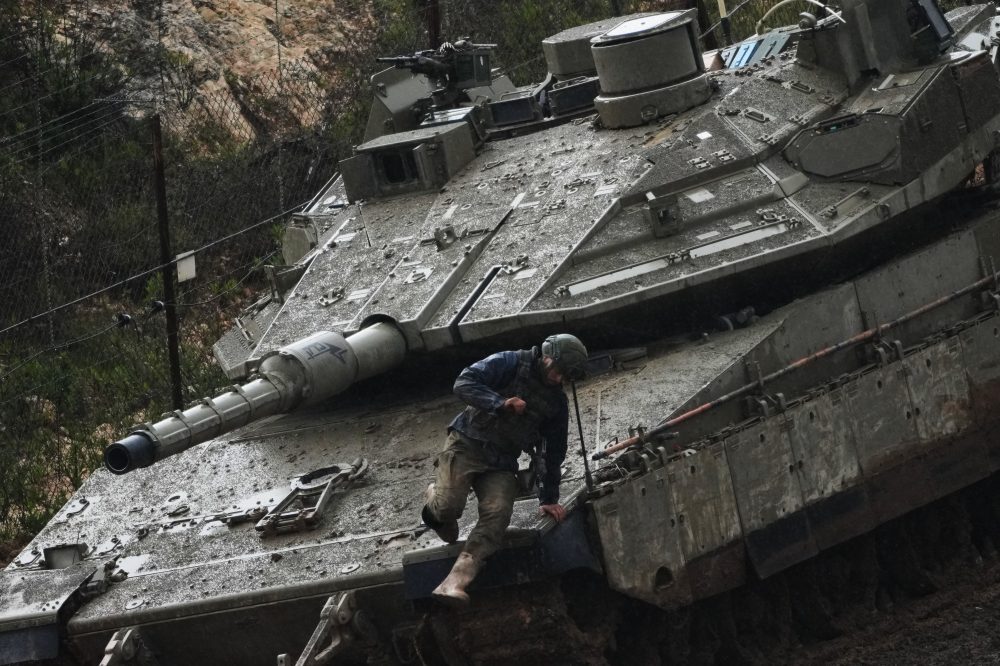
Israeli military officials confirmed Thursday that a young tank officer died during combat operations in southern Lebanon when Hezbollah militants targeted his unit with anti-tank missiles.
Military authorities identified the fallen soldier as Lt. Aviaad Elchanan Volansky, a 21-year-old Jerusalem resident who served as a tank crew member with the 77th Battalion of the Armored Corps. At the time of the deadly strike, Volansky was deployed alongside a Golani Brigade combat team.
Israeli Defense Forces reported that militants launched two anti-tank missiles at the military unit. While defensive systems successfully intercepted the first projectile, the second missile struck Volansky’s tank directly. Four additional service members, including two officers, received minor wounds during the engagement. Israeli troops responded by directing gunfire and artillery strikes toward the location where the missiles originated.
The deceased officer came from a distinguished military family – his father, Brig. Gen. (res.) Yair Volansky, currently holds the position of defense establishment comptroller and previously led the same battalion where his son served. Volansky was also the grandson of Rabbi Oded Volansky, a well-known leader within the religious Zionist movement.
Defense Minister Israel Katz honored the fallen soldier, stating that Volansky “fell in heroic combat in southern Lebanon defending the State of Israel and its citizens.” Katz noted that the young officer’s father works closely with him and praised the elder Volansky as “a man of mission, dedication and integrity.”
This deadly incident occurred in the same operational area where another soldier, Staff Sgt. Ori Greenberg, 21, a Golani reconnaissance specialist from Petah Tikva, lost his life during overnight close-range fighting with Hezbollah operatives. In related incidents, one officer received moderate wounds from Israeli military fire, while 14 soldiers required hospital treatment for suspected cold-weather exposure.
The Israeli Defense Forces announced Thursday they successfully eliminated Alireza Tangsiri, the naval commander of Iran’s Islamic Revolutionary Guard Corps, during a targeted military operation in Bandar Abbas. Israeli officials characterized the strike as part of their continued campaign against Iranian military leadership involved in regional aggression and maritime interference.
According to Israeli military statements, Tangsiri had overseen naval operations for eight years and was directly responsible for orchestrating attacks against commercial vessels, damaging shipping containers, and interfering with maritime traffic through the strategically important Strait of Hormuz. The IDF also accused him of playing a key role in missile launches throughout the Middle East amid ongoing conflicts with Israel and the United States.
The same military operation also resulted in the death of Behnam Rezaei, who led the IRGC Navy Intelligence Directorate, according to an announcement from the Israeli military spokesperson posted on social media platform X.
Israeli Defense Minister Israel Katz stated that Tangsiri bore direct responsibility for the Strait of Hormuz blockade, which has caused significant disruptions to international shipping and threatens to spark wider economic instability.
During a security briefing with officials, Katz noted, “This is also an important development for our American partners, as it reflects the IDF’s role in helping to reopen the Strait of Hormuz.”
Prime Minister Benjamin Netanyahu characterized Tangsiri as an individual who had “a great deal of blood on his hands” and stated he had “led to the closure of the Strait of Hormuz.”
Netanyahu further declared, “We continue to strike the targets of the Iranian terror regime with force.”
A 21-year-old Israeli military member died Thursday during what officials describe as the first direct ground combat encounter between Israeli forces and Hezbollah militants in Lebanon, according to Israeli military authorities.
Military officials identified the fallen serviceman as Sergeant Ori Greenberg of the Golani Brigade, a resident of Petah Tikvah. The Israeli Defense Forces reported that Greenberg sustained injuries during the battle and was transported from the combat zone for emergency medical care, but medical personnel declared him deceased while en route to a medical facility.
The engagement occurred when a Golani Brigade unit conducting operations in the Galilee Panhandle region, operating under Division 36 command, encountered a group of no fewer than five Hezbollah operatives at short range. Military officials said the confrontation evolved into an extended gun battle spanning multiple hours. Israeli forces reported neutralizing multiple Hezbollah combatants during the encounter.
This deadly confrontation occurs amid Israel’s expanding ground military activities in Lebanon, part of a comprehensive strategy to establish a wider security buffer zone designed to halt cross-border attacks launched by Hezbollah forces.
The previous day, Wednesday, military reports indicated one soldier suffered wounds from mortar shell impacts, while additional personnel sustained injuries in unrelated incidents. Military sources also confirmed an officer received injuries in an accidental friendly fire event.
Hezbollah became involved in the ongoing conflict between the United States and Israel against Iran after the March assassination of Supreme Leader Ali Khamenei. Following that event, the organization has consistently fired rockets toward Israeli territory, causing both civilian casualties and damage to critical infrastructure.
Thursday’s deadly encounter represents a notable change in combat dynamics, as Israeli ground units advance further into regions where Hezbollah militants maintain an active presence.
Warning sirens wailed across Israel Thursday morning as waves of Iranian missiles and Hezbollah rockets struck multiple locations, leaving at least seven people injured and causing significant damage in several cities.
The most serious casualty was an 11-year-old girl in Safed who went into cardiac arrest when rocket warning sirens began sounding. Medical responders found her without vital signs and administered emergency treatment, including defibrillation, successfully restoring her heartbeat. She remains in critical condition.
Magen David Adom emergency services reported treating several other victims throughout the morning. A woman in her 60s sustained moderate injuries after falling while rushing to a shelter and was transported to Sheba Medical Center at Tel Hashomer. In Petah Tikva, two people received minor injuries when a car collided with parked vehicles during an alert, requiring evacuation to Beilinson Hospital.
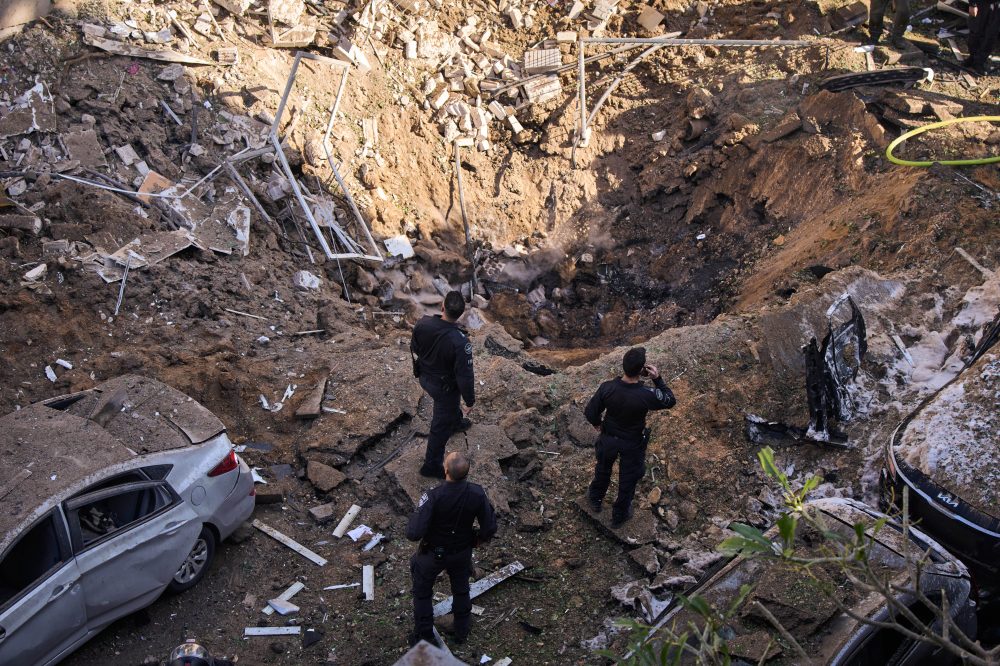
The city of Kafr Qasim bore the brunt of direct missile impact, with video footage revealing a large crater in a roadway and overturned cars. A man and woman, both approximately 55 years old, suffered minor injuries from the explosion’s shock wave and received treatment at the scene. Magen David Adom later confirmed that five people in Kafr Qasim and one person in Sha’ar Shomron sustained light wounds from debris.
During mid-morning attacks, a bus operator in Krayot received minor injuries from a blast wave after a fragmented missile targeted the northern region. Debris from intercepted missiles damaged a shopping center, affecting multiple retail stores.
The coordinated assault triggered emergency alerts throughout Gush Dan, the Sharon region, the Lowlands, and Samaria as Iranian launches targeted these areas. Additional projectiles were detected heading toward central Israel and Jerusalem, while Hezbollah forces simultaneously fired missiles that set off sirens in Safed.
The barrage continued in rapid succession throughout the morning hours, with Iran launching multiple rounds targeting central regions and Jerusalem, while Lebanon contributed a separate wave of attacks.
The Pentagon has acknowledged for the first time that American forces are utilizing unmanned speedboat drones in military operations targeting Iran, marking a significant milestone in modern naval warfare.
Pentagon officials confirmed the deployment of autonomous watercraft for patrol duties, representing the initial instance where Washington has publicly acknowledged employing such technology in active military engagement.
These robotic vessels – capable of conducting surveillance missions or executing kamikaze-style attacks – have gained international attention following Ukraine’s successful use of explosive-equipped speedboats against Russian naval forces in the Black Sea.
Tim Hawkins, speaking for Pentagon Central Command, revealed that autonomous boats manufactured by Maryland-based BlackSea, designated as Global Autonomous Reconnaissance Craft (GARC), have been conducting patrols during the U.S. military campaign against Iran, known as “Operation Epic Fury.”
“U.S. forces continue to employ unmanned systems in the Middle East region, including surface drone assets like the GARC. This platform, in particular, has successfully logged over 450 underway hours and more than 2,200 nautical miles during maritime patrols in support of Operation Epic Fury,” Hawkins stated.
Iranian forces have employed similar drone technology to target oil tankers in Gulf waters on at least two occasions since American and Israeli military strikes commenced nearly a month ago. Pentagon officials provided no evidence suggesting U.S. forces had utilized their unmanned boats for offensive operations.
The American military has spent years attempting to develop a fleet of autonomous surface and underwater craft as a more economical and rapid alternative to traditional manned vessels, particularly to address China’s expanding naval presence in the Pacific region. However, this initiative has experienced delays and encountered numerous obstacles including technical malfunctions, budget concerns, and testing failures.
Previous reporting revealed that the GARC – an angular speedboat measuring approximately five meters in length – has experienced multiple operational and safety complications, including a high-speed collision with another vessel during military testing.
Sources familiar with recent operations indicated that another GARC unit became non-functional during a failed test in the Middle East within recent weeks.
When asked about these setbacks, Hawkins declined to provide details but emphasized the technology’s evolving nature.
“The GARC is an emerging capability and part of a fleet of surface drones operated by U.S. 5th Fleet to enhance awareness of what’s happening in regional waters,” he explained.
BlackSea, the Maryland-based manufacturer, declined to provide comments regarding their involvement in the operations.
Tehran is positioning itself as the controller of the Strait of Hormuz, the world’s most critical oil shipping passage, establishing what experts describe as a payment system for vessel transit through the strategic waterway.
The Islamic Revolutionary Guards Corps now requires ships to enter Iranian territorial waters for inspection and approval, with evidence suggesting at least two vessels have made payments for safe passage, according to maritime intelligence sources.
Since March 1st, vessel movement through the strait has plummeted by 90% due to ongoing regional conflicts, causing oil prices to surge worldwide and creating severe supply shortages for Asian countries dependent on Persian Gulf petroleum.
Lloyd’s List Intelligence reports only approximately 150 ships, including both tankers and cargo vessels, have successfully navigated the passage since early March – representing just over one day’s typical pre-conflict traffic volume.
Despite the dramatic reduction in overall shipping, Iran’s Kharg Island facility maintained its oil loading capacity at 1.6 million barrels during March, matching pre-war monthly totals. The primary buyers remain small Chinese refineries that disregard U.S. sanctions.
While most successful transits initially involved various international vessels, Iranian-affiliated ships now comprise roughly 90% of recent passages, compared to 60% during earlier stages of the conflict.
Approximately half of all vessels disable their tracking systems before entering the strait, reactivating them only after reaching the Gulf of Oman. This cautious behavior stems from legitimate safety concerns, as the International Maritime Organization reports at least 18 ship attacks and seven crew member deaths, though the attacking nation remains unspecified.
“Iran’s IRGC has imposed a de facto ‘toll booth’ regime in the Strait of Hormuz,” Lloyd’s List Intelligence stated.
Rather than using the traditional central shipping lanes, vessels increasingly navigate northward around Larak Island, placing them within Iranian territorial boundaries and closer to the Iranian shoreline.
Ship operators seeking safe passage must provide detailed information to Revolutionary Guard-approved intermediaries, including cargo manifests, ownership details, destinations, and complete crew rosters. Approved vessels receive identification codes and Revolutionary Guard escorts, with oil shipments receiving priority treatment through “geopolitical vetting.”
“While not all ships are paying a direct toll, at least two vessels have and the payment is settled in yuan,” Lloyd’s List reported, referencing Chinese currency.
Some vessels have gained passage through diplomatic intervention, including two Indian ships carrying liquid petroleum gas.
Iranian officials sent correspondence to the International Maritime Organization on Tuesday, stating they had “implemented a set of precautionary measures aimed at preserving maritime safety and security,” claiming compliance with international legal principles.
Iranian parliamentary members are reportedly developing legislation to officially establish fees for strait passage. Lawmaker Mohammadreza Rezaei Kouchi told Fars and Tasnim news agencies that “parliament is pursuing a plan to formally codify Iran’s sovereignty, control and oversight over the Strait of Hormuz, while also creating a source of revenue through the collection of fees.”
The International Maritime Organization has denounced vessel attacks and advocated for coordinated international efforts to maintain navigation freedom while ensuring safe passage.
United Arab Emirates official Sultan al-Jaber, who heads Abu Dhabi National Oil Company, delivered sharp criticism during a Middle East Institute event in Washington.
“Weaponizing the Strait of Hormuz is not an act of aggression against one nation,” al-Jaber declared. “It is economic terrorism against every consumer, every family that depends on affordable energy and food. When Iran holds Hormuz hostage, every nation pays the ransom, at the gas pump, at the grocery store and at the pharmacy. No country can be allowed to destabilize the global economy in this way.”
The United Nations Law of the Sea Treaty’s Article 19 mandates countries permit “innocent passage” for peaceful, law-abiding vessels through their territorial waters.
“There’s no provision in international law anywhere to set up a toll booth and shake down shipping. … This is Iran using the element that they have right now, which is control of the Strait of Hormuz,” explained Sal Mercogliano, a maritime historian at Campbell University in North Carolina.
Gulf Cooperation Council Secretary General Jasem Mohamed al-Budaiwi characterized Iran’s fee collection as “an aggression and a violation of the United Nations agreement on the law of the sea.”
These payment arrangements likely violate American and European sanctions targeting the Revolutionary Guard, a powerful Iranian institution controlling ballistic missiles and involved in suppressing recent domestic protests.
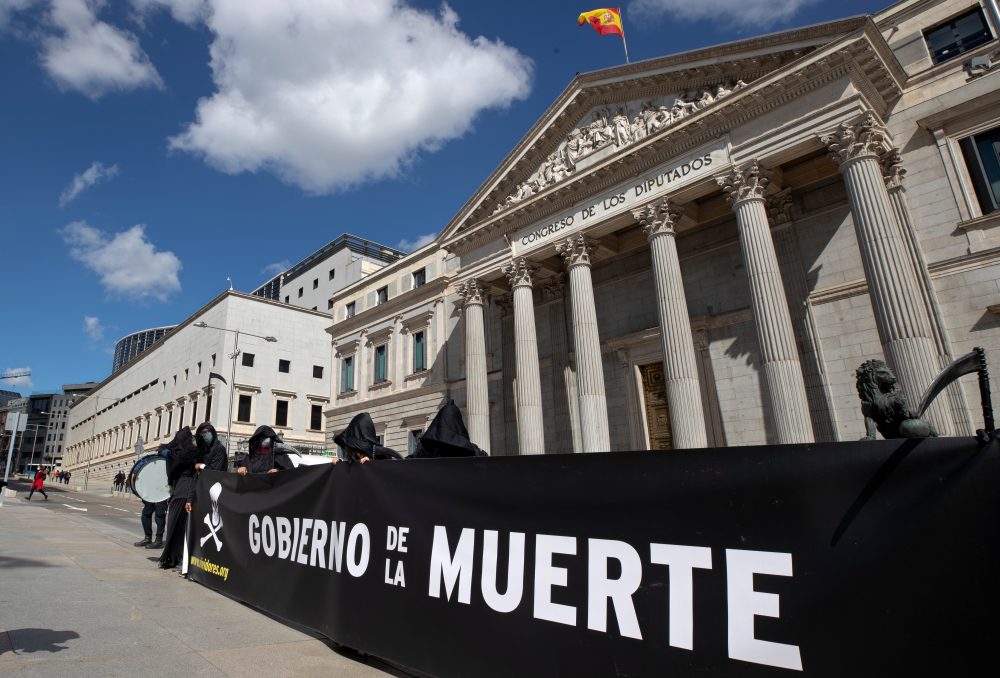
MADRID — A 25-year-old Spanish woman who became the center of a highly publicized legal dispute over her right to die received life-ending medication Thursday in Barcelona, concluding an 18-month battle with her family over her decision to pursue euthanasia.
EDITOR’S NOTE — This story discusses suicide. Those needing support can find international resources at www.iasp.info/suicidalthoughts.
Noelia Castillo spent a year and a half fighting for her right to end her life after her father launched an extensive court challenge when Catalonia’s medical review board granted her euthanasia request in 2024.
The family dispute captivated Spain, which enacted legislation in 2021 establishing the right to euthanasia and physician-assisted suicide for qualifying patients. Castillo’s youth, her family’s public campaign against her choice, and the events leading to her euthanasia request sparked widespread debate as courts consistently upheld her right to die.
“At last, I’ve managed it, so let’s see if I can finally rest now,” Castillo said during a television interview with Spanish network Antena 3 that broadcast Wednesday, one day before her death. “I just cannot go on anymore.”
Her parents remained opposed to her choice until the end, working with Abogados Cristianos, a conservative Catholic legal organization, in their efforts to prevent their daughter’s euthanasia. The Catholic group confirmed her death Thursday.
Legal representative Polonia Castellanos said Castillo’s family felt devastated by the result and believed Spain’s government had failed their daughter by permitting her death.
“Death is the last option, especially when you’re very young,” Castellanos stated.
Before her euthanasia Thursday, Castillo had attempted suicide twice, she revealed, with the second attempt occurring after she experienced sexual assault. The injuries from her October 2022 suicide attempt left her paralyzed from the waist down and confined to a wheelchair.
In April 2024, Castillo petitioned for euthanasia through Catalonia’s independent review panel, composed of physicians, legal experts, and bioethics specialists who evaluate applications under Spain’s euthanasia statute.
The panel granted Castillo’s petition after determining her condition was severe and untreatable, and that the young woman endured intense, ongoing, and debilitating pain.
Spain authorized physician-assisted suicide and euthanasia in 2021 for patients suffering from terminal illnesses and individuals experiencing unbearable permanent conditions. The approval process requires patients to submit two written requests followed by evaluations from medical professionals not previously treating the patient.
Castillo’s father challenged the Catalan panel’s ruling, which temporarily halted the euthanasia approval in August 2024 during deliberation. Through Abogados Cristianos, her family contended she had mental health issues that prevented her from competently deciding to end her life.
After Barcelona’s court sided with Castillo’s euthanasia rights, her father’s attorneys filed another appeal with Spain’s Supreme Court, which confirmed Castillo’s rights in January. Abogados Cristianos attempted one final intervention by petitioning the European Court of Human Rights, which rejected their request for a stay earlier this month.
Thursday, Castellanos reiterated her client’s position that Castillo suffered from a personality disorder and cited her case as evidence of legal shortcomings.
“It is a person whose will (was) altered by that disorder,” Castellanos explained. “I think this is proof of the failure of the law and that it has to be urgently repealed.”
During her Wednesday television appearance, Castillo expressed her wish for family members not to be present at her death, saying she felt misunderstood. She recognized the intense media attention her situation had generated.
“None of my family is in favor of euthanasia, obviously, because I’m another pillar of the family,” she explained, adding, “but what about the pain that I’ve suffered all of these years?”
Spain joins eight other European Union nations with laws permitting assisted dying for those experiencing unbearable suffering, according to Dignity in Dying, a United Kingdom advocacy organization supporting euthanasia and medically assisted death. Assisted dying allows patients to consume lethal medication prescribed by doctors for qualifying individuals. Requirements differ between countries.
Euthanasia differs by having medical professionals actively administer lethal injections to qualifying patients who request it, under stringent guidelines.
Since implementing its euthanasia law, Spain has provided life-ending medication to 1,123 individuals through the end of 2024, Spain’s Health Ministry reports.
Castillo maintained she never doubted her choice despite having to reconfirm her desire to die throughout the past year and a half. Her reasoning remained straightforward.
“The happiness of a father or a mother should not take precedence over the happiness or the life of a daughter.”
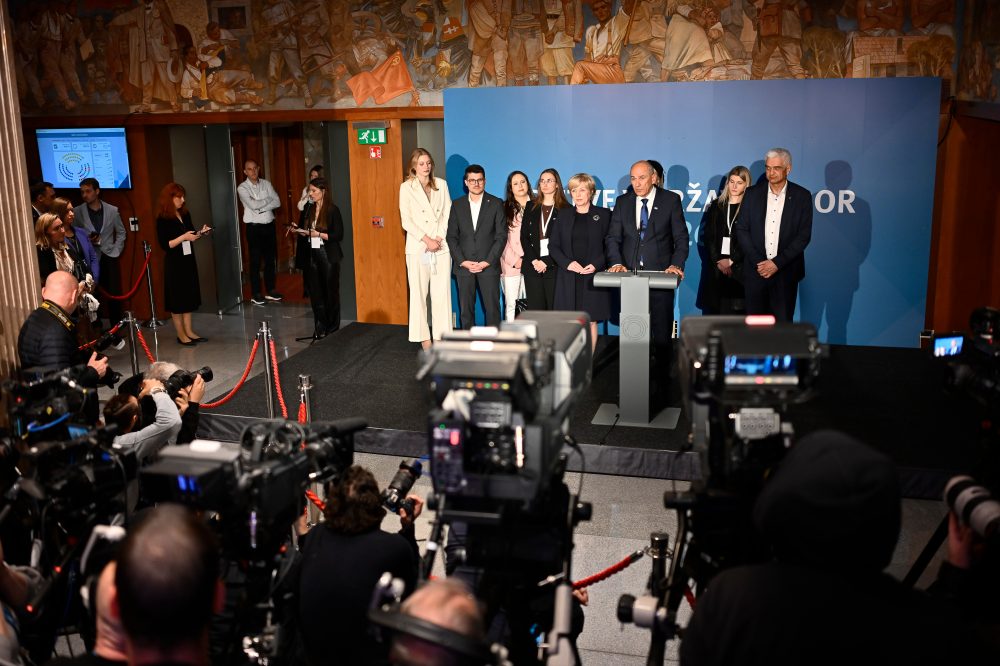
LJUBLJANA, Slovenia — Slovenian officials announced Thursday that their national intelligence service has definitively verified outside interference in the parliamentary elections held over the weekend.
Following a National Security Council session, the government released a statement indicating that the Slovenian Intelligence and Security Agency (SOVA) “presented concrete activities of a foreign para-intelligence agency as well as contacts with Slovenian entities.”
“The evidence collected, both domestically and abroad, has in the meantime already been handed over to the competent law enforcement authorities, the prosecutor’s office, and the police,” the statement said.
Officials did not identify which foreign intelligence operation was involved in Thursday’s announcement.
Sunday’s election results showed no decisive victor. After tallying over 99% of ballots, Prime Minister Robert Golob’s liberal Freedom Movement secured 29 seats in the 90-seat parliament, barely ahead of the opposition right-wing Slovenian Democratic Party (SDS) with 28 seats.
Campaign season was marked by online videos that appeared to capture covert recordings of government-connected individuals discussing their political influence. Activist groups and media professionals claimed these recordings were deliberately released to manipulate voter behavior, prompting an official investigation.
Intelligence reports allegedly connected the SDS party and an international private intelligence firm to these recordings. SDS head Janez Jansa has admitted to interactions with a consultant from the Black Cube private intelligence company while denying any misconduct.
National and international security secretary Vojko Volk revealed last week that Black Cube representatives made four visits to Slovenia over recent months, including to a street in Ljubljana where Jansa’s party maintains its offices.
Prime Minister Golob has called on the European Union to launch its own probe into the matter.
In an email response to the Associated Press, Black Cube stated that “Black Cube is an intelligence firm which provides services exclusively to clients engaged in business activities worldwide, supporting litigations, arbitrations and white-collar crime cases. Black Cube obtains legal advice in every jurisdiction in which it operates to ensure legality of its activities.”
“Corruption is a phenomenon that harms economies and impedes legitimate business activity. Black Cube will continue uncovering fraud, corruption and asset dissipation in all its cases globally as it has consistently done in the past 15 years,” the agency said.
In a March 20 statement, Slovenia’s government detailed how SOVA director Josko Kadivik provided “a full account of events that took place between 10 and 11 December 2025, along with material evidence of connections of three representatives of the private intelligence corporation Black Cube (Giora Eiland, Liron Tzur and Dan Zorella) to the visit at Trstenjakova ulica 8 in Ljubljana, where the SDS party has its headquarters.”
Kadivik also “presented findings regarding Black Cube’s activities in the territory of Slovenia and abroad, which likewise demonstrate counterintelligence operations against the Republic of Slovenia and foreign interference in Slovenian elections,” according to the statement.
Italy’s Culture Ministry displayed a newly acquired Renaissance devotional work by Antonello da Messina at the Senate on Thursday, with the nation’s culture chief announcing plans to accelerate similar art purchases.
The ministry spent $14.9 million at Sotheby’s auction house in New York to acquire the piece called “Ecce Homo,” following closely after spending 30 million euros (approximately $35 million) on a Caravaggio portrait from a private collector that was featured in a major exhibition in the capital last year.
“It is true that there is a policy to step up these acquisitions,” Culture Minister Alessandro Giuli told The Associated Press from his office following the artwork’s unveiling. “We want people to understand how important it is for us to bring works of great artistic and public significance back to Italy and make them available to the world as well as to Italians.”
Minister Giuli traveled to New York this week to finalize the transaction with Sotheby’s for the double-sided devotional piece painted on wood, measuring 20.3 cm (7.9 inches) by 14.9 (5.8 inches).
The front displays the “Ecce Homo” image showing Jesus wearing a crown of thorns with a rope around his neck, capturing the biblical moment when Pontius Pilate presents Jesus to the crowd before crucifixion. The reverse side depicts Saint Jerome the Penitent.
Created around 1470, the religious artwork was transported in a leather pouch by its previous owner for many years and regularly used during prayer sessions. The repeated devotional kissing by the owner has worn away Saint Jerome’s facial features.
According to Giuli, Italian officials learned about the piece just as it was heading to auction and decided to intervene.
“Our pockets are not deep, as the Culture Ministry budget is not even 0.3 percent of the national budget, but it is large enough to purchase works of art,” Giuli explained, noting that these acquisitions don’t affect funding for other government programs, which operate on separate budget lines.
The Renaissance masterpiece will first be exhibited at the National Museum of Abruzzo in L’Aquila before traveling to additional Italian venues, ensuring maximum public access for citizens across the country.
This purchase follows Italy’s acquisition two weeks earlier of a rare Caravaggio portrait, representing one of the government’s largest single artwork investments. That baroque painting shows Maffeo Barberini, a nobleman who eventually became Pope Urban VIII.
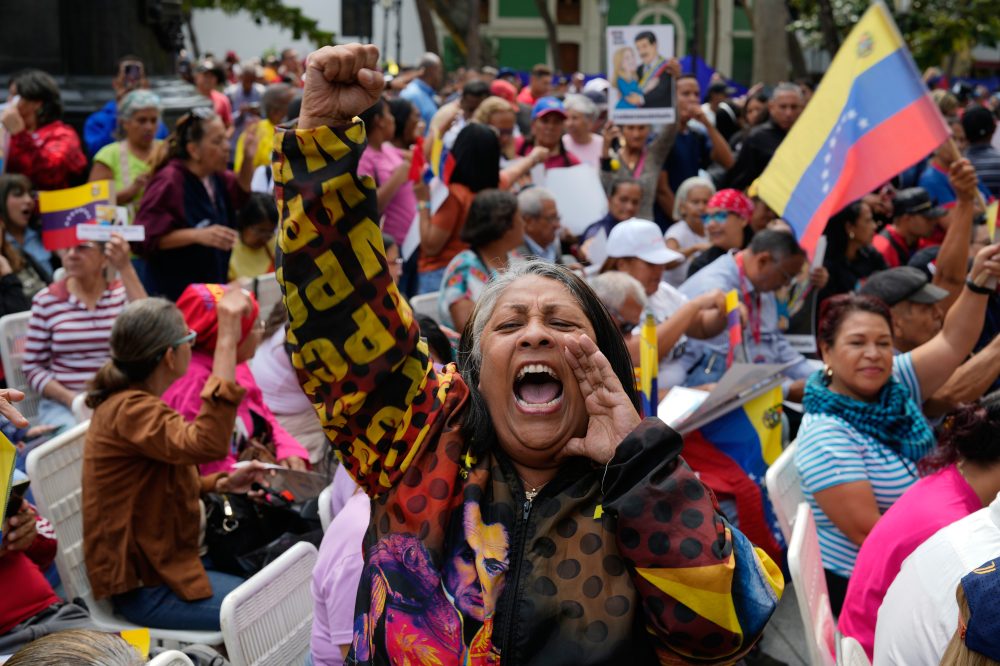
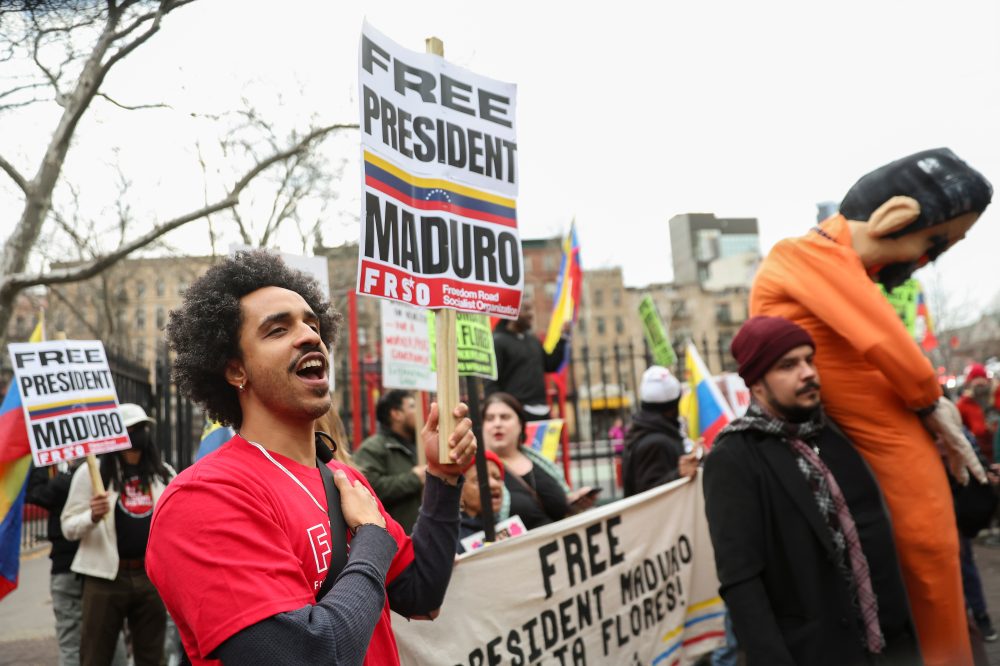
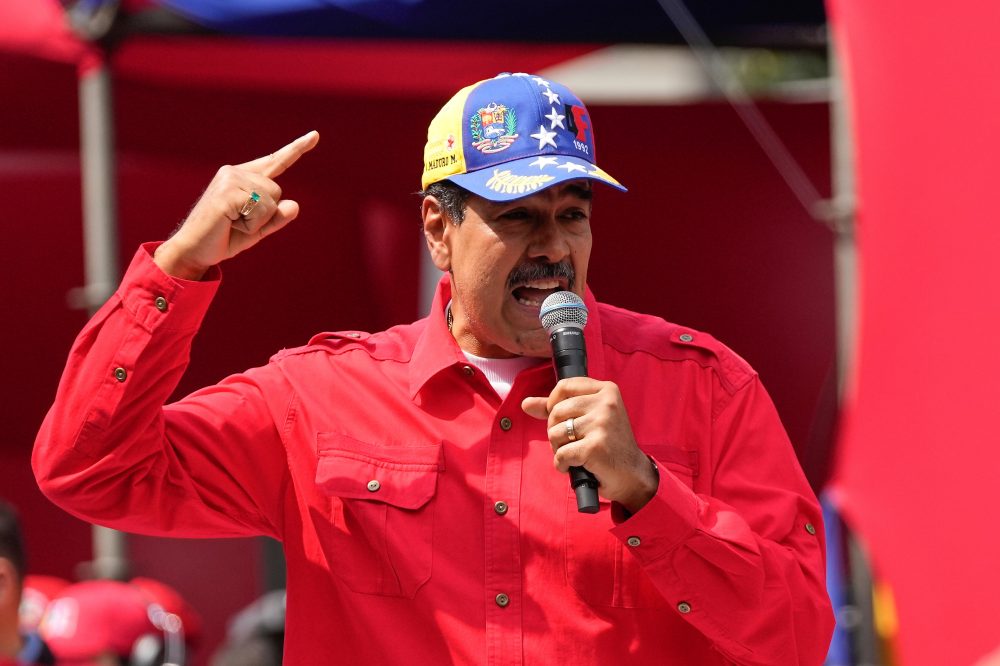
NEW YORK — Venezuela’s former leader Nicolás Maduro made a Thursday appearance at a federal courthouse in New York, where his legal team pushed for the dismissal of narcotics trafficking charges stemming from his January apprehension during a U.S. military operation. Outside the Manhattan federal building, both supporters and critics of Maduro assembled as legal proceedings unfolded inside.
Meanwhile in Venezuela’s capital, backers of the former presidential couple congregated in a central plaza, hoping to view the court session on large screens. However, those gathered were unaware that federal court proceedings in the United States prohibit camera coverage.
The Associated Press photo desk compiled visual documentation from both locations during Thursday’s court appearance.
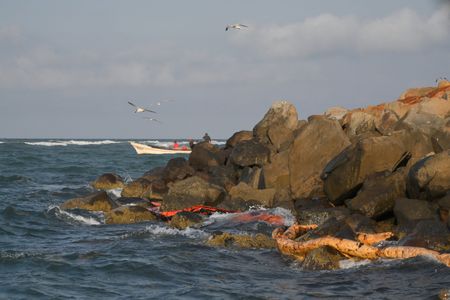
MEXICO CITY – Naval Secretary Raymundo Morales announced Thursday that investigators have identified the cause of an oil spill affecting Mexico’s Gulf coastline as a combination of vessel activity and naturally occurring oil seepage from the ocean floor.
During a Thursday press briefing, Morales explained that both a ship and natural oil emissions rising from the seabed were responsible for the environmental incident along the Gulf of Mexico shoreline.
Meanwhile, Mexico’s national oil corporation Pemex has launched underwater inspections of offshore drilling infrastructure to ensure that no equipment malfunctions contributed to the spill, according to Morales’ statement to reporters.
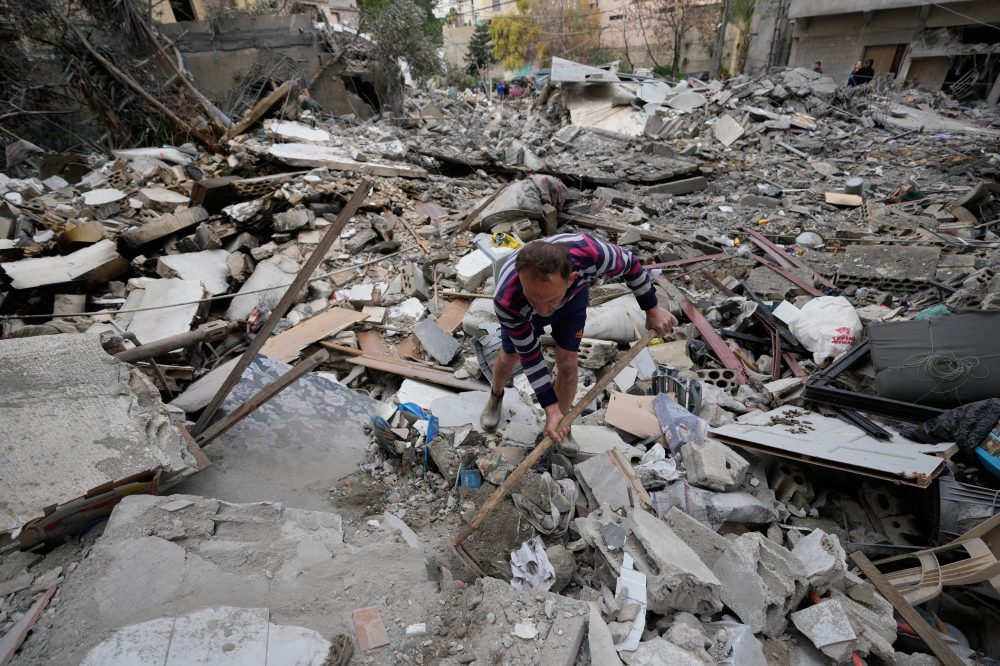
TYRE, Lebanon — The historic coastal city of Tyre in southern Lebanon, renowned for its ancient Roman archaeological sites and pristine beaches, has transformed into a near-deserted landscape.
Stray dogs wander through empty streets lined with residential buildings damaged by recent Israeli bombing campaigns. The millennia-old city saw mass departures last week when Israel intensified military operations targeting the Iranian-supported militant organization Hezbollah and issued broad evacuation directives for all areas south of Lebanon’s Litani River.
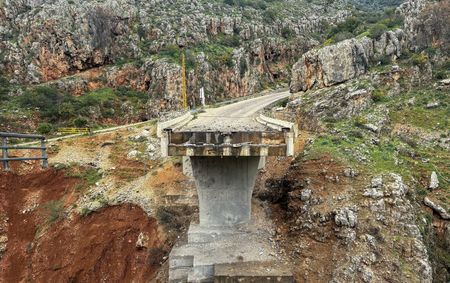
Israeli forces have recently bombed most bridge crossings over the Litani River, effectively cutting off large portions of the nation — including Tyre — from connection to the remainder of Lebanon.
The escalating conflict between Israel and Hezbollah, occurring within the broader regional confrontation involving Israel, the United States and Iran, has displaced more than 1 million Lebanese citizens. Many have sought shelter with family members in northern regions or established makeshift encampments throughout Beirut’s rain-soaked thoroughfares.
However, thousands of residents continue to remain in Tyre, determined not to be driven from their ancestral territory.
Local fishermen, claiming they cannot financially survive abandoning their livelihood, dropped their nets into Mediterranean waters Thursday, lamenting that strict nighttime restrictions and lack of buyers mean their daily haul brings minimal income.
“To avoid being displaced and suffering on the streets, we prefer to stay in our homes,” said 52-year-old fisherman Joseph Najm.
Displaced families from surrounding communities have packed into Tyre’s Christian neighborhood, hoping Israeli forces will choose not to target that area. Hezbollah draws its primary support from Lebanon’s Shiite population, while southern Lebanon’s Christian residents have generally attempted to stay neutral in the fighting.
Throughout other sections of Tyre, especially neighborhoods where deep religious conviction intersects with Hezbollah’s armed resistance movement, the thunder of Israeli bombing runs has created an atmosphere filled with dread, terror — and stubborn resistance.
Local inhabitants report their resolve to remain has only strengthened as Israeli officials suggest potential long-term military control similar to their destructive takeover of much of Gaza following Hamas’ October 7, 2023 assault.
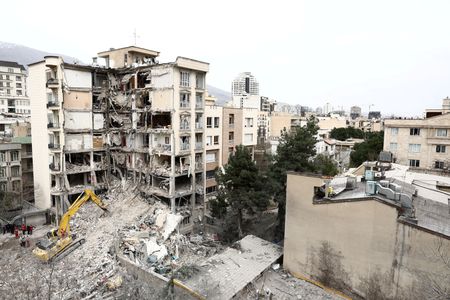
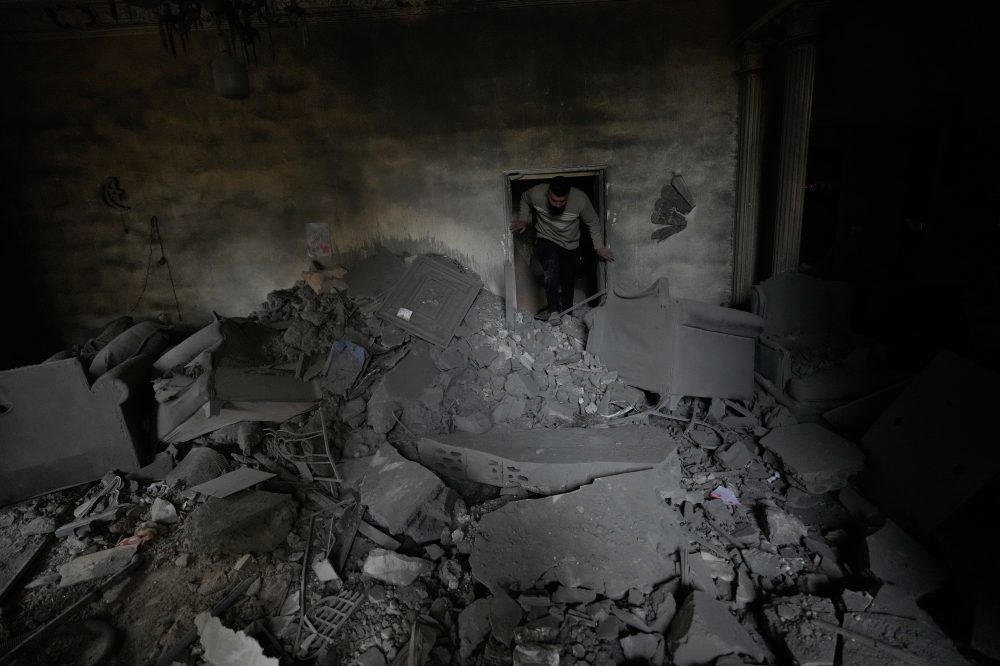
“This is our land — where would we go? We won’t abandon our homes, even when they’re destroyed,” said Jihan Salama, 55, examining what was left of her family’s residence: an enormous mound of debris with twisted metal rods protruding from concrete fragments. An Israeli bombing attack on southern Lebanon demolished Salama’s multi-floor building Tuesday.
The current warfare between Israel and Hezbollah commenced March 2, when the Lebanese militant organization fired multiple rockets across the international boundary, occurring two days after Israeli and U.S. strikes against Iran triggered the continuing Middle Eastern conflict.
“We saw our belongings flying in the air, hundreds of meters in the air,” said Salama’s neighbor, Nader al-Ashqar, 60, who awakened to the deafening blast of airstrikes that Tuesday and rushed from the structure with his spouse and two daughters as Israeli warplanes flew overhead.
“Everything is gone,” he said. “But God told me to stay here.”
Since Israel and Hezbollah started exchanging attacks, at least three Israeli military personnel have perished in ground fighting and two Israeli civilians from rocket fire, including one man killed Thursday in the northern city of Nahariya.
Lebanese casualties have reached at least 1,116 deaths, including 42 healthcare professionals according to Lebanese officials, among them paramedic Ahmed Ibrahim Deeb, who died in an Israeli airstrike while riding his motorcycle Tuesday en route to assist patients near Tyre.
Salman Harb, Hezbollah’s primary spokesman in southern Lebanon, led journalists through Tyre’s destruction Thursday, highlighting multiple ambulances struck by Israeli fire. Israeli authorities have claimed Hezbollah uses medical vehicles to conceal military operations, though they have not provided supporting evidence.
Searching through the leveled wasteland of concrete blocks Thursday, Salama considered her future plans.
“Tomorrow,” she said, “we will set up tents and remain here.”
ABUJA, Nigeria — A groundbreaking United Nations General Assembly decision on Wednesday has sparked celebration across Africa after lawmakers labeled the enslavement of Africans as “the gravest crime against humanity” while demanding reparations for descendants.
The historic resolution has generated widespread support from African leaders and justice advocates, though many are questioning what concrete actions will follow and how reparations might actually work.
European powers forcibly removed approximately 12 million Africans between the 16th and 19th centuries, enslaving them on plantations that generated enormous wealth through human suffering.
Ghana spearheaded the legislative effort, which also demands “the prompt and unhindered restitution” of cultural artifacts — including artwork, monuments, museum collections, documents and national archives — returned to their home countries at no cost.
Ghana’s foreign affairs minister Samuel Okudzeto Ablakwa commented following the vote: “It recognizes that even within (its) complexity, there are moments in history that stand apart … To acknowledge this is not to diminish any other history; it is to deepen our collective moral awareness.”
While General Assembly decisions carry no legal enforcement power, they represent significant global sentiment and frequently serve as foundational frameworks for various causes.
The African Union described the outcome as “marks an important step toward truth, justice and healing” in an official statement.
The measure passed with 123 nations supporting it, while Argentina, Israel and the United States cast opposing votes. Britain and all 27 European Union countries joined 52 other nations in abstaining.
Before the voting began, U.S. deputy ambassador Dan Negrea explained that while America condemns the trans-Atlantic slave trade and all slavery forms, it “does not recognize a legal right to reparations for historical wrongs that were not illegal under international law at the time they occurred.”
France’s UN mission legal adviser Sylvain Fournel contended the resolution “seems to establish a hierarchy among crimes against humanity,” creating “serious legal difficulties and runs the risk of creating a competition against historic tragedies.”
Erieka Bennett, who founded the Ghana-based Diaspora African Forum connecting people of African heritage with their continental roots, called the UN resolution “an answer to the prayers of our kidnapped, oppressed and murdered ancestors.”
“This vote will energize our collective resolve to continue the fight for the dignity of African people and the liberation of our Motherland from the stranglehold of Western domination,” Bennett continued.
Nadege Anelka, a travel agent from Martinique who relocated to Benin and gained citizenship through a 2024 law allowing those with slave trade ancestry to become citizens, called Wednesday’s decision “fantastic news” despite limited immediate impact on her personally. “Having returned to Benin, I already feel like I have undergone my ‘journey of reparations’,” the 58-year-old explained.
Gilles Olakounle Yabi, who established WATHI, the West Africa Citizen Think Tank, characterized the resolution as “symbolic” during a period when few want to acknowledge slavery’s true cost.
Yet Yabi noted that opposing votes and abstentions show “it’s still not so clear that people recognize the immensity of the crimes that were committed.”
During a 2023 reparations conference in Ghana, international participants attempted to address these questions by creating a Global Reparation Fund seeking financial compensation as reparations, though without defined implementation methods.
Recent American polling suggests limited support for reparations. A 2021 Pew Research Center study found only approximately 30% of U.S. adults believed descendants of enslaved Americans should receive some form of compensation, whether money or land.
Some advocates argue reparations should extend beyond direct monetary payments to include development assistance for affected countries, returning colonized resources and systematically correcting oppressive policies and legislation.
Elkory Sneiba from SOS Esclaves, a Mauritanian anti-slavery organization, emphasized that reparation efforts must deliver “justice for those communities who have suffered from this abject, inhuman and serious practice.”
Beverly Ochieng, a Senegal-based Control Risks Group analyst, expressed skepticism that Western governments will actually allocate funds for slavery payments.
“Some will argue that they have tried to develop former colonies and countries they exploited,” Ochieng observed.
Olivette Otele, Distinguished Research Professor of the Legacies and Memory of Slavery at SOAS, University of London, previously noted that reparations advocates “hardly ever” seek only financial compensation. She explained “their work is grounded in an understanding that the social, the political and the economic are bound together and must be addressed together, creating the possibility of a better world.”
WASHINGTON – During a Thursday Cabinet meeting at the White House, President Donald Trump delivered a stark ultimatum to Iran, demanding the nation either reach an agreement to halt U.S. and Israeli military strikes or prepare for continued attacks.
Speaking to reporters, Trump outlined what he sees as Iran’s options. “They now have the chance, that is Iran, to permanently abandon their nuclear ambitions and to join a new path forward,” the president stated. “We’ll see if they want to do it. If they don’t, we’re their worst nightmare. In the meantime, we’ll just keep blowing them away.”
The president’s remarks came on the same day that a high-ranking Iranian official criticized Washington’s peace proposal to Reuters, calling it “one-sided and unfair” while confirming that diplomatic efforts remain ongoing after nearly four weeks of conflict.
According to Trump, Iranian representatives are currently in discussions with the United States and are eager to reach an agreement – claims that Tehran has previously rejected.
The president praised Iranian leaders as skilled in negotiations while outlining his goals for any potential agreement: reopening the Strait of Hormuz and ending Tehran’s military activities.
However, Trump expressed uncertainty about whether negotiations would succeed. “I don’t know if we’ll be able to do that,” he admitted when discussing the possibility of reaching a deal. “I don’t know if we’re willing to do that.”
GENEVA, March 26 – The ongoing conflict involving Iran has forced the World Health Organization to drastically alter how it delivers critical medical supplies worldwide, with officials warning that escalating fuel prices could create serious shortages in developing nations.
Medical aid shipments from the WHO’s distribution center in Dubai were initially completely halted when the Iran conflict erupted on February 28 following U.S.-Israeli airstrikes. The disruption affected air, maritime, and ground transportation corridors throughout the region.
The conflict expanded when Iran launched drone and missile attacks targeting energy facilities and infrastructure throughout the Gulf region. Lebanon was drawn into the broader regional conflict after Hezbollah began launching attacks against Israel in solidarity with Iran.
To address the transportation crisis, the United Arab Emirates has funded alternative delivery methods, including trucking essential supplies such as insulin and emergency medical kits to Lebanon through Saudi Arabia, Jordan, and Syria. The UAE has also financed charter flights to deliver aid to crisis zones including Kabul, Afghanistan, according to WHO officials.
Lebanon has been particularly affected, with more than 3,000 people requiring medical treatment due to the ongoing violence.
Paul Molinaro, WHO’s head of Operations, Support and Logistics, explained the challenges during a Thursday interview with Reuters. “What you’re getting is cost increases and lead time increases as we do the workarounds,” Molinaro stated. UAE officials have confirmed their support for partner organizations during this crisis.
Despite progress in finding alternative routes, Molinaro noted that some medical shipments remain stuck in Dubai, though two shipping companies have agreed to waive additional insurance fees.
The International Federation of Red Cross and Red Crescent Societies reported plans to transport ambulances destined for Lebanon overland from Dubai, but noted that ground transportation costs have increased by approximately 30 percent, with additional delays at border crossings.
When asked about potential medication shortages, Molinaro expressed greater concern about rising oil prices leading to fuel shortages in economically disadvantaged countries, which could strand aid supplies.
“You could be seeing serious issues 6 to 8 weeks down the line,” Molinaro warned. “I think we’re going to feel that quicker than shortages of drugs and of plastics and of equipment.”
European Union legislators took a significant step Thursday toward implementing their portion of a trade agreement with the United States, despite ongoing concerns about tariff policies and import duties.
The European Parliament approved the trade legislation by a margin of 417 to 154, with 71 members abstaining. However, lawmakers incorporated additional protective measures, citing worries that Washington might not uphold the agreement negotiated in Turnberry, Scotland last July.
These protective provisions include a possible suspension mechanism and other safeguards. European legislators are demanding that the United States eliminate the 50% tariffs that were imposed one month following the Turnberry agreement on steel and aluminum components in products like wind turbines and motorcycles.
European Trade Commissioner Maros Sefcovic described the vote as a “crucial step” that provides certainty for businesses across the EU. The U.S. Mission to the European Union expressed its support for the parliamentary decision.
The European Parliament has been considering proposals to eliminate EU import taxes on American industrial products and expand market access for U.S. agricultural goods, which represents a central component of the agreement. The legislation also continues duty-free treatment for American lobsters, a provision originally negotiated with Trump in 2020.
Thursday’s parliamentary vote does not conclude the legislative process. Negotiations between parliament representatives and EU member governments will begin April 13 to finalize the text, with a final approval vote by EU lawmakers not anticipated until June. EU governments had already endorsed the legislation in November with fewer protective measures.
The United States serves as the European Union’s primary trading partner, with EU exports to America reaching a record 555 billion euros ($641 billion) in 2025.
During pre-vote discussions, numerous parliamentarians criticized the trade agreement as unbalanced, noting that the EU must reduce most import duties while the U.S. maintains a general 15% rate.
Bernd Lange, who chairs the parliament’s trade committee, questioned whether this constitutes a genuine agreement. Belgian Social Democrat Kathleen Van Brempt characterized it as an unfavorable deal.
“It does not bring stability. It does not protect us from tariffs, threats and coercion,” she said.
The EU assembly had originally planned to vote on this legislation at the beginning of the year but suspended proceedings after Trump threatened new tariffs on European allies that refused to support his proposed Greenland acquisition and subsequently implemented an import surcharge.
The additional safeguards include a sunrise provision making EU import duty reductions dependent on Washington fulfilling its obligations, a sunset clause that expires the tariff concessions on March 31, 2028, and a suspension mechanism if Washington violates the agreement terms or if there’s a harmful increase in U.S. imports.
KERICHO, Kenya — Criminal investigators in western Kenya announced Thursday they have recovered the remains of at least 33 individuals from a mass burial site, with officials believing the bodies originated from a hospital morgue facility.
The investigation team uncovered remains of eight adults and 25 children, along with dismembered body parts contained in burlap sacks, at a cemetery owned by a church in Kericho, law enforcement officials reported.
“We were able to establish that these were bodies transferred from Nyamira District Hospital to a private cemetery in Kericho,” Mohamed Amin, the head of the Directorate of Criminal Investigations, told reporters.
Amin explained that investigators are working to determine if proper legal protocols were followed when the bodies were removed from the morgue and disposed of.
Kenyan regulations mandate that medical facilities and morgues must dispose of unclaimed remains after a 14-day period, but this process must be authorized through a court order.
State pathologists performed examinations Thursday to establish how the individuals died. Officials have not disclosed the identities of the deceased.
Two individuals have been taken into custody in connection with the case.
Media outlets in the area reported that unknown individuals transported the bodies using a government vehicle and hastily interred them. Some cemetery workers reportedly contacted police about the suspicious activity.
“We need authorities to conduct a thorough investigation,” said resident Brian Kibunja.
Another community member, Samuel Moso, said officials should “reveal if the government was involved or if a different group of people was behind the mass burial.”
This marks Kenya’s third significant mass grave discovery within the past three years.
During 2023, law enforcement found hundreds of bodies in a forest burial ground in the coastal Kilifi area. Those remains were connected to a religious leader who caused his followers’ deaths through starvation.
The following year in 2024, officials retrieved nine bodies from a waste disposal site in the capital city of Nairobi.
This recent find comes amid increasing worries among Kenyan citizens regarding alleged police misconduct and human rights violations.
Human rights organization Missing Voices has recorded 125 extrajudicial killings and six forced disappearances in Kenya during the past year. The organization documented 104 extrajudicial killings in the year prior.
Ukrainian President Volodymyr Zelenskyy traveled to Saudi Arabia on Thursday for diplomatic discussions as his country seeks to strengthen partnerships with Middle Eastern nations during its ongoing conflict with Russia.
Ukraine is providing air defense knowledge and drone technology to regional nations that have experienced Iranian attacks, hoping to receive backing in its fight against Russian forces in return.
“Arrived in Saudi Arabia. Important meetings are scheduled. We appreciate the support and support those who are ready to work with us to ensure security,” Zelenskyy posted on social media platform X.
Rustem Umerov, who leads Ukraine’s National Security and Defence Council, traveled with Zelenskyy for these diplomatic discussions.
According to recent statements from Zelenskyy, Ukraine has deployed specialist teams to Qatar, the United Arab Emirates and Saudi Arabia, seeking financial backing and technology in exchange for their military expertise.
As the conflict with Russia enters its fifth year, Ukrainian military forces are preparing for another spring campaign from Moscow while U.S.-supported peace negotiations remain at a standstill.
SEOUL/BEIJING – Asian manufacturers are confronting an unprecedented supply crisis as the conflict in Iran disrupts global energy markets, affecting everything from instant noodles and snack foods to beauty products and toys.
The impact is already devastating businesses across the region. Choi Gun-soo, who manages a South Korean facility that has produced plastic films for 57 years, reports that suppliers are hiking raw material costs by up to 50%, while others have completely exhausted their inventory.
“Since we’re out of raw materials for some products, we’ll have to gradually shut down the machines, and the next one to two weeks is likely to be very critical,” Choi explained.
Despite surviving previous oil crises and the COVID-19 pandemic, this situation is different, according to Choi. His facility has slashed production to just 20% to 30% of normal capacity.
“This is the first time we’ve been hit this hard. We’re really shaken,” he stated.
The crisis stems from disruptions in the Strait of Hormuz, the narrow waterway along Iran’s southern border that typically handles approximately 20% of global oil and liquefied natural gas shipments.
Asian nations face the greatest risk because they depend more heavily on Middle Eastern crude oil, natural gas, fuel, and fertilizer compared to other regions worldwide.
The most severe shortages involve oil-based products like naphtha, primarily obtained from Gulf nations and essential for Asian refineries producing plastics and petrochemicals found in nearly all manufactured goods.
Costs for essential materials including plastic and rubber have reached record highs.
Samyang Foods, the South Korean company behind the widely popular spicy Buldak instant ramen, warns that an extended conflict could create packaging material shortages and drive up expenses.
Instant ramen products depend heavily on polyethylene terephthalate (PET), one of the most commonly used plastics globally, which is also crucial for packaging various items from food to personal care products.
Competing South Korean ramen manufacturer Nongshim maintains a two to three-month supply of packaging materials and is preparing for the possibility that the war, which started with U.S.-Israeli attacks on Iran on February 28, may continue.
Yonwoo, which produces containers for L’Oreal and Korean beauty companies including Amorepacific, informed Reuters that it is working urgently to obtain plastic resin supplies needed for manufacturing skincare and cosmetic containers. The company has limited material visibility beyond June.
“The issue isn’t the price – if supply itself isn’t available, then without containers, you simply can’t sell the product,” an unnamed company representative told Reuters, noting they lacked authorization to speak publicly.
“We are stockpiling supplies, but beyond that, we don’t really have any substantial measures in place; we’re simply hoping that the situation would be resolved by May.”
The conflict has created fuel shortages globally, with businesses ranging from airlines to grocery stores and used car dealerships facing challenges including increased costs, declining demand, and broken supply chains.
In Japan, department store chain Takashimaya indicated that if the crisis continues, price increases and supply problems could extend to clothing and home appliances.
Demonstrating the widespread effects, Japanese consumers of Wasabeef potato chips became alarmed this month when producer Yamayoshi Seika stopped manufacturing, citing a lack of heavy oil needed for boilers that heat frying oil.
China manufactures nearly half of the world’s synthetic rubber, and naphtha shortages required for production are creating downstream effects, pushing tire and glove manufacturers to consider price increases or switching to natural rubber alternatives.
Chinese production is expected to drop by approximately one-third in April due to the war, according to SCI analyst Xinhua Jing.
Tire manufacturer Michelin told Reuters that its supply chain teams are “fully mobilised” and the company is managing and modifying deliveries to fulfill contracts “as much as possible.”
In India, the conflict has already increased bottled water costs due to rising prices for plastic bottles and caps, while international brewing companies operating there have cautioned about price increases and supply interruptions caused by gas shortages.
High oil prices and supply chain disruptions are also affecting China’s southern manufacturing center of Dongguan.
Liu Chaonan, whose toy manufacturing business supplies major U.S. retailer Walmart, said escalating raw material expenses are creating significant challenges.
“The situation in Iran is having a very significant impact on our toy industry,” Liu, who has more than 150 employees, told Reuters. “We will likely make price adjustments when quoting new products.”
Rising crude oil prices directly influence retail fuel costs, increasing expenses for gasoline, diesel, aviation fuel, cooking gas, and business and manufacturing operations globally.
Dominic Desmarais, chief solutions officer at Liya Solutions, which connects companies with Chinese suppliers producing everything from furniture to titanium products, noted that petroleum-based product prices are climbing.
“We buy a lot of expandable polystyrene from Taiwan, and the prices went up 35%, but our client still bought about 500 tonnes, and they didn’t argue on the price, they just want supply,” he explained.
Consumer panic has already emerged, leading to stockpiling of items like garbage bags, with South Korean supermarkets experiencing shortages and implementing purchase limits.
South Korean student Ryu June-ho, 24, recently purchased trash bags along with ramen noodles.
“I was worried that garbage bags would get more expensive, so I bought ten 20-litre ones. I also bought lots of ramen … because the cost of plastic packaging probably accounts for a big part of the product’s price.”
TOKYO (AP) — Two people died Thursday following a violent incident at a Pokemon retail location in central Tokyo, where an armed assailant fatally wounded a store employee before ending his own life, according to Japanese authorities.
Emergency responders arrived at the busy commercial complex after receiving reports of an armed individual attacking people with a blade.
Authorities confirmed the victim was a female employee in her twenties who worked at the Pokemon retail outlet located on the building’s second level within the Sunshine City complex, a multi-use facility containing various businesses and offices. She sustained fatal neck wounds during the assault.
The perpetrator subsequently inflicted a similar wound upon himself, Tokyo law enforcement officials reported. Medical personnel transported both individuals to a hospital in critical condition, but doctors later declared both deceased.
Investigators are treating the incident as a homicide case, police stated.
The Pokemon Company released a statement via social media platform X announcing the indefinite closure of Pokemon Center Mega Tokyo while they assist with the ongoing investigation and provide support to their staff members.
“We deeply apologize to our customers for the tremendous worry and inconveniences,” the company said.
A customer present during the attack described the chaotic scene to the Asahi newspaper, explaining how he evacuated after hearing screams for assistance and the sound of merchandise displays falling. Upon looking back, he witnessed a staff member with bloodstained clothing and observed the black-clad attacker pushing toward the checkout area.
Japan’s NHK public broadcaster reported that customers evacuated the vicinity while workers at surrounding businesses lowered security barriers as a precautionary measure.
While Japan maintains stringent firearm regulations and experiences relatively low violent crime rates, the nation has witnessed several notable blade-related attacks in recent years.
WASHINGTON – Pentagon officials verified Thursday that a high-ranking Iranian military leader was killed during an Israeli military operation, according to an announcement from U.S. Central Command posted on social media.
The deceased officer has been identified as Admiral Alireza Tangsiri, who served as the naval commander for Iran’s Islamic Revolutionary Guard Corps. U.S. Central Command confirmed his death resulted from an Israeli airstrike, marking a significant development in regional military tensions.
The verification came through an official post on the social media platform X, representing the first American confirmation of the Iranian commander’s death.
Former Venezuelan leader Nicolás Maduro will face a federal judge in New York on Thursday as his legal team fights to dismiss drug trafficking charges against him amid complications over attorney payment arrangements.
This marks the second court appearance for Maduro and his wife Cilia Flores since their January hearing where he proclaimed his innocence following their capture by American military personnel, stating: “I am not guilty. I am a decent man, the constitutional president of my country.” Flores has similarly entered a not guilty plea.
Both defendants continue to be held at a Brooklyn detention facility without requesting bail. Judge Alvin Hellerstein may announce a trial schedule during Thursday’s proceedings.
In Caracas, several hundred supporters including government party members, public workers, and militia participants assembled at a central plaza Thursday morning to offer prayers for the couple and attempt to view the court session, not realizing federal courtrooms prohibit recording devices.
A massive display screen showed images of Maduro alongside Venezuela’s national flag and highlights from the nation’s recent World Baseball Classic victory.
“We are going to see him today,” party official Carmen Melendez addressed the gathering. “We may see him skinnier. … But that’s our president.”
Protesters waved Venezuelan banners and held placards reading “Free President Maduro” while chanting “No boots on the ground, no bombs in the air. U.S. out of everywhere,” criticizing American military involvement worldwide.
Several demonstrators carried an inflatable figure dressed like Maduro in orange prison-style clothing.
Signage revealed connections to the Workers World Party, an organization that identifies as a revolutionary socialist movement.
During Maduro’s previous courthouse visit, authorities transported him in dramatic style via helicopter from Brooklyn to a Manhattan landing pad, followed by a high-speed law enforcement convoy to the federal building.
New York’s various police and federal agencies have perfected the process of moving high-profile individuals through typically congested city streets.
Similar security measures were employed in 2024 when Trump faced trial at a nearby Lower Manhattan courthouse, with police ensuring his Secret Service detail had clear passage.
The presiding judge, Alvin K. Hellerstein, is 92 years old and received his appointment from President Bill Clinton in 1998. The New York native, while senior, is not the oldest federal judge in the district – that distinction belongs to 98-year-old Judge Louis L. Stanton.
Hellerstein brings extensive experience with major cases, including nearly 25 years overseeing civil lawsuits stemming from the September 11 terrorist attacks.
While the drug trafficking prosecution against Maduro involves complex legal questions, Thursday’s hearing will likely focus primarily on attorney fee arrangements rather than substantive case issues.
The central problem involves compensating Maduro’s defense team. U.S. sanctions prevent his lawyers from accepting direct payment from Venezuela’s government without special authorization from American officials, who argue Maduro should fund his own defense.
This financial dispute requires judicial resolution.
Limited courtroom seating prompted people to begin queuing a full day before the hearing, with professional line-holders setting up small tents outside the building by Wednesday afternoon.
Media organizations paid hundreds of dollars to secure spots for their reporters who would arrive when the courthouse opened Thursday morning.
Federal prosecutors allege Maduro orchestrated an extensive drug trafficking operation spanning over 25 years, facilitating the movement of thousands of tons of cocaine into American markets by collaborating with Venezuelan law enforcement to assist major drug dealers.
Maduro maintains his innocence, while his supporters claim U.S. military forces captured him as part of President Trump’s efforts to force governmental change in Venezuela.
TOKYO – A tragic stabbing incident claimed two lives at a popular Pokemon retail location in Tokyo’s bustling shopping district Thursday evening, authorities confirmed.
According to the Tokyo Metropolitan Police Department, a woman in her twenties working at the store suffered fatal neck wounds when attacked by a male assailant, also in his twenties, at approximately 7:16 p.m. local time. The attacker subsequently turned the weapon on himself.
Medical personnel declared both individuals deceased at a local hospital less than an hour after the violence occurred, police officials stated.
TV Asahi reported that the victim worked as staff at the Pokemon Center retail outlet housed within the commercial building, while witnesses described the perpetrator as carrying blades in each hand during the assault.
Authorities have not yet determined what drove the attacker to commit the violent act, according to local news outlets.
Social media footage captured panicked customers evacuating the area as emergency vehicles rushed to the scene, located mere blocks from Ikebukuro terminal – among Tokyo’s most heavily trafficked railway hubs.
The timing proved particularly disturbing as the attack unfolded during Japan’s spring school holiday period, when families with children typically crowd shopping centers.
Representatives from Pokemon Co, which manages roughly two dozen retail locations across Japan featuring merchandise from the beloved entertainment franchise, had not responded to media inquiries by press time.
Japan’s stringent firearm restrictions mean blade-related violence represents the predominant form of public attacks, with several stabbing incidents occurring at transit facilities and aboard trains in recent years.
Burning fuel facilities releasing toxic smoke. Wreckage contaminating the Persian Gulf. Military installations under bombardment.
Environmental scientists warn that the ongoing conflict in Iran has created a dangerous cocktail of pollutants, toxic metals, and harmful chemicals that pose serious threats to farming, water supplies, and public health — with environmental consequences that may last for generations.
“All the burning of oil and gas fields in the coastal areas, all the ships that are there, the oil tankers that are being burned or (sunk) — all of these mean pollution,” stated Kaveh Madani, an Iranian scientist serving as director of the United Nations University Institute for Water, Environment and Health. “For someone like me who has fought for sustainability and protection of the environment in that region, this is like going many years backward.”
Recording the full extent of environmental harm has proven challenging, with complete assessment currently impossible, according to Doug Weir, who leads the Conflict and Environment Observatory, a United Kingdom-based organization tracking environmental impacts from military conflicts.
The organization employs satellite monitoring and open-source intelligence gathering to identify environmental damage and assess risks to communities, natural habitats, and farmland. Their research has documented over 400 environmentally harmful incidents connected to the conflict, though significant gaps remain due to delayed satellite data and Iran’s internet shutdown, Weir explained.
Strikes targeting petroleum and natural gas infrastructure pose the greatest environmental dangers through air quality degradation and contamination of soil and groundwater, along with direct health hazards. More difficult to measure are the risks from bombed military installations, some located deep underground and others near residential areas, creating “huge uncertainties” about potential consequences, Weir noted.
The conflict’s most memorable visuals may be the blackened skies from burning oil infrastructure hit by air attacks, including an incident two weeks ago when contaminated rainfall occurred near Tehran, Iran’s capital city.
Particles, ash, and poisonous compounds from attacks on fuel storage areas and a refinery mixed with atmospheric moisture and returned to ground level as greasy, acidic precipitation that led authorities to advise residents to remain inside. Tiny soot particles increase risks for respiratory and cardiovascular disease, while dangerous chemicals create long-term cancer threats and toxic metals from the contamination could poison soil and water sources, scientists explained.
Wreckage and pollution from missile strikes, along with possible attacks on manufacturing plants and other critical infrastructure, could also spread dangerous contamination across the region, researchers warned.
“If you hit an ammonia-producing plant for fertilizer or for food production … those release chemicals that are absolutely toxic and harmful if they spread,” explained Mohammed Mahmoud, who heads Middle East Climate and Water Policy at the United Nations University Institute of Water, Environment and Health and established the Climate and Water Initiative.
Heavy fossil fuel burning is also dramatically increasing greenhouse gas levels that drive climate change, scientists noted. Carbon tracking firm Greenly calculated that U.S. military operations alone produced nearly 2 billion metric tons of greenhouse gases during just the conflict’s first six days, indicating the total emissions from all fighting are substantially higher when including Israeli and Iranian activities plus infrastructure damage.
This represents a substantial amount for such a brief period, considering approximately 50 billion metric tons of greenhouse gases are released globally each year, based on National Oceanic and Atmospheric Administration data.
Worldwide petroleum shortages are also forcing some nations to restart or expand coal usage, generating additional air pollution that harms human health and increases greenhouse gas output.
Nations throughout the dry Persian Gulf area depend on hundreds of water treatment facilities for drinking supplies, creating health and security concerns if plants suffer damage or water becomes contaminated, experts warn.
Iran has claimed a U.S. airstrike harmed one of its water treatment plants, while nearby Bahrain has blamed Iran for damaging one of its facilities. Scientists worry additional plants could become targets as the conflict continues.
Regional residents “struggle with having access to clean drinking water, even at peace times,” noted Madani, the Iranian scientist and U.N. official. “Any damage to water infrastructure can have long-lasting impacts.”
Weir expresses concern that contamination, including petroleum from sunken vessels and other sources, might block water treatment plants or that facilities could be shut down by attacks on electrical generation sites.
Scientists say pollution could also harm fishing industries and critical ecosystems. While some contaminants will spread and become diluted by water circulation through the gulf, heavy metals and toxic substances may still accumulate in bottom sediments.
“It’s an enclosed basin, quite shallow,” Weir observed. “There are sensitive habitats there, coral reefs, seagrass meadows, sensitive species which could be impacted.”
The U.N. nuclear monitoring agency has been denied access to Iranian nuclear installations, including sites attacked in June by the United States and Israel, leaving their condition largely undetermined.
Potential strikes on major and minor nuclear facilities throughout the area represent “another thing to worry about,” due to immediate and lasting health and environmental effects, Madani said. Radiation exposure can cause skin injuries and acute radiation syndrome, while long-term dangers include cancer, cardiovascular disease, and genetic harm.
American and Israeli leaders have stated that destroying Iran’s nuclear weapons capability is among the conflict’s objectives.
Following joint Israeli and U.S. bombing of an Iranian uranium processing facility this month, Iran responded by launching missiles at two Israeli communities, including one housing a nuclear research facility. Israel reported the installation sustained no damage.
“We are hearing that there is no major radiation or change in the level of pollutants so that makes us hopeful that nothing has gone wrong,” Madani said. “But the risk is always there.”
Following the conflict’s end, as Iran and neighboring countries begin reconstruction, environmental restoration may receive limited attention, experts predicted.
Priority will go to power and water systems, industrial facilities, and food production sites, Mahmoud said. Some contamination, particularly affecting the gulf or other waterways, “I doubt will be addressed soon, and in some cases, not at all.”
Weir said environmental restoration receives inadequate attention following most conflicts due to high costs and because “humanitarian needs come first,” despite potentially severe environmental risks.
In heavily populated Tehran, for instance, numerous strikes have targeted not only petroleum infrastructure but also buildings and neighborhoods, creating harmful contamination from crushed construction materials. Residents face exposure to dust and chemicals that may persist long after the conflict ends and reconstruction efforts begin.
Financial police in Italy have confiscated property, artwork and financial holdings valued at 20 million euros (approximately $23 million) in the Florence area, claiming these assets were bought using funds fraudulently taken from Bond actress Ursula Andress, according to a Thursday announcement from Italian authorities.
The asset seizures followed an investigation that began when Andress filed a complaint with Swiss law enforcement, alleging she had been defrauded by her financial advisers.
In January, the 90-year-old actress spoke to Swiss publication Blick about losing 18 million Swiss francs (roughly 20 million euros) to her longtime financial adviser across an eight-year span. The publication reported that the adviser has since passed away.
“I am still in shock,” Andress stated. “I was deliberately chosen as a victim. For eight years, I was courted and wooed. They lied to me shamelessly and exploited my goodwill in a perfidious, indeed criminal, way in order to take everything from me. They took advantage of my age.”
According to Italian investigators, the fraudulent funds were placed into overseas companies, utilized for asset purchases, and moved through various transactions intended to hide their origins.
Authorities tracked the money to the acquisition of 11 properties, 14 parcels of land used for vineyards and olive cultivation, plus artwork and financial holdings throughout Florence and surrounding Tuscan regions.
Officials have not disclosed whether any individuals have been taken into custody.
Born in Switzerland, Andress gained fame as the original Bond girl Honey Ryder in 1962’s “Dr. No,” particularly remembered for her iconic scene walking out of the ocean wearing a white bikini. Her career continued with roles alongside Elvis Presley in “Fun in Acapulco” and with Frank Sinatra and Dean Martin in “Four for Texas.” She later focused on European film and television projects before stepping away from acting in the early 2000s.
Northern European nations announced Thursday their commitment to intensify efforts against Russia’s fleet of oil vessels used to circumvent sanctions, coinciding with reports from Turkish authorities that a naval drone struck one such tanker near the entrance to the Bosphorus Strait in the Black Sea.
This fleet consists of older vessels purchased secondhand, frequently by obscure organizations registered in nations that haven’t imposed sanctions on Russia. Moscow relies on these ships to bypass Western restrictions and continue selling oil and petroleum products that primarily fund its ongoing invasion of Ukraine, now in its fourth year.
During a gathering with allies in Finland, British Prime Minister Keir Starmer declared that “we should go after the shadow fleet even harder.”
Meeting with fellow members of the Joint Expeditionary Force—a coalition of 10 nations monitoring these vessels—Starmer announced that British forces would now have authority to board these tankers when they pass through United Kingdom territorial waters, following the lead of other partner nations.
“Together, we must close off critical sea routes to this vital trade, to keep up the pressure on (Russian President Vladimir) Putin and to help change the narrative of this war” in Ukraine, Starmer stated.
Ukrainian President Volodymyr Zelenskyy emphasized in a video statement that Russia’s energy exports are powering Moscow’s campaign to conquer Ukraine.
“So please keep the pressure on Russia — its tankers and shadow fleet must not feel safe in European waters,” he declared.
Turkish officials reported that all 27 Turkish crew members aboard the Altura tanker escaped injury during Thursday’s early morning assault, which damaged the vessel’s bridge and engine compartment.
The Altura, reportedly transporting 140,000 tonnes of crude oil at the time of the incident approximately 14 nautical miles north of the Bosphorus, has been under Turkey-based Pergamon Maritime’s ownership since November.
According to the Open Sanctions database, the European Union has sanctioned the vessel since October for its involvement in transporting Russian oil exports that violate sanctions.
Transport Minister Abdulkadir Uraloglu confirmed the tanker suffered an “attack by an unmanned sea vessel.” He declined to speculate whether Ukraine was responsible for the assault.
Ukrainian forces have previously acknowledged using maritime drones to destroy Russian ships in the Black Sea. Earlier this month, Russia attributed the sinking of a Russian-flagged tanker carrying liquefied natural gas in the Mediterranean Sea near Libya to a Ukrainian naval drone.
TORONTO (AP) — Air Canada’s chief executive issued a public apology Thursday for delivering condolences entirely in English following Sunday’s fatal aircraft accident at LaGuardia Airport, as political leaders demanded his resignation over the language controversy.
Michael Rousseau, who heads the Canadian airline, faced harsh criticism after posting a four-minute online condolence message that contained just two French phrases — “bonjour” and “merci.”
“I am deeply saddened that my inability to speak French has diverted attention from the profound grief of the families and the great resilience of Air Canada’s employees, who have demonstrated outstanding professionalism despite the events of the past few days,” Rousseau stated.
“Despite many lessons over several years, unfortunately, I am still unable to express myself adequately in French. I sincerely apologize for this, but I am continuing my efforts to improve.”
Quebec’s top official demanded the airline leader step down Wednesday. Canadian Prime Minister Mark Carney criticized the response as lacking compassion and proper judgment, saying he anticipated further action from Air Canada’s governing board.
The fatal accident claimed the lives of pilots Antoine Forest and Mackenzie Gunther when their Air Canada Jazz aircraft struck a fire vehicle during landing Sunday night. Forest was a French-speaking resident of Quebec.
The nation’s biggest airline operates from its Montreal headquarters in Quebec, where French serves as the dominant language. Rousseau has faced previous criticism for his English-only communications. His condolence message was delivered in English with French translations displayed on screen.
Carney emphasized that Canada maintains two official languages as a bilingual nation.
The language debate in Quebec dates back to the 1760s British conquest of New France. Today, approximately 80 percent of Quebec residents speak French.
Quebec Premier François Legault pointed out that Rousseau committed to learning French when he took the airline’s top position in February 2021.
The federal language commissioner’s office has logged hundreds of complaints regarding Rousseau’s video message.
“Back in November 2021, less than a year after he was appointed CEO of Air Canada, one of his first major speeches in his role triggered a strong controversy among Francophones, as the speech was almost exclusively in English,” said Daniel Béland, a political science professor at McGill University in Montreal.
“At the time, in response to that controversy, Rousseau apologized and pledged to learn French. He did later take French lessons but, as the new controversy suggests, it was probably not very successful to say the least.”
Jason Kenney, a former Conservative Cabinet minister, said he would rather the CEO of Canada’s flagship carrier focus his scarce time on safety and reliability than language training.
KABUL, Afghanistan — A second mass burial ceremony took place Thursday in a Kabul cemetery for dozens more victims of a devastating airstrike that destroyed a drug rehabilitation facility in Afghanistan’s capital earlier this month.
Heavy machinery carved out a massive grave site where individual burial plots were prepared for 60 coffins. According to Afghan authorities, hundreds lost their lives when Pakistani forces targeted the Omid Addiction Treatment Hospital, a 2,000-bed facility, on March 16.
United Nations humanitarian officials continue working to confirm the exact number of casualties. Pakistani leadership maintains they did not intentionally strike civilian targets, claiming their forces hit a weapons storage facility instead.
The attack occurred during a period of intensifying hostilities between the neighboring countries that started in February, marked by repeated border skirmishes and aerial bombardments within Afghan territory, including multiple strikes in the capital city.
Pakistani officials claim Afghanistan shelters extremist groups responsible for terrorist activities on Pakistani soil, particularly the Pakistani Taliban movement. This organization operates independently from but maintains close ties with the Afghan Taliban, which took control of Afghanistan in 2021 as U.S.-led coalition forces withdrew. Afghan leadership rejects these allegations.
Last month, Pakistan officially announced it considers itself in “open war” with Afghanistan. This escalating conflict has drawn international concern, especially given the region’s continued presence of other terrorist organizations like al-Qaida and ISIS, which have been attempting to reestablish themselves.
Both nations agreed to a temporary ceasefire last week before the Muslim celebration of Eid al-Fitr, brokered through diplomatic efforts by Saudi Arabia, Turkey and Qatar. However, the truce ended this week, and combat resumed Wednesday, with Afghan officials reporting at least two civilian deaths and multiple injuries in eastern provinces.
Meanwhile, the Pakistani Taliban — officially called Tehrik-e-Taliban Pakistan, or TTP — announced they have restarted operations within Pakistan following their own three-day Eid ceasefire.
This Thursday ceremony marked the second large-scale funeral for the treatment center victims, following an earlier service for more than 50 people on March 18.
Health Ministry spokesman Sharafat Zaman announced Thursday that fatalities from the hospital strike have reached 411 people, after two injured patients died in medical care and rescue teams recovered another body from the debris in recent days. An additional 263 people sustained injuries, he reported.
The Omid facility had been expanded from an existing treatment center as part of the Taliban government’s campaign to address Afghanistan’s severe drug addiction crisis. The nation’s extensive poppy cultivation has supplied much of the global heroin trade, which combined with decades of warfare and widespread economic hardship has created a significant addiction problem that current leaders have pledged to eliminate.
Located near Kabul’s international airport, the hospital sits next to the former NATO military installation Camp Phoenix, where American forces previously trained Afghan National Army personnel.
The airstrike triggered a massive fire throughout the medical facility, and authorities report many victims’ remains were too severely damaged for identification.
Canada’s Foreign Minister Anita Anand announced Thursday that her country will seek support from G7 nations for establishing a new defense financing institution designed to help smaller military contractors access much-needed capital.
Speaking to Reuters during the G7 foreign ministers’ gathering in Vaux-de-Cernay, France, Anand outlined plans for the Defense and Resilience Bank (DSRB) as Western leaders meet March 26-27 amid ongoing conflicts in Iran and Ukraine, global economic instability, and concerns about shifting U.S. foreign policy directions.
The Canadian-led initiative has gained momentum in recent months as part of Prime Minister Mark Carney’s broader strategy to strengthen cooperation among NATO allies and partner nations. Montreal has been hosting discussions to develop the framework for this international financial institution.
“The capital available is going to depend on the number of countries that participate, and Canada is certainly advocating for more and more countries to come on board, and I will be presenting such an argument here at the G7 foreign ministers’ (meeting),” Anand stated during the conference.
While Montreal is competing to host the bank’s headquarters, the proposal faces competition from other financing initiatives aimed at increasing private investment in national defense capabilities.
Several major European powers have not yet endorsed the Canadian proposal. Germany rejected the concept of a new multinational defense bank in December, while Britain announced earlier this week its intention to collaborate with the Netherlands and Finland on an alternative private defense financing program.
According to Anand, many defense contractors are smaller businesses lacking sufficient capital to meet the increased demand for weapons and military equipment – a gap not necessarily addressed by other programs like the European Union’s 150 billion euro ($173 billion) SAFE lending initiative.
“This bank is going to be a pooling mechanism for capital for these small and medium-sized enterprises in particular,” she explained.
Anand indicated that once the bank’s charter is finalized, officials will determine funding levels and distribution methods. She noted that negotiations will continue throughout the spring, providing opportunities for additional nations to participate, though she declined to name interested countries.
The Foreign Minister emphasized that the defense sector has gained valuable insights since Ukraine’s war began in 2022.
“We saw that there was a need for interoperability and there was a need for rapid scale-up in procurement and supply of military equipment. That’s what the Defence Bank is going to address,” she said.
Canada has committed C$25.5 billion ($18.5 billion) in assistance to Ukraine and plans to provide additional private and public sector support, including sourcing power generators before the next winter season.
Anand stressed the importance of G7 nations maintaining their commitment to Russian sanctions while continuing military and economic assistance to Ukraine.
Regarding potential pressure on Ukraine to accept unfavorable agreements, she was definitive: “The geographical boundaries of Ukraine and the decisions relating to its territory are Ukraine’s alone to make, full stop.”
A Finnish parliament member has been convicted and fined by the country’s highest court for describing homosexuality as a “developmental disorder” in social media posts, marking the end of a years-long legal battle that has become a flashpoint in debates over free speech boundaries.
The Supreme Court of Finland ruled Tuesday that Paivi Rasanen, a physician who has served in parliament representing the Christian Democratic party since 1995, was guilty of inciting against a group. The conviction stems from statements she made on social media in 2019 and published on her personal website in 2020, where she claimed scientific evidence supported her characterization of homosexuality as a developmental disorder.
The court imposed a financial penalty of 1,800 euros, equivalent to approximately $2,080, on Rasanen.
In its decision, which passed by a narrow 3-2 vote, the court stated that Rasanen “must have understood that, for example, claiming that homosexuality is a disorder of psychosexual development is, in light of the prevailing medical understanding, an incorrect assertion.” This verdict reversed earlier decisions by lower courts, which had cleared Rasanen of all accusations.
The U.S.-based Alliance Defending Freedom, a conservative legal organization focused on free speech advocacy, had backed Rasanen throughout the proceedings. The group has pointed to her case as evidence of what it describes as European censorship efforts.
Speaking to media after the ruling, Rasanen expressed surprise at the outcome, calling it “a shock.” She indicated she may take her case to the European Court of Human Rights for further review.
The decision immediately prompted calls for legislative reform from government officials within Rasanen’s party and the nationalist Finns Party. Ville Tavio, Minister for Foreign Trade and Development from the Finns Party and a practicing Christian, told reporters that “The law on incitement against a group should be amended.”
The court did clear Rasanen on a related charge involving a biblical quote condemning same-sex relationships that she shared on social media in 2019.
The case has attracted international attention, with U.S. House Republicans inviting Rasanen to testify before the Judiciary Committee in Washington this past February. The hearing, titled “Europe’s Threat to American Speech and Innovation,” featured her discussing the legal proceedings.
MEXICO CITY — Throughout her battle with terminal illness, Samara Martínez has penned numerous heartfelt letters addressing her disease directly.
“Dear cursed one,” the Mexican advocate once penned. “I hate you because you have taken things away from me, but I love you because you have been my greatest teacher.”
The 31-year-old has emerged as one of Mexico’s leading advocates for legalizing euthanasia. While the subject has been discussed for years among advocacy organizations, political figures and scholars, her personal story has brought the issue into mainstream public discourse as legislators consider potential reforms.
Martínez first showed symptoms of chronic kidney disease when she was just 17 years old. Even after enduring chemotherapy treatments, receiving two kidney transplants, undergoing dialysis sessions and experiencing numerous hospital stays, medical experts believe she has approximately five years remaining.
The devastating physical impact and personal sacrifices brought on by her condition haven’t crushed her determination. Through her social media presence reaching over half a million people, Martínez shares how her health journey has strengthened her resolve and given her direction. She regularly engages with government officials, organizes speaking events and continues working in academia from her home base of Chihuahua in Mexico’s northern region.
“I would not have taken up this fight unless I had to endure what I’ve had to, so I’ve found in it my purpose,” she said.
While Mexico’s Constitution doesn’t specifically mention the practice, the country’s General Health Law categorizes euthanasia as “mercy killing” and prohibits both it and assisted suicide.
According to national legislation, helping or encouraging someone to end their life carries a sentence of one to five years behind bars. When someone directly causes another person’s death, penalties can reach up to 12 years imprisonment.
Throughout Latin America, Colombia stands alone as the only nation with comprehensive legal euthanasia regulations. Ecuador removed criminal penalties in 2024, while Uruguay passed enabling legislation in 2025 that awaits implementation.
Martínez champions what’s called the Transcendence Law.
Legislators from multiple political parties, including Morena – the party of President Claudia Sheinbaum – introduced the measure in 2025.
The bill seeks to eliminate current prohibitions and reclassify euthanasia as a lawful, voluntary medical intervention. It positions the practice as a fundamental right connected to human dignity and personal choice, contending that life shouldn’t be viewed as a mandate to endure pain.
Should it pass, the measure would permit adults to seek the procedure. While healthcare professionals could refuse participation based on personal beliefs, public medical facilities would be required to provide willing personnel.
Patricia Mercado, a legislator who has long championed women’s reproductive and workplace rights, backs Martínez’s efforts.
“Samara’s emergence — her struggle, her authenticity — brings the possibility of passing legislation closer,” Mercado said. “A testimony speaks louder than a thousand data points.”
Martínez frequently returns to her written correspondence with her illness. She describes writing as therapeutic and finds that reviewing her past thoughts helps her appreciate inner strength she didn’t realize she possessed.
“Today I read things I wrote four years ago and think: I was so wrong,” Martínez said. “But it’s nice to see how there’s more wisdom.”
She remembers correspondence from 2021 when her physician explained that her kidneys had stopped working independently, leaving her with two choices: receive a transplant or depend on treatments that assume her kidneys’ function of filtering toxins and excess fluids.
At that time, Martínez considered the second option impossible. “I thought I could never live connected to a machine,” she said. Today, she performs peritoneal dialysis nightly, spending hours attached to medical equipment roughly the size of a printer that accompanies her everywhere.
“An illness like this isn’t for everyone and it’s hard to embrace the pain,” Martínez said. “You can stop living and just exist, but I don’t want that.”
Martínez once enjoyed an active lifestyle, playing soccer and maintaining careful nutrition habits while believing she was building a foundation for lifelong wellness.
She encountered her future husband in 2013 during university studies where she pursued journalism. They wed five years afterward, even though Martínez had warned him about her medical situation.
“Are you sure you want to do this?” she questioned him after receiving a broader diagnosis that included lupus, an autoimmune condition. He replied that no hardship would ever drive him away.
When their marriage ended in 2024, Martínez had experienced losses beyond romantic love. Following over ten years of serious illness, she also lost her ideal position at a publishing company after informing her supervisor about an upcoming transplant and potential week-long recovery period. Financial obligations mounted, forcing her to sell her house and compelling her parents to secure loans. Longtime friendships disappeared.
Nausea, weight increases from treatment steroids and hospital stays became regular occurrences. While Martínez deliberately avoids portraying herself as a victim and firmly rejects sympathy, she acknowledges that certain periods brought inevitable frustration and uncertainty.
“I consider myself agnostic, but there are moments when you look up at the sky and question God — why me?” she said. “Now I practice stoicism and live each day with gratitude.”
People opposing her position frequently send Martínez hostile online messages. “I’ve been told that if God wants me to suffer, then I should suffer,” she said.
Resistance to euthanasia continues strongly among traditional and faith-based communities in Mexico. After Martínez’s proposal was presented, the Catholic Church reinforced Pope Leo’s message supporting life’s sacred nature.
Rodrigo Iván Cortés, who leads a traditional advocacy organization, explained their belief that life requires protection from conception through natural death. “For us, the value of life spans every stage,” he said.
Rev. Héctor Reyes stands among the few religious leaders backing Martínez’s mission, working alongside the organization “For the Right to Die with Dignity.” This group has promoted euthanasia for nearly twenty years.
“Transcendence has everything to do with the God I believe in,” said Reyes, emphasizing that people shouldn’t remain confined by concepts of a harsh and punitive God. “For me, transcendence lies in the hope that life doesn’t end with physical death.”
Martínez states she has no plans to surrender her cause. However, when her body fails, she envisions bidding farewell beside the ocean.
She maintains this isn’t driven by fear, but rather by her conviction that selecting one’s manner of death represents life’s most brave choice.
Her parents found it difficult when she announced she would dedicate her remaining time to advocating for euthanasia. “That meant beginning to grieve while I was still alive,” she said. “When my father asked me why I had to fight for this, I told him that if I didn’t do it, no one else would.”
Martínez recognizes she may not survive to witness her campaign’s results. Nevertheless, she believes working toward change has already proven worthwhile.
When her final moments approach, she hopes for a sunset away from medical facilities – a celebration of her life with family and friends present.
“That’s what my life deserves,” she said. “A proper time to say goodbye, to laugh and cry, and leave in peace.”
European Union officials announced Thursday they are launching a formal probe into Snapchat amid allegations that the social media platform inadequately safeguards young users from dangerous situations including potential predators and criminal recruitment.
The European Commission initiated the investigation under the Digital Services Act, comprehensive legislation designed to shield internet users across the 27-member bloc.
According to EU regulators, while Snapchat mandates users be at least 13 years old, the company’s age verification methods appear inadequate for preventing younger children from accessing the platform. Officials also expressed concern that the system fails to properly identify users under 17, which is necessary to provide them with appropriate content experiences.
The commission believes Snapchat’s current safeguards are insufficient to shield minors from contact with dangerous individuals who may seek to exploit them sexually or recruit them for illegal activities. Additionally, the platform allegedly allows underage users to encounter information about prohibited substances including drugs, vaping products, and alcohol.
“Snapchat appears to have overlooked” the DSA’s “high safety standards for all users,” stated Henna Virkkunen, the commission’s executive vice president for tech sovereignty, security and democracy. She added that the investigation will examine Snapchat’s adherence to EU regulations.
In response, Snapchat issued a statement saying the company has “fully cooperated” with the Commission by “engaging proactively, transparently and working in good faith to meet the DSA’s high safety standards – and we will continue to do so throughout this investigation.” The platform emphasized that user safety represents a “top priority” and noted its design includes “privacy and safety built in from the start, including additional protection for teens.”
This investigation intensifies mounting pressure on social media companies regarding youth welfare on both sides of the Atlantic. Just Wednesday, a California jury awarded millions in damages to a 20-year-old woman after determining that Meta and YouTube created their platforms to addict young users without considering their wellbeing.
One day prior, a New Mexico jury imposed a $375 million penalty on Meta for knowingly damaging children’s mental health while hiding information about child sexual exploitation occurring on its platforms.
The EU previously accused TikTok of violating the DSA through “addictive design” elements that promote compulsive usage among children, and has been examining Facebook and Instagram since 2024 for child protection deficiencies.
On the same day, Brussels also charged four major adult websites – Pornhub, Stripchat, XNXX and XVideos – with failing to prevent children from accessing explicit content, following an investigation that began last year.
The Digital Services Act mandates that internet companies and online platforms strengthen protections for European users against harmful content and suspicious products, with potential penalties reaching 6% of annual revenue.
The adult websites did not immediately respond to requests for comment.
In initial findings, regulators determined the site operators failed to “diligently identify and assess” risks to children and did not implement effective barriers to prevent minors from using their services.
“Children are accessing adult content at increasingly younger ages and these platforms must put in place robust, privacy-preserving and effective measures to keep minors off their services,” Virkkunen explained.
The adult websites now have an opportunity to address the allegations before the commission renders its final ruling.
KATHMANDU, Nepal (AP) — A former structural engineer who gained recognition as a rapper and later served as Kathmandu’s mayor is now set to lead Nepal as prime minister following his party’s commanding victory in recent parliamentary elections.
Balendra Shah, commonly called Balen, heads the Rastriya Swatantra Party (RSP), which secured approximately two-thirds of the 275 seats in parliament’s influential lower chamber, the House of Representatives.
This marks the first occasion in numerous years that any single political party in Nepal has achieved such a dominant majority.
Party members elected Shah as their leader Thursday, and the president is expected to formally name him prime minister and conduct his swearing-in ceremony Friday.
The electoral triumph places the 35-year-old political newcomer in position to address widespread public dissatisfaction with Nepal’s traditional political parties, which citizens widely criticized for corrupt practices and ongoing governmental instability.
Shah’s political emergence represents a significant transformation in Nepal’s political landscape following youth-driven demonstrations that brought down the former administration last year.
Political experts suggest his strong electoral mandate may provide opportunities to implement meaningful changes, though his lack of national leadership experience and the challenge of meeting supporter expectations could prove difficult in coming months.
“Balen Shah does not have the experience of government operation and lacks the complex knowledge of running the state,” said Hari Bahadur Thapa, a Kathmandu-based author who has written extensively on corruption and governance.
However, Thapa noted that Shah might advantage from a diminished opposition. With nearly two-thirds of legislators supporting his party, he may find it simpler to advance bills through parliament and implement reforms, Thapa explained.
Shah gained national attention as Kathmandu’s mayor after securing the position as an independent candidate in 2022. He subsequently joined the RSP and rapidly became its prime ministerial nominee, presenting himself as an option distinct from two other leading figures from competing parties.
Shah mounted a direct challenge against former Prime Minister Khadga Prasad Oli in a southeastern district and prevailed decisively, an outcome many interpreted as evidence of voter dissatisfaction with the nation’s established political hierarchy.
During his tenure as Kathmandu’s mayor, Shah earned recognition for addressing the capital city’s waste management problems, removing unauthorized street merchants, and promoting road construction projects, although detractors criticized him for tearing down residences and commercial properties without sufficient planning or advance warning.
Prior to his political career, Shah studied structural engineering and achieved moderate recognition as a rap performer, frequently incorporating criticism of corruption and social inequality into his musical work.
His song “Nepal Smiling” gained widespread circulation on Instagram and TikTok platforms. The track begins with children’s voices singing: “I want to see Nepal laugh.” Shah then contributes verses envisioning a more equitable nation. “May the country be a beautiful garden,” he sings.
In a different song titled “Sacrifice,” his message becomes more confrontational. “All the people who defend the country are idiots. All leaders are thieves … plundering the country,” he raps.
Shah also became a notable figure during the violent youth-driven uprising in September that removed the government in this nation of 30 million residents, a period of civil unrest that resulted in dozens of fatalities.
While he didn’t participate directly in the demonstrations, he publicly supported the primarily Generation Z activists who spearheaded the movement.
As tensions escalated, he advocated for peaceful approaches and moderation, requesting order to avoid additional bloodshed. Subsequently, he endorsed discussions that contributed to establishing an interim administration.
Frequently appearing in black clothing and dark sunglasses, Shah seldom delivered traditional campaign speeches and communicated with supporters primarily via social media platforms. His campaign focused on economic restructuring, including commitments to improve educational and healthcare access for Nepal’s less affluent citizens.
Whether Shah can transform his popularity into successful governance remains questionable, as critics point out his governmental experience extends only to managing Kathmandu.
For numerous supporters, though, his political advancement already symbolizes a departure from Nepal’s traditional political system.
“Finally we have a young, good and clean leader,” said Susil Singh, an office worker.
Singh expressed hope that Shah would control corruption and provide justice for those killed during the previous year’s demonstrations.
“He asked us for our support and we gave him our votes. Now he is going to bring the country back on track,” Singh said.
France has announced plans to welcome the leaders of India, South Korea, Brazil and Kenya to the upcoming G7 summit scheduled for June in Evian-les-Bains, according to officials from the Elysee Palace.
The decision represents France’s strategy to expand international backing for its mission to address worldwide economic disparities. Paris hopes to prevent what it calls a “massive financial crisis” by encouraging China to increase domestic consumption while reducing exports that create market instability. France also wants the United States to lower its deficits and Europe to increase production while reducing savings.
However, these broader economic objectives may take a backseat to more pressing concerns, as the summit will occur during ongoing tensions from the U.S. and Israeli conflict with Iran, which has created energy market disruptions. Questions also persist about the G7’s continued relevance on the world stage.
“We don’t know where the Iran crisis will be by June,” an adviser to President Emmanuel Macron said. “However it evolves, we will have to address its energy and economic consequences.”
Beijing will be absent from the June 15-17 gathering and maintains its criticism of the G7 as a “club of rich countries,” French officials confirmed. Despite diplomatic sources indicating France attempted to extend an invitation to China, officials say they will pursue engagement with Beijing through alternative diplomatic channels.
“The risk for China is to see global markets, and European markets, closing off to it,” the official said.
French officials emphasized that the invited nations represent democracies and market-based economies that follow international cooperation standards.
Uncertainty also surrounds whether U.S. President Donald Trump will participate in the summit, given his recent use of tariff threats that have concerned both allies and competitors while creating market volatility.
“I won’t make any predictions, but if Trump doesn’t come, it also makes sense — it’s a new international reality and we need to organise ourselves accordingly,” the official said.
The leader of the World Trade Organization announced Thursday that the international trading framework has undergone permanent transformation, urging nations to focus on future reforms rather than attempting to restore previous systems.
Speaking at the launch of the 14th WTO ministerial gathering in Yaounde, Cameroon, Director-General Ngozi Okonjo-Iweala addressed delegates with a stark assessment of current conditions.
“The world order and multilateral system we used to know has irrevocably changed. We will not get it back…We must look to the future,” Okonjo-Iweala stated during her opening remarks.
Despite noting that approximately three-quarters of international commerce continues operating under WTO guidelines, with artificial intelligence-related trade showing promising expansion, the director-general highlighted major obstacles confronting the global trading environment. She specifically pointed to ongoing Middle Eastern hostilities and the widespread effects of American tariff policies as sources of considerable instability.
The WTO chief outlined several critical issues plaguing the organization, particularly the complete breakdown of its dispute resolution mechanism and insufficient transparency regarding subsidy reporting requirements.
According to Okonjo-Iweala’s data, only 64 member nations submitted their required subsidy disclosures for 2025, leaving 102 countries in non-compliance.
“Lack of transparency leads to lack of trust, and that breeds suspicions of unfairness and anti-competitive behaviours,” she explained to the assembled representatives. She further described how this creates a destructive pattern of distrust that prevents member countries from reaching consensus on new regulations and necessary organizational changes.
BUDAPEST, Hungary — Hungarian authorities have filed criminal espionage charges against investigative reporter Szabolcs Panyi, with officials claiming he conducted intelligence activities in collaboration with a foreign nation, according to a government minister’s announcement Thursday.
Panyi specializes in national security and intelligence coverage and has written numerous pieces exposing Russian influence campaigns within Hungary, including detailed reporting on connections between Moscow and Hungary’s foreign minister.
The journalist has rejected these accusations, while media organizations he contributes to have criticized Hungary’s administration for employing “authoritarian tactics” to undermine the reporter and discredit his investigative work.
Government-affiliated Hungarian media this week broadcast portions of a covertly recorded conversation featuring Panyi discussing verification of a phone number belonging to Hungarian Foreign Minister Péter Szijjártó. The recording was made without the journalist’s consent as part of his investigation into Szijjártó’s communications with Russian officials.
The Washington Post recently published a report, based on information from multiple current and former European security officials, revealing that Szijjártó routinely briefed Russian Foreign Minister Sergei Lavrov during European Union council meeting intermissions, providing him with “direct reports on what was discussed” along with potential solutions.
While Szijjártó has rejected this reporting, he has confirmed that he does communicate with Lavrov before and after EU foreign minister gatherings regarding meeting agendas and outcomes.
During Thursday’s press briefing, Gergely Gulyás, Prime Minister Viktor Orbán’s chief of staff, announced that Hungary’s justice minister had brought espionage charges against Panyi. Gulyás claimed the journalist had “spied against his own country in cooperation with a foreign state,” describing his journalism work as a “cover activity.”
Gulyás further stated it remained “legally debatable” whether the journalist’s actions constituted treason.
Through social media statements and interviews with Hungarian news outlet Telex, Panyi has maintained his innocence and disputed the government’s claims that he provided Szijjártó’s phone number to any foreign government. He did not immediately respond to requests for additional comment.
Panyi contributes to Hungarian investigative publication Direkt36 and the Warsaw-based Central European investigative platform VSquare. In a Wednesday statement issued before the charges were filed, VSquare declared that Orbán’s administration was “once again resorting to authoritarian tactics to target a journalist whose reporting exposes truths inconvenient to the regime.”
The publication accused Hungary’s government of launching a “smear campaign” against Panyi “to undermine his findings, distract the public, and discredit a reporter who reveals compromising information.”
A 2021 investigation conducted by an international consortium revealed that Panyi had been surveilled using Pegasus, military-grade surveillance software developed by Israeli company NSO Group. This spyware can infiltrate mobile devices to gather personal information and location data while secretly accessing microphones and cameras.
A high-ranking official within Orbán’s party subsequently confirmed that the Hungarian government had acquired and utilized this software, targeting at least 10 attorneys, one opposition political figure, and multiple journalists critical of the administration.
Prime Minister Orbán and his Fidesz party are confronting their most significant electoral challenge in his 16-year tenure. With polling data showing him trailing a center-right challenger by double-digit margins, Orbán has characterized the April 12 election as crucial for Hungary’s survival, claiming that his defeat would result in the country being pulled into Russia’s conflict with neighboring Ukraine.
Orbán’s campaign strategy has centered on strong anti-Ukraine rhetoric, with the government recently alleging that Kyiv has deployed intelligence operatives to manipulate the election results.
In a Thursday social media video, Orbán demanded that Ukrainian President Volodymyr Zelenskyy “immediately call home his agents,” though he offered no supporting evidence for these accusations.
Hungary’s administration has rejected reports suggesting that Russian intelligence services are working to influence the election in Orbán’s favor.
BRUSSELS — The European Parliament approved legislation Thursday that streamlines the process for establishing migrant detention facilities beyond EU borders, commonly referred to as “return hubs.”
The controversial measure passed by a margin of 389 to 206, with 32 lawmakers abstaining from the vote. The legislation succeeded through an unprecedented coalition between right-wing parties and far-right groups that had been previously excluded from such alliances, while left-leaning and centrist parties opposed the initiative.
Under the new rules, individual EU countries or small groups of nations can independently negotiate agreements to send migrants to these proposed overseas facilities rather than returning them to their countries of origin. These detention centers have yet to be constructed outside the 27-member European Union.
Several European nations have already begun discussions with foreign governments, particularly in Africa, to host these migrant holding facilities. Greece, Germany, the Netherlands, Austria, and Denmark are among the countries pursuing such arrangements.
European far-right political movements have expressed admiration for U.S. President Donald Trump’s deportation strategies and have advocated for the EU to implement comparable policies.
In January, both Belgium’s far-right Vlaams Belang party and Germany’s far-right AfD party announced their intention to establish a police unit dedicated to locating and deporting migrants, modeled after similar American operations.
Human rights organizations have criticized these developments, arguing that migrants face brutal treatment and illegal pushbacks at EU borders, while legal safeguards continue to be weakened.
KATHMANDU, Nepal (AP) — Thursday marked a historic day in Nepal as 275 newly elected parliamentary representatives took their oaths of office, with almost two-thirds representing a political movement that didn’t exist four years ago.
These House of Representatives members, who comprise the influential lower legislative chamber, will serve five-year terms in their newly secured positions.
The historic election — Nepal’s first following last year’s youth-driven uprising — resulted in victory for the Rastriya Swatantra Party (RSP), headed by Balendra Shah, a former rapper who transitioned into politics.
Party members are anticipated to select Shah as their leader later Thursday before officially notifying President Ram Chandra Poudel. Following this notification, the president will formally name Shah as Nepal’s prime minister.
Shah’s swearing-in ceremony is planned for Friday.
The RSP secured 125 direct election victories and an additional 57 seats via proportional representation, totaling 182 positions in the 275-seat House of Representatives. The Nepali Congress party finished as runner-up with 38 seats.
Nepal’s electoral system allows voters to directly choose 165 House representatives, while the remaining 110 positions are distributed through proportional representation, where parties receive seats corresponding to their vote percentages.
Shah, serving as the RSP’s prime ministerial nominee, captured Kathmandu’s mayoral position in 2022. He became a prominent leader during the 2025 uprising that removed former Prime Minister Khadga Prasad Oli from power.
The RSP, established in 2022, garnered overwhelming electoral support, presenting a formidable challenge to Nepal’s two traditionally dominant political forces — the Nepali Congress and the Communist Party of Nepal (Unified Marxist–Leninist).
Last year’s demonstrations against government corruption and ineffective leadership began with opposition to social media restrictions before escalating into widespread public resistance. The violent clashes resulted in dozens of deaths and hundreds of injuries as demonstrators stormed government facilities and security forces responded with gunfire.
European Union regulators announced Thursday they are launching a formal investigation into Snapchat over allegations the social media platform is not doing enough to safeguard children from predators and block the sale of illegal products.
The investigation falls under the European Union’s Digital Services Act, legislation that mandates major online platforms strengthen their efforts to combat harmful and illegal content or face penalties of up to 6% of their worldwide annual revenue.
EU technology commissioner Henna Virkkunen criticized the platform’s safety measures in an official statement, saying “From grooming and exposure to illegal products to account settings that undermine minors’ safety, Snapchat appears to have overlooked that the Digital Services Act demands high safety standards for all users.”
The European Commission, which enforces the digital services legislation, expressed concerns that Snapchat lacks adequate protection measures to stop children from being approached by individuals seeking to sexually exploit them or involve them in criminal behavior.
Regulators also determined that the platform’s content monitoring systems fail to effectively block information directing users toward purchasing illegal substances like drugs or age-restricted items including vaping products and alcoholic beverages.
The Commission announced it will assume control of an investigation that Dutch authorities began in September regarding vape sales to minors through the Snapchat platform.
Additional issues flagged by EU officials include the platform’s age verification system, which they deemed inadequate, problematic default privacy settings, and insufficient tools for users to report manipulative design features.
European Union officials announced Thursday they have formally accused four major adult entertainment websites of violating digital safety regulations by inadequately preventing minors from viewing explicit material on their platforms.
The charges target Pornhub, Stripchat, XNXX, and XVideos following a comprehensive 10-month investigation conducted under the EU’s Digital Services Act, legislation that mandates large internet platforms take stronger action against illegal and harmful online content.
EU technology commissioner Henna Virkkunen emphasized the urgency of the issue in her official statement: “Children are accessing adult content at increasingly younger ages and these platforms must put in place robust, privacy-preserving and effective measures to keep minors off their services.”
European Commission investigators determined that the companies failed to employ comprehensive and objective methods when evaluating potential risks to children who might access their services. Officials concluded that the platforms prioritized protecting their business reputations over addressing genuine societal dangers posed to young users.
Regulators specifically criticized the websites’ current age verification system, which simply requires users to click a button confirming they are at least 18 years old. The Commission determined that this basic self-declaration method, along with other safeguards like content warnings and blurred preview images, fails to effectively block underage users from accessing explicit material.
The investigation found that Pornhub operates under Cyprus-based Aylo Freesites, while Stripchat functions as a subsidiary of Cyprus company Technius. XNXX belongs to Czech organization NKL Associates, and XVideos is controlled by WebGroup Czech Republic.
European authorities are demanding that all four platforms implement stronger age verification systems that protect user privacy while effectively preventing children from viewing harmful content.
Under Digital Services Act penalties, companies found guilty of violations face potential fines reaching up to 6% of their worldwide annual revenue.
European NATO members and Canada dramatically boosted their military spending by 20% this past year when adjusted for inflation, according to alliance leader Mark Rutte’s yearly assessment released Thursday from Brussels.
In his report, Rutte called on member nations to maintain this upward trajectory, stating: “I expect Allies at the next NATO Summit in Ankara to show they are on a clear and credible path towards the 5% objective.” He emphasized that “a strong transatlantic bond remains essential in an age of global uncertainty.”
The spending surge comes amid continued pressure from President Trump, who has consistently called for NATO partners to dramatically increase their military budgets. The current administration argues that European nations should eventually take the lead role in defending their own continent conventionally.
Trump escalated his criticism of alliance members just last week regarding their response to the U.S.-Israel conflict with Iran, labeling the long-standing American allies “cowards” and declaring on social media that “without the U.S.A., NATO IS A PAPER TIGER!”
According to Rutte’s assessment, every alliance member achieved or surpassed the original 2% spending target established in 2014 during the previous year, with numerous countries implementing significant budget increases.
Alliance leadership established new financial commitments at last year’s summit, requiring 5% of gross domestic product dedicated to defense and security investments by 2035.
The framework divides spending into two categories: 3.5% of GDP for traditional military needs like personnel and equipment, plus 1.5% for broader security measures including cybersecurity, infrastructure protection for pipelines, and upgrading transportation networks for military use.
According to the report’s calculations, three alliance members – Poland, Lithuania and Latvia – have already surpassed the enhanced 3.5% benchmark last year.
Multiple nations including Spain, Canada and Belgium currently meet the baseline 2% requirement.
Collectively, the 32-nation alliance allocated 2.77% of GDP toward defense in 2025.
American spending represented approximately 60% of total alliance defense expenditures in 2025.
Former Venezuelan President Nicolás Maduro is scheduled to appear in a Manhattan courtroom Thursday, where he will seek dismissal of drug trafficking charges more than two months following his dramatic capture by U.S. special forces in Caracas.
The 63-year-old ousted leader and his 69-year-old wife, Cilia Flores, find themselves at the center of a legal battle involving U.S. sanctions that block the Venezuelan government from funding their criminal defense.
Both defendants have entered not guilty pleas to multiple charges, including narcoterrorism conspiracy, and remain detained in a Brooklyn facility while awaiting trial.
The couple’s legal team has petitioned U.S. District Judge Alvin Hellerstein to drop all charges, claiming that their inability to access Venezuelan public funds violates their Sixth Amendment right to counsel of their choice.
Defense attorneys maintain that Maduro and Flores lack personal resources to cover their legal expenses independently.
Barry Pollack, Maduro’s attorney who previously represented WikiLeaks founder Julian Assange, has indicated he may withdraw from the case if Judge Hellerstein refuses to dismiss the charges and Venezuelan government funding remains unavailable. The exact amount of Pollack’s legal fees has not been disclosed, and he declined to comment when contacted.
U.S. military personnel apprehended Maduro and Flores during a January 3 surprise operation at their Caracas home before transporting them to New York to face drug trafficking allegations, according to a detailed Reuters investigation into the covert mission and its international implications.
Thursday’s proceedings are set to commence at 11 a.m. EDT. During their previous January court appearance, the defendants were transported from jail to Manhattan via helicopter.
The defense argues that Venezuelan law and tradition require the government to cover presidential and first lady expenses.
Federal prosecutors counter that since the United States ceased recognizing Maduro as Venezuela’s legitimate president in 2019, he and Flores should not expect American approval for Venezuelan-funded legal representation. Prosecutors suggest the defendants can receive court-appointed public defenders if private counsel becomes unaffordable.
Maduro confronts four felony counts, including narcoterrorism conspiracy, which targets drug trafficking activities that finance what the United States classifies as terrorism. This rarely-used statute has faced limited courtroom testing, with Reuters court record analysis revealing that two of three trial convictions were later reversed due to witness credibility concerns.
During his initial presidency, Donald Trump intensified sanctions against Venezuela, citing allegations of government corruption and democratic institution destruction. Washington labeled Maduro’s 2018 reelection as fraudulent.
Maduro has rejected these accusations and drug trafficking allegations, characterizing them as manufactured justifications for what he described as American attempts to control the South American OPEC member’s extensive oil resources.
Diplomatic relations between Caracas and Washington have shown improvement since former Vice President Delcy Rodriguez assumed interim leadership following Maduro’s capture.
HAVANA – A physician with over two decades of medical experience in Cuba must rise before dawn to cook and sell rice and beans just to make ends meet, as his government salary of roughly $16 monthly cannot cover basic transportation costs.
The island nation’s medical system, previously celebrated as one of the Communist revolution’s greatest accomplishments since 1959, has experienced a dramatic deterioration in recent years due to economic collapse and stringent U.S. economic sanctions.
The situation has worsened significantly following this year’s oil embargo implemented by the United States.
According to Cuba’s Public Health Ministry, nearly 96,000 citizens in the nation of 10 million are awaiting surgical procedures, with 11,000 of those patients being children. Officials project this backlog could reach 160,000 by December. Weekly, more than 300 pediatric surgeries face delays due to insufficient medications, oxygen, anesthesia, and other essential supplies. Additionally, approximately 32,000 expectant mothers may not receive the recommended three ultrasound screenings during pregnancy.
These figures don’t reflect the personal toll on healthcare workers who battle power outages and water shutoffs at home, then arrive at work to confront medication shortages, unsanitary facilities, and the devastating reality of being unable to deliver the quality care they once provided.
The physician, who requested anonymity due to fear of government retaliation, described the overwhelming burden of having to ration patient care, bringing back painful memories from the worst period of the COVID-19 outbreak.
“Public healthcare has always been promised here. Free. A world-class system,” the doctor said. “I don’t know how much longer we can endure this. There are fewer and fewer doctors, fewer resources for the patient, but the patients keep coming.”
FINANCIAL STRUGGLES
Although Cuba’s economic problems stem partly from internal issues, American sanctions have further weakened the country’s medical professionals, traditionally known with affection as the “Army of White Coats.”
Healthcare workers in the government-operated system report that their peers are experiencing burnout, emigrating, or abandoning their monthly earnings of 7,000 to 8,000 pesos — equivalent to $14 to $16 at unofficial exchange rates — to pursue work in private enterprises, restaurants, or domestic services.
These wages provide minimal purchasing power. Basic groceries cost 3,000 pesos for 30 eggs, 1,500 pesos for one liter of cooking oil, and 700 pesos for a kilogram of rice.
Reuters spoke with two additional physicians who requested anonymity but shared comparable accounts of desperation. During government-supervised visits, the news agency also interviewed three other doctors, four nursing staff members, and a senior health ministry representative, all of whom described professional hardships, though in somewhat less severe terms.
The anonymous physicians report critical supply shortages, requiring staff to bring cleaning products from their homes or sanitize floors using only water. Disposable gloves, previously washed and reused multiple times, are now completely unavailable. Without proper urine collection bags, medical staff have improvised using water or soft drink bottles, according to one doctor.
This situation has coincided with rising cases of hepatitis and diarrhea, two physicians reported.
While Reuters could not confirm any connection, a senior health ministry official acknowledged increased infection rates due to antibiotic shortages.
Fuel scarcity and resulting electrical outages prevent water pumps from operating, forcing some primary care facilities to suspend operations.
“They don’t officially close. They can’t say that publicly. But they’re not holding consultations because there’s no water,” the second doctor said.
During power failures, before backup generators activate, hospital nurses in neonatal units must manually operate ventilators for infants, a nurse reported to Drop Site news.
ONCOLOGY TREATMENT COMPROMISED
Cuban health authorities acknowledge their system faces significant pressure but maintain that their medical professionals possess the resilience to continue.
“The Army of White Coats will not fail the people of Cuba, despite the difficult circumstances we face today,” Tania Margarita Cruz, the vice minister for public health, told a press conference last week.
However, she acknowledged that the energy crisis has led to reduced patient consultations, fewer hospital admissions, and diminished basic supply availability.
The country currently treats 117,000 cancer patients, with 16,000 requiring radiation treatment, 12,000 needing chemotherapy, and 400 awaiting surgery, Cruz reported.
“How difficult it is for a Cuban family with a cancer patient, especially a child with cancer,” Cruz said. “We don’t have the necessary medications for the world-class protocol that has always been applied in this country.”
Cruz declined to provide mortality statistics related to U.S. sanctions effects, as did other health officials.
She did, however, acknowledge a “decrease in the average and overall survival rates of Cuban patients and Cuban children” with cancer. Cruz also noted that antibiotic shortages can “lead to the patient’s death.”
EMOTIONAL TOLL ON MEDICAL STAFF
When questioned about physician burnout, Cruz referenced a recent salary increase and described a ministry program designed to improve morale through better working conditions, professional development opportunities, and research initiatives.
Last year, the government raised overnight compensation to 100 pesos per hour, totaling $2.40 for a 12-hour shift. Performance bonuses in certain specialties amounted to 20 pesos, or 4 cents hourly.
Despite official optimism, frontline medical workers question their capacity to endure additional hardship.
All three physicians who spoke anonymously to Reuters described themselves as longtime government supporters whose patience has begun to diminish.
“We all fear speaking out,” one of the doctors said, adding that raising objections can derail careers.
“I’ve seen doctors cry,” she said. “With this crisis, they cry. They’ve stopped working, they’ve become depressed. You can see it on their faces.”
BEIRUT (AP) — Israeli officials are signaling plans for a prolonged military occupation of southern Lebanon, drawing comparisons to their devastating campaign in Gaza following Hamas’ October 7, 2023 assault, as fighting intensifies between Israeli forces and Hezbollah militants.
Israeli leadership argues they must establish a controlled buffer zone in the evacuated southern region to protect northern Israeli communities that have endured continuous rocket bombardments since the Iran-supported Hezbollah organization entered the broader conflict. Lebanese residents worry this strategy could result in the indefinite displacement of more than one million civilians, widespread destruction of residential areas, and permanent territorial losses.
Defense Minister Israel Katz announced this week that Israeli forces would establish a “security zone” extending to the Litani River, reaching approximately 30 kilometers (20 miles) from the border in certain areas. Katz stated that military units would demolish residential structures allegedly used by militants and prevent civilian returns until northern Israel achieves security.
The operation would replicate Israel’s Gaza strategy, where military forces devastated and evacuated much of the eastern portion of the Palestinian territory, Katz explained on Tuesday. Israeli officials have declared they will maintain their presence in the enclave until Hamas surrenders weapons as part of a U.S.-mediated ceasefire agreement.
“We have ordered an acceleration in the destruction of Lebanese homes in contact-line villages to neutralize threats to Israeli communities, in accordance with the model of Beit Hanoun and Rafah in Gaza,” Katz stated, referencing border communities that suffered near-complete destruction.
Following a 2024 ceasefire that ended Israel’s previous conflict with Hezbollah, Israeli military units slowly retreated from southern Lebanon while maintaining control of five strategic elevated positions along the border.
Returning Lebanese discovered destroyed homes, damaged infrastructure, and completely demolished villages. Israeli officials claimed they had eliminated Hezbollah military installations that could facilitate an October 7-style assault and continued targeting suspected militant locations almost daily following the truce.
Hezbollah renewed its offensive operations after Israel and the United States initiated conflict with Iran on February 28, claiming Israel had repeatedly broken ceasefire terms. Israeli officials accused Lebanon’s government of failing to fulfill commitments to disarm Hezbollah, despite taking unprecedented measures to criminalize the organization.
During the current hostilities, Israel has conducted intensive aerial bombardments throughout Lebanon, resulting in over 1,000 fatalities — primarily outside border regions — and forcing more than one million people from their homes. Israeli forces have instructed residents to evacuate extensive southern areas, stretching from the border to the Zahrani River, approximately 55 kilometers (34 miles) inland.
While Israeli military commanders describe their ground operations as limited, political leadership discusses more expansive objectives.
Finance Minister Bezalel Smotrich, a far-right cabinet member, declared this week that the current conflict must conclude with “fundamental change.”
“The Litani must be our new border with the state of Lebanon,” Smotrich said.
Israel previously invaded southern Lebanon in 1982 during the nation’s civil conflict. Hezbollah, formed that same year, conducted guerrilla warfare that ultimately forced Israeli withdrawal in 2000.
In the current campaign, Israel has destroyed seven bridges crossing the Litani River, marking the northern boundary of a U.N.-monitored buffer zone created after earlier conflicts. Israeli officials claim Hezbollah utilized these bridges for transporting fighters and weapons, and that their military will oversee remaining crossing points.
Intense combat has erupted in Khiam town, whose capture would isolate the south from Lebanon’s eastern Bekaa Valley, another region with significant Hezbollah activity.
Following the bridge bombings, Lebanese President Joseph Aoun accused Israel of attempting to separate the south from the remainder of the country “to establish a buffer zone, entrench the reality of occupation, and pursue Israeli expansion within Lebanese territories.”
United Nations peacekeepers report that bridge destruction and continuing battles have disrupted their missions and endangered personnel safety.
“This is the closest fighting activity we have seen to our positions,” stated Kandice Ardel, spokesperson for the U.N. mission called UNIFIL. “Bullets, fragments, and shrapnel have hit buildings and open areas inside our headquarters.”
Ardel noted that peacekeepers at observation stations have witnessed increasing Israeli troop presence and “engineering assets,” though no new military installations have been constructed yet.
Mohanad Hage Ali, a senior researcher at the Carnegie Middle East Center in Beirut, said Israel has already established “different shades” of control.
“The first line of borders is a no-man zone. This is basically a large parking lot that is facing Israel,” Ali explained. “There is nothing there, no movement, nothing at all.”
Lebanese civilian movement faces restrictions further north. During the previous year’s olive harvest, agricultural workers encountered difficulties reaching their orchards due to frequent Israeli attacks and required escorts from Lebanese military units and UNIFIL peacekeepers, who coordinated with Israel.
Sarit Zehavi, founder and president of the Alma Institute and former Israeli military officer, predicted Israel would likely establish a more comprehensive controlled area extending further north.
Zehavi admitted that Israel was unlikely to eliminate Hezbollah and risked maintaining a permanent presence in southern Lebanon.
“But the other alternative is to take the risk that we will be slaughtered. It’s as simple as that,” she stated.
Lebanon’s government has abandoned longstanding diplomatic restrictions by proposing direct negotiations with Israel. Officials have also implemented measures against Hezbollah since the last conflict, outlawing its operations and claiming to have eliminated hundreds of military installations.
However, neither the United States nor Israel has demonstrated interest in such discussions while focusing on the broader Iranian conflict.
Should negotiations materialize, Israel could demand significant concessions in exchange for relinquishing militarily captured territory — a modernized version of the historical “land for peace” approach.
Israel has occupied portions of Syria following Syrian President Bashar Assad’s removal and is negotiating with Damascus’ new leadership regarding updated security arrangements. In Gaza, Israeli officials have pledged to retain half the territory until the militant Palestinian Hamas organization surrenders its weapons, as both sides accuse each other of violating the October truce.
Lebanese civilians who abandoned their homes remain in uncertainty — with some fearing permanent exile.
Elias Konsol and his neighbors evacuated the Christian border village of Alma al-Shaab with UNIFIL assistance. He reunited with his mother, who wept in his embrace, at a church near Beirut where funeral services honored a resident killed in an Israeli attack.
Konsol insisted there were no weapons or Hezbollah fighters in his village, yet evacuation was still mandatory.
“We no longer know our fate,” he said. “We don’t know if we will see our homes and village again.”
AMSTERDAM — Inside one of the world’s most renowned concert venues, students open laptops and textbooks while live classical music echoes through the ornate hall, creating an unusual but effective study environment.
At Amsterdam’s prestigious Concertgebouw, the luxurious crimson seats that typically hold concert-goers now accommodate college students preparing for finals and working on research papers. Musicians Hyunjin Cho on violin and Efstratia Chaloulakou on cello perform from the stage, but the audience isn’t expected to listen quietly — they’re supposed to study.
This innovative concept emerged during the coronavirus outbreak when Entree, the concert hall’s youth organization, launched the sessions to help students concentrate better while exposing them to classical compositions. The program has gained tremendous popularity since its inception.
During one recent gathering, performers played works including Johann Pachelbel’s famous Canon in D, pieces by Handel and Schubert, and even soundtrack selections from Studio Ghibli animated movies. The music resonated throughout the historic space, whose walls display golden nameplates honoring legendary composers like Ravel, Mahler, Wagner, and Mozart.
Twenty-one-year-old Kyra Mulder found the atmosphere beneficial while working on assignments for her occupational therapy program at Amsterdam University of Applied Sciences. “It’s actually very calming and helping in concentrating on the work that we have to do, which is something that surprises me because normally I don’t really listen to classical music,” Mulder explained. “So that’s a new experience for me.”
Throughout the performance, additional students entered carrying coffee cups alongside their electronic devices and textbooks, settling into seats with their materials balanced on their knees. Posted signs display the venue’s complimentary wireless internet password, and admission costs only 2.50 euros, equivalent to about $2.85.
Simon Reinink, the Concertgebouw’s general director, views these sessions as part of broader efforts to attract younger patrons. “It’s one of the many ways to welcome younger audiences to the Concertgebouw,” Reinink stated. “And it’s such an inspiring place to study with great music in this wonderful, beautiful environment.”
Reinink hopes participants will not only benefit academically but also develop an appreciation for classical music that brings them back as regular audience members. “It is one of ways to more or less seduce younger audiences to discover the Concertgebouw and hopefully they will be enthusiastic and … they will come back,” he explained.
Dr. Bas Bloem, a neurologist at Radboud University Medical Center in Nijmegen, Netherlands, notes that background music affects people differently regarding concentration. “So it’s not a one size fits all. And I don’t think it’s been well researched, but I think the reason why music in the background can be so soothing almost, is that it creates a state of flow,” Bloem told The Associated Press.
“And I think music in the background can help you to reach a state of flow. And everybody knows when you reach a state of flow, you can go on endlessly and be enormously productive,” he added.
Medical student Thijmen Broekman discovered that combining the musical backdrop with studying in an unfamiliar location enhanced both his learning experience and musical enjoyment simultaneously. He reported no difficulty balancing listening and studying. “It’s a really quiet environment and nice, quiet music,” Broekman noted. “So that helps me to concentrate.”
ISTANBUL – A maritime drone attacked an oil tanker departing from Russia early Thursday morning, triggering an explosion in Black Sea waters close to Turkey’s Bosphorus strait, according to Turkey’s transportation minister.
Transportation Minister Abdulkadir Uraloglu confirmed to Kanal 24 that the early morning incident represents another in a series of recent attacks on Western-sanctioned ships traveling to and from Russian harbors.
The minister reported that all 27 crew members remained unharmed, with Turkish coastguard units responding to assist the vessel Altura, positioned approximately 18 nautical miles from the Bosphorus – a crucial shipping corridor connecting the Black Sea to the Marmara and Mediterranean seas.
According to Uraloglu, the assault occurred just beyond Turkish territorial boundaries and appeared designed to cripple the engine compartment of the Sierra Leone-registered ship transporting Russian crude oil.
Maritime tracking systems and Refinitiv AIS information indicated the tanker had departed Russia’s Novorossiysk port carrying roughly 1 million barrels of crude oil, operating near maximum capacity.
Both the European Union and Britain have imposed sanctions on the vessel. The Black Sea borders Russia and Ukraine, nations engaged in conflict for over four years, along with additional neighboring countries.
Turkey’s defense ministry announced Thursday its close surveillance of Black Sea drone-related dangers, citing their widespread deployment in the ongoing Russia-Ukraine conflict. Officials noted concerns about unmanned aircraft losing navigation or power and drifting toward Turkish shores.
“We are talking to our counterparts and conveying necessary warnings to maintain navigational safety in the Black Sea,” the ministry stated during its weekly briefing, without directly referencing Thursday’s drone incident. They added that Turkish naval forces were conducting area patrols to protect vessels and civilians from harm.
Maritime insurance costs increased late last year following Ukrainian naval drone strikes against Russia-bound tankers in the Black Sea, prompting Moscow to issue retaliation threats and leading NATO member Turkey to call for restraint.
Ankara has previously cautioned both Kyiv and Moscow against conducting such operations near Turkish waters during earlier Black Sea tensions, which resulted in drone strikes on Russian and Turkish ships and damage to Ukrainian ports.
Neither Moscow nor Kyiv provided immediate responses Thursday.
Refinitiv records show the attacked vessel’s registered owner is China-based Sea Grace Shipping Ltd, while Turkey-based Pergamon Denizcilik serves as the ship’s manager.
Reuters was unable to immediately reach Pergamon for comment.
Television broadcaster NTV initially reported an explosion on the ship’s bridge with water flooding the engine compartment, before crew members requested help from Turkish authorities.
Defense officials are contemplating whether to reroute military equipment initially designated for Ukraine to support escalating Middle East operations, according to a Washington Post report published Thursday that cited three sources with knowledge of the discussions.
Among the military hardware under consideration for redirection are air defense interceptor missiles acquired through a NATO purchasing program established in 2023, which allows alliance member nations to procure American weapons systems for delivery to Kyiv, according to the report.
This deliberation occurs amid expanding U.S. military activities throughout the region. On Wednesday, Admiral Brad Cooper, who oversees Central Command operations in the Middle East, revealed that American forces had struck more than 10,000 targets within Iranian territory and were successfully working to curtail Iran’s capacity to extend its influence beyond its national boundaries.
When contacted by the newspaper, a Pentagon representative stated that the Defense Department would “ensure that U.S. forces and those of our allies and partners have what they need to fight and win.”
Officials from the Pentagon, State Department, and NATO have not yet provided responses to Reuters’ inquiries seeking additional information.
LONDON — Two suspects arrested in connection with an arson fire that destroyed ambulances belonging to a Jewish charity in London have been freed on bail while authorities continue their investigation into what they believe was an antisemitic hate crime.
The Metropolitan Police Service announced Thursday that the British nationals, ages 45 and 47, were taken into custody Wednesday on charges of arson with intent to endanger life. Both men have been released under strict bail conditions and will remain under close police supervision.
While police called Wednesday’s arrests a significant development in the case, they noted that surveillance video shows three individuals were involved in the attack.
“We continue to work to try and identify all of those involved in this appalling attack and the investigation team is working around the clock to do this,” said Commander Helen Flanagan, head of Counter Terrorism Policing London.
Investigators are examining a claim of responsibility from a group that may have connections to Iran, though officials have not classified the incident as a terrorist attack.
The fire occurred early Monday morning in Golders Green, a London district home to a significant Jewish community, and completely destroyed four ambulances operated by Hatzola Northwest, a volunteer emergency medical service that serves local residents. The blaze caused oxygen tanks inside the vehicles to explode, shattering windows in a nearby apartment building.
A court in Taipei handed down a 17-year prison sentence Thursday to Ko Wen-je, the city’s former mayor and a recent presidential contender, following his conviction on corruption charges and improper handling of political donations, according to Taiwan’s official Central News Agency.
The 66-year-old politician faced demands from prosecutors for more than 28 years behind bars. Authorities alleged Ko took bribes totaling T$17.1 million (approximately $535,563) connected to a significant real estate project within the city. Additionally, prosecutors claimed he illegally diverted tens of millions in campaign contributions for personal use.
Ko served as Taipei’s mayor for eight years, from 2014 through 2022, before launching an unsuccessful presidential bid that resulted in a third-place finish in 2024’s election. Law enforcement took him into custody in 2024, though he secured bail release in September. Throughout the legal proceedings, Ko has maintained his innocence and argued that investigators are targeting him for political reasons.
The Taiwan People’s Party, which Ko established, saw its current leader Huang Kuo-chang respond to the court decision through a Facebook statement. Writing from the courthouse where he stood beside Ko, Huang declared: “At this moment, we must pull ourselves together even more, because this road ahead is still very, very long. As long as Ko does not give up, we will not give up.”
Beyond the prison term, Ko faces a six-year suspension of his civil rights, preventing him from seeking elected office during that period. However, the Central News Agency noted he retains the right to challenge the verdict through an appeal.
While the TPP holds just eight parliamentary seats, the party typically aligns with the Kuomintang, Taiwan’s primary opposition group. Their combined strength exceeds that of the governing Democratic Progressive Party in the legislature.
This opposition coalition has leveraged their numerical advantage to block government initiatives while advancing their own policy priorities.
Ko built a devoted following among Taiwan’s younger voters by championing concerns like housing affordability challenges. Several of these supporters gathered outside the central Taipei courthouse, demonstrating their belief in his innocence.
A diplomatic meeting between Belarus President Alexander Lukashenko and North Korean leader Kim Jong Un concluded Thursday with the signing of a friendship and cooperation agreement in North Korea’s capital city.
During his two-day official visit to Pyongyang, Lukashenko described the newly signed document as “fundamental” and declared that bilateral relations between the nations are “entering a new stage,” his press office reported.
“Yes, we didn’t have close cooperation, largely due to our own fault. But I am sincerely pleased to note that cooperation has now significantly intensified,” Lukashenko stated.
The Belarusian leader further emphasized the importance of international partnerships, saying: “In today’s reality of a global transformation, when the global powers openly ignore and violate international law, independent countries need to cooperate more closely, consolidate efforts aimed at protecting their sovereignty and improving the well-being of our citizens.”
According to Lukashenko’s press office, Kim voiced “solidarity and full support” for Belarus while condemning “unlawful pressure on Belarus from the West.”
The meeting strengthens ties between two nations already aligned with Russia. Belarus maintains a strong alliance with Moscow, with Lukashenko permitting Russian forces to launch their February 2022 Ukraine invasion from Belarusian soil and later agreeing to host Russian tactical nuclear weapons.
Similarly, Kim has strengthened North Korea’s relationship with Moscow, deploying thousands of soldiers and substantial military equipment to assist Russian President Vladimir Putin’s Ukrainian conflict while positioning North Korea as part of an anti-Western coalition.
The two leaders previously met in Beijing during September 2025.
Ukrainian officials reported Thursday that an overnight drone assault by Russian forces struck port infrastructure along the Danube River in the southern Odesa region, injuring one person and causing widespread power outages.
Oleh Kiper, the regional governor, announced through Telegram that the nighttime strike inflicted damage on energy systems and industrial facilities throughout the area.
According to the Ukrainian Sea Ports Authority, the assault targeted one of the Danube River ports, causing destruction to storage facilities, docks, and office buildings. The agency also confirmed damage at locations operated by independent port companies, though operations at the facility continue despite the attack.
Izmail’s mayor described the assault on Ukraine’s largest Danube port city as another “massive” drone bombardment. The strategic location sits directly across the waterway from Romania, a NATO alliance member.
District authorities in Izmail reported that approximately 17,000 residents lost electrical service following the strike. The attack also disrupted water services in the neighboring community of Vylkove.
Ukraine’s military aviation command stated that Russian forces deployed 153 drones nationwide, with Ukrainian defenses successfully destroying or disabling 130 of the unmanned aircraft.
Romania’s defense department confirmed that debris from a drone intercepted by Ukrainian air defense systems landed within Romanian borders.
Throughout the ongoing four-year conflict, Russian military forces have consistently targeted Ukraine’s maritime shipping channels, attacking port facilities essential to international commerce and the nation’s wartime economic stability.
The frequency of these strikes has escalated recently, with Foreign Minister Andrii Sybiha stating Monday that Odesa port infrastructure has endured more attacks in the past month than throughout the entire preceding year.
Australia’s national airline Qantas Airways announced Thursday it will expand service to European destinations as travelers increasingly seek alternative routes due to ongoing Middle East conflicts that have shuttered major aviation hubs.
The airline will boost its Rome and Paris schedules to accommodate rising demand for European travel, following the disruption of key Middle Eastern connection points including Dubai and Doha due to regional warfare.
To support the expansion, Qantas will reassign Boeing 787 aircraft currently serving American destinations and shift some A330 planes from domestic Australian routes to international service. The carrier joins other airlines like Hong Kong’s Cathay Pacific in enhancing European service amid the travel disruption.
Flight costs between Asia and Europe have skyrocketed this month as travelers seek to avoid Middle Eastern airspace affected by the U.S.-Israel conflict with Iran, forcing airlines to close crucial Gulf region hubs.
Specific service changes include upgrading Perth-Rome flights from four weekly round trips to daily service. Paris flights will expand from three to five weekly round trips, with the route shifting from Perth to Sydney as the origin point and connecting through Singapore instead, accommodating an extra 60 travelers per flight.
Additionally, Perth-Singapore service will grow from daily flights to 10 weekly departures.
Passengers affected by the scheduling modifications will receive contact from the airline offering alternative flights within 24 hours of their original departure time or full refunds, according to the company’s announcement.
“The group continues to monitor the situation in the Middle East and its impact on fuel security, the price of fuel, and demand for travel, and will make further adjustments as required,” Qantas stated.
Pakistani officials successfully persuaded the United States to convince Israel to remove two high-ranking Iranian leaders from its assassination target list, according to a knowledgeable Pakistani source who spoke with Reuters on Thursday.
The source disclosed that Israel had obtained location information for Iranian Foreign Minister Abbas Araqchi and Parliamentary Speaker Mohammad Baqer Qalibaf and was planning their elimination. However, Pakistan intervened through diplomatic channels in Washington.
“The Israelis had their coordinates and wanted to take them out, we told the U.S. if they are also eliminated then there is no one else to talk to, hence the U.S. asked the Israelis to back off,” the source explained.
Neither Pakistan’s military nor its foreign ministry provided immediate responses when contacted for official comment.
The Wall Street Journal initially broke this story, reporting that these senior Iranian officials had been temporarily struck from Israel’s elimination list as potential peace discussions are being considered. According to the Journal’s sources within the U.S. government, the removal period spans four to five days, though their reporting did not reference Pakistan’s involvement.
Currently, Pakistan is serving as a key mediator alongside Egypt and Turkey, working to facilitate dialogue between Tehran and Washington to bring an end to the ongoing Iran conflict.
Pakistan has maintained open communication lines with both the United States and Iran during a period when most other nations have severed such diplomatic channels. The country is also being considered as a potential location for peace negotiations should they materialize.
Iranian leadership is currently examining a comprehensive 15-point peace proposal from U.S. President Donald Trump, which was delivered through Pakistani diplomatic channels. According to Israeli cabinet sources familiar with the plan, the proposal demands that Iran eliminate its highly enriched uranium stockpiles, cease uranium enrichment activities, restrict its ballistic missile development, and discontinue financial support to regional proxy groups.
While Trump has publicly stated that Iran is eager to negotiate an agreement, Foreign Minister Araqchi has indicated that Tehran is studying the American proposal but currently has no plans to engage in talks aimed at de-escalating the conflict.
BEIJING, China (AP) — A specially selected collection of photographs captures the standout moments from China Fashion Week, as chosen by Associated Press photo editors.
The image gallery presents the most notable fashion presentations and designs featured during the Beijing-based fashion event.
DUBAI, United Arab Emirates (AP) — Tensions between Tehran and Washington intensified Thursday as diplomatic efforts to broker a ceasefire appeared to crumble, with Iran solidifying its stranglehold on the strategically vital Strait of Hormuz while the United States readied ground combat forces for potential deployment to the Islamic Republic.
Shipping analysts report that Iran has effectively established what they call a “de facto ‘toll booth’ regime,” requiring certain vessels to pay fees in Chinese yuan to navigate through the waterway that typically handles 20% of global oil and natural gas shipments during peacetime.
As tensions mount, a naval strike force led by the amphibious assault vessel USS Tripoli is approaching the Middle East carrying approximately 2,500 Marines, while military officials have ordered at least 1,000 paratroopers from the 82nd Airborne to deploy to the area.
The military buildup doesn’t necessarily indicate that President Donald Trump intends to use military action to force Iran to reopen the strait and cease its attacks on Gulf Arab nations.
Trump had previously assembled substantial forces in the Caribbean before U.S. military operations led to the capture of former Venezuelan leader Nicolás Maduro in January. Current military analysts suggest American focus may center on potentially capturing Iran’s Kharg Island oil terminal or other strategic locations near the strait.
Admiral Brad Cooper, who oversees U.S. military operations in the region, reported that American forces have struck over 10,000 targets since the conflict began on February 28, when Israel and the United States initiated hostilities, eliminating 92% of Iran’s major naval vessels and more than two-thirds of the nation’s missile, drone and naval manufacturing capabilities.
“We’re not done yet,” Cooper stated in a video message from his position as head of U.S. Central Command. “We are on a path to completely eliminate Iran’s wider military apparatus.”
Through its control of the Strait of Hormuz, the narrow passage connecting the Persian Gulf to international waters, Iran has been preventing ships supporting American and Israeli military efforts from passing while allowing limited traffic under what Lloyd’s List Intelligence characterizes as a “de facto ‘toll booth’ regime” in their latest assessment.
According to the maritime intelligence company, vessels must submit cargo manifests, crew information and destination details to Iran’s paramilitary Revolutionary Guard for sanctions review, cargo verification that currently favors oil shipments above other goods, and what officials term “geopolitical vetting.”
“While not all ships are paying a direct toll, at least two vessels have and the payment is settled in yuan,” Lloyd’s List reported, referencing China’s official currency.
Iranian officials have not publicly detailed their ship passage procedures, though a Foreign Ministry spokesperson seemed to confirm that Tehran was collecting payments from certain vessels during a recent interview.
Iran’s control of the strait combined with ongoing strikes against regional energy facilities has caused oil prices to surge dramatically, raising fears of a worldwide energy shortage. Brent crude, the global benchmark, was trading at $104 early Thursday, representing a more than 40% increase since hostilities began.
“To make it crystal clear, this war is a catastrophe for world’s economies,” German Defense Minister Boris Pistorius told reporters in Canberra following discussions with his Australian counterpart in the capital.
Through Pakistani intermediaries, Washington has presented Iran with a 15-point ceasefire proposal that includes reopening the Strait of Hormuz.
Speaking at a Wednesday evening fundraising event in Washington, Trump maintained that Iran remains interested in reaching an agreement.
“They are negotiating, by the way, and they want to make a deal so badly, but they’re afraid to say it because they figure they’ll be killed by their own people,” Trump stated, adding: “They’re also afraid they’ll be killed by us.”
However, Iran’s Foreign Minister Abbas Araghchi contradicted Trump’s assessment during a state television interview, declaring that his government has not participated in peace discussions “and we do not plan on any negotiations.”
Araghchi acknowledged that the United States had attempted to communicate with Iran through third-party nations, “but that is not a conversation nor a negotiation.”
Press TV, Iran’s English-language state broadcaster, reported that Tehran has developed its own five-point peace plan, demanding an end to assassinations of Iranian officials, guarantees against future attacks on Iran, war reparations, cessation of all hostilities and international recognition of Iran’s “exercise of sovereignty over the Strait of Hormuz.”
Iranian activists reported significant morning airstrikes near Isfahan, a city located approximately 330 kilometers (205 miles) south of Tehran. The pro-reform publication Ham Mihan published online reports about attacks in the region.
Isfahan houses a major Iranian air base and various military installations, including one of the nuclear facilities targeted by U.S. forces during the 12-day Israel-Iran conflict in June.
The semi-official Fars news agency, which maintains close ties to the paramilitary Revolutionary Guard, characterized the attacks as hitting “two residential areas” without providing additional details.
Israeli officials later confirmed they had conducted a series of strikes against Iranian infrastructure.
Early Thursday morning sirens blared across portions of Tel Aviv and central Israeli cities. The absence of advance warning, typically provided before Iranian missile attacks, suggested the incoming fire originated from Hezbollah forces in Lebanon.
Saudi Arabia’s Defense Ministry announced it had intercepted numerous drones over its oil-rich Eastern Province, while the United Arab Emirates activated air defenses against incoming attacks, and Bahrain reported extinguishing fires in a neighborhood near Bahrain International Airport.
Since the conflict’s start, Iran’s Health Ministry reports more than 1,500 deaths within its borders. Israeli casualties include 20 civilians and two soldiers killed in Lebanon. At least 13 U.S. military personnel have died, along with more than a dozen civilians in the occupied West Bank and Gulf Arab states.
Lebanese authorities report nearly 1,100 fatalities in their country. In Iraq, where Iranian-backed militant groups have joined the fighting, 80 security force members have been killed.
Australia’s resources minister revealed Thursday that France is among several nations expressing strong interest in backing the country’s critical minerals industry, as international partners rush to secure alternative supply sources beyond China’s dominance.
Speaking during the Minerals Week summit in Canberra, Australian Resources Minister Madeleine King told Reuters that multiple countries with advanced manufacturing capabilities are seeking investment opportunities following Australia’s landmark agreement with the United States last October.
“Since the framework agreement with the U.S., that work has taken on new urgency from some other partners as they make sure they also have access to critical minerals,” King explained during the interview.
“France is more and more keen,” she added.
Australia has spent four years developing its critical minerals sector, focusing on rare earth elements and other materials crucial for future technologies including electronics and defense systems. The nation aims to provide countries with alternatives to China, which currently dominates global production.
Beyond the $8.5 billion investment pipeline established with the United States, Australia has signed cooperation agreements covering the critical minerals sector with Japan, South Korea, India, France, Germany, and Britain.
While France has participated at policy and financing levels through organizations like export credit agency Bpifrance Assurance Export, it has not yet committed to the large-scale project funding seen from the U.S. and Japan. The French trade commission in Sydney did not respond to requests for comment.
Australia is actively pursuing additional billions in investment for 49 mining operations and 29 processing facilities. The expanding critical minerals sector is projected to generate A$18 billion ($12.52 billion) in export revenue during the financial year beginning July 1.
Earlier this month, Australia joined the G7 Critical Minerals Production Alliance to support its expansion goals. On Tuesday, the country finalized a free trade agreement with the European Union following eight years of negotiations, potentially streamlining EU access to Australian critical minerals.
“Many other countries just aren’t used to getting involved in mining and mining-style financing, but they’re going to have to, if they want to…have that secure supply,” King noted.
The minister emphasized that Australia’s commitment to the sector requires long-term thinking, having already provided A$28 billion in financial backing since the current government took office in May 2022.
“If you want to compare timelines, it took (China) 40 years,” she said. “We would like to do it quicker. But we do need to think of it as a long-term proposition.”
King pointed out that Australia previously supported its massive iron ore and liquefied natural gas industries during their early development, suggesting critical minerals may present even greater challenges.
Australia is establishing an A$1.2 billion strategic reserve concentrating on antimony, gallium, and rare earths for partner nations, expected to become operational later this year. The reserve will likely include price floor mechanisms while ensuring Australia benefits from potential price increases.
“When there is an upside, the government should be able to get some of that benefit, but also exit this part of the arrangement,” she explained.
The United States is simultaneously developing Project Vault, a $12 billion minerals stockpile program.
“And we see our reserve as being able to be the catalyst to feed into Project Vault,” King said, noting that specific details remain under discussion.
BEIJING – Chinese authorities have unveiled a comprehensive long-term care insurance program designed to support families struggling with the challenges of an aging population and strengthen the nation’s social support structure.
The initiative, announced by China’s state council on Wednesday, commits to delivering services and financial assistance for essential nursing and medical care to individuals experiencing long-term disabilities of six months or longer.
According to the official Xinhua news agency, this program represents a crucial element of China’s social security framework and is essential for “actively addressing population aging.”
The announcement follows approximately three weeks after China’s National People’s Congress, during which officials indicated they would enhance supportive measures for elderly citizens, encompassing pension funding, health services, and care provisions.
Projections indicate that by 2035, China’s population over age 60 will reach 400 million individuals – approximately equivalent to the combined populations of the United States and Italy – resulting in hundreds of millions departing the workforce while pension systems face existing financial pressures.
Demographic experts are issuing warnings about continued population decreases in China, which experienced its fourth straight year of decline in 2025 as birth rates hit historic lows.
The long-term insurance structure establishes a three-year goal to create “a unified system covering the entire population.”
This development builds upon pilot initiatives that commenced in 2016.
Officials emphasized that for individuals with disabilities, this program meets essential needs and significantly enhances quality of life.
“Bathing, haircuts, eating, dressing changes — these are no longer distant hopes for those confined to a sickbed, but rather bedside, accessible, attentive care,” stated Wang Wenjun, deputy head of the National Healthcare Security Administration during Thursday’s press conference.
Financial support will derive from employer contributions, individual payments, and government funding, totaling approximately 0.3% in contribution rates.
Wang explained that both rural and urban residents will access the same funding source and receive identical benefits.
China continues to confront significant disparities in care and services between rural and urban regions, with authorities promising to “markedly narrow” the healthcare gap between these areas by 2035.
DHAKA, Bangladesh — At least 18 people lost their lives when a passenger bus carrying approximately 50 individuals crashed into a major river in Bangladesh’s central region while attempting to board a ferry, officials reported Thursday.
The tragic incident took place Wednesday afternoon when the vehicle fell into the River Padma in Rajbari district, located roughly 52 miles from Bangladesh’s capital city of Dhaka, according to fire official Dewan Sohel Rana.
The vehicle was transporting passengers from Kushtia, a southwestern district, to the capital as people made their way back to work following the conclusion of Eid al-Fitr, the Islamic holiday celebration.
According to Rana, numerous passengers managed to escape by swimming to shore following the crash, while others became trapped inside the vehicle.
Emergency crews deployed a rescue boat late Wednesday evening to retrieve the submerged bus, and recovery teams continued working through the night to locate victims, discovering 18 bodies by Thursday morning, Rana reported.
Weather conditions including strong river currents and rainfall hampered rescue efforts during the overnight operation, he explained.
Officials have not confirmed whether additional passengers remain unaccounted for.
The Fire Service and Civil Defense Department confirmed that the casualties included ten women and two children among the 18 fatalities.
Global focus on Middle Eastern conflicts has shifted attention away from Russia’s ongoing invasion of Ukraine, as the European war enters its fifth year and Moscow launches a renewed spring military campaign.
Recent days have witnessed intense escalation between the warring nations. On Tuesday, Russian forces unleashed nearly 1,000 drones and 34 missiles against Ukraine in one of the conflict’s most devastating bombardments. Ukraine responded the next day by deploying approximately 400 drones in its largest overnight strike against Russian territories and Crimea.
Ukraine remains Europe’s primary foreign policy concern, driven by worries that Moscow harbors broader territorial ambitions. However, the Trump administration has suspended discussions with Russian and Ukrainian representatives as the Iran conflict demands attention. Officials have cautioned they may abandon involvement in the Ukrainian conflict if diplomatic efforts fail to produce results.
Just weeks earlier, Russia’s economy showed signs of strain from international sanctions. Now Moscow benefits from billions in revenue thanks to a temporary U.S. oil sanctions waiver. This measure, implemented this month, aims to release stranded Russian oil shipments and address supply shortages created by Middle Eastern hostilities.
Ukrainian President Volodymyr Zelenskyy criticized the American decision as “not the right decision” because it will further enable Russia’s military campaign.
Washington has relocated American Patriot air-defense systems from Europe to the Middle East as resources shift toward the Iranian conflict. Zelenskyy cautioned that Kyiv will “definitely” experience shortages of Patriot systems due to the Middle Eastern war.
According to Zelenskyy, the U.S. manufactures 60 to 65 missiles monthly, totaling approximately 700 to 800 annually. “And on the first day in the Middle East war, 803 missiles were used,” he noted.
Seeking strategic advantage, Ukraine has proposed sharing its combat-proven technology to help Gulf nations counter Iranian drones. In exchange, Ukraine seeks advanced air-defense missiles that Gulf countries possess and that Kyiv requires to intercept Russian strikes. Zelenskyy has also offered Ukrainian drone defense systems to the United States.
Financial support remains critically needed. A pledged 90-billion-euro ($104-billion) European Union loan to support Ukraine’s military and war-damaged economy over two years faces delays due to Hungarian opposition.
Following a relatively quiet winter along battle lines, Russia prepares for summer combat as terrain conditions improve.
Russian troops have entered early stages of a spring campaign, attacking Ukraine’s eastern defensive network of cities, according to Elina Beketova from the Center for European Policy Analysis, a Washington think tank.
“Over the past weeks, the Russians have intensified pressure on the battlefield and in the air,” she explained to The Associated Press. In Ukraine’s eastern Donbas region, the nation’s industrial center long desired by Russian President Vladimir Putin, conditions are “critical,” though Ukrainian forces report maintaining their positions.
“Russia is trying, on the tactical level, some new approaches” using mechanized infantry and armored units in its campaign, noted Robert Murrett, a retired U.S. Navy vice admiral serving as deputy director of Syracuse University’s Institute for Security Policy and Law.
Intense combat continues along the approximately 1,250-kilometer (750-mile) battle line extending through eastern and southern Ukraine, reported Gen. Oleksandr Syrskyi, commander-in-chief of Ukraine’s military forces, this week.
Moscow’s troops have achieved only modest territorial advances in rural areas. Russia controls roughly 20% of Ukraine, including the Crimean Peninsula seized in 2014.
Russian military analysts anticipate renewed Moscow efforts to establish positions in southern Zaporizhzhia and Dnipropetrovsk regions. This would prepare for potential advances toward regional capitals serving as vital industrial centers.
Russia’s strategy involves encircling and isolating cities while reducing them to ruins through bombardment.
After devastating Ukraine’s electrical infrastructure during one of the harshest winters in recent years, Russian drone and missile attacks on civilian areas persist without interruption.
The U.N. Human Rights Monitoring Mission in Ukraine reports more than 15,000 Ukrainian civilian deaths from the war.
Ukraine has developed extended-range drones and missiles to strike rear-area targets supporting Moscow’s war effort. These attacks have targeted oil refineries, chemical facilities, ammunition storage sites, and military supply centers up to 1,500 kilometers (900 miles) from Ukraine.
Washington’s diplomatic initiatives remain suspended while the White House is “totally distracted by Iran,” Murrett observed.
Extended U.S.-facilitated negotiations between Moscow and Kyiv delegations have failed to resolve fundamental issues, including territorial control and preventing future Russian aggression.
Russia has declined Ukraine’s ceasefire proposal. European officials have accused Putin of delaying peace talks while his military attempts to capture additional Ukrainian territory.
The Kremlin maintains its “maximalist demands” for any agreement, and only “overwhelming” Western military and financial backing for Ukraine would compel Putin to retreat, Murrett stated.
NEW YORK — Deposed Venezuelan President Nicolás Maduro appeared in a New York federal court Thursday, attempting to dismiss his drug trafficking charges based on disputes over who will pay his attorney fees.
Maduro’s defense attorney argues that the United States is infringing on the former leader’s constitutional protections by preventing Venezuelan government money from covering his legal expenses.
This marks the first court appearance for Maduro and his spouse, Cilia Flores, since their January arraignment where he challenged their seizure by American military personnel and stated: “I am not guilty. I am a decent man, the constitutional president of my country.” Flores has entered a not guilty plea as well.
The couple continues to be held at a Brooklyn detention facility, with neither requesting bail. Judge Alvin Hellerstein has not yet scheduled a trial date, though one may be announced during the hearing.
The 63-year-old Maduro and 69-year-old Flores still maintain backing in Venezuela, where murals and signs throughout Caracas call for their release. However, while Maduro’s political party maintains control, acting president Delcy Rodríguez has gradually removed his influence from the government.
Rodríguez has dismissed key officials including Maduro’s loyal defense secretary and top prosecutor, restructured government departments, named new diplomatic representatives, and dismantled elements of the socialist ideology that has controlled Venezuela for over twenty years.
She has also transformed state broadcasting, which had featured Maduro’s lengthy nightly programs. Rodríguez prefers brief appearances without the musical performances her predecessor frequently enjoyed.
Venezuela has renewed diplomatic ties with the United States, which severed relations with Maduro’s administration in 2019 and backed the opposition-led National Assembly leader as the nation’s rightful president. Washington has relaxed economic penalties on Venezuela’s vital petroleum sector and sent a diplomatic representative to Caracas.
However, these developments may not help Maduro and Flores avoid paying their own legal costs.
According to a court document filed last month, Maduro’s attorney Barry Pollack stated that the Treasury Department’s sanctions office reversed its decision regarding Venezuela funding his legal representation.
The office initially granted approval on January 9, Pollack explained, but withdrew it without justification less than three hours afterward.
In a sworn statement submitted to the court, Maduro maintained that he is “entitled to have the government of Venezuela pay for my legal defense.”
Federal prosecutors countered that the government had permitted Maduro and Flores to use personal assets for legal fees but would not allow payments from a sanctioned government account.
Maduro stated in his filing that he cannot afford his legal representation. To receive a court-appointed attorney funded by taxpayers, he must demonstrate financial inability to pay.
Maduro and Flores were captured January 3 during a nighttime operation at their Caracas residence.
A 25-page criminal indictment alleges he and co-conspirators collaborated with drug trafficking organizations and military personnel to enable the transport of thousands of tons of cocaine into the United States.
The couple faces accusations of ordering abductions, assaults, and murders of individuals who owed drug proceeds or threatened their trafficking network. This included executing a drug kingpin in Caracas, according to the charges. A conviction could result in life imprisonment.
Following Maduro’s removal, daily conditions for most Venezuelans remain unchanged.
Numerous government workers earn approximately $160 monthly, while private sector employees average around $237. The previous year saw inflation reach 475%, based on Venezuela’s central bank data, making food and basic necessities unaffordable for many citizens.
BEIJING, March 26 – Zhao Leji, who serves as China’s highest-ranking legislative official and holds the third most powerful position in the Communist Party, delivered remarks Thursday at the Boao Forum, a major international conference often called Asia’s equivalent to the Davos meetings held in Switzerland.
The summit also featured Singapore’s Prime Minister Lawrence Wong as a speaker, while South Korean Prime Minister Kim Min-seok delivered his remarks through video after canceling his in-person attendance due to ongoing conflict in Iran.
During his address, Zhao highlighted growing global tensions without singling out any specific nations. “Geopolitical conflicts and regional wars keep emerging. Unilateralism and power politics are posing greater threats,” he stated.
The Chinese official called on nations worldwide to work through their disagreements using “political settlement” and “peaceful means,” though he avoided referencing any particular disputes or conflicts.
Turning to economic matters, Zhao outlined China’s plans to boost domestic consumer spending while maintaining the country’s role in supporting worldwide economic growth. He emphasized that China remains committed to keeping its economy – the world’s second largest – accessible to international businesses.
Zhao also reinforced a commitment made earlier this week by Premier Li Qiang at the China Development Forum, promising that foreign companies operating in China will receive “national treatment” – meaning they’ll be treated the same as domestic firms.
President Donald Trump claims Iranian leadership is eager to negotiate an end to almost four weeks of warfare, while Tehran’s top diplomat maintains his nation is only examining a U.S. ceasefire proposal without engaging in actual negotiations.
Foreign Minister Abbas Araqchi clarified during a Wednesday state television appearance that while various communications have passed through third-party nations, Iran has not entered into formal discussions with the United States.
“Messages being conveyed through our friendly countries and us responding by stating our positions or issuing the necessary warnings is not called negotiation or dialogue,” Araqchi explained. “It is simply an exchange of messages through our friends.”
Speaking at a Washington event later Wednesday, Trump countered that Iranian officials “are negotiating, by the way, and they want to make a deal so badly, but they’re afraid to say it because they will be killed by their own people. They’re also afraid they’ll be killed by us.”
The president has not revealed which Iranian representatives the U.S. might be communicating with, as thousands of high-ranking officials have perished across the Middle East since the conflict began February 28 with joint U.S.-Israeli strikes on Iran, followed by Iranian retaliation against Israel, American bases, and Gulf nations.
Supreme Leader Ayatollah Ali Khamenei died in an Israeli attack on the first day of hostilities and was succeeded by his son Mojtaba, who has been injured in subsequent strikes and has not appeared publicly since taking power.
The warfare’s consequences have created unprecedented global disruption, triggering what experts call the most severe energy crisis in recorded history.
The closure of the Strait of Hormuz, through which one-fifth of the world’s oil and liquefied natural gas normally flows, has sparked fuel shortages worldwide. Industries from aviation to retail and automotive are facing mounting costs, declining demand, and broken supply chains, prompting some nations to consider emergency measures similar to those implemented during the COVID pandemic.
Agricultural producers cannot obtain adequate diesel fuel for equipment, and the World Food Programme projects tens of millions more people could experience severe hunger if hostilities extend into June.
According to three Israeli cabinet sources, a 15-point American ceasefire proposal delivered through Pakistan demands Iran eliminate its highly enriched uranium stockpiles, cease enrichment activities, restrict its ballistic missile programs, and end financial support for regional partners.
The White House refused to reveal details of its offer while warning of escalated military action.
“If they fail to understand that they have been defeated militarily, and will continue to be, President Trump will ensure they are hit harder than they have ever been hit before,” White House press secretary Karoline Leavitt announced to reporters.
Israeli defense officials expressed doubt Iran would accept the proposed conditions and worry U.S. negotiators might offer concessions. Israel seeks to maintain its ability to launch preemptive attacks under any future agreement, according to a second source.
Iran has communicated through intermediaries that any ceasefire arrangement must include Lebanon, six regional sources familiar with Tehran’s stance reported.
Market optimism about potential conflict resolution that had lifted global stocks earlier this week diminished Thursday, with oil prices climbing again.
“Optimism regarding a ceasefire has faded,” noted Tsuyoshi Ueno, senior economist at NLI Research Institute.
Military operations continued across the Gulf region as Israeli forces announced completion of extensive infrastructure strikes throughout Iran on Thursday, following additional attacks Wednesday.
Admiral Brad Cooper, Central Command chief overseeing U.S. Middle East operations, reported American forces have struck more than 10,000 Iranian targets and are successfully limiting Iran’s ability to project power beyond its borders.
Cooper stated in a Wednesday video briefing that 92% of Iran’s major naval vessels have been destroyed and drone and missile launch capabilities have dropped over 90%. Combined U.S.-Israeli operations have damaged or destroyed two-thirds of Iran’s missile, drone, and naval manufacturing facilities and shipyards, Cooper added.
Pentagon officials are preparing to deploy thousands of airborne troops to the Gulf region, providing Trump additional options for potential ground operations, sources told Reuters. This would supplement two Marine contingents already en route, with the first amphibious assault unit expected to arrive by month’s end.
U.N. Secretary-General Antonio Guterres warned Wednesday that the “world is staring down the barrel of a wider war” in the region.
“It is time to stop climbing the escalation ladder – and start climbing the diplomatic ladder,” he declared at U.N. headquarters in New York.
KATHMANDU – An investigative commission in Nepal has called for criminal prosecution of former Prime Minister K.P. Sharma Oli, citing his failure to prevent deadly violence during anti-corruption demonstrations last September.
The commission found Oli negligent for allowing security forces to continue firing on demonstrators for hours, resulting in the deaths of at least 19 young protesters on the opening day of anti-government demonstrations that ultimately toppled the administration in the Himalayan nation.
According to the commission’s findings released Wednesday evening, the two-day period of civil unrest resulted in 76 fatalities and left 2,522 people injured. Government officials had previously reported a death toll of 77.
The 970-page investigation report, written in Nepali, stated: “As the executive head … Oli should be held responsible for anything good or bad.”
The commission also determined that Oli’s interior minister Ramesh Lekhak and the police commissioner at the time, Chandra Kuber Khapung, should face criminal charges for their roles in the deadly response to the protests.
JAKARTA – A top Indonesian military intelligence commander has resigned in connection with a brutal acid attack that left a prominent human rights advocate with severe burns across his face and body, military officials confirmed Thursday.
Andrie Yunus, who serves as deputy coordinator for KontraS, a human rights organization dedicated to missing persons and violence victims, sustained acid burns covering 20 percent of his face and body when attackers on motorcycles doused him with the corrosive substance on March 12.
The assault has generated widespread outrage both domestically and internationally. United Nations human rights chief Volker Turk condemned the incident as a “cowardly act of violence.”
Military spokesman Aulia Dwi Nasrullah told Reuters that Yudi Abrimantyo, who headed the military’s intelligence division, completed a “handing over of position” as he takes responsibility for the attack.
The Indonesian armed forces had previously detained four military personnel from the intelligence division in connection with the assault. According to Aulia, those found guilty could face consequences ranging from internal discipline to dishonorable dismissal from service.
Yudi, who was not among the four arrested officers, could not be reached by Reuters for his response.
The attack has heightened worries about Indonesia’s democratic institutions deteriorating. Under President Prabowo Subianto, a former military general, the armed forces have substantially expanded their involvement in civilian affairs and commercial enterprises in what ranks as the world’s third-largest democracy.
During a recent media roundtable, Prabowo characterized the assault on Andrie as “terrorism” and promised a comprehensive investigation with full accountability.
Hundreds of Indonesian civil rights organizations, including Amnesty International, have described the attack as attempted murder. The activist had recently completed recording a podcast discussing military expansion just before the incident occurred.
In response to the intelligence chief’s resignation, KontraS called on Prabowo to establish an independent investigative body for the case, demanding it be processed through civilian rather than military courts – a position also supported by Human Rights Watch earlier this week.
“What happened to Andrie Yunus is a serious crime that occurred in a civilian space, outside of the context of the military work as well as state defence operations,” KontraS and other civil society groups said in a joint statement.
Taiwan’s Defense Minister Wellington Koo announced Thursday that his government has received written assurance from Washington that a major weapons deal remains on schedule, despite rising tensions between the United States and China ahead of their leaders’ planned meeting.
The weapons package, valued at approximately $14 billion and featuring sophisticated interceptor missiles, awaits final approval from President Trump and could move forward following his scheduled visit to China, according to sources familiar with the discussions reported by Reuters earlier this month.
Trump’s Beijing trip, initially planned for early April, has been delayed until May 14-15 due to the ongoing Iran conflict.
The island nation, which Beijing considers part of its territory, will likely feature prominently in discussions between the two leaders. Last month, Chinese President Xi Jinping urged Trump during a phone conversation to handle weapons sales to the democratically-led island with caution.
When questioned by lawmakers about whether the upcoming Trump-Xi summit might affect American arms sales, Koo revealed that his government had already obtained written confirmation of Washington’s commitment to authorize the pending transaction.
“We have also been in close communication with the U.S. Department of War’s Defense Security Cooperation Agency regarding its willingness to provide this to us, including guidance concerning the items, the amount, and the transaction,” Koo stated, declining to provide additional specifics.
According to Koo, the weapons package continues to undergo standard internal review processes within the United States, and Taiwan has not been informed of any postponements.
The State Department, which typically addresses inquiries regarding Taiwan policy, has not yet responded to requests for comment.
Beijing has consistently urged Washington to halt military sales to Taipei. The most recent transaction in December totaled $11 billion, marking the largest arms deal in Taiwan’s history.
Despite the absence of official diplomatic relations, the United States serves as Taiwan’s primary international ally and defense supplier, with legal obligations to ensure the island can maintain its security.
In recent years, Taiwan has encountered increased military pressure from China, including large-scale military exercises near its borders.
VAUX-DE-CERNAY, France – Top diplomats from the world’s major Western nations are convening in France this week as global tensions mount over conflicts in Ukraine and Iran, coupled with growing anxiety about shifting American foreign policy directions.
The two-day diplomatic summit is taking place at a renovated 12th-century abbey located approximately 25 miles southwest of Paris, bringing together representatives from the G7 nations – the United States, United Kingdom, Canada, France, Germany, Italy, and Japan – along with European Union officials.
This alliance, which originally formed as a group of six nations in the nearby town of Rambouillet five decades ago, has historically tackled major economic and international challenges through unified approaches.
However, that unity has become strained following Donald Trump’s return to the White House in 2025.
AMERICA’S ROLE QUESTIONED
International partners and rivals have spent recent months adapting to sudden changes in American policy positions, spanning from trade tariffs to Ukraine strategy, and extending to Middle East operations that European officials describe as lacking defined goals or clear exit plans.
On Wednesday, France’s top military leader expressed frustration with Washington’s inconsistent approach, stating it was affecting allied nations’ security and interests.
Thomas Gomart, who leads the Paris-based French Institute of International Relations, offered this assessment: “The U.S. attitude is an element of destabilisation of the international system for all players, not only for members of the G7, but also for China, (and) for many, many countries in the world.”
Highlighting the departure from traditional cooperation, organizers have scrapped plans for a comprehensive joint statement to prevent public disagreements.
SEEKING ANSWERS ON IRAN STRATEGY
Allied nations are particularly eager to hear from U.S. Secretary of State Marco Rubio, who is scheduled to participate in Friday’s sessions.
Diplomatic sources indicate that partner countries want detailed explanations regarding American and Israeli military actions targeting Iran, and whether any viable diplomatic pathways remain to resolve the crisis.
Discussions will also address the Strait of Hormuz situation, where Iranian actions have effectively blocked shipping lanes that handle roughly 20 percent of worldwide oil transport.
Additional participants include ministers from Brazil, India, South Korea, and Saudi Arabia – all economically significant nations whose cooperation is crucial for addressing global security, energy, and diplomatic challenges.
UKRAINE CONCERNS PERSIST
Peace negotiations regarding Russia’s invasion of Ukraine have reached an impasse, with European leaders worried that the United States – currently spearheading diplomatic efforts while pursuing improved relations with Moscow – might pressure Ukraine into accepting unfavorable terms before America’s November midterm elections.
European representatives plan to emphasize to Rubio that such an outcome would be unacceptable, instead advocating for strengthened sanctions against Russia and immediate preparations to help Ukraine survive another wartime winter.
These preparations should encompass protecting Ukraine’s energy infrastructure, which has faced repeated Russian attacks, along with sustained military assistance for Kyiv, officials stated.
An Italian diplomatic source explained: “We will reiterate firm support for Kyiv and for U.S. mediation efforts, stressing the need to maintain strong pressure on Moscow through sanctions.”
Ukraine’s foreign minister will participate in the discussions.
The gathering also supports French objectives leading up to its hosting of the G7 leaders’ summit in the Alps next June, focusing on addressing global inequalities and challenges facing international cooperation. Paris has been working to involve China more directly in these conversations.
Officials identify one potential area of agreement during France’s leadership: establishing a G7 task force dedicated to combating international drug trafficking.
Two civilians lost their lives in Russian military strikes targeting Ukraine’s northeastern Kharkiv region, while attacks on a southwestern port city damaged critical infrastructure, Ukrainian officials reported Thursday.
Regional prosecutors announced via Telegram that a woman who had been wounded in an assault on Kharkiv city succumbed to her injuries while receiving hospital treatment.
The same attacks wounded nine additional civilians across two neighborhoods in the city, which sits just 30 kilometers (18 miles) from the Russian border and has repeatedly faced bombardment throughout the conflict.
In a separate incident closer to the frontier, prosecutors confirmed that a Russian drone strike killed a man while he was driving his vehicle.
Meanwhile, authorities in the Danube River port city of Izmail in southwestern Ukraine reported that their community had been targeted in strikes that caused significant damage to both port operations and power facilities.
Across the border in Russia’s Belgorod region, Governor Vyacheslav Gladkov stated that Ukrainian drone attacks had claimed two lives: an 18-year-old man riding a motorcycle in a border village and a woman traveling in her vehicle in Graivoron.
Belgorod has experienced regular attacks from Ukrainian forces throughout the four-year conflict between the two nations.
In the Russian capital, Moscow Mayor Sergei Sobyanin announced that air defenses had successfully intercepted and destroyed 17 Ukrainian drones approaching the city during Wednesday’s operations.
Such drone interceptions targeting Moscow have become routine occurrences, though the numbers of attacking aircraft fluctuate significantly from incident to incident.
Reuters noted that these reports could not be independently confirmed.
Cuban President Miguel Díaz-Canel confirmed Wednesday that former leader Raúl Castro is participating in preliminary negotiations between Cuba and the United States.
During a videotaped interview with Spanish leftist leader Pablo Iglesias, Díaz-Canel acknowledged the discussions are happening while tensions escalate between the two countries. Cuba currently faces widespread electrical blackouts due to its deteriorating power infrastructure and an oil embargo enforced by President Trump, who has warned of tariffs against nations supplying oil to the island and recently stated he would have “the honor of taking Cuba” in the near future.
The Cuban government is managing these negotiations as a collective effort, Díaz-Canel explained to Iglesias during the hour-long interview broadcast on state media. Iglesias visited Cuba with a 600-member delegation from 33 nations who delivered humanitarian assistance last week.
“A process of conversations that leads to an agreement is a long process,” Díaz-Canel explained to Iglesias, who conducted the interview for his crowdfunded television program Canal RED.
“First, we must build a channel for dialogue. Then, we must build common agendas of interests for the parties, and the parties must demonstrate their intention to move forward and truly commit to the program based on the discussion of those agendas,” the Cuban president elaborated.
Trump issued threats in late January regarding tariffs on nations selling or supplying oil to Cuba as part of his push to transform the island’s political system.
While these initial warnings were later moderated in formal terms, the embargo continues, and Cuba has received no fuel deliveries over the past three months.
Extended power failures and virtual standstill of economic and social activities represent the visible impact on the island, which recently endured two complete electrical grid collapses within a week, leaving millions in darkness as Cuba’s power system continues deteriorating.
American officials have confirmed Cuba’s participation in negotiations, while Trump has made threats about taking control of the island in the near future.
Díaz-Canel provided a more measured response, stating that his representatives and U.S. State Department officials “held recent talks.”
He also responded to rumors about the involvement of 94-year-old Castro in these diplomatic efforts.
“The other thing they’ve tried to speculate about is that there are divisions within the leadership of the revolution,” Díaz-Canel stated, without identifying his targets.
Castro “is one of those who, along with me and in collaboration with other branches of the (Communist) Party, the government, and the State, has guided how we should conduct this dialogue process, if this dialogue process takes place,” the president continued.
He emphasized that Castro remains “the historical leader of this revolution, even though he has relinquished his responsibilities,” and retains “prestige earned with the people” through “historical recognition that no one can deny.”
Raúl Castro, who took over from his brother Fidel as president, conducted groundbreaking negotiations with former President Barack Obama in 2014 that resulted in embassy reopenings and restored diplomatic ties.
Trump has rejected this approach, implementing stricter sanctions and worsening a severe economic crisis to the point of the current energy embargo.
Iran rejected a comprehensive American peace proposal on Wednesday and presented its own set of demands to end the ongoing Middle East conflict, while simultaneously launching additional strikes against Israel and Gulf nations.
Pakistani officials revealed details of the 15-point American proposal, which broadly covered sanctions relief, scaling back Iran’s nuclear activities, missile restrictions, and reopening the Strait of Hormuz – a critical waterway that typically handles one-fifth of global oil shipments.
Through state television, Iran presented its own five-point plan demanding an end to assassinations of Iranian officials, guarantees against future military actions, war reparations, cessation of all hostilities, and Iranian control over the Strait of Hormuz.
“No negotiations have happened with the enemy until now, and we do not plan on any negotiations,” Iran’s foreign minister Abbas Araghchi stated on state television.
The conflict’s death toll has climbed to over 1,500 Iranians, nearly 1,100 Lebanese, 16 Israelis, and 13 American military personnel, along with numerous civilians throughout the Gulf region. Millions have been forced from their homes in Lebanon and Iran.
Kuwait’s Interior Ministry announced the arrest of six individuals allegedly connected to Iran-backed Hezbollah for plotting assassinations of Gulf state leaders. Five of the detained are Kuwaiti nationals, while authorities identified 14 additional suspects who fled the country.
Defense Secretary Pete Hegseth led a Christian worship service at the Pentagon Wednesday, praying for military success. “Let every round find its mark against the enemies of righteousness and our great nation,” Hegseth said during the livestreamed service, calling for “overwhelming violence of action against those who deserve no mercy.”
Congressional concerns are growing about potential ground deployment in Iran. Republican Representative Nancy Mace of South Carolina stated she would “not support troops on the ground in Iran, even more so after this briefing.” Democratic Senator Richard Blumenthal expressed fears about troop deployment, saying “None of the president’s objectives can be accomplished without a physical presence there.”
Five Gulf nations and Jordan issued a joint statement condemning Iranian attacks “whether carried out directly or through their proxies and armed factions they support in the region.” The statement urged Iraq to prevent militia attacks from its territory and reaffirmed their self-defense rights.
UN Secretary-General Antonio Guterres appointed veteran French diplomat Jean Arnault as his personal envoy to lead peace efforts. “The war is out of control,” Guterres declared, emphasizing that “diplomacy must prevail.”
Jordan’s Foreign Minister Ayman al-Safadi confirmed Iran has launched dozens of missiles and drones toward his country during the conflict. Several regional nations have expelled Iranian diplomats following Tehran’s attacks.
President Trump has postponed his China trip to May 14-15, with the White House suggesting optimism about resolving the Iran conflict before then. Press Secretary Karoline Leavitt confirmed “productive conversations” with Iran are ongoing but warned of escalated strikes if negotiations fail.
“If Iran fails to accept the reality of the current moment, if they fail to understand that they have been defeated militarily… Trump will ensure they are hit harder than they have ever been hit before,” Leavitt said.
The EPA announced temporary approval for higher-ethanol gasoline sales to help reduce fuel costs that have surged since the war began. However, experts question whether the move will significantly impact prices.
In Gaza, an Israeli airstrike near a displacement camp killed one Palestinian and wounded seven others from flying debris. Israel continues near-daily strikes in the territory, though Gaza’s militants have remained out of the current Iran conflict.
Israeli Prime Minister Benjamin Netanyahu announced expansion of Israeli-controlled areas along Lebanon’s southern border as fighting with Hezbollah continues. Lebanon’s Health Ministry reported 22 deaths in the past 24 hours, including 121 children and 81 women among total casualties.
House Speaker Mike Johnson suggested the war is “wrapping up” and “objectives have been met,” while describing U.S. troop buildup as a warning to Iran rather than preparation for ground deployment.
Egyptian Foreign Minister Badr Abdelatty expressed hope that differences between Iran and America “are bridgeable” and called current negotiations potentially “the last opportunity to de-escalate and avoid a full-fledged escalation in the region.”
Iran’s state television quoted an anonymous official saying Iran would “end the war when it decides to do so and when its own conditions are met,” vowing to continue “heavy blows” across the Middle East.
WASHINGTON — A top U.S. diplomat working to secure the freedom of political prisoners in Belarus has disclosed his unconventional approach to building trust with the country’s authoritarian president, including using crude language and strategically handling alcohol during negotiations.
John Coale, President Trump’s special representative to Belarus, shared details of his diplomatic tactics during a recent speaking engagement at Arizona State University’s McCain Institute. His mission focuses on securing freedom for hundreds of imprisoned political dissidents in the Eastern European nation.
According to Coale, State Department officials briefed him before his initial encounter with President Alexander Lukashenko, telling him the leader enjoys casual banter and suggested he match that energy.
“About a half-hour, 45 minutes into it, I am trying to get the feel of who this guy is and how to communicate,” Coale explained during his university appearance. “He starts complaining about the Europeans — Europeans this, Europeans that. So — and this is kind of crude and I’m sorry for the language — but I said to him, ‘Yeah, they’re a bunch of p———.’ So, I had him in my hand from then on.”
The Maryland lawyer shared this story as an example of how he’s worked to establish rapport with Lukashenko, who maintains close ties with Russian President Vladimir Putin but has shown interest in improving Western relationships since Trump took office.
When questioned about his language choice on Wednesday, Coale stood by his methods. “If I have to use locker room language to get 500 political prisoners released, I will do it every time,” he stated to The Associated Press.
This type of crude language echoes a 2016 controversy involving Trump himself, when leaked recordings of similar vulgar comments created significant political fallout during his first presidential campaign, prompting a rare public apology from Trump who dismissed it as private “locker room talk.”
Coale isn’t the first American diplomat to use undiplomatic language regarding Europeans. Victoria Nuland, formerly the leading U.S. official for European affairs, issued an apology in 2014 after private conversations containing harsh language about European Ukraine policy became public. Similarly, in 2003, State Department spokesman Richard Boucher drew criticism for dismissively calling Iraq War opponents France, Germany, Belgium and Luxembourg “chocolate makers.”
Trump has frequently clashed with European allies over various issues including trade tariffs, NATO funding obligations, and his interest in acquiring Greenland.
The attorney, who is married to television journalist Greta Van Susteren, received his appointment from Trump in March 2025 as deputy special envoy to Ukraine. By June, he had successfully negotiated the freedom of 14 political detainees from Belarus. Trump later promoted him to lead envoy for Belarus.
Speaking at the McCain Institute conference focused on hostage situations and wrongful detentions, Coale argued that his straightforward diplomatic style is producing positive results with Lukashenko.
For over thirty years, Lukashenko has maintained authoritarian control over Belarus’s 9.5 million citizens, leading to repeated Western sanctions for both domestic oppression and permitting Russia to use Belarusian territory for its 2022 Ukraine invasion.
Since Trump’s return to office, Belarus has freed hundreds of political detainees in exchange for sanctions relief, as Lukashenko pursues improved U.S. relations under the Republican administration.
Coale described his initial meeting with Lukashenko extending into a two-hour meal where he discreetly poured vodka shots onto the floor to avoid intoxication while his host wasn’t watching. He joked about limiting himself to just two drinks while some accompanying State Department officials consumed much more.
“All these toasts started — I can’t get hammered,” Coale recalled. “Of course, there were a couple State Department guys who drank all eight toasts and they were hammered.”
Lukashenko faced his biggest challenge following the 2020 presidential election, when massive street protests erupted over what demonstrators considered fraudulent results. These became the largest public demonstrations since Belarus gained independence after the Soviet Union’s 1991 collapse.
The government’s harsh response included detaining tens of thousands of protesters, many suffering police beatings. Key opposition leaders either fled abroad or faced imprisonment.
Five years later, Lukashenko secured a seventh term in what opposition groups condemned as a sham election.
Recently, Belarus has released several high-profile political prisoners in efforts to curry Western favor, including Nobel Peace Prize winner Ales Bialiatski and prominent opposition figures Siarhei Tsikhanouski, Viktar Babaryka and Maria Kolesnikova.
Just last week, Lukashenko authorized the freedom of 250 political prisoners through an agreement with Washington that resulted in lifting certain U.S. sanctions, representing his latest move toward Western reconciliation. This marked the country’s largest single release of political detainees.
Following his meeting with Coale in Minsk, Lukashenko granted these pardons. Coale praised the releases as a “significant humanitarian milestone” demonstrating Trump’s “commitment to direct, hard-nosed diplomacy.”
The McCain Institute presentation occurred just before this major prisoner release. At that time, Coale predicted the Trump administration would achieve the freedom of all political prisoners before year’s end.
“I’d be willing to bet on that,” Coale declared, mentioning plans for additional Belarus visits he expects will result in freeing “a couple hundred” more political prisoners. “I think this type of diplomacy that Donald Trump has pushed forward does work.”
Israeli President Isaac Herzog is reportedly engaging in private discussions about a potential deal that could conclude Prime Minister Benjamin Netanyahu’s ongoing criminal proceedings, according to a report from Israeli news outlet Walla.
Sources familiar with these discussions indicate that no formal proposal has been developed yet. The conversations reportedly focus on whether there’s political space for an agreement that would provide Netanyahu with some form of legal protection in exchange for his withdrawal from public service.
Similar proposals have been floated previously but have never materialized into concrete action. The Walla report emphasizes that Netanyahu has not approved any such arrangement, and there’s no indication of active negotiations taking place.
Neither Herzog’s office nor Netanyahu’s team provided immediate comment following the report’s publication. The President’s Residence refused to make a statement, while Netanyahu’s office remained silent on the matter.
Sources close to Herzog indicate he has repeatedly expressed worry about the growing friction between Israel’s political establishment and judicial system over recent years. Those who have discussed the matter with Herzog describe these talks as careful explorations rather than formal initiatives, aimed at determining if the current standoff might be resolved.
The timing of these discussions is particularly notable as Israel continues its military operations alongside the United States against Iran, with ongoing missile and drone strikes targeting civilian locations. Despite the external conflicts, internal debates about leadership and Netanyahu’s legal troubles persist behind closed doors.
Netanyahu’s legal case remains a polarizing issue within Israeli society. His allies claim the charges are politically motivated, while critics, including former high-ranking legal officials, caution that any interference with the judicial process would undermine the rule of law.
The Walla report details multiple potential arrangements being considered in recent discussions. These include possibilities for presidential pardons, either before the legal proceedings conclude or afterward, as well as options connecting any legal relief to Netanyahu’s political retirement. Conversations have also touched on establishing a state commission to investigate the October 7 attack failures, though this appears to be part of broader context rather than a specific requirement.
Within Israel’s political circles, where these concepts are beginning to circulate, reactions vary significantly. Some officials view it as a possible method to end a prolonged and destabilizing situation, while others believe such steps should be avoided under any circumstances.
Currently, these discussions remain confined to private conversations with no concrete developments. It remains uncertain whether these ideas will advance further, but their reemergence demonstrates that Israel’s internal political challenges remain unresolved despite the ongoing regional conflict.
An obscure militant organization has vowed to persist in targeting American and Israeli facilities worldwide following a series of arson incidents against Jewish institutions across Europe. The pledge was made directly to CBS News as law enforcement agencies in Britain and Belgium work to address multiple fire-bombing incidents that have alarmed Jewish communities and sparked concerns about Iran-connected operations expanding outside the Middle East region.
The warning followed incidents where emergency vehicles belonging to a Jewish medical service were destroyed by fire in London, and a vehicle was torched in Antwerp. A representative of Harakat Ashab al-Yamin al-Islamia told CBS News: “We’ll keep threatening US and Israeli interests worldwide until we’ve avenged every child in Gaza, Iran, Lebanon, and the resistance nations.” The spokesperson also cautioned people to stay away from “Zionist and American interests,” and the organization subsequently took credit for an additional incident in Antwerp.
CBS News reported that this group first appeared in early March, coinciding with escalated tensions between the US, Israel and Iran, and has utilized the messaging platform Telegram to announce their involvement in incidents across Belgium, the Netherlands, and the United Kingdom.
London authorities have taken two suspects into custody, both middle-aged men of 45 and 47 years, on charges related to arson with intent to endanger lives. This followed the destruction of four emergency vehicles owned by Hatzola Northwest in the Golders Green area. Commander Helen Flanagan described the arrests as “an important breakthrough in the investigation,” though she noted that surveillance footage indicates at least three individuals participated in the attack. Detective Chief Superintendent Luke Williams announced that enhanced police presence, including armed officers, will remain deployed at sensitive locations throughout London.
Belgian officials have detained two juveniles following the car fire in Antwerp, while the government has positioned military personnel to guard Jewish educational institutions, houses of worship, and the Israeli diplomatic mission. British Prime Minister Keir Starmer condemned the London incident as a “deeply shocking antisemitic arson attack.” The US State Department has advised American citizens globally to “exercise increased caution,” citing potential threats from Iran-affiliated groups against US facilities abroad. Security experts speaking to CBS suggested the organization’s messaging and operational methods indicate either Iran-sympathetic recruits, imitators, or a loosely coordinated proxy network designed for intimidation, disruption, and maintaining plausible deniability.
Jerusalem’s Temple Mount, housing the Al-Aqsa Mosque and Dome of the Rock, faces growing danger as Iranian ballistic missiles and debris continue falling near Jerusalem’s Old City. The sacred compound, cherished by Muslims, Jews, and Christians alike, sits at the heart of religious disputes, political conflicts, and conspiracy theories that could transform a direct strike into a worldwide catastrophe.
The religious significance of this location spans three major faiths. Jewish tradition holds this as the location where the First and Second Temples once stood. Muslims consider it home to Al-Aqsa Mosque and the Dome of the Rock. Christians view it as part of Jerusalem’s holy landscape, connected to Jesus’ ministry and teachings. Rarely does such a compact area hold such enormous religious, historical, and political importance.
Currently, the Islamic Waqf, a Muslim religious organization under Jordan’s oversight, manages the site’s daily operations. While increasing numbers of Jews have visited and sometimes prayed at the location recently, the established arrangement has largely continued since Israel gained control of eastern Jerusalem in 1967. This framework allows the Waqf to handle religious and administrative matters while Israel maintains security responsibilities.
Though Al-Aqsa Mosque and the Dome of the Rock hold particular importance in Sunni Arab religious and political discussions, the location also holds meaning in Shiite Islam. Iran’s Shiite leaders have long viewed Jerusalem not merely as a religious symbol but as a central component of their revolutionary identity and anti-Israel stance, making any nearby strike particularly dangerous.
Multiple fragments and smaller explosive devices have fallen in and around the Old City recently. Last Friday, an impact created a crater in a roadway and parking area within the Jewish Quarter, merely hundreds of meters from the Western Wall and Temple Mount.
During earlier phases of the conflict, debris also hit Sultan’s Pool, an ancient water reservoir beneath the Old City walls that historically supplied Jerusalem’s water system and now serves as an outdoor concert location, along with other nearby strikes.
As the conflict with Iran progresses, experts debate whether Tehran deliberately aims at the Temple Mount or if the threat to this area results from long-distance missile inaccuracy, widespread debris from interceptions, or a combination of factors. Last week, Iran reportedly stated it directed drones toward Israel’s National Security Ministry in Jerusalem as retaliation for recent killings of senior officials. Tuesday night, footage showed Israeli Defense Forces intercepting missiles aimed at the Holy City.
Some experts have informed The Media Line that many of these missiles function essentially as suicide attacks and that Iran no longer possesses accurate guidance capabilities due to extensive Israeli damage to its launchers and airspace. Others maintain that Iran retains targeting abilities and continues using them.
The question of what would occur if a missile struck the Temple Mount has moved beyond theoretical consideration.
Hillel Fuld, an experienced high-tech marketing influencer and prominent pro-Israel social media personality, shared with The Media Line that “everyone would blame the Jews and conspiracy theories would fly.”
“I go back and forth about whether the Iranian missiles are super targeted or firing in all directions,” Fuld explained. “I really don’t know. Any normal, rational person would say there is no way Iran is targeting the Temple Mount. But Iran is so unhinged that I would not put it past them, especially if they were targeting it so the world would turn on Israel.”
Based on responses from over 100 people who answered a similar question Fuld posted on X this week, many believe the world would likely blame Israel and Jewish people.
“The world blames Israel,” one respondent commented. “Riots in the streets worldwide, Jews slaughtered. The truth comes out the next day, and no one cares that it was Iran that caused the destruction because it no longer fits their narrative.”
Another X user wrote, “Iran and bot farms scream Israel did it, false flag, and try to stir up [a] march on Jerusalem.”
Rabbi Tuly Weisz, founder of Israel365, who collaborates closely with Christian and religious Zionists on matters concerning Jewish sovereignty in Judea and Samaria and the Temple Mount, suggested that Iran might even claim responsibility if it struck Al-Aqsa Mosque.
“In some twisted way, they would probably try to prove it as being good for their version of Islam,” Weisz shared with The Media Line.
Simultaneously, Weisz proposed that worldwide reaction might not persist as long as anticipated. Several weeks ago, when debris struck near the Church of the Holy Sepulcher, major Christian organizations provided limited condemnation of Iran. One of the few statements came from the International Christian Embassy Jerusalem, an evangelical organization, rather than Orthodox Christian institutions that utilize the site. Instead, the Greek Orthodox Patriarchate criticized Israel for restricting church access for security purposes, noting the absence of bomb shelters in the Old City.
“I feel like everyone would just continue to use it to support their narrative,” Weisz stated.
He suggested that a nation like Saudi Arabia might even “rejoice” at eliminating Islam’s third-holiest site, as this could strengthen its position as the primary guardian of Islamic holy locations.
A direct impact on the compound could initiate a chain reaction extending far beyond Jerusalem, fueling existing suspicions, intensifying religious emotions, and increasing diplomatic pressure on Israel regardless of who fired the missile.
These concerns stem from more than the current conflict. The mount’s sensitivity has historically generated conspiracy theories. Since at least the 1920s, during Jerusalem Grand Mufti Hajj Amin al-Husseini’s era, allegations have spread claiming Jews sought to harm or destroy the Muslim holy sites to make room for a Third Temple.
Similar stories continue today. Repeated rumors claim Israel excavates what it calls the Kotel Tunnels beneath the compound in ways that might weaken the structure, so if a missile struck, the mosque would collapse and clear space for reconstruction. This rumor has never been verified.
Allegations about Jewish intentions toward the site have also appeared in Western media recently. American commentator Tucker Carlson has accused Israel, during interviews on his program, of seeking to rebuild the Temple and advance a “Greater Israel” vision.
While such claims spread widely online, they lack foundation in official Israeli policy or mainstream religious practice.
Carlson, in one recent episode, accused Chabad Hasidim of “pushing in a pretty subtle way … for the reconstruction of the Third Temple.”
In another episode, featuring an interview with Beijing-based educator and international analyst Jiang Xueqin, Carlson permitted discussion of a “worst-case scenario,” which “would include a nuclear strike by one or more actors and the destruction of the Aqsa Mosque complex in Jerusalem, which would spark a religious war.”
Xueqin went further, accusing various Jewish and Christian sects of working for centuries to build the Third Temple and bring the messianic age. He claimed the basic elements of that vision include “the creation of the state, the nation-state of Israel, which happened in 1948. And then you need to have the building of the Third Temple, which requires the destruction of Al-Aqsa Mosque … which could happen during this war, given what we’ve seen so far.”
He continued, “There’s actually talk among Israelis of using this plan to ignite a war between the Arabs and the Persians. … They also talk about the war of Gog and Magog between Israel and the entire world. Then, the coming of the Jewish Messiah, the creation of the Greater Israel project, the return of all Jews from the Diaspora. … If you just observe geopolitical events, we’re seeing these events converge together today.”
Jews have prayed for Temple reconstruction for nearly 2,000 years, since Roman destruction in 70 CE. However, this is not Israel’s official policy, nor do many contemporary rabbis support it, with some still prohibiting Jewish prayer on the Temple Mount.
Weisz and Fuld acknowledged that Jewish community members have prepared for the Third Temple’s return and are creating instruments for use on the mount. They emphasized, however, that these represent fringe groups and that the government would unlikely make dramatic policy changes even if Temple Mount damage occurred.
Recent political responses support this position. Even in August 2024, on the Jewish fast day of Tisha B’Av, which commemorates Temple destruction, when National Security Minister Itamar Ben-Gvir visited the Temple Mount and suggested the status quo had changed, the Prime Minister’s Office quickly responded.
“It is the government and the prime minister who determine policy on the Temple Mount,” the Prime Minister’s Office stated. “Israel’s policy on the Temple Mount has not changed; this is how it has been, and this is how it will be.”
Regardless of the motivation behind Jerusalem-area strikes, the danger is evident: A Temple Mount hit would not remain a localized military incident. It would almost certainly become a religious, political, and diplomatic crisis extending far beyond the battlefield.
Weisz, however, expressed a different vision for the mount, one that could emerge if such an attack reshaped ground realities.
“My dream is for a synagogue, church, and mosque to be built on the Temple Mount like the Abrahamic Family House in the United Arab Emirates,” Weisz told The Media Line, referencing the biblical verse in Isaiah 56:7, which states, “for my house shall be called a house of prayer for all people.”
He added, “If the territory became available, that would be a beautiful way to end this for Israel and the region.”
Pakistani officials revealed Wednesday that they have transmitted a comprehensive American peace proposal to Iran, featuring 15 key provisions designed to halt ongoing Middle East hostilities, according to the Associated Press.
Sources speaking anonymously detailed that the American proposal encompasses multiple critical areas: easing economic sanctions, cooperation on civilian nuclear programs, constraints on Iran’s atomic activities, monitoring by the International Atomic Energy Agency, curbing missile development, and ensuring safe passage through the Strait of Hormuz.
Iran has reportedly responded with its own set of conditions, according to the Wall Street Journal. Tehran’s demands include compensation for damages from US-Israeli bombing operations, shutting down American military installations in the Persian Gulf, and ending Israeli actions against Hezbollah.
While President Trump announced Monday he would delay strikes on Iranian energy infrastructure and expressed openness to negotiations, the US military continues expanding its regional presence. Approximately 1,000 soldiers from the 82nd Airborne Division are scheduled for Middle East deployment in the coming days. The Pentagon is also dispatching two Marine units, bringing roughly 5,000 Marines and additional naval personnel to the area.
Despite diplomatic overtures, Iran has maintained its aggressive stance, launching fresh missile attacks Wednesday against Israeli targets and Persian Gulf locations. One strike sparked a significant blaze at Kuwait International Airport, sending thick black smoke billowing skyward.
Tehran also maintains its blockade of the Strait of Hormuz, the vital shipping channel that handles approximately 20 percent of global oil transport, driving up energy costs and creating market instability worldwide.
Officials in Israel confirmed Wednesday the identity of a young woman who died during a Hezbollah missile attack in the country’s northern region, as ongoing rocket barrages continue to injure civilians nationwide.
Twenty-seven-year-old Nuriel Dubin lost her life when a missile struck Mahanayim Junction on Tuesday. Emergency responders from Magen David Adom discovered her body upon reaching the attack site. Medical personnel transported two additional victims to hospitals, including one man who suffered head wounds from flying debris.
Local officials from Margaliot in the Upper Galilee region reported that Dubin leaves behind her parents Yoram and Shoshana, siblings Aviram and Sapir, and her fiancé Yadid. According to municipal statements, she dedicated her career to working with young people as both a youth counselor and preschool caregiver while also fulfilling duties as a reserve combat soldier. The couple had recently become engaged in September 2025 and were making preparations for their September 2026 wedding ceremony.
Warning sirens continued blaring throughout northern Israel following the deadly attack, alerting residents to additional incoming projectiles. Two civilians in Safed suffered minor cuts from flying glass fragments when rockets impacted their area.
Southern Israel also experienced violence when debris from an intercepted Iranian missile wounded Dr. Asra Abu Rafa, a physician in his thirties who works at Soroka Medical Center. The incident occurred near his residence in the Bedouin community of Alsira, close to Nevatim, where the missile was shot down. Medical officials reported his wife and baby daughter remained in stable condition.
Hospital staff at Soroka Medical Center provided care for 17 individuals experiencing acute anxiety reactions related to the attacks.
First responders maintained their efforts addressing rocket and missile damage throughout various locations, delivering medical assistance to injured persons in both the northern and southern territories.
JERUSALEM (AP) — A recently unsealed court document reveals that an Israeli judge has terminated an investigation into a Palestinian teenager’s death in custody, ruling that while the 17-year-old clearly suffered from starvation, investigators cannot definitively establish what killed him.
The decision offers new details about Israel’s approach to the controversial case involving Walid Ahmad, who Palestinian authorities say became the youngest Palestinian to die while in Israeli custody.
Ahmad’s family described him as being in good health before his arrest. He spent half a year at Israel’s Megiddo detention facility before collapsing this past March. While his autopsy failed to pinpoint one specific cause of death, an Israeli physician who witnessed the examination reported that starvation appeared to be the primary factor.
The unsealed decision, initially reported by Israeli newspaper Haaretz and later shared with The Associated Press, shows that Judge Ehud Kaplan ordered the investigation’s closure in December despite the autopsy results. Kaplan determined that proof of Ahmad’s starvation was insufficient to establish the cause of death.
“The fact that he was apparently starved cannot be hidden and should not be hidden,” Judge Kaplan stated in the ruling. “But I cannot determine based on the findings of the expert report that there is a causal connection between his poor physical condition and his death, and therefore I cannot determine that the death was caused by a crime.”
The judge continued: “Given this state of affairs, the investigation into his death is exhausted.”
Under Israeli law, judges may oversee investigations when detainees die in custody. These judicial officials can examine evidence to determine death causes and investigate potential wrongdoing. When evidence of misconduct emerges, judges can pursue criminal charges or, as happened with Ahmad’s case, halt the investigation entirely.
Haaretz obtained access to the ruling after successfully petitioning to have a gag order removed from the case. Most details of the decision remain confidential beyond the judge’s conclusion.
This situation has drawn attention to how Israel handles Palestinian prisoners, especially minors, within its correctional system.
According to his family, Ahmad was taken from his residence in the occupied West Bank community of Silwad during an early morning operation in September 2024, accused of hurling rocks at military personnel. His attorney, Firas al-Jabrini, reported that Israeli officials rejected multiple requests to meet with Ahmad before his death. Ahmad’s father, Khalid Ahmad, said his son was awaiting another court appearance when he died.
Dr. Daniel Solomon, the Israeli physician who observed the autopsy, documented that Ahmad suffered from severe malnutrition and displayed symptoms of colon inflammation and scabies. Solomon indicated that Ahmad likely had colitis, a medical condition causing frequent diarrhea that can sometimes be fatal.
Solomon’s findings also referenced prison medical records showing Ahmad had complained about insufficient food portions for several months.
Human rights organizations have documented extensive mistreatment, including inadequate nutrition and water supplies, at Israeli detention facilities since the October 7, 2023 start of the Israel-Hamas conflict. Former prisoners have described to the AP deplorable conditions including physical violence, extreme overcrowding, limited healthcare, scabies outbreaks, and unsanitary environments.
Israeli rights organization B’Tselem reported that as of late September, Israel’s Prison Service held 350 Palestinian minors on what officials termed “security” charges, based on government statistics. An additional 110 Palestinian youth were detained for unauthorized presence in Israel.
Neither Israel’s prison service nor police responded to requests for comment.
The prison service maintains it follows legal requirements and provides all inmates with fundamental rights.
Ahmad’s father informed the AP that Israeli authorities continue to hold his son’s remains. The family has filed court papers seeking the body’s return.
“What is happening in Israeli prisons is a real tragedy, as there is no value for life,” he told the AP in April 2025.
ABUJA, Nigeria (AP) — Eleven people died when armed militants launched an ambush against Nigerian security personnel who were responding to an emergency call in the country’s northwest Kebbi state, government officials reported Wednesday.
The deadly assault took place late Tuesday in Kebbi’s Shanga council area, where security forces were being sent to address intelligence warnings of an imminent attack, state government spokesperson Yahaya Sarki confirmed. Nine soldiers, one police officer, and one civilian were killed in the violence.
Additional soldiers sustained injuries during the confrontation in Giron Masa village, Sarki reported, while sharing images showing destroyed vehicles on a dirt road cutting through forested terrain.
State Governor Nasir Idris made a hospital visit to see the wounded troops and acknowledged the significant casualties from the incident. “Those that lost their lives, the government of Kebbi state will do everything to assist the families,” he stated.
This deadly encounter represents another episode in the ongoing violence plaguing Nigeria’s conflict-torn northwestern territories, where militant organizations regularly assault government security personnel and isolated rural settlements in regions where official authority remains weak.
While no organization has taken credit for Tuesday’s violence, local residents believe the Islamic State Sahel Province (ISSP), locally called Lakurawa, may be responsible. This group has intensified its deadly operations recently in border states including Kebbi and Sokoto, which share a porous frontier with Niger Republic.
U.S. forces conducted a strike against Lakurawa inside Nigeria during December, working alongside Nigerian military units. The American intervention followed President Donald Trump’s accusations that Christians were being systematically killed in Nigeria.
Nigerian defense officials have previously stated that Lakurawa originated in neighboring Niger and expanded its Nigerian border operations after a 2023 military takeover in Niger damaged diplomatic ties between the two nations.
Two civilians died Wednesday when Ukrainian drones targeted Russia’s Belgorod region along the border, according to local authorities.
Regional Governor Vyacheslav Gladkov announced on Telegram that the strikes claimed the lives of an 18-year-old man riding a motorcycle in a border village and a woman traveling in her vehicle in the nearby town of Graivoron.
The Belgorod area has repeatedly come under attack from Ukrainian forces throughout the ongoing four-year conflict between Ukraine and Russia. Just last week, Ukrainian artillery fire on a public facility in Belgorod city resulted in four deaths.
MILAN (AP) — Wednesday marked the resignation of Italy’s tourism minister following mounting pressure from Prime Minister Giorgia Meloni after voters decisively rejected her judicial reform proposal.
Daniela Santanchè’s exit signals potential weakness within Italy’s right-wing administration, which has held power for three and a half years, after Monday’s referendum results delivered a crushing blow to a cornerstone policy initiative.
Following the departure of two justice ministry officials in response to the overwhelming voter rejection, Meloni had pressed for Santanchè’s resignation. The prime minister issued a Tuesday statement expressing hope that Santanchè would step down “in the same spirit of institutional sensitivity.”
A prominent figure within Meloni’s Brothers of Italy party, Santanchè has faced political challenges due to ongoing legal proceedings and investigations, including charges related to fraudulent accounting and alleged fraud schemes. She maintains her innocence regarding all accusations.
Although her legal troubles persisted, Santanchè weathered a 2023 no-confidence vote and maintained Meloni’s backing until recently.
In her resignation letter to Meloni, Santanchè stated she would “obey” the prime minister’s request while referencing a tense Tuesday exchange following the resignation demand. She rejected being labeled “a scapegoat” for the referendum failure, noting the measure succeeded in her home region of Lombardy and local district.
“I won’t hide from you a degree of bitterness over how my ministerial journey has ended, but in my life I am accustomed to paying my own debts — and often those of others,” Santanchè wrote.
Meloni’s coalition had promoted the judicial reforms as essential progress toward modernizing Italy’s court system, which faces criticism for delays, excessive bureaucracy, and susceptibility to political manipulation.
However, opponents contended the proposed changes would dangerously consolidate executive power. Opposition groups, civic organizations, and legal professionals formed a coalition opposing the reform, arguing it threatened institutional oversight mechanisms.
The referendum’s failure following a campaign so closely linked to Meloni’s authority has sparked concerns about her governing coalition’s unity and long-term viability.
A pre-dawn explosion at a Mexican oil refinery has claimed five lives and triggered widespread environmental damage along the Gulf coast, raising serious concerns about the impact on local communities and marine wildlife.
Guillermo Risso, who leads the community council in Puerto Ceiba, witnessed the dramatic blast at the Olmeca refinery on March 17. “It was an explosion, the entire refinery lit up,” Risso explained. “We saw flames and were alarmed,” he added, describing how the bright flash initially made him think the entire facility was burning.
According to Pemex, Mexico’s national oil company that operates the refinery, the deadly incident occurred when oil-contaminated water spilled from the facility onto a nearby roadway and ignited when a vehicle drove through it.
The company reported that by Sunday, cleanup crews had recovered 549 cubic meters of petroleum products from critical areas around the refinery site in Tabasco state. Workers also placed protective barriers along Rio Seco, the waterway that flows around the facility and feeds into the expansive Mecoacan lagoon where local residents harvest oysters.
Environmental scientist Alvaro Hernandez expressed concern about the spill’s potential reach. “The currents are deceptive, and it is possible that uncontrolled waste could reach the lagoon,” Hernandez warned.
Despite contamination fears, Hernandez observed that affected fishermen intend to continue selling their seafood during the approaching Easter season, as they cannot afford the financial impact of halting operations during this crisis.
This disaster represents the most severe incident yet at the troubled Olmeca facility, which has struggled with production shortfalls, cost overruns, and missed operational deadlines since opening.
The refinery incident follows another oil spill discovered earlier in March along the Tabasco and Veracruz coastlines. President Claudia Sheinbaum stated that investigators have not yet determined which company caused that earlier environmental disaster, though officials initially suspected it originated from an offshore oil tanker.
Environmental regulators have not released damage assessments for the affected coastal areas from either spill incident.
The Olmeca refinery was designed to process 340,000 barrels daily, though it has not achieved that capacity as the government continues gradually increasing production levels. The facility represents a key component of Mexico’s strategy to expand domestic oil processing and reduce dependence on imported refined products, primarily from the United States.
The Gulf of Mexico Reef Corridor Network, representing fishing organizations, indigenous communities, and environmental advocates, recently documented oil contamination along beaches near Tuxpan and Cazones in northern Veracruz.
The organization reported finding at least seven sea turtles, two dolphins, two manatees, and one pelican affected by petroleum contamination, with most of the animals found dead.
The spills have also damaged red, black, and white mangrove forests in Laguna del Ostion, Veracruz. This critical habitat supports hairy crabs and endangered blue crabs, along with migrating bird species and river otters.
Officials in Zimbabwe announced Wednesday that fifteen of their citizens have died after falling victim to deceptive recruitment schemes that led them into combat in the Russia-Ukraine conflict, while authorities across Africa sound alarms about similar fraudulent operations targeting their populations.
Speaking to media in Harare, Information Minister Zhemu Soda revealed that diplomatic efforts are underway to bring home 66 additional Zimbabweans who remain alive in the war zone.
The southern African nation joins South Africa, Kenya, and Nigeria in reporting cases where their citizens were deceived into traveling to Russia under false pretenses, only to find themselves forced into military service in the ongoing four-year conflict.
According to Soda, Zimbabwean victims fell prey to dishonest employment agencies that used social media as their main recruitment tool, offering enticing job opportunities.
The minister described a consistent scheme where targets received promises of high-paying positions and secure work environments, but instead had their travel documents seized and were forced into battle.
“They receive little to no training and are placed in life-threatening situations. When they are injured, killed or captured, the recruiters vanish, leaving families in Zimbabwe with no information, no support and no one to hold accountable. In many cases, the promised remuneration is never paid,” Soda stated.
Despite maintaining strong ties with Russia, Zimbabwe is now pursuing the return of survivors and working to recover the remains of those who perished, the minister explained.
This development mirrors a broader pattern across the African continent, where governments report their citizens being drawn into the deadly conflict through misleading recruitment campaigns. The war has claimed nearly 2 million lives, according to January findings from the Center for Strategic and International Studies think tank.
South African authorities questioned eleven men who returned in February after allegedly being recruited under the guise of security training, with officials later confirming two South African deaths and multiple injuries among participants.
Intelligence sources in Kenya indicate approximately 1,000 Kenyans were recruited with job promises before being deployed to Ukrainian battlefields, with dozens wounded, missing, or still engaged in combat, and at least one confirmed fatality.
Ukrainian authorities estimate over 1,700 Africans may have been recruited to serve Russian forces, with additional cases involving Nigerian citizens and others from across the continent.
Associated Press investigations from 2024 revealed recruitment networks targeting workers throughout Africa and Asia via social media ads and private agencies, advertising work-study opportunities or civilian employment that transformed into military obligations. Multiple recruits reported passport confiscation and forced combat deployment with minimal preparation.
LONDON — Six accomplished female writers have been selected as finalists for a significant British literary honor created to address gender disparities in the publishing world.
The Women’s Prize for Nonfiction announced its shortlist Wednesday, featuring works that explore themes from wartime survival to artistic healing. The winner will receive 30,000 pounds, equivalent to approximately $40,000.
Two of the nominated works focus on hotels serving as sanctuaries and danger zones during conflicts. Canadian journalist Lyse Doucet earned recognition for “The Finest Hotel in Kabul: A People’s History of Afghanistan,” while British author Jane Rogoyska was selected for “Hotel Exile: Paris in the Shadow of War.”
The competition also includes Indian writer Arundhati Roy’s personal memoir “Mother Mary Comes to Me” and Turkish author Ece Temelkuran’s examination of displacement titled “Nation of Strangers: Rebuilding Home in the 21st Century.”
Rounding out the finalists are two British authors exploring artistic themes: Daisy Fancourt’s “Art Cure: The Science of How the Arts Transform Our Health” and Judith Mackrell’s “Artists, Siblings, Visionaries: The Lives and Loves of Gwen and Augustus John.”
Labour Party politician Thangam Debbonaire, serving as the judging panel’s chair, praised the selected works. “These books are an urgent antidote to mis- and dis-information, written with high standards of scholarship,” she stated. “They offer rich and original insights, in what often feels like a fragmented and uncertain world.”
The literary honor serves as a companion to the established Women’s Prize for Fiction, which has operated for 31 years. This nonfiction category welcomes female English-language authors worldwide across all nonfiction categories and launched in 2024.
The award’s creation responded to concerning industry statistics showing British men purchase more nonfiction books than women and dominate high-profile nonfiction publishing. Research from 2022 revealed that women authored just 26.5% of nonfiction books reviewed in British newspapers, while male authors consistently won major nonfiction literary prizes.
British physician Rachel Clarke claimed last year’s inaugural award for “The Story of a Heart,” examining the human elements of organ donation.
Both the fiction and nonfiction prize recipients will be revealed during a June 11 ceremony in London.
BOGOTA, Colombia — Medical examiners in Colombia continued their work Wednesday to confirm the identities of 69 military and police personnel who perished when their transport aircraft went down in the nation’s southwestern region, as officials launch a full investigation into what caused the fatal crash.
Outside Bogota’s forensic facility, Alfridis Julio anxiously awaited word about his 19-year-old son, soldier Kaleth Julio Severiche, whose name appeared on the casualty list from Monday’s tragedy in Putomayo province, though his body has yet to be positively identified. The young man had been heading home for family leave when disaster struck.
“My head is spinning. I don’t know what to do but wait,” Julio told The Associated Press.
The military Hercules C-130 transport went down moments after departing Puerto Leguízamo airport at 9:40 a.m. Monday morning. According to Colombia’s Aerospace Force, the aircraft crashed approximately one minute into flight, coming down about 1.8 kilometers from the departure runway.
Community members were first to reach the crash site, capturing video that showed thick black smoke and fire engulfing the wreckage. Several local residents assisted in evacuating survivors to nearby hospitals using motorcycles for transport.
After initial confusion about casualty numbers and passenger counts, the Defense Ministry confirmed Tuesday that 67 military personnel and two police officers died in the incident. All remains were transported to the capital for forensic examination.
The aircraft, designated FAC 1016, came to Colombia through a 2020 U.S. cooperation program that provided three used Hercules planes to the South American nation.
Records show the aircraft underwent comprehensive maintenance in 2023, including engine inspections and replacement of critical systems components.
Colombia’s Air Force has launched a crash investigation, though officials have not announced when findings might be released.
Investigators plan to analyze information from the plane’s dual flight recorders, which contain vital data about the aircraft’s altitude, velocity, and cockpit communications during the final moments.
MEXICO CITY — Mexican President Claudia Sheinbaum announced Wednesday that her nation will maintain its partnership with Cuban medical professionals, even as other countries throughout the Americas have terminated similar arrangements due to increasing pressure from the United States.
“It’s a bilateral agreement that helps Mexico a lot,” Sheinbaum stated during her morning press conference when questioned about whether she would maintain the partnership or yield to Trump administration pressure.
The Mexican leader’s backing of the Cuban medical initiative occurs while President Donald Trump has imposed severe restrictions on Cuba, effectively blocking the island’s oil imports and working to isolate the Caribbean nation in an attempt to force governmental change. The United States has campaigned to terminate these medical missions, with Secretary of State Marco Rubio characterizing them as “forced labor” and “a form of human trafficking.”
Several Latin American and Caribbean countries, including Honduras and Jamaica, have suddenly terminated these missions and returned Cuban medical professionals to their homeland.
Cuba’s strategy of sending doctors abroad — typically highly trained professionals skilled at providing healthcare with limited resources — serves as a diplomatic tool, though it has faced longstanding criticism from U.S. officials. Nevertheless, Cuban medical professionals have served crucial roles in underserved rural regions throughout Latin America, including the Amazon basin and portions of Central America that lack fundamental medical infrastructure.
During Wednesday’s briefing, Sheinbaum championed the initiative and emphasized that “we can’t forget” the assistance Cuban doctors provided during the COVID-19 crisis and in remote areas nationwide. The exact number of Cuban medical professionals currently serving in Mexico remains uncertain.
“It’s hard to get Mexican doctors and specialists to go out to many rural areas where we need medical specialists, and the Cubans are willing to work there,” she explained.
Sheinbaum’s support for the initiative seems to contradict Trump administration objectives, occurring while the Mexican president navigates a delicate relationship with Washington amid Trump’s threats of military intervention against Mexican drug cartels.
Mexico has historically been a strong ally of Cuba since the Cuban revolution. For many years, it has provided oil deliveries to Cuba to help prevent a more severe energy shortage on the island. However, Sheinbaum’s administration stopped these oil shipments after Trump threatened to impose tariffs on any country supplying oil to Cuba. As an alternative, Mexico’s government has provided humanitarian aid to Cuba and explored other forms of assistance.
Former Brazilian President Jair Bolsonaro is set to leave the hospital Friday and resume house arrest while serving a 27-year prison term for his role in a coup attempt, according to his physician.
Speaking to reporters in Brazil’s capital on Wednesday, Dr. Brasil Caiado confirmed that Bolsonaro’s medical condition has stabilized enough for him to return home, barring any unexpected developments.
The former leader, age 71, has remained hospitalized since March 13 while receiving treatment for pneumonia, adding to a series of medical issues that began when he suffered a stabbing attack in 2018 prior to winning the presidency.
Brazilian Supreme Court Justice Alexandre de Moraes granted permission Tuesday for Bolsonaro to complete his sentence at his residence, citing health concerns following his hospital release. However, the justice noted he would reassess this arrangement within three months.
Under the court’s ruling, Bolsonaro must wear electronic monitoring equipment and cannot access mobile phones. Law enforcement will maintain surveillance of his home in a secured residential area, where demonstrations are prohibited. His contact will be limited strictly to medical professionals and immediate family.