
JAKARTA, Indonesia — Indonesia launched sweeping new digital restrictions on Saturday, becoming the first Southeast Asian nation to prohibit children under 16 from accessing major social media platforms that could expose them to harmful content, online predators, and digital addiction.
The groundbreaking policy blocks minors from creating accounts on popular platforms including YouTube, TikTok, Facebook, Instagram, Threads, X, Bigo Live and Roblox. Indonesia follows Australia’s pioneering example from last year, when that country became the first globally to implement such comprehensive social media age restrictions as governments worldwide seek to curb tech companies’ influence over young users.
Indonesian officials plan to roll out the new rules progressively until all digital platforms meet compliance requirements.
Communication and Digital Affairs Minister Meutya Hafid announced the regulation in March, stating it will affect roughly 70 million children across Indonesia’s 280 million population.
According to Hafid, authorities identify high-risk platforms based on several criteria: how easily children can encounter strangers, the potential for predatory behavior, exposure to dangerous content, and vulnerability to exploitation or data breaches.
However, Hafid admitted the enforcement process will present significant challenges. Ensuring platform compliance and requiring companies to report deactivated underage accounts poses substantial difficulties.
“This is certainly a task. But we must take steps to save our children,” Hafid stated. “It’s not easy. Nevertheless, we must see it through.”
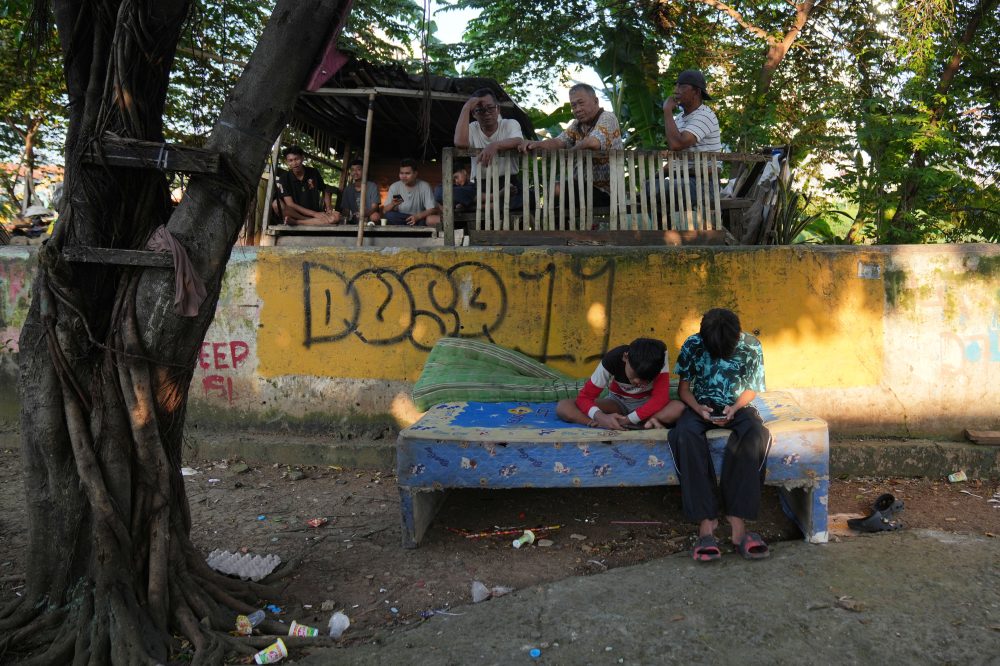
Maura Munthe, a 13-year-old who typically spends about four hours daily on her phone using social media and playing Roblox games with friends, expressed mixed feelings about the new restrictions but generally supports the policy.
She noted that her classmates worry about losing access to their current entertainment and social connections.
“There are always other games on my phone, not only the online ones,” she explained. “I will likely play more games alone or just hang out with my friends.”
Munthe’s mother, Leni Sinuraya, 47, has previously allowed her daughter to use devices responsibly for both educational and recreational purposes. Despite this trust, she views the government’s action as beneficial for Indonesian children overall.
Sinuraya believes parents have surrendered control to social media companies.
“Nowadays, when we see kids sitting in a restaurant, they have a phone right in front of them. It’s clear that they’re addicted,” Sinuraya observed. “They won’t eat unless they’re given a phone, and they throw a tantrum if they aren’t.”
“Mealtime is supposed to be a time for us to chat with the people around us,” she continued.
Diena Haryana, who established the Semai Jiwa Amini foundation (SEJIWA) in Jakarta, leads a nonprofit organization focused on protecting children online.
Haryana cited research demonstrating that social media usage among children can negatively affect mental health and contribute to anxiety and depression.
However, she acknowledged that digital platforms provide educational benefits and learning opportunities. Her organization encourages collaboration between parents and communities to supervise and guide children’s online activities.
“We also need to remember that they need to learn to use this digital technology at the right time, at the right age, and with the right guidance as well,” she emphasized.
Haryana anticipates the restrictions’ impact will become clear only after implementation, expecting both youth complaints and parental confusion.
She stressed that parents and educational institutions must help children find real-world alternatives to digital learning environments.
“Of course, this takes time to get used to, which is why parents and schools need to encourage children to engage with the real world and make it fun for them,” Haryana added. “And there’s plenty in the real world for children to explore.”
Most platforms have remained largely silent regarding Indonesia’s new regulations.
Elon Musk’s X platform updated its Indonesia Online Safety Information page to list 16 as the required minimum user age. “It’s not our choice – it’s what Indonesian law requires,” the page states.
Google-owned YouTube expressed support for the Indonesian government’s efforts to establish an effective framework addressing online dangers while maintaining information access and digital opportunities.
“We are ready to engage under the regulation’s self-assessment approach to demonstrate our long-standing safety rigor,” the company stated.
Australia first implemented similar restrictions in December, with social media companies removing approximately 4.7 million accounts identified as belonging to children.
Several other nations including Spain, France and the United Kingdom are developing or considering comparable measures to limit children’s social media access amid increasing concerns about harmful exposure to unregulated online content.