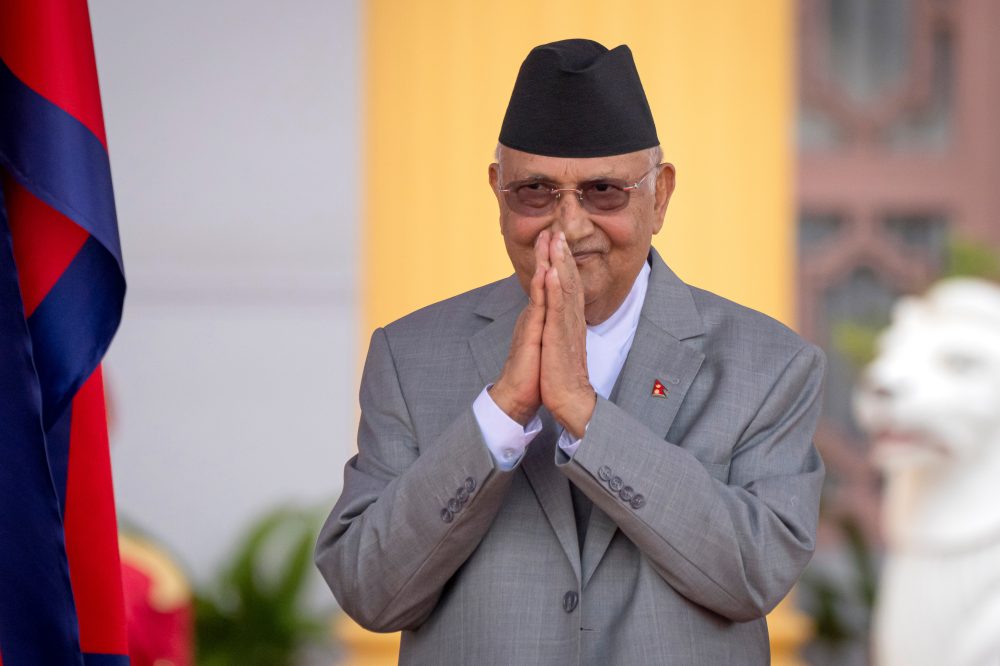

KATHMANDU, Nepal (AP) — Nepalese authorities detained former Prime Minister Khadga Prasad Oli in the early hours of Saturday morning in connection with fatal September demonstrations that claimed dozens of lives and brought down the government, leading to fresh elections.
Law enforcement officers apprehended the influential communist politician at his home located on Kathmandu’s outskirts. Officials also took into custody Ramesh Lekhak, the previous home minister who faces allegations of commanding security forces to open fire on demonstrators.
Current Home Minister Sudan Gurung revealed the detentions through social media posts.
“No one is above the law. We have taken former Prime Minister KP Sharma Oli and former home minister Ramesh Lekhak under control,” Gurung said. “This is not revenge against anyone, it is just the beginning of justice.”
A government-established investigative panel has recommended prison sentences of up to a decade for Oli, Lekhak, and the police chief who was in charge during the demonstrations.
Multiple police vehicles filled with riot-equipped officers carried out the detentions at both men’s residences before transporting them to the Kathmandu District Police headquarters.
These detentions occurred one day following the inauguration of a new administration led by former rapper-turned-politician Balendra Shah, whose Rastriya Swatantra Party achieved a decisive victory in this month’s parliamentary elections.
Both Shah and Gurung have pledged accountability for victims who lost their lives or suffered injuries.
This election marked the nation’s first since youth-driven demonstrations against government corruption and mismanagement on September 8th and 9th resulted in 76 fatalities and over 2,300 wounded individuals. Enraged crowds set fire to the prime minister’s and president’s offices, police facilities, and residences of senior political figures who escaped via military helicopters.
The youth-led movement, driven by “Gen Z” organizers, led to the September 12th appointment of Nepal’s inaugural female prime minister, Sushila Karki, a former Supreme Court justice who oversaw the transitional period before the elections.