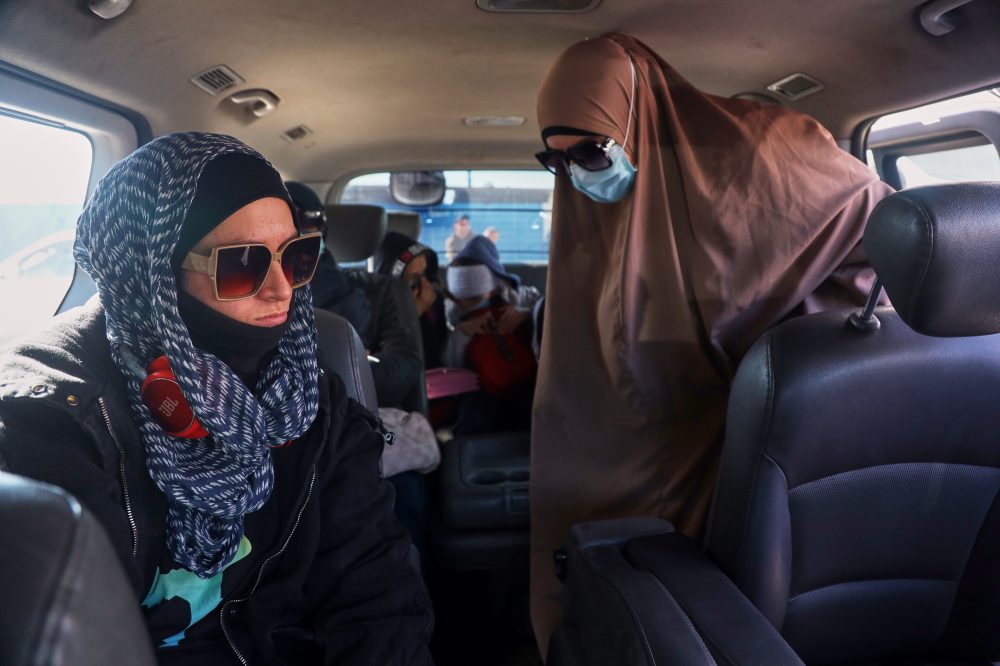

MELBOURNE, Australia (AP) — Australian Prime Minister Anthony Albanese announced Tuesday that his government refuses to bring home 34 women and children who allegedly have connections to ISIS and are currently detained in Syria.
The group, representing 11 different families, had been scheduled to travel from Damascus back to Australia, but Syrian officials sent them back to the Roj detention facility in northeastern Syria on Monday due to administrative complications, according to government sources.
Since ISIS fell from power in 2019, Australia has assisted in bringing home only two groups of its citizens from Syrian detention camps. Additional Australians have managed to return on their own without official government support.
When asked about reports suggesting the most recent group possessed Australian passports, Albanese declined to provide details.
“We’re providing absolutely no support and we are not repatriating people,” Albanese told Australian Broadcasting Corp. in Melbourne.
“We have no sympathy, frankly, for people who traveled overseas in order to participate in what was an attempt to establish a caliphate to undermine, destroy, our way of life. And so, as my mother would say, ‘You make your bed, you lie in it,’” Albanese added.
The Prime Minister referenced how the international organization Save the Children was unable to convince Australian courts that the government bore legal responsibility for bringing citizens home from Syrian detention facilities.
Following a 2024 federal court decision that sided with the government, Save the Children Australia’s chief executive Mat Tinkler maintained that officials still carried a moral duty to repatriate these families, even without legal requirements.
Albanese warned that if members of this latest group somehow reached Australia independently, they would face criminal charges.
Australian law made it illegal to visit the former ISIS territory of al-Raqqa province without valid justification between 2014 and 2017. Violators could face up to a decade behind bars.
“It’s unfortunate that children are impacted by this as well, but we are not providing any support. And if anyone does manage to find their way back to Australia, then they’ll face the full force of the law, if any laws have been broken,” Albanese added.
The most recent successful repatriation occurred in October 2022, when a group arrived in Sydney.
That group included four women who had been partners of ISIS supporters, along with 13 children.
Government officials had determined this group faced the greatest risk among approximately 60 Australian women and children being held at Roj camp, authorities explained at that time.
In 2019, the previous conservative administration brought home eight children whose fathers were Australian ISIS fighters who had been killed.
The topic of ISIS supporters has gained renewed attention in Australia following a deadly attack at a Jewish festival at Bondi Beach on December 14 that killed 15 people. Authorities believe the perpetrators drew inspiration from ISIS.