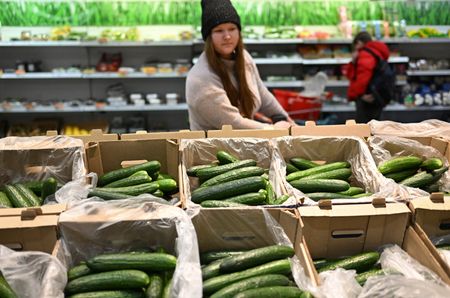

A simple vegetable that’s a staple in Russian kitchens has become an unexpected flashpoint for economic frustration as the country’s war in Ukraine continues to strain household budgets.
Cucumber costs have surged dramatically across Russia, with government data showing prices have doubled since December to average more than 300 rubles (about $3.91) per kilogram. Social media posts reveal some stores charging two or three times that amount for the common salad ingredient.
The price spike has caught the attention of lawmakers, particularly those from the ruling United Russia party facing elections later this year. Anti-monopoly officials have now demanded explanations from growers and grocery chains about the sudden increases.
Sergei Mironov, who leads the Just Russia party in parliament, criticized government explanations that blame seasonal factors for the price jumps.
“This winter, a new ‘delicacy’ has appeared in our shops – cucumbers,” Mironov stated. “They used the same explanation for last year’s ‘golden’ potatoes, and now it’s ‘gilded’ cucumbers.”
The former paratrooper turned politician, known for highlighting issues that frustrate voters nationwide, pressed further: “What are people supposed to do? Just accept that they can’t afford the most basic foods?”
Food producers have attempted to calm concerns, promising cucumber prices should drop next month when temperatures rise. Officials point to successful resolutions of similar pricing problems with other foods in the past, and there’s no indication the complaints threaten social order despite widespread grumbling on social platforms.
However, the cucumber crisis comes amid broader economic pressures, with overall prices climbing 2.1% since January began – partly due to higher value-added taxes – while Russia’s economy slows after four years of conflict in Ukraine.
Russia’s central bank projects annual inflation could reach 5.5% this year, and citizens are voicing complaints about everything from utility costs to gasoline prices to restaurant bills.
The situation has become so severe that cucumbers now cost more than imported bananas. Some Siberian supermarkets have imposed purchase limits per customer, while a major Russian newspaper distributed seeds so readers could grow their own vegetables at home.
Opposition parties in the Duma, including Mironov’s group and the communists, have proposed government caps on retailer markups for essential foods.
Yevgeny Popov, a ruling party legislator, attempted to minimize concerns on social media, claiming prices would decline and emphasizing Russia’s complete self-sufficiency in cucumber production.
His reassurances drew sharp responses from constituents.
“The prices for cucumbers and tomatoes are outrageous,” replied a woman identifying herself as Svetlana. “Once upon a time they said eggs were ‘golden’ (because they were so expensive.) Now it’s cucumbers that are golden.”