
GENEVA – Iranian officials shut down the Strait of Hormuz on Tuesday for military exercises while simultaneously engaging in nuclear negotiations with American representatives in Geneva, creating a dramatic escalation in Middle Eastern tensions.
This marked the first instance Iran has blocked the critical shipping lane – which handles one-fifth of global oil transportation – since Washington began deploying military forces to the region and issuing threats. The move represents a significant intensification in the ongoing standoff that threatens to spark another Middle Eastern conflict.
Iranian media reported that live missiles were fired toward the waterway as diplomatic discussions commenced, with officials citing “safety and maritime concerns” for the several-hour closure.
The Tasnim news agency, which maintains connections to Iran’s Revolutionary Guard, confirmed that missiles launched from Iranian territory and coastal positions successfully hit their intended targets within the Strait.
State television later announced the completion of talks after nearly three hours of discussions.
Diplomatic Efforts Continue
Iranian broadcasting had previously indicated these negotiations would remain indirect, concentrating exclusively on nuclear issues while avoiding domestic matters such as the nation’s violent suppression of recent demonstrations.
President Donald Trump has consistently threatened military action to force Iranian compliance with nuclear restrictions. Iranian officials have promised retaliation for any attacks, while Trump has also issued warnings regarding the treatment of protesters.
The initial diplomatic session occurred February 6th in Oman, an Arabian Peninsula nation, following the same indirect format. The current meetings took place at the Omani diplomatic residence in Geneva, with both sides apparently conducting separate discussions through intermediaries.
Trump representatives Steve Witkoff and Jared Kushner traveled to participate in these latest negotiations.
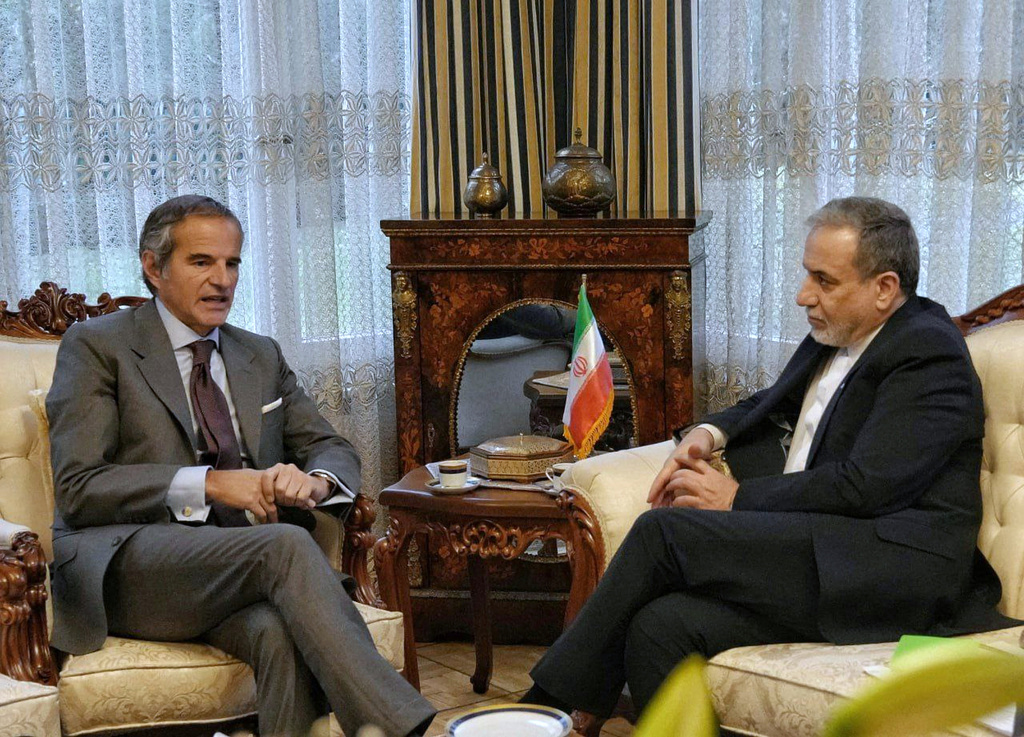
Iranian Foreign Minister Abbas Araghchi, heading his country’s negotiating team, met Monday with the United Nations nuclear oversight chief in Geneva.
“I am in Geneva with real ideas to achieve a fair and equitable deal,” Araghchi posted on social media platform X. “What is not on the table: submission before threats.”
A diplomatic source close to the UN nuclear agency verified that Director General Rafael Grossi was present in Geneva to offer technical guidance when requested by either party. The source requested anonymity due to the discussions’ sensitive nature.
Speaking with reporters Monday evening aboard Air Force One while returning to Washington, President Trump indicated his planned involvement in the negotiations. “I think they want to make a deal. I don’t think they want the consequences of not making a deal,” Trump stated.
The United States is simultaneously hosting separate discussions between Russian and Ukrainian representatives in Geneva Tuesday and Wednesday, approaching the fourth anniversary of Russia’s full-scale invasion.
Military Exercises in Strategic Waters
Iranian officials announced that Revolutionary Guard forces began exercises Monday morning in the Strait of Hormuz, Persian Gulf, and Gulf of Oman – all vital international shipping corridors. This represents the second live-fire drill Iran has conducted in the Strait recently.
Supreme Leader Ayatollah Ali Khamenei intensified his warnings to Washington regarding American military buildup in the Middle East.
“Of course a warship is a dangerous apparatus, but more dangerous than the warship is the weapon that can sink the warship into the depths of the sea,” Khamenei declared according to state television.
He additionally cautioned America that “forcing the result of talks in advance is a wrong and foolish job.”
American Military Buildup
Last week, Trump announced the deployment of the USS Gerald R. Ford, the world’s largest aircraft carrier, from Caribbean waters to the Middle East to supplement existing American military assets in the region.
The Ford will join the USS Abraham Lincoln and its escort destroyers, which have maintained regional presence for more than two weeks. American forces shot down an Iranian drone that approached the Lincoln the same day Iran attempted to intercept a US-flagged vessel in the Strait of Hormuz.
Gulf Arab nations have expressed concerns that any attack could escalate into broader regional warfare in a Middle East already destabilized by the Israel-Hamas conflict.
The Trump administration seeks an agreement limiting Iran’s nuclear capabilities and preventing weapons development. Iran maintains it is not pursuing weapons and has resisted demands to cease uranium enrichment or surrender its highly-enriched uranium stockpile.
American-Iranian discussions had continued for months when Israel launched a 12-day military campaign against Iran in June, halting diplomatic progress. US forces bombed Iranian nuclear facilities during that conflict, likely destroying numerous centrifuges used for uranium enrichment to near-weapons grade levels. Israeli strikes also devastated Iran’s air defense systems and ballistic missile capabilities.
Iran continues asserting its nuclear program serves peaceful purposes. Prior to the June conflict, Iran had been enriching uranium to 60% purity, requiring only minor technical advancement to reach weapons-grade concentrations.
Protest Crackdown Remembrance
Iran is observing 40 days – the traditional Islamic mourning period – since one of the bloodiest days in its suppression of nationwide protests last month. Activists report at least 7,015 deaths, with many occurring during overnight violence between January 8th and 9th.
The US-based Human Rights Activists News Agency, which provided these figures, has demonstrated accuracy in previous Iranian unrest death counts and relies on domestic activist networks for verification.
The Associated Press cannot independently confirm casualty numbers due to Iranian authorities disrupting internet access and international communications.
Iran’s official news agency announced government memorial services at Tehran’s Grand Mosalla mosque, attributing the demonstrations to “violent actions by armed groups allegedly directed by foreign intelligence agencies.”