Chinese authorities expressed strong disapproval Saturday regarding the Pentagon’s decision to designate several major Chinese corporations as military-linked entities, claiming the action contradicts agreements made during recent high-level diplomatic meetings between the two nations’ leaders.
Earlier this week, the Defense Department included multiple privately-owned Chinese corporations on its military company registry, among them automotive manufacturer BYD and technology corporations Alibaba and Baidu. This designation aims to identify Chinese businesses believed to maintain connections with China’s armed forces, which bars these companies from securing contracts with the U.S. military.
According to a statement released Saturday by a representative from China’s Ministry of Commerce, the inclusion of these companies on the list means “the U.S. side has ignored the consensus reached during the meeting between the heads of state of the two countries in Beijing.”
The ministry representative further stated that America has “disregarded the overall interests of bilateral economic and trade relations, continuously generalized the concept of national security, and abused state power to unjustifiably suppress Chinese enterprises.”
The affected companies BYD, Alibaba and Baidu previously stated there’s no basis to include them in the list.
The Chinese leader Xi Jinping and U.S. President Donald Trump held a highly anticipated meeting in Beijing during mid-May. During their discussions, both leaders committed to strengthening economic cooperation between their nations, with agreements including increased Chinese purchases of American farm goods and Boeing aircraft, plus the establishment of separate trade and investment committees.
WASHINGTON — A critical surveillance program has expired as Senate Democrats adopt increasingly aggressive tactics in their battle against President Trump’s policies, refusing to pass even traditionally bipartisan measures in their effort to resist his administration.
This confrontational stance represents a significant change from last year, when Senate Democratic Leader Chuck Schumer faced harsh criticism from within his own party for joining Republicans in a spring vote that prevented a government shutdown. In the months since, Democrats have forced multiple government shutdowns, delayed Trump’s nominee confirmations, and now allowed bipartisan intelligence legislation to lapse as they search for ways to exert influence in a Republican-controlled Congress.
While this aggressive approach carries risks when government operations cease, and Democrats have achieved few concrete policy wins, Republicans warn that allowing the surveillance law to expire poses serious national security dangers. They argue the law, designed to prevent terrorist attacks, is especially crucial as millions of visitors enter the country for World Cup events and as preparations begin for the nation’s 250th anniversary celebrations.
However, this confrontational strategy has succeeded in rallying Democrats both in Congress and across the country, with party members arguing they have no alternative options available and placing responsibility on Trump’s governing style.
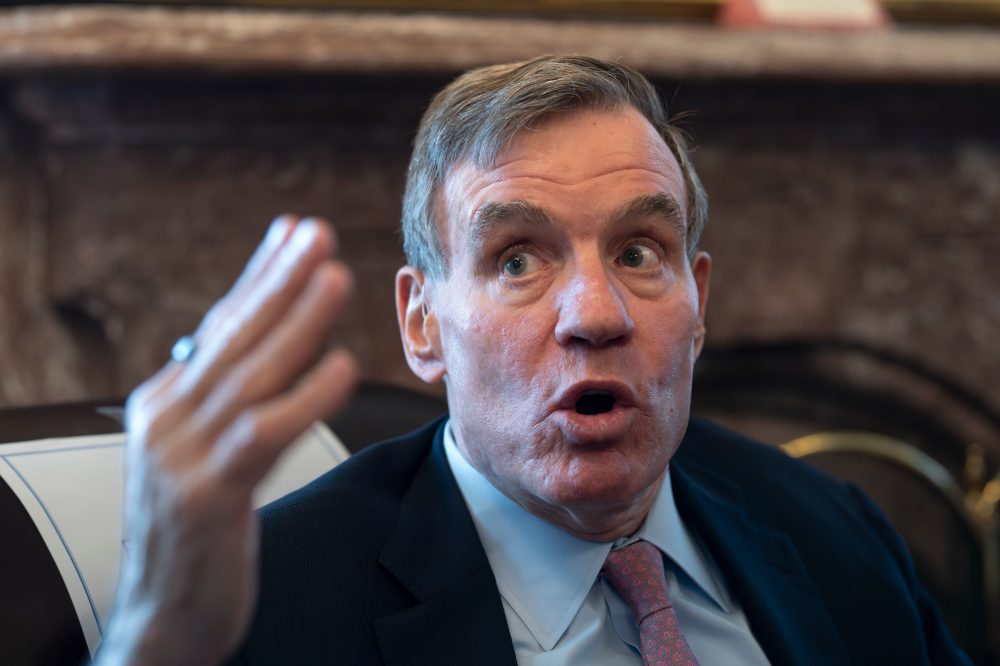
“I don’t deny that this is dangerous,” Virginia Sen. Mark Warner, the top Democrat on the Senate Intelligence Committee, said Thursday about Democrats allowing the Foreign Intelligence Surveillance Act to expire starting Saturday. “But this didn’t have to happen.”
The Democrats’ increased boldness coincides with frequent Republican clashes with Trump, who has demonstrated little willingness to compromise with legislators from either party. Democrats are preventing the renewal of the surveillance law, called FISA, to protest Trump’s selection of federal housing regulator and loyalist Bill Pulte to temporarily oversee the nation’s intelligence operations. This choice has also frustrated Republicans, who argue Pulte doesn’t possess the necessary experience for such a position.
Throughout the week, legislators from both parties pressed Trump to withdraw the appointment, and on Thursday he announced a permanent replacement for the position just as lawmakers departed Washington for the weekend. However, the Senate confirmation process requires time, and Trump has refused to reconsider Pulte’s interim appointment.
Without any changes, Democrats “are going to use every tool we have to fight back,” said Schumer, D-N.Y.
The FISA dispute has earned Senate Democrats renewed respect from base voters who were disappointed a year ago. Schumer and his caucus have “shifted to more of a fight posture,” says Joel Payne, a Democratic strategist who served as an aide to former Senate Majority Leader Harry Reid, D-Nev.
Senate Majority Leader John Thune, R-S.D., accused Democrats of playing “fast and loose” with national security over the past year. He referenced the 43-day government shutdown last fall and months-long delays in funding Trump’s immigration enforcement operations.
“How did we get to the point where one party has completely abdicated any responsibility for our nation’s security?” Thune asked.
Democrats counter that Pulte, who has minimal national security experience, poses a greater danger. They highlight that in his role as a federal housing regulator, he has advocated for investigations targeting prominent political figures Trump views as adversaries.
“It’s not a close call,” Sen. Chris Murphy, D-Conn. “We cannot extend these capabilities if the president is making clear that he’s going to use them not to protect the nation, but to protect himself politically.”
Strategist Payne believes Democrats have secured some additional leverage since the fall shutdown.
Democrats failed to obtain the health care subsidy extension they demanded when a small group of moderate Democrats joined Republicans to resolve the standoff. They also didn’t achieve their desired changes to U.S. Immigration and Customs Enforcement and Border Patrol after delaying funding for those agencies for months. However, the White House did agree to enter negotiations, despite those discussions ultimately failing.
Democrats have also become more cohesive. While moderates ended the fall shutdown, the party remained united in blocking immigration funding and the surveillance authority.
“They’ve showed Republicans they are not going to fold,” Payne said.
Nevertheless, this approach may not satisfy some party base members or help Democrats secure a majority in November’s midterm elections.
Andrew O’Neill, national advocacy director for the Democratic resistance group Indivisible, expressed concern about seeing some Democrats praise Jay Clayton, Trump’s permanent choice for the intelligence position.
Republicans are working quickly to confirm Clayton, the U.S. attorney for the Southern District of New York and a former Securities and Exchange Commission chairman, before Tulsi Gabbard departs and Pulte assumes the interim director role on June 19.
It remains uncertain whether Democrats will support Clayton or permit Republicans to expedite the process and confirm him rapidly.
O’Neill said he approves of Democrats blocking FISA over Pulte’s appointment, but activists remain cautious.
“It’s a mixed bag,” O’Neill said of the past year. “The frustration is it took so long.”
Senate Republicans find themselves caught between these competing forces, having spent months securing funding for border enforcement agencies and now managing the FISA disagreement, despite lawmakers reaching a bipartisan agreement.
Republicans are also attempting to collaborate with Trump, who disrupted the intelligence legislation by announcing Pulte’s appointment just as senators were prepared to approve the deal.
Trump has undermined Republicans’ standing — and his own Senate support — by endorsing primary challenges against sitting senators. Republican Sens. John Cornyn of Texas and Bill Cassidy of Louisiana both lost their primaries to Trump-supported candidates last month and have joined Democrats in opposing Pulte.
Senate Democrats express hope their strategy will provide sufficient leverage to attract more Republican allies.
Being in the minority presents “a difficult dynamic for us,” said Sen. Peter Welch, D-Vt. “But I’m seeing the Republicans start to move a little bit.”
Groundbreaking legislation in New York could mandate that 3D printers designed for home and commercial use include built-in technology preventing the creation of firearms.
This unprecedented requirement, which California is also examining, aims to combat the newest method for creating untraceable ‘ghost guns’ that have appeared in criminal activities. However, questions remain about the technology’s effectiveness and potential impacts on privacy rights and constitutional freedoms.
Approximately one-third of states across the country have already implemented measures to prohibit or control do-it-yourself weapons that don’t carry serial numbers and bypass background check requirements for gun purchases from licensed federal dealers. This new approach stands apart because it focuses on the manufacturing equipment rather than the individuals creating the weapons.
The prevention technology being promoted in two of America’s largest states by population could establish manufacturing standards for 3D printing devices. It might also provide a framework for other states with Democratic leadership seeking to expand their firearm restrictions, which typically already prohibit specific semiautomatic weapons and permit temporary removal of guns from individuals considered dangerous to themselves or others.
Three-dimensional printing devices have gained widespread adoption over the last twenty years.
From 2012 onward, global 3D printer numbers have expanded from approximately 30,000 to more than 3 million units, while the sector’s worth has increased from roughly $2 billion to $26 billion per year, according to Bill Decker, executive chairman of the Association of 3D Printing. While premium printers cost thousands, some 3D printing devices are now available for just a few hundred dollars.
These machines can produce toys, artificial limbs, and even aircraft components. They can also manufacture firearms — or the components needed to build them — using digital blueprints found online. Self-made weapons without serial numbers are frequently termed ‘ghost guns’ because law enforcement finds them difficult to track.
Weapons created using 3D printers are appearing more frequently in criminal cases, based on a U.S. Department of Justice study published last year. Privately manufactured firearms recovered from crimes and sent to federal agencies increased from roughly 1,600 in 2017 to almost 27,500 in 2023, although the study didn’t detail how many originated from 3D printers.
In a notable New York incident, authorities believe a 3D-printed weapon was likely involved in the 2024 killing of UnitedHealthcare’s CEO.
New York legislation enacted last month and a California proposal would both establish expert committees to develop standards for firearm design detection algorithms. This technology would examine every design sent for 3D printing, match it against a digital database of weapon components, and refuse those showing similarities.
While the research phase would begin immediately, the requirement for 3D printers to include firearm-blocking technology wouldn’t take effect until 2029 — or later in New York’s situation if the study committee finds it’s not yet practical.
The idea resembles a mobile phone application that recognizes trees or flowers from uploaded photographs, explained Solomon Diamond, an associate engineering professor at Dartmouth College who participated in several expert presentations about the legislation during a recent online conference.
For 3D printers, one potential approach could employ geometric analysis of forms, measurements, and other structural characteristics to deny printing requests that closely match firearm components.
‘Geometric search is mature, it’s deployed, it is ready to be applied to this problem,’ said Julian Chultarsky, a technical account manager at Physna, a Columbus, Ohio-based company that develops such technology.
The Association of 3D Printing endorses the legislation in New York and California, but ‘it’s not going to work,’ Decker said. ‘It’s more of a political statement than anything else.’
Criminals will still find methods to manufacture weapons using 3D printers, either by modifying their blueprints or moving their printing operations to different locations, Decker explained.
The more intensive the technology becomes, the greater the likelihood it will also prevent unintended objects, said Rory Mir, director of open access and technology community engagement at the Electronic Frontier Foundation, a nonprofit digital rights group. Some innocent pipes might appear similar to gun components, or an S-shaped wall mounting device might look like an auto sear trigger used to convert a semiautomatic weapon into a machine gun.
‘These sort of censorship algorithms don’t work, and they wind up capturing and blocking a lot of lawful speech,’ Mir said.
When printing instructions are uploaded for cloud-based artificial intelligence analysis, it also threatens the privacy of individuals’ creative and proprietary designs, Mir explained.
Gun safety supporters argue 3D printers have established a new route for individuals who cannot legally buy firearms — such as minors or convicted criminals — to still acquire them. Eleven states already broadly ban 3D-printed weapons, and six more states mandate they receive serial numbers, according to Everytown for Gun Safety.
Preventing the actual 3D printing of weapons could make it more difficult for individuals to violate such regulations.
‘3D printing really is the new frontier of the fight against ghost guns,’ said Samuel Levy, director of policy advocacy at Everytown for Gun Safety.
The National Rifle Association might partially support that claim, though it opposes the policy.
‘Despite desperate fear-mongering campaigns, homemade firearms are nothing new — they are a proud, time-honored American tradition dating back to the founding of our Republic,’ John Commerford, executive director of the NRA Institute for Legislative Action, said in a statement. He added that ‘these measures only restrict responsible Americans — who do follow the law — from participating in constitutionally protected activities.’
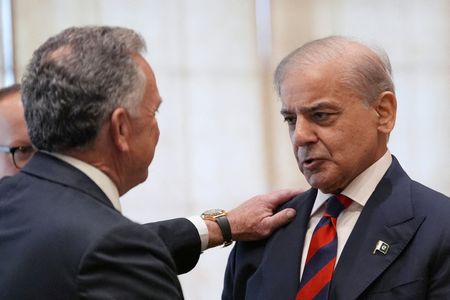
Pakistan’s Prime Minister Shehbaz Sharif announced Saturday that America and Iran have reached a framework agreement aimed at resolving the ongoing Middle East crisis that has persisted for months.
According to Sharif, negotiators have completed the final language of the agreement. Pakistan is now making preparations for an electronic signing ceremony anticipated to occur within the coming day, followed by technical discussions scheduled for next week.
Residents across the Delmarva Peninsula should prepare for minor coastal flooding this evening as the National Weather Service has issued a Coastal Flood Advisory effective from 6 PM tonight through midnight.
Up to six inches of water above ground level is expected in low-lying areas near shorelines and tidal waterways throughout Kent County, Inland Sussex County, and Delaware Beaches. The advisory also affects parts of southern New Jersey, including Cumberland, Atlantic, and Cape May counties.
The flooding will primarily impact the most vulnerable coastal and bayside roads, with some partial or full road closures possible. Officials warn that another round of minor flooding is likely during Sunday evening’s high tide.
“Do not drive through flooded roadways,” emphasizes meteorologist guidance. “The water may be deeper than it appears, putting both you and your vehicle at risk.”
Residents should avoid parking in flood-prone areas and stay alert for changing conditions. The advisory expires at midnight tonight, but drivers should remain cautious of standing water on roadways.
For real-time water level information and flood impacts specific to your area, visit the National Water Prediction Service website. TV Delmarva will continue monitoring conditions and provide updates as needed.
Westbound traffic on Shiloh Church Road is being detoured around construction activity that has prompted authorities to close a section of the roadway until this afternoon.
The temporary shutdown affects the westbound lanes between Rockaway Acres Road and Koi Pond Drive, with the closure scheduled to remain in effect until 2:30 p.m. today.
Motorists traveling in the area should plan alternate routes or expect delays while the construction work is completed.
Multiple states nationwide are temporarily easing their alcohol regulations while the World Cup soccer tournament takes place. NPR’s Elissa Nadworny conducted an interview with Corean Reynolds, Boston’s Director of Nightlife Economy, discussing the city’s approach to managing these temporary policy adjustments.
A retired physician is preparing for an extraordinary birthday celebration that would challenge adventurers half his age. Art Ulene, who will turn 90 next month, has set his sights on reaching the summit of Mount Kilimanjaro, the tallest mountain on the African continent.
NPR’s Elissa Nadworny recently interviewed the retired doctor about his ambitious plans to tackle Tanzania’s famous peak as a way to commemorate his milestone birthday. The challenging climb represents an unusual way for someone approaching their tenth decade to mark such a significant occasion.
Reports from Tel Aviv indicate the United States and Iran may be nearing an agreement to conclude their conflict and restore access to the Strait of Hormuz.
Pakistan’s Prime Minister Shehbaz Sharif announced Friday that both nations have reached consensus on the language of a potential agreement designed to halt their Middle Eastern conflict, with mediators continuing efforts to complete the arrangement.
Past announcements of similar diplomatic breakthroughs have not come to fruition.
This potential diplomatic progress follows a three-day period of military exchanges between Iran, the U.S., and Israel earlier this week, raising concerns about regional escalation. U.S. Central Command reported Friday via social media that it successfully intercepted multiple Iranian attack drones targeting merchant vessels in the Strait of Hormuz.
The conflict, initiated by the U.S. and Israel on February 28, has destabilized the Middle East and essentially halted petroleum and natural gas transport from the Persian Gulf. A temporary ceasefire has remained in effect since April 7.
Key details of the potential agreement:
Iran’s Foreign Minister Abbas Araghchi stated Friday that nuclear program arrangements would be completed within 60 days following the initial agreement’s signing, with possible extensions available.
Tehran’s nuclear capabilities remain a central dispute. American and Israeli officials worry about potential weapons development — a primary justification they provided for military action. Iran maintains its nuclear activities serve civilian purposes.
A senior U.S. administration official, speaking anonymously under White House briefing protocols, confirmed Friday that the proposed agreement would initiate procedures for eliminating or relocating Tehran’s weapons-grade uranium.
The official explained the 60-day post-signing period would address technical aspects of uranium removal. Details remain unclear regarding oversight of the removal process for materials reportedly stored beneath three nuclear facilities damaged in American attacks last year.
The U.S. official confirmed the proposed agreement contains provisions for strait reopening.
Araghchi indicated Iran seeks terms allowing Tehran to collect fees “for services rendered” from vessels using the Strait of Hormuz. Iran implemented a fee structure during the conflict that the U.S. and other countries consider internationally illegal.
Disrupted passage through the Strait of Hormuz, essential for global oil and gas transport, has constrained worldwide energy availability, increased fuel costs, and raised prices for food and essential goods far beyond the immediate region.
Three regional officials, speaking anonymously due to negotiation sensitivity, reported the developing agreement likely includes gradual sanctions relief for Iran and release of frozen Iranian funds.
These sources anticipate a formal signing ceremony within days pending approval from Washington and Tehran officials.
BEIRUT (AP) — Lebanese military forces evacuated their position at a base in a southern village on Saturday as Israeli forces moved into the surrounding region, according to a military official.
The evacuation of the army facility in Kfar Tebnit occurred as Israeli forces issued orders for residents to leave approximately 20 areas, including the southern city of Nabatiyeh and surrounding communities.
Lebanon’s government-operated National News Agency documented air attacks on Saturday targeting various communities near Nabatiyeh, including a strike that resulted in two deaths in Deir al-Zahrani. The agency also reported that Nabatiyeh experienced artillery bombardment on Saturday.
A high-ranking Lebanese military official informed The Associated Press that Lebanese forces relocated from the Kfar Tebnit facility after Israeli troops entered the region. The official, who provided no additional details, requested anonymity according to standard procedures.
Israeli forces appeared to be attempting to seize the tactical Ali Taher hill located at Kfar Tebnit’s perimeter, which provides visibility over extensive areas of Nabatiyeh and several roadways connecting the city to neighboring communities.
Israeli forces maintained control of the Ali Taher hill for 18 years before departing Lebanon in May 2000.
During late May, Israeli troops seized a neighboring tactical mountain crowned by the Crusader-era Beaufort Castle in the most significant penetration into the nation since 2000.
The advance toward Kfar Tebnit’s border occurred one day after Pakistan’s prime minister announced that the United States and Iran have reached consensus on language for an accord designed to halt their Middle Eastern conflict, with negotiators assisting both parties to complete an agreement.
Iranian Foreign Minister Abbas Araghchi informed Iranian government television on Friday that both nations were pursuing the signing of a preliminary accord announcing the conflict’s conclusion “on all fronts, including Lebanon.”
Senior Hezbollah official Hussein Haj Hassan informed Al Jazeera TV that Iranian representatives have notified them that Lebanon would be included in a forthcoming ceasefire agreement between the U.S. and Iran.
Iran serves as Hezbollah’s primary supporter, providing the organization with various weapon types during the past four decades along with billions in funding.
Combat between Israel and Hezbollah has persisted despite a ceasefire implemented on April 17 that received multiple extensions but exists as a ceasefire only in title.
Israel maintains control over substantial portions of southern Lebanon while engaging Hezbollah militants, resulting in civilian deaths and infrastructure destruction. Hezbollah, which is excluded from the ceasefire accord between Israel and Lebanon, has conducted regular rocket and drone strikes.
The current Israel-Hezbollah conflict started on March 2, when Hezbollah launched rockets toward northern Israel two days following the commencement of U.S. and Israeli operations against Iran.
Over 3,700 individuals have died in Lebanon during the recent combat, based on Lebanese Health Ministry data. Additionally, 30 Israeli military personnel and one defense contractor have perished in or around southern Lebanon, while two civilians have been killed in northern Israel, according to Israeli Prime Minister Benjamin Netanyahu’s office.
Hundreds of LGBTQ+ community members and their allies gathered in Nepal’s capital city on Saturday for Pride Month festivities, taking part in a vibrant street demonstration.
The Himalayan nation has witnessed an expanding LGBTQ+ community and has achieved notable progress in advancing rights for sexual minorities over recent years.
Following March elections, the administration led by Prime Minister Balendra Shah established the Ministry of Women, Children, Gender and Sexual Minorities and Social Security, marking the first instance of a government department specifically created to address issues affecting women and sexual minorities.
The country achieved a milestone by becoming among the first Asian nations to permit marriages between same-sex couples. The nation’s 2015 constitution contains explicit language prohibiting discrimination based on sexual orientation.
Following a 2007 judicial ruling that mandated government reforms benefiting LGBTQ+ individuals, citizens who don’t identify as male or female can now select “third gender” as an option on passports and additional official documentation.
Iranian officials have announced the schedule for memorial ceremonies honoring their deceased Supreme Leader Ali Khamenei, according to state media reports released Saturday.
The services will commence in the capital city of Tehran on July 4 and will end with Khamenei’s interment in Mashhad, located in the country’s northeast, on July 9.
Khamenei lost his life during combined Israeli and American military operations against Iran this past February. His passing brought to a close over 30 years of leadership within the Islamic Republic.
Ukrainian forces successfully struck an oil processing and pumping facility located near Kotovo in Russia’s Volgograd region, sparking a fire at the installation, according to Ukraine’s General Staff on Saturday.
The Ukrainian General Staff announced via the Telegram messaging platform that the targeted facility is responsible for oil processing, transportation, and pipeline pumping operations that supply Russian oil refineries and export infrastructure.
Chinese cybersecurity officials announced new measures Saturday designed to strengthen data classification requirements for financial information services, saying the move will enhance security management and provide better industry oversight.
The Cyberspace Administration of China outlined a four-tier system that will categorize data as core, important, sensitive general, or routine general, with classifications determined by how critical the information is, its sensitivity level, and what damage could result if the data were compromised.
Six additional government departments collaborated on the announcement, including the People’s Bank of China.
The nation has been building up its data protection laws in recent years, progressing from broad legislative measures to more targeted regulations for specific industries.
According to the new guidelines, “Financial information services are developing in an orderly manner, and the volume of data is expanding … which urgently requires standardised, classified and graded management.”
The regulations will not cover information related to state secrets or military matters.
Motorists traveling northbound on Route 1 should expect delays this evening as officials have closed the right lane between New Orleans Street and King Charles Avenue.
The lane restriction is in effect to accommodate a special event and is expected to be lifted by 7:45 PM today.
Drivers are advised to allow extra travel time and use caution when navigating through the affected area.
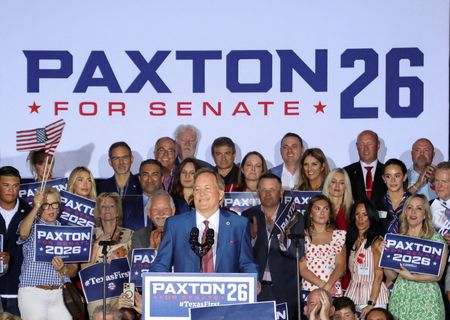
Republican lawmakers are pressing President Donald Trump to provide financial backing for his endorsed candidate in Texas after creating what many see as an unexpectedly competitive Senate race.
Texas Attorney General Ken Paxton defeated incumbent four-term Senator John Cornyn in last month’s primary runoff, riding Trump’s last-minute endorsement to victory. The upset victory prompted political analysts to downgrade the race from a safe Republican hold to a competitive contest in a state Trump carried by nearly 14 points in 2024.
The attorney general now confronts a formidable Democratic challenger in state Representative James Talarico, who has emerged as a major fundraising force. Talarico’s campaign has collected $40 million through March and maintains $9.9 million in available funds. Meanwhile, Paxton has struggled financially, raising only $7.6 million through May 6 with just $2.3 million remaining in his campaign account. Paxton faces felony fraud charges and survived impeachment proceedings in the Texas House, though he maintains his innocence.
“It would be very helpful if the president would help the people he endorsed,” said Senator Cynthia Lummis, a retiring Republican from Wyoming, when questioned about Trump’s potential financial involvement.
The Lone Star State presents expensive campaign challenges with 20 separate television markets requiring significant advertising investment. Republican organizations already spent tens of millions supporting Cornyn, who was viewed as the stronger general election candidate. An internal strategy document from Senate Republicans’ campaign committee warned last August that a Paxton nomination would make Texas competitive for Democrats “and cause Republicans to divert hundreds of millions of dollars that would otherwise be spent winning key battlegrounds.”
“There is no doubt that Ken Paxton needs outside money to help him win this race,” commented a Texas political strategist.
Gregg Keller, speaking for the pro-Paxton Lone Star Liberty PAC, expressed confidence that Republican support is solidifying behind the attorney general as the campaign progresses toward Election Day.
“We are thankful to the president for his endorsement and leadership and look forward to joining the Senate majority next year,” Keller stated. “There is no amount of money Talarico can spend to erase his radical and dangerous record.”
Talarico has drawn audiences in traditionally Republican areas of Texas by discussing his Christian beliefs and proposing policies targeting billionaires he claims manipulate working-class anger to serve their own interests. Republican opponents have criticized his religious interpretations and attacked his positions on immigration and gender-related issues. A recent Texas Pulse poll from June 9 shows the candidates in a statistical tie.
“Paxton is now forcing the GOP to develop a completely new strategy for a state they never believed would be in play,” said Lauren French, representing Senate Democrats’ super PAC.
Republicans currently control the Senate with a 53-47 advantage. While targeting Democratic seats in Georgia and Michigan – states Trump won in 2024 – they must also defend positions in several competitive states including North Carolina, Ohio, Maine, Alaska, and potentially Iowa and Texas.
Trump’s affiliated super PAC, MAGA Inc., possesses a $356 million treasury but has not allocated funds for Paxton’s campaign. The organization invested nearly $377 million in Trump’s 2024 presidential campaign and has spent $1.7 million this cycle supporting Republicans Matt Van Epps and Clay Fuller in special congressional contests in Tennessee and Georgia.
The Senate Leadership Fund, Republicans’ primary super PAC for Senate races, plans to invest $342 million in battleground states this fall, but Texas is not included in their current strategy. The organization declined to provide comment.
“The assumption is that he is” planning to support Paxton financially, said one Senate Republican speaking anonymously about Trump’s intentions. “I think he should. He put his foot on the scale for his candidate that won. So we are assuming that he will.”
The outcome could affect Trump’s final two presidential years. A Democratic Senate majority would gain greater influence over presidential appointments and could launch investigations into the Trump administration through congressional committees.
Representatives for Senate Majority Leader John Thune and the White House did not respond to requests for comment.
Senate Republicans showed reluctance to publicly advise Trump on spending decisions during interviews.
“I won’t begin to tell the president what he should do,” stated Senator John Curtis of Utah.
When asked whether Trump’s potential Texas investment would benefit Senate Republicans, Curtis emphasized the president’s autonomy in the matter.
“That’s his funding,” Curtis said. “That’s his decision.”
Chris LaCivita, a senior adviser at MAGA Inc., told Politico the super PAC continues fundraising for campaign expenditures but does not reveal timing or locations for spending. He characterized Texas as an open Republican seat “that we’ll have to ensure that we win.”
Political observers suggest Paxton confronts substantial fundraising obstacles against Talarico, with some attributing responsibility to Trump for creating an unnecessarily close contest.
“National Republicans understand Paxton’s vulnerabilities – at least that he’s likely to run in a close race – and they want to be in a position to do what’s required to pull him through,” explained Cal Jillson, a political science professor at Southern Methodist University in Dallas, Texas.
“And lots of people are pointing the finger directly at Donald Trump because it was his endorsement that created that stampede to Paxton in the runoff.”
Texas Governor Greg Abbott represents another potential funding source. Abbott’s political committee, Texans for Greg Abbott, reported nearly $96 million available in February.
Eduardo Leal, press secretary for Texans for Greg Abbott, confirmed the governor supports all Republican candidates but would not specify whether Abbott plans to fund Paxton directly.
“Republicans are united and focused on delivering a decisive victory, and we’re confident Texans will once again reject the radical left’s agenda,” Leal said in a statement.
SpaceX made a dramatic entrance into public markets this week, achieving a valuation exceeding $2 trillion in what became the largest IPO in United States history. The space company’s market debut has now exceeded the value of two companies within Wall Street’s famous “Magnificent Seven” group – Tesla and Meta Platforms – sparking debate about whether this influential stock grouping needs a new identity.
The rocket company’s public offering has created complications for the widely-used market terminology, according to industry experts. “It becomes very hard to keep using Mag 7 as the clean shorthand for market leadership because one of the most important companies in the world would immediately be outside the label,” explained Shay Boloor, chief market strategist at Futurum Equities.
Market professionals are now scrambling to create fresh terminology for the evolving landscape of dominant technology stocks. One emerging option gaining popularity on social media platform X is “MANGOS,” representing Meta, Anthropic, Nvidia, Alphabet, OpenAI and SpaceX. However, this grouping remains inconsistent, with some analysts interpreting the “A” as Apple, which currently ranks as the third most valuable publicly-traded American company.
“We are already referring to it internally and the industry is picking up on it as well,” stated Aga Kuplinska, SVP of product development at Tidal Financial Group, which assists asset managers with ETF launches.
Alternative suggestions are also emerging. Dan Boardman-Weston, CEO at BRI Wealth Management, proposes “Magna Atoms” – combining the original Magnificent Seven with SpaceX, OpenAI and Anthropic.
These informal market categories serve as convenient labels created by strategists, investors and media outlets to identify the most prominent large-cap stocks during specific periods. Such naming conventions have deep historical roots, including the “Nifty 50” from the 1960s and 1970s era and the “Four Horsemen” during the late 1990s internet boom.
The “Magnificent Seven” designation was originally created by BofA Global Research Chief Investment Strategist Michael Hartnett in late 2023. This group encompassed seven major technology-focused companies: Nvidia, Apple, Amazon, Alphabet, Meta, Tesla and Microsoft.
Market leadership rankings frequently shift due to the artificial intelligence boom driving stock markets to unprecedented levels and the emergence of new trillion-dollar enterprises. In a May 22 research note, BofA discussed the “AI Big 10,” expanding the original seven by including Broadcom, Micron Technology and Advanced Micro Devices to reflect the semiconductor sector’s recent surge. This expanded group represents over 40% of the S&P 500’s total weight, based on LSEG information.
These market labels have transformed previously – evolving from FANG to FAANG to the Magnificent Seven – with each iteration reflecting changes among market-leading companies. The original FANG acronym included Facebook, Amazon, Netflix and Google. FAANG incorporated Apple, while Magnificent Seven removed Netflix and added Microsoft, Nvidia and Tesla, with each modification representing shifts in market dominance.
“It’s been Mag 7 for several years now. Maybe the markets are excited for something new,” observed Dustin Thackeray, chief investment officer at Crewe Advisors.
However, some industry professionals believe the established terminology will persist. “The Magnificent Seven label is not going away,” said Dave Mazza, CEO of Roundhill Investments. “It is too embedded in how investors and the media view large-cap tech leadership. What you will likely see is additive terminology rather than replacement.”
EAST RUTHERFORD, New Jersey – Just days before the 2026 FIFA World Cup begins, a seemingly unremarkable parking lot littered with debris in New Jersey is preparing to become one of the most expensive pieces of pavement in the region.
The recently renovated World of Blue hotel plans to charge soccer enthusiasts $450 just to park in this lot during the tournament’s championship game, scheduled for July 19 at MetLife Stadium just across the street. The venue will welcome eight World Cup matches over the coming five weeks.
Reserving a room at World of Blue for the final match will run guests approximately $2,300 based on the hotel’s website pricing – roughly seven times the cost you’d pay just one month afterward. The steep room rate does include a reduced parking fee of $383.
This industrial landscape of storage facilities and wetlands situated between New York City and Philadelphia typically serves as a pass-through destination – much like Tony Soprano’s commute in the famous HBO series opening – or a budget alternative for those priced out of Manhattan accommodations. Yet the area’s close proximity to MetLife prompted local hotel operators to anticipate a World Cup booking boom and adjust their rates upward accordingly.
However, customer demand appears to be falling short of expectations. According to front desk staff member Alexandra Sanchez, World of Blue’s occupancy has ranged between just 8% and 30% for preliminary tournament games. The hotel, which invested approximately $100 million in luxury renovations specifically for the World Cup, had secured bookings for only 4% of rooms for the final match and a single parking reservation as of Monday, Sanchez informed Reuters.
This represents the most recent evidence that the anticipated flood of soccer supporters to American host cities hasn’t fully developed, which travel industry experts and booking agents blame on several contributing elements, including exorbitant ticket costs and elevated airline prices. Additionally, there’s a shortage of reasonably priced lodging alternatives, even in areas that typically serve cost-conscious visitors.
A basic room at a two-star Super 8 motel positioned alongside a busy four-lane highway costs around $500 for the championship game night, while Extended Stay America, a budget-friendly extended stay hotel brand, was recently asking over $900.
Both establishments have already started reducing their room prices for earlier tournament rounds, based on a Reuters examination of their booking websites, while upscale hotels have maintained their premium pricing.
Hotel representatives contacted by Reuters declined to comment regarding their pricing strategies and reservation levels.
Chris Andraka, a 36-year-old manufacturing company operations director, discovered his usual accommodation choice – Marriott’s SpringHill Suites – had increased nightly rates from approximately $300 to $5,300 during the third week of July, prompting him to alter his travel plans.
“I’m not gonna work that week,” he commented while heading to his vehicle. When asked if he’d suggest the hotel to World Cup attendees, Andraka replied: “There’s a pool, there’s a small gym room, free breakfast — nothing to write home about.”
Apart from basic facilities, proximity to the stadium – which FIFA requirements mandated be temporarily renamed from MetLife to New York New Jersey Stadium for the tournament – only provides limited advantages. Visitors paying premium parking fees will still require shuttle transportation or ride-sharing services to reach the matches. Walking to the venue is strongly discouraged.
A notice posted at Extended Stay’s front desk, featuring a New Jersey police department emblem, warns guests: “It is illegal and dangerous to walk on the roadways surrounding the stadium.” The words “Illegal” and “dangerous” appeared in bold text with underlining for emphasis.
Numerous supporters will probably choose accommodations in New York City, where they can experience the metropolitan area’s entertainment venues and dining establishments between trips to New Jersey. However, even Manhattan may see smaller crowds than projected.
Data from CoStar analytics firm shows that as of June 1, only 28% of New York City hotel rooms were reserved for the July 19 final, compared to 40% booked for the same date the previous year.
Jan Freitag, who serves as CoStar’s director of U.S. hospitality, indicated there remains opportunity for improvement. “For some of the markets, the hotel demand will come once the later games in the World Cup will get seeded, and stronger teams survive, and those teams then will attract their crowds,” Freitag explained.
A Coastal Flood Advisory is in effect for much of the Delmarva Peninsula, with minor flooding expected this evening during high tide. The National Weather Service issued the advisory early this morning, warning residents to prepare for up to six inches of water in low-lying coastal areas.
The flooding is expected to begin around 6 PM tonight and continue until midnight. Areas under the advisory include Kent County and Inland Sussex County in Delaware, all Delaware beaches, and parts of southern New Jersey including Cumberland, Atlantic, and Cape May counties.
Officials warn that the most vulnerable coastal roads and those near tidal waterways will likely experience flooding, with some partial or complete road closures possible. Bayside communities should be particularly cautious during the evening high tide.
Residents are urged not to drive through flooded roads, as water depth can be deceiving and may cause vehicle damage or put drivers in danger. Additionally, avoid parking in areas prone to tidal flooding.
The Weather Service warns that another round of minor coastal flooding is likely Sunday evening during high tide. The current advisory expires at 5 PM today, but residents should continue monitoring conditions throughout the weekend.
Good morning, Delmarva! We’re starting off this beautiful Saturday with fantastic weather across the peninsula. Expect wall-to-wall sunshine today with temperatures climbing to a comfortable 88 degrees. A gentle northwest breeze around 5 mph will keep things pleasant, making it a perfect day for the beach, outdoor barbecues, or any weekend activities you have planned.
Tonight looks equally nice with mostly clear skies and temperatures dropping to a refreshing 68 degrees – ideal for keeping those windows open!
Now, Sunday brings a bit of a change. We’ll start partly sunny, but keep an eye on the sky as the day progresses. Afternoon and evening hours could bring scattered showers and thunderstorms as temperatures reach 89 degrees. Those storms may continue into Sunday night, with rain becoming more likely overnight as temps settle around 67.
Bottom line: enjoy today’s gorgeous weather, but you might want to have indoor backup plans for Sunday afternoon and evening activities. Stay weather-aware and have a wonderful weekend, Delmarva!
MOSCOW – In a Moscow coffee shop known for reliable Wi-Fi, a 41-year-old interior designer named Irina demonstrates the digital gymnastics now required for Russian internet users. She activates a virtual private network to message international friends through WhatsApp, which authorities have blocked domestically.
Minutes later, she disables the VPN to purchase train tickets from the national railway website, which refuses service to users masking their locations. Then she reaches for a separate phone to check client messages on MAX, the government-approved messaging platform.
“Of course this is all a huge pain in the backside, but what else can we do?” Irina said, requesting identification by first name only due to the topic’s sensitivity. “You get used to it and spend your days turning VPNs on and off, toggling between different messengers and switching between different virtual countries or phones to use the apps and websites you need.”
This year’s intensified internet controls represent the most severe digital restrictions under the current administration, affecting everything from banking to transportation and online shopping. The disruptions have frustrated citizens ahead of September parliamentary elections, drawing criticism from opposition groups, business executives, and even typically apolitical social media personalities.
Public approval ratings have declined amid the digital restrictions, combined with inflation, increased taxes, and conflict fatigue. State polling shows support dropping from 75.1% in February to 65.6% in April – the lowest since the Ukraine conflict began in 2022. Current ratings hover near 67%.
Government officials promote domestically-developed alternatives to foreign applications as part of a “digital sovereignty” initiative. However, many users remain skeptical of MAX after warnings from opposition figures and Western technology companies about potential surveillance capabilities, which the app’s owner VK denies.
Keeping the government app isolated on a secondary device provides peace of mind, Irina explained.
Virtual private networks function by routing internet traffic through external servers outside the country. March alone saw 9.2 million downloads of the five leading VPN services from Google Play – fourteen times the previous year’s volume, according to Digital Budget, a Moscow consulting firm tracking online behavior, as reported by newspaper Kommersant.
“We’ve never seen this kind of take-up rate before,” said Sarkis Darbinyan, an internet freedom advocate operating from Lisbon. Moscow has labeled Darbinyan a “foreign agent,” a designation applied to individuals viewed as conducting anti-state activities.
Presidential spokesman Dmitry Peskov has repeatedly justified internet controls as necessary during what officials characterize as an existential confrontation with Western nations over Ukraine. However, the president instructed government agencies in April to adopt a gentler approach, telling legislators it was “counterproductive” to “focus solely on bans and restrictions.”
Government representatives did not respond to inquiries for this report.
Although many authoritarian nations impose strict internet limitations, Russian citizens had grown accustomed to considerable online freedom. While security agencies have historically targeted domestic critics, authorities seldom interfered with foreign app usage or Western media access before the Ukraine war.
Since last year, the FSB security service – the Soviet KGB’s successor – has directed telecommunications companies to disable mobile internet for extended periods across various regions, claiming Ukrainian attack drones utilize these networks for navigation assistance.
Officials have also blocked or slowed connections to an expanding list of applications and websites that state communications regulator Roskomnadzor claims host illegal and extremist material.
WhatsApp and Telegram have accused the government of attempting to compel citizens toward less secure, state-mandated applications.
Disruptions escalated in March with nearly three weeks of outages in Moscow, frustrating senior bureaucrats who depend on internet access and Telegram for coordinating votes for the ruling United Russia party, according to two sources with Kremlin connections and various analysts.
“The issue is not whether the regime will be able to secure the outcome it wants (it will), but whether the electoral process will be a smooth one,” Tatiana Stanovaya, a senior fellow at the Carnegie Russia Eurasia Center, wrote in April.
Even loyal government employees download VPNs and maintain multiple phones to separate government-backed applications like MAX from their personal digital activities, sources informed Reuters.
Some officials also disable microphones and cameras on devices containing MAX installations in case the FSB can access them, one source revealed.
“Even if you’re not up to any mischief, nobody wants the FSB reading your messages,” the source explained.
The president’s special envoy, Kirill Dmitriev, openly demonstrates VPN usage by posting regularly on X, which requires such tools for domestic access.
While VPN use remains legal, Roskomnadzor has blocked access to hundreds of these services, creating an ongoing battle with users who must continuously download new services to reach desired content.
In April, government offices, financial institutions, and major online retailers – following regulator instructions – began blocking access for VPN-enabled users. This coincided with a 10% traffic decrease for Wildberries, the country’s equivalent to Amazon, according to Digital Budget.
“As market participants note, many users do not switch off their VPN to access the site and simply lose interest in making a purchase if they cannot open the product page,” Digital Budget stated in a Telegram post.
The percentage of citizens acknowledging VPN use rose from 23% in 2022 to 36% this year, according to the Levada Center, an independent polling organization on Moscow’s foreign agent list.
Tech-savvy younger adults sometimes purchase VPN subscriptions for their parents or create custom-designed VPNs. However, many citizens prefer applications and websites functioning without such tools.
MAX, launched last year, reported over 85 million daily users as of May, according to its owner.
Reuters TV interviewed half a dozen office workers and pedestrians near Moscow’s Bolshoi Theatre, revealing divided public opinion. Half expressed frustration with the digital environment, while others reported successful adaptation without VPN usage.
“Most Russians simply do not see the need to go to any extra trouble – what is readily available is quite sufficient for them,” Levada director Denis Volkov wrote in April.
When navigation applications failed in Moscow during March, delivery drivers for Flowwow, an online flower and gift marketplace, used vendors’ Wi-Fi connections to download customer directions, said Yuri Semichastnov, the company’s logistics head.
Paper map sales more than doubled in the capital during the shutdown, according to Wildberries data.
As frustration mounted, officials have moderated their messaging recently, assuring the public that mobile internet shutdowns are temporary.
A plan requiring mobile providers to charge customers extra for using more than 15 gigabytes of foreign data monthly was delayed in May, Russian media reported, suggesting the VPN-targeting requirement would likely be implemented after the election.
The president has also requested government agencies and the FSB collaborate to ensure critical services like healthcare platforms and online payment systems remain operational.
Irina, the interior designer, doesn’t anticipate her digital life improving soon.
“In Russia, we have a saying: Nothing is more permanent than the temporary,” she said.
Environmental authorities in India have accused a Tata Electronics manufacturing facility of polluting groundwater supplies for surrounding agricultural areas through improper wastewater disposal, according to regulatory documents.
The facility in question produces components and back panels for Apple’s iPhone and represents a key part of Apple’s strategy to expand manufacturing operations outside of China. Tata Electronics serves as Apple’s second-largest supplier in South Asia, trailing only Taiwan-based Foxconn.
Located in Hosur within Tamil Nadu state in southern India, the manufacturing plant has been the subject of ongoing complaints from local farmers who reported that industrial wastewater was damaging their property and contaminating their water wells.
These grievances prompted environmental officials to conduct five separate facility inspections spanning from December 2025 through May 2026, as documented in a regulatory warning dated May 25 that was obtained by Reuters.
According to the pollution control board’s findings, the company released wastewater into a rainwater collection pond within the facility grounds, which subsequently overflowed and contaminated “groundwater in the open wells located in the adjacent agricultural lands.”
The environmental agency noted that Tata had failed to implement remedial measures outlined in previous correspondence from December 23, 2025, as stated in their three-page warning document.
In response to inquiries, Tata Electronics stated it had arranged for independent testing through a certified laboratory, which concluded the company was “in full compliance with all regulatory norms.”
The company emphasized its “commitment to responsible business practices and protection of the environment and local communities,” noting it had provided responses to environmental regulators without elaborating on specifics.
The pollution authority’s May warning demanded Tata justify why the facility should not face power disconnection and closure due to alleged regulatory violations.
Neither Apple, which maintains stringent supplier requirements for wastewater management, nor Tamil Nadu state officials provided responses to Reuters’ requests for comment.
Environmental compliance issues are common among industrial operations in India. Mercedes-Benz enhanced its wastewater and air quality controls at its sole Indian manufacturing site in 2024 following official findings of environmental regulation violations.
Government data presented to parliament in February revealed that 4.4% of 544,364 industrial facilities failed to meet environmental compliance standards over the past five years, resulting in 3,600 facility closures by pollution control agencies.
This pollution allegation represents another challenge for Apple’s Indian supply network. Production at Tata’s Hosur facility was temporarily suspended in September 2024 due to a fire incident, while a September 2023 fire at former supplier Pegatron’s iPhone manufacturing plant caused several days of production delays.
Additionally, a 2024 Reuters investigation revealed that major Apple supplier Foxconn systematically prevented married women from obtaining iPhone assembly positions at one of its Indian facilities, though the company maintained it followed all applicable regulations.
Research firm Counterpoint projects that India will account for 26% of global iPhone production by 2026, representing a significant increase from just 6% four years earlier.
Celebrities like George Clooney and Nicole Kidman have made Omega’s Constellation timepiece a glamorous symbol at red carpet events and film premieres, but soaring gold values are now sending some of these luxury watches straight to the melting pot.
With gold reaching near-record peaks hit in January, certain classic timepieces are being destroyed because their precious metal worth exceeds what they could fetch at resale, according to more than a dozen industry professionals interviewed.
Timepieces from manufacturers like Omega and LVMH’s TAG Heuer face the greatest risk from this destructive trend, traders and investment specialists report.
Jon White, a British dealer with Gold Traders, destroyed an 18-carat Constellation from the late 1970s in excellent condition during May – just one of many mainstream luxury timepieces he has scrapped this year as investment gold demand climbs.
“Beautiful watch. But in reality, had the customer consigned that to auction, what would they have achieved?” White, who also manages an auction house, told Reuters.
The precious metal content in the Constellation timepiece was valued at £5,750 ($7,749), representing 35% more than its projected £4,000-4,500 auction price, White explained.
James Lamdin, founder of Watches of Switzerland’s second-hand unit Analog Shift, described the melting as “primarily happening with contemporary pre-owned and also with older vintage watches that are not already collectible.”
Company representatives for Swatch and Rolex declined to provide statements for this report. LVMH, Richemont, Patek Philippe and Audemars Piguet failed to respond to comment requests.
Gold values jumped to a record $5,600 per ounce in January as geopolitical tensions and trade uncertainties drove investors toward safe-haven precious metals. Current gold prices hover around $4,200 per ounce, nearly twice the 2024 average.
However, the secondary market for timepieces has not experienced similar price increases.
“I find it very sad, because obviously once something has been melted, it’s gone forever,” said Adrian Hailwood, a specialist in horological history.
Official statistics on luxury watch destruction remain unavailable. World Gold Council information indicates overall gold recycling increased 5% to 366 tonnes during the first quarter, while gold jewelry demand jumped 31% in value to $47 billion.
Timepieces contain anywhere from small gold amounts to more than 200 grams, creating scrap values potentially reaching tens of thousands of dollars. Omega Constellation models feature gold in both the case and band components.
With gold projected to reach between $5,400 and $6,300 per ounce this year, pressure to dismantle certain watches will persist, particularly since resellers must cover operational costs and warranty expenses.
Even new overproduced timepieces may face destruction.
“I’ve seen a lot of totally mediocre watches get melted down,” said Lamdin. “There’s a lot of unsold overstock in the Swiss market. And those watches are basically brand new, unworn, and they’re just getting stripped down… they made too many of them.”
“But when you have something that’s vintage and rare and has some story or some patina, that’s where it becomes a short-sighted tragedy.”
Premium brands that strictly control new production like privately owned Patek Philippe and Rolex maintain the highest premiums above melt value, three industry specialists noted.
For certain models “the wait lists are astronomical. You’re talking anything from two to eight years,” said Simon Lazarus, head of PR and content at online luxury watch platform Chrono Hunter.
Rolex represented 61% of new Swiss watch sales value above 3,000 Swiss francs ($3,770) last year, increasing from 57% in 2023 despite reduced volumes, according to Vontobel.
Less exclusive manufacturers like TAG Heuer, Breitling and Omega face challenges commanding high new retail prices, as consumers can purchase pre-owned models for significantly less.
Products like Omega’s Speedmaster frequently lose value sharply after initial purchase, making them vulnerable to scrapping, three specialists indicated.
Elevated gold prices motivated retired New York engineer Mitchell Talisman to sell two gold timepieces and a chain containing a total 35 grams of 58% purity gold for $2,660 cash in December.
“I’d had a bunch of stuff sitting in a safety deposit box for over 10 years,” he told Reuters.
For certain owners, however, the prospect of selling a timepiece only to have a dealer melt it proves unbearable.
“It may be a family piece, it may be their first watch,” said Hailwood.
“They don’t like the idea of it being destroyed, so they keep it.”
A Coastal Flood Advisory is in effect for much of the Delmarva Peninsula from 6 PM tonight through midnight, as the National Weather Service warns of minor tidal flooding in low-lying coastal areas.
Up to six inches of water above ground level is expected near shorelines and tidal waterways across Kent County, Inland Sussex, and Delaware Beaches. The flooding will also impact parts of southern New Jersey, including Cumberland, Atlantic, and Cape May counties.
The most vulnerable roads in coastal and bayside communities are expected to flood first, with some partial or full road closures possible. Officials warn that another round of minor flooding is likely during Sunday evening’s high tide.
“Minor tidal flooding often results in some road closures, usually affecting the most vulnerable roadways,” according to the National Weather Service advisory issued early Thursday morning.
Residents should avoid leaving vehicles in flood-prone areas and never attempt to drive through standing water, which may be deeper than it appears. The advisory expires at 5 PM Thursday, but drivers should remain cautious through the evening hours.
For additional water level information and local tide gauge data, visit the National Water Prediction Service website at water.noaa.gov.
Militants connected to al-Qaeda operating in Mali have dramatically altered their approach in controlled territories, moving away from violent intimidation toward more administrative governance, according to local residents.
In the village of Poutchi, fighters from Jama’at Nusrat al-Islam wal Muslimin (JNIM) now regularly gather community men at a mud-brick mosque to collect taxes on livestock and crops, then distribute food, medicine and animals to those in need.
This represents a stark change from five years ago, when the same militants threatened to kill anyone in Poutchi who challenged their religious interpretation, including the local imam, according to Amadou, a village herder.
“Now, they don’t talk like that,” Amadou explained, noting how the militants now emphasize spreading their religious teachings without using threats or violence. “The dynamic has really changed.”
JNIM pledged loyalty to al-Qaeda upon its formation in 2017 and has spent the past decade using fear and force to establish control across the Sahel region of West Africa, prohibiting music, smoking and wedding celebrations.
Originally limited to remote desert and mountain locations, JNIM has grown stronger since Malian military officers who took power in 2020 expelled approximately 15,000 French and U.N. troops and began relying on Russian mercenaries to combat insurgents.
The group displayed its increased capabilities through bold attacks across Mali in April, striking the airport in the capital Bamako, killing the defense minister and capturing multiple army bases in the north while coordinating with Tuareg-led separatists.
Mali’s government labels both organizations as terrorists responsible for violence and instability throughout the country. Moscow has committed to continuing its fight against insurgents in Mali.
However, the jihadist organization now occupies the center of an expanding network of militants allied with al-Qaeda and Islamic State that spans 3,000 km (1,900 miles) across West Africa. U.N. Secretary-General Antonio Guterres cautioned in November that these groups were connecting and posed an increasing global threat.
Beyond the prominent military victories, a transformation is occurring in regions where JNIM’s control is established, residents reported.
The group’s messaging has become less harsh. Militants are taking on administrative duties, settling long-standing land conflicts between herders and farmers, permitting aid organizations to operate and allowing some government workers to return to JNIM villages for holiday visits with family, according to seven people living under JNIM authority in central Mali who spoke to Reuters.
“The stronger they have become, the less brutal they have to be,” said Corinne Dufka, a Sahel expert who has studied jihadist expansion in Mali for over a decade.
Dufka noted that JNIM was successfully governing in its strongholds, but that residents’ compliance was also a survival tactic.
“There is a combination of coercion, fear and persuasion,” she explained. “For many villagers, including those who have lived, married, and grown up under the group, they have just accepted that this is the new reality.”
Due to concerns about retaliation, the residents spoke to Reuters anonymously or using only first names.
Neither Mali’s government nor the military’s spokesperson provided responses to requests for comment on this story.
The transformation demonstrates the development of the Islamist militant movement in Mali over the past 15 years.
Jihadist organizations initially captured large portions of Mali in 2012 after forming alliances with Tuareg separatists. The combination of local and foreign militants enforced a strict interpretation of Islamic law, conducting public executions, floggings and destroying centuries-old mausoleums in Timbuktu.
JNIM, created from four of those organizations, is increasingly attempting to demonstrate it can peacefully govern seized territories and thereby gain political legitimacy, according to Sahel experts and Tuareg-led separatists working with JNIM.
Bilal Ag Cherif, a veteran of the separatist movement that has maintained an intermittent alliance with the Islamist insurgents and partnered with JNIM in April, said he had observed “positive changes” within the group, including openness to local Islamic interpretations and calls for a more “inclusive” Mali.
“They were open to discussing peace and stability in this region, to discuss important factors for us about their view of the future, to talk with everyone, to have peace,” Cherif, leader of the separatists now called the Azawad Liberation Front (FLA), told Reuters by phone from northern Mali.
He also said the FLA was encouraging JNIM fighters to sever ties with al-Qaeda and concentrate on local issues.
“JNIM is dealing with this point positively, and we consider that very, very important,” he said, adding that it was difficult to envision a solution to the northern Mali conflict without JNIM’s participation.
JNIM has stated its immediate objectives are to force Russian troops out of Mali and to remove the army officers who seized power after coups in 2020 and 2021.
After the April attacks, JNIM modified its messaging, releasing an uncommon French-language statement urging Malians to join them in removing the government and establishing a new Mali based on Islamic law. JNIM increasingly uses videos featuring a Malian fighter speaking Bambara, a language primarily used in southern Mali, far from the jihadi strongholds.
JNIM doesn’t control major cities and does not currently appear focused on capturing the capital, unlike the Islamist rebels once aligned with al-Qaeda who took power in Syria in 2024.
Another video filmed by fighters and shared on social media after the April attacks shows JNIM fighters processing captured Malian troops for release in Tessit. Following previous victories, Islamist militants have executed captured soldiers.
Analysts say JNIM seeks a role in discussions about Mali’s political future – something the military government refuses.
“The government does not intend to engage in dialogue with the lawless armed terrorist groups who bear responsibility for the tragic events that our people have been experiencing for years,” Foreign Minister Abdoulaye Diop said in May, referring to JNIM and FLA.
Russia’s Ministry of Defence did not respond to a request for comment. Reuters was unable to reach JNIM for comment.
The group has been accused of massacres and remains capable of brutal violence.
In January, JNIM fighters killed 12 people in an attack on a fuel convoy – some had their throats cut – and areas that resist face collective punishment. The insurgents attacked two villages in central Mali in May, killing about 50 people.
Nevertheless, the residents living under JNIM rule who spoke to Reuters described a form of governance that is often more predictable, less corrupt and less violent than Mali’s military and allied forces.
“Since JNIM has controlled the area, we are safe. Even though their rule is difficult to respect, we have gotten used to it,” said Aminata, from Birga-Peul village in the Mopti region, which JNIM took over in 2017. “We are not killed.”
“They aren’t violent like the foreigners who were there at the beginning,” she said, referring to jihadists who had come from outside Mali. She said the movement was now much more embedded in the community. “They are tolerant and turn a blind eye to many things, like football and Android phones.”
Where JNIM has not taken control, it sometimes enforces blockades. In the village of Diafarabe, also in the Mopti region, one resident said 13 children and 40 adults, including the elderly, had died from a lack of food and medicine after JNIM imposed a blockade a year ago.
“People can’t even go 500 metres from the village … so there’s no more fish, no more meat, no more firewood,” the person said.
Reuters was unable to independently confirm the figures, nor reach JNIM for comment.
The restrictions on freedoms imposed by Islamist militants in Mali, such as banning wedding celebrations, are at odds with West Africa’s long history of Islam, where Islamic teaching was traditionally blended with local customs.
However, reformist movements have gained influence in recent decades, often by funding health and education in poor communities. Experts say this – coupled with the abuse of civilians by government troops, allied militias and Russian forces – has created opportunities for jihadists to exploit.
Hambarke, 57, who lives in a village in central Mali controlled by JNIM for seven years, recalled how they barred men from shaving and women from engaging in trade.
He said punishments were initially severe, including public whippings, but now the “radical rhetoric” had eased, with sermons focused on calls for unity and social cohesion and JNIM giving warnings before meting out punishments.
Mali’s military has been accused by the U.N. and human rights groups of executing civilians suspected of collaboration with JNIM and other insurgents.
Malian soldiers and their Russian partners have killed three to four times more civilians than jihadists have over the last two years, according to data from Armed Conflict Location & Event Data (ACLED), a conflict monitoring group.
Mali’s government has denied accusations its forces have targeted civilians, saying they had killed terrorists.
Six of the residents who spoke to Reuters reported abuse of civilians by the army or allied militias, with most saying this had driven young men in their villages to join JNIM.
“People have more faith in them, and it’s a good relationship,” said Amadou, the herder in Poutchi.
An 81-year-old Albanian man says he was blocked by barbed wire and security guards from entering what he believes is his own property along the southern Albanian coast last month.
Kostaq Konomi discovered through media coverage that his land had become part of a high-end resort development involving international investors, including Jared Kushner, the son-in-law of former U.S. President Donald Trump.
The scenic property features a hillside covered in blooming gorse that descends to an isolated bay where cattle wade in shallow waters. The state had previously confiscated this land during Albania’s communist era, and Konomi couldn’t stand watching it happen again.
“I was ready to get a rifle and start shooting,” the 81-year-old Konomi shared with Reuters. “I was a small boy when I put my feet in that water. Now I am an old man and they say I cannot.”
Konomi represents one of twelve Zvernec village residents who informed Reuters that their property was improperly sold for development beginning in 2024 by someone else claiming ownership. Multiple villagers presented Reuters with property documents and tax paperwork they believe validate their ownership claims. None received any payment.
Reuters discovered no evidence suggesting Kushner engaged in any misconduct, as he has no direct involvement in the villagers’ ownership dispute. The news organization could not establish which parties hold legitimate ownership of the various land parcels, which remain under legal contestation.
The villagers’ legal assertions add complexity to an already controversial multi-billion-euro development project on an island and pristine mainland area that encompasses protected wetlands where flamingos, seals and sea turtles migrate.
Large-scale demonstrations broke out this week in Albania’s capital city Tirana, with protesters demanding construction be stopped, while the European Union has voiced concerns regarding the project’s environmental impact.
Prime Minister Edi Rama, who promoted the agreement during a Reuters interview this week, maintains that the development follows legal requirements and will safeguard natural habitats.
Kushner failed to respond to comment requests made through his investment company, Affinity Partners.
Sazan Real Estate Development LLC, the firm handling the project development, declined to answer inquiries about the construction plans or the land ownership conflict. A company representative directed Reuters to a Friday statement posted on X by the firm’s chairman, Asher Abehsera.
“Our goal is simple: celebrate Albania’s natural beauty, create jobs, and build something future generations can be proud of,” Abehsera stated.
The representative indicated that Sazan’s partners, including Kushner, were making personal investments rather than investing through Affinity. Reuters could not verify this information independently.
Zvernec sits on a thin peninsula divided from the mainland by a lagoon where flamingos gather during summer months. The ocean-facing side features vacant beaches, olive tree groves and dramatic cliff formations.
This landscape captivated Kushner and his spouse, Ivanka Trump, when they viewed the area from a yacht several years ago.
Rama encountered them during that visit, and Kushner expressed investment interest when they met again at the World Economic Forum in Davos, according to Rama’s account to Reuters.
“You are an American investor, and this country is open to every American investor,” Rama recalled saying to Kushner.
During 2024, Kushner revealed the development plans on social media, sharing an artist’s concept depicting the land transformed with a hotel, residential buildings, swimming pools and yacht docking facilities.
The group of villagers, all in their 70s and 80s, have different intentions. Their attorney, Kostandin Beko, announced they intend to file a court injunction to stop the project.
Their ownership assertions underscore the challenges of investing in Albania, where inadequate documentation, complicated historical background and local corruption make property disputes frequent, according to legal professionals and government officials.
Albania remained under Ottoman control for centuries until 1912, then became isolated from the global community for fifty years following World War Two under a communist regime that collapsed in the early 1990s.
Family properties handed down through generations were seized by the government during communist rule. Following democracy’s return, efforts were made to restore confiscated land, but ownership of plots was frequently contested.
Zvernec’s residents have engaged in ongoing legal proceedings with Artur Shehu, who sold the contested property. Shehu claims his family’s ownership rights extend back to Ottoman Empire times.
Reuters could not contact Shehu or his legal representative, but he stated on an Albanian television program last week that his land ownership claim was “undisputed.”
Shehu, who mentioned living in Miami for 26 years, told the program he sold the disputed property to investors through an unnamed intermediary and was unaware of the buyers’ identities.
Reuters could not verify Shehu’s statements regarding his property rights or the sale details.
The Zvernec residents maintain he lacked authority to sell. A 2013 Albanian court decision determined they owned the land. Shehu filed an appeal, and the case remains pending, according to the residents’ attorney Beko and legal documents he provided to Reuters.
During a Friday phone conversation with Reuters, Rama dismissed these concerns.
“Just because there is a court trial does not automatically mean that the property is frozen,” he explained.
The residents displayed what they described as property deeds from local authorities dated in the 1990s, when land was returned to residents following communism’s end.
The residents and their lawyer stated they were not informed before the land sale and received no compensation.
“We thought Rama would offer us money,” said 84-year-old Thoma Kola.
He and others argued the land should not have been sold while under legal dispute.
Demonstrations began when fencing was installed in May, cordoning off a substantial area surrounding Zvernec and limiting ocean access. Multiple individuals sustained injuries during confrontations with private security personnel, and video of the incident became widely shared.
The fencing has been removed and the bulldozers that carved a new road through the property last month have departed. The timeline for resuming construction remains uncertain.
Stavri Hysa operates a beachside business renting chairs and selling beer and food to visitors in the area. The temporary shoreline closure reminded him of communist times, when authorities would permit access for only a few months annually.
“When I found out that they had blocked access to the sea, I couldn’t sleep for 15 days,” he shared with Reuters while holding back tears. “I do not agree with giving away parts of the beach. This should be public.”
Milwaukee’s Jacob Misiorowski delivered a dominant performance Friday night, recording 15 strikeouts in his first complete game while allowing just one hit in the Brewers’ 6-0 victory over the visiting Philadelphia Phillies.
The right-hander surpassed his previous career bests of seven innings pitched and 12 strikeouts. Misiorowski (8-2) has been exceptional in recent outings, posting a 0.17 ERA across his last eight starts by surrendering just one earned run over 54 1/3 innings.
Working efficiently with 95 pitches (74 strikes), Misiorowski faced the minimum number of batters without issuing a walk, dropping his season ERA to 1.34. His 104.5 mph fastball established a new record for starting pitchers in the pitch-tracking era.
Philadelphia managed only Kyle Schwarber’s fourth-inning single as their lone hit, ending a strong stretch where they had won seven of nine games. Phillies opener Tanner Banks (0-4) surrendered a run in the opening frame.
Jake Bauers provided offensive support for Milwaukee with a three-run home run.
Astros 10, Royals 8
Houston’s Yordan Alvarez launched both a two-run homer and grand slam during a massive nine-run first inning, helping the Astros hold off Kansas City for the victory.
Alvarez became just the third Astros player to homer twice in one inning, joining Lee May (1974) and Jeff Bagwell (1994). ESPN noted that only Alvarez and David Ortiz (2008) have hit two home runs with six RBIs in a first inning since 1920. Christian Walker and Brice Matthews also went deep for Houston.
Kansas City answered with five runs in their half of the first, as both starting pitchers failed to escape the opening inning. The Royals’ Luinder Avila (1-3) was tagged for eight runs on five hits in two-thirds of an inning, while Houston’s Tatsuya Imai allowed five runs on four hits in the same amount of work.
Mets 7, Braves 5
Bo Bichette powered New York with two home runs and matched his career high with six RBIs in the Mets’ home victory over Atlanta.
Juan Soto also homered for the Mets, who extended their winning streak to two games. Reliever Cionel Perez (3-3) got the win, while Devin Williams closed out the final 1 1/3 innings for his 10th save.
Atlanta’s Matt Olson homered, but the Braves suffered their third consecutive defeat, matching their worst stretch of the season. Spencer Strider (4-2) was roughed up for seven runs on six hits in just over three innings.
Marlins 8, Pirates 3
Miami’s Liam Hicks collected three hits including a two-run homer, while Sandy Alcantara earned his third straight victory to power the Marlins past Pittsburgh.
Alcantara reached a career milestone by recording his 1,000th strikeout when he caught Tyler Callihan looking to close the fourth inning. He finished with 1,002 career strikeouts, surpassing Ricky Nolasco (1,001) as the franchise’s all-time leader. Owen Caissie drove in two runs with a double during a four-run seventh inning, extending Miami’s season-high winning streak to six games.
Pittsburgh got home runs from Endy Rodriguez in the fifth inning and Brandon Lowe in the eighth, with Lowe’s blast being his team-leading 17th. The Pirates dropped their sixth game in seven contests.
Guardians 3, Tigers 2
Cleveland’s Tanner Bibee struck out eight batters over seven-plus innings in a combined two-hitter, while Brayan Rocchio delivered an RBI triple as the Guardians never trailed against visiting Detroit.
Patrick Bailey and Steven Kwan contributed run-scoring singles for Cleveland, which snapped a four-game losing streak. The victory moved the Guardians within percentage points of first-place Chicago White Sox in the American League Central.
Detroit managed just two hits against Bibee (2-7), both solo home runs from James Outman in the third and Spencer Torkelson leading off the eighth. The right-hander walked two and threw 91 pitches while winning his second consecutive start.
Diamondbacks 5, Reds 2
A crucial ninth-inning error by Cincinnati left fielder Blake Dunn allowed the go-ahead run to score as visiting Arizona defeated the Reds.
With runners on first and second and two outs, Geraldo Perdomo hit a sinking liner to Dunn against Reds reliever Brock Burke (2-3). The misplayed ball scored Gabriel Moreno for a 3-2 lead, and Jordan Lawlar followed with a two-run single to make it 5-2.
Five Arizona relievers combined to shut out Cincinnati over the final 6 1/3 innings, with Kevin Ginkel (2-2) earning the victory and Paul Sewald recording his 16th save. Noelvi Marte homered for the Reds, who have dropped seven of eight games.
Orioles 7, Padres 3
Samuel Basallo’s two-run first-inning home run gave Baltimore the lead permanently in their victory over visiting San Diego.
Gunnar Henderson also homered among his three hits, and Shane Baz (4-6) allowed two earned runs over five innings for the Orioles, who scored six runs in the first two innings to build a 6-2 advantage.
San Diego’s Gavin Sheets drove in two runs with two hits, and Manny Machado also had two hits. Griffin Canning (0-5) was charged with seven runs over five innings.
Blue Jays 8, Yankees 5
Alejandro Kirk collected three hits, a walk and two RBIs in his return from a fractured thumb as Toronto defeated visiting New York.
Kazuma Okamoto and George Springer each hit two-run homers for the Blue Jays, who have won four of their last six games. Trey Yesavage (3-3) allowed five runs on four hits and six walks in five-plus innings. Louis Varland pitched a perfect ninth for his 12th save.
New York’s Cody Bellinger hit a two-run homer, but the Yankees saw their four-game winning streak end. Ryan Weathers (2-5) gave up six runs on five hits in 4 1/3 innings.
Red Sox 10, Rangers 1
Willson Contreras, Wilyer Abreu and Ceddanne Rafaela each homered to lead Boston to a dominant victory over visiting Texas.
All three players recorded three hits in the win. Sonny Gray (8-1) pitched six innings for the Red Sox, limiting Texas to one run on five hits as Boston ended a four-game losing streak and improved to 11-21 at home this season.
Texas starter Jack Leiter (3-6) worked five innings, allowing six runs (five earned) on eight hits. The Rangers got two hits each from Joc Pederson and Wyatt Langford, with Langford providing their only RBI on a first-inning single.
White Sox 8, Dodgers 2
Tristan Peters capped a seven-run fifth inning with a two-run triple, and Anthony Kay pitched five strong innings as surging Chicago defeated visiting Los Angeles.
Bryan Hudson, Trevor Richards and Chris Murphy combined for four perfect relief innings after Kay (6-1) scattered two runs and four hits in five innings. Chase Meidroth and Miguel Vargas each had three hits for the White Sox, who outhit the Dodgers 10-4.
Los Angeles’ Miguel Rojas collected two hits, including an RBI double. Roki Sasaki (3-4) was tagged for seven runs on seven hits in 4 1/3 innings. Shohei Ohtani sat out after leaving Thursday’s game with left knee inflammation, but manager Dave Roberts said he isn’t expected to go on the injured list.
Twins 9, Cardinals 8
Royce Lewis and Brooks Lee homered in the eighth inning, lifting Minnesota to victory over St. Louis in Minneapolis.
Kody Clemens belted a three-run home run for the Twins, who won the series opener for just their second victory in six games. Byron Buxton doubled twice and hit a solo homer.
St. Louis’ Jordan Walker hit a three-run double and Alec Burleson homered and drove in two runs for the Cardinals, who have lost two straight immediately following a six-game winning streak.
Mariners 10, Nationals 2
Dominic Canzone homered for the second consecutive game and added a two-run triple, while Bryce Miller pitched eight strong innings as visiting Seattle beat Washington.
Colt Emerson and Josh Naylor also homered for the Mariners, who had lost two straight but took control early with a five-run second inning. Miller (3-0) allowed two runs on four hits and has now gone five or more innings in each of his six appearances this season while giving up two or fewer runs each time.
Washington’s James Wood had two hits including a homer, and Dylan Crews also went deep for the Nationals, who fell back to .500 after their fourth straight home loss. Starter Zack Littell (6-5) allowed five runs on four hits over 1 2/3 innings, taking his first loss since April 28.
Athletics 6, Rockies 4
Shea Langeliers and Nick Kurtz slugged consecutive mammoth home runs, and Lawrence Butler scored the tiebreaking run on an error before adding an RBI single as the Athletics beat Colorado in Las Vegas.
The Athletics won their third straight game and improved to 3-1 on their six-game Las Vegas “homestand.” Reliever Mason Barnett (1-0) allowed one hit in 1 2/3 innings, and Hogan Harris retired all four batters he faced for his sixth save.
Colorado’s Cole Carrigg hit a three-run homer, but the Rockies lost for the sixth time in eight contests. Reliever Zach Agnos (0-2) permitted four runs, three earned, in 2 2/3 innings.
Cubs 5, Giants 1
Michael Busch launched a three-run homer into San Francisco Bay, and Javier Assad combined with two relievers on a four-hitter as Chicago opened a three-game road series with a victory.
Assad (4-1) yielded three hits in six scoreless innings. Seiya Suzuki had two doubles and an RBI as the Cubs won their second straight game.
San Francisco starter Landen Roupp (5-7) was charged with four runs on four hits in 4 2/3 innings. Bryce Eldridge collected three of the Giants’ four hits, including a ninth-inning homer.
Angels 4, Rays 3
Trey Mancini hit a two-run triple and Logan O’Hoppe had two hits and an RBI to lead Los Angeles to victory over Tampa Bay in Anaheim, California.
Nick Madrigal went 2-for-3 with a walk, stolen base, RBI and run for the Angels, who won their third consecutive game. Starter Sam Aldegheri (2-1) allowed two runs, one earned, on three hits over five innings. Ryan Zeferjahn struck out Cedric Mullins with the bases loaded in the ninth to earn his second save.
Tampa Bay’s Jonathan Aranda went 2-for-5 with three RBIs, but the Rays had their three-game winning streak snapped. Starter Shane McClanahan (6-4) gave up four runs on eight hits in four innings.
An unmanned aircraft attack by Ukrainian forces resulted in one fatality and ignited a blaze at a maritime terminal in Temryuk, a port city located in Russia’s Krasnodar region, according to governor Veniamin Kondratiev, who made the announcement via the Telegram messaging platform.
The ongoing conflict has seen Ukraine persistently targeting Russia’s energy infrastructure while diplomatic efforts to end the war remain at an impasse.
This marks the second time Temryuk has faced Ukrainian drone attacks, with the previous incident occurring in late May when Kyiv’s security service reported hitting a gas terminal at the same location.
Regional officials also reported another incident on Saturday, where a separate attack ignited a fire in an industrial zone within the Kotovo district of the Volgograd region, according to statements attributed to governor Andrei Bocharov.
Bocharov refrained from providing specifics about the extent of damage or naming which facilities were impacted.
Earlier this month, Reuters documented that the Lukoil-owned Volgograd oil refinery in southern Russia halted its oil processing operations on May 29 after sustaining damage from a Ukrainian drone assault.
Chicago dominated San Francisco 5-1 in Friday night’s series opener, with Michael Busch launching a three-run blast into the bay while Javier Assad teamed with two relief pitchers to limit the Giants to just four hits.
The contest remained scoreless through three frames as Assad (4-1) and Giants starter Landen Roupp (5-7) traded zeros early on. Chicago broke through in the fourth inning, taking a 2-0 advantage on Seiya Suzuki’s RBI double followed by Nico Hoerner’s sacrifice fly.
Busch delivered the decisive blow one inning later, connecting for his eighth home run of the year after Roupp was removed with two runners aboard and two outs following Alex Bregman’s double. Facing left-handed reliever Erik Miller in a southpaw matchup, Busch watched two sliders before crushing the third pitch over the towering right-field barrier for a commanding 5-0 cushion.
Assad, making just his second appearance since returning from a May demotion to Triple-A Iowa, surrendered a leadoff single to Luis Arraez in the opening frame and base hits to Bryce Eldridge in both the fourth and sixth innings before departing after 85 pitches through six frames. The right-hander issued one walk while recording five strikeouts.
Hoby Milner worked a perfect seventh inning, and Trent Thornton handled the first four batters he encountered across the eighth and ninth before allowing Eldridge’s solo shot – his fifth of the campaign – that prevented the complete shutout.
Suzuki collected two doubles for Chicago, which had dropped two of three games when hosting San Francisco the previous week. The Cubs recorded six hits total, with five going for extra bases including four two-baggers.
Roupp was tagged for four earned runs on four hits across 4 2/3 innings of work. He issued two free passes and fanned five batters.
Eldridge, recently moved up to the second spot in the lineup following a hot stretch that featured a walk-off grand slam Wednesday versus Washington, accounted for three of San Francisco’s four hits. The performance marked his eighth multi-hit effort this season.
The defeat extended San Francisco’s recent home struggles, as they’ve now lost six of their past seven contests at their ballpark.
Weather officials have issued a coastal flood advisory that took effect early Thursday morning and will remain active until midnight Thursday night.
The National Weather Service office in Mount Holly, New Jersey issued the advisory at 2:49 AM on June 13th, with the warning period extending until 12:00 AM on June 14th.
Residents in affected coastal areas should monitor conditions and take appropriate precautions during the advisory period.
Residents along the Delmarva Peninsula should prepare for minor coastal flooding tonight as tidal waters are expected to rise up to six inches above ground level in low-lying areas.
The National Weather Service has issued a Coastal Flood Advisory effective from 6 PM this evening through midnight tonight for Kent County, Inland Sussex, and Delaware Beaches. The advisory also extends to parts of southern New Jersey, including Cumberland, Atlantic, and Cape May counties.
The flooding will primarily impact vulnerable coastal roads, bayside communities, and areas near inland tidal waterways. Some partial or full road closures are possible as water levels rise with the evening high tide.
Officials urge residents to avoid parking vehicles in flood-prone areas and never attempt to drive through standing water. “The water may be deeper than you think,” warns the Weather Service, noting that driving through flood waters puts both drivers and vehicles at risk.
Looking ahead, another round of minor coastal flooding is likely Sunday evening with the next high tide cycle.
The Coastal Flood Advisory expires at midnight tonight, but residents should continue monitoring conditions as tidal flooding remains a concern through the weekend.
MELBOURNE, Australia — A swimmer is fighting for her life after being mauled by a shark at one of Sydney’s most frequented beaches on Saturday morning.
The victim, thought to be in her thirties, sustained severe injuries to her leg and arm during the attack that occurred at 11:15 a.m. near Coogee Beach, authorities reported.
Since mid-May, three individuals engaged in spearfishing have lost their lives to shark attacks along Australia’s coastline, pushing this year’s death toll to four.
Data from the Australian Shark Incident Database, a collaborative effort between the Taronga Conservation Society Australia, Flinders University and the New South Wales state government, shows the country typically experiences two to three deadly shark encounters annually since 2000.
According to police reports, the woman was swimming when the attack occurred on Saturday. Good Samaritans rescued her from the water and began emergency care on shore until medical personnel could respond.
Emergency crews transported the injured swimmer to a nearby rugby field, where a helicopter airlifted her to a medical facility. Authorities continue to list her condition as critical.
Just one week prior, Daniel Turpin, 35, lost his life to a 4.5-meter (15-foot) white shark while spearfishing with relatives near Michaelmas Island, close to the port city of Albany in Western Australia state.
On May 24, spearfishing enthusiast Michael Jensz, 39, died from severe head trauma following an attack at the Great Barrier Reef along Australia’s northeastern waters. Bull sharks had been spotted in the area.
Seven days before that incident, on May 16, Steve Mattabonni, 38, was killed by a four-meter (13-foot) white shark while spearfishing near Perth, Western Australia.
The country’s first shark fatality of the year happened in January, when a 12-year-old boy succumbed to injuries sustained from a bull shark attack in Sydney Harbor.
Australia documented five deadly shark attacks in the previous year. Such incidents have increased over recent decades as population growth coincides with rising participation in water activities like surfing and scuba diving.
WASHINGTON — The facade of the Kennedy Center still displayed President Donald Trump’s name on Saturday morning, missing a court-mandated Friday deadline for removing all references to Trump from the renowned performing arts facility and its operations.
Workers had positioned scaffolding around the area bearing Trump’s name on Friday, but just after midnight, Kennedy Center officials petitioned a judge for additional time until Saturday at noon Eastern Time, citing thunderstorms that had moved through Washington and disrupted their timeline.
In their court submission, the Kennedy Center provided assurance that “removal work is presently ongoing” and would “conclude in the early hours of the morning.”
Hours later, crews started covering the scaffolding with protective tarps.
Throughout Friday, dozens of spectators gathered on the plaza facing the Kennedy Center, snapping photos and periodically erupting in celebration while chanting “take it down.” Rep. Joyce Beatty, D-Ohio, an ex-officio board member who filed the lawsuit demanding Trump’s name be stripped from the facility, was observed at the plaza during the demonstration.
Earlier on Friday, a judge denied a motion to delay the court-imposed deadline. The venue’s management appealed this decision, but that effort was also rejected Friday night.
Following years of minimal involvement with the Kennedy Center during his initial presidency, Trump has exercised significant control over the institution since returning to office. Within just one month of beginning his second term, he removed the center’s existing leadership and installed a new board of trustees that appointed him as chairman. Trump’s name was promptly displayed on the building.
In his decision stating that only Congress has authority to alter the Kennedy Center’s name, U.S. District Judge Christopher Cooper also prevented the administration from shutting down the cultural facility for extensive renovations scheduled to begin in July and continue for two years.
The Kennedy Center’s leadership contended in their Friday appeal that the renovation was critically necessary and criticized the lower court, using language that echoed Trump’s speaking style, for obstructing their efforts.
“The District Court is not allowing us to close in order to properly fix up and repair the Building, including potentially life threatening structural damage like beams and parking garage ceilings that are rusted, and in serious danger of falling onto people below,” the appeal stated. “Indeed, total collapse!”
While the Kennedy Center has resisted attempts to strip Trump’s name from the structure, it has implemented measures to follow Cooper’s original order.
A June 4 staff memorandum from the Kennedy Center’s Office of General Counsel instructed that email signatures, letterhead and other materials must show the name as “The John F. Kennedy Center for the Performing Arts” or “Kennedy Center.”
The Kennedy Center’s website has removed Trump’s name. Additionally, an earlier email to members promoting ticket packages for the June 28 Mark Twain Award for American Humor ceremony was sent from the Kennedy Center without referencing Trump’s name.
Seattle Mariners outfielder Randy Arozarena is listed as day-to-day after sustaining a hamstring strain during Friday’s 10-2 victory over the Washington Nationals, forcing him to exit the game in the third inning.
The injury happened as Arozarena tried to reach first base on an infield hit, stretching toward the bag as the throw beat him out. Victor Robles took over his defensive position in left field.
“He’s okay,” manager Dan Wilson told reporters following the game. “I think a little bit of a hamstring strain, might have been more of a spasm or a cramp kind of a thing. He’s day-to-day at this point, and we’ll kind of assess a little bit more in the morning and see how he’s doing.”
Wilson noted that imaging tests for Arozarena’s injury aren’t currently planned, though that decision will depend on how the player feels on Saturday.
Before getting hurt, Arozarena contributed a single that helped spark a five-run rally in the second inning. The 31-year-old outfielder is currently hitting .291 this season with seven home runs, 33 RBIs and 19 stolen bases across 71 games.
Large crowds converged on South Korea’s capital Saturday for competing demonstrations, with an annual LGBTQ pride celebration taking place alongside a conservative Christian counter-protest, according to event organizers and local authorities.
The Seoul Queer Culture Festival has consistently attracted both advocates for LGBTQ rights and strong resistance from conservative religious organizations in South Korea, a nation where marriage between same-sex couples lacks legal recognition and comprehensive anti-discrimination legislation has faced repeated setbacks.
Event coordinators established a performance stage and approximately 70 vendor booths starting at 11 a.m. local time in downtown Seoul, with the main festivities launching later in the day.
The march, serving as the event’s highlight, was set to begin at 4 p.m. and cover approximately 3 kilometers, event planners and police confirmed.
Festival organizers informed police they anticipated 50,000 attendees, according to reports from Yonhap news agency.
A conservative Christian organization staged their opposing demonstration beginning in the early afternoon, positioned roughly 700 meters away from the pride celebration location. This group projected attendance of 30,000 participants and also scheduled a march.
Previous years have seen no violent confrontations between the opposing gatherings.
By 2 p.m., approximately 15,000 people had assembled in the vicinity for both competing events, based on live urban population tracking data from Seoul’s city government.
Following the United States’ dominant 4-1 World Cup opening match triumph against Paraguay, head coach Mauricio Pochettino emphasized that collective teamwork, rather than standout individual displays, drove the historic result.
The match represented a milestone for American soccer, marking the nation’s first four-goal performance in World Cup competition. Forward Folarin Balogun netted a pair of goals, becoming the first US player to achieve a World Cup brace since the 1930 tournament.
While players like Balogun, Christian Pulisic and Weston McKennie delivered standout performances, Pochettino chose to highlight the squad’s unified approach and the contributions of team personnel.
“It was the collective approach,” Pochettino explained to media, noting how the team drew inspiration from supporter enthusiasm.
“Amazing, they were amazing. We can do amazing things if the fans are in this way.”
The decisive win demonstrated the American squad’s offensive capabilities, though Pulisic’s halftime substitution due to a calf injury raised fitness concerns.
Pochettino emphasized that while the team celebrated the victory, they understood it represented just the tournament’s beginning.
The extended training period before World Cup competition allowed coaching staff to develop players rather than simply making roster selections, which typically occurs during brief preparation windows for most international matches, Pochettino noted.
The United States will complete Group D play against Turkey and Australia.
A confidential internal investigation by Doctors Without Borders has revealed widespread sexual exploitation and abuse by staff members working with refugees along Chad’s border with Sudan, according to documents obtained by The Associated Press.
The humanitarian organization’s investigation, which concluded in July and was first disclosed by the AP on Saturday, documented 59 accusations of misconduct and resulted in the termination of 18 employees who have been banned from future work with the group. The organization reported that some incidents involved minors and staff members exchanging food or employment opportunities for sexual favors with refugees. Some cases suggested organized “sexual trafficking,” according to the findings.
The medical aid group initiated the extensive investigation following AP coverage that exposed allegations from women who claimed staff members sexually exploited them at displacement facilities in Chad, where hundreds of thousands have sought refuge from Sudan’s ongoing civil conflict, now entering its fourth year. The organization acknowledged the AP’s “fundamental role as an external whistleblower” in bringing these issues to light.
The results from Doctors Without Borders — among the largest employers and most significant aid providers in eastern Chad’s refugee settlements — suggest the abuse was more extensive than initially understood.
Humanitarian emergencies have repeatedly been marred by sexual exploitation scandals, despite ongoing efforts by relief organizations to eliminate such misconduct.
During AP’s 2024 investigation in Chad, women reported that individuals supposed to safeguard them — including aid workers and local security personnel — demanded sexual favors in return for money, improved access to services, and employment. This type of sexual exploitation violates Chadian law.
The Doctors Without Borders investigation highlighted that the Chad situation was particularly concerning because the organization had dedicated additional resources specifically to prevent and address abuse. The internal document also indicated the findings likely represent only a fraction of actual incidents, as many women were reluctant to come forward.
When questioned about the internal document, Doctors Without Borders — known by its French initials MSF — described it as “a candid internal analysis” that identified systemic failures.
The 59 misconduct allegations encompassed sexual harassment, exploitation, and abuse and “represent a serious breach of MSF’s values and responsibilities, and we deeply regret the harm caused,” MSF stated in its written reply.
MSF acknowledged that working in environments where people depend on humanitarian aid creates power disparities and abuse risks that require attention. The organization said its investigations aimed to proactively address the misconduct.
The group noted that identifying perpetrators proved impossible in some instances due to the emergency’s magnitude and population displacement.
Following the report’s completion, MSF has enhanced its hiring processes, background verification procedures, and complaint mechanisms, according to its statement to AP.
However, the organization admitted in its response that substantial work remains to achieve permanent reform.
MSF began its investigation in autumn 2024 and uncovered allegations involving exploitation and abuse of Chadian citizens, Sudanese refugees, and MSF personnel and contractors.
The document details investigations into multiple cases where female refugees were sexually exploited in exchange for basic necessities like food, water, and milk. Additional cases involved sex traded for employment opportunities and the prostitution of female refugees, including minors. The report describes an area within a refugee camp where staff members were observed seeking girls, prompting community leaders to establish a curfew to protect young girls from “visiting” MSF personnel.
One documented incident involved seven refugee girls, reportedly employed as day laborers, who were placed in an MSF vehicle under the pretense of going to water distribution and construction locations. Instead, the girls were transported elsewhere and “exposed to” sexual abuse and demands for sex, the investigation found.
The probe also revealed that some female Chadian employees faced job termination threats if they refused sexual advances from supervisors or coworkers.
During focus group sessions with investigators, women explained they frequently remained silent due to concerns about losing access to medical care. Some indicated they were unaware of their right to voice concerns or provide feedback, the report stated.
MSF personnel and community leaders informed investigators they feared reporting abuse due to potential loss of employment or aid. The document noted that six community leaders chose not to report incidents to MSF despite their daughters or sisters being victimized.
The investigation also found that some individuals who did report abuse received no assistance, with multiple alerts going unanswered.
The document criticized certain feedback systems, including complaint boxes, as largely ineffective.
MSF employs thousands of workers across numerous countries in roles spanning medical professionals like doctors, nurses, midwives, and epidemiologists to support staff in human resources, logistics, construction, and sanitation. The report did not identify which positions the accused individuals held. In its correspondence with AP, MSF declined to provide employment details citing privacy and safety considerations.
MSF’s response highlighted implementation of enhanced reporting procedures and integrated prevention and detection measures in current operations — including confidential reporting systems in its response to Congo’s Ebola outbreak.
According to the report, MSF was unaware of most abuse cases before AP’s coverage.
In 2023, the organization conducted extensive training sessions with staff and community leaders focused on prevention. However, these efforts failed to create lasting change and were weakened by high employee turnover, the report stated.
The document indicated that urgent staffing needs and lack of background checks resulted in hiring individuals with histories of misconduct or abuse.
Following the investigation, 18 staff members — including international, local, and contract workers — received or were scheduled to receive “Do Not Hire” classifications. However, the report revealed no system existed to share these flagged names, particularly for local staff, allowing them to potentially secure positions at other MSF locations.
The investigation produced several recommendations: clearly communicating behavioral expectations to staff, implementing “serious reference checks,” and establishing a comprehensive “Do Not Hire” database.
MSF acknowledged in the report having faced similar allegations previously — during the 2021 Ebola outbreak in Congo and reports of extensive exploitation and abuse by aid workers and peacekeepers in multiple West African nations in 2002 — with minimal overall improvement.
“As a reminder, a rather similar diagnosis and recommendations were made in 2021,” the document stated. “Yet this led to no significant change.”
Switzerland’s captain Granit Xhaka believes his squad is positioned to achieve their finest World Cup performance to date, expressing eagerness ahead of Saturday’s match against Qatar in Santa Clara, California.
Speaking at a press conference on Friday, the veteran midfielder – competing in his fourth World Cup – described his teammates as enthusiastic and “yearning for it like never before” as they prepare to face the two-time Asian champions.
“In football we always talk about tactical things, but you also have to enjoy the moment and I think this is one of the most important things in football, that you go on the pitch, that you feel free,” Xhaka stated during the media session.
The 33-year-old team leader emphasized his squad’s determination, saying: “We just want to bring our ‘A’ game tomorrow. We will want to perform for Switzerland, for our families. Tomorrow we will take the first big step. This is going to be the best World Cup.”
“We are now impatient,” he continued. “We are primed and ready. We are physically ready, we are mentally ready.”
The Swiss national team has qualified for six consecutive World Cup tournaments, an achievement that only France, Spain, England, Portugal and Germany can match among European nations.
However, their tournament history shows limited success, with five round-of-16 eliminations in their last six appearances. Their most recent quarter-final advancement dates back to 1954.
Victory against Qatar would position Switzerland at the top of Group B, ahead of Bosnia and co-hosts Canada, who finished their Friday match in a 1-1 tie.
Xhaka serves as Switzerland’s central player and holds the record as the nation’s most internationally capped athlete. He is anticipated to surpass 150 caps during this World Cup, and if selected for Saturday’s game, both he and defender Ricardo Rodriguez will establish a new national record with 13 tournament appearances.
Head coach Murat Yakin expressed confidence in his current roster’s capabilities and outlined his strategy to pressure Qatar from the opening minutes.
The coach noted that 17 squad members participated in the previous World Cup, where Switzerland was eliminated in the round of 16 following a decisive 6-1 defeat to Portugal.
“Two thirds of the players of my team have already played in a big tournament,” Yakin explained. “We learned our lessons from the past. Now, four years later, we have more experience. We do things better.”
The England national soccer team has fallen victim to thieves who broke into a transport vehicle carrying their practice equipment to Kansas City, according to local law enforcement officials.
The break-in happened as the team’s gear was being moved from their Florida preparation facility to Swope Soccer Village, where the equipment was scheduled to arrive before the squad’s Saturday landing in Kansas City to begin their training regimen.
“We are investigating a possible theft of equipment from a team vehicle that arrived in Kansas City with items missing this evening,” police said.
“The investigation is ongoing. Two subjects of interest were taken into custody pending further investigation.”
Reports from British news outlets indicate that soccer balls and cleats were among the missing equipment.
Reuters has contacted the Football Association for comment.
The robbery may disrupt England’s World Cup preparation schedule before their opening match against Croatia on Wednesday in Dallas.
Paraguay’s head coach Gustavo Alfaro called his team’s crushing 4-1 World Cup loss to the United States a “very painful lesson” following Friday’s match in Inglewood, California. The coach acknowledged that his squad was thoroughly dominated in every facet of the game during their first World Cup appearance since 16 years ago.
The South American team’s much-anticipated World Cup comeback turned into a sobering experience as Paraguay found themselves unable to match the energy and speed of the co-host nation. The United States methodically picked apart Paraguay’s defense throughout the match, securing a commanding Group D victory.
“At a World Cup you have to leave emotions to one side,” Alfaro explained to media following the group stage defeat. “What matters are decision-making, concentration and the details.”
“United States won with absolute justice and clarity. They surpassed us tactically, they surpassed us technically and they surpassed us physically,” the coach admitted.
The Argentine coach emphasized that the loss highlighted how much work Paraguay still needs to do to compete against elite international competition.
“There are levels where defensive organisation, determination and effort are not enough,” he explained. “There are things we still need to incorporate and understand are essential if we want to move forward in this competition.”
However, Alfaro maintained that advancing from group play remains possible despite allowing four goals, emphasizing that earning points matters more than goal differential for Paraguay’s tournament hopes.
“We have to focus on getting the points we need to qualify,” he stated. “Today the World Cup started. It didn’t end today.”
Paraguay’s next Group D match will be against Turkey, followed by their final group stage contest versus Australia.
“As long as we have one minute left, we will keep fighting to qualify,” Alfaro declared.
The 1976 film “Rocky” perfectly captured America’s bicentennial spirit when heavyweight champion Apollo Creed entered the ring dressed as George Washington, recreating the famous Delaware River crossing with Statue of Liberty-costumed models leading the procession.
After switching to an Uncle Sam outfit, Apollo pointed at Rocky Balboa and declared “I want YOU!” before the two fighters engaged in their Philadelphia bicentennial match.
This scene represented the essence of America’s 200th birthday celebration – lots of spectacle and fireworks, but little deep reflection on two centuries of independence.
For many Americans who lived through the Vietnam War and Watergate scandal, the bicentennial offered a chance to celebrate despite lingering skepticism about government. The generation coming of age in 1976 had witnessed both national triumphs like the moon landing and devastating political scandals.
In Virginia’s Historic Triangle region near Jamestown, Yorktown and Williamsburg, bicentennial excitement ran high. President Gerald Ford and his wife Betty toured Colonial Williamsburg by carriage, foreign dignitaries visited, and the living history museum presented regular reenactments of events leading to the Declaration of Independence.
Ford joined other officials in New York for what he described as “the greatest Fourth of July any of us will ever see.” Operation Sail featured a maritime parade with 16 tall ships and over 100 smaller vessels from nations worldwide, including the Soviet Union. The event boosted New York City’s morale, demonstrating that “New Yorkers could get along, even during difficult times,” according to the Gotham Center for New York History.
History enthusiasts who couldn’t travel east could visit the American Freedom Train, a massive 26-car exhibition that toured all 48 contiguous states. The traveling museum showcased two centuries of American artifacts including George Washington’s Constitution copy, the original Louisiana Purchase document, Judy Garland’s “Wizard of Oz” dress, and a moon rock. Country singer Merle Haggard even recorded a song about the train.
Beyond official celebrations, the bicentennial sparked a merchandising bonanza. The government issued special quarters, stamps and license plates, while Madison Avenue marketed bicentennial cereal, candy, beer and soda. 7-Up produced different commemorative cans for each of the 50 states.
Even the Pet Rock creator attempted a bicentennial version, though this follow-up to the 1975 phenomenon failed to capture public interest. Pez dispensers featuring Paul Revere or Betsy Ross proved more popular.
Television coverage remained relatively modest across the three major networks. ABC’s “Schoolhouse Rock!” launched “America Rock,” best remembered for the civics lesson “I’m Just a Bill.”
CBS News ran “Bicentennial Minute” nightly in prime time starting July 4, 1974, presenting historical events from exactly 200 years earlier. The segment became so ubiquitous that “All in the Family” referenced it, while “Saturday Night Live” created a parody called “Bisexual Minute.”
On July 4, 1976, all three networks provided extensive coverage. Walter Cronkite anchored 16 hours of CBS programming, while NBC aired “Bob Hope’s Bicentennial Star-Spangled Spectacular” featuring Sammy Davis Jr., Captain & Tennille, and Donny and Marie Osmond.
Not all Americans embraced the celebratory mood. Comedian Richard Pryor released an album titled “Bicentennial” followed by an ethnic slur, featuring a monologue from a 200-year-old slave perspective that concluded “I ain’t gonna never forget it.” In “Bicentennial Prayer,” Pryor declared, “We are celebrating 200 years of white folks kickin’ ass.”
Popular music largely avoided patriotic themes. Elton John’s 1975 song “Philadelphia Freedom” became an unofficial anthem, despite focusing more on personal independence than the city itself.
Instead, the music charts reflected a disco-driven escape mentality with hits like Johnnie Taylor’s “Disco Lady,” The Sylvers’ “Boogie Fever,” The Bee Gees’ “You Should Be Dancing,” and KC and the Sunshine Band’s “(Shake Shake Shake) Shake Your Booty.”
Album charts featured California’s post-hippie introspection with the Eagles’ “Hotel California” and Jackson Browne’s “The Pretender.” Meanwhile, New York’s emerging punk scene produced aggressive debuts from the Ramones and Blondie. The Ramones’ eagle logo holding an olive branch and baseball bat, plus their future stadium anthem “Blitzkrieg Bop,” embodied a uniquely American sound.
In cinema, the year’s funniest film “The Bad News Bears” showcased baseball played by foul-mouthed young troublemakers coached by Walter Matthau’s surly, alcoholic character. Like Rocky, the Bears didn’t win, but they enjoyed themselves.
Hollywood’s dramatic films reflected ongoing post-Nixon paranoia. While the studio system released the patriotic World War II epic “Midway” in June, it quickly disappeared from theaters. “The Omen,” about a child who turns out to be the Antichrist, dominated July 4th box office receipts.
Prestigious films continued exploring political distrust. “All the President’s Men” dramatized The Washington Post’s Watergate investigation. “Taxi Driver” followed a Vietnam veteran plotting presidential assassination. “Network” featured a television anchor encouraging viewers to shout “I’m mad as hell and I’m not going to take it anymore!”
All three films earned Best Picture Oscar nominations and are considered classics today. However, “Rocky” defeated them all for the top prize.
NEW YORK (AP) — New York City faces a perfect storm of sporting events Saturday that officials fear could create chaos in Manhattan, as the Knicks attempt to secure their first championship in over five decades while Brazil battles Morocco in World Cup action.
Fortunately for city planners dealing with this convergence, the decisive Game 5 of the NBA Finals will take place away from home. However, this won’t prevent passionate Knicks supporters from flooding the vicinity of their team’s Manhattan home court to witness the historic moment on television screens throughout local establishments, as their squad — competing 1,580 miles (2,545 kilometers) distant in San Antonio — seeks to capture its first championship since 1971.
City officials, who have already implemented street closures around Madison Square Garden for World Cup logistics, have not yet announced specific security protocols for Knicks supporters expected to gather in the area. The organization has remained silent about potential outdoor viewing events, similar to those hosted during previous games in the series.
While the Knicks received authorization for an outdoor viewing event accommodating up to 1,000 spectators for Game 4 on Wednesday, team owner James Dolan chose not to proceed with the event. He criticized Mayor Zohran Mamdani and law enforcement for maintaining security barriers, metal detection equipment, and other limitations following President Donald Trump’s attendance at Game 3 on Monday.
Throughout the postseason, thousands of Knicks enthusiasts have gathered at the Garden, making pilgrimages to the venue dubbed the “Mecca of Basketball” to celebrate and witness an extraordinary run: 14 victories in 15 contests since April 23, establishing a commanding 3-1 advantage over the Spurs in the seven-game championship series.
Saturday’s basketball fever intersects with the New York metropolitan area’s first World Cup contest in three decades. The soccer match at MetLife Stadium in New Jersey begins approximately three hours prior to the basketball game, but transportation restrictions and traffic complications reach into Manhattan, with soccer spectators returning via train arriving at Penn Station — directly beneath the Garden.
Additional complications include a musical performance at the Garden expected to draw another 15,000 to 20,000 attendees, preventing an indoor viewing event, plus an intense heat wave prompting city officials to recommend staying indoors. Sunday brings another major gathering, the National Puerto Rican Day Parade.
The musical event, featuring Australian pop group 5 Seconds of Summer, follows the Knicks’ incredible 4.5-second sequence Wednesday evening at the Garden — a remarkable moment when OG Anunoby converted a Jalen Brunson missed shot to complete an unprecedented 29-point rally, moving them within one victory of their third franchise championship.
The scene outside was absolute mayhem.
Supporters wearing blue Brunson and orange Karl-Anthony Towns uniforms sprinted through city streets. Underground train cars exploded with celebration as passengers watched the game-winning play on mobile devices, their video feeds occasionally disrupted by poor subway reception.
Just outside the Garden’s police-established security zone, gatherings reached approximately 10,000 individuals, according to the NYPD. Thousands more experienced the contest and its incredible conclusion at viewing events at nearby Bryant Park and Wollman Rink in Central Park.
However, as the evening continued, the police department reported in an official statement, “the crowds became increasingly destructive, and there were many incidents of incredibly reckless and dangerous behavior.”
Individuals engaged in street altercations and ignited fireworks. They scaled construction equipment and traffic signals while damaging windshields on four patrol cars. Some attempted to overturn a taxi or leap onto moving trucks and other vehicles, according to police reports. One group broke into a commercial truck, removed contents, and hurled them at law enforcement officers.
At least 10 officers sustained injuries during the disorder, police reported. One was struck in the head with a glass bottle.
In total, 56 individuals were detained by police during and following Game 4. Among them, 15 faced arrest while 41 received criminal court summonses before release.
Additional Knicks-related criminal incidents remain under investigation.
On Wednesday, approximately two blocks from the Garden, a 17-year-old was severely beaten into a coma by individuals who had been arguing with him about the Knicks following their Game 4 comeback victory, the NYPD reported. Later, at the Spurs hotel five blocks away, someone threw an egg at star Spurs center Victor Wembanyama, missing the target.
Following the Spurs’ Game 3 victory on Monday, a 39-year-old Spurs supporter had his Tim Duncan jersey torn from him while returning to his hotel near Times Square, according to the NYPD.
Given the simultaneous events across sports and entertainment venues, city officials have issued a Gridlock Alert for Saturday, anticipating severe traffic delays throughout midtown Manhattan. Road closures and restricted Penn Station access will remain active for all eight World Cup matches at MetLife Stadium.
Beginning at noon, two roadways bordering the Garden — 32nd and 33rd — will close to vehicular traffic and serve as staging areas for individuals awaiting trains from Penn Station to the World Cup venue. These streets will reopen three hours following the match conclusion.
The city is additionally prohibiting truck deliveries between 30th Street and 60th Street from noon until 11 p.m., closing roadways around the Lincoln Tunnel to New Jersey and designating certain streets as bus-only routes, including 42nd Street, which crosses Times Square. Recently, this tourist destination has become another location for New York supporters to gather and cheer.
Should the Knicks secure Game 5, their devoted fanbase will next witness a victory parade in Lower Manhattan, through the skyscraper-lined section of the city called the Canyon of Heroes.
If unsuccessful, the Knicks and their supporters will return to the Garden on Tuesday for Game 6.
The architect who maintained a double life while committing the Gilgo Beach serial murders has been living in isolation for three years, consuming crime fiction and receiving occasional visits from legal counsel and family members, according to the sheriff overseeing his detention facility.
Rex Heuermann has also engaged in a short written exchange with Keith Hunter Jesperson, the notorious “Happy Face Killer” who admitted to murdering eight women nationwide during the 1990s, Suffolk County Sheriff Errol Toulon revealed.
According to the sheriff, Jesperson initiated contact by sending the first letter to Heuermann at the Riverhead, New York detention center, where he has remained since his July 2023 arrest.
While Heuermann responded once, he has ignored subsequent letters from Jesperson, who is currently serving life without parole in Oregon, Toulon told The Associated Press before Heuermann’s Wednesday sentencing hearing.
The defendant is expected to receive life imprisonment without parole after entering guilty pleas for seven murders and confessing in April to killing an additional woman.
Though Toulon noted that “other fanatics” have attempted contact, Heuermann has rejected “all visits or any communication,” including interview requests from media organizations.
Gloria Allred, representing several Long Island victims’ families, condemned both Heuermann and Jesperson as “losers” and “cowards” while calling for commitment to stopping violence against women.
“They both murdered someone’s daughter, someone’s mother, someone’s sister,” she stated. “They chose the most vulnerable victims.”
The majority of Heuermann’s victims were female sex workers whose dismembered bodies were discovered along a secluded ocean parkway near Gilgo Beach, approximately 50 miles east of Manhattan.
Jesperson encountered many of his victims during his work as a truck driver. He earned the Happy Face Killer nickname by drawing smiley faces on threatening letters sent to media outlets and law enforcement.
While Heuermann reads extensively during his incarceration, Toulon expressed concern about the inmate’s attraction to violent crime and mystery novels, including books about serial killers.
Recent library selections include J.D. Robb’s “Portrait in Death,” John Sandford’s “Secret Prey,” Heather Graham’s “Picture Me Dead,” Sue Grafton’s “N is for Noose” and Lisa Jackson’s “Chosen to Die,” Toulon reported.
“He’s not taking out sports books or cooking books, you know,” the sheriff observed. “He’s choosing to read about this.”
Toulon, who won election in 2017 following decades with the New York City corrections department, said Heuermann’s attitude has stayed consistent throughout more than 1,000 days behind bars.
“He doesn’t seem uncomfortable in his cell,” the sheriff noted. “No emotion, no despair.”
“Every time you see him, it’s the same stoic look that he has when you see him in the courtroom,” Toulon added. “There’s no remorse.”
The imposing Heuermann occupies a standard 6-by-9-foot cell containing a metal sink, metal toilet and bed with a “very thin mattress,” Toulon described.
All cells in the housing unit remain visible to correction officers, he said. The department increased staffing following Heuermann’s arrest but deliberately excluded female correction officers from the unit, restricting access to authorized personnel only.
“One of the things that we wanted to ensure when he came into our custody is that justice was served in the courts and not in our jails,” Toulon explained.
Unit inmates receive three daily meals delivered to their cells, Toulon said. Without a common area, they can only view the shared television through cell bars.
Heuermann remains isolated whenever leaving his cell, with officers halting all other inmate movement to prevent interactions, he said.
He showers in solitude and, while permitted fresh air in the jail yard up to six days weekly alone, shows little physical activity, Toulon observed.
“He does not play basketball, doesn’t do any sprints. He does not do any dips, pullups, or situps or pushups,” the sheriff said. “He just basically just walks around in circles in the yard.”
Heuermann meets visitors in a designated area where handcuffs are removed and inmates may embrace or kiss visitors once at meeting start and finish. He has met face-to-face with his ex-wife Asa Ellerup, their adult daughter Victoria, his legal team, his therapist and a few others.
“He does not have an extensive visit list,” Toulon stated.
Suffolk County District Attorney Ray Tierney’s office, handling the prosecution, refused to discuss Heuermann’s jail conditions. His family also declined comment.
His ex-wife and two adult children announced through legal representatives they will not attend the sentencing, where victims’ families plan to confront Heuermann with emotional testimony.
“Out of respect for those who have endured unimaginable loss and suffering, she does not wish her presence to distract from the purpose of these proceedings,” said Robert Macedonio, Ellerup’s attorney. “Her thoughts remain with the victims and their loved ones as they continue their pursuit of justice, healing, and closure.”
The United States men’s national soccer team put on an offensive clinic Friday night, crushing Paraguay 4-1 in their World Cup group stage opener in Inglewood, California, as coach Mauricio Pochettino’s tactical approach delivered impressive results.
The Americans displayed a multi-faceted attack that constantly pressured Paraguay from various positions, exploiting wide areas and creating space behind the defensive line in what represented the most complete demonstration of Pochettino’s vision since he took over the team.
Christian Pulisic served as the catalyst for much of the offensive success.
Stationed mainly on the left side, the forward consistently challenged Paraguay’s defensive line, utilizing his speed and ball-handling skills to beat defenders one-on-one and generate scoring chances.
Though he primarily operated from wide positions, Pulisic regularly moved toward the center to link up with Weston McKennie, allowing the Americans to overwhelm Paraguay’s middle areas and break down their defensive structure.
These tactical shifts created significant problems for Paraguay’s right back Juan Caceres, who struggled throughout the match as Pulisic consistently exploited space on his side, leading to risky tackles that earned the defender an early yellow card.
The American success stemmed from more than individual talent alone. Pochettino’s squad regularly packed the central areas of the field, with McKennie and Malik Tillman establishing numerical superiority in midfield while other players attacked the gaps created by Paraguay’s efforts to neutralize Pulisic.
On the right side, Sergino Dest needed more time to make his presence felt but became increasingly effective as the game progressed.
Two dynamic forward runs demonstrated his capacity to quickly transition from defense to offense, including a first-half sprint that nearly produced another goal.
The diversity of the United States’ offensive approaches may have provided the most promising indication for Pochettino.
While Pulisic’s wing work and passing combinations drew attention, the Americans proved equally effective when attacking straight through the center.
Folarin Balogun’s excellent solo goal just before halftime, after receiving a perfectly timed pass from Tillman that split the defense, showcased yet another weapon in an attack that appeared capable of threatening opponents through multiple methods.
As the Americans flooded the midfield and pushed players forward, Paraguay’s offensive weapons failed to create meaningful opportunities.
Julio Enciso and Antonio Sanabria found themselves frequently alone and forced into difficult shots as the United States maintained control of the ball and field position for extended periods.
Following a dominant first half that saw Balogun score twice and essentially decide the outcome, Pochettino started substituting his primary players.
Pulisic was removed at halftime, while Balogun and Dest came off later, indicating the Argentine coach was already considering the upcoming group stage matches against Australia on Friday and Turkey on June 25.
However, the aggressive offensive approach continued.
Despite substitute Mauricio temporarily cutting Paraguay’s deficit, the United States kept finding openings in the final minutes, and another attacking sequence broke through Paraguay’s defense before Gio Reyna completed the scoring.
The final score dampened Paraguay’s return to the World Cup after a 16-year absence, but more importantly for the Americans, it provided the strongest evidence yet of the attacking philosophy Pochettino has worked to establish since becoming head coach.
The United States men’s soccer team delivered a commanding performance in their World Cup opener Friday night, defeating Paraguay 4-1 at Los Angeles Stadium in front of a sold-out crowd.
Striker Folarin Balogun led the charge with two first-half goals, helping the Americans get off to an ideal start in their home tournament campaign within Group D.
“Amazing result,” U.S. captain Tim Ream said. “It’s exactly the way we wanted to start the tournament.”
The Americans pierced Paraguay’s strong defensive setup early, taking the lead in the seventh minute. Christian Pulisic skillfully maneuvered between two defenders before connecting with Weston McKennie, whose cross was deflected into the goal by Damian Bobadilla for an own goal.
Following the first-half hydration break, Pulisic again created magic down the left flank, delivering a pinpoint cross to Balogun, who directed his shot beyond diving goalkeeper Orlando Gill to double the advantage.
Balogun completed his impressive first-half performance with a spectacular strike just before the break, controlling a long ball while fending off a sliding defender, then beating two more players before firing a left-footed blast into the upper corner.
In a surprising move, Pulisic was removed from the match at halftime, with team officials saying coach Mauricio Pochettino would explain the substitution following the game.
Paraguay showed renewed energy after the interval and managed to find the scoresheet in the 73rd minute through substitute Mauricio, who capitalized on a U.S. defensive mistake.
However, the Americans maintained their dominance throughout, with Gio Reyna capping the scoring with a clever strike from outside the penalty area using the outside of his right foot in the match’s final moments.
“The opposition were better than us,” Paraguay defender Junior Alonso said.
“We were able to play further forward (in the second half). These are things we need to improve on for the next match. We have two games left, and we must improve. Regretting things won’t help us at all; we need to use these mistakes to improve and put in a better performance that brings us closer to victory.”
Ream expressed confidence his squad would build on this strong opening performance.
“There’s not a whole lot of words to describe the feeling,” he said.
“You want to start the tournament off on a good foot, scoring four goals, getting three points. It sets you up for the rest of the group stage, for sure.”
The match, played beneath Los Angeles Stadium’s enormous semi-translucent dome, attracted notable celebrities including Tom Cruise and David Beckham, who had received a Hollywood Walk of Fame star earlier that day.
Los Angeles Stadium, which houses the NFL’s Rams and Chargers and will host next year’s Super Bowl, reached its World Cup capacity of 70,492 despite earlier worries about expensive ticket prices.
The United States entered this tournament hoping to surpass their round-of-16 performance from Qatar.
Paraguay earned their spot through the challenging CONMEBOL qualification process, marking their first World Cup appearance since 2010.
This historic match represented the first men’s World Cup game played on American territory in 32 years, featuring a pre-match show by singer Katy Perry and a parade of participating nations. Some crowd members could be heard booing when Iran’s flag entered the stadium, with Iran scheduled to play their tournament opener in Los Angeles on Monday.
U.S. Secretary of State Marco Rubio attended the match alongside Paraguay President Santiago Pena and FIFA President Gianni Infantino.
The United States will next face Australia on June 19 in Seattle, while Paraguay heads to San Francisco for their match against Turkey.
The President announced on Friday that American military forces have successfully eliminated a high-profile criminal figure from Venezuela in a targeted operation.
According to President Trump’s statement, the strike resulted in the death of Hector Rusthenford Guerrero Flores, who was described as “the infamous leader” of the Tren de Aragua gang operating out of Venezuela.
The announcement marks a significant development in ongoing efforts to combat international criminal organizations with ties to South America.
INGLEWOOD, Calif. — The massive venue looked like any typical American sporting event, filled with enthusiastic fans donning team colors and patriotic face paint, cheering loudly as athletes entered the field.
The difference this time was that soccer took center stage.
Friday’s World Cup home opener featuring the U.S. squad facing Paraguay drew tens of thousands of devoted soccer supporters to the enormous venue near Los Angeles. Many attendees had spent thousands of dollars for tickets to witness their national team compete on the world’s premier stage for a sport that has traditionally been overshadowed in America — a sport numerous observers believe is finally reaching its breakthrough moment.
Numerous attendees shared stories of growing up participating in youth soccer leagues as children, continuing through their high school and college years. Nakisha Gutierrez, a 37-year-old occupational therapist from Los Angeles, and her sister both participated in the sport. Their father from Argentina introduced them to soccer, and now the younger generation is embracing it as well, she explained.
“It’s in the family blood,” said Gutierrez, her cheeks painted with sparkling red-and-blue stars. “It is the American culture — it’s starting to be.”
The World Cup occurs every four years, with supporters worldwide following their national squads, hoping for strong performances to secure tournament qualification. In numerous nations — including Friday’s matchup opponent, Paraguay — simply reaching the competition can trigger street celebrations, fireworks displays and national holidays. In America, however, the reaction tends to be more subdued. Soccer has traditionally been overshadowed by football, basketball and baseball, known as “America’s pastime.”
However, soccer’s appeal has grown significantly in America since the nation previously hosted the World Cup in 1994. Major League Soccer launched two years afterward, and the sport has gained particular traction among younger athletes. Interest has also increased due to immigrants from nations where, as Gutierrez describes it, “soccer is life.”
Ava Cupit, 14, made the journey with her family from Franklin, Tennessee, to support the U.S. squad, wearing a Statue of Liberty costume. Her great-grandfather from Spain helped introduce soccer to their small community, constructing fields and promoting the sport.
“He made us all fall in love with it, and our whole family loves soccer,” Ava’s mother Rachel Cupit said. “The people who’ve married in, they’ve just become a part of it too.”
Self-described soccer “addict” Jose Contreras explained he grew up playing with his uncle in Mexico because it was affordable and accessible. He traveled from Georgia to support America in its opening contest, despite having games available in Atlanta, much closer to his residence.
“This is one of the happiest days of my life,” Contreras said.
At the enormous venue in Inglewood, California, typically hosting football contests, the stands erupted with fan excitement, with 70,492 people attending. The seating area was awash in red and white. Supporters wore glitter, Stars-and-Stripes sneakers, overalls, robes and the squad’s signature uniforms. Some appeared as Uncle Sam, that quintessential symbol of American patriotism, sporting long white beards and top hats. Several wore George Washington outfits.
They arrived to demonstrate support for their squad and prove that Americans, like people worldwide, can show passion for soccer. Many planned to attend all of the U.S. team’s group stage contests. One attendee mentioned traveling from Texas after previously watching the U.S. squad compete in international matches before large crowds supporting their opponents.
Hector Garcia, 63, said he was attending his sixth World Cup. He believes the U.S. squad is at its strongest level ever, and the players will gain energy seeing numerous fans wearing the Stars and Stripes.
“This is World Cup atmosphere,” he said, “and I think this is really going to lift their spirits.”
WASHINGTON — Major artificial intelligence company Anthropic announced Friday that it has disabled access to its newest AI systems, called Fable 5 and Mythos 5, following orders from the Trump administration aimed at blocking foreign nationals from using the technology.
These export restrictions represent the federal government’s most sweeping effort yet to limit access to cutting-edge AI technology. Anthropic had just launched Fable to the public this week. The model serves as a restricted version of the company’s even more sophisticated Mythos system, which has extremely limited access because of cybersecurity concerns.
The company issued a statement expressing disagreement with how the government handled the situation, noting it received the federal directive Friday afternoon without details about specific national security issues. “We believe the government should have the ability to block unsafe deployments, as part of a statutory process that is transparent, fair, clear, and grounded in technical facts,” the company said. “This action does not adhere to those principles.”
Anthropic described the situation as a “misunderstanding” and expressed hope to reinstate access to the models “as soon as possible.”
The Commerce Department has not yet provided comment on the matter.
This development follows President Donald Trump’s executive order signed 10 days ago, which created a system for federal officials to review national security threats posed by advanced AI systems for up to 30 days before public launch. The order indicated that AI company participation would remain voluntary.
Houston’s designated hitter Yordan Alvarez had an extraordinary Friday evening in Kansas City, accomplishing something remarkable before most fans had settled into their seats.
In an explosive first inning against the Royals, Alvarez launched a two-run blast just two batters into the contest, then followed up with a grand slam that capped off Houston’s incredible nine-run opening frame.
This performance made Alvarez the first major leaguer to connect for two home runs in a single inning since Detroit’s Riley Greene achieved the same milestone on May 2, 2025, in a matchup with the Los Angeles Angels.
Within Houston’s franchise history, only two other players have managed multiple home runs in one inning: Lee May, who did it April 29, 1974, facing the Chicago Cubs, and Jeff Bagwell, who accomplished the feat June 24, 1994, against the Los Angeles Dodgers.
The most recent player to blast two home runs specifically in a game’s first inning was Boston’s David Ortiz, who managed the feat against Texas on Aug. 12, 2008.
These two long balls brought Alvarez’s season total to 24 home runs, creating a tie with Philadelphia’s Kyle Schwarber for the major league lead.
SYDNEY – A 30-year-old swimmer sustained severe injuries during a shark encounter at a Sydney beach Saturday morning, marking another incident in Australia’s recent wave of shark attacks, officials reported.
Authorities responded to Coogee Beach on Sydney’s eastern shore after receiving reports that the woman had been bitten, according to a police statement.
“The woman was pulled from the water by members of the public who commenced first aid,” police said, noting that the victim sustained severe injuries to her arm and leg.
Medical personnel transported her via helicopter to a medical facility, authorities confirmed.
Officials shut down Coogee Beach along with two adjacent beaches Saturday in response to the incident.
Seven days prior, a fatal shark encounter claimed the life of a fisherman off Western Australia’s coastline in another deadly attack.
In the previous month, a 39-year-old fisherman died following an attack near Queensland’s Great Barrier Reef. Ten days before that incident, a 38-year-old person was killed in a fatal mauling near an island close to Perth in Western Australia.
Authorities closed numerous beaches spanning Australia’s eastern coastline, including Sydney locations, this past January following four shark encounters within a 48-hour period. Those attacks occurred after heavy rainfall created cloudy water conditions that draw sharks while limiting their ability to see clearly.
Australia’s eastern and southeastern coastal regions experience the majority of shark encounters, with the nation recording approximately 20 such incidents annually, data from the Australian Institute of Health and Welfare shows.
BEIJING, June 13 (Reuters) – Beijing has voiced strong opposition to Washington’s decision to place multiple major Chinese corporations on the Defense Department’s registry of companies allegedly supporting China’s armed forces, according to Saturday statements from the commerce ministry.
The foreign ministry has similarly raised objections to the Defense Department’s updated registry released Monday, which featured prominent technology corporations including online retail giant Alibaba, search engine company Baidu, and vehicle manufacturers BYD and NIO.
The Pentagon subsequently included two of the globe’s biggest solar panel manufacturers on the registry: Trina Solar and JA Solar Technology.
The registry encompasses numerous leading Chinese technology corporations that are crucial to enhancing Beijing’s defense capabilities and industrial strength, demonstrating Washington’s security worries during heightened strategic rivalry between the nations.
“China is strongly dissatisfied and firmly opposes this,” the commerce ministry stated. “China urges the U.S. to immediately stop its erroneous practices, immediately withdraw relevant measures and return to the correct track of building a constructive strategic and stable China-U.S. relationship.”
Should Chinese companies face unfair treatment, the ministry warned that Beijing will “inevitably retaliate resolutely and forcefully”.
The Pentagon’s revised registry replaces an earlier version from early 2025 and follows by one month the Beijing meeting between Presidents Donald Trump and Xi Jinping, where they preserved a fragile trade-war ceasefire.
The ministry’s statement claimed the Pentagon’s action “ignored the consensus” achieved by the two presidents.
According to U.S. legislation, the Defense Department cannot directly contract with listed companies and faces restrictions on purchasing their goods or services through intermediaries starting in 2027.
New York Yankees centerfielder Trent Grisham was forced to leave Friday night’s contest against the Toronto Blue Jays after sustaining a hamstring injury during the sixth inning in Toronto.
The team classified the injury as tightness in his right hamstring.
The injury occurred with two outs in the top of the sixth when Grisham connected for a two-run hit to center field, reducing New York’s deficit to 7-5. As the ball was thrown toward home plate, Grisham ran from first base and slid into second, but came up with what appeared to be a leg injury. Max Schuemann came in as a pinch runner to replace him.
Grisham, who has earned two Gold Glove awards during his career, finished the game 1-for-4 with two RBIs before his departure. This season, he has posted a .232 batting average across 224 at-bats.
Turkey’s national soccer team is preparing to break a 24-year absence from the World Cup when they take on Australia in Vancouver this Saturday, with coach Vincenzo Montella emphasizing the need for his squad to stay composed during this historic moment.
The Turkish team hasn’t competed in a World Cup since their third-place finish in the 2002 tournament. Speaking at a Friday press conference, Montella stressed the importance of not letting the magnitude of the occasion overwhelm his players.
“This is the day before something that we have been waiting for 24 years, we are very emotional and we trust we are going to do well,” he said.
“We know how many challenges there are in the World Cup, but we want to enjoy it and we want to be proud, and we want to make our nation proud of us.
“The first game is always the more important, even though it’s not the one that decides the final results because you can gain points in future games, but of course, I think of this game as a game that is going to be important and that is going to help in the future path of our team.”
The 51-year-old coach defended his current roster, emphasizing that the players competing in Group D alongside the United States and Paraguay shouldn’t bear responsibility for Turkey’s lengthy World Cup absence.
“I like telling my players that our success, it’s not their fault that Turkey was not at the World Cup for 24 years, but they can be proud that we can be here again after 24 years and now they need to be playing at their best, give the game their all and just avoid thinking about the other stuff,” he added.
Montella believes maintaining concentration during their opening group match will be crucial for establishing momentum throughout the tournament.
“There is so much enthusiasm and so much expectation that it (the game) is important for our players. I would like them to go out on the field and play with their own strengths with their own abilities – I don’t want them to be under the weight of the emotional part,” he said.
“I know that, when they play together but are feeling free and happy and without worrying too much, that’s when they give their best.”
Weather forecasters issued a severe thunderstorm warning Wednesday evening that remained in effect for approximately 30 minutes.
The National Weather Service office in Mount Holly, New Jersey, released the warning at 10:33 PM EDT on June 12th, with the alert scheduled to expire at 11:00 PM EDT the same evening.
The warning alert was designated with the identification number urn:oid:2.49.0.1.840.0.7ab91d46bc602662cb5c211434940d1e83bdbdcf.001.1.cap in the weather service’s alert system.
Weather officials issued a severe thunderstorm warning Tuesday evening, alerting residents to dangerous storm conditions expected in the region.
The National Weather Service office in Mount Holly, New Jersey, released the warning at 10:20 PM EDT on June 12th, with the alert remaining in effect until 11:00 PM EDT the same evening.
The 40-minute warning window advised residents to take appropriate precautions during the severe weather event.
Houston Astros power hitter Yordan Alvarez made Major League Baseball history Friday evening in Kansas City, becoming the first player ever to launch both a grand slam and a multi-run home run during the opening inning of a game against the Royals.
According to Sportradar, Alvarez joins just seven other players who have accomplished hitting a grand slam and multi-run homer within the same inning, marking the first time since Angels player Kendrys Morales achieved the milestone against Texas in 2012.
The left-handed batter first connected for a two-run homer to the opposite field early in the frame, then delivered a bases-clearing blast to center field with two outs, accounting for six runs batted in during Houston’s explosive nine-run opening inning.
With his two-homer performance, Alvarez, who leads the American League in home runs, matched Philadelphia’s Kyle Schwarber for the major league lead with 24 round-trippers this season.
The 28-year-old designated hitter from Cuba earned AL Rookie of the Year honors in 2019 during his time with Houston. The three-time All-Star selection captured AL Championship Series MVP recognition in 2021 and topped the Astros with six RBIs the following season when the team claimed the World Series championship.
A group of businesses including Kalshi, Crypto.com and Polymarket has taken legal action against Kentucky’s unprecedented excise tax targeting prediction market platforms, filing suit on Friday.
Kentucky lawmakers passed legislation in April establishing a 14.25% tax on transaction fees collected by prediction market operators, marking the first such state-level tax in the nation. The legal challenge contends this levy violates constitutional principles, discriminates against their industry, and conflicts with federal regulations.
These platforms allow users to purchase, sell or exchange contracts tied to real-world outcomes — derivatives that enable wagering on whether specific events like electoral contests or economic data will occur.
The Coalition for Fair Markets, which brought the state court case, argues the tax rate exceeds what Kentucky imposes on its “favored incumbent industry,” pointing to the 9.75% rate applied to horse track betting.
Kentucky Attorney General Russell Coleman responded with a statement filled with gambling references, promising to contest the lawsuit. “You can bet our Office will defend these statutes and the people of our Commonwealth from out-of-state companies that seek to cancel Kentucky’s sports betting laws,” he said. “In any courtroom, the attorneys with the AG’s Office are the odds-on favorite to win.”
According to the lawsuit, the tax creates barriers that discourage prediction market operations within Kentucky’s borders.
“No State currently levies a State-specific excise tax of any kind on derivatives transactions that take place on a federally designated exchange, let alone the sort of specifically targeted and discriminatory tax that Kentucky has imposed here,” the filing states.
Kalshi issued a statement arguing that imposing taxes on federally supervised markets “just pushes people toward illegal platforms with no oversight and no protections.” The company added: “Kalshi is an American company, regulated here at home, and we’re joining the fight for Kentuckians’ access to safe, legal markets.”
The prediction market industry has been working aggressively to establish credibility with both the public and lawmakers as legitimate venues for wagering on topics ranging from athletic competitions to weather patterns to international affairs.
However, several cases have emerged where individuals exploited insider knowledge for profits on these platforms. Recent revelations showed that former former Congressman George Santos faced investigation for allegedly placing illegal wagers on his own attendance at President Donald Trump’s State of the Union address after initially committing to appear. Additionally, in April, military authorities charged a U.S. Army soldier with leveraging classified intelligence to earn $400,000 through Polymarket trades related to the timing of American military actions in Venezuela this year.
President Donald Trump announced Friday that a rapid U.S. military operation has eliminated Hector Rusthenford Guerrero Flores, described as the top figure of the Tren de Aragua criminal organization.
The United States has designated Tren de Aragua as a terrorist group. Federal prosecutors in New York had brought charges against Guerrero Flores in December for racketeering conspiracy and additional offenses, including providing support to terrorists in criminal activities spanning over ten years.
Defense Secretary Pete Hegseth revealed on X that the operation took place earlier this week at a Tren de Aragua facility in Venezuela.
U.S. Attorney Jay Clayton previously stated that the organization is behind numerous violent acts, extortion schemes and narcotics trafficking across North America, South America and Europe. Trump selected Clayton on Thursday for the position of director of national intelligence.
The State Department had put up rewards reaching $5 million for tips leading to Guerrero Flores’ capture.
Writing on his social media platform, Trump stated, “Tren de Aragua terrorists no longer have safe haven in Venezuela or anywhere else and, under my leadership, we will find these vicious murderers and drug lords anytime, anyplace, and send them to the depths of hell where they belong.” Trump’s message identified Guerrero Flores using his known alias, “Niño Guerrero.”
Hegseth commented, “The operation underscores the shared U.S. and Venezuelan commitment to take the fight to narco-terrorists and deny them any safe haven in our hemisphere.”
Venezuela’s communications ministry has not yet provided a response regarding the military action.
Trump has implemented multiple aggressive measures targeting the organization, including operations against small vessels his administration claims are used for drug smuggling into America. Since early September, when the Trump administration started targeting individuals they label as “narcoterrorists,” at least 207 people have died in boat attacks by U.S. forces in the eastern Pacific Ocean and Caribbean Sea.
Trump and his officials have repeatedly identified Tren de Aragua as the primary source of violence and illegal drug activity affecting certain American cities. The president frequently made the assertion — disputed by a declassified U.S. intelligence report — that Tren de Aragua operated with Venezuelan President Nicolás Maduro’s backing. The U.S. removed Maduro from Venezuela in January to face American drug-related charges.
Tren de Aragua began over ten years ago in a notoriously chaotic Venezuelan prison housing dangerous criminals in the central Aragua state. The group has grown as millions of Venezuelans have relocated to other Latin American nations or the U.S. seeking improved living situations.
Guerrero Flores was sent back to the Aragua prison for murder and other crimes in 2013, coinciding with Venezuela’s crisis that started when corruption, poor management and falling oil prices devastated the petroleum-based economy. Guerrero Flores and several fellow prisoners recognized a lucrative opportunity as the government abandoned prison oversight.
They seized control and management of the prison, creating a structure that dominated all inmates through violence and extortion. Eventually, they converted the facility into a type of community featuring a zoo, baseball field, casino and dining establishments. Guerrero Flores maintained his own luxurious quarters.
The organization’s membership numbers remain unknown. Nations hosting significant Venezuelan migrant populations, such as Peru and Colombia, have blamed the group for a wave of regional violence. However, unlike other criminal groups from Colombia, Central America and Brazil, Tren de Aragua lacks major involvement in international cocaine smuggling operations, according to InSight Crime, a research organization monitoring Latin American criminal activity.
In Venezuela, gang leadership has historically engaged in diverse criminal enterprises, including gold mining operations.
Trump ran for reelection pledging stricter immigration and crime policies. Although polling indicates his approval ratings have declined regarding economic management, immigration continues to be Trump’s most popular policy area, based on AP-NORC Center for Public Affairs Research data.
The Australian national soccer team believes they can silence critics when they face Turkey in Saturday’s World Cup opening match in Vancouver, according to coach Tony Popovic.
Turkey enters as the favored squad for the Group D encounter at BC Place, featuring midfield standouts Arda Guler and Kenan Yildiz who are anticipated to be among the tournament’s most promising young talents in North America.
The Socceroos, meanwhile, have established themselves as consistent World Cup participants, earning spots in the previous six tournaments. They advanced to the round of 16 for the second time during the 2022 Qatar tournament, where they fell to eventual winners Argentina.
“We understand that not many people are expecting much from us, outside of our own people, our own media, our own team, our own staff. But we’re accustomed to that,” Popovic told reporters on Friday.
“We’re confident that we can show them some great football tomorrow and show them what Australian football can do.”
With tournament co-hosts the United States and 2010 quarter-finalists Paraguay rounding out their group, both the young Australian and Turkish squads will look to establish momentum early in Vancouver.
“We know we have a big challenge tomorrow against a formidable opponent, but it’s the World Cup. We’re ready. The boys are excited. Of course, we’d love to get off to a win — that’s the target,” Popovic added.
“They (Turkey) expect to win, but so do most people. What we can do is try and spoil the party.
“Individually and collectively, they’ve shown recently how strong they were … It’s a very passionate team. The people are very passionate for the football…
“We also have to think of ourselves and think how we can cause them problems and show Australian football at the World Cup. That’s our aim tomorrow, to be extremely competitive, to show that we are a strong nation and that we deserve to be respected.”
Concerns arose when Australia striker Mohamed Toure was absent from Wednesday’s training session, but Popovic confirmed no fitness concerns exist within the squad.
Australia has struggled to find a reliable target man since Tim Cahill’s prime years and continues to lack elite-level midfielders to supply their attacking players.
However, significant optimism surrounds the 22-year-old Toure, who has shown promise playing for Norwich City in England’s second division.
“Everyone’s fit,” Popovic said. “Everyone’s available, which is what a coach wants leading into the first match. We expect everyone in the next hour or so to be available to train.
“Toure just had a runny nose and just wasn’t training.”
Individual investors anxiously checked their email and trading accounts on Friday to discover how many SpaceX shares they secured in the company’s highly anticipated stock market debut, while others headed directly to the trading floor to purchase shares on opening day.
SpaceX and its financial partners decided early on to reserve up to 30% of publicly sold shares for everyday investors during the initial public offering. This decision made generating enthusiasm and purchase orders from individual buyers essential to the offering’s success. Competition for share allocations was fierce, prompting some retail investors to simply purchase shares directly from the market.
Joseph Gutheinz, a former NASA investigator who transitioned to legal practice, expressed satisfaction with his purchase. “I’m very happy with what I managed to get,” Gutheinz stated. Rather than requesting an IPO allocation, he successfully purchased $100,000 worth of shares at $161 per share on Friday.
“It’s a great investment,” he commented. “Win or lose, I’m happy to be invested at all.”
According to Art Hogan, an investment strategist at B. Riley Wealth in Boston, purchases by individual investors contributed to the stock price surge, with SpaceX shares jumping 19% during their inaugural trading session.
“This allocation to retail is far and away the highest I’ve ever seen in my decades on Wall Street,” Hogan observed. “It’s the latest, greatest shiny object for retail investors to get into right now.”
A spokesperson for SoFi, one of the retail brokerages participating in the share distribution, described the offering as “the largest and most subscribed offering on our platform to date.” The representative noted that every individual meeting SoFi’s requirements received a portion of the deal.
SpaceX share purchases represented approximately 4% of all individual stock trading on Friday, totaling $453 million and occurring at 3.5 times the rate of second-place Nvidia.
Vanda Research, which monitors self-directed individual investor activity and tracked the high-profile IPO throughout Friday, reported that “Retail investors have shown up for SpaceX in a big way.” Within the first 20 minutes of trading, SpaceX shares climbed to second place among stocks most actively bought by retail investors, and by mid-afternoon had claimed the top spot, significantly outpacing competitors.
However, share allocations disappointed some individual investors who received less than they requested.
On a Reddit forum dedicated to discussing allocation results, frustrated investors shared their experiences: “Requested 250, received nothing,” wrote one disappointed potential investor. Others posted “Requested 555, got 10” and “requested 1,000, got 85.”
SpaceX founder, whom the IPO transformed into the world’s first trillionaire, made a commitment in 2024 regarding future public offerings of his private companies. He promised to prioritize retail investors, particularly shareholders of his other public company, Tesla, when accessing new deals.
“Loyalty deserves loyalty,” he wrote in a post on X at that time.
Some supporters and SpaceX enthusiasts are already demonstrating their continued dedication and confidence in the company.
Clint Sorenson, chief investment officer of Ascentis Asset Management, told reporters he presented all clients who had previously invested in SpaceX through private investment options before the IPO with the chance to hedge their stock exposure now that public trading is available. None accepted the offer, he reported.
“Everyone wants to keep holding and celebrating right now; no one wants to even think of hedging their risk because they believe in the story so much,” Sorenson explained.
The United States and Iran moved closer to ending their military conflict on Friday, with a high-ranking U.S. administration official revealing that both nations have reached consensus on a peace agreement text and Washington anticipates finalizing an initial accord within days.
Iranian Foreign Minister Abbas Araqchi acknowledged that modifications to the agreement remain possible, but emphasized that the preliminary deal demonstrates his nation has gained strength through the confrontation.
“Iran is the winner of the war with the U.S.,” he declared during a state television broadcast.
Following those statements, American military forces intercepted several Iranian one-way attack drones approaching the Strait of Hormuz, according to a source with knowledge of the incident who requested anonymity. The source indicated these drones threatened commercial shipping. U.S. Central Command subsequently verified the military action and confirmed the waterway remains accessible for navigation.
Iranian media outlets reported hearing explosions near the strait at Iran’s Sirik port and Qeshm island, which local residents and officials said came from Iranian forces firing warning shots at vessels trying to pass through the waterway without Revolutionary Guards’ navy authorization.
The draft memorandum of understanding includes provisions for reopening the strait and ending the U.S. naval blockade of Iranian ports, according to sources involved in the negotiations. Discussions regarding Iran’s nuclear program — which U.S. President Donald Trump cited as his primary justification for initiating the conflict — would follow the initial agreement.
The unnamed U.S. official briefed reporters that the deal achieves Trump’s main goals and positions negotiations “in a very, very good place.”
Reports about the proposed terms from Western, Pakistani and Iranian sources suggest conditions that may benefit Iran, prompting criticism from Trump, who called these accounts false.
Despite minor variations in specifics, the proposals generally provide Tehran with much of what it has demanded, while Trump appears to gain little beyond strait reopening, which Iran had closed following U.S. and Israeli strikes in February.
Araqchi stated that Iran would maintain control over strait traffic alongside Oman, noting the waterway previously handled one-fifth of global oil and gas supplies before the conflict began.
“Our sword will always hang over the Strait of Hormuz,” he said.
A Western source indicated the agreement could be finalized as early as Sunday, with U.S. Vice President JD Vance and Iran’s parliament speaker, Mohammad Baqer Qalibaf, potentially signing in Geneva.
The U.S. administration official confirmed Europe has been considered as a signing location but no final decision has been reached.
Araqchi mentioned the deal would be signed remotely before public announcement.
Multiple sources familiar with the draft terms told Reuters the U.S. would begin unfreezing billions in Iranian assets and waiving oil export sanctions in exchange for Iran reopening the strait.
Iran’s nuclear program would be addressed during a 60-day negotiation period. The U.S. official said the final agreement would result in dismantling Iran’s nuclear program, destroying and removing its highly enriched uranium stockpile, and establishing long-term compliance inspections.
However, Araqchi told state television that Iran, which sources say has not agreed to nuclear program dismantling, wants to keep the uranium in diluted form.
“For Tehran, the only preferred solution for its highly enriched uranium stockpile is down-blending the material,” he stated.
The proposals include potential war reparations discussions for Tehran and abandoning longstanding U.S. demands for Iranian missile program restrictions, sources revealed. The U.S. official challenged this characterization.
“None of their money released until they perform. Strait of Hormuz will be open. No Iran funding of terrorist groups,” the official said anonymously. “This is what they have agreed to. This is a performance-based deal.”
Israel has remained outside the negotiations, and Prime Minister Benjamin Netanyahu announced his country would not participate in the agreement.
Netanyahu has disagreed with Trump recently over U.S. requests that Israel limit military operations in Lebanon to facilitate Washington’s deal with Tehran.
Araqchi said the agreement would conclude the Lebanon conflict, suggesting Israeli withdrawal from occupied territories.
Israel’s defense minister rejected withdrawal plans. A senior Israeli official said Israel expects to maintain freedom to respond to threats.
Global stock markets climbed and oil prices dropped on the agreement news. Brent crude prices fell more than 3% to nearly two-month lows.
The conflict has created political challenges for the White House, with increasing fuel costs and declining approval ratings for Trump.
Some Republicans fear the war’s unpopularity could threaten their Congressional control in November’s midterm elections. However, many of Trump’s Republican colleagues may struggle to support an agreement perceived as overly favorable to Iran.
President Donald Trump announced Friday that American military forces conducted an operation that eliminated Hector Rusthenford Guerrero Flores, known by the alias Niño Guerrero, who headed the Venezuelan prison gang Tren de Aragua.
“At my direction, the United States Southern Command delivered a swift and lethal kinetic strike to successfully execute Nino Guerrero the infamous leader of Tren De Aragua, one of the most bloodthirsty Terrorist Organizations on Planet,” Trump wrote in a Friday evening Truth Social post.
“This action was coordinated closely with our friends in Venezuela, with whom we are working very well.”
The president did not provide details about the timing of the military operation.
Venezuela’s information ministry has not yet responded to requests for comment regarding the announcement.
The current administration has previously imposed sanctions on Guerrero and other Tren de Aragua leadership figures for their suspected roles in criminal enterprises including drug trafficking, human smuggling, and financial crimes.
The State Department has classified Tren de Aragua as a foreign terrorist organization.
Trump has previously asserted that Tren de Aragua works in coordination with Venezuelan President Nicolás Maduro’s government for its operations within the United States. The administration has used this purported relationship as justification for sending certain immigrants to a high-security detention facility in El Salvador.
The White House, Pentagon and U.S. Southern Command have not yet provided responses to requests for additional information.
Soccer excitement is building momentum in Vancouver after Canada’s men’s national team secured a 1-1 tie against Bosnia and Herzegovina in their World Cup opening match. While Toronto served as the venue for Canada’s inaugural men’s World Cup game on home turf, attention has shifted to Vancouver, where the team’s upcoming matches against Qatar and Switzerland will determine their tournament destiny.
Large crowds gathered at public viewing locations throughout downtown Vancouver to watch Friday’s match, witnessing Cyle Larin enter the game as a substitute and score the tying goal that earned Canada one point in Group B standings. Local supporters are already anticipating the next contest against Qatar at BC Place stadium in their city.
“As soon as they announced the World Cup coming in Vancouver… I think there’s definitely been an increase in interest in soccer, in football with the Premier League, with the locals,” Canada fan Robert Paige told Reuters at a downtown viewing of the game.
Local supporter April Bates believes the tournament is already creating positive community impact, particularly in bringing people together socially.
“I do think the World Cup has brought people together in new ways, especially with all these rallying points to bring people together to watch at community centres,” she told Reuters.
“I know some churches open their doors, we have public centres like Granville Island. I think you get the whole world coming together to watch, and it doesn’t even matter what country you’re from.”
With Canada’s two remaining matches scheduled for June 18 against Qatar and June 24 against Switzerland, Vancouver’s soccer scene will be in the national spotlight, leading some locals to hope for increased investment in the sport.
“Football is already really popular, but nothing hurts it growing more (than a lack of facilities),” fan Lisa McAllister told Reuters.
“We’d love to see more fields in Vancouver, you know. Not to get political, but we do have conflicts with dogs on our fields, so we’d love to see the kids have more access to green space where they can play soccer.”
Eric Jones, a Democrat, secured his place on the November general election ballot following California’s nonpartisan primary on June 2, setting up a showdown with incumbent Democratic Representative Mike Thompson in the state’s 4th Congressional District.
The 35-year-old former venture capitalist claimed the second position in the top-two primary system, while Thompson, who first won his House seat in 1998 following his tenure as a state legislator, finished first.
With both candidates representing the same party, the district will definitely stay under Democratic control. The area encompasses the renowned Napa-Sonoma wine regions and covers extensive territory throughout Northern California above Sacramento.
This contest marks another instance of generational conflict within California’s Democratic delegation. Representative Doris Matsui, age 81, who assumed her deceased husband’s congressional seat in 2005, faces competition from Sacramento City Councilwoman Mai Vang, who is 41 years old.
Meanwhile in Los Angeles, 15-term Representative Brad Sherman managed to defeat a younger Democratic opponent who failed to secure one of the top two positions needed to advance to November. These challenges by younger Democrats against senior incumbents have increased following former President Joe Biden’s presidency.
The primary elections for California’s House seats centered largely on whether Democrats could benefit from their redistricting efforts to potentially gain five more seats come November. The party redrew California’s congressional map as a response to Republican redistricting advantages in Texas and other conservative states. Democrats successfully prevented themselves from being shut out of any newly competitive districts.
Federal antitrust officials have wrapped up their examination of the massive entertainment industry consolidation between Paramount Skydance and Warner Bros. Discovery, concluding the deal poses no threat to market competition or consumer welfare.
The Justice Department announced Friday it has completed its review of the proposed acquisition, with antitrust officials determining the transaction’s effect “will be to increase competition across the media and entertainment ecosystem, with benefits for American consumers and workers.”
David Ellison’s Paramount Skydance struck an agreement to purchase Warner Bros. Discovery in late February following extensive negotiations and competing offers, including a rival proposal from Netflix that was ultimately unsuccessful. Skydance had previously acquired Paramount last year.
The merging companies argue the combination will drive industry expansion and provide viewers with expanded content offerings, especially through a potential merger of the HBO Max and Paramount+ streaming catalogs. However, opponents worry about additional consolidation in a sector already dominated by a handful of major corporations.
Federal investigators examined various market effects from the transaction, including potential impacts on video streaming competition. They determined the merger would likely enhance competition by creating a stronger “robust competitive alternative” to established streaming giants.
The department also found that YouTube, TikTok and similar social media platforms offering video content “do not appear to be competitive substitutes here under well-established antitrust legal precedents, although they compete broadly for consumer attention.”
Officials additionally concluded the deal won’t damage competition in traditional television broadcasting, pointing to vigorous rivalry for live programming rights.
Regarding Hollywood competition, regulators determined combining two major film studio operations won’t harm rivalry in movie development, production or theatrical distribution.
“Instead, evidence shows extensive competition within the industry, which has generated greater output and diversity of film offerings, and is likely to continue unabated,” officials stated.
Thousands of entertainment industry workers including actors, directors, writers and other professionals have expressed “unequivocal opposition” to the Paramount transaction, contending additional consolidation will result in job cuts and reduced options for creators and audiences. Numerous legislators have raised similar concerns.
Ellison, who leads Paramount Skydance, has committed to maintaining Paramount and Warner Bros. as separate studio operations while promising to distribute 30 theatrical releases annually. Paramount has acknowledged the merger will also result in substantial workforce reductions due to overlapping functions.
Although the Trump administration’s Justice Department has confirmed it won’t contest Paramount’s $81 billion Warner acquisition, the major consolidation remains under scrutiny from additional regulatory bodies domestically and internationally.
California Attorney General Rob Bonta has been especially outspoken regarding the transaction, announcing his state is conducting its own investigation.
Outside the United States, European authorities are also examining the deal. The European Commission has established July 7 as a preliminary deadline for its assessment. The U.K.’s Competition and Markets Authority plans to reach an initial determination about its investigation by early August.
Paramount and Warner had previously indicated they expected to finalize their agreement during the third quarter of this year, with time running short. Paramount has promised shareholders compensation if the deal doesn’t complete by Sept. 30, offering a 25-cent per share “ticking fee” for each subsequent quarter. The company has also accepted a $7 billion regulatory termination penalty.
American military forces intercepted and destroyed several Iranian unmanned attack aircraft that were flying toward the Strait of Hormuz on Friday, according to an anonymous source who spoke with Reuters.
The individual, who requested anonymity when discussing the incident, explained that the unmanned aircraft had created a danger for commercial vessels in the area.
This military action occurred on the same day that President Donald Trump issued a stern warning to Iran about targeting ships in the strategic waterway. Trump told Tehran they “better get their act together, and FAST!” regarding any future drone attacks on vessels trying to pass through the Strait.
The incident represents another escalation in military tensions between the two nations, even as both Washington and Tehran have indicated they are making headway in diplomatic discussions aimed at reducing conflicts.
A bankruptcy court in Houston has given the go-ahead for collapsed auto parts manufacturer First Brands to proceed with its wind-down strategy, which includes pursuing legal action against the company’s indicted founder and other company insiders to recover funds for creditors.
U.S. Bankruptcy Judge Christopher Lopez on Friday authorized First Brands to gather creditor votes on its preferred approach to shutting down operations. The judge turned down requests from a federal watchdog agency and several creditors who wanted the case converted to a Chapter 7 liquidation overseen by a court-appointed trustee.
Lopez stated that First Brands should have the opportunity to determine whether creditors will back its lawsuit strategy, with a July court hearing scheduled to potentially approve the shutdown plan.
The auto parts company filed for bankruptcy protection in September following investigations by lenders into claims that the business fraudulently used the same assets as security for multiple loans.
Unable to successfully restructure during bankruptcy proceedings, First Brands remains saddled with over $11 billion in outstanding debts. Following the bankruptcy filing, company founder Patrick James and his brother Edward James faced federal fraud indictments.
The company’s downfall resulted in significant losses for major Wall Street investment firms and raised questions about fund managers’ risk exposure to struggling borrowers in private credit markets.
First Brands’ financial condition has continued to deteriorate since entering bankruptcy, with lenders facing potential losses on the additional $1.1 billion in emergency funding they supplied when bankruptcy proceedings began.
When those emergency funds were exhausted in January, First Brands had to depend on advance payments from major automotive customers including Ford and GM. Despite efforts to find a complete buyer for the company, First Brands managed to sell only select business segments for a small portion of what it had borrowed. The company divested its Horizon towing operation for $64 million, sold Toledo Molding & Die for $80 million, and disposed of its Walbro division for $50 million.
The company lacks sufficient funds to cover debts incurred after filing for bankruptcy, which typically receive priority as “administrative expenses” that must be satisfied before other obligations.
The Office of the U.S. Trustee, serving as the Justice Department’s bankruptcy oversight arm, reported in court documents that First Brands owes $223 million in administrative expenses, including payments to suppliers who delivered parts after the bankruptcy filing.
If the July court hearing results in approval, First Brands’ bankruptcy plan would establish a litigation trust designed to file lawsuits aimed at recovering additional funds for creditors.
The trust would begin operations with at least $75 million in startup funding, combining $25 million from First Brands’ available cash with $50 million in additional litigation financing from the same lenders who provided the $1.1 billion bankruptcy loan. The legal actions would target James and others accused of removing money from the company before it entered bankruptcy.
Coach Mauricio Pochettino has made his goalkeeper decision for the United States men’s national team, choosing Matt Freese to start between the posts instead of Matt Turner for Friday’s World Cup clash against Paraguay at Los Angeles Stadium.
The match will feature several notable lineup decisions for both teams. For the U.S., defender Chris Richards earns a starting spot after recovering from an ankle injury that had sidelined him recently. Captain Tim Ream will anchor the American defense, while the attacking duo of Folarin Balogun and Christian Pulisic will lead the offensive charge.
Paraguay coach Gustavo Alfaro has made his own surprising selection by including Julio Enciso in the starting eleven, despite the player dealing with a recent injury. Enciso’s inclusion could provide a significant offensive spark for Paraguay, which has faced scoring difficulties in their recent outings. Orlando Gill will guard the goal for Paraguay.
This Group D encounter holds special significance as it represents the inaugural World Cup match played on American soil under the tournament’s new expanded 48-team structure.
The complete starting lineups are:
Paraguay: Orlando Gill, Omar Alderete, Juan Jose Caceres, Junior Alonso, Gustavo Gomez, Diego Gomez, Miguel Almiron, Andres Cubas, Damian Bobadilla, Antonio Sanabria, Julio Enciso
United States: Matt Freese, Sergino Dest, Chris Richards, Antonee Robinson, Tim Ream, Alex Freeman, Tyler Adams, Weston McKennie, Malik Tillman, Christian Pulisic, Folarin Balogun
Fresh-faced PGA Tour member Ben James is making quite an impression on the seasoned professionals.
During his second round as a professional golfer, James carded an impressive 7-under-par 63 on Friday to capture the lead at the RBC Canadian Open taking place in Caledon, Ontario.
The rookie enters the weekend rounds sitting at 10-under 130 following two days of play at TPC Toronto at Osprey Valley’s North course. Opening round co-leader Sam Burns (67), Jackson Suber (65), Keith Mitchell (64), China’s Haotong Li (64) and Sweden’s Jesper Svensson (65) share second place at 9 under par.
The 23-year-old James received his PGA Tour card on June 1 following his first-place finish in the college season’s PGA Tour University standings, which provides a direct route for one college player to reach the professional level.
After completing his successful career at the University of Virginia, James traveled to Canada — but first made a stop Monday in Purchase, N.Y., to attempt qualifying for the U.S. Open. He secured one of four available spots at that qualifying location.
“I wasn’t really thinking about really results at all this week,” James said. “Just worried about getting comfortable, making new friends and having fun, and just seeing where everything kind of falls. Just seeing where my game stacks up. Obviously I have some stuff to work on, just trying to see where everything goes. Because this is just the baseline, it’s my first professional debut. Obviously had a great two days, but just trying to get better.”
James sank an eagle putt on the par-5 opening hole and continued by recording five birdies without any bogeys. This marked James’ second consecutive day making eagle on the first hole.
“I think that hole just likes me,” James said. “I hope it keeps liking me. I just striped the first tee shot, hit a nice hybrid in there and rolled in a (22)-footer. I knew the greens were going to be a little slow and I was just happy I got it there and perfect speed and we were off and running from there.”
James’ 63 matches the tournament’s lowest score, as Bud Cauley also recorded a 63 on Friday. Cauley is tied for seventh at 8 under alongside opening round co-leader Brooks Koepka (68), England’s Tommy Fleetwood (65), Brice Garnett (67), Jimmy Stanger (67) and defending champion Ryan Fox of New Zealand (66).
“Look, it’s tricky,” Fox said. “There are some birdie holes out there, obviously with the wind direction you kind of get some holes downwind, but it was kind of getting to the point that downwind it was almost as hard to pick a number and pick a club than it was into the wind. So, yeah, if you would have given me 66 at the start of the day I would have taken it.”
Burns continues his strong play for the second consecutive week after finishing tied for fourth at the Memorial Tournament. He’s seeking his first tour victory since March 2023.
“I think as a competitor you’re always striving for more, so (I’ll) probably go practice a little bit. But I think overall I feel pretty good,” Burns said. “Obviously this is a big stretch (of the season) coming up, so try to get some rest in there as well.”
The top Canadian players after two rounds are Matthew Anderson and Taylor Pendrith at 7 under par. Anderson was part of the six-way tie for the first-round lead and shot 69 on Friday, while Pendrith carded a 67.
Friday evening’s cut line was set at 2 under par. Notable players who failed to advance included PGA champion Aaron Rai of England (1 under), Garrick Higgo of South Africa (1 under), Canadians Corey Conners (even) and Mackenzie Hughes (2 over), Englishman Justin Rose (2 over) and Colombia’s Camilo Villegas (2 over).
Drivers using eastbound U.S. 40 should expect delays overnight as construction crews work between Glasgow Drive and Wellington Drive.
The right lane will remain blocked until 6 a.m. while construction activities continue in the area. Motorists are advised to allow extra travel time and use caution when passing through the work zone.
Traffic will be reduced to the left lane during the closure period.
The Kennedy Center for the Performing Arts faces a Friday deadline to strip President Trump’s name from the Washington facility after a judge turned down a request to halt the court-mandated removal.
The cultural institution attempted to challenge the ruling through an appeal, but that effort was also denied on Friday evening.
Construction crews were seen assembling scaffolding beneath the John F. Kennedy Center for the Performing Arts signage on Friday as the deadline approached.
The court order requires all references to President Trump to be eliminated from the building by the end of the day Friday.
After three decades hosting basketball programming, Ernie Johnson has witnessed countless memorable moments during his time with ‘Inside the NBA.’
Yet few experiences could match broadcasting the post-game coverage Wednesday evening from the center of Madison Square Garden’s court, following the New York Knicks’ historic rally to defeat the San Antonio Spurs in Game 4 – marking the largest comeback in NBA Finals history.
‘That’s the best. None of the fans are leaving. They just want to soak this whole thing in. It was like a college atmosphere. And then to do the show right there with that energy going on, that’s why you do it,’ Johnson said.
While the series continues to unfold, the broadcasting team of Johnson, Charles Barkley, Shaquille O’Neal and Kenny Smith is relishing their debut opportunity to lead NBA Finals programming across pregame, halftime and post-game segments.
This season marked ‘Inside the NBA’s’ transition to ESPN and ABC through a licensing deal with TNT Sports, after Warner Bros. Discovery lost NBA broadcasting rights.
The program’s arrival has enhanced ESPN and ABC’s basketball programming similar to how Joe Buck and Troy Aikman improved ‘Monday Night Football’ when they joined in 2022.
Game 5 takes place Saturday evening in San Antonio, with the Knicks needing one victory for their first championship since 1973. Johnson will award the Lawrence O’Brien trophy when the finals conclude. Should the Spurs force elimination, a potential Game 6 trophy presentation to the Knicks at home Tuesday could exceed Wednesday’s excitement.
‘The transition has been seamless, and it’s been a wonderful year together. Having Ernie, Chuck, Shaq and Kenny anchor our NBA Finals coverage, in tandem with our outstanding game broadcast team, has elevated our entire presentation,’ said Burke Magnus, ESPN’s president of content.
The show features a 90-minute pregame broadcast, starting on ESPN before moving to ABC. Post-game programming begins on ESPN immediately after ABC concludes and runs for at least an hour.
Broadcaster Mike Breen, calling his record-setting 21st finals, appreciates having ‘Inside the NBA’ introduce the game coverage.
‘They’re must-see TV even after all these years. They have so much fun, and because of their status in the league, what they say really matters,’ Breen said. ‘And then you have somebody like Ernie Johnson who runs the whole thing. I don’t know if there’s another person in our industry I respect more.’
Since TNT previously lacked NBA Finals rights, ‘Inside the NBA’ traditionally concluded after conference finals. Johnson described feeling different when arriving at the San Antonio arena before Game 1 on June 3.
‘I haven’t felt like that on a game day in a long time. I was excited to be there and heading to the arena. I left earlier than planned because I didn’t want to sit around anymore,’ he said. ‘Doing that in San Antonio and then going to New York to be in the middle of that scene was so cool. I think we are trying to make our show match the energy in the building. And I think we did that.’
‘Everybody’s swinging by and shaking hands and patting us on the back. It’s surreal. We’re honored to be part of this. And it’s just been an amazing series.’
The experience holds additional significance as most production crew members are also experiencing their first NBA Finals, despite many working with ‘Inside the NBA’ since its beginning.
Although ‘Inside the NBA’ broadcasts on ESPN and ABC, TNT Sports continues producing from Atlanta. The show maintains its bold commentary style, demonstrated by Barkley’s harsh assessment of the Spurs following Game 4, calling them ‘the dumbest basketball team in the history of civilization.’
Barkley added, ‘When you blow a 29-point lead, the other team has to help you. The San Antonio Spurs helped the New York Knicks win this game by doing some of the stupid-ass stuff I’ve seen on a basketball court.’
Concerns about potential changes under ESPN have proven unfounded throughout the season. ESPN has embraced the show’s personality, even creating an advertisement featuring Johnson performing a DMX song.
‘There was never a ‘Hey, you guys can’t do that anymore.’ It was just ‘No, do your thing.’ And we’ve had the freedom to do that,’ Johnson said. ‘The great thing is we have access to all these ESPN resources with pregame pieces and reporters. It’s been a great deal for everybody involved.’
Wednesday’s comeback game drew 20.9 million viewers on average and reached 23.2 million at its peak. Nielsen data shows this was the highest-rated Game 4 since ABC began finals coverage in 2003.
The current series averages 19.6 million viewers, representing a 116% increase from last year’s Oklahoma City Thunder versus Indiana Pacers matchup. Viewership trends suggest this could become the most-watched series since 1998, when the Chicago Bulls defeated the Utah Jazz in six games.
Game 3’s pregame show attracted 9.9 million viewers, setting a new record.
INGLEWOOD, Calif. — Team USA prepares to kick off its World Cup journey Friday evening when they take on Paraguay in their first home tournament appearance in over three decades.
An enthusiastic crowd in Southern California gathered early to support the American squad, which enters the competition with considerable expectations. This marks the final opening match for the tournament’s three host countries. With midfielder Christian Pulisic leading a veteran core, the United States has climbed to 17th in FIFA’s world rankings and harbors genuine hopes of claiming their group before potentially advancing past the knockout round for only the second time in World Cup competition.
Coach Mauricio Pochettino will guide the Americans in their tournament debut at SoFi Stadium, the billion-dollar venue that opened in 2020 to house the NFL’s Los Angeles Rams and Los Angeles Chargers. While the cutting-edge facility typically features synthetic turf that draws criticism from American football players, natural grass has been laid down for the global soccer tournament.
Hours before the opening whistle, supporters began flooding the stadium and its surrounding areas. Among the thousands wearing American jerseys and chanting player names, numerous fans appeared in creative outfits, transforming themselves into characters ranging from the Statue of Liberty to the Founding Fathers.
America’s last stint as World Cup host came in 1994, when the team managed only one victory in four games during Brazil’s championship run. Since that time, soccer’s popularity has grown significantly across the country, with youth involvement surging and Major League Soccer, which launched in 1996, developing into a respectable professional league.
The tournament, featuring more teams than any previous World Cup, began Thursday when co-host Mexico defeated South Africa 2-0. Earlier Friday in Toronto, fellow co-host Canada battled to a 1-1 tie with Bosnia and Herzegovina in their opening contest.
The American team will contest two of their three group matches in Inglewood, with a scheduled trip to Seattle between their California appearances.
Federal authorities have implemented new restrictions preventing foreign entities from accessing cutting-edge artificial intelligence technology developed by Anthropic, according to a Friday report from Axios.
Reuters was unable to independently confirm the details of this development.
According to the report, U.S. Commerce Secretary Howard Lutnick delivered correspondence to Anthropic CEO Dario Amodei on Friday, informing the company that its Mythos 5 and Fable 5 AI systems would fall under export control regulations. These restrictions apply to any destination beyond U.S. borders and extend to all foreign nationals currently within American territory, the report stated.
A Pennsylvania medical examiner has determined that a Haitian woman who died shortly after immigration officials released her from custody was killed, according to a ruling issued Friday.
Officials with the Allegheny County Medical Examiner’s Office concluded that 31-year-old Daphy Michel died from hypothermia on March 2, just three days following her release from federal immigration detention.
According to the medical examiner’s office, Michel was considered “a vulnerable adult, suffering from untreated severe mental health issues and a significant language barrier” at the time immigration authorities let her go.
“Based on all available information during the investigation, the pathologist ruled Ms. Michel’s death a homicide,” stated James Madalinsky, a spokesperson for the examiner’s office.
However, Madalinsky clarified that a homicide determination does not constitute a “declaration of criminal guilt.”
The Office of the Allegheny County District Attorney has not yet responded to requests for comment regarding the case.
Immigration officials had previously charged Michel with “terroristic threats and harassment” and had initiated deportation procedures against her before her death.
Lauren Bis, acting DHS assistant secretary, acknowledged Friday that Michel had been fitted with an ankle monitor when she was released from custody, while maintaining that ICE was not responsible for the woman’s death.
This determination follows a comparable ruling issued in April involving a nearly blind refugee from Myanmar who was discovered dead in New York following his release from jail into U.S. Border Patrol custody.
Electoral officials in Peru have begun the extensive process of examining disputed ballots following the completion of initial counting in the nation’s presidential runoff election.
The two candidates remain separated by an extremely narrow gap of approximately 18 million votes cast, making the ballot review process crucial and subject to intense monitoring from both political camps.
The examination is expected to determine Peru’s next leader through a detailed review that could extend for several weeks.
The contested ballots carry significant weight in determining the final outcome. Initial tallying concluded with the candidates divided by slightly more than 1,000 votes, while ballots from over 1,600 polling locations – accounting for roughly 400,000 votes – await examination and have not been included in current totals.
Conservative candidate Keiko Fujimori concluded the preliminary count with 9,036,046 votes, representing 50.004% of the total, while leftist candidate Roberto Sanchez received 9,034,743 votes, or 49.996%.
Many of the questioned ballots originate from Lima, where Fujimori performed well, along with overseas ballots that also supported her candidacy. This distribution has prompted both campaigns to concentrate heavily on the review proceedings.
Ballots enter the review process when polling stations complete result forms containing final vote counts for each candidate. Problems such as mathematical mistakes, unreadable handwriting, or other discrepancies trigger a review flag, sending the ballot to a specialized election panel.
Campaign election monitors may also dispute results at polling locations, contributing to the review process. Both campaigns stationed poll watchers throughout the country and internationally.
A three-person specialized electoral panel examines the tally documentation from disputed polling stations. When issues involve straightforward mathematical or transcription errors, the panel can address them directly, allowing the count to join the official tally.
For more complex cases, the panel may schedule a public hearing to investigate further. These sessions are open to the public, with appeals potentially advancing to the supreme electoral court for final resolution.
The complete review process may require several weeks to finish. Peru’s election officials indicated an official winner should be announced by July 15, though results might become apparent earlier if one candidate establishes a clear lead as reviewed votes join the count.
The contested ballot review differs from nullification requests. Beyond the more than 1,600 polling stations marked for review due to tally sheet problems, Sanchez’s party submitted four separate nullity petitions attempting to void results from approximately 2,400 polling stations.
One submission from Sanchez’s campaign aimed to invalidate results from about 1,750 polling stations primarily in Lima, while three additional filings targeted roughly 650 overseas polling stations, mainly in the United States.
An election panel rejected these requests on Friday due to Sanchez’s party failing to provide all necessary documentation.
The party cannot resubmit these requests or file new ones, as the deadline has expired, according to election authorities.
Russian officials reported Friday that a Ukrainian drone strike claimed one life in the border region of Bryansk, as Moscow’s Defense Ministry announced that air defense systems intercepted 185 Ukrainian drones during a 12-hour span.
The governor of Bryansk, Yegor Kovalchuk, confirmed that one person was killed in a border village, with another person sustaining injuries from the drone attack. Regional military headquarters told Russian media outlets that defense units successfully eliminated 62 drones, though they did not specify when this occurred.
In a Telegram post, Russia’s Defense Ministry stated that 185 drones were shot down during the timeframe of 8 a.m. to 8 p.m. (0500-1700 GMT) across approximately twelve regions, with the majority occurring in central Russia.
Throughout Friday, Moscow Mayor Sergei Sobyanin posted multiple updates on Telegram, detailing how drones targeting the Russian capital were intercepted and noting that experts were analyzing debris found on the ground.
Russian media outlets conducted an unofficial tally showing that 27 drones were eliminated during Friday’s operations.
Ukrainian forces have escalated their drone offensive targeting medium and long-distance objectives within Russian territory, primarily focusing on facilities connected to the petroleum sector.
A group of state attorneys general has launched an investigation into artificial intelligence company OpenAI, according to a Wall Street Journal report published Friday that cited sources with knowledge of the matter.
The AI firm received a comprehensive subpoena on Friday demanding documents covering numerous aspects of its operations and effects on users, including marketing practices, user participation and retention strategies, and how the company manages consumer and health information, the report stated.
The legal demand, issued by New York’s attorney general, also requests details about activities involving minors and elderly users, deep learning technology, and the company’s internal procedures, according to the Journal.
A spokesperson for OpenAI responded by saying: “AI is a new and powerful technology, and we work every day to safely bring its benefits to people in a responsible way. We take the concerns raised by state attorneys general seriously and intend to engage constructively with their offices.”
New York’s attorney general’s office did not provide an immediate response when Reuters sought comment.
This development follows recent news that OpenAI privately submitted paperwork for a U.S. public stock offering that a source indicated could occur as soon as September, potentially valuing the company at as much as $1 trillion.
CHICAGO — Los Angeles Dodgers superstar Shohei Ohtani has been ruled day-to-day after developing inflammation in his left knee.
The two-way star was scratched from Friday evening’s lineup as the Dodgers opened their series against the Chicago White Sox. However, manager Dave Roberts indicated Ohtani might see action during the weekend games and should be ready for his scheduled pitching appearance on Wednesday.
Ohtani was replaced by a pinch hitter during the seventh inning of Thursday evening’s 8-6 victory over Pittsburgh.
“He’s doing fine today,” Roberts told reporters before Friday’s White Sox matchup. “I think that we got some pictures. There was no findings. It’s just the normal wear and tear. I thought initially it was a hamstring, it was the knee. So it just kind of got upset, swelled up a little bit.”
The 31-year-old is hitting .305 with 13 home runs and 40 RBIs across 67 games for the NL West-leading club. As a pitcher, the defending NL MVP has compiled a 6-2 record with a 1.06 ERA through 11 starts.
Ohtani underwent left knee surgery in September 2019. Roberts noted the current swelling is located behind the knee.
“That’s where a lot of the swelling with the knee kind of like builds,” Roberts explained. “But again his range of motion today is good and so if it was another time in the season he’d be in there tonight.”
Ohtani was unavailable to reporters prior to the game.
Alex Call took over the leadoff position for Los Angeles while Santiago Espinal filled the designated hitter role.
MONTGOMERY, Ala. — Alabama officials on Friday requested permission to carry out an execution using lethal injection just hours after a scheduled nitrogen gas execution was blocked by the courts.
The state attorney general’s office petitioned the Alabama Supreme Court for authorization to issue a death warrant for Jeffery Lee, this time specifying lethal injection as the execution method.
“In sum, ADOC has not been barred from executing Lee, only from executing him by nitrogen hypoxia,” state lawyers wrote.
A representative from Lee’s defense team indicated they had no immediate response to the state’s latest action. Lee’s lawyers will now need to file their response with the Alabama Supreme Court.
The court filing occurred just hours after Alabama Attorney General Steve Marshall vowed to persist in efforts to carry out Lee’s death sentence.
Good news for residents across the Delmarva Peninsula and surrounding areas – a Heat Advisory that was issued this evening has been lifted early as temperatures begin to fall.
The National Weather Service Mount Holly issued the advisory at 7:31 PM for multiple counties including New Castle and Sussex counties in Delaware, along with parts of southeastern Pennsylvania and central New Jersey. However, the alert was canceled ahead of schedule at 8:45 PM as conditions improved faster than expected.
The brief advisory affected local areas including New Castle County and Sussex County, as well as neighboring regions in Pennsylvania and New Jersey. While no specific safety instructions were issued with this particular alert, health officials always remind residents to stay hydrated, seek air conditioning when possible, and check on elderly neighbors during periods of excessive heat.
Temperatures are continuing to drop this evening, providing relief for outdoor activities and reducing heat-related health risks. Residents can expect more comfortable conditions overnight.
The National Weather Service continues to monitor weather conditions across our region. We’ll keep you updated on any changes to the forecast. Stay with TV Delmarva for your most reliable local weather updates.
Canada’s soccer coach Jesse Marsch expressed satisfaction with his team’s fighting spirit after they battled back to earn a 1-1 tie against Bosnia and Herzegovina in their World Cup Group B opening match on Friday in Toronto. The draw represents a historic milestone as Canada’s first-ever point earned in World Cup competition.
Bosnia took the lead through Jovo Lukic’s 21st-minute strike, but Canada refused to fold under pressure. Their persistence in the second half was rewarded when substitute forward Cyle Larin netted the equalizer in the 78th minute, shortly after entering the match.
“I told them after the match that if we play like that second half, the whole match, we win,” Marsch stated.
“I told them we’ve got to learn these lessons and we’ve got to learn them quick,” he continued. “We still have everything in hand, that’s a really big point for us.”
The 31-year-old Larin’s goal was particularly meaningful as Canada’s inaugural World Cup score on home turf. Larin ranks second among Canada’s all-time leading scorers, trailing only Jonathan David.
“Kyle wasn’t happy about not starting,” Marsch revealed about the striker who netted eight goals for Southampton in the Championship this season.
“But I said to him, ‘Look, you’ve had a great year at Southampton, whether you’ve started or come off the bench, you’ve had an impact in every game, and now you have to wrap your mind around that.’ And he did.”
Marsch noted his squad increased their intensity during the second half, generating more dangerous scoring opportunities while searching for the tying goal.
“We could see that (Bosnia) were fading,” Marsch observed, explaining that he recognized his team’s youth, conditioning and pace could eventually overwhelm Bosnia. “So, I told them that we’ve got them now.
“It’s time to put your foot on the jugular and go for the goal.”
Despite maintaining reasonable possession after conceding the early goal, Marsch admitted disappointment with his team’s opening 45 minutes.
“I’m disappointed with the first half,” Marsch acknowledged. “I just felt we were tentative. We didn’t play as aggressively as I would have liked.”
Energized by the supportive home crowd, Canada maintained their attacking pressure and continued creating opportunities until Larin finally delivered the equalizer from the bench. Canada recorded 13 total shots with four on target.
Though Marsch credited his second-half substitutions for making an impact, he wants his team to display that same intensity from the opening whistle in their upcoming match against Qatar on June 18.
“I got to figure out how to get a little bit more out of some of the starters too, and make sure that we have a better performance from the start,” Marsch said.
BOSTON, June 12 – A federal court has mandated that the Trump administration must put back educational materials and displays about subjects including slavery and climate change that were taken down from national parks and monuments across the country because they didn’t match “its preferred narrative.”
U.S. District Judge Angel Kelley in Boston granted a preliminary injunction on Friday following a lawsuit brought by organizations representing park conservationists, historians and scientists. These groups claimed the U.S. Department of the Interior has been conducting a “sustained campaign to erase history and undermine science.”
Target Corporation shareholders have turned down a proposal aimed at dividing board chair and executive leadership responsibilities, the retail giant announced Friday following its annual meeting.
The measure received backing from 38.1% of voting shareholders, representing an increase from the 29% support a comparable proposal garnered in 2024, but still falling short of the majority needed for approval.
This outcome enables former CEO Brian Cornell to maintain his position as executive chair, a role he took on when Michael Fiddelke assumed the chief executive position.
The retailer’s annual shareholder meeting on June 10 saw all 12 director candidates successfully elected to the board. Vote tallies were verified by independent inspector Carideo Group, with approximately 392.5 million shares participating in the voting process, accounting for about 86.4% of outstanding shares.
Earlier this week, sources familiar with the proceedings confirmed that shareholders also defeated two additional proposals concerning pesticide disclosure requirements and microfiber emission reporting.
This governance initiative represents the most recent effort by investors to restructure Target’s leadership framework. The company has faced six comparable proposals since 2014, all of which have been unsuccessful, with the highest level of support reaching 45.8% in 2014.
The Minneapolis-based retailer continues to face challenges with growth rates that lag behind competitors Walmart and Costco, as changing consumer purchasing patterns and intense price competition create headwinds.
Target’s most recent quarterly earnings report in May indicated signs of improvement, though company executives have warned that challenging economic conditions may continue to impact customer demand going forward.
SAN ANTONIO (AP) — Standing at the center of the NBA Finals stage, Victor Wembanyama finds himself confronting the most daunting challenge of his professional basketball journey.
The towering French center appears unfazed by the pressure.
Following their historic collapse in Game 4 — where San Antonio became the first NBA Finals squad ever to surrender a 29-point advantage and lose — Wembanyama and his teammates must capture three consecutive victories to prevent the New York Knicks from claiming the championship trophy. During Friday’s practice session, the 7-foot-4 star expressed unwavering confidence in his team’s capabilities.
“Everybody thinks, everybody knows, we’re going to do it,” Wembanyama said.
The young phenom showed no signs of anxiety. This French sensation has already guided San Antonio through two elimination scenarios during this postseason run, helping the Spurs capture both Games 6 and 7 in their Western Conference finals matchup against Oklahoma City, ultimately dethroning the defending champion Thunder.
Saturday’s Game 5 against New York presents another must-win situation for the Spurs. Should they prevail on Saturday, Tuesday’s Game 6 becomes equally crucial. Victory in that contest would force a decisive Game 7 next Friday.
“I feel like we need to isolate that one game and take it one game at a time,” Wembanyama said. “I think it would be a mistake to waste our energy on multiple games. It’s one game at a time.”
San Antonio’s Finals performance has been marked by strong starts followed by disappointing finishes. They held a 14-point advantage in Game 1 before falling by 10 points. Game 2 saw them squander a 12-point lead, ultimately losing by a single point. Their lone victory came in Game 3 by four points, before Thursday’s devastating 29-point meltdown resulted in another one-point defeat.
The evidence suggests San Antonio possesses the ability to compete with New York.
However, they’ve failed to close out victories in three of four contests. Their current mission would make them only the second NBA Finals team ever to overcome a 3-1 series disadvantage; Cleveland accomplished this feat against Golden State in 2016. The previous 37 teams attempting such a comeback all came up short.
“It definitely matters,” Spurs guard Stephon Castle said. “I feel like we’ve made history all year, and we’ve proven that with our backs against the wall that we can step up. So, I don’t really expect this to be any different.”
Wembanyama shares that sentiment.
The Spurs recognize their talent level matches their opponents. They’ve established early leads and dominated every opening quarter, only to see those margins disappear. Game 3 marked their successful recovery, while Games 1, 2, and 4 told different stories. Game 5 demands another recovery — or their season concludes.
“You said all of it,” Wembanyama said. “We’re very confident. I wouldn’t say it was so hard to shake off (Game 4). Harder than any other game before, by far, for sure. I mean, now we’re over it. It’s the playoffs. There’s no time to regret things for too long.”
SAN ANTONIO (AP) — With the San Antonio Spurs down 3-1 in the NBA Finals and thousands of New York fans anticipated to attend Saturday night’s Game 5, only a remarkable comeback can prevent the Knicks from claiming the championship.
But are Spurs supporters concerned? Perhaps a little.
Do they maintain their faith? Without question.
One of the franchise’s mottos includes “Por Vida,” which translates to “For Life.” Multiple generations of San Antonio supporters have embraced these words throughout different eras, from George Gervin to David Robinson to Tim Duncan and now Victor Wembanyama. Even with New York close to securing this title, those words continue to resonate with the fan base.
“With absolute certainty, always,” Joe Michael Benavides, the boys basketball coach at Hebbronville High School — some 150 miles from San Antonio — said when asked if he was still a Spurs fan.
Countless others share Benavides’ sentiment. The Frost Bank Center will buzz with energy when San Antonio takes the court Saturday evening, packed with supporters wearing the team’s signature silver and black.
However, there will also be plenty of New York’s blue and orange colors throughout the arena.
Several supporters have chosen to sell their Game 5 seats on resale platforms. While the exact number remains unknown, with ticket costs exceeding $1,500 in the upper sections and climbing to $5,000 or higher near the court — substantial amounts, though still less than what Knicks supporters paid for Games 3 and 4 — it’s understandable why some season ticket holders are making financial rather than emotional choices.
“Of course I’m upset with Spurs fans selling their tickets, but if they can’t afford ’em, nothing can be done,” said Rick Vela, known to Spurs fans as the “Masked Bandido Of San Antonio.” “Just sad these Knicks fans have to buy ’em, but their arena is way worse with those ticket prices.”
Spurs guard De’Aaron Fox shows understanding for the situation.
“People are making money,” Fox said. “It’s the economy we live in. It’s the world we live in. Am I upset about it? No. Do I understand it? Sure. I don’t think that changes what happens on the court.”
San Antonio’s fan base doesn’t simply follow winners. While the city has celebrated five NBA titles and enjoyed a remarkable streak of 22 consecutive playoff appearances under Hall of Fame coach Gregg Popovich, Spurs fans also endured years of disappointment.
There was the devastating collapse of surrendering a 3-1 advantage to the then-Washington Bullets in the 1979 Eastern Conference finals. Bringing up Derek Fisher’s championship-clinching shot with 0.4 seconds remaining in Game 5 that helped the Los Angeles Lakers capture the 2004 NBA Western Conference semifinals is inadvisable in this city; it would be received as poorly as declaring “I dislike cowboy hats.” The sting from Wednesday evening’s loss hasn’t faded either, when San Antonio surrendered a 29-point advantage in a 107-106 defeat to New York in Game 4.
The Spurs represent San Antonio’s sole major professional franchise. Unlike New York with its Yankees, Mets, Nets, Rangers, Islanders, Devils, Liberty, NYCFC, and Red Bulls, San Antonio has just one team. The Spurs mean everything to this city.
“They’re still there for us,” said Rene Gonzalez, still proudly flying a Spurs car flag on his truck. “They still bring this community together.”
Anyone believing that falling behind 3-1 in the NBA Finals will crush the morale of Spurs supporters might receive a simple two-word response in San Antonio.
¿Estas loco?
You’re crazy.
“All year these boys have proven everyone wrong,” said Raylyn Boyson, a member of the Spurs superfan group, The Jackals, a group born from an idea by Wembanyama to have San Antonio fans mimic what happens at games in his native Europe. “There’s no reason why we shouldn’t keep believing. If anyone is going to defy all odds, it’s this group.”
Acclaimed actress Helen Mirren has been inducted into an exclusive circle of honorees recognized by King Charles III for their exceptional contributions to British society.
The 80-year-old performer received the title of Companion of Honour on Friday, placing her among just 65 individuals worldwide who hold this prestigious designation at any given time.
This distinguished group already includes notable figures such as environmentalist David Attenborough, author Margaret Atwood, and former Prime Minister Gordon Brown. Mirren’s inclusion represents one of the most significant recognitions in Charles’ recent honors announcements.
The royal honors system celebrates individuals who have made meaningful impacts on British culture and society, with ceremonies held twice annually – during New Year’s and in June for the monarch’s birthday celebration.
Close to 1,200 individuals were recognized in the king’s 2026 birthday honors roster.
Mirren brings decades of distinguished work across theater, film, and television to her new role. Her career spans from early performances with the National Youth Theatre and Royal Shakespeare Company in the 1960s to memorable film roles in productions like ‘The Long Good Friday,’ ‘Excalibur,’ and ‘The Madness of King George.’
Television audiences remember her compelling performance as Detective Chief Inspector Jane Tennison throughout seven seasons of ‘Prime Suspect.’
Her portrayal of the monarch in ‘The Queen’ earned her the Academy Award for best actress in 2007, depicting the late Queen Elizabeth II during the period following Princess Diana’s death in 1997.
The Companion of Honour distinction, established in 1917 by King George V, honors those who have demonstrated ‘a major contribution to the arts, science, medicine, or government’ over substantial periods.
Recipients maintain their status for life, with new appointments made only when positions become available. Following the recent passing of artist David Hockney on Thursday, another appointment is expected during the upcoming New Year’s honors.
Author Julia Donaldson also received recognition Friday, earning the title of dame for her literary achievements. The 77-year-old creator of beloved children’s books including ‘The Gruffalo’ and ‘The Highway Rat’ has surpassed Harry Potter author JK Rowling in UK book sales, with over 50 million copies sold globally.
‘Receiving this honor has been a very happy surprise,’ Donaldson commented. ‘It’s really gratifying to have children’s books recognized in this way.’
Athletic achievements were celebrated as well, with Kevin Sinfield receiving knighthood for his rugby league accomplishments and charitable fundraising efforts. The 45-year-old has generated more than 11 million pounds ($15 million) for motor neuron disease research and family support, inspired by teammate Rob Burrow, who succumbed to the condition in 2024.
Golf captain Luke Donald was awarded the Order of the British Empire as he prepares to potentially become the first person to guide a Ryder Cup team to three straight victories against the United States in next year’s Ireland competition.
Soccer player Chloe Kelly, whose penalty kick secured England women’s Euro 2025 championship, became a member of the Most Excellent Order of the British Empire alongside six teammates.
Musical contributions were recognized through honors for Black Sabbath guitarist Tony Iommi, acknowledged for his service to music and charity nearly a year after bandmate Ozzy Osbourne’s death. Former Catatonia vocalist and broadcaster Cerys Matthews also received recognition for her musical contributions.
Selection committees comprised of civil servants evaluate nominations from government sources and public submissions. Award presentations typically occur at Windsor Castle, where Charles primarily resides, conducted by the king or senior royal representatives.
Recognition extends beyond public figures to include community advocates like Debbie Lewis, who established the COVID-19 Families U.K. bereavement support network after losing her father to coronavirus in 2020, just four months following her mother’s death.
Lewis initially reached out through Facebook seeking others experiencing similar losses, connecting with 40 people within a week. Her network has since grown to encompass more than 4,500 individuals over six years.
‘I’m still a little bit in shock,’ the 56-year-old shared regarding her Friday honor. ‘I know it’s a huge achievement and I’m just a little bit overwhelmed at the moment.’
A federal judge has written an apology letter to a former law clerk following disciplinary measures taken against her for engaging in sexual conduct with a police officer inside her courthouse chambers and subsequently providing false statements about the incidents.
The disciplinary action against U.S. District Judge Eleanor Ross stemmed from an investigation launched by the chief judge of the 11th Judicial Circuit, which determined that Ross engaged in sexual activity in the courthouse with a high-ranking uniformed police officer within hearing distance of courthouse staff, participated in a partisan political event, and initially provided false information when questioned about these matters. In her letter dated Thursday and acquired by The Associated Press, Ross acknowledged that her “actions were patently wrong, and there is no excuse.”
“You deserved better than to have your experience marred by my own offensive conflict,” Ross stated in the correspondence, which The New York Times initially reported.
Ross received her appointment to the bench in the Northern District of Georgia in 2014 under then-President Barack Obama, a Democrat.
The inquiry into Ross’s conduct commenced after one of her law clerks filed a complaint alleging that the judge had repeatedly engaged in sexual conduct with a high-ranking uniformed police officer in her chambers during business hours. Additional allegations included claims that the judge failed to provide adequate supervision to clerks and had verbally berated staff members using profanity.
Following the investigation’s confirmation of the allegations, Ross received a “private reprimand” that initially kept her identity confidential. She also committed to refraining from pursuing the chief judge position for the district when she becomes eligible and agreed to send apology letters to six former law clerks.
William Pryor, serving as chief judge of the 11th Circuit, initiated the investigation of Ross last fall. When he requested her response to the clerk’s allegations regarding sexual activity in her office and attendance at partisan events, she responded immediately and “specifically denied” all claims. The following day, the judge sent another email to Pryor suggesting that the law clerk might have fabricated the allegations as revenge for being required to work in the office.
Ross’s letter states, “I also want to convey my deepest apologies to you for my false accusation against you. Again, I have no excuse and immensely regret my behavior.”
The correspondence also mentions an earlier letter that Ross had written to the clerk, describing it as “entirely deficient, as I did not take full accountability for my actions, and I failed to give you the apology that you deserve.”
Federal judges receive lifetime appointments and can only be removed through congressional impeachment proceedings. This week, two Georgia congressmen submitted separate impeachment resolutions targeting Ross. The House Judiciary Committee holds the authority to determine whether to initiate impeachment proceedings.
Pryor established a special committee to conduct the investigation. The committee’s findings were documented in a report accompanying the disciplinary order.
The committee’s examination of access logs and security recordings revealed that an officer had regularly visited the judge’s chambers while in uniform during lunch hours. Six clerks recalled observing someone matching the officer’s description, with three recalling overhearing what appeared to be sexual activity coming from the judge’s office.
Three clerks remembered bringing summer interns on their first day to observe the judge conducting a hearing in a criminal matter. Immediately afterward, they reported to the committee, the judge declined to have lunch with the interns, admitting to consuming too many martinis the previous evening at a primary election celebration for a district attorney friend.
The clerks indicated that the judge provided inadequate guidance and “rarely, if ever, substantively edited civil orders the clerks drafted.” Although clerks described an “eggshell culture,” the committee found no evidence of abusive conduct.
The judge eventually confessed to maintaining an extramarital sexual relationship with the officer while denying the staff mistreatment allegations, according to the committee. The judge acknowledged attending a “mixer” for former employees of a district attorney’s office where she previously worked, but claimed it occurred in a separate room from the victory celebration.
“Though I can never fully undo the harm that I have caused you, I hope that my acknowledgment of these failures is a small first step,” Ross wrote to her former clerk. “I will be taking further steps to ensure that this never happens again.”
A youth soccer organization in Seattle has given back 20 complimentary World Cup tickets after the United States prevented a Somali referee from entering the country for the tournament.
Ali Abdulla, who runs the African Youth Sports Academy, was thrilled when his organization was selected to receive the free passes to next month’s World Cup round of 16 match in Seattle. The tickets, worth approximately $1,000 each, would have provided an amazing experience for children from immigrant and low-income households who participate in his program.
However, when the U.S. blocked Omar Artan — the first referee from Somalia chosen to work World Cup games — from coming into the country, Abdulla decided to take action. The former semi-professional soccer player and Somali refugee initially considered stepping down from his volunteer role as a FIFA “ambassador,” but parents and coaches in his program proposed an even stronger statement: returning the tickets.
“They all sent a message saying, ‘We feel heartbroken, we feel betrayed,’” Abdulla shared with The Associated Press on Friday. “We don’t feel right to go celebrate while the only person in the history of our country (selected to referee the World Cup) is feeling pain and disappointed.”
Abdulla continued: “I felt so emotional when the parents said that, because to return a one-time opportunity for solidarity with our boy — that made me very proud to lead this organization.”
The complimentary tickets came from a distribution program coordinated by Seattle Mayor Katie Wilson and the local FIFA World Cup organizing committee, which gave away 1,400 tickets total. Abdulla had participated in announcing the program and brought approximately two dozen children to appear in the mayor’s promotional video.
Receiving the tickets was “the best news I ever had,” according to Abdulla. His organization, which provides mentoring and additional services beyond soccer, planned to hold a competition to decide which participants would get the tickets. The goal was to give tickets to roughly a dozen teenagers between 13 and 16 years old, plus several parents.
The young people “are very sad, man, very heartbroken,” Abdulla explained. “We have to teach them to stand up for the right thing.”
The mayor’s office verified that the tickets were redistributed but declined further comment about the organization’s choice. Hana Tadesse, speaking for the local FIFA World Cup organizing committee, confirmed the tickets went to another community organization: the Somali Health Board, which also supports youth soccer programs. That group did not respond to requests for comment on Friday.
The Seattle Times first covered the African Youth Sports Academy’s decision.
Abdulla works as a transit security officer for Seattle’s light rail system and previously played for the semi-professional Seattle Somali Stars until retiring in 2017. He had planned to volunteer as a World Cup ambassador, greeting fans and assisting with stadium directions. Now he says he won’t even watch the matches on television.
Instead, he’s concentrating on a different upcoming tournament that he previously participated in as a player and coach and now coordinates: the 28th annual Somali Week. This event will bring teams from Canada, the United Kingdom, Minneapolis and other locations to Kent, a Seattle suburb, in August.
The tournament attracts players with African heritage and others, Abdulla noted, and demonstrates soccer’s ability to bring the community together.
A delegation of Democratic legislators from Congress visited Puerto Rico on Friday, making commitments to address the territory’s slow recovery from major natural disasters that have relied on federal assistance.
Mississippi Rep. Bennie G. Thompson, who serves as the ranking member of the House Committee of Homeland Security, explained that he and fellow lawmakers conducted meetings with Puerto Rican mayors during their two-day visit to the territory. The mayors expressed frustrations about delayed reimbursements and slow approval processes for recovery projects.
“We’ll move some of those concerns into corrective actions,” Thompson stated during a press conference. “The system should work better.”
Pablo José Hernández, who represents Puerto Rico in Congress, explained that local mayors raised these issues after former Homeland Security Secretary Kristi Noem established a requirement that DHS spending exceeding $100,000 needed direct approval from her office.
This requirement created additional setbacks for Puerto Rico’s recovery from hurricanes Maria and Fiona, along with powerful earthquakes that occurred in late 2019 and early 2020.
The new Homeland Security Secretary Markwayne Mullin eliminated this rule in April, though obstacles continue to exist.
Thompson pointed out that approximately one-third of the U.S. Federal Emergency Management Agency’s workforce “has been done away with.”
“Not a lot of people to answer the phones or look at the paperwork because they’re not there,” he explained.
While Thompson mentioned that Mullin has committed to restoring employees, the timeline for these additions remains uncertain.
“FEMA’s role is to be here in a time of need when local resources have been overrun,” Thompson explained. “Obviously, hurricanes that you’re dealing with over time have overrun local resources.”
Hurricane Maria struck Puerto Rico in September 2017 as a devastating Category 4 storm. The hurricane destroyed the island’s electrical infrastructure and resulted in approximately $90 billion in damages. Following the storm’s aftermath, an estimated 2,982 people lost their lives.
Hurricane Fiona struck Puerto Rico in September 2022 as a Category 1 storm, once again damaging an electrical system that had not been fully restored since Hurricane Maria.
Additionally, earthquakes that affected southern Puerto Rico resulted in an estimated $3 billion in damages.
The territory continues working toward recovery from these disasters, with approximately 30% of reconstruction projects still awaiting completion.
According to Puerto Rico’s Central Office for Recovery, Reconstruction and Resiliency, which handles federal grant funding, nearly $43 billion in federal money has been allocated, with nearly $40 billion obligated and $12.7 billion distributed.
Caguas Mayor William Miranda Torres explained that accumulated pending projects create bottlenecks that increase expenses, leading to additional delays. He noted numerous projects in his municipality remain unfinished.
A DHS report from September 2025 determined that FEMA “did not ensure the timely rebuilding of Puerto Rico’s electrical grid” following Hurricane Maria and that FEMA officials “missed opportunities to provide more assistance to Puerto Rico.”
A February 2024 audit conducted by the U.S. Government Accountability Office revealed that Puerto Rico’s government had utilized less than 10% of more than $23 billion in available federal funding at that time.
Problems included increasing expenses, worker shortages, major reductions in insurance availability, and global supply chain disruptions. Many of these issues continue to affect recovery efforts.
TORONTO, June 12 – Canada’s World Cup campaign got off to a dramatic start as substitute Cyle Larin rescued the co-hosts with a late equalizer in a hard-fought 1-1 draw against Bosnia and Herzegovina in their Group B opener.
The match marked Canada’s inaugural men’s World Cup fixture on home turf, with the hosts controlling much of the possession and generating numerous scoring opportunities throughout the contest.
Bosnia struck first blood when Jovo Lukic found the net in the 21st minute, putting the World Cup co-hosts in a difficult position that would require a comeback effort.
Larin, who had watched from the sidelines for 76 minutes after coach Jesse Marsch opted not to include him in the starting eleven, made an immediate impact upon entering the match. The Southampton forward needed fewer than three minutes to make his mark, converting with a skillful turn and finish.
“I mean, I want to play every game and I’ve been working all those seasons in my club to play every game but sometimes you don’t have control, but I have to show when I go in the game, and I showed today I should be playing,” he told Canadian TV.
While Canada found success moving the ball through wide areas and into the penalty box, their offensive efforts lacked a commanding presence up front, allowing the Bosnia defense to handle most attacks without significant difficulty.
The dynamic shifted when the 31-year-old Larin entered the fray, bringing the poise and leadership that Canada’s brave performance had been missing. His goal positions the team favorably heading into their upcoming match against Qatar in Vancouver on June 18.
“I think we just have to stay concentrated at all moments, and that’s the World Cup,” Larin said. “I think we gave away a set-piece goal, and we just (need to) build off this game.
“We’ll be playing home again in Vancouver, and we’ve just got to push the limit and be killers around the ball.”
Defender Alistair Johnston credited the passionate home supporters with helping fuel Canada’s second-half resurgence, despite the team appearing to struggle under the weight of expectations for much of the contest.
“It felt like they probably pulled that ball into the net for us … we’re going to need to continue to build on that. We’re going to need this crowd with us,” he told Canadian TV.
Federal antitrust officials have given their approval to a major media industry merger, announcing Friday that Paramount’s planned purchase of Warner Bros poses no threat to fair competition.
The U.S. Justice Department’s antitrust division wrapped up its examination of the proposed deal on June 12, concluding that the acquisition would not damage the competitive landscape or negatively impact consumers across the country.
Rookie corner infielder Blaze Jordan has been promoted by the St. Louis Cardinals from Triple-A Memphis and will make his first major league appearance Friday when they take on the Minnesota Twins on the road.
Jordan is set to hit eighth in the batting order and will take the field at third base for the Cardinals.
The 23-year-old was originally chosen by the Boston Red Sox in the third round of the 2020 draft before being traded to St. Louis as part of the deal that brought left-handed pitcher Steven Matz to Boston last season. This year at Triple-A, Jordan posted impressive numbers across 57 games, hitting .313 while driving in 35 runs and connecting for 11 home runs.
Jordan’s promotion was part of a busy day of roster adjustments for the Cardinals, who made five total moves on Friday.
The team also brought up right-handed pitcher Chris Roycroft from Memphis, while sending infielder Nolan Gorman and right-hander Hunter Dobbins down to Triple-A. Additionally, infielder Ramon Urias was transferred from the 10-day injured list to the 60-day IL due to elbow issues.
The 28-year-old Roycroft previously appeared in five relief outings for St. Louis this season, pitching 3 2/3 innings with a 12.27 ERA. Over his career spanning 2024-26, he has posted a 5.98 ERA across 52 games with the Cardinals.
Gorman, 26, has struggled this season with a .194 batting average that marks a career low, managing just one hit over his most recent 26 plate appearances. In his fifth season with St. Louis, he has contributed seven home runs and 26 RBIs through 62 games.
The 26-year-old Dobbins appeared in four games for the Cardinals this year, making two starts while posting a 1-0 record and 3.63 ERA. He joined the organization through another trade with Boston following his major league debut with the Red Sox last season.
The Toronto Blue Jays welcomed back catcher Alejandro Kirk to their active roster before Friday’s matchup with the New York Yankees, removing him from the 60-day injured list.
The backstop had been out of action since suffering a fractured left thumb during a game against the Chicago White Sox on April 3.
Kirk is set to catch and occupy the fourth spot in the batting order for Friday’s contest against New York.
The 27-year-old managed just three hits in 20 at-bats for a .150 average across five appearances before landing on the injured list. During that brief stint, he recorded one home run and drove in two runs.
Throughout his major league career since joining Toronto in 2020, the two-time All-Star has maintained a .267 batting average while launching 52 home runs and collecting 265 RBIs over 569 contests.
In additional roster moves, Toronto transferred outfielder Daulton Varsho to the 10-day injured list due to left wrist inflammation, with the move backdated to Wednesday. The team also designated catcher Tyler Heineman for assignment while bringing up outfielder Davis Schneider from their Triple-A affiliate in Buffalo.
Varsho had been performing at a .256 clip with five homers and 17 RBIs through 64 games this year. The outfielder is now in his fourth season wearing a Blue Jays uniform after playing his initial three major league seasons with the Arizona Diamondbacks.
Heineman compiled a .154 average with one home run and six RBIs across 31 games this season. Schneider previously hit .127 with one homer and eight RBIs during 38 games with Toronto earlier in the campaign.
LOS ANGELES, June 12 – Soccer icon Sir David Beckham received a star on Hollywood’s Walk of Fame Friday, coinciding with Los Angeles launching its World Cup festivities with eight scheduled matches for the U.S.-hosted 2026 tournament.
The ceremony replaced the typical red carpet with a green soccer-themed pitch carpet in honor of the sport. Radio personality Ellen K served as host, introducing speakers that included actor Tom Cruise and the honoree’s spouse, Victoria Beckham.
Cruise highlighted Beckham’s career trajectory, describing it as “a Hollywood story” showcasing dedication, perseverance and worldwide impact across athletics and popular culture.
Victoria Beckham remarked that receiving the recognition felt perfectly timed with the World Cup coming to Los Angeles, observing that American soccer is beginning “one of the most exciting chapters in its history.”
When Beckham addressed the crowd, he described the experience as “surreal.” The former athlete reminisced about his childhood in East London, where he harbored soccer ambitions but never envisioned being celebrated in Hollywood.
He recalled facing doubt when he signed with Major League Soccer’s LA Galaxy in 2007, as critics wondered why America had been slow to adopt the world’s most beloved sport.
Now serving as president and co-owner of Inter Miami CF, Beckham expressed pride in soccer’s expanding American fanbase. He delivered an emotional message directed at his family.
“I’m going to get emotional now. Kids, I hope you bring my grandchildren here one day and tell them about a boy who dreams big to make you all proud is my greatest achievement,” he said.
Throughout his two-decade professional career, Beckham competed for elite clubs worldwide, including Manchester United, Real Madrid, AC Milan, LA Galaxy and Paris Saint-Germain.
Playing predominantly as a right midfielder, he earned acclaim for his accurate passing and crossing skills, establishing himself among soccer’s all-time greats.
Beckham’s cultural reach expanded through entertainment ventures like the Netflix documentary series “Beckham,” which chronicles his athletic career, and “Victoria Beckham,” exploring his wife’s transformation from Spice Girl to fashion entrepreneur. The movie “Bend It Like Beckham” drew inspiration from his impact.
Following his 2013 retirement from professional play, Beckham has maintained his global presence through endorsement deals with major brands including Adidas, Bank of America, Hugo Boss, Stella Artois and Sands.
Energy corporation Exxon Mobil is preparing to appoint Alex Volkov as its new global trading chief, according to two industry sources familiar with the decision.
The anticipated leadership change follows reports from Thursday that Tracey Gunnlaugsson, who has overseen the trading operations since 2023, is planning to retire. Company representatives declined to provide comment on the matter.
Attempts to contact Volkov directly for a response were unsuccessful.
Working from Texas, Volkov brings nearly 30 years of experience with Exxon to the potential new role, with assignments spanning the United States, Russia, and London based on his professional profile. Throughout his career, he has held vice president positions in multiple business segments, including global LNG marketing, upstream commercial operations, strategy and business development, and his current role in commercial and integration.
Sources also indicated that David Brown, who worked as an international crude trader, is planning his departure from Exxon as well.
The company faced significant financial challenges in the first quarter, recording a $3.9 billion paper loss from derivatives that drove net income to its lowest point in five years. These losses stood in sharp contrast to the trading gains achieved by European oil companies during the same period, as those firms capitalized on energy market disruptions caused by the U.S.-Israeli conflict with Iran through their established trading operations built over decades.
SAN ANTONIO (AP) — Each of the opening four contests between New York and San Antonio in this year’s NBA Finals has featured dramatic closing moments, with every game’s winner remaining uncertain until under a minute remained on the clock.
In the series opener, New York held a four-point advantage with 58 seconds left. The second game saw the Knicks prevail by a single point when Victor Wembanyama’s potential game-winner fell short. San Antonio claimed Game 3 by four points. The fourth contest again went to New York by one point following OG Anunoby’s miraculous tip-in basket.
No championship series has featured such tight finishes — with margins of four points or fewer in each game’s final minute through the first four matchups — since 1973. New York captured that series title. The Knicks have not claimed a championship since that time.
Saturday presents an opportunity to end that drought. With New York holding a 3-1 series advantage, they can eliminate San Antonio at home when Game 5 tips off.
“You have to be present,” Knicks coach Mike Brown said Friday. “You can’t think about the outcome. It’s about the process, the next play, the next play, the next play.”
This series might easily be deadlocked at two games apiece, considering San Antonio surrendered a 29-point advantage in Game 4 during what became the most significant meltdown in NBA Finals history.
San Antonio commanded an 81-52 lead during the third quarter Wednesday evening before being outscored 55-25 over the remaining time, connecting on just six of their final 35 field goal attempts and falling on OG Anunoby’s tip-in with 1.2 seconds left. Taylor Swift joined many others in extended celebrations after the buzzer sounded, leaving the Spurs searching for ways to recover from devastating disappointment.
“There’s conviction in strength and confidence,” Spurs coach Mitch Johnson said. “That’s what it is. There’s no trick. There’s no avoiding what’s happened. There’s no avoiding all four games have been winnable games. There’s no avoiding we’re down 3-1. There’s not avoiding ways that we could be better. There’s nobody that’s going to be harder on ourselves and accountable to ourselves than the people in the locker room and each other.”
Prior to Game 4, teams holding leads of 29 points or greater were:
— 249-0 this season.
— 288-2 over the last 30 postseasons.
— 4,088-13 over the last 30 seasons, counting regular season and playoff games.
These statistics indicate San Antonio — who have established double-digit leads in every game — possessed approximately a 99.7% probability of winning Game 4, evening the series and returning home with complete momentum. Instead, they face elimination.
“We still have that belief that we have a chance to win,” said Spurs guard De’Aaron Fox, who has heard tons of criticism since Wednesday for his decision to try a layup instead of running down the clock when he had the ball and San Antonio leading by one in the final moments. “But we’re taking this one game at a time. We’re not looking at it as we need to win three games. We need to win tomorrow and then we give ourselves a chance to play another game.”
The task appears daunting. When presented with elimination opportunities this season, New York has shown no mercy.
The Knicks stand 3-0 in potential series-clinching games during these playoffs, capturing those contests by an overwhelming average margin of 39.3 points. New York built a 61-point lead before defeating Atlanta 140-89 to advance past Round 1, established a 44-point cushion before beating Philadelphia 144-114 in Round 2, then created a 45-point margin before eliminating Cleveland 130-93 in the Eastern Conference finals.
Those dominant performances all occurred away from home. Thousands of Knicks supporters are anticipated in San Antonio Saturday evening, eager to witness New York conclude its lengthy championship wait.
“One possession at a time, one play at a time, one quarter at a time,” Knicks guard Jalen Brunson said. “You’re thinking about the now, how you can be better the next possession, how can you turn the page, positive or negative. Regardless of what’s going on, our mindset and approach has to stay the same. I think we’ve done a very good job of that. It’s something that has grown over the season. It’s really important, especially obviously now.”
WASHINGTON (AP) — When Minnesota Senator Tina Smith arrived in the Senate, the Democratic Party operated under very different principles.
Smith was named to her position in late 2017 as a replacement for Senator Al Franken, who stepped down after Democratic colleagues called for his departure following accusations of inappropriate physical contact. Her arrival coincided with the peak of the #MeToo era, when Democrats were forcing out their own members while highlighting the contrast with Republicans who continued supporting Donald Trump despite various scandals.
Almost ten years have passed, and Smith believes Democrats now have a more straightforward priority.
“Democrats want to win,” she said.
With the party working to gain control of both congressional chambers in upcoming midterm elections, Smith and fellow Democrats have thrown their support behind Maine Senate hopeful Graham Platner, even as controversies continue mounting around him. These include body art identified as Nazi imagery, inappropriate communications with women soon after his wedding, and accusations he denies involving confining a former partner in a room and forcibly twisting her arm. Platner secured an easy primary win this week after Governor Janet Mills ended her campaign.
The backing of Platner represents more than support for a single candidate. It demonstrates how the Democratic Party has become more willing to excuse conduct it previously might have considered unacceptable, instead evaluating candidates based on their ability to motivate voters and restore party control.
“Voters are looking for candidates that are speaking their language and talk about the things that matter to them,” Smith explained. “That’s the standard that we have to hit in order to win.”
This support emerges during a challenging period for Democrats, who hold minority status in both legislative chambers while Trump has returned to the presidency.
Following their comprehensive defeats in 2024, numerous Democrats maintained the party required broader appeal with reduced ideological requirements and greater accommodation for candidates and supporters who don’t align perfectly with the party’s established base.
However, this expansion has created challenging decisions about acceptable boundaries. In Virginia, Democrat Jay Jones secured the attorney general position after campaign-period reports revealed he had sent messages to a colleague suggesting the then-House speaker deserved “two bullets to the head.”
Party members also criticized Michigan Senate hopeful Abdul El-Sayed for participating in a campaign appearance with progressive content creator Hasan Piker. The 34-year-old streamer, who has 3.1 million Twitch followers and 1.8 million YouTube subscribers, has made numerous inflammatory statements, including claiming “America deserved 9/11.”
Platner’s campaign has emerged as perhaps the most obvious illustration. While certain Democrats consider his controversies disqualifying, others maintain that voters have made their selection.
“He won the nomination. That was the decision of Maine voters. And I respect that decision,” stated Senator Adam Schiff from California.
Arizona Senator Ruben Gallego, who has endorsed Platner, similarly believes the choice belongs to voters.
“It’s not up to the politicians to decide,” he stated.
Some Democrats view this transformation as wisdom gained during Trump’s presidency. Republicans maintained loyalty to Trump throughout scandals, impeachment proceedings, and criminal convictions, frequently without experiencing lasting electoral consequences. Many Democrats now contend voters prioritize whether candidates address their concerns over meeting conventional standards for personal behavior.
“I think what the people of this country and the people of Maine are interested in is how we’re going to have a government that represents all of us and addresses the many crises we face. Not the marriage problems of a campaign,” said Senator Bernie Sanders, who supported Platner early on.
Progressive activists who have consistently argued Democrats focus excessively on candidate oversight rather than channeling voter anger view Platner’s success as proof the party’s foundation desires change.
Maine resident Elizabeth Massey from Penobscot, who supports Platner, acknowledged taking the accusations seriously and remaining concerned about aspects of his history. However, she said his willingness to acknowledge mistakes and current national issues ultimately influenced her voting decision more.
“So do I care more about texts that he sent or the war in Iran and what that’s doing to gas prices?” Massey asked. “Pretty clearly the latter.”
Massey explained Platner’s attraction lies in his direct communication with voters about their concerns, not his lack of imperfections.
“He owns them. He has apologized for them,” she said regarding the allegations.
Additional supporters contend Republicans are applying standards to Platner they haven’t used with Trump.
“The Republicans don’t have much moral high ground to stand on when they’re criticizing him for what he’s done when Trump is a convicted felon,” said Annette Babcock from Platner’s hometown of Sullivan.
This acceptance of candidates with problematic backgrounds occurs as many Democrats express significant dissatisfaction with their party.
Approximately two-thirds of Democrats held “somewhat” or “very” positive opinions of their party in an April AP-NORC survey, dropping from 85% in September 2024. A separate AP-NORC poll from August 2025 found many Democrats characterizing their political party as “weak” or “ineffective.”
While Platner might energize core supporters, uncertainty remains about whether this will produce general election victories. Platner now confronts Republican Senator Susan Collins, among the GOP’s most enduring incumbents and a politician with extensive experience appealing to independent and crossover Democratic voters.
“The test is never going to be who wins the primary,” explained Michigan Senator Gary Peters, who directed Senate Democrats’ campaign operations in 2022 and 2024. “It’s going to be who wins the general election.”
Numerous Democrats have withheld enthusiastic endorsements of Platner’s candidacy.
This group includes New York Senator Kirsten Gillibrand, who chairs the Senate Democrats’ campaign committee and has concentrated primarily on defeating Collins rather than promoting Platner. Gillibrand helped spearhead the effort for Franken’s departure, declaring “enough is enough” and stating she believed his accusers.
Other Democrats have expressed more direct skepticism. Pennsylvania Senator John Fetterman and New Jersey Representative Josh Gottheimer have voiced opposition to Platner, while some legislators have provided only conditional support following his primary victory.
“Well, Maine supports him. So yes,” Senator Peter Welch from Vermont replied when questioned about his support for Platner.
Emily Cherniack, who serves as executive director of New Politics, an organization recruiting military veterans and public service leaders for political campaigns, said she has been “stunned” by some Democrats’ readiness to minimize allegations of aggressive and unstable behavior against Platner.
“Democrats are saying, we think it’s actually more important to win the majority and protect democracy, regardless of what he did. That to me is what the message is,” Cherniack explained.
The head of Taiwan’s opposition party wrapped up a Washington visit Friday by defending her approach to China relations, arguing that diplomatic engagement is essential to prevent conflict over the disputed island.
Cheng Li-wun, who leads the Kuomintang Party, told journalists that her organization remains dedicated to protecting the island nation while believing that peace can be achieved by removing permanent independence from consideration.
During her three-day stay in the capital, where she held discussions with U.S. legislators and academic experts, Cheng highlighted alignment with President Donald Trump’s position following his Beijing visit in May, when he stated he wasn’t seeking to have anyone “go independent” or engage in distant warfare.
“I think our basic stances are the same — that is peace and stability in the Taiwan Strait and to avoid any unnecessary war,” Cheng stated.
While confirming meetings with Trump administration officials, Cheng declined to provide additional specifics about those discussions.
Her two-week American tour comes during heightened tensions in U.S.-Taiwan relationships. China’s leader Xi Jinping has issued warnings about potential military confrontation if Washington mishandles Taiwan policy, as Beijing continues threatening to use military force to claim what it considers reunification with the self-governing territory.
Congressional leaders have committed to strengthening Taiwan’s military capabilities, giving initial approval to a $14 billion weapons sale package that awaits Trump administration authorization.
Cheng, who held an April meeting with Xi in Beijing and whose party maintains that both territories belong to one Chinese nation, has been advocating for renewed communication with Beijing as crucial for regional peace, stability and economic growth.
Official dialogue between Beijing and Taiwan’s government has been suspended for ten years due to the ruling party’s rejection of the “One China” principle.
“To initiate the dialogue cross-strait with Xi Jinping doesn’t mean that we will give up the deterrence strength in Taiwan, and, of course, it doesn’t mean that we will compromise or give up our democracy and freedom,” Cheng explained, rejecting claims that she serves Beijing’s interests.
When questioned about her Xi meeting, Cheng characterized the Chinese leader as “very gentle and very nice and very real” and expressed belief that Xi prefers “peaceful means and avoid war” for resolving Taiwan issues.
However, Taiwan’s government has highlighted Beijing’s increasingly aggressive actions in the Taiwan Strait, including routine military exercises near Taiwan over recent years.
Though the United States acknowledges Beijing’s claim that Taiwan belongs to China, it opposes forceful changes to current arrangements. American law also requires providing Taiwan adequate military equipment to prevent invasion. The Trump administration authorized an $11 billion arms package for Taiwan in December.
Trump has suggested he might still communicate with Taiwan President Lai Ching-te despite Chinese public pressure against such contact.
Washington expressed frustration when Taiwan’s opposition-controlled legislature approved only $25 billion of Lai’s original $40 billion special defense spending proposal for major U.S. weapons acquisitions last month.
Cheng explained Friday that her party opposed the initial plan because it wouldn’t approve a “blank check” for an incomplete proposal but supported interim measures prioritizing U.S. weapon purchases.
Sen. Dan Sullivan, R-Alaska, met with Cheng Thursday and posted on social media that Cheng’s party should collaborate with Taiwan’s ruling Democratic Progressive Party to “finish the defense budget and support the Alaska LNG project.”
Rep. Tom Suozzi, D-N.Y., who met her Wednesday, issued a statement expressing concern that the opposition party’s “resistance to a robust defense budget raises concerns for me that the party is drifting closer” to China’s ruling party and “weakening deterrence.”
Rep. John Rose, R-Tenn., who also met Cheng Wednesday, stated his willingness to engage leaders from all parties while affirming his dedication to “supporting Taiwan’s sovereignty and expanding the U.S.-Taiwan relations.”