
The 1976 film “Rocky” perfectly captured America’s bicentennial spirit when heavyweight champion Apollo Creed entered the ring dressed as George Washington, recreating the famous Delaware River crossing with Statue of Liberty-costumed models leading the procession.
After switching to an Uncle Sam outfit, Apollo pointed at Rocky Balboa and declared “I want YOU!” before the two fighters engaged in their Philadelphia bicentennial match.
This scene represented the essence of America’s 200th birthday celebration – lots of spectacle and fireworks, but little deep reflection on two centuries of independence.
For many Americans who lived through the Vietnam War and Watergate scandal, the bicentennial offered a chance to celebrate despite lingering skepticism about government. The generation coming of age in 1976 had witnessed both national triumphs like the moon landing and devastating political scandals.
In Virginia’s Historic Triangle region near Jamestown, Yorktown and Williamsburg, bicentennial excitement ran high. President Gerald Ford and his wife Betty toured Colonial Williamsburg by carriage, foreign dignitaries visited, and the living history museum presented regular reenactments of events leading to the Declaration of Independence.
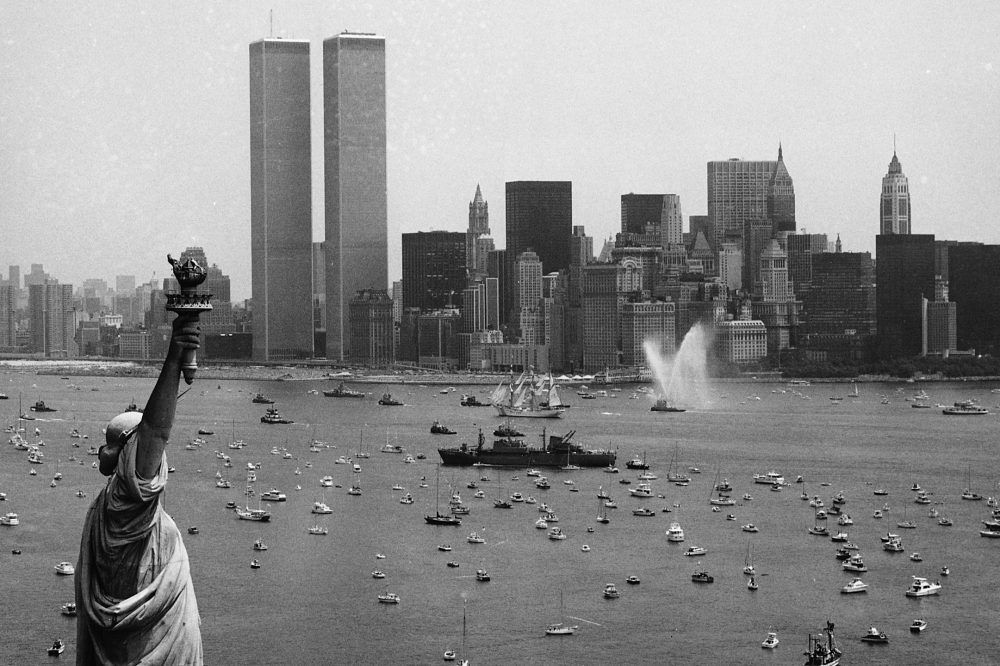
Ford joined other officials in New York for what he described as “the greatest Fourth of July any of us will ever see.” Operation Sail featured a maritime parade with 16 tall ships and over 100 smaller vessels from nations worldwide, including the Soviet Union. The event boosted New York City’s morale, demonstrating that “New Yorkers could get along, even during difficult times,” according to the Gotham Center for New York History.
History enthusiasts who couldn’t travel east could visit the American Freedom Train, a massive 26-car exhibition that toured all 48 contiguous states. The traveling museum showcased two centuries of American artifacts including George Washington’s Constitution copy, the original Louisiana Purchase document, Judy Garland’s “Wizard of Oz” dress, and a moon rock. Country singer Merle Haggard even recorded a song about the train.
Beyond official celebrations, the bicentennial sparked a merchandising bonanza. The government issued special quarters, stamps and license plates, while Madison Avenue marketed bicentennial cereal, candy, beer and soda. 7-Up produced different commemorative cans for each of the 50 states.
Even the Pet Rock creator attempted a bicentennial version, though this follow-up to the 1975 phenomenon failed to capture public interest. Pez dispensers featuring Paul Revere or Betsy Ross proved more popular.
Television coverage remained relatively modest across the three major networks. ABC’s “Schoolhouse Rock!” launched “America Rock,” best remembered for the civics lesson “I’m Just a Bill.”
CBS News ran “Bicentennial Minute” nightly in prime time starting July 4, 1974, presenting historical events from exactly 200 years earlier. The segment became so ubiquitous that “All in the Family” referenced it, while “Saturday Night Live” created a parody called “Bisexual Minute.”
On July 4, 1976, all three networks provided extensive coverage. Walter Cronkite anchored 16 hours of CBS programming, while NBC aired “Bob Hope’s Bicentennial Star-Spangled Spectacular” featuring Sammy Davis Jr., Captain & Tennille, and Donny and Marie Osmond.
Not all Americans embraced the celebratory mood. Comedian Richard Pryor released an album titled “Bicentennial” followed by an ethnic slur, featuring a monologue from a 200-year-old slave perspective that concluded “I ain’t gonna never forget it.” In “Bicentennial Prayer,” Pryor declared, “We are celebrating 200 years of white folks kickin’ ass.”
Popular music largely avoided patriotic themes. Elton John’s 1975 song “Philadelphia Freedom” became an unofficial anthem, despite focusing more on personal independence than the city itself.
Instead, the music charts reflected a disco-driven escape mentality with hits like Johnnie Taylor’s “Disco Lady,” The Sylvers’ “Boogie Fever,” The Bee Gees’ “You Should Be Dancing,” and KC and the Sunshine Band’s “(Shake Shake Shake) Shake Your Booty.”
Album charts featured California’s post-hippie introspection with the Eagles’ “Hotel California” and Jackson Browne’s “The Pretender.” Meanwhile, New York’s emerging punk scene produced aggressive debuts from the Ramones and Blondie. The Ramones’ eagle logo holding an olive branch and baseball bat, plus their future stadium anthem “Blitzkrieg Bop,” embodied a uniquely American sound.
In cinema, the year’s funniest film “The Bad News Bears” showcased baseball played by foul-mouthed young troublemakers coached by Walter Matthau’s surly, alcoholic character. Like Rocky, the Bears didn’t win, but they enjoyed themselves.
Hollywood’s dramatic films reflected ongoing post-Nixon paranoia. While the studio system released the patriotic World War II epic “Midway” in June, it quickly disappeared from theaters. “The Omen,” about a child who turns out to be the Antichrist, dominated July 4th box office receipts.
Prestigious films continued exploring political distrust. “All the President’s Men” dramatized The Washington Post’s Watergate investigation. “Taxi Driver” followed a Vietnam veteran plotting presidential assassination. “Network” featured a television anchor encouraging viewers to shout “I’m mad as hell and I’m not going to take it anymore!”
All three films earned Best Picture Oscar nominations and are considered classics today. However, “Rocky” defeated them all for the top prize.