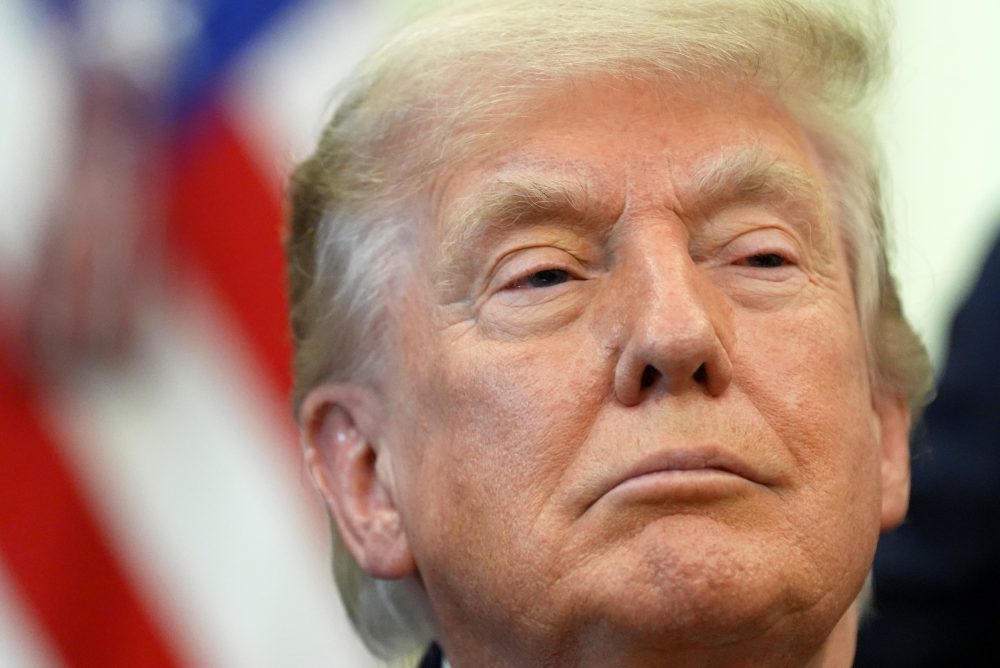

President Donald Trump announced Friday that a rapid U.S. military operation has eliminated Hector Rusthenford Guerrero Flores, described as the top figure of the Tren de Aragua criminal organization.
The United States has designated Tren de Aragua as a terrorist group. Federal prosecutors in New York had brought charges against Guerrero Flores in December for racketeering conspiracy and additional offenses, including providing support to terrorists in criminal activities spanning over ten years.
Defense Secretary Pete Hegseth revealed on X that the operation took place earlier this week at a Tren de Aragua facility in Venezuela.
U.S. Attorney Jay Clayton previously stated that the organization is behind numerous violent acts, extortion schemes and narcotics trafficking across North America, South America and Europe. Trump selected Clayton on Thursday for the position of director of national intelligence.
The State Department had put up rewards reaching $5 million for tips leading to Guerrero Flores’ capture.
Writing on his social media platform, Trump stated, “Tren de Aragua terrorists no longer have safe haven in Venezuela or anywhere else and, under my leadership, we will find these vicious murderers and drug lords anytime, anyplace, and send them to the depths of hell where they belong.” Trump’s message identified Guerrero Flores using his known alias, “Niño Guerrero.”
Hegseth commented, “The operation underscores the shared U.S. and Venezuelan commitment to take the fight to narco-terrorists and deny them any safe haven in our hemisphere.”
Venezuela’s communications ministry has not yet provided a response regarding the military action.
Trump has implemented multiple aggressive measures targeting the organization, including operations against small vessels his administration claims are used for drug smuggling into America. Since early September, when the Trump administration started targeting individuals they label as “narcoterrorists,” at least 207 people have died in boat attacks by U.S. forces in the eastern Pacific Ocean and Caribbean Sea.
Trump and his officials have repeatedly identified Tren de Aragua as the primary source of violence and illegal drug activity affecting certain American cities. The president frequently made the assertion — disputed by a declassified U.S. intelligence report — that Tren de Aragua operated with Venezuelan President Nicolás Maduro’s backing. The U.S. removed Maduro from Venezuela in January to face American drug-related charges.
Tren de Aragua began over ten years ago in a notoriously chaotic Venezuelan prison housing dangerous criminals in the central Aragua state. The group has grown as millions of Venezuelans have relocated to other Latin American nations or the U.S. seeking improved living situations.
Guerrero Flores was sent back to the Aragua prison for murder and other crimes in 2013, coinciding with Venezuela’s crisis that started when corruption, poor management and falling oil prices devastated the petroleum-based economy. Guerrero Flores and several fellow prisoners recognized a lucrative opportunity as the government abandoned prison oversight.
They seized control and management of the prison, creating a structure that dominated all inmates through violence and extortion. Eventually, they converted the facility into a type of community featuring a zoo, baseball field, casino and dining establishments. Guerrero Flores maintained his own luxurious quarters.
The organization’s membership numbers remain unknown. Nations hosting significant Venezuelan migrant populations, such as Peru and Colombia, have blamed the group for a wave of regional violence. However, unlike other criminal groups from Colombia, Central America and Brazil, Tren de Aragua lacks major involvement in international cocaine smuggling operations, according to InSight Crime, a research organization monitoring Latin American criminal activity.
In Venezuela, gang leadership has historically engaged in diverse criminal enterprises, including gold mining operations.
Trump ran for reelection pledging stricter immigration and crime policies. Although polling indicates his approval ratings have declined regarding economic management, immigration continues to be Trump’s most popular policy area, based on AP-NORC Center for Public Affairs Research data.