
Militants connected to al-Qaeda operating in Mali have dramatically altered their approach in controlled territories, moving away from violent intimidation toward more administrative governance, according to local residents.
In the village of Poutchi, fighters from Jama’at Nusrat al-Islam wal Muslimin (JNIM) now regularly gather community men at a mud-brick mosque to collect taxes on livestock and crops, then distribute food, medicine and animals to those in need.
This represents a stark change from five years ago, when the same militants threatened to kill anyone in Poutchi who challenged their religious interpretation, including the local imam, according to Amadou, a village herder.
“Now, they don’t talk like that,” Amadou explained, noting how the militants now emphasize spreading their religious teachings without using threats or violence. “The dynamic has really changed.”
JNIM pledged loyalty to al-Qaeda upon its formation in 2017 and has spent the past decade using fear and force to establish control across the Sahel region of West Africa, prohibiting music, smoking and wedding celebrations.
Originally limited to remote desert and mountain locations, JNIM has grown stronger since Malian military officers who took power in 2020 expelled approximately 15,000 French and U.N. troops and began relying on Russian mercenaries to combat insurgents.
The group displayed its increased capabilities through bold attacks across Mali in April, striking the airport in the capital Bamako, killing the defense minister and capturing multiple army bases in the north while coordinating with Tuareg-led separatists.
Mali’s government labels both organizations as terrorists responsible for violence and instability throughout the country. Moscow has committed to continuing its fight against insurgents in Mali.
However, the jihadist organization now occupies the center of an expanding network of militants allied with al-Qaeda and Islamic State that spans 3,000 km (1,900 miles) across West Africa. U.N. Secretary-General Antonio Guterres cautioned in November that these groups were connecting and posed an increasing global threat.
Beyond the prominent military victories, a transformation is occurring in regions where JNIM’s control is established, residents reported.
The group’s messaging has become less harsh. Militants are taking on administrative duties, settling long-standing land conflicts between herders and farmers, permitting aid organizations to operate and allowing some government workers to return to JNIM villages for holiday visits with family, according to seven people living under JNIM authority in central Mali who spoke to Reuters.
“The stronger they have become, the less brutal they have to be,” said Corinne Dufka, a Sahel expert who has studied jihadist expansion in Mali for over a decade.
Dufka noted that JNIM was successfully governing in its strongholds, but that residents’ compliance was also a survival tactic.
“There is a combination of coercion, fear and persuasion,” she explained. “For many villagers, including those who have lived, married, and grown up under the group, they have just accepted that this is the new reality.”
Due to concerns about retaliation, the residents spoke to Reuters anonymously or using only first names.
Neither Mali’s government nor the military’s spokesperson provided responses to requests for comment on this story.
The transformation demonstrates the development of the Islamist militant movement in Mali over the past 15 years.
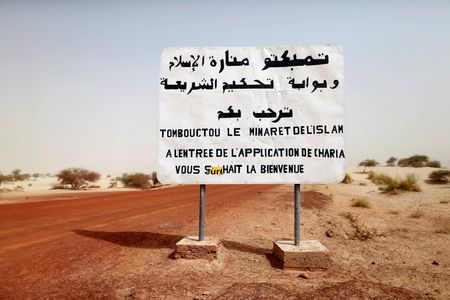
Jihadist organizations initially captured large portions of Mali in 2012 after forming alliances with Tuareg separatists. The combination of local and foreign militants enforced a strict interpretation of Islamic law, conducting public executions, floggings and destroying centuries-old mausoleums in Timbuktu.
JNIM, created from four of those organizations, is increasingly attempting to demonstrate it can peacefully govern seized territories and thereby gain political legitimacy, according to Sahel experts and Tuareg-led separatists working with JNIM.
Bilal Ag Cherif, a veteran of the separatist movement that has maintained an intermittent alliance with the Islamist insurgents and partnered with JNIM in April, said he had observed “positive changes” within the group, including openness to local Islamic interpretations and calls for a more “inclusive” Mali.
“They were open to discussing peace and stability in this region, to discuss important factors for us about their view of the future, to talk with everyone, to have peace,” Cherif, leader of the separatists now called the Azawad Liberation Front (FLA), told Reuters by phone from northern Mali.
He also said the FLA was encouraging JNIM fighters to sever ties with al-Qaeda and concentrate on local issues.
“JNIM is dealing with this point positively, and we consider that very, very important,” he said, adding that it was difficult to envision a solution to the northern Mali conflict without JNIM’s participation.
JNIM has stated its immediate objectives are to force Russian troops out of Mali and to remove the army officers who seized power after coups in 2020 and 2021.
After the April attacks, JNIM modified its messaging, releasing an uncommon French-language statement urging Malians to join them in removing the government and establishing a new Mali based on Islamic law. JNIM increasingly uses videos featuring a Malian fighter speaking Bambara, a language primarily used in southern Mali, far from the jihadi strongholds.
JNIM doesn’t control major cities and does not currently appear focused on capturing the capital, unlike the Islamist rebels once aligned with al-Qaeda who took power in Syria in 2024.
Another video filmed by fighters and shared on social media after the April attacks shows JNIM fighters processing captured Malian troops for release in Tessit. Following previous victories, Islamist militants have executed captured soldiers.
Analysts say JNIM seeks a role in discussions about Mali’s political future – something the military government refuses.
“The government does not intend to engage in dialogue with the lawless armed terrorist groups who bear responsibility for the tragic events that our people have been experiencing for years,” Foreign Minister Abdoulaye Diop said in May, referring to JNIM and FLA.
Russia’s Ministry of Defence did not respond to a request for comment. Reuters was unable to reach JNIM for comment.
The group has been accused of massacres and remains capable of brutal violence.
In January, JNIM fighters killed 12 people in an attack on a fuel convoy – some had their throats cut – and areas that resist face collective punishment. The insurgents attacked two villages in central Mali in May, killing about 50 people.
Nevertheless, the residents living under JNIM rule who spoke to Reuters described a form of governance that is often more predictable, less corrupt and less violent than Mali’s military and allied forces.
“Since JNIM has controlled the area, we are safe. Even though their rule is difficult to respect, we have gotten used to it,” said Aminata, from Birga-Peul village in the Mopti region, which JNIM took over in 2017. “We are not killed.”
“They aren’t violent like the foreigners who were there at the beginning,” she said, referring to jihadists who had come from outside Mali. She said the movement was now much more embedded in the community. “They are tolerant and turn a blind eye to many things, like football and Android phones.”
Where JNIM has not taken control, it sometimes enforces blockades. In the village of Diafarabe, also in the Mopti region, one resident said 13 children and 40 adults, including the elderly, had died from a lack of food and medicine after JNIM imposed a blockade a year ago.
“People can’t even go 500 metres from the village … so there’s no more fish, no more meat, no more firewood,” the person said.
Reuters was unable to independently confirm the figures, nor reach JNIM for comment.
The restrictions on freedoms imposed by Islamist militants in Mali, such as banning wedding celebrations, are at odds with West Africa’s long history of Islam, where Islamic teaching was traditionally blended with local customs.
However, reformist movements have gained influence in recent decades, often by funding health and education in poor communities. Experts say this – coupled with the abuse of civilians by government troops, allied militias and Russian forces – has created opportunities for jihadists to exploit.
Hambarke, 57, who lives in a village in central Mali controlled by JNIM for seven years, recalled how they barred men from shaving and women from engaging in trade.
He said punishments were initially severe, including public whippings, but now the “radical rhetoric” had eased, with sermons focused on calls for unity and social cohesion and JNIM giving warnings before meting out punishments.
Mali’s military has been accused by the U.N. and human rights groups of executing civilians suspected of collaboration with JNIM and other insurgents.
Malian soldiers and their Russian partners have killed three to four times more civilians than jihadists have over the last two years, according to data from Armed Conflict Location & Event Data (ACLED), a conflict monitoring group.
Mali’s government has denied accusations its forces have targeted civilians, saying they had killed terrorists.
Six of the residents who spoke to Reuters reported abuse of civilians by the army or allied militias, with most saying this had driven young men in their villages to join JNIM.
“People have more faith in them, and it’s a good relationship,” said Amadou, the herder in Poutchi.