
The United States and Iran moved closer to ending their military conflict on Friday, with a high-ranking U.S. administration official revealing that both nations have reached consensus on a peace agreement text and Washington anticipates finalizing an initial accord within days.
Iranian Foreign Minister Abbas Araqchi acknowledged that modifications to the agreement remain possible, but emphasized that the preliminary deal demonstrates his nation has gained strength through the confrontation.
“Iran is the winner of the war with the U.S.,” he declared during a state television broadcast.
Following those statements, American military forces intercepted several Iranian one-way attack drones approaching the Strait of Hormuz, according to a source with knowledge of the incident who requested anonymity. The source indicated these drones threatened commercial shipping. U.S. Central Command subsequently verified the military action and confirmed the waterway remains accessible for navigation.
Iranian media outlets reported hearing explosions near the strait at Iran’s Sirik port and Qeshm island, which local residents and officials said came from Iranian forces firing warning shots at vessels trying to pass through the waterway without Revolutionary Guards’ navy authorization.
The draft memorandum of understanding includes provisions for reopening the strait and ending the U.S. naval blockade of Iranian ports, according to sources involved in the negotiations. Discussions regarding Iran’s nuclear program — which U.S. President Donald Trump cited as his primary justification for initiating the conflict — would follow the initial agreement.
The unnamed U.S. official briefed reporters that the deal achieves Trump’s main goals and positions negotiations “in a very, very good place.”
Reports about the proposed terms from Western, Pakistani and Iranian sources suggest conditions that may benefit Iran, prompting criticism from Trump, who called these accounts false.
Despite minor variations in specifics, the proposals generally provide Tehran with much of what it has demanded, while Trump appears to gain little beyond strait reopening, which Iran had closed following U.S. and Israeli strikes in February.
Araqchi stated that Iran would maintain control over strait traffic alongside Oman, noting the waterway previously handled one-fifth of global oil and gas supplies before the conflict began.
“Our sword will always hang over the Strait of Hormuz,” he said.
A Western source indicated the agreement could be finalized as early as Sunday, with U.S. Vice President JD Vance and Iran’s parliament speaker, Mohammad Baqer Qalibaf, potentially signing in Geneva.
The U.S. administration official confirmed Europe has been considered as a signing location but no final decision has been reached.
Araqchi mentioned the deal would be signed remotely before public announcement.
Multiple sources familiar with the draft terms told Reuters the U.S. would begin unfreezing billions in Iranian assets and waiving oil export sanctions in exchange for Iran reopening the strait.
Iran’s nuclear program would be addressed during a 60-day negotiation period. The U.S. official said the final agreement would result in dismantling Iran’s nuclear program, destroying and removing its highly enriched uranium stockpile, and establishing long-term compliance inspections.
However, Araqchi told state television that Iran, which sources say has not agreed to nuclear program dismantling, wants to keep the uranium in diluted form.
“For Tehran, the only preferred solution for its highly enriched uranium stockpile is down-blending the material,” he stated.
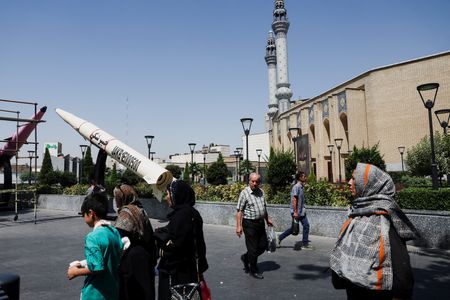
The proposals include potential war reparations discussions for Tehran and abandoning longstanding U.S. demands for Iranian missile program restrictions, sources revealed. The U.S. official challenged this characterization.
“None of their money released until they perform. Strait of Hormuz will be open. No Iran funding of terrorist groups,” the official said anonymously. “This is what they have agreed to. This is a performance-based deal.”
Israel has remained outside the negotiations, and Prime Minister Benjamin Netanyahu announced his country would not participate in the agreement.
Netanyahu has disagreed with Trump recently over U.S. requests that Israel limit military operations in Lebanon to facilitate Washington’s deal with Tehran.
Araqchi said the agreement would conclude the Lebanon conflict, suggesting Israeli withdrawal from occupied territories.
Israel’s defense minister rejected withdrawal plans. A senior Israeli official said Israel expects to maintain freedom to respond to threats.
Global stock markets climbed and oil prices dropped on the agreement news. Brent crude prices fell more than 3% to nearly two-month lows.
The conflict has created political challenges for the White House, with increasing fuel costs and declining approval ratings for Trump.
Some Republicans fear the war’s unpopularity could threaten their Congressional control in November’s midterm elections. However, many of Trump’s Republican colleagues may struggle to support an agreement perceived as overly favorable to Iran.