
An 81-year-old Albanian man says he was blocked by barbed wire and security guards from entering what he believes is his own property along the southern Albanian coast last month.
Kostaq Konomi discovered through media coverage that his land had become part of a high-end resort development involving international investors, including Jared Kushner, the son-in-law of former U.S. President Donald Trump.
The scenic property features a hillside covered in blooming gorse that descends to an isolated bay where cattle wade in shallow waters. The state had previously confiscated this land during Albania’s communist era, and Konomi couldn’t stand watching it happen again.
“I was ready to get a rifle and start shooting,” the 81-year-old Konomi shared with Reuters. “I was a small boy when I put my feet in that water. Now I am an old man and they say I cannot.”
Konomi represents one of twelve Zvernec village residents who informed Reuters that their property was improperly sold for development beginning in 2024 by someone else claiming ownership. Multiple villagers presented Reuters with property documents and tax paperwork they believe validate their ownership claims. None received any payment.
Reuters discovered no evidence suggesting Kushner engaged in any misconduct, as he has no direct involvement in the villagers’ ownership dispute. The news organization could not establish which parties hold legitimate ownership of the various land parcels, which remain under legal contestation.
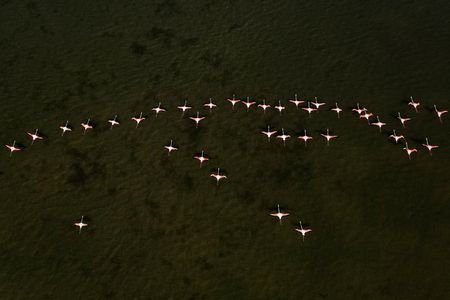
The villagers’ legal assertions add complexity to an already controversial multi-billion-euro development project on an island and pristine mainland area that encompasses protected wetlands where flamingos, seals and sea turtles migrate.
Large-scale demonstrations broke out this week in Albania’s capital city Tirana, with protesters demanding construction be stopped, while the European Union has voiced concerns regarding the project’s environmental impact.
Prime Minister Edi Rama, who promoted the agreement during a Reuters interview this week, maintains that the development follows legal requirements and will safeguard natural habitats.
Kushner failed to respond to comment requests made through his investment company, Affinity Partners.
Sazan Real Estate Development LLC, the firm handling the project development, declined to answer inquiries about the construction plans or the land ownership conflict. A company representative directed Reuters to a Friday statement posted on X by the firm’s chairman, Asher Abehsera.
“Our goal is simple: celebrate Albania’s natural beauty, create jobs, and build something future generations can be proud of,” Abehsera stated.
The representative indicated that Sazan’s partners, including Kushner, were making personal investments rather than investing through Affinity. Reuters could not verify this information independently.
Zvernec sits on a thin peninsula divided from the mainland by a lagoon where flamingos gather during summer months. The ocean-facing side features vacant beaches, olive tree groves and dramatic cliff formations.
This landscape captivated Kushner and his spouse, Ivanka Trump, when they viewed the area from a yacht several years ago.
Rama encountered them during that visit, and Kushner expressed investment interest when they met again at the World Economic Forum in Davos, according to Rama’s account to Reuters.
“You are an American investor, and this country is open to every American investor,” Rama recalled saying to Kushner.
During 2024, Kushner revealed the development plans on social media, sharing an artist’s concept depicting the land transformed with a hotel, residential buildings, swimming pools and yacht docking facilities.
The group of villagers, all in their 70s and 80s, have different intentions. Their attorney, Kostandin Beko, announced they intend to file a court injunction to stop the project.
Their ownership assertions underscore the challenges of investing in Albania, where inadequate documentation, complicated historical background and local corruption make property disputes frequent, according to legal professionals and government officials.
Albania remained under Ottoman control for centuries until 1912, then became isolated from the global community for fifty years following World War Two under a communist regime that collapsed in the early 1990s.
Family properties handed down through generations were seized by the government during communist rule. Following democracy’s return, efforts were made to restore confiscated land, but ownership of plots was frequently contested.
Zvernec’s residents have engaged in ongoing legal proceedings with Artur Shehu, who sold the contested property. Shehu claims his family’s ownership rights extend back to Ottoman Empire times.
Reuters could not contact Shehu or his legal representative, but he stated on an Albanian television program last week that his land ownership claim was “undisputed.”
Shehu, who mentioned living in Miami for 26 years, told the program he sold the disputed property to investors through an unnamed intermediary and was unaware of the buyers’ identities.
Reuters could not verify Shehu’s statements regarding his property rights or the sale details.
The Zvernec residents maintain he lacked authority to sell. A 2013 Albanian court decision determined they owned the land. Shehu filed an appeal, and the case remains pending, according to the residents’ attorney Beko and legal documents he provided to Reuters.
During a Friday phone conversation with Reuters, Rama dismissed these concerns.
“Just because there is a court trial does not automatically mean that the property is frozen,” he explained.
The residents displayed what they described as property deeds from local authorities dated in the 1990s, when land was returned to residents following communism’s end.
The residents and their lawyer stated they were not informed before the land sale and received no compensation.
“We thought Rama would offer us money,” said 84-year-old Thoma Kola.
He and others argued the land should not have been sold while under legal dispute.
Demonstrations began when fencing was installed in May, cordoning off a substantial area surrounding Zvernec and limiting ocean access. Multiple individuals sustained injuries during confrontations with private security personnel, and video of the incident became widely shared.
The fencing has been removed and the bulldozers that carved a new road through the property last month have departed. The timeline for resuming construction remains uncertain.
Stavri Hysa operates a beachside business renting chairs and selling beer and food to visitors in the area. The temporary shoreline closure reminded him of communist times, when authorities would permit access for only a few months annually.
“When I found out that they had blocked access to the sea, I couldn’t sleep for 15 days,” he shared with Reuters while holding back tears. “I do not agree with giving away parts of the beach. This should be public.”