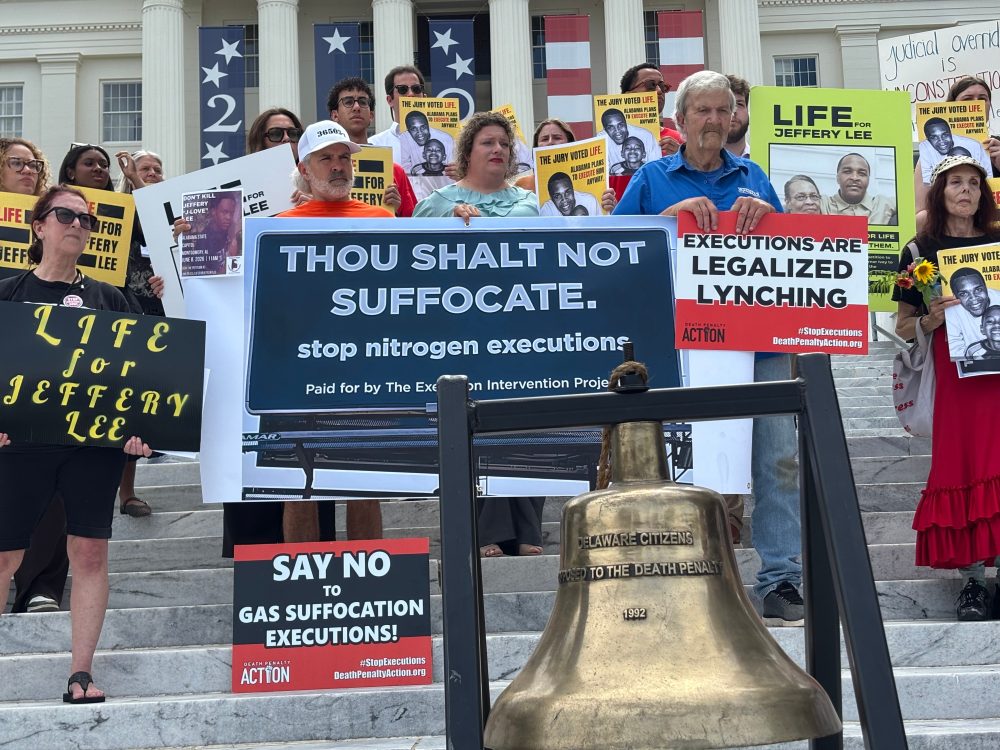
MONTGOMERY, Ala. — Alabama officials on Friday requested permission to carry out an execution using lethal injection just hours after a scheduled nitrogen gas execution was blocked by the courts.
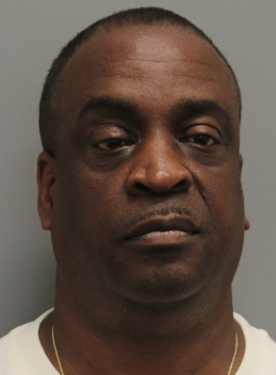
The state attorney general’s office petitioned the Alabama Supreme Court for authorization to issue a death warrant for Jeffery Lee, this time specifying lethal injection as the execution method.
“In sum, ADOC has not been barred from executing Lee, only from executing him by nitrogen hypoxia,” state lawyers wrote.
A representative from Lee’s defense team indicated they had no immediate response to the state’s latest action. Lee’s lawyers will now need to file their response with the Alabama Supreme Court.
The court filing occurred just hours after Alabama Attorney General Steve Marshall vowed to persist in efforts to carry out Lee’s death sentence.
Good news for residents across the Delmarva Peninsula and surrounding areas – a Heat Advisory that was issued this evening has been lifted early as temperatures begin to fall.
The National Weather Service Mount Holly issued the advisory at 7:31 PM for multiple counties including New Castle and Sussex counties in Delaware, along with parts of southeastern Pennsylvania and central New Jersey. However, the alert was canceled ahead of schedule at 8:45 PM as conditions improved faster than expected.
The brief advisory affected local areas including New Castle County and Sussex County, as well as neighboring regions in Pennsylvania and New Jersey. While no specific safety instructions were issued with this particular alert, health officials always remind residents to stay hydrated, seek air conditioning when possible, and check on elderly neighbors during periods of excessive heat.
Temperatures are continuing to drop this evening, providing relief for outdoor activities and reducing heat-related health risks. Residents can expect more comfortable conditions overnight.
The National Weather Service continues to monitor weather conditions across our region. We’ll keep you updated on any changes to the forecast. Stay with TV Delmarva for your most reliable local weather updates.
Canada’s soccer coach Jesse Marsch expressed satisfaction with his team’s fighting spirit after they battled back to earn a 1-1 tie against Bosnia and Herzegovina in their World Cup Group B opening match on Friday in Toronto. The draw represents a historic milestone as Canada’s first-ever point earned in World Cup competition.
Bosnia took the lead through Jovo Lukic’s 21st-minute strike, but Canada refused to fold under pressure. Their persistence in the second half was rewarded when substitute forward Cyle Larin netted the equalizer in the 78th minute, shortly after entering the match.
“I told them after the match that if we play like that second half, the whole match, we win,” Marsch stated.
“I told them we’ve got to learn these lessons and we’ve got to learn them quick,” he continued. “We still have everything in hand, that’s a really big point for us.”
The 31-year-old Larin’s goal was particularly meaningful as Canada’s inaugural World Cup score on home turf. Larin ranks second among Canada’s all-time leading scorers, trailing only Jonathan David.
“Kyle wasn’t happy about not starting,” Marsch revealed about the striker who netted eight goals for Southampton in the Championship this season.
“But I said to him, ‘Look, you’ve had a great year at Southampton, whether you’ve started or come off the bench, you’ve had an impact in every game, and now you have to wrap your mind around that.’ And he did.”
Marsch noted his squad increased their intensity during the second half, generating more dangerous scoring opportunities while searching for the tying goal.
“We could see that (Bosnia) were fading,” Marsch observed, explaining that he recognized his team’s youth, conditioning and pace could eventually overwhelm Bosnia. “So, I told them that we’ve got them now.
“It’s time to put your foot on the jugular and go for the goal.”
Despite maintaining reasonable possession after conceding the early goal, Marsch admitted disappointment with his team’s opening 45 minutes.
“I’m disappointed with the first half,” Marsch acknowledged. “I just felt we were tentative. We didn’t play as aggressively as I would have liked.”
Energized by the supportive home crowd, Canada maintained their attacking pressure and continued creating opportunities until Larin finally delivered the equalizer from the bench. Canada recorded 13 total shots with four on target.
Though Marsch credited his second-half substitutions for making an impact, he wants his team to display that same intensity from the opening whistle in their upcoming match against Qatar on June 18.
“I got to figure out how to get a little bit more out of some of the starters too, and make sure that we have a better performance from the start,” Marsch said.
BOSTON, June 12 – A federal court has mandated that the Trump administration must put back educational materials and displays about subjects including slavery and climate change that were taken down from national parks and monuments across the country because they didn’t match “its preferred narrative.”
U.S. District Judge Angel Kelley in Boston granted a preliminary injunction on Friday following a lawsuit brought by organizations representing park conservationists, historians and scientists. These groups claimed the U.S. Department of the Interior has been conducting a “sustained campaign to erase history and undermine science.”
Target Corporation shareholders have turned down a proposal aimed at dividing board chair and executive leadership responsibilities, the retail giant announced Friday following its annual meeting.
The measure received backing from 38.1% of voting shareholders, representing an increase from the 29% support a comparable proposal garnered in 2024, but still falling short of the majority needed for approval.
This outcome enables former CEO Brian Cornell to maintain his position as executive chair, a role he took on when Michael Fiddelke assumed the chief executive position.
The retailer’s annual shareholder meeting on June 10 saw all 12 director candidates successfully elected to the board. Vote tallies were verified by independent inspector Carideo Group, with approximately 392.5 million shares participating in the voting process, accounting for about 86.4% of outstanding shares.
Earlier this week, sources familiar with the proceedings confirmed that shareholders also defeated two additional proposals concerning pesticide disclosure requirements and microfiber emission reporting.
This governance initiative represents the most recent effort by investors to restructure Target’s leadership framework. The company has faced six comparable proposals since 2014, all of which have been unsuccessful, with the highest level of support reaching 45.8% in 2014.
The Minneapolis-based retailer continues to face challenges with growth rates that lag behind competitors Walmart and Costco, as changing consumer purchasing patterns and intense price competition create headwinds.
Target’s most recent quarterly earnings report in May indicated signs of improvement, though company executives have warned that challenging economic conditions may continue to impact customer demand going forward.
SAN ANTONIO (AP) — Standing at the center of the NBA Finals stage, Victor Wembanyama finds himself confronting the most daunting challenge of his professional basketball journey.
The towering French center appears unfazed by the pressure.
Following their historic collapse in Game 4 — where San Antonio became the first NBA Finals squad ever to surrender a 29-point advantage and lose — Wembanyama and his teammates must capture three consecutive victories to prevent the New York Knicks from claiming the championship trophy. During Friday’s practice session, the 7-foot-4 star expressed unwavering confidence in his team’s capabilities.
“Everybody thinks, everybody knows, we’re going to do it,” Wembanyama said.
The young phenom showed no signs of anxiety. This French sensation has already guided San Antonio through two elimination scenarios during this postseason run, helping the Spurs capture both Games 6 and 7 in their Western Conference finals matchup against Oklahoma City, ultimately dethroning the defending champion Thunder.
Saturday’s Game 5 against New York presents another must-win situation for the Spurs. Should they prevail on Saturday, Tuesday’s Game 6 becomes equally crucial. Victory in that contest would force a decisive Game 7 next Friday.
“I feel like we need to isolate that one game and take it one game at a time,” Wembanyama said. “I think it would be a mistake to waste our energy on multiple games. It’s one game at a time.”
San Antonio’s Finals performance has been marked by strong starts followed by disappointing finishes. They held a 14-point advantage in Game 1 before falling by 10 points. Game 2 saw them squander a 12-point lead, ultimately losing by a single point. Their lone victory came in Game 3 by four points, before Thursday’s devastating 29-point meltdown resulted in another one-point defeat.
The evidence suggests San Antonio possesses the ability to compete with New York.
However, they’ve failed to close out victories in three of four contests. Their current mission would make them only the second NBA Finals team ever to overcome a 3-1 series disadvantage; Cleveland accomplished this feat against Golden State in 2016. The previous 37 teams attempting such a comeback all came up short.
“It definitely matters,” Spurs guard Stephon Castle said. “I feel like we’ve made history all year, and we’ve proven that with our backs against the wall that we can step up. So, I don’t really expect this to be any different.”
Wembanyama shares that sentiment.
The Spurs recognize their talent level matches their opponents. They’ve established early leads and dominated every opening quarter, only to see those margins disappear. Game 3 marked their successful recovery, while Games 1, 2, and 4 told different stories. Game 5 demands another recovery — or their season concludes.
“You said all of it,” Wembanyama said. “We’re very confident. I wouldn’t say it was so hard to shake off (Game 4). Harder than any other game before, by far, for sure. I mean, now we’re over it. It’s the playoffs. There’s no time to regret things for too long.”
SAN ANTONIO (AP) — With the San Antonio Spurs down 3-1 in the NBA Finals and thousands of New York fans anticipated to attend Saturday night’s Game 5, only a remarkable comeback can prevent the Knicks from claiming the championship.
But are Spurs supporters concerned? Perhaps a little.
Do they maintain their faith? Without question.
One of the franchise’s mottos includes “Por Vida,” which translates to “For Life.” Multiple generations of San Antonio supporters have embraced these words throughout different eras, from George Gervin to David Robinson to Tim Duncan and now Victor Wembanyama. Even with New York close to securing this title, those words continue to resonate with the fan base.
“With absolute certainty, always,” Joe Michael Benavides, the boys basketball coach at Hebbronville High School — some 150 miles from San Antonio — said when asked if he was still a Spurs fan.
Countless others share Benavides’ sentiment. The Frost Bank Center will buzz with energy when San Antonio takes the court Saturday evening, packed with supporters wearing the team’s signature silver and black.
However, there will also be plenty of New York’s blue and orange colors throughout the arena.
Several supporters have chosen to sell their Game 5 seats on resale platforms. While the exact number remains unknown, with ticket costs exceeding $1,500 in the upper sections and climbing to $5,000 or higher near the court — substantial amounts, though still less than what Knicks supporters paid for Games 3 and 4 — it’s understandable why some season ticket holders are making financial rather than emotional choices.
“Of course I’m upset with Spurs fans selling their tickets, but if they can’t afford ’em, nothing can be done,” said Rick Vela, known to Spurs fans as the “Masked Bandido Of San Antonio.” “Just sad these Knicks fans have to buy ’em, but their arena is way worse with those ticket prices.”
Spurs guard De’Aaron Fox shows understanding for the situation.
“People are making money,” Fox said. “It’s the economy we live in. It’s the world we live in. Am I upset about it? No. Do I understand it? Sure. I don’t think that changes what happens on the court.”
San Antonio’s fan base doesn’t simply follow winners. While the city has celebrated five NBA titles and enjoyed a remarkable streak of 22 consecutive playoff appearances under Hall of Fame coach Gregg Popovich, Spurs fans also endured years of disappointment.
There was the devastating collapse of surrendering a 3-1 advantage to the then-Washington Bullets in the 1979 Eastern Conference finals. Bringing up Derek Fisher’s championship-clinching shot with 0.4 seconds remaining in Game 5 that helped the Los Angeles Lakers capture the 2004 NBA Western Conference semifinals is inadvisable in this city; it would be received as poorly as declaring “I dislike cowboy hats.” The sting from Wednesday evening’s loss hasn’t faded either, when San Antonio surrendered a 29-point advantage in a 107-106 defeat to New York in Game 4.
The Spurs represent San Antonio’s sole major professional franchise. Unlike New York with its Yankees, Mets, Nets, Rangers, Islanders, Devils, Liberty, NYCFC, and Red Bulls, San Antonio has just one team. The Spurs mean everything to this city.
“They’re still there for us,” said Rene Gonzalez, still proudly flying a Spurs car flag on his truck. “They still bring this community together.”
Anyone believing that falling behind 3-1 in the NBA Finals will crush the morale of Spurs supporters might receive a simple two-word response in San Antonio.
¿Estas loco?
You’re crazy.
“All year these boys have proven everyone wrong,” said Raylyn Boyson, a member of the Spurs superfan group, The Jackals, a group born from an idea by Wembanyama to have San Antonio fans mimic what happens at games in his native Europe. “There’s no reason why we shouldn’t keep believing. If anyone is going to defy all odds, it’s this group.”
Acclaimed actress Helen Mirren has been inducted into an exclusive circle of honorees recognized by King Charles III for their exceptional contributions to British society.
The 80-year-old performer received the title of Companion of Honour on Friday, placing her among just 65 individuals worldwide who hold this prestigious designation at any given time.
This distinguished group already includes notable figures such as environmentalist David Attenborough, author Margaret Atwood, and former Prime Minister Gordon Brown. Mirren’s inclusion represents one of the most significant recognitions in Charles’ recent honors announcements.
The royal honors system celebrates individuals who have made meaningful impacts on British culture and society, with ceremonies held twice annually – during New Year’s and in June for the monarch’s birthday celebration.
Close to 1,200 individuals were recognized in the king’s 2026 birthday honors roster.
Mirren brings decades of distinguished work across theater, film, and television to her new role. Her career spans from early performances with the National Youth Theatre and Royal Shakespeare Company in the 1960s to memorable film roles in productions like ‘The Long Good Friday,’ ‘Excalibur,’ and ‘The Madness of King George.’
Television audiences remember her compelling performance as Detective Chief Inspector Jane Tennison throughout seven seasons of ‘Prime Suspect.’
Her portrayal of the monarch in ‘The Queen’ earned her the Academy Award for best actress in 2007, depicting the late Queen Elizabeth II during the period following Princess Diana’s death in 1997.
The Companion of Honour distinction, established in 1917 by King George V, honors those who have demonstrated ‘a major contribution to the arts, science, medicine, or government’ over substantial periods.
Recipients maintain their status for life, with new appointments made only when positions become available. Following the recent passing of artist David Hockney on Thursday, another appointment is expected during the upcoming New Year’s honors.
Author Julia Donaldson also received recognition Friday, earning the title of dame for her literary achievements. The 77-year-old creator of beloved children’s books including ‘The Gruffalo’ and ‘The Highway Rat’ has surpassed Harry Potter author JK Rowling in UK book sales, with over 50 million copies sold globally.
‘Receiving this honor has been a very happy surprise,’ Donaldson commented. ‘It’s really gratifying to have children’s books recognized in this way.’
Athletic achievements were celebrated as well, with Kevin Sinfield receiving knighthood for his rugby league accomplishments and charitable fundraising efforts. The 45-year-old has generated more than 11 million pounds ($15 million) for motor neuron disease research and family support, inspired by teammate Rob Burrow, who succumbed to the condition in 2024.
Golf captain Luke Donald was awarded the Order of the British Empire as he prepares to potentially become the first person to guide a Ryder Cup team to three straight victories against the United States in next year’s Ireland competition.
Soccer player Chloe Kelly, whose penalty kick secured England women’s Euro 2025 championship, became a member of the Most Excellent Order of the British Empire alongside six teammates.
Musical contributions were recognized through honors for Black Sabbath guitarist Tony Iommi, acknowledged for his service to music and charity nearly a year after bandmate Ozzy Osbourne’s death. Former Catatonia vocalist and broadcaster Cerys Matthews also received recognition for her musical contributions.
Selection committees comprised of civil servants evaluate nominations from government sources and public submissions. Award presentations typically occur at Windsor Castle, where Charles primarily resides, conducted by the king or senior royal representatives.
Recognition extends beyond public figures to include community advocates like Debbie Lewis, who established the COVID-19 Families U.K. bereavement support network after losing her father to coronavirus in 2020, just four months following her mother’s death.
Lewis initially reached out through Facebook seeking others experiencing similar losses, connecting with 40 people within a week. Her network has since grown to encompass more than 4,500 individuals over six years.
‘I’m still a little bit in shock,’ the 56-year-old shared regarding her Friday honor. ‘I know it’s a huge achievement and I’m just a little bit overwhelmed at the moment.’
A federal judge has written an apology letter to a former law clerk following disciplinary measures taken against her for engaging in sexual conduct with a police officer inside her courthouse chambers and subsequently providing false statements about the incidents.
The disciplinary action against U.S. District Judge Eleanor Ross stemmed from an investigation launched by the chief judge of the 11th Judicial Circuit, which determined that Ross engaged in sexual activity in the courthouse with a high-ranking uniformed police officer within hearing distance of courthouse staff, participated in a partisan political event, and initially provided false information when questioned about these matters. In her letter dated Thursday and acquired by The Associated Press, Ross acknowledged that her “actions were patently wrong, and there is no excuse.”
“You deserved better than to have your experience marred by my own offensive conflict,” Ross stated in the correspondence, which The New York Times initially reported.
Ross received her appointment to the bench in the Northern District of Georgia in 2014 under then-President Barack Obama, a Democrat.
The inquiry into Ross’s conduct commenced after one of her law clerks filed a complaint alleging that the judge had repeatedly engaged in sexual conduct with a high-ranking uniformed police officer in her chambers during business hours. Additional allegations included claims that the judge failed to provide adequate supervision to clerks and had verbally berated staff members using profanity.
Following the investigation’s confirmation of the allegations, Ross received a “private reprimand” that initially kept her identity confidential. She also committed to refraining from pursuing the chief judge position for the district when she becomes eligible and agreed to send apology letters to six former law clerks.
William Pryor, serving as chief judge of the 11th Circuit, initiated the investigation of Ross last fall. When he requested her response to the clerk’s allegations regarding sexual activity in her office and attendance at partisan events, she responded immediately and “specifically denied” all claims. The following day, the judge sent another email to Pryor suggesting that the law clerk might have fabricated the allegations as revenge for being required to work in the office.
Ross’s letter states, “I also want to convey my deepest apologies to you for my false accusation against you. Again, I have no excuse and immensely regret my behavior.”
The correspondence also mentions an earlier letter that Ross had written to the clerk, describing it as “entirely deficient, as I did not take full accountability for my actions, and I failed to give you the apology that you deserve.”
Federal judges receive lifetime appointments and can only be removed through congressional impeachment proceedings. This week, two Georgia congressmen submitted separate impeachment resolutions targeting Ross. The House Judiciary Committee holds the authority to determine whether to initiate impeachment proceedings.
Pryor established a special committee to conduct the investigation. The committee’s findings were documented in a report accompanying the disciplinary order.
The committee’s examination of access logs and security recordings revealed that an officer had regularly visited the judge’s chambers while in uniform during lunch hours. Six clerks recalled observing someone matching the officer’s description, with three recalling overhearing what appeared to be sexual activity coming from the judge’s office.
Three clerks remembered bringing summer interns on their first day to observe the judge conducting a hearing in a criminal matter. Immediately afterward, they reported to the committee, the judge declined to have lunch with the interns, admitting to consuming too many martinis the previous evening at a primary election celebration for a district attorney friend.
The clerks indicated that the judge provided inadequate guidance and “rarely, if ever, substantively edited civil orders the clerks drafted.” Although clerks described an “eggshell culture,” the committee found no evidence of abusive conduct.
The judge eventually confessed to maintaining an extramarital sexual relationship with the officer while denying the staff mistreatment allegations, according to the committee. The judge acknowledged attending a “mixer” for former employees of a district attorney’s office where she previously worked, but claimed it occurred in a separate room from the victory celebration.
“Though I can never fully undo the harm that I have caused you, I hope that my acknowledgment of these failures is a small first step,” Ross wrote to her former clerk. “I will be taking further steps to ensure that this never happens again.”
A youth soccer organization in Seattle has given back 20 complimentary World Cup tickets after the United States prevented a Somali referee from entering the country for the tournament.
Ali Abdulla, who runs the African Youth Sports Academy, was thrilled when his organization was selected to receive the free passes to next month’s World Cup round of 16 match in Seattle. The tickets, worth approximately $1,000 each, would have provided an amazing experience for children from immigrant and low-income households who participate in his program.
However, when the U.S. blocked Omar Artan — the first referee from Somalia chosen to work World Cup games — from coming into the country, Abdulla decided to take action. The former semi-professional soccer player and Somali refugee initially considered stepping down from his volunteer role as a FIFA “ambassador,” but parents and coaches in his program proposed an even stronger statement: returning the tickets.
“They all sent a message saying, ‘We feel heartbroken, we feel betrayed,’” Abdulla shared with The Associated Press on Friday. “We don’t feel right to go celebrate while the only person in the history of our country (selected to referee the World Cup) is feeling pain and disappointed.”
Abdulla continued: “I felt so emotional when the parents said that, because to return a one-time opportunity for solidarity with our boy — that made me very proud to lead this organization.”
The complimentary tickets came from a distribution program coordinated by Seattle Mayor Katie Wilson and the local FIFA World Cup organizing committee, which gave away 1,400 tickets total. Abdulla had participated in announcing the program and brought approximately two dozen children to appear in the mayor’s promotional video.
Receiving the tickets was “the best news I ever had,” according to Abdulla. His organization, which provides mentoring and additional services beyond soccer, planned to hold a competition to decide which participants would get the tickets. The goal was to give tickets to roughly a dozen teenagers between 13 and 16 years old, plus several parents.
The young people “are very sad, man, very heartbroken,” Abdulla explained. “We have to teach them to stand up for the right thing.”
The mayor’s office verified that the tickets were redistributed but declined further comment about the organization’s choice. Hana Tadesse, speaking for the local FIFA World Cup organizing committee, confirmed the tickets went to another community organization: the Somali Health Board, which also supports youth soccer programs. That group did not respond to requests for comment on Friday.
The Seattle Times first covered the African Youth Sports Academy’s decision.
Abdulla works as a transit security officer for Seattle’s light rail system and previously played for the semi-professional Seattle Somali Stars until retiring in 2017. He had planned to volunteer as a World Cup ambassador, greeting fans and assisting with stadium directions. Now he says he won’t even watch the matches on television.
Instead, he’s concentrating on a different upcoming tournament that he previously participated in as a player and coach and now coordinates: the 28th annual Somali Week. This event will bring teams from Canada, the United Kingdom, Minneapolis and other locations to Kent, a Seattle suburb, in August.
The tournament attracts players with African heritage and others, Abdulla noted, and demonstrates soccer’s ability to bring the community together.
A delegation of Democratic legislators from Congress visited Puerto Rico on Friday, making commitments to address the territory’s slow recovery from major natural disasters that have relied on federal assistance.
Mississippi Rep. Bennie G. Thompson, who serves as the ranking member of the House Committee of Homeland Security, explained that he and fellow lawmakers conducted meetings with Puerto Rican mayors during their two-day visit to the territory. The mayors expressed frustrations about delayed reimbursements and slow approval processes for recovery projects.
“We’ll move some of those concerns into corrective actions,” Thompson stated during a press conference. “The system should work better.”
Pablo José Hernández, who represents Puerto Rico in Congress, explained that local mayors raised these issues after former Homeland Security Secretary Kristi Noem established a requirement that DHS spending exceeding $100,000 needed direct approval from her office.
This requirement created additional setbacks for Puerto Rico’s recovery from hurricanes Maria and Fiona, along with powerful earthquakes that occurred in late 2019 and early 2020.
The new Homeland Security Secretary Markwayne Mullin eliminated this rule in April, though obstacles continue to exist.
Thompson pointed out that approximately one-third of the U.S. Federal Emergency Management Agency’s workforce “has been done away with.”
“Not a lot of people to answer the phones or look at the paperwork because they’re not there,” he explained.
While Thompson mentioned that Mullin has committed to restoring employees, the timeline for these additions remains uncertain.
“FEMA’s role is to be here in a time of need when local resources have been overrun,” Thompson explained. “Obviously, hurricanes that you’re dealing with over time have overrun local resources.”
Hurricane Maria struck Puerto Rico in September 2017 as a devastating Category 4 storm. The hurricane destroyed the island’s electrical infrastructure and resulted in approximately $90 billion in damages. Following the storm’s aftermath, an estimated 2,982 people lost their lives.
Hurricane Fiona struck Puerto Rico in September 2022 as a Category 1 storm, once again damaging an electrical system that had not been fully restored since Hurricane Maria.
Additionally, earthquakes that affected southern Puerto Rico resulted in an estimated $3 billion in damages.
The territory continues working toward recovery from these disasters, with approximately 30% of reconstruction projects still awaiting completion.
According to Puerto Rico’s Central Office for Recovery, Reconstruction and Resiliency, which handles federal grant funding, nearly $43 billion in federal money has been allocated, with nearly $40 billion obligated and $12.7 billion distributed.
Caguas Mayor William Miranda Torres explained that accumulated pending projects create bottlenecks that increase expenses, leading to additional delays. He noted numerous projects in his municipality remain unfinished.
A DHS report from September 2025 determined that FEMA “did not ensure the timely rebuilding of Puerto Rico’s electrical grid” following Hurricane Maria and that FEMA officials “missed opportunities to provide more assistance to Puerto Rico.”
A February 2024 audit conducted by the U.S. Government Accountability Office revealed that Puerto Rico’s government had utilized less than 10% of more than $23 billion in available federal funding at that time.
Problems included increasing expenses, worker shortages, major reductions in insurance availability, and global supply chain disruptions. Many of these issues continue to affect recovery efforts.
TORONTO, June 12 – Canada’s World Cup campaign got off to a dramatic start as substitute Cyle Larin rescued the co-hosts with a late equalizer in a hard-fought 1-1 draw against Bosnia and Herzegovina in their Group B opener.
The match marked Canada’s inaugural men’s World Cup fixture on home turf, with the hosts controlling much of the possession and generating numerous scoring opportunities throughout the contest.
Bosnia struck first blood when Jovo Lukic found the net in the 21st minute, putting the World Cup co-hosts in a difficult position that would require a comeback effort.
Larin, who had watched from the sidelines for 76 minutes after coach Jesse Marsch opted not to include him in the starting eleven, made an immediate impact upon entering the match. The Southampton forward needed fewer than three minutes to make his mark, converting with a skillful turn and finish.
“I mean, I want to play every game and I’ve been working all those seasons in my club to play every game but sometimes you don’t have control, but I have to show when I go in the game, and I showed today I should be playing,” he told Canadian TV.
While Canada found success moving the ball through wide areas and into the penalty box, their offensive efforts lacked a commanding presence up front, allowing the Bosnia defense to handle most attacks without significant difficulty.
The dynamic shifted when the 31-year-old Larin entered the fray, bringing the poise and leadership that Canada’s brave performance had been missing. His goal positions the team favorably heading into their upcoming match against Qatar in Vancouver on June 18.
“I think we just have to stay concentrated at all moments, and that’s the World Cup,” Larin said. “I think we gave away a set-piece goal, and we just (need to) build off this game.
“We’ll be playing home again in Vancouver, and we’ve just got to push the limit and be killers around the ball.”
Defender Alistair Johnston credited the passionate home supporters with helping fuel Canada’s second-half resurgence, despite the team appearing to struggle under the weight of expectations for much of the contest.
“It felt like they probably pulled that ball into the net for us … we’re going to need to continue to build on that. We’re going to need this crowd with us,” he told Canadian TV.
Federal antitrust officials have given their approval to a major media industry merger, announcing Friday that Paramount’s planned purchase of Warner Bros poses no threat to fair competition.
The U.S. Justice Department’s antitrust division wrapped up its examination of the proposed deal on June 12, concluding that the acquisition would not damage the competitive landscape or negatively impact consumers across the country.
Rookie corner infielder Blaze Jordan has been promoted by the St. Louis Cardinals from Triple-A Memphis and will make his first major league appearance Friday when they take on the Minnesota Twins on the road.
Jordan is set to hit eighth in the batting order and will take the field at third base for the Cardinals.
The 23-year-old was originally chosen by the Boston Red Sox in the third round of the 2020 draft before being traded to St. Louis as part of the deal that brought left-handed pitcher Steven Matz to Boston last season. This year at Triple-A, Jordan posted impressive numbers across 57 games, hitting .313 while driving in 35 runs and connecting for 11 home runs.
Jordan’s promotion was part of a busy day of roster adjustments for the Cardinals, who made five total moves on Friday.
The team also brought up right-handed pitcher Chris Roycroft from Memphis, while sending infielder Nolan Gorman and right-hander Hunter Dobbins down to Triple-A. Additionally, infielder Ramon Urias was transferred from the 10-day injured list to the 60-day IL due to elbow issues.
The 28-year-old Roycroft previously appeared in five relief outings for St. Louis this season, pitching 3 2/3 innings with a 12.27 ERA. Over his career spanning 2024-26, he has posted a 5.98 ERA across 52 games with the Cardinals.
Gorman, 26, has struggled this season with a .194 batting average that marks a career low, managing just one hit over his most recent 26 plate appearances. In his fifth season with St. Louis, he has contributed seven home runs and 26 RBIs through 62 games.
The 26-year-old Dobbins appeared in four games for the Cardinals this year, making two starts while posting a 1-0 record and 3.63 ERA. He joined the organization through another trade with Boston following his major league debut with the Red Sox last season.
The Toronto Blue Jays welcomed back catcher Alejandro Kirk to their active roster before Friday’s matchup with the New York Yankees, removing him from the 60-day injured list.
The backstop had been out of action since suffering a fractured left thumb during a game against the Chicago White Sox on April 3.
Kirk is set to catch and occupy the fourth spot in the batting order for Friday’s contest against New York.
The 27-year-old managed just three hits in 20 at-bats for a .150 average across five appearances before landing on the injured list. During that brief stint, he recorded one home run and drove in two runs.
Throughout his major league career since joining Toronto in 2020, the two-time All-Star has maintained a .267 batting average while launching 52 home runs and collecting 265 RBIs over 569 contests.
In additional roster moves, Toronto transferred outfielder Daulton Varsho to the 10-day injured list due to left wrist inflammation, with the move backdated to Wednesday. The team also designated catcher Tyler Heineman for assignment while bringing up outfielder Davis Schneider from their Triple-A affiliate in Buffalo.
Varsho had been performing at a .256 clip with five homers and 17 RBIs through 64 games this year. The outfielder is now in his fourth season wearing a Blue Jays uniform after playing his initial three major league seasons with the Arizona Diamondbacks.
Heineman compiled a .154 average with one home run and six RBIs across 31 games this season. Schneider previously hit .127 with one homer and eight RBIs during 38 games with Toronto earlier in the campaign.
LOS ANGELES, June 12 – Soccer icon Sir David Beckham received a star on Hollywood’s Walk of Fame Friday, coinciding with Los Angeles launching its World Cup festivities with eight scheduled matches for the U.S.-hosted 2026 tournament.
The ceremony replaced the typical red carpet with a green soccer-themed pitch carpet in honor of the sport. Radio personality Ellen K served as host, introducing speakers that included actor Tom Cruise and the honoree’s spouse, Victoria Beckham.
Cruise highlighted Beckham’s career trajectory, describing it as “a Hollywood story” showcasing dedication, perseverance and worldwide impact across athletics and popular culture.
Victoria Beckham remarked that receiving the recognition felt perfectly timed with the World Cup coming to Los Angeles, observing that American soccer is beginning “one of the most exciting chapters in its history.”
When Beckham addressed the crowd, he described the experience as “surreal.” The former athlete reminisced about his childhood in East London, where he harbored soccer ambitions but never envisioned being celebrated in Hollywood.
He recalled facing doubt when he signed with Major League Soccer’s LA Galaxy in 2007, as critics wondered why America had been slow to adopt the world’s most beloved sport.
Now serving as president and co-owner of Inter Miami CF, Beckham expressed pride in soccer’s expanding American fanbase. He delivered an emotional message directed at his family.
“I’m going to get emotional now. Kids, I hope you bring my grandchildren here one day and tell them about a boy who dreams big to make you all proud is my greatest achievement,” he said.
Throughout his two-decade professional career, Beckham competed for elite clubs worldwide, including Manchester United, Real Madrid, AC Milan, LA Galaxy and Paris Saint-Germain.
Playing predominantly as a right midfielder, he earned acclaim for his accurate passing and crossing skills, establishing himself among soccer’s all-time greats.
Beckham’s cultural reach expanded through entertainment ventures like the Netflix documentary series “Beckham,” which chronicles his athletic career, and “Victoria Beckham,” exploring his wife’s transformation from Spice Girl to fashion entrepreneur. The movie “Bend It Like Beckham” drew inspiration from his impact.
Following his 2013 retirement from professional play, Beckham has maintained his global presence through endorsement deals with major brands including Adidas, Bank of America, Hugo Boss, Stella Artois and Sands.
Energy corporation Exxon Mobil is preparing to appoint Alex Volkov as its new global trading chief, according to two industry sources familiar with the decision.
The anticipated leadership change follows reports from Thursday that Tracey Gunnlaugsson, who has overseen the trading operations since 2023, is planning to retire. Company representatives declined to provide comment on the matter.
Attempts to contact Volkov directly for a response were unsuccessful.
Working from Texas, Volkov brings nearly 30 years of experience with Exxon to the potential new role, with assignments spanning the United States, Russia, and London based on his professional profile. Throughout his career, he has held vice president positions in multiple business segments, including global LNG marketing, upstream commercial operations, strategy and business development, and his current role in commercial and integration.
Sources also indicated that David Brown, who worked as an international crude trader, is planning his departure from Exxon as well.
The company faced significant financial challenges in the first quarter, recording a $3.9 billion paper loss from derivatives that drove net income to its lowest point in five years. These losses stood in sharp contrast to the trading gains achieved by European oil companies during the same period, as those firms capitalized on energy market disruptions caused by the U.S.-Israeli conflict with Iran through their established trading operations built over decades.
SAN ANTONIO (AP) — Each of the opening four contests between New York and San Antonio in this year’s NBA Finals has featured dramatic closing moments, with every game’s winner remaining uncertain until under a minute remained on the clock.
In the series opener, New York held a four-point advantage with 58 seconds left. The second game saw the Knicks prevail by a single point when Victor Wembanyama’s potential game-winner fell short. San Antonio claimed Game 3 by four points. The fourth contest again went to New York by one point following OG Anunoby’s miraculous tip-in basket.
No championship series has featured such tight finishes — with margins of four points or fewer in each game’s final minute through the first four matchups — since 1973. New York captured that series title. The Knicks have not claimed a championship since that time.
Saturday presents an opportunity to end that drought. With New York holding a 3-1 series advantage, they can eliminate San Antonio at home when Game 5 tips off.
“You have to be present,” Knicks coach Mike Brown said Friday. “You can’t think about the outcome. It’s about the process, the next play, the next play, the next play.”
This series might easily be deadlocked at two games apiece, considering San Antonio surrendered a 29-point advantage in Game 4 during what became the most significant meltdown in NBA Finals history.
San Antonio commanded an 81-52 lead during the third quarter Wednesday evening before being outscored 55-25 over the remaining time, connecting on just six of their final 35 field goal attempts and falling on OG Anunoby’s tip-in with 1.2 seconds left. Taylor Swift joined many others in extended celebrations after the buzzer sounded, leaving the Spurs searching for ways to recover from devastating disappointment.
“There’s conviction in strength and confidence,” Spurs coach Mitch Johnson said. “That’s what it is. There’s no trick. There’s no avoiding what’s happened. There’s no avoiding all four games have been winnable games. There’s no avoiding we’re down 3-1. There’s not avoiding ways that we could be better. There’s nobody that’s going to be harder on ourselves and accountable to ourselves than the people in the locker room and each other.”
Prior to Game 4, teams holding leads of 29 points or greater were:
— 249-0 this season.
— 288-2 over the last 30 postseasons.
— 4,088-13 over the last 30 seasons, counting regular season and playoff games.
These statistics indicate San Antonio — who have established double-digit leads in every game — possessed approximately a 99.7% probability of winning Game 4, evening the series and returning home with complete momentum. Instead, they face elimination.
“We still have that belief that we have a chance to win,” said Spurs guard De’Aaron Fox, who has heard tons of criticism since Wednesday for his decision to try a layup instead of running down the clock when he had the ball and San Antonio leading by one in the final moments. “But we’re taking this one game at a time. We’re not looking at it as we need to win three games. We need to win tomorrow and then we give ourselves a chance to play another game.”
The task appears daunting. When presented with elimination opportunities this season, New York has shown no mercy.
The Knicks stand 3-0 in potential series-clinching games during these playoffs, capturing those contests by an overwhelming average margin of 39.3 points. New York built a 61-point lead before defeating Atlanta 140-89 to advance past Round 1, established a 44-point cushion before beating Philadelphia 144-114 in Round 2, then created a 45-point margin before eliminating Cleveland 130-93 in the Eastern Conference finals.
Those dominant performances all occurred away from home. Thousands of Knicks supporters are anticipated in San Antonio Saturday evening, eager to witness New York conclude its lengthy championship wait.
“One possession at a time, one play at a time, one quarter at a time,” Knicks guard Jalen Brunson said. “You’re thinking about the now, how you can be better the next possession, how can you turn the page, positive or negative. Regardless of what’s going on, our mindset and approach has to stay the same. I think we’ve done a very good job of that. It’s something that has grown over the season. It’s really important, especially obviously now.”
WASHINGTON (AP) — When Minnesota Senator Tina Smith arrived in the Senate, the Democratic Party operated under very different principles.
Smith was named to her position in late 2017 as a replacement for Senator Al Franken, who stepped down after Democratic colleagues called for his departure following accusations of inappropriate physical contact. Her arrival coincided with the peak of the #MeToo era, when Democrats were forcing out their own members while highlighting the contrast with Republicans who continued supporting Donald Trump despite various scandals.
Almost ten years have passed, and Smith believes Democrats now have a more straightforward priority.
“Democrats want to win,” she said.
With the party working to gain control of both congressional chambers in upcoming midterm elections, Smith and fellow Democrats have thrown their support behind Maine Senate hopeful Graham Platner, even as controversies continue mounting around him. These include body art identified as Nazi imagery, inappropriate communications with women soon after his wedding, and accusations he denies involving confining a former partner in a room and forcibly twisting her arm. Platner secured an easy primary win this week after Governor Janet Mills ended her campaign.
The backing of Platner represents more than support for a single candidate. It demonstrates how the Democratic Party has become more willing to excuse conduct it previously might have considered unacceptable, instead evaluating candidates based on their ability to motivate voters and restore party control.
“Voters are looking for candidates that are speaking their language and talk about the things that matter to them,” Smith explained. “That’s the standard that we have to hit in order to win.”
This support emerges during a challenging period for Democrats, who hold minority status in both legislative chambers while Trump has returned to the presidency.
Following their comprehensive defeats in 2024, numerous Democrats maintained the party required broader appeal with reduced ideological requirements and greater accommodation for candidates and supporters who don’t align perfectly with the party’s established base.
However, this expansion has created challenging decisions about acceptable boundaries. In Virginia, Democrat Jay Jones secured the attorney general position after campaign-period reports revealed he had sent messages to a colleague suggesting the then-House speaker deserved “two bullets to the head.”
Party members also criticized Michigan Senate hopeful Abdul El-Sayed for participating in a campaign appearance with progressive content creator Hasan Piker. The 34-year-old streamer, who has 3.1 million Twitch followers and 1.8 million YouTube subscribers, has made numerous inflammatory statements, including claiming “America deserved 9/11.”
Platner’s campaign has emerged as perhaps the most obvious illustration. While certain Democrats consider his controversies disqualifying, others maintain that voters have made their selection.
“He won the nomination. That was the decision of Maine voters. And I respect that decision,” stated Senator Adam Schiff from California.
Arizona Senator Ruben Gallego, who has endorsed Platner, similarly believes the choice belongs to voters.
“It’s not up to the politicians to decide,” he stated.
Some Democrats view this transformation as wisdom gained during Trump’s presidency. Republicans maintained loyalty to Trump throughout scandals, impeachment proceedings, and criminal convictions, frequently without experiencing lasting electoral consequences. Many Democrats now contend voters prioritize whether candidates address their concerns over meeting conventional standards for personal behavior.
“I think what the people of this country and the people of Maine are interested in is how we’re going to have a government that represents all of us and addresses the many crises we face. Not the marriage problems of a campaign,” said Senator Bernie Sanders, who supported Platner early on.
Progressive activists who have consistently argued Democrats focus excessively on candidate oversight rather than channeling voter anger view Platner’s success as proof the party’s foundation desires change.
Maine resident Elizabeth Massey from Penobscot, who supports Platner, acknowledged taking the accusations seriously and remaining concerned about aspects of his history. However, she said his willingness to acknowledge mistakes and current national issues ultimately influenced her voting decision more.
“So do I care more about texts that he sent or the war in Iran and what that’s doing to gas prices?” Massey asked. “Pretty clearly the latter.”
Massey explained Platner’s attraction lies in his direct communication with voters about their concerns, not his lack of imperfections.
“He owns them. He has apologized for them,” she said regarding the allegations.
Additional supporters contend Republicans are applying standards to Platner they haven’t used with Trump.
“The Republicans don’t have much moral high ground to stand on when they’re criticizing him for what he’s done when Trump is a convicted felon,” said Annette Babcock from Platner’s hometown of Sullivan.
This acceptance of candidates with problematic backgrounds occurs as many Democrats express significant dissatisfaction with their party.
Approximately two-thirds of Democrats held “somewhat” or “very” positive opinions of their party in an April AP-NORC survey, dropping from 85% in September 2024. A separate AP-NORC poll from August 2025 found many Democrats characterizing their political party as “weak” or “ineffective.”
While Platner might energize core supporters, uncertainty remains about whether this will produce general election victories. Platner now confronts Republican Senator Susan Collins, among the GOP’s most enduring incumbents and a politician with extensive experience appealing to independent and crossover Democratic voters.
“The test is never going to be who wins the primary,” explained Michigan Senator Gary Peters, who directed Senate Democrats’ campaign operations in 2022 and 2024. “It’s going to be who wins the general election.”
Numerous Democrats have withheld enthusiastic endorsements of Platner’s candidacy.
This group includes New York Senator Kirsten Gillibrand, who chairs the Senate Democrats’ campaign committee and has concentrated primarily on defeating Collins rather than promoting Platner. Gillibrand helped spearhead the effort for Franken’s departure, declaring “enough is enough” and stating she believed his accusers.
Other Democrats have expressed more direct skepticism. Pennsylvania Senator John Fetterman and New Jersey Representative Josh Gottheimer have voiced opposition to Platner, while some legislators have provided only conditional support following his primary victory.
“Well, Maine supports him. So yes,” Senator Peter Welch from Vermont replied when questioned about his support for Platner.
Emily Cherniack, who serves as executive director of New Politics, an organization recruiting military veterans and public service leaders for political campaigns, said she has been “stunned” by some Democrats’ readiness to minimize allegations of aggressive and unstable behavior against Platner.
“Democrats are saying, we think it’s actually more important to win the majority and protect democracy, regardless of what he did. That to me is what the message is,” Cherniack explained.
The head of Taiwan’s opposition party wrapped up a Washington visit Friday by defending her approach to China relations, arguing that diplomatic engagement is essential to prevent conflict over the disputed island.
Cheng Li-wun, who leads the Kuomintang Party, told journalists that her organization remains dedicated to protecting the island nation while believing that peace can be achieved by removing permanent independence from consideration.
During her three-day stay in the capital, where she held discussions with U.S. legislators and academic experts, Cheng highlighted alignment with President Donald Trump’s position following his Beijing visit in May, when he stated he wasn’t seeking to have anyone “go independent” or engage in distant warfare.
“I think our basic stances are the same — that is peace and stability in the Taiwan Strait and to avoid any unnecessary war,” Cheng stated.
While confirming meetings with Trump administration officials, Cheng declined to provide additional specifics about those discussions.
Her two-week American tour comes during heightened tensions in U.S.-Taiwan relationships. China’s leader Xi Jinping has issued warnings about potential military confrontation if Washington mishandles Taiwan policy, as Beijing continues threatening to use military force to claim what it considers reunification with the self-governing territory.
Congressional leaders have committed to strengthening Taiwan’s military capabilities, giving initial approval to a $14 billion weapons sale package that awaits Trump administration authorization.
Cheng, who held an April meeting with Xi in Beijing and whose party maintains that both territories belong to one Chinese nation, has been advocating for renewed communication with Beijing as crucial for regional peace, stability and economic growth.
Official dialogue between Beijing and Taiwan’s government has been suspended for ten years due to the ruling party’s rejection of the “One China” principle.
“To initiate the dialogue cross-strait with Xi Jinping doesn’t mean that we will give up the deterrence strength in Taiwan, and, of course, it doesn’t mean that we will compromise or give up our democracy and freedom,” Cheng explained, rejecting claims that she serves Beijing’s interests.
When questioned about her Xi meeting, Cheng characterized the Chinese leader as “very gentle and very nice and very real” and expressed belief that Xi prefers “peaceful means and avoid war” for resolving Taiwan issues.
However, Taiwan’s government has highlighted Beijing’s increasingly aggressive actions in the Taiwan Strait, including routine military exercises near Taiwan over recent years.
Though the United States acknowledges Beijing’s claim that Taiwan belongs to China, it opposes forceful changes to current arrangements. American law also requires providing Taiwan adequate military equipment to prevent invasion. The Trump administration authorized an $11 billion arms package for Taiwan in December.
Trump has suggested he might still communicate with Taiwan President Lai Ching-te despite Chinese public pressure against such contact.
Washington expressed frustration when Taiwan’s opposition-controlled legislature approved only $25 billion of Lai’s original $40 billion special defense spending proposal for major U.S. weapons acquisitions last month.
Cheng explained Friday that her party opposed the initial plan because it wouldn’t approve a “blank check” for an incomplete proposal but supported interim measures prioritizing U.S. weapon purchases.
Sen. Dan Sullivan, R-Alaska, met with Cheng Thursday and posted on social media that Cheng’s party should collaborate with Taiwan’s ruling Democratic Progressive Party to “finish the defense budget and support the Alaska LNG project.”
Rep. Tom Suozzi, D-N.Y., who met her Wednesday, issued a statement expressing concern that the opposition party’s “resistance to a robust defense budget raises concerns for me that the party is drifting closer” to China’s ruling party and “weakening deterrence.”
Rep. John Rose, R-Tenn., who also met Cheng Wednesday, stated his willingness to engage leaders from all parties while affirming his dedication to “supporting Taiwan’s sovereignty and expanding the U.S.-Taiwan relations.”
NEW YORK (AP) — Federal banking regulations were expanded Friday as the Treasury Department enhanced ways for financial institutions to assist with immigration enforcement efforts under President Donald Trump’s administration, according to new guidance released by officials.
The updated rules allow banks to exchange customer information more quickly and include fresh advisory materials directing financial institutions to watch for indicators that account holders might not have proper immigration documentation.
These regulatory modifications represent part of the current administration’s strategy to exclude workers without legal status from the banking sector, though officials have not directly required banks to take such action. Administration leaders have positioned these measures as anti-fraud and anti-crime initiatives rather than explicitly immigration-focused policies.
Speaking at a banking industry conference in Houston, Treasury Secretary Scott Bessent addressed financial leaders about their potential role in enforcement efforts.
“The information in your purview can help stop a cartel financier, disrupt a money laundering network, uncover labor exploitation, or protect taxpayers from fraud,” Bessent said in prepared remarks.
The Treasury Secretary’s comments and the department’s updated guidelines stem from an executive order Trump signed in May. That directive instructs banks to examine customer citizenship more closely and tells banking regulators and government agencies to look for evidence of people without legal status accessing financial services. However, the order stopped short of explicitly requiring banks to gather citizenship data, which industry groups had opposed for months.
Financial institutions have historically been permitted to exchange customer information with other banks through Patriot Act provisions when they suspect money laundering or fraudulent activity, a system established after September 11th to fight terrorism and other criminal enterprises.
Friday’s regulatory changes expanded this framework in two key ways. Banks now have authorization to share such data immediately and with fewer restrictions.
Additionally, the Trump Administration has broadened the circumstances under which banks may share information, now including indicators traditionally associated with immigration status. One such indicator involves customers using individual taxpayer identification numbers (ITINs), which undocumented immigrants commonly use when seeking employment.
Bessent emphasized to banking professionals that the new guidance simply represents standard operational requirements for financial institutions.
“The advisory does not ask banks to become immigration officers,” Bessent said. “It asks banks to do what they do best: know their customers, identify risk, recognize suspicious patterns, and report illicit activity when they see it.”
Banking industry leaders have expressed concerns about providing customer information to federal authorities for immigration enforcement purposes. Since banks traditionally have not gathered citizenship data from customers, implementing such requirements would demand substantial institutional changes and extensive documentation processes.
Immigration advocacy groups have previously warned that any directive requiring banks to collect citizenship information would likely push undocumented immigrants away from the financial system, potentially increasing the population of individuals without banking services.
The White House has implemented additional measures aimed at discouraging undocumented workers from accessing financial services. Last November, the Treasury announced plans to reclassify certain refundable tax credits as “federal public benefits,” preventing some immigrant taxpayers from receiving them despite filing returns, paying taxes, and meeting other qualification requirements.
Three nonprofit organizations that provide legal representation to unaccompanied migrant children report that federal agents attempted to access their offices in what they characterize as intimidation efforts targeting legal service providers.
The organizations announced Friday that personnel from Homeland Security Investigations, an Immigration and Customs Enforcement division, and the U.S. Health and Human Services Office of the Inspector General sought entry to Washington D.C.-area offices of Amica Center for Immigrant Rights, Ayuda, and Kids in Need of Defense.
These visits occurred as the current Trump administration works to reduce funding for nonprofit legal groups that assist immigrant children, part of what advocates describe as broader efforts targeting this vulnerable population.
Michael Lukens, who leads Amica, reported that agents arrived at their facility Thursday requesting financial documents connected to their contract for serving unaccompanied migrant children. The agents lacked warrants or supporting documentation for their demands, prompting the organization to refuse entry, according to Lukens.
“There was no reason to show up other than to intimidate us, which didn’t work,” said Lukens, who added that the legal service providers already regularly provide updates to the government on their work. Lukens said the law enforcement visits were part of months of “very quiet and strategic attacks” by the administration against immigrant children’s legal rights.
“If the kids don’t have attorneys it’s very unlikely they can fight their cases,” he said.
Wendy Young, president at KIND, described how two agents with the HHS Office of Inspector General appeared at their D.C. office Thursday. Without warrants or subpoenas, they requested access to financial records.
Paula Fitzgerald, the executive director at Ayuda, said two agents came to their location Wednesday morning seeking billing and invoice information related to their migrant children legal services. When Fitzgerald requested they submit their request via email, they agreed to follow up and departed.
Young warned these encounters could create a chilling atmosphere for legal service providers already facing financial pressure under the Trump administration.
“I think there’s an overarching approach which is to harass and intimidate those organizations that are set up to provide services to this very vulnerable population because these are kids who cannot navigate the immigration system without the assistance of counsel,” Young said.
Both Young and Lukens noted the visits coincided with a Thursday news conference where Justice Department, Homeland Security and Health and Human Services officials announced cases against three Guatemalan nationals, highlighting concerns about sponsor vetting in programs reuniting children with relatives or family friends.
Conference officials also announced investigations into so-called super-sponsors who obtained custody of more than three unrelated children, examining whether these arrangements involved fraud.
“It seems to be that the timing probably wasn’t coincidental,” Young said.
The second Trump administration briefly suspended the legal aid program for children early in its tenure with minimal explanation, then reversed the decision one week later.
Currently, the legal aid organizations report unpaid government obligations. KIND, which claims to have represented 14,000 immigrant children and provided legal rights education to 70,000 more since its founding, states they are owed $20 million for completed services.
The 2008 Trafficking Victims Protection Act established special protections for children arriving in the U.S. without parents or legal guardians, directing the government to facilitate legal representation for children in deportation proceedings, though not requiring every child receive an attorney.
Unaccompanied children may seek asylum, juvenile immigration status, or visas for sexual exploitation victims. Most children require interpreters as they don’t speak English.
When contacted for comment, Immigration and Customs Enforcement referred inquiries to the Justice Department, which directed them to the Office of Refugee Resettlement under Health and Human Services. HHS referred questions to the inspector general’s office, which stated they generally neither confirm nor deny ongoing investigations.
Philadelphia’s baseball team announced Friday that outfielder Adolis Garcia will spend at least 60 days on the injured list after tearing his right latissimus dorsi muscle.
The organization also made several other roster adjustments involving their outfield, bringing up Gabriel Rincones Jr. from their Triple-A affiliate in Lehigh Valley, putting Steward Berroa on the paternity list, and adding Derek Hill to the active roster following his acquisition from the Chicago White Sox on Thursday.
Garcia sustained the right shoulder injury during the seventh inning of Philadelphia’s 7-4 victory over the Toronto Blue Jays on Wednesday. The injury occurred after he caught a fly ball in right field and made a hurried throw toward home plate, trying to get George Springer out as he tagged up from third base. Garcia immediately doubled over in pain, clutching his right shoulder.
Team medical staff examined the 33-year-old player before he left the contest, with Berroa taking his place in the lineup.
Garcia, who joined Philadelphia on a one-year deal worth $10 million during the offseason, has faced challenges at the plate this year, posting a .195 batting average along with seven home runs and 21 RBIs across 67 games.
Throughout his career spanning 833 games with the St. Louis Cardinals (2018), Texas Rangers (2020-25) and Philadelphia, he maintains a .234 batting average with 148 homers and 480 RBIs.
Hill, age 30, recorded a .213 batting average (17-for-80) with four home runs and eight RBIs in 50 games this season for the White Sox, who traded him along with $250,000 in international bonus pool money to Philadelphia in exchange for two minor league players, outfielder Dylan Campbell and infielder Jose Colmenares.
Rincones, 25, posted a .239 batting average in 12 games for Lehigh Valley and a combined .215 average in 22 games across three minor league teams. MLB Pipeline ranks him as the sixth-best prospect in Philadelphia’s farm system.
Berroa, 27, has recorded one hit in seven at-bats over six games this season, his first year with Philadelphia.
In a major surprise at the Libema Open tennis tournament in ‘s-Hertogenbosch, Netherlands, Poland’s Kamil Majchrzak delivered a commanding upset victory on Friday. The Polish player defeated top-seeded Canadian Felix Auger-Aliassime in straight sets, 6-4, 6-3, completing the match in just 69 minutes.
Majchrzak dominated on his serve, winning 85.1% of his service points (40 of 47). This marks his second career victory against a Top-10 ranked opponent and propels him into his third ATP semifinal appearance. His semifinal opponent will be determined by Saturday’s quarterfinal match between No. 3 seed Daniil Medvedev of Russia and Marin Cilic of Croatia.
In other quarterfinal action, Medvedev advanced with a three-set victory over Netherlands’ Thijs Boogaard, winning 6-3, 4-6, 7-6 (6). Meanwhile, Cilic mounted a comeback against Portugal’s Nuno Borges, prevailing 3-6, 7-6 (5), 6-3.
The other semifinal will feature No. 2 Alex de Minaur against France’s Adrian Mannarino. Australia’s de Minaur dominated France’s Benjamin Bonzi 6-2, 6-4, while Mannarino defeated China’s Zhang Zhizhen 7-6 (4), 6-3.
At the BOSS Open in Stuttgart, Germany, defending champion Taylor Fritz mounted another dramatic comeback, defeating Italy’s Mattia Bellucci 5-7, 7-5, 7-5. This marked the second consecutive day Fritz recovered from a deficit, having previously survived match point against Spain’s Martin Landaluce on Thursday.
The No. 2 seeded Fritz found himself in tight situations during both the second and third sets, which were knotted at 5-5 before he elevated his performance. Fritz served 11 aces in securing his semifinal berth.
Fritz’s semifinal opponent will be No. 3 Alexander Bublik of Kazakhstan, who eliminated France’s Giovanni Mpetshi Perricard 7-6 (5), 7-6 (3). In another semifinal matchup, No. 4 Jiri Lehecka of the Czech Republic earned his spot by defeating No. 6 Frances Tiafoe 6-4, 7-6 (4).
Top-seeded Ben Shelton struggled early but managed to defeat fellow American Marcos Giron 6-7 (4), 6-4, 7-6 (5) in second-round action. Shelton’s quarterfinal match against Japan’s Sho Shimabukuro was halted due to insufficient light, with Shelton trailing 4-6 in the opening set.
Federal health officials have unveiled a new proposed regulation designed to create a lasting structure for Medicare prescription drug price negotiations that would take effect in 2029.
The U.S. Centers for Medicare and Medicaid Services announced the framework on June 12, with officials stating the goal is to reduce medication costs for millions of Americans while giving pharmaceutical companies more predictability in the negotiation process.
According to the proposal, the new regulation would establish guidelines for both initial negotiations and future renegotiations of prices for expensive medications that come from single sources.
The National Football League has concluded its investigation into wide receiver Stefon Diggs without imposing penalties, with multiple sources reporting Friday that league officials found inadequate evidence of a personal conduct policy breach.
League officials notified Diggs on Friday that their review has been completed. The 32-year-old player was acquitted by a jury on May 5 in Dedham (Mass.) District Court of charges involving strangling or assaulting his personal chef.
In February, Diggs entered a not guilty plea to felony strangulation charges and misdemeanor assault and battery allegations connected to a December 2 incident at his Dedham residence, located roughly 20 minutes southwest of Boston.
The NFL retained the authority to discipline Diggs regardless of his court acquittal if officials had concluded he breached the personal conduct policy.
At the time of the alleged incident, Diggs was playing for the New England Patriots before his release in March.
Jamila Adams, his live-in personal chef, provided testimony stating that Diggs slapped and choked her during a dispute over payment. Adams had begun preparing meals for Diggs in July 2025, earning $2,000 weekly.
Throughout the proceedings, Diggs, who currently remains a free agent, denied any wrongdoing. His legal representation argued that the accusations stemmed from the monetary disagreement. Defense attorneys also claimed Adams was angry about being excluded from a Miami trip.
The strangulation charge carried a potential five-year prison sentence, while the assault charge could have resulted in 2 1/2 years of incarceration.
New England cut ties with Diggs following the initial year of his three-year, $69 million deal. He contributed to the Patriots’ Super Bowl appearance, though they fell 29-13 to the Seattle Seahawks.
Last season, Diggs recorded 85 receptions for 1,013 yards and four touchdowns across 17 games, marking his seventh campaign with over 1,000 receiving yards. He contributed an additional 110 yards and one touchdown on 14 catches during four playoff contests.
During his tenure with the Buffalo Bills from 2020-23, he earned four Pro Bowl selections.
Following five seasons with the Minnesota Vikings (2015-19), Diggs moved to Buffalo. He also spent time with the Houston Texans in 2024 before joining New England. His career totals include 942 receptions for 11,504 yards and 74 touchdowns over 161 regular-season appearances (153 as a starter).
Wall Street is celebrating in style after SpaceX completed its first day of public trading, with major investment banks throwing elaborate parties to mark the rocket company’s groundbreaking initial public offering.
At JPMorgan’s massive midtown Manhattan headquarters on Friday, CEO Jamie Dimon hosted SpaceX COO Gwynne Shotwell, CFO Brett Johnsen, and 250 company employees at the building’s “Top of the House” location. The space-themed celebration featured moon pies, astronaut ice cream, and specially-made cloud candy, according to someone with knowledge of the event.
Meanwhile, in Manhattan’s financial district, venture capital investors threw their own $30,000 rooftop celebration for 30 guests. The upscale gathering included premium A5 Wagyu beef sliders, Don Julio tequila, 18-year Macallan Scotch, and Dom Pérignon champagne. Even the cocktail ice cubes were customized with SpaceX’s distinctive “X” logo, a source familiar with the party planning revealed.
The public offering created a new generation of wealthy individuals, generated hundreds of millions in banking fees, delivered massive returns to early institutional backers, and elevated founder Elon Musk to become the world’s first trillionaire. These celebrations occurred amid ongoing concerns about consumer spending slowdowns and inflation worries, highlighting the contrast between Wall Street’s excitement and broader economic anxiety.
Data from Hill.com, a platform that handles private company share trading, estimates that at least 4,000 current and former SpaceX workers held equity positions valued at over $1 million when the company went public. An additional 400 employees possessed stakes worth more than $100 million.
“He (Musk) has long been reaching for the stars with his extra-terrestrial ambitions, and it appears plenty of investors share his enthusiasm for the future,” commented Susannah Streeter, chief investment strategist at Wealth Club.
The Nasdaq exchange, which secured the listing rights, displayed a massive 120-foot image of Musk at the opening bell ceremony on its Times Square billboard. Musk shared a photo on X showing Morgan Stanley’s banking team, including CEO Ted Pick, co-president Dan Simkowitz, and prominent technology banker Michael Grimes, all wearing identical green sneakers. The footwear choice referenced the bank’s use of the “greenshoe” provision that allows additional share allocation when investor demand exceeds expectations.
Investment banks participating in the IPO, which are expected to earn approximately $500 million in fees, have been organizing investor gatherings and celebrations throughout the week, sources familiar with the events reported.
At Goldman Sachs’ downtown headquarters, Co-Head of Global Banking Dan Dees held a celebration with Johnsen and other SpaceX leadership after the IPO pricing concluded Thursday evening, according to an event insider.
Goldman Sachs CEO David Solomon posted on social media Friday to congratulate Musk and his team, expressing the bank’s pride in serving as “lead left bookrunner” for the transaction, a designation that appears on the company’s registration documents and indicates the primary underwriter role.
SpaceX-themed party decorations appeared throughout the financial district. Goldman Sachs visitors on Friday received asteroid-shaped macaroons as gifts. JPMorgan plans to illuminate the top of its 1,388-foot Park Avenue tower with SpaceX rocket launch imagery to commemorate the bank’s partnership with the aerospace company.
JPMorgan’s equity trading team conducted their own bell-ringing ceremony on the trading floor when SpaceX shares began trading, followed by sharing a custom rocket-shaped cake.
JPMorgan’s Friday evening celebration is anticipated to be Wall Street’s largest SpaceX party, an event that Dimon personally proposed to Musk several months earlier.
The IPO festivities have extended over several weeks at the investment bank, beginning with Dimon’s interview with Musk during an investor conference call last Thursday for nearly 4,000 bank clients. During that conversation, the CEO described the innovative entrepreneur as the “Edison of our time.” On Friday, moon landing artifacts were exhibited at the bank’s headquarters while internal digital displays showcased SpaceX launch footage.
Drivers heading south on coastal Route 1 are facing delays this afternoon due to heavy traffic conditions between two popular beach destinations.
The backup is occurring on the southbound lanes of Route 1 in the stretch from DE 1A in Rehoboth Beach down to Dewey Beach, where motorists should expect to add an extra 5 to 10 minutes to their travel time.
Officials report that the delays are the result of traffic congestion in the corridor. No incidents or road work are contributing to the slowdown at this time.
Drivers heading south on Route 1 near Rehoboth Beach should expect some extra travel time due to traffic congestion.
According to DelDOT, the stretch of southbound Route 1 between U.S. 9 and DE 1A is experiencing delays of 5 to 10 minutes caused by heavy traffic volume.
Motorists are advised to plan accordingly and allow additional time for their commute through this area.
A federal court has rejected the Kennedy Center board of trustees’ request to halt proceedings that would strip President Trump’s name from the performing arts venue.
On Friday, the judge turned down the appeal from the John F. Kennedy Center for the Performing Arts’ governing board, which had sought to block the name removal process through a legal stay.
The court’s decision allows the removal proceedings to continue without the legal obstacle the trustees had hoped to establish.
President Trump has officially selected Todd Blanche, who previously worked as his personal lawyer, to serve as the nation’s top law enforcement official as attorney general.
Blanche’s nomination offers a glimpse into what direction the Department of Justice might take under Trump’s administration.
President Trump has halted planned military operations against Iran while asserting that a peace agreement is within reach. The announcement represents another sudden shift in messaging regarding the ongoing U.S.-Israel conflict with Iran.
The decision to call off the strikes marks yet another abrupt change in direction as the administration continues to issue conflicting statements about the military situation involving the United States and Israel in their operations against Iran.
ENGLEWOOD, Colo. — Denver Broncos defensive end Jonathon Cooper finds himself facing escalating legal issues after being taken into custody for the second time within seven days.
Authorities arrested Cooper on Thursday evening on several charges alleging he violated a protective order that was issued following his first arrest related to a domestic incident with his girlfriend the previous week.
Court documents show Cooper now faces additional charges of harassment through repeated phone calls and violating a protective order.
The protective order was established for Cooper’s girlfriend after prosecutors filed two more charges on Wednesday, including a felony count of second-degree assault by strangulation, stemming from his June 4 arrest in Parker.
Beyond his current legal issues, Cooper may be looking at a significant suspension from the NFL.
NFL spokesman Brian McCarthy stated to The Associated Press on Friday, “We continue to monitor all developments in the matter which remains under review of the personal conduct policy.”
The Broncos released their own statement to AP, noting, “We are disappointed to learn of Jonathon Cooper’s arrest on Thursday and continue to review this matter.”
According to the arrest affidavit, Cooper allegedly sent 20 messages and placed two unreturned phone calls to his girlfriend on Thursday before appearing at her residence and knocking on her door. He departed after she contacted 911. When officers later visited Cooper at his home Thursday, he claimed he had not received notice of a protective order.
During his Friday court appearance in the 23rd Judicial District Court in Douglas County, Cooper was ordered to comply with a more restrictive protective order that bars all contact with his girlfriend. Additionally, he must obtain court permission for any out-of-state travel. He was released on his own recognizance.
Cooper initially faced misdemeanor domestic violence charges and entered a not guilty plea Monday in Douglas County court. Prosecutors announced the additional charges in court Wednesday, including felony assault by strangulation and third-degree assault for knowingly or recklessly causing bodily harm.
The upgraded charges resulted from a forensic nurse’s examination of Cooper’s girlfriend at a medical facility, where the nurse documented that the woman sustained an injury from being choked that created a “substantial risk of death” or significant risk of harm, including potential traumatic brain injury, according to court filings.
Cooper, 28, was initially taken into custody June 4 by Parker police alongside his girlfriend, with both being processed into jail the following morning. Cooper was detained on suspicion of criminal mischief with a domestic violence enhancement. His girlfriend was arrested on suspicion of misdemeanor domestic violence and minor criminal mischief.
The arrests occurred after an argument and physical altercation between Cooper and his girlfriend concerning cell phones that were damaged during the incident after she accused him of cheating, according to a police affidavit.
Over the weekend, Cooper shared a Bible verse about anger on his Instagram account and stated, “I apologize to my family and my friends and my community. … And so many others.” He continued, “I realize positing a bible (verse) after something very serious happens does not just mean everything is okay.” In a separate post, Cooper stated, “I apologize. This situation is not who I am.”
Selected in the seventh round of the 2021 draft from Ohio State, Cooper is beginning his sixth year with the Broncos. He has recorded at least eight sacks in each of the past three seasons, including a personal-best 10 1/2 sacks in 2024 when he agreed to a four-year contract extension valued at up to $60 million.
Cooper has motions hearings scheduled for July 6 regarding his original arrest and July 14 for his recent arrest, plus a trial date set for July 22, just before the Broncos begin training camp.
Cooper has been taking part in the Broncos’ offseason training program, and on Thursday coach Sean Payton mentioned he spoke with Cooper about his arrest. “We’ll follow the league’s guidelines, and I’m sure a lot of that will be led by the local authorities’ guidelines. We’ll pay attention to all of it,” Payton said.
The Broncos will conduct their mandatory minicamp next week before taking their summer break.
Wide receiver Stefon Diggs will avoid any punishment from the National Football League following the conclusion of an internal investigation that found inadequate evidence to warrant action under the league’s personal conduct standards.
“The league notified Stefon Diggs today that it concluded its investigation and there is insufficient evidence to support a finding of a personal conduct policy violation,” NFL spokesman Brian McCarthy said in statement to The Associated Press.
ESPN was first to report the league’s finding.
Last month, Diggs was acquitted of criminal charges related to allegedly attacking his personal chef. The legal case originated from a December 2 incident at his Massachusetts residence, where Jamila Adams, who previously worked as a live-in personal chef, gave testimony claiming Diggs struck and choked her during a dispute. Diggs had entered a not guilty plea to charges including felony strangulation and misdemeanor assault and battery. The jury reached their verdict clearing Diggs of all accusations after deliberating for under two hours.
During the previous season, Diggs played for the New England Patriots and contributed to their Super Bowl appearance, though they were defeated by Seattle. The team cut him in March, and he currently has no contract with any team.
Multiple NFL athletes, including Ben Roethlisberger, Jameis Winston and Ezekiel Elliott, have faced suspensions for personal conduct policy violations even when they weren’t arrested or formally charged.
In his single campaign with New England, Diggs topped the team’s receiving statistics with 85 catches for 1,013 yards and four touchdowns. He served as the primary target for Drake Maye, who came in second to Matthew Stafford in AP NFL MVP voting.
Diggs, who will celebrate his 33rd birthday on November 29, has suited up for three different franchises over the last three years. His professional career started in Minnesota in 2015, where he developed from a fifth-round draft selection into the team’s top receiving threat during five seasons with the Vikings.
Buffalo acquired him through a trade for a first-round draft pick in 2020, and he earned All-Pro recognition that season. His tenure with the Bills lasted four years. Most recently, he played for the Texans during the 2024 campaign.
WASHINGTON — An active-duty military member injured during a shootout near the White House last month continues receiving medical care and has hired legal representation, according to his law firm.
The injured individual, named as Benjamin Del Real, has had surgery and is healing from his wounds, his attorney, Joseph Murphy, announced in a statement.
Pam Menaker, communications partner at Clifford Law Offices, revealed Del Real is 25 years old and has served in the Army for three years. His military position is private first class. Menaker stated through email that Del Real has been getting therapy at a location that has not been disclosed.
Del Real was in the vicinity of the White House on May 23 when he suffered serious injuries during gunfire that erupted when an individual approached Secret Service personnel at a security station near the White House and opened fire. The shooter, named as Nasire Best, 21, died in the incident.
Based on District of Columbia court documents, Best was taken into custody in July 2025 following his attempt to access a separate White House checkpoint without permission, failed to follow officers’ directions to halt, “claimed he was Jesus Christ” and expressed he wanted to be detained.
Washington television station NBC4 cited multiple sources in stating that Del Real was struck by Secret Service personnel. Both the Metropolitan Police Department and the Secret Service refused to comment on that account.
During a public safety briefing in Washington, D.C., this summer, interim Police Chief Jeffery Carroll stated the ballistics results were not completed to establish who had shot the bystander. He noted Del Real was touring the city as a visitor when the shooting occurred.
Metropolitan Police Internal Affairs is examining the shooting and will provide its conclusions to the U.S. Attorney’s Office.
Murphy, a former Army officer, stated in the announcement that the law firm was examining the situation as well “and gathering all available facts. We will continue to work with the appropriate authorities to determine exactly what occurred and to ensure a full and accurate understanding of the events that led to our client’s severe injuries.”
Federal officials have made public dozens of new documents detailing unexplained aerial sightings, marking the third batch of files released following President Donald Trump’s directive for complete transparency regarding mysterious sky objects and potential alien encounters.
The Pentagon disclosed 72 cases on Friday, featuring accounts of spinning craft emitting light beams, brilliant red spheres unlike anything witnesses had seen, and one peculiar object resembling a potato covered in shimmering, scale-like panels.
While the documents don’t contain the major revelations Trump has hinted at, they provide fresh insights into recent encounters and government attempts to understand these puzzling incidents. No definitive proof of extraterrestrial visitors or official cover-ups emerged from the files.
Consider the potato-shaped incident.
During a cold February 2022 morning at Fort Carson in Colorado Springs, Colorado, five U.S. Army personnel exited an office building and spotted something unusual suspended above Cheyenne Mountain several miles away.
An FBI document described the object as having “distinct edges and appeared to look painted in a creamy/whitish opalescent color.” The craft featured “articulating fish scales or panels that were non-symmetrical, non-overlapping and irregular shaped.”
The soldiers told FBI investigators the object remained stationary and gleaming for approximately two minutes before disappearing instantly. Without phones available, no photographic or video evidence exists.
Investigators struggled to provide a clear explanation for the encounter. Their assessment concluded with “low confidence” that the phenomenon might have been “backscattering of sunlight.” Early morning light could have bounced off mountain snow and lit up low-hanging clouds, they theorized.
The witnesses maintained weather conditions were clear without clouds. No aircraft or balloons were thought to be operating nearby. The four-page assessment, heavily censored and credited only to an “intelligence community partner,” determined it likely wasn’t foreign adversary technology. An FBI illustration depicts exactly what one might expect — a scaled, pale potato floating above a small mountain.
The incident remains without resolution.
Another inconclusive investigation examined multiple October 2023 sightings involving six federal law enforcement officers. The agents reported repeatedly observing a bright orange sphere emerging above a ridge and creating two to four smaller red spheres.
Most times the spheres vanished quickly, but during one occurrence, agents said a sphere remained motionless overhead for several hours. No photographic or video documentation of these encounters exists, according to the assessment.
A recent analysis explores various potential causes. Military personnel were running training operations in the region, deploying flares during exercises. Additional testing of experimental U.S. technology might have occurred in the vicinity, the evaluation noted. Officials labeled these explanations as “plausible” without reaching definitive conclusions.
However, investigators didn’t dismiss the chance of “unrecognized technology.” Given limited available evidence, they recommended additional investigation into the matter.
The Pentagon’s All-domain Anomaly Resolution Office conducted the evaluation. Congress established this office in 2022 to examine reports of unidentified anomalous phenomena, or UAP. Earlier agency reports state no evidence of extraterrestrial life has been discovered.
The recent files include an FBI account from February describing a sighting in an unnamed Northeast United States location. An individual whose identity is redacted reported returning home to find an intense light floating beneath backyard trees. They characterized it as a sphere of “brilliant and beautiful” red unlike anything previously witnessed.
“Inside the red sphere, at the center, there appeared to be what (redacted) described as a ‘white plasma sun’ about the size of a basketball,” the FBI file states.
A second sphere materialized, and both silently departed from view, according to the document. Mobile phone video captures two luminous red orbs moving across the sky. The White House posted the footage on social media Friday with only the file designation: “‘NORTHEASTERN ORB SIGHTING,’ 2025.”
The Trump administration’s disclosure initiative has resulted in approximately 300 released files spanning back to the 1940s, including some never before made public and others adding details to known cases.
The latest collection features a 2008 CIA assessment from Zimbabwe marked “never before released.” Above the nation’s primary airport on a July day, witnesses reportedly observed something resembling a Hollywood production: “disc-like in shape with a hollow center, and had a series of rotating lights on the underside of the airframe.”
“At one point during observation, ‘beams’ were observed emanating from the object,” the CIA assessment stated.
The lights shifted colors as the craft climbed high beyond sight, the document indicates. Discussion arose regarding its origin, with some suggesting foreign government involvement while others proposed “extraterrestrial origins.”
Delaware State Police have taken into custody a 41-year-old man from Shannon, North Carolina, on charges related to stealing copper wire worth more than $26,000 from a Laurel solar construction site.
Gerardo Carmona Hernandez was apprehended following an investigation that began when officers were called to the 8000 block of Woodland Ferry Road in Laurel around 7:45 a.m. on June 8, 2026, regarding a theft report. Investigators determined that someone had taken approximately 2,000 feet of copper wire between June 4th and June 8th.
During their probe, officers discovered that a man later identified as Hernandez had brought copper wire to Fitzgerald’s Salvage and Recycling in Lincoln on June 5th, then returned on June 8th with additional copper wire to sell. When police arrived at the salvage facility, they confirmed the copper wire matched what had been taken from the construction site. Although Hernandez had already left, officers waited for his return and observed him operating a Chevrolet Colorado. A records check revealed he lacked a valid driver’s license and the vehicle was not insured. He was arrested peacefully.
Police learned that Hernandez was employed by the solar field construction company. Following his arrest, he was transported to Troop 5, where he faced multiple charges before being arraigned by Justice of the Peace Court 3. He was subsequently released on his own recognizance.
The charges against Hernandez include:
Theft over $1,500 (Felony)
Theft by False Pretense over $1,500 (Felony)
Selling Stolen Property over $1,500 (Felony)
Attempt to Sell Stolen Property over $1,500 (Felony)
Four members of Palestine Action received lengthy prison terms Friday after a London court determined their attack on an Israeli defense facility constituted terrorism rather than simple property destruction.
The activists caused damage totaling 1.2 million pounds ($1.6 million) during their assault on the Elbit Systems facility, and their confrontation with security personnel and police resulted in a law enforcement officer suffering a fractured spine.
Justice Jeremy Johnson determined the incident exceeded typical property damage charges because the defendants sought to shut down the defense contractor’s operations or pressure the British government to halt production, creating what he termed a “terrorist connection.”
“Each defendant agreed to take part in high-level actions, and did so with the shared aim of shutting down Elbit and ending what they regarded as British complicity in Israeli war crimes,” Johnson said. “The action was designed to influence the U.K. government and also to intimidate a section of the public, and was for the purpose of advancing an ideological or political cause.”
Samuel Corner, 23, received seven years and eight months behind bars. Charlotte Head and Leona Kamio, both 30, were each sentenced to five years imprisonment, while Fatema Rajwani, 21, got four years and eight months.
The Bristol factory incident in 2024 contributed to the government’s decision to designate Palestine Action as a terrorist organization last year, resulting in more than 1,600 arrests of supporters between July and September, based on Home Office statistics.
London’s High Court declared the group’s terrorist designation illegal, though the prohibition remains active while awaiting an appeals court decision scheduled for Monday.
During Friday’s sentencing at Woolwich Crown Court, authorities arrested over 100 Palestine Action demonstrators gathered outside the southeast London courthouse.
The four defendants received their criminal damage convictions in May.
Head drove a van through the Elbit Systems facility gates on Aug. 6, 2024, after which the four activists, wearing red jumpsuits, used sledgehammers and crowbars to destroy equipment they believed would produce drones for killing people in the Middle East.
During the altercation with security and police, Corner struck police Sgt. Kate Evans twice in the back with a 7-pound (3.2 kilogram) sledgehammer, breaking her spine. He received a conviction for causing serious bodily harm.
Evans informed the court she continues recovering from her injuries and has been subjected to hostile emails claiming she serves “the Zionist occupation of Britain.”
“The emotional impact of this incident has been profound and ongoing,” she said. “I experience disturbed sleep, often waking in a panicked state or after distressing dreams.”
Johnson’s terrorism-related ruling requires each convicted person to complete at least two-thirds of their sentence and obtain Parole Board permission for release.
Amnesty International criticized treating property damage as terrorism, calling it a dangerous precedent.
“Today’s sentencing hearing risks marking a new low in the ongoing crackdown against protest across the U.K.,” Kerry Moscogiuri, Amnesty’s U.K. chief executive said in a statement. “It is completely disproportionate to do so because the offense occurred at a protest.”
These convictions followed an earlier trial where jurors cleared six defendants of aggravated burglary and violent disorder charges but couldn’t reach decisions on property damage accusations. Two other defendants were cleared during the second trial.
A Heat Advisory remains in effect until 8 PM tonight as dangerous heat index values climb as high as 103 degrees across northern Delaware and surrounding areas.
New Castle County is under the advisory, along with parts of southeastern Pennsylvania and South Jersey. The National Weather Service warns that hot temperatures combined with high humidity could lead to heat-related illnesses.
Residents should take immediate precautions by drinking plenty of fluids, staying indoors in air conditioning when possible, and avoiding direct sunlight. If you must go outside, wear lightweight, loose-fitting clothing and limit strenuous activities to early morning or evening hours.
Pay special attention to elderly relatives and neighbors who may be more vulnerable to heat stress. Watch for signs of heat exhaustion including heavy sweating, weakness, and nausea, or heat stroke symptoms like high body temperature and confusion.
For those without air conditioning, call 211 or visit your county health department website to find cooling centers.
Relief is on the way as a cold front moves through tonight, bringing much less humid conditions this weekend. However, temperatures will still reach near 90 degrees, so continue taking heat precautions through the weekend.
Investors in Japan sought to purchase more than 1 trillion yen ($6.2 billion) in shares during SpaceX’s historic initial public offering, according to two sources with knowledge of the transaction.
The sources, who requested anonymity because they lacked authorization to discuss the IPO publicly, noted that individual retail investors drove most of this demand.
According to a filing released Friday, Japanese investors ended up receiving $2.2 billion in shares.
This level of oversubscription mirrored the global appetite for shares in Elon Musk’s space exploration and satellite communications enterprise, which secured $75 billion through the largest public stock offering in history. Reuters reported earlier this week that worldwide investor interest reached $250 billion.
Mizuho Securities USA, the Japanese financial group’s division that served as the exclusive Japanese underwriter, refused to provide details about the total Japanese investor interest.
However, a spokesperson for Mizuho Securities revealed that an internal survey found over 1,000 Japan-based clients requested allocations exceeding 100 million yen ($624,500), with some seeking more than 10 billion yen.
The spokesperson also noted that new account applications at Mizuho Securities during the first third of June jumped to four times the 12-month average.
The public offering featured an uncommonly large retail investor allocation of up to 30%. Additional shares could become available if underwriters choose to exercise their option to sell extra stock, a choice typically made within 30 days following the offering.
A Heat Advisory remains in effect until 8 PM tonight for New Castle County in Delaware and surrounding areas, as dangerous heat index values climb as high as 103 degrees.
The National Weather Service issued the advisory this afternoon, warning that the combination of hot temperatures and high humidity could lead to heat-related illnesses across the region. The advisory also covers parts of southeastern Pennsylvania, including Philadelphia, and portions of southern New Jersey.
Health officials urge residents to take immediate precautions: drink plenty of fluids, stay in air-conditioned spaces when possible, and avoid prolonged sun exposure. If you must be outside, wear lightweight, loose-fitting clothing and limit strenuous activities to early morning or evening hours.
Pay special attention to elderly neighbors and relatives, who are particularly vulnerable to heat-related health issues. Watch for signs of heat exhaustion and heat stroke, which can be life-threatening.
If you don’t have air conditioning at home, call 211 for assistance finding cooling centers in your area.
The good news: relief is coming. A cold front moving through tonight will bring much less humid conditions this weekend, though temperatures will still reach near 90 degrees.
Salisbury, Md. — The City of Salisbury’s Department of Waterworks Utilities Division will fix a damaged 12-inch water main in the 800 block of Riverside Road this Monday, June 15, as part of continued efforts to upgrade and maintain the municipal water distribution network.
The repair work will require shutting down Riverside Road to all through traffic from Riverside Drive to Monticello Avenue. No vehicles will be able to pass through this section while crews are working.
The project is set to start at 7 a.m. and should wrap up around 3:30 p.m., unless unexpected issues arise.
City officials say utility locators and Central Alarm have been given advance notice of the scheduled work. Officials are asking residents and drivers to make alternative travel plans and find different routes during the road closure.
City leaders expressed gratitude for public understanding and patience while teams work on essential infrastructure improvements and maintenance.
Questions about the project can be directed to the Utilities Division at 410-548-3103.
Motorists traveling on Jupiter Road are experiencing periodic lane restrictions due to construction work taking place in the area.
The intermittent lane closure affects the stretch of Jupiter Road located between Sun Court and Venus Drive. Drivers should plan for potential delays and exercise caution when passing through the construction zone.
The timing and duration of the lane restrictions may vary as work progresses in the area.
Delaware State Police have taken into custody a 62-year-old Magnolia resident, Charles McCombs, on charges of aggravated menacing following an incident where he allegedly aimed a firearm at a school bus carrying students.
According to authorities, the incident occurred on June 9, 2026, around 8:00 p.m. when the School Resource Officer at Polytech High School received notification from school officials about a cellphone recording that captured a man brandishing a weapon toward students aboard a school bus. Police investigation revealed that earlier that day, as the bus traveled along Peachtree Run near Millchop Lane in Magnolia, a student aboard the vehicle used a water gun to spray a man who was operating a Can-Am Spyder motorcycle alongside the bus. Following the water spray incident, the motorcycle rider shouted at the students, drew a firearm, and aimed it toward the school bus as the vehicle departed the area.
Investigators used various methods to identify McCombs as the suspect and secured an arrest warrant for him.
McCombs was apprehended without resistance on June 11, 2026, and transported to Troop 3. Following his arrest, he faced charges on the offenses detailed below, was processed through Justice of the Peace Court 2, and was remanded to Sussex Correctional Institution with bail set at $48,000 secured bond.
Possession of a Firearm During the Commission of a Felony (Felony)
Government facilities in Sussex County will shut down this Friday, June 19, 2026, to commemorate the Juneteenth holiday. County operations will resume the following Monday, June 22, 2026.
The county encourages residents to use this opportunity to contemplate the cultural and historical importance of this date, marking when the final enslaved African Americans received word of their emancipation, and to honor the day’s values of freedom and equality.
BRUSSELS (AP) — Ambassadors from European Union member states gave their approval Friday to begin formal membership discussions with Ukraine starting next week, marking the official start of the process for the conflict-ravaged nation to potentially become part of the globe’s largest trade organization.
During a Brussels gathering, representatives from all 27 EU countries made the decision to formally commence negotiations with both Ukraine and Moldova on Monday in Luxembourg. Russia has similarly attempted to pull Moldova back under its influence.
For Ukraine, joining the EU represents a crucial “security guarantee” for establishing a stable future after its war with Russia concludes.
While NATO membership would provide Ukraine’s strongest protection, the Trump administration maintains this cannot occur. Additional opposition exists to membership while active combat continues. Russia firmly opposes NATO expansion and has pointed to potential NATO membership as justification for its comprehensive invasion launched in 2022, though it has not raised objections to EU membership for Kyiv.
Nations seeking EU membership must successfully negotiate through 35 different policy areas, known as chapters, covering everything from farming to commerce—a lengthy process that typically spans multiple years.
Monday’s intergovernmental conference will formally open essential chapters, organized into “clusters,” focusing on the core values and principles that form the foundation of the union.
“This is a recognition of the determination, courage and hard work shown by both countries in advancing reforms, even in the face of immense challenges,” EU Council President António Costa and Commission President Ursula von der Leyen said in a statement.
The leaders characterized this decision as “a strategic choice” that bolsters “peace, security and prosperity across our continent.” They also called it “a signal that the EU’s offer of peace, stability and opportunity is unmatchable.”
Ukraine submitted its formal EU membership application less than seven days following Russia’s invasion in February 2022. The EU commission has commended the nation for implementing reforms during wartime conditions, though significant worries about corruption and judicial system standards persist.
Last month, German Chancellor Friedrich Merz urged his EU partners to consider offering “associate membership” to Ukraine and breathe new life into talks aimed at ending more than four years of war with Russia.
Other countries – France and the Netherlands among them – have suggested work arounds to bring Ukraine into the fold more quickly but without the rights of full membership.
It all comes as the EU weighs whether to try to launch its own negotiations with Russian President Vladimir Putin, with U.S. mediated talks bogged down while America’s attention focuses on the Iran war.
Under Merz’s proposals, Ukraine would take part in EU meetings, but without voting rights, and would also have non-voting “associate members” of the bloc’s powerful executive branch, the European Commission, and the European Parliament.
All 27 EU members must agree before each policy chapter can be opened, and then again for it to be closed. Hungary, notably, has blocked the opening of negotiations, but the arrival of a new government in Budapest has softened that stance.
Cuba’s President Miguel Díaz-Canel revealed Friday his administration’s plans for economic restructuring designed to draw foreign investment, increase involvement of Cuban expatriates in the nation’s economy, and redistribute certain governmental functions.
While speaking to state media, the president offered no specific details regarding the measures or when they would take effect, but emphasized it is now “time to change” and that the country “simply cannot continue on its current course.”
“Every opportunity in the midst of a crisis must be seized as a moment for takeoff, as a moment for growth,” Díaz-Canel said, according to a statement from the presidency that was republished by state-run media. “We have established a group of priorities to confront this situation,” he added without offering specifics.
The declaration follows ongoing difficulties for Cuban citizens dealing with fuel shortages resulting from the U.S. oil blockade and food scarcity. In January, the United States strengthened restrictions on Cuba’s oil supplies in an effort to pressure the island’s government to change its political and economic model, worsening challenges that have continued for approximately five years.
Díaz-Canel indicated officials are reviewing measures concerning foreign trade, exports, supply chains and logistics. Without providing details, he indicated the government might remove required state intermediaries in import and export activities and provide tariff advantages to those who import raw materials into the country for manufacturing.
Earlier Friday, a vessel transporting almost 100 tons of food and essential supplies reached Cuba from Colombia as part of the humanitarian assistance that multiple countries have delivered to Cuba in recent months as a U.S. energy embargo continues.
The vessel, which left Cartagena in early June, entered the Havana Bay channel early in the morning displaying the Colombian flag and accompanied by a small Cuban auxiliary vessel, The Associated Press confirmed.
The Colombian Presidential Agency for International Cooperation reported that, on orders of President Gustavo Petro, the shipment contained nonperishable food, medicine, hospital supplies, electrical materials, solar panels and other items.
The vessel also transported seven tons of goods gathered by solidarity groups.
Last weekend, another ship transporting 1,700 tons of essential goods from Mexico and Belize reached Havana.
In late January, U.S. President Donald Trump threatened tariffs on any country that sells or provides oil to Cuba. The action has intensified a preexisting crisis caused by U.S. sanctions. Washington is urging the Cuban government to release political prisoners and advance toward political and economic liberalization in exchange for a lifting of sanctions.
Cuba generates only 40% of its oil, leaving the island semiparalyzed and subjected to severe power outages.
NEW YORK — A federal judge has determined that Blake Lively may collect attorney fees from actor-director Justin Baldoni following their contentious legal battle over the 2024 movie “It Ends With Us,” though she won’t receive additional monetary damages she had requested.
In a written decision issued Friday, Judge Lewis J. Liman ruled that Lively has the right to recover attorney fees and expenses tied to defending herself against Baldoni’s countersuit, which he filed after she brought legal action against him in December 2024.
Liman referenced a California statute crafted to shield sexual harassment and discrimination survivors from vengeful litigation intended to frighten and silence those who report assault or harassment.
According to the judge’s ruling, this statute mandates that plaintiffs cover defendants’ legal expenses when defamation claims filed in response to lawsuits are thrown out, regardless of whether case facts have been fully explored through evidence collection.
The judge noted that Baldoni and his film company, Wayfarer Studios LLC, would need to demonstrate that Lively sued with malicious intent to avoid paying her legal costs. Liman determined that Baldoni and Wayfarer presented insufficient evidence supporting this argument and failed to establish malicious conduct on Lively’s part.
While the court didn’t specify how legal fees would be calculated, Liman denied Lively’s requests for tripled damages and punitive awards under California law, stating these didn’t align with “carefully crafted federal procedural rules designed to protect the rights of the parties.”
The former co-stars resolved most of their legal dispute last month just before trial proceedings were scheduled to begin on Lively’s retaliation allegations. While she didn’t receive monetary compensation from the settlement agreement, she retained the ability to seek legal fees.
Neither legal team responded immediately to requests for comment.
Lively filed harassment and retaliation accusations against Baldoni and his production company in late 2024, claiming the actor orchestrated a campaign to harm her public image and reputation.
Baldoni, who both directed and starred alongside Lively in the dark romantic drama, rejected allegations of harassment or running a reputation-damaging operation. He maintained that Lively’s behavioral complaints were fabricated as part of her attempt to gain creative authority over the production. His countersuit alleged defamation and extortion against both Lively and her spouse, “Deadpool” star Ryan Reynolds.
Last year, Liman dismissed Baldoni’s countersuit and recently threw out Lively’s harassment allegations, ruling she couldn’t pursue them since she worked as an independent contractor rather than an employee during filming.
“It Ends With Us,” based on Colleen Hoover’s popular 2016 novel exploring a relationship that turns abusive, hit theaters in August 2024 and performed better than anticipated at the box office.
Lively’s career includes roles in 2005’s “The Sisterhood of the Traveling Pants” and the television series “Gossip Girl” from 2007 to 2012, followed by film appearances in “The Town” and “The Shallows.”
Baldoni appeared in the television comedy “Jane the Virgin,” helmed the 2019 movie “Five Feet Apart,” and authored “Man Enough,” a book examining conventional masculinity concepts.
WASHINGTON — President Trump announced that the United States is nearing completion of an agreement with Iran to conclude their military conflict, stating that a memorandum of understanding will be finalized within days.
However, several critical goals that Trump established for the military engagement appear to remain only partially completed. While the Trump administration maintains its objectives have been consistent and clear, the list of aims has grown and changed as the president and his team have discussed the conflict since its February 28 beginning. Throughout this period, the military engagement has damaged the worldwide economy, strained international partnerships and created unresolved concerns about the conflict’s planning, rationale and consequences.
According to most assessments, American and Israeli military operations have substantially weakened Iran’s armed forces and eliminated numerous high-ranking officials. However, these battlefield victories don’t automatically mean all of the president’s broader strategic goals have been reached, despite administration claims Friday that they were achieving their stated purposes.
Here’s an examination of the goals Trump has outlined at different times since the conflict started and what is known about their current status:
A primary goal established by the administration was to “destroy their missiles and raze their missile industry to the ground.”
In late March, Trump stated that Iran’s missiles “are mostly decimated” and claimed 90% of their missiles and launchers had been eliminated.
By mid-May, this assessment became more cautious, with the president stating that 82% of Iran’s missile arsenal had been destroyed.
Adm. Brad Cooper, the senior U.S. military leader in the Middle East, informed Congress in mid-May that Iran retains a “very moderate if not small capability to continue strikes” throughout the region.
Iran demonstrated as recently as this week that it continues to possess missile launch capabilities when it struck three Gulf nations allied with the U.S.
During the conflict’s early stages, the president and his team sometimes identified this as an independent goal. At other times, it disappeared from their objectives list.
U.S. Central Command has stated that its strike targets in Iran have encompassed weapons manufacturing and missile and drone production facilities.
Secretary of State Marco Rubio informed Congress in early June that Iran has experienced “massive destruction” of its defense manufacturing infrastructure and “80 to 90% of attrition. It will take years for them to rebuild it.”
Trump told NBC’s “Meet the Press” in an interview broadcast Sunday: “Most of the drone factories have been knocked out, most of the launching pads have been knocked out and most of the missile manufacturing areas have been knocked out. But they still have capacity.”
The U.S. and Israel rapidly gained control of Iranian airspace, where they operated with minimal opposition.
Rubio informed lawmakers that Iran retains drone capabilities but lacks the capacity to deploy drone swarms for attacks, as it did when the war commenced.
He also stated Iran lacks a traditional navy but operates small vessels equipped with machine guns that interfere with shipping and occasionally deploy underwater mines.
Iran has demonstrated continued regional attack capabilities, including a fatal June 3 drone and missile assault on Kuwait that temporarily shut down its primary airport. The U.S. and Bahrain also reported intercepting missiles and drones that Iran launched at the Gulf kingdom.
On Tuesday, Trump held Tehran responsible for bringing down a U.S. Army helicopter near the Strait of Hormuz after it struck an Iranian drone.
Trump significantly changed his position over the past year after announcing in June that the U.S. had “obliterated” Iran’s nuclear program, only for his advisers to subsequently warn that Iran was merely weeks from developing a bomb to justify current military actions.
A critical unresolved issue involves approximately 970 pounds of enriched uranium that Tehran possesses which could potentially be weaponized. This material is reportedly buried beneath three nuclear facilities that the U.S. and Israel bombed last year. Trump stated in a May 29 social media message that it will be recovered by the U.S. “in close coordination and conjunction with the Islamic Republic of Iran, plus the International Atomic Energy Agency, and DESTROYED.”
Iran has not indicated whether it would agree. Without Iranian consent, seizing the material would be extremely dangerous, according to experts, and would require deploying substantial U.S. forces into the country.
Trump informed reporters Thursday that there was a “conceptual” agreement regarding the uranium, but provided no specifics and Iran has not yet confirmed this.
A senior administration official, speaking anonymously to reporters Friday to update negotiations, stated that Iran has agreed the uranium will be destroyed and removed, but implementation details remain unresolved.
Trump added a fifth U.S. objective in a March social media post: “Protecting, at the highest level, our Middle Eastern Allies, including Israel, Saudi Arabia, Qatar, the United Arab Emirates, Bahrain, Kuwait, and others.”
The U.S. maintains thousands of military personnel at regional bases and installations, but Trump has not clarified how extensively he would act to defend Middle East allies from threats.
As Trump announced the U.S. was approaching an Iranian agreement recently, he suggested any deal should somehow require many Gulf allies to join the Abraham Accords, agreements from Trump’s first presidency aimed at normalizing relations with Israel. However, this appears highly unlikely since Israel’s Gaza Strip operations have increased tensions with Gulf Arab nations and the broader Muslim world.
During this week’s exchange of strikes between the U.S. and Iran, Tehran targeted Bahrain, Kuwait and Jordan, prompting American retaliation with additional strikes.
The Trump administration has begun considering whether to allow Gulf allies to use Iran’s frozen financial assets to cover war damages, but officials have not announced whether they will proceed with this approach.
The senior administration official stated Friday that the memorandum of understanding would ensure lasting regional peace, but provided no details about its structure or implementation.
Maintaining commercial shipping through this crucial waterway was not among the original war justifications, but after Iran effectively blocked strait traffic, it has become a major conflict issue.
The Strait of Hormuz serves as a passage for 20% of global oil and natural gas, and its effective closure since the war began has increased worldwide energy costs and other commodity prices. Iran had permitted vessels it considered friendly to transit while imposing substantial fees.
Trump has stated that a proposed Iranian agreement would include reopening the strait and ending the U.S. blockade of Tehran’s ports.
In March, Trump and his administration frequently cited weakening Iran’s proxy terrorist networks as a central operational goal.
Over time, administration officials have provided fewer updates about this objective, which the president described as ensuring “the region’s terrorist proxies can no longer destabilize the region or the world and attack our forces” and “ensuring that the Iranian regime cannot continue to arm, fund, and direct terrorist armies outside of their borders.”
The U.S. initially targeted Iranian-supported militia groups in Iraq. However, the primary concern has become Israel’s expanding Lebanese conflict against Hezbollah, which Iran supports. Iran has demanded that Lebanese fighting must cease as part of any U.S. agreement, but Israeli Prime Minister Benjamin Netanyahu appears determined to pursue his objective of eliminating the militant organization.
Israel announced Thursday that it was not participating in the agreement the U.S. had negotiated with Iran.
The administration official stated Friday that the U.S. was confident that comprehensive regional peace terms in the memorandum of understanding would encompass both Hezbollah and Israel. If Iran fulfills its commitments regarding Hezbollah restraint, Israel would not need to respond, the official explained.
WASHINGTON — A federal court decision on Friday cleared the way for a mixed martial arts spectacle to take place this weekend on White House grounds, despite legal efforts to halt the controversial event.
U.S. District Judge Amit Mehta dismissed a challenge brought by a legal advocacy organization seeking to prevent Sunday’s planned UFC competition from proceeding on the South Lawn. The event is scheduled to coincide with both President Donald Trump’s 80th birthday celebration and commemorations of America’s 250th anniversary.
In his ruling, Mehta determined that those bringing the lawsuit probably lack the legal authority to contest the event and haven’t demonstrated they would experience lasting damage if the competition moves forward. The judge also pointed to the challengers’ delayed response to an event that has been under development for several months.
“In the context of an emergency application — and coupled with the fact that the UFC fight date was long ago known — it is fair to say Plaintiffs unreasonably delayed bringing suit, undercutting their claims of irreparable harm,” Mehta wrote.
Legal representatives from the nonprofit Public Integrity Project filed the court action on behalf of an activist and a Vietnam War veteran, challenging Trump’s “UFC Freedom 250” event. The lawsuit also sought to prevent construction of event infrastructure on White House property, including a massive 92-foot-tall, 600-ton steel framework known as The Claw.
The judge observed that any visual disruption claimed by the challengers would be short-lived, as The Claw is set for removal beginning Monday morning, with all staging materials at the Lincoln Memorial required to be cleared beforehand. “The President’s musings about permanency of the Claw does not move the dial in the face of a White House official’s clear representation,” the judge wrote.
White House representatives characterized the legal action as an unfounded effort to stop Trump from conducting an event similar to numerous other gatherings regularly held at public venues throughout the nation’s capital.
According to the plaintiffs’ legal team, Trump’s administration lacks authority to approve sporting competitions on the South Lawn or at the Lincoln Memorial, where UFC athletes were scheduled to conduct a fan event on Friday. They emphasized that this represents a private, commercial enterprise, with premium access packages priced in the millions.
“The President’s administration is granting the UFC an extraordinary business opportunity it may not lawfully grant, and in exchange the UFC is throwing an event at which its leadership, fighters, advertisers, and various celebrities will all pay tribute to the President on his birthday,” plaintiffs’ attorneys wrote.
Public Integrity Project attorney Brendan Ballou expressed disappointment with the court’s ruling while maintaining respect for the decision, stating their intention to “keep bringing cases to raise the cost of corruption in America.”
“This isn’t a case about a sporting event, it’s about corruption, as a handful of people and companies stand to profit from our public monuments,” Ballou said in a statement.
The lawsuit names the National Park Service and the Interior Department as defendants.
Trump made history in 2019 during his initial presidency by becoming the first sitting president to attend a UFC competition. The Republican president maintains a friendship with UFC president and CEO Dana White.
Judge Mehta received his appointment from President Barack Obama, a Democrat. He has overseen additional Trump-related litigation, including civil cases alleging Trump encouraged supporters to storm the U.S. Capitol on Jan. 6, 2021, following his 2020 presidential election loss to Joe Biden, a Democrat.
JOHANNESBURG, June 12 – Court documents reveal that South Africa’s President Cyril Ramaphosa submitted emergency legal papers on Friday in an attempt to halt parliamentary impeachment proceedings connected to his “Farmgate” controversy.
The president is asking the high court to first rule on a different legal challenge he filed to overturn an independent panel’s misconduct conclusions regarding the scandal, which involved bundles of cash being taken from a sofa at his farm in 2020.
According to the president’s account, $580,000 in cash was taken, and he claims the money came from buffalo sales. However, the incident has sparked concerns about why the funds were concealed in furniture and whether proper declarations were made. Ramaphosa has maintained his innocence.
Last month, South Africa’s constitutional court reinstated impeachment proceedings against Ramaphosa, ruling that a parliamentary decision in 2022 to halt the process was not valid.
The high court is scheduled to consider his challenge to the misconduct conclusions from September 2 through 4.
The 73-year-old Ramaphosa has served as head of state since 2018, with his second presidential term scheduled to conclude in 2029.
The Farmgate controversy has created significant political difficulties for him, particularly since he assumed office promising to combat corruption and restore the reputation of his African National Congress (ANC) party.
However, political observers anticipate he will weather the storm if the impeachment matter proceeds to a parliamentary vote.
BUDAPEST, June 12 – The Tisza party in Hungary introduced comprehensive legislation Friday aimed at reforming the nation’s public broadcasting system, which opponents both domestically and internationally claim transformed into a propaganda tool during Viktor Orban’s previous administration.
Reforming state media represented a central campaign promise from Prime Minister Peter Magyar’s Tisza party, which defeated Orban decisively in April’s electoral contest. The party’s constitutional majority provides the authority needed to reverse Orban’s changes that opponents argue weakened democratic institutions.
The proposed legislation outlines several major changes:
The primary objective focuses on reestablishing independent, transparent and responsible public broadcasting services.
The proposal would reorganize MTVA, the current holding company managing state media, by dividing it into separate entities for radio and television operations while reestablishing MTI as an independent national news service.
A new Independent Public Media Committee would be created to safeguard media independence, supervise operations and budgets, and participate in selecting leadership positions.
This committee would operate with balanced representation, including equal participation from governing and opposition parties along with independent media industry representatives.
A Public Media Council would oversee adherence to public service standards outlined in a Public Service Charter.
The legislation also targets the Media Council within the National Media and Infocommunications Authority, seeking more balanced composition and transparent decision-making while implementing stronger conflict of interest regulations.
Current public media executives would lose their positions under the reforms, with Culture Minister Zoltan Tarr assuming temporary oversight while new leadership is selected through open applications.
Agricultural producers experienced a notable decline in peanut compensation during the first week of June, according to new pricing data.
Farmers received an average of 22.0 cents per pound for all farmer stock peanuts during the week that concluded on June 6, representing a decrease of 2.7 cents from the prior week’s rates.
The pricing information reflects what growers earned for their peanut crops during that specific seven-day period.
The City of Rehoboth Beach has issued a new installment of its ‘Lines in the Sand’ series, dated May 29, 2026, according to a posting on the municipality’s official website.
The brief entry provides limited information beyond the title and publication date. The communication appears to be part of the city’s ongoing series of updates to residents and visitors.
No additional details were immediately available regarding the specific content or purpose of this particular ‘Lines in the Sand’ posting.
New Castle County law enforcement is alerting the public about fraudulent phone calls targeting local residents. According to reports, scammers are contacting people while pretending to represent the New Castle County Police Department and the New Castle County Sheriff’s Office.
The fake callers are telling residents they have missed court appearances and are requesting personal information or demanding payments. Officials emphasize that these phone calls are fraudulent schemes designed to deceive community members.
Authorities want to educate the public about how these deceptive operations function to help residents protect themselves from becoming victims of these scams.
President Donald Trump challenged Iranian media reports about ceasefire conditions on Friday, labeling them as “fake news” and stating the published terms don’t align with the written accord negotiated between the United States and Iran.
Trump’s remarks followed less than a day after he called off scheduled U.S. military operations against Iran and revealed a peace initiative designed to resolve the ongoing tensions.
Using Truth Social, President Trump posted: “The terms that Iran leaked out to the Fake News have NOTHING to do with the terms that were agreed to, in writing. What they said, including their weak and pathetic statement on having a deal, bears no relation to the truth.”
Trump was addressing a 14-point framework that Mehr News agency released on Friday. The reported plan contained elements such as a $300 billion economic recovery and reconstruction package for Iran, complete removal of international military forces from regions near Iran, and lifting of energy-focused sanctions.
After President Trump’s Thursday evening statement, Iranian news outlets indicated “a high probability that the regime will approve that proposal.” However, Iran’s Foreign Ministry claimed the United States had altered certain aspects of the initial agreement.
President Trump also expressed doubt about successfully negotiating with Tehran.
“Very dishonorable people to deal with. With them, there is no such thing as dealing in good faith. AMAZING!”
The president additionally stated: “Also, their totally rebuffed Drone attack last night against Indian Ships leaving the Hormuz Strait is TOTALLY UNACCEPTABLE. They better get their act together, and FAST!”
These statements emerged while military operations persisted despite the ceasefire declaration. Reuters indicated that a U.S. official confirmed American forces stopped two suicide drones aimed at vessels in the Strait of Hormuz during the night. Iranian news sources described explosions close to Sirik, while Fars reported Iranian military actions blocked a tanker from accessing the waterway without proper coordination.
NBC disclosed that U.S. military units were roughly three hours away from executing planned attacks when President Trump declared the suspension on Thursday. The network reported that naval forces had already readied weapons and modified air mission strategies. Kharg Island, which President Trump had earlier mentioned as a possible target, was excluded from the authorized strike plan.
Media organizations with ties to Iran’s diplomatic negotiating team have disclosed specifics of a comprehensive 14-point framework proposal that could shape future discussions between Washington and Tehran regarding sanctions relief, regional security matters, and nuclear concerns.
A significant aspect of this reported framework is that it contains no language regarding Iran’s ballistic missile capabilities. Israeli Prime Minister Benjamin Netanyahu has consistently communicated to the United States that any viable deal must encompass both Iran’s nuclear program and its missile development efforts.
The proposal also includes a request for $300 billion in economic reconstruction and development funding for Iran, even though Washington has consistently rejected providing any form of compensation payments to Tehran.
Additionally, a media source aligned with Hezbollah suggested that language regarding foreign military withdrawal from regions near Iran might be understood to include requirements for Israel to vacate its remaining strategic locations in Lebanon.
According to Mehr, Iranian officials are still examining the proposal and have not granted final authorization. The framework appears to blend immediate trust-building actions with extended negotiations designed to achieve a comprehensive nuclear accord.
The framework’s reported elements include:
1. Ceasefire across regional fronts An immediate and lasting ceasefire would be implemented on various fronts, including Lebanon.
2. US commitment to respect Iranian sovereignty Washington would promise to avoid meddling in Iran’s domestic matters.
3. Removal of naval restrictions Maritime measures targeting Iran would be eliminated within 30 days.
4. Reduction of US military presence near Iran American military personnel would be pulled back or decreased in regions Tehran views as strategically important.
5. Reopening of the Strait of Hormuz The shipping channel would return to standard operations within 30 days through agreements made with Iran.
6. Suspension of energy sanctions Limitations on Iranian oil, petrochemical and associated exports would be eliminated.
7. Economic recovery package The United States and partner nations would supply no less than $300 billion in reconstruction and development aid.
8. Sixty days of nuclear negotiations A two-month discussion period would be created to achieve a final deal on Iran’s nuclear activities and the elimination of sanctions imposed by the United States, the United Nations and the International Atomic Energy Agency.
9. Reaffirmation of non-proliferation commitments Iran would officially reconfirm its commitment to the Nuclear Non-Proliferation Treaty and declare again that it is not pursuing nuclear weapons.
10. No additional pressure during talks The United States would avoid expanding military deployments in the area or adding new sanctions during ongoing discussions.
11. Release of frozen Iranian funds A sum of $24 billion in Iranian resources held abroad would be freed, with half becoming accessible before final discussions commence.
12. Monitoring and verification mechanism A framework would be created to supervise adherence to obligations accepted by both sides.
13. United Nations ratification Any completed agreement would need endorsement through a United Nations Security Council resolution.
14. Conditions and scope of final negotiations Final discussions would not commence until half of Iran’s held funds had been freed, energy sanctions had been suspended and maritime restrictions had been removed. The negotiations would concentrate on nuclear matters, sanctions and economic recovery, while Iran’s ballistic missile activities and backing for regional proxy organizations would stay beyond the negotiation parameters.
A South Carolina court has ruled in favor of Clemson wide receiver Tristan Smith, granting him a temporary injunction that will allow him to compete for another season after the NCAA rejected his request for extended eligibility.
The 6-foot-5, 205-pound senior filed a lawsuit against the NCAA in January following their decision to deny his waiver application for a fifth year of competition.
In her decision, Judge Jessica A. Salvini from South Carolina’s 13th Judicial Circuit highlighted that the NCAA had approved similar requests from other players who previously competed at junior colleges.
The judge referenced wide receiver Malik Benson as an example, noting he also played two years of junior college football and was awarded an additional season to compete at Oregon in 2025.
“The only material distinction the Court can identify between Mr. Benson’s case, and the instant matter is that Mr. Smith’s final Division I season falls in 2025-26 rather than 2024-25,” Salvini wrote.
The NCAA had previously provided blanket eligibility extensions to former junior college players in the 2024-25 academic year following a successful legal challenge by Vanderbilt quarterback Diego Pavia.
Smith’s legal representative, Darren Heitner, celebrated the victory on social media platform X, stating: “Big win for our client. … The NCAA’s arbitrary application of its Five-Year Rule didn’t hold up. Justice for Tristan!”
The player himself responded to the news on Instagram, writing: “The Marathon continues. I’m Back.”
Smith’s collegiate career included two seasons at Hutchinson Community College in Kansas during 2022 and 2023, followed by a year at FCS school Southeast Missouri State in 2024 before transferring to Clemson in 2025. During his most recent season with the Tigers, he recorded 24 receptions for 239 yards and one touchdown across 13 games.
The National Weather Service office in Mount Holly, New Jersey has issued a heat advisory for Wednesday, warning residents of dangerous temperature conditions.
The advisory went into effect at 2:43 PM on June 12th and will remain active until 8:00 PM the same day.
Weather officials are urging residents to take precautions during the hottest part of the day as temperatures reach potentially hazardous levels.
David Hockney, the renowned British painter whose artistic vision helped define contemporary pop art, has passed away at 88 years old. The influential artist was considered one of Britain’s most significant painters across both the 20th and 21st centuries.
Hockney was born July 9, 1937, in Bradford, West Riding of Yorkshire. His artistic journey encompassed numerous creative mediums, from painting and drawing to printmaking, photography, and theatrical stage design. During the 1960s, he became a prominent voice in the pop art movement and continued his creative work for many decades afterward.
The artist’s creative output transformed through various styles and techniques over time. While he gained widespread recognition for his iconic swimming pool paintings, Hockney also developed innovative portrait work using photo-collage methods, created abstract landscape interpretations, and later incorporated cutting-edge technology into his art, including works that utilized 3D techniques.
Prior to dedicating himself fully to art, Hockney served two years of national service working as a hospital orderly, having declared himself a conscientious objector. In 1959, he began his formal art education at London’s Royal College of Art.
With his signature bleached blonde hair and round eyeglasses, Hockney became a well-known figure in both London and American cultural scenes throughout the 1960s. He maintained close relationships with notable personalities including Andy Warhol, Ossie Clark, and Dennis Hopper.
Despite facing health difficulties, Hockney maintained his commitment to creating art well into his later years. A comprehensive retrospective showcasing his life’s work wrapped up at the Louis Vuitton Foundation in Paris just nine months before his death, yet he remained dedicated to pursuing new artistic endeavors.
Operating from his London studio while using a wheelchair, Hockney persisted with his painting practice even as he navigated various health obstacles.
Speaking with The New York Times prior to the Paris exhibition’s opening in April 2025, he discussed his intention to continue his artistic practice.
“I just go on with my work,” he told The New York Times before the show opened in April 2025. “When I come back from Paris, I’m going to carry on painting.”
Hockney’s artistic legacy encompasses more than sixty years of creative output, featuring contributions to numerous artistic disciplines ranging from conventional painting and printmaking to photographic work and digital artistic exploration.
SANTA Cruz DE TENERIFE, Spain — Travel mishaps happen to everyone, including the Pope. When Pope Leo XIV found himself stranded Friday due to aircraft troubles, Spain’s King Felipe VI came to the rescue with his personal plane.
The pontiff’s chartered Iberia flight back to Rome encountered engine problems after his week-long Spanish visit, leaving Leo XIV grounded at the airport in Santa Cruz de Tenerife in the Canary Islands. King Felipe personally accompanied the Pope across the airport tarmac to board the royal Falcon jet, departing more than three hours behind schedule.
The mechanical failure capped off what had otherwise been a successful papal journey through Madrid, Barcelona and the Canary Islands, where Leo XIV delivered his immigration advocacy message and dedicated the newly completed Sagrada Familia basilica tower.
According to the Iberia captain, the aircraft’s engine wouldn’t turn over after the Pope had already settled aboard. When repair attempts proved unsuccessful, everyone had to exit the plane. The airline dispatched a replacement aircraft from Madrid to transport Vatican staff and media personnel who couldn’t fit on the king’s smaller jet. The Spanish island chain sits closer to the African continent than mainland Spain.
This marked the first occasion in many years that papal air travel encountered such severe difficulties requiring a complete aircraft change.
Seasoned Vatican correspondents, including some aboard the disabled Iberia jet, remembered similar incidents during St. John Paul II’s papacy. A 1986 homebound flight from India was diverted to Naples due to Roman snowstorms, forcing passengers and the Pope to complete their journey by special rail service.
Two years later in 1988, harsh weather conditions forced John Paul’s aircraft bound for Lesotho to make an emergency landing in South Africa — a nation he had deliberately avoided on that African tour due to apartheid policies. He subsequently traveled overland into the kingdom.
Standard papal travel protocol involves Italy’s national airline ITA Airways handling outbound transportation while the destination country’s carrier provides return service, though ITA sometimes manages both legs for extended journeys or destinations lacking adequate service capabilities.
These flights operate as chartered services, with the Pope, Vatican officials and security personnel occupying premium seating while approximately 70 journalists travel in economy class.
Earlier during the Spanish visit, Iberia had showcased footage of Leo XIV in the cockpit, beaming as the aircraft transported him between Madrid and Barcelona, then onward to the Canary Islands. Spanish military jets provided ceremonial aerial escorts on both segments — a traditional honor for distinguished visitors — with video capturing the Pope waving to accompanying pilots.
Pakistan’s finance minister unveiled the nation’s upcoming budget to parliament on Friday, featuring an 18% boost in military expenditures while reducing allocations for development initiatives and providing limited tax breaks for wage earners.
The budget proposal highlights the challenges facing Prime Minister Shehbaz Sharif’s administration as it grapples with sluggish economic expansion, elevated living expenses, and instability caused by regional conflicts and Middle Eastern warfare.
The country has positioned itself as an important intermediary in facilitating dialogue between Iran and the United States to address the current conflict. While negotiations have reached an impasse, a fragile ceasefire remains active.
Additionally, Pakistan finds itself in a dispute with adjacent Afghanistan, claiming that Kabul is providing refuge to Pakistani insurgents battling the Islamabad government — allegations that Kabul rejects. The renewed violence since February has resulted in hundreds of casualties.
Finance Minister Muhammad Aurangzeb informed Parliament that the proposed budget sets total expenditures at 18.77 trillion rupees ($67.49 billion), representing a modest rise from the previous year.
The fiscal year 2026-27 for Pakistan commences July 1, with parliamentary voting on the proposal scheduled for later this month.
Aurangzeb stated the government targets 4% economic expansion and 8.2% inflation for the upcoming year, although cost pressures continue to burden families already affected by years of increasing expenses.
The budget aligns closely with requirements from Pakistan’s current $7 billion International Monetary Fund agreement, which demands increased revenue collection, expanded taxation, and structural changes to address persistent budget shortfalls.
DEARBORN, Mich. — A historic residence where Rev. Martin Luther King Jr. and civil rights leaders developed strategies during the 1960s movement has been reconstructed at a Michigan museum following its careful disassembly and transport from Alabama.
On Friday, the daughter of the home’s original owners participated in the opening ceremony for the Jackson House at The Henry Ford Museum in Dearborn, near Detroit. The residence joins more than 80 additional historic buildings within the museum’s Greenfield Village.
Hundreds of attendees gathered for the ceremonial ribbon cutting, applauding as Jawana Jackson and museum President and Chief Executive Patricia Mooradian entered through the front entrance of the 3,000-square-foot bungalow.
Jackson noted that Henry Ford, the automotive pioneer and industrialist, created Greenfield Village to chronicle America’s story. “This, the Jackson family home, is part of that story,” she stated.
The residence belonged to dentist Sullivan Jackson and his spouse, Richie Jean, and served as the location in Selma, Alabama, where King and fellow activists in 1965 planned three Selma-to-Montgomery demonstrations protesting Jim Crow legislation that blocked Black Americans from voting.
King was present in the residence when President Lyndon Johnson revealed legislation that would later become the Voting Rights Act of 1965.
The Jackson House’s contribution proved essential to the Civil Rights Movement. Jawana Jackson reached out to the museum in 2022 requesting they assume responsibility for the home’s conservation and historical legacy. The institution purchased the property in 2023 for an amount not disclosed publicly.
Mooradian described the residence as representing support for everyone and the “pursuit of justice and dignity and equality during one of the most defining chapters in our nation’s history.”
“We’re opening a doorway to history,” Mooradian stated. “A place where an ordinary family chose to risk their lives to do something extraordinary. A place where conviction was tested. A movement was sheltered and nourished in this home, and where parents led with courage for the sake of their little girl.”
During 2023, construction teams started dismantling the structure section by section. It was transported over 800 miles north to Dearborn, where workers meticulously rebuilt the house. Historical items, including the seat King occupied while viewing Johnson’s broadcast announcement, were also relocated north.
Additional period-appropriate items from 1960s households have been incorporated to enhance the display.
Constructed in 1912, the building previously hosted prominent Black intellectuals W.E.B. Du Bois and Booker T. Washington, who conducted “fireside chats” discussing education, faith, arts, community development and economic stability, as documented by the Alabama African American Civil Rights Heritage Sites Consortium.
Jawana Jackson, who was 4 years old in 1965 and calls King “Uncle Martin,” drew parallels between the home’s role in 1960s voting rights struggles and contemporary challenges to those same rights.
This past April, the U.S. Supreme Court eliminated a crucial component of legislation that had safeguarded against racial voting discrimination. Three years earlier, justices ruled 5-4 to remove the government’s strongest mechanism for preventing voting bias — the Voting Rights Act provision requiring 15 states with historical voting discrimination records, primarily in the South, to obtain federal permission before modifying their election procedures.
“We are still trying to protect democracy,” Jackson remarked Friday. “What Uncle Martin did in this house all those many years ago continues today.”
Fire officials in Northern California report that malfunctioning water safety systems severely complicated their response to a devastating warehouse fire that consumed a massive medical supply facility.
The enormous blaze destroyed a 1 million-square-foot facility in Tracy, California, located approximately 55 miles east of San Francisco. The warehouse, operated by Medline, served as a distribution center for medical supplies including latex gloves, masks, surgical instruments and other equipment used by regional hospitals.
Dense black smoke continued rising from the location on Friday as fire crews worked to extinguish remaining hot spots.
Fire officials report they have not yet determined what caused the water system malfunction during Thursday’s fire, though the problem appears to have originated with the building’s internal systems rather than municipal water supply. The fire started around 1 p.m. Thursday, and responding crews discovered the structure’s sprinkler system was not functioning while on-site hydrants had insufficient water pressure, according to Tracy Deputy Fire Chief Brian Bagley. He reported that a fire official found minimal to no water flow through either system.
Fire crews had to resort to connecting with municipal hydrants as an alternative. The structure became completely engulfed within 40 minutes, Bagley reported.
“We did a defensive approach at that point,” he said.
Workers had evacuated the building and no injuries occurred.
Flying embers from the fire ignited two grass fires and caused pallets and several large trucks at a neighboring FedEx location to catch fire. Fire crews successfully extinguished those blazes.
During overnight hours, crews battled additional fires that erupted in trailers containing supplies.
Bagley stated that the Bureau of Alcohol, Tobacco, Firearms and Explosives will assist in determining what caused the fire, though officials expect they won’t be able to enter the warehouse for several more days. He noted that an external company had tested the sprinkler system in January without discovering any problems.
The destroyed warehouse sits within a large industrial complex that also contains distribution and fulfillment facilities for Amazon, Home Depot and FedEx.
No residential evacuations were necessary. While Bagley advised residents in the vicinity to remain inside, he indicated that air quality testing had not revealed any “grave concerns.”
PORTLAND, Maine (AP) — Election officials in Maine started processing ranked choice voting ballots Friday following primary elections where no candidates achieved majority victories in key races for governor and a U.S. House position.
The secretary of state’s office announced that final outcomes should be available sometime during the upcoming week.
Both Maine and Alaska employ ranked choice voting systems for certain statewide contests. This method allows voters to list candidates according to their preferences rather than selecting just one.
When this system is used, any candidate failing to reach 50% of votes cast triggers an elimination process where the last-place finisher is removed and those voters’ secondary picks are redistributed. This process repeats until one candidate secures more than half of all votes.
Tuesday’s primary elections saw no candidate surpass the 50% threshold in either party’s gubernatorial contest or the Democratic race for the 2nd Congressional District. Officials from the Maine Secretary of State Department announced Friday that ballot processing would commence that afternoon, with public viewing available both in person and through the secretary of state’s YouTube channel.
Democratic Gov. Janet Mills, who has been in office since 2018, faces term limits that prevent her from seeking reelection, resulting in competitive fields for both political parties. Five Democrats actively sought their party’s nomination in the June 9 primary, while seven Republicans competed for theirs. The Democratic contest proved particularly tight, with the leading four contenders separated by only small margins.
Democratic voters selected from among Maine Secretary of State Shenna Bellows; former Maine Senate President Troy Jackson; former state House Speaker Hannah Pingree; energy executive Angus King III; and former director of the Maine Center for Disease Control and Prevention Nirav Shah.
Since Bellows’ office oversees the ranked choice counting process, she “has stepped aside from this part of the process and has delegated to her staff,” explained Jana Spaulding, the deputy secretary of the office.
Republican voters chose from former U.S. Assistant Secretary of State Bobby Charles; healthcare executive Jonathan Bush; former Senate Majority Leader Garrett Mason; former Paris, Maine, selectman Robert Wessels; and businessmen Owen McCarthy, David Jones and Ben Midgley.
Mills entered the U.S. Senate primary race this year but ended her campaign in April. Oyster farmer Graham Platner ultimately won that primary and will challenge longtime Republican Sen. Susan Collins in the general election.
For the 2nd Congressional District Democratic primary, the ballot featured former Secretary of State Matt Dunlap, state Sen. Joe Baldacci, former U.S. Senate candidate Jordan Wood and social worker Paige Loud.
The Democratic winner will face Republican former Gov. Paul LePage, an ally of President Donald Trump who ran unopposed in his party’s primary. LePage held the governor’s office from 2010 to 2018, establishing himself as an outspoken opponent of liberal policies and strong supporter of Trump during that period.
November’s 2nd District election will not feature an incumbent since Democratic Rep. Jared Golden, who has represented the area since 2018, decided not to seek reelection.
This district has a history of supporting Trump in presidential elections while also choosing Golden for four consecutive terms.
Civil society organizations from Israel and Palestine gathered in France on Friday to make an urgent plea to world leaders, asking them not to give up on the possibility of a two-state solution as conflict continues to rage in the Middle East.
The Paris gathering brought together diplomatic officials and foreign ministers from numerous nations, working alongside advocacy groups from both sides of the conflict. The conference marked the one-year anniversary of the U.N.-supported New York Declaration, which outlined steps toward establishing Palestinian statehood and led approximately a dozen nations, including France, Britain and Canada, to formally recognize a Palestinian state.
Speaking to 250 civil society representatives from both communities, France’s Foreign Minister Jean-Noel Barrot said, “We could find every reason in the world to give up. But you are here! Your testimonies alone are grounds for hope and action.”
“France refuses to let the side of war prevail over the side of peace,” Barrot added.
Participants concluded the conference by drafting an eight-point “Call for Action” that demands a lasting ceasefire, an end to settlement construction, reconstruction efforts in Gaza, governmental reforms, and increased international support for civil society organizations.
The action plan will be presented to G7 leaders when they convene in the French Alps beginning Monday.
“The region continues to fracture. Gaza is devastated, Israel remains under threat. Settler terrorism, settlement expansion, and de facto annexation and threats to the Palestinian Authority continue to undermine the viability of a future Palestinian state,” the action plan states.
“Israelis and Palestinians alike remain trapped in fear, insecurity, and trauma. We return because, as the G7 convenes in Evian, this conflict risks once again being set aside. The window for a solution remains open; but it is narrowing.”
The conference took place as violence by Israeli settlers in the occupied West Bank has intensified, highlighting growing frustration among Western nations with Israeli Prime Minister Benjamin Netanyahu’s administration, which has continued expanding settlements.
According to diplomatic sources, this expansion strategy is designed to damage the possibility of establishing a Palestinian state.
Of particular concern is Israel’s proposed construction project east of Jerusalem, called the E1 project, which would divide the West Bank and separate it from East Jerusalem, breaking up territory that Palestinians want for their future nation.
European Union foreign policy chief Kaja Kallas stated, “The two-state solution remains the only viable path to bringing lasting peace to the Middle East. The situation in the West Bank is equally alarming. Illegal Israeli settlements continue to expand at an unprecedented pace, and settler violence is increasing without sufficient accountability.”
On Tuesday, Britain, Canada, France and Norway announced coordinated sanctions targeting Israeli networks that finance, enable and execute violence in the Israeli-occupied West Bank.
Both Israel and the United States chose not to participate in the Paris conference.
“The ambassador was invited but will not attend the conference, as it has nothing to do with promoting peace,” the Israeli embassy stated.
“France cannot act as a mediator between Israel and the Palestinians. Regarding the two-state solution, the ambassador recalls that the Palestinians have rejected proposals to establish a Palestinian state on five occasions.”
A U.S. businessman who penned a book documenting his experience during Myanmar’s military takeover has been arrested upon his return to the country Thursday, according to two sources familiar with the situation.
Adam Castillo, who formerly served as head of the American Chamber of Commerce in Myanmar and currently operates a security company in Yangon, was apprehended at an airport after traveling back to the nation, one source revealed.
The U.S. State Department acknowledged being informed of reports regarding an American citizen’s detention in Myanmar but declined further comment, citing privacy considerations.
When contacted by Reuters, a representative for the military-controlled government stated they had not been briefed on the incident and offered no statement.
According to social media activity, Castillo had been traveling internationally to promote his publication, Finding Our Voice, which details his decision to remain in Myanmar after the 2021 military takeover that plunged the nation into chaos.
The armed forces’ seizure of power brought an end to a short-lived period of democratic governance under Nobel Prize winner Aung San Suu Kyi, triggering ongoing civil conflict between military forces and a united front of pro-democracy resistance groups working alongside established ethnic minority organizations.
In early April, former military leader Min Aung Hlaing assumed the presidency following an extensively criticized, military-orchestrated election that barred major opposition factions, including Suu Kyi’s party, and took place amid active warfare.
The former U.S. Marine visited the White House last year, where he proposed to officials that America take on a mediating role to help secure access to rare earth minerals, as previously reported by Reuters.
His publication documents the military’s violent suppression of democracy advocates while also condemning Washington’s approach, including economic sanctions, as unsuccessful and calling for increased business involvement.
Space industry stocks experienced significant declines on Friday as investors moved to secure profits following SpaceX’s initial public offering, bringing an end to a sustained rally that had been building for months in anticipation of the major stock launch.
The company led by Elon Musk saw its shares rise 28% on its first trading day, reaching a market valuation above $2 trillion as both large institutional buyers and individual investors participated in what became the largest stock market debut in history.
The intense interest surrounding the IPO has brought increased attention to the previously specialized space industry, boosting investor enthusiasm for satellite communications, commercial space flight, and ventures beyond Earth.
“The space sector has seen a strong run up … and profit-taking is that lazy sort of excuse of why things have gone down. But I think, inevitably, people would be concerned that the hype can’t quite live up to expectations,” said Chris Beauchamp, chief market analyst at UK-based broker IG Group.
During Friday’s trading session, Rocket Lab and Planet Labs each dropped approximately 8%, while Intuitive Machines declined 11%. AST SpaceMobile, a smaller competitor to SpaceX’s Starlink satellite operations, decreased more than 12%.
Virgin Galactic, an aerospace and space tourism company, dropped around 28%. The company’s stock, which trades under a ticker resembling SpaceX’s ‘SPCX’ symbol, had gained over 20% on Thursday, with some attributing the rise to investor confusion between the two companies.
Exchange-traded funds focused on space investments, including Procure Space ETF, Ark Space & Defense Innovation ETF, and Roundhill Space and Technology ETF, all declined between 1% and 6%.
Year-to-date performance for space stocks has ranged from gains of 34% to 89% through the previous trading session.
The surge in space stock valuations had created concern among market observers, with analysts and investors questioning the high price multiples that have resembled SpaceX’s own elevated pricing without the well-known “Musk premium.”
Rocket Lab, as an example, carried a market capitalization of $66 billion as of the previous close, despite generating approximately $600 million in annual revenue last year.
The decline might also indicate that investors were selling these positions to accommodate SpaceX shares in their investment portfolios.
“This could be a classic case of ‘capital recycling’ where institutional investors may be trimming positions in smaller pure-play peers to free up the massive liquidity and portfolio allocation needed to anchor the SpaceX juggernaut today,” said Talley Léger, chief market strategist of The Wealth Consulting Group, a wealth advisory firm.
WASHINGTON – American and Iranian negotiators are nearing completion of an agreement to end their longstanding dispute, with a senior U.S. official indicating Friday that an initial accord could be finalized within days.
“The negotiating team has got us in a very good spot, but let’s see here, we’re not quite at the finish line yet, but we are very close,” the U.S. official told reporters while requesting anonymity.
According to the official, the proposed agreement fulfills U.S. President Donald Trump’s primary goals and “gets it in a very, very good place at the end of it.”
The proposed memorandum of understanding would require Iran to reopen the Strait of Hormuz while the United States would end its blockade of Iranian ports, the official explained to reporters.
Under the agreement’s provisions, Iran would dismantle its nuclear capabilities, with highly enriched uranium being destroyed locally before removal from Iranian territory, according to the official. The deal also establishes monitoring procedures to guarantee long-term compliance.
Should Iran meet its commitments, the country would receive economic relief through asset releases and reduced sanctions, the official noted.
“The Iranians don’t get anything upon the signing of the MOU or upon the negotiation itself,” the official stated.
“They get rewarded economically for complying with their obligations under the deal. So if they turn over the nuclear material as promised, they’ll get something. If they dismantle their nuclear program or their nuclear facilities, they’ll get something else,” the official explained.
BRUSSELS, June 12 – Representatives from all 27 European Union member countries voted Friday to begin formal membership negotiations with Ukraine and Moldova, with initial discussions scheduled to start Monday.
While Ukraine remains engaged in military conflict against Russia’s invasion, President Volodymyr Zelenskiy has prioritized EU membership as a central strategic objective to secure his nation’s position within Europe’s political framework.
European Union leadership approved opening membership discussions with both Ukraine and Moldova in December 2023, however formal negotiations were delayed due to Hungary’s previous government blocking Ukraine’s membership application.
A newly formed government in Budapest recently reached a deal with Kyiv regarding Hungarian minority rights within Ukraine, allowing Hungary to remove its objection to beginning the initial phase of membership negotiations.
During Friday’s meeting in Brussels, the representatives authorized both nations to start discussions on the first group of policy areas requiring legal reforms to align with EU requirements.
The membership process involves candidate nations negotiating various policy sections organized into six themed groups, addressing topics such as fundamental rights, internal market operations, and external relations.
“Today, the European Union took a major step forward,” European Council President Antonio Costa and European Commission President Ursula von der Leyen said in a joint statement.
“At the first Intergovernmental Conference on Monday, we will open the cluster on fundamentals; the backbone of the accession process,” they said.
European Union membership negotiations typically require extended timeframes and involve years of reform implementation and meeting European requirements.
Costa and von der Leyen described Friday’s decision as “a recognition of the determination, courage and hard work shown by both countries in advancing reforms, even in the face of immense challenges. And a signal that the EU’s offer of peace, stability and opportunity is unmatchable”.
A Heat Advisory remains in effect until 8 PM tonight for northern Delaware and surrounding areas as dangerous heat index values climb toward 103 degrees.
New Castle County is under the advisory, along with parts of southeastern Pennsylvania and South Jersey including Philadelphia, Camden, Gloucester, and Mercer counties. The National Weather Service warns that the combination of hot temperatures and high humidity creates conditions ripe for heat-related illnesses.
Health officials urge residents to take precautions during peak afternoon hours. Stay indoors in air conditioning when possible, drink plenty of fluids, and avoid strenuous outdoor activities. If you must be outside, wear lightweight, loose-fitting clothing and limit activities to early morning or evening hours.
Check on elderly neighbors and relatives, and watch for signs of heat exhaustion including dizziness, nausea, and excessive sweating. Those without air conditioning can call 211 for assistance locating cooling centers.
Relief is on the way. A cold front moving through tonight will bring much less humid conditions this weekend, though temperatures will still reach near 90 degrees.
The Heat Advisory expires at 8 PM this evening. Stay cool, stay hydrated, and stay safe Delmarva.
Delaware Department of Transportation officials have announced a right shoulder closure on eastbound Rogers Road that affects traffic flow in the area.
The closure is located along the stretch of Rogers Road between Oakmont Drive and Newcastle Avenue (Route 9), with construction work cited as the reason for the temporary traffic restriction.
Drivers traveling eastbound through this section should be prepared for potential delays and are advised to use caution when passing through the construction zone.
Delaware State Police have taken a 40-year-old Gary Graham, Jr. from Marydel, Maryland into custody on charges including reckless endangering and multiple felony weapons violations after a high-speed chase through Kent County last Friday.
The incident began around 6:45 p.m. on June 5, 2026, when a state trooper spotted a black Mitsubishi Lancer making a southbound turn from Westville Road onto Sandy Bend Road with what appeared to be a registration issue. When the officer attempted a traffic stop, the vehicle fled at high speeds. The chase continued across multiple local roadways with the Mitsubishi operating dangerously before ending when it struck a Dodge Ram at the intersection of Mahan Corner Road and Grygo Road. The Dodge’s operator, a 54-year-old Marydel, Delaware woman, sustained minor injuries in the crash but declined medical transport. Graham was taken to a local medical facility for treatment of crash-related injuries.
Investigators who searched the Mitsubishi recovered a 3D-printed lower handgun receiver along with a digital scale and items used for drug consumption.
Graham was discharged from medical care on June 8, 2026, and brought to Troop 3 for processing. Following his arraignment at Justice of the Peace Court 11, he was sent to Sussex Correctional Institution with bail set at $81,070 cash.
The charges against Graham include:
Reckless Endangering 1st Degree (Felony)
Possession of a Deadly Weapon During the Commission of a Felony (Felony)
Possess, Purchase, Own, or Control of a Firearm or Ammunition by a Person Prohibited – Prior Violent Crime or Felony (Felony)
Possession of an Untraceable Firearm (Felony)
Possess, Purchase, Own, or Control a Deadly Weapon by a Person Prohibited – Prior Violent Crime or Felony (Felony)
DOVER – Motor vehicle services in Delaware City will experience a delayed start on Wednesday, June 17, 2026, according to the Delaware Division of Motor Vehicles.
The Delaware City DMV office will begin serving customers at 1:00 PM instead of the typical opening time due to a previously planned internal event. The two-hour delay affects only this single location.
DMV facilities in Wilmington, Dover, and Georgetown will maintain their standard 11:00 AM opening schedule without any changes.
State officials remind residents that numerous DMV transactions can be handled through the online myDMV account system, allowing customers to complete various services without visiting a physical location.
The Delaware Division of Motor Vehicles office in Delaware City will start operations later than usual on Wednesday, June 17, 2026, opening its doors at 1:00 PM instead of the standard time due to a previously planned internal event.
DMV offices in Wilmington, Dover, and Georgetown will maintain their regular operating schedule, opening at 11:00 AM as usual.
The agency reminds residents that many DMV transactions can be handled through their myDMV online portal, which operates around the clock. Available online services include:
Driver’s license renewals
Address updates for driver’s licenses
Duplicate driver’s license purchases
Driving record purchases
Uninsured motorist fee payments
Road test appointment scheduling
Vehicle registration renewals (for vehicles not requiring inspection)
Registration address changes
Duplicate registration card purchases
Emergency contact updates
The myDMV online platform remains accessible 24 hours a day, seven days a week for customer convenience.
A food manufacturer based in Hayward, California has announced a voluntary recall of its seasoned octopus products due to concerns about undeclared fish allergens.
Azuma Foods International Inc., U.S.A. is pulling 545 cases of its Tako Wasabi product from retail locations. The recalled items are sold as 3-packs containing 5.3-ounce packages of Azuma Foods Brand Tako Wasabi- Seasoned Octopus with Wasabi.
The company issued the recall after discovering the products may contain fish ingredients that are not listed on the packaging labels. This poses a potential health hazard for consumers who have fish allergies or severe sensitivities, as they could experience serious allergic reactions.
Violence broke out Friday in Kinshasa, Congo’s capital city, as opposition groups held a protest against proposed constitutional modifications that critics believe could enable President Félix Tshisekedi to run for a third term in office.
Law enforcement officers used tear gas to break up the gathering organized by opposition alliance C64 after confrontations erupted between demonstrators and government supporters near the Parliament building.
The nation faces numerous challenges, including an ongoing Ebola epidemic and intensifying violence from a long-running conflict involving Rwanda-supported M23 rebels, among more than 100 armed groups fighting for territory in eastern regions.
President Tshisekedi, age 62, assumed office in 2019 and is scheduled to finish his second five-year presidency in 2028. He has stated his openness to pursuing a third term if voters approve it through a referendum.
Current Congolese constitutional law prohibits any changes to presidential term restrictions. A proposed measure being reviewed by the National Assembly’s lower house would permit the president to modify these requirements during a “major dysfunction” that stops government operations from functioning, possibly after holding a referendum.
The nation’s primary opposition groups, which had been fragmented in previous years, united in May under C64, also known as Coalition Article 64, to fight what they characterize as Tshisekedi’s effort to extend his rule. The alliance has labeled the suggested modifications a “serious threat” to national stability.
Friday’s demonstration turned violent when opposition followers and pro-government activists fought before law enforcement stepped in.
Martin Fayulu, who finished second in the 2018 presidential race and ranks among Congo’s leading opposition politicians, was among those hurt. Footage shared on his official Facebook account displayed Fayulu with blood around his eyes and on his white shirt collar while supporters assisted him through the crowd.
WASHINGTON — A federal court has rejected the Kennedy Center’s appeal to postpone a judicial order requiring the removal of President Donald Trump’s name from the renowned Washington arts venue.
The rejection occurred on Friday. U.S. District Judge Christopher Cooper had previously determined that Trump’s name was unlawfully attached to the famous Washington performing arts center. Cooper concluded that only Congress holds the authority to modify the Kennedy Center’s official designation and mandated that all Trump references be eliminated by Friday.
A June 4 memo to staff from the Kennedy Center’s Office of General Counsel said email signatures, letterhead and other documents must reflect the name as “The John F. Kennedy Center for the Performing Arts” or “Kennedy Center.”
The performing arts center’s online presence has already eliminated Trump’s name. Additionally, an email sent earlier this week to patrons promoting ticket packages for the June 28 Mark Twain Award for American Humor ceremony originated from the Kennedy Center without mentioning Trump’s name.
Following a period of limited engagement with the Kennedy Center throughout much of his initial presidency, Trump has exercised significant control over the institution since returning to the presidency. Within just one month of beginning his second administration, he removed the facility’s existing leadership and installed a personally selected board of trustees that appointed him as chairman.
A University of Delaware track and field athlete has made history by becoming the first from the sport to earn academic recognition from Conference USA.
The conference announced Friday that throws competitor Olamide Ayeni has been selected for the Conference USA All-Academic team. The Dallas-based announcement highlighted Ayeni’s achievement as a milestone for the Blue Hens track and field program.
This recognition marks a first for University of Delaware track and field athletes in terms of all-academic honors from the conference.
SALISBURY, Md. — Zoo officials are calling on the public to attend a ceremonial groundbreaking event scheduled for Wednesday, June 17, beginning at 10 a.m. for the facility’s new Expedition Ecuador Habitat designed to house white-nosed coati. This development represents a major achievement in the zoo’s continued dedication to animal welfare, visitor experience, and creating immersive animal environments.
Community members are welcome to participate in the June 17 morning ceremony and celebrate this important moment alongside zoo personnel and advocates.
The initiative stands as the zoo’s first completely new animal enclosure built in over a decade and a half. The habitat design prioritizes both creature comfort and public education, creating an active and stimulating space for a coati group while also supporting the behavioral needs of solitary adult males. These highly gregarious creatures originate from Central and South American regions and belong to the raccoon species family.
Building work should wrap up by late 2026. The completed enclosure will include dual outdoor observation areas where visitors can watch these energetic and inquisitive animals in a natural-style environment. The structure will also incorporate interior viewing panels, giving guests chances to observe the coatis during any weather conditions.
Bringing coatis back represents a longtime objective in the zoo’s species collection strategy to reintroduce this animal type to the facility. Distinguished by their elongated snouts, banded tails, and inquisitive nature, coatis will offer visitors a special chance to watch and discover one of South America’s most captivating species.
In a recent situation demonstrating the zoo’s dedication to animal care, officials were approached by the USDA and the Association of Zoos and Aquariums’ Species Survival Plan about an emergency placement need for a coati from a closing facility in northern New York. With habitat construction plans already in motion, zoo staff could intervene and offer sanctuary.
A middle-aged female coati called Lulu has recently joined the zoo and is currently receiving care in a specialized holding space within the veterinary facility. She remains in outstanding health and will move to her permanent enclosure after building completion, where officials expect her to flourish.
“This groundbreaking represents another step forward in our commitment to providing exceptional animal care and engaging experiences for our guests,” said Chuck Eicholz, Director of the Salisbury Zoo. “We are excited to share this moment with the community and look forward to providing Lulu with a new home here at the Salisbury Zoo.”
The endeavor receives backing from the recently established Salisbury Zoo Foundation, Inc., the zoo’s 501(c)(3) fundraising organization, along with generous contributions from the Palmer Foundation, whose donation helped initiate the project.
Fundraising activities continue, with additional contributions required to complete construction and establish Lulu’s permanent residence. Those interested in supporting Expedition Ecuador can find information at: https://salisburyzoo.org/support/fundraising/expedition-ecuador/
Details about the habitat’s official opening will be shared as construction advances.
Federal investigators conducted a search of a Cleveland-based organization that works on voter registration initiatives, confiscating paperwork and electronic records, according to an organizational board member who spoke Friday.
The operation represents another federal action targeting voting and election activities across various states, occurring in Ohio where competitive gubernatorial and U.S. Senate contests are anticipated this fall.
Agents arrived at the Cleveland headquarters of the Ohio Organizing Collaborative on Thursday, spending several hours interviewing personnel, according to Prentiss Haney, who serves on the grassroots group’s board. The organization began operations in 2007 with stated goals of advocating for criminal justice reform, racial justice and expanded voting access.
Investigators also visited residences of individuals connected to the organization, conducting interviews and gathering information regarding suspected voter fraud, Haney reported. He characterized the agents’ approach as “intimidation tactics and harassment,” while voicing concerns that the investigation aims to create uncertainty about upcoming elections.
The investigation’s specific focus remained unclear, though a source with knowledge of the situation indicated Friday that authorities were looking into possible fraud violations. The individual lacked authorization to discuss the matter publicly and requested anonymity.
Both the FBI and Justice Department refused to provide comment Friday.
During President Donald Trump’s second term, the Justice Department has initiated multiple legal proceedings and investigations concerning voting and state election systems.
Federal agents have confiscated ballots and additional records from Georgia’s Fulton County and Arizona’s Maricopa County related to the 2020 election, as well as materials from Michigan’s Wayne County concerning the 2024 election. Investigators have also conducted interviews with election personnel in Wisconsin’s Milwaukee County. These four counties are all located in states considered presidential battlegrounds.
The Justice Department has filed lawsuits against no fewer than 30 states plus the District of Columbia following their refusal to provide comprehensive voter information including birth dates and partial Social Security numbers. Court documents indicate the department seeks this data to process through a Department of Homeland Security citizenship verification system, though questions have been raised about the program’s reliability. The Justice Department has experienced consistent defeats in its legal efforts to obtain data from resistant states.
Trump also directed the Justice Department early in his second term to investigate ActBlue, the primary fundraising platform used by the Democratic Party.
Voter registration fraud allegations typically fall under state investigation and commonly involve individuals employed by organizations that compensate for registration sign-ups. California authorities launched an investigation this year into whether petition gatherers were paying people to sign ballot measures. In 2025, Pennsylvania officials filed criminal charges against seven individuals for submitting false voter registration documents.
MIDLAND, Texas — A gunman responsible for a deadly shooting spree in this West Texas community has died following a tense confrontation with law enforcement officials on Friday, according to city authorities. The violence claimed one life and sent at least nine additional victims to area hospitals.
According to Midland police, the dangerous situation concluded several hours after gunfire first broke out in one section of the community, with the incident ultimately moving to an area close to a veterinary hospital.
Authorities have not yet disclosed the circumstances surrounding the suspect’s death.
Andrea Mendias, who works at a body shop, reported hearing what resembled a minor blast coming from a shuttered veterinary clinic located adjacent to her workplace. She witnessed numerous heavily equipped law enforcement officers flooding into the parking area, with some appearing to enter the facility.
Mendias also stated she had previously heard approximately 40 rounds of gunfire.
Footage captured by Mendias revealed officers emerging from an armored law enforcement vehicle while police deployed robotic equipment in the vicinity.
Medical officials at Midland Memorial Hospital reported that four individuals were undergoing surgery while five additional patients remained in stable condition.
This community of approximately 140,000 people is located in the center of the state’s petroleum industry and was close to where another fatal mass shooting occurred in 2019.
During that previous incident, an individual who had lost his position at an oil services company took seven lives and injured two dozen additional people while randomly shooting as he traveled throughout the Odessa and Midland regions. These two communities are situated more than 300 miles west of Dallas.
Soccer enthusiasts who came to Times Square expecting nothing more than photo opportunities and typical city commotion instead became part of an unexpected financial milestone on Friday – the historic stock market launch of Elon Musk’s SpaceX.
Groups of World Cup supporters wearing their national team colors, who had traveled to the United States for tournament matches, mixed with financial professionals, sightseers and Musk enthusiasts outside the Nasdaq building. The rocket company’s groundbreaking public offering transformed what would typically be a business event into an atmosphere resembling a sports celebration.
Paul Tracey, a 47-year-old police officer from Scotland visiting New York with companions before traveling to Boston for his team’s opening game against Haiti, expressed surprise at the scene. “We had no idea any of this was happening,” Tracey commented.
“Bit of a bonus. There’s a good buzz about the place,” Tracey remarked about the SpaceX excitement, though he joked he wouldn’t be purchasing shares. “If I had the money maybe but I spent all my money coming here for the World Cup.”
Large displays on the Nasdaq building’s exterior showed Musk’s image as onlookers took photos, discussed the $1.75-trillion company’s prospects and Musk’s achievement of becoming the first trillionaire, while many visitors watched with confusion.
Some spectators were more informed about the financial event. Lucas Honario, 29, a finance worker originally from Brazil and now living in Rhode Island, intentionally visited while traveling to Brazil’s Saturday match against Morocco.
“It’s doing great things in that industry,” Honario said about SpaceX. When asked to choose between supporting Musk or his national team, the five-time World Cup champions, he answered immediately: “I’ll say the Brazil team.”
Brazilian supporters coming from distant locations discovered the scene unexpectedly.
Barbara Althoff, a psychiatrist from southern Brazil who had journeyed through Mexico for the opening ceremony, initially thought the gathering indicated an emergency situation.
“We didn’t know what was happening,” she explained. “For us, it was a surprise.”
After learning about the SpaceX event, she dismissed the financial discussion and concentrated on soccer, confidently forecasting that Brazil would claim a sixth championship.
Mohamed Azdamou, a Boeing employee and Morocco supporter from Seattle, said he wanted to observe the initial trading of Musk’s company before his team’s game against Brazil.
“It’s amazing to see what SpaceX is doing,” he stated, standing beside a friend who had traveled from Morocco for the tournament.
SpaceX began trading on public markets Friday, with investors supporting CEO Elon Musk’s ambitious plans for an enterprise spanning reusable rockets to orbital artificial intelligence, achieving a market value that places it among the globe’s largest companies.
Below is a chronological overview of SpaceX’s path to this massive public offering:
March 2002 – Elon Musk establishes SpaceX with proceeds from PayPal’s sale.
March 2006 – The company’s inaugural rocket launch, Falcon 1, ends in failure.
September 2008 – Falcon 1 achieves successful launch, becoming the first privately built liquid-fuel rocket to achieve Earth orbit.
December 2008 – The company wins its initial significant NASA agreement to transport cargo and materials to the International Space Station.
May 2012 – A Falcon 9 rocket delivers a Dragon capsule to space, achieving the first private spacecraft docking at the ISS.
June 2015 – A Falcon 9 rocket explodes during flight.
December 2015 – Falcon 9 achieves its first successful upright landing, representing the initial controlled retrieval of a major rocket following payload delivery to orbit.
February 2018 – The inaugural Falcon Heavy mission transports Musk’s Tesla Roadster with its dummy pilot, Starman, beyond Earth.
April 2019 – A Crew Dragon test craft explodes during surface testing.
May 2019 – The company begins deploying Starlink satellites, creating a network designed to provide high-speed internet signals to subscribers worldwide.
October 2020 – SpaceX achieves its 100th successful Falcon rocket mission since Falcon 1’s first orbital flight in 2008.
November 2020 – The SpaceX Crew-1 mission becomes the first operational flight under NASA’s Commercial Crew Program.
April 2021 – NASA selects SpaceX for the initial commercial human lunar lander contract within its Artemis program.
September 2021 – The company launches the first entirely civilian crew to orbit Earth from space.
November 2021 – NASA’s Double Asteroid Redirection Test mission launches on a SpaceX rocket into interplanetary orbit, representing the globe’s initial trial of a planetary defense system aimed at preventing potential asteroid impacts with Earth.
April 2023 – The first Starship rocket explodes following loss of control.
November 2023 – A Starship launch fails shortly after achieving space.
November 2023 – A federal judge prevents the U.S. Department of Justice from continuing an administrative proceeding alleging SpaceX unlawfully declined to employ refugees and asylum seekers.
September 2024 – The SpaceX Polaris Dawn mission conducts its first privately operated spacewalk.
January 2025 – SpaceX’s Starship rocket disintegrates in space shortly after Texas launch, causing Gulf of Mexico flights to change routes to avoid falling debris.
June 2025 – Starship explodes during surface testing.
February 2026 – SpaceX purchases Musk’s AI company xAI in a historic $250 billion transaction, merging the world’s wealthiest individual’s artificial intelligence and space ventures by combining the rocket-and-satellite enterprise with the Grok chatbot creator.
February 2026 – SpaceX changed its priorities from Mars to constructing a “self‑growing city” on the moon, Musk announces.
March 2026 – A NASA representative states the Starship has experienced at least two years of development setbacks since NASA selected the rocket as an astronaut lunar lander in 2021, and will likely need additional time to overcome remaining obstacles before moon landing.
April 2026 – SpaceX privately submits paperwork for its massive U.S. initial public offering, establishing the foundation for potentially the largest stock market debut in history.
May 2026 – SpaceX publicly submits documentation for its highly anticipated U.S. IPO.
June 2026 – SpaceX establishes its IPO price at $135 per share, aiming to collect a record $75 billion.
June 2026 – SpaceX finalizes a multi-year cloud computing agreement with Alphabet’s Google.
June 2026 – SpaceX collects record $75 billion in largest-ever U.S. IPO.
June 2026 – SpaceX commences Nasdaq trading with approximately $1.96 trillion valuation.
RALEIGH, N.C. — Coach John Tortorella remains steadfast in his belief that his Vegas Golden Knights can handle pressure situations as they battle toward the Stanley Cup Final.
His confidence hasn’t wavered, even with the Golden Knights now confronting their first do-or-die contest while managing an injury to center William Karlsson.
Vegas fell 4-2 to the Carolina Hurricanes in Thursday’s Game 5, putting Carolina just one win away from capturing the Stanley Cup. The series returns to Las Vegas for Sunday’s Game 6, where the Golden Knights must prevail to send the series back to Raleigh for Wednesday’s Game 7.
“They’ve been through it all,” Tortorella said in a Zoom news conference Friday morning. “They know what’s at stake here. We need to win one game. They’ll be ready to play.”
Vegas — with many players remaining from the squad that captured the Cup in 2023 — had built significant momentum following the sudden dismissal of coach Bruce Cassidy in late March when Tortorella was brought aboard.
The Golden Knights captured seven of eight games to finish the regular season. They encountered 2-2 series deadlocks in Round 1 versus Utah and Round 2 against Anaheim, then claimed Games 5 and 6 to advance from both. They dominated the Presidents’ Trophy-winning Colorado Avalanche with a sweep. They also established a 2-1 series advantage over Carolina following a double-overtime triumph in Game 3.
However, the Hurricanes have steadily started to shift the series momentum.
After falling behind 4-0 heading into the third period of Game 3, the Hurricanes have outscored the Golden Knights 13-6 while discovering renewed energy with Brandon Bussi assuming goaltending duties. In Game 5, the Hurricanes netted two additional power-play goals from a unit that had struggled throughout the Eastern Conference playoffs while also countering Vegas’ second-period control.
Vegas committed costly errors like successfully killing a penalty only to have Brayden McNabb immediately head to the penalty box for cross-checking Jackson Blake during the second period. Mark Stone’s high stick on Jalen Chatfield in the third period left Chatfield with blood flowing from a cut above his right eye, resulting in a double-minor penalty.
Carolina’s Andrei Svechnikov found the net following both infractions, occurring during a postseason filled with questions about when he and fellow top-line player Sebastian Aho would find their rhythm.
“Anytime you give the other team’s best players the opportunity to be on the ice on the power play and feel good about themselves … you stack that up and it definitely can be challenging and tire guys out,” center Nic Dowd said afterward.
Svechnikov’s goals elevated the Hurricanes to 6 of 16 (37.5%) on power-play opportunities this series, a dramatic improvement from their 12.5% rate (7 of 56) during their 12-1 march through the Eastern Conference playoffs.
“One of the areas that we’ve lost a little bit is special teams, a couple of power-play goals last night,” Tortorella said Friday. “Like I said after the game, I thought at times we were killing, we had some good times as far as moving, being aggressive with our penalty kill, and are doing the job. Other times, not so good.”
Adding to Vegas’ concerns is Karlsson, who sat out nearly six months with a lower-body injury before making his playoff return at the start of the Anaheim series. He contributed three goals and six assists across 14 playoff contests to boost the Golden Knights, including scoring in Games 1 and 4 against Carolina.
Karlsson seemed to hurt his left arm or shoulder after being checked into the boards by Hurricanes defenseman Sean Walker during the second period. He received brief medical treatment on the bench, left the ice, and didn’t return to action.
Tortorella indicated Thursday that Karlsson was “not going to be with us, probably” and Vegas required a team-wide effort to compensate for his absence. He provided no further updates Friday morning.
Despite the challenges, he has boldly predicted the series would “be back here” for a Game 7.
“We know what we have to do to beat this team,” McNabb said Thursday night. “It’s a matter of going home and winning one game. That’s all it is, and hopefully we’re back here for Game 7.”
NEW YORK — A federal appeals court has confirmed the fraud conviction of digital currency executive Sam Bankman-Fried, ruling that his 2023 trial resulting in a 25-year prison term was conducted fairly.
On Friday, the 2nd U.S. Circuit Court of Appeals in Manhattan determined that prosecutors presented “conservatively stated, robust” evidence against the former prominent figure in the digital currency sector.
Jurors determined that Bankman-Fried swindled customers and investors out of billions while running FTX, previously the world’s second-biggest cryptocurrency trading platform.
The appellate court concluded that evidence demonstrated Bankman-Fried provided false assurances to FTX users while simultaneously moving billions for personal purposes and creating fraudulent business documents to hide these transfers.
“While he was publicly reassuring customers, investors, and regulators that FTX customer funds were safe, he was simultaneously using FTX as his own personal piggy bank, spending customer funds on real estate, political contributions, and investments,” the appeals court wrote.
The 2nd Circuit, which conducted oral arguments in November 2025, dismissed defense claims that the trial was unjust due to judicial rulings that restricted evidence presentation. Judge Barrington D. Parker authored the three-judge panel’s decision.
The 34-year-old Bankman-Fried was found guilty of fraud and conspiracy in 2023 following a rapid ascent and spectacular downfall in the cryptocurrency world, where his business once ran Super Bowl advertisements. Bankman-Fried appeared before Congress and received endorsements from celebrities including quarterback Tom Brady, basketball point guard Stephen Curry and comedian Larry David.
FTX failed in November 2022, creating losses exceeding $11 billion for customers, investors and lenders.
During Bankman-Fried’s sentencing hearing, Judge Lewis A. Kaplan condemned the businessman’s courtroom testimony, stating he repeatedly lied under oath with responses that were “often evasive, hair-splitting, dodging questions.”
Kaplan further stated that Bankman-Fried deserved no leniency despite potential partial recovery for some investors and customers. He specified that customers suffered approximately $8 billion in losses, investors lost $1.7 billion and lenders faced $1.3 billion in shortfalls.
Bankman-Fried’s attorney was contacted for response. A prosecutor’s spokesperson refused to comment.
SALISBURY, Md. – Municipal officials in Salisbury have announced plans to shut down a section of West Road this week to conduct essential sewer system maintenance and repairs between Queen Avenue and Chippewa Drive.
The roadway will remain closed to through traffic from 7 a.m. until 5 p.m. each day, starting Monday, June 22, and continuing through Thursday, June 25. The affected portion of West Road will be inaccessible to drivers during these daytime hours.
City officials say clearly marked detour signs will direct vehicles safely around the construction zone. Motorists are advised to seek alternative routes, budget extra time for travel, and drive carefully when passing through nearby areas.
Municipal leaders expressed gratitude for residents’ understanding and cooperation while crews work to complete this essential infrastructure project aimed at enhancing the reliability and performance of the sewer system.
Those seeking more details or having questions may reach the City of Salisbury Department of Infrastructure & Development by calling 410-548-3170.
The Delaware Department of Transportation has rescheduled tree maintenance work along a busy stretch of southbound Route 141.
Originally planned for this Sunday, June 14th, the tree work between Alapocas Drive and the Tyler McConnell Bridge has been moved to Sunday, June 28th. The timing remains unchanged, with crews working from 6:00 am to 8:00 am.
DelDOT is advising drivers to exercise caution and anticipate traffic delays in that area during the work period.
BARCELONA, Spain — A powerful moment between Pope Leo XIV and a young Spanish boy has captured hearts worldwide after a photograph of their encounter sparked an international search to connect a photographer with the child’s family.
The image shows the pontiff gazing into the eyes of 7-year-old Joaquim, grasping both of the boy’s hands while they exchange smiles. Associated Press chief photographer Emilio Morenatti captured this touching scene, which first moved witnesses at the scene before resonating with countless people globally.
While Morenatti’s timing was impeccable, the story that unfolded afterward made the photograph even more compelling. After the image was published and Morenatti shared it on social media platform X, online investigators began hunting for the boy’s family. Meanwhile, the parents, who felt they had experienced a divine intervention, were simultaneously searching for the photographer.
Though the pope regularly interacts with individuals during his travels, this specific encounter possessed something that deeply touched observers. The two-time Pulitzer Prize-winning photographer Morenatti explained his perspective on this remarkable image:
“In photojournalism, a photograph should do more than document an event. It should convey a feeling, evoke an emotion and hold the viewer’s attention long enough to spark a thought, even if only for a brief moment.”
“I have always believed that if a photograph moves me while I am making it, there is a good chance it will move others as well,” he continued. “When that happens, the image transcends the simple recording of a moment and gains a deeper power.”
For 36-year-old Montse Martínez and her spouse, learning about Leo’s planned visit to the Sagrada Familia basilica seemed like divine timing. Their dedication to Antoni Gaudí, the Catalan architect who created the church, runs so deep that they chose to name their newborn son after him. The couple spent nine consecutive days in prayer before Gaudí’s image, seeking his intercession for tickets to witness the papal visit. Gaudí is currently being considered for sainthood.
Their prayers were answered, placing them among 40,000 believers attending Leo’s Tuesday evening prayer service. When a security officer spotted their infant, he brought the baby to the pope for a blessing while the child was crying. The same guard then approached 7-year-old Joaquim.
“He was so moved that he could only smile, he couldn’t speak,” Martínez described her son’s brief encounter with the pope during a Friday interview with The Associated Press.
That exact instant provided Morenatti with his perfect shot.
The photograph only became possible because Morenatti was determined to find an unconventional vantage point.
“Covering a papal visit is often frustrating for photographers. We are usually confined to positions assigned by the organizers, with little freedom to move in search of better angles,” he explained. However, during this event, he succeeded in moving beyond the security barrier to join spectators gathered along the papal route.
“Standing on a chair among the crowd, I could see the Popemobile approaching through a sea of waving hands and flags. Then I noticed a small gap in front of me — a narrow opening through which a photograph might be possible.”
“My 50–150 mm f/2 lens was already zoomed to its maximum focal length and opened to its widest aperture. I quickly checked that both faces were sharp and that the frame was clean, with everything positioned neatly beneath the windshield of the Popemobile. I pressed the shutter for a few seconds and immediately sensed that I had the photograph I had been searching for,” he continued. “A wave of emotion washed over me, followed by relief. The image I had imagined was finally there, safely stored on my memory card.”
Beyond distributing the photograph through AP’s network, Morenatti also shared the image on X, requesting assistance in locating the boy’s relatives so he could provide them with a physical print.
“They had to see this photo. And I needed to tell them how moved I was by their son,” Morenatti explained.
His social media post became viral content, accumulating over half a million views and hundreds of responses. The Catholic Church in Barcelona joined the effort, posting appeals in Catalan for public assistance. A major regional newspaper also covered the search effort.
Joaquim’s family remained unaware of this online campaign. However, after discovering Morenatti’s photograph on La Vanguardia’s website, a prominent local publication, they began their own effort to locate him. Using ChatGPT to identify his name, they contacted him through Instagram. Morenatti replied, and they connected by telephone, both moved by how quickly they found each other.
The family eagerly anticipates receiving the physical photograph, which will be displayed in their home in a village near Barcelona.
“We haven’t figured out yet where to place it, but it will be in a very special place,” Martínez explained, expressing hope that the image will help nurture faith in her five children. She suggested that her son’s brief private moment with the pope might even become part of Gaudí’s canonization documentation.
“For us, it’s a miracle of Antoni Gaudí. It’s a gift of God, who has these tender gestures of love for his children.”
NAIROBI, Kenya (AP) — African airlines are grappling with mounting financial pressure as the ongoing conflict in Iran drives jet fuel costs higher and creates supply chain disruptions across the continent’s aviation sector.
According to the African Airlines Association (AFRAA), the conflict has highlighted the continent’s overwhelming reliance on imported refined jet fuel, making carriers extremely susceptible to worldwide economic disruptions.
Even before the Iran conflict began, African airlines were already spending approximately 17% more on jet fuel compared to worldwide averages, AFRAA reports. The additional cost pressures are further squeezing profit margins that were already razor-thin throughout the industry.
“The impact is dire and a major shock for our members,” AFRAA Secretary-General Abderahmane Berthe told The Associated Press. “Fuel represents between 30% and 40% of airlines’ operating costs. Any increase directly affects their balance sheets.”
Industry observers are monitoring the Strait of Hormuz closely, a crucial international energy pathway that handled roughly one-fifth of global oil and fuel shipments before Iran essentially blocked shipping traffic there when the conflict started in February.
African airlines face magnified consequences due to structural challenges, such as elevated purchasing expenses and limited capacity to weather economic shocks.
According to Berthe, several airlines have implemented fuel surcharges, though most are unable to transfer the complete cost increase to travelers, forcing them to shoulder the financial burden.
“They cannot pass these costs to passengers as this will affect demand,” he said.
Supply interruptions have also created worries at key aviation centers like Nairobi, Kenya, and Addis Ababa, Ethiopia, where reliable jet fuel access is essential for both regional and international flight operations, Berthe explained.
Several airlines have already started modifying their networks, reducing flight frequencies and reassessing routes to handle increasing expenses and fuel supply uncertainty, he noted.
The situation has sparked renewed demands for Africa to build up local refining capabilities and decrease dependence on imported jet fuel.
“We need African solutions,” Berthe said. “Many African countries produce oil, but we still depend on non-African suppliers for refined jet fuel.”
Focus is growing on initiatives like Nigeria’s Dangote Refinery, which is anticipated to become increasingly important in providing refined fuel throughout the region, including to nations like Kenya, Ethiopia and South Africa.
“We have seen hubs like Addis (Ababa) turning to Dangote for supply,” Berthe said. “This is expected to ease pressure on fuel supply chains during this period.”
Even with these challenges, air travel demand across Africa continues to be robust. AFRAA forecasts passenger increases of approximately 6% each year, surpassing many international markets.
However, Berthe cautioned that ongoing disruptions could seriously impact profitability and connectivity.
“If this continues, the impact on African airlines will be very severe,” he said. “If Africa wants a resilient aviation sector, it must secure its own fuel future.”
A healthcare worker employed by Doctors Without Borders was detained during Afghanistan’s recent enforcement campaign targeting alleged violations of women’s clothing regulations, the humanitarian organization announced Friday.
The paramedic was taken into custody for failing to wear a face covering during her commute to a medical facility in Herat, a western Afghan city, and remained in detention for two days, stated Sarah Champion, who manages the aid group’s Afghanistan operations.
In a Thursday statement, the organization, which operates under the French initials MSF, expressed being “outraged by the arrest and detention of one of its employees as part of the enforcement of dress code requirements in the city.”
“This incident is not isolated. Women in Afghanistan already face very severe restrictions on movement and access to public life, which have direct consequences on the access to care and delivery of healthcare services across the country,” the statement continued.
United Nations officials reported that no fewer than 30 women faced arrest in Herat during Saturday and Sunday for purported violations of Afghanistan’s harsh female dress requirements. These detentions triggered an uncommon demonstration in the city Monday, which Taliban authorities violently broke up.
The U.N. mission in Afghanistan reported that police response to the demonstration resulted in at least one death from gunshots and multiple injuries, including those caused by physical assault.
Such demonstrations occur infrequently in Afghanistan, where Taliban rule has been in place since 2021 following the disorderly departure of U.S.-led military forces. The current administration has established regulations based on a rigid understanding of Islamic law, or Shariah. Opposition is not permitted, and demonstrations challenging official policies are prohibited.
These regulations encompass severe limitations on women and girls, including prohibitions on schooling past elementary level and restrictions on numerous occupations. Women must have a male guardian present when leaving their homes, and rigid guidelines dictate women’s attire. Medical care remains among the limited fields where female employment continues.
The guidelines mandate that women may appear publicly only when dressed in complete hijab — including head covering and lengthy garment covering their entire body — plus a face covering that exposes only the eyes. These requirements are enforced by the Ministry for the Propagation of Virtue and the Prevention of Vice.
The MSF employee was traveling to her hospital job with her husband when authorities at a checkpoint established by the vice and virtue ministry stopped them, Champion explained Friday.
Officials informed the woman that her lack of face covering constituted a dress code violation. Nevertheless, she wore her approved work clothing, which Afghanistan’s Health Ministry has sanctioned for female hospital personnel, Champion informed The Associated Press.
Following her explanation about her hospital employment, the employee departed the checkpoint. However, both she and her husband faced arrest upon reaching the medical facility and spent two days in custody, Champion reported.
The imprisonment “is completely disproportionate,” Champion stated. “You don’t go to jail for that. You don’t get arrested and detained for not covering your face.”
Prior to their release, both spouses were required to sign written pledges that the woman would wear a niqab — clothing that covers the complete body, including head and face, showing only the eyes. The agreement specified that failure to comply could result in one month of imprisonment, Champion noted.
The woman’s father, brother and brother-in-law were additionally required to sign the agreement, ensuring the woman’s husband would guarantee his wife’s adherence to clothing rules.
MSF operates seven initiatives throughout Afghanistan providing maternity, pediatric, trauma and tuberculosis treatment. The organization reported that women comprise 45% of its nursing staff and over half of its maternity project workforce.
Citizens of Iran find themselves caught between uncertainty and weariness as their nation’s economy suffers under the strain of warfare and mounting domestic challenges.
U.S. President Donald Trump announced Thursday that he halted planned military strikes against Iran, stating that a peace agreement appeared close at hand. Earlier this week’s exchange of attacks brought a fragile ceasefire dangerously close to breaking down completely, which would cause additional damage to Iran’s already struggling economy.
Previous attacks targeting steel plants, petrochemical facilities, and power infrastructure have triggered widespread business shutdowns and unemployment across Iran, leaving citizens unable to purchase basic food items amid skyrocketing grocery prices that have increased by triple digits.
The combination of economic collapse and the threat of warfare has left many citizens desperately wanting an end to the chaos while feeling deeply worried about what lies ahead. Huraz Ahmadi, a 19-year-old street vendor in the capital of Tehran, expressed concern about the possibility of fighting resuming.
“I don’t think they will reach an agreement, given the way things are going. But I hope they make a deal. An agreement is much better than war,” Ahmadi said. “In wars, innocent and good people die. I personally lost a relative.”
Over the past year, Iranians have endured two separate conflicts – beginning with Israel’s 12-day war in 2025 against Iran followed by a joint assault with the U.S. that began on Feb. 28. Both attacks were launched in the middle of talks about Iran’s nuclear program.
Monday’s renewed U.S. attacks created uncertainty in Iran’s capital after growing hope that Tehran and Washington were close to reaching an agreement. One Tehran resident in his late 20s described how the sound of explosions and air defenses in the capital caused “maybe a half hour of panic.” Extended lines appeared at gas stations, but citizens returned within hours to “living normally,” he said.
“War is also becoming normal. And that is very upsetting,” the resident said, speaking on the condition of anonymity out of security fears.
“Everybody is stressed out for a thousand reasons,” he added. “Our lives are constantly in this political game where we can’t plan anything or know what’s going to happen.”
A key requirement in negotiations for Iranian representatives is that the U.S. provide some form of sanctions or economic relief, in addition to removing a naval blockade that has severely restricted Iran’s oil exports as well as imports of raw materials and other goods.
Numerous business owners are fighting to keep their operations alive, according to a member of a council representing Iranian industrialists.
“The main concern of many industrialists and entrepreneurs is the survival of their businesses and production. The concern is about the disruption of the supply chain of raw materials, parts and machinery due to the cruel U.S. blockade,” Mehdi Bostanchi said.
Tehran-based Bostanchi, who owns a company that makes ventilation systems, is part of a trade group for factory owners across Iran. Its members include textile, food and metal producers and printing firms.
Bostanchi explained that the unclear status of any agreement to end the conflict is preventing businesses from making future plans and working toward recovery.
“Society is tired of instability and does not want a wider war to break out,” he added.
Iran’s rial currency has also lost over half its value in the past year. Exchange rates have crashed to around 1.8 million rials to the dollar, compared with 41,600 rials 10 years ago.
The worsening economic situation has sparked civil unrest in Iran. In January, security forces shot thousands of anti-government protesters in the streets. Arrests of protesters and those expressing support for them has continued through the war.
In addition to fearing their own government, Iranians who oppose the authorities also worry about a return to active warfare, according to a social media influencer and therapist who lives in central Tehran and has participated in past anti-government protests.
“The war isn’t anything but destruction for us. And in reality, the attacks that happened killed a number of ordinary people and destroyed a number of homes and residential buildings,” she said, speaking on the condition of anonymity out of fear of retribution.
Residents contacted by The Associated Press also expressed concerns that renewed conflict would lead Iranian authorities to cut internet service again. Repeated blackouts since the January protests have crippled what was a strong digital economy and stoked job losses. A partial restoration has seen a limited uptick in connectivity.
A few hours after threatening to launch further attacks, Trump posted on social media that significant points in the negotiations “have been brought to the highest level of Iranian leadership and approved.” But a spokesperson for the Iranian Foreign Ministry, Esmail Baghaei, said in a live phone call on state television that mediators were active and nothing had been finalized to end the conflict.
Iran’s ability to withstand U.S.-Israeli assaults and to close the globally strategic Strait of Hormuz has also rallied the Islamic Republic’s hard-liner base. Authorities have organized nightly rallies in past weeks as they try to project popular support for a tough stance in U.S. talks.
Hamid Reza Bani Ebrahimi, a 47-year-old merchant, said he opposed any agreement that would limit what he sees as Iran’s right to enrich uranium and develop nuclear technology. Israel and the U.S. have repeatedly struck sites and figures linked with the country’s atomic program.
“Our scientists worked so hard to acquire this technology, and then they came and martyred them,” Bani Ebrahimi said.
Abdullah Hosseini, a 45-year-old university professor in Tehran, said Iranian strikes on Gulf states and Jordan this past week were part of an effort to deter further attacks.
“I don’t like war. I am extremely worried about people and children being killed,” Hosseini said. “But sometimes war is necessary, and now is the time for Iran to stand against its enemy.”
But Tehran-based analyst Rahman Ghahremanpour said the back-and-forth strikes this week had deepened concerns in Iran that the conflict “could turn into a crisis without end and in reality make running the country more difficult” in the face of economic pressures.
“Both America and Iran are looking for a way out of this situation with honor and claiming victory so they can strengthen their own domestic situation,” he said.
ISLAMABAD (AP) — American and Iranian negotiators are reportedly nearing completion of a comprehensive agreement designed to halt their ongoing military conflict, according to three regional sources who spoke with The Associated Press on Friday. A high-ranking American official indicated the preliminary agreement contains provisions for eliminating and dismantling Iran’s nuclear materials.
Iran’s Foreign Minister Abbas Araghchi wrote on X Friday that such an agreement “has never been closer.” He provided no additional information, noting that a completed deal remained under discussion.
This potential diplomatic breakthrough follows a three-day period of military exchanges between Iran and both America and Israel this week, raising concerns about a broader Middle Eastern conflict.
President Donald Trump has repeatedly stated in recent weeks that both nations were approaching a potential agreement. The military action initiated by America and Israel on February 28 has destabilized the Middle East and effectively halted petroleum and natural gas transport from the Persian Gulf region. A temporary ceasefire has remained in effect since April 7.
The regional sources indicated the developing agreement is anticipated to facilitate reopening the Strait of Hormuz, gradual removal of Iranian sanctions, and release of Tehran’s frozen financial assets. These sources requested anonymity due to the delicate nature of ongoing negotiations and refused to elaborate on additional specifics.
A high-ranking American official stated that crucial elements in the developing deal involve eliminating and destroying Iran’s nuclear materials and dismantling Tehran’s atomic program. The provisions also require Iran to cease funding terrorist organizations, according to the official.
The American official requested anonymity as they lacked authorization to discuss details of the confidential negotiations.
Highlighting the delicate nature of these discussions, Trump criticized Iranian leadership on social media Friday, declaring: “They better get their act together, and FAST!”
Iran’s atomic program has remained a central source of disagreement. American and Israeli leadership worry it could result in nuclear weapons development — a primary justification their officials have given for military action. Tehran has maintained its nuclear activities serve peaceful objectives.
Equally important is Iran’s effective blocking of the Strait of Hormuz, a crucial waterway for petroleum and natural gas transportation. Interrupted passage through this strait has reduced worldwide energy availability, increased fuel costs and raised prices for food and other necessities far beyond the regional area.
America has implemented a naval embargo of Iranian harbors since mid-April to restrict Iran’s petroleum exports.
The regional sources anticipate a formal signing event for the agreement within days once officials in Washington and Tehran provide approval.
“This deal has the potential to remake the region and lead to lasting peace,” Vice President JD Vance posted on social media Friday, without providing specifics.
Trump claimed substantial negotiation progress Thursday, hours after threatening to intensify attacks and capture Iran’s petroleum sector. Esmail Baghaei, a spokesperson for Iran’s Foreign Ministry, told state television that mediators remained engaged and the agreement text was “mostly finalized.”
Pakistan’s Foreign Ministry, which has spearheaded mediation efforts between America and Iran, provided no immediate response Friday. Foreign Ministry spokesperson Tahir Andrabi stated Thursday that Pakistan continued participating in negotiations.
Israeli Prime Minister Benjamin Netanyahu has indicated Israel is not participating in the agreement under negotiation. He stated Friday that he and Trump maintained “full agreement” that Iran must not possess nuclear weapons.
Israeli Defense Minister Israel Katz stated separately that Israel also anticipates Trump will protect crucial Israeli interests, including weakening Iran’s missile capabilities and proxy networks.
Katz cautioned that Israel might still take independent action regarding Iran and would not withdraw from territories it occupies in Lebanon, Syria and Gaza, nor would it leave the northern refugee camps of the Israeli-occupied West Bank.
Iran has demanded that any conflict-ending agreement must also halt fighting in Lebanon between its allied militia Hezbollah and Israel. Netanyahu appears determined to pursue his objective of eliminating the militant organization, creating complications for Iranian-American negotiations.
The agreement was primarily facilitated by Pakistan, directed by its army chief Field Marshal Asim Munir, according to regional sources, with support from Saudi Arabia, Turkey, Egypt, and Qatar.
A British court sentenced a young man to more than six years behind bars Friday for pushing a vulnerable Louisiana resident to commit suicide during a live video conversation on the Discord messaging platform, according to prosecutors.
Dylan Phelan, 21, pleaded guilty to encouraging Travis Dyer to end his own life in October 2024 following months of communication through the Discord service, Britain’s Crown Prosecution Service announced.
Dyer, a Louisiana resident, died while participating in a live video conversation with Phelan and two other individuals located in the United States, during which participants pressured him to hurt himself, including using a shotgun to take his own life.
“This was a deeply disturbing case involving the sustained exploitation of a vulnerable young man,” prosecutor Alex Johnson said.
“Dylan Phelan did not simply witness these events – he deliberately and persistently encouraged Travis Dyer to take his own life, intending that he would do so. His actions were calculated, cruel, and had devastating consequences.”
According to prosecutors, the encouragement represented ongoing conduct by participants in an internet group who had singled out Dyer while being aware of his mental health struggles. Phelan subsequently informed authorities he had become involved with troubling online communities and acknowledged his responsibility in the death.
At Leeds Crown Court, Phelan received a sentence of six years and four months in prison after also entering guilty pleas to charges involving inappropriate images of minors and possession of extreme pornographic material.
Johnson stated that individuals who promote self-harm through the internet would face consequences and that online anonymity would not protect perpetrators from legal action.
The sentencing occurs as Britain intensifies its response to internet-based dangers, especially those impacting minors and young adults, including increased pressure on tech corporations to better prevent harmful material and abusive conduct on their services.
Discord has not yet provided a response to requests for comment.
NEW YORK, June 12 – Elon Musk’s SpaceX made a strong showing in its first day of public trading Friday, with shares climbing 11% above the company’s initial public offering price on the Nasdaq exchange.
The space exploration and communications company launched its shares at $150 Friday morning, well above Thursday’s IPO pricing of $135 per share, before climbing further to $156. The historic $75 billion public offering established a company valuation of $1.77 trillion, setting a new record for initial public offerings. Friday’s trading activity pushed that market value beyond the $2 trillion mark.
MARKET PERFORMANCE:
SPACEX: Stock began trading at $150 late Friday morning, representing an 11% increase from Thursday’s $135 IPO price, with shares reaching $156.
BROADER MARKETS: U.S. stock indices showed mixed results, with the Nasdaq declining slightly while the Dow Jones Industrial Average gained 0.6%.
EXPERT ANALYSIS:
BEN RITCHIE, HEAD OF DEVELOPED MARKET EQUITIES AT ABERDEEN INVESTMENTS, EDINBURGH, SCOTLAND:
“The important thing to note is the relative free float of the IPO is small. The IPO has been constructed to give it the best possible chance not only of achieving a high valuation, but also of trading well initially, a relatively tight float and also a healthy allocation to retail.
“This is a dynamic that’s based on the pillars of confidence, and achieving a high valuation and a successful first day market response is important in driving that confidence. And because we’re at the heavy investing stage of this build-out cycle, and it needs to attract capital. Having those positive share price responses, but also high valuations, are critical ultimately to being able to fund that.”
DON CALCAGNI, CHIEF INVESTMENT OFFICER, MERCER ADVISORS, DENVER:
“First day IPOS are generally pretty volatile. … The first day’s performance doesn’t necessarily predict how the stock will perform in the medium-term. Volatility starts to come down as time goes on, but that volatility can easily persist for a full quarter.
“The volatility is always highest fresh out of the gate because you have all that pent up demand and investors just trying to figure it out. That’s why people get excited, they see this huge pop and want a piece of it. If they buy it today, they might not be getting that huge pop themselves, but they are funding the exponential returns of all the early investors.”
SCOTT CHRONERT, U.S. EQUITY STRATEGIST AT CITI, NOVATO, CALIFORNIA:
“The key from here is investor demand and the amount of available capital/portfolio space for new opportunities.
“An important starting point is the lack of IPOs for much of this cycle. This has been a function of staying private longer given large pools of available private capital and low rates. Before that, there has been a general decline in available public companies, a trend established pre-pandemic. Lastly, consider years of de-equitization with buybacks/takeouts outstripping issuance.
“While those storylines set up well for equity demand, they must be balanced with headwinds. As mega IPOs come to market, the de-equitization story will reverse as the cashflow funding narrative continues to weaken. Combined, this puts more pressure on fundamentals to deliver, especially for AI monetization, as it helps future funding, which filter into broader fundamentals.”
SHIVARAM RAJGOPAL, PROFESSOR OF ACCOUNTING AND AUDITING AND CHAIR OF THE ACCOUNTING DIVISION, COLUMBIA BUSINESS SCHOOL. NEW YORK:
“2026 will go down as the year of the mega IPO. This might even suggest the peak of the bubble fueled by low interest rates since the financial crisis, private credit boom and the unreal expectations from AI companies.”
SENATOR ELIZABETH WARREN OF MASSACHUSETTS, THE RANKING DEMOCRAT ON THE SENATE BANKING COMMITTEE:
“Trump’s SEC greenlit an IPO with numbers analysts have called ‘nonsensical.’ The world will get its first trillionaire while Americans across the country are scraping together every dollar to save for retirement. Rather than changing the rules to rush SpaceX into Americans’ retirement portfolios, index providers should ensure they do their part to protect American families’ investments. And the SEC should do its job and ensure Elon Musk does not rip off investors.”
Pope Leo’s journey back to Rome following a seven-day visit to Spain was postponed Friday after his aircraft encountered mechanical difficulties.
The pontiff’s Iberia flight, which also carried Vatican personnel and media representatives, was getting ready to move toward the runway when the pilot informed passengers of a maintenance concern.
Pope Leo had already taken his seat on the aircraft after Spanish officials, including King Felipe, had bid him farewell. Following the announcement of the technical problem, the king accompanied the pontiff back into the airport terminal.
Global oil markets are witnessing an unprecedented exodus of investors this year as extreme price swings have created chaos that traders say has become impossible to navigate.
Market liquidity – essentially how easily buyers and sellers can find each other – has deteriorated at the fastest rate ever recorded, according to new data. The measure reflects both trading volume and open interest in the market.
Data from LSEG shows that open interest, which tracks how many Brent crude futures contracts investors currently hold, has dropped nearly 17% this year. This marks the steepest decline since records began in 2009.
Market participants point to the constant shifts in political messaging regarding Iran as a major factor driving the instability. The pattern of escalating tensions followed by sudden claims of potential peace deals has created exhaustion among traders.
“People are exhausted by this chaos. They want this to be over. You cannot trade futures without being constantly burned in an environment when the messaging changes every other hour,” said a senior executive from a major trading desk, who requested anonymity due to the sensitive nature of the topic.
Oil prices dropped nearly 3% on Friday to their lowest point in almost two months after U.S. President Donald Trump canceled planned strikes on Iran Thursday, stating that a peace agreement was within reach.
The August Brent futures contract showed the lowest open interest levels since last July when it became the most actively traded contract at the beginning of this month, with 534,227 lots.
When market liquidity thins out, traders must often accept prices much higher or lower than they would prefer due to fewer willing trading partners. This dynamic creates larger price movements that increase both potential profits and losses.
Jeffrey Currie, former commodities chief at Goldman Sachs, argued this week that oil prices haven’t returned meaningfully above $100 per barrel recently not because of abundant supply, but due to what he termed “capital aversion.” Supply has actually been severely restricted by the near-closure of the Strait of Hormuz.
“Policy uncertainty has made oil too volatile to hold,” Currie wrote on X on June 10.
“2026 year-to-date open interest decline is the worst on record. Unlike 2022, there’s no rates shock or sanctions forcing the exit. This is capital aversion,” added Currie, who now serves as a senior adviser to alternative asset manager Carlyle.
BAKU, June 12 – An Azerbaijani court has handed down an eight-year prison sentence to a well-known rights activist following his conviction on charges of hooliganism and fraud, in what his attorney characterizes as a politically driven prosecution.
Rufat Safarov, the activist in question, previously worked as a prosecutor and currently leads the advocacy organization Defense Line. His background includes a three-year imprisonment for bribery charges before receiving a presidential pardon from Azerbaijani President Ilham Aliyev in 2019.
Attorney Rovshana Rahimova, representing Safarov, informed Reuters of her disagreement with the court’s decision and confirmed plans to file an appeal.
The oil-rich nation has faced mounting Western condemnation regarding its treatment of human rights following multiple detentions of independent media figures and political opposition members in recent times.
Azerbaijani officials dismiss such criticism and characterize Western diplomatic demands for prisoner releases as unwarranted meddling in their country’s legal proceedings.
Drivers in Newark will need to find alternate routes this week as a busy stretch of North College Avenue undergoes railroad crossing maintenance.
The Delaware Department of Transportation has announced that North College Avenue will be shut down completely between Main Street and Cleveland Avenue starting Tuesday morning at 8:00 am on June 16th. The around-the-clock closure is scheduled to wrap up by 10:00 am on Friday, June 19th.
Officials say detour signs will be put in place to guide motorists around the work zone during the four-day construction period.
NICOSIA, Cyprus (AP) — European Union officials will oversee any agreements establishing return centers in countries outside the EU to ensure rejected asylum seekers transferred there maintain their legal protections, the bloc’s migration commissioner announced Friday.
Magnus Brunner stated that international organizations including the International Organization for Migration and the U.N. refugee agency will review any such agreements to guarantee adherence to legal protections.
“Human rights standards and international law is non-negotiable,” Brunner stated during a press briefing at a gathering of EU migration ministers marking the launch of the bloc’s updated migration and asylum framework.
This return center concept represents one element of the new framework that has drawn criticism from human rights organizations, who worry these facilities might become permanent detention sites filled with unsuccessful asylum applicants trapped in prolonged legal uncertainty.
On Friday, Greece confirmed it joins four other EU nations — Germany, Austria, Denmark and the Netherlands — in discussions with African nations about establishing these return facilities within their borders.
The Greek Migration Ministry reports that these five European countries plan to finalize agreements with the unidentified third nations this year, allowing the return centers to begin operations in 2027.
Brunner declined to identify which third countries are under consideration for hosting the return facilities, instead referring questions to the five nations conducting the discussions.
“We created the rules, we create the basis, but it’s up to the member state to negotiate agreements if they want to,” the EU commissioner stated. He noted that EU policy changes are showing results, with irregular migrant arrivals dropping 90% along the Western Balkan route during the past three years, plus a 67% decrease from Turkey to Greece’s Aegean islands during the first four months of this year.
Cypriot Deputy Minister for Migration Nicholas Ioannides announced the Mediterranean island country plans to participate in return hub discussions after its six-month EU leadership period concludes July 1.
Ioannides dismissed concerns from human rights organizations regarding the bloc’s updated migration and asylum framework, which critics claim might prevent legitimate asylum seekers from obtaining protection through accelerated evaluations.
He stated these organizations “disagree with the gist of this project, with the whole architecture,” noting that the EU’s focus was implementing updated regulations to avoid being unprepared for another large-scale migrant influx similar to 2015.
Brunner defended the updated framework as offering protection “to actually those in need” through “clearer and more effective rules” that target illegal migration pathways and human traffickers.
Additionally on Friday, Cyprus revealed an agreement with Lithuania regarding the relocation of migrants who received international protection to the Baltic nation.